






Abstract
Thermal damage assessment of cementitious composites is essential for evaluating post-fire health conditions of the engineering structures, as well as the basis for reinforcement and repair after fires. Fibers and fly ash are widely used in cementitious composites due to their excellent properties. However, quantifying and predicting the thermal damage of hybrid fibers reinforced cementitious composites blended with fly ash at high temperatures is still inexplicit. Hence, this study aims to realize multiscale prediction of thermal damage for hybrid fibers reinforced cementitious composites blended with fly ash at high temperatures. First, the volumes of the phase compositions during hydration and dehydration are calculated by the hydration of cement and fly ash and the dehydration of hydration products. Then, a multiscale model is established to predict the thermal damage of hybrid fibers reinforced cementitious composites and verified by the experimental data. At last, the temperature field of tunnel lining structure in fires is obtained by numerical modeling and employing it to predict thermal damage at different thicknesses and moments. Results show that the heating rate determines the dehydration degree of hydration products and the volumes of the phase composites at high temperatures. The proposed multiscale model can reflect the thermal microcracking of cement paste, the interfacial thermal damage between aggregates and the cement paste, and the deterioration of elastic modulus of fibers. After three hours of exposure to fires, serious damage appears at the surface and the thickness of 2 cm and 5 cm of the lining, while there is nearly no damage at a thickness of 30 cm or more.
Introduction
Engineering structures suffer from fires frequently during service, posing a serious threat to their integrity and service life. Though cementitious composites are non-combustible, they may undergo coupled thermal, hydraulic, mechanical and chemical processes at high temperatures in fires, which significantly affects their mechanical and thermal properties (Ma et al., 2015). Previous studies indicated that the compressive strength, flexural strength, tensile strength, and elastic modulus presented an initial stabilization stage and a significant deterioration stage at high temperatures (Rawat et al., 2021). In addition, with the increase of temperature, the thermal conductivity decreased while the specific heat increased (Ju et al., 2011; Li et al., 2020). The thermal diffusivity tended to increase from 20°C to 100°C, decrease from 100°C to 600°C, and increase again from 600°C to 900°C (Ju et al., 2011). High pore pressure by water evaporation and high temperature stress by temperature gradients in fires even induced explosive spalling of cementitious composites (Fu and Li, 2011; Zhao et al., 2014).
A large number of studies showed that the thermal damage was multiscale (from nanometers to centimeters) and mainly resulted from the thermal decomposition of hydration products, the deterioration of aggregates and fibers, and the interfacial thermal damage between aggregates or fibers and the cement paste at high temperatures (Honorio et al., 2018; Yim et al., 2012). The liberation of water in cementitious composites is a main factor resulting in the thermal damage. As the temperature rose, the free water and physically absorbed water gradually evaporated and the chemically bonded water released when the temperature was beyond 105°C (Memon et al., 2019); The ettringite decomposed from 60°C to 150°C (Mantellato et al., 2016); The C-S-H decomposed to CnS at a temperature range of 200°C to 750°C (Alonso and Fernandez, 2004; Castellote et al., 2004); The CH dehydrated to CaO at 460–540°C (Hager, 2013). In addition, the damage at the interface between aggregates and cement paste at high temperatures is also a key factor in the thermal damage of cementitious materials. On the one hand, with the increase of temperature, the cement paste expanded firstly and shrinked above 300°C while the aggregate always expanded (Zhang et al., 2020). The nonuniform stress field caused by the thermal incompatibility between aggregates and the cement paste led to thermal cracking. On the other hand, for siliceous aggregates, the volume expansion caused by the crystal transition from α to β at 573°C also contributed to the thermal cracking (Xing et al., 2011, 2015). The fibers also deteriorate at high temperatures. Polymer fibers, such as polypropylene (PP) fiber (Qian et al., 2023), polyethylene (PE) fiber (Tran et al., 2022), and polyvinyl alcohol (PVA) fiber (Li et al., 2019), would melt at high temperatures. Steel fiber partially rusted at 600°C and seriously rusted when the temperature was above 800°C (Cao et al., 2022). Basalt fiber had excellent thermal stability and was the only inorganic fiber with a melting point over 1000°C, but the tensile strength decreased with temperature (Sarasini et al., 2018).
Fly ash is one of the most widely used supplementary cementitious material. By the resource utilization of fly ash, energy can be saved and environmental pollution can be reduced. The addition of fly ash could improve the mechanical properties at room temperature (Jalal et al., 2015). In addition, researchers found that the incorporation of fly ash improved the residual compressive strength, flexural strength, splitting tensile strength, and elastic modulus of cementitious composites to a certain extent at high temperatures (Cao et al., 2022; Karakurt and Topçu, 2012; Wang et al., 2019; Xu et al., 2001). On the one hand, the high-temperature environment promoted the pozzolanic reaction of fly ash and more hydration products were generated (Cao et al., 2022). On the other hand, the gehlenite formed at high temperatures may fill in the pores so that high mechanical properties can be maintained (Aydin and Baradan, 2007).
Elastic modulus is the key to the fireproof design for structures with fire risk, and it is the essential parameter for evaluating the degree of thermal damage to structures after fires (Zhang et al., 2021). Establishing the relationship between the elastic properties and compositions of cementitious composites is effective to predict the performance at high temperatures and optimize the fire-resistant design of cementitious composites (Zhang et al., 2022). The degradation of elastic properties at high temperatures is mainly attributed to two aspects: the deterioration of mechanical properties of the phase compositions in the cementitious composites and lower stiffness phases generated from phase transformations. Although experimental studies have been extensively carried out for the elastic properties and thermal damage mechanism of cementitious composites at high temperatures, few theoretical models have been developed for the thermal damage of cementitious composites. Lee et al. established a multiscale chemo-mechanical model to predict the thermal degradation of the elastic modulus of concrete in which phase transformation in different temperature ranges is taken into consideration (Lee et al., 2009). However, the model neglected the thermal cracking of the matrix. Zhao et al. proposed a method to predict Young’s modulus based on the kinetic and stoichiometric analysis and analyze the effects of thermal decomposition and microcracking of cement paste (Zhao et al., 2014). These models ignored the thermal damage of the interface between matrix and aggregates, and cannot be directly applied. Based on these studies, Zhang et al. employed a four-level multiscale model to predict the damage degree of hybrid fiber-reinforced concrete at high temperatures by micromechanical theory (Zhang et al., 2020). Shen et al. developed a multiscale thermal degradation model that the thermal decomposition, microcracks, and interfacial thermal damage were taken into account to predict the elastic modulus of cementitious composites containing micro-size lightweight fillers (Shen et al., 2021). However, these theoretical models just simply estimate the volumes of several major hydration products by Power’s model or simplified chemical reactions, a more accurate quantitative volume calculation is still missing. With the increased application of cementitious composites blended with fly ash, such as engineered cementitious composites (ECC) (Sahmaran et al., 2010), high performance concrete (HPC) (Nadeem et al., 2014), steel-basalt hybrid fibers reinforced cementitious composites (SBFRCC) (Cao et al., 2022), etc., this simple estimation will no longer be applicable because the secondary hydration reaction of fly ash is more complicated.
To the authors’ knowledge, few theoretical models have been carried out to predict the thermal damage of cementitious composites blended with fly ash at high temperatures. To fill the gap, this study combines phase transformations and mechanical deterioration to predict the thermal damage of cementitious composites blended with fly ash at high temperatures. First, the initial volumes of the phase compositions during hydration are quantitatively calculated by the hydration kinetics model of cement and fly ash. Second, the ultimate volumes of the phase compositions after exposure to high temperatures are quantitatively calculated by the dehydration kinetics model. Then, a multiscale model is proposed to predict the thermal damage of hybrid fibers reinforced cementitious composites. The model is verified with the experimental data of SBFRCC. At last, the temperature field of tunnel lining structure in fires obtained by numerical modeling is employed to predict the damage degree of SBFRCC at different thicknesses and moments.
Formulation of the multiscale framework
A multiscale framework is developed to predict the thermal damage of hybrid fibers reinforced cementitious composites blended with fly ash at high temperatures. The elastic properties of hybrid fibers reinforced cementitious composites are determined by the phase compositions and their corresponding volumes and elastic properties at high temperatures. The phase compositions of hybrid fibers reinforced cementitious composites after exposure to high temperatures can be divided into three scales (cement paste, concrete, and hybrid fibers reinforced cementitious composites), as illustrated in Figure 1.
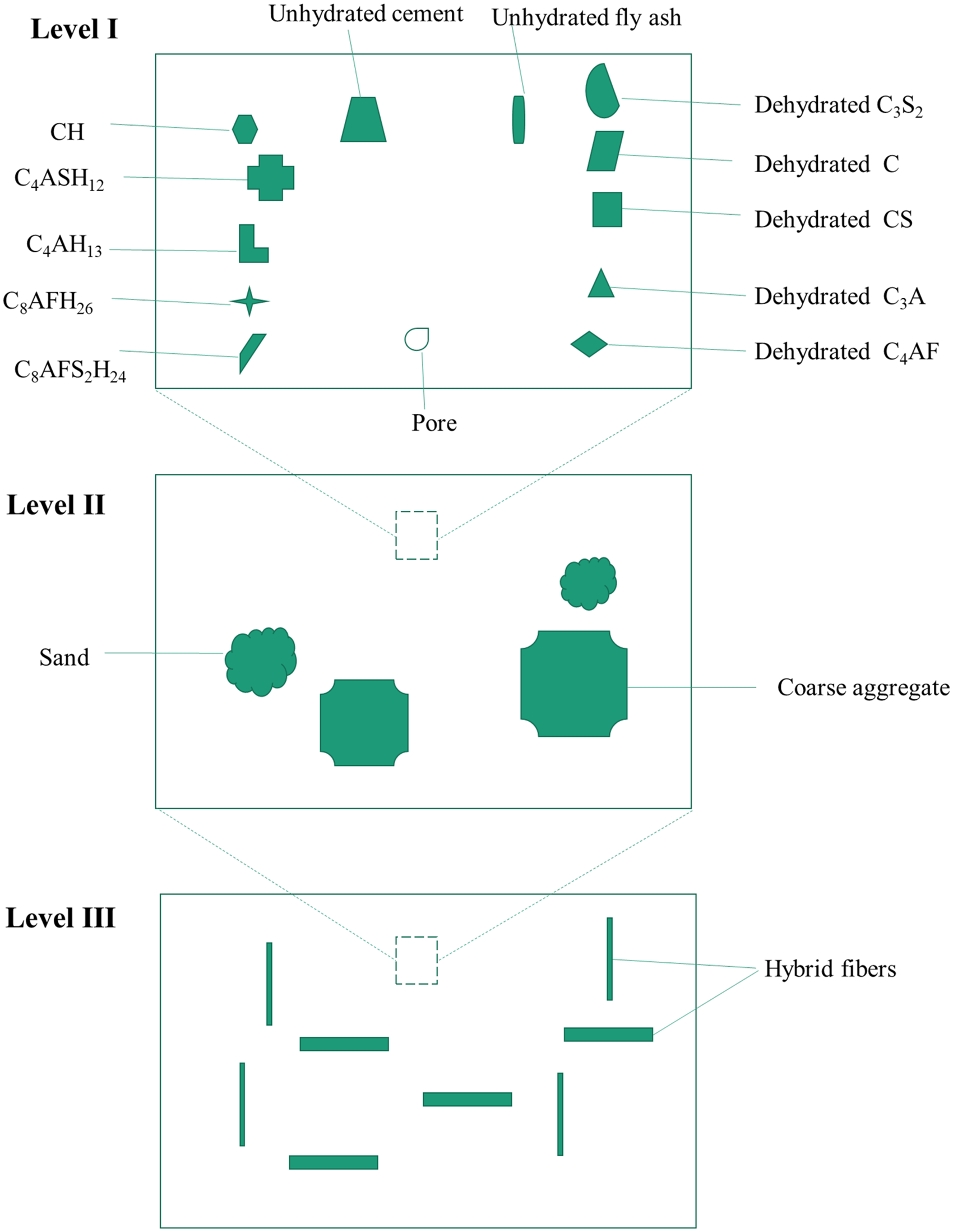
Multiscale framework of hybrid fibers reinforced cementitious composites.
Level I: cement paste
The equivalent cement paste product is considered as multiphase composites, which contains hydration products (
Level II: concrete
The equivalent concrete product contains the equivalent cement paste in Level I, fine aggregate and coarse aggregate. At this level, the interfacial damage between the cement paste and aggregate is considered by a linear spring-interface model. The aggregates are assumed to be spheres.
Level III: hybrid fibers reinforced cementitious composites
The equivalent hybrid fibers reinforced cementitious composites product contains the equivalent concrete and fibers. At this level, sub-stepping homogenizations are adopted to obtain the elastic properties of hybrid fiber reinforced cementitious composites at high temperatures. In addition, the damage of fibers at high temperatures is considered.
Microstructure representation of hybrid fibers reinforced cementitious composites
Quantitative calculation of cement paste
To evaluate the elastic properties of hybrid fibers reinforced cementitious composites at high temperatures, the phase compositions and their corresponding volume fractions must be first determined at each temperature. The hydration reactions of cement and fly ash are shown below.
Hydration of cement and fly ash
Hydration kinetics model of cement
The hydration reaction of cement is a complex process accompanied by a series of physical and chemical effects. The chemical reactions of cement used in this study are shown in equations (1) to (6) (Papadakis et al., 1991), in which the numbers below each chemical reaction equation represent the volume units of each phase required to balance each particular chemical reaction. Equations (3) and (4) dominate over equations (5) and (6) with the presence of gypsum. When all the gypsum has been consumed, equations (5) and (6) will take place. Using cement technology notation (C=CaO, S=SiO2, A=Al2O3, F=Fe2O3, H=H2O,






Hydration kinetics model of fly ash
For low-calcium fly ash, the active phases involved in the pozzolanic reaction are Al2O3 (A) and SiO2 (S). The pozzolanic reaction is shown in equations (7) to (9) (Papadakis, 1999). Equation (8) dominates over equation (9) with the presence of gypsum. When all the gypsum has been consumed, equation (9) will take place. The hydration products of fly ash are



To sum up, the hydration products of the cement paste blended with fly ash are
Quantitative calculation of each phase composition after hydration
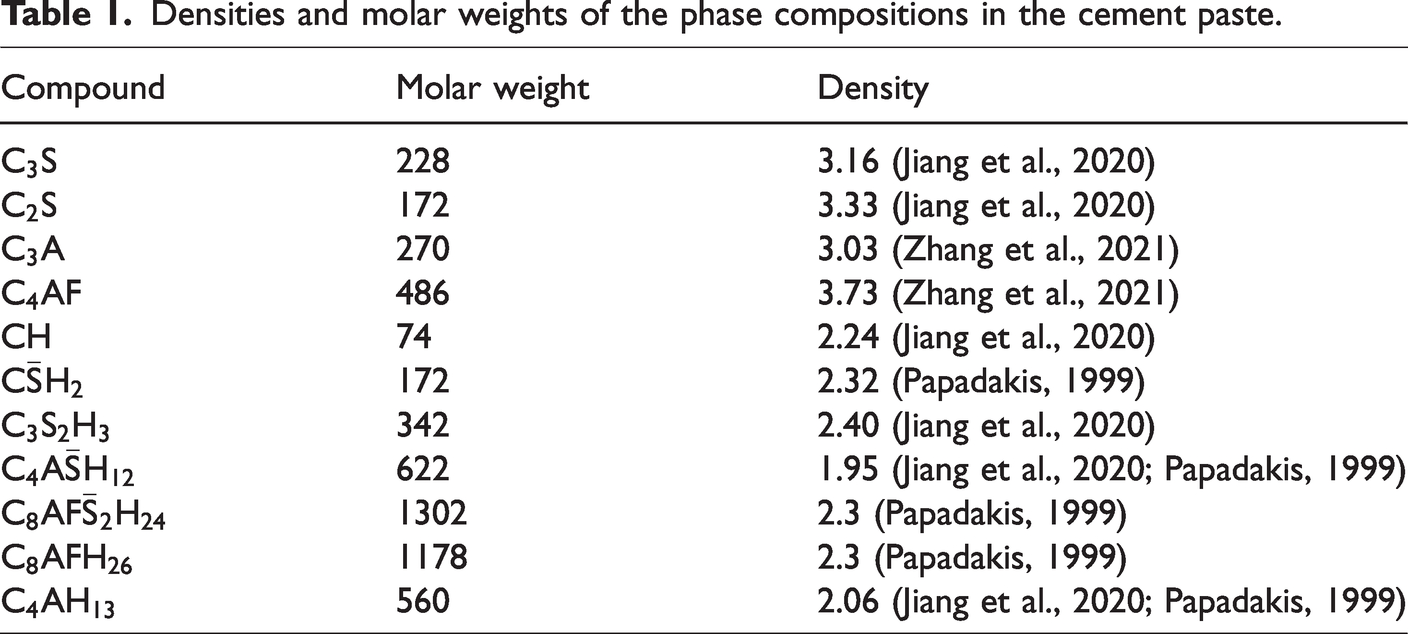
The initial volume fractions of constituent phases after hydration are related to the chemical composition of cement, the degree of hydration, hydration time, etc. Based on the densities and molar weights of the phase compositions in Table 1, the volumes of hydration products produced by the hydration of cement and fly ash can be calculated by the chemical equilibrium of their reactions.
Densities and molar weights of the phase compositions in the cement paste.
If the gypsum content is lower than the threshold value for C3A, C4AF in cement and A in fly ash to fully hydrate, the time (tg) which the gypsum is completely consumed can be calculated by:

The volume of cementitious materials shrinks during hydration. In this paper, only the chemical shrinkage is considered during hydration. Then, the volume of pore after hydration is described as:


The volumes of hydration products and shrinkage at t days (t < tg) can be calculated as:





The volumes of hydration products and shrinkage at t days (t ≥ tg) can be calculated as:







If the gypsum content exceeds the threshold value for C3A, C4AF in cement and A in fly ash to fully hydrate, the formulas for calculating the volumes of hydration products are the same as the volumes of hydration products at t days (t < tg), as shown in equations (13) to (17).
The volumes of unhydrated cement and fly ash can be determined by:


Dehydration
Dehydration reactions
The hydration products will be gradually dehydrated at high temperatures. The decomposition reactions are presented in equations (27) to (32)






To sum up, the dehydration products contain C3S2, C, C3A, C4AF,
Quantitative calculation of dehydration compositions
The volumes of phase compositions after exposure to high temperature are related to their initial volume and the dehydration degree of each phase.
The volume of dehydration products can be calculated as:

The volume of C after dehydration is calculated as:




The water released from the decomposition of hydration products at high temperatures is assumed to be gaseous and regarded as additional pores.
The volumes of pores after high temperature dehydration are written as:


The volume of cementitious composites expands after high temperature dehydration. The expansion volume is calculated as:

To obtain the dehydration degree of hydration products of cement and fly ash at high temperatures, the dehydration kinetics expressed by Arrhenius Equation is adopted (Jiang et al., 2020):

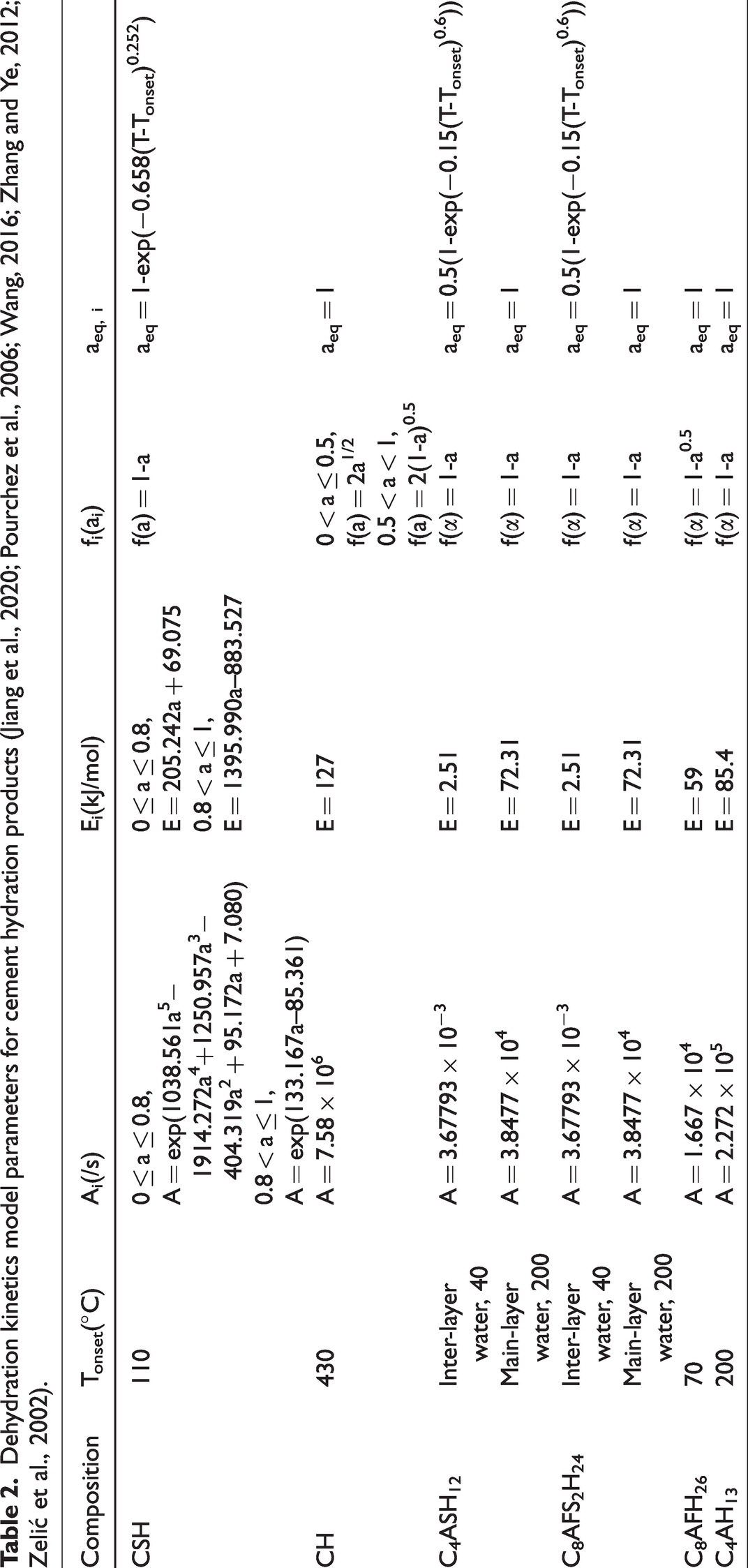
The dehydration kinetics model parameters for cement hydration products are presented in Table 2.
Dehydration kinetics model parameters for cement hydration products (Jiang et al., 2020; Pourchez et al., 2006; Wang, 2016; Zhang and Ye, 2012; Zelić et al., 2002).
The dehydration degree of hydration products at high temperatures can be calculated by an incremental method:

Quantitative calculation of concrete
The volumes of phase compositions at the concrete levels are related to the mixture proportions of the concrete. The volume fractions of sand and coarse aggregate are calculated as:


Quantitative calculation of hybrid fibers reinforced cementitious composites
The volume fractions of hybrid fibers at the hybrid fibers reinforced cementitious composites levels are calculated as:

Multiscale micromechanical model for predicting the elastic properties of hybrid fibers reinforced cementitious composites at high temperatures
Representation of the multiscale microstructure
Level I: cement paste
Formulating the correlation between macroscopic properties and phase compositions is the key to homogenization in micromechanics. The cement paste is regarded as a combination of one matrix and thirteen inclusions. In the homogenization process, the Mori-Tanaka method is wildly adopted (Mori and Tanaka, 1973). The Mori-Tanaka method assumed that the inclusions were embedded in an infinite matrix and the matrix was regarded as the reference medium. The homogenized bulk modulus and shear modulus can be calculated below (Gong et al., 2017).





For the granular dehydrated products, it can be seen from the decomposition chemical equations (27) to (32) that the porosity of all the remaining dehydration products is greater than 50% and the volume fraction of the solid phase is less than 50%, except for C-S-H. It means that the packing density is less than 50% in granular mechanics.
The research of Jaeger et al. shows that the stiffness of a granular assembly is equal to zero when its packing density is less than the random loose packing limit of 56% (Jaeger and Nagel, 1992). Hence, the decomposition products are regarded as a whole and their stiffness is zero (Shen et al., 2021; Zhao et al., 2014).
As the temperature rises, microcracks will generate and propagate within the cement paste, which has a significant effect on the elastic properties. In this study, Feng and Yu’s model is adopted to describe the elastic properties of cement paste with microcracks at high temperatures (Feng and Yu, 2000).
By assuming that all microcracks are uniformly distributed and located, the elastic properties of cement paste at high temperatures are expressed as



Level II: concrete
At this level, the cement paste is regarded as the matrix, fine aggregate and coarse aggregate are inclusions.
The fine aggregate and coarse aggregate are assumed to be spheres. When cementitious composites are exposed to high temperatures, the cement paste will first expand and then shrink while the aggregate will always expand. The thermal incompatibility between the cement paste and aggregates can lead to microcracking. Thus, the spring-interface model is adopted to describe the interfacial thermal damage between the cement paste and aggregates at high temperatures (Duan et al., 2007), which is shown in Figure 2.
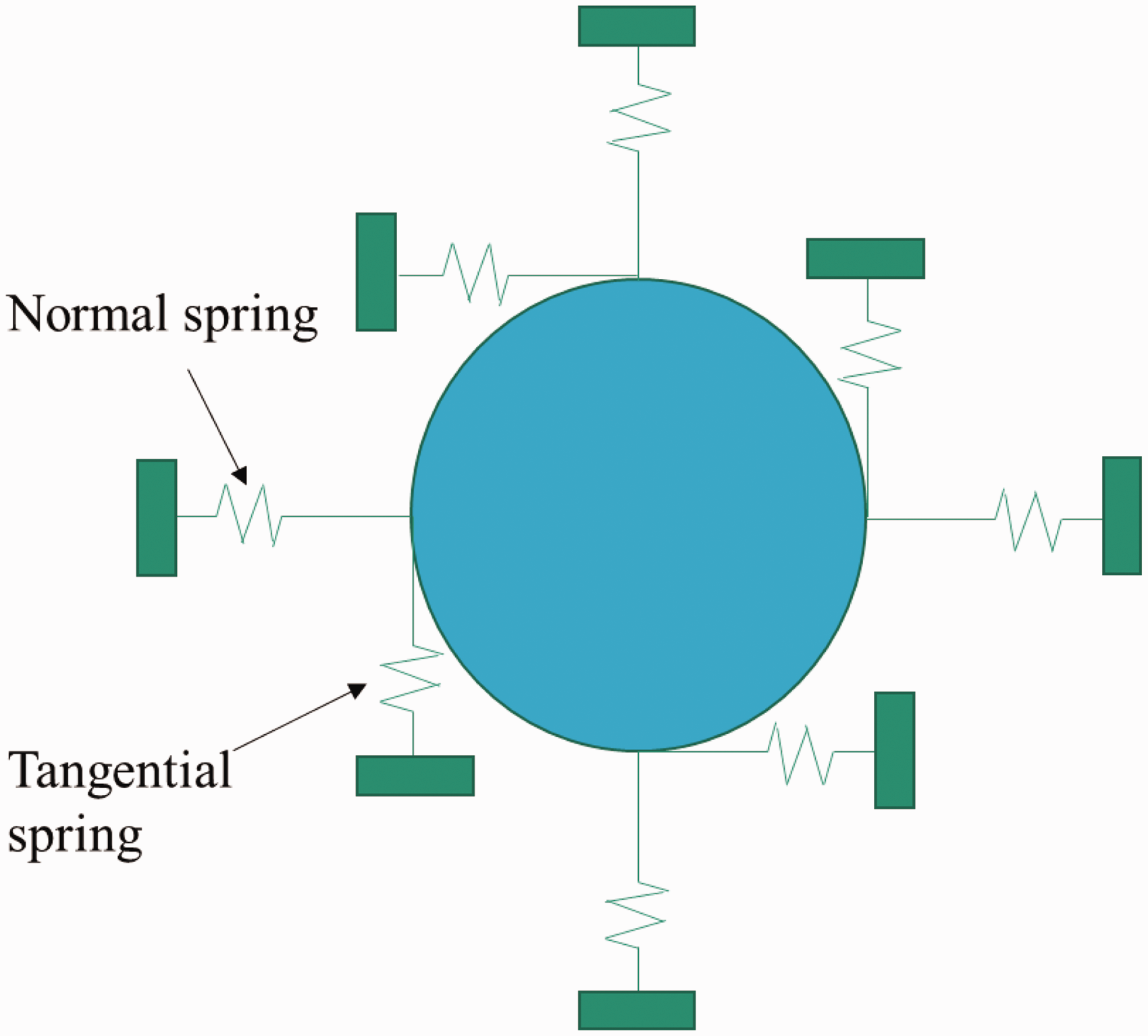
Spring-interface model.
The equivalent elastic properties of aggregates based on the interfacial damage are shown as:






With the elastic properties of the cement paste in Level I, the equivalent elastic properties of fine aggregate and coarse aggregate, the effective elastic moduli can be calculated.
Level III: hybrid fiber reinforced cementitious composites
In this level, for two or more types of hybrid fibers, a sub-stepping homogenization method is adopted. The fibers are assumed to be spherical and nonintersecting. Simultaneously, the interface between the concrete and fibers is considered to be perfectly bonded. The deterioration of the elastic modulus of fibers with temperature is taken into consideration.
First, concrete is modeled as the matrix and the first type of fiber is the inclusion. Then the equivalent stiffness of fiber reinforced cementitious composites is (Zhang et al., 2020)


Second, the equivalent medium obtained in the first step is regarded as the matrix and the second type of fiber is inclusion. Then the equivalent stiffness of the hybrid fibers reinforced cementitious composites is


Materials and parameters determination
To validate the proposed multiscale thermal damage model, the experimental results of steel-basalt hybrid fibers reinforced cementitious composites (SBFRCC) at high temperatures from the authors are utilized (Cao et al., 2023). The paste is composed of 70% cement and 30% fly ash (by mass).
The chemical characteristics of cement and fly ash in SBFRCC are shown in Table 3.
Chemical characteristics of cement and fly ash.

The mineral composition (
The hydration reaction rate of cement can be expressed in the form of the Avrami equation, which is shown in Appendix 2. Meanwhile, the pozzolanic reaction degree of fly ash is determined through the modified Jander's equation adopted by Narmluk (Narmluk and Nawa, 2014), which is 0.211. The heating rate of SBFRCC is 5°C/min. The specimens were heated to 200°C, 400°C, 600°C, 800°C, 900°C, respectively, and maintained the target temperature for 2 h.
For SBFRCC, there is no coarse aggregate. The sand/binder ratio is 0.42. The bulk modulus and shear modulus of the sand are 36 GPa and 26 GPa, respectively (Ulm et al., 2004). According to the results of Zhang et al. (Zhang et al., 2020), the coefficients
Steel fiber and basalt fiber, with volume fractions of 1.2% and 0.8%, are used in this study. The Young’s moduli of steel fiber are 210 GPa, 194.0 GPa, 182.1 GPa, 90.7 GPa, 14.9 GPa, 7.1 GPa at room temperature, 200°C, 400°C, 600°C, 800°C, 900°C, respectively while the Young’s moduli of basalt fiber are 100 GPa, 97.1 GPa, 94.3 GPa, 91.4 GPa, 86.7 GPa, 84.0 GPa, respectively (Lange and Wohlfeil, 2010; Ryan and Sammis, 1981). The Poisson’s ratio of steel fiber and basalt fiber are 0.3 and 0.27 at all temperatures (Zhang et al., 2017).
Results and discussions
The dehydration degrees of hydration products with a heating rate of 1°C/min, 5°C/min and 10°C/min and the equilibrium dehydration degree are presented in Figure 3. It can be concluded that the heating rate determines the dehydration degree of hydration products and the volumes of the phase composites at high temperatures. The hydration products may not be completely dehydrated when the temperature reaches the target temperature and an equilibrium state will be reached after a certain time at a constant temperature. For example, with a heating rate of 5°C/min, the C-S-H has not been completely dehydrated when the temperature reaches 800°C and an equilibrium state will be reached after 77 minutes.
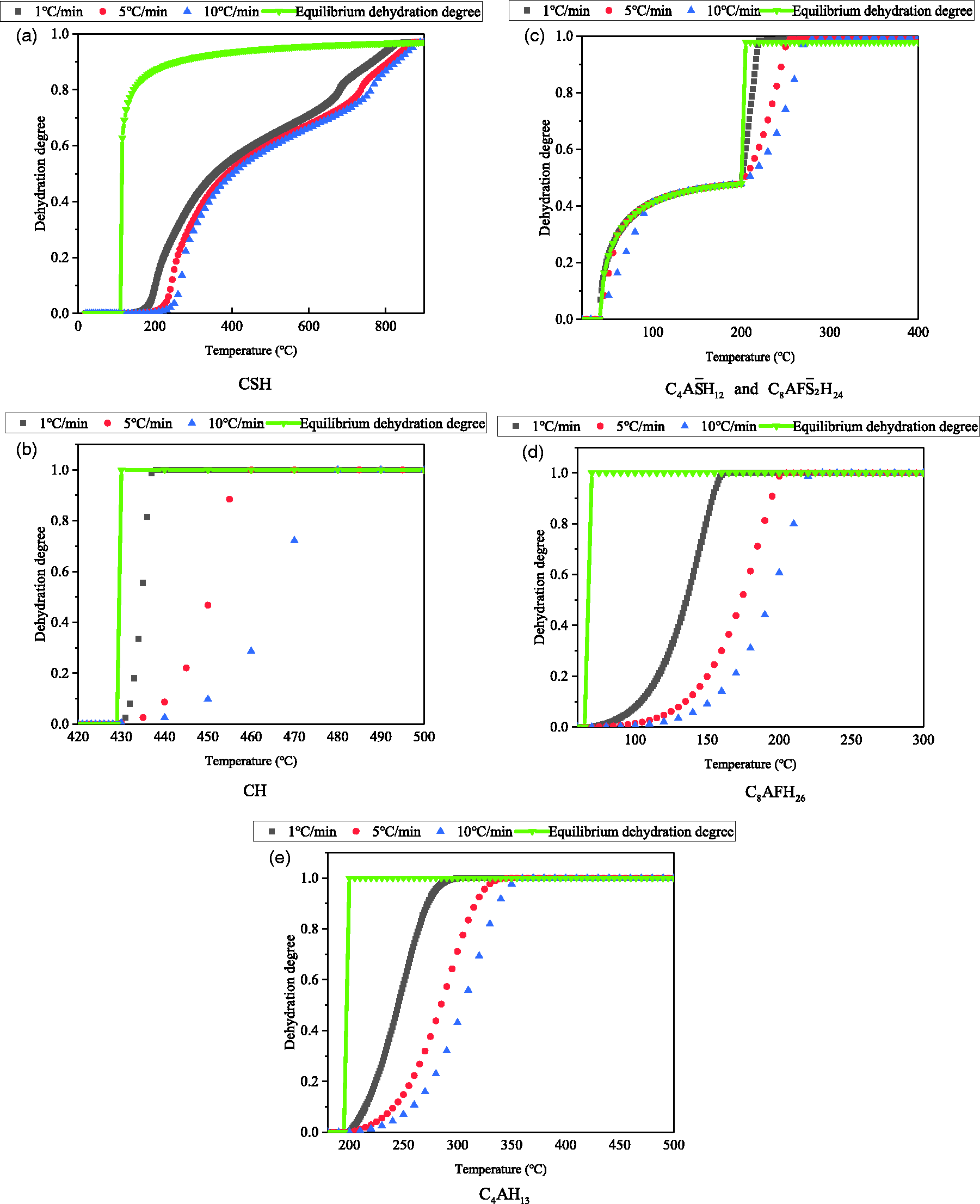
Dehydration degree of hydration products at different heating rates. (a)
Figure 4 shows the volume fractions of phase compositions in the cement paste exposed to different temperatures. It can be seen that the phase component with the largest volume fraction after hydration is C3S2H3, which is about 30%. The volume fraction of unhydrated cement and fly ash is 6.6% and 19.4%, respectively. The rests are hydration products and pores. With the increase of temperature, the hydration products gradually decompose and the dehydrated products gradually increase. The volume fraction of pores gradually increases at high temperatures, exceeding 43% at 900°C.
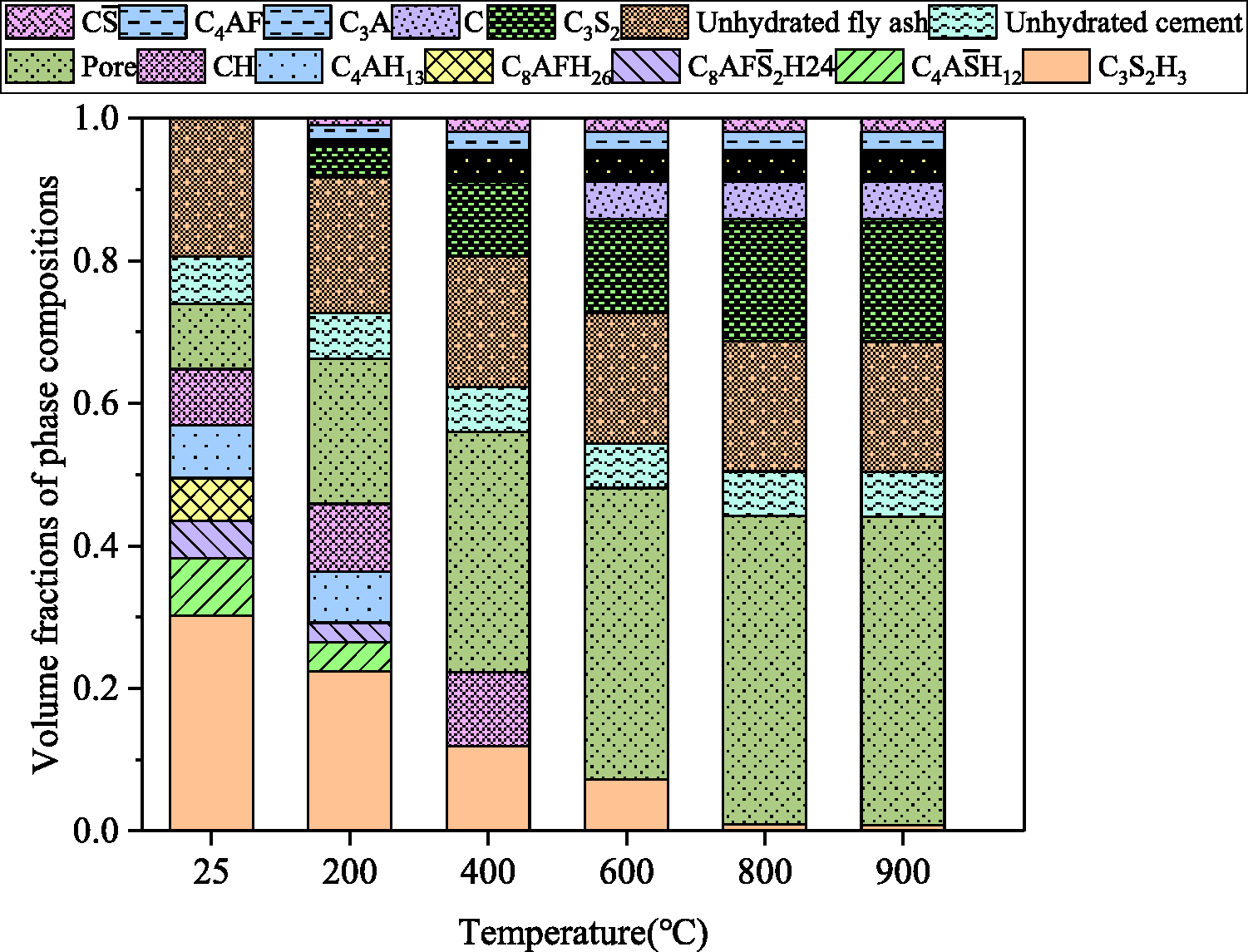
Volume fractions of phase compositions in the cement paste exposed to different temperatures.
Figures 5 and 6 show the predicted elastic moduli of the homogenized cement paste and concrete exposed to different temperatures, respectively. With the increase of temperature, the elastic moduli decrease sharply before 600°C and decrease slowly when the temperature reaches 600°C or higher.
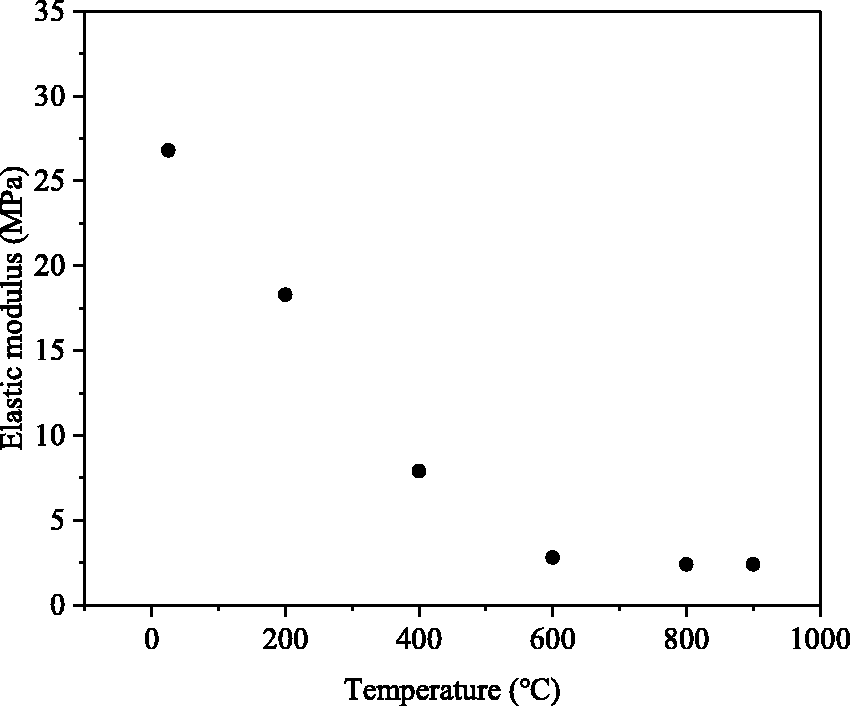
Predicted elastic moduli of the homogenized cement paste exposed to different temperatures.
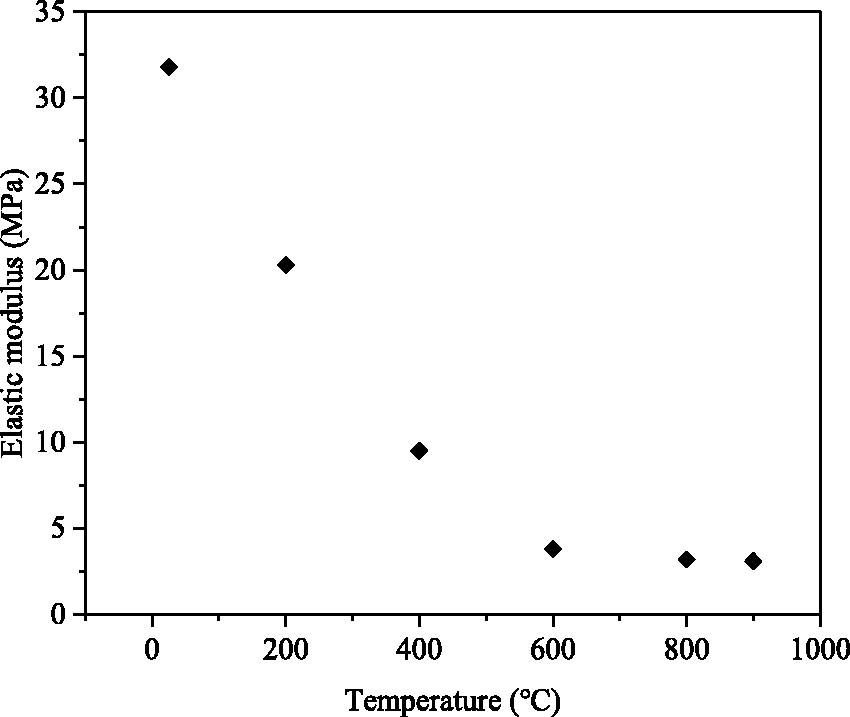
Predicted elastic moduli of the homogenized concrete exposed to different temperatures.
Figure 7 shows the predicted elastic moduli by the multiscale model and the uniaxial compression testing data of SBFRCC at high temperatures. It can be reached that the predicted elastic moduli by the model are generally in good agreement with the measured elastic moduli.
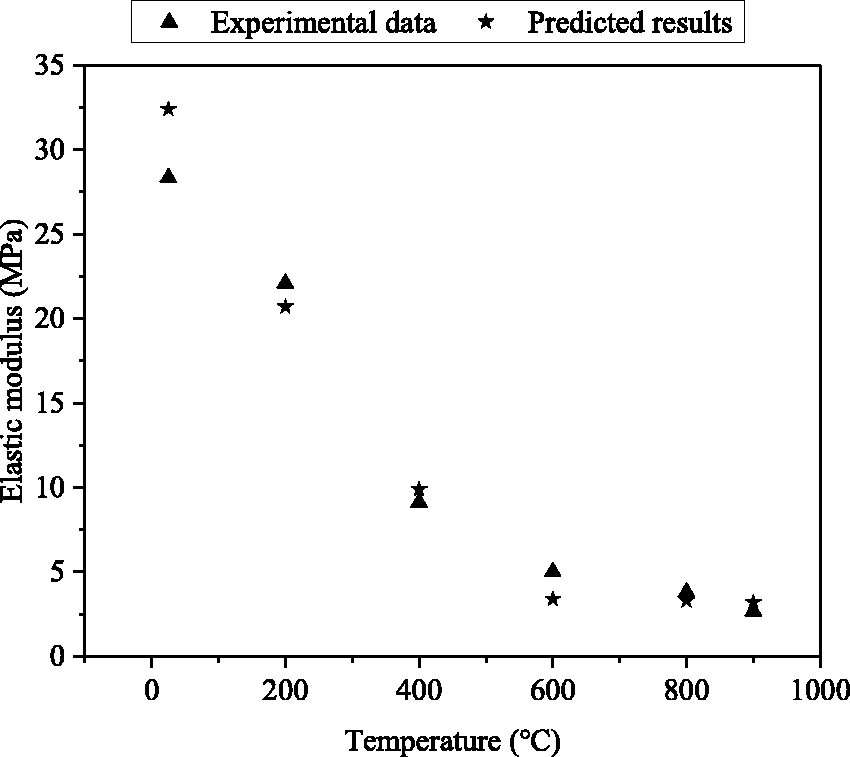
Predicted and measured elastic moduli of SBFRCC at high temperatures.
From this, the thermal damage degree at different temperatures can be obtained (as shown in Figure 8), which can provide theoretical support for the risk assessment of engineering structures under high temperatures of fire and provide a basis for decision making on strengthening, repair or reconstruction. The damage degree is expressed as

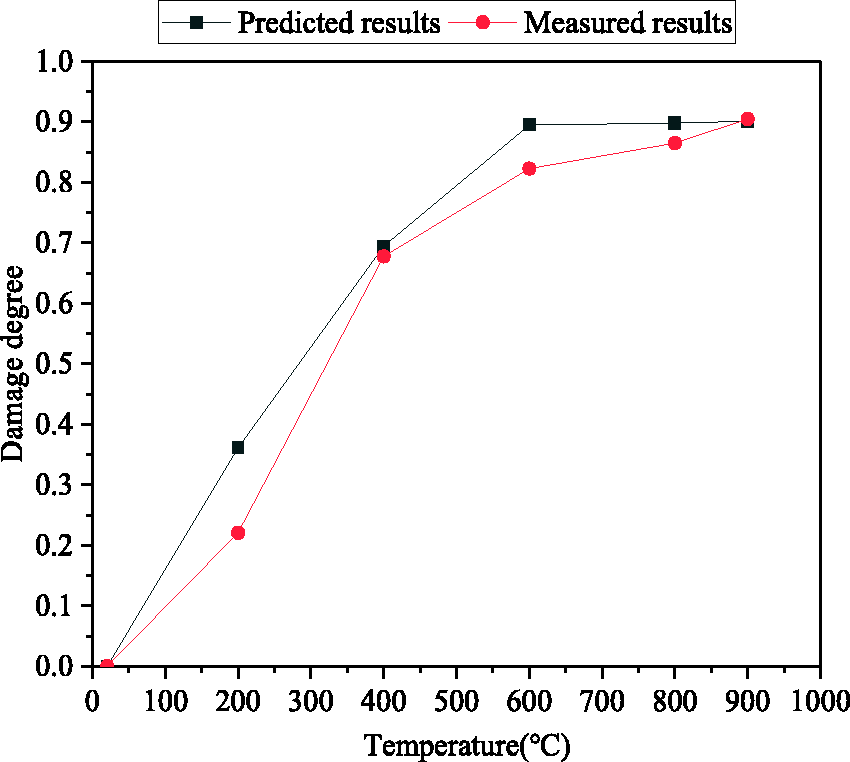
Predicted and measured thermal damage at high temperatures.
Figure 8 shows that the thermal damage gradually increases with temperature, and the damage rate gradually decreases. The predicted results are slightly larger than the experimental test results. It is mainly because the specimens have a certain thickness, the temperature transfer to the interior of the specimen and the decomposition of the hydration products both require a certain amount of time. Hence, the specimens are not completely burned through and the testing damage degrees are less than the predicted results.
Figures 9 to 11 show the predicted elastic moduli with and without considering matrix thermal cracking, fiber thermal damage and interface thermal damage, respectively. The analysis shows that the predicted elastic moduli without considering matrix thermal cracking, fiber thermal damage and interface thermal damage at high temperatures are both larger than those compared with considering them. At 400°C or higher, neglecting the thermal cracking of the matrix causes the predictions to deviate considerably, with a deviation of 44% at 600°C. Neglecting the effect of fibers on the predicted results as the volume fractions of fibers are only 2%.
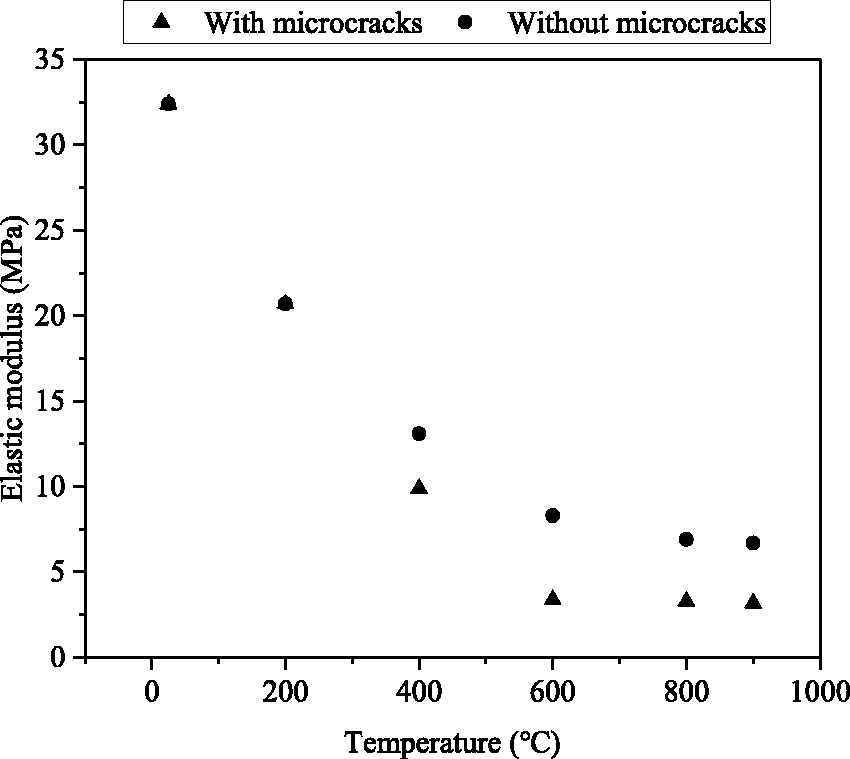
Predicted results with and without microcracks.
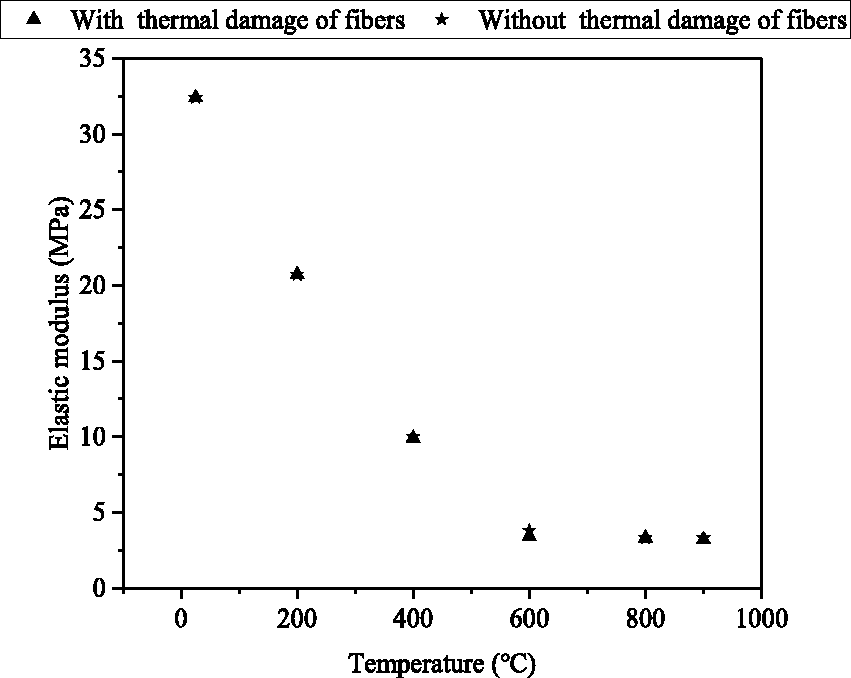
Predicted results with and without thermal damage of fibers.
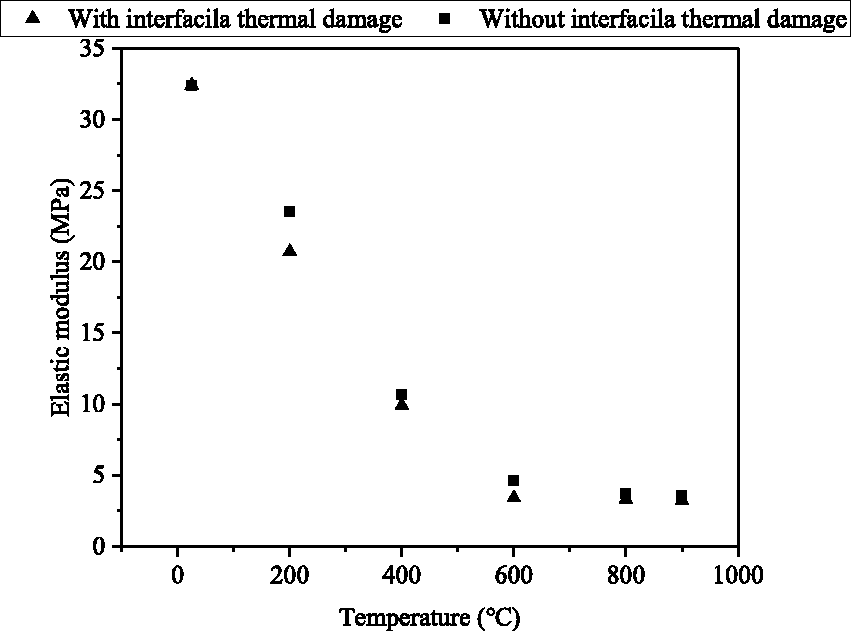
Predicted results with and without interfacial thermal damage.
Application
In this section, the temperature field of the tunnel lining structure under the ISO 834 standard fire heating curve will be obtained based on COMSOL Multiphysics to predict the thermal damage of the tunnel lining structure.
The ISO 834 standard fire temperature rise curve recommended by the International Organization for Standardization can be expressed as follows:

A simplified concrete tunnel lining structure is simulated with a span of 10 m, a radius of 5 m for the arch and a side height of 3 m. The thicknesses of the initial lining and the secondary lining are 20 cm and 40 cm, respectively. The model diagram of the tunnel lining structure is shown in Figure 12. A linear elastic model is used to treat the lining as a uniform continuous medium and the distribution of temperature and damage degree along the thickness of the tunnel lining structure under fire are analyzed.
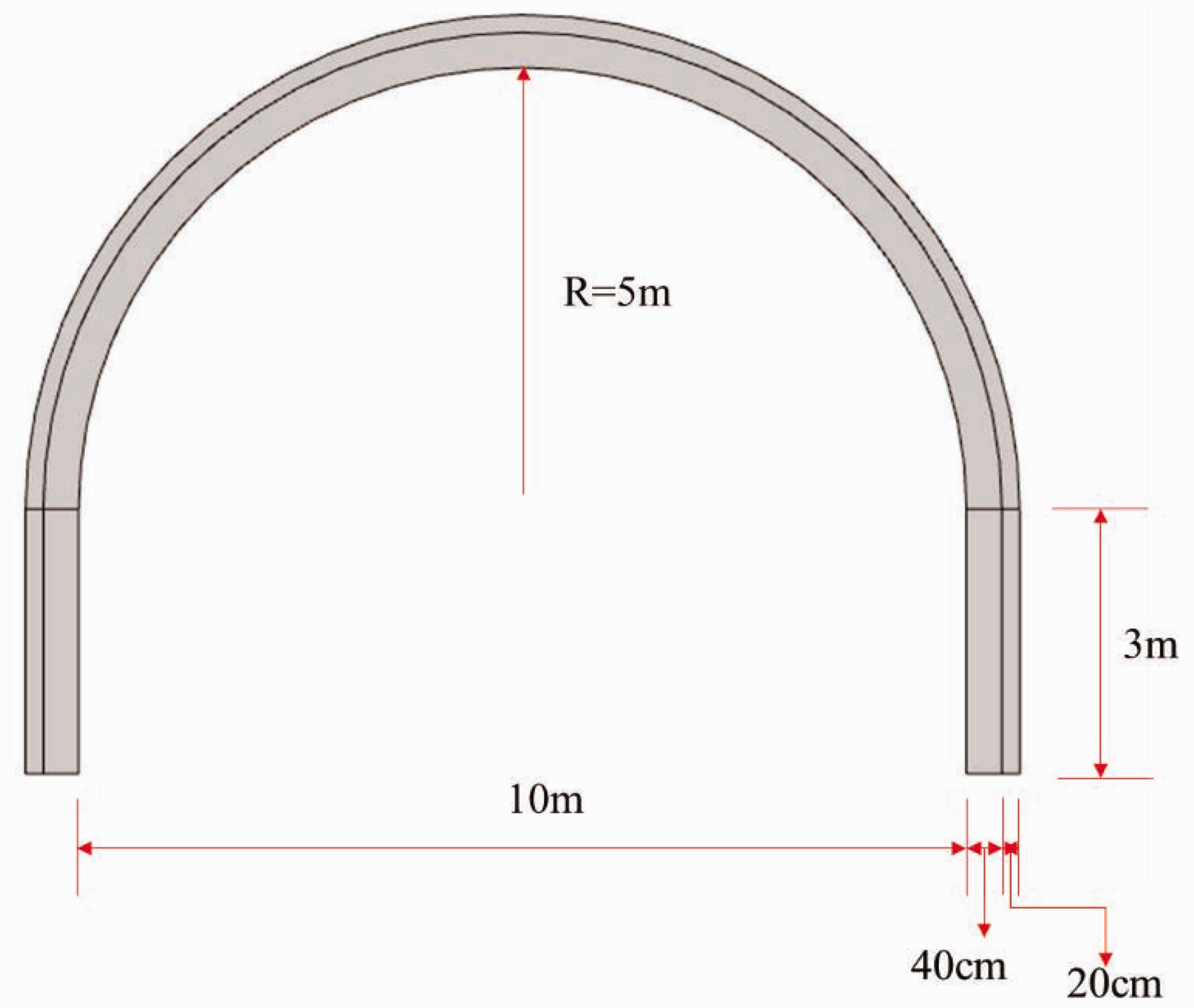
Model diagram of lining structure.
The density of the lining concrete is 2400 kg/m3. The specific heat capacity of the plain concrete and SBFRCC at high temperatures can be obtained by (Xiong, 2014):

The thermal conductivity of the plain concrete and SBFRCC can be obtained by (Hu, 2007):

The elastic modulus of the lining concrete can be determined by (Xiong, 2014):

The Poisson's ratio of the lining concrete is 0.2. The dehydration degree of hydration products under the ISO 834 standard fire temperature rise curve is shown in Figure 13. Compared with the dehydration degree at 1°C/min, 5°C/min and 10°C/min in Figure 3, the dehydration degree of the hydration products in the early fire process is lower and does not reach the equilibrium state of dehydration due to the rapid rise in the initial temperature of the ISO 834 standard fire warming curve at the same temperature.
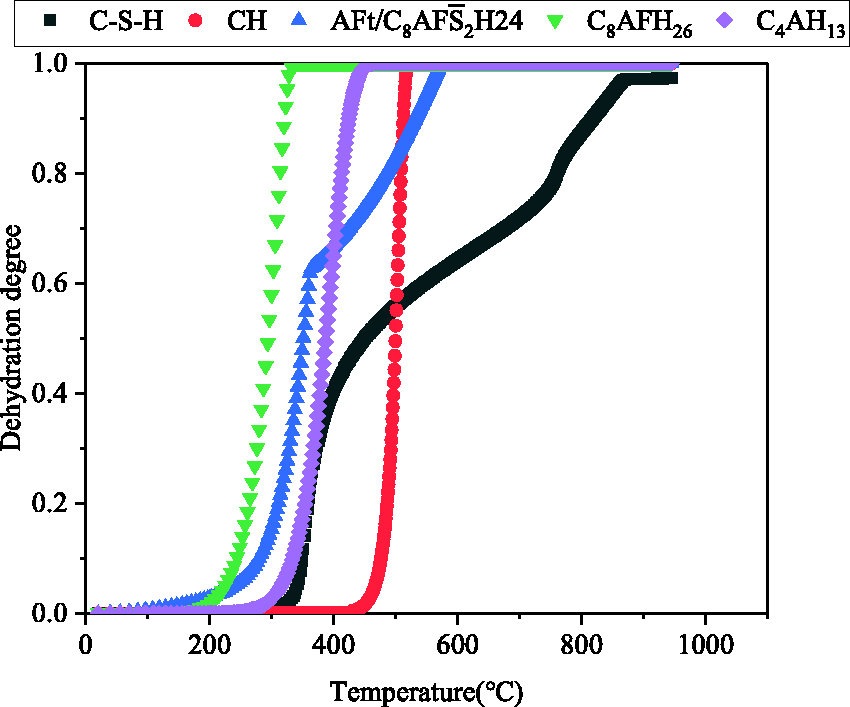
Dehydration degree of hydration products under the ISO 834 standard fire temperature rise curve.
The temperature distribution at different thicknesses of the lining (lining surface, 2 cm, 5 cm, 8 cm, 10 cm, 15 cm, 20 cm, 30 cm, 40 cm) at different fire times is shown in Figure 14. As can be seen from Figure 14, the temperature exceeds 500°C at the thickness of 2 cm at 40 min, exceeds 400°C at the thickness of 5 cm at 100 min, and is below 400°C at the thickness of 8 cm even after three hours of exposure. At the thickness of 30 cm or farther, three hours of fire time will only increase the temperature by a few degrees and have essentially no effect.
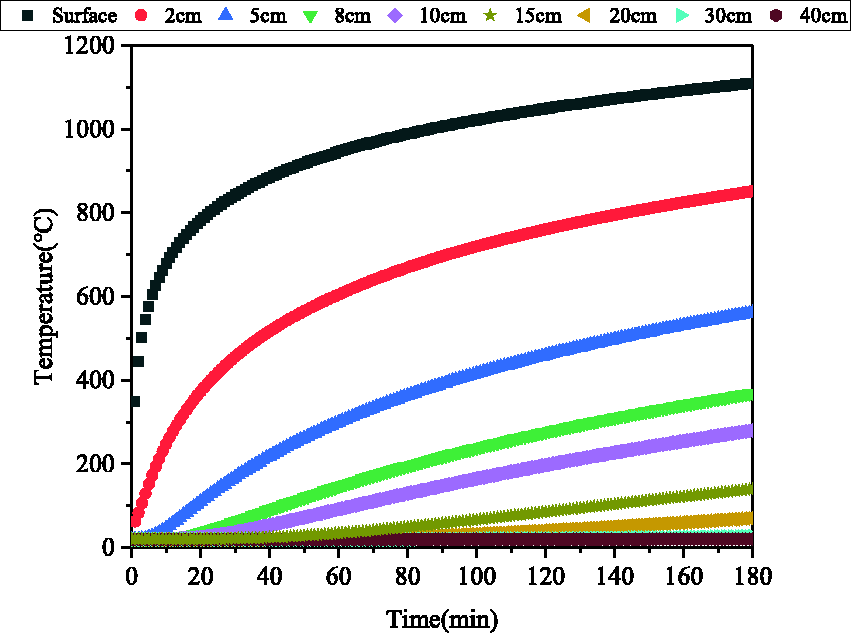
Temperature distribution at different lining thicknesses at different moments.
To investigate the distribution pattern of damage degree of SBFRCC along the thickness under fire, the proposed multiscale thermal damage model is used to predict the thermal damage of SBFRCC at different thicknesses and at different fire times (1 min, 5 min, 10 min, 20 min, 30 min, 60 min, 90 min, 120 min and 180 min), which are shown in Figure 15. At the beginning of the fire, only the surface and the thickness of 2 cm are damaged. After 5 min, the damage also appears at the thickness of 5 cm. Three hours after the fire, the lining surface, the thicknesses of 2 cm and 5 cm were damaged, while the damage does not occur at the thicknesses of 30 cm and 40 cm. Hence, the proposed multiscale thermal damage model can predict the damage degree of SBFRCC under fire.
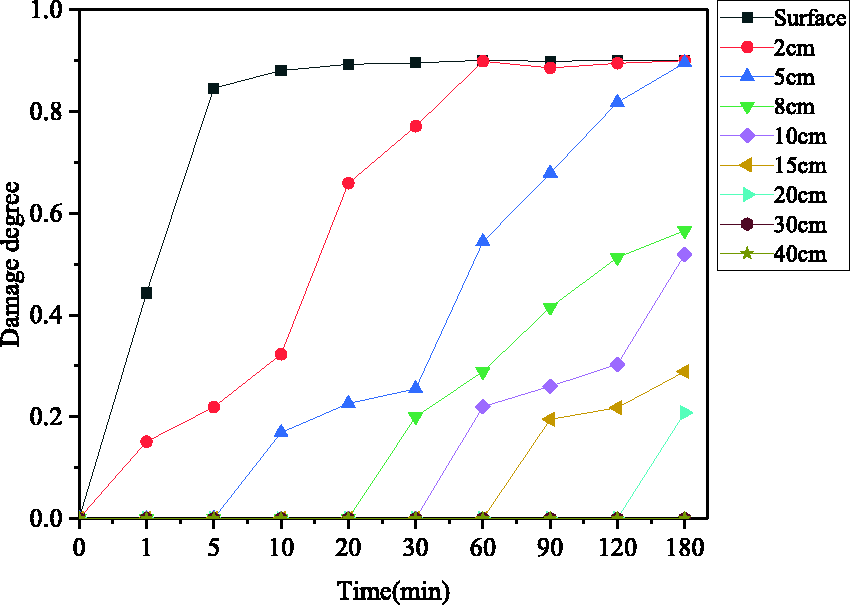
Predicted thermal damage of different lining structure thicknesses at different moments.
Conclusions
In this study, a multiscale model is proposed to predict the thermal damage of hybrid fibers reinforced cementitious composites blended with fly ash at high temperatures, including three levels, i.e., the cement paste level, the concrete level, and the hybrid fibers reinforced cementitious composites level. Then, the proposed multiscale model is verified by the experimental data. Furthermore, the temperature field of tunnel lining structure in fires obtained by COMSOL Multiphysics is employed to predict the thermal damage of SBFRCC at different thicknesses and moments. The main conclusions can be drawn as follows:
The established multiscale model is capable of considering the hydration of cement, the pozzolanic reaction of fly ash, the dehydration of hydration products, the thermal microcracking of cement paste, the interfacial thermal damage between aggregates and the cement paste, and the deterioration of elastic modulus of fibers. At 400°C or higher, neglecting the thermal cracking of the matrix causes the predictions to deviate considerably while neglecting the fiber thermal damage has little effect on the prediction results. The heating rate determines the dehydration degree of hydration products and the volumes of the phase composites at high temperatures. After three hours of exposure to fires, serious damage appears on the surface and at the thickness of 2 cm and 5 cm of the lining, while there is nearly no damage at a thickness of 30 cm or more.
Footnotes
Declaration of conflicting interests
The author(s) declared no potential conflicts of interest with respect to the research, authorship, and/or publication of this article.
Funding
The author(s) disclosed receipt of the following financial support for the research, authorship, and/or publication of this article: The authors would like to thank the projects supported by the Shanghai Post-doctoral Excellence Program (2023559) and Zhejiang Provincial Transportation Science and Technology Project of China (2018C03029).
