






Abstract
Polymer-bonded explosive (PBX) is one of the typical heterogeneous composite materials and dynamic damage processes are crucial for understanding its behavior. The present study establishes a comprehensive peridynamic (PD) framework to model dynamic damage of PBX with sensitivity analysis of model parameters. The PD model successfully captured the various characteristics of PBX damage evolution: energetic crystal damage dominated under low-velocity impacts (20 m/s), while interfacial damage contributions increased substantially at higher velocities (40–60 m/s). Moreover, the importance of the total nine PD model parameters belonging to three different materials regarding total bond damage and damage modes (trans-granular/inter-granular) under 20–60 m/s impact loading is quantified based on the established three-dimensional PD model of steel-encased PBX. The Kriging surrogate model from PD model parameters to PBX damage is also constructed to decrease the computational cost. The sensitivity analysis revealed that binder failure strain exerted significant influence on total mechanical damage at different velocities. Notably, Young's modulus of energetic crystal demonstrated strong cross-mode effects at elevated velocities, governing both trans-granular crack initiation and inter-granular debonding, thereby emerging as a critical constitutive parameter for relatively high impact velocity. The current study offers a useful computational framework to evaluate how the uncertainty of PBX properties impacts its dynamic damage response.
Introduction
Polymer-bonded explosive (PBX) is typically a heterogeneous composite material composed of energetic crystals such as HMX (octahydro-1,3,5,7-tetranitro-1,3,5,7-tetrazocine) and RDX (1,3,5-trinitroperhydro-1,3,5-triazine), dispersed within polymer binders like hydroxyl-terminated polybutadiene and Estane. They are widely used in both military and industrial fields because of their combination of good detonation performance and mechanical properties (Kim et al., 2018). PBX may be exposed to various external mechanical stimuli during transportation, storage, or handling (Gruau et al., 2009), and low-velocity impact represents a common yet potentially hazardous scenario. Although such impacts usually involve relatively low energy levels, they may still induce the unintended explosion of PBX due to the formation of hotspots caused by the localized energy deposition (Field, 1992), thereby posing significant safety risks due to accidental initiation.
Experimental observations also show that explosives are first squeezed, and the occurrence of chemical reaction and generation of hotspots only after being squeezed to a certain extent under impact loads (Napadensky et al., 1960). Understanding the mechanical damage process and its mechanisms is important for revealing the failure mechanism of PBX and improving its safety. Numerical simulations can reveal the dynamic processes of crack propagation and hotspot formation. Finite-element methods are previously often used to simulate the dynamic response of PBX, and the simulation results can help analyze the internal evolution processes of PBX micro-structures that are difficult to observe experimentally, as well as the influence of different material parameters on the ignition mechanism (Barua et al., 2012a, 2013). Bennett et al. (1998) developed and demonstrated the use of the viscoelastic response and statistical fracture mechanics in the numerical constitutive model of PBX-9501 to predict its mechanical response. Since the extension of the crack surface plays a key role in ignition, Dienes et al. (2006) further developed statistical crack models to explain the characteristics in crack growth and aggregation. Xiao et al. (2024) also developed a mechanical–thermal constitutive relation including viscoelastic responses to predict the mechanical response and thermal response of PBX. Because the singularity at the crack tip is difficult to capture precisely, a finite-element method has certain limitations in crack simulation (Madenci and Oterkus, 2013). Improvements such as extended finite-element method (Wyart et al., 2009) and cohesive finite-element method (Barua et al., 2012a, 2012b, 2013) provide a better description of crack-related problems, but these methods have significantly increased complexity and computational efficiency.
Peridynamics (PD), proposed by Silling (2000) and Silling et al. (2007), is a continuum mechanics model based on non-local theory that overcomes the assumption in traditional continuum mechanics that the displacement field needs to be continuously differentiable by introducing an integral form of the motion equation instead of a differential equation. The theory can naturally describe the spontaneous initiation and dynamic propagation of discontinuous problems such as cracks in materials. Compared with traditional numerical methods, PD can naturally describe crack initiation and propagation without special treatment of crack-tip singularities, pre-defined crack paths, or additional crack-tracking criteria. It is therefore suitable for simulating complex fracture processes involving crack nucleation, branching, coalescence, and interaction. This feature is particularly useful for PBX, whose dynamic damage behavior involves the coupled evolution of crystal fracture, binder deformation, and interfacial debonding. PD formulations can generally be classified into bond-based and state-based models (Ahmadi et al., 2022). A classical bond-based PD model is subject to a fixed Poisson's ratio limitation, which is 1/4 for three-dimensional isotropic materials. A state-based PD model provides a more general constitutive framework and can overcome the fixed Poisson's ratio limitation of the classical bond-based formulation. However, a bond-based PD model is simpler and more efficient in numerical implementation, which is advantageous for repeated simulations in parametric studies. In the present work, a bond-based PD model is adopted.
Currently, PD has been widely applied to various areas such as glass (Ha and Bobaru, 2011) and composites (Diyaroglu et al., 2016). Therefore, PD is well suited for investigating the dynamic damage behavior of PBX under impact loading, where multiple damage modes may coexist and evolve simultaneously. Moreover, Deng et al. (2024) constructed a mechanical–thermal–chemical coupled multi-physics PD framework to simulate the damage and ignition response of PBX under low-velocity impact loads. The study analyzed the ignition mechanisms related to trans-granular and inter-granular damage modes, providing key information for establishing an ignition model. Huang et al. (2022) investigated the dynamic damage behavior of PBX confined in spherical steel shells using bond-based PD, highlighting the influence of impact velocity and steel-shell confinement on PBX damage. Prakash and Seidel (2018) proposed a numerical simulation of coupled electromechanical formulas based on PD non-local continuum theory to explore structural health monitoring of PBX based on nano-composite piezo resistance rates. Li and Hao (2023) investigated the elastic deformation and brittle fracture behavior of PBX simulators using a modified three-body potential PD model.
The dynamic damage of PBX involves complicated processes such as particle–binder interface debonding and micro-crack nucleation and propagation, thus the simulation results are highly dependent on material and structural parameters (e.g. elastic modulus, adjustable interface parameters, loading rate, etc.) (Deng and Wang, 2020; Huang et al., 2022). As a heterogeneous brittle material, the particle distribution, porosity, and explosive grain content of PBX may lead to differences in mechanical properties. Similar micro-structure effect analyses have also been reported for polymer composites. For example, Huang et al. (2024) investigated carbon black-filled rubber composites by combining mechanical experiments with finite-element representative volume element simulations, and showed that filler volume fraction, particle orientation, and agglomeration can significantly affect the stress–strain response and local stress concentration of polymer composites. In addition, the mechanical response of PBX is also related to other factors such as strain rate, temperature, confinement pressure, and so on. Overall, it is difficult to accurately determine the specific values of model parameters. Therefore, even for the same PBX, different values of simulation parameters are used in the previously published literature.
Therefore, it is first necessary to consider the influence of uncertainty in model parameters on the simulation results regarding the simulations of dynamic mechanical response of PBX. Moreover, it is also necessary to conduct sensitivity analysis on parameters to systematically quantify the extent to which different parameters affect the numerical simulation results (Jiang et al., 2016). By doing this, the coupled relationship between the material model parameters and the mechanical response of PBX can be understood more deeply. Furthermore, the simulation results can also be better used to design the experiments or explain the experimental results. Uncertainty quantification has already been introduced into the PD framework in previous studies. For example, Franzelin et al. (2014) applied a non-intrusive uncertainty quantification method based on spatially adaptive sparse-grid stochastic collocation to multi-variate PD simulations, showing that uncertainty propagation in PD models can be efficiently analyzed without directly relying on large-scale Monte Carlo simulations. In addition, Kriging-based surrogate modeling combined with Sobol sensitivity analysis has been successfully used in other damage and mechanical systems. Denimal and Sinou (2021) developed advanced Kriging-based surrogate modeling and sensitivity analysis for uncertain rotor dynamics. And the similar surrogate-based sensitivity strategies (Li et al., 2025) have also been applied in coupled damage modeling contexts. These studies provide important methodological support for using surrogate models and global sensitivity analysis in complex damage simulations.
However, existing uncertain quantification and sensitivity studies are still limited for the specific problem of PBX dynamic damage under impact loading. In particular, few studies have systematically combined PD simulation, Kriging surrogate modeling, damage-mode quantification, and Sobol sensitivity analysis to evaluate how uncertain PD model parameters affect total damage and the transition between trans-granular and inter-granular damage modes. Unfortunately, as far as the uncertainty and sensitivity analysis of PBX dynamic damage is concerned, the previous research is very limited and has mainly focused on the effects of randomness of micro-structure on the simulation results (Kim et al., 2014). The lack of systematic analysis on the uncertainty and sensitivity of PBX dynamic damage inhibits the further progress of numerical simulations.
In this study, the influence of uncertainty in model parameters involved in PD models for PBX impact damage and damage modes was studied in a systematic manner. By constructing a Kriging surrogate model, the parameters that have a significant impact on damage modes and total bond damage were identified based on the Sobol global sensitivity analysis method. The current results are of great significance for an in-depth understanding of the PBX dynamic damage behavior.
PD theory and sensitivity analysis of model parameters
PD theory
PD is a novel non-local continuum mechanics theory based on integral equations, suitable for modeling discontinuous problems such as material damage and crack propagation. PD theory discretizes a continuous medium into a series of material points, each with mass, position, and volume properties. The material points interact with each other through a response function that contains all constitutive information related to the material. Figure 1 shows a schematic diagram of the PD theory, where the material points that can interact are represented by
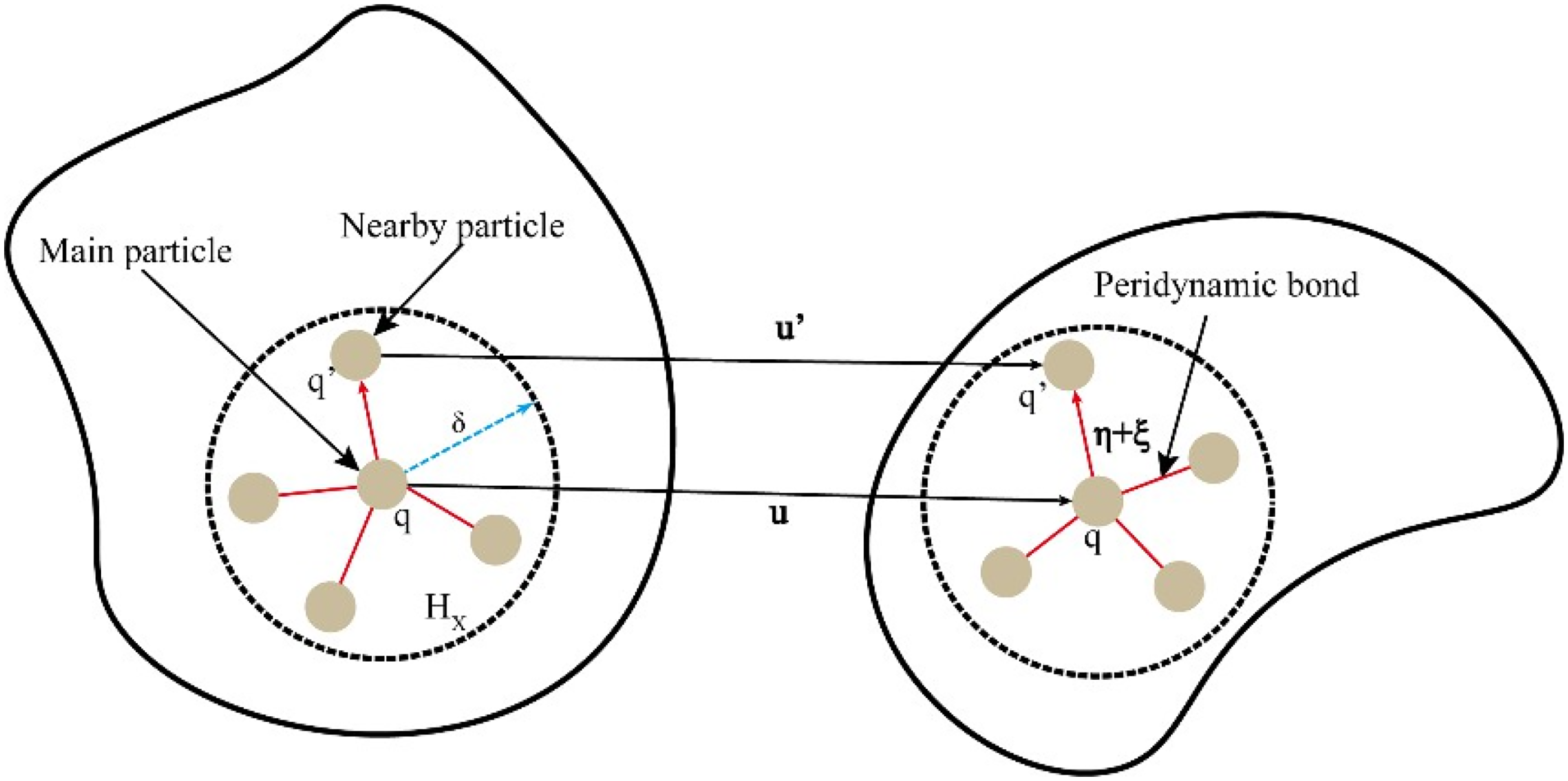
Schematic diagram of PD theory. PD: peridynamics.
The basic equation of motion of PD is:





In PD theory, damage to a material point is represented as bond breakage. When the elongation s is greater than the critical relative elongation

To measure the damage state of the material point, the local damage function

According to the above definition, when the damage function value is 0, it indicates that the material point has bond forces with other material points in the horizon, that is, the material point is in an undamaged state. In contrast, when the damage function value is 1, it indicates that all bonds associated with the material point have been broken, that is, the material point is in a severely damaged state. If cracks appear inside the material, the object will split into two parts along the crack surface, meaning that approximately half of the bonds within the neighborhood of material points near the crack boundary will fail. Accordingly, a local damage value of about 0.5 is often used in the PD literature as an indicator of possible crack evolution (Zhang and Bobaru, 2016).
Global Kriging surrogate model
When conducting sensitivity analysis on the constitutive model parameters regarding the mechanical damage of PBX, it is necessary to quantify the uncertainty of damage. This can be achieved by propagating the uncertainty of constitutive model parameters to the mechanical damage through uncertainty propagation methods such as Monte Carlo simulation. However, PD needs to calculate all material points and the interaction forces within the horizon of that material point at each time step. The process is usually time-consuming, and therefore it is not realistic to conduct PD simulations based on a large number of parameter samples across the entire domain. As a statistical model, the Kriging surrogate model technique can fit mathematical models to a limited number of observation points as approximations. The low-cost Kriging surrogate model can significantly reduce the computational time for uncertainty propagation analyses, such as Monte Carlo sampling (Liu et al., 2025).
The core assumption in the theoretical framework of the Kriging surrogate model is to reinterpret the originally deterministic output function (
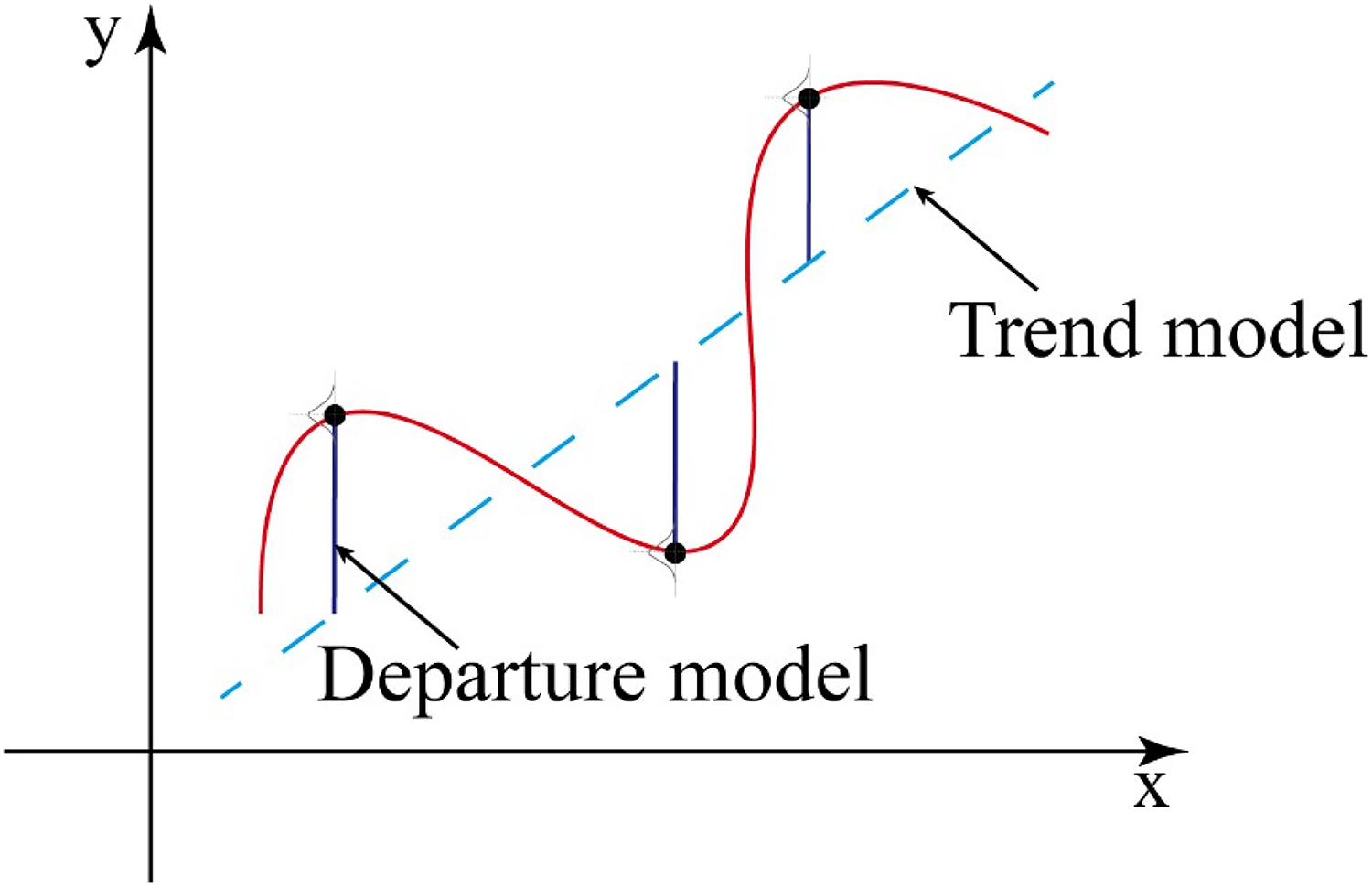
Schematic diagram of the Kriging surrogate model.
For a single-output mathematical model



Given

By performing maximum likelihood estimation on the above likelihood function, the estimates

When building a Kriging surrogate model, a large number of samples need to be drawn as a candidate sample pool
Recently, the adaptive sampling strategy has received increasing attention. This sampling strategy selects new points sequentially based on an approximate model and information from the data itself of previous iterations. The overall procedure of the adaptive sampling strategy used in this study is illustrated in Figure 3. The autonomous learning function based on the leave-one-out cross-validation (LOOCV) can effectively select the training samples that contribute the most to fitting the original model (Liu et al., 2017). Extracting

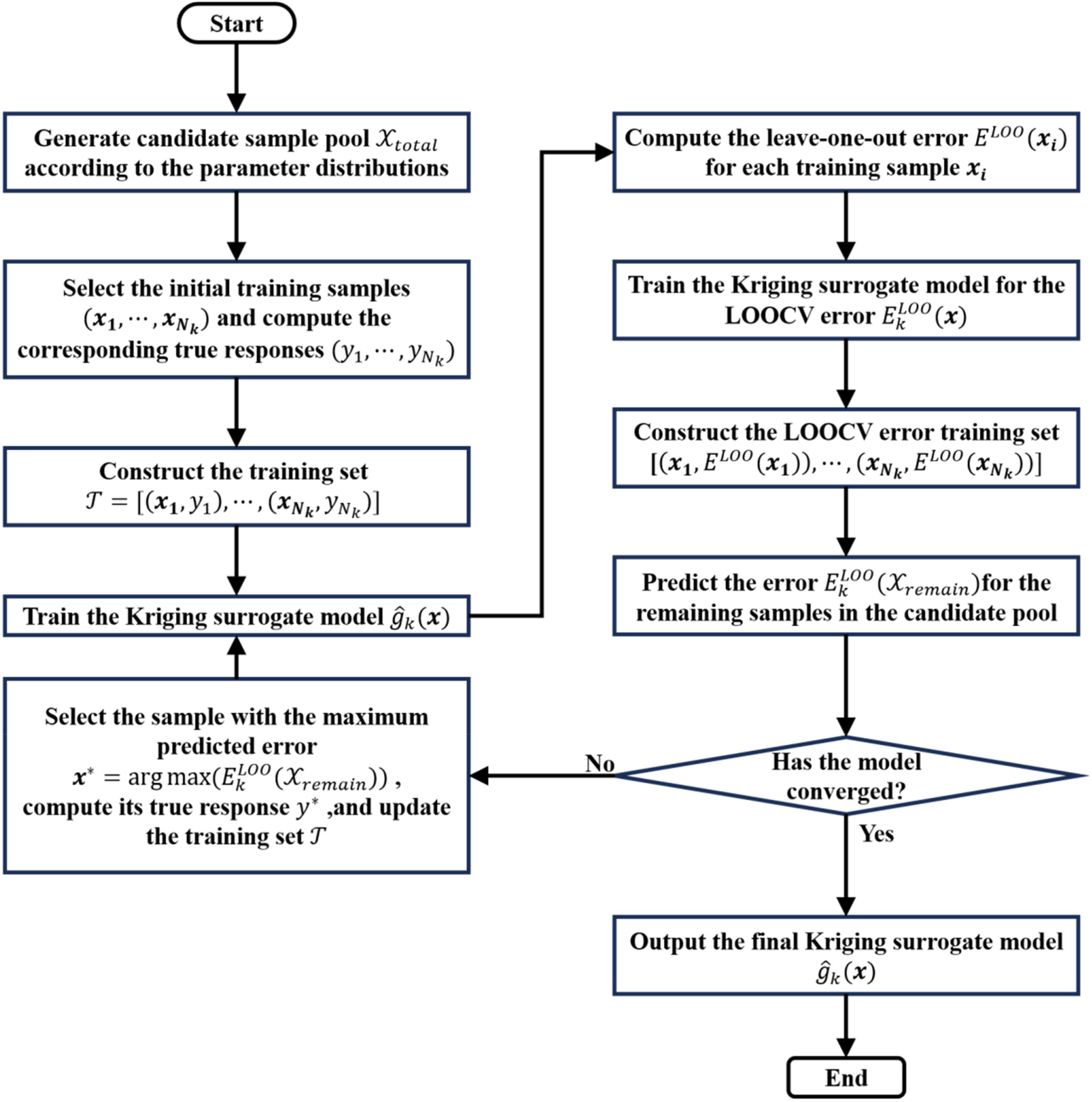
Flowchart of the adaptive sampling strategy for Kriging surrogate model construction.
Combining the
Sobol global sensitivity analysis
Sobol global sensitivity analysis method (Sobol, 2001) has remained widely used since its introduction because it applies to any input and output. The Sobol indices it produces offer robust and reliable assessments of parameter sensitivities over a range of variations in input parameters without being affected by minor changes. In this study, Sobol indices are employed to represent the importance of each parameter. The steps for calculating Sobol indices are described below.
The evaluation function can be described as a numerical simulation process with n-dimensional inputs and one-dimensional output:



In the above equations, V denotes the total (unconditional) variance, and



In the present study, the three correlated variables are taken as the broken numbers of HMX–HMX, HMX–binder, and binder–binder bonds, denoted by

To implement the above decomposition numerically, 100,000 samples of the uncertain PD model parameters were generated using a Sobol low-discrepancy sequence, and the trained Kriging surrogate model was employed to predict the corresponding values of


Simulation model and parameters
Dynamic damage model of PBX
The PBX dynamic damage calculation model is shown in Figure 4. The inside of the steel shell is wrapped with PBX, and both are cubic structures; the impact loading surface is not covered by the steel shell. The PBX is subjected to a constant-speed impact along the x direction, and the base of the steel shell in the x direction is a fixed structure. The internal PBX measures 32 mm × 22 mm × 22 mm in the x, y, and z directions. The grid size of the three-dimensional PBX computing domain is set at 1 mm and contains a total of 15,488 PBX material points. Since PBX is a poly-crystalline structure, the Voronoi method is used to randomly generate seed points within the material and assign which grain a material point belongs to the distance between the material point and the seed point. As can be seen from Figure 5, PBX is composed of HMX crystals and binder under discretization modeling, so there are three different bonds inside the PBX: HMX–HMX, HMX–binder, binder–binder. A total of 30 grains are set up inside the PBX, so the average size of the grains is 516 μm. The outer layer of the PBX is wrapped in a 3 mm steel layer, leaving the impact load loading surface uncovered. The grid size of the steel layer is also 1 mm, and there are approximately 12,000 steel material points in total. During the simulation, the three layers of PD particles along the x direction of the PBX on the impact load loading surface moved at a constant speed for 50
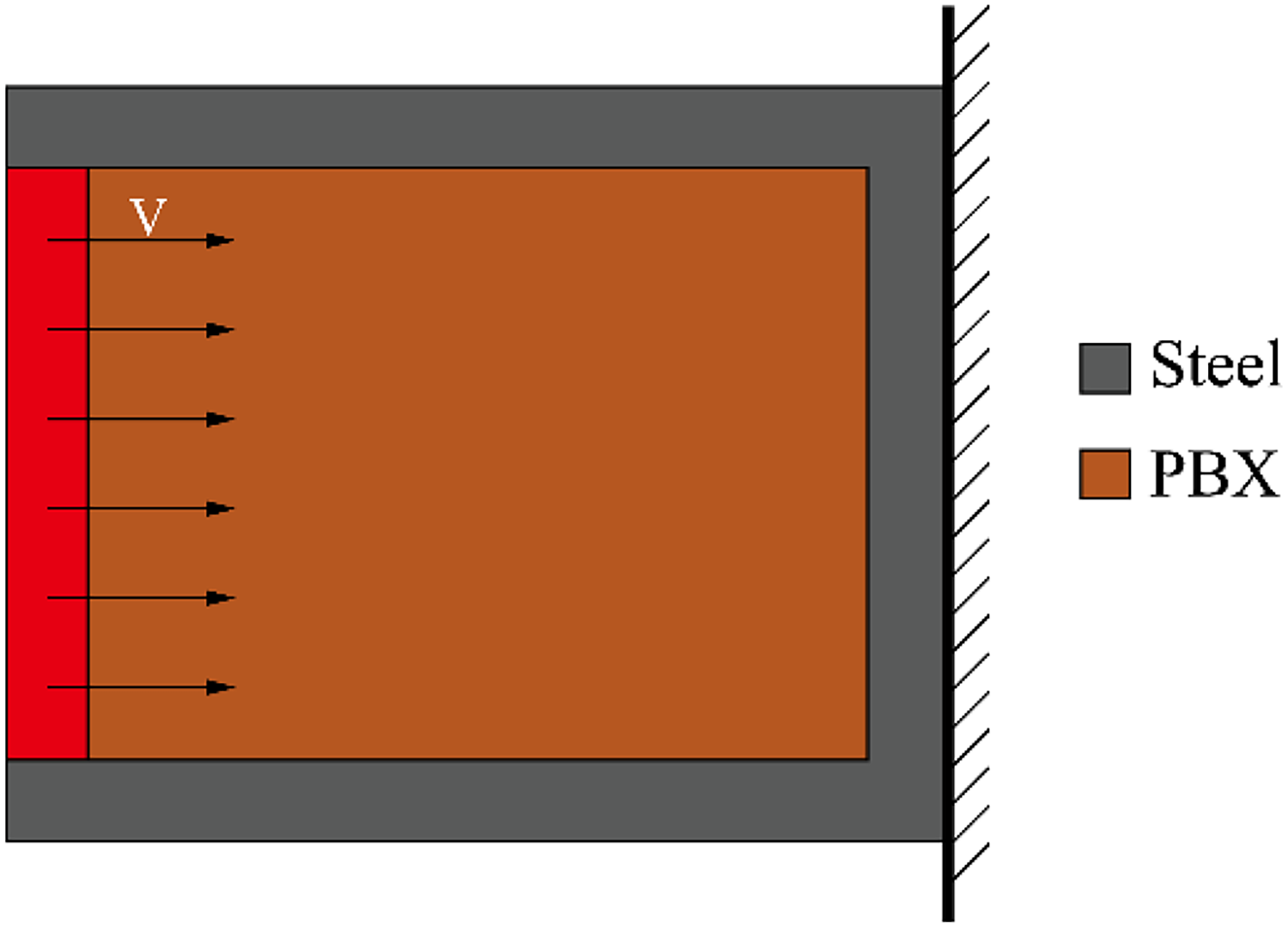
Schematic diagram of the cross-section of the PBX loading structure. PBX: polymer-bonded explosive.
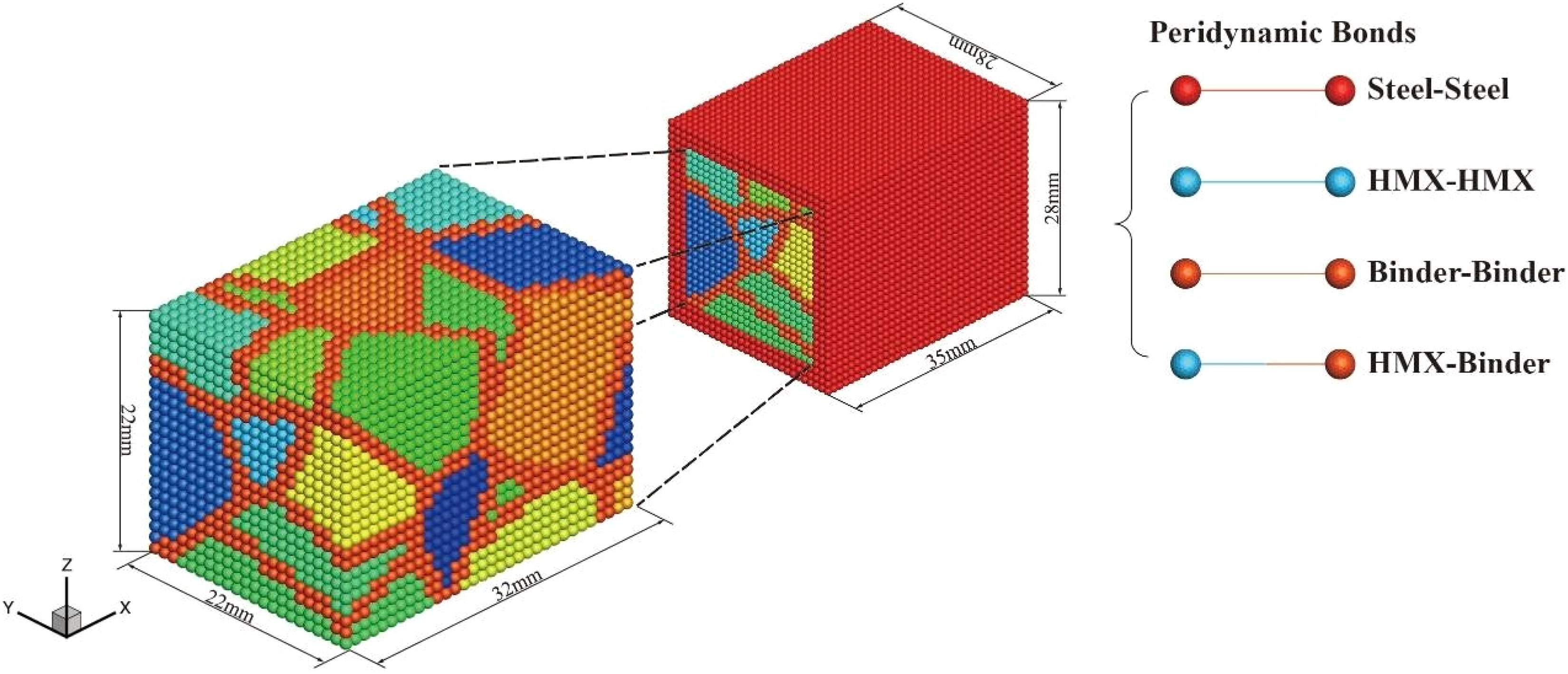
Schematic diagram of the PBX computational model and PD bonds. PD: peridynamics; PBX: polymer-bonded explosive.
PD model parameters
In PD theory, the interaction force between two nearby material points is described by paired bond force density functions. Therefore, constructing an appropriate bond force density function is crucial to better capture the true behavior of the material. The previous experimental results indicate that when PBX is under passive confining pressure, it can undergo partial plastic deformation when subjected to external force before failure, rather than breaking directly as in brittle materials. Hence, in this study, the elastoplastic constitutive model is used to capture the plastic behavior of PBX under confining pressure (Silling and Askari, 2005). The constitutive model is shown in Figure 6 and is represented as:

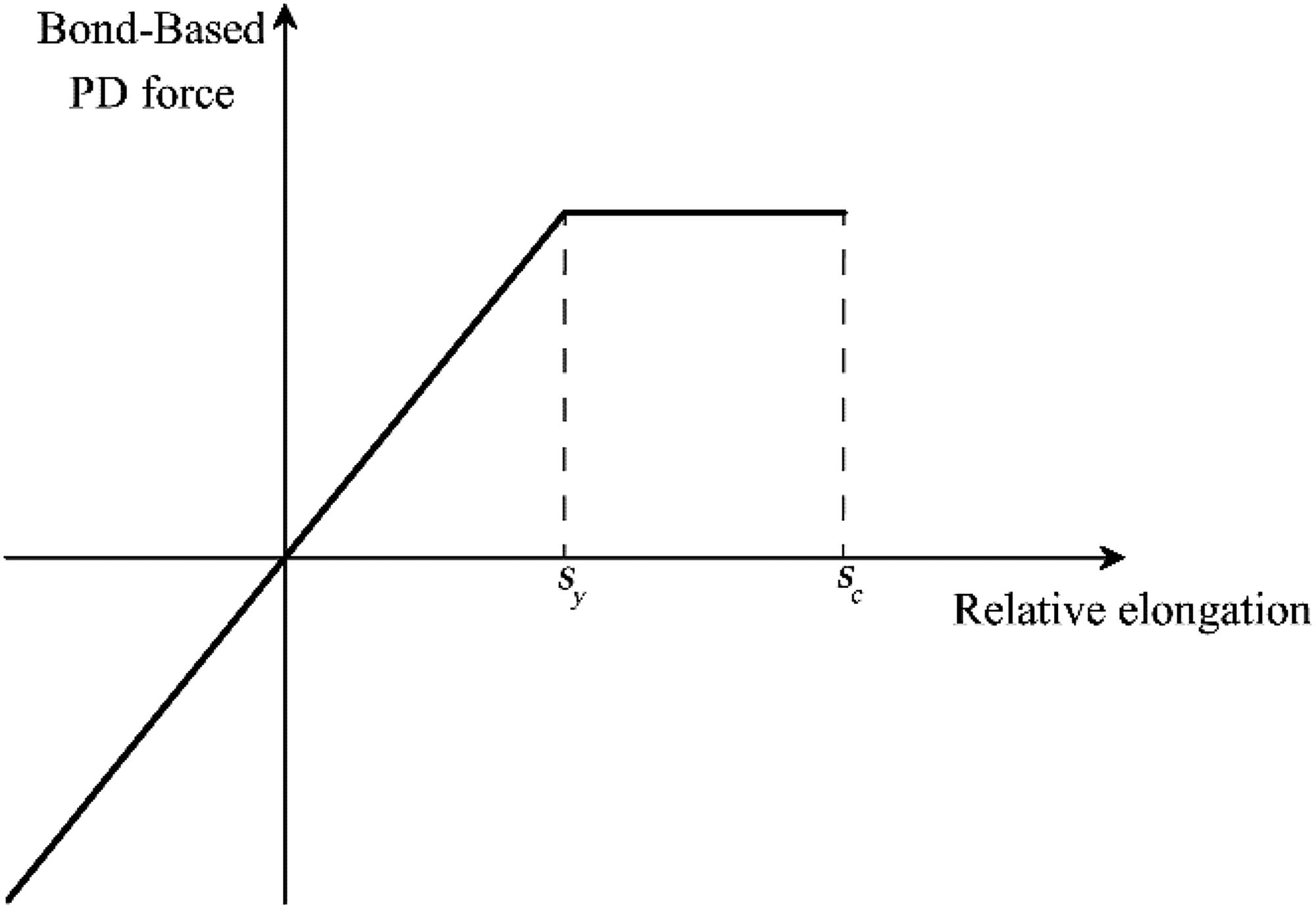
Schematic diagram of the relationship between PD bond force and relative elongation. PD: peridynamics.
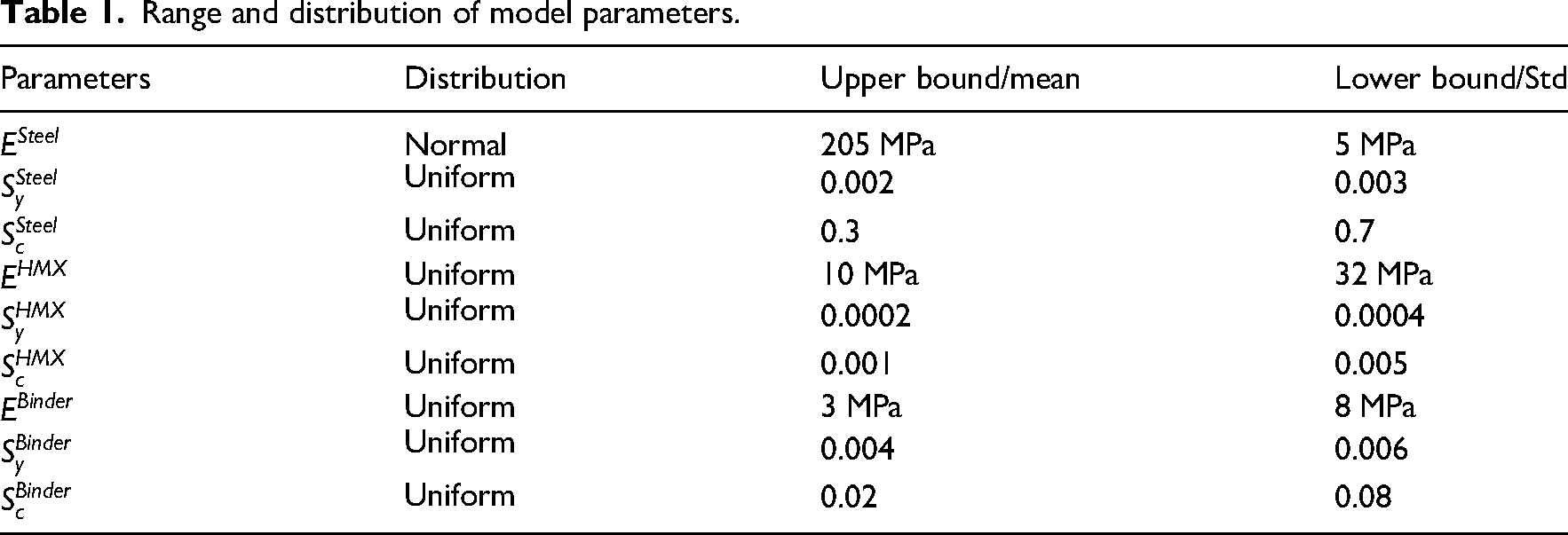
The current research (Kostic et al., 2022) focuses on the influence of the fluctuations of these nine model parameters on the numerical simulation results and ranks their sensitivity according to the degree of influence. The literature has verified that the elastic modulus of the same batch of steel generally follows a normal distribution. However, due to the scarcity of literature on PBX in the PD field, the distribution types of other parameters are not yet clear. In this study, a uniform distribution was used to represent the uncertainty of parameters other than the elastic modulus of the steel. It should be noted that the uniform distribution is commonly used when the distribution type is unknown. The range of parameters was determined by referring to previous studies (Deng et al., 2024; Deng and Wang, 2020; Hu et al., 2024; Huang et al., 2022; Li and Hao, 2023; Prakash and Seidel, 2017). It should be noted that the sensitivity analysis results were obtained under the current parameter uncertainty. The distribution and range of the parameters are shown in Table 1.
Range and distribution of model parameters.
Results and discussion
Dynamic damage behaviors of PBX
Before analyzing the dynamic damage behavior of PBX under impact loading, the reliability of the present PD model was first examined by comparing the simulated stress–strain curves of PBX with the corresponding experimental results. Good agreement was obtained in both the overall evolution trend and the main mechanical response characteristics, indicating that the current model and parameter settings can reasonably reproduce the basic mechanical behavior of the constituent materials. The detailed comparison results are provided in Appendix A.
To help analyze and understand the mechanism of the influence of model parameters on the dynamic damage behavior of PBX, the damage processes of PBX under impact load are analyzed first. Three different impact speeds of 20, 40, and 60 m/s are selected to simulate the dynamic damage of PBX, in order to analyze the influence of different impact speeds on PBX dynamic response and how the sensitivity of parameters affects the physical process of PBX dynamic response.
Figure 7(a) illustrates the dynamic damage evolution of PBX under the 20 m/s impact velocity, specifically depicting cross-sectional damage profiles of steel-encased PBX specimens. In Figure 7(b), the steel shell components have been removed to enhance the visualization clarity of PBX-specific damage patterns. The first two sub-figures in Figure 7(a) and (b) correspond to the impact loading phase spanning 0–40
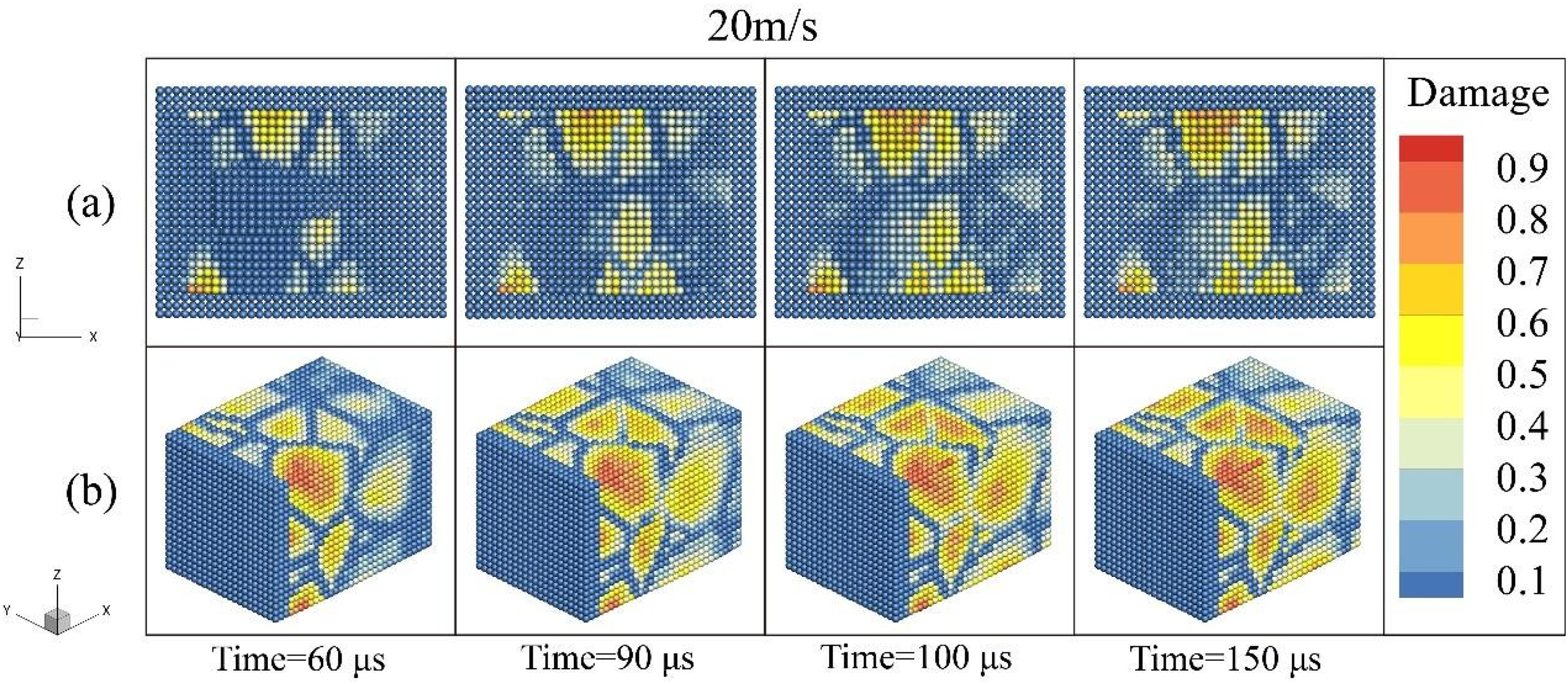
Evolution of PBX damage at impact velocity of 20 m/s: (a) a cross-sectional view of a PBX wrapped in a steel shell; and (b) a PBX model with the outer steel shell removed. PBX: polymer-bonded explosive.
Owing to superior interfacial strength between HMX grains and polymer binder compared to HMX's intrinsic fracture strength, crack propagation preferentially occurred within impact-proximal HMX crystallites, with minimal observable damage in the binder phase. As evidenced in Figure 7(a), this interfacial strength hierarchy enabled binder-mediated stress redistribution, resulting in predominant plastic deformation rather than catastrophic fracture during compressive loading. Post 40
A comparative analysis of Figures 8 and 9 demonstrates conserved damage progression trends at elevated velocities (40–60 m/s), albeit with accelerated kinetics. At these higher velocities, both HMX grain damage and interfacial damage developed earlier, and the interaction between the PBX material and the surrounding steel shell became more pronounced during compression.
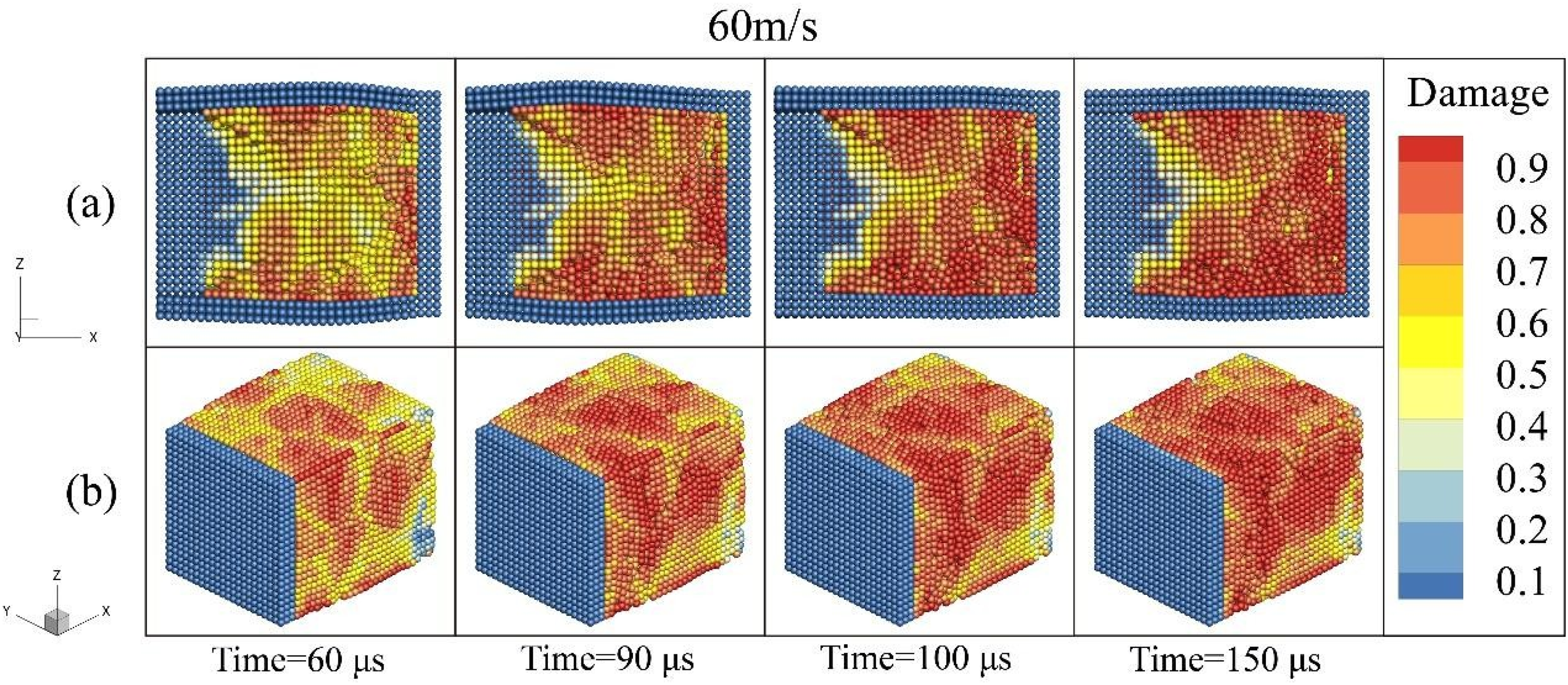
Evolution of PBX damage at impact velocity of 40 m/s: (a) a cross-sectional view of a PBX wrapped in a steel shell; and (b) a PBX model with the outer steel shell removed. PBX: polymer-bonded explosive.
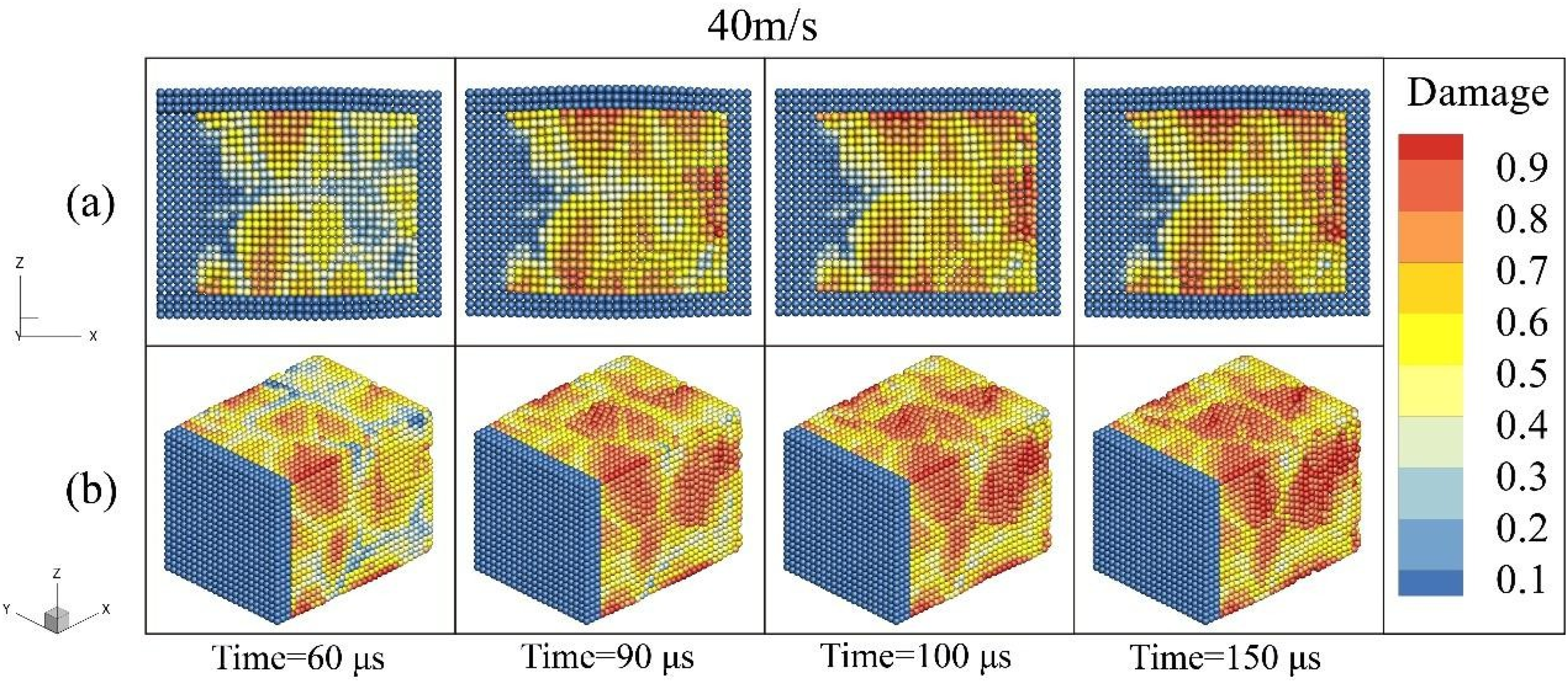
Evolution of PBX damage at impact velocity of 60 m/s: (a) a cross-sectional view of a PBX wrapped in a steel shell; and (b) a PBX model with the outer steel shell removed. PBX: polymer-bonded explosive.
In our simulations, as the impact progresses, the stress wave propagates from the impacted surface toward the opposite surface of the PBX sample. Due to the poly-crystalline nature of PBX and the distinct mechanical properties of HMX and the binder, the damage evolution does not simply follow the direction of stress wave propagation. In order to clearly demonstrate the damage evolution trend of HMX grains, an HMX grain is chosen in Figure 10, and its damage process is analyzed.
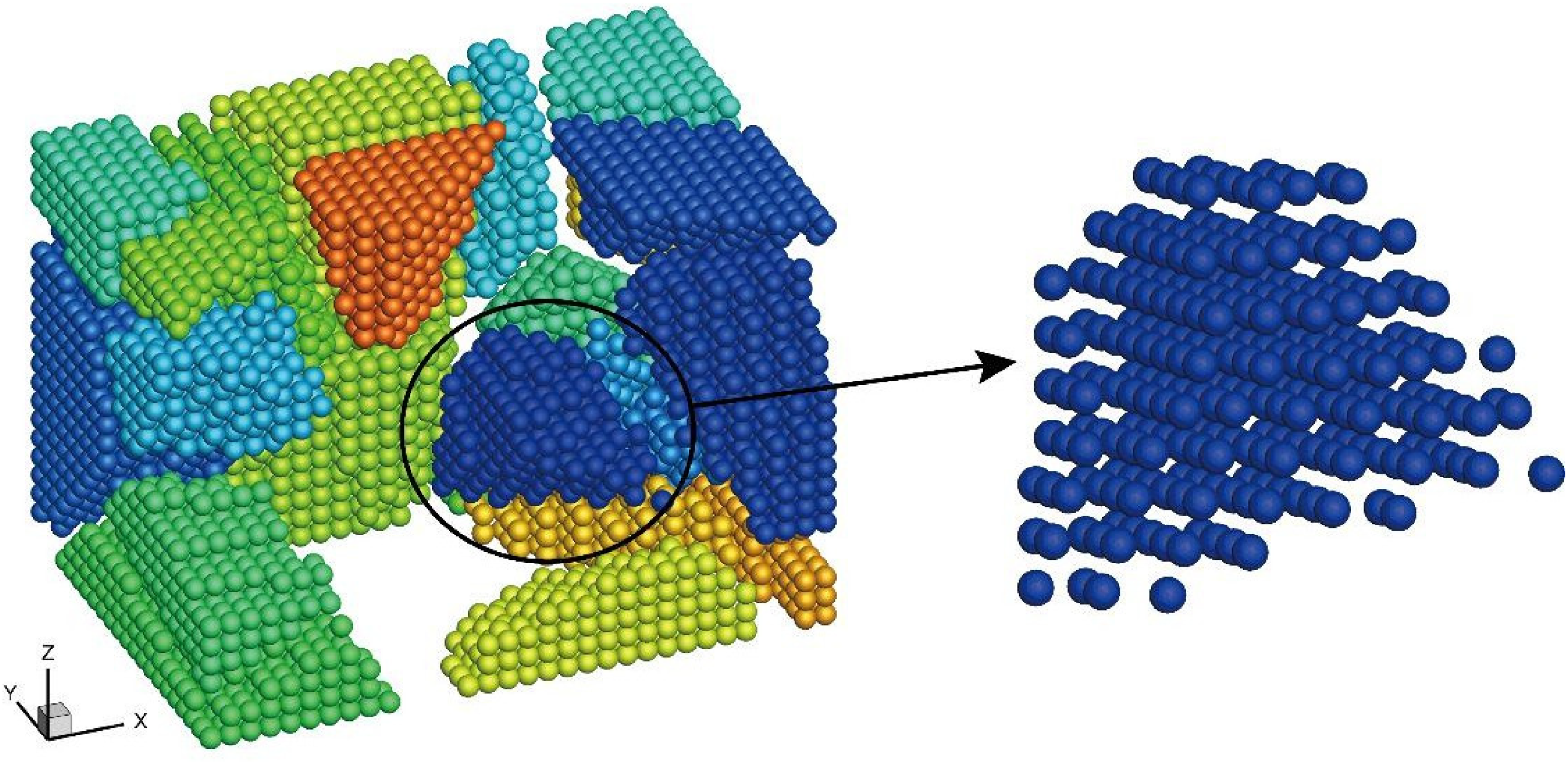
HMX crystal model diagram inside the PBX. PBX: polymer-bonded explosive; HMX: octahydro-1,3,5,7-tetranitro-1,3,5,7-tetrazocine.
Figure 11 presents the temporal evolution of damage in the HMX grain shown in Figure 10 under an impact velocity of 20 m/s. The damage field is visualized using a color gradient from blue (undamaged) to red (fully damaged), indicating the severity of damage. It can be clearly seen that damage initiates in the grain interior and progressively propagates outward the grain boundaries as the impact duration increases, eventually stabilizing as the system approaches a quasi-steady damage state.
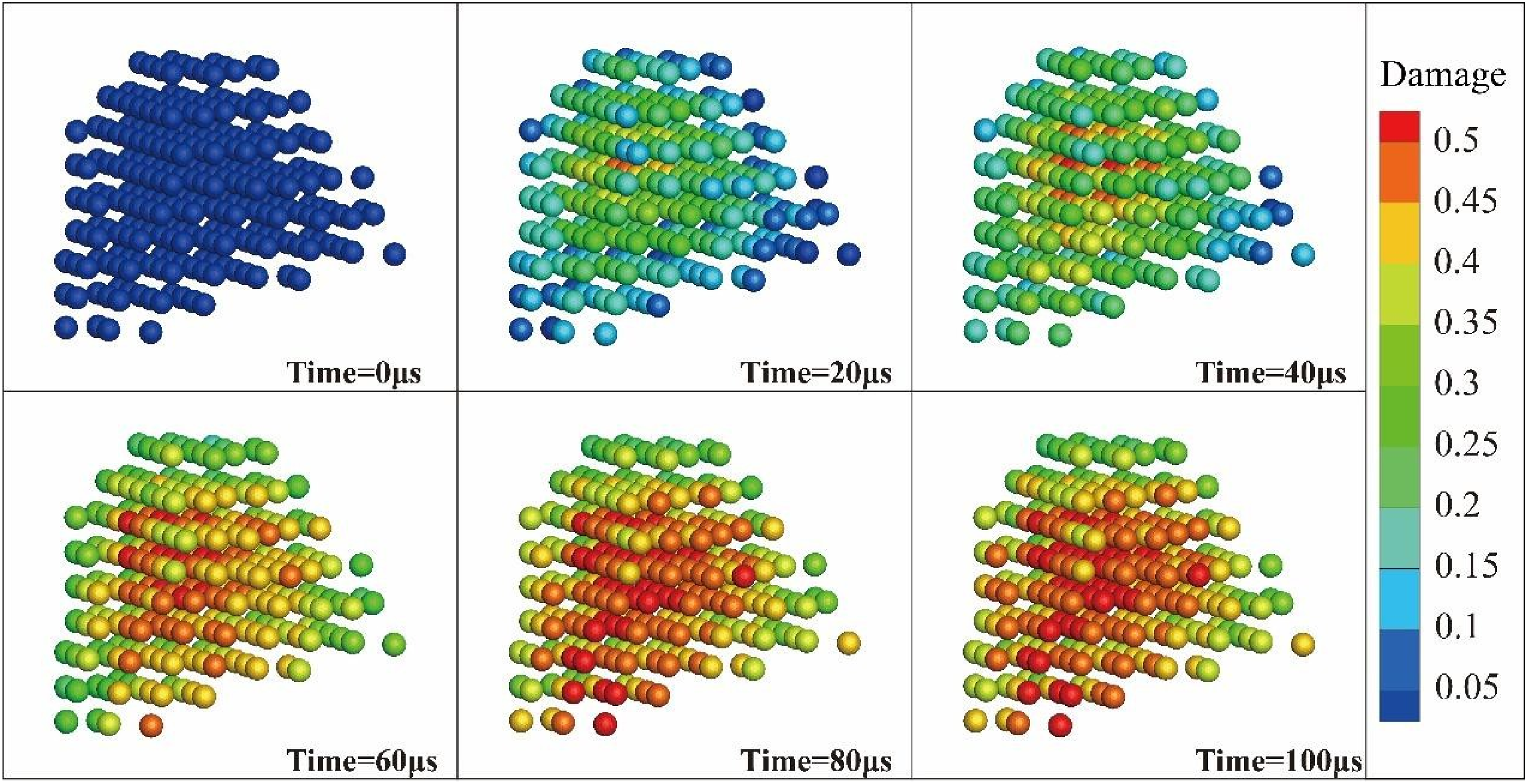
The damage processes of HMX crystal with time at an impact speed of 20 m/s. HMX: octahydro-1,3,5,7-tetranitro-1,3,5,7-tetrazocine.
It can be observed that HMX particles located at the core of the HMX grain are predominantly surrounded by other HMX particles, leading to a local bonding structure primarily composed of HMX–HMX interactions. Toward the grain boundary, the neighborhood of HMX particles contains an increasing number of binder particles, thereby elevating the proportion of HMX–binder bonds. Since the binder exhibits significantly better ductility than that of the HMX grain, it has a greater capacity to accommodate deformation.
To characterize the mechanical property of the HMX–binder interface, an adjustable interface parameter
In the present model, the adjustable interface parameter is taken as
There are three different types of bonds in our simulation: HMX–HMX, HMX–binder, and binder–binder. The damage corresponding to different bonds is calculated by the number of broken bonds divided by its total number of initial bonds. Since the breakage of HMX–HMX bonds corresponds to the formation of cracks within the HMX grains, herein referred to as trans-granular damage, while the breakage of HMX–binder and binder–binder bonds signifies interfacial cracking, that is, inter-granular damage.
To quantitatively assess the dominant damage mechanism within PBX, Deng and Wang (2020) proposed a damage mode index (DMI), defined as:
To quantify the variability of damage modes induced by parameter uncertainty, N samples were first drawn from the prescribed distributions of the uncertain PD model parameters after the Kriging surrogate model was established. The corresponding DMI values were then predicted by the surrogate model as
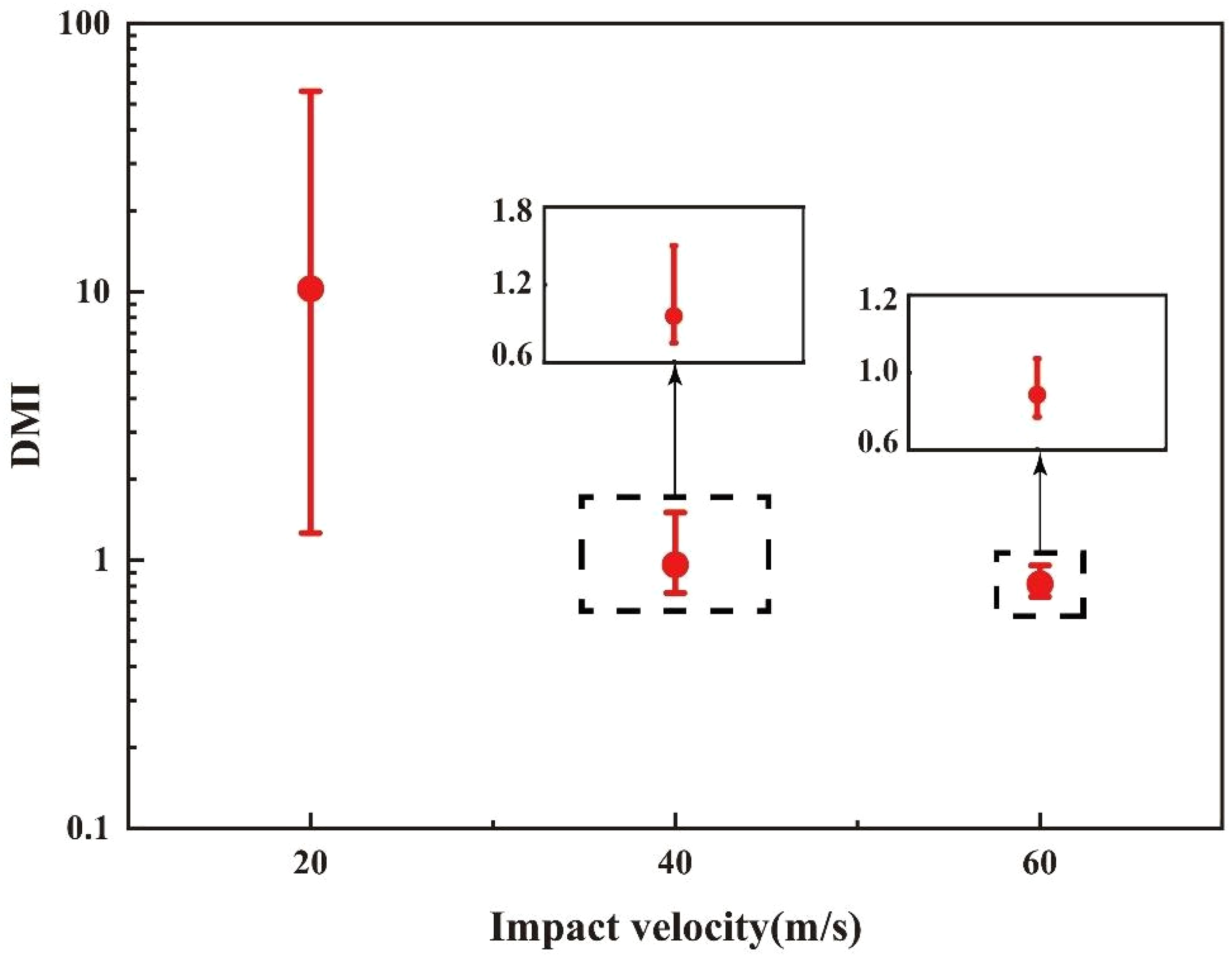
The variation range of the damage mode index at impact velocities of 20, 40 and 60 m/s (the error bars are expressed as 95% confidence intervals).
At an impact velocity of 20 m/s, the mean DMI is approximately 10.257, indicating that trans-granular damage is the dominant failure mode under low-velocity impact. Notably, the error bar at 20 m/s is much longer than those at 40 and 60 m/s, and is also strongly asymmetric, with a particularly large upper bound. This feature indicates that the DMI distribution at low velocity is highly dispersed and right-skewed. Physically, under 20 m/s impact, trans-granular damage is dominant, while inter-granular damage remains relatively limited. Since DMI is defined as the ratio of
As the impact velocity increases to 40 m/s, the mean DMI decreases to 0.96052, which is close to 1. This indicates that the system enters a transition regime between trans-granular and inter-granular damage. Correspondingly, the error bar becomes much shorter than that at 20 m/s, but it is still wider than that at 60 m/s and extends across the critical value of
At 60 m/s, the mean DMI further decreases to 0.81462, and the corresponding error bar is the narrowest among the three cases. More importantly, the entire interval remains below 1, indicating that inter-granular damage becomes the stably dominant failure mode at high impact velocity. This result suggests that, although parameter uncertainty still affects the quantitative value of DMI, it no longer changes the qualitative judgment of the dominant damage mode as easily as in the lower-velocity cases.
Kriging surrogate model
Sensitivity analysis requires comprehensive sampling to capture variations in parameter space and their impacts on model outputs when handling complex systems or non-linear models, as parameters often exhibit multi-dimensional, non-linear, or interactive effects, making sparse sampling insufficient to cover all potential parameter combinations. Therefore, a large number of samples are needed in sensitivity analysis to ensure a uniform distribution in the parameter space. However, practical numerical models may involve high-computational costs and prolonged simulation times, which conflict with the demand for extensive repeated calculations. According to the Section “Global Kriging surrogate model,” Kriging surrogate models corresponding to impact loading conditions at 20, 40, and 60 m/s can be established to address these computational challenges. The critical step in constructing surrogate models lies in defining inputs and outputs: uncertain parameters serve as inputs, while outputs correspond to the model's response to input variations, whose formulation is intrinsically tied to the analysis objectives.
This study focuses on analyzing the influence of constitutive model parameter uncertainties on the dynamic damage outcomes of PBX under impact loading. Since damage is quantified by bond crack counts, the constitutive models of PBX and steel are designated as inputs, with outputs being the crack counts of HMX–HMX, HMX–binder, and binder–binder bonds. As shown in Figure 13, under sustained impact loading, PBX eventually undergoes severe damage and fragmentation, leading to damage values approaching 0.8 across different velocities. The limited variability in output uncertainties results in nearly identical parameter importance rankings at various velocities, failing to adequately represent velocity-dependent parameter sensitivities.
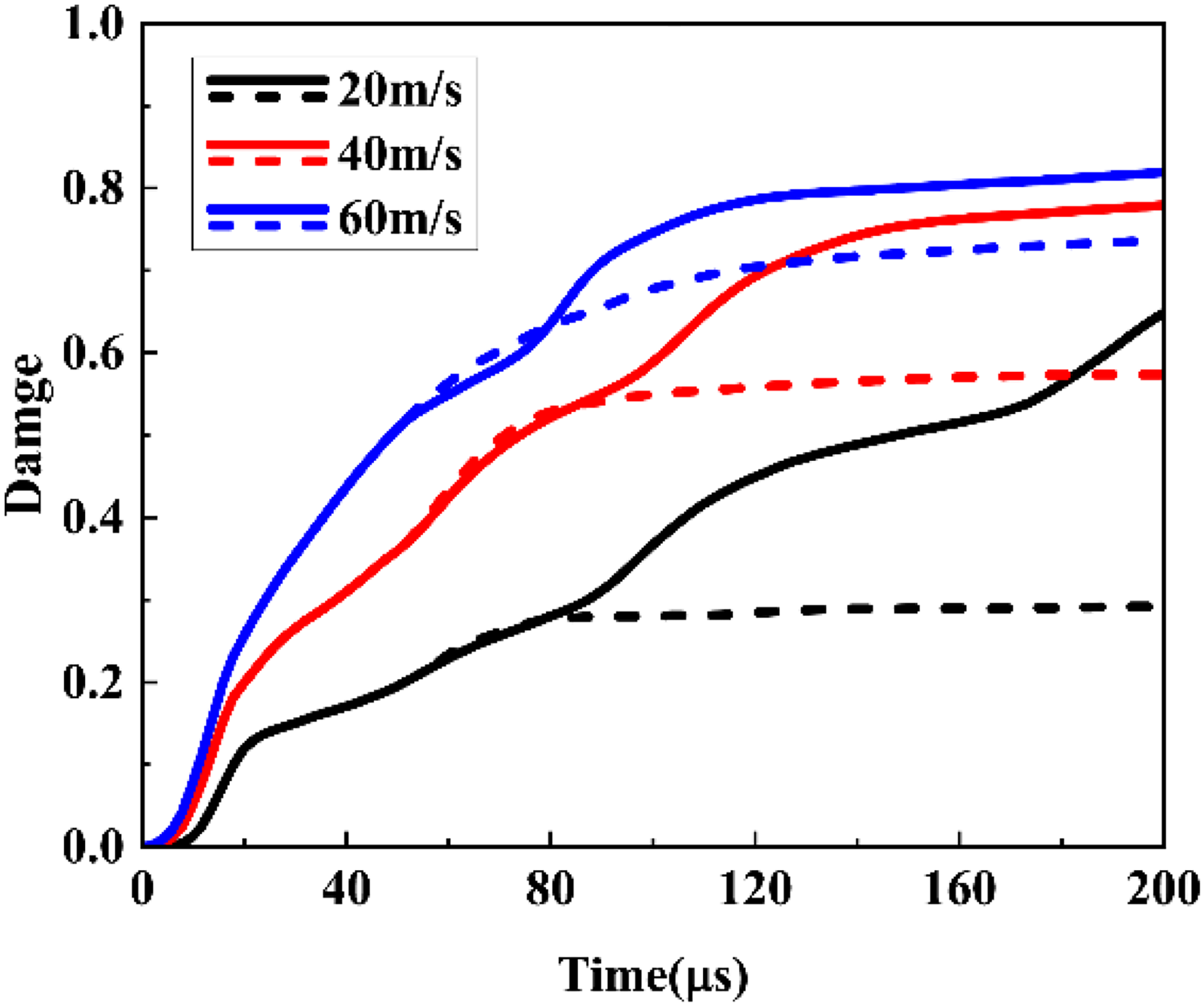
Damage of PBX at different impact speeds (solid line shows the damage caused by the continuous impact on the PBX particles, dashed line shows the damage caused by the impact applied for a time of 50
Under moderate strain-rate conditions, Pei et al. (2024) investigated trans-granular fracture and interfacial debonding in pressed explosives under multi-axial non-shock loading by adjusting incident wave durations to 50
Figure 14 displays the relative damage variation rate of PBX over time under fixed 50
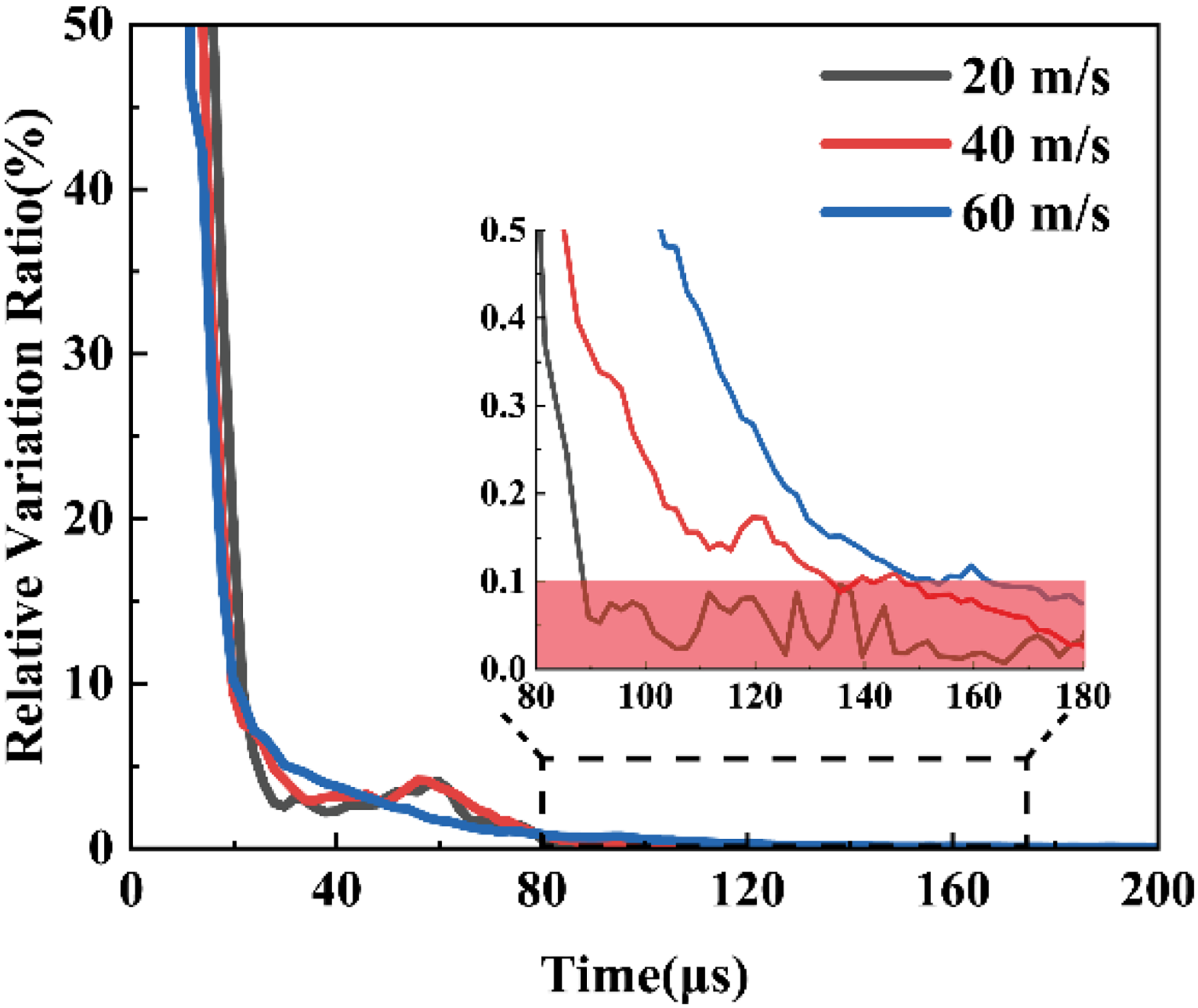
Relative rate of change of damage during continuous evolution. The red area represents the range of relative rate of change of 0.1% that meets the convergence condition.
Training samples and mean square errors of the Kriging surrogate model at three impact speeds.

MSE: mean square error.
The sensitivity analysis of model parameters
The total damage of PBX is defined as the cumulative number of bond breakages among HMX–HMX, HMX–binder, and binder–binder. This metric reflects the global accumulation of internal defects and their subsequent influence on the mechanical integrity of the material. By evaluating the sensitivity of total damage to various material parameters, one can identify the dominant sources of uncertainty and, consequently, determine the key factors governing the damage evolution in PBX composites.
Figure 15 illustrates the first-order and total Sobol sensitivity indices of the PD constitutive model parameters with respect to total damage under impact velocities of 20, 40, and 60 m/s. At an impact velocity of 20 m/s, the most influential parameter is the critical relative elongation of the binder (
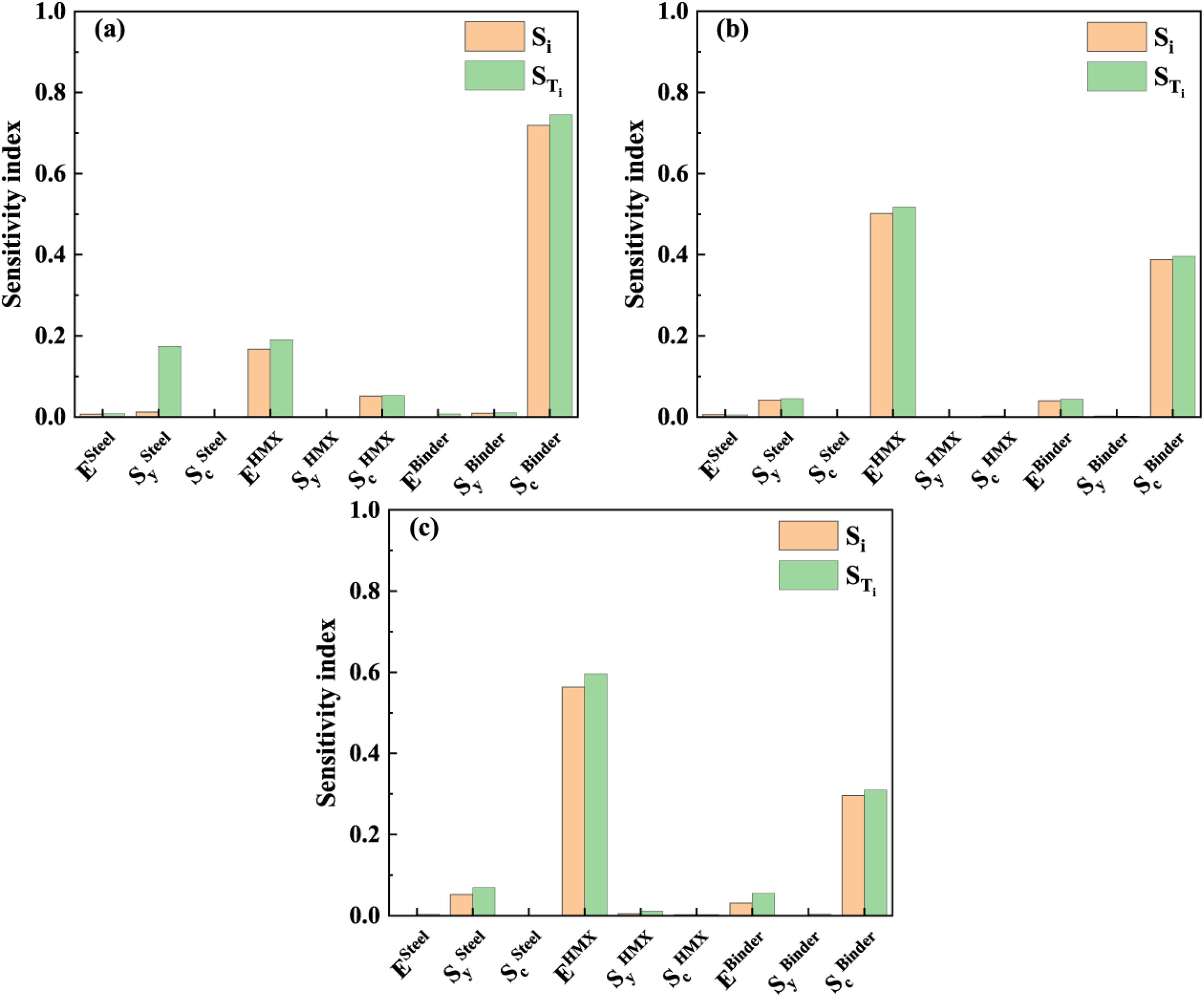
First-order Sobol index and total index calculation of PD model parameters for total damage under different impact velocities: (a) 20 m/s, (b) 40 m/s, and (c) 60 m/s. PD: peridynamics.
At 20 m/s, trans-granular damage dominates the damage mechanism. Given the relatively limited damage experienced by the binder at this stage, its material parameters exhibit greater regulatory influence over the total damage than those of HMX, and thus emerge as the most significant contributors. As the impact velocity increases, damage initiates within the grains and progressively propagates toward the grain boundaries. Concurrently, the dominant damage mode converts from trans-granular to inter-granular fracture. This shift in failure mechanism is reflected in the changing importance of material parameters: the increasing damage to the binder reduces its ability to regulate total damage, leading to a corresponding decrease in the significance of its associated parameters.
At impact velocities of 40 and 60 m/s, the Sobol index of
The velocity-dependent differences in parameter sensitivity also provide an explanation for the different error-bar lengths observed among the three impact velocities in Figure 12. At 20 m/s, parameter perturbations can induce relatively large fluctuations in
In the simulation, the total damage of PBX is defined as the cumulative number of broken bonds among three types. Each bond type corresponds to damage occurring in different regions of the micro-structure. Due to the poly-crystalline nature of PBX and the ability of HMX and binder to form interfacial bonds, the breakage of a particular bond type is not influenced solely by the material parameters of that specific phase, but may also be affected by the properties of other materials within the composite. Therefore, analyzing the sensitivity of different bond breakages to various material parameters not only identifies key parameters that dominate bond failure, but also sheds light on the inter-dependence among different material phases during damage evolution. In PBX, the initial population of each bond is unequal, and due to their distinct evolution patterns under impact loading, the Sobol sensitivity analysis of the three bonds under related conditions is considered to decompose the uncertainty contributions of each bond to the total damage.
The inner pie chart of Figure 16 depicts the proportion of variance in
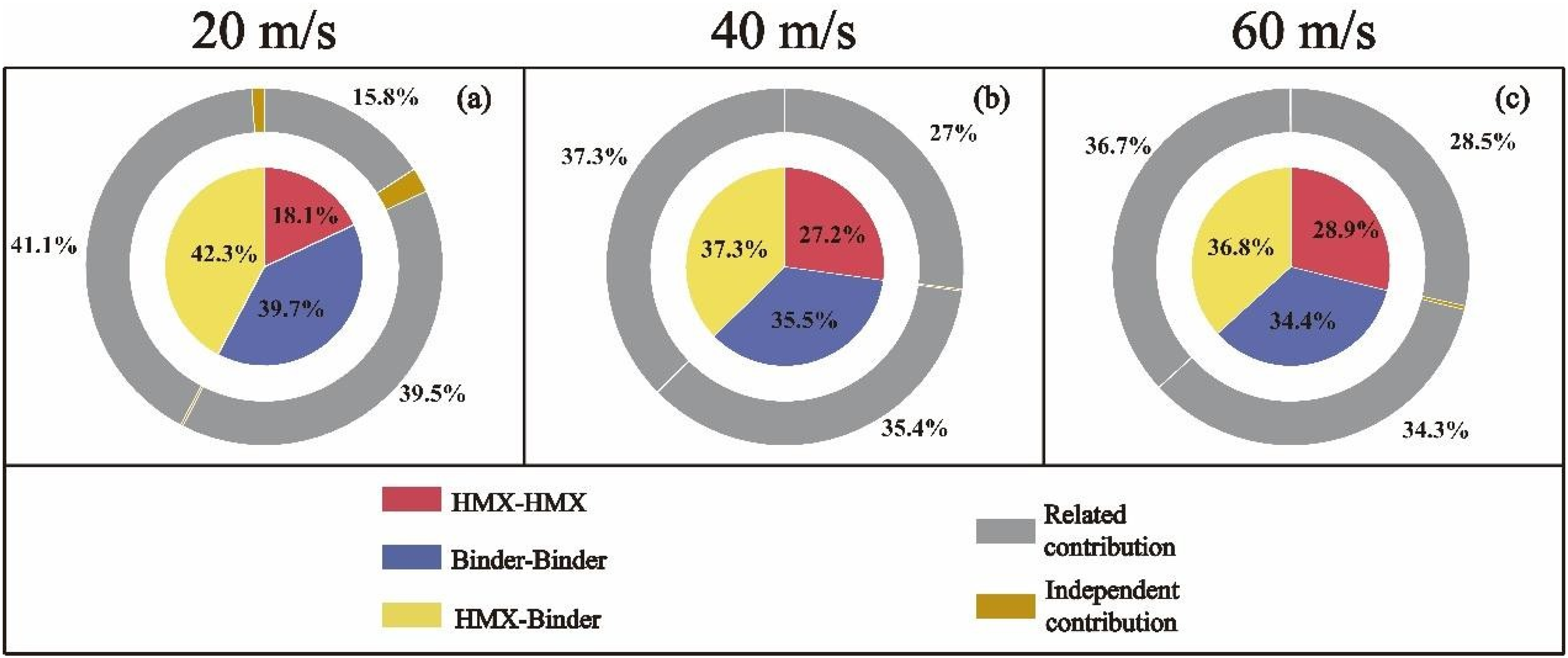
The individual and total contributions of the uncertainty of the three types of bond damage to the total damage uncertainty at different impact speeds.
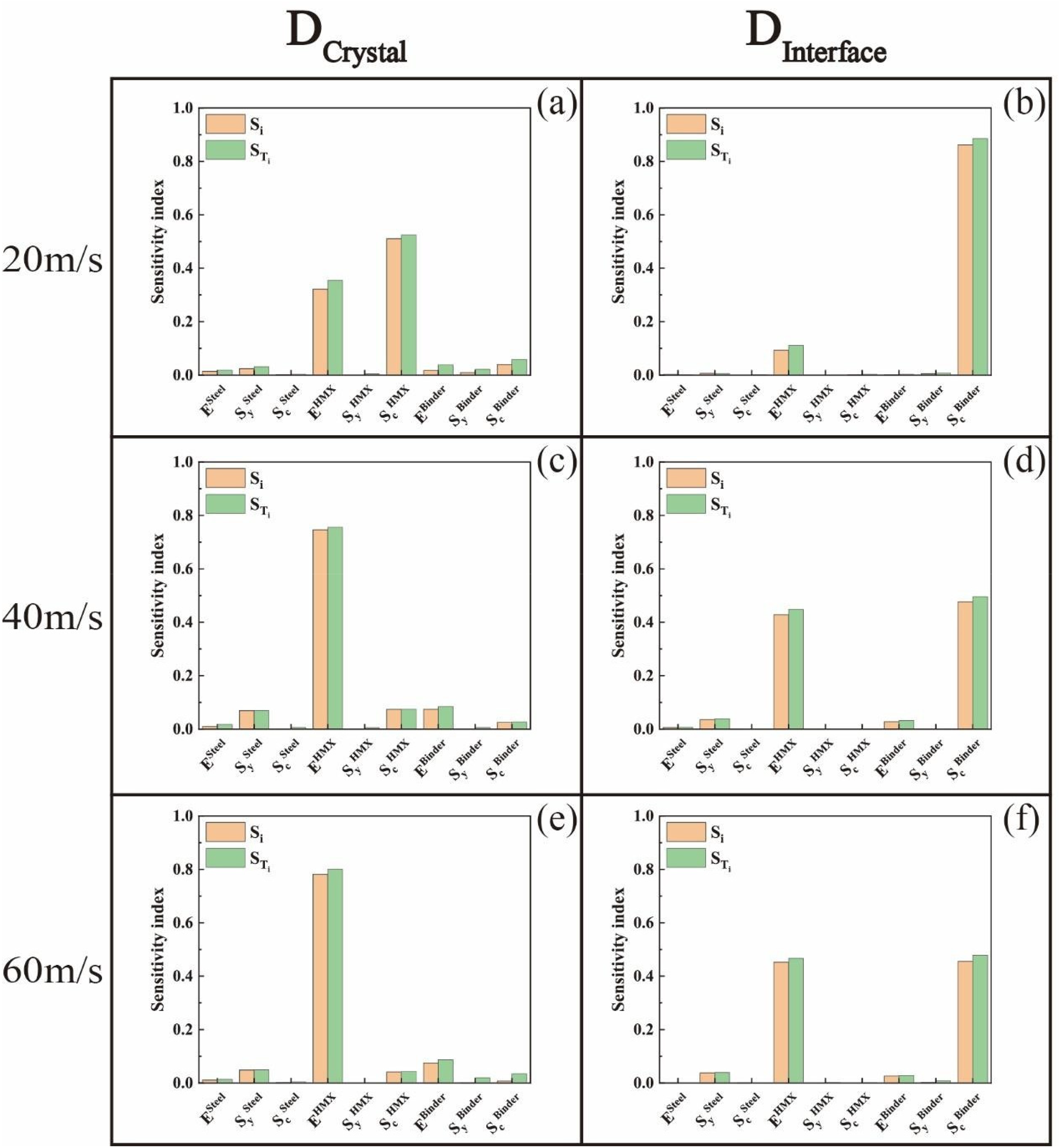
First-order Sobol indicators and total indicators of all parameters for the two damage modes at impact speeds, v = 20, 40, and 60 m/s.
The very small sum of independent contributions further suggests that the uncertainty in total damage arises mainly from the correlated fluctuations among bond types rather than from the isolated variation of any one damage component. In other words, total damage is primarily a collective response of the PBX micro-structure to impact, rather than a simple linear superposition of three separate failure processes. This also explains why adjusting the broken-bond number of only one bond type is generally insufficient to significantly change the overall damage evolution, whereas the coupled variation among crystal fracture, interfacial debonding, and binder failure plays a dominant role in determining the final damage state.
At an impact velocity of 20 m/s, the pie chart in panel Figure 16(a) clearly shows that approximately 80.6% of the total damage uncertainty originates from
In contrast, under lower impact loads, damage at the interfaces is comparatively minimal, with a greater proportion of bonds in a critical (near-failure) state. This makes the evolution of
From the first-order Sobol indices of
As shown in Figure 11, damage in HMX grains initiates from the interior and propagates outward. Under lower impact velocities, damage is concentrated within the HMX grains, where most HMX–HMX bonds are completely broken. Closer to the grain boundary, binder particles become more prevalent, resulting in increased bonding between HMX and binder. Since HMX–binder bonds are more tolerant to deformation-induced failure under the current model setting, edge HMX particles tend to experience less damage, leaving many of their neighboring HMX–HMX bonds in a critical state. Furthermore, the binder undergoes less damage than HMX, and a substantial number of bonds at the interface remain near the failure threshold. This explains why, in the importance analysis of both
As the impact velocity increases, the dominant damage mechanism in PBX shifts from trans-granular to inter-granular. Correspondingly, the influence of
In summary, the shift in dominant damage mechanisms in PBX leads to the corresponding changes in the ranking of parameter importance. When the damage is relatively mild,
Conclusion
By developing a PD model for steel-encased PBX, this study successfully simulated the dynamic response of PBX under impact loading with confinement effects. Utilizing PD constitutive model parameters as stochastic inputs and three types of broken bond number (HMX–HMX, HMX–binder, binder–binder) as damage outputs, the effects of constitutive parameter uncertainties on dynamic damage of PBX are quantified. Kriging surrogate models were constructed for 20, 40, and 60 m/s impact velocities using these datasets. At a relatively low impact velocity (20 m/s), trans-granular damage dominates within the PBX micro-structure and exhibits pronounced sensitivity to uncertainties in the PD model parameters. This is evidenced by a significantly high DMI of >1 accompanied by a wide confidence interval, indicating substantial variability in damage evolution induced by parameter fluctuations. As the impact velocity increases to 40 and 60 m/s, the dominant failure mechanism transitions to inter-granular damage, with the DMI markedly decreasing to values below 1. Concurrently, the influence of material parameter uncertainty on the damage response becomes less pronounced, as reflected by the narrowing of the DMI confidence intervals.
Sobol global sensitivity analysis was implemented to compute the importance indices of PD model parameters, identify critical factors influencing damage progression, and establish a systematic framework for parameter sensitivity evaluation. The parameter sensitivity analysis based on the simulation results reveals a clear velocity-dependent dominance: at low impact velocity (20 m/s),
Moreover, the sensitivity analysis of damage modes indicates that, under 20 m/s impact conditions, the relatively mild damage causes the uncertainties in trans-granular and inter-granular damage to depend mainly on the variations in HMX-related and binder-related parameters, respectively. However, under 40–60 m/s impact conditions,
Footnotes

Author contributions
Yukai Cui: conceptualization, methodology, and writing—validation, investigation, and original draft. Xiaoliang Deng: conceptualization, methodology, writing—review and editing, validation, and investigation. Luyi Li: methodology and writing—review, editing, and validation.
Funding
The authors disclosed receipt of the following financial support for the research, authorship, and/or publication of this article: The authors gratefully acknowledge financial support from the National Natural Science Foundation of China (through Grant No. 12272361) and the scientific research project of National Key Laboratory of Shock Wave and Detonation Physics (Grant No. JCKYS2024212104).
Declaration of conflicting interests
The authors declared no potential conflicts of interest with respect to the research, authorship, and/or publication of this article.
Data availability statement
The data used in this study will be made available upon request to the corresponding author.
Appendix A
To examine the reliability of the present PD model, the simulated stress–strain response was compared with the corresponding experimental result. The same PD constitutive model and parameter settings as those used in the main simulations were adopted.
As shown in Figure A1, the simulated stress–strain curve agrees well with the experimental curve. The PD model captures the main mechanical response of PBX, including the initial loading stage, the peak stress, and the rapid post-peak stress drop caused by damage and fracture. The predicted peak stress and the corresponding strain are also close to the experimental values.
Although slight differences can be observed in the post-peak stage, this is reasonable because the failure process of PBX is affected by local micro-structural heterogeneity, grain distribution, binder deformation, and interfacial debonding. Overall, the comparison indicates that the present PD model can reasonably reproduce the basic mechanical response of PBX, supporting its use for subsequent dynamic damage and sensitivity analyses.
Appendix B
To evaluate the influence of spatial discretization on the simulated damage evolution, a mesh-independence analysis was conducted. Three models with different mesh densities under the 20 m/s conditions were considered, including the baseline mesh used in the main simulations, a refined mesh with twice the number of grid points, and a further refined mesh with five times the number of grid points. Except for the mesh density, the model geometry, material parameters, boundary conditions, and impact-loading conditions were kept the same.
Figure B1 compares the total damage evolution obtained from the three mesh settings. The total-damage curves show consistent overall trends under different mesh densities. In all cases, total damage increases rapidly after impact loading and then gradually approaches a stabilized state. The results obtained from the baseline mesh and the 2× mesh are very close. Although the 5× mesh produces slight differences in the absolute damage value, the main evolution pattern, stage characteristics, and final stabilized state remain consistent with those of the baseline model.
These results indicate that the spatial discretization used in the main simulations is sufficient to capture the primary damage-evolution behavior of PBX. Therefore, the present mesh setting does not change the main conclusions regarding damage evolution, damage-mode transition, or parameter effect analysis.