







Abstract
This study examined differences in offense patterns and the prevalence and importance of risk factors for recidivism between Dutch (n = 542), Moroccan (n = 292), Surinamese (n = 133), Turkish (n = 97), and Antillean youth (n = 72). Results showed differences in offense patterns, the prevalence of risk factors, and the impact of these risk factors on recidivism between the ethnic groups. Public-order offenses were most common in the Dutch group, nonviolent property offenses in the Moroccan and Turkish groups, violent property offenses in the Surinamese group, and both public-order and nonviolent property offenses in the Antillean group. In the case of ethnic majority youth, risk factors in most domains (family, school, friends, use of free time, and mental health) were associated with recidivism, whereas only a small number of risk factors were associated with recidivism among ethnic minority youth. Interventions aimed at these risk factors may therefore be less effective in reducing recidivism in ethnic minority youth.
A great deal of the literature on ethnic differences in criminality focuses on ethnic differences in the extent and severity of delinquency (Loeber & Farrington, 2004). For many years, there has been an overrepresentation of ethnic minority youth groups in the criminal justice system, both in the Netherlands (e.g., Bijl, Blom, Oudhof, & Bakker, 2006; De Jonge & Van der Linden, 2007; Jennissen & Blom, 2007; Stevens, Veen, & Vollebergh, 2009) and in other highly developed Western countries (e.g., Hagan & Palloni, 1999; Hawkins, Laub, Lauritsen, & Cother, 2000; Rodney & Tachia, 2004; Sampson, Morenoff, & Raudenbush, 2005). There is, however, much less literature available on whether causes of delinquency are the same among different ethnic groups (Loeber & Farrington, 2004; Peterson & Krivo, 2005; Sampson & Wilson, 1995). This knowledge is important for developing effective interventions for juvenile offenders from various cultural backgrounds.
In the Netherlands, four “traditional” ethnic minority groups are strongly represented in the criminal justice system: Moroccan, Turkish, Surinamese, and Antillean youth (Blom & Van der Laan, 2007; De Jonge & Van der Linden, 2007; Jennissen & Blom, 2007; Klooster, Van Hoek, & Van ‘t Hoff, 1999). Research has shown that these groups are more likely to be a suspect in an offense than ethnic majority youth. This applies to both first and second generations, and to juveniles as well as adults (De Jonge & Van der Linden, 2007; Jennissen & Blom, 2007). Moroccan and Antillean juveniles are particularly more likely to be arrested. In 2005, the number of charges was 5 times higher for Moroccan youth and almost 6 times higher for Antillean youth than for native Dutch youth (Blom & Van der Laan, 2007; Kleijer-Kool, 2006; Stevens et al., 2009). There is no consensus among researchers on the extent to which the differences in official crime records are a reflection of actual differences in criminality between ethnic groups, or whether these figures reflect differences in the approaches of judicial authorities (Devine, Coolbaugh, & Jenkins, 1998; Lauritsen, 2003; Loeber & Farrington, 2004). Van der Laan and Blom (2011) compared official data with self-report data, and found that Surinamese and Antillean youth reported more offenses than Dutch youth, which is in line with official data, whereas Moroccan and Turkish youth reported less offenses than Dutch youth, which is contrary to official data. However, research has shown that Turkish and Moroccan youth tend to underreport their problem behavior (Junger, 1989; Stevens et al., 2003; Van der Laan & Blom, 2011).
The registration of ethnic origin of delinquents is taboo in the Netherlands (Bijl et al., 2006). Only the country of birth and nationality are recorded, which means that it is not possible to distinguish second-generation immigrants from native Dutch immigrants. This is a particularly prominent problem with youth, as the vast majority of ethnic minority youth are born in the Netherlands. Therefore, little is known about recidivism rates and the incidence of various types of offenses among different ethnic groups in the Netherlands (Jennissen & Blom, 2007). Driessen, Volker, Op den Kamp, Roest, and Moolenaar (2002) provided an overview of studies examining differences between various young ethnic groups in the type of offenses most frequently committed, which showed a high incidence of vandalism and destruction among Dutch youth, whereas property offenses and violence were more common among ethnic minority juvenile offenders. These results are partly in line with findings from other countries. The second international self-report study among approximately 67,000 youth from 30 different countries showed that ethnic minority youth (with the exception of Asian youth) committed considerably more violent offenses than ethnic majority youth (Junger-Tas, 2012). In previous studies, no differences were found between the various ethnic minority groups in the types of offenses (Driessen, Volker, Op den Kamp, Roest, & Moolenaar, 2002). Therefore, the first aim of our study was to explore differences between ethnic groups in offense patterns.
It has been suggested in the literature that ethnic minority youth are exposed more often than ethnic majority youth to ethnic-specific as well as generic risk factors for antisocial behavior. Examples of ethnic-specific risk factors are poor integration, lack of engagement with society, and a sense of discrimination (Bijl et al., 2006; Farrington, Loeber, & Stouthammer-Loeber, 2003; Stevens et al., 2009). In addition, several aspects of family functioning have been found to be ethnic-specific. Deković, Pels, and Model (2006) found that parents of ethnic minority youth were not able to support and prepare them fully for an integrated life in Dutch society due to their lack of knowledge of the dominant culture. In addition, the parents of ethnic minority youth may have different values about child rearing. This means that young people experience differences between standards and values within and outside the home, which can lead to more conflicts within the family (Deković & Asscher, 2007). Generic risk factors, on the other hand, are the same for all ethnic groups (e.g., poverty, growing up in large families, family disruption, having parents with a low level of education, and living in deprived areas), but are more common among ethnic minority youth than among ethnic majority youth (Bijl et al., 2006; De Jonge & Van der Linden, 2007; Harer & Steffensmeier, 1992; Hulst & Bos, 1993; Jennissen & Blom, 2007; LaFree & Drass, 1996; Shihadeh & Ousey, 1996). The higher prevalence of both ethnic-specific and generic risk factors explain the higher levels of delinquency among ethnic minority youth (Deković & Asscher, 2007).
The question remains, however, whether the impact of these risk factors is the same across ethnic minority groups (Deković & Asscher, 2007). It is often assumed that theories on delinquent behavior that are based on research among ethnic majority youth can be generalized to juveniles from ethnic minority groups, but little research has been done on this to date (Deković, Janssens, & As, 2007). There are indications that the effects of risk factors vary from group to group (Bronfenbrenner, 1979). For example, associations between family factors and externalizing problem behavior in children have found to be different in Caucasian American and African American families: Corporal punishment is related to problem behavior in middle-class Caucasian American families, but not in African American families (Deater-Deckard, Dodge, Bates, & Pettit, 1996). Other research, however, has demonstrated that the processes that contribute to problem behavior are the same for Caucasian American and African American adolescents (Goldstein, Davies-Kean, & Eccles, 2005). Various studies have shown that theoretical models based on research in Caucasian samples are adequate for predicting antisocial behavior among ethnic majority youth in highly developed Western countries, but are less adequate for predicting antisocial behavior among ethnic minority youth in these countries (Chen, Greenberter, Lester, Dong, & Guo, 1998; Deković, Wissink, & Meijer, 2004; Murad, Joung, Lenthe, Bengi-Arsal, & Crijnen, 2003; Stevens, 2004).
The second aim of our study was therefore to explore differences between ethnic groups in the prevalence and impact of risk factors for recidivism. This knowledge is important for referral of ethnic minority youth to penal interventions. The effect of a penal intervention is supposed to be largest if it is geared to risk factors that have the strongest link to the development and persistence of delinquent behavior (Andrews & Bonta, 2010). If the impact of risk factors varies between ethnic majority and minority youth, it is plausible to suggest that the effectiveness of interventions directed at these risk factors will also vary. To date, however, there are no data on potential differences in the effectiveness of interventions for ethnic minority and majority groups in the Netherlands (Deković & Asscher, 2007). At the international level too, little research is available (Huey & Polo, 2008). Wilson, Lipsey, and Soydan (2003) performed a meta-analysis to examine whether mainstream programs for juvenile delinquency were less effective for ethnic minority youth than for ethnic majority youth. The average effect size of these programs turned out to be larger for majority youth than for minority youth, but the difference was not significant. However, it should be noted that the average effect size of the reviewed programs was rather low (d = .11 for minority youth and d = .17 for majority youth). American research has also shown that culture-sensitive interventions were more successful in terms of engaging ethnic minorities into an intervention and keeping them involved, but these interventions did not lead to greater effectiveness (Kumpfer, Alvarado, Smith, & Bellamy, 2002).
Finally, it is important to distinguish between risk factors on one hand and direct reasons to commit an offense, such as anger, drunkenness, or the need of money on the other hand. To our knowledge, there are no previous studies in which the primary motives for committing offenses are compared between ethnic groups. Therefore, we also exploratively examined differences in the primary reasons to commit offenses in order to gain more insight into the causes of possible differences in delinquent behavior between the various ethnic groups. We started by investigating ethnic differences in background characteristics. In summary, in this study, we examined ethnic differences in (1) background characteristics, (2) offense patterns (seriousness and type of the current offense, previously committed offenses and recidivism), (3) primary motives for committing offenses, and (4) the prevalence and impact of risk factors for recidivism.
Method
Sample
The total sample included 1,396 adolescents in the age range of 12–18 years who have committed a criminal offense and who have been referred to the Council of Child Care and Protection (CCCP). The CCCP examines whether the committed offense signals underlying disorders or problems in the adolescent’s environment and gives advice to judicial authorities as to what penalty to impose. The CCCP consists of 21 branches. To draw a random sample of adolescents referred to the CCCP, we first selected five representative branches of the CCCP, in four major cities of the Netherlands (Amsterdam, The Hague, Utrecht, and Rotterdam) and in a rural region (Zwolle). Subsequently, a random sample was drawn from adolescents referred to each of the five branches in 2005. A comparison of the sample with the population showed that the ratio of boys to girls in the sample (boys, 83%; girls, 17%) and the ratios of the various ethnic groups (Dutch, 41%; Moroccan, 22%, Surinamese, 10%, Turkish, 7%, Antillean, 6%, and “other,” 14%) matched the ratio of boys to girls and the ratio of the various ethnic groups in the population from which the sample was drawn.
Instruments
Washington State Juvenile Court Prescreen Assessment (WSJCPA)
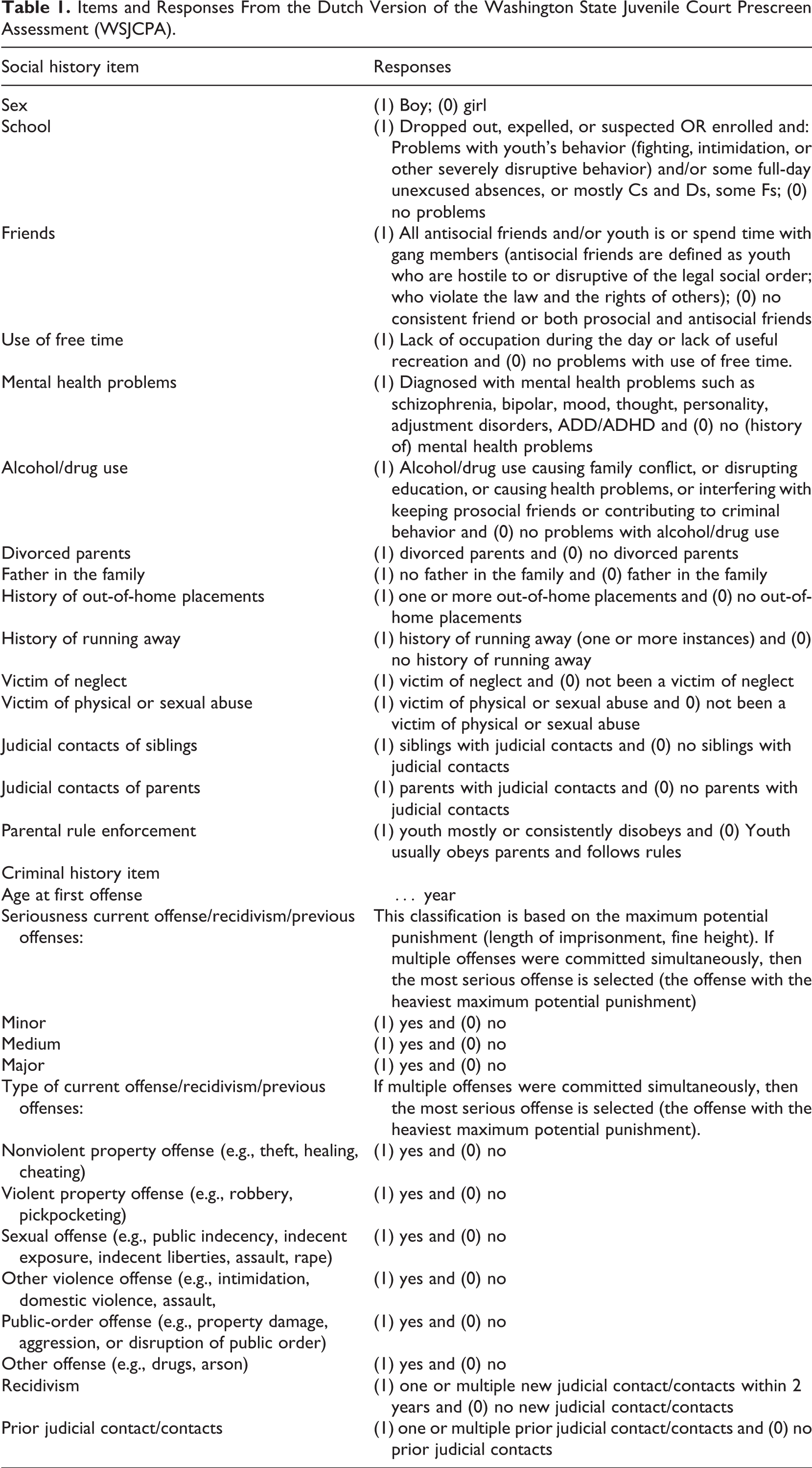
The WSJCPA is a risk assessment instrument developed and validated in the United States, which estimates the risk of recidivism by juvenile delinquents based on the most important predictors from the criminal and social domain (Barnoski, 2004). For this study, a Dutch translation of the WSJCPA was used, which was slightly adapted for use in the Netherlands (Van der Put, Stams, Van der Laan, & Oort, 2009). The items from the social and criminal items are presented in Table 1.
Items and Responses From the Dutch Version of the Washington State Juvenile Court Prescreen Assessment (WSJCPA).
Basisraadsonderzoek (BARO)
This instrument is a semistructured questionnaire completed by council researchers in the service of the CCCP in case that an adolescent is suspected of having committed a criminal offense. The BARO questionnaire serves two purposes: It is used to inform judicial authorities (in other words, to give advice as to what penalty to impose) and it establishes whether the committed offense signals underlying disorders or problems in the adolescent’s circumstances (Doreleijers, Bijl, Veldt, & Van der Loosbroek, 1999). The BARO is a global diagnostic instrument that screens, among other things, for underlying mental disorders that may have been established in the past and should be reexamined in additional psychiatric investigation. Validation studies have shown that the BARO enables reliable screenings for the presence of mental disorders (Doreleijers et al., 1999; Spaander, 2003). It contains questions that concern the following domains: functioning in family situation, leisure activities, school, friends, external factors, development, case history, physical condition, behavior, emotions, and substance abuse.
Data Recidivism
Recidivism was defined as the occurrence of one or multiple new judicial contact/contacts within 2 years after committing the index offense. To measure recidivism, data from the Research and Policy database Judicial Documentation (OBJD) of the Research and Documentation Centre (WODC) of the Ministry of Justice were used.
Procedure and Analyses
For this study, data that have been collected by council researchers by means of the BARO questionnaire were analyzed. The information from the BARO reports was then used to score the items in the social sections of the WSJCPA. To guarantee interrater reliability, each 10th file in every branch was independently scored by two researchers, and their results were compared afterward. These comparisons show that the interrater reliability was high; the κs showed a minimum of .85. The criminal section scores were based on information that was retrieved from the OBJD of the WODC.
Analysis of variance (ANOVA) was used to identify differences in the prevalence of offense patterns, direct motives, and risk factors in the various ethnic groups. Pearson correlations were calculated to determine the strength of the relation between the risk factors and recidivism for the various ethnic groups. Multivariate logistic regression analyses were performed to predict recidivism for each ethnic group.
Results
Ethnic Differences in Background Characteristics
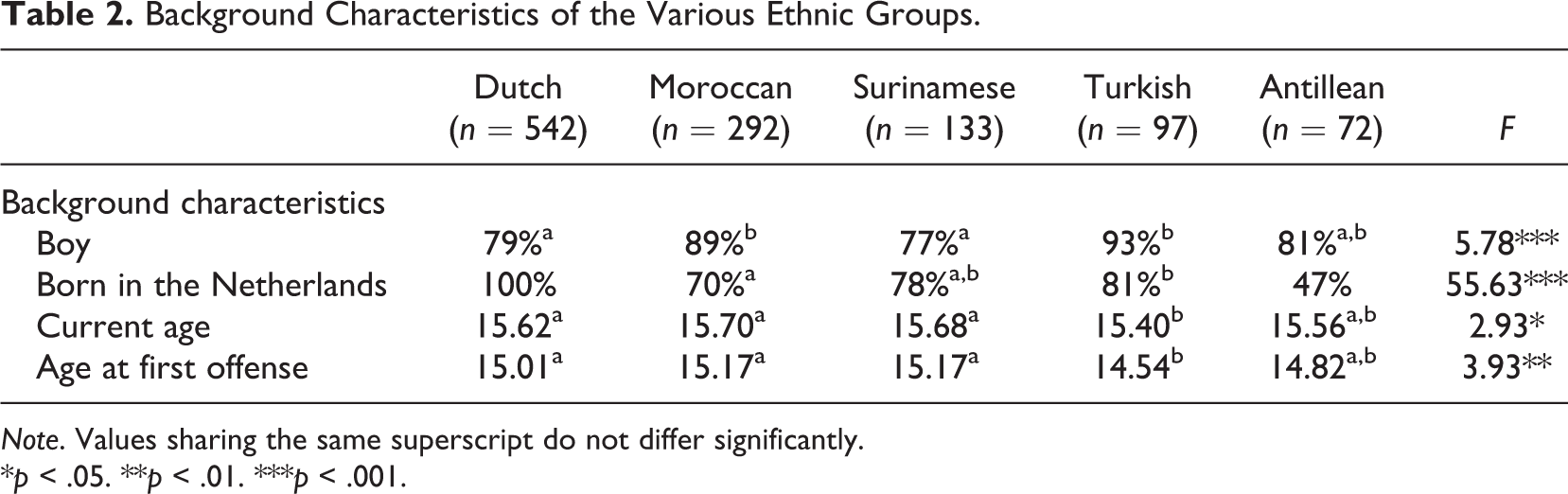
The background characteristics of the various ethnic groups are presented in Table 2.
Differences were found in gender, born in the Netherlands, current age, and age at fist offense. Turkish and Moroccan groups consisted of relatively more boys. Relatively few of the juveniles in the Antillean group were born in the Netherlands. The juveniles from the Turkish group were relatively young when committing the current offense and their first offense.
Background Characteristics of the Various Ethnic Groups.
Note. Values sharing the same superscript do not differ significantly.
*p < .05. **p < .01. ***p < .001.
Ethnic Differences in Offense Patterns
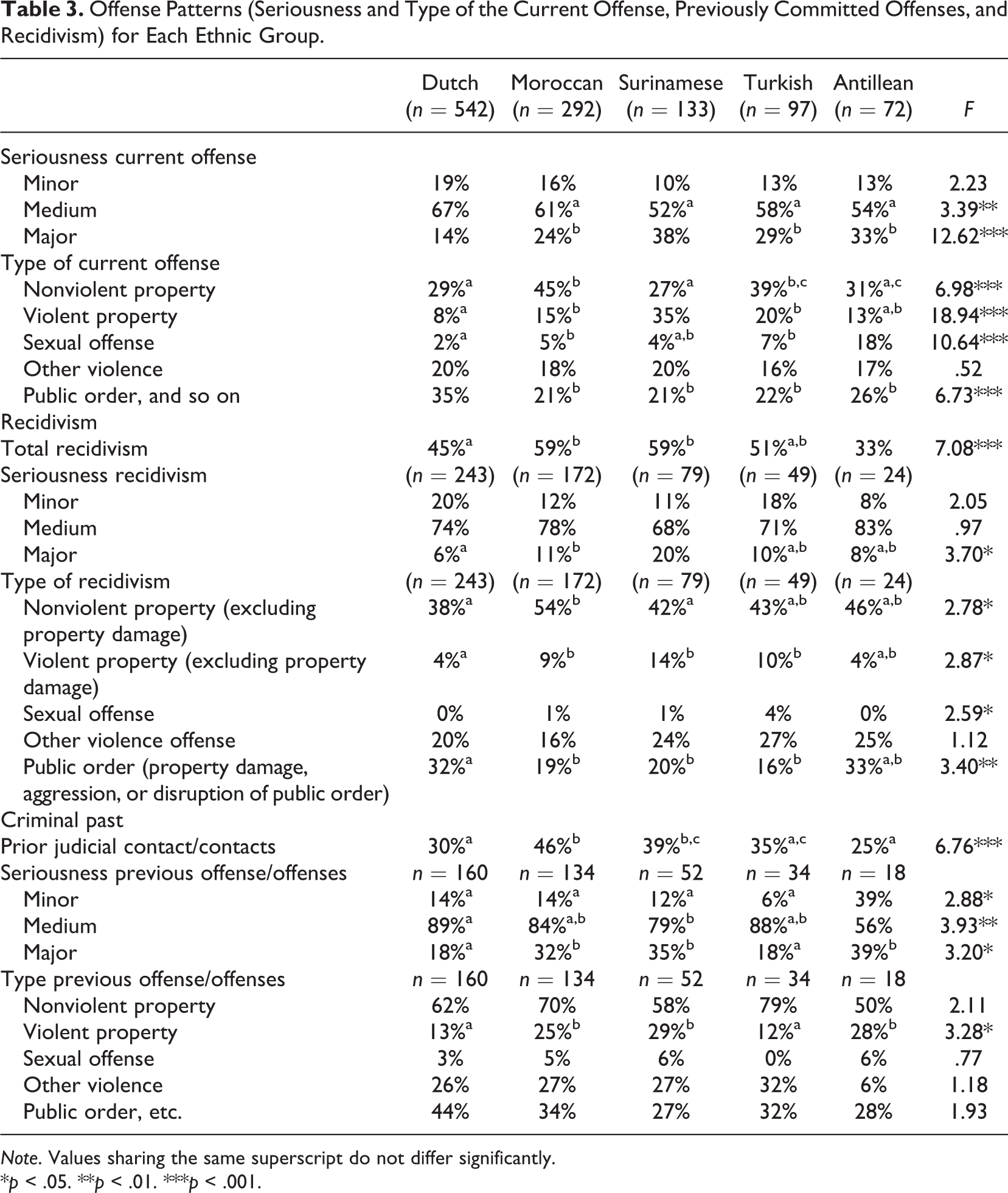
Table 3 shows the seriousness and type of the current offense, previously committed offenses and recidivism for the ethnic groups.
Offense Patterns (Seriousness and Type of the Current Offense, Previously Committed Offenses, and Recidivism) for Each Ethnic Group.
Note. Values sharing the same superscript do not differ significantly.
*p < .05. **p < .01. ***p < .001.
Current Offense
A major serious offense was relatively common among Surinamese youth and relatively rare among Dutch youth. In the Dutch group, the majority of current offenses were public-order offenses, whereas in the Moroccan, Turkish, and Antillean groups nonviolent property offenses, and in the Surinamese group property offenses with violence were a relatively common current offense. Finally, a relatively high number of the current offenses in the Antillean group were sex offenses.
Criminal Past
Previously committed offenses were most common in the Moroccan group (46%) and least common in the Antillean group (25%). Among juveniles who had prior offenses, Moroccan and Surinamese juveniles committed relatively often major serious offenses and Antillean juveniles committed relatively often major serious as well as minor serious offenses. A relatively high number of previously committed public-order offenses were found among Dutch juveniles and a relatively high number of violent property offenses was found among Surinamese, Moroccan, and Antillean youth.
Recidivism
Total recidivism was relatively high among Moroccan and Surinamese juveniles and relatively low among Antillean juveniles. Surinamese juveniles reoffended relatively often with a serious offense.
Primary Motive for Committing Offenses
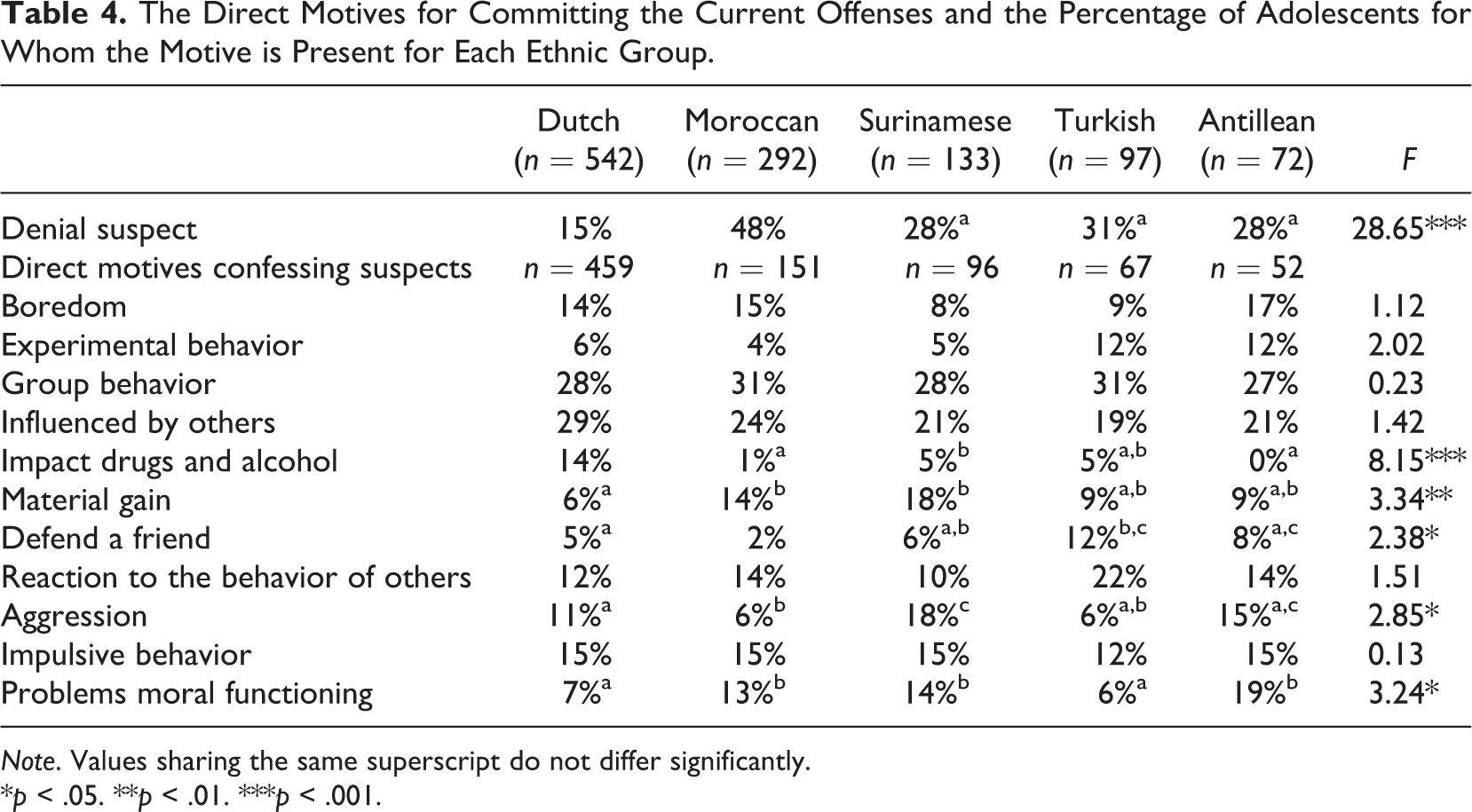
Table 4 shows the primary motive for committing the current offenses (offense-related factors) of the juveniles who confessed the crime and the percentage of adolescents for whom this information is available.
The Direct Motives for Committing the Current Offenses and the Percentage of Adolescents for Whom the Motive is Present for Each Ethnic Group.
Note. Values sharing the same superscript do not differ significantly.
*p < .05. **p < .01. ***p < .001.
The percentage of juveniles who denied having committed the current offense was highest in the Moroccan group (48%) and lowest in the Dutch group (15%). In all ethnic groups, group behavior and the influence of others were mentioned most often as the primary motive for committing the current offense. Primary motives mentioned relatively often were the influence of drugs and alcohol in the Dutch group, material gain in all ethnic groups, and aggression in the Surinamese group. In the Turkish group, primary motives mentioned relatively often were standing up for a friend, response to the behavior of others, and experimenting behavior. In the Antillean group, aggression, experimenting behavior, and problems with moral functioning were mentioned relatively often.
Most primary motives were not significantly correlated with recidivism. The only direct motives that were significantly correlated with recidivism were the influence of alcohol/drugs (r = .09, p = .05) and impulsive behavior (r = .10, p = .02) for the Dutch group, and group behavior (r = .18, p = .04) for the Surinamese group. In the Turkish, Moroccan, and Antillean groups, no significant correlations were found between the direct motives and recidivism.
Ethnic Differences in the Prevalence and Impact of Risk Factors
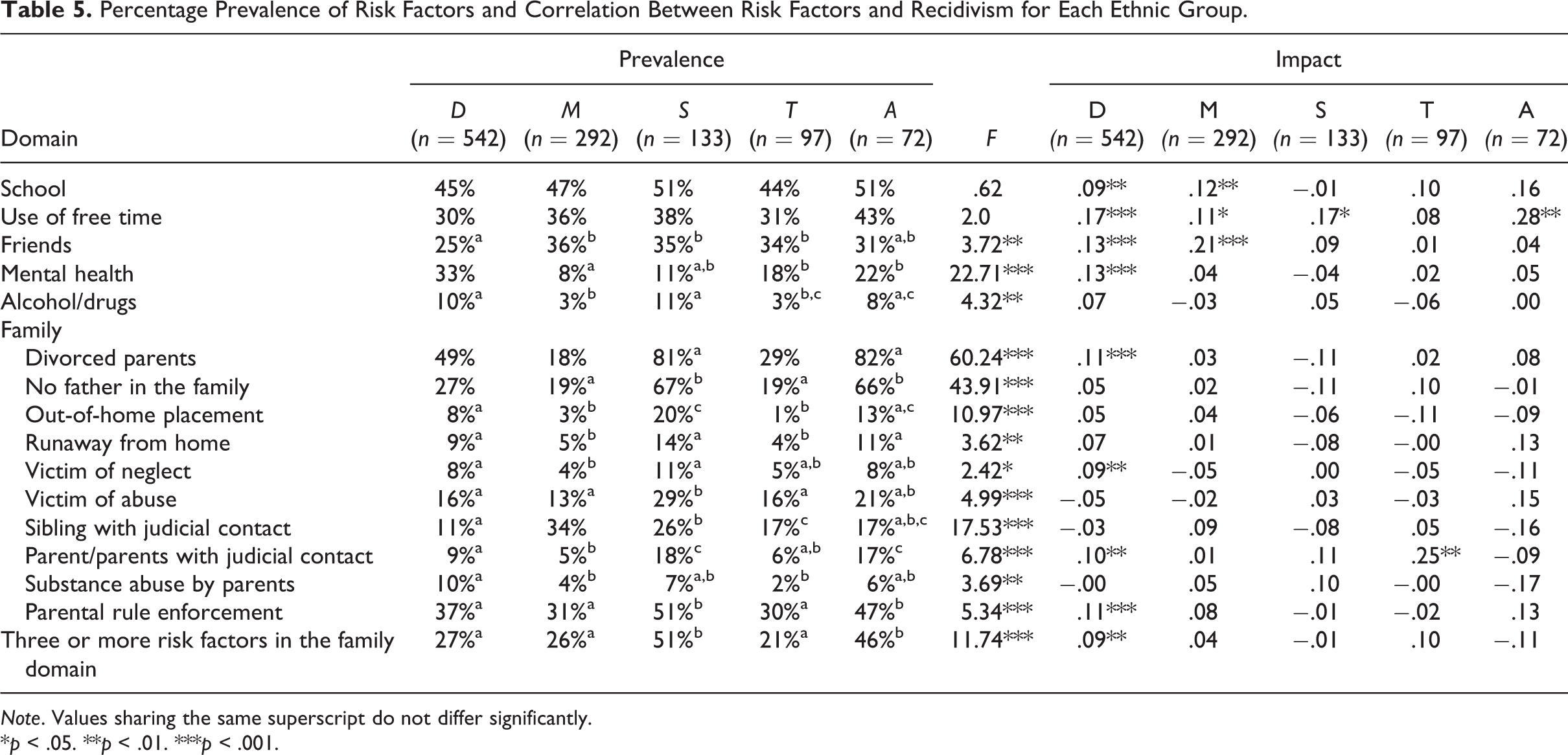
Table 5 shows the prevalence and impact of risk factors across ethnic groups. The first five columns contain the percentages of juveniles for whom the risk factor is present in each ethnic group (prevalence). ANOVAs were performed to examine differences in prevalence between the groups (sixth column). The last five columns show the correlations between the risk factors and recidivism in each ethnic group (impact).
Percentage Prevalence of Risk Factors and Correlation Between Risk Factors and Recidivism for Each Ethnic Group.
Note. Values sharing the same superscript do not differ significantly.
*p < .05. **p < .01. ***p < .001.
In all groups, a relatively high incidence of problems in the domains of school, friends, and use of free time was found. Differences were especially evident in the domains of alcohol/drugs, mental health, and family. Mental health problems were relatively common among Dutch juveniles. Alcohol and/or drugs problems were relatively common among Dutch, Surinamese, and Antillean juveniles. An accumulation of problems in the family domain was relatively common among Surinamese and Antillean juveniles, including divorced parents, no father in the family, out-of-home placement, running away from home, neglect and abuse, parental contact with the law, and problems with parental authority.
Next to differences in prevalence, differences in the impact of dynamic risk factors on recidivism were found. For Dutch adolescents, most of the dynamic risk factors were significantly correlated with recidivism; problems with use of free time, school, friends, and mental health were all significant predictors of recidivism. Most of the risk factors in the family domain were also predictive of recidivism in Dutch adolescents, including divorced parents, neglect, problems with parental authority, and parental contact with the law. In the other ethnic groups, fewer significant correlations between risk factors and recidivism were found. In the Moroccan group, significant correlations were found between recidivism and problems at school, friends, and use of free time. In the Surinamese and Antillean groups, only a significant correlation was found between recidivism and problems relating to use of free time. Also, a relatively strong correlation between recidivism and problems at school was found in the Antillean group, but this correlation was not significant. The sample size of the Antillean group was relatively small, so we may have lacked power to find significant effects in this group. Correlations between recidivism and risk factors were nonsignificant in the Turkish group, but this group was also rather small.
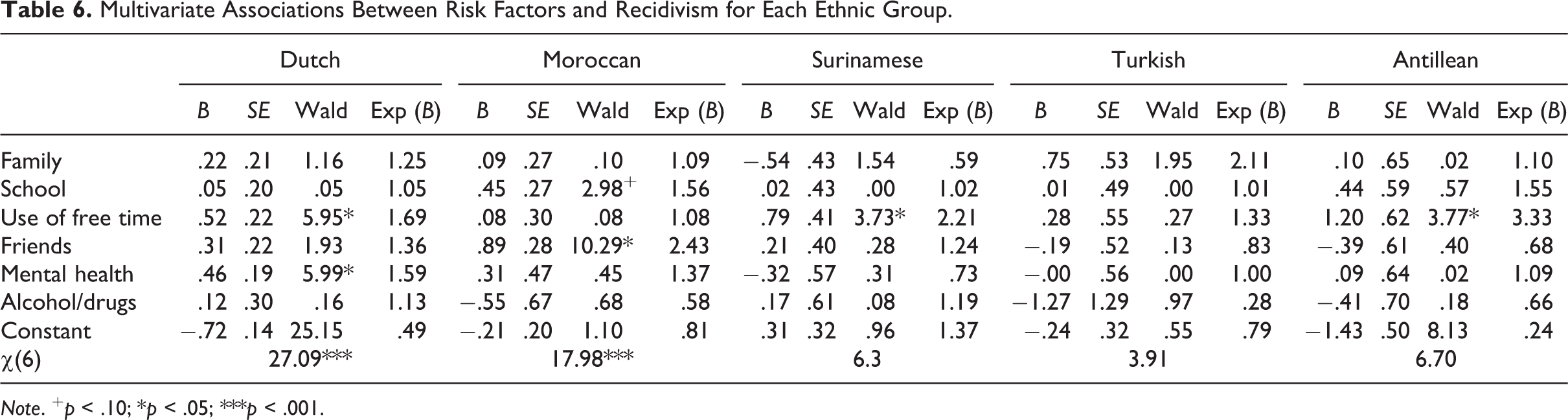
After examining bivariate associations, we analyzed multivariate associations between risk factors and recidivism in order to investigate the unique contribution of the risk factors. Because the dependent variable (recidivism) was categorical, we used logistic regression analysis. Logistic regression can be used to examine the relation between a categorical dependent variable and one or more predictor variables. We included risk factors in the following domains as predictors of recidivism: family, school, use of free time, friends, mental health, and alcohol/drugs. We performed separate logistic regression analysis for each ethnic subgroup. The logistic regression coefficients representing the associations between the risk factors and recidivism for each ethnic group are shown in Table 6.
Multivariate Associations Between Risk Factors and Recidivism for Each Ethnic Group.
Note. + p < .10; *p < .05; ***p < .001.
We found ethnic differences in unique contributors to recidivism. In the Dutch group, problems in the domains of free time (odds ratio = 1.69, p < .05) and mental health (odds ratio = 1.59, p < .05) were uniquely related to recidivism, indicating that Dutch youths with problematic leisure activities and mental health problems were 1.6 times more likely to recidivate than their counterparts without problems in these domains. In the Moroccan group, problems at school (odds ratio = 1.56, p < .10) and problematic friends (odds ratio = 2.43, p < .05) were uniquely related to recidivism. Further, Surinamese youths with problems in their use of free time were over twice as likely to recidivate (odds ratio = 2.21, p < .05), and Antillean youths with these problems were over 3 times more likely to recidivate (odds ratio = 3.33, p < .05). In the Turkish group, none of the dynamic risk factors was uniquely related to recidivism.
Discussion
This study examined differences between ethnic majority youth and the four largest groups of ethnic minority youth in the Netherlands in offense patterns, primary motives, and the prevalence and impact of risk factors for recidivism.
Differences in Offense Patterns
The various ethnic groups were found to differ in offense patterns. Public-order offenses were most common in the Dutch group, nonviolent property offenses in the Moroccan and Turkish groups, violent property offenses in the Surinamese group, and both public-order and nonviolent property offenses in the Antillean group. With regard to the current offense, we found an overrepresentation of sex offenses in the Antillean group. The overrepresentation of Antillean juveniles in sex offenses has also been found in another study (Van Wijk & Blokland, 2008), but it should be noted that the incidence of sex offenses is very low, which can easily produce a distorted picture in the case of random sample variation.
Recidivism rates were relatively high among Moroccan and Surinamese juveniles, and relatively low among Antillean juveniles. This is not entirely what we expected, because, according to national figures, recidivism is highest among Antillean and Moroccan juveniles, followed by Surinamese juveniles (Wartna & Tollenaar, 2006). However, the national figures on recidivism relate only to first-generation ethnic immigrants. If we separate the figures in our study for first-generation and second-generation immigrants, the figures for the first generation correspond more closely to the national figures. Our study showed that reoffending rates among first-generation immigrants from Suriname are considerably lower than among second-generation immigrants from Suriname. This is in line with findings of Junger (1990), who also found that Surinamese juveniles born in the Netherlands showed more delinquent behavior than Surinamese juveniles born in Suriname. We also found a higher reoffending rate among Moroccan juveniles who were born in the Netherlands than those who were born in Morocco, but this difference was not significant. However, previous research has shown that criminality among Moroccan youth increases as integration proceeds (Stevens et al., 2009). American research has also found that second-generation and third-generation immigrants are more involved in crime than first-generation immigrants (Tonry, 1997). The second international self-report study (Junger-Tas, 2012) showed no significant differences in delinquency between first- and second-generation youth among almost all immigrant groups, with the exception of Turkish youths of which the second-generation youths committed considerably more offenses than first-generation youths. A possible explanation is that second-generation immigrants are more aware of social inequality and have a greater desire for luxury goods. Therefore, they may be more likely to engage in crime (Tonry, 1997).
Differences in Primary Motives for Committing Offenses
In all ethnic groups, group behavior and the influence of peers were mentioned most often as the primary motive for committing the current offense. In the groups that most often committed property offenses (Moroccan, Surinamese, and Antillean juveniles), material gain was frequently cited as a direct motive for committing the offense. The Dutch offender group committed relatively many public-order offenses and often reported the influence of alcohol and/or drugs as the primary motive. It is not entirely clear to what extent the greater desire for material gain can be explained by the fact that the average income of ethnic minority groups is considerably lower than that of native Dutch groups (e.g., Dagevos & Bierings, 2005). Work of Junger, Wittebrood, and Timman (2001) showed that the link between socioeconomic position and delinquent behavior is stronger among Dutch juveniles than among juveniles from ethnic minorities. Stevens, Veen, and Vollebergh (2009) showed that the parents of Moroccan juveniles in preventive detention had a higher socioeconomic status than the parents of Moroccan juveniles from the general population, whereas the opposite was true for Dutch juveniles. The relation between socioeconomic status and committing property offenses apparently varies across ethnic groups. Stevens et al. also found that the differences in socioeconomic status between Dutch and Moroccan juveniles in preventive detention cannot explain the overrepresentation of Moroccan juveniles in property offenses. In itself, therefore, socioeconomic status does not explain the committing of property offenses within ethnic minority groups, but socioeconomic status must be set against the desire for material wealth. The “strain theory” explains crime in terms of the discrepancy between generally worthwhile goals and the legitimate means of achieving them (Merton, 1968). When people do not have the means to achieve these goals, they might resort to crime. Given that previous research has shown that the socioeconomic status of delinquent Moroccan youth (Moroccan juveniles in preventive detention) is higher than that of nondelinquent Moroccan youth (Stevens et al., 2009), delinquent Moroccan youth may have an increased desire for material wealth. Furthermore, delinquent Moroccan youth are found to be better integrated than nondelinquent Moroccan youth (Stevens et al., 2009), which may indicate that the need for material wealth increases as they become better integrated.
Differences in the Prevalence and Impact of Risk Factors
Differences in the prevalence of risk factors between ethnic groups were found in the use of free time, friends, alcohol/drugs, mental health, and family domain. Mental health problems turned out to be relatively common among Dutch juveniles, alcohol and/or drugs problems among Dutch, Surinamese and Antillean juveniles, and problems in the family domain among Surinamese and Antillean juveniles. Relatively few risk factors were found in Moroccan and Turkish juveniles. Van der Laan, Schans, Bogaerts, and Doreleijers (2009) also found the prevalence of risk factors to be relatively low among delinquent Moroccan and Turkish youth, compared to delinquent youth of other ethnic groups. These findings could indicate that Moroccan and Turkish youth have fewer risk factors than other ethnic groups, but it could also indicate they may underreport their problems. Various mechanisms can give rise to this bias. First, Moroccan and Turkish parents may have a greater tendency to give socially acceptable answers. This could be related to culturally determined issues regarding shame and honor, but also to the fact that they are a minority group in the Netherlands and are therefore anxious not to worsen their position (Ross & Mirowsky, 1984). Previous research has shown that Arab parents find it difficult to acknowledge that a family member has a psychological problem (Eapen & Ghubash, 2004). Moroccan juveniles were found to have a relatively common tendency to “hide” problems, as shown in research by Stevens et al. (2003). This research showed that teachers identified externalizing problems that, according to the juvenile’s parents, did not exist. Second, Moroccan and Turkish parents might have a greater ignorance regarding problems. Research has shown that Moroccan parents monitored their children less closely than did Dutch parents (Junger, Terlouw, & Van der Heijden, 1995).
We also found differences in the impact of dynamic risk factors between ethnic groups. In Dutch juveniles, most of the problems were related to recidivism. Problems with use of free time, school, friends, and mental health all proved to be predictors of recidivism, as did most of the risk factors in the family domain. Among ethnic minorities, only few risk factors were related to recidivism. The risk factors were least predictive of recidivism in the Turkish and Surinamese groups. Similar results were found by Deković et al. (2004), who investigated differences between Dutch, Moroccan, Turkish, and Surinamese juveniles with regard to the influence of parent–child relationship quality and deviant friends on antisocial behavior. This study also showed that the behavior of the Dutch group was easiest to predict, and the behavior of the Surinamese group was the least easy to predict. Dekovic et al. suggested that the “extended family” might be a possible explanation for the fact that problems in the family domain are less predictive for recidivism in the Surinamese youths. A large proportion of Surinamese mothers (and also Antillean mothers) are single parents and often receive support from their “extended family,” which consists of grandparents, uncles, and aunts, who are often also involved in bringing up the children (Distelbrink, 2000). The influence of the extended family is possibly an important factor for Surinamese as well as Antillean juveniles. In order to gain a better understanding of this, further research on the role of the extended family is needed.
Another explanation for the finding that problems in the family domain do not contribute to recidivism in Surinamese and Antillean youth could be the number paradox, which refers to the phenomenon that if a certain risk factor is relatively common, it is not regarded as deviant and, therefore, there is no longer a relation with criminality (Farrington et al., 2003). In general, growing up in a single-parent family is a risk factor for delinquent behavior (Junger, Wittebrood, & Timman 2001). In Surinamese and Antillean youths, however, having divorced parents and growing up in a single-parent family is the rule rather than the exception: around 80% of these juveniles have divorced parents and around 65% grow up without a father in the family. Growing up in a single-parent family is therefore not deviant within these groups, which could explain the absence of the link with recidivism. Earlier studies of Surinamese families showed that single-parent families in the Surinamese population are less stigmatized, because single parenthood is hardly referred to as a special family type. In addition, daughters are implicitly prepared for single motherhood, and mothers generally receive more support from their network than mothers from other ethnic backgrounds (Distelbrink, 1998; Distelbrink & Pels, 2008).
Our finding that problems with friends and delinquent behavior were only weakly associated among Surinamese juveniles was also found in research by Deković, Wissink, and Meijer (2004). Giordano, Cernkovich, and DeMaris (1993) found that Black adolescents were less geared to peers, experienced less peer pressure, and had less need for peer approval than White adolescents. These are possible explanations for the low correlation between recidivism and problems with friends among Surinamese as well as Antillean juveniles. Research in the Netherlands, on the other hand, has shown that juveniles from ethnic minority groups rely relatively strongly on the support and examples of their peers, because they often have to find their way in Dutch society without support from their parents (Pels & Nijsten, 2003).
Limitations
There are several limitations worth mentioning. First, the sample sizes of the ethnic groups differed. The sample size of the Dutch group was largest, which made it more likely to detect significant effects in this group. It should be noted, however, that only in a few cases differences in the significance of risk factors between the Dutch group and the various ethnic groups could be attributed to differences in statistical power. Second, the sample size of the Antillean group was relatively small (n = 72). The statistical power to detect a medium-sized effect with a sample of n = 72 is 75%. In general, a statistical power of 80% is considered adequate (Cohen, 1988). Therefore, the statistical power of the sample size of the Antillean group approaches adequacy. Third, the data were coded secondhand, because we used information from BARO reports to score the items of the WSJCPA. Fourth, we were unable to measure the extent to which socially desirable responding occurred in the different ethnic groups, because we used previously collected data. Earlier research has shown that Turkish and especially Moroccan youth underreport their problem behavior (Junger, 1989; Stevens et al., 2003; Van der Laan & Blom, 2011). The high percentage of juveniles who denied having committed the current offense in the Moroccan group in our study is also an indication that the juveniles in this group underreported their problems, which might have affected the strengths of the found correlations. Therefore, one of the possible explanations for differences might be related to issues mentioned in the discussion, such as denial and/or ignorance of problems and the tendency to give socially desirable answers.
Conclusion
Notwithstanding these limitations, the present study provides important information on differences between various ethnic groups in the Netherlands. We found differences between the groups in the type of offenses they committed and in the prevalence and impact risk factors for recidivism. Risk factors in most domains were associated with recidivism in ethnic majority youth, whereas only a small number of risk factors were associated with recidivism among minority youth. On the basis of these results, the question arises whether existing interventions are equally effective for each ethnic group. Given the differences in the importance of dynamic risk factors, it is possible that the effectiveness of interventions targeting these factors varies from one ethnic group to another. Research on the effectiveness of interventions for various ethnic groups in the Netherlands is therefore important. One of the possible explanations of the differences is related to issues mentioned in the discussion, such as denial and/or ignorance of problems and the tendency to give socially desirable answers. Therefore, it is important to (a) examine the causes underlying differences in prevalence and importance of risk factors and (b) identify the most important risk factors for each ethnic group. This could possible increase the effectiveness of interventions.
Footnotes
Declaration of Conflicting Interests
The authors declared no potential conflicts of interest with respect to the research, authorship, and/or publication of this article.
Funding
The authors received no financial support for the research, authorship, and/or publication of this article.