







Abstract
This study integrates several research lines to assess whether and how harsh and warm parenting behaviors may each modify the relationship between adverse life events and delinquent adaptations among Chinese adolescents. Furthermore, this study assesses whether the hypothesized moderating effects may vary among male and female adolescents. Data drawn from over 500 middle school students from an urban city in China yield results quite consistent with the expectations. Exposure to adverse life events and harsh parental discipline are independently associated with elevated levels of delinquent participation, and these relationships are observed among both male and female adolescents. Furthermore, the effects of stressful life events on delinquency depend upon levels of parental behaviors as well as the gender of adolescents. Specifically, harsh parental discipline in conjunction with stressful life events is related to higher levels of delinquency among Chinese female adolescents, whereas warm parenting offsets the effect of adverse life events on delinquency among male adolescents. These results are discussed in term of their theoretical importance and cultural implications.
Introduction
Adverse life events represent a significant antecedent to delinquency. This observation has been made by studies that utilize cross-sectional or longitudinal designs, and among western and non-western samples of adolescents (Aseltine et al., 2000; Cheung & Cheung, 2008; Hoffmann & Cerbone, 1999; Kim, 2007; Lin et al., 2014; Liu, 2016; Mazerolle, 1998). Meanwhile, a great deal of research attention has been devoted to studying parenting behaviors as predictors of delinquency. Two lines of parental studies are particularly noteworthy. One line examines harsh parental discipline as a risk factor of delinquency. Results from these studies often indicate that adolescents subject to harsh parenting are more likely to engage in delinquent activities (Brezina, 1998; Evans et al., 2012; Liu, 2018; McKee et al., 2007; Simons et al., 2000; Wang & Kenny, 2014; Wu & Li, 2023; Yao et al., 2022). Another line of parental studies focuses on warm parenting, which tends to observe protective effects such that adolescents receiving warm parenting are less likely to participate in illegal or deviant activities (Hay et al., 2017; Hoeve et al., 2009; Kerr et al., 2009; McKee et al., 2007).
While abundant research has investigated the independent effects of adverse life events and parenting behaviors—warm or harsh, on delinquent adaptations respectively, so far, however, relatively few studies have integrated these research lines by examining their joint or interactive effects, especially when the focal concern is on the joint influences of exposure to multiple stressor events in conjunction with the presence of warm or harsh parenting behaviors on delinquent adaptations simultaneously in a single study. Thus, questions remain: Does the relationship between exposure to adverse life events and delinquency depend upon the type and levels of parental discipline? Specifically, do harsh parenting behaviors enhance the likelihood of adolescent participation in delinquency when these adolescents are simultaneously exposed to multiple stressful events? Likewise, can warm parenting offset or weaken the relationship between stressful events and delinquent participation?
These questions are intriguing and merit research attention, especially in a social setting like urban China, where such studies are not only lacking, but cultural factors along with social conditions present a unique need for assessing these interactive relationships. On one hand, China has witnessed tremendous social transformations, and macro level social changes have significant repercussions for the micro units of home, school, and workplace (Bao & Haas, 2009; Liu, 2016). Thus, Chinese adolescents often are confronted with unprecedented challenges of exposure to a multitude of life events, which is bound to put them at a greater risk for delinquency (Bao & Haas, 2009; Liu, 2016). Indeed, reports have confirmed the elevated levels of crime and delinquent participation among Chinese adolescents (e.g., Bao & Haas, 2009) and some have demonstrated positive connection between exposure to adverse life events and delinquency (Gao et al., 2020; Li & Jhang, 2023; Liu, 2016). On the other hand, Chinese culture emphasizes the role of the family and parenting, which constitutes a significant source of stressor or support (Agnew, 2015; Cheung et al., 2007; Li et al., 2023; Wu & Li, 2023; Yao et al., 2022). Furthermore, harsh parental discipline is culturally permissive in China. Chinese parents are reportedly more inclined to use punitive measures as a viable solution to children's misbehaviors and parent–child conflicts (Chao, 1994; Liu, 2018; Wang & Liu, 2014). Meanwhile, parental encouragement and positive affirmation may be relatively sparse as Chinese norms prescribe modesty and self-effacement (Mascolo et al., 2003). Thus, over reliance on punitive measures or restraint from use of encouragement/praise may be problematic or even present a criminogenic condition, particularly in a changing society, where exposure to multiple stressor events is elevated (Bao & Haas, 2009; Liu, 2016).
Taken these factors altogether, China presents a unique social setting for studying parental practices in interaction with the presence of adverse life events on delinquent adaptations. Research on these interactive effects will not only fill a void in the literature, but it may also inform social policies and programs in counteracting delinquency. With this goal in mind, the present study addresses whether and how exposure to multiple stressful events and parenting behaviors (warm and harsh parenting respectively) may jointly influence delinquency among Chinese adolescents. Meanwhile, our study evaluates whether these interactive effects may vary by the gender of adolescents. As a society with relatively more traditional gender role norms and distinct gender hierarchies, China portrays an interesting and perhaps more appropriate context for examining gender differences in the joint influences of adverse life events and parenting behaviors (warm and harsh respectively) on adolescent participation in delinquent adaptations (Cheung, 1996; Inglehart & Norris, 2003; Liu, 2016).
Literature Review and Hypotheses
Life Events, Parenting, and Delinquency
Informed by Agnew's General Strain Theory (GST) (1992, 2001) and stress literature (Lösel & Farrington, 2012; Pearlin et al., 1997, 2005; Slocum, 2010), we anticipate that exposure to adverse life events and parenting behaviors (warm and harsh parenting respectively) may jointly lead to delinquent adaptations among Chinese adolescents. Agnew (1992, 2001) differentiates subjective from objective strain and each type of strain can be an event as well as a condition. Furthermore, Agnew (1992, 2001, 2006) categorizes strain primarily in three domains, which include failure to achieve positively valued goals, removal of positively valued stimuli, and presence of noxious stimuli. According to Agnew (1992, 2001, 2006), exposure to strain may lead to negative emotions such as anger and frustration, which in turn may call for participation in delinquent activities as a problem-solving strategy. While adverse life events may fit the GST framework in all three domains such as by preventing persons from achieving desired goals, disrupting life that result in loss of positive life circumstances, and/or generating negative life conditions, the stressful events focused in the present study may best be categorized as removal of a valued life condition when persons experience abrupt changes due to family instability, family's financial disruption, health crisis, and romantic dissolution (Liu, 2016). All of these may bring forth negative emotions and push adolescents to use delinquency as a maladaptive coping response to stressful events (Agnew, 1992, 2001, 2006).
To expand GST, Agnew (2013) further discusses that there are moderating conditions and circumstances under which persons may be more or less likely to turn to maladaptive coping with strain. In this context, Agnew identifies parenting behaviors as likely moderators of the strain–delinquency relationship since these behaviors may influence social constraint as well as levels or magnitude of strain (Agnew, 2013). According to Agnew, weakened social control may allow persons to become free from constraint and thus crime/delinquency may appear to be a feasible option for reducing strain (Agnew, 2006, 2013). In line with these arguments, exposure to stressful life events and experience of harsh parenting practices may jointly increase the likelihood of adolescents turning to delinquency for coping since harsh parenting behaviors tend to reduce social constraint by weakening adolescent bonds to parents. In other words, harsh parenting with weakened bonds free adolescents to engage in delinquency as a viable adaptation to stressful life events (Agnew, 2013).
Meanwhile, GST also posits that the strain–delinquency relationship may be stronger when strain is high in magnitude (Agnew 2001, 2006, 2013). In support of this claim, harsh parenting behaviors may heighten the level of strain already experienced by adolescents exposed to adverse life events. This contention also finds theoretical support in the general stress literature, particularly through the process known as stress proliferation, which postulates that stressors may magnify and enhance one another (Pearlin et al., 2005; Slocum, 2010). Stress proliferation involves “the expansion or emergence of stressors within and beyond a situation whose stressfulness was initially more circumscribed” (Pearlin et al., 1997, p. 223). Stress proliferation can be differentiated into primary and secondary proliferation. Primary proliferation occurs when stressors under study may become intensified and affect aspects of the same life domain previously not affected (Slocum, 2010). Secondary proliferation may result if primary stressors spill into other domains, leading to problems in additional domains of life (Slocum, 2010). Stress proliferation thus also supports the claim that harsh parental discipline in conjunction with exposure to multiple adverse events may serve as secondary stressors to one another and thus enhance or exacerbate their joint impact on delinquent adaptations (Pearlin et al., 2005; Slocum, 2010).
Likewise, consistent with Agnew's theory that moderating factors associated with increased social constraint may reduce maladaptive coping, it is expected that the effects of negative life events may be offset or reduced by the presence of warm parenting (Agnew, 2013). In other words, supportive parenting behaviors may act as a constraint variable that increases adolescent bonding to parents, which pulls back or restrains the effects caused by the motivational factor of adverse events on delinquency (Agnew, 2005, 2006). These arguments are also in line with both GST and stress literature that hypothesize warm parenting as a likely source of social support, which may reduce the level/magnitude of strain and/or buffer against the stressor impact of adversity and life challenges (Agnew, 2013; Lösel & Farrington, 2012). In other words, warm parenting may provide conventional channels for coping and thus reduce the need for the stressed adolescents to use delinquency for problem solving (Agnew, 2006, 2013).
Empirical studies have generally yielded supportive evidence in connecting stressful life events with delinquent participation among Chinese adolescents (Gao et al., 2020; Li & Jhang, 2023; Liu, 2016). Although few research has directly assessed the joint influences of life events and parenting behaviors (particularly warm and harsh parental discipline) on delinquency, some scholars have reported the protective role of family factors either in China or elsewhere. For example, Kabiru et al. (2014) assess whether parental monitoring, religiosity, and self-esteem may moderate the relationship between adverse life events and delinquent behaviors among Kenyan adolescents. Using cross-sectional data from 3,064 adolescents aged 12–19 living in two slums in Nairobi, Kenya, their research found that while adverse life events are associated with increased participation in delinquency, parental monitoring, religiosity, and self-esteem can protect these adolescents and lessen the impact of adversity on delinquency (Kabiru et al., 2014). Corlis and Damashek (2021) also examine family factors as potential moderators of the relationship between maltreatment and delinquency. Family factors in their study include parental monitoring, parental emotional distress, parent–child relationship quality, family community and religious disengagement, poverty, and negative life events. Based on data from the Longitudinal Studies of Child Abuse and Neglect (LONGSCAN), Corlis and Damashek (2021), however, do not observe significant effects of family factors (except for family community and religious disengagement) in modifying the effects of maltreatment on delinquency. While these two studies are not performed in China, one exception is the research reported by Gao et al. (2020), which examines the effect of negative life events on delinquency through the mediation of adolescent self-esteem and whether perceived family support can moderate this mediational model. Gao et al. (2020) rely on a large sample of adolescents (N = 8,958) from three China provinces. Their research yields supportive evidence that negative life events have both direct and indirect effects on delinquency via adolescent self-esteem and that these effects are weakened at high level of subjective or perceived family support. Gao et al.'s study (2020), however, does not examine parenting behaviors (i.e., warm and harsh parental discipline respectively) as moderators of life events on delinquency. Nor do they consider gender variations in these interrelationships—a focal concern of the present study.
Gender Differences
We anticipate that the hypothesized joint or interactive effects of stressful life events and parenting behaviors (warm and harsh parenting respectively) on delinquency may be conditioned by the gender of adolescents—an important structural factor beyond the demarcation of biological sex traits. Feminist theorists have long acknowledged the salience of gender in determining social position and the allocation of power, opportunities, and resources (e.g., Fixmer-Oraiz & Wood, 2019). Furthermore, society dictates the characteristics and practices appropriate for each gender (Connell, 1995, 2002; Fixmer-Oraiz & Wood, 2019; Messerschmidt, 1997) and thus gender-based normative expectations (i.e., masculinities and femininities) may pressure members of the respective group to conform, resulting in variations in life outcomes including gender differences in stress perception, experience, and coping adaptations (Broidy & Agnew, 1997; Pearlin et al., 2005).
We expect that adolescent gender may modify these joint relationships in the Chinese context. As a primarily patriarchal society, gender inequalities in China have persisted despite some governmental efforts in attempting to close gender gaps (Bauer et al., 1992; Isabelle, 2012; Qing, 2020). In 2021, China ranked as 48th out of 170 countries on the United Nations Development Programme's Gender Inequality Index (World Population Review, 2024). Compared with boys/men, Chinese girls/women continue to occupy disadvantaged social position, and they tend to face many more barriers and discriminations either at home, in school, or in the workplace (Isabelle, 2012; Jiang, 2022; Liu et al., 2015; Qing, 2020; Wang, 2005; Wang et al., 2020). Furthermore, due to the influences of Confucious gender ideology and continuing reinforcement of gender-typing through school (Jiang, 2022), gender norms in China remain rather traditional, with a clear demarcation of the sexes, separate and hierarchical domains for men and women, and strong pressures to conform to gender-typing, especially for women (Bauer et al., 1992; Inglehart & Norris, 2003; Liu et al., 2015; Qing, 2020). Chinese women/girls are often viewed as inferior or less valued than Chinese men/boys (Bauer et al., 1992; Isabelle, 2012; Qing, 2020). Furthermore, women continue to be the primary caregivers, and they are expected to sacrifice for the family (Fincher, 2023; Isabelle, 2012; Liu, 2023; Qing, 2020). Chinese men/boys on the other hand are often preferred or protected, they are expected to be the primary providers and be more independent and achieving (Bauer et al., 1992; Isabelle, 2012; Qing, 2020; Wang et al., 2020).
Given the continuing gender hierarchies and prevailing divergence of gender norms in China, we anticipate that Chinese female adolescents may be disadvantaged in two ways regarding the concurrent experiences of stressful life events and parenting behaviors on delinquent adaptations. On one hand, female adolescents may be more susceptible to the joint influences of adverse life events and harsh parenting on delinquency than male adolescents. On the other hand, warm parenting may be less likely to offset the influence of negative life events on delinquency among female than male adolescents.
These anticipations reflect the double-edged disadvantages facing Chinese women/girls and are generally in line with the contentions of the strain/stress literature. As stated before, GST contends that strain–delinquency relationship may be reduced if conventional coping resources are available (Agnew, 2013). In the Chinese context, boys/men tend to receive greater family resources due to their preferred or higher status (Bauer et al., 1992; Bo & Jaccard, 2020; Das Gupta et al., 2003; Isabelle, 2012; Liu, 2023; Qing, 2020; Wang et al., 2020). These resources may include tangible items such as money spent for their educational achievements (Burgess & Zhuang, 2002; Song & Burgard, 2008; Wang, 2005; Wang et al., 2020) and the allocation of family attention and responsiveness (Bo & Jaccard, 2020; Liu, 2019). Greater access to these resources may thus make male adolescents more dependent on parental support, whereas female adolescents may draw support more from teachers and friends (Bo & Jaccard, 2020). Furthermore, some scholars have differentiated parental support in terms of actions taken to counteract the stressors versus parental support mainly as a form of control (Cheung et al., 2007). Given men's protected status, supportive parenting behaviors may call for more active or greater deployment of parental resources to offset the stressors and thus reducing male adolescents’ need to turn to delinquency for coping. On the contrary, parental support for female adolescents may be used to control them, given their lesser status, which may not have the same stress reduction effect (Cheung et al., 2007; Isabelle, 2012; Wang et al., 2020). Besides, Chinese girls/women are expected to sacrifice for their family and their needs tend to be trivialized (Isabelle, 2012; Liu, 2023). Self-sacrificing mentality may also prevent Chinese women from fully utilizing family resources without feeling guilt or self-blaming.
Aside from these contentions, GST and stress literature have also indicated that the strain–delinquency relationship may be stronger when individuals view strains to be high in magnitude (Agnew, 2001, 2013). Given women's overall interpersonal orientation and sensitivity to the needs of others, Chinese girls/women may be inclined to take blame for the adversities and their tendency to self-blame may intensify when being unfairly or adversely treated by others (Broidy & Agnew, 1997; Miller et al., 2012). Thus, harsh behaviors from parents on top of exposure to adverse life events may enhance female adolescents’ guilt and self-blame, and thus push them toward delinquent coping when conventional resources are limited. Stressed men on the other hand have the tendency to blame others for negative treatment (Broidy & Agnew, 1997). Men are more inclined to compartmentalize strain, use distraction, or deflect blame/guilt to minimize stress proliferation (Broidy & Agnew, 1997).
We thus test two hypotheses in this study with regard to gender differences in the interactive effects of stressful life events and parenting behaviors (warm and harsh respectively) on delinquency: H1: Warm parenting may more likely offset the impact of adverse life events on delinquent adaptations among Chinese male adolescents (since males with their protected status may be more dependent on parental support or may benefit more from parental responsiveness in deploying conventional resources to counteract negative impact of life events/adversities). H2: Harsh parenting may more likely exacerbate the consequences of stressful life events on delinquency among Chinese female adolescents (given females’ generally more disadvantaged position and their heightened sensitivity and self-blaming tendency in reaction to interpersonal or relational strain).
Method
Sample
We test the hypothesized interactive relationships using data derived from a self-report study of adolescents who attended seventh or eighth grade (typically around 13–14 years of age) in a middle school located in Fuzhou City, Fujian, China. Fujian is a province situated in the south-eastern part of China. It is geographically important, as it stands right across the Taiwan Straits. Fuzhou is the capital city of Fujian province. As a coastal province, Fujian enjoys economic boom much earlier than the inner regions of China.
Based on China Census, the population of Fuzhou City exceeded seven million, counting the nearby satellite cities. Fuzhou City ranked in the top 50 (No. 34) largest cities in China with three million residents at the time of this study (Data Bulletin, 2010).
The target middle school was selected, in part, due to its accessibility and, in part, as it represented a typical middle school in Fuzhou City that served the general population as opposed to “key schools,” the latter limited to elite or gifted students. Permission to conduct the study was obtained from the school authority. The school, in turn, notified the students and parents. Students with informed consent responded to an anonymous questionnaire administered in June 2011. A total number of 589 students returned usable questionnaires, representing approximately 95% of the school population. Of the participants, there were slightly more females (51%) than males, and more seventh (52%) than eighth graders. Furthermore, many of the respondents were singleton or only child (77%). Additionally, the typical respondents reported their father and/or mother having high school or technical school education level (49–50%) and their family was about average (65%) in terms of their financial circumstances.
Variables
Fourteen variables, not counting interactive terms, are constructed. Measures are based on published instruments from China studies. Mean-based indices are constructed to minimize missing values. Furthermore, for ease of interpretation as well as to avoid multicollinearity, variables are standardized or put in the deviation scores before conducting multivariate analyses (Aiken & West, 1991; Jaccard et al., 1990; Robinson & Schumacker, 2009).
Dependent Variable
Delinquency (a = .85) is measured by nine items originally modeled after the delinquent scale designed by Elliott et al. (1985) and derived from disseminated studies on delinquency among Chinese adolescents (e.g., Liu, 2016). The items measure in the past 12 months the extent to which respondents engage in illegal/disruptive behaviors such as smoking cigarettes, drinking alcohol, stealing, fighting, hitting/hurting others, smashing things in anguish, and engaging in graffiti etc. The index ranges from “1” to “4” with higher scores reflecting greater involvement in delinquent activities.
Independent Variable
Adverse life events are reflected in a composite measure of events with reference to the past 12 months. Four specific events are included in the index that range from experiencing parents’ marital instability (divorce or remarriage), family's financial disruption such as getting into a serious debt or going bankrupt, health crisis including respondents or an immediate family member's illness requiring hospitalization, and respondents’ romantic breakup. Individuals who have affirmed the event are coded as “1” and “0” otherwise. Although the internal consistency coefficient for this index (a = .46) is not high, it is however consistent with other studies that have relied on similar composite measures of stressful life events (Cheung & Cheung, 2008; Hoffmann & Cerbone, 1999; Liu, 2016). As prior researchers have pointed out, relatively low alpha coefficients for aggregate measures of life events do not mean the “invalidity of indicators.” Rather, they suggest “some independence among these items” (Cheung & Cheung, 2008: 420; Hoffmann & Cerbone, 1999).
Moderating Variables
Two moderating variables are constructed to reflect parental disciplinary behaviors. They include parental use of harsh discipline and warm parenting respectively. Harsh discipline is measured by an index (a = .71) with questions that ask respondents about how often (never, sometimes, and frequent) parents use physical (beat up, hit, or slap) and verbal (taunt, scream at, or ridicule) punishment for disciplining them. The four-item index consists of two each referencing physical punishments used by father and mother respectively and two other items referencing verbal punishments by father and mother respectively. The mean index ranges from “1” to “3” with higher scores indicating greater levels of harsh discipline. Warm parenting (a = .82) consists of questions that ask respondents about how often (never, sometimes, and frequent) parents praise, reward, give them freedom, etc., when they are well behaved. Five questions each are about father's and mother's behaviors (e.g., Chen et al., 2007; Mckee et al., 2007). The mean index of 10 items ranges from “1” to “3” with higher scores reflecting higher level of warm parenting.
Interactive Terms
To examine whether parenting behaviors interact with adverse life events and jointly influence delinquency, two interactive terms are constructed. They include adverse events × harsh parenting and adverse events × warm parenting respectively. While the component variables of the interactive terms are each standardized, the interactive terms themselves (i.e., adverse events × harsh parenting and adverse events × warm parenting) are not standardized (see Aiken & West, 1991; Jaccard et al., 1990 for methodological justification).
Common Correlates
Variables that are important predictors of delinquency or may serve as common antecedents of life events, parenting behaviors, and delinquency are controlled in the analysis. First, stressful school-related conditions that may serve as antecedents include perceived rejection by teachers and poor school performance, which have been shown to predict delinquency in previous studies and are controlled to avoid the misspecification of the models (Bao et al., 2004, 2007, 2014; Gao et al., 2016). Furthermore, level of self-control and delinquent peer association are controlled as they are included in many assessments of delinquency models. Psychological distress is also included since reports of adverse life events and parenting behaviors may be correlated with respondents’ distress levels as well as delinquency. Controlled socio-demographics variables are respondents’ grade level, father's and mother's education respectively, self-rated social class, and whether the respondent is an only child. Respondents’ gender is controlled if the total sample is used.
Perceived rejection by teachers comprises of five items (a = .95) reporting whether teachers dislike them and show little interest in them, etc. The responses range from “1” for “completely disagree” to “4” indicating “completely agree,” higher scores reflecting greater levels of perceived rejection. Poor school performance includes grades received in three core subjects—Chinese, Math, and English, for final exams of the past academic year. The mean index (a = .84) consists of responses ranging from “1” for grades of “90 or above,” “2” for “80–89,” “3” for “60–79,” and “4” for “below 60.” Higher scores indicate poor grades. Self-control consists of 13 items (a = .88) reflecting four dimensions, that is, self-centeredness, impulsiveness, risk-taking, and bad temperament. The index ranges from “1” to “3” with higher scores reflecting lower self-control. Delinquent peer association is measured by an index of two items (a = .75), indicating whether friends get into trouble a lot and whether friends ridicule/bully others. The responses range from “1” for “completely disagree” to “4” for “completely agree,” higher scores indicating higher levels of delinquent association. Psychological distress is measured by seven items that reflect feelings of distress (a = .72). Respondents report how often in the past year they have experienced inability to sleep, feeling down, and feeling that no one likes them, etc. The responses range from “1” indicating “never” to “4” reflecting “always.” Socio-demographic correlates include grade level (7th graders coded as “1” and 8th graders as “2”), father's and mother's education (each ranging from “1” for “elementary school education” to “7” equaling “postgraduate degree”; non-response replaced with average score), self-rated social class (ranging from “1” for “poor” to “6” indicating “well-off,” non-response replaced with average score), and only child with “1” if respondent is an only child and “0” for those with siblings. Gender is coded with “1” for males and “0” for females.
Analysis
The OLS regression assesses the hypothesized relationships, as this estimation method has been powerful in analyzing this dependent variable in prior studies (e.g., Liu, 2018, 2021). First, we estimate baseline models with the dependent variable (delinquency) regressed on the independent variable (adverse life events) and moderating variables (harsh and warm parenting respectively) with and without the common correlates. This is followed by estimating the interactive models with multiplicative terms (adverse events×warm parenting and adverse events×harsh parenting) added to the regression models with common correlates controlled. The baseline and interactive models are assessed among male and female adolescents respectively. If gender discrepancy is observed in the interactive effects, further assessment is conducted to check if gender differences have reached statistically significant level (p < .05). The assessment of gender differences is accomplished by estimating two three-way interactive models that focus on (1) the interactions of adverse life events, warming parenting, and gender on delinquency, and (2) the interactions of adverse life events, harsh parenting, and gender on delinquency respectively. We conduct these analyses using the PROCESS macro embedded in SPSS statistical program (Hayes, 2022). These regression models not only estimate the three-way interactive effects, but they also furnish the syntax and output data that allow for the graphing of the interactive effects across gender.
Results
Table 1 shows descriptive statistics with Pearson's correlation coefficients among variables as well as means/proportions, standard deviations, and coding range of the variables used in the analyses. We present these statistics by gender. Thus, the correlation coefficients of variables for male adolescents are shown in the lower diagonal, whereas the coefficients for female adolescents are presented in the upper diagonals. Tests of gender differences in means/proportions are also performed, and significant levels (p-values) are included in the table as well.
Correlation Coefficients, Means/Proportions, Standard Deviations (SD) and Range of Variables Used in the Analyses by Gender.
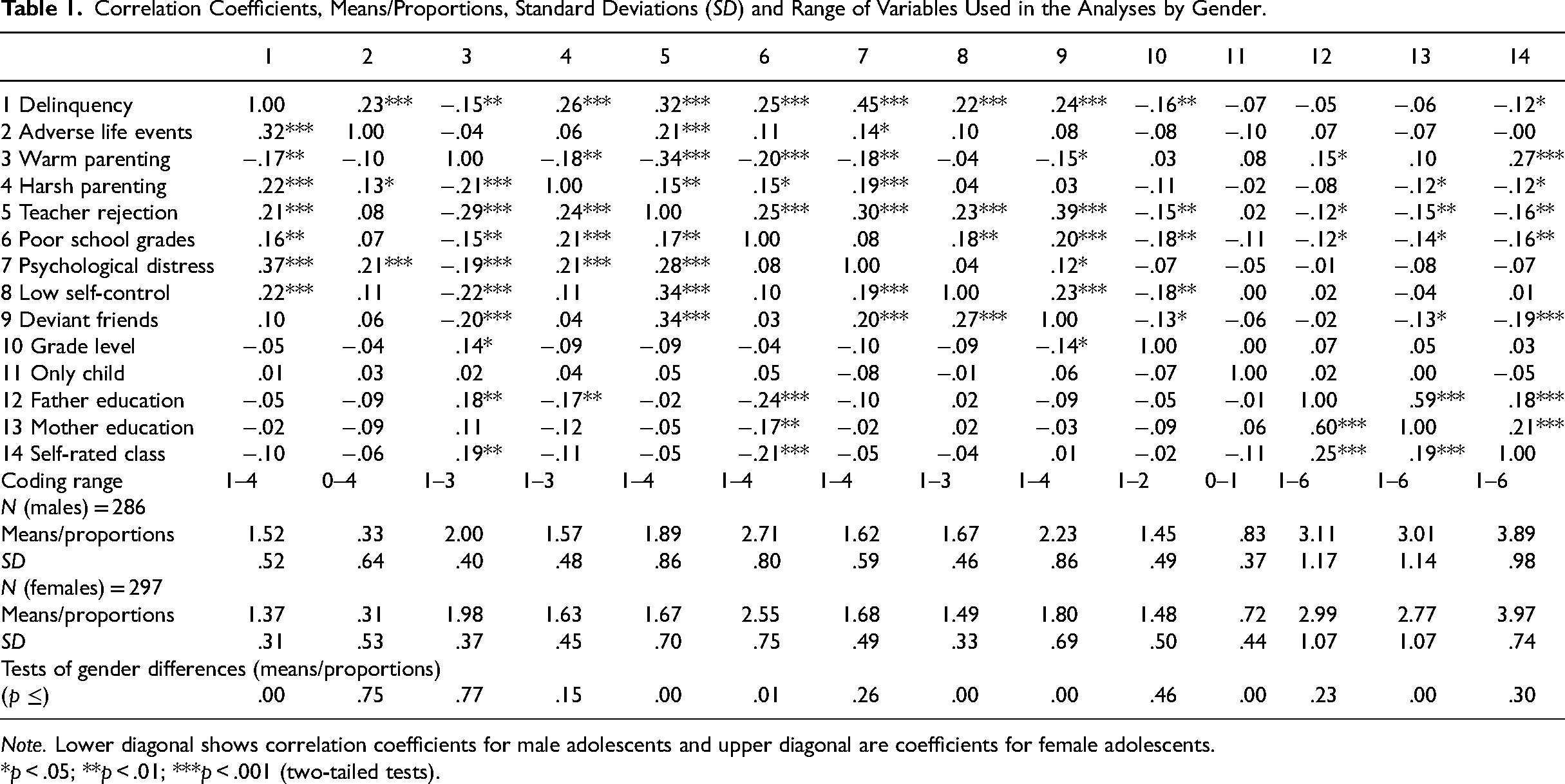
Note. Lower diagonal shows correlation coefficients for male adolescents and upper diagonal are coefficients for female adolescents.
*p < .05; **p < .01; ***p < .001 (two-tailed tests).
As shown (Table 1), males on average report greater level of delinquent activities than females (males=1.52 and females=1.37). Male and female adolescents are about equal in reports of adverse life events. Furthermore, although female adolescents on average report slightly higher level of harsh parenting and male adolescents score higher on average on warm parenting, neither difference has reached statistically significant level (p < .05). Regarding other variables, males as a group report greater levels of rejections by teachers and lower levels of school performance than females. Males also show lower levels of self-control but higher delinquent peer association than females. These differences are statistically significant (p < .05). Gender differences in socio-demographic correlates that have reached statistically significant level include mother's education and singleton status. Male adolescents tend to come from families with higher maternal education and more males (83%) than females (72%) are an only child, an observation noted in other China studies (e.g., Liu & Lin, 2007).
Furthermore, as shown (Table 1), correlation coefficients are generally in the directions as expected. Adverse life events, harsh parenting, rejection by teachers, poor school grades, low self-control and association with deviant peers are positively related to delinquency, whereas warm parenting is inversely related to delinquency. These patterns are the same for males and females. The magnitudes of some correlation coefficients vary by gender. For example, the correlation coefficient between adverse life events and delinquency is stronger among male adolescents, so is the correlation between warm parenting and delinquency. Meanwhile, harsh parenting is more strongly related to delinquency among female adolescents. The zero order correlation coefficients among these variables are all statistically significant (p < .05). Furthermore, despite some variations by gender, the overall pattern of correlations among adverse life events, warm, and harsh parenting are similar among males and females.
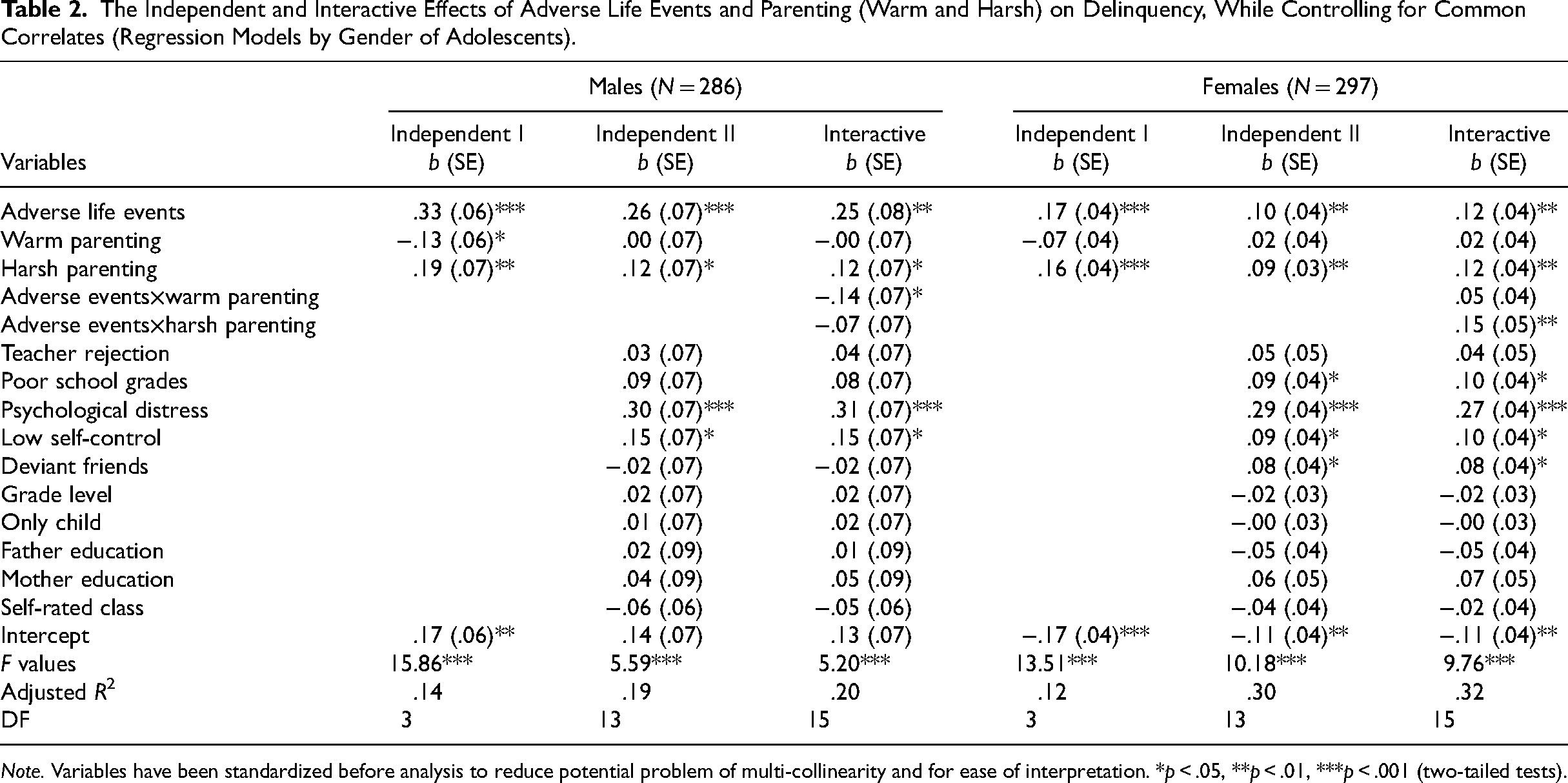
Our focus of the project is to examine the joint effects of stressful life events and parenting behaviors on delinquency and whether these interactive effects differ by gender. Before assessing the joint or interactive effects, we first estimate the baseline models to examine the independent effects. Thus, we include adverse life events, harsh parenting, and warm parenting simultaneously with and without the common correlates. These models are estimated separately among male and female adolescents. The results are presented in Table 2.
The Independent and Interactive Effects of Adverse Life Events and Parenting (Warm and Harsh) on Delinquency, While Controlling for Common Correlates (Regression Models by Gender of Adolescents).
Note. Variables have been standardized before analysis to reduce potential problem of multi-collinearity and for ease of interpretation. *p < .05, **p < .01, ***p < .001 (two-tailed tests).
As shown (see the Independent I, Table 2), adverse life events and parenting behaviors are each associated with delinquency as expected. Specifically, adolescents who report higher levels of adverse life events and harsh parenting are more likely to engage in delinquency, whereas those who indicate higher levels of warm parenting are less likely to engage in delinquency. These relationships have mostly reached statistically significant level (p < .05). Furthermore, these relationships remain similar by gender, although the coefficients are stronger among males. These results generally confirm the reports of other researchers that adverse life events and harsh parenting are associated with increased risk of delinquency and warm parenting reduces the likelihood of delinquency. In the next step, we estimate the same effects but this time, we add common correlates to the models. As shown (see Independent II, Table 2), the main effects are weakened with the inclusion of common correlates, but the patterns remain quite similar for adverse life events and harsh parenting. Warm parenting is not significant over and above the control variables. Although the effects of warm parenting are not observed, we cannot rule out the likelihood that warm parenting may affect delinquency through other variables.
Although not of main interest, the effects of common correlates on delinquency are observed. Psychological distress and low self-control are related to delinquency among both males and females. Among female adolescents, poor school grades and association with deviant friends are significantly related to delinquency. Most of these effects are similar among male adolescents, but not statistically significant (p < .05).
Our main concern of this project is to examine the interactive effects of adverse life events and parenting behaviors on delinquency and whether and how these effects vary by the gender of adolescents. For the next set of models, we estimate the interactive relationships by including the multiplicative terms (adverse life events×harsh parenting and adverse life events×warm parenting) simultaneously while controlling for the common correlates. The results showing the interactive models by gender are also presented in Table 2.
As shown (see Interactive, Table 2), the interactive term of adverse life events and harsh parenting is positively related to delinquency among females (b = .15) and the effect is statistically significant (p < .05). Among male adolescents, however, the interactive term is inverse (b = −.07), but the coefficient is not significant (p < .05). Furthermore, the interactive term between adverse life events and warm parenting is inversely related to delinquency among males as expected (b = −.14; p < .05), but this relationship is positive but not significant among female adolescents (b = .05, ns). Other controlled variables in the models remain identical to those in the main effect only models (see Interactive, Table 2).
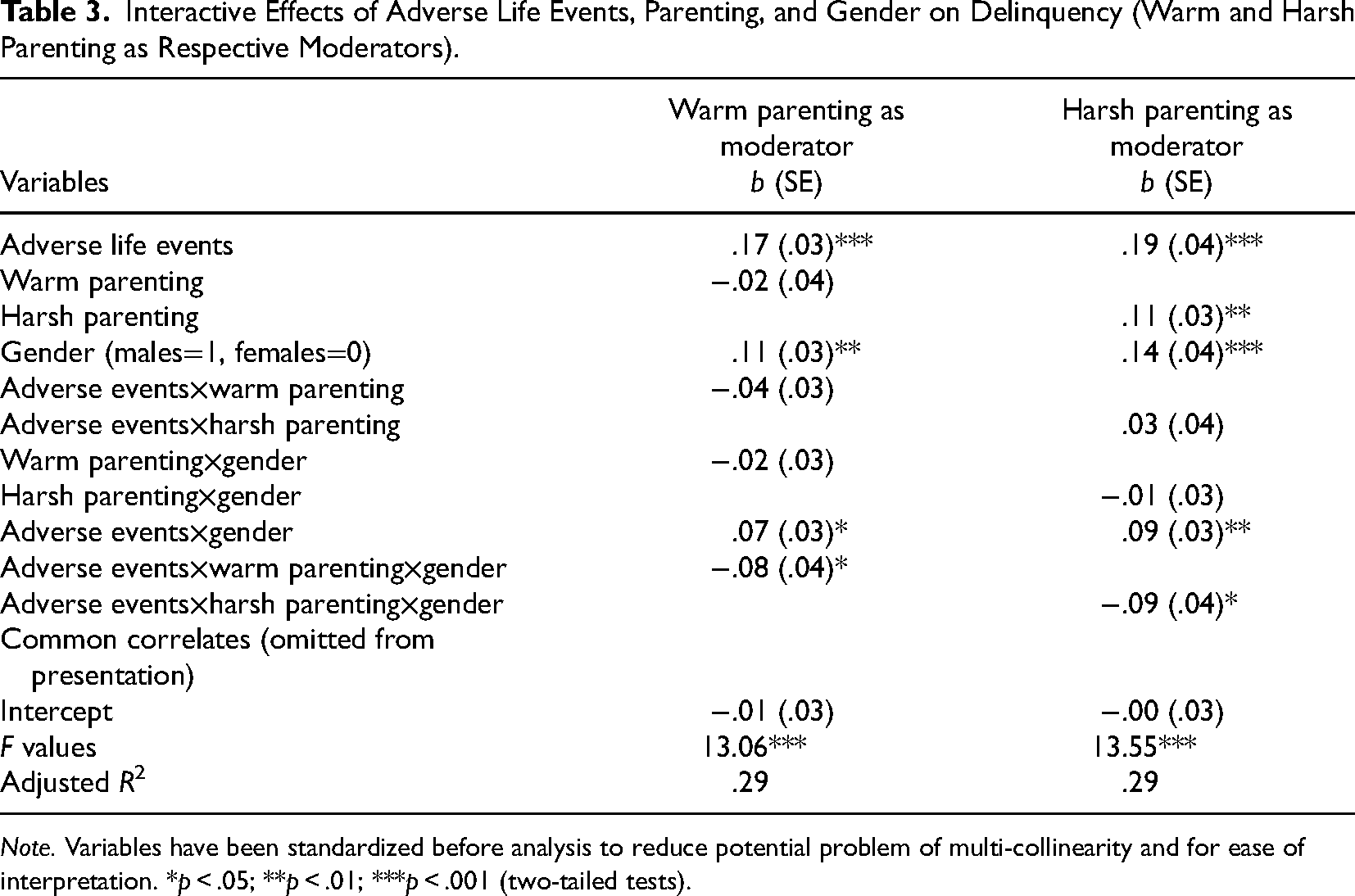
The models discussed above (see Interactive, Table 2) capture gender variations regarding the interactive effect of adverse life events and warm parenting on delinquency among male adolescents only and the interactive effect of adverse life events and harsh parenting on delinquency among female adolescents only. However, these results do not tell us whether variations in these interactive effects have reached statistically significant levels across gender, and furthermore, how adverse life events and parenting factors interact to influence delinquency among each gender group. Thus, in the next step, we estimate two three-way interactive models: one that examines the interactions of adverse life events, warm parenting, and gender on delinquency and the other for the interactions of adverse life events, harsh parenting, and gender on delinquency. These three-way interactive models include all two-way interactive terms including adverse life events×gender, warm or harsh parenting×gender, adverse life events×warm or harsh parenting as well as three-way interactive terms (i.e., adverse life events×warm or harsh parenting×gender) in addition to the main effect variables and common antecedents. The results of the three-way interactive models are thus presented in Table 3. The models are shown by parenting (warm vs. harsh parenting) as the respective moderators. We omit the presentation of common correlates to avoid redundancy as they are identical to those shown in Table 2.
Interactive Effects of Adverse Life Events, Parenting, and Gender on Delinquency (Warm and Harsh Parenting as Respective Moderators).
Note. Variables have been standardized before analysis to reduce potential problem of multi-collinearity and for ease of interpretation. *p < .05; **p < .01; ***p < .001 (two-tailed tests).
As shown (Table 3), the main effects of adverse life events and gender are significantly related to delinquency, so is harsh parenting. Furthermore, the two-way interactive term (adverse events×gender) is related to delinquency and the coefficients are statistically significant (p < .05). Most importantly, the three-way interactive terms (adverse events×warm parenting×gender and adverse events×harsh parenting×gender) are both related to delinquency, and both interactive terms have reached statistically significant level (p < .05). Thus, these significant interactive effects support the conclusion that gender variations observed in the two-way interactive terms in the earlier models (adverse events×warm parenting and adverse events×harsh parenting shown in Interactive, Table 2) are significantly different across gender (p < .05).
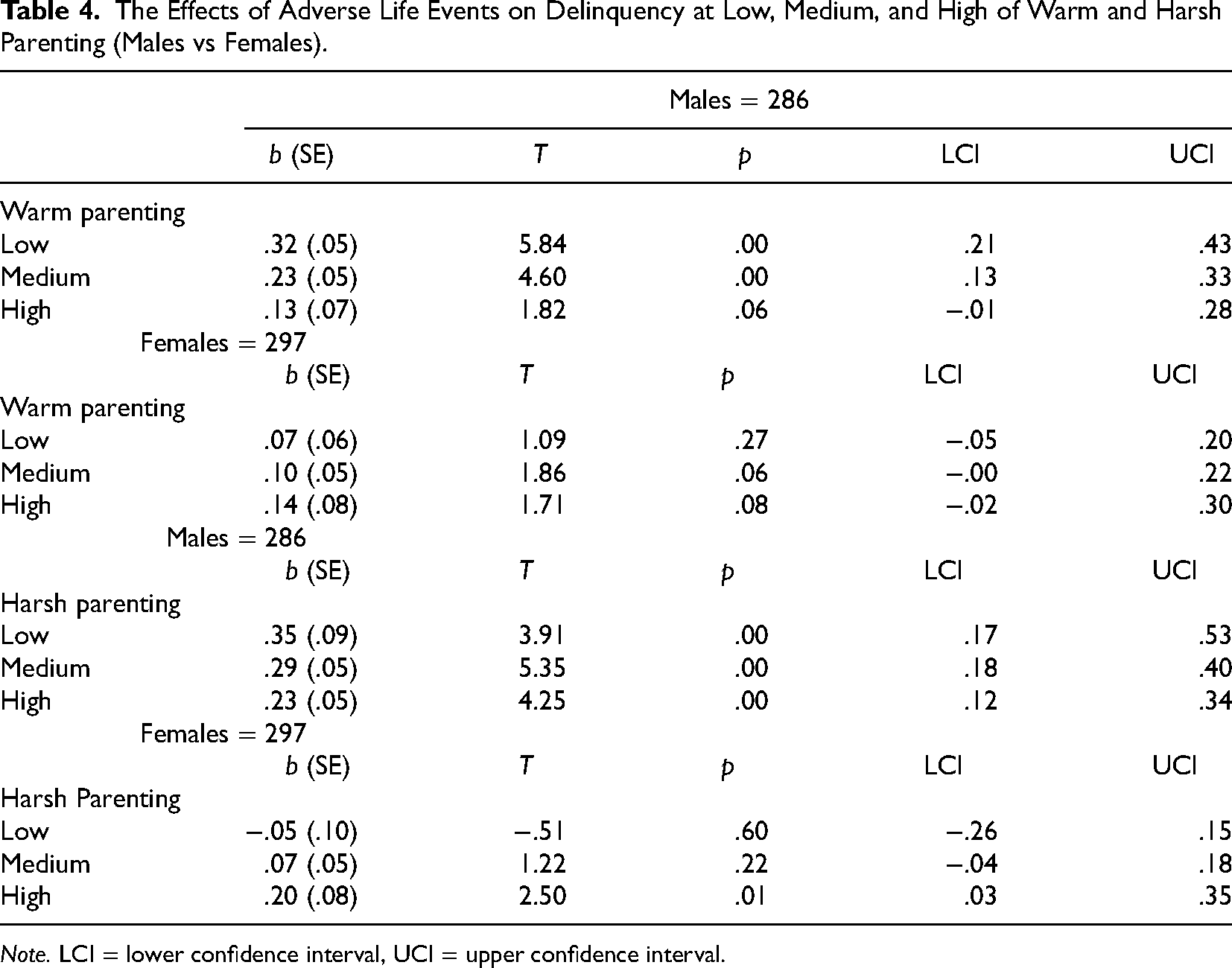
To demonstrate the nature of these interactive relationships observed among male and female adolescents respectively shown in Table 3, the three-way regression models from the SPSS furnish the output data that allow us to plot these interactive effects. Thus, Figure 1 shows the interactive effects of adverse life events and warm parenting on delinquency among male and female adolescents respectively, whereas Figure 2 shows the interactive effects of adverse life events and harsh parenting on delinquency across gender. The horizontal axis indicates adverse life events while vertical axis is for delinquency. Furthermore, the relationships between adverse life events and delinquency are shown at three data points (i.e., low = never, medium = sometimes, and high = frequent) of warm (Figure 1) or harsh parenting (Figure 2) respectively. In addition, the results with the testing of each level of these effects for male and female adolescents (i.e., unstandardized regression coefficients with standard errors, t-values, p level, and confidence intervals) are presented in Table 4.
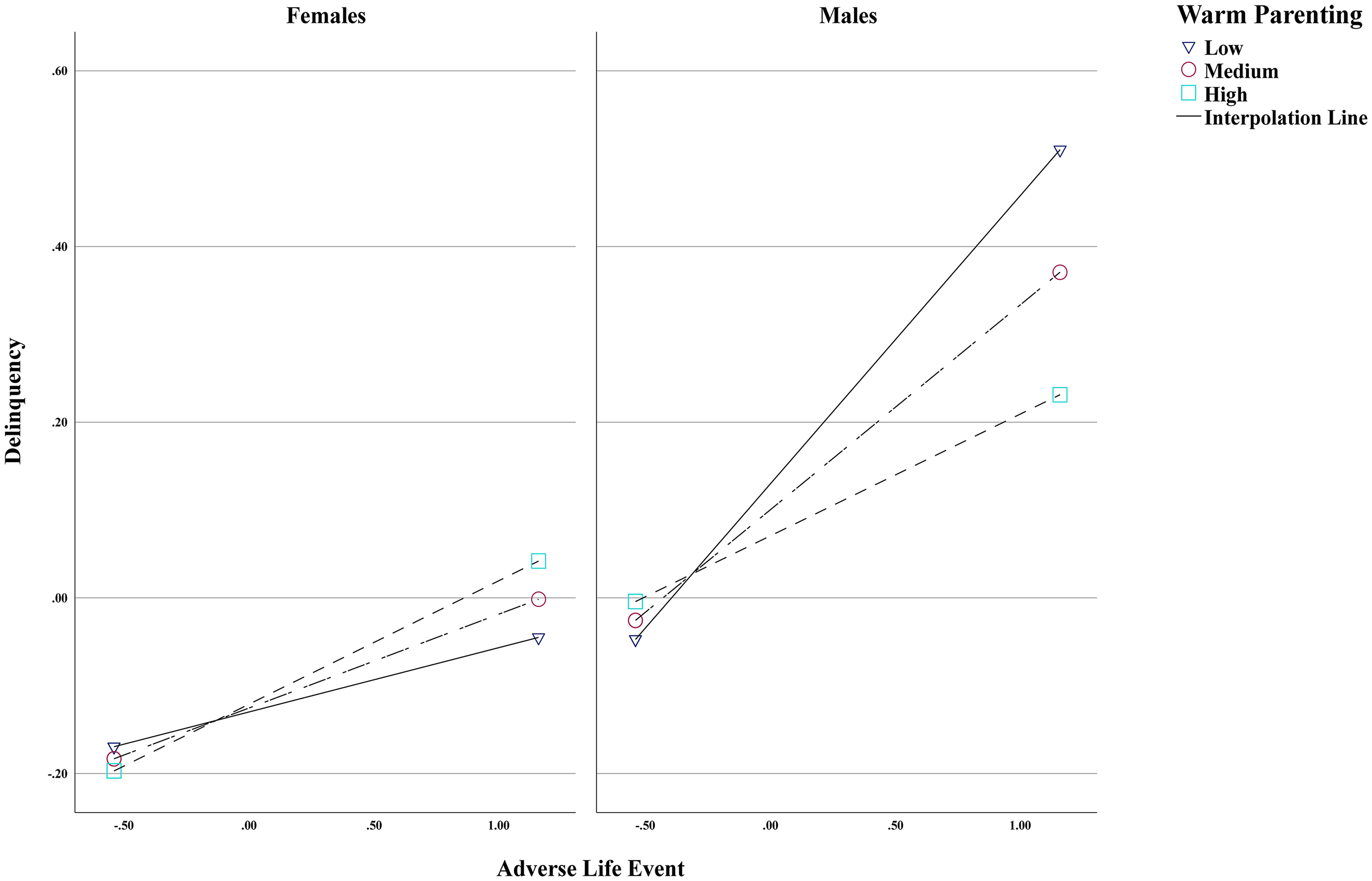
Interactive effects of adverse life events and warm parenting on delinquency by gender.
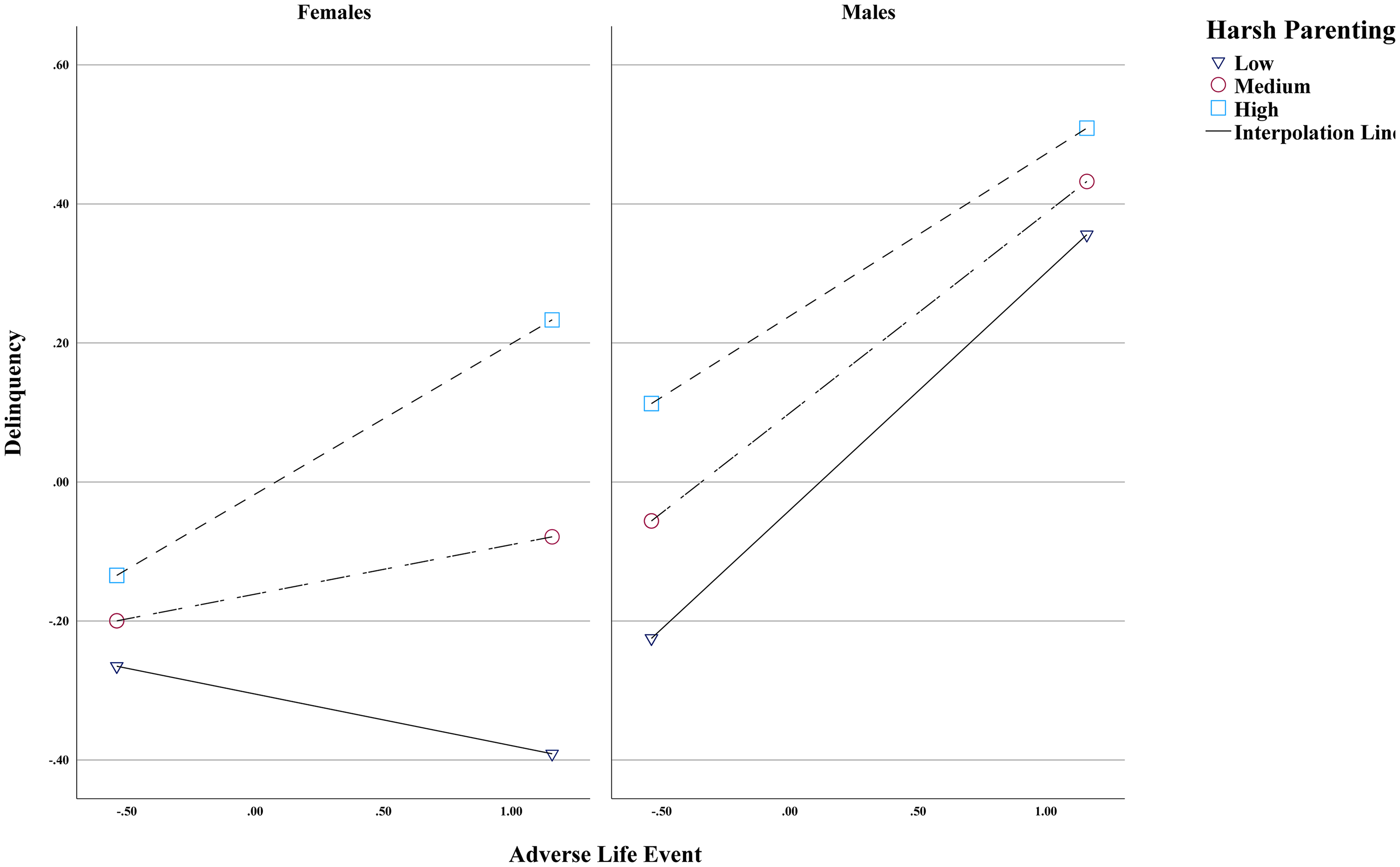
Interactive effects of adverse life events and harsh parenting on delinquency by gender.
The Effects of Adverse Life Events on Delinquency at Low, Medium, and High of Warm and Harsh Parenting (Males vs Females).
Note. LCI = lower confidence interval, UCI = upper confidence interval.
Figure 1 shows the relationship between adverse life events and delinquency at three data points of warm parenting among male and female adolescents respectively. As shown (Figure 1), the relationship between adverse life events and delinquency is positive. This is true among both male and female adolescents, although the overall relationship is stronger among male adolescents (i.e., the slopes are steeper). Furthermore, the joint effects of adverse life events and warm parenting are significant among male adolescents as reported (see Interactive, Table 2), that is, the effects of adverse life events on delinquency vary by levels of warm parenting among male adolescents. As shown (see Figure 1 and Table 4), when male adolescents indicate low warm parenting, adverse life events exert much stronger effect on delinquency (i.e., b = .32, SE = .05, and p < .00) compared with high warm parenting (i.e., b = .13, SE = .07, and p < .06). Meanwhile, however, the interactive pattern for female adolescents is quite different (see Figure 1), which has been reported as not statistically significant in the earlier model (see Interactive, Table 2 for females). Among female adolescents (see Figure 1 and Table 4), adverse life events are slightly more related to delinquency at high (i.e., b = .14, SE = .08, and p < .08) than low warm parenting (b = .07, SE = .06, and p < .27), but these effects are not statistically significant (p < .05). Thus, these patterns lead us to conclude that warm parenting offsets the negative effect of adverse life events among Chinese male adolescents, but not for female adolescents.
Figure 2 shows the interactive relationships of adverse life events and harsh parenting on delinquency by gender. As shown (Figure 2), the interactive effects also differ across gender. Among male adolescents (Figure 2), while adverse life events are positively related to delinquency, this effect does not vary by levels of harsh parenting (i.e., slopes are quite parallel to one another). As shown, despite the independent effects of adverse life events and harsh parenting on delinquency, no significant interaction is observed between adverse life events and harsh parenting on delinquency among Chinese male adolescents (see Figure 2 and Interactive, Table 2 for males). On the contrary, Chinese female adolescents show a clearly interactive effect (Figure 2 and Table 4). At low level of harsh parenting, adverse life events are not related to delinquency (b = −.05, SE = .10, p < .60). At medium harsh parenting, the relationship changes into weakly positive but the effect is not significant (b = .07, SE = .05, p < .22). But at high level of harsh parenting, adverse life events on delinquency are positively related to delinquency (b = .20, SE = .08, p < .01). The graph thus indicates that adverse life events in conjunction with high or frequent use of harsh parenting are associated with elevated levels of delinquent adaptations among Chinese female adolescents, but this interactive effect is not observed among male adolescents despite the observation of independent effects (Figure 2, Tables 2–4).
Conclusion and Discussion
In sum, data drawn from middle-school students from Fuzhou City, China, yield interesting observations generally in line with the hypothesized relationships: (1) Chinese adolescents exposed to adverse life events are more likely to report delinquency and this relationship is observed among both male and female adolescents. (2) Parenting behaviors are associated with delinquency such that adolescents experiencing harsh parental discipline are more likely to engage in delinquency regardless of gender. (3) Adverse life events in conjunction with harsh parental discipline are associated with delinquency among female adolescents and this interactive effect is not observed among male adolescents. (4) Warm parenting offsets the negative impact of stressful life events on delinquency and this relationship is observed only among male adolescents.
The observed independent influences of adverse life events and harsh parental discipline on delinquency among both Chinese male and female adolescents thus are consistent with the contention that harsh parental discipline and adverse life events may constitute sources of strain that tend to pressure adolescents to turn to delinquency for corrective coping (Agnew, 1992, 2001, 2006). Although the effect of warm parenting on delinquency is no longer significant after controlling for common correlates, the inverse effects without common correlates are generally consistent with the claim that warm parental behaviors may serve as a social constraint, discouraging or restraining adolescents from delinquency because of stakes in conformity (Agnew, 2005, 2013). These observations replicate empirical observations elsewhere in the western or non-western settings that show positive connections between life events and delinquency (Aseltine et al., 2000; Gao et al., 2020; Kabiru et al., 2014; Kim, 2007; Li & Jhang, 2023; Liu, 2016; Mazerolle, 1998) and delinquency with harsh treatment from parents (Brezina, 1998; Cheung & Cheung, 2008; Evans et al., 2012; Lin et al., 2014; Liu, 2018; McKee et al., 2007; Simons et al., 2000; Wang & Kenny, 2014; Wu & Li, 2023; Yao et al., 2022).
The more interesting observation for the present study is the joint or interactive effects of adverse life events and parenting behaviors on delinquent participation. The nexus between stressful life events and delinquent adaptations is conditioned by the levels of parental harsh discipline among female adolescents and warm parenting among male adolescents. These observations are consistent with Agnew's GST (2013) that sees parenting behaviors as moderators of the strain–delinquency relationships. The fact that the effect of stressful life events on delinquency is observed at high levels of harsh parental discipline among female adolescents also confirms the GST claim that the strain–delinquency relationship is more likely to occur when strain is of high magnitude, which is in line with the stress proliferation argument that stressors may serve as secondary proliferation and thus enhance their joint impact on delinquent adaptations (Agnew, 2013; Pearlin et al., 2005; Slocum, 2010). Likewise, the effect of stressful events on delinquency is weakened at high level of warm parenting among male adolescents. This observation demonstrates that warm parenting can help to reduce the strain impact or that it can be counted as a powerful source of support to buffer the negative impact of stressor event on delinquent outcomes at least among Chinese male adolescents (Agnew, 2013; Gao et al., 2020; Lösel & Farrington, 2012).
The significant differences observed between Chinese male and female adolescents regarding the joint or interactive effects of adverse life events and parenting behaviors may be explained in part by gender hierarchies and the influences of prevailing gender norms/expectations in China (Bauer et al., 1992; Connell, 1995, 2002; Fixmer-Oraiz & Wood, 2019; Inglehart & Norris, 2003; Isabelle, 2012; Jiang, 2022; Messerschmidt, 1997; Qing, 2020). As stated, in a primarily patriarchal society, men/boys continue to be entitled to higher or more privileged status than women/girls, and they tend to receive greater family resources (Bauer et al., 1992; Bo & Jaccard, 2020; Das Gupta et al., 2003; Isabelle, 2012; Liu, 2023; Qing, 2020; Wang, 2005; Wang et al., 2020). As a result, male adolescents may be more dependent on the level of parental support received (Bo & Jaccard, 2020), which is in line with what we have observed that supportive parenting makes a difference on the impact of adverse life events among male adolescents. Furthermore, it is also likely that parental support for male adolescents may take the form of quick actions or the deployment of family resources to counteract the stressors (Cheung et al., 2007), which is associated with reduction in the need to turn to delinquency for coping among male adolescents. Female adolescents on the other hand may derive support more from sources outside of the family and thus less dependent on supportive parenting behaviors (Bo & Jaccard, 2020). Additionally, due to their disadvantaged social location at home and in school (Bauer et al., 1992; Isabelle, 2012; Jiang, 2022; Qing, 2020; Wang et al., 2020), parental support granted to female adolescents may be used to control them and thus does not have stress reduction impact. Alternatively, female adolescents’ expectation to sacrifice for the family at the expense of their own needs may also affect Chinese females’ experience, especially regarding the access and utilization of conventional coping resources for stress reduction (Agnew, 2013; Fincher, 2023; Isabelle, 2012).
As for the observation that Chinese female adolescents exposed to adverse life events and simultaneous experiencing harsh treatment from parents are more likely to engage in delinquency and such joint effect is not observed among Chinese male adolescents. Perhaps, as stated before, due to the influences of Confucious gender ideology and gender-typing, Chinese female adolescents in general are expected to be caring for others, and their interpersonal and caring orientation make them especially prone to self-blame and feeling of guilt (Broidy & Agnew, 1997). Accordingly, stressed female adolescents who experience harsh treatment from parents on top of adverse life events may be more likely to turn to delinquency as they blame themselves for these adversities, especially when the conventional coping resources are blocked due to their generally disadvantaged or less protected status in the society (Broidy & Agnew, 1997; Fincher, 2023; Isabelle, 2012; Jiang, 2022; Qing, 2020). As suggested, males on the other hand may be able to use distraction or deflect self-blame to minimize stress proliferation (Broidy & Agnew, 1997).
While these findings reported above generally confirm our expectations, readers are advised to treat these reports with caution due to the limitations associated with our study design. First, our analysis is based on a small sample of middle-school students residing in a single provincial city in the southeastern part of China and the data are collected in 2011. These limitations may reduce the generalizability of our findings, especially when addressing broad social and cultural dynamics in China. Further, data collected in 2011 may limit its temporal relevance, thus replication with more recent data may be needed before applying the conclusions to today's adolescents in China. Second, we recognize that students exposed to stressor events are small. However, we believe that enough variations exist, and delinquency is similarly distributed by the stressor events. Furthermore, significant gender differences are observed despite the small percentages of stressor exposure. Thus, we are cautiously optimistic that our findings are robust. Finally, this study is based on cross-sectional design, which does not guarantee time precedence. It is possible that delinquents are prone to stressor events. For instance, delinquents may be more likely to experience relational problems, which may result in elevated levels of romantic dissolution, part of the life event index. The same can be said about the control variables such that psychological distress and perceived teacher rejection may be outcomes as well as antecedents of delinquency. Thus, future studies must utilize longitudinal design to ensure time precedence as well as to take into consideration the initial level of delinquent participation.
Aside from the methodological limitations, the present study is substantively restricted as we focus on limited adverse events that are abrupt and salient to adolescents in urban China. Furthermore, parenting behaviors are restricted to harsh and warm dimensions. Future studies may expand the scope of the study by examining additional aspects of parenting behaviors and life events. Future studies could also evaluate gender-specific delinquent responses. For example, female adolescents may be more oriented to using internalizing delinquent responses such as smoke and drink only, whereas male adolescents may adopt externalizing responses to stressors (e.g., steal, fight, and do graffiti). In other words, future studies must consider gender-specific domains of delinquent adaptations if possible.
Despite these limitations, the present study constitutes an important endeavor. It is the first attempt to examine the joint or interactive effects of stressful life events and parenting behaviors (warm and harsh respectively) on delinquency among Chinese adolescents. In doing so, this study yields valuable findings regarding the moderating influences of both harsh and warm parenting behaviors and gender differences on the relationship between adverse life events and delinquent adaptations in a unique sociocultural setting. By studying gender differences in particular, this study reveals culturally relevant gender patterns in the relationship among stressful life events, parenting, and delinquent coping in an understudied population, that is, adolescents in urban China.
Footnotes
Declaration of Conflicting Interests
The author declared no potential conflicts of interest with respect to the research, authorship, and/or publication of this article.
Funding
The author received no financial support for the research, authorship, and/or publication of this article.
