







Abstract
In retail operations, free sample trial (FST) and product return with money-back guarantee (MBG) both serve as important strategies to reduce consumers’ worries and valuation uncertainty. This paper is the first study which analytically examines when and whether an online retailer should provide both strategies simultaneously, and when one strategy outperforms the other. We consider an online retailer selling to consumers who are uncertain about the product values when making purchasing decisions. The retailer decides whether to offer MBG or FST. We develop analytical models to examine four strategies: strategy NN (both FST and MBG are not provided), strategy NS (FST is provided and MBG is not offered), strategy MN (FST is not provided and MBG is provided), and strategy MS (both FST and MBG are offered). Comparing among these four strategies, we find that when only FST is offered, the retailer surprisingly should decrease the price if the product cost is low. If the retailer only provides MBG, he will charge a higher price compared with the situation when MBG is not provided. When the size of free sample is very small, strategy NS (MS) is the optimal strategy if the product's cost is low (high). When the size of free sample is large, strategy MN is the optimal strategy. Then, we extend our model to consider three situations, namely: (a) the retailer offers coupons to consumers to experience the free sample, (b) consumer returns incur a cost, and (c) the size of free sample is endogenous. We find the main conclusion remains robust. Our findings may help explain some real-world practices, such as why some retailers (e.g., Amazon and Walmart) provide consumers with low volume toners to decrease the free sample cost; skincare product retailers such as Lancôme, Estee Lauder, and Guerlain implement both MBG and FST. We also interestingly show that a bigger size of free sample may not necessarily benefit consumers.
Keywords
Introduction
Background and Motivation
With the rapid development of information technology, consumers are more inclined to shop online (Lin et al., 2020; Perera et al., 2020). With the help of the Internet, it has become much easier for consumers to order their favorite products online with a single click (Cohen and Harsha, 2020; Hsiao and Chen, 2012; Li et al., 2024). Due to the recent Covid-19 pandemic, consumers have substantially changed their purchasing behaviors from brick-and-mortar stores to online channels (Lin et al., 2023; Tang et al., 2024; Xu et al., 2023). While online shopping brings remarkable convenience, it also brings a series of challenges. Consumers are often limited to opportunities to examine product values only by simply reading the product descriptions (Liu et al., 2022a; Liu and Xiong, 2023; Shang et al., 2017). As a result, the purchased product may be unsuitable for consumers. For example, a consumer saw a beautiful dress on the Internet, and then she bought it; but when she got the dress, she found that the color of the dress did not match the color that she saw on the description interface. A similar situation applies to skincare products, in which consumers do not have the opportunities to experience whether the products work for them until purchasing (and trying). In all these situations of online shopping, consumer valuation is uncertain and can only be realized after purchasing and experiencing the product (Kundu and Ramdas, 2022; Letizia et al., 2018; Roels, 2014). Owing to the uncertainty associated with product valuation, making purchase decisions becomes riskier, thus reducing consumers’ purchase intentions (Alhauli et al., 2023; Hilafu et al., 2024; Ma et al., 2020).
Real-world examples of different strategies.
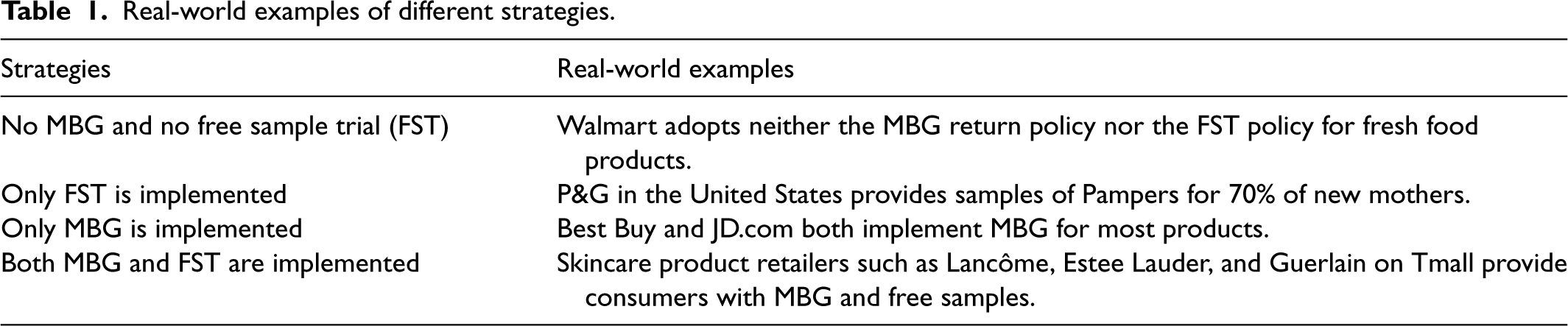
Real-world examples of different strategies.
Online retailers have responded to this problem by implementing money-back guarantee (MBG) for product returns. Davis et al. (1995) define MBG as the “policy of retailers publicly agreeing to refund the full purchase price to customers for any reason, even if the product fully meets its implied or explicit performance requirements”. If consumers are not satisfied with the product, they can return the product for a full refund (Akcay et al., 2013; Cao and Choi, 2022; Li and Liu, 2021). McWilliams (2012) points out that in the Internet Retailer's Top 500 list, the top 10 online apparel retailers all provide MBG. By offering “product return with MBG”, consumers are less likely to risk purchasing the products (Suwelack et al., 2011). This allows consumers to enjoy better shopping experiences by not worrying about how to return products that they are not satisfied with. On the other hand, MBG helps retailers stimulate demand, expand market share, and increase consumers’ shopping satisfaction (Anderson et al., 2009; Ertekin et al., 2020).
MBG can, however, lead to a large number of returns, causing huge losses to retailers. Returns and excess inventory reportedly cost retailers over five hundred billion dollars in the United States and more than one trillion dollars worldwide (Wu and Deng, 2021). In addition, MBG may not be an effective policy for all products. For example, food items are not resalable once opened, so that MBG is probably not the right solution for them. If the online retailer provides MBG for these products, it will bring huge losses. For these products, the online retailer can provide free samples for consumers to experience the product and determine the true value for the product. After experiencing the product, if it meets the consumer's expectation, the consumer will purchase. Consumers are often provided with free samples by online retailers as a means of reducing value uncertainty (i.e., offer the free sample trial (FST) policy). For example, Procter & Gamble's (P&G) 2016 Annual report presents that P&G in the United States provided samples of Pampers for 70% of new mothers and offered free Gillette razors to 80% of young men on their 18th birthday (Wu et al., 2018). Amazon sent free samples of new products to a certain segment of consumers using machine learning recommendations (Wu and Deng, 2021). In China, T-mall also launched a FST program called U-try. The retailers in T-mall can provide consumers with free samples, and consumers who are eligible to experience the samples, with the only cost to them being the freight. The provision of free samples contributes to the resolution of value uncertainty, the establishment of brand inertia, and the strengthening of brand loyalty (Seetharaman, 2004). In practice, there are four types of strategies adopted by major online retailers, which are presented in Table 1.
FST and MBG policies both serve as important strategies to reduce anxiety of consumers towards product valuation uncertainty when they shop online. In the literature, however, several unanswered research questions remain: (1) While MBG and FST can reduce the uncertainty about the consumers’ valuation, they will also bring nontrivial costs to online retailers. So, when should online retailers implement MBG or FST? (2) Would it be prudent for the online retailer to offer both strategies simultaneously? If yes, when? (3) Regarding MBG and FST: How do they affect retailers’ pricing strategies and profits, respectively? (4) If free samples are provided, should coupons be offered to those consumers? (5) How robust are the findings?
In our research, analytical models are developed to address the aforementioned questions. We first consider a vertically integrated centralized supply chain, consisting of a monopolistic online retailer and consumers who are uncertain about the product value when making purchasing decisions. The retailer decides whether to implement MBG and/or FST or not. If the retailer implements MBG, the consumer can choose to return the product for a full refund. If the retailer provides free samples, the consumer can experience the product before making the purchase decision. After experiencing the product, if the consumer is satisfied with the product, he will purchase the product. Based on the MBG and FST policies, we examine four strategies: strategy NN (both FST and MBG are not implemented); strategy NS (FST is implemented but MBG is not); strategy MN (MBG is implemented but FST is not); and strategy MS (both FST and MBG are implemented). We derive the optimal prices and profits under these four strategies, respectively. By conducting a comparative analysis, we find that, when the retailer only offers FST, he will not necessarily charge a higher price compared with the situation when FST is adopted. Conversely, he should decrease the price if either (i) the product cost is low; or (ii) the product cost and the size of free sample are both high. We also find that, for the retailer, the optimal strategies depend on the following conditions: given an extremely small size of free sample, (i) strategy NS is optimal if the product's cost is low, and (ii) strategy MS is optimal if the product's cost is high. Given a large size of free sample, strategy MN is optimal. Then we extend our model to consider three situations, namely: (a) the retailer offers coupons to consumers, (b) consumer returns incur a cost, and (c) the size of free sample is endogenous. We find that the retailer should offer coupons to consumers if the average product satisfaction rate is high and the value coefficient of free samples is low. When the cost of consumer returns is considered, both the optimal price and profit are decreasing in the return cost if MBG is solely implemented. If both MBG and FST are adopted, the optimal price decreases with the return cost when the product's salvage value is low. The return cost has no impact on the optimal price when the product's salvage value is relatively high. When the size of free sample is endogenous, the optimal size of free sample is the minimum size of sample for consumers to realistically try from the free sample scheme.
Contribution Statement and Paper's Organization
Consumers are exposed to higher risks when making online purchase decisions due to the uncertainty of product valuation, which in turn reduces their desire to purchase the product. To overcome this challenge, many companies implement MBG and/or FST. Despite being widely implemented in practice, the factors governing when “which strategy” should be employed are not adequately studied in the literature. To our best knowledge, this paper presents the first theoretically grounded analysis of the optimal FST and MBG strategies simultaneously. Consequently, our study contributes to the advancement of our understanding of these two widely adopted strategies and fills the gaps in our current knowledge. The derived insights not only contribute to the operations management (OM) literature, but also guide online retailers in adopting the optimal strategies in practice.
As a remark, MBG and FST can reduce the uncertainty about consumers’ valuation. However, at the same time, such a strategy will not be cost-free. In this paper, we provide insights to online retailers on “when to employ which strategy” and “how to generate the optimal profit”. We also investigate the impacts of MBG and FST. Last but not least, this paper offers suggestions to online retailers on whether it is beneficial to provide coupons under FST and the optimal size of free sample.
This paper is organized as follows. Section 2 reviews the most relevant literature to identify the research gaps and highlight the position of our research in the literature. Section 3 introduces the model and studies the optimal prices and profits under the four different strategies. Section 4 compares the optimal retail prices and the retailer's optimal profits under the four strategies. Section 5 considers three extensions: (a) the retailer offers coupons to consumers to experience the free sample, (b) consumer returns incur a cost, and (c) the size of free sample is endogenous. Section 6 concludes the paper and suggests future research directions. We provide the proofs in Online Appendix.
Literature Review
This paper is primarily related to the topics of value uncertainty, MBG, and FST. We review the relevant studies as follows.
Value uncertainty: A significant size of research is devoted to addressing the uncertainty of consumers’ valuation. Prior studies have explored whether suppliers or retailers should provide more information about the product in order to induce purchases from consumers facing product value uncertainty. For example, Chen and Xie (2008) find that online consumer reviews can help consumers identify the most suitable products for their personal use. Gallino and Moreno (2018) use empirical methods to investigate the effect of virtual fit information on online retail. The authors illustrate that offering virtual fit information helps decrease fulfillment costs resulting from returns and increase conversion rates and order value. Hao and Tan (2019) study whether the supplier and retailer should facilitate information disclosure to help consumers derive their true product valuation. They demonstrate that the information disclosure is beneficial for the supplier but does harm to the retailer in the agency pricing model. Hu et al. (2020) develop a two-period model to investigate the impact of sales volume disclosure when selling a network good. They indicate that a full disclosure policy with a commitment to contingent pricing always performs better than a nondisclosure policy. Choi et al. (2024) investigate whether ship-then-shop can benefit the firm. Their results indicate that ship-then-shop policy is beneficial if the AI capacity, the search friction, or the product match potential is large. Gao and Su (2017) explore how retailers can apply three different omnichannel information mechanisms to alleviate consumer uncertainty about product value and inventory availability. Prior studies also suggest that the retailer can address value uncertainty by adopting strategies such as quick response, browse-and-switch, and advance selling. Swinney (2011) develops a model to examine the value of quick-response inventory practices when retailers face heterogeneous consumers who are uncertain about the product value. Balakrishnan et al. (2014) develop a stylized economic model, which considers both consumers’ valuation uncertainty and consumers’ heterogeneity, to study the impact of browse-and-switch on pricing strategies and profits. Yu et al. (2015) derive the retailer's optimal strategy and find that the benefits of advance selling depend on the interdependence of consumers’ valuation, capacity level, and other market parameters. The most widely studied mechanism to address value uncertainty is product returns. Altug and Aydinliyim (2016) study the impacts of consumers’ discount-seeking purchase deferrals on online retailers’ return policy choices when consumers are not sure about whether the products meet their expectation. Lin et al. (2020) investigate the value of freight insurance and examine the impact of consumer heterogeneity on the optimal return strategies. The existing studies typically adopt online consumer reviews, omnichannel information mechanisms, quick response, and MBG to deal with value uncertainty. Different from these studies, our paper investigates the adoption of MBG or FST. More precisely, we aim to examine which strategy can better address the value uncertainty issue, or both strategies should be used simultaneously.
MBG: In OM, MBG is regarded as an effective tool for solving value uncertainty. Previous studies investigate the impacts of MBGs on consumer purchase and returns decisions. Wood (2001) examines the behavioral consequences of remote purchases and the impact of MBGs on consumer choice and satisfaction. Anderson et al. (2009) conduct an empirical study to quantify the option value under an MBG policy. They develop a structural model to examine how a retailer should optimize its return policies for different product categories. Suwelack et al. (2011) report that MBGs can increase consumers’ purchase desire and purchase intentions by inducing consumers to have a positive emotional response to the product. Other previous studies investigate the effect of MBGs on the retailer's operational strategies, including pricing, ordering, and profits. Shang et al. (2017) explore the optimal return policies with wardrobing. Their results show that, if the current extent of wardrobing is low, an increase in the extent of wardrobing will decrease the retailer's profits. Hu et al. (2019) demonstrate that neglecting returns will result in overpricing. The authors show that the loss is especially substantial in the case of high demand, moderate initial inventory, fast product returns, and high intuitive return probability. Abdulla et al. (2022) explore the impact of retailer's return policy leniency on consumers’ intention to purchase the product. They show that there is critical heterogeneity in the effectiveness of different leniency levers in influencing consumers’ purchase intentions. Cao and Choi (2022) investigate the optimal trade-in-return policies and indicate that full-trade-in-return performs better than partial-trade-in-return if the used product's durability is sufficiently low. Esenduran et al. (2022) indicate that the firm should implement MBG for customized products to increase profits and reduce total returns. Liu et al. (2022a) study the impact of social learning on the optimal returns policies. They find that it is optimal for sellers to adopt no-refund policies or partial-refund policies with social learning if they have a relatively higher expectation of product quality. Geda et al. (2023) derive the optimal refund policy to curb the trend that the arbitrage company copies another company's product description and sells the product at a markup on a different platform. Their strategies decrease the arbitrage firm's retail price and the designer firm's returns, and increase the designer firm's profit. MBGs have also been studied in a competitive setting. Chen and Chen (2016) examine the retailer's optimal return policies in a competitive market facing consumers with uncertain product values. Li et al. (2018) examine the decision of the retailer to choose MBG or no refund strategy for the two brands and the impacts of returns policies in a competitive market. There are studies which provide new insights into channel coordination challenges when MBGs are offered by retailers. Su (2009) derives the optimal strategy to achieve supply chain coordination with consumer returns. Letizia et al. (2018) find that whether the manufacturer should sell the product through single channel or dual channel is mainly based on product marginal value and salvage value. Nageswaran et al. (2020) investigate the optimal return polices of the omnichannel retailer. Su (2009) and Nageswaran et al. (2020) both show that whether MBG should be provided largely depends on the product's salvage value. While our paper reveals that when we consider both MBG and FST simultaneously, the optimal strategy is related to both the product's cost and the free sample's cost. In the above studies, FST is not considered. On the other hand, our research considers a certain class of products which are not resalable once opened such as food items. For these products, retailers can provide free samples to consumers to strengthen their confidence in purchasing the products. If consumers are satisfied with a free sample after experiencing it, they will purchase the product. But both MBG and FST will bring costs to online retailers. Our paper aims to offer insights into which of these strategies would be dominating and whether an online retailer should provide both strategies simultaneously.
FST: In the literature on FST, the main focus is the effect of the sampling strategy and explores whether the retailer should provide samples to consumers. About the impact of the free sample strategy, Heiman et al. (2001) examine two effects of sampling and derive the optimal sampling strategies. They show that the optimal sampling strategies depend largely on the product life cycle. Bawa and Shoemaker (2004) present an analytical model to show the impacts of a free sample on consumers’ purchase behavior under different market segments. Datta et al. (2015) model customer's retention and usage decisions in their research. They examine the impact of free-trial acquisition and distinguish the use of flat-rate services and pay-per-view services. Consistent with Foubert and Gijsbrechts (2016), who indicate that free trial is a double-edged sword and the effectiveness of these promotional activities depends on the timing of the trial period and the use intensity of consumers, we show that FST does not necessarily bring benefits. For the retailer, when the free sample's cost is high, free sample should not be offered. For consumers, when the product's cost and the free sample's cost are polarized (both high or low), providing free sample will decrease consumer surplus. Lin et al. (2019) conduct an empirical study to explore the impact of sample strategies and find that product sampling engagement will improve product rating by 1.1%. Niu et al. (2019) examine how free trial impacts firms’ pricing decisions and find that free trial increases the optimal price in the monopoly setting because consumers’ belief about the product's quality will be improved after trying the product. Our paper illustrates that the retailer does not necessarily charge a higher price if he provides free samples. Conversely, he should decrease the price to induce greater consumer demands to purchase the product after experiencing the free sample when either (i) the product cost is low, or (ii) the product cost and the free sample cost are both high. Liu et al. (2022b) show that sampling size has a positive and important impact on future sales. Yazdani et al. (2023) explore the firm's optimal pricing if consumers can choose to purchase the full-sized product or a sample box. They find that the sample box may do harm to the firm's profit since it accelerates consumer learning. About whether to provide samples, Wu and Deng (2021) examine different strategies of offering samples and explain which strategies competitive firms should adopt. Reza et al. (2021) use both analytical and empirical methods to investigate the experience effect on free trial promotions. They discover that the initial usage level is the key factor in determining the optimal redemption rate of a free-sample offer. A closely related study is presented by Wu et al. (2018), who investigate the optimal pricing and FST strategies in a competitive environment. They find that, even if the competition is keen, competing retailers may adopt asymmetric FST strategies. Some papers focus on digital experience goods. Chellappa and Shivendu (2005) develop a two-stage consumer piracy behavior model to examine pricing and sampling strategies. The principle of their digital product sampling strategy is to motivate some of the consumers who pirated the goods into buyers, by providing them with a sample. Cheng and Liu (2012) establish a model to derive the optimal free trial strategy considering both the impacts of reduced uncertainty and demand cannibalization. Li et al. (2019) discover that higher-quality samples will have greater effects on the sales of popular content. However, MBG is not studied in their work. Our paper considers a timely problem motivated by the real practice that online retailers often provide consumers with MBG for product returns. We compare the adoption of MBG with FST to derive the optimal strategy and study the impacts of MBG and FST on retailers’ pricing and profits.
MBG and FST strategies are both effective strategies to tackle value uncertainty and are observed to be jointly implemented in today's e-commerce market. While the joint impacts of the two strategies may significantly affect the retailer's decisions and profits as compared with their individual implementations, there is insufficient understanding of the effectiveness of the joint implementation in the literature. To the end, our study aims to fill this research gap. We summarize the closely related papers and our paper in Table 2.1 (Online Appendix A0).
The Basic Models
In the basic models, we consider the case in which an online retailer (who is also the manufacturer) (he/him), such as Lancôme, Nestlé, IBM, Nike, and Tmall, faces consumers with uncertain valuations.
1
Before making a purchase decision, consumers cannot touch and experience the products when shopping online. Therefore, they are not sure whether the product meets their expectation. Following Letizia et al. (2018), Pan et al. (2022), and Chen et al. (2024), we consider the value perceived by a consumer toward the product to be v, which follows a uniform distribution over the interval between 0 and 1.
2
After the consumer has received and experienced the product, if the product meets expectation, the value of the product is then v; otherwise, the value is
If the retailer provides consumers with MBG, consumers would feel less anxious about the risk of value uncertainty. After purchasing and experiencing the product, if they find that the product meets their expectation, they can keep the product; otherwise, they can return it.
3
The cost of the product is
However, MBG may not apply to all returned products, such as food items. In these situations, the retailer can provide free samples to consumers, and then consumers only need to pay the freight with a cost h to experience the free sample. If consumers do not need to pay the freight, those consumers who have no intention to buy the product will also try the free sample.
4
Under this situation, if the free samples’ costs are too high, it is unprofitable for the retailer to provide free samples. The value of a sample for the customer is
The online retailer needs to choose whether to adopt MBG and/or FST. We use i and j to represent the implementation of MBG and FST respectively: If MBG is implemented, then
The abbreviations used in the paper.
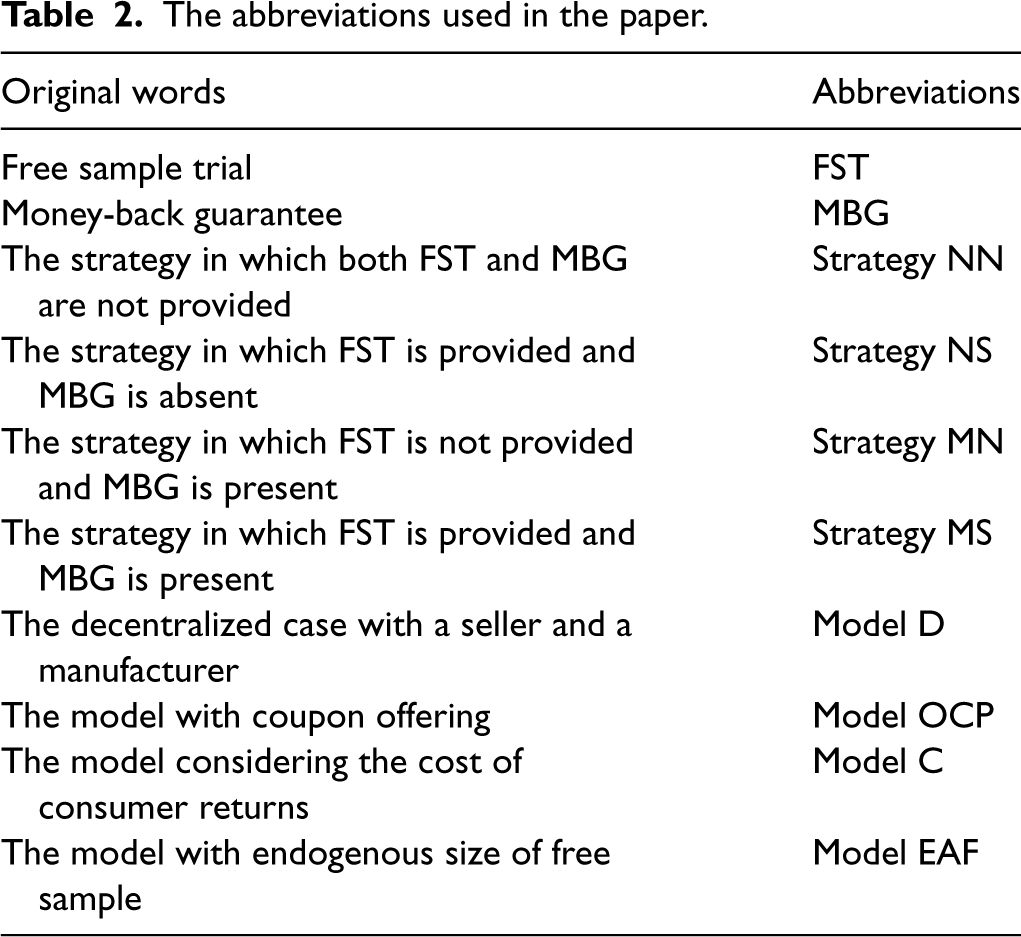
The abbreviations used in the paper.
In this subsection, we study the strategy when both FST and MBG are not implemented (i.e., strategy NN).
Let
Under the basic models, when both FST and MBG are not implemented, the optimal retail price for the product is
We find that, when strategy NN is implemented, the optimal price and profit mainly depend on the average satisfaction rate. In this situation, value uncertainty has a great influence on consumers’ purchase decisions. The optimal price increases in
Strategy NS: FST is Implemented but MBG is not
In this subsection, we study the strategy when FST is implemented but MBG is not (i.e., strategy NS). The retailer provides the free sample to the consumer. The consumer can choose to purchase the product or pay the freight to experience the sample.
Let 
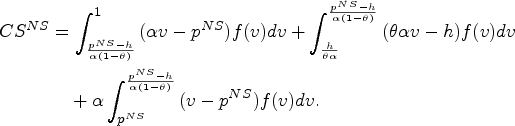
Under strategy NS: (a) When
When the retailer decides whether to provide free samples, he needs to balance profits and costs, which can be considered in the following two aspects. The first aspect is the revenues from the consumers who directly buy the product. These consumers do not know their exact valuations of the product. Therefore, the highest price they are willing to pay is low such that the retailer can only extract limited margins. The second aspect is the benefits from the consumers who try the sample and then purchase the product, and the cost of providing free samples. When the costs of providing free samples are higher than the profits from those who purchase the product after experiencing free samples, the retailer should not adopt the FST strategy. If the size of free samples is high, there exists an optimal price that makes FST profitable. In this situation, the optimal price is decreasing in the cost of the free sample. This result derives a new insight that is different from Wu et al. (2018), who report that the retailer's price and profit with FST would both increase in the free sample cost. The difference is because, with the increase in the free sample cost, the adverse effects of FST are more significant than its benefits. Therefore, the retailer should decrease the price to induce consumers to purchase the product directly. The optimal price is increasing in the freight rate of the free sample. With the increase in this freight rate, consumers with a middle range of the valuation of the product will purchase the product directly, rather than paying the freight to experience the product. The costs of providing free samples thus decrease. In this situation, the retailer can charge a higher price to target consumers with higher valuations of the product. If the size of the free sample is small, FST serves as an excellent way to resolve value uncertainty. The retailer can charge a very high price to generate greater profits from those consumers who resolve their value uncertainty after experiencing the free sample and hold an extremely high valuation of the product.
Strategy MN: MBG is Implemented but FST is not
In this subsection, we study the strategy when MBG is implemented but FST is not (i.e., strategy MN).
Let 
This conclusion is consistent with Chen and Chen (2016), who uncover that the optimal choice on adopting MBG or not depends only on whether the net salvage value of the returned product is positive. When the retailer provides MBG to the consumer, the consumer would not be concerned about dissatisfaction of purchases; therefore, the consumer's expected utility increases. In this situation, the retailer can charge a higher price for the product and then obtain a higher profit. The optimal price decreases in s, while the optimal profit increases in s. When the product's salvage value is low, the return costs are high for the retailer. In this situation, the retailer needs to increase the price to decrease the volume of returns. When the product's salvage value is high, the return costs are low, the retailer can decrease the price to induce further consumer demand for the product. If free samples are not provided and MBG is implemented, both the retailer's optimal selling price and profit are decreasing in the return rate. When the return rate is high, which means the average satisfaction rate is low (and so the consumer expected utility is low), the retailer should decrease the selling price to induce consumers to purchase the product. In this situation, the retailer can only make a limited profit from consumers and the profit thus decreases.
Strategy MS: Both FST and MBG are Adopted
In this subsection, we study the strategy when both FST and MBG are implemented (i.e., strategy MS). Consumers can choose to purchase the product directly or pay the freight to try the sample based on their expected utility. For those consumers who purchase the product, they can return the product if the product does not meet their expectations. For those consumers who try the sample, they can purchase the product if they are satisfied with the sample.
Let 

Under strategy MS: (a) When
FST and MBG can both resolve consumers’ valuation uncertainty but bring costs to the retailer simultaneously. When s is low, those consumers who purchase the product directly may return the product due to value uncertainty. The return cost is too high for the retailer because s is low. Under this situation, the retailer should set a higher price to make more profits from those consumers who first try the free sample and then purchase the product after deriving the true value for the product. When s is high, it is a bit surprising that the optimal price is decreasing in the size of free sample. This is because if the size of free sample is large, the retailer should set a lower price to induce more consumers to purchase the product to balance the high cost from providing the free sample.
To summarize, in this section, we derive the optimal prices and profits under four strategies from the combinations of FST and MBG. We find that the optimal price and profit mainly depend on the average satisfaction rate when both FST and MBG are not implemented. Whether the FST is beneficial for the retailer depends on the size of the free sample. If the size of free sample is very small, the retailer can charge a high retail price to obtain higher profits from the consumers who try the samples and then purchase the product. If the size of the free sample is large, there exists an optimal price which makes FST profitable. In this situation, the optimal price is decreasing in the cost of the free sample and increasing in the freight rate of the free sample. With the increase of the cost of the free sample, the retailer should decrease the price to induce greater demand to purchase the product directly in order to decrease the cost of providing free samples. A high freight charge discourages those consumers with a middle range of valuation of the product from paying the freight rate to experience the product. On the other hand, these consumers will purchase the product directly. We also find that, when the net salvage value of the returned product is extremely low, the retailer should set a high price to make more profit from those consumers who purchase the product after trying the free sample and decrease the return cost.
Comparisons
In the basic models presented in Section 3, we obtain the optimal retail prices and the retailer's optimal profits under the four strategies: NS, NN, MN, and MS. In this section, we compare the optimal retail prices, the retailer's optimal profits, and consumer surplus under these four strategies.
Optimal Retail Prices
First, we compare the optimal retail prices under the four strategies. We define the following notation and present Proposition 1:
The relationships of optimal retail prices under the four strategies of the basic models are as follows: (a) When
From Proposition 1, we find that, interestingly, when the retailer provides free samples, he should decrease the price if the product cost is low. This finding is interesting and in fact different from prior studies such as Niu et al. (2019), which commonly argue that the optimal price with free trial is always higher than that without free trial because they assume consumers’ prior belief about the product's quality is lower than the true quality of the product. If the retailer only adopts MBG, he can charge a higher price. This finding is in fact consistent with Li et al. (2018), who show that the adoption of MBG increases the retail price. If MBG is adopted by the retailer, consumers need not worry about the return of their undesirable product after experiencing the product. Consumers’ expected utility thus increases. The retailer can charge a higher price to make a higher profit from consumers. On the other hand, if he only provides free samples, he should decrease the price when either (i) the product cost is low, or (ii) the product cost and the size of sample are both high. Proposition 1(a) suggests that, when the retailer provides free samples to consumers, the optimal price depends on both the size of the free sample and the cost of the product. If the product cost is low, when the retailer provides free samples, he can decrease the price to induce greater consumer demands to purchase the product after experiencing the free sample. If the product cost and the size of sample are both high, consumers prefer to try the free sample instead of purchasing the product directly because of the value uncertainty. In this situation, the retailer should still decrease the price to induce consumers to purchase the product directly. Proposition 1(b) indicates that the optimal price under strategy MN (when MBG is implemented but FST is not) is higher than the one under strategy NN (when FST and MBG are not implemented) because MBG increases the expected consumer utility. Therefore, the retailer could charge a higher price.
Proposition 1(c) shows that, when the retailer adopts FST and MBG, the retailer should take the cost of the product, the size of sample, and the product's salvage value into consideration. If the product cost and salvage value are both low, the retailer can increase the price when both FST and MBG are adopted, compared with the situation when only MBG is adopted. This is because when the salvage value is low, i.e., the cost of return is high. In this situation, if both FST and MBG are adopted, the retailer will increase the price to encourage those consumers to experience the product first, instead of purchasing the product, to decrease the volume of returns. When the salvage value is high, the retailer can decrease the price to induce more consumers to purchase the product directly, which can also decrease the cost from providing free samples. If the product cost is high and the size of sample is small, the retailer can increase the price to generate greater profits from those who purchase the product after experiencing the free sample. When the size of the free sample is large, if the salvage value is low, the retailer will increase the price to balance the high cost from providing both MBG and FST.
In this subsection, we compare the optimal profits under the four strategies. To simplify the presentation of the results, we first define the following notations:
The optimal strategy.
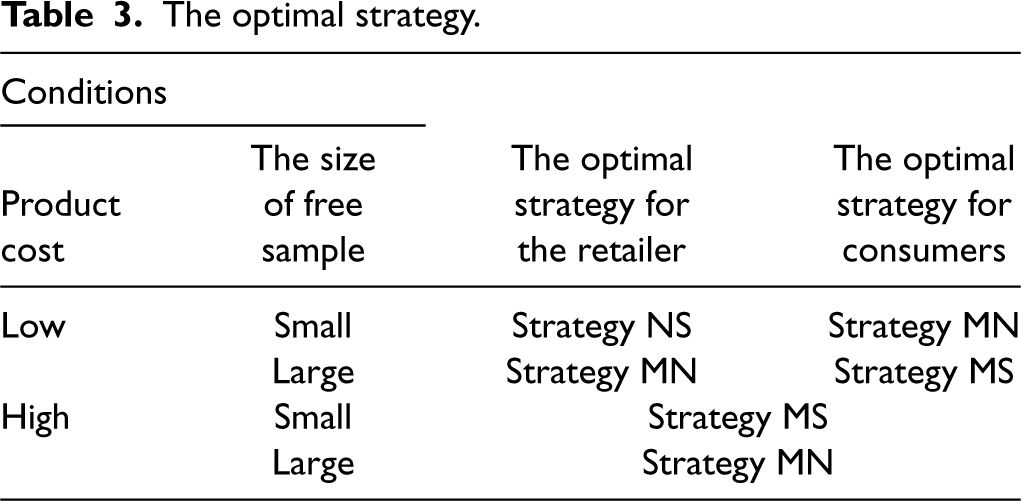
The optimal strategy.
Under the basic models: (a) When product's salvage value is positive, the retailer's optimal profit is higher under strategy MN than under strategy NN. (b) When
We discuss the retailer's optimal strategies in Table 3. From Proposition 2(a), we find that, when the product's salvage value is positive, offering MBG is more beneficial compared with the situation when FST and MBG are not adopted. Proposition 2(b) illustrates that, given a low product's cost, if the size of sample is extremely small, it is beneficial for the retailer to provide free samples only; if the size of sample is large, MBG is the optimal strategy. The effectiveness of FST and MBG largely depends on the size of sample. When the product's cost is high and the size of sample is extremely small, offering FST and MBG simultaneously can achieve the optimal profits. In this situation, the product's cost is high, and so the retailer should implement both strategies to resolve consumers’ valuation uncertainty. This explains why Lancôme, Estee Lauder, and Guerlain selling on Tmall provide consumers with small free samples. For example, they launch toner samples, which are less than 5 mL, and cream samples, which are less than 3 mL. Free samples usually can be used only once because the retailer should control the free sample's cost. Only when the size of sample is small, the provision of free samples can be beneficial for the retailer. Proposition 2(c) indicates that, with the increase of the free sample's freight rate, strategy NS has gradually lost (gained) its advantages compared with strategy MN (strategy MS). The main reason is that when the free sample's freight is high, the demand for free samples and the proportion of consumers who purchase the product after experiencing the free sample is low. Thus, MBG is more effective than FST. Strategy MS is not optimal compared with strategy NS, because in this situation the costs of providing both free samples and handling returns are extremely high compared with the profits it can bring.
In this subsection, we compare consumer surplus under the four strategies.
(a)
Proposition 3 reveals that adopting MBG improves consumer surplus while offering FST does not necessarily increase consumer surplus. It is intuitive that the adoption of MBG helps increase consumer surplus because consumers can return the product they do not want after receiving and experiencing the product. Whether FST can improve consumer surplus depends on the unit freight of the sample, the cost of the product and the size of the sample. We interestingly find that a larger size of the sample does not necessarily bring more benefits to consumers. In particular, when the product's cost and the size of the sample are both high, FST will decrease consumer surplus. Under this situation, the retailer will charge a higher price to cover the high cost of the product and free sample, consumer surplus thus decreases. When the size of sample is extremely small, if the freight is low, providing FST will increase consumer surplus. This may explain why in practice, Amazon would send free samples to consumers without freight and consumers post their free samples in social platforms to express their happiness. When the size of sample is relatively small and the product's cost is high, it is beneficial for consumers to try the sample before making their purchase decisions. When the size of sample is relatively large and the product's cost is low, those consumers with high expected utility will purchase the product directly while those consumers with relatively high expected utility will try the free sample. Those consumers with relatively high expected utility may find they are not satisfied with the product after trying the sample so FST increases their consumer surplus.
For better illustration and getting additional insights, we also conduct numerical analyses. Due to the page limit, we put the details in Online Appendix (A4).
Under the basic models, (a) when the size of free sample is extremely small, (i) if the product's cost is low, strategy NS is the optimal, (ii) if the product's cost is high, strategy MS is the optimal. (b) When the size of free sample is large, strategy MN is the optimal.
When the size of free sample is extremely small, the retailer believes that more consumers will purchase the product as their uncertainty about the experience of the product is reduced, thereby influencing consumers’ expected utility. If the product's cost is low, the retailer can set a lower price to generate greater profits from those consumers who purchase the product after experiencing the free sample. If the product's cost is high, the retailer should provide both FST and MBG to manage consumers’ value uncertainty. With the increase of the size of free sample, FST gradually loses its advantages and strategy MN becomes optimal in this case.
The profits under strategies NS and MS decrease with the free sample's value coefficient.
With the increase of the free sample's value coefficient, the value of the free sample increases. Consumers with middle range of valuation of the product will switch from purchasing the product directly to experiencing free samples. Not all consumers who experience the sample will purchase the product. Thus, with the increase of the free sample's value coefficient, the profits of NS and MS decrease.
To summarize, in this section, we compare the optimal retail price, the retailer's optimal profits and consumer surplus under the four strategies. When the retailer provides free samples to consumers, if the product cost is low, the retailer should decrease the price to induce greater consumer demands for the product after they experience the free sample. If the product cost and the size of free sample are both high, the retailer can still decrease the price to increase the volume of consumers who purchase the product after experiencing the free sample. The optimal price when MBG is adopted alone is higher than the optimal price when both FST and MBG are not adopted, because MBG increases the expected consumer utility. The profits under strategy NS decrease with the costs of the product and the free sample, and the free sample's value coefficient. Given an extremely small size of free sample, (i) if the product's cost is low, strategy NS is optimal; and (ii) if the product's cost is high, strategy MS is optimal. When the size of free sample is large, strategy MN is optimal. With the increase of the size of the free sample, the negative impact of FST gradually is more significant than its positive impact. The profits under strategies NS and MS decrease with the free sample's value coefficient. With the increase of the free sample's value coefficient, the demands of consumers who experience the free sample increase, while the proportions of consumers who purchase the product directly decrease. When the retailer provides MBG to consumers, the optimal profits increase with the salvage value. We summarize the retailer's optimal strategies in Table 3.
From Table 3, we observe that for the retailer, FST and MBG can be complementary (i.e., applying them together is beneficial and optimal) only when the product cost is high and the size of free sample is small. If the size of free sample is small and product cost is also low, then it is more beneficial to adopt FST alone. If the size of free sample is large, then no matter whether the product cost is high or low, it is optimal to adopt MBG solely without FST. In other words, MBG replaces FST. When the retailer decides which strategy to adopt, he should take both the product's cost and size of free sample into consideration. If the size of free sample and product cost are both low, it is beneficial for the retailer to adopt FST. If the size of free sample is small and the product cost is high, the retailer should implement both FST and MBG; otherwise, only MBG should be offered. We find that when the product's cost is high and the size of free sample is small, strategy MS is a win-win strategy for both the retailer and consumers; and when the product's cost and the size of free sample are both high, strategy MN is a win-win strategy. When the product's cost is high and the size of free sample is small, it is beneficial for both the retailer and consumers to adopt both MBG and FST to solve consumers’ valuation uncertainty and increase the retailer's profit. This explains why skincare products retailers like Lancôme, Estee Lauder, and Guerlain implement both MBG and FST because the cost of formal skincare product is high while the size of sample is small. When the product's cost and the size of free sample are both high, free sample should not be provided due to its high cost. When the product's cost is low, the optimal strategy for the retailer is different from for consumers. In these situations, the retailer can adopt “conditional” MBG or FST to make it win-win. When the product's cost and the size of free sample are both low, it is optimal for the retailer to adopt strategy NS but providing MBG can increase consumer surplus. In this situation, the retailer can adopt “conditional” MBG to balance his profit and consumer surplus. For instance, the retailer can limit the return deadline and require intact product packaging to control consumer returns. Those products which may be resalable will also be rejected. Note that when the product's cost is low and the size of free sample is large, the retailer will implement strategy MN to achieve the highest profit, but strategy MS is best for consumers. In this situation, the retailer can provide “conditional FST” such as only providing free samples for consumers with high credit rating. For example, in Tmall U-try, many retailers only provide free samples for those consumers who have high Tmall points or are their brand's members. Only in this way can the retailer increase consumer surplus while ensuring his own profit.
In this section, we consider three extensions. In sub-section 5.1, we explore whether the retailer should offer coupons to stimulate demand. In sub-section 5.2, we investigate the impact of the cost of consumer returns. In sub-section 5.3, we consider the endogenous size of free sample and derive the optimal size of free sample. These three extended models serve the purpose of robustness checking and help derive further insights.
Model OCP: Offering Coupons
The goal of providing free samples to consumers is to reduce valuation uncertainty and stimulate demand. In order to increase demands of those who purchase the product after experiencing the free sample, skincare product retailers such as Lamer, Lancôme, and Estee Lauder offer coupons with a value of h to those consumers who pay the freight rate h to experience a free sample. Thus, if the consumer pays the freight charge h to try the free sample and is satisfied with the product, he needs to pay
Strategy O-NS: FST is Implemented but MBG is not
In this subsection, we study the strategy when the retailer offers coupons to consumers who experience the free sample and MBG is not implemented. Let 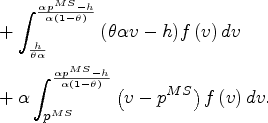

Under strategy O-NS of Model OCP: (a) Given that the retailer offers coupons to consumers who experience free samples, when
Under strategy O-NS, when the retailer offers coupons to consumers who experience free samples, the optimal strategy is still based on the size of the free sample. If the size of the free sample is extremely small, the retailer can charge a higher price to generate greater profits from those who purchase the product after experiencing the free sample. When those consumers who try the free sample and decide whether to purchase the product, the coupons increase their expected utilities. If the size of the free sample is large, there exists an optimal price that accommodates both consumers who purchase the product directly and who experience products first in the market. The optimal price is increasing in h. The reason is that, with the increase of h, the number of consumers who experience the free sample decreases, the proportion of consumers who purchase the product after experiencing the free sample increases. The retailer can charge a higher price to generate greater profits from those consumers with high valuation of the product. With the increase of
We conduct numerical analyses to compare the profits under strategy NN, strategy NS, and the scenario where the retailer offers coupons under strategy NS. We find that, when FST is implemented, the retailer's optimal profit increases with the free sample freight charge. The reason is that, with the increase of the free sample freight charge, the consumers with middle range of valuation of the product will purchase the product directly, instead of experiencing the free sample first. Therefore, such a decision decreases the costs of providing free samples. In all the cases, the retailer's optimal profit increases with the average satisfaction rate. However, with the increase of the average satisfaction rate, FST has become less effective. Given a low average satisfaction rate, if the retailer does not provide free samples to consumers, the low average satisfaction rate will impact the expected consumer utility. In this situation, FST has its advantage. With the increase of the average satisfaction rate, the expected consumer utility increases. Thus, FST has become less effective.
The provision of coupons increases the demand and decreases the price simultaneously. When the average satisfaction rate is low, the number of consumers who purchase the product after experiencing a free sample is low. In this situation, the retailer should not offer coupons to consumers because the demand is limited. The retailer should generate greater profits from those consumers who purchase the product after experiencing the free sample. Given a high average satisfaction rate, if the free sample valuation coefficient is low, the profit in the situation where the retailer offers coupons under strategy NS is higher than that when the retailer does not offer coupons under strategy NS (otherwise the retailer offers coupons but cannot achieve higher profits). The potential reason is that when the average satisfaction rate is high and the free sample valuation coefficient is low, the low valuation coefficient drives those consumers with low valuation of the product give up free samples. If the retailer offers coupons, the demand will increase significantly. Besides, when the valuation coefficient of the free sample is low, the proportion of consumers who purchase the product after experiencing the free sample is low. The negative impacts of coupons are more significant than the positive impacts of coupons. In this situation, the retailer should not offer coupons.
Strategy O-MS: Both FST and MBG are Implemented
In this subsection, we study the strategy when the retailer offers coupons to consumers and both FST and MBG are implemented. 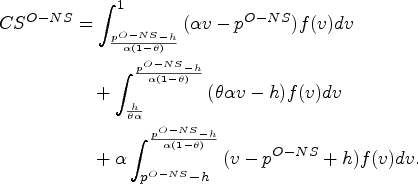

We find that when s is extremely low, the cost of returns is very high, MBG results in higher costs to the retailer. In this case, FST is dominant compared with the MBG strategy. In this case, the retailer should set a higher price to obtain higher profits from the consumers who try the free sample and then purchase the product. When s is high, there exists an optimal retail price when the retailer offers coupons to consumers.
We numerically compare the profits under strategy NN, strategy MS, and the scenario where the retailer offers coupons under strategy MS. We find that the retailer's optimal profits under strategy MS with and without coupons increase slightly with the free sample freight rate. With the increase of the freight rate, the demand for free samples decreases and the proportion of consumers who purchase the product after experiencing the free sample will increase. However, when the retailer adopts FST and MBG simultaneously, the impact of the freight rate is not significant. This explains why the retailer's optimal profits under strategy MS and strategy O-MS increase slightly with the free sample freight rate.
The retailer's optimal profit decreases with the valuation coefficient of the free sample under strategy NN, strategy MS, and strategy O-MS. When the valuation coefficient of the free sample is low, the profit of strategy O-MS is higher than the profit of strategy MS. When the valuation coefficient of the free sample is extremely high, the profit of strategy O-MS is lower than the profit of strategy MS without coupons. When the retailer provides both FST and MBG to consumers, MBG increases the demand of consumers who purchase the product and decreases the demand of consumers who experience the free sample. With the decrease of the value coefficient of the free sample, the demand of consumers who experience the free sample will decrease. In this situation, the retailer can increase the demand by providing coupons.
Model C: The Cost of Consumer Returns
In the basic models, we did not consider the consumers’ return cost. In this subsection, we take the cost of consumer returns into consideration.
Strategy C-MN: MBG is Implemented but FST is not
In this subsection, we study the strategy where MBG is implemented but FST is not, given the consumer's return cost (i.e., strategy C-MN). Consumers can return the product after receiving and experiencing the product.
Let 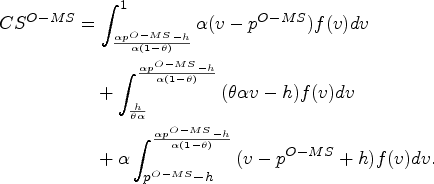

We show that both the optimal price and profit are decreasing in the return cost. When MBG is implemented but FST is not, if the return cost is high, consumers’ expected utility is low. In this situation, the retailer should set a low price to induce consumers to purchase the product. The optimal profit thus decreases as the optimal price decreases.
Strategy C-MS: Both FST and MBG are Adopted
In this subsection, we study the strategy where both FST and MBG are implemented, in the presence of consumer's return cost (i.e., strategy C-MS). Consumers first choose whether to purchase the product or experience the free sample. If consumers purchase the product, they can return the product after receiving and experiencing the product.
Let 

We find that when the product's salvage value is low, the optimal price decreases with the return cost. When the product's salvage value is relatively high, the return cost has no impact on the optimal price. The existence of the return cost reduces the number of consumers who directly buy products and increases the number of consumers who experience samples. After experiencing the free sample, those consumers who are satisfied with the free sample will purchase the product. Therefore, the total number of consumers who purchase and keep the product is the same as the case without the return cost. As a result, the optimal price remains unchanged when the product's salvage value is relatively high.
Model EAF: Endogenous Free Sample Size
In the basic models, we derive the optimal FST strategies considering the exogenous size of free sample. In this sub-section, we consider the endogenous size of free sample (i.e., the retailer decides the size of free sample under FST).
Strategy E-NS: FST is Implemented but MBG is not
In this subsection, we consider the situation when FST is implemented but MBG is not and the size of free sample is endogenous. The retailer decides the selling price and the size of free sample. Consumers decide whether to purchase the product directly or try the free sample based on their expected utility. We assume
Under strategy E-NS: the optimal size of free sample is
When FST is implemented but MBG is not and the size of free sample is endogenous, the optimal profit is decreasing in
Strategy E-MS: Both FST and MBG are Adopted
In this subsection, we consider the situation when both FST and MBG are adopted and the size of free sample is endogenous. The retailer decides the selling price and the size of free sample. Consumers choose to purchase the product directly or try the free sample based on their expected utility. Consumers can return the product after trying and experiencing the product.
Under strategy MS: the optimal size of free sample is
We find that when the size of free sample is endogenous, the optimal size of sample is the minimum size of sample for consumers to realistically try. This finding indicates that when the retailer decides the optimal size of free sample, he should take the product characteristics into consideration. Food, skin care products, and daily necessities have different minimum sizes of sample for consumers to realistically try at least once. This finding also verifies our basic models’ robustness. When FST is adopted, the retailer should decrease the size of free sample to control cost.
Remarks
We also consider other extended models, including the case with a decentralized setting, the scenario when refund is endogenous, and the situation when redeem rate is considered. Details of these extensions can be found in Online Appendices (A2), (A3), and (A4), respectively. Overall, we find that the major findings in our basic model remain valid in all these extended models.
Conclusion
Motivated by the observed industrial practices, we theoretically study both MBG and FST strategies in this paper. First, we consider a model consisting of an online retailer and consumers who are uncertain about their valuation towards the product when making purchasing decisions. The retailer decides whether to allow MBG and provides free samples. If the retailer provides free samples, the consumer can experience the product and only need to pay the freight. After trying the free sample, the consumer will consider whether to purchase the product. If the retailer implements MBG, the consumer can return the product for a full refund when the product does not meet her expectation. The retailer can provide MBG and free samples simultaneously.
We consider four strategies: NN (both FST and MBG are not implemented), NS (FST is implemented but MBG is not), MN (MBG is implemented but FST is not), and MS (both FST and MBG are implemented). We obtain the optimal prices and profits of these four strategies. Interestingly, when the size of free samples is relatively large, there exists an optimal price that drives FST profitability. When the size of free samples is small, the retailer can charge a high price to generate a higher profit from those consumers who purchase the product after experiencing the free sample.
We also compare the optimal prices and profits of these four strategies. We find that the retailer will not necessarily charge a higher price if he provides FST to consumers. Conversely, the retailer should decrease the price if FST is offered alone and the product cost is low. This may explain why P&G does not increase the price of products such as Pampers of which they send out the free sample.
Given free samples are provided to consumers, if the product cost is low, the retailer can decrease the price to lift demand for the product by attracting consumers who wish to experience free samples. If the product cost is high and the size of free sample is small, the retailer should increase the price to induce demand for the product directly. The optimal price under strategy MN is higher than that under strategy NN. When the size of free sample is very small, strategy NS (MS) is the optimal strategy if the product's cost is low (high). When the size of free sample is large, strategy MN is the optimal strategy. This explains why retailers of skincare retailers, such as Lancôme, Estee Lauder, and Guerlain on Tmall, provide consumers with toner samples of less than 5 mL and cream samples of less than 3 mL. They provide small free samples to retain the cost at an acceptable level. Surprisingly, we discover that the larger size of free sample does not necessarily bring more benefits to consumers. When the product's cost and the size of free sample are both high, adopting FST will decrease consumer surplus. Under this situation, the retailer will charge a higher price to cover the high cost of the product and free sample, consumer surplus thus decreases. When the sample's cost is extremely low, if the freight is low, providing FST will increase consumer surplus. This explains why Amazon would send free coffee samples to consumers without freight and consumers post their free samples in social platforms to express their happiness.
In the extended models, we consider three different settings, namely (i) a scenario where the retailer offers coupons to consumers to experience free samples, (ii) the cost of consumer returns, and (iii) the endogenous size of free sample. In case (i), when the average satisfaction rate is high and the valuation coefficient of the free sample is low, the profit under strategy NS with coupons offered is higher than that under strategy NS without coupons. In this situation, coupons can serve as an effective means to increase demand. When the retailer adopts both MBG and FST and the value coefficient of the free sample is low, it is more beneficial for the retailer to offer coupons to consumers. Otherwise, the retailer should not offer coupons to consumers. When we consider the cost of consumer returns in case (ii), if only MBG is implemented, both the optimal price and profit are decreasing in the return cost. If both MBG and FST are adopted, when the product's salvage value is low, the optimal price decreases with the return cost. When the product's salvage value is relatively high, the return cost has no impact on the optimal price. The optimal strategy is still based on the product cost and free sample cost, which verify our basic models’ robustness. In case (iii), the optimal size is exactly the minimum size of sample for consumers to realistically try from the free sample scheme.
There are several interesting directions to extend this paper in the future. First, in this paper, we assume that consumers who have experienced the product will buy the product if they are satisfied with the product. However, there may also be opportunistic consumers who tend to just experience free samples without buying the product. Second, we assume that there is only one monopoly retailer, but in some markets, there are usually multiple retailers. Competition among retailers may lead to further interesting findings. Third, the characteristic of online shopping is that consumers will commonly face value uncertainty when they shop online. FST and MBG policies both serve as important strategies to reduce consumer anxiety towards product valuation uncertainty. We hence consider the online retail setting in this paper. Future research may compare the FST and MBG strategies under the offline setting. Fourth, we consider the case in which the sample is free and consumers only need to pay the freight to try the sample. Further studies may relax this setting to consider the endogenous price of sample. Finally, we only study the retailer's optimal sales and return policies in a single period model. However, consumers may also be affected by other consumers who have already purchased the product. Therefore, it would be helpful to develop multi-period models to examine this scenario.
Supplemental Material
sj-docx-1-pao-10.1177_10591478241268603 - Supplemental material for Online Retailing Operations: Is It Wise to Offer Free Sample Trial and Money-Back Guarantee Together?
Supplemental material, sj-docx-1-pao-10.1177_10591478241268603 for Online Retailing Operations: Is It Wise to Offer Free Sample Trial and Money-Back Guarantee Together? by Jiaxin Lin, Tsan-Ming Choi and Yong-Hong Kuo in Production and Operations Management
Footnotes
Declaration of Conflicting Interests
The authors declared no potential conflicts of interest with respect to the research, authorship, and/or publication of this article.
Funding
The authors received no financial support for the research, authorship, and/or publication of this article.

Notes
How to cite this article
Lin J, Choi T-M and Kuo Y-H (2024) Online Retailing Operations: Is It Wise to Offer Free Sample Trial and Money-Back Guarantee Together? Production and Operations Management 33(11): 2158–2176.
References
Supplementary Material
Please find the following supplemental material available below.
For Open Access articles published under a Creative Commons License, all supplemental material carries the same license as the article it is associated with.
For non-Open Access articles published, all supplemental material carries a non-exclusive license, and permission requests for re-use of supplemental material or any part of supplemental material shall be sent directly to the copyright owner as specified in the copyright notice associated with the article.
