







Abstract
The increasing prevalence of patent infringement litigation in recent decades has imposed significant costs on firms. This paper empirically examines how this legal risk influences a key operational decision: vertical integration. Drawing on the real options theory (ROT), we argue that managers reduce the extent of vertical integration to preserve flexibility and make operational adjustments in anticipation of unfavorable outcomes from patent lawsuits. Using a dataset of public firms and a text-based measure of vertical integration, our findings show that firms facing higher patent litigation risk are less vertically integrated. At the same time, these firms maintain broader supplier networks and product market scopes, consistent with a preference for leveraging market mechanisms to reduce the costs of exercising switch and exit options. The negative relationship between litigation risk and vertical integration is particularly pronounced in durable goods sectors and declining industries, where the ability to divest or halt operations is highly valued. Additionally, we find that firms diversify their supplier base and product and technology portfolios after facing patent lawsuits. However, more vertically integrated firms are slower to make these adjustments, suggesting that they encounter greater friction in exercising real options. Overall, our study highlights the significant role that intellectual property disputes play in shaping corporate vertical integration strategies.
Introduction
Patent-related litigation cases have surged over the past few decades, with total damages awarded exceeding $2.8 billion annually from 2020 to 2022 (Lex Machina, 2023). However, these court-awarded damages represent only a small part of the overall impact, as many cases are settled outside of court and carry additional consequences, such as operational disruptions and reputational damage. In 2019, more than half of U.S.-listed firms identified patent litigation as a significant risk to their business operations. Given this widespread concern, we need a more robust understanding of how managers account for intellectual property risks in their decision-making processes, particularly in the context of operational strategies. To reach that goal, this study empirically examines the relationship between a company’s exposure to patent litigation risk and its degree of vertical integration.
Patent litigation often involves substantial costs and uncertainties. Under current law, patent holders have the right to collect reasonable royalties from infringing sales or to prevent infringers from manufacturing and selling products that use their patented technology. 1 Patent disputes commonly require substantial operational adjustments, such as switching suppliers and modifying products or technologies. 2 These costs are particularly burdensome for vertically integrated firms, where product and technology interdependence is vital to maintaining a cohesive value chain. The case Polaroid Corp. v. Eastman Kodak Co. (1986) exemplifies the heightened costs of product switching and business adjustments for integrated firms. Kodak was forced to exit the instant film market after Polaroid successfully sued for patent infringement. As a result, Kodak had to compensate its customers who could no longer use the compatible cameras, leading to substantial financial losses (Rowbotham, 2013).
We argue that firms mitigate these constraints by reducing vertical integration to preserve flexibility in the face of litigation risks. Drawing on the real options theory (ROT), we hypothesize that patent litigation risk is associated with lower levels of vertical integration, as firms seek to build real options ex ante that enhance their ability to adapt—by diversifying suppliers, modifying product portfolios, and reallocating resources—in response to realized litigation threats (Leiblein, 2003; Sanchez and Mahoney, 1996). High vertical integration limits such adaptability in two key ways. First, integrated firms depend on in-house production or a narrow supplier base, making it more difficult to pivot to non-infringing alternatives (Burke et al., 2007; Huchzermeier and Cohen, 1996). Second, operational interdependencies raise exit costs, discouraging firms from discontinuing potentially infringing products (Gulati et al., 2005; Harrigan, 1985). Therefore, firms exposed to greater litigation risks are more likely to limit vertical integration in order to maintain the flexibility necessary to adjust supply chains, shift product strategies, and mitigate operational uncertainties.
We test this hypothesis using a sample of 21,612 firm-year observations of U.S. public firms from 2003 to 2016. In doing so, we make two key assumptions explicit. First, we assume that most firms adjust their organizational structures to optimally mitigate the operational risks posed by patent litigation. By analyzing firms’ behaviors at an aggregate level, we can infer the desired degree of vertical integration under different levels of litigation risk exposure. Second, while vertical integration may help mitigate the impact of litigation risk, it cannot fully eliminate the adverse effects. In other words, firms cannot solely rely on adjusting their boundaries to avoid all lawsuits or eradicate the adjustment costs following litigation. Vertical integration may reduce risks but does not provide an all-encompassing solution.
To measure vertical integration, we employ a text-based method developed by Frésard et al. (2020), which assesses the degree of internalization of production inputs along the supply chain. This method uses an algorithm to analyze the vertical relatedness of product vocabularies in the Business Description section of firms’ 10-K filings (i.e., annual reports). It enables us to capture the extent to which a firm actually owns or controls vertically related business activities. 3 To assess litigation threats, we build an ex ante measure of each firm’s exposure to patent litigation risk, based on the firm’s patent portfolio across various technology fields and the corresponding litigation frequency within these fields (Mezzanotti, 2021). The rationale is straightforward: firms operating in technology areas with higher litigation rates are more likely to face patent lawsuits.
Our analysis begins by validating the effectiveness of the litigation exposure measure. We find that a one-standard-deviation increase in this measure correlates with a
We examine the relationship between a firm’s vertical integration and its exposure to litigation risk. Consistent with our hypothesis, we find a negative association between litigation risk and the level of vertical integration. Specifically, a one-standard-deviation increase in litigation risk is associated with an approximate 13.2% reduction in vertical integration. This result remains robust across alternative measures of patent litigation risk and when incorporating firm fixed effects, reinforcing the reliability of our findings. In parallel, we find that litigation risk is positively associated with both a diversified supplier base and a broader product market scope. This suggests that firms facing heightened litigation risk proactively expand their supply networks and product offerings to preserve strategic flexibility. By maintaining a more diversified set of suppliers and products, firms create real options that allow them to swiftly adjust operations in response to legal disputes, mitigating potential disruptions. These findings support our hypothesis that under high litigation risk, firms adopt lower levels of vertical integration as a risk-mitigation strategy. By reducing reliance on internally controlled production and maintaining a more flexible operational structure, firms can better navigate the uncertainties associated with patent litigation.
Next, we explore the moderating effects arising from the option-exercising costs. We conceptualize these costs as shifting or halting production after firms experience lawsuits. Building on the framework provided by Harrigan (1985), we use the characteristics of being in a durable or declining industry as proxies for the costs of exercising switch or exit options, considering that these factors increase the expenses involved in overhauling or winding down production lines. Our findings consistently show that firms are more inclined to disintegrate their operations in the face of litigation threats if they operate within durable or declining industries. This tendency underscores the crucial role of the market for divestiture and firms’ agility in operational adjustments, thereby further supporting the consideration of real options in shaping firms’ boundary decisions.
Furthermore, we investigate how the extent of vertical integration influences firms’ operational adjustments after they face infringement claims. We consider firms exercising real options to enhance operational resilience against external disruptions from three aspects: supplier base, technological innovation, and product differentiation (Cohen and Kouvelis, 2021). Firms embrace the diversification of their sourcing base and technologies to facilitate shifts from affected businesses and to reduce the legal grounds of infringement allegations (Huang et al., 2024). However, vertically integrated firms may have fewer viable resources to do so, as vertical integration usually involves irreversible resource commitment to a limited number of suppliers, which hampers firms’ reconfiguration of resources and establishment of new transaction partnerships (Claussen et al., 2015). We find that after being accused as an infringer, firms proactively increase their supplier base, enter new technological domains, and differentiate their products. These adaptations can either be direct reactions to infringement allegations or create some operational hedging for future legal challenges. Additionally, we find that highly integrated firms are sluggish in implementing such changes, which supports our theory that vertical integration increases the costs of exercising real options related to switching, modifying, and abandoning certain operations.
Finally, to better establish the causal relationship between patent litigation risk and vertical integration, we analyze how firms adapt their vertical boundaries following the Supreme Court’s decision in eBay v. MercExchange. This landmark ruling modifies the criteria for granting injunctions in patent disputes, directly affecting the financial burden on defendants (alleged infringers). By making injunctions harder to obtain for patent holders, the decision introduces a legal shift exogenous to firms’ earlier investments in litigation-prone technology areas. The decision mitigates concerns regarding the abrupt halt of operations, thereby diminishing the need for maintaining strategic flexibility. Employing a difference-in-differences (DiD) approach, we observe that firms with high exposure to litigation risk increase their vertical integration subsequent to the ruling. These findings lend support to the argument that high patent litigation risk acts as a deterrent for firms in expanding their vertical scope.
Together, our findings show that firms facing high patent litigation risk are likely to maintain lower levels of vertical integration. Among firms with similar exposure to litigation risk, those that are less integrated tend to experience fewer lawsuits and demonstrate greater responsiveness in making operational adjustments post-litigation. These results align well with ROT, underscoring the advantages of operational flexibility in exercising real options when facing litigation threats.
This study contributes to operations management research by connecting firms’ innovation-related challenges with strategic supply chain decisions (Lee and Schmidt, 2017). Patent litigation risk impacts firms’ sourcing, production, and sales activities, making it effectively a supply-chain-specific risk. Our key finding that firms reduce vertical integration to retain flexibility for operational adjustments adds to the discussion of dual sourcing and product diversification as operational hedges against future uncertainty (e.g., Huchzermeier and Cohen, 1996; Koren and Tenreyro, 2013; Sting and Huchzermeier, 2014; Tomlin and Wang, 2005). We further show that this real options consideration extends beyond supply chain strategies to influence firms’ innovation paths and product market decisions following litigation.
Our work also has practical implications. First, it offers insights for patenting strategies at the firm level, both for patent asserters and alleged infringers (Mihm et al., 2015). Patent asserters may adopt offensive patenting strategies to block competitors’ access to vertically related markets. Conversely, firms facing potential infringement allegations can adopt patenting strategies that align with their level of vertical integration. For instance, by developing a portfolio of substitute products and alternative technologies, firms might better hedge against risks associated with high vertical integration. Second, our findings inform regulators and legislators about the potential impact of patent litigation on corporate decisions. Our evidence provides timely insights for recent legal reforms aimed at curbing “patent trolls” and reshaping the legal framework surrounding supply chain liability. 5 We expand on these contributions in Section 5.
Legal Background and Hypothesis Development
Patent Litigation: Legal Liability and Consequences
Supply chain liability in patent infringement cases is complex, involving various parties, such as manufacturers, distributors, and customers. Under U.S. patent law, liability for patent infringement may be assigned to different entities, depending on the nature of the infringement—whether direct or indirect. Direct infringement occurs when a party makes, uses, or sells a patented product without permission (35 U.S.C.
In today’s competitive and dynamic business environment, firms often rely on a wide range of technologies to develop and commercialize complex products, which increases the risk of intellectual property disputes (Somaya et al., 2011). Companies frequently commit substantial resources to new ventures before fully clarifying the ownership of critical patents or securing licenses for all essential technologies (Somaya, 2012). As a result, many firms find themselves implicated in infringement activities, either directly or indirectly, during the course of their operations.
Patent litigation introduces significant uncertainties and disruptions to firms’ business activities. A notable consequence of such litigation is the possibility of a court-ordered injunction, which may prohibit an infringing firm from producing, using, or selling goods or services that violate a patent. These injunctions can block an infringer’s products from the market, creating cascading effects across the firm’s integrated operations. This legal power positions patent holders advantageously during negotiations, particularly when dealing with vertically integrated firms. One illustrative example is the global patent dispute between Apple and Qualcomm. In 2018, courts in China and Germany granted injunctions against Apple’s iPhone manufacturers, threatening to withdraw certain Apple products from these key markets. In response, Apple quickly reassured customers by implementing design modifications that circumvented the infringing technology, thereby avoiding the sales ban. However, the pressure from supply chain partners eventually led to a settlement agreement in 2019.
In some cases, companies can even leverage supply chain dynamics to mitigate or evade liability. Even when multiple supply chain partners are involved in patent infringement, companies may attempt to avoid liability by arguing that they did not control the entire infringing process. This defense was highlighted in Akamai Technologies v. Limelight Networks (2015), where the U.S. Supreme Court ruled that Limelight was not liable for direct infringement because it did not control or direct its customers’ actions.
Companies can also take proactive measures to avoid infringement liability by switching suppliers or modifying their products to remove infringing components or technologies. For instance, in Nichia Corp. v. CoreStaff Co., Ltd. (2023), CoreStaff successfully switched suppliers after being sued for distributing patented LED products, leading to a settlement. Similarly, firms may redesign products to eliminate infringing features or replace technologies. When licensing the patented technology is not feasible, companies often modify product designs or abandon the use of the infringing technology altogether to avoid hefty licensing fees or legal penalties.
Hypothesis Development
Ex Ante Litigation Risk, Vertical Integration, and Creation of Real Options
Patent litigation risk permeates the supply chain, creating significant operational uncertainties for firms. Building on the ROT framework, we theorize that vertical integration is associated with high adjustment costs in response to adverse legal outcomes, which diminishes the value of real options to disengage from or modify operations (Tsay et al., 2018). In the context of patent litigation, two types of real options are particularly relevant: switch options and exit options. Switch options refer to the ability to alter suppliers or production processes, while exit options involve abandoning technology or exiting a product market (Trigeorgis, 1996; Trigeorgis and Reuer, 2017).
The implications of these real options are especially relevant when considering the operational constraints imposed by patent litigation. Should a court grant injunctive relief, prohibiting the production or sale of an infringing product, the company is forced to cease production activities and potentially shut down related manufacturing facilities. An example is MBF Healthcare Acquisition Corp., which stated in its 2008 10-K filing, “We could incur substantial costs and may be required to [
Vertical integration increases the costs of exercising these real options and making operational adjustments for several reasons. First, existing theories argue that vertical integration locks firms into specific commitments and investments, such as long-term contracts with a limited set of suppliers, reducing the value of switch options (Claussen et al., 2015; Richardson, 1993). The inability to diversify the supply chain exposes firms to greater operational uncertainty if external disruptions occur (Sting and Huchzermeier, 2014). Second, the financial burden of exiting is typically heavier for vertically integrated firms, which optimize their production lines for synergies and make specialized investments that are more vulnerable to operational shocks (Glenk and Reichelstein, 2020; Lemley and Shapiro, 2006). Moreover, the value realized from divesting technology-specific assets is likely diminished due to the unique complementarities and customizations inherent in an integrated value chain.
Beyond the considerations of real options, legal practices also tend to disadvantage vertically integrated firms. Calculating patent damages often proves difficult when moving beyond simply applying a royalty rate to the sales price of the final integrated product. Lemley and Shapiro (2006) found that from 1982 to 2005, the average reasonable royalty damages recorded in Westlaw amounted to approximately 13.1% of the sales price of infringing units, significantly exceeding the average profit margin of 8.3%. 7 In industries with high-value end products, such as electronics and automobiles, where operations are highly integrated, patent disputes are often resolved for substantial sums. A prominent example involved Broadcom and Volkswagen, where the Volkswagen Group was expected to settle for up to €876 million (approximately $940 million) over alleged patent infringements related to chipsets used for vehicle functions such as entertainment and navigation systems. However, the cost of the chipsets in question was estimated at only €28,644 for all allegedly infringing vehicles (Fügemann et al., 2019).
In reality, patent asserters are well aware of the limited ability of alleged infringers to modify their operational activities and often exploit this inflexibility, targeting integrated value chains to negotiate higher damages. To mitigate potential litigation costs, firms are motivated to adjust their organizational structures to escape unfavorable bargaining positions. A notable example occurred in the Microsoft and AT&T dispute, where AT&T criticized Microsoft’s efforts to break the supply chain as a strategy to avoid damages related to downstream infringement activities (Microsoft v. AT&T, 2005). ROT suggests that “under uncertainty, it may be optimal to utilize market-like mechanisms that provide greater flexibility” (Leiblein, 2003: p. 949). Unlike vertical integration, which may lower short-term production costs, market contracting—though potentially more costly in the short term—offers firms the flexibility to explore alternative technologies and adjust their operations in the future. Therefore, we expect that firms, recognizing the value of maintaining real options for operational adjustments, will opt for lower levels of vertical integration. Based on this reasoning, we propose the following hypothesis:
Hypothesis 1(a). Firms facing higher patent litigation risks are likely to exhibit lower levels of vertical integration. (H1a)
H1a hypothesizes that firms may strategically reduce the extent of vertical integration to facilitate the ex ante creation of real options. Building on this logic, we extend our theorization to a complementary mechanism: firms’ proactive efforts to diversify their supplier relationships and product offerings. Specifically, we predict that firms facing heightened litigation threats are more likely to establish broader supply chain networks. A diversified supplier base enhances firms’ flexibility, allowing them to switch to alternative suppliers or reduce dependency on specific suppliers that may become entangled in litigation (Tomlin, 2006; Tomlin and Wang, 2011). Firms often seek substitute inputs when facing potential patent lawsuits, as evidenced by many company disclosures (examples in Appendix B).
Similarly, we expect firms to engage in a wider spectrum of diversified products as a hedge against the risk of injunctions or sales suspensions affecting a single product line. While firms facing litigation risks may be less inclined to invest in vertically related products, they are more likely to allocate resources toward horizontally related products and businesses. Product diversity is fundamental to a firm’s internal operational flexibility and strengthens its resilience to external shocks (Reinmoeller and van Baardwijk, 2005). The availability of substitute and diverse products enables firms to reallocate resources and shift operational focus swiftly, mitigating the financial and operational repercussions of lawsuits. Consequently, firms may leverage the complementarity between internal flexibility (product diversity) and external sourcing support (a broader supplier base) by proactively creating these real options (Li et al., 2023). Accordingly, we state our second, nested hypothesis as follows:
Hypothesis 1(b). Firms facing higher patent litigation risks are more likely to diversify their supplier bases and product portfolios. (H1b)
Moderating Effects of Option-Exercising Costs
We also expect the relationship proposed by H1a to become more pronounced as the costs of exercising switch or exit options increase. Firms consider the potential need to halt production or redesign processes when determining their initial investment levels. Higher exit barriers and the illiquidity of investments can negatively affect operational performance and financial stability if firms are forced to cease operations in litigated areas.
Building on Harrigan (1985), we identify external economic conditions as a significant determinant of exit costs. During economic downturns, the difficulty of liquidating production equipment increases, making the ability to adjust operations at a lower cost more crucial. Another key factor is the irreversibility of resource commitments. The non-redeployable nature of certain assets amplifies the effects of technological uncertainty stemming from litigation, further discouraging investments in vertical integration (Balakrishnan and Wernerfelt, 1986; Lajili et al., 2007). Consequently, when investments are expected to be more relationship-specific and less redeployable, firms may seek to avoid the opportunity costs associated with high litigation uncertainty. Together, these factors, combined with litigation risk, reduce the expected residual returns from making operational adjustments, thereby discouraging investment in vertical integration. Based on this reasoning, we propose the following hypothesis:
Hypothesis 2. The relative costs of exercising real options (proxied by high exit costs and investment specificity) strengthen the negative relationship between patent litigation risks and vertical integration. (H2)
Exercising Real Options After a Lawsuit
We further hypothesize that the degree of vertical integration affects firms’ ability to make operational adjustments following patent litigation. These adjustments may aim to reduce the legal grounds for immediate lawsuits or respond to the threat of future litigation (Huang et al., 2024), which ensures continued operations and resilience after the disruptions. For example, firms might shift to non-infringing suppliers or reconfigure their product and technology portfolios to focus on less legally contentious activities.
Vertically integrated firms face more challenges in quickly switching to external sources due to their substantial internal investments and resource commitments (Claussen et al., 2015; Quinn, 1992). Porter (1980) provides an example of Imasco, a Canadian cigarette manufacturer that struggled to adapt after vertically integrating into the production of packaging materials. When technological advancements made this packaging obsolete, Imasco found it difficult to source more advanced alternatives. A similar dynamic applies to patent litigation: When the upstream technology is embroiled in legal disputes, integrated firms may be less flexible in switching suppliers. Unlike firms that outsource, vertically integrated firms have fewer managerial and financial resources available for investing in alternative sourcing options (Gilley and Rasheed, 2000). This limitation reduces their ability to maintain external sourcing relationships and to adjust quickly when litigation occurs.
Moreover, vertical integration can impede firms’ proactive efforts to adjust their product and technology portfolios in response to current and future legal threats (Lerner, 1995). High levels of vertical relatedness and synergies between products and underlying technologies create additional rigidity in operational changes (Harrigan, 1985). Adapting to new products or technologies can disrupt internal transfers and the interdependence among vertically integrated business units, making such changes more difficult.
In summary, we predict that firms will make operational adjustments, such as altering sourcing channels and modifying product compositions, in response to patent litigation. However, a higher degree of vertical integration is expected to limit these adjustments. We formally state our hypothesis as follows:
Hypothesis 3. A higher degree of vertical integration hinders firms’ operational adjustments following patent infringement allegations. (H3)
Variables and Sample Selection
Measure of Firm-Level Patent Litigation Risk Exposure
To test our hypotheses, we adopt a methodology similar to that of Mezzanotti (2021) for constructing a measure of firm-specific exposure to patent litigation risk. This approach takes advantage of the variation in litigation intensity across different technological fields. We aggregate the exposure to litigation for each technology class to the firm level, using the firm’s investments in these classes as weights. The underlying premise is that a firm engaged in extensive research and development (R&D) in technology fields with high litigation rates per patent, like pharmaceuticals, is more likely to face increased patent litigation risk compared to firms with lesser investments in such litigious fields. We use a firm’s patent portfolio as a proxy to quantify its investment in each technology class. The firm-level litigation risk exposure is calculated as follows:

In this study, we use the vertical integration score (
Sample Selection and Descriptive Statistics
To create the sample of firms for the study, we merge data from the Compustat and CRSP datasets spanning from 2003 to 2016, which aligns with the available litigation data from the USPTO Patent Litigation Docket Reports Dataset. In our main analyses, we exclude all financial firms (SIC codes from 6000 through 6999) and firms without any granted patents during the past 20 years. 9 The final sample consists of 21,612 firm-year observations and 2,844 unique firms.
Descriptive Statistics
Patent litigation intensity exhibits significant variations across technology classes. During the sample period, sectors such as Communications, Computer Hardware & Software, and Drugs experienced the highest litigation frequencies, aligning with prior studies and observations (Figure 1(a)). Moreover, the variations in litigation exposure among firms indicate heterogeneous litigation threats across the sample (Figure 1(b)). Table 1 presents descriptive statistics for the main variables. The measure of firm-level litigation exposure (
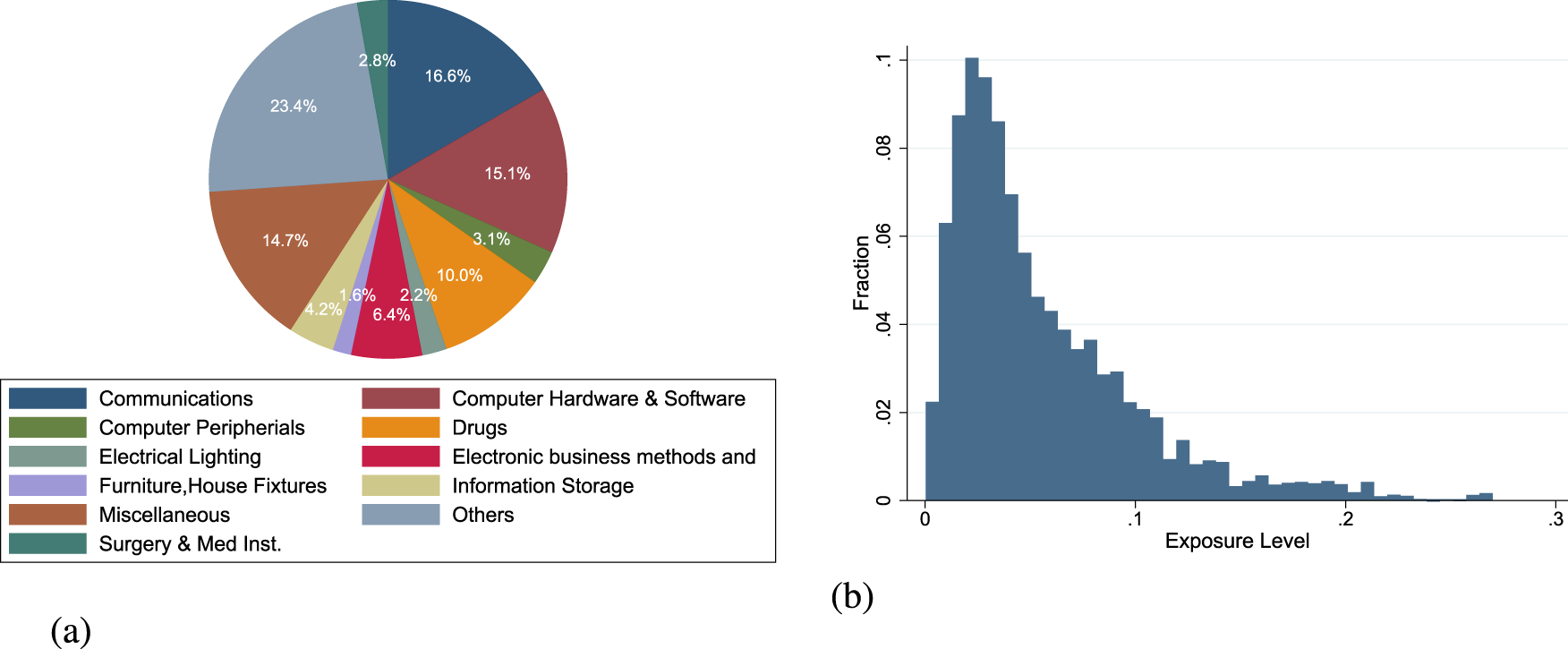
Patent Litigation Patterns and Firm-Level Risk Exposure. (a) Top-10 Most Litigious Technology Areas. (b) Distribution of Firm-Level Patent Litigation Risk Exposure. Note: This graph presents the distribution of patent litigation cases between 2003 and 2016 among the top 10 NBER technology classes; This graph presents the frequency histogram of firm-year-level patent litigation risk exposure of sample firms between 2003 and 2016.
Descriptive Statistics.
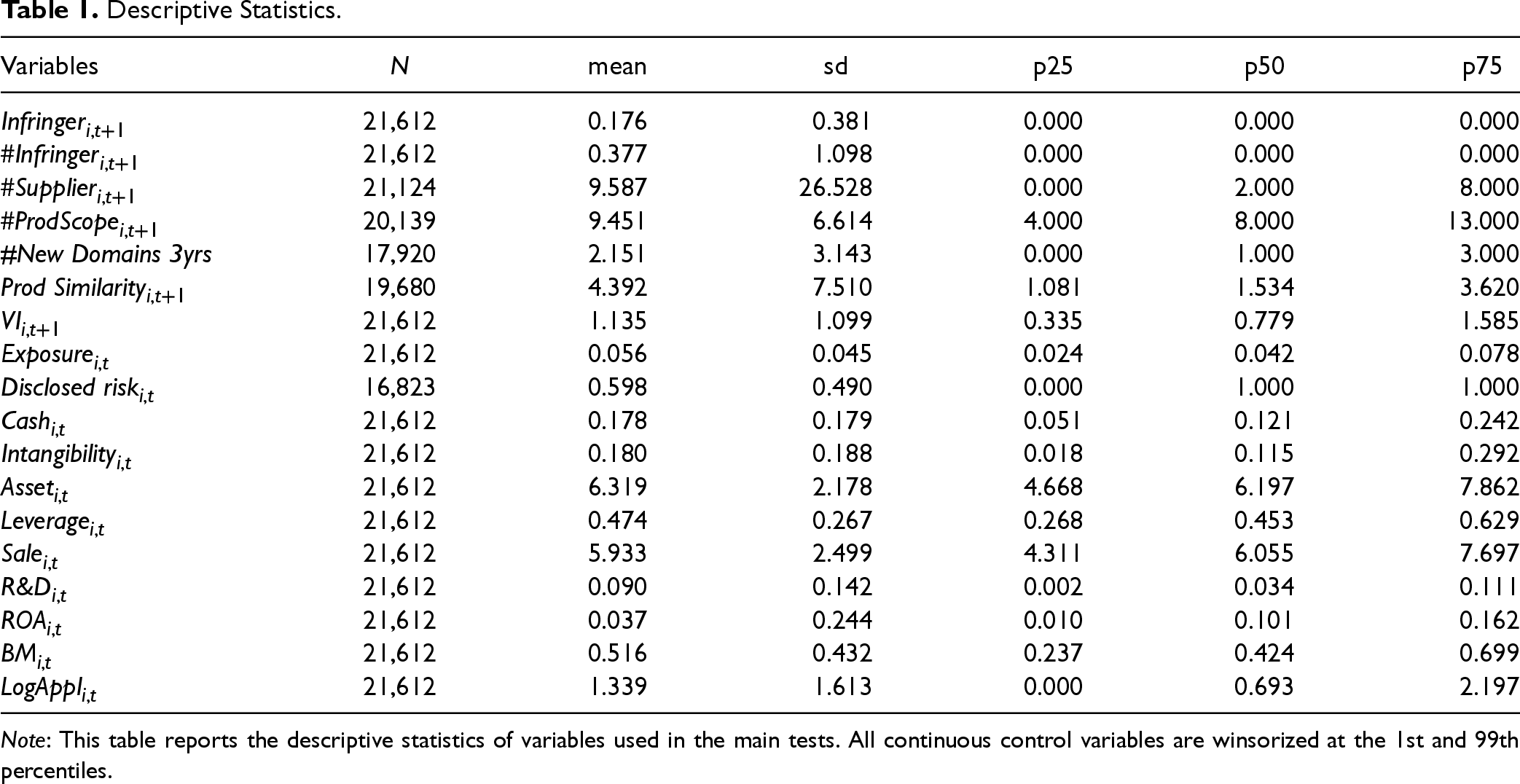
Note: This table reports the descriptive statistics of variables used in the main tests. All continuous control variables are winsorized at the 1st and 99th percentiles.
Validation Test: Litigation Risk Exposure and Infringement Allegations
Before testing the hypotheses, we assess whether the risk exposure measure (
The results for estimating Equation (2) are reported in Table 2. Columns (1) and (2) provide estimation results without the interaction term. Both columns show that coefficients on
Litigation Risk Exposure, Vertical Integration, and Infringement Allegations.
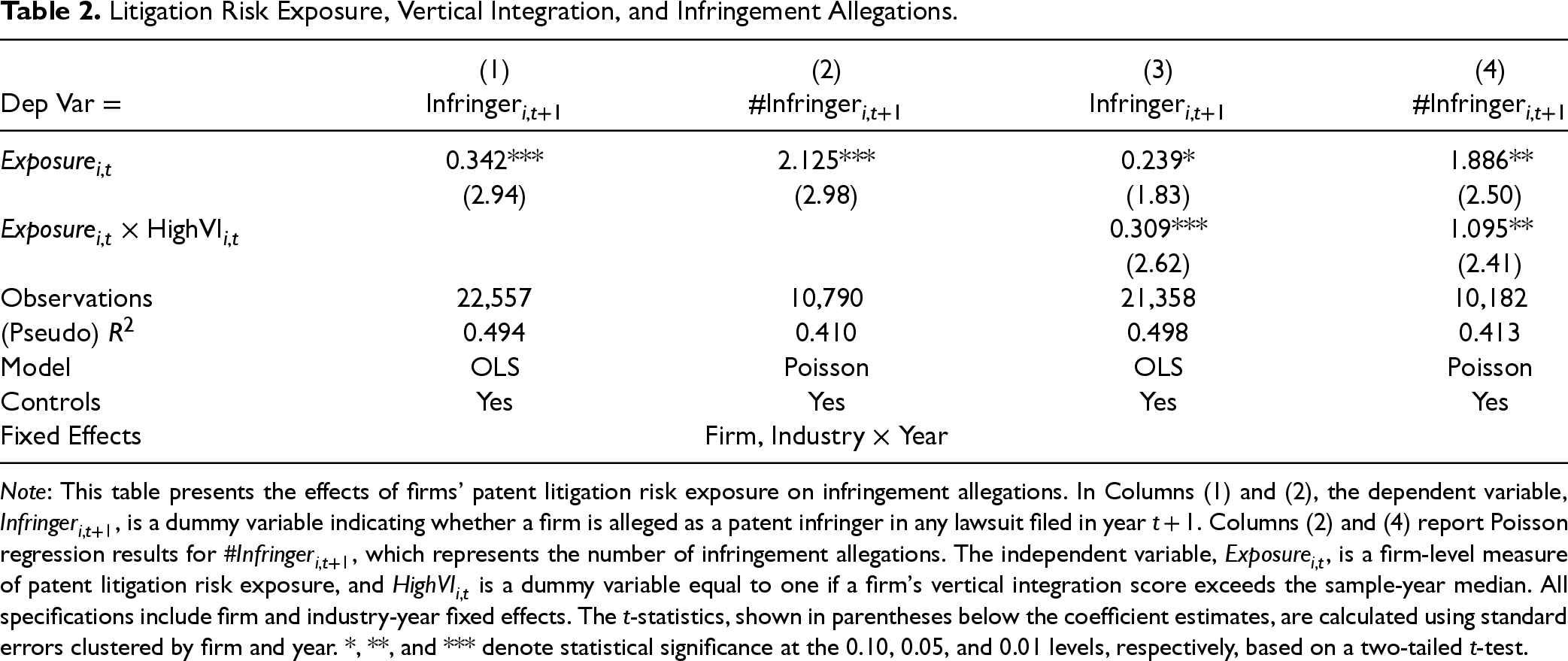
Note: This table presents the effects of firms’ patent litigation risk exposure on infringement allegations. In Columns (1) and (2), the dependent variable,
Table 2, Columns (3) and (4), present the results of the moderation analysis with high vertical integration as the moderator. The findings show that vertically integrated firms are more frequently targeted with infringement allegations, as indicated by the positive coefficients on the interaction term
After validating the patent litigation risk measure, we proceed to test H1a by analyzing the relationship between vertical integration and ex ante patent litigation risk. We estimate the following model:

The baseline results, presented in Table 3, show that higher patent litigation risk is negatively associated with
Litigation Risk Exposure, Vertical Integration, and Creation of Real Options.
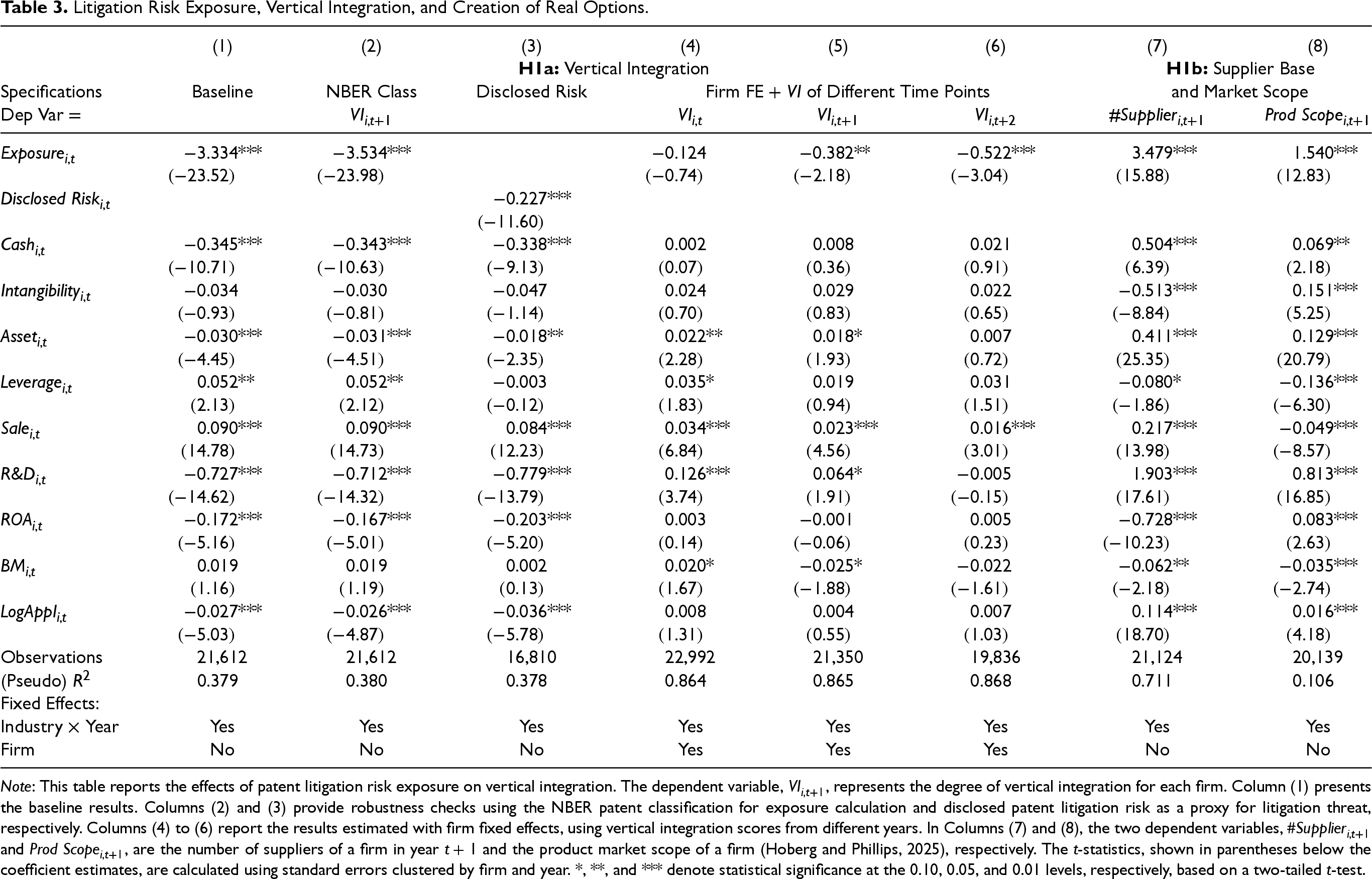
Note: This table reports the effects of patent litigation risk exposure on vertical integration. The dependent variable,
To ensure robustness, we apply an alternative NBER patent classification method to calculate litigation risk exposure (Column (2)). Additionally, we construct an indicator variable,
In Columns (4) to (6), we present results using high-dimensional fixed effects (firm fixed effects) to account for firm-invariant factors. We vary the time points of vertical integration across years
To test H1b, we replace the dependent variable in Equation (3) with two key measures: the number of suppliers (
The findings presented in Table 3, Columns (7) and (8), show that patent litigation exposure is generally positively associated with both supplier diversification and product scope expansion, which contrasts with prior findings of vertical integration. In line with H1b, this result highlights the role of patent litigation in encouraging firms to maintain more diversified supplier bases and product portfolios, thereby hedging against potential risks (Koren and Tenreyro, 2013). These real options enable firms to quickly switch suppliers or shift their product focus in response to patent disputes. The evidence further suggests that patent litigation risk does not necessarily discourage firm expansion, but may instead incentivize firms to deliberately adopt a structure or operational scope that is less susceptible to ex-post hold-up risks arising from patent lawsuits.
The analyses thus far suggest that patent litigation risk is negatively associated with the degree of vertical integration. According to H2, as the costs of exercising real options increase, reflecting greater managerial concerns about exit barriers and the expenses of adjusting or redesigning production lines, firms become more inclined to adopt a less integrated structure. This strategic choice underscores the importance of maintaining operational flexibility and the ability to adapt to potential legal challenges.
We consider two primary sources of real options-exercising costs. The first is investment specificity or non-deployability. Firms producing unique products with highly specific investments are more vulnerable to hold-up issues in patent disputes, as the costs of exiting, replacing technology, or liquidating assets become more significant if operations are disrupted by an injunction. Vertical disintegration offers firms real options to swiftly adjust production and operations in response to litigation. For example, disintegrated firms can more easily divest upstream activities or switch suppliers, and they encounter fewer obstacles when modifying product features, as these products are not tightly integrated into other production processes. Following prior studies, we use firms in the durable goods sector (defined by four-digit SIC codes between 3500 and 4000) as a proxy for higher asset specificity (Banerjee et al., 2008; Hui et al., 2012). Additionally, building on Harrigan (1985), we examine external economic conditions as another factor influencing exit or switch option costs. Firms in declining industries face a thinner market for divestiture and greater exit barriers, which intensifies concerns over inflexibility (Harrigan and Porter, 1989). We define a declining industry as one experiencing a negative median sales growth rate in recent two years. For firms in durable goods or declining industries, we predict that the costs of operational adjustments and exercising options will be higher.
The moderation results are presented in Table 4. The coefficients for the interaction terms are all significantly negative, indicating that firms in durable goods or declining industries are more likely to adopt a less vertically integrated structure when facing increased patent litigation risk. This finding supports H2 and underscores the critical role that options-exercising costs play in shaping firm boundaries under litigation risk. Anticipating increased litigation threats, managers are less likely to invest in vertically integrated businesses due to concerns over high exit barriers and costly adjustments. Overall, these results provide strong evidence that the costs of exercising real options are a key factor driving the relationship between vertical integration and patent litigation risk.
Moderating Effects of Options-Exercising Costs.
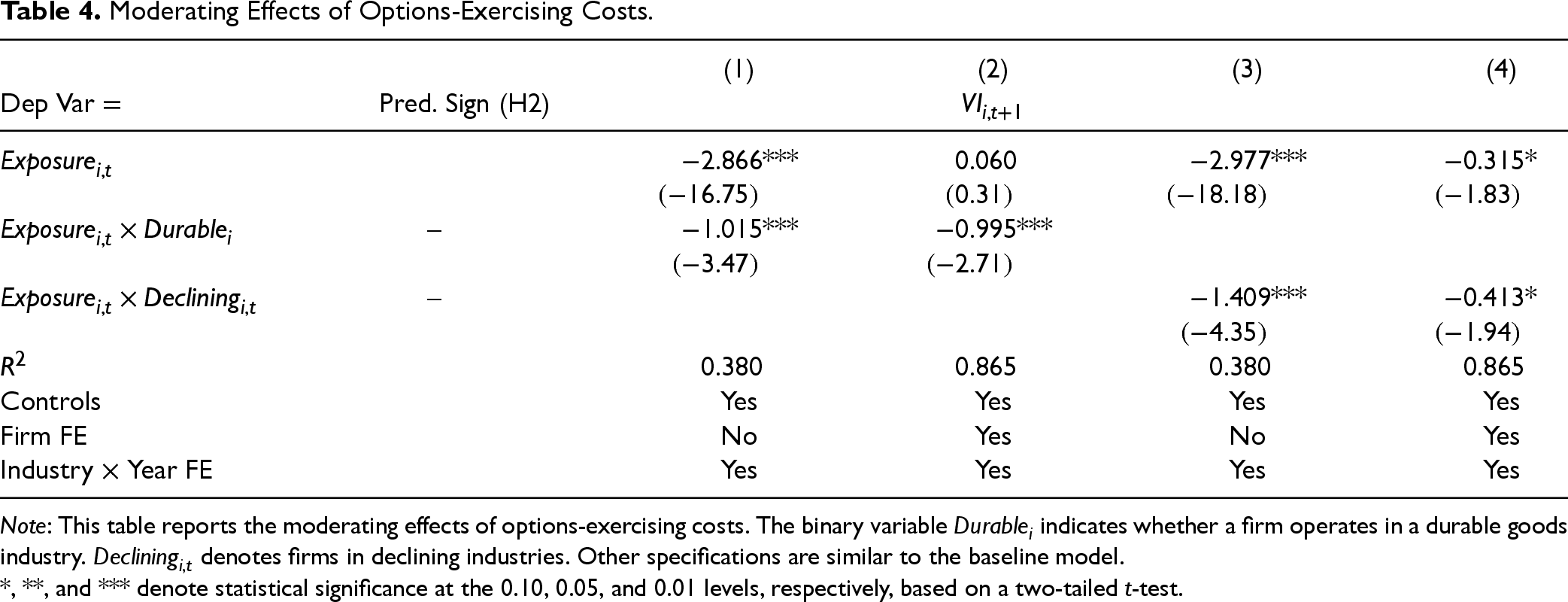
Moderating Effects of Options-Exercising Costs.
Note: This table reports the moderating effects of options-exercising costs. The binary variable
*, **, and *** denote statistical significance at the 0.10, 0.05, and 0.01 levels, respectively, based on a two-tailed t-test.
Patent litigation can prompt firms to make operational adjustments, either to reduce the legal grounds for immediate lawsuits or in anticipation of potential future disputes (Huang et al., 2024). These adjustments often involve structural changes in supply chain, product, and technology strategies (Cohen and Kouvelis, 2021), as frequently noted by companies (see Appendix B for relevant discussions). To test H3, we examine whether firms, following litigation, diversify their sourcing channels to enhance resilience against disruptions from individual suppliers and reconfigure their product and technology portfolios to minimize overlaps with competitors and potential patent asserters.
We analyze three types of adjustments firms may undertake after being implicated in a patent lawsuit. The first is expanding the supplier base. Supplier network size is critical for navigating uncertainty and recovering from external disruptions (Aral et al., 2022; Martínez-de Albéniz and Wang, 2019). A firm accused of patent infringement may enhance supply chain agility by broadening its supplier network, ensuring that if one supplier or component becomes legally constrained, alternatives are readily available. Establishing new sourcing channels can also support product diversification, potentially signaling entry into new product areas and strengthening overall supply chain resilience (Tomlin and Wang, 2005). Companies such as Pure Storage have explicitly acknowledged the need to expand supplier networks and source alternative products in response to litigation (see Appendix B).
The second adjustment involves entry into new technological domains. Patent litigation may prompt firms to pursue technological changes that reduce reliance on existing technologies and mitigate future patent hold-ups. Company disclosures from Freecast and ZiLOG highlight the importance of developing new, non-infringing technologies to counter infringement claims. Following Ganco et al. (2020), we measure technological expansion as the number of new patent classes a firm enters within three years of a lawsuit. This adjustment enhances operational and financial resilience in two key ways. First, firms can replace contentious technologies with legally viable alternatives, weakening the legal standing of patent asserters and improving bargaining power. Second, firms may pivot away from contested technologies toward underexploited domains, creating new opportunities and diversifying their innovation portfolios.
The third adjustment is related to changes to the product portfolio, which we measure using the product differentiation index developed by Hoberg and Phillips (2016). This strategy has been observed in multiple patent disputes. For instance, in 2014, Cisco accused Arista of infringing 14 patents related to Ethernet switch products and networking technologies. In response, Arista strategically redesigned its products to increase differentiation from Cisco’s offerings—an effort that became central to the lawsuit’s resolution. Beyond redesigns, some firms substantially reconfigure their product portfolios to target different markets and thus avoid direct competition. This approach can help firms argue that the alleged infringement does not materially harm the patent holder’s revenues, potentially lowering settlement costs. 13
We estimate the following model to assess these operational adjustments after the infringement allegations:

The results, reported in Table 5, indicate that firms accused of patent infringement expand their supplier base, enter previously unexplored technological fields, and differentiate their products following patent lawsuits. These adjustments reflect firms’ proactive efforts to diversify their sourcing channels and reconfigure their technology and product portfolios in response to litigation. By doing so, firms aim to reduce their dependence on litigious technologies, whether in-house or from external partners, thereby mitigating the risk of severe operational disruptions.
Operational Adjustments after Patent Infringement Allegations.
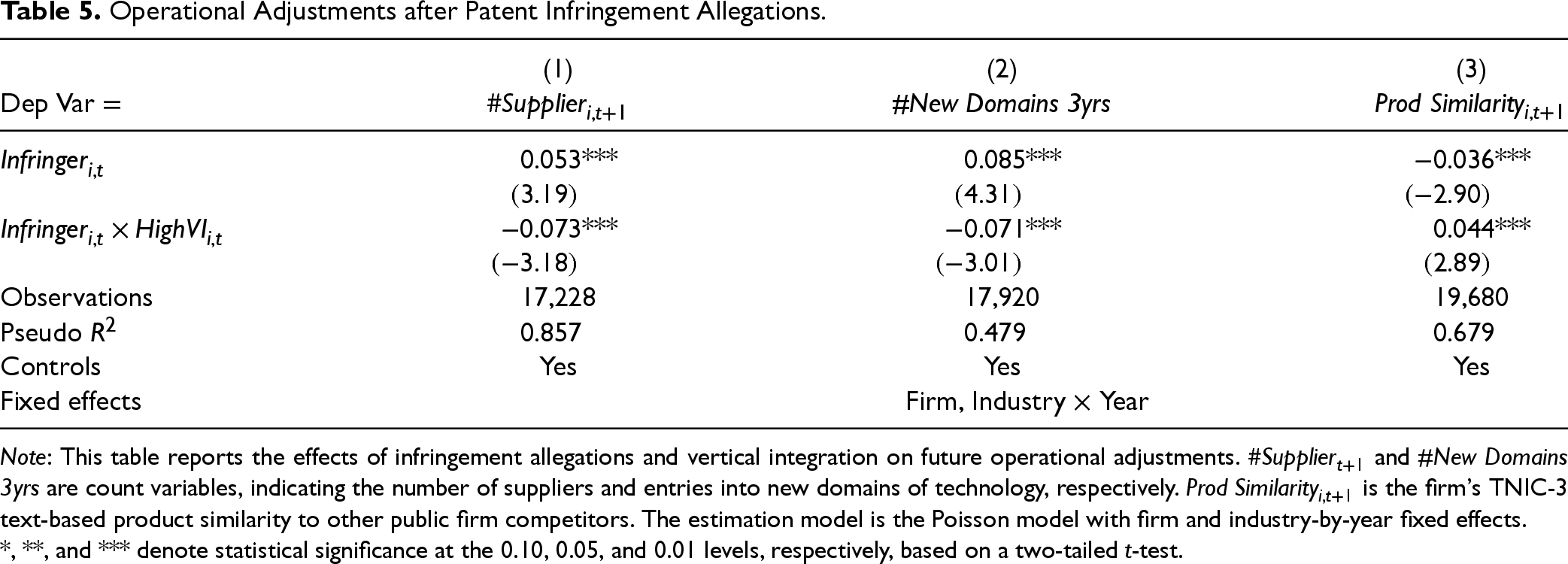
Note: This table reports the effects of infringement allegations and vertical integration on future operational adjustments.
*, **, and *** denote statistical significance at the 0.10, 0.05, and 0.01 levels, respectively, based on a two-tailed t-test.
Notably, we find that the degree of vertical integration significantly hinders firms’ ability to make adjustments, as evidenced by the opposing signs of
There is an endogeneity concern regarding the potential reverse causality between a firm’s vertical integration and its litigation exposure. Vertical integration influences information flows and contracting dynamics between a firm and its supply chain partners, which in turn can shape its innovation strategy and investment intensity (Acemoglu et al., 2010; Robertson and Langlois, 1995). As a result, variations in technology investment may account for differences in the likelihood of being involved in patent suits. To address this endogeneity concern, we conduct a DiD analysis centered around the landmark Supreme Court decision on eBay v. MercExchange L.L.C., 547 U.S. 388 (2006). On May 16, 2006, the Supreme Court unanimously overturned the Federal Circuit’s ruling, establishing that an injunction should not automatically be issued upon a finding of patent infringement. Prior to this decision, injunctions were a powerful tool for plaintiffs, allowing them to block infringers from using the disputed technology, regardless of the scope of the infringement.
The threat of injunctions gives patent asserters substantial bargaining power, enabling them to leverage the risk of a technology ban to extract high settlement fees from alleged infringers (Hall and Ziedonis, 2001). 14 The risk of an injunction could have severely disrupted an accused infringer’s operations, as it would prevent access to essential technology protected by the patent, making it impossible to manufacture, assemble, or market the product. However, in eBay v. MercExchange, the Supreme Court rejected the automatic issuance of injunctive relief, instead implementing a four-factor test that significantly raised the threshold for granting injunctions. 15
The Supreme Court’s ruling in eBay v. MercExchange significantly altered the landscape of patent litigation, redistributing bargaining power from plaintiffs to defendants, both in courtroom proceedings and out-of-court settlements (Mezzanotti, 2021). This decision has enabled courts to better safeguard the interests of defendants, particularly those susceptible to hold-up issues stemming from their investments in supply chains. A notable instance following this legal shift occurred in Paice LLC v. Toyota Motor Corp. (2006), where Judge David Folsom of the Eastern District of Texas denied an injunction request, noting the potential disruption to related businesses like dealers and suppliers. Instead, the judge mandated the defendant to pay a continuous royalty rather than shutting down the operations. As such, the eBay decision has alleviated fears that external parties could exploit investments in vertical production lines and demand excessive fees. We predict that firms would be motivated to extend their vertical integration accordingly, seeking to consolidate control over their supply chains.
To examine whether firms adjust their vertical boundaries in response to reduced litigation risk following the eBay v. MercExchange decision, we design a regression model as follows:

Table 6 presents the results from Equation (5). Columns (1) and (2) show that the coefficient
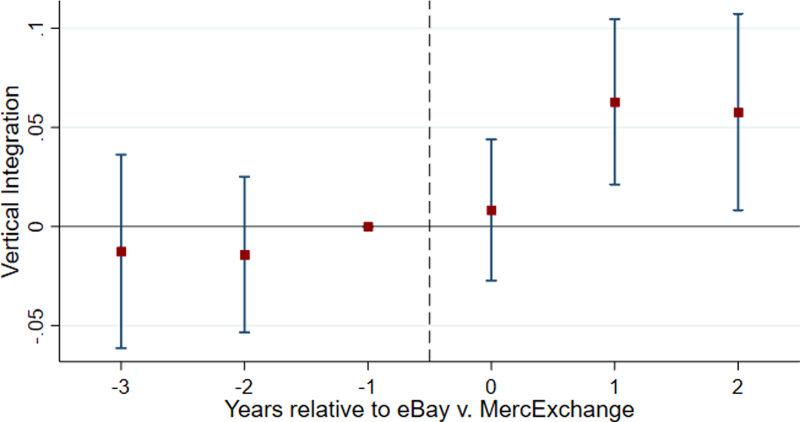
Parallel Trend in Vertical Integration Between High- and Low-Exposure Firms. Note: This figure illustrates the parallel trend in vertical integration between high- and low-exposure firms.
Evidence From the Supreme Court Decision eBay v. MercExchange.
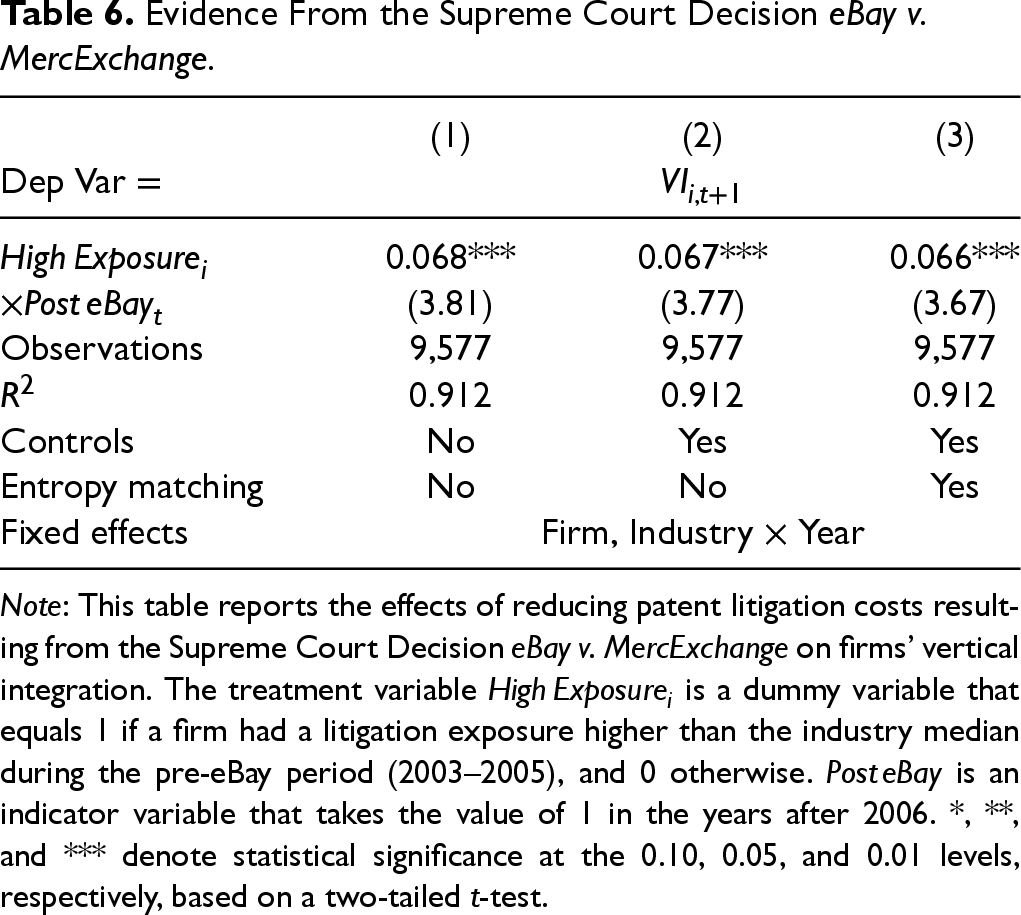
Note: This table reports the effects of reducing patent litigation costs resulting from the Supreme Court Decision eBay v. MercExchange on firms’ vertical integration. The treatment variable
We examine the relationship between vertical integration and the size of supplier networks. Prior research suggests that vertically integrated supply chains often involve significant investments in dedicated suppliers or internal production capabilities (Claussen et al., 2015). As a result, vertical integration tends to be associated with a relatively narrow supplier base, which can limit a firm’s ability to make adjustments to its supply chain relationships. This idea serves as a key premise underpinning our theoretical framework.
We begin by investigating the association between vertical integration and firms’ supplier relationships, specifically focusing on the number of ongoing, newly established, and newly terminated suppliers. The estimation results, excluding firm fixed effects, are presented in Table 7, Columns (1) to (3). The findings indicate that vertical integration is associated with fewer and less changeable supply chain relationships. This supports the idea that vertical integration leads to fewer, more rigid supply chain connections, thereby reducing the flexibility to adjust.
Vertical Integration and Supplier Bases.
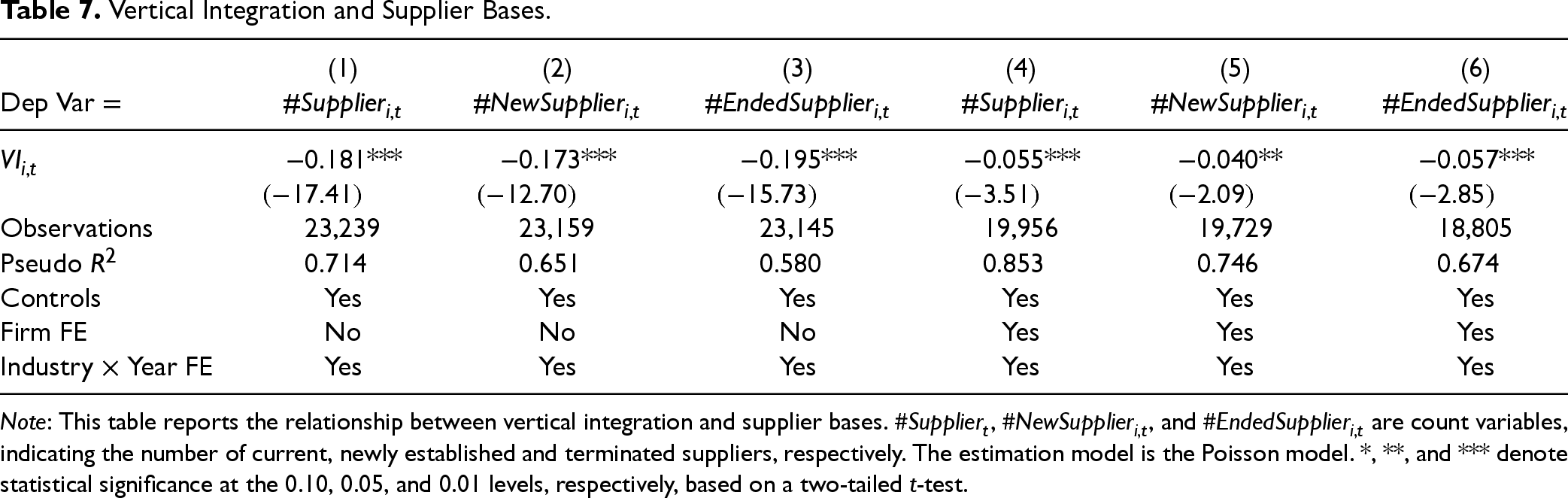
Vertical Integration and Supplier Bases.
Note: This table reports the relationship between vertical integration and supplier bases.
An alternative interpretation is that this behavior arises from vertical integration absorbing upstream production stages, which in turn shrinks the pool of potential suppliers and reduces the number of adjustable relationships. To test this, we include firm fixed effects to assess supply chain behavior in response to contemporaneous changes in vertical integration. If vertical integration reduces the supplier base by absorbing upstream stages, we would expect to observe a concurrent increase in terminated suppliers as firms internalize previously external transactions. However, the results in Column (6) show that the coefficient remains negative, suggesting that this mechanism is unlikely to be a primary driver in our sample. Instead, the findings align more closely with the notion that vertical integration limits the ability to adjust the supply chain, thereby impairing diversification and the creation, maintenance, and exercise of real options.
We conduct a series of supplementary analyses, detailed and tabulated in the Online Appendix, to provide additional evidence and ensure the robustness of our findings. First, we utilize instrumental variables and two alternative legal changes as exogenous sources of variation in patent litigation threats. The results consistently indicate that high patent litigation risk appears to impede firms’ vertical integration. This finding further mitigates concerns about endogeneity, suggesting that the observed inverse relationship between these two constructs is less likely to be driven by omitted variables. Second, we observe that contracting frictions between firms and their supply chain partners can attenuate the relationship between vertical integration and litigation risk. These frictions, which include factors such as product novelty risk and technological complexity, incentivize firms to better coordinate with external parties. As a result, firms may be more inclined to integrate under these conditions, even in the face of significant litigation threats. Third, we employ additional empirical models, including Logit and Probit, to reestimate our main results. We also conduct robustness checks by clustering standard errors at various levels. Our findings remain consistent and robust across all these specifications.
Conclusion and Discussion
This study investigates the impact of patent litigation risks on firms’ vertical integration. Patent infringement lawsuits introduce significant operational and financial uncertainties for accused firms. We theorize that firms may seek to preserve real options for making operational adjustments by reducing the level of vertical integration, enabling them to more easily exit certain businesses or modify their operations. In line with this prediction, our results show a negative association between patent litigation risk and the extent of vertical integration. This relationship is particularly pronounced in contexts where the costs of exercising these options are higher, such as in the durable goods sector or in declining industries. Meanwhile, we find that firms with higher litigation risk maintain broader supplier networks and product market scopes. Furthermore, consistent with the notion that vertical integration heightens adjustment costs, we find that integrated firms are slower to expand their supplier base, explore new technological domains, and differentiate their products following patent lawsuits. These findings suggest that vertical integration may impede the exercise of real options, thereby increasing the potential losses incurred from patent litigation. Finally, we validate the robustness of our conclusions using a legal change as an identification strategy and conducting several robustness tests. Overall, this study provides a comprehensive characterization of firms’ strategic vertical integration decisions in response to patent litigation risks.
Theoretical Contributions
This study makes several theoretical contributions. First, our work extends Operations Management research on supply chain liabilities. Existing literature on supply chain noncompliance highlights how violations of labor or environmental standards can cause significant reputational and financial damage for downstream firms (Guo et al., 2016; Porteous et al., 2015). To mitigate these supply chain risks, Wang et al. (2010) and Zhang et al. (2022) suggest that firms adopt broader risk management strategies, such as dual sourcing and extending audits to second- and third-tier suppliers. Our work extends this economic logic of supply chain responsibility to the realm of patent litigation. Just as disintegration can minimize reputational and financial risks when suppliers violate labor or environmental standards, it can also reduce the impact on a focal firm when a supplier is found guilty of patent infringement. Disintegrated firms are less entangled in the legal and operational consequences of supplier infringements, giving them greater flexibility to switch suppliers or replace products, thereby reducing their liability exposure.
Second, our research integrates ROT to examine firm boundary decisions and supply chain management strategies (Tsay et al., 2018). We argue that a lower level of vertical integration allows firms to preserve and exercise real options when facing operational disruptions. This approach aligns with the concept of operational hedging consideration embedded in dual sourcing (Huchzermeier and Cohen, 1996; Sting and Huchzermeier, 2014) and technology diversification (Hsu et al., 2018; Koren and Tenreyro, 2013). This line of research emphasizes the value of adjusting production and sourcing decisions based on future uncertainties, a concept we apply in the context of patent litigation. We theorize and find that vertically integrated firms are slower to adapt their supply chain, products, and technologies when facing lawsuits. In this respect, we contribute to the broader discussion of how vertical integration can compromise operational flexibility and hinder organizational changes (Balakrishnan and Wernerfelt, 1986; Harrigan, 1985).
Third, we contribute to the literature on strategic patenting (Mihm et al., 2015; Somaya, 2012). We introduce a potentially novel link between supply chain management and patenting strategy. While current research examines this relationship through the lenses of innovation incentives (Frésard et al., 2020) and the external resources afforded by the value chain (Lee and Schmidt, 2017), we offer a new rationale: The structure of a firm’s supply chain can influence its patenting strategy. Specifically, firms in tightly connected supply chains face higher litigation risks, which can prompt them to adopt patent strategies that align with their partners (Rudy and Black, 2018). Our findings also help explain why vertically integrated industries often establish standard-setting organizations (SSOs) to coordinate the use and legal treatment of intellectual property. For example, industries such as telecommunications (through the European Telecommunications Standards Institute, ETSI) and consumer electronics (via the Institute of Electrical and Electronics Engineers, IEEE) rely on SSOs to mitigate patent litigation risks by establishing clear frameworks for intellectual property use across supply chains.
Practical Implications
This study examines how firms disintegrate their supply chains as a strategic response to patent litigation risks. Patent hold-up—where firms face excessive royalties due to infringement claims—is a growing concern, particularly in industries vulnerable to NPEs that file lawsuits without holding substantive patents (Bessen et al., 2018; Mihm et al., 2015). We find that firms reduce vertical integration to avoid the sunk costs of irreversible investments in internal production or long-term supplier relationships, which could otherwise limit their adaptability in litigation. Vertical integration constrains flexibility by entangling firms in interdependent activities, making it harder to switch suppliers or pivot technologies in response to legal threats. As patent disputes become more frequent and NPE-driven hold-ups increase, maintaining real options—such as modifying operations or shifting suppliers—becomes crucial for risk mitigation. Our findings suggest that firms facing higher litigation risks prioritize supply chain and technology flexibility to navigate these uncertainties.
Moreover, our findings have managerial implications for companies’ innovation and patenting strategies. Firms operating in vertically related industries should exercise caution when investing in technology-specific assets to avoid dense patent thickets and ambiguous legal boundaries (Somaya, 2012). We provide further evidence that vertically integrated firms may be less efficient in shifting their innovation focus, which makes initial investments and patenting decisions even more crucial. Our research also informs patent asserters, who can assess the impact of patent enforcement actions on their competitors’ expansion decisions. Specifically, these firms can tailor their innovation trajectories or litigation approaches to deter competitors from entering vertically related markets. To this end, firms should develop a sophisticated patent enforcement strategy by considering the competitive landscape and the market entry intentions of their rivals (Somaya, 2003).
From a policy perspective, understanding the factors that shape firm boundaries in the technology sector is essential. Firms in intellectual-property-intensive industries play a crucial role in the economy, accounting for 44% of employment and 41% of domestic economic output in 2019 (USPTO, 2021). Therefore, policymakers must carefully evaluate how patent-related legal changes affect firms’ operational decisions and investments. Recent legal reforms and cases, such as Microsoft v. DataTern (2014) and Akamai Technologies, Inc. v. Limelight Networks, Inc. (2014), have reshaped the legal landscape surrounding supply chain liability. Our findings provide valuable insights for policymakers and legislators, helping them anticipate how firms might respond to increased or reduced legal burdens. This is vital for developing patent legislation that accounts for its potential effects on firm behavior and market dynamics.
Limitations and Future Research
This study has several limitations that future research could address. First, the measure of vertical integration used relies on textual analysis of financial reports, providing valuable but potentially incomplete insights into a firm’s product market scope. In practice, other boundary strategies such as joint ventures, long-term contracts, and franchising are common and often involve lower capital investment while offering more flexibility and reducing transaction costs (Stuckey and White, 1993). Future research could incorporate these alternative strategies to present a fuller picture of how firms adjust their boundaries in response to patent litigation risks. Second, this study does not examine the interaction between other risk management strategies and operational choices in addressing patent litigation risks. Although the focus is on vertical integration, it does not consider how firms balance the costs of disintegration with those of acquiring and maintaining key patents. Further research could explore how patent distribution and competitive dynamics within an industry influence firms’ decisions, particularly in the context of mutual hold-ups among competitors, which could significantly alter the costs of patent litigation (Hall and Ziedonis, 2001). Finally, the applicability of our findings may be limited to jurisdictions with similar legal frameworks, as the study is based on a system with strong property rights protections. As multinational corporations increasingly conduct R&D in emerging economies (Belderbos et al., 2021), it is crucial to assess the external validity of these results in other regulatory contexts. Expanding the scope to include a wider variety of firms and legal settings could offer a more comprehensive evaluation of the external validity across diverse regulatory landscapes.
Supplemental Material
sj-pdf-1-pao-10.1177_10591478251355855 - Supplemental material for Patent Litigation Risk and Firm Boundaries
Supplemental material, sj-pdf-1-pao-10.1177_10591478251355855 for Patent Litigation Risk and Firm Boundaries by Fan Wu in Production and Operations Management
Footnotes
Measure of Vertical Integration ( Frésard et al.,2020 )
The vertical integration score (VI) quantifies the extent to which a firm’s products cover vertically interconnected markets. This score is derived by matching product descriptions from firms’ annual reports with product vocabularies from the Bureau of Economic Analysis (BEA) Input-Output (IO) tables. The basic idea is that the BEA IO tables indicate the degree of vertical relatedness between various IO commodity pairs. By aligning a firm’s reported products with the corresponding IO commodities, the VI score can measure how vertically integrated these products are based on the BEA IO tables. Since annual reports are updated every year, the VI score can change annually.
Three main steps are involved in constructing this measure. First, the BEA IO tables are used to compute the vertical relatedness between pairs of commodities, which is represented by a matrix
We elaborate on how this measure captures both inter- and intra-firm degrees of vertical integration with two examples.
In 2016, Cleveland-Cliffs Inc. (VI Score: 1.28) operated four iron ore mines in Michigan and Minnesota, and one in Western Australia. The company primarily supplied iron ore pellets for North American integrated steel producers under long-term contracts. Its operations focused on extraction and initial processing, with limited vertical integration beyond direct supply to steelmakers.
Mueller Industries Inc. (VI Score: 4.39) manufactures a wide range of copper, brass, aluminum, and plastic products, including tubes, fittings, valves, and extrusions. Operating across the U.S., Canada, Mexico, and Asia, its products serve HVAC, plumbing, refrigeration, and construction markets. Mueller spans raw material processing to finished goods and distribution, reflecting a high degree of vertical integration.
Although both firms fall under the Fabricated Metal Products industry (SIC code 34), they exhibit markedly different vertical scopes, as reflected in their business descriptions and captured by the VI measure.
In 2016, CalAmp Corporation, a leading wireless communications solutions provider, significantly deepened its market integration through the strategic acquisition of LoJack Corporation for $130.7 million. This acquisition marked a pivotal enhancement in CalAmp’s vertical integration, especially within the Mobile Resource Management (MRM) and Machine-to-Machine (M2M) communication sectors. The vertical integration through the external M&A led to an increase in VI score from 1.34 in 2015 to 2.92 in 2016.
Pre-2016 Portfolio: CalAmp’s Wireless DataCom segment, before the merger, focused on markets including energy, government, transportation, and automotive. The segment offered a broad portfolio of products like asset tracking devices, mobile telemetry units, wireless gateways, and routers, supported by cloud-based telematics PaaS and SaaS applications.
Post-2016 Expansion: The acquisition of LoJack expanded CalAmp’s reach into heavy equipment, trucking, and connected car applications. LoJack’s proprietary stolen vehicle recovery product, established law enforcement network, and relationships with auto dealers significantly bolstered CalAmp’s offerings. This merger enabled CalAmp to deliver integrated, high-value vehicle security and driver safety applications, reflecting a substantial increase in vertical integration.
Examples of Real Options Consideration Under Patent Litigation Threats
We compile anecdotal evidence from two sources. First, based on firms’ risk factor disclosures, we select excerpts on how firms deliberate potential operational adjustments under patent litigation (unrealized risks). Second, we cite cases of how firms exercise these real options after being implicated in these lawsuits (realized risks).
Acknowledgement
I am grateful to Frank Ecker, Po-Hsuan Hsu, Yuping Jia, Hsiao-Hui Lee, Pengkai Lin, Arthur Posch (discussant), Jochen Schlapp, Scarlett Song (discussant), Kevin Tseng, Laurence van Lent, and participants of the workshop at the Frankfurt School of Finance & Management, the 2023 Hawaii Accounting Research Conference, and 2023 MAS Midyear Meeting for their valuable feedback. I acknowledge the generous financial support from the Chinese University of Hong Kong. All errors are my own.
Declaration of Conflicting Interests
The author declared no potential conflicts of interest with respect to the research, authorship, and/or publication of this article.
Funding
The author received no financial support for the research, authorship and/or publication of this article.

Notes
How to cite this article
Wu F (2026) Patent Litigation Risk and Firm Boundaries. Production and Operations Management 35(2): 766–785.
References
Supplementary Material
Please find the following supplemental material available below.
For Open Access articles published under a Creative Commons License, all supplemental material carries the same license as the article it is associated with.
For non-Open Access articles published, all supplemental material carries a non-exclusive license, and permission requests for re-use of supplemental material or any part of supplemental material shall be sent directly to the copyright owner as specified in the copyright notice associated with the article.
