







Abstract
The proliferation of mobile commerce channels has fundamentally reshaped retail ecosystems, particularly in digital markets like China where smartphone adoption approaches saturation among internet users. While extant literature has extensively examined the impact of new channel introductions (e.g., online, offline, mobile) on firm performance, less attention has been paid to consumer behavioral nuances within established digital interfaces. Addressing this gap, our study pioneers a comparative analysis of purchasing dynamics across two dominant yet technologically distinct channels: native apps versus light-app channels (e.g., WeChat mini-programs). While both channels share core mobile attributes (e.g., small screen sizes, on-the-go accessibility), their divergent technological architectures (Swift, Kotlin, and Java vs. HTML, CSS, WXML, and WXSS) create systematically differentiated consumer experiences. Through econometric analysis of 185,437 transaction records from a multichannel B2C platform, we reveal that consumers tend to spend more, purchase more items, and exhibit a lower likelihood of product returns when shopping through the light-app channel compared to native apps. More importantly, these behavioral divergences are moderated by product categories, price levels, and discount depths. Our findings contribute to the multichannel retailing literature by providing new insights into consumers’ behavioral differences between the two popular, yet distinct, mobile channels. Based on these insights, we suggest that multichannel retailers should prioritize channel convenience and accessibility and reconsider their investments in mobile native apps. Additionally, retailers should tailor assortments, pricing, and discount strategies to each channel to effectively engage consumers and stimulate purchases. Our research also emphasizes the importance of aligning marketing, operations, and finance strategies in multichannel retailing.
Introduction
The ongoing expansion of digital retail channels has profoundly reshaped both retail operations and consumer behavior. Leading B2C platforms such as Taobao and Jingdong have diversified their online presence by offering online websites, native apps, and mobile websites to better reach consumers. The multichannel approach not only influences downstream marketing strategies (Ba et al., 2022) but also affects upstream operations, such as inventory and returns management (Jiao and Hu, 2022; Letizia et al., 2018). Correspondingly, consumers have adapted their shopping habits, increasingly using multiple channels and touchpoints throughout their purchase journeys (e.g., Jiao and Hu, 2022).
In this context, operations management and marketing research have primarily focused on understanding the effects of introducing new retail channels (e.g., online channels, physical stores, mobile apps) on customer purchase responses and firm performance (e.g., Ba et al., 2022; Gu and Kannan, 2021; Guo et al., 2025; Liu and Sese, 2022; Narang and Shankar, 2019). Additionally, considerable attention has been devoted to exploring how the use of multiple channels (e.g., webrooming and showrooming) influences the operational strategies of manufacturers and retailers (e.g., Jiao and Hu, 2022; Letizia et al., 2018; Zhang et al., 2025). These studies have provided valuable guidance for firms regarding the strategic decision-making process on whether, when, and how to adopt new channels to enhance operational efficiency.
However, as multichannel retail strategies have deeply permeated various industries, the central question has shifted from whether to adopt new channels to how to manage existing channels and touchpoints effectively. Most firms now operate within a multichannel framework, where the key challenge lies in ensuring integrating and optimizing these channels. Over time, consumers’ initial curiosity toward once-novel channels fades, and impulse-driven behaviors give way to more stable, routine patterns (Puntiroli et al., 2022). Understanding these stabilized behaviors is therefore essential. It enables firms to investigate whether consumers’ fundamental purchase behaviors vary across channels, or how their responsiveness to marketing mix (e.g., product category, price, and discount) differs from one channel to another. These insights form the basis for designing targeted marketing strategies that enhance customer acquisition and retention. Moreover, these behavioral patterns directly inform operational decisions, such as channel-specific merchandising and inventory forecasting, enabling more precise management of product assortments and sales predictions (Ba et al., 2022; Baron et al., 2024; Guo and Keskin, 2023). Addressing these core cross-functional challenges highlights the critical need for close collaboration among marketing, operations, merchandising, and finance to align efforts in areas such as shipping cost control and returns management. Such integration not only improves customer satisfaction but also strengthens operational efficiency and profitability.
As mobile devices have become integral to daily life, mobile channels have also established themselves as essential touchpoints along the consumer purchase journey. In 2023, global spending on mobile apps reached $171 billion (Statista, 2025). Mobile websites have also seen heavy usage, accounting for 62.73% of global mobile traffic in the second quarter of 2025 (Statista, 2026). Meanwhile, novel mobile interfaces continue to emerge in the B2C market. A prominent example is WeChat and Alipay mini-programs, embedded within China's dominant social messaging platform WeChat and leading digital payment and lifestyle platform Alipay, which offer businesses a new channel for consumer engagement (Guo et al., 2025; Hu and Karacaoglu, 2024). While these technological advances have enriched the mobile channel landscape, they have also introduced greater complexity for firms attempting to understand and manage consumer behavior across different platforms. Our study aims to address this gap by exploring behavioral differences among consumers across various mobile channels.
Specifically, this study examines two prevalent mobile retail channels: native apps, developed using languages such as Swift, Kotlin, and Java, and light-app channels, 1 such as mobile websites based on HTML and CSS and WeChat mini-programs built with WXML and WXSS, which closely resemble HTML and CSS. Native apps are usually downloaded from app stores, offering deeper system integration and the potential for richer user experiences, though they require installation. In contrast, the light-app channel is instantly accessible within a host environment such as a web browser or a super-app (e.g., WeChat), providing greater convenience and a lower barrier to entry despite more limited access to native device features. This research seeks to address the following questions: first, how do consumer purchase outcomes differ between these two mobile channels? To answer this, we evaluate key behavioral metrics including spending amount, purchase quantity, and return incidence. Second, to what extent are these channel-based differences influenced by the composition of consumers’ shopping baskets? We pay particular attention to basket characteristics such as product categories, price levels, and discount depths.
To address these questions, we analyzed a panel dataset collected from a leading online B2C platform in China, which contains 185,437 shopping orders from 79,380 consumers. By employing multiple econometric models incorporating the Heckman correction approach, our analyses yield novel and insightful results. First, compared to purchases made via native apps, those conducted through the light-app channel are associated with a significantly higher spending amount (an increase of 9.41%), a large number of items purchased (6.04% more), and a reduced likelihood of product returns (as measured by an odds ratio 11.79% lower). Second, consumer behavior on the light-app channel vary markedly between utilitarian and hedonic products: for utilitarian products, consumers tend to spend more, purchase fewer items, and exhibit a higher propensity to return products relative to hedonic products. Third, when purchasing high-priced products via the light-app channel, consumers spend less, purchase fewer items, and are less likely to return products compared purchases of low-priced products. Fourth, deeper discounts on the light-app channel are correlated with increased spending, a greater number of items purchased, and a lower probability of product returns. Overall, these in-depth analyses highlight the complex and heterogeneous nature of consumer behaviors across different mobile channels.
This study contributes to the literature of multichannel retailing in both marketing and operations management (OM) by providing a comprehensive analysis of consumer purchase disparities across two concurrently operated mobile channels over an extended period. While prior research has largely focused on the impact of new channel adoption (e.g., Ba et al., 2022; Gu and Kannan, 2021; Guo et al., 2025), we examine sustained behavioral patterns in established mobile environments. Moreover, whereas Hu and Karacaoglu (2024) investigate differences in search costs between native apps and WeChat mini-programs, our study shifts the focus to downstream purchase and post-purchase outcomes. Specifically, we explore how channel choice between the light-app channel and native apps affects spending amount, purchase quantity, and product return incidence, thereby extending the understanding of consumer behavior beyond the search stage. By doing so, our findings offer a complementary perspective on how channel characteristics shape consistent consumer decision-making processes in multichannel retail system. Furthermore, by empirically examining the moderating roles of product category, price level, and discount depth, we reveal the heterogeneity of consumer responses across channels, advancing theory on contextualized consumer decision-making in multichannel settings.
From a practical perspective, this research offers actionable insights for both marketing and OM strategies. Our findings demonstrate that light-app channels, which require no download and installation and are deeply embedded in social platforms, are well suited to meet consumers’ needs for seamless purchasing within their daily social interactions. This suggests firms should reconsider their investment allocations between native apps and light apps. We further show that light apps and native apps serve distinct consumer preferences in terms of product categories, price sensitivity, and responses to promotions, allowing firms to develop differentiated marketing tactics (e.g., tailored assortments, pricing, and discount strategies) to optimize channel performance. These insights also call for aligned OM strategies, including merchandising plans that reflect channel-specific behaviors, inventory optimization adapted to cross-channel variations in sales and returns, and more efficient management of shipping and return-related costs. By integrating marketing and OM efforts, firms can achieve more coherent multichannel management, improving both customer satisfaction and operational performance.
Research Background
Related Research in Multichannel Retailing
Multichannel retailing encompasses the activities involved in selling goods or services and interacting with consumers through two or more channels. Much of the existing research has focused on the impact of introducing new channels, such as integrating online channels with offline ones (e.g., Pauwels et al., 2011) or adding offline channels to an existing mix (e.g., Maier et al., 2023; Wang and Goldfarb, 2017). With the rise of mobile channels, scholars have also explored how adding mobile channels impacts retail strategies (e.g., Ba et al., 2022; Gu and Kannan, 2021; Guo et al., 2025; Huang et al., 2016; Lim et al., 2022; Liu and Sese, 2022; Narang and Shankar, 2019). These studies generally show that adding apps boosts sales (e.g., Huang et al., 2016) and increases customer purchasing frequency and spending (e.g., Ba et al., 2022; Guo et al., 2025; Liu and Sese, 2022). However, Gu and Kannan (2021) find that app adoption may reduce total spending, although increased app engagement can mitigate this effect. Additionally, some research suggests that mobile apps may cannibalize existing channels (Huang et al., 2016; Lim et al., 2022). We provide a summary table of relevant literature in E-Companion 1.
These studies reveal several key research gaps. First, while most prior research focuses on the impact of new channel additions, fewer offer a comparative analysis of established retail channels. In mature digital markets such as China, it is essential to investigate consumers’ stable behavioral patterns across long-standing channels to derive actionable insights for marketing and operational strategies. Second, limited attention has been given to dynamic consumer behaviors across different types of mobile channels (e.g., Hu and Karacaoglu, 2024; Liu and Sese, 2022). As mobile technologies become increasingly embedded in consumer purchase journeys, understanding consumer behaviors across mobile channels is critical. Third, many studies rely on short-term data, often within 12 months of a channel launch (e.g., Lim et al., 2022; Liu and Sese, 2022), which captures transient behaviors rather than stable, persistent patterns. A longer-term perspective is needed to uncover enduring consumer interactions and evaluate the sustainability of channel strategies. Fourth, although much of the literature concentrates on purchase-stage behaviors, post-purchase outcomes such as product returns remain underexplored (Narang and Shankar, 2019). This phase is crucial for assessing customer satisfaction and loyalty, which ultimately affect long-term firm performance. To address these research gaps, our study examines consumer behavioral differences across established mobile channels. Employing a longitudinal dataset, we capture long-term channel interactions and incorporate post-purchase behaviors. This approach offers a more holistic perspective on multichannel retailing, providing actionable insights for businesses to optimize channel management, improve consumer engagement, and enhance satisfaction.
Consumer Behavioral Differences Between Native Apps and Light-app Channels
Brands in China reach mobile users and drive purchases through both native apps and light-app channels such as mobile-optimized websites and WeChat mini-programs. WeChat mini-programs are lightweight sub-applications built into the WeChat ecosystem that require no installation and allow instant access via QR codes, in-app search, or shared links. They replicate core features of native apps while operating entirely within WeChat, offering a seamless, context-integrated experience that has become increasingly central to brands seeking reduced friction and enhanced engagement. This trend is consistent with academic observation that brands in China often prioritize presence within such centralized platforms (Nam and Kannan, 2020). To systematically capture consumer perceptions across these channels, we outline the key technological and functional distinctions between native apps and light-app channels in E-Companion 2 and conducted an auxiliary survey (N = 2999) evaluating three mobile channels (native apps, WeChat mini-programs, and mobile websites) across multiple shared perceptual dimensions (E-Companion 3). In the following discussion, we integrate these empirical insights with extant literature to elucidate key behavioral differences.
Native apps are developed using advanced programming frameworks like Swift and Kotlin and integrate deeply with device features such as cameras, microphones, GPS, and push notifications, enabling rich and interactive user experiences (Bellman et al., 2011). This technical capacity facilitates sophisticated functions, including multi-modal product displays, personalized content, and fluid in-app navigation, which enhance engagement and foster loyalty. Correspondingly, our survey indicates that native apps are perceived as superior in most convenience-related dimensions, including search, shopping cart management, order tracking, and after-sales support (Table EC3.1). In addition, native apps typically employ robust security architectures featuring biometric authentication (e.g., facial or fingerprint recognition), encrypted data transmission, and secure local storage, which jointly strengthen perceived trust and mitigate risks related to data breaches (Wang et al., 2020). This security advantage is reflected in our survey, where native apps were rated lower in payment, privacy, and product risk compared by mobile websites, though notably mini-programs were perceived as the lowest-risk channel overall.
Native shopping apps also commonly integrate comprehensive customer service throughout the purchase journey, from pre-purchase inquiry to post-purchase support, enhancing perceptions of reliability (Dixon et al., 2017). These advantages are further reinforced by consumer-friendly policies such as “no-reason returns within seven days,” which, while potentially elevating return rates, also reduce pre-purchase hesitation and stimulate purchase intention (Liu et al., 2022). However, these benefits come with notable costs: substantial storage requirements, necessary installation, and periodic updates, which may deter users with device space constraints or preference for immediate, commitment-free access. It is important to note that our survey did not explicitly assess installation convenience; however, the logistical burden associated with downloading and maintaining native apps remains a well-documented barrier in the literature and contextualizes their adoption trade-offs.
Light-app channels, including both WeChat mini-programs and mobile websites, significantly lower access barriers by eliminating installation and minimizing storage consumption, a critical advantage given prevalent device memory constraints (Tang et al., 2022). While both are lightweight, they differ in context: mobile websites run in browsers, whereas mini-programs operate within WeChat, offering a more optimized in-app experience. A unifying trait is their social embeddedness. Our survey reveals that 73.93% of mobile website users access shopping sites via links shared through WeChat, indicating that even browser-based usage is often socially mediated. This embeddedness facilitates two interrelated behavioral mechanisms. First, mini-programs enable one-tap sharing within WeChat and collaborative features (Hu and Karacaoglu, 2024), allowing purchases to be initiated seamlessly within social interactions in WeChat. This seamless transition from social interaction to purchase reduces friction, thereby lowering abandonment and encouraging larger basket sizes as a result of social proof and normative pressure.
Second, purchases initiated through social referrals carry enhanced trust derived from strong ties (Lee and Kronrod, 2020). Critically, this social trust appears to offset underlying technical security concerns. From a technical standpoint, light-app channels generally offer less direct user control over data privacy than native apps, operating within constrained ecosystems or third-party browsers. Mobile websites, with their redirects (e.g., to Alipay or WeChat Pay) and complex payment flows, can introduce friction and objective vulnerability. Even mini-programs, despite leveraging WeChat's built-in authentication and payment system, are subject to the platform's data policy constraints. Yet, our survey reveals that mini-programs are perceived as the lowest-risk channel. This suggests that the trust and familiarity embedded in social interactions, along with the seamless and familiar transaction environment within WeChat, effectively lower users’ perceived risk, even where technical risk profiles may be more complex. Thus, the socially streamlined journey not only encourages purchase conversion but also mitigates risk perception.
Nevertheless, light-app channels generally lack the advanced functionalities and immersive interfaces of native apps, which may limit deep experiential engagement and might lead to higher return incidence. They also underperform in customer service and after-sales support relative to native apps. Online customer service on light-app channels, often slow to respond and heavily reliant on automated replies, falls short of the real-time, human-supported interactions typically available in native apps, which may deter users from completing purchases. Furthermore, the process of initiating after-sales requests (such as returns or refunds) is often less streamlined and more fragmented in light-app channels. Users are frequently required to navigate across multiple pages or re-enter through external links, increasing cognitive effort and perceived operational risk. These are supported by our survey that mini-programs and mobile websites are rated lower at the return convenience and after-sales convenience dimensions. This friction not only negatively influences purchase decisions but also mechanically reduces return incidence due to the higher effort required to initiate and process returns.
As discussed, both native app and light-app channels have features that could either promote or inhibit consumer spending and returns. Native apps may enhance order value and size and reduce returns through advanced functionality and security; however, their installation and storage demands might deter usage, and their liberal return policies (e.g., “no-reason returns within seven days”) could also encourage more returns. Light-app channels reduce access barriers and enable social interaction, potentially promoting purchases, yet their simplified interfaces may result in higher returns due to inadequate product information, while their cumbersome return processes could suppress return rates. Given these opposing influences within each channel, the net impact on purchase behavior remains an empirical question.
2.3 Heterogeneous Effects on the Differences between Native Apps and Light-App Channels
This study further examines heterogeneous effects of native app and the light-app channel when different products are purchased and various prices and discounts are applied.
First, consumers’ purchase motivations vary significantly by product type (Kushwaha and Shankar, 2013). Utilitarian purchases are typically planned, goal-oriented, and cognitively demanding, reflecting rational decision-making and prevention-focused strategies (Chernev, 2004). In contrast, hedonic purchases are often driven by emotions, such as surprise, adventure, and enjoyment, leading to unplanned, impulsive purchases and promotion-oriented strategies to fulfill their desires. Such purchases are also associated with higher return rates compared to planned purchases (Seo et al., 2016). The light-app channel, with its low-access friction and the convenience of usage, may align well with the efficiency needs of utilitarian shopping, though potential concerns regarding information security could deter risk-averse consumers. On the other hand, native apps, with richer interactivity and immersive features, are more conductive to hedonic purchases, enhancing experiential engagement and emotional satisfaction.
Second, price level is expected to moderate channel effects on purchase behavior. The inherent inability to physically evaluate products amplifies perceived performance and financial risks (Bhatnagar and Ghose, 2004), particularly for higher-priced items. In such cases, consumers prefer more secure and reliable channels (Cox and Rich, 1964). Native apps, with strengthened encryption and data protection, help mitigate perceived risks associated with high-value transactions. Features such as embedded cameras, microphones, and AR provide additional product information, reducing uncertainty and potentially decreasing return incidence for expensive products. For low-priced products, where perceived risk is low, convenience and accessibility become decisive. The light-app channel, requiring no installation and enabling quick access, may better serve these transactions.
Third, discount depth may also shape channel effectiveness. High discounts reduce the perceived financial risk of a purchase, making the convenience and social features of light-app channels more appealing. The ease of sharing promotion information within social platforms (e.g., family and friend recommendation on WeChat) may enhance trust (Zhang et al., 2019) and encourage impulse buying. While for products with minimal discounts, where consumers are more risk-sensitive and experience-oriented, native apps may be preferable. Their advanced functionalities (e.g., immersive product displays) can enrich the shopping experience and reduce reliance on price incentives.
Data
Individual-Level Purchase Data in Mobile Channels
We collected a proprietary, individual-level dataset of purchase histories from a leading B2C platform in China, which hosts numerous brand owners and manufacturers and facilitates product search and transactions. While the platform supports both PC and mobile channels to purchase, this study focused exclusively on mobile channels. Our data cover customer purchases from June 2017 to March 2020 across three mobile channels: a native app, regular mobile websites, and WeChat mini-programs, all enabling product search, ordering, payment, and after-sales services. To ensure product diversity, we requested data from a wide range of product categories. Based on data availability, our industry partner provided data from eight categories: women's bags, men's apparel, luggage, elderly footwear, women's apparel, children's clothing, bags, and athletic shoes. For each category, we instructed our industry partner to randomly select a cohort of customers from all those who had made at least one purchase in that category during the observation period. The final dataset spans 34 months and comprises 185,437 orders from 79,380 unique customers, with an average of 2.34 orders per customer. Among these, 82,490 orders were placed via the app channel, and 102,947 orders via either mobile websites or WeChat mini-programs. Due to confidentiality constraints, purchases from mobile websites and mini-programs could not be distinguished; given their technological similarities, both were grouped as the “light-app channel.” We were informed that mini-program orders constituted the overwhelming majority of the light-app orders.
The dataset comprises detailed order information, including spending amount, quantity, price, discount, order and payment timestamps, order channel (native app or the light-app channel), and delivery address, alongside product return records. We also collected customer-level information, such as gender and PC channel usage during the observation period. To ensure privacy, no personally identifiable information was provided beyond analytical requirements.
Variable Operationalization and Summary Statistics
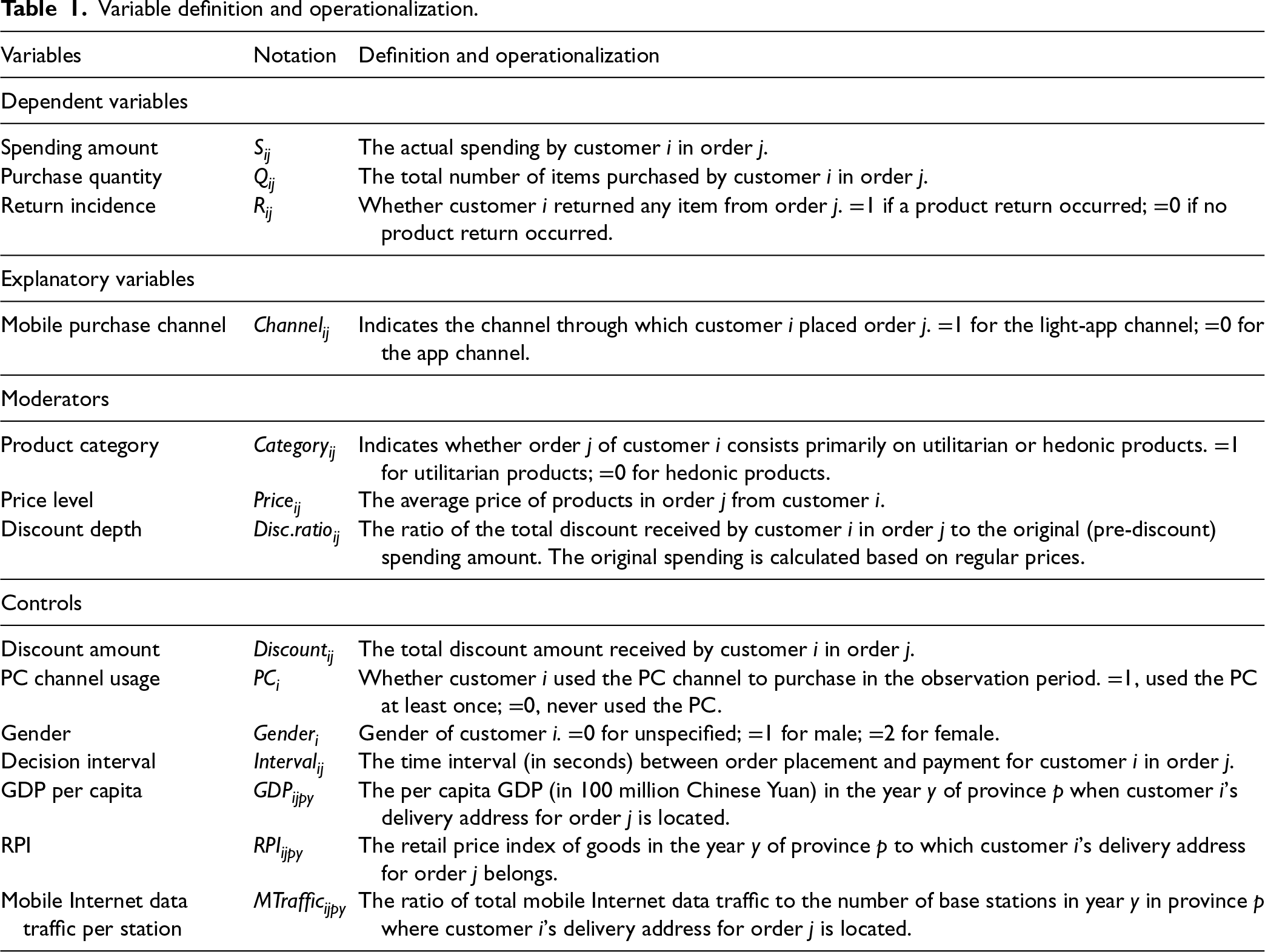
The dataset was organized at the consumer-order level in panel format. Dependent variables include spending amount (Sij), purchase quantity (Qij), and return incidence (Rij) for order j placed by customer i. The key explanatory variable is the mobile channel used for order placement (Channelij=1 for light-app, =0 for native app). Variable definitions and operationalizations are provided in Table 1.
Variable definition and operationalization.
Variable definition and operationalization.
Moderator variables include product categories (Category ij ), price levels (Priceij), and discount depths (Disc.ratioij). The Categoryij was operationalized as follows: we conducted a large-scale survey to evaluate hedonic and utilitarian attributes of the 174 unique product subcategories identified within the eight product categories. The survey was administrated via Credamo, a well-established sampling and data collection platform, yielding 2320 valid responses. Respondents rated each product subcategory on both hedonic and utilitarian dimensions following Kushwaha and Shankar (2013) and Voss et al. (2003). We calculated the mean utilitarian and hedonic scores across all subcategories in each order and constructed a binary moderator at the order level: an order was classified as utilitarian if its utilitarian score exceeded its hedonic score; otherwise, it was classified as hedonic (see E-Companion 4 for details). As such, Category ij indicates whether the j-th order of customer i contained predominantly utilitarian or hedonic products. The remaining two moderators, Priceij and Disc.ratioij, represent the average price per order and the proportion of the total discount received relative to the order's original pre-discount value, respectively.
We also incorporated multiple control variables to account for potential confounding factors. These encompass customer characteristics, such as whether a customer also made purchases via the PC channel during the observation period (PCi) and gender (Genderi), as well as order-level characteristics, including total discount amount (Discountij) and the time interval between order placement and payment (Intervalij). To control for economic conditions’ influence on purchasing behavior, we incorporated provincial per capita GDP (GDPijpy) and the retail price index (RPIijpy) from 2017 to 2020, obtained from the National Bureau of Statistics of China. We further incorporated the provincial mobile Internet data traffic (MTrafficijpy) to account for its potential influence. 2
Descriptive statistics in Table 2 show that 55.52% of orders were placed via the light-app channel and 44.48% via the native app channel; utilitarian purchases accounted for 69.65% of orders, compared to 30.35% for hedonic purchases; and 18.40% of orders involved product returns.
Summary statistics of variables.
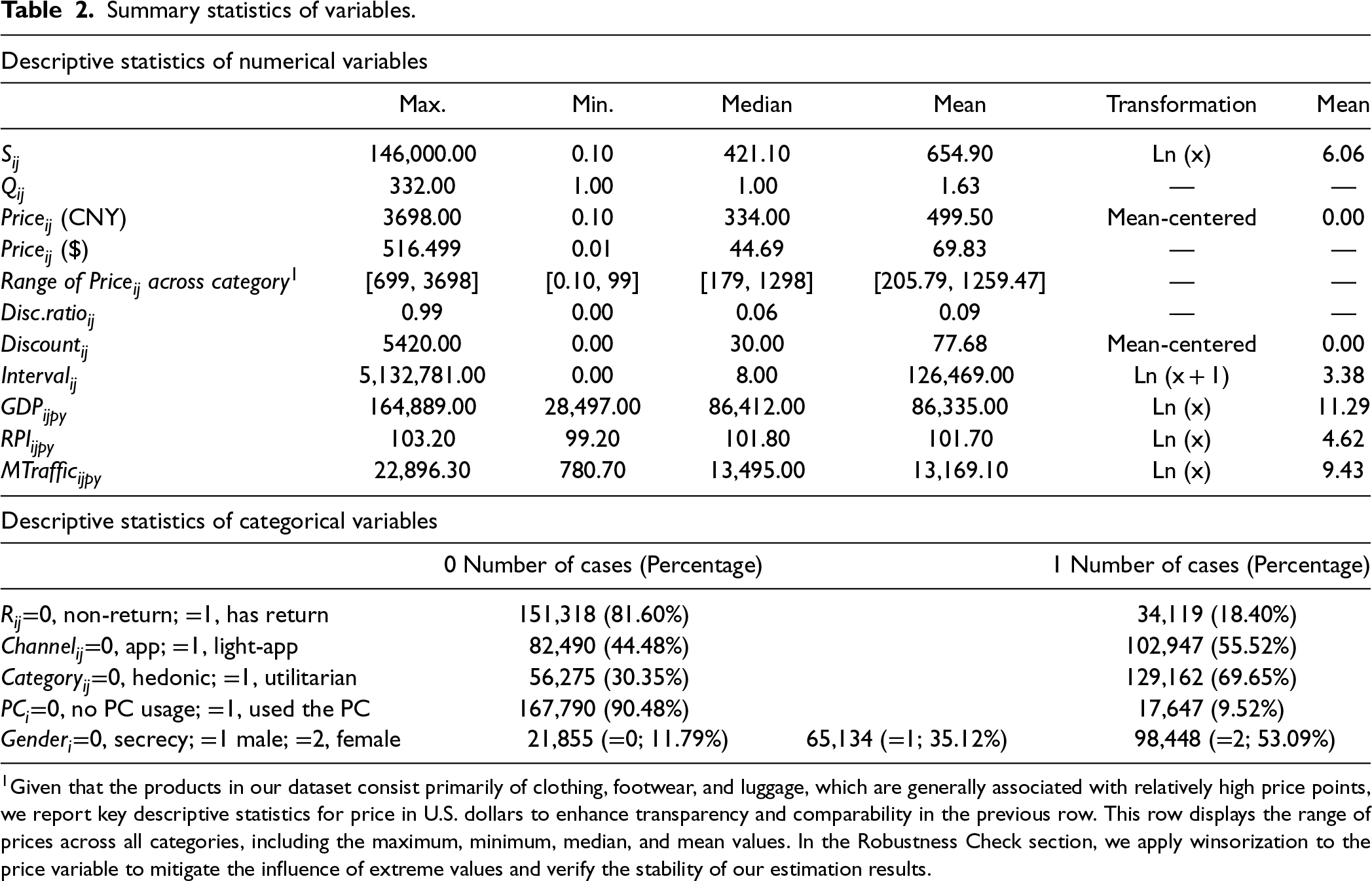
1Given that the products in our dataset consist primarily of clothing, footwear, and luggage, which are generally associated with relatively high price points, we report key descriptive statistics for price in U.S. dollars to enhance transparency and comparability in the previous row. This row displays the range of prices across all categories, including the maximum, minimum, median, and mean values. In the Robustness Check section, we apply winsorization to the price variable to mitigate the influence of extreme values and verify the stability of our estimation results.
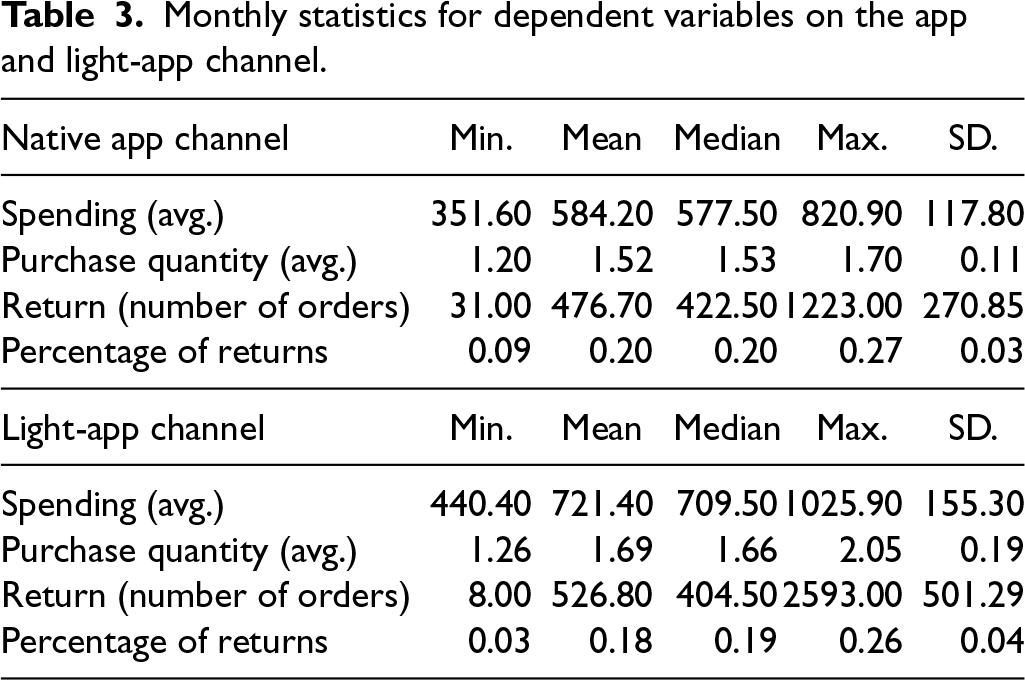
For an initial comparison of consumer behavior across channels, we aggregated the data to monthly averages of spending, items per order, and return rates (see Table 3).
Monthly statistics for dependent variables on the app and light-app channel.
Monthly statistics for dependent variables on the app and light-app channel.
Preliminary analysis indicated notable behavioral differences between the two channels. Orders placed via the light-app channel were associated with significantly higher average spending (Mlight − app = 721.40, Mapp =584.20, t = −4.10, p = .00) and greater purchase quantity (Mlight − app = 1.69, Mapp = 1.52, t = −4.69, p = .00) compared to the native app. These findings suggested that the light-app interface may encourage larger and more transactions, possibly reflecting distinct usage patterns or user experience. Figures 1 and 2 present monthly trends in average spending and purchase quantity, respectively. Both metrics were consistently higher on the light-app channel than on the native app throughout the period, with only minor fluctuations. A few isolated exceptions where native app purchase quantity briefly exceeded that of the light-app did not alter the overall pattern.
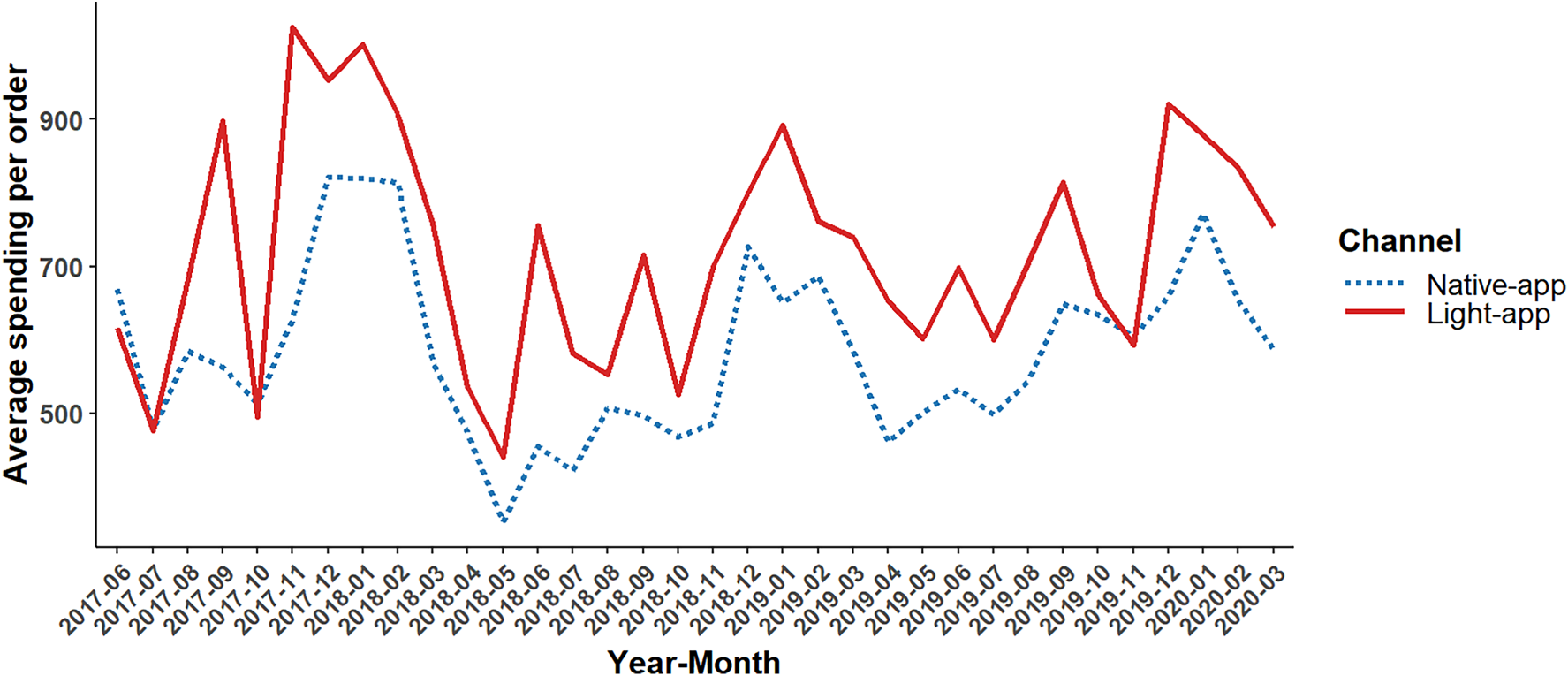
Monthly distribution of spending amount per order across the two channels.
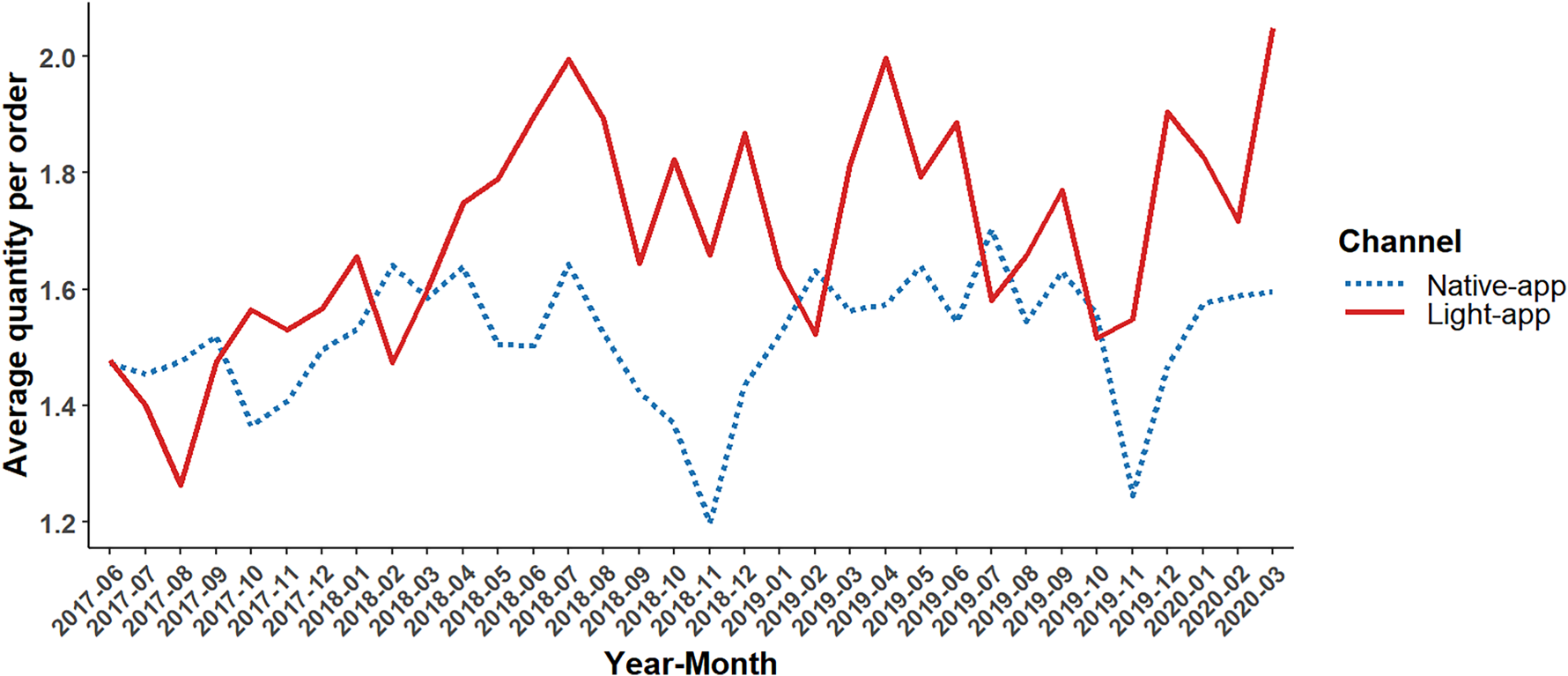
Monthly distribution of purchase quantity per order across the two channels.
Regarding product returns, descriptive results in Table 3 show that although the light-app channel had a higher absolute number of returned orders (Mlight − app = 526.80, Mapp = 476.70, χ2 = 85.20, p = .00), it exhibited a lower, though not statistically significant, monthly return rate (Mlight − app = 0.18, Mapp = 0.20, t = 1.49, p = .14). Figure 3 further illustrates that while return rates were generally lower on the light-app, notable monthly variations suggested the influence of temporal or contextual factors. These descriptive statistics offer initial insights into behavioral differences across mobile channels. However, further econometric analysis is necessary to precisely estimate channel effects on purchase outcomes while controlling for consumer-, order-, temporal-, and regional-level characteristics.
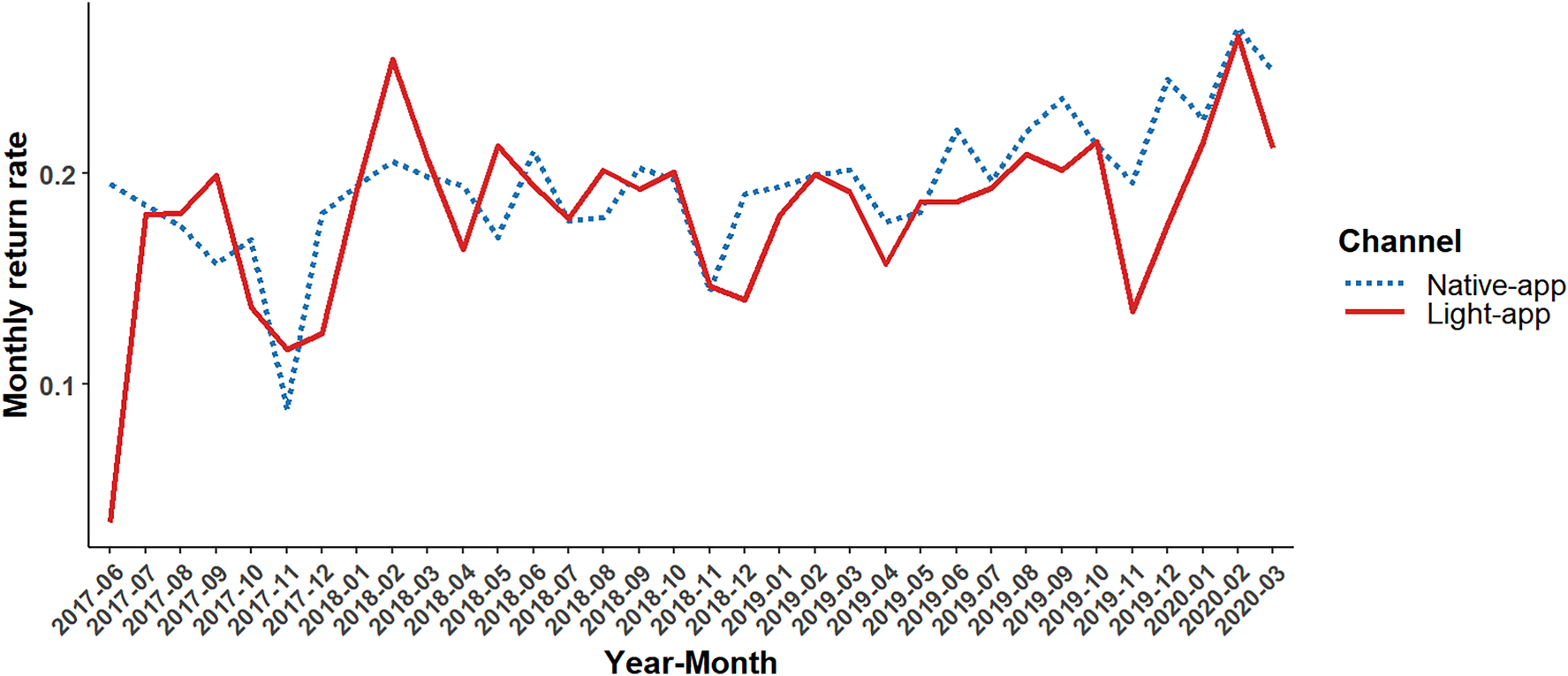
Monthly distribution of return rates across the two channels.
Basic Model: Exploring Impacts of Channel Usage on Purchase Behavior
To examine the impacts of light-app and native app channels on consumer purchase behavior, we built multiple models to analyze consumer i's spending amount, purchase quantity, and the incidence of product returns associated with order j. The model for spending amount is represented as follows:
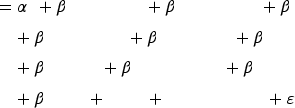
In Equation (1), Sij denotes the spending amount for order j by customer i, where Channelij is the key independent variable, indicating the channel used for the order. The coefficient β1 captures the effect of channel choice on spending. We controlled for order-level characteristics, including product category (Categoryij), price level (Priceij), discount amount (Discountij), and decision interval (Intervalij), as well as customer features such as PC usage (PCi) 3 and gender (Genderi) and regional factors including per capita GDP (GDPijpy), the retail price index (RPIijpy), and mobile Internet traffic per province (MTrafficijpy). City fixed effects (Cityc) were included to account for time-invariant city-level heterogeneity, and year-month fixed effects (YearMonthym) to control for time-varying shocks and trends. The term εij is a random disturbance.
Subsequently, we modeled purchase quantity in the following equation:

The dependent variable Qij, representing the number of items purchased in order j by customer i, is count data with overdispersion (mean = 1.63, variance = 2.53). To account for this, we employed a negative binomial (NB) model, which relaxes the equidispersion assumption inherent in the Poisson model (Greene, 2008). The independent variable vector X comprises the same variables as in Equation (1). The variance of the dependent variable is modeled as
Finally, we examined the incidence of product returns using the following logit model:

In Equation (3), the dependent variable Rij is binary, indicating whether a product return occurred or not in order j by customer i. The logistic function estimates the probability of return occurrence based on a set of predictor variables (Hosmer et al., 2013), encapsulated in the vector X, which includes all independent variables featured in Equations (1) and (2). The coefficient vector β is estimated to reveal the relationships between these predictors and the likelihood of product returns.
To investigate differences in the impacts of channel choice on purchase behaviors across varying shopping baskets, we estimated the moderating effects of product categories, price levels, and discount depths. We introduced an interaction term between product category (Categoryij) and channel choice (Channelij) in Equation (1), structured as follows:
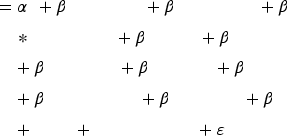
In Equation (4), β3 represents the moderating effect of product category on spending amount, capturing how channel influence varies across categories. This same interaction was incorporated into Equations (2) and (3) to assess moderation effects on purchase quantity and return incidence. Similarly, interaction between channel choice and both price level (Priceij) and discount depth (Disc.ratioij) were included across all three equations. 5
In our previous models, the primary independent variable, Channelij, may be endogenous due to consumer self-selection. Specifically, consumers likely choose a purchase channel (light-app vs. native app) based on both observed and unobserved factors (e.g., anticipated spending, perceived convenience, or specific shopping intent) that may also directly influence their final purchase outcomes (e.g., spending amount and quantity). This non-random assignment leads to a correlation between the channel choice and the error term in the outcome equation, biasing the estimates of channel effects. To address this endogenous selection into a binary treatment (i.e., channel choice), we employed Heckman correction approach (Heckman, 1976), which is a well-established method for correcting bias when units (here, transactions) self-select into one of two observable states based on potentially unobservable characteristics (Gu and Kannan, 2021; Narang and Shankar, 2019). In our two-stage procedure, the first stage (selection equation) modeled the binary channel choice via a probit model. The inverse Mills ratio derived from this stage was then incorporated into the second stage (outcome equation) to control for the selection effect, directly correcting for the correlation between the channel choice decision and unobservables affecting the outcomes.
The probit model in the selection stage of Heckman correction is structured as follows:
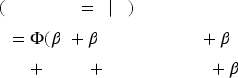
P(Channelij=1|X) represents the possibility that order j by customer i was placed through the light-app channel, with ϕ denoting the cumulative distribution function of the standard normal distribution. We used the city-level (c) density of light-app users in the month m of purchase (LDensityijcm) as an exclusion restriction for an individual's choice of the light-app channel. LDensityijcm reflects the channel adoption behavior of peers in the same city, not their spending levels. It is expected to be strongly correlated with an individual's channel selection, based on established theories of social contagion and observational learning (Bilgicer et al., 2015; Manski, 1993). A higher local prevalence of the light-app channel creates network effects, lowers perceived adoption risks, and enhances awareness and legitimacy. As a result, a customer in a city with a high density of light-app users is significantly more likely to adopt the same channel. This is supported by our data with a relatively higher correlation between LDensityijcm and Channelij (
We acknowledge that broader factors, such as a city's economic development, could correlate with both technology adoption and spending behavior. To isolate the variation driven by social contagion, our model includes city fixed effects to control for time-invariant city-specific characteristics (e.g., cultural norms or long-term economic status) and year-month fixed effects to account for macroeconomics shocks and nationwide temporal trends (e.g., holidays or national advertising campaigns). This approach helps ensure that the identified variation in LDensityijcm is exogenous and functions primarily through the channel adoption mechanism.
To strengthen our model's robustness and account for regional technological infrastructure, we collected provincial-level data from China's Ministry of Industry and Information Technology, including annual mobile Internet data traffic and the number of mobile cellular base stations. We combined these into a variable MTrafficijpy, by dividing total mobile Internet data traffic by the number of base stations. This metric reflects the average mobile Internet traffic per base station in province p and year y when customer i placed order j, capturing local mobile networks’ quality and potential congestion. Furthermore, we also incorporated a comprehensive set of control variables in the vector of Z, consistent with the specifications in Equations (1)-(4). These included order characteristics such as product category, price level, and discount, customer characteristics such as PC usage and gender, and provincial economic conditions such as per capita GDP and retail price index.
Heckman Selection Model Estimation
Following the Heckman correction procedure, we started by estimating Equation (5) to obtain the Inverse Mills ratio (IMRij). The estimation results (see Table 4) indicated that the exclusion restriction LDensityijcm had a significant positive effect on customer choice of the light-app channel (β = 2.730, p < .001), consistent with the mechanism predicted by social contagion and observational learning theories. The newly added control variable MTrafficijpy had no statistically significant impact on channel selection. Based on the estimated parameters of Equation (5), we computed IMRij, which ranged from 0.000 to 4.439, with a mean of 0.740 and a median of 0.703.
Main Results: The Impacts of Channel Usage on Purchase Behavior
To address potential endogeneity in channel choice, we inserted the IMRij to Equations (1)-(3). Results are reported in Table 5. Estimation of Equation (1) revealed a significant positive effect of light-app channel usage on spending amount (β = 0.0941, p < .001), indicating that consumers spent 9.41% more on the light-app than on the native app after controlling for order-, customer-, and macro-level factors, as well as city and time fixed effects. The NB model in Equation (2) demonstrated that light-app channel use also increased purchase quantity (β = 0.0586, p < .001), corresponding to a 6.04% (=exp(0.0586) −1) rise in items purchased compared to the app. Furthermore, the logit model in Equation (3) suggested a significantly lower return incidence for light-app orders (β = −0.1254, p < .001), with an 11.79% (=1-exp(−0.1254)) reduction in the odds ratio of returns relative to the native app. The significance of IMRij across three models confirmed the presence of endogeneity, supporting the use of the Heckman correction approach to mitigate estimation bias.
Estimation results of the first stage of Heckman correction model.
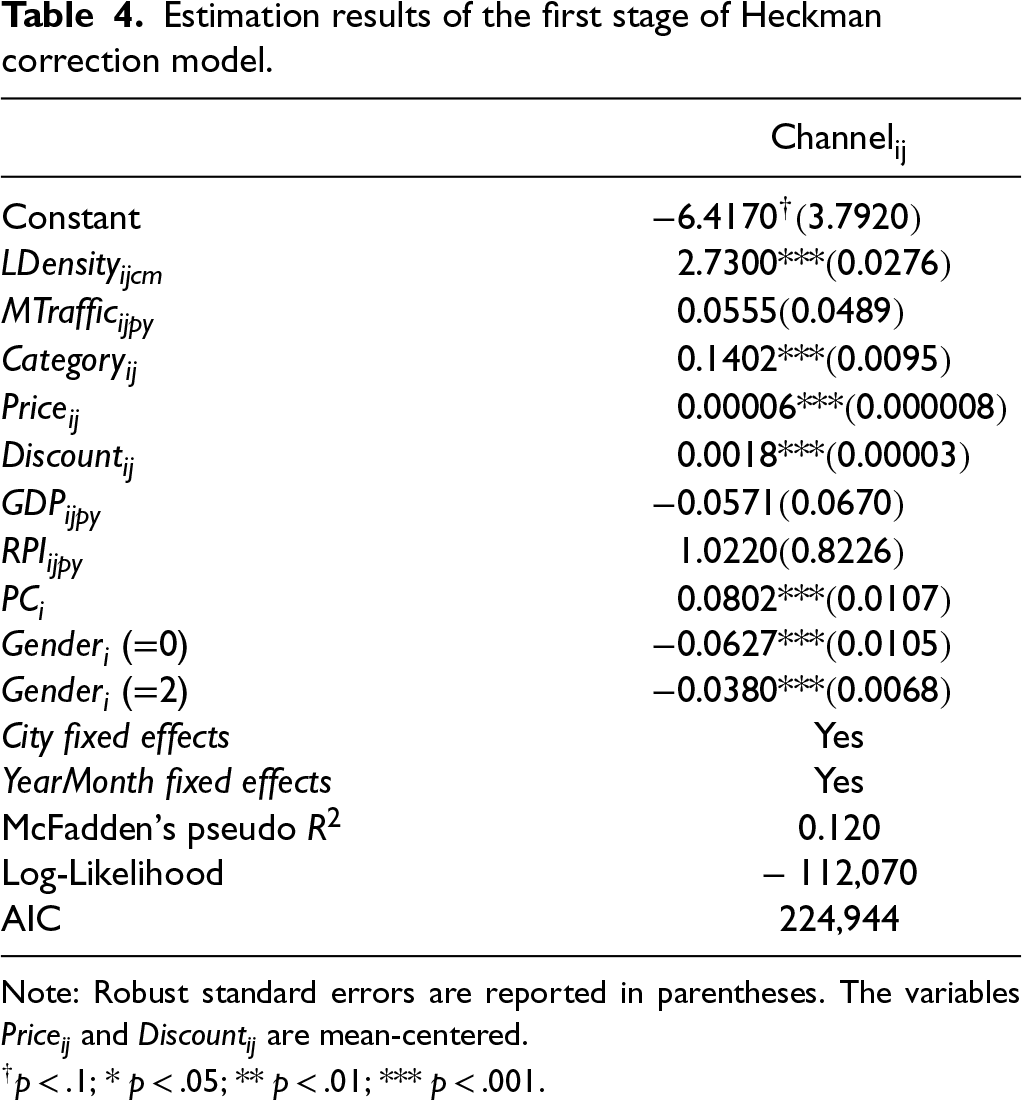
Estimation results of the first stage of Heckman correction model.
Note: Robust standard errors are reported in parentheses. The variables Priceij and Discountij are mean-centered.
p < .1; * p < .05; ** p < .01; *** p < .001.
Estimation results: customer spending, purchase quantity, and return incidence.
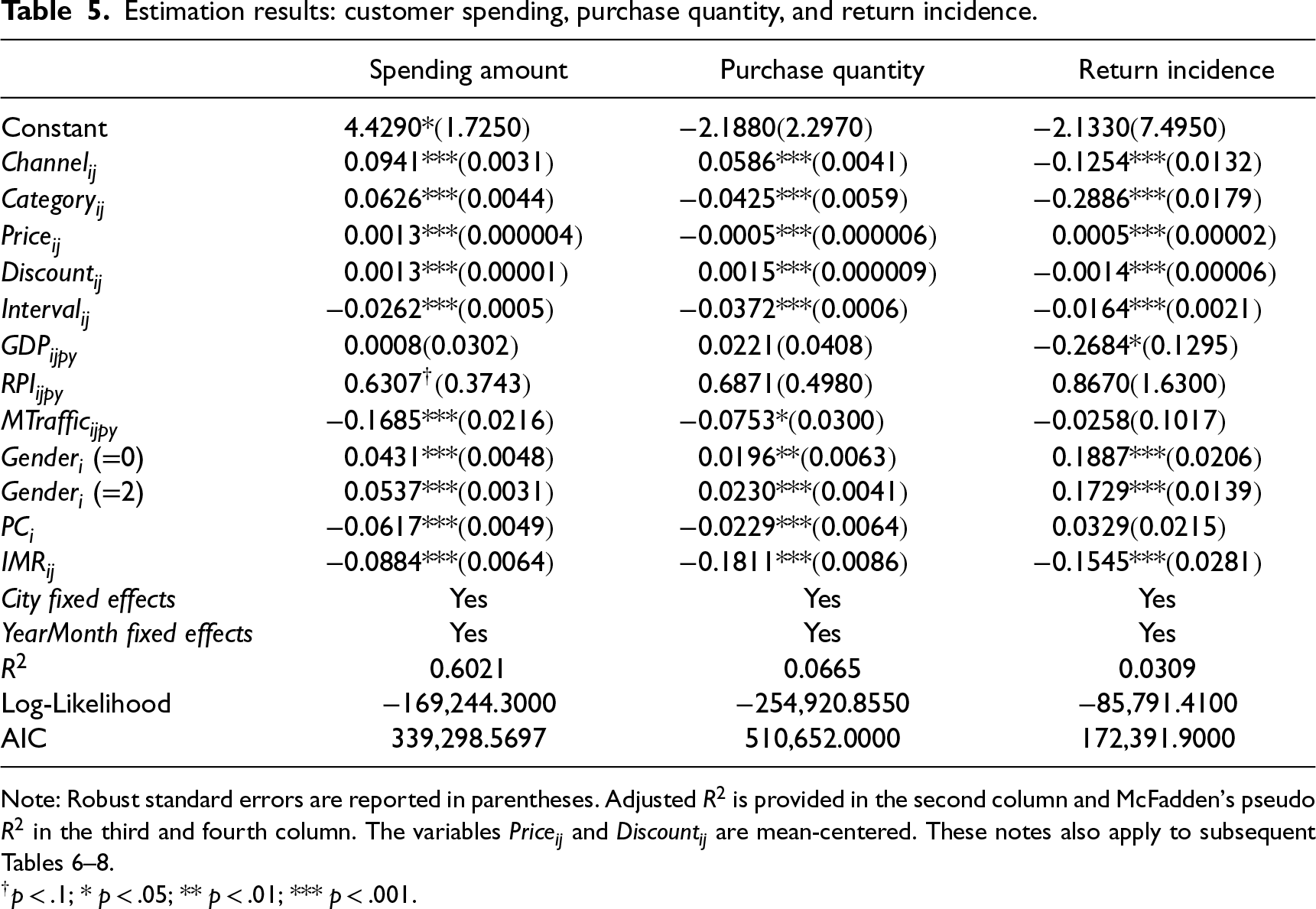
Note: Robust standard errors are reported in parentheses. Adjusted R2 is provided in the second column and McFadden's pseudo R2 in the third and fourth column. The variables Priceij and Discountij are mean-centered. These notes also apply to subsequent Tables 6–8.
p < .1; * p < .05; ** p < .01; *** p < .001.
Unlike native apps that require download and installation, light-app channels (including mini-programs and mobile websites in our data) lower the access barrier for users and conserve storage on mobile devices (Mikkonen and Taivalsaari, 2013). Platforms such as WeChat mini-programs, embedded within social media environments, facilitate seamless product browsing, promotion discovery, and order placement within consumers’ daily social interactions, effectively transforming the host application into an “all-in-one” service platform (Guo et al., 2025). This integrated and user-friendly experience enhances convenience and may encourage greater engagement (Hu and Karacaoglu, 2024), thereby positively influencing purchase volume and spending levels. On the other hand, light-app channels often provide less comprehensive after-sales support compared to native apps. Their interface design typically prioritizes transaction efficiency over post-purchase services, resulting in less accessible return mechanisms, limited real-time order tracking, and delayed customer service responses. These structural limitations likely reduce the ease with which consumers can initiate returns, contributing to the observed decrease in return incidence for orders placed through the light-app channel. In addition, in collectivist cultures such as China, consumers tend to rely more heavily on recommendations from family and friends to reduce perceived uncertainty (Nam and Kannan, 2020). This cultural inclination makes social channels like WeChat mini-programs particularly conductive to consumer purchasing behavior, as they can effectively reduce consumers’ perceived risks during purchases (Lee and Kronrod, 2020). We further report empirical evidence for the interpretation of our main effects through an auxiliary survey on consumer perceptions of multiple channel attributes across the three mobile channels, please refer to E-Companion 3.
Table 6 presents the moderating effects of product category on the relationship between channel choice and each outcome variable. For spending amount, both the direct effect of channel choice (β = 0.0186, p < .01) and the moderating effect of product category (β = 0.0936, p < .001) were significantly positive. This indicated that although consumers spent more on the light-app than the native app for both product types, the effect was stronger for utilitarian products (11.22% higher) than for hedonic products (1.86% higher).
Estimation results of the moderating effects of product category.
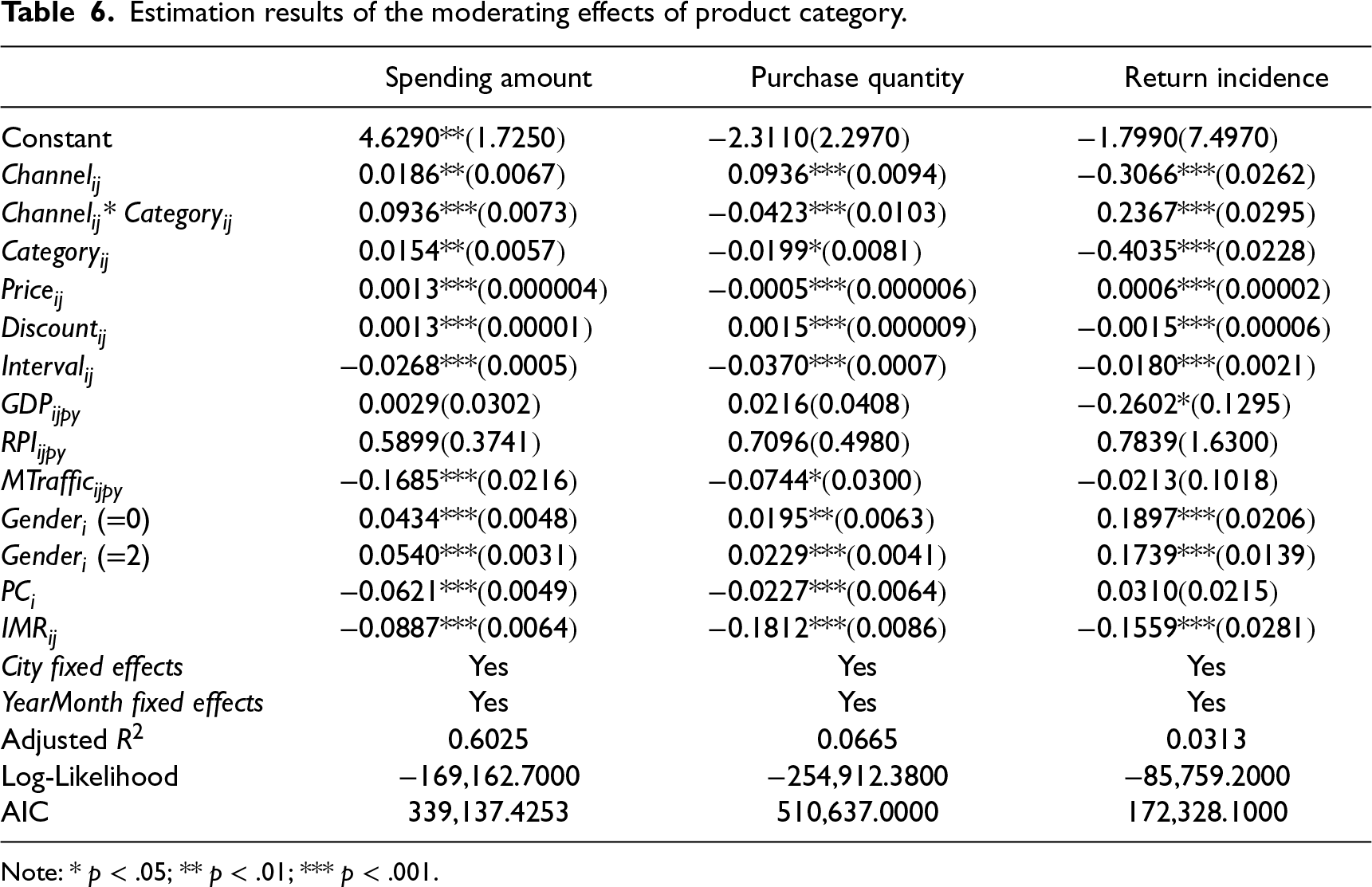
Estimation results of the moderating effects of product category.
Note: * p < .05; ** p < .01; *** p < .001.
For purchase quantity, we observed a negative moderating effect of product category (β = −0.0423, p < .001), alongside a positive direct effect of Channelij (β = 0.0936, p < .001). The resulting marginal effect was a 9.81% (=exp(0.0936) − 1) increase in items purchased for hedonic products on the light-app versus the native app, which diminished to 5.26% (=exp(0.0936 − 0.0423) − 1) for utilitarian products.
For return incidence, a significant negative direct effect of channel (β = −0.3066, p < .001) was moderated positively by product category (β = 0.2367, p < .001). The reduction in return odds ratio was substantially greater for hedonic products (1-e(−0.3066) = 26.41%) than for utilitarian products (1-e(−0.3066 + 0.2367) = 6.75%), suggesting that the light-app channel is associated with a higher likelihood of returns for utilitarian items. The significance of the IMRij across all models confirmed that the endogeneity was effectively controlled via the Heckman correction.
Compared to hedonic products, utilitarian products purchased through the light-app channel exhibit higher spending, lower purchase quantity, and a greater likelihood of being returned. This pattern suggests distinct consumer decision-making processes across product categories when using the light-app channel. For utilitarian products, which are often characterized by goal-directed and functional purchases, the light-app channel serves as a convenient tool for quick and efficient transactions. Consumers likely leverage its accessibility to acquire specific, pre-researched items with minimal browsing. Since their purchase intentions are often pre-determined, they are less inclined to engage in exploratory shopping, resulting in fewer items per order. At the same time, the higher spending on utilitarian products may reflect a consumer preference for purchasing higher-value or premium item within this category through the light-app, possible due to the convenience of completing planned, high-stakes transactions in a streamlined interface. This channel appears to support focused purchases that consumers may previously researched on other platforms.
However, the same features that enable efficiency, such as simplified product presentation and limited functional detail, may also impair the accurate communication of utilitarian attributes. Given that utilitarian purchases often require precise information (e.g., specifications, compatibility, or materials), the condensed content typical of light-app channels could lead to a larger expectation-reality discrepancy. This informational gap can heighten post-purchase dissatisfaction, thereby increasing return rates for utilitarian goods quickly purchased via light-app channels.
Table 7 presents the moderating effects of price level on the relationship between channel choice and consumer outcomes. For spending amount, channel choice showed a significantly positive effect (β = 0.0929, p < .001), while price level exerted a negative moderating influence (β = −0.0002, p < .001). This indicated that although consumers spent 9.29% more via the light-app than the native app, the difference narrowed as price level increased.
Estimation results of the moderating effects of price level.
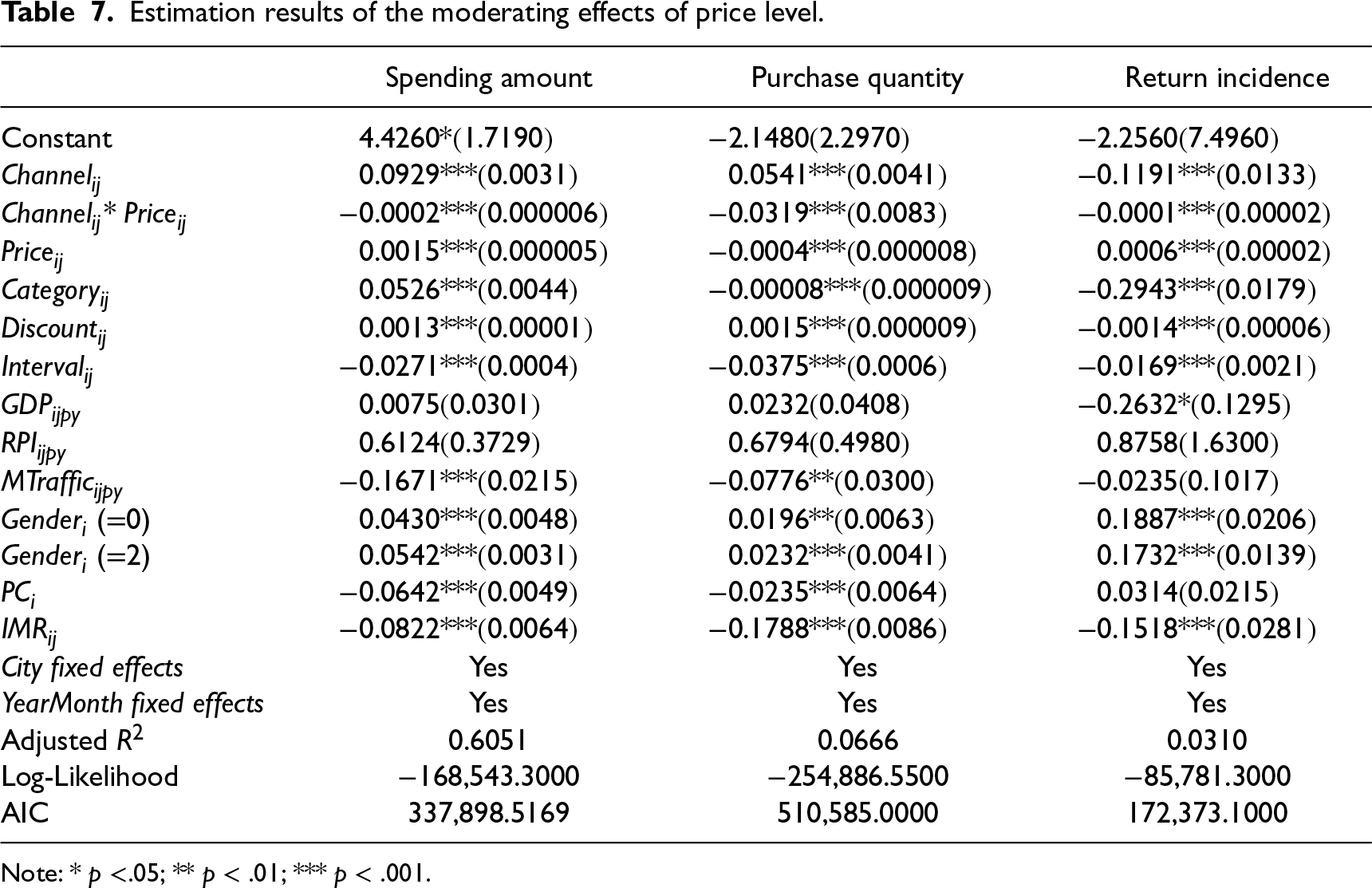
Estimation results of the moderating effects of price level.
Note: * p <.05; ** p < .01; *** p < .001.
A similar pattern emerged for purchase quantity: while light-app usage positively affected the number of purchased item (β = 0.0541, p < .001), this relationship was weakened by higher price levels (β = −0.0319, p < .001). For example, a one-unit increase in price reduced the channel effect from 5.56% (=exp(0.0541) − 1) to 2.24% (exp(0.0541 − 0.0319) − 1).
Regarding return incidence, light-app channel use significantly reduced the odds of returns (β = −0.1191, p < .001), and this effect was further strengthened by higher prices (β = −0.0001, p < .001). The reduction in return odds ratio increased from 11.23% (=1-exp(−0.1191)) to 11.24% (=1-exp(−0.1191 − 0.0001)) with a one-unit price increase. The significance of IMRij across the models confirmed that endogeneity was appropriately controlled.
In summary, higher price levels attenuate the positive effects of light-app channel usage on both spending and purchase quantity, while simultaneously strengthening its negative effect on return incidence. This pattern can be explained through the lens of perceived risk and consumer deliberation in high-price contexts. The light-app channel's simplified interface and relatively limited product presentation may heighten perceived risk for high-priced items (especially the mobile website channel). When making more expensive purchases, consumers tend to become more cautious, potentially reducing the number of items they buy or scaling back total expenditure to mitigate uncertainty. The lack of immersive or interactive features may further constrain consumer confidence, leading to more restrained purchasing behavior in high-stakes transactions. Conversely, the stronger reduction in return rates for high-priced items on the light-app channel suggests that consumers adopt a more deliberation decision process before completing such purchases. Additionally, the perceived procedural complexity or inconvenience of returning high-value products through light-app channels, which often provide less integrated after-sales support than native apps, may further discourage returns, thereby reinforcing the observed effect.
Table 8 presents the moderating effects of discount depth across the three outcome variables. Channel choice continued to exert a significantly positive effect on spending amount (β = 0.0765, p < .001), which was further strengthened by greater discount depth (β = 0.3891, p < .001). A one-unit increase in discount depth amplified the spending amount on the light-app channel from 7.65% to 46.56% (=0.0765 + 0.3891) compared to the native app.
Estimation results of the moderating effects of discount depth.
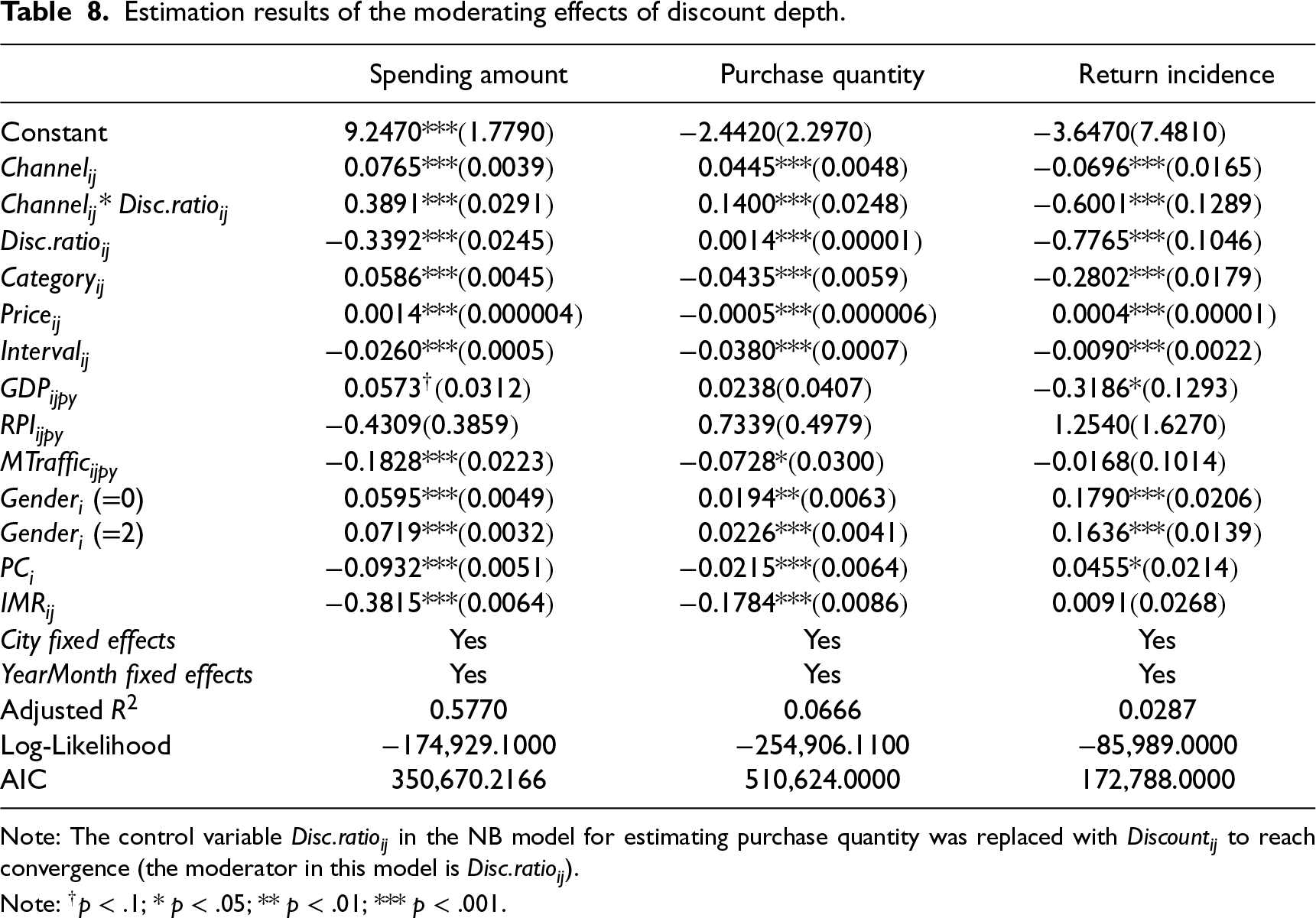
Estimation results of the moderating effects of discount depth.
Note: The control variable Disc.ratioij in the NB model for estimating purchase quantity was replaced with Discountij to reach convergence (the moderator in this model is Disc.ratioij).
Note: †p < .1; * p < .05; ** p < .01; *** p < .001.
Similarly, for purchase quantity, both the direct effect of channel (β = 0.0445, p < .001) and the positive moderation by discount depth (β = .1400, p < .001) were significant. Higher discounts intensified the channel effect, raising the increase in items purchased from 4.55% (=exp(0.0445) − 1) to 20.26% (exp(0.0445 + 0.1400) − 1) with a one-unit increase in discount depth.
For return incidence, light-app usage again significantly reduced the likelihood of returns (β = −0.0696, p < .001), an effect that was enhanced by deeper discounts (β = −0.6001, p < .01). The reduction in return odds ratio rose from 6.72% (1-exp(−0.0696)) to 48.81% (1-exp(−0.0696 − 0.6001)) with a one-unit increase in discount depth. The significance of IMRij in most of the models confirmed that endogeneity was effectively addressed. 6
Table 8 indicates that deeper discounts amplify the positive influence of the light-app channel on both spending and purchase quantity, while further reducing return incidence. These results can be interpreted through the interplay of channel characteristics and consumer motivational processes under prominent price incentives. The light-app channel, characterized by low access barrier and seamless integration within social platforms (e.g., WeChat), facilitates immediate response to discount information. The absence of installation requirements and one-click entry lowers transaction costs, enabling consumers to act quickly on limited-time promotions. Moreover, light-app channels’ integration within social ecosystems simplifies sharing and comparing discount information, fostering impulse purchasing behaviors. When encountering deep discounts, consumers are more likely to prioritize perceived savings over deliberation evaluation, resulting in elevated spending and larger basket sizes.
The pronounced reduction in return incidence under deeper discounts may be explained through both psychological and economic mechanisms. From a behavioral perspective, deep discounts enhance perceived transaction utility and reduce the perceived risk of purchase. Consumers may rationalize that even if a product does not fully meet expectations, the steep discount offers compensatory value, making returns less compelling. Economically, the lower monetary outlay decreases the motivation for return, as the potential refund is relatively small. Furthermore, light-app channels often feature less streamlined return procedures compared to native apps, increasing the perceived effort of returning discounted items. Together, these factors reduce return incidence.
We further conducted multiple analyses to validate the robustness of our estimation results:
First, to address potential endogeneity, our main analysis employed the user density of the light-app channel in the city where the order was placed as the instrumental variable. As a robustness check, we constructed an alternative instrument: the user density in the customer's nearest city (NDensityijcm). This variable is likely to influence the customer's channel-choice decision in the first stage of the Heckman correction model but should not directly affect their specific purchase outcomes. Replacing the original instrument with this measure and recomputing the inverse Mills ratio yielded the second-stage estimates that remained consistent with our main findings (see E-companion 5 for the identification of nearest cities and Table EC5.1 for analysis results).
Second, while our main models incorporated city fixed effects to account for time-invariant city-specific factors. However, the inclusion of a large number of city dummy variables (359 cities in total, including cities at various levels and county-level units) raised concerns about potential multicollinearity, which could compromise the stability of our estimates. To mitigate this risk while still controlling for regional heterogeneity, we replaced city fixed effects with a more aggregated province fixed effect structure (31 unique provinces). All models were then re-estimated using province fixed effects, and the results remained highly consistent with our original findings (see Table EC5.2 in E-Companion 5), confirming that our conclusions are not sensitive to the level of geographic fixed effects.
Second, as the products in our dataset, such as clothing, footwear, and luggage, involve relatively high price points, we sought to mitigate potential estimation bias resulting from extreme values in the price. We applied a 99% winsorization to the price data. The discount depth variable was subsequently recalculated based on the winsorized price values. We re-estimated all models using the Heckman two-stage procedures with the adjusted variables and obtained consistent results (see Table EC5.3).
Third, we introduced a continuous measure of category attributes and denoted it as Uti.Hed.Ratioij. This variable was calculated as the ratio of utilitarian to hedonic score for each order (min = 0.493, mean = 1.271, median = 1.329, max = 1.830). It retained the continuous information from both attributes while avoiding multicollinearity, as the original utilitarian and hedonic scores were highly correlated (Spearman's
Fourth, among the three outcome variables, we applied a linear regression for spending amount due to its continuous nature, which also permits the use of a Two-Stage Least Squares (2SLS) approach to address endogeneity. Following Angrist and Pischke (2009), we first estimated a linear probability model (LPM) using the same instrumental variable LDensityijcm and controls as in the first stage of the Heckman procedure. The predicted probability of light-app usage from this model was then used in the second-stage regression. The 2SLS results (Table EC5.5) aligned with our main estimates: the effect of light-app usage and all moderating effects on spending amount remained consistent. In contrast, standard 2SLS is unsuitable for count (order quantity) or binary (return incidence) outcomes due to their non-linear data-generating processes, which can yield biased estimates. Thus, 2SLS was applied only to spending, while the Heckman procedure was used for full endogeneity correction across all outcomes.
Fifth, our data cover the period from June 2017 to March 2020, which partially overlaps with the initial outbreak of the Covid-19 pandemic. Nationwide lockdowns in the data source country began on January 23, 2020, significantly altering online shopping behaviors. To mitigate potential distortion from the pandemic, we excluded 61 days of transaction records during this period. Re-estimation using the trimmed dataset produced consistent results for both the main effects of channel choice and all moderating effects (see Table EC5.6), affirming the robustness of our findings.
Sixth, although our main analyses controlled for the retail price index (RPIijpy) at the delivery location to account for regional price differences, we further tested robustness by considering the consumer price index (CPIijpy). It encompasses a wider basket of goods and services, including housing, healthcare, and education, offering a more comprehensive measure of general inflation and cost-of-living changes. We collected provincial CPI data from the National Bureau of Statistics of China for 2017–2020, replaced RPIijpy with CPIijpy in all models, and re-ran the analyses. The results (see Table EC5.7) remained consistent with our original findings, confirming that our conclusions are not sensitive to the choice of price index and enhancing the reliability of our inferences.
Conclusions and Implications
6.1 Summary of Main Findings
With the increasing integration of mobile devices into consumer daily life, firms are increasingly leveraging mobile channels to enhance customer engagement and competitive advantage. Understanding behavioral differences across mobile interfaces offers critical demand- and supply-side insights for multiple channel management. This study examines consumer purchase and return behaviors across two prominent mobile commerce channels, light-app channels and native apps, using a robust empirical approach that accounts for endogeneity. Our findings reveal systematic differences in consumer behavior between these channels, with important moderating effects arising from product category, price level, and discount depth.
We find that light-app channel usage significantly increases spending amount by 9.41% and purchase quantity by 6.04%, while reducing return incidence by 11.79%, compared to native apps. These results suggest that the seamless accessibility and integrated user experience of light-app channels, which lower access barriers and save storage space (Mikkonen and Taivalsaari, 2013), facilitate convenience and promote purchase conversion. Our findings align with recent research highlighting the appeal of light-app channels embedded within social platforms such as WeChat, which cater to consumers’ growing preference for integrated and low-friction digital experiences (Hu and Karacaoglu, 2024; Jiao and Hu, 2022) and help mitigate digital fatigue associated with installing numerous native apps. Furthermore, whereas Hu and Karacaoglu (2024) reveal that consumers face lower marginal search costs on WeChat mini-programs (vs. B2C apps), encouraging its use for product search, our study extends this insight to downstream consumer behavior by demonstrating that light apps also lead to superior outcomes in spending amount, purchase quantity, and return incidence. Together, these results challenge earlier literature that emphasizes the superiority of native apps in driving firm performance (Ba et al., 2022; Guo et al., 2025; Liu and Sese, 2022; Narang and Shankar, 2019) and underscore the need for firms to re-evaluate channel strategies in response to evolving consumer behaviors.
Moreover, we identify notable moderating effects. The positive effect of light-app channels on spending is more pronounced for utilitarian products (11.22% vs. 1.86% for hedonic products), whereas the reduction in return incidence is more substantial for hedonic products. Higher price levels attenuate the positive effects on spending and quantity but strengthen the negative effect on returns. Deeper discounts amplify the positive influence of light-app channels on spending and purchase quantity, while further reduce return incidence. These nuanced findings highlight the contextual nature of channel effectiveness and suggest that marketing tactics and product characteristics significantly shape consumer behavior across platforms.
Managerial Implications
Overall, this study contributes to a refined understanding of mobile channel efficiency in multichannel retail systems. It provides actionable insights for marketers and operations managers to tailor channel strategies according to product type, pricing, and promotional incentives.
Our findings indicate that light-app channels, particularly when integrated with social media platforms like WeChat, offer superior performance in terms of spending and purchase quantity compared to native apps. This suggests that consumers increasingly prioritize both ease of access and social features. They favor low-effort channels (e.g., requiring no separate download and installation) that are embedded within super-app ecosystems like WeChat or Alipay, thereby allowing users to seamlessly switch between tasks such as communication, search, and commerce. Firms should consider allocating more resources to enhance their light-app channel experience, ensuring seamless integration with widely-used social platforms and reducing the friction associated with app downloads and installations. Providing intuitive and accessible light-app interfaces can improve customer engagement and increase order value. While many companies invest heavily in developing and maintaining proprietary mobile apps, our research suggests that light-app channels may offer higher return in terms of customer spending and product quantity, particularly for lower-value purchases. Hence, firms are suggested to re-evaluate their investment strategies in native apps and consider whether developing lightweight, platform-specific applications within super apps such as WeChat, Alipay, Kakao, Grab, Gojek, and Line might offer a more cost-effective and scalable solution, especially when catering to consumers seeking convenience and quick interactions.
The study also highlights that consumers may have less confidence when purchasing high-value products through the light-app channel, as evidenced by lower spending on high-priced products and fewer items of these products. Firms should consider segmenting their product offerings by channel, steering consumers toward more reliable, trusted channels (such as native apps or desktop platforms) for high-value purchases. For these products, firms might offer additional support features, such as enhanced product descriptions, comparison tools, or live chat options, to mitigate concerns and build consumer trust in the light-app channel. These actions are also useful for utilitarian products. Although consumers tend to spend more on utilitarian products on the light-app channel, they show a higher propensity to return these products. Firms should take proactive steps to reduce product returns. This could involve improving product representations, offering more immersive features, and clearly communicating return policies.
In addition, retailers should prioritize deploying deep discount promotions on the light-app channel, where they are more likely to boost sales volume and reduce return rates. The immediacy and accessibility of the light-app channel make it ideal for engaging consumers who are motivated by significant price reductions. Promotional strategies such as “Buy More, Save More” or bundle discounts can effectively increase the number of items purchased. Retailers can also utilize social media integration on the light-app channel to amplify the reach of these discounts. Encouraging users to share deals through social platforms can drive traffic and attract new customers. Providing clear and transparent information about discount terms can further reduce return rates by managing consumer expectations.
Moreover, our research highlights that a cohesive channel management strategy requires the alignment of marketing's customer engagement efforts, operations’ inventory and fulfillment capabilities, and finance's cost control mechanisms. For example, the light-app channel's ability to drive higher spending, purchase volume, and lower return rates suggests that marketing teams should work closely with operations management to deliver a seamless and engaging customer experience. Marketing can optimize product offerings and promotions tailored to the light-app channel, while operations can focus on efficient inventory management, fast fulfillment, and minimizing stockouts. In this process, finance should monitor and control the impact of tailored marketing strategies and related operational activities on profitability, such as controlling costs related to returns and shipping.
Research Limitations and Future Directions
This study has several limitations that can be addressed in future research to provide more refined insights for firms navigating the evolving digital landscape. First, although we leveraged a large dataset to differentiate consumer purchase behaviors between light apps and native apps, we were unable to distinguish between standard mobile websites and WeChat mini-programs. Future research could explore these distinctions to offer more granular insights and provide firms with more targeted recommendations for channel optimization. Second, we had accessed to consumer purchase histories from a B2C platform but lacked data on channel-switching behaviors (e.g., searching on PC and purchasing on mobile). Future research incorporating click-stream data would significantly enhance our understanding of consumers’ behavioral differences throughout the entire purchase journey. Third, this study focused on light-app channels and native apps, yet many other mobile platforms (e.g., Rednote) are used by firms to reach consumers and facilitate purchases. Future research should extend the scope to include these emerging platforms, providing insights into their influence on consumer behavior and their roles in firms’ overall channel strategies.
Supplemental Material
sj-pdf-1-pao-10.1177_10591478261426686 - Supplemental material for Exploring the Divide Between Retail Apps and Light Apps: Insights and Implications
Supplemental material, sj-pdf-1-pao-10.1177_10591478261426686 for Exploring the Divide Between Retail Apps and Light Apps: Insights and Implications by Huan Liu, Xiyao Li and Yuchen Pan in Production and Operations Management
Footnotes
Acknowledgments
We are grateful to Prof. Subodha Kumar (Deputy Editor), Prof. Praveen Kopalle (Department Editor), the Senior Editor, and the two anonymous reviewers for their constructive comments, which significantly improved the quality of this paper.
Declaration of Conflicting Interests
The authors declared no potential conflicts of interest with respect to the research, authorship, and/or publication of this article.
Funding
The authors disclosed receipt of the following financial support for the research, authorship, and/or publication of this article: This work was supported by the National Natural Science Foundation of China (Grants No. 72202104, No. 72471231, and No. 72101258), the Beijing Nova Program (Grant No. 20240484564), and the Asia Research Center of Nankai University (Grant No. AS2403).

Notes
How to cite this article
Liu H, Li X and Pan Y (2026) Exploring the Divide Between Retail Apps and Light Apps: Insights and Implications. Production and Operations Management xx(x): 1–18.
References
Supplementary Material
Please find the following supplemental material available below.
For Open Access articles published under a Creative Commons License, all supplemental material carries the same license as the article it is associated with.
For non-Open Access articles published, all supplemental material carries a non-exclusive license, and permission requests for re-use of supplemental material or any part of supplemental material shall be sent directly to the copyright owner as specified in the copyright notice associated with the article.
