






Abstract
We consider an assortment optimization problem for a class of online video games where the in-game virtual store has a unique structure with two sections: Featured and Just For You (JFY). All customers (players) are offered the same Featured section assortment, whereas the JFY section is used for personalized recommendations. We model customer choice under a constrained mixture-of-nested-logit model and propose different solution methods for the resulting assortment optimization problems. First, we introduce a novel mixed-integer nonlinear programming (MINLP) formulation. Numerical experiments show that the MINLP formulation generally obtains optimal solutions efficiently, using a variety of instances derived from conversations with our industry partner to mimic the environment found in their video game stores. In addition, we propose three approximate solution methods with theoretical performance guarantees: a fully polynomial time approximation scheme, a mixed-integer linear programming formulation, and a heuristic algorithm. To understand the impact of a shared Featured section, we analyze the distribution of display capacity between the Featured and JFY sections. Our numerical experiments highlight that the Featured section plays a critical role in balancing revenue and customer utility. To validate our use of a mixture-of-nested-logit model, we further conduct a simulation study based on ground-truth instances that are independent of the underlying structure of the consumer choice models we consider. The results indicate that our nested structure yields superior performance in terms of both capturing customer behavior and simulation revenue, compared with the mixture-of-multinomial logit model and the current practice of our industry partner. Overall, our paper is the first to study assortment optimization for the gaming industry under discrete choice models; it is also the first to devise both exact and approximate solution approaches for the constrained mixture-of-nested-logit model. Our results provide guidance for effective management of assortments in online video game stores and offer an “assortment” of solution approaches, allowing practitioners to choose one that best suits their environment.
Introduction
Over the last decade, online video games have seen tremendous growth. This growth has only increased since the start of the COVID-19 pandemic, as video games can provide an outlet for connection in isolation. A recent market report (Newzoo, 2023), for example, states that there are over 3.5 billion video game players worldwide and that the video game industry is projected to exceed $211 billion in revenue by 2025. In recent years, microtransactions have become a significant and increasing source of revenue for video game publishers. Microtransactions are in-game purchases where customers spend small amounts of in-game or real-world currency to obtain virtual items. Typically, these items are used to improve a player’s appearance in the game or to gain an advantage over other players. In the first quarter of 2023 alone, Activision Blizzard (one of the major video game companies) announced $1.29 billion in revenue from microtransactions. These microtransactions now comprise over 70% of revenues for video game companies, surpassing traditional game sales (Newzoo, 2023). Given the abundance of transactional and contextual data available due to the very nature of online video games, microtransactions provide numerous opportunities to increase revenue while enhancing the customer experience.
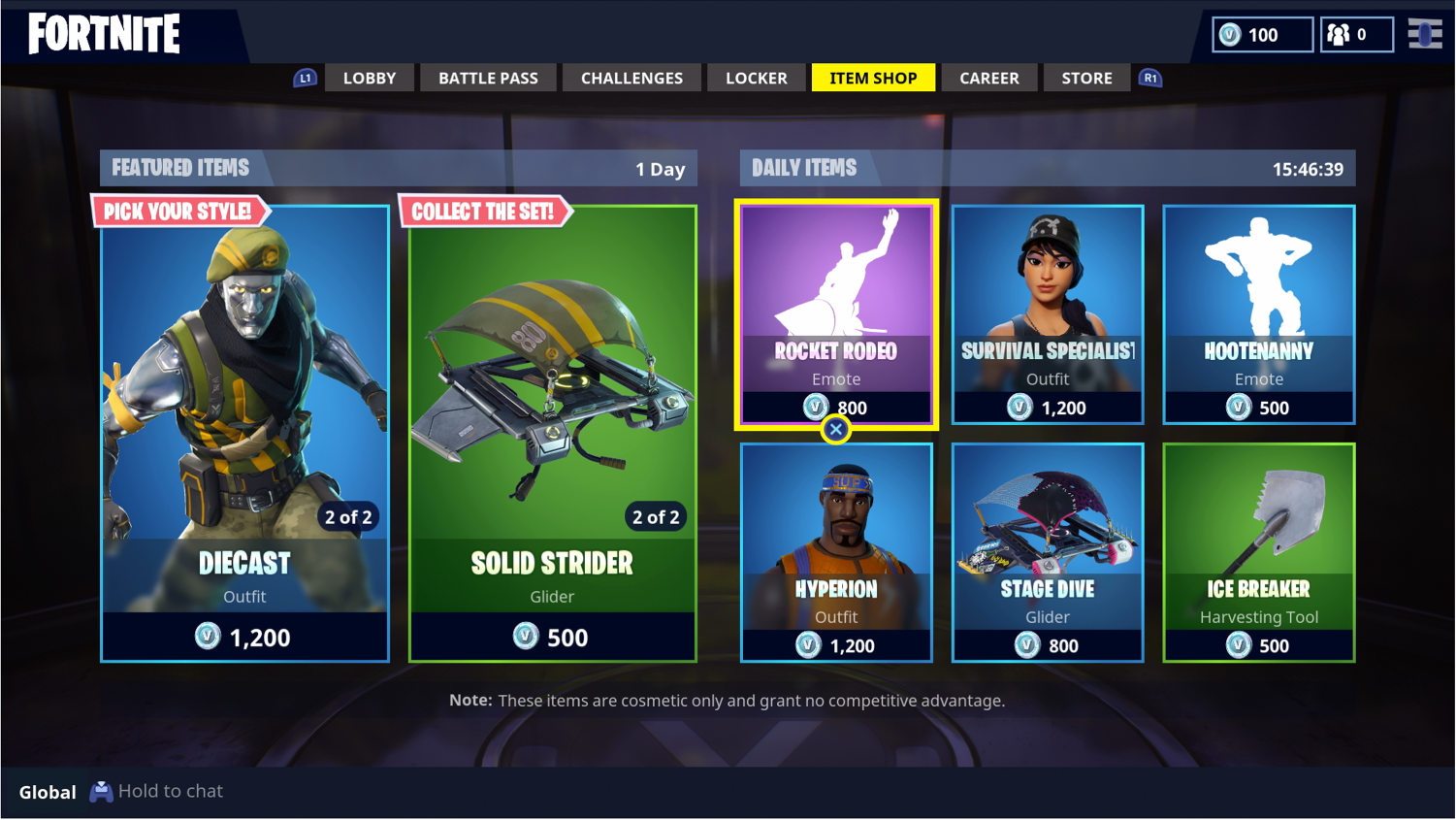
Store interface of Fortnite: The Featured section (left) and the Just For You (JFY) section (right).
When customers of an online video game visit its virtual store, they are presented with a set of in-game items, known as an assortment. Due to the capacity of the store interface, only a limited number of items can be displayed. The seller must then decide upon an assortment to maximize expected revenues. This is known as assortment optimization (Gallego and Topaloglu, 2019, Chapter 5). Although assortment optimization has become increasingly pervasive and successful in traditional online retailing, its adoption by video game companies is still in its infancy.
The layout of these virtual stores usually has a common structure and includes both a Featured section to promote new or popular items and a Just For You
In online video game stores, customers can usually only purchase items offered in the assortment; unlike traditional online retail stores, there is no place to search for or buy from a complete list of all items. This practice intentionally creates artificial scarcity, which prevails in the video game industry (Matthews, 2008). Therefore, the Featured section typically includes highly attractive and popular items that often emerge after in-game content updates. A shared, non-personalized Featured section ensures that customers can purchase such items (e.g., the newest weapon) when customers see these items used by friends or opponents in game sessions. A personalized JFY section, on the other hand, can account for the heterogeneity of customer preferences and improve revenue by offering customers items that more accurately match their tastes (Arora et al., 2008). In addition, these personalized sections attract customer attention and foster customer loyalty and lock-in (Ansari and Mela, 2003; El Housni and Topaloglu, 2023). We note that the Featured and JFY section assortments are usually drawn from non-overlapping pools of items. Currently, video game companies mostly use Featured assortments that are manually chosen by developers in an ad-hoc fashion, while they mostly use machine learning methods to determine the items in JFY assortments. However, Feldman et al. (2022) show that using customer choice models can provide better results than machine learning-based methods when determining assortments. In this article, we propose a modeling framework to systematically select both the Featured and JFY section assortments in an integrated fashion by employing a sophisticated choice model.
The structure of such stores naturally motivates us to model customers’ choices using a nested logit model. As a popular extension to the well-known multinomial logit (MNL) model pioneered by Luce (1959) and McFadden (1974), the nested logit model was first introduced by Williams (1977). Under the nested logit model, items are organized in nests. The choice process is such that the customer first selects a nest; subsequently, the customer chooses an item in that nest. We model the Featured and JFY sections as two nests, each with a display capacity limited by the store interface. In addition, the no-purchase option is modeled as a separate nest. Relative to the MNL model, the nested logit model captures differences in substitution, visibility, and attention between the Featured and JFY sections. We validate this setup using numerical experiments that show that using the nested logit model leads to improved parameter estimation and higher revenues.
Our work complements a research stream in assortment planning under discrete choice models that focuses on developing algorithms for the corresponding revenue maximization problems. In particular, we develop solution algorithms for a constrained mixture-of-nested-logit assortment optimization problem, where customers are grouped into different segments, and each segment is equipped with different nested logit choice model parameters. Assortments are partitioned into featured and personalized sections that are subject to display capacity constraints. The resulting constrained-mixture-of-nested-logit assortment optimization problem provides flexibility in modeling customers’ choices but is notoriously difficult to solve. However, video game stores provide a natural application to motivate this problem, given the structure of the store layout and the absence of search or options. To the best of our knowledge, our paper is the first to devise both exact solution methods and approximate solution algorithms with performance guarantees for this problem class. While our motivation stems from online video games, our model and solution methods can also be used in other applications that involve assortment optimization with both common and personalized sections. One potential application is omnichannel retailing, where the Featured section would correspond to a brick-and-mortar store and the JFY section would correspond to an online channel. This setting, however, might impose corporate requirements; for example, the products offered in the online channel might have to be restricted to a subset or superset of the ones offered in the brick-and-mortar store (Chen et al., 2026b; El Housni and Topaloglu, 2023).
The use of a JFY assortment is closely related to an emerging research stream on assortment personalization, which focuses on offering items tailored to each customer’s taste based on previously collected data. As retailers increasingly collect large amounts of customer data, personalized assortment planning has received considerable attention in recent years. Much of the research in this area assumes that sellers have limited prior information on customers’ preferences and proposes efficient learning algorithms to address the exploration versus exploitation trade-off. While the segmentation of customers and estimation of choice model parameters are interesting and important research questions in and of themselves, we restrict our attention to solving static revenue maximization problems. Throughout this article, we assume that customer segmentation is readily available and that the segment sizes and choice model parameters are known. This is not unusual for video game companies, which often have substantial resources dedicated to analyzing customers’ preferences and conducting behavioral segmentation.
From a general perspective, our research highlights the potential benefits of assortment optimization in online video games, whose unique structure and almost unlimited supply of data provide a number of novel challenges. The main contributions of this article can be summarized as follows: We formulate assortment optimization problems with a unique structure that arises in online video games, where a common Featured section contains items offered to all customers and a personalized JFY section allows for tailored item recommendations. We model customers’ choices using a constrained mixture-of-nested-logit model and show that analyzing the problem through the lens of discrete choice modeling and assortment optimization can lead to optimal or near-optimal revenue performance. We develop several solution approaches. First, we propose an exact mixed-integer nonlinear programming (MINLP) formulation. We model the problem as a conic optimization problem, and apply several strengthening and reformulation techniques that rely on the unique problem structure to improve performance. Furthermore, we propose three approximation methods: a heuristic algorithm, a fully polynomial time approximation scheme (FPTAS), and a mixed-integer linear programming (MILP) formulation based on approximating the nonlinear and non-convex objective function with a piecewise-linear function. We show that all three approximation methods admit performance guarantees and produce high-quality solutions. We conduct extensive computational experiments to evaluate the efficiency and effectiveness of the proposed approaches. Our numerical study shows that the MILP formulation can gain the highest revenue among the three approximation methods, while the heuristic can be solved efficiently across all instances and consistently achieves near-optimal performance. Crucially, the MINLP formulation can achieve optimal solutions in a reasonable timeframe for instances that align with the requirements of our industry partner. The proposed approaches represent a comprehensive treatment and complement each other. If the platform prioritizes optimality, the MINLP formulation is the preferred approach; if computing speed is prioritized, the other approaches offer practical alternatives. We analyze the distribution of display capacity between the Featured and JFY sections. Using numerical experiments, we show that the Featured section can have a critical role in balancing revenues and customer utility. To validate our model setup, we run simulations that rely on ground truth data. Compared with a choice model without nests, we find that our mixture-of-nested-logit model can better capture customer behavior through more accurate parameter estimation. Moreover, the mixture-of-nested-logit model can improve expected revenue by more than 25%. Relative to the current practice of our industry partner, we find that the mixture-of-nested-logit model can lead to expected revenue gains that exceed 50% gains. Given the scale of the microtransactions in the video game industry, this underscores the importance of assortment optimization in the video game industry.
Related literature
Even though the video game industry generates more revenue than the sports and movie industries combined, it has received relatively little attention in the Operations Management literature. Recently, however, there has been a flurry of work (Chen et al., 2026a, 2020; Hanguir et al., 2025; Li et al., 2023) that focuses on different operational aspects related to video games, such as game design, loot box design, and matchmaking strategies, among others. Relative to microtransactions in particular, Sheng et al. (2025) study various selling strategies (pure advance sales, pure spot sales, and hybrid advance sales) for bonus actions in video games and identify suitable situations for each selling strategy. Vu et al. (2020) study the interplay between microtransactions and fairness concerns and provide explanations for the successes and failures of microtransaction strategies in different games. From the perspective of this literature stream, our work is the first to focus on assortment problems that arise in the virtual stores of video games.
Our work is closely related to a literature stream that aims to solve assortment optimization problems under various discrete choice models. In their seminal work, Talluri and Van Ryzin (2004) study an assortment optimization problem under an MNL model where the parameters are deterministic and known; they show that the optimal assortment includes a certain number of items with the highest revenues, often referred to as revenue-ordered assortments. Rusmevichientong et al. (2010) study the assortment optimization problem under an MNL model with a capacity constraint and propose a polynomial time algorithm. Davis et al. (2014) characterize conditions under which the assortment optimization problem under a nested logit model is polynomially solvable. Gallego and Topaloglu (2014) study a class of constrained assortment optimization problems under the nested logit model and propose a polynomial time algorithm when the assortments are cardinality constrained. Rusmevichientong et al. (2014) consider the assortment optimization problem under MNL models with multiple customer segments, each with different preferences for the items; this choice model is called the mixture-of-MNL model. They show that the mixture-of-MNL problem is NP-complete and give performance guarantees for a certain class of assortments. Feldman and Topaloglu (2015a) are the first to study assortment optimization under the mixture-of-nested-logit model, where customers who follow a nested logit model belong to multiple segments, each with different nested logit choice model parameters. They focus on bounding the optimal expected revenue using Lagrangian relaxation and use the resulting bounds to evaluate the quality of heuristic solutions. In this article, we extend their work by developing a method to establish bounds that also applies when the number of candidate items is large.
Our work is also related to assortment personalization. Bernstein et al. (2019) and Kallus and Udell (2020) model customer heterogeneity by customer segmentation and offer personalized assortments for each segment. Another research stream takes a different approach and models customers’ preferences as a function of their attribute vectors; (see Chen et al., 2022b; Cheung and Simchi-Levi, 2017; Miao and Chao, 2022; Wang et al., 2019). While most research on assortment personalization focuses on dynamically learning and optimizing personalized assortments, we consider a static optimization problem and assume that segmentation and parameter estimation are known. Two reasons drive us toward this approach. First, the static problem is an interesting and challenging problem with practical relevance in and of itself due to the unique structure of video game stores. In addition, online video game stores are usually updated on a daily basis, and millions of store visit records of the previous day make it possible to update estimated parameters prior to executing the assortment optimization algorithms. This setting is somewhat different from traditional online retailers, who may need to determine personalized assortments for each arriving customer.
Our FPTAS is closely related to research on approximation algorithms for assortment optimization under various choice models. Due to the hardness results for variants of the assortment optimization problem, approximation algorithms and approximation schemes provide an attractive alternative to achieve theoretical performance guarantees. Segev (2022) proposes the first FPTAS based on a carefully crafted dynamic programming approach for capacitated assortment optimization under the nested logit model in its utmost generality. According to Davis et al. (2014), the authors show that the assortment optimization problem under certain types of the nested logit model is NP-hard and propose approximation algorithms with instance-specific guarantees. Rusmevichientong et al. (2014) show that the mixture-of-MNL model is NP-complete with only two customer segments and derive tight approximation results for revenue-ordered assortments. Feldman and Topaloglu (2015b) develop a 4-approximation algorithm for the nested logit model with a capacity constraint across all nests, while Aouad et al. (2018) show tight approximation bounds for assortment optimization under a general rank-based choice model and provide approximation algorithms that attain the best possible performance. Désir et al. (2022) study a class of capacitated assortment optimization problems and provide a framework to support the design of an FPTAS, and Liu et al. (2020) propose an FPTAS for a multistage assortment optimization problem under MNL. Désir et al. (2021) consider assortment optimization under the so-called mixture-of-Mallows model and propose a PTAS as well as a MIP formulation. Jasin et al. (2024) investigate capacitated assortment optimization under a multivariate MNL model where customers may buy more than one item and propose an FPTAS for several variants of the problem. In this work, we propose an FPTAS when the number of customer segments is constant, extending the framework by Désir et al. (2022).
To account for the nonlinearity in the revenue maximization problem, our MILP formulation utilizes piecewise-linear functions to approximate nonlinear functions. Various methods for constructing piecewise-linear approximations of nonlinear functions have been proposed (see, e.g., Croxton et al., 2003; Dantzig, 1960; Markowitz and Manne, 1957; Padberg, 2000). Two well-known mixed-integer formulations for piecewise-linear functions are the incremental cost (Markowitz and Manne, 1957) and the convex combination formulations (Dantzig, 1960). Alternatively, Beale and Tomlin (1970) suggest a formulation utilizing a class of constraints called special ordered sets of type 2 (SOS2). We refer the reader to Vielma et al. (2010) for a comprehensive review. We use these results to develop a MILP formulation of the assortment optimization problem, bound the error of the resulting approximation, and demonstrate that the MILP formulation can be a better alternative to the FPTAS in practice.
Finally, our paper adds to the expanding body of research on integer programming techniques applied to optimization problems related to choice models. A number of studies have developed integer programming models specifically for assortment optimization across different choice models, such as the ranking-based choice model (Bertsimas and Mišić, 2019), the mixture-of-Mallows model (Désir et al., 2021), the decision forest choice model (Akchen and Velibor, 2021), and MNL-based assortment planning (Chen et al., 2026b). Additionally, mixed-integer conic programming has been used to represent choice behavior. Şen et al. (2018) introduce a mixed-integer second-order cone programming formulation for assortment challenges within the mixture-of-MNL model, and Chen et al. (2022a) utilize this approach to address location-dependent offline-channel assortment planning in omnichannel retailing. Furthermore, Akçakuş and Velibor (2021) propose several mixed-integer exponential cone programs to solve a share-of-choice product design based on a logit-based choice model.
Organization
The remainder of the article is organized as follows. In Section 2, we describe our model setup. In Section 3, we present the MINLP formulation and the associated algorithmic enhancements. In Section 4, we introduce three approximation methods: an FPTAS, a MILP formulation, and a fast heuristic solution algorithm. For each of these methods, we also establish a performance guarantee. In Section 5, we conduct an extensive numerical study to evaluate computational performance. In Section 6, we investigate how the unique structure of the assortment problem impacts both the platform’s expected revenue and customer utility; using a simulation study, we also validate the benefits of using a mixture-of-nested-logit model to capture customer choice. Section 7 provides conclusions and avenues for further research. All technical proofs are included in the E-Companion (EC).
Model formulation and preliminaries
We consider the store of an online video game with a shared Featured section and a personalized JFY section. We use
We consider a set
We assume that the customers in each segment choose among the items offered according to the nested logit model due to the unique structure of virtual stores. The Featured and JFY sections can naturally be modeled using two nests. We further assume that the no-purchase option is a separate nest (it is not available within the Featured or JFY nest), that is, if a customer decides to make a purchase in one of the Featured and JFY nests, she will choose one of the offered items. This assumption is common in the literature (see Berbeglia et al., 2022; Chen et al., 2021; Gallego and Topaloglu, 2014). Under this nested logit model, arriving customers decide either to make a purchase in the Featured or JFY nest or leave without a purchase (see Figure 2 for an illustration).
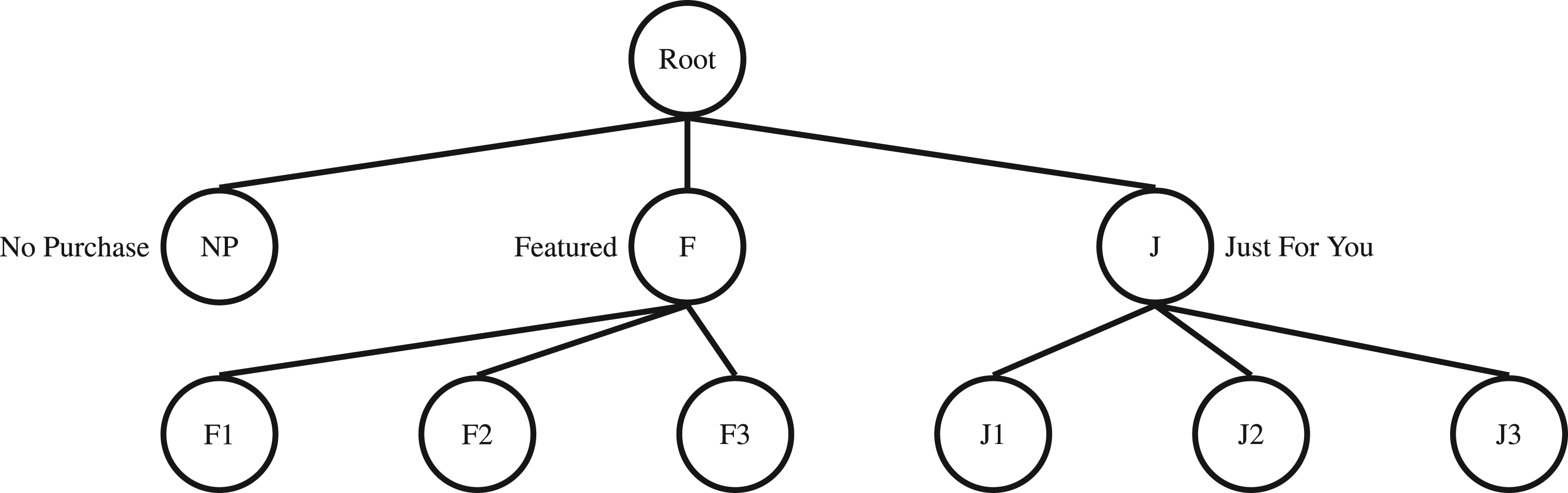
Illustration of the nested logit choice model.
For a customer in segment

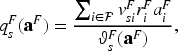
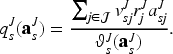
We normalize weights such that the preference weight of not making a purchase equals
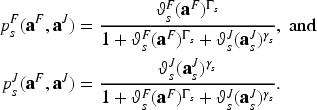
Under the mixture-of-nested-logit choice model, the total expected revenue when offering the assortment
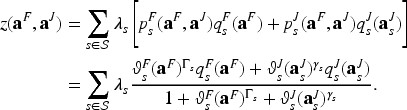
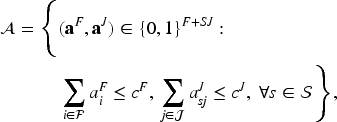

Before concluding this section, we present the hardness result of problem (
Problem (
To conclude this section, we emphasize that the coupling requirement imposed by the shared Featured section drastically changes the problem structure from a computational perspective. If the coupling requirement is relaxed, problem (
In this section, we develop mixed-integer programming (MIP) formulations for the assortment optimization problem that exploit its unique structure. To exploit this structure, we present a key property of (
Structural property
Determining the Featured section assortment is a key complicating factor in problem (

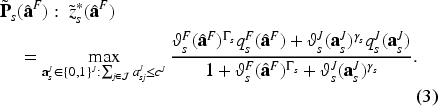
For any segment
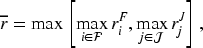
Theorem 1 relies on the
To construct a convex MIP, we start by reformulating (
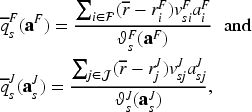
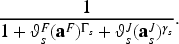



We formulate (
With these definitions, we can formulate problem (
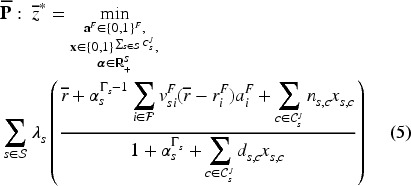



Next, we show that the objective function (5) can be transformed into a convex function. To that end, we first define



For each
Putting everything together, we find that
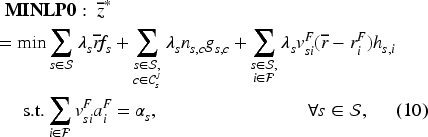













We emphasize that the nonlinear constraints in this formulation can be expressed as conic inequalities. Specifically, constraints (15), (16), and (20) correspond to rotated second order cones, while constraints (13) and (18) correspond to power cones. This enables the use of powerful branch-and-bound based outer approximation algorithms (Coey et al., 2020) that iteratively refine polyhedral relaxations of the conic constraints in a branch-and-cut framework.
In this section, we propose several improvements to formulation
McCormick estimators
To start, we observe that the decision variables

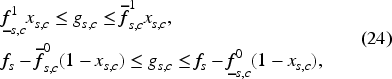
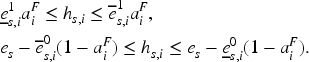
The McCormick estimators provide a well-known approach that uses conditional lower and upper bounds to establish a convex relaxation of bilinear terms. For the bilinear terms
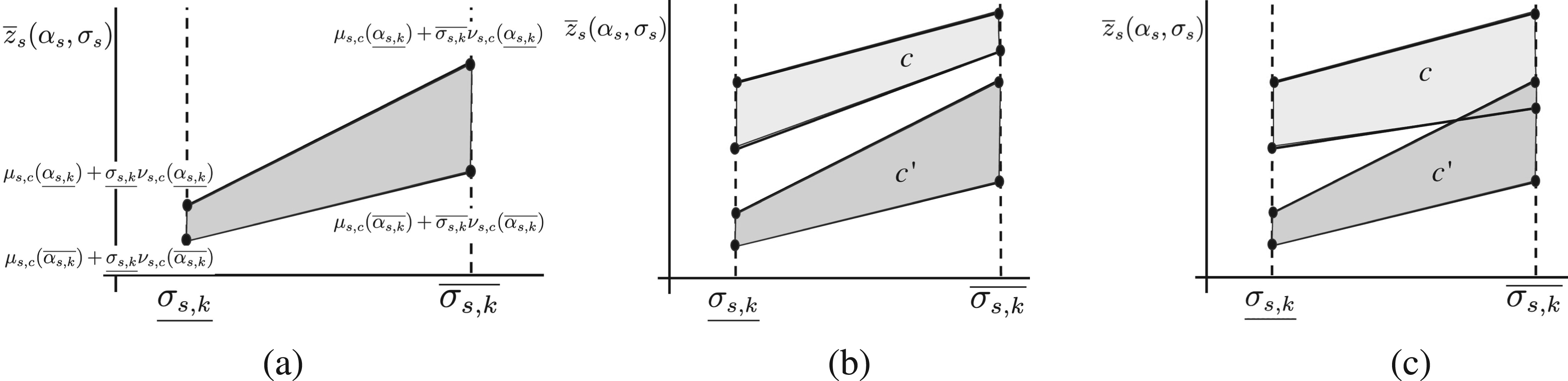
Preprocessing for conditional bounds: (a) range of optimal values, (b)
The extent to which the McCormick estimators can strengthen the formulation depends on the conditional bounds we can construct. To establish tight bounds, we use a preprocessing routine.
The general idea behind this procedure is as follows. Recall that
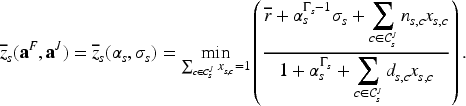


For each segment


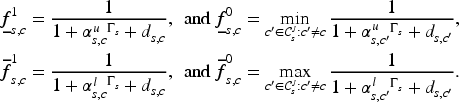
Next, we can also observe that both the intercept


We illustrate these potential solution values in Figure 3(a). This, however, allows us to establish a criterion to determine whether a candidate

Finally, we also establish conditional bounds on the bilinear terms
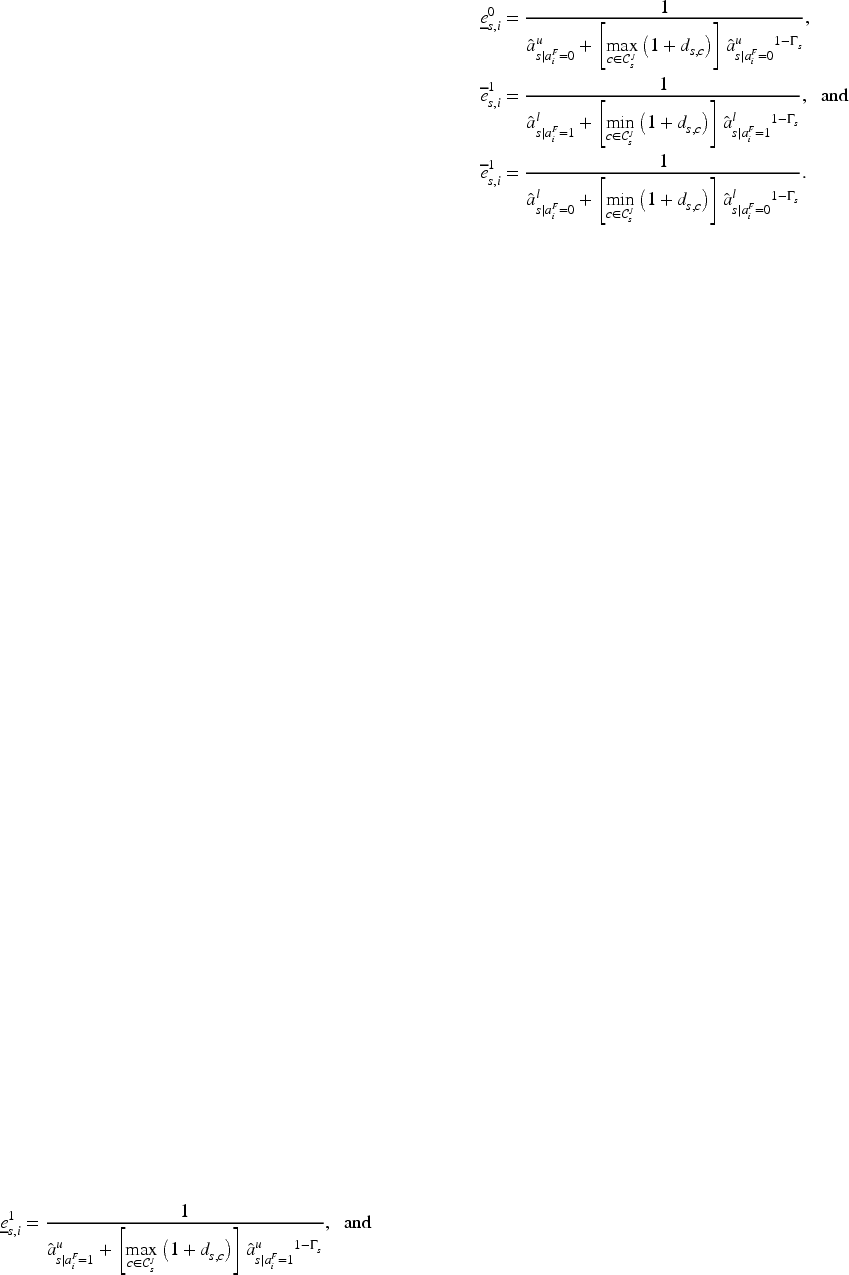
As a final step, we further reformulate the problem using a key observation that allows for a natural ordering of the candidate solutions, as reflected in the following proposition. With slight abuse of the notation, we also use
For all
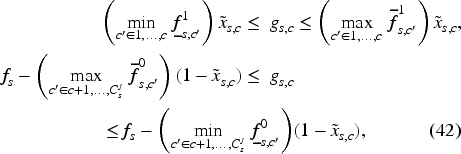
This allows us to use so-called “by”-variables, that is, we define variable
We also define
Then, we use the substitutions
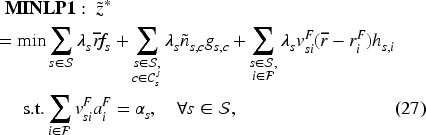














Finally, recall that
In this section, we present three approximate solution methods for the assortment optimization problem
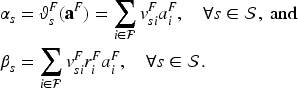

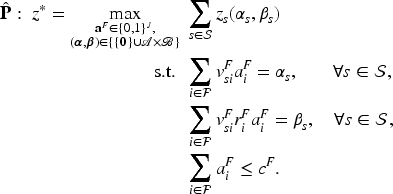
Fully polynomial-time approximation scheme
To start, we design an FPTAS for the assortment optimization problem to generate assortments that achieve at least
The general idea behind this FTPAS relies on the following property: intuitively, two Featured assortments with corresponding
Let

In this section, we propose a MILP formulation, which aims to find an optimal Featured assortment in the first stage of the assortment optimization problem. Our approach uses piecewise-linear functions to approximate the nonlinear objective functions
From a general perspective, the formulation
Consider some
Furthermore, let
Then, we have
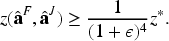
We emphasize that the approximation results for both the FPTAS and MILP are based on identical structural properties of the functions
The FPTAS and MILP outlined in the previous sections can both be used to obtain solutions with an arbitrary performance guarantee. When the number of customer segments
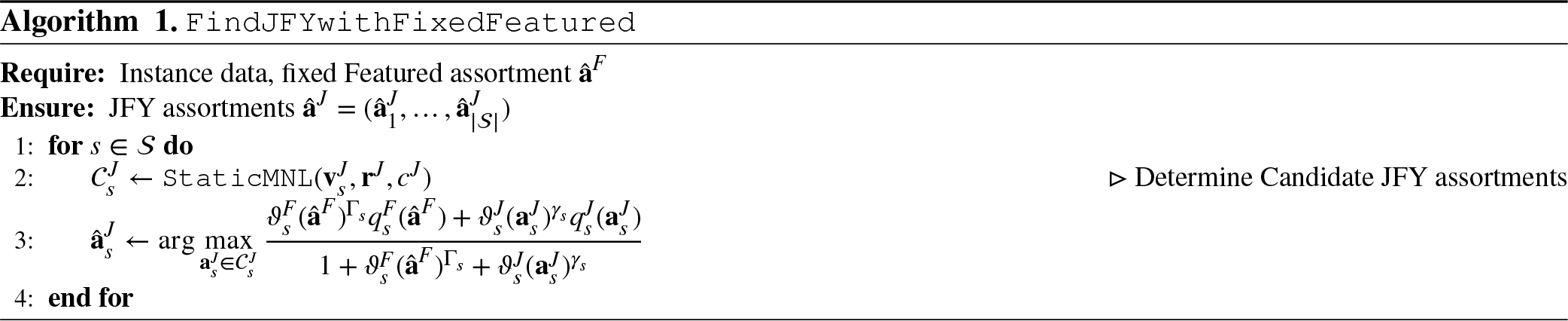
The key idea of our heuristic method is to find a high-quality Featured assortment
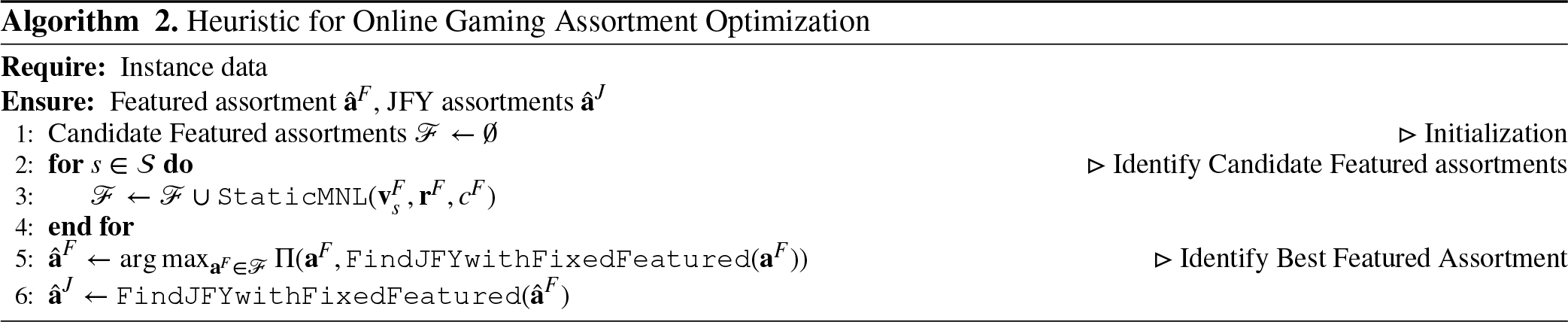
We detail the steps of the heuristic in Algorithm 2. After initializing the Featured assortment as an empty set, we use the algorithm
Let
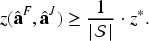
The three approximate solution methods can find feasible solutions for problem (
In this section, we conduct numerical experiments on a variety of problem instances to evaluate the performance of our proposed approaches under various settings.
Instance data
In our numerical study, we generate three classes of instances, which we refer to as
Instance classes.
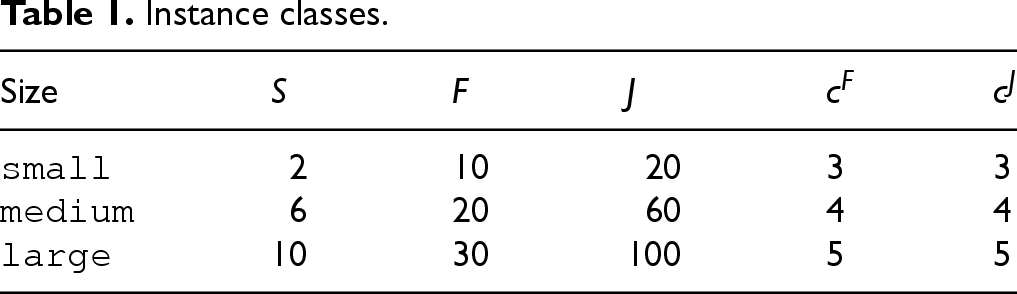
Instance classes.
For each class, we randomly generate 100 instances. The parameters we use to generate our instances are based on conversations with our industry partner to mimic the instances found in their video game stores. The unit price
We briefly summarize the solution methods evaluated in our numerical study. To generate assortments, we consider the following methods.
Computational results
Computation times
All experiments were performed on a Mac Studio with an Apple M1 Ultra Chip with 20 cores and 128 GB of RAM. All code is written in
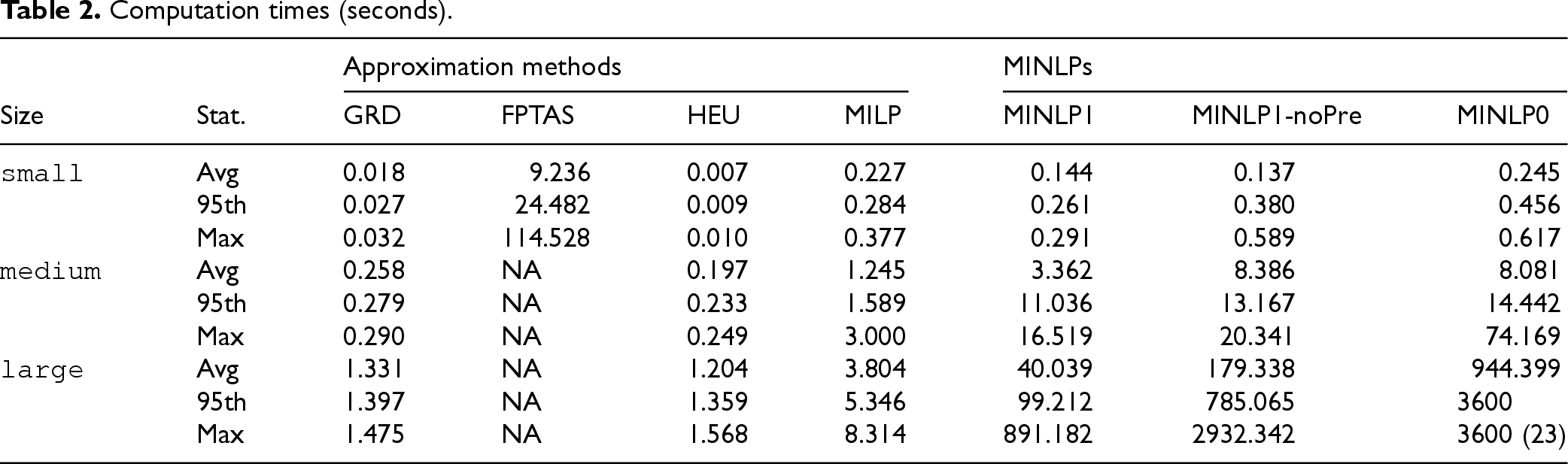
Computation times are reported in Table 2. We present the average, 95th percentile, and maximum computation time over the 100 instances in each class. The greedy procedure, heuristic algorithm, and MILP formulation can all be solved efficiently, while the FPTAS becomes intractable when instance sizes are larger. As a result, we do not show the FPTAS results for
Computation times (seconds).
Computation times (seconds).
Table 2 also shows that
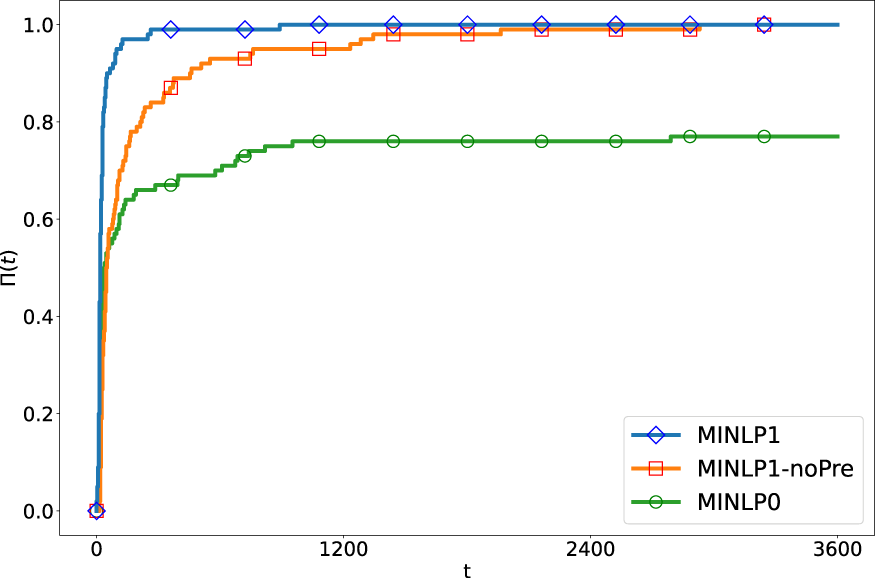
Performance profile of the three conic formulations on the 100
Table 3 summarizes the solution quality of our procedures. First, Table 3 reports optimality gaps for the greedy procedure, FPTAS, heuristic, and MILP formulation. Optimality gaps are calculated as
Solution quality (optimality gap (%) vs. MINLP).

Solution quality (optimality gap (%) vs. MINLP).
For
In this section, we investigate how the structure of our assortment optimization model impacts performance. First, we aim to understand how the coupling introduced by the shared Featured section affects the platform’s expected revenue and customer utility? To that end, we compare our model with two alternatives: Full personalization, which retains only the personalized JFY sections for each customer segment. Full coupling, which retains only the shared Featured section that is identical across all customer segments. A strategy that relies on the mixture-of-MNL model, in which neither the concept of nesting nor the dissimilarity parameters are incorporated to capture hierarchical substitution effects. A strategy that selects “most popular” products while respecting capacity constraints, which reflects the current practice of our industrial partner.
To evaluate the performance of these two alternatives relative to our model setup, we vary the parameter
We evaluate the performance of these two strategies relative to our model setup in Subsection 6.2.
Impact of the featured section
In this subsection, we evaluate the impact of the Featured section on both the platform’s expected revenue and customer utility. Expected revenue is defined by the objective function in our optimization models. For the customer utility, we adopt the definition by Sumida et al. (2021) and Wang and Yan (2025), and formally give the expression for our problem as

Instance generation
To examine the impact of a shared Featured section, we conduct additional experiments with
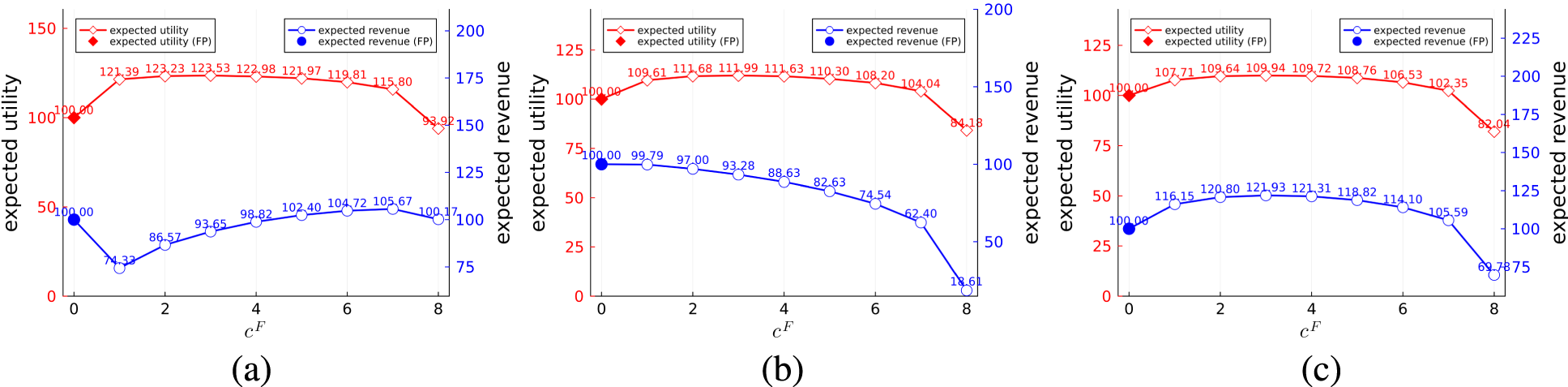
Customer utility and expected revenue varying with
In our first scenario (see Figure 5(a)), we observe a robust trade-off between utility and revenue. Relative to full personalization (
In the second scenario, where Featured items are lower-priced (see Figure 5(b)), we again observe that the presence of a Featured section improves customer utility, with a slightly smaller improvement than in the first scenario. In this case, however, revenue will decrease as the size of the Feature assortment increases. When Featured items have higher prices (see Figure 5(a)), expected revenue will improve as
In the third scenario without any price differential (see Figure 5(c)), we observe that customer utility benefits from the introduction of the Featured section, though to a lesser extent than in the first two scenarios. Interestingly, we also observe that introducing a Featured section generates higher expected revenue than full personalization (
Overall, our results suggest that (i) a careful allocation display capacity can consistently improve customer utility after introducing a Featured section, (ii) using a Featured section combined with the personalized JFY section can lead to higher expected revenue compared with full personalization setting and/or full coupling setting, dependent on the relative price positioning of the Featured and JFY items, and (iii) nesting the two groups allows the platform to better capture customer behavior and model the substitution patterns in a more refined manner.
Advantages of the mixture-of-nested-logit model
In this section, we perform a simulation study to validate our use of the mixture-of-nested-logit model. Specifically, we compare using our mixture-of-nested-logit model with using both a mixture-of-MNL model (which is the most common choice model used in the literature) and the current practice used by our industrial partner. In each setting, we require a shared Featured section across customer segments while allowing a personalized JFY section for each segment. We impose separate capacity constraints for each section.
Simulation framework
Our simulation framework consists of the following components.
Ground truth data. As a first step, we generate instances using the rank list-based (also called stochastic preference) model following the procedure described in Section 3 of Berbeglia et al. (2022). While other discrete choice models for creating instances do exist, Berbeglia et al. (2022) state that the rank list-based method is equivalent to the general random utility class and has an intuitive interpretation. We believe this approach can provide a fair comparison between the use of various models, as the rank list-based method does not rely on any structural assumptions present in the mixture-of-nested-logit and mixture-of-MNL models.
Each instance generated by the rank list-based method consists of a preset number
Given this information, we use
Parameter estimation. We implement a conditional gradient method to estimate parameters from the transaction dataset. This approach has been used by Berbeglia et al. (2022) for latent class MNL estimation, and was originally developed by Jagabathula et al. (2020) for the nonparametric estimation problem for mixing distributions. We follow the same procedure as Berbeglia et al. (2022), and apply this method to estimate the parameters for both the mixture-of-nested-logit and mixture-of-MNL models.
Assortment optimization. For each instance, we obtain assortments based on the estimated parameters for the mixture-of-nested-logit model and the mixture-of-MNL model, respectively. For the mixture-of-nested-logit model, we solve problem (
Ground-truth-based expected revenues. To evaluate an assortment’s performance, we determine its expected revenue based on the ground truth data. Given preference rank lists and their probability distribution, we generate the purchase probabilities for the products in an assortment as well as the probability of the no-purchase option. This allows us to calculate the expected revenue of the assortment based on the ground truth.
Simulation results
We first evaluate the performance of our parameter estimation procedure. Subsequently, we evaluate the revenue impact of using the mixture-of-nested-logit model relative to using the mixture-of-MNL model and the most-popular approach.
Estimation performance. Following Berbeglia et al. (2022), we use the soft root mean squared error (RMSE) as the performance metric for the parameter estimation, given the known ground truths. The RMSE provides a clear indication of how closely the estimated model aligns with the ground truth. In Table 4, we report the mean (Mean) and standard error of the mean (SEM) of the RMSE (
Results on the mean RMSE (
) of the parameter estimations.
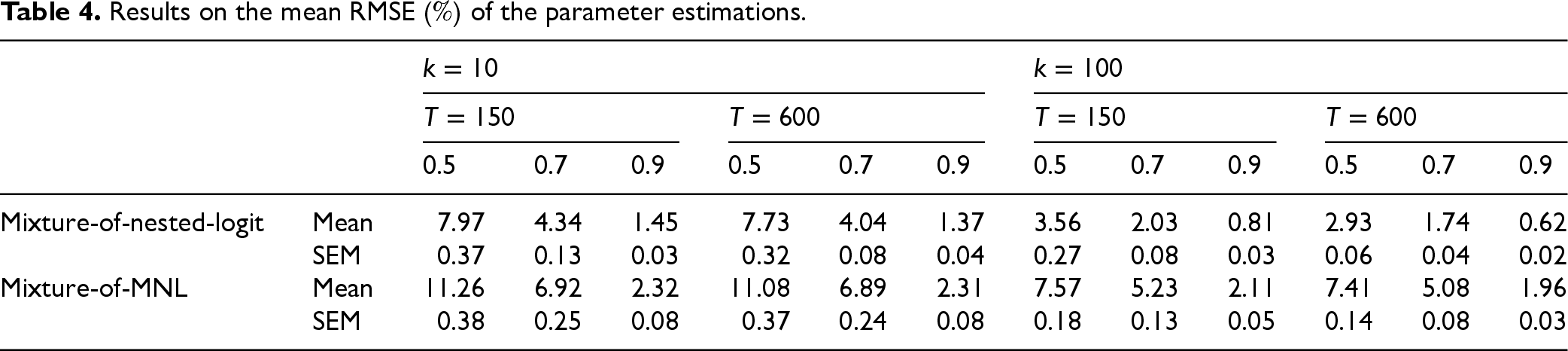
Results on the mean RMSE (
Comparisons on expected revenues. As stated before, we use expected revenue based on ground truth data as the performance metric to evaluate an assortment. We report the expected revenues of the mixture-of-nested-logit model, the mixture-of-MNL model, and the most-popular approach in Table EC.2, which shows minimum (Min), maximum (Max), mean (Mean), and standard error of the mean (SEM) for each approach. To better visualize the gains of the mixture-of-nested-logit model over the mixture-of-MNL model, Figure 6(a) displays the ratio between the expected revenue of the mixture-of-nested-logit model and the expected revenue of the mixture-of-MNL model. For each combination of
Next, we examine the most-popular approach that closely aligns with current practice for our industry partner. Similar to Figure 6(a), we use Figure 6(b) to show the ratio between the expected revenue of the mixture-of-nested-logit model and the expected revenue of the most-popular approach. Figure 6(b) shows that the mixture-of-nested-logit model consistently outperforms the most-popular approach. Assortments found by problem (
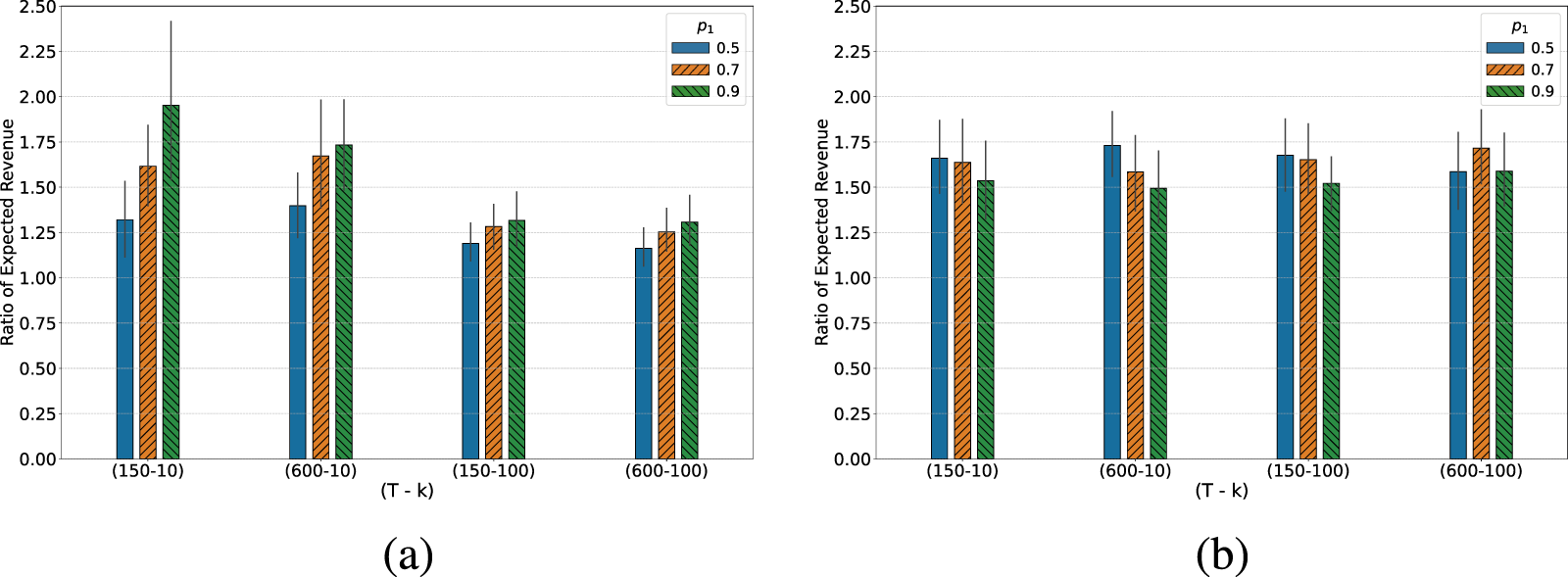
Expected revenue ratios: (a) comparing with mixture-of-multinomial logit (MNL) and (b) comparing with most-popular approach.
In this article, we study an assortment optimization problem under discrete choice models that arises in virtual stores for online video games. For marketing and operations purposes, video game stores include both a Featured section and a JFY section. Customer heterogeneity is characterized by customer segments.
We propose both exact and approximate solution methods. We present an exact MINLP formulation that can find optimal solutions efficiently. Furthermore, we propose an FPTAS and an MILP formulation that return high-quality solutions with arbitrary theoretical performance guarantees. We also design a heuristic algorithm for large instances, for which we also derive a performance guarantee. We conduct numerical experiments on instances that are based on practice. These experiments illustrate that our approaches perform well across various settings.
From a methodological perspective, our work is the first to devise solution algorithms for assortment optimization under the mixture-of-nested-logit model, which is one of the most difficult problem classes arising in assortment optimization. In addition, we evaluate how to allocate space between the Featured and JFY sections to illustrate the impact of a shared Featured section on balancing revenue and customer engagement utility. Finally, we perform simulations using ground-truth instances to show that incorporating nests in the mixture-of-nested-logit model better captures consumer behavior. Crucially, the assortments generated through our proposed solution methods can yield substantial increases in expected revenue. By including nests, we see an average revenue improvement of over 25%. The additional gains average more than 50% compared with our industry partner’s existing practices.
Our work opens up a number of directions for future research. From a methodological perspective, the exact MINLP formulation demonstrates the potential of exact methods for assortment optimization problems. It may be worth further exploring opportunities to improve its efficiency. From an application perspective, a unique feature of online video game stores is that the seller has access to the complete purchase history and inventory information of all customers. This provides numerous opportunities for assortment personalization well beyond the static customer segmentation considered in this article.
Supplemental Material
sj-pdf-1-pao-10.1177_10591478261446056 - Supplemental material for Assortment optimization for online video games
Supplemental material, sj-pdf-1-pao-10.1177_10591478261446056 for Assortment optimization for online video games by Yunlong Wang, Fan You, Thomas Vossen and Rui Zhang in Production and Operations Management
Footnotes
Acknowledgments
The authors thank the Department Editor Dr. Stefanus Jasin, the two anonymous Senior Editors, and the two anonymous reviewers for their constructive comments and suggestions, which greatly improved the article. The authors also thank the industry partner for motivating this research.

Funding
The authors received no financial support for the research, authorship, and/or publication of this article.
Declaration of conflicting interests
The authors declared no potential conflicts of interest with respect to the research, authorship, and/or publication of this article.
How to cite this article
Wang Y, You F, Vossen T and Zhang R (2026) Assortment optimization for online video games. Production and Operations Management x(x): 1–21.
References
Supplementary Material
Please find the following supplemental material available below.
For Open Access articles published under a Creative Commons License, all supplemental material carries the same license as the article it is associated with.
For non-Open Access articles published, all supplemental material carries a non-exclusive license, and permission requests for re-use of supplemental material or any part of supplemental material shall be sent directly to the copyright owner as specified in the copyright notice associated with the article.
