






Abstract
This study examines contests within a multi-tier organization, where the owner offers a prize for subordinate branches to compete, and branch managers subsequently set rewards to motivate their agents. Our main goal is to explore how the owner can steer managerial decisions to better align with her overarching objectives—maximizing agent effort—without undermining managerial autonomy. Drawing on behavioral economics, we propose that the owner can strategically disclose contest-related information to agents to trigger their fairness concerns, prompting managers to voluntarily offer higher rewards and thereby motivating greater effort. Our experimental results largely support this behavioral prediction. Compared to the baseline where agents observe only their own reward, revealing one additional piece of contest information, opponent's reward or managers’ prize, prompts managers to offer larger rewards. However, disclosing both pieces of information does not lead to a further increase in rewards. For agents, receiving a reward higher than their opponent's boosts effort, whereas a perceived unfair reward relative to managers’ prize leads to a significant effort decline. Moreover, when agents know both the prize and the opponent's reward, the vertical fairness concern (tied to the prize) exerts a stronger influence on effort than the horizontal fair concern (based on the opponent's reward).
Keywords
Introduction
Contests are widely used by companies to create competitive excitement, motivate employees, and are considered as one of the effective ways to deal with the principal-agent problem (Murphy and Sohi, 1995; Murphy et al., 2004). Scholars have documented, both in the lab and the field, that contests are effective in improving overall performance (Chen et al., 2011; Lim et al., 2009). While extant research examines the effectiveness of contests in a setting where there is only one layer of principal-agent relationship (e.g., Kalra and Shi, 2001; Lazear and Rosen, 1981), many companies today employ contests in organizational structures that are more complex, involving multiple layers of management.
To illustrate how contests are run in a more complex organizational setting, consider the automotive business. An automotive dealership group typically owns multiple branches or dealerships in different geographic locations. The owner or headquarters of this dealership group oversees the entire organization, while branch managers are in charge of day-to-day operations and supervise sales consultants in each dealership. When the owner initiates a contest, her main tasks include determining the contest rules and the winning prize that branches will compete for.
1
Each branch manager then independently decides on how to motivate and incentivize her sales consultants, often using the
Companies that adopt contests in such complex organizational structures run into problems that are not typically faced in a simpler setting. At its core, contests involving multiple layers of management lead to multiple principal-agent arrangements (i.e., owner-manager and manager-agent) being vertically stacked, introducing new challenges for the contest organizer. As shown in the abovementioned auto dealership group example, branch managers are the principals to their sales consultants in each dealership, but also the agents to the owner of the dealership group. On the one hand, as a link between the owner and the downstream sales consultants, branch managers spend their day-to-day operations with their own agents, putting them in the best position to determine the incentives for these sales consultants. On the other hand, branch managers’ objectives are unlikely to be perfectly aligned with those of the owner. Specifically, while the owner who runs the contest aims to use the prize to induce the highest level of effort from sales consultants (thus preferring the highest possible SPIFFs offered to sales agents by managers), each branch manager's objective function involves an important tradeoff. In particular, while branch managers must offer sufficient incentives to motivate their agents to compete, they also seek to secure adequate payoffs for themselves. This tradeoff may result in SPIFFs that are lower than they otherwise could be. As a result, the owner faces a challenge absent in a simpler principal-agent setting: the incentives allocated for the contest may not be passed on to downstream agents in a way that induces the highest level of effort, leading to potential efficiency losses. 3
Although the owner could, at her discretion, mandate how downstream sales agents are incentivized, it is not the standard practice in the industry for several reasons. Given the complex organizational structure, it would arguably be impossible for the owner to directly incentivize downstream agents across multiple branches effectively in such a contest. 4 More importantly, such an action may be viewed by branch managers, who are more familiar with their agents, as the owner encroaching on their autonomy in running daily operations, ultimately causing managers to become disgruntled. Thus, the core research question of this study is how the owner can steer managerial decisions to better align with her overarching objectives—namely, voluntarily sharing higher incentives with their agents—without undermining managerial autonomy.
In this article, we propose that companies with complex, multi-layered management structures can benefit from incorporating an informational environment, particularly the disclosure of selected contest-related information to downstream agents (beyond that of their own reward), into their contest designs. While the standard economic theory predicts that managers’ decisions on the short-term incentive (“reward” hereafter) for their agents and agents’ equilibrium effort should not be affected by the additional contest-related information possessed by agents, previous research in behavioral economics predicts that fairness concerns could potentially alter the behavior and decisions of branch manager and agents across different informational settings (e.g., Knez and Camerer, 1994; Nowak et al., 2000). We contend that it is particularly relevant to the unique setup of the contests examined in this article. Intuitively, agents are likely to be motivated more and exert higher effort when they are fairly paid. So, when the owner creates an environment where agents can access additional contest-related information, beyond their own reward, to determine whether they are being fairly compensated, their fairness concerns could be activated. Meanwhile, branch managers who can correctly anticipate the effects of fairness concerns on agents’ effort must offer fairer rewards to their agents to stay competitive in the contest. If this is true, the informational environment can serve as an important lever for owners in contest design, allowing them to effectively guide branch managers toward decisions that align more closely with organizational objectives while still preserving managerial autonomy in multi-layered structures.
As the first study examining the role of the informational environment in contests within a multi-tier organization, we focus on two relevant dimensions that are often at the disposal of the owner when designing the contest. The first pertains to the knowledge of the contest prize size. As mentioned, while the announcement about the size of the winning prize by the owner is usually directed at middle managers only, it could also be directed at the downstream workforce. Specifically, beyond merely sparking excitement and enthusiasm, it enables sales agents to establish a concrete benchmark for what constitutes a “fair” reward from their managers (e.g., SPIFF in our automotive example). The second dimension involves facilitating communication among agents across branches, enabling them to learn about the reward offered to their peers. The owner can create such an environment by organizing company-wide gatherings like retreats, conferences, or workshops. While these practices are customarily designed to foster an organizational culture conducive to the mutual exchange of best practices and problem-solving strategies, these can also act as a positive impetus in contests. Specifically, as agents become more informed about the incentives in play—such as how managers in other branches approach competition and make decisions—they could use this information to set an additional benchmark for determining a “fair” reward in the contest.
In this article, we first compare the predictions made by the standard economic model against that of a behavioral economic model that incorporates the effects of fairness concerns into agents’ utility functions. Then, we conduct an incentive-aligned experiment—where participants receive monetary payment based on their performance in the experiment—to test our predictions. Our experimental findings yield several compelling implications, reinforcing the notion that owners can enhance contest effectiveness by strategically modifying the contest-related information possessed by agents. First, when agents possess additional information about the contest (i.e., the size of the winning prize for managers, the reward offered to their opponent, or both), branch managers voluntarily offer a higher level of reward to their agents, compared to the benchmark where agents only know their own reward. Interestingly, managers’ decisions to increase rewards exhibit a non-monotonic relationship with the information disclosed to downstream agents. In particular, when agents are aware of both the winning prize and their competitor's reward, managers do not offer higher rewards compared to scenarios where agents have access to only one of these pieces of information.
Second, for agents, increased rewards do not automatically translate into greater effort. Specifically, agents display higher effort levels when they are either aware of their competitor's reward alone or informed about both the winning prize and their competitor's reward. Conversely, when agents are only informed about the winning prize size as the additional information, their effort does not significantly differ from the scenario where they have no additional contest knowledge, despite rewards are substantially higher in the former case.
To unpack these experimental findings, we conducted additional empirical analysis of agents’ effort, explicitly accounting for managers’ endogenous reward decisions across different informational settings. We find that when agents are unaware of the winning prize but know they are offered a higher reward than their opponent, they choose to substantially increase effort over the best response due to the positive effect stemming from the comparison against their peers (“horizontal” comparison hereafter). On the other hand, in scenarios where agents are aware of the size of the winning prize but are unable to make horizontal comparisons, those who perceive their reward as unfair—notably smaller in proportion to the winning prize—tend to significantly reduce their effort due to the negative effect borne from the comparison against their manager (“vertical” comparisons hereafter). Finally, when agents are informed about both the winning prize and their opponent's reward, their effort decisions suggest that they primarily assess their reward fairness based on the allocation of the winning prize (i.e., the vertical comparisons). Specifically, if agents receive a reward that is considered fair relative to the winning prize, they respond favorably by increasing effort; on the other hand, when they perceive their reward to be unfair from this vertical comparison, they choose to decrease their effort in the contest. Interestingly, this pattern of response holds true irrespective of the outcomes of horizontal comparisons.
1.1 Related literature
Our study intersects with three distinct research streams. First is the literature on the optimal design of contests. Since the seminal studies on tournaments and contests (e.g., Lazear and Rosen, 1981), scholars have studied the design of contests by focusing mainly on two aspects: prize structure and informational environment. Kalra and Shi (2001) investigate the optimal prize structure for sales contests. They find that the Rank-Order format often outperforms the Multiple-Winners format. Notably, risk aversion among agents is shown to influence the optimal design of contest. Lim et al. (2009) empirically compare the Rank-Order format with the One-Winner/Winner-Take-All contests. Through both laboratory and field experiments, they show that contests in the former format indeed performs better than that with a single winner. The other stream of contest design literature focuses on the role of information on agent effort, specifically in the form of feedback. As a recurrent feature in ideation and crowdsourcing contests, the role of feedback in bridging information gaps and enhancing agent effort has been studied by scholars. Jiang and Wang (2020) show that intermediate feedback plays an important role in mitigating information asymmetry between the principal (seeker) and agent (solver), leading to greater effort exerted in contests. While we also look at the design of contests, our focus centers on exploring contests within a more complex multi-tier organization, which inherently differs from a typical single-layer principal-agent arrangement. Specifically, we focus on the scenario where rewards offered to downstream agents are not directly decided by the owner but rather endogenously and separately by the manager of each individual branch, who is at the middle level of the organization. Therefore, when examining the impact of the informational environment on contest efficacy, it is important to take the behavior of both the branch manager and agent into account. In fact, we argue that the owner crafting an appropriate informational environment can drive managerial behavior that better aligns with the objective of the contest. This structural novelty sets our study apart and presents distinct managerial implications for owners and managers to conduct contests for their workforce in a multi-tier organization.
This article also relates to research that incorporates behavioral factors into the design of contests. Lim (2010) empirically demonstrates that if social comparison is present, a larger proportion of winners can yield greater effort. This is because there is a greater psychological distaste for being perceived as a loser when the chance of winning is high. Chen et al. (2011) study three-person tournaments consisting of heterogeneous contestants with contest outcomes publicly announced. They find that a public announcement of the contest outcome leads to an oversupply of effort level compared to the standard theory prediction. This result is consistent with the prediction based on a model that incorporates social comparison, where the favorites are assumed to suffer psychological disutility from losing while underdogs derive joy from winning in the contest. In a recent article, using lab experiments, Hossain et al. (2019) show that some amount of public disclosure on contest outcomes, compared to no disclosure, generally leads to increased effort. Like the abovementioned studies, our paper also looks into the impact of behavioral factors on effort provision in contests. In particular, we investigate how agents’ vertical and horizontal fairness concerns shape their effort levels when competing against peers from other branches. Crucially, our study extends this inquiry by analyzing the indirect influence of these concerns on branch managers’ reward allocation decisions. To the best of our knowledge, no prior research has explored how informational environments can be strategically integrated into contest design to simultaneously motivate middle managers and downstream agents within complex organizational structures.
The third and the last stream of literature this article is related to is the research on fairness concern. First, the effects of fairness on decisions have been studied extensively in the context of the ultimatum game. Empirical evidence has demonstrated that responders often deviate from the normative prediction and rely on what they consider as “fair” or “justified” when making decisions on accepting or rejecting proposer's offer (Knez and Camerer, 1994; Nowak et al., 2000). Next, the effect of fairness concerns that arises from social comparison has also been studied in economic settings (e.g., Knez and Camerer, 1994; Ho and Su, 2009). Recently, the investigation of fairness concerns has been extended into business domains, including the pricing (e.g., Li and Jain, 2016) and the supply chain management (e.g., Cui et al., 2009) contexts. Our study bears resemblance to the aforementioned research in that the dynamic between manager and agent within each branch mirrors the ultimatum game setup. However, agents’ effort decisions are continuous instead of being discrete (i.e., accept or decline). Moreover, to reflect the essence of the contest, the outcome of the game is stochastic (as opposed to deterministic). In terms of game setup, our study presents three distinguishing features. First, instead of having one leader with two followers, there are two leaders (i.e., branch managers) in our game, and each is paired with only one follower (i.e., agent). Second, the two agents make effort decisions simultaneously in our game instead of sequentially. Therefore, they share symmetric information before making effort decisions, which is different from previous studies where the second agent possesses more information than the first one. Lastly, the strategic interaction across branches presented in the contest is also absent in previous studies, as they mainly focused on the dynamics within the same business unit.
Theory
We begin the theoretical analysis with the standard economic model where agents are assumed to be purely motivated by monetary incentives. This standard model will serve as the basis for our later discussion on how the potential psychological drivers of agents’ behavior could affect managers’ optimal reward decisions in the contest and consequently the effort exerted by agents to compete against each other across different informational settings with different contest-related information disclosed to agents.
Standard economic model
Setup of the contest
Consider a contest organized by the owner or headquarters of a company with

Sequence of moves in the contest.
Once an agent is informed of the reward decision by her manager, she will determine the effort level exerted in the contest. Agents are assumed to have an identical individual production function. When agent
In this contest, the objective of the owner is to elicit a high level of effort from downstream agents, which entails branch managers offering large rewards to their own agents. For branch managers, however, they must carefully make tradeoffs to maximize their own payoffs. Specifically, by promising a larger reward to their agent, managers could expect a higher level of effort, which would lead to a greater chance of achieving a larger output than the competing branch. However, it also means that they must pay their agent more if their agent indeed outperforms the opponent and wins the contest, leaving managers with lower payoffs. For agents, they face another type of tradeoff when making their effort decision: a higher level of effort means a greater chance of producing a larger output than the competing agent, signifying a higher probability of securing the reward promised by their manager; but a higher level of effort also incurs a higher cost, which must be subtracted from their payment regardless of the outcome of the contest. Thus, there exist two pairs of vertically arranged principal-agent relationships in this contest (i.e., owner-manager and manager-agent), which is absent in a typical contest examined by previous research.
To solve for the optimal level of reward offered by branch managers and equilibrium effort from agents, we begin with the analysis of agents’ best response given managers’ reward decisions.
We assume that the two agents are risk neutral and have homogeneous utility functions that are separable in the reward received and the cost of effort exerted. According to the setup of the contest, agent i's expected utility is given by the following equation:

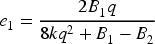
Similarly, Agent 2's best response is
Note that the best response of agents implies that their effort decisions are
In this contest, both branch managers are facing the same decision problem: maximizing the expected payoff by choosing an optimal level of reward for their agent. For the manager of branch i, her expected payment πi is

The optimal level of reward for manager i is the solution to the following first-order condition:

Given these symmetric reward decisions by both managers, from agents’ best response (equation (2)), we find that both agents will exert the symmetric equilibrium effort at
7
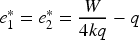
Note that in the best response equation of agents (equation (2)), the opposing agent's reward amount enters the function. While this information is not available to agents, it is reasonable to assume that they hold the belief that both branch managers, who are symmetric in this contest, should choose a symmetric level of reward, that is,
The theoretical analysis above produces the following benchmark prediction on managers’ optimal reward decisions and agents’ equilibrium effort in this contest.
When agents are solely motivated by monetary incentives, the behavior of branch managers and agents are independent of the informational environment of the contest created by the owner. Specifically, branch managers’ optimal reward decisions remain invariant to agents’ awareness of the winning prize or their opponent's reward. Consequently, agents’ equilibrium effort is also unaffected by their knowledge about the winning prize or their opponent's reward.
The core intuition behind Proposition 1 is that when agents choose effort to maximize their pecuniary payoffs from the contest, their calculations rely solely on directly relevant information—namely, the rewards set by their branch manager. As a result, the winning prize offered by the owner to branch managers affects agent effort only indirectly, through its impact on managers’ reward decisions. Moreover, since all branches are symmetric, agents can reasonably infer that their opponent receives the same reward when such information is absent and base their effort decisions on this belief. Branch managers’ optimal reward decisions thus remain unaffected by the additional contest information agents possess, and agents’ equilibrium effort levels are likewise unaffected by the additional information revealed to them.
Standard economic theory makes a clear and sharp prediction: when agents are motivated solely by pecuniary incentives, the owner cannot elicit larger rewards from branch managers nor motivate higher effort from agents by revealing additional contest-related information to agents. However, research in behavioral economics has shown that, besides pecuniary motivations, agents could also be affected by social preferences when certain information is made available to them (Ho and Su, 2009; Knez and Camerer, 1994).
Considering the structure and features of the contest examined in this paper, we argue that agents’ effort decisions depend not only on the magnitude of the reward offered by their manager but also on their perception of its fairness (Roth et al., 1991). Specifically, when agents perceive their rewards as fair, they are more willing to exert greater effort despite the higher cost, as they view contributing to their branch's success as a fair exchange with their manager. Conversely, when rewards are perceived as unfair, agents would reduce effort, believing it inequitable to work hard while being undercompensated. For branch managers, correctly anticipating these fairness-driven responses allows them to adjust rewards voluntarily and proactively, thereby sustaining competitiveness in the contest.
Formulation of the benchmark
Following the studies on fairness concerns (e.g., Cui et al., 2009; Cui and Mallucci, 2012), we propose that agents assess the fairness of their reward
The central feature of our approach to capture fairness concerns lies in the formulation of the benchmark
Modified agent utility function
Building on existing behavioral economics models that incorporate the effects of social preferences (Bolton and Ockenfels, 2000; Charness and Rabin, 2002), we modify the utility function of an agent by accounting for the effect of fairness considerations into equation (1). Specifically, we let


Based on the owner's decision about information disclosure, there are a total of four possible informational settings. We define and label each of them with two letters. The first letter represents whether the size of the winning prize offered to their managers is made known to agents, where “
NN setting
We begin our discussion with the NN setting, which serves as the baseline when we compare the effects of agents’ fairness concerns across different information settings. In the absence of information regarding the winning prize W and opponent's reward
That intuition behind the predictions of the NN setting is: when additional contest information is withheld, agents cannot establish the benchmark
NO setting
When agents are informed of the reward offered to their opponent agent, they gain necessary insight to draw comparisons across branches with


Plugging these two specifications into equation (6) for both agents, respectively, we have the best response for each agent as
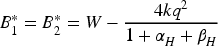
Branch managers would then choose their reward at
Since

Note that the increase in managers’ reward decisions leads to higher effort from agents, which better serves the objectives of the owner. However, it also implies that the expected payoffs for managers from the contest decrease since they have to share more of the prize with their agents.
When agents observe the value of the winning prize rather than their opponent's reward,
(a) When

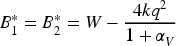
Following a procedure similar to that in the NO setting, we have the best response for each agent as

(b) When

Under this condition, managers’ primary objective is to adjust rewards in order to mitigate the negative impact of vertical fairness concerns on agents’ effort. Specifically, anticipating the best response of each agent
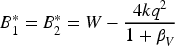
which is again higher than in the NN setting. This optimal reward implies that when

(c) When
In contrast, when
Thus, like in the NO setting, agents possessing additional information of the contest in the WN setting (i.e., the size of the winning prize) results in branch managers sharing more of the potential winning prize, and as a result, agents respond with larger effort, compared to the NN setting. This means that despite the branch managers incurring lower expected payoffs, the owner should expect a more favorable outcome when the information of winning prize is disclosed to agents.
In this informational setting, agents have complete information about the contest before making effort decisions, which means that they possess sufficient information to make comparisons horizontally and vertically. As a result, the specification of
(a) When


In the above specifications,
In this case, Agent 1's best response function is


Based on these best responses, we can solve the optimal reward decision for both branch managers as follows:

This optimal reward implies that when

(b) When


We first solve for agents’ best response as



Comparing this reward decision with

(c) Similar to the WN setting, for the case that
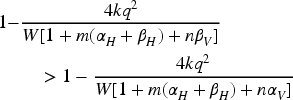
Therefore, there exists an intermediate level of
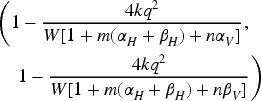
Within this range, managers’ optimal reward becomes
In contrast, when
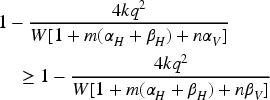
Thus, no distinct intermediate region arises. In this case, managers’ optimal reward follows the characterizations established above in (a) and (b). Specifically, for
Since the psychological utility parameters and the weights of utility arising from the vertical and horizontal fairness concerns are all assumed to be non-negative, the optimal reward and equilibrium effort in the WO setting are also higher than that in the NN environment. Similar to the NO and WN settings, the owner will benefit from agents knowing more about the contest at the expense of lowered expected payoffs of managers.
Table 1 summarizes the theoretical analyses derived from our behavioral model. These results offer an alternative prediction to Proposition 1.
Summary of behavioral predictions.
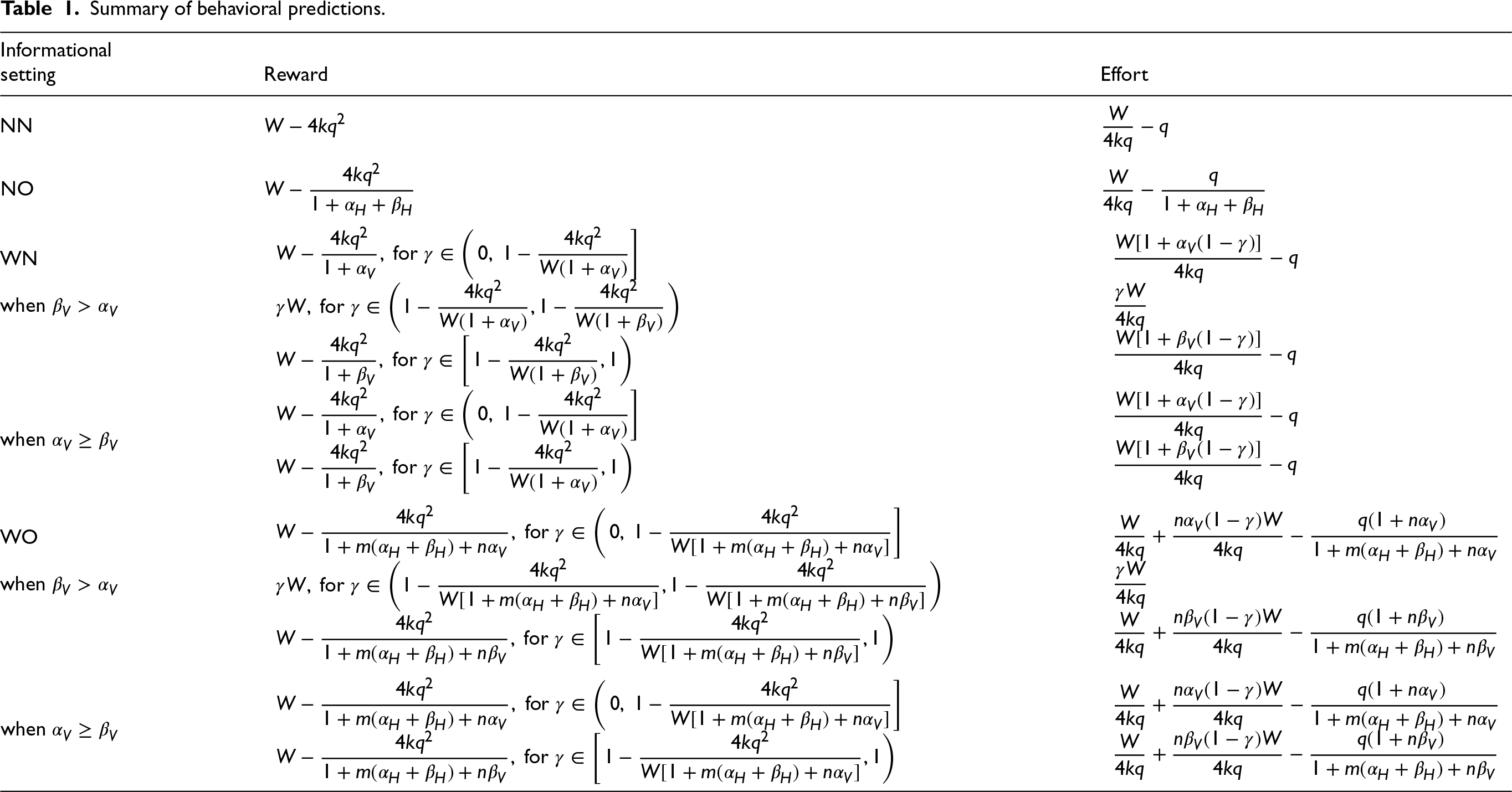
The key intuition behind this behavioral prediction is as follows. When agents who value both the size and fairness of their reward receive additional contest information, branch managers would voluntarily raise the rewards in order to keep their branch competitive in the contest.
13
Higher rewards, in turn, elicit greater effort from agents. This interaction between agents’ fairness concerns and managers’ reward choices provides the owner with the actionable insights and guidance for designing the optimal informational structure that better aligns managerial decisions with her overarching objective, maximizing organizational performance. For example, when
Experimental design and procedure
Experimental design
The primary goal of our experimental study is to delve into the influence of the informational environment, as shaped by the owner, on the decision-making processes of branch managers and the effort responses of agents. To achieve this, we exogenously varied the informational settings (i.e., contest-related information disclosed to agents) that are up to the owner to alter. We then focus on the interactions within dyads—comprising branch managers and agents—given the chosen informational environment by the owner. This approach enables clear observation and measurement of which informational setting would best serve the objective of the owner.
We implemented a 2 × 2 between-subject design in the laboratory by varying the additional information agents are aware of before they make effort decisions. As shown in Table 2, consistent with our theoretical analysis, there were a total of four treatments: NN, NO, WN, and WO. Each treatment consisted of four experimental sessions, and the duration of each session was around one and a half hours. We recruited a total of 256 participants from a large public research university in the United States. Each participant partook in only one of the four treatments. The experiment was implemented using the z-tree program (Fischbacher, 2007). Besides partial course credit, each participant received a sign-up bonus and earned cash payments based on their decisions in the lab experiment (on average, $18 in total).
Summary of experimental treatments.

Summary of experimental treatments.
•: Yes ○: No
The parameter values chosen for the lab experiment are q = 30, k = .008, and W = 65 or 85. 14 Based on these parameters, the standard economic theory predicts that both managers would choose B = 36.2 for their agents when W = 65, and B = 56.2 when W = 85. Correspondingly, agents’ equilibrium effort would be 37.7 and 58.5, respectively.
The experimental procedure closely follows the sequence of moves presented in Figure 1. To clearly explain the experimental procedure across different treatments, we describe the NN treatment in detail first and then contrast the other three treatments against it.
Role assignment and formation of group and contest: In each session, half of the participants were randomly and anonymously designated as Type 1 players (i.e., Branch Managers) while the rest were assigned as Type 2 players (i.e., Agents) throughout the entire session. Each round, one Type 1 player would be randomly and anonymously paired with one Type 2 player to form a Group. Managers choosing the reward for their own agent: In each decision round, the program would first randomly determine the value of W (either 65 or 85 points) for the contest and then reveal it to two managers. Managers then choose the reward for their own agent (i.e., B) in points. Before managers made their decisions on B, they were reminded that agents would not receive any additional information of the contest. Agents making effort decisions: Once agents received the information on B, they were asked to choose a Decision Number between 0 and 100 to represent their effort (ei), which carried a corresponding decision cost (0.008ei2) that would be subtracted from the earnings. Then, the program randomly generated a Random Number (εi) from the range of [–30, 30] (recall that q = 30) for each agent and calculated their Final Number (yi) by adding up the decision number and the random number. Revealing the results to participants: At the end of each round, the program first compared the final numbers of the two groups in the same contest and determined the winning team. Then, managers and agents were informed if their group won or lost the contest, as well as the amount of payment they received from that round.
Experimental results
Managers offer higher average rewards when agents possess additional information
We begin the analysis with branch managers’ reward decisions. The left panel of Table 3 presents the average reward (B) offered by branch managers to their agent in each treatment, while Figure EC-1 (in the E-Companion) visually shows the average reward in each of the 12 decision rounds for W = 65 and W = 85. For both levels of W, consistent with the prediction of our behavioral model, the average rewards in the NN treatment are consistently lower than that in the other three treatments, where agents have the knowledge of additional contest information. 15 In fact, the largest average reward appears in the WN treatment, where agents are aware of only the winning prize offered to branch managers, followed by the NO and WO treatments. This is persistent across most of the 12 decision rounds.
Summary of reward and effort decisions.
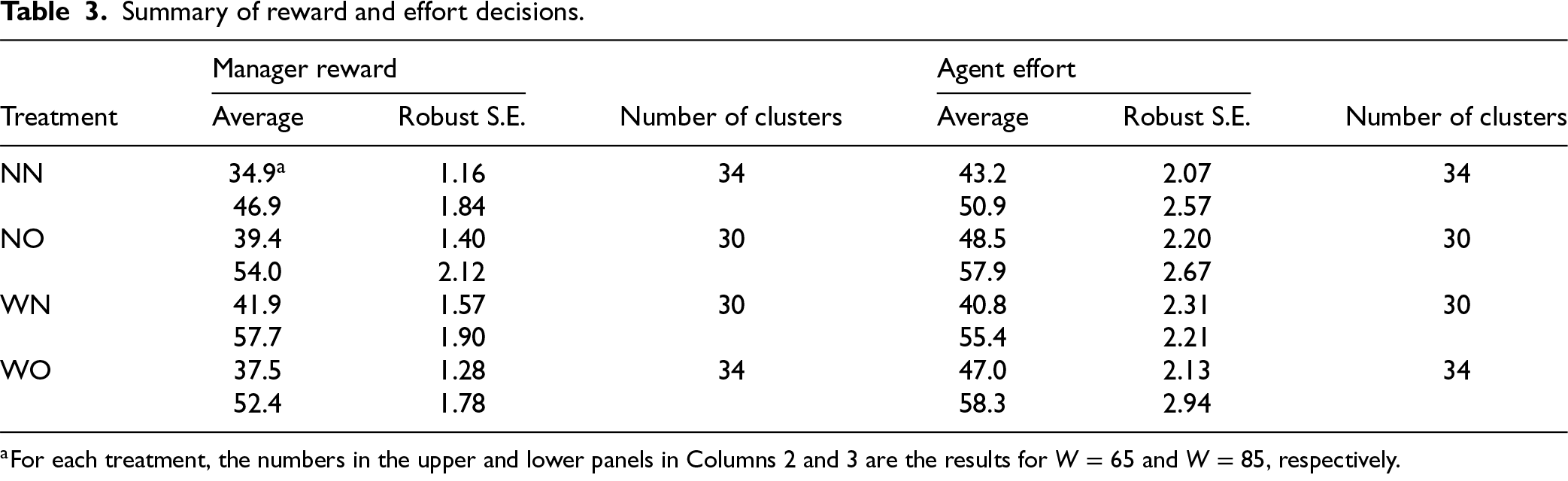
Summary of reward and effort decisions.
For each treatment, the numbers in the upper and lower panels in Columns 2 and 3 are the results for W = 65 and W = 85, respectively.
To gain more insights on how branch managers’ behavior systematically differed across different treatments, we take the entire managers’ reward decisions and run a regression on the presence of different additional contest information made available to agents, controlling for the two levels of the winning prizes (65 and 85). From the left panel of Table 4, we observe that branch managers on average offer a larger reward when agents are aware of more information. Specifically, the coefficients on indicator variables “W revealed to agents” and “B revealed to competing agent” (8.7 and 5.6, respectively) are both significantly greater than zero. These increases in reward suggest that managers anticipate agents will be influenced by the perceived fairness of reward when making effort decisions. Consistent with our behavioral predictions on rewards in Table 1, the adjustments managers made in response to the change in informational setting indicate that they believe both
Regression of reward and effort decisions on informational settings.
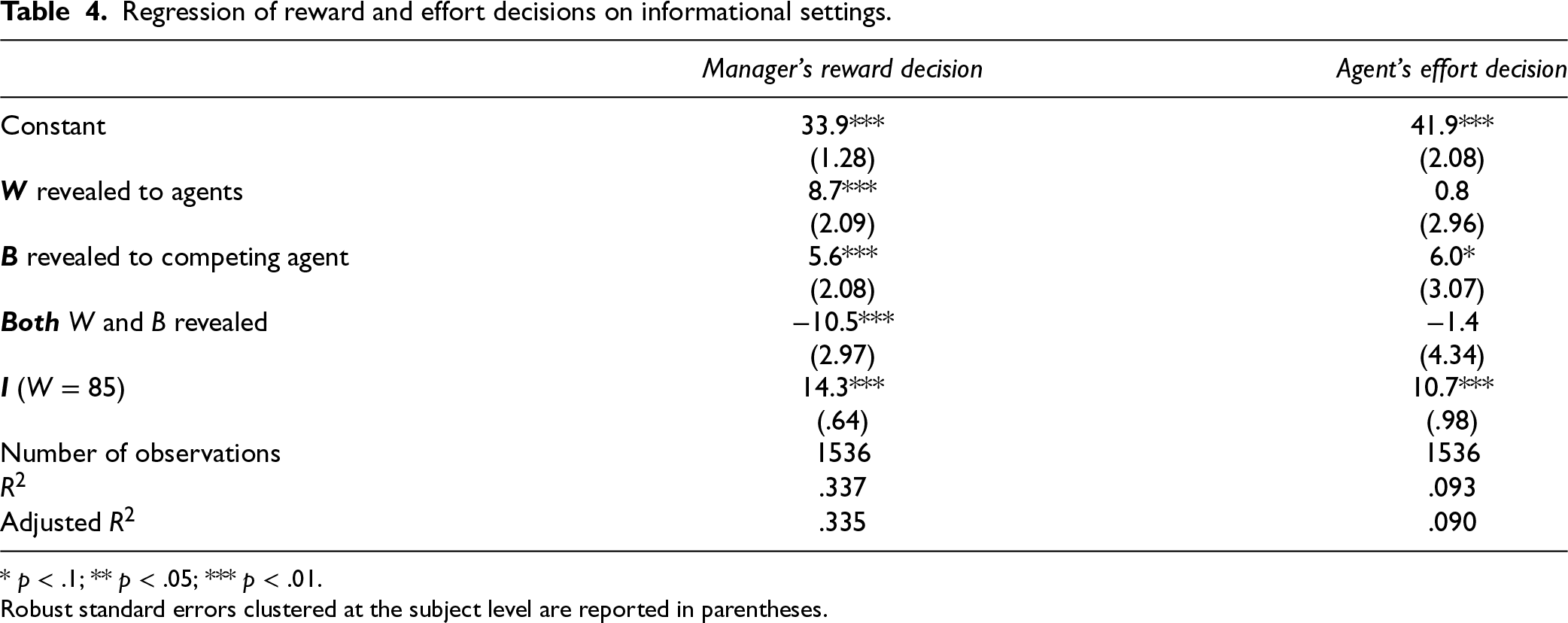
* p < .1; ** p < .05; *** p < .01.
Robust standard errors clustered at the subject level are reported in parentheses.
It is noteworthy that branch managers’ reward decision is
The average effort (
We first notice that the coefficient for the variable “W revealed to agents” (0.8) does not significantly differ from zero, consistent with what we observed in Figure EC-2. We will revisit this observation later. Next, the coefficient for “B revealed to competing agent” (6.0) is significantly positive at the 10% level. This indicates that when agents are aware of their competing agent's reward—in scenarios where we’ve seen managers choose rewards averaging 5.6 points higher—there is an increase in average effort in the NO treatment compared to the NN treatment. Lastly, the coefficient for “Both W and B revealed” (–1.4) displays a negative direction but lacks statistical significance. However, the Wald test, comparing the WO treatment with the NN treatment, suggests a higher average effort in the former. 18 This implies that when agents possess both pieces of information, there is a discernible increase in effort compared to an environment devoid of such information.
In summary, the contest-related information disclosed to agents plays a critical role in shaping contest outcomes. We find that average effort is higher in the NO and WO treatments than in the NN setting, consistent with our behavioral predictions. However, a puzzling pattern arises in the WN treatment: despite substantially higher average rewards, agents’ effort does not significantly differ from that in the NN condition. From the owner's perspective, only disclosing the size of the winning prize prompts managers to allocate larger rewards, but this does not necessarily translate into greater agent effort. Instead, our findings indicate that revealing the opponent's reward—either alone or alongside the winning prize—proves more effective in boosting average agent effort than disclosing the winning prize in isolation.
Fairness concerns affect individual agents in an asymmetric way
While the above analysis is informative, examining aggregate agent effort alone may not fully capture the impacts of fairness concerns. In the contest, agents choose effort only after their manager sets the reward. Their effort is therefore shaped mainly by two distinct forces: (a) the monetary incentive generated by the specific reward they received (which may vary across agents even within the same treatment), and (b) the informational environment that moderates the influence of fairness concerns on effort provision. As a result, a simple cross-treatment comparison of raw effort levels (as presented in Table 4, Column 2) would confound monetary incentives with fairness concerns, making it difficult to isolate the effects of latter. 19
To address this issue, we refine our approach in three ways. First, we distinguish between agents’ theoretical best response and their observed effort by calculating the former from the standard economic model and subtracting it from the latter, yielding the “Deviation from the Best Response” (DBR), which captures the non-monetary influences. Second, since agents perceive fairness before choosing effort, we classify rewards as “fair” or “unfair” in each treatment, allowing more precise inference about the utility parameters,
By answering this question, we aim to explore the possibility that the horizontal fairness concern (
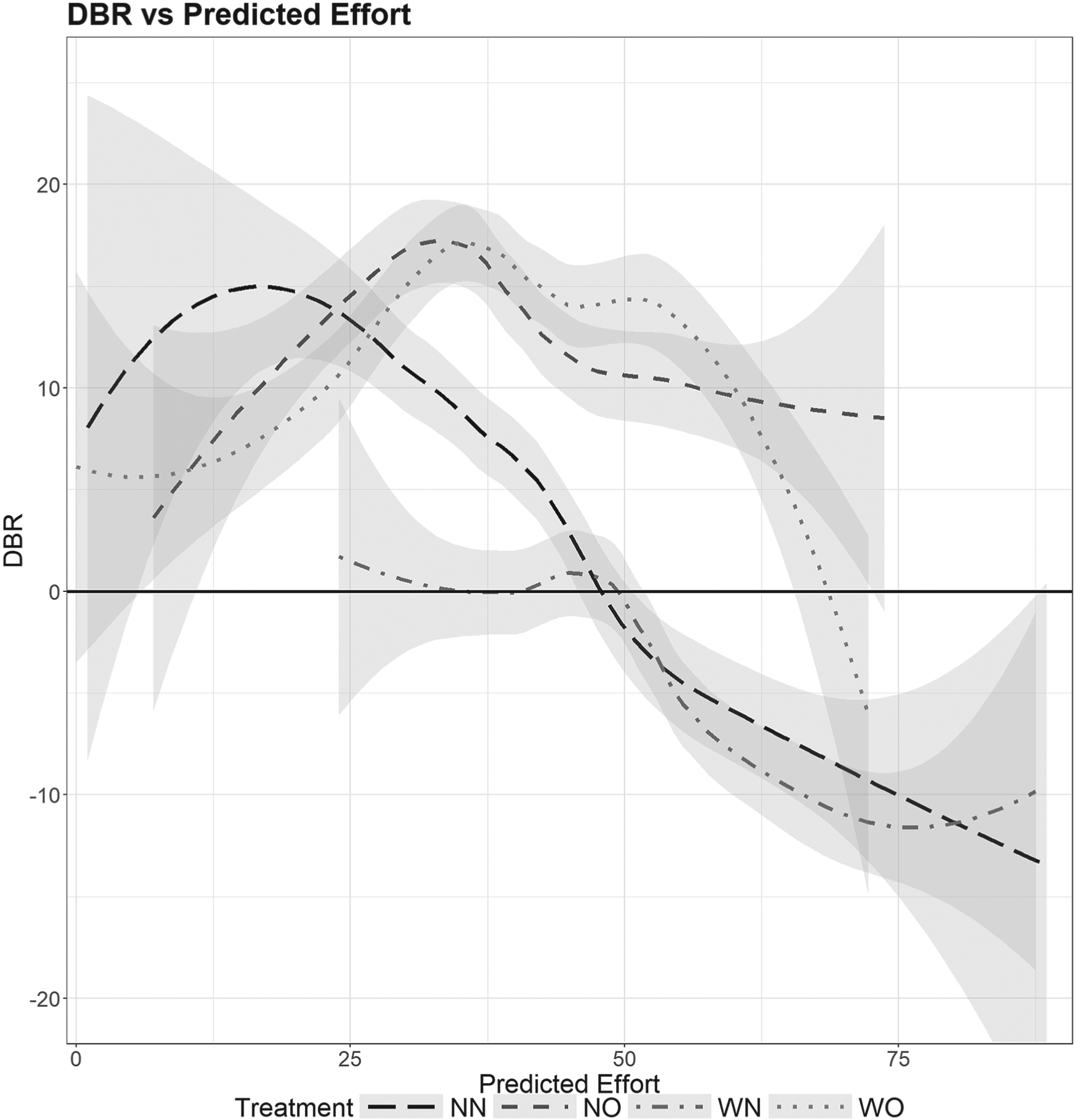
Deviation from the Best Response (DBR) against the best response.
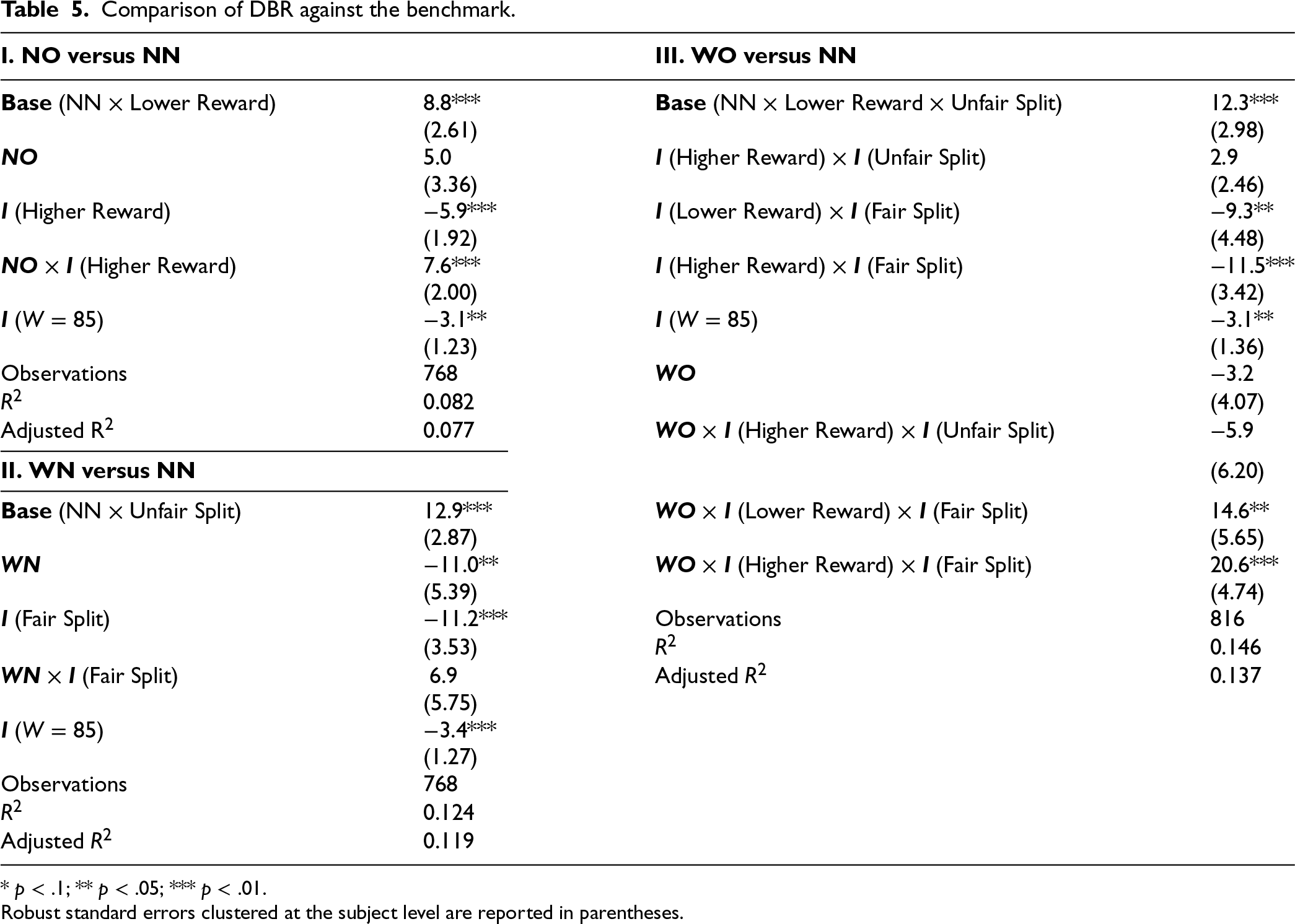
Comparison of DBR against the benchmark.
* p < .1; ** p < .05; *** p < .01.
Robust standard errors clustered at the subject level are reported in parentheses.
First, we inspect the behavior of agents who received a lower reward than their competitors. The regression results show that, in the NN treatment, agents who receive a lower reward than their opponent exert greater effort than the predicted best response by 8.8 (t = 3.40, p = .001). At the same time, the coefficient on the indicator variable NO is 5.0 (t = 1.47, p = .140), indicating that agents in the NO treatment display a similar pattern of deviation from the best response. This suggests that
Next, for agents who received a higher reward than their competitor in the NN condition, as indicated by the coefficient on I(Higher Reward), their DBR is significantly lower than the baseline (NN × Lower Reward) by 5.9 (t = −2.95, p = .004). This result is consistent with the downward-sloping trend observed in Figure 2. More importantly, the average DBR for their counterparts in the NO treatment is significantly larger (Wald test: 5.0 + 7.6 vs. 0, χ2 = 13.99, p = .000). This suggests that when agents are clearly aware that their reward is higher than their opponent's, they exert effort greater than the best response to a greater extent than those who are not aware of it. Thus, our findings indicate that
Recall that in the WN treatment, agents are informed about the winning prize offered by the owner to branch managers, so if any fairness concerns were to be activated, it would involve the vertical fairness concerns (i.e.,
We first examine agents who received an unfair split of the winning prize by inspecting the first two coefficients. Notice that agents in the NN treatment who receive an unfair split exert significantly higher effort than the best response by 12.9 (t = 4.49, p = .000). By contrast, the average DBR for their counterparts in the WN treatment is 11.0 lower (t = −2.04, p = .042). This pattern indicates that when agents are able to vertically compare their reward against the winning prize, awareness of receiving an unfair split (i.e., lower than 50% of the winning prize) has a clear negative impact on effort compared to those who are not aware of this unfairness. This finding suggests that
Next, when inspecting agents who receive a fair split of the winning prize, we find that the average DBR in the WN treatment does not differ significantly from that in the NN treatment (Wald test: −11.0 + 6.9 vs. 0, χ2 = 1.26, p = .262). This suggests that when agents in the WN treatment know precisely how much they and their manager could potentially earn and the division of the winning prize is perceived as “fair,” their effort deviation from the best response is similar to that of agents in the NN treatment. Accordingly,
In summary, our findings reveal that the perceived unfair split stemming from vertical comparisons may have prevented agents in the WN treatment from exerting sufficient effort. Meanwhile, we do not find evidence of the activation of a positive effect derived from vertical fairness concerns. This not only explains why the overall average agent effort remains close between the WN and NN treatments but also accounts for the lower average DBR in the WN treatment compared to the benchmark NN treatment. The visual evidence presented in Figure EC-3B provides support for this finding.
In contrast to the NO and WN treatments, the WO treatment is anticipated to activate both types of fairness concerns. To this end, we estimate a three-way interaction regression (as shown in the right panel of Table 5), using NN × Lower Reward × Unfair Split as the baseline.
The regression results show that when agents in the WO treatment learn that their reward is < 50% of the winning prize (i.e., an unfair split), those who get a reward lower than their competitor behave in a similar pattern to agents in the NN treatment (–3.2 vs. 0, t = –.80, p = .427). Moreover, for agents who receive a higher reward than their competitors, the difference in the average DBR between the WO and NN treatments remains statistically non-significant (Wald test: – 3.2–5.9 vs. 2.9, χ2 = 2.35, p = .125).
Summary of key findings and inferences of behavioral parameters.
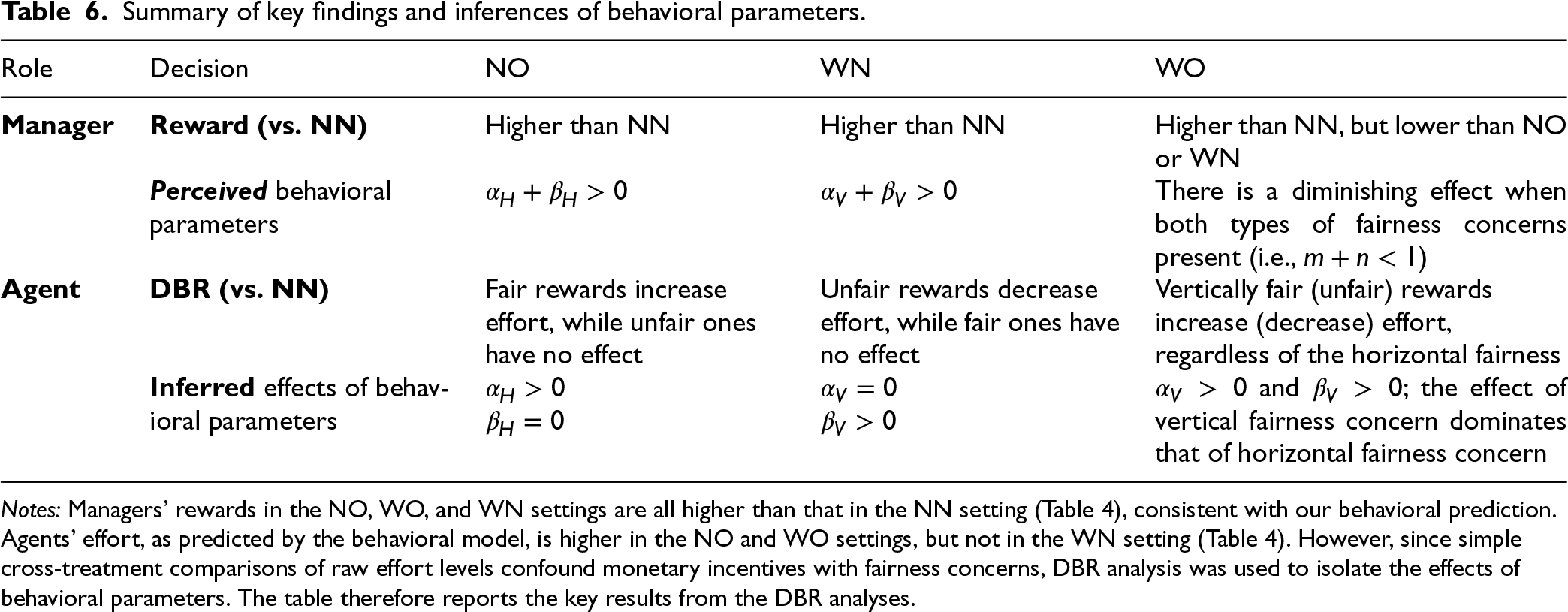
Notes: Managers’ rewards in the NO, WO, and WN settings are all higher than that in the NN setting (Table 4), consistent with our behavioral prediction. Agents’ effort, as predicted by the behavioral model, is higher in the NO and WO settings, but not in the WN setting (Table 4). However, since simple cross-treatment comparisons of raw effort levels confound monetary incentives with fairness concerns, DBR analysis was used to isolate the effects of behavioral parameters. The table therefore reports the key results from the DBR analyses.
In contrast, when agents receive a fair split of the winning prize from their manager, but the reward is lower than their competitor's, those in the WO treatment exhibit a significantly larger increase in effort from the best response relative to their counterparts in the NN treatment (Wald test: – 3.2 + 14.6 vs. – 9.3, χ2 = 6.37, p = .012). The difference in the average DBR becomes even more pronounced for agents whose reward exceeds that of their competitor (Wald test: – 3.2 + 20.6 vs. – 11.5, χ2 = 26.99, p = .000). These findings indicate that agents in the WO treatments demonstrate much larger
Taken together, while both winning prize size and opponents’ reward affect agents’ effort, fairness in splitting the prize with managers dominates horizontal fairness concerns. 25 Average effort is higher in the WO treatment than the NN treatment, largely because agents receiving more than 50% of the prize (representing 74% of cases) exert extra effort (over the best response). This large effort effectively offsets the lower effort from the rest of the agents facing unfair splits. Figure EC-3C clearly demonstrates this conclusion with the top two graphs displaying the most frequently occurring observations (i.e., the fair split) with the divergence in behavioral pattern between the NN and WO treatments. 26
Overall, our analysis of DBR offers deeper insights into how behavioral parameters shape agents’ effort across informational settings. Coupled with our findings on managers’ perceptions of these behavior parameters (Section 3.2.1), these results yield valuable findings, which are summarized in Table 6. 27
So far, we have treated the disclosure of the winning prize as a decision variable of the owner, making it exogenous to branch managers. In this section, we ask the following question: If the disclosure decision were delegated to branch managers, how would they exercise this discretion, 28 and in turn, how would it shape their prize-sharing decisions with agents? To answer this question, we run an additional treatment that is identical to the WN treatment, except that branch managers, rather than the owner, decide whether to disclose the value of the winning prize. Note that in this new treatment, agents do not know that the disclosure decision is made by their manager. We adopted this design to prevent managers from signaling through disclosure of the winning prize, thereby avoiding any non-monetary influence on agents’ effort decisions beyond the intended fairness concerns. Furthermore, the reward of the competing branch remains unknown to both the manager and agent in this extension.
A total of 48 subjects participated in three experimental sessions under this treatment. Across the twelve decision rounds, branch managers predominantly chose not to reveal the winning prize to their agent (68% when W = 65 and 70% when W = 85). 29 Importantly, disclosure of the winning prize is associated with higher rewards: when managers reveal the prize, the average reward is 42.7 for W = 65 and 58.6 for W = 85, compared to 33.1 (t = 9.19, p =.000) and 44.2 (t = 8.95, p = .000) when the prize is not disclosed. Finally, we conduct a regression analysis of DBR, paralleling the comparison of the WN and NN settings in our main experiment. As reported in Table EC-2, if branch managers disclose the value of W, DBR is on average 15.4 points lower (t = −9.21, p = .000) when agents receive an unfair reward; by contrast, agents respond with a significantly higher DBR of 4.9 (χ2 = 15.47, p = .001) when a fair reward is offered.
Overall, these findings are consistent with the earlier WN–NN comparison: the non-disclosure scenario aligns with the NN setting, whereas the disclosure scenario mirrors the WN setting. Therefore, while the NN and WN treatments from the main experiment effectively capture the behavioral patterns that arise when the disclosure of the winning prize is endogenously determined by branch managers, this new experiment serves as a valuable robustness check.
Conclusion and implications
This research advances contest design literature by addressing an important managerial question: In multi-tiered organizations, can owners elicit greater effort by strategically managing agents’ access to contest-related information beyond their own reward? Our empirical findings offer several actionable implications for owners seeking to design effective contests within multi-tiered organizations. First, strategically disclosing selected information to activate agents’ fairness concerns can yield tangible benefits. Our experimental results demonstrate that such activation can prompt managers to voluntarily increase rewards, which in turn may encourage agents to exert greater effort. Second, when deciding which contest information to reveal, owners should prioritize disclosing information about opponents’ reward (activating horizontal fairness concerns, as in the NO condition). This capitalizes on the positive motivational effect of perceived fair rewards on agents’ effort decisions, while the perception of unfairness in this setting exhibits minimum negative effects. Accordingly, establishing formal or informal mechanisms for agents to access information about their peers’ rewards prior to exerting effort is advisable. Third, owners should, where possible, avoid revealing the prize amount
In conclusion, by thoughtfully leveraging informational strategies grounded in fairness dynamics, owners of multi-tiered organizations can design contests that align managerial decisions more effectively with overarching organizational objectives and performance outcomes.
Supplemental Material
sj-pdf-1-pao-10.1177_10591478261460125 - Supplemental material for Contest design for a multi-tier organization: Leveraging informational environment to motivate downstream agents
Supplemental material, sj-pdf-1-pao-10.1177_10591478261460125 for Contest design for a multi-tier organization: Leveraging informational environment to motivate downstream agents by Hua Chen and Kevin Chung in Production and Operations Management
Footnotes

Funding
The authors received no financial support for the research, authorship, and/or publication of this article.
Declaration of conflicting interests
The authors declared no potential conflicts of interest with respect to the research, authorship, and/or publication of this article.
Notes
How to cite this article
Chen H and Chung K (2026) Contest design for a multi-tier organization: Leveraging informational environment to motivate downstream agents. Production and Operations Management x(x): 1–20.