






Abstract
This study examines manufacturers’ (i.e., brand-name firms’) incentives to adopt blockchain technology-supported (BTS) platforms in markets where deceptive and non-deceptive counterfeits coexist. It is among the first to analyze the adoption of BTS platforms in the context of a complex counterfeit market. First, the study integrates consumers’ perceived risk concerning product authenticity (CPRPA) into a signaling game model to examine the impacts of quality information asymmetry on market dynamics. The findings reveal that even though heightened CPRPA incentivizes deceptive counterfeiters to engage in non-deceptive sales (disclosing the true quality of their products), quality information asymmetry still exerts adverse impacts on both manufacturers and consumers, while simultaneously benefiting all counterfeiters. Second, the study evaluates manufacturers’ optimal strategies for adopting BTS platforms and the value derived from such adoption. The results suggest that CPRPA exerts a non-monotonic impact on manufacturers’ optimal decisions to adopt BTS platforms, and manufacturers may never benefit from such adoption in the presence of deceptive sales. Although higher adoption costs diminish the effectiveness of BTS platforms, such adoption can reduce illegal profits and improve consumer surplus. However, the adoption of BTS platforms may inadvertently increase demand for deceptive counterfeits. Consequently, BTS platforms are found to exert a more marked effect in combating non-deceptive counterfeits than deceptive ones. Additionally, BTS platform adoption contributes more to improving consumer surplus than to combating counterfeits.
Keywords
Introduction
Under weak intellectual property rights (IPR) protection and accelerating economic globalization, the counterfeit trade has flourished, inflicting considerable losses on the global economy (Zhao, 2006). The Organization for Economic Co-operation and Development (OECD) reported that counterfeit trade accounted for 2.5% of global trade in 2013, rising to 3.3% by 2016, and that global economic losses caused by counterfeiting were estimated to be as high as $1.82 trillion in 2020. 1 Counterfeiting now infiltrates nearly all industries. In the wine industry, fake versions of brands like DOC Bolgheri Sassicaia are produced for high profits. 2 Similarly, counterfeit golf equipment bearing brand names such as Titleist and PXG is rampant, 3 as are the counterfeit Nike and Fendi in the fashion industry. 4
Counterfeits are broadly divided into two categories: non-deceptive and deceptive counterfeits (Grossman and Shapiro, 1988). Non-deceptive counterfeits are visibly distinct from authentic products in appearance, allowing consumers to identify them before making a purchase. In contrast, deceptive counterfeits are meticulously crafted to replicate the look, packaging, logos, and even minute details of authentic products, making them indistinguishable from the authentic ones. Take the Cartier Love ring as an example (as illustrated in Figure 1), non-deceptive fake rings differ significantly in color from authentic rings, while deceptive fake rings are indistinguishable from authentic rings in appearance. In general, counterfeits are sold in grey markets at prices lower than those of authentic products (Wilcox et al., 2009). However, due to their high physical similarity to authentic products, deceptive counterfeits may infiltrate legitimate sales channels via fraudulent authorization and be sold at the same price as authentic products (Cho et al., 2015). For example, Louis Vuitton (LV) specialty stores were once accused of selling counterfeit handbags. 5 The strong indistinguishability of deceptive counterfeits gives rise to quality information asymmetry, thereby posing a severe threat to the interests of brand-name firms and consumers.

Three versions of the cartier love ring: authentic one (left), deceptive counterfeit (top right), non-deceptive counterfeit (bottom right).
To eliminate quality information asymmetry, brand-name firms employ full-time investigators and legal teams, redesign products to make counterfeiting harder (Green and Smith, 2002), and use technologies like RFID for product identification (Choi et al., 2019a). However, despite the investment of copious energy and money, deceptive counterfeits remain prevalent, especially in online markets. For example, Apple complained that 90% of Apple chargers sold on Amazon were counterfeit. 6
Blockchain technology, known for its decentralization, transparency, traceability and anti-tampering features (Chod et al., 2020; Wang et al., 2021; Whitaker and Kraussl, 2020), offers a promising solution in anti-counterfeiting technologies (Babich and Hilary, 2020; Guha and Kumar, 2018; Hastig and Sodhi, 2020). These inherent advantages have stimulated the formation and commercialization of many blockchain technology-supported (BTS) platforms. As a blockchain technology provider, the BTS platform connects all authorized firms to a transparent shared database. Authorized firms can securely upload product datasets to the blockchain ecosystem, where records cannot be unilaterally altered. When brand-name firms adopt BTS platforms, each authentic product will be assigned an exclusive ID. Through QR codes, consumers can access detailed information about an authentic product. As counterfeiters are unable to provide such verified details, the adoption of BTS platforms achieves the quality disclosure effect (Shen et al., 2021b). The adoption of BTS platforms has gained traction in recent years. For example, in 2018, IBM developed the Food Trust and TrustChain platforms using the Hyperledger Fabric framework. These platforms have been employed by organizations such as the Richline Group to trace the origins of diamonds and precious metals, 7 and by food manufacturers such as Nestlé and Unilever to improve food safety. 8 Additionally, e-retailers have developed proprietary BTS platforms to collaborate with brand-name firms. For example, JD.COM's JD Chain, introduced in 2018, has been adopted by over 1900 brands, including Wyeth, Moutai, and Yili, to ensure product information traceability across diverse sectors, such as luxury goods, wine, and pharmaceuticals.
While the adoption of BTS platforms can achieve the quality disclosure effect, many brand-name firms remain hesitant to embrace such platforms. In April 2021, luxury brands Prada and Cartier launched the BTS platform AURA to improve the transparency and traceability of luxury products, inviting the entire industry to join AURA, which they termed “a new luxury era” enabled by blockchain technology. 9 Despite these efforts, only a few brands, such as fashion group OTB and Hublot, have joined the platform. The reluctance stems primarily from two key factors. On the one hand, high operational costs pose a significant obstacle to brand-name firms’ adoption of BTS platforms for anti-counterfeiting purposes (Biswas and Gupta, 2019). On the other hand, deceptive counterfeiters’ behaviors significantly affect brand-name firms’ decisions. Specifically, as consumers’ willingness to purchase authentic products may decrease due to concerns about being deceived, deceptive counterfeiters may choose to sell their products in grey markets at a price lower than that of authentic products. Such a non-deceptive sales strategy renders the adoption of BTS platforms unable to achieve the quality disclosure effect, thereby potentially reducing the willingness of brand-name firms to adopt such platforms.
For many brand-name products, the coexistence of deceptive and non-deceptive counterfeits is a common phenomenon. Despite this prevalence, however, existing anti-counterfeiting research has largely neglected this practical scenario. Notably, the costs associated with adopting BTS platforms may put brand-name firms at a distinct disadvantage in price competition, inadvertently benefiting non-deceptive counterfeiters. Consequently, although the primary goal of adopting BTS platforms is to deter deceptive counterfeiters, its implications for non-deceptive counterfeiters also merit in-depth exploration. Additionally, analyzing the impact of quality information asymmetry between deceptive counterfeiters and consumers is crucial for brand-name firms to formulate strategic decisions. Therefore, this study seeks to address the following research questions:
RQ1: How does quality information asymmetry alter pricing, demand, and profits when deceptive and non-deceptive counterfeits coexist? RQ2: Under what conditions does a manufacturer adopt a BTS platform to combat both types of counterfeits, and how does such adoption affect prices, profits, and consumer surplus?
This research employs game-theoretic analytical models to answer these questions. We model a market comprising three players: a manufacturer, a deceptive counterfeiter, and a non-deceptive counterfeiter. Consumers can reliably identify non-deceptive counterfeits based on appearance, but they may mistake deceptive counterfeits for authentic products. This insufficiency of consumer identification ability leads to quality information asymmetry between the deceptive counterfeiter and consumers, thereby incentivizing the former to engage in deceptive sales by sending a false price signal (setting the same price as the authentic product). Consumers’ perceived risk concerning product authenticity (CPRPA) triggered by deceptive sales will reduce the profit of the deceptive counterfeiter. Consequently, the deceptive counterfeiter may engage in non-deceptive sales under quality information asymmetry.
First, we develop a signaling game model to analyze the impacts of quality information asymmetry. Our results indicate that even though the manufacturer can employ a high-price strategy to induce the deceptive counterfeiter to engage in non-deceptive sales, quality information asymmetry still exerts adverse impacts on the market. On the one hand, quality information asymmetry drives consumers toward counterfeit purchases, thereby reducing demand for authentic products and potentially undermining the manufacturer's profit. On the other hand, quality information asymmetry drives up the prices of two types of counterfeits, resulting in higher profits for both counterfeiters but diminishing consumer surplus.
Then, we develop a Stackelberg game model to analyze the manufacturer's optimal strategy for adopting the BTS platform and examine the value of such adoption. The results show that because a rise in CPRPA under quality information asymmetry does not always have a detrimental effect on the manufacturer's profit, CPRPA exerts a non-monotonic impact on the manufacturer's optimal strategy for adopting the BTS platform. Since the manufacturer may benefit from quality information asymmetry, adopting the BTS platform is not always an optimal strategy. We demonstrate that higher adoption costs incentivize the manufacturer to raise prices, which deteriorates the effectiveness of BTS platform adoption. Nevertheless, the adoption of the BTS platform compels counterfeiters to lower their prices, improving consumer surplus and reducing counterfeiters’ profits. When the true quality is disclosed, deceptive counterfeits will cannibalize demand for non-deceptive counterfeits by virtue of their relative quality advantages. Hence, the adoption of the BTS platform may lead to an increase in the demand for deceptive counterfeits. Our theoretical findings highlight that the potential downside of adopting the BTS platform lies in stimulating the demand for deceptive counterfeits and reveal that such adoption contributes more to improving consumer surplus than combating counterfeits. The results also show that adopting the BTS platform is more effective in combating non-deceptive counterfeits than deceptive ones. Finally, we check the robustness of our key findings by exploring extensions.
This paper makes four contributions. First, we advance the counterfeiting and information disclosure literature by distinguishing between deceptive and non-deceptive counterfeits within a unified analytical framework. While prior research typically treats counterfeit quality uncertainty as homogeneous, we show that heterogeneity in deception fundamentally alters equilibrium pricing, demand allocation, and profit outcomes. This distinction generates market responses that cannot be obtained from models with a single counterfeit type. Second, our results demonstrate that when deceptive counterfeiters engage in deceptive sales, manufacturers may derive benefits from mitigating quality-based price competition. Consequently, we propose that in the presence of deceptive sales, brand-name firms do not necessarily need to adopt BTS platforms even if the adoption costs are quite low. Third, our results indicate that, in the absence of deceptive sales, quality information asymmetry still negatively impacts manufacturers’ profits. Consequently, we propose that brand-name firms should not limit their adoption of BTS platforms solely to scenarios with deceptive sales. Fourth, our results indicate that CPRPA exerts a non-monotonic impact on manufacturers’ optimal decisions to adopt BTS platforms. Consequently, we propose that brand-name firms should not only investigate the sales strategies of deceptive counterfeiters but also consider consumers’ attitudes toward counterfeiting when deciding whether to adopt BTS platforms. From a theoretical perspective, this study highlights the importance of distinguishing among counterfeit types when analyzing information disclosure and authentication technologies. Our results show that deception heterogeneity, rather than counterfeit presence per se, drives adoption incentives and welfare outcomes. This insight suggests that models assuming homogeneous counterfeit quality may systematically mischaracterize the effects of transparency-enhancing technologies.
The remainder of this paper is organized into six sections. Section 2 provides a review of the related literature. Section 3 outlines the notations and research assumptions. Section 4 analyzes the impacts of quality information asymmetry. Section 5 discusses the manufacturer's optimal strategy for adopting the BTS platform and analyzes the value of such adoption. Section 6 examines the robustness of our key findings under extended models. Section 7 summarizes the key findings, suggests the managerial implications, and provides future research directions. All equilibrium outcomes and proofs are provided in the Appendix.
Earlier studies on counterfeits are predominantly empirical and descriptive. Bloch et al. (1993) conduct a field experiment to examine consumers’ willingness to knowingly purchase counterfeits. Clifford et al. (1996) outline ten actions that brand-name firms could take to combat counterfeiting, including advertising, legislation, and surveillance. Tom et al. (1998) identify that consumers’ motivations for purchasing counterfeits are driven by their shrewdness or economic concerns. Qian (2008, 2014a) empirically investigates the impact of counterfeits on brand-name firms in the shoe market.
In recent years, a growing body of literature has employed analytical approaches to examine the effects of counterfeiting on brand-name firms and their corresponding strategies. One stream of the literature focuses on non-deceptive counterfeits. Zhang et al. (2012) find that the presence of non-deceptive counterfeits reduces the price of authentic products and the brand-name firm's profit, but leads to increased sales of authentic products. Lahiri and Dey (2013) investigate how non-deceptive counterfeits affect manufacturers’ investment decisions in product quality. They show that the presence of non-deceptive counterfeits increases manufacturers’ motivation to improve product quality. Pun and Deyong (2017) develop a two-period game model to examine the competition between a manufacturer and a non-deceptive counterfeiter. They show that the manufacturer may benefit more by offering a lower-quality product. Gao et al. (2017a) develop a model that incorporates two consumer utilities and product attributes, and discuss the blocking strategy against non-deceptive counterfeiters. Gao et al. (2017b) find that the entry of non-deceptive counterfeits improves consumer surplus and social welfare. Yi et al. (2020) find that manufacturers are more inclined to incentivize retailers to undertake anti-counterfeiting measures than to implement such actions themselves. Hou et al. (2020) investigate how luxury manufacturers launch a fighter brand to combat non-deceptive counterfeits.
Another stream of the literature focuses on deceptive counterfeits. Qian (2014b) demonstrates that manufacturers investing in self-enforcement can incentivize deceptive counterfeiters to adopt non-deceptive sales strategies. Qian et al. (2015) develop a model in which product quality has both searchable and experiential attributes, and discuss an authentic firm's quality improvement strategy for dealing with deceptive counterfeits. They reveal that authentic firms should invest more in improving the searchable quality of authentic products. Cho et al. (2015) compare the effectiveness of anti-counterfeiting strategies to different types of counterfeits (deceptive and non-deceptive). They find that effective anti-counterfeiting strategies for dealing with non-deceptive counterfeits may not work well against deceptive counterfeits. Zhang and Zhang (2015) discuss the optimal channel choice of a brand-name firm in a market with deceptive counterfeits. Gao (2018) finds that the adoption of overt anti-counterfeiting technologies may lead to more counterfeit drug sales. Sun et al. (2020) find that the platform does not always exert the maximum effort to combat deceptive counterfeiters.
While the aforementioned studies offer valuable insights, a significant research gap remains in understanding the variability in sales strategies of deceptive counterfeiters. Much of the literature, excluding Qian (2014b) and Qian et al. (2015), assumes that deceptive counterfeiters always set their prices equal to those of authentic products, overlooking the complexity of their pricing strategies. Under the influence of consumers’ perceived risk concerning product authenticity, sending false price signals to deceive consumers may not maximize profits, which makes deceptive counterfeiters willing to choose low-price strategies. Following Qian (2014b) and Qian et al. (2015), we examine how deceptive counterfeiters develop sales strategies under the price signal effect (Milgrom and Roberts, 1986; Spence, 1978). However, our paper differs from theirs in three key perspectives. First, they consider the market setting in which there is only one type of counterfeit (deceptive counterfeit), while we consider a more complex market setting in which two types of counterfeits coexist. Second, we incorporate consumers’ perceived risk concerning product authenticity into a signaling game model to examine the deceptive counterfeiter's sales strategy. Third, they focus on adopting quality innovations to combat deceptive counterfeits, while we focus on adopting the BTS platform.
Blockchain technology has emerged as a promising solution to information asymmetry, gaining widespread attention within academia (Choi et al., 2020). Similar to information disclosure and reputation mechanisms that help market participants infer product and seller quality under conditions of uncertainty (Deng et al., 2023; Tripathi et al., 2022), blockchain enables consumers to verify product provenance and authenticity. Studies have explored its application across industries such as logistics (Choi et al., 2019b; Zhong et al., 2021), food (Wu et al., 2021), secondhand products (Shen et al., 2020), and medicine (Niu et al., 2021). In the context of counterfeiting, Shen et al. (2021a) demonstrate that BTS platforms are effective in combating deceptive counterfeits when there exists a low number of expert consumers. Pun et al. (2021) indicate that a brand-name firm should adopt blockchain technology to combat deceptive counterfeits when either counterfeit quality or consumers’ trust in market products is moderate. Unlike Shen et al. (2021a) and Pun et al. (2021), we examine the adoption of the BTS platform in a more complex market setting characterized by the coexistence of deceptive and non-deceptive counterfeits. Furthermore, we incorporate consumers’ perceived risk concerning product authenticity into the signaling game model to analyze the sales strategies of deceptive counterfeiters and the impacts of quality information asymmetry. Regarding research content, we discuss the value of adopting the BTS platform, addressing a gap in the literature. A comparison of analytical studies on counterfeits is presented in Table 1.
A comparison of analytical studies on counterfeits.
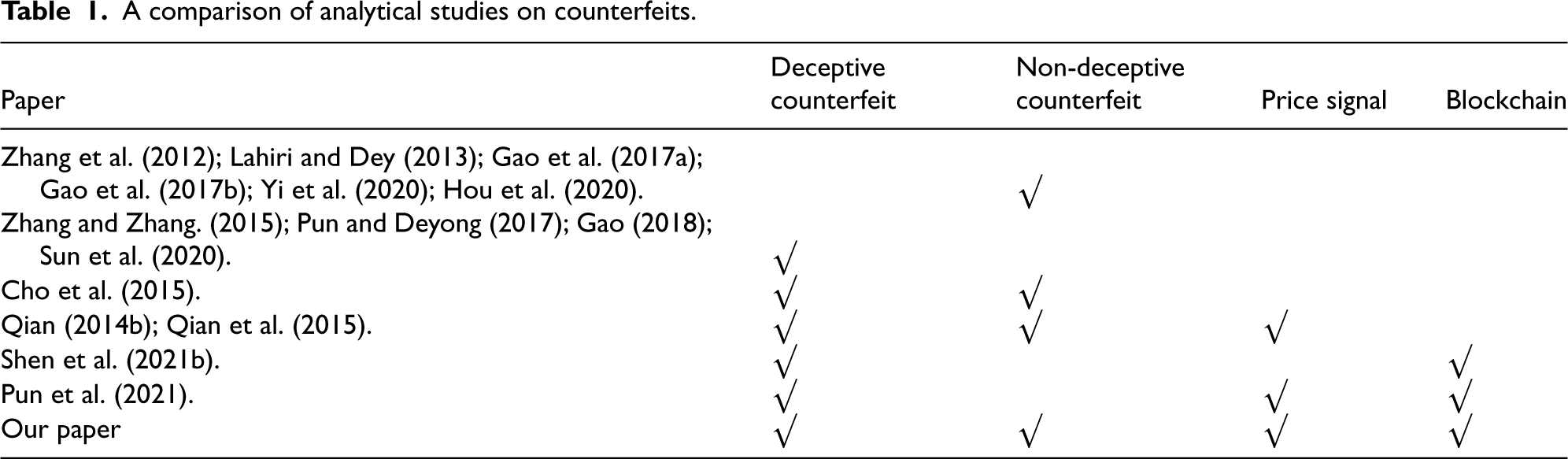
A comparison of analytical studies on counterfeits.
We consider a market consisting of a manufacturer (firm A), a deceptive counterfeiter (firm D), and a non-deceptive counterfeiter (firm N). Both counterfeiters sell counterfeits with lower quality than authentic products (counterfeit D and counterfeit N). Based on appearance, consumers can identify counterfeit N but may mistake counterfeit D for the authentic one. Hence, the insufficiency of consumer identification ability leads to quality information asymmetry between firm D and consumers, and incentivizes firm D to deceive consumers. Due to its non-deceptive nature, consumers can ascertain the true quality of counterfeit N. However, consumers may be unable to ascertain the true quality of counterfeit D, depending on whether firm D engages in non-deceptive or deceptive sales. Specifically, if firm D sets a price below that of firm A and explicitly informs consumers that its products are fake (i.e., engaging in non-deceptive sales), consumers can ascertain its product quality; if firm D sets the same price as firm A and claims that its products are genuine (i.e., engaging in deceptive sales), consumers cannot ascertain its product quality, and may purchase counterfeit D as an authentic one. Following the extant literature (Qian, 2014b; Sun et al., 2020), we assume that the quality of both types of counterfeits is exogenously given to ensure mathematical tractability.
We adopt the vertical differentiation model to describe consumers’ utility towards the product. Let θ denote the consumers’ pnce for product quality, which is uniformly distributed over [0,1], and
To eliminate quality information asymmetry, firm A can choose to adopt the BTS platform. Due to the inability to provide traceable product information, firm D can only engage in non-deceptive sales when the BTS platform is adopted. In practice, the adoption cost for the BTS platform is customized based on the firm's needs. For example, Food Trust charges firms based on the number of traceability codes.
10
Following the industry practice above, we set the adoption cost for the BTS platform c as marginal, where
Table 2 shows the major notation used in our paper.
Major notation used in our paper.
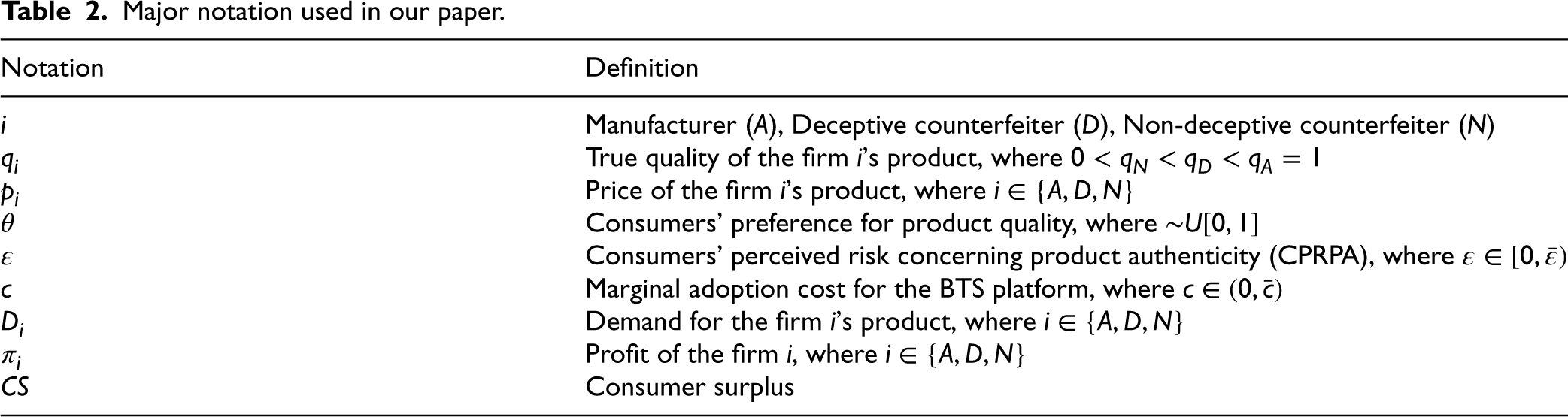
Major notation used in our paper.
As shown in Figure 2, the sequence of events is as follows.
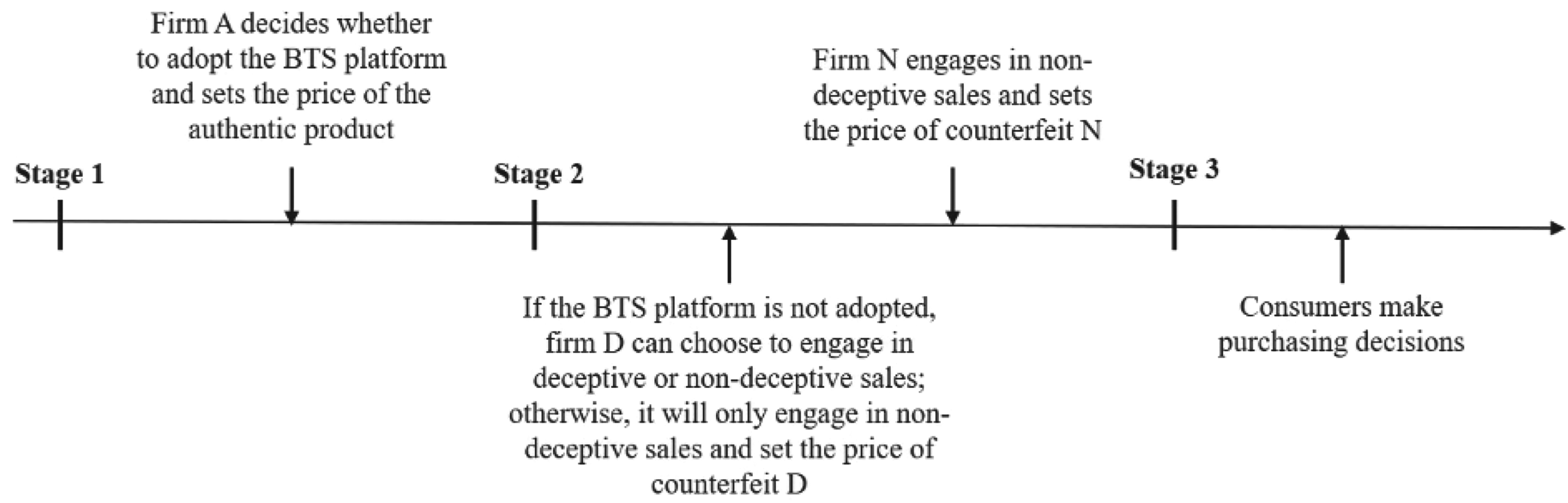
The sequence of events.
In this section, we first derive equilibrium outcomes for the scenario without the BTS platform, and then analyze the impacts of quality information asymmetry.
Equilibrium outcomes under the scenario without the BTS platform
Under quality information asymmetry, firm D may send a false price signal to deceive consumers. Since price plays a role in conveying quality information, there is a signaling game between firm A and firm D. As with many signaling models (Wang et al., 2019; Zhen et al., 2019), two types of equilibrium are possible. Specifically, if firm D chooses to engage in non-deceptive (deceptive) sales, there exists a separating (pooling) equilibrium. We use superscripts “SE” and “PE” to denote the separating and pooling equilibria, respectively.
The consumer's choice behavior is driven by individual rationality (IR) and incentive compatibility (IC) constraints. Specifically, the IR constraint ensures that a consumer obtains non-negative utility from purchasing, and the IC constraint ensures that the consumer's product choice is optimal given the observed product qualities and prices. When firm D engages in non-deceptive sales, consumers can get to know the true quality of all types of products. The quality preference of the consumer who is indifferent between purchasing counterfeit N and nothing satisfies
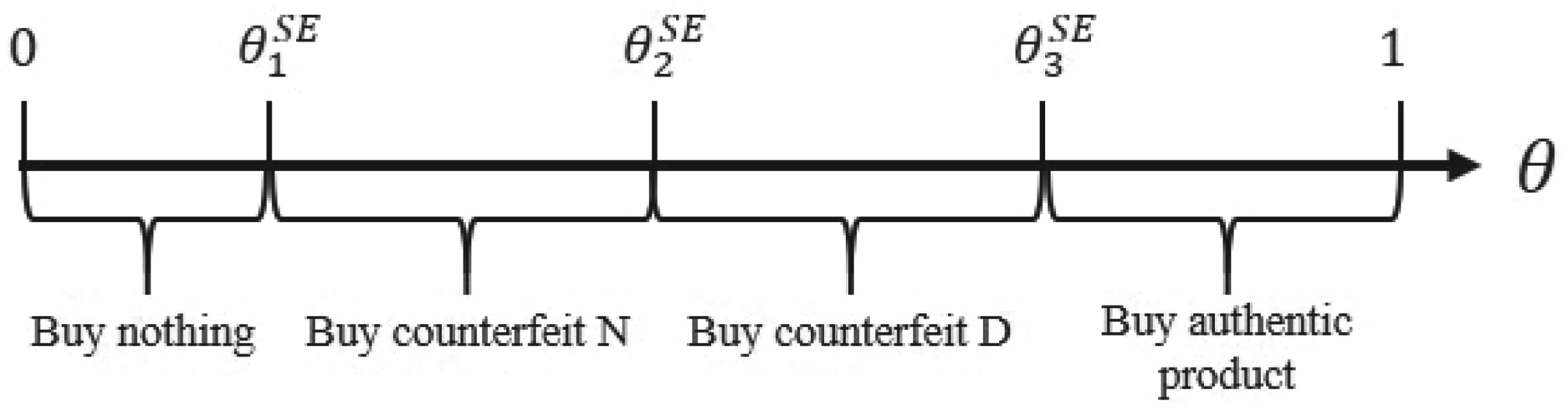
Consumers’ purchase decisions based on quality preferences in the separating equilibrium.
Based on Figure 3, we can derive that the demand for three types of products are 


When firm D engages in deceptive sales, consumers cannot ascertain the true quality of counterfeit D and may unknowingly purchase it as the authentic product. Given that real-world consumers commonly scrutinize product details (e.g., testing the flexibility of handbags), our paper assumes that firm D may fail to deceive consumers. Thus, the likelihood of consumers being deceived depends on whether they encounter firm D and fail to identify counterfeit D (the two events are independent because consumers’ ability to identify deceptive counterfeits is irrelevant to product distribution). Given the market structure constructed in this paper (comprising a manufacturer and a deceptive counterfeiter), we assume that consumers will randomly choose between the products of firm A and firm D with equal probability when intending to purchase authentic products. This assumption has also been adopted in Qian (2014b) and Sun et al. (2020) (we relax this assumption in Section 6 by incorporating the number of sales points). We set the probability of consumers mistaking counterfeit D for the authentic one as
Based on Figure 4, we can derive that the demand for three types of products are 


Under the scenario without the BTS platform, firm D engages in non-deceptive or deceptive sales depending on which sales strategy would yield greater profits. Firm D will choose to engage in non-deceptive sales only if the resulting profit is higher than that from engaging in deceptive sales. Therefore, a separating equilibrium must satisfy:

The constraint above can be converted to 
Our paper adopts the intuitive criteria (Cho and Kreps, 1987) to check the stability of separating and pooling equilibria. Specifically, suppose that firm D benefits from a certain off-equilibrium path under a set of best responses associated with given off-equilibrium beliefs, intuitive criteria require that the equilibrium cannot survive. The checking process for separating and pooling equilibria is provided in Appendix B.
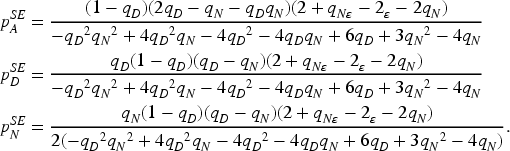
Our signaling game yields two distinct pooling equilibria. To avoid confusion, we denote them by superscripts “PE1” and “PE2,” respectively. Lemma 1 shows the equilibrium prices under the scenario without the BTS platform (the expressions of
Under the scenario without the BTS platform, the equilibrium prices of three types of products are as follows:
When



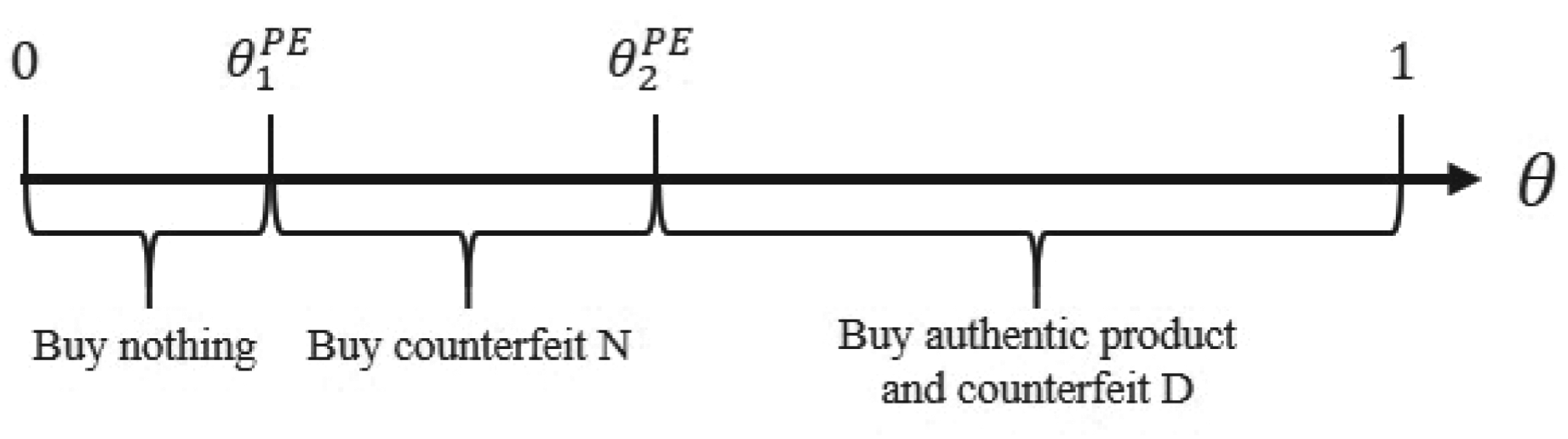
Consumers’ purchase decisions based on quality preferences in the pooling equilibrium.
Lemma 1 shows that firm A will employ a high-price strategy when CPRPA is higher than a certain threshold (i.e.,
To analyze the impacts of quality information asymmetry on the market, we construct a benchmark model with symmetric quality information (marked by the superscript “S”). Under quality information symmetry, consumers can get to know the true quality of counterfeit D. Thus, the profit functions of the three firms in the benchmark are the same as those in the separating equilibrium (i.e.,
By comparing the equilibrium outcomes of the signaling game and the benchmark model, we can derive the impacts of quality information asymmetry on the market. Proposition 1 shows the impacts of quality information asymmetry on product prices (the expression of
Compared with those under quality information symmetry, the product prices under quality information asymmetry exhibit the following changes.
The price of the authentic product rises in the absence of deceptive sales, or in the presence of deceptive sales with CPRPA below a certain threshold ( The prices of both types of counterfeits always rise (
Proposition 1(ii) shows that regardless of the presence of deceptive sales, quality information asymmetry always leads to an increase in the prices of two types of counterfeits. This result is attributed to the following mechanism. For a given price of the authentic product, the optimal differential pricing responses of the two counterfeiters under quality information asymmetry align with those under quality information symmetry. Under quality information asymmetry, firm A can induce firm D to engage in non-deceptive sales only by employing a high-price strategy. Hence, the prices of two types of counterfeits in the absence of deceptive sales are higher than those under quality information symmetry. When firm D engages in deceptive sales, the quality-based price competition among the three firms is alleviated. Consequently, the prices of two types of counterfeits in the presence of deceptive sales are also higher than those under quality information symmetry.
One may intuit that under quality information asymmetry, the presence of deceptive sales will always lead to a decrease in the price of the authentic product, because consumers’ utility associated with authentic items becomes lowered. However, the mitigation of quality-based price competition incentivizes firm A to raise its product price. Consequently, as shown in Proposition 1(i), the price of the authentic product does not always decrease. As illustrated in Figure 5, the presence of deceptive sales may lead to a decrease in the price of the authentic product only if
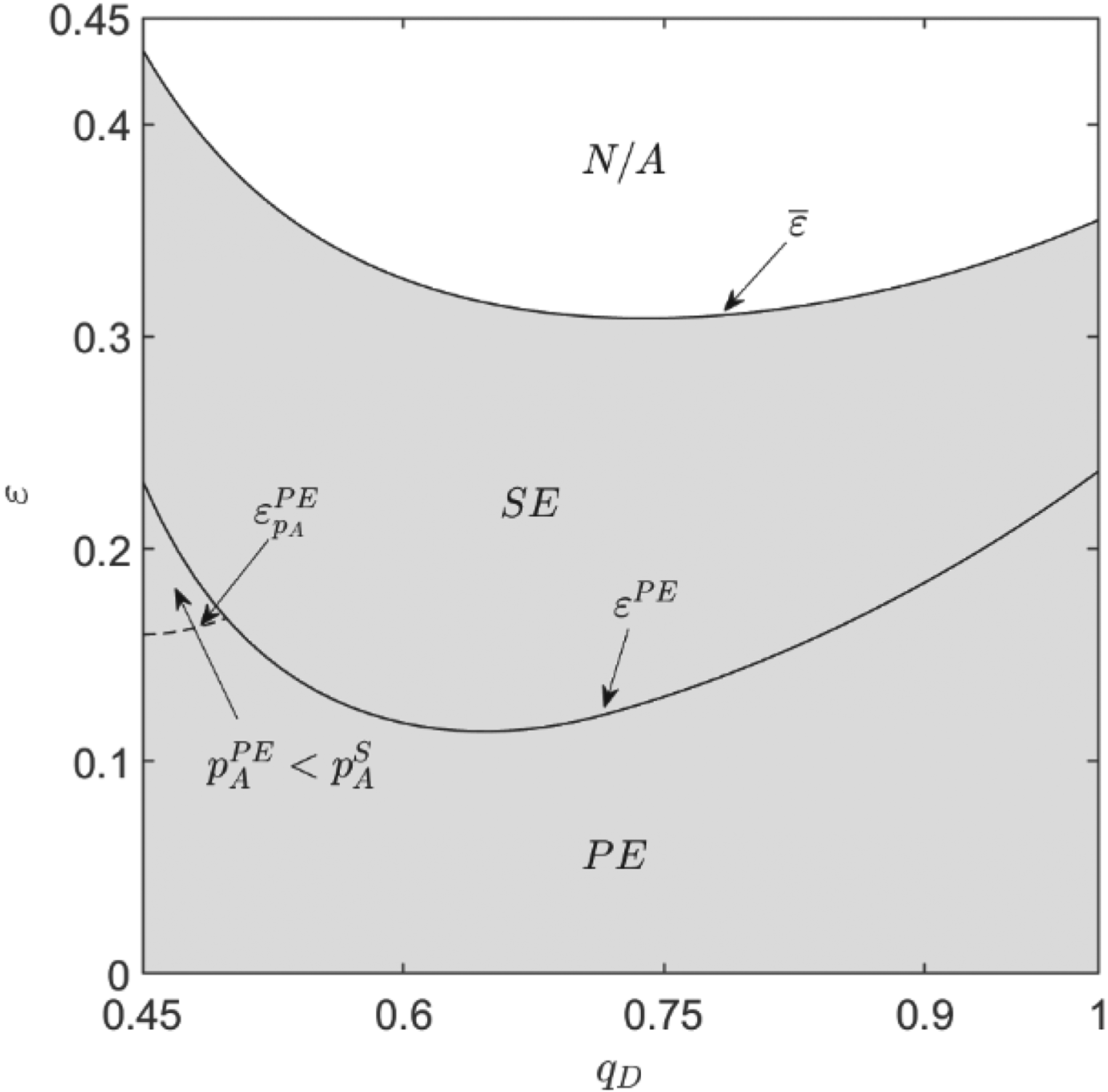
The impact of quality information asymmetry on the price of the authentic product
Then, we analyze the impacts of quality information asymmetry on the manufacturer and consumers, with the corresponding findings presented in Proposition 2 (the expression of
Compared with those under quality information symmetry, the demand for the authentic product, the profit of firm A, and consumer surplus under quality information asymmetry exhibit the following changes.
The demand for the authentic product always decreases ( The profit of firm A decreases in the absence of deceptive sales, or in the presence of deceptive sales with CPRPA above a certain threshold ( Consumer surplus always decreases (
Regardless of the presence of deceptive sales, quality information asymmetry always drives up the prices of two types of counterfeits. Thus, as shown in Proposition 2(iii), quality information asymmetry always leads to a decrease in consumer surplus.
Interestingly, Proposition 2(i) and (ii) show that the presence of deceptive sales reduces the demand for the authentic product but may increase the profit of firm A. This result is attributed to the following mechanism. Although firm D diverts a share of the market demand originally targeted at authentic products, the mitigation of quality-based price competition incentivizes firm A to raise its product price, which may offset the profit losses incurred from diminished product demand. Thus, the presence of deceptive sales may increase the profit of firm A. However, when CPRPA is higher than a certain threshold, the positive effects stemming from the mitigation of quality-based price competition will be dominated by the negative effects arising from consumers’ distrust of product authenticity. Hence, under the above-stated condition, the presence of deceptive sales will result in a decrease in the profit of firm A. Figure 6 illustrates this result and shows that the profit of firm A will decrease due to the presence of deceptive sales if
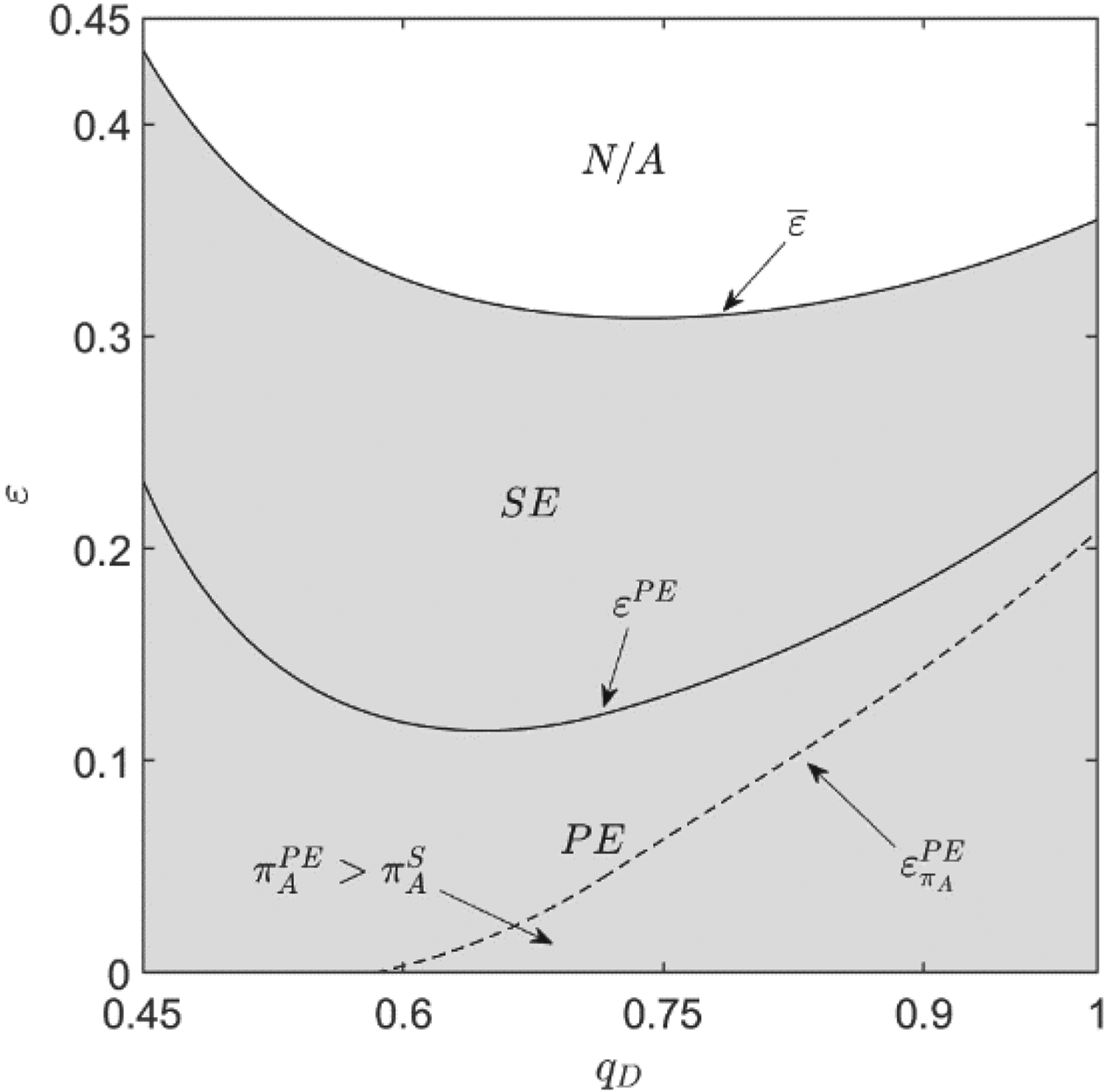
The impact of quality information asymmetry on the profit of firm A
Proposition 2(i) and (ii) also show that in the absence of deceptive sales, quality information asymmetry leads to a decrease in both demand and profit for the authentic product. This is driven by the fact that although firm A's high-price strategy drives up the prices of all products, the increase in the price of authentic products is greater than that of counterfeits
By comparing the impacts of quality information asymmetry on the manufacturer in the presence and absence of deceptive sales, we can find that the low-price dumping of deceptive counterfeits may be more detrimental to brand-name firms. The result corresponds to a real-world case: Masai Barefoot Technology (MBT) shoes, a prestigious Swiss brand, were forced to withdraw from the market amid the rampant proliferation of low-price deceptive counterfeits. 13
We finally analyze the impacts of quality information asymmetry on the counterfeiters, with the corresponding findings presented in Proposition 3.
Compared with those under quality information symmetry, the demand for two types of counterfeits and the profit of firm N under quality information asymmetry exhibit the following changes.
The demand for counterfeit D increases only in the absence of deceptive sales Both demand for counterfeit N and profit of firm N always increase (
Proposition 3(i) suggests that quality information asymmetry does not always lead to an increase in the demand for counterfeit D. The rationale lies in the fact that firm D only diverts part of the demand for authentic products when engaging in deceptive sales. This result reveals that the motivation for deceptive counterfeiters to engage in deceptive sales lies in obtaining higher unit profits rather than demand. However, both firm A's high-price strategy in the absence of deceptive sales and consumers’ perceived risk concerning product authenticity in the presence of deceptive sales drive consumers to purchase counterfeit N. Hence, as shown in Proposition 3(ii), quality information asymmetry always leads to an increase in the demand for counterfeit N and the profit of firm N.
Summarizing Propositions 1–3, our results reveal that regardless of the presence of deceptive sales, quality information asymmetry always exerts adverse impacts on both manufacturers and consumers, while benefiting all counterfeiters. The theoretical findings highlight the importance of eliminating quality information asymmetry and can explain why many brand-name firms invest considerable effort in combating indistinguishable counterfeits. The results also offer a managerial insight that only by helping consumers identify counterfeits can brand-name firms fundamentally mitigate the negative impact of quality information asymmetry.
In this section, we first derive equilibrium outcomes for the scenario with the BTS platform. Then, we analyze the manufacturer's optimal strategy for adopting the BTS platform. Finally, we discuss the value derived from BTS platform adoption under the manufacturer's optimal adoption strategy.
Equilibrium outcomes under the scenario with the BTS platform
Under the scenario with the BTS platform, firm D can only engage in non-deceptive sales. In this situation, a Stackelberg game exists among three firms. We use superscript “B” to denote the equilibrium outcomes under the scenario with the BTS platform. Following a similar derivation to the profit functions under separating equilibrium, we can obtain the profit functions of the three firms under the scenario with the BTS platform as follows:



By using backward induction, we can derive the equilibrium prices under the scenario with the BTS platform, as shown in Lemma 2.
Under the scenario with the BTS platform, the prices of three types of products are
Proposition 4 summarizes the impacts of the adoption cost for the BTS platform on product prices, product demand, firms’ profits, and consumer surplus.
As the adoption cost for the BTS platform rises:
The prices of all types of products rise The demand for the authentic product decreases The profit of firm A decreases Consumer surplus decreases
Under the scenario with the BTS platform, the optimal responses of the two counterfeiters to the price of the authentic product are independent of the adoption cost for the BTS platform. As the adoption cost rises, firm A has to set a higher price to offset the expenses. Consequently, a rise in the adoption cost will drive up the prices of all types of products (Proposition 4(i)), and these price adjustments will lead to a decrease in consumer surplus (Proposition 4(iv)). Notably, the price of the authentic product is more sensitive to changes in the adoption cost
To sum up, Proposition 4 reveals that a rise in the adoption cost for the BTS platform will diminish the effectiveness of BTS platform adoption.
By comparing the equilibrium outcomes under the scenarios with and without the BTS platform, we can derive the manufacturer's optimal strategy for adopting the BTS platform, as shown in Proposition 5 (the expressions of
The optimal strategy for adopting the BTS platform is as follows:
In the absence of deceptive sales In the presence of deceptive sales
Proposition 5 shows that firm A may never derive benefits from the adoption of the BTS platform even if the adoption cost is quite low. This is driven by the fact that firm A may benefit from the presence of deceptive sales (see Proposition 2(ii)). Figure 7 illustrates this result and shows that when consumers are indifferent to product authenticity and the adoption cost is quite low (i.e.,
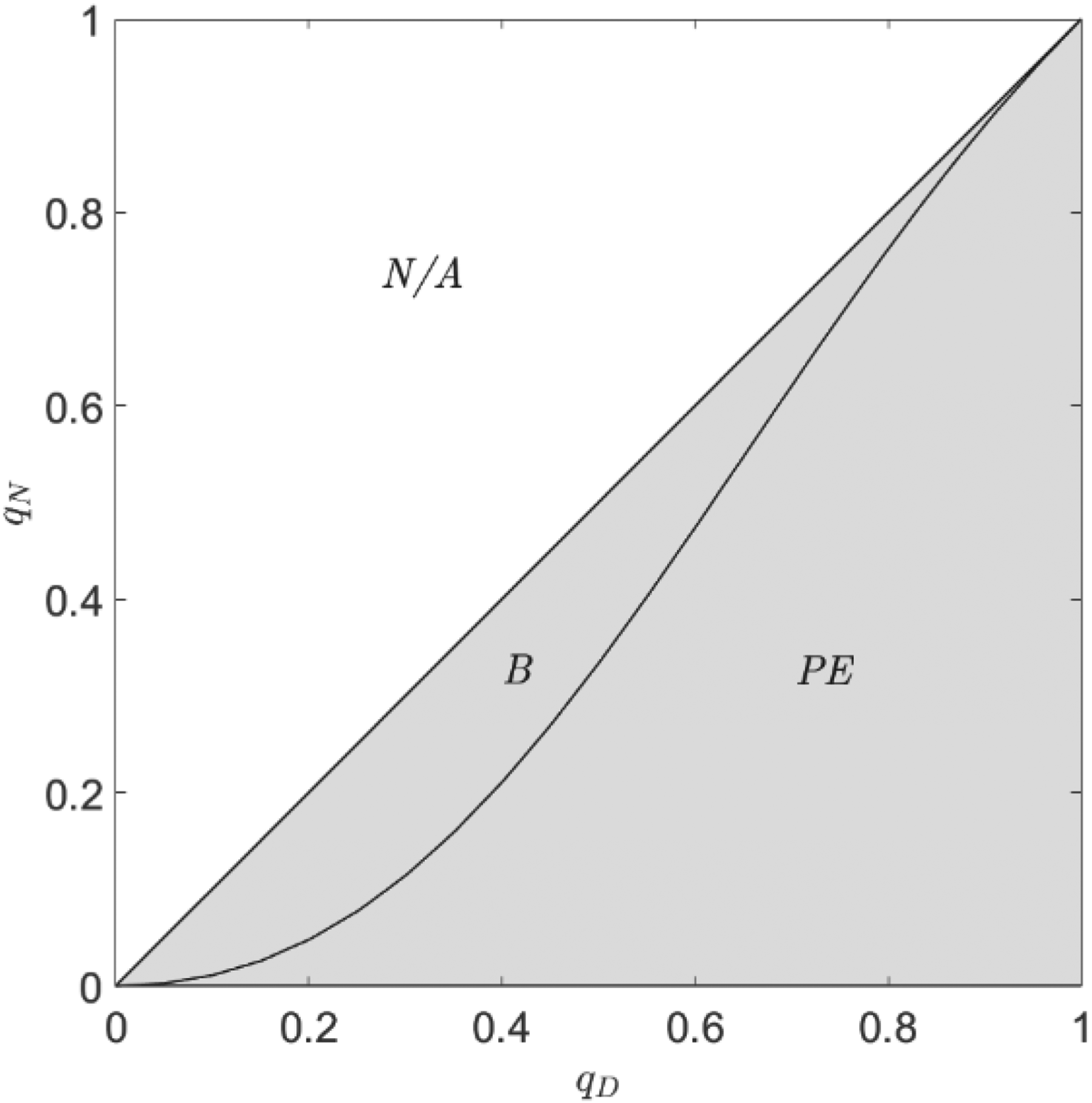
Firm a's strategy for adopting the BTS platform
One may intuit that a rise in CPRPA will incentivize firm A to adopt the BTS platform. However, Proposition 5 shows that this intuition does not hold in the absence of deceptive sales. This is driven by the fact that under quality information asymmetry, a rise in CPRPA diminishes firm D's willingness to engage in deceptive sales, thereby reducing firm A's loss incurred in employing a high-price strategy
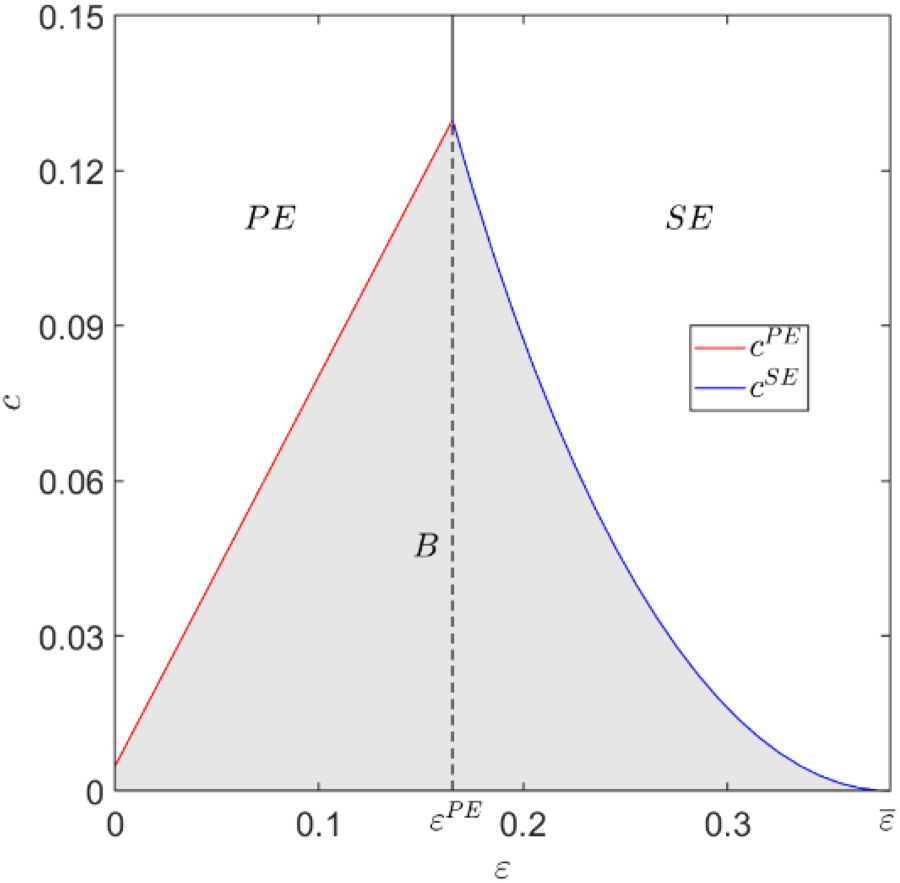
Firm a's strategy for adopting the BTS platform
To sum up, Proposition 5 reveals that the manufacturer may never benefit from adopting the BTS platform in the presence of deceptive sales, and CPRPA exerts a non-monotonic impact on the manufacturer's optimal adoption decision. The theoretical findings offer a managerial insight that when deciding whether to adopt BTS platforms, brand-name firms should not only investigate the sales strategies of deceptive counterfeiters, but also consider consumers’ attitudes towards counterfeiting.
By comparing the equilibrium outcomes under the scenarios with and without the BTS platform based on firm A's optimal adoption strategy, we examine the value of adopting the BTS platform. Proposition 6 shows the impacts of BTS platform adoption on product prices (the expression of
Under firm A's optimal strategy, the adoption of the BTS platform gives rise to the following changes in product prices:
The price of the authentic product decreases when the BTS platform is adopted in the absence of deceptive sales, or when the BTS platform is adopted in the presence of deceptive sales and the adoption cost is lower than a certain threshold ( The prices of both counterfeit D and counterfeit N always decrease
Summarizing (i) and (ii), Proposition 6 states the following results. First, it demonstrates that in the absence of deceptive sales, the adoption of the BTS platform results in a decrease in the prices of all product types. This result is attributed to the following mechanism. Under quality information asymmetry, firm A can induce firm D to engage in non-deceptive sales only by employing a high-price strategy. By leveraging the quality disclosure effect stemming from the adoption of the BTS platform, firm A no longer needs to resort to this tactic. Hence, in the absence of deceptive sales, the adoption of the BTS platform leads to a decrease in the price of the authentic product. This also forces both counterfeiters to lower their prices.
Second, Proposition 6 shows that in the presence of deceptive sales, the adoption of the BTS platform leads to a decrease in the prices of two types of counterfeits. This result can be explained as follows. Since the adoption of the BTS platform achieves the quality disclosure effect, firm D has to set its price based on the true quality of its product. Thus, the price of counterfeit D will decrease as a result of BTS platform adoption, which also forces firm N to lower its price. Unlike the results of Pun et al. (2021), we find that in the presence of deceptive sales, the adoption of the BTS platform may drive up the price of authentic products. The underlying reason for this result is as follows. As CPRPA rises, firm A can benefit more from the quality disclosure effect, which makes it willing to invest more in adopting the BTS platform. However, a rise in the adoption cost will lead to an increase in the price of the authentic product. Hence, when the BTS platform is adopted in the presence of deceptive sales, the price of the authentic product may rise. As illustrated in Figure 9, the price of the authentic product may rise as a result of BTS platform adoption if
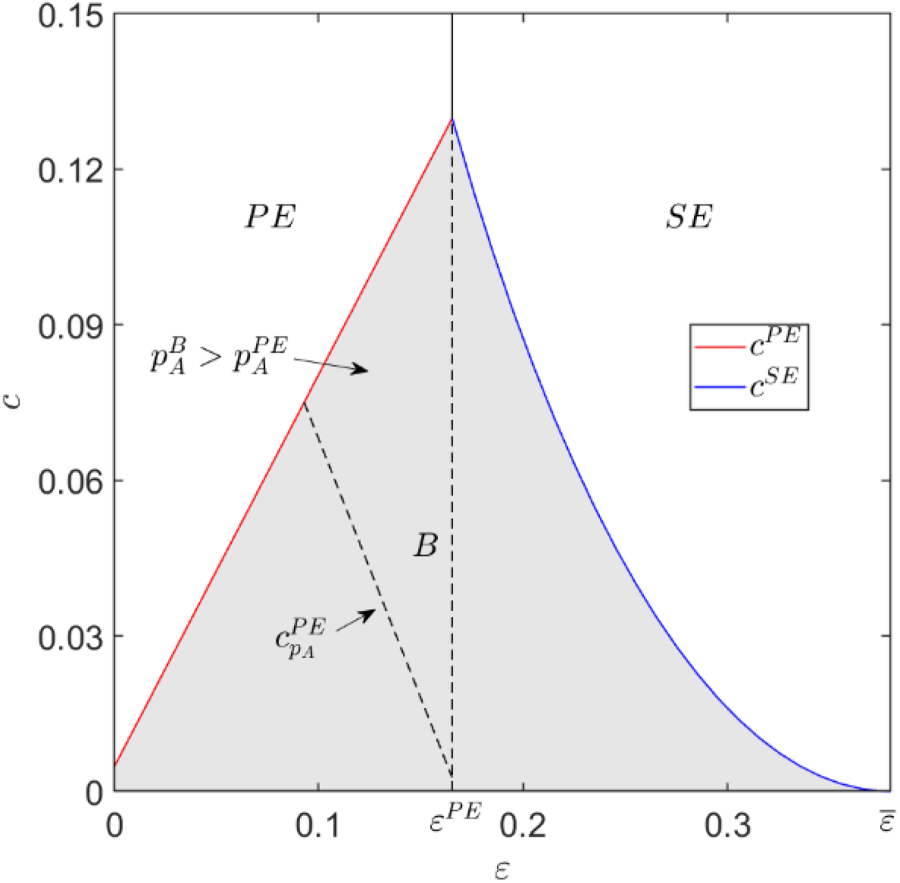
The impact of the BTS platform adoption on the price of the authentic product
To sum up, Proposition 6 reveals that the adoption of the BTS platform can effectively suppress the prices of counterfeits, while offering a managerial insight that in the presence of deceptive sales, brand-name firms may need to raise prices to offset the costs incurred by such adoption.
Proposition 7 shows the impacts of BTS platform adoption on product demand, counterfeiters’ profits, and consumer surplus.
Under firm A's optimal strategy, the adoption of the BTS platform gives rise to the following changes in product demand, counterfeiters’ profits, and consumer surplus:
The demand for the authentic product always increases The profits of both firm D and firm N always decrease Consumer surplus always increases
Summarizing (i) (ii), and (iii), Proposition 7 states the following results. First, it demonstrates that in the absence of deceptive sales, the adoption of the BTS platform can reduce both the demand for and profits of the two types of counterfeits, while increasing both the demand for authentic products and consumer surplus. This result is attributed to the following mechanism. Although the adoption of the BTS platform leads to a decrease in the prices of all types of products, the decrease in the price of authentic products is greater than that of counterfeits
Second, Proposition 7 shows that in the presence of deceptive sales, the only drawback of BTS platform adoption is that it increases the demand for deceptive counterfeits. The underlying reason for this result is as follows. The quality disclosure effect eliminates consumers’ concerns over product authenticity and depresses the prices of the two types of counterfeits, thereby increasing the demand for the authentic product, enhancing consumer surplus, and reducing the profits of the two counterfeiters. However, counterfeit D can cannibalize the demand for counterfeit N by virtue of its relative quality advantage, so the adoption of the BTS platform decreases the demand for counterfeit N, but increases the demand for counterfeit D.
Figure 10 illustrates the results stated in Proposition 7 (we use
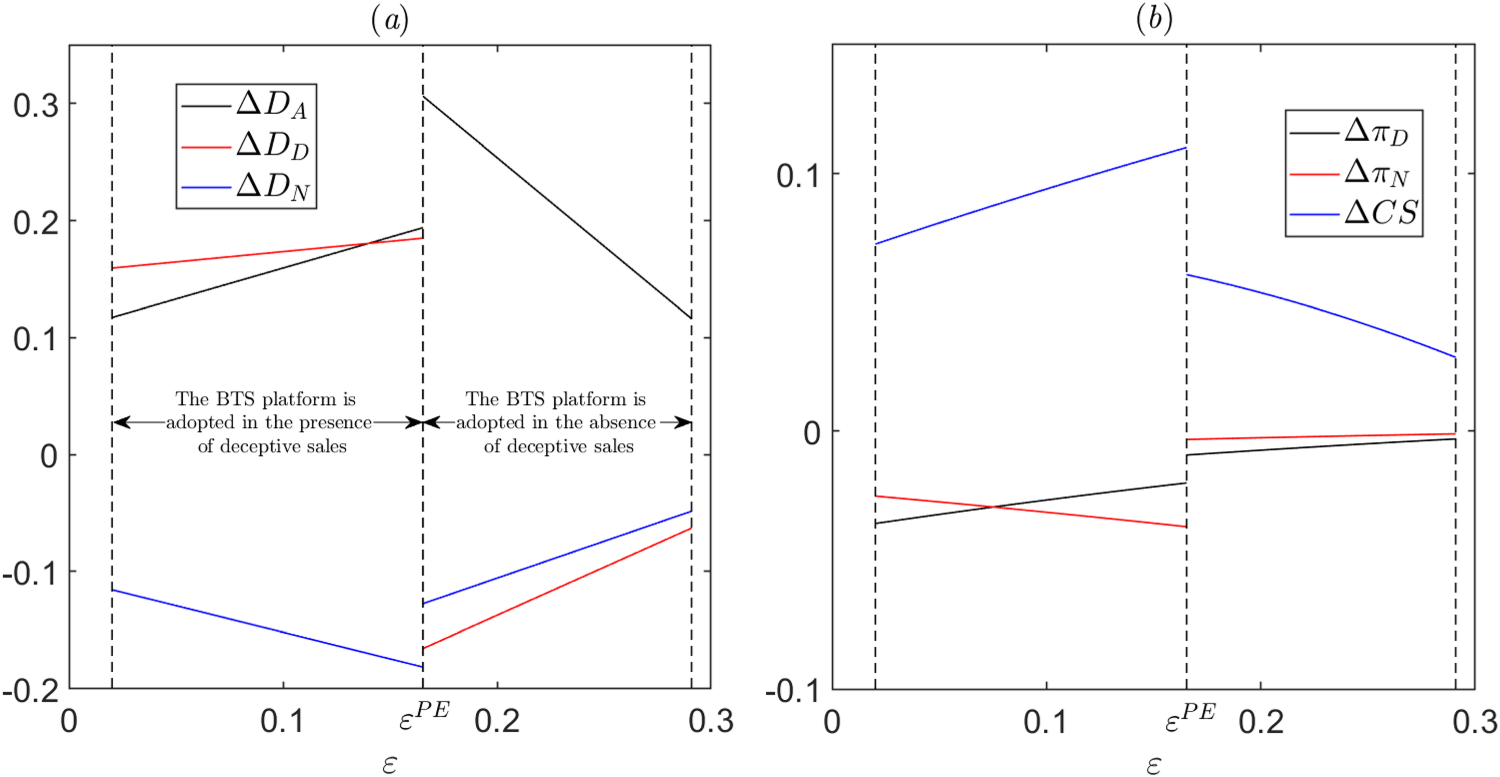
The impact of the BTS platform adoption on product demand, counterfeiters’ profits, and consumer surplus
Extending the results of Pun et al. (2021), our paper reveals the following key conclusions. First, we indicate that in a market with both non-deceptive and deceptive counterfeits, the adoption of the BTS platform will decrease the demand for non-deceptive counterfeits but may increase the demand for deceptive counterfeits. The results above reveal that the potential downside of adopting the BTS platform lies in stimulating the demand for deceptive counterfeits, and further show that adopting the BTS platform is more effective in combating non-deceptive counterfeits than deceptive ones. Second, we indicate that in such a market, the adoption of the BTS platform always improves consumer surplus. Given that such adoption may increase the demand for deceptive counterfeits, this theoretical finding reveals that BTS platform adoption contributes more to improving consumer surplus than to combating counterfeits.
In this section, we develop four extensions to the base model by relaxing some assumptions. Due to mathematical intractability, we numerically examine the robustness of our key findings. The settings of the main parameters are consistent with those in Figure 10
Marginal production cost difference
In the base model, we assume that the marginal production cost of all products is zero. In this subsection, we relax this assumption by incorporating differences in marginal production costs of the three types of products. Specifically, we normalize the marginal production cost of counterfeit N to zero, and use
Figure 11 illustrates a comparison of the effects of BTS platform adoption between the base model and the extended model incorporating marginal production cost differences, with results for the latter denoted by the subscript “E1”. The numerical results show that our conclusions remain robust when differential marginal production costs are incorporated into the analysis (e.g., the adoption of the BTS platform always decreases the profits of both counterfeiters and improves consumer surplus, but may increase the demand for deceptive counterfeits).
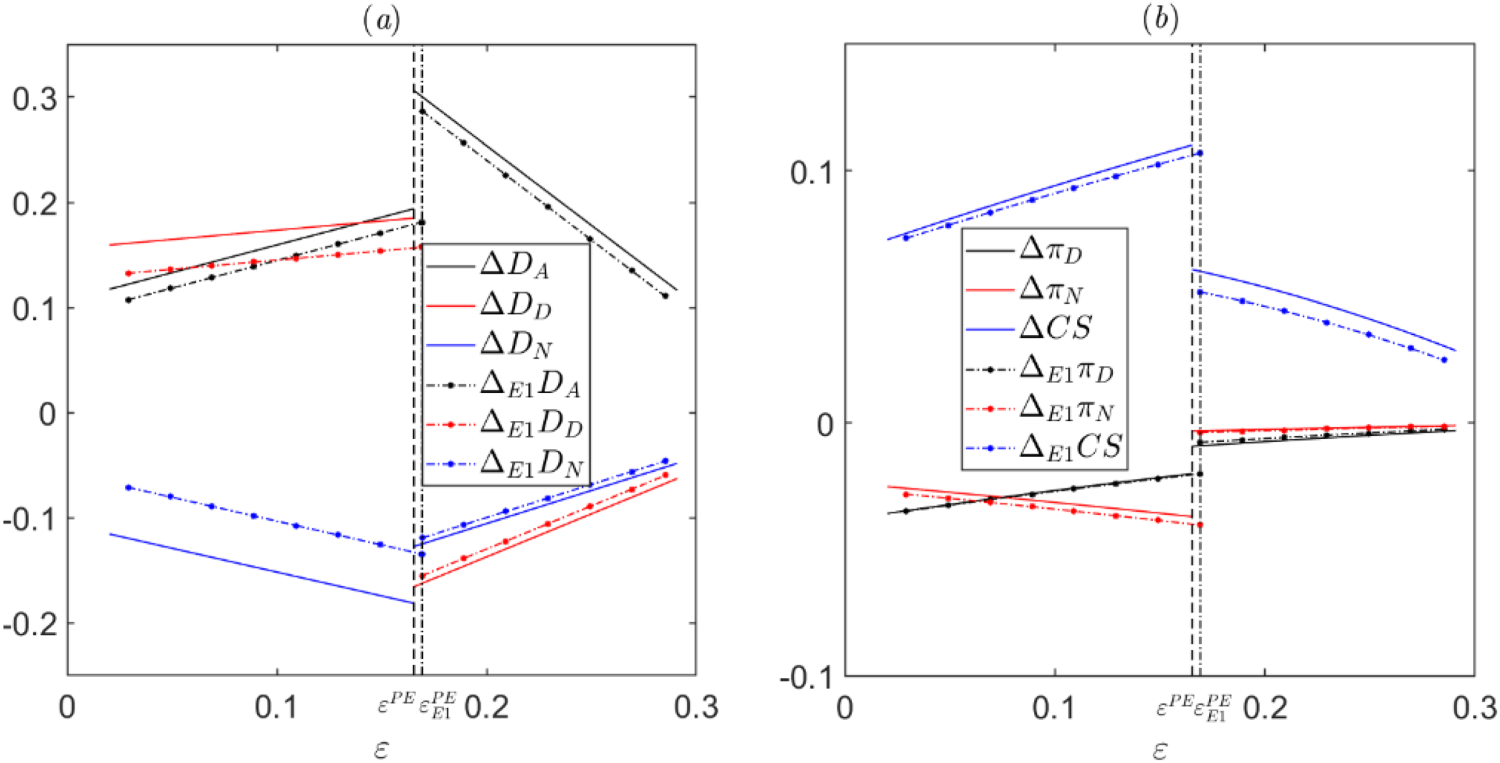
Comparison of the effects of BTS platform adoption between the base model and the extended model incorporating marginal production costs differences
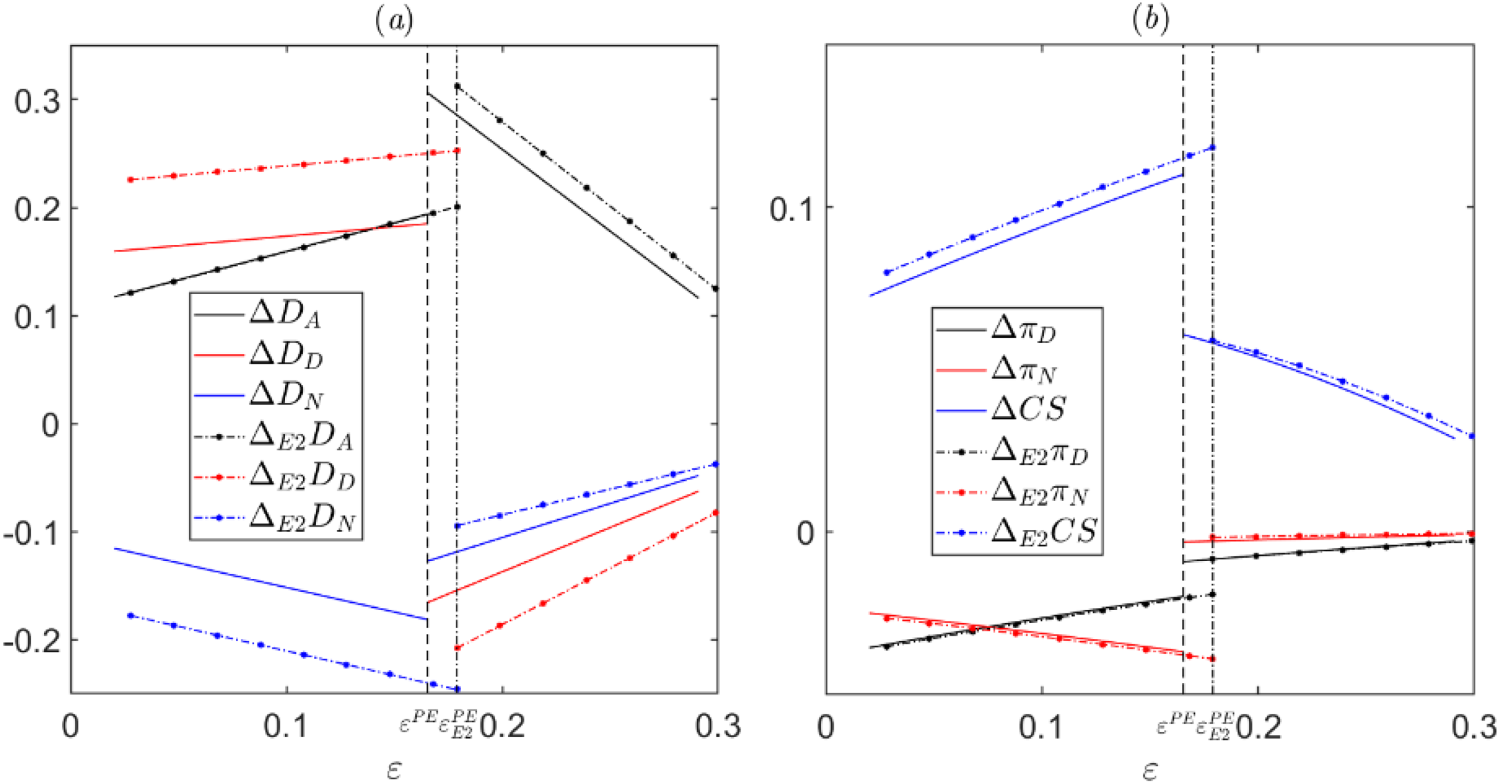
Comparison of the effects of BTS platform adoption across different market-entering sequences of counterfeiters.
In the base model, we assume that firm D enters the market earlier than firm N. In this subsection, we extend the base model by considering that two counterfeiters enter the market simultaneously; that is, the two counterfeiters set their prices simultaneously after observing the price of the authentic product and the manufacturer's decision on adopting the BTS platform.
Figure 12 illustrates a comparison of the effects of BTS platform adoption across different market-entering sequences of counterfeiters, with the results for the simultaneous entry case denoted by the subscript “E2”. The numerical results show that our core findings regarding the effects of BTS platform adoption remain consistent when two counterfeiters enter the market simultaneously. Additionally, Figure 12 shows that when the two counterfeiters enter the market simultaneously, firm D has a stronger incentive to engage in deceptive sales under quality information asymmetry
The number of sales points
In the base model, we assume that in the presence of deceptive sales, consumers will randomly choose between the products of firm A and firm D with equal probability when intending to purchase authentic products. In this subsection, we relax this assumption by incorporating the number of sales points. Specifically, we assume that both firm A and firm D operate multiple sales points, and the ratio of their sales points affects the probability that consumers unknowingly purchase counterfeit D (as firm N can only engage in non-deceptive sales, we need not consider its number of sales points). Let
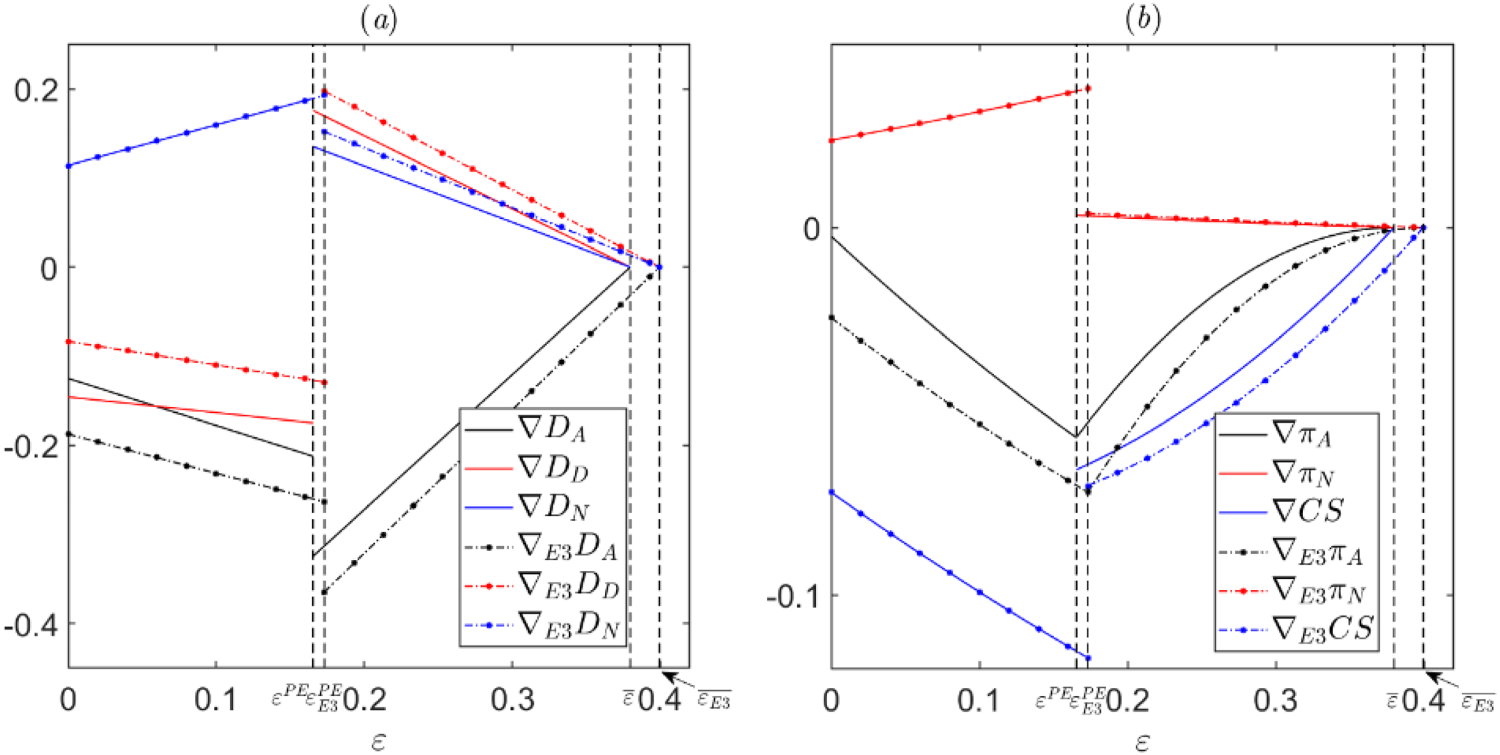
Comparison of the impacts of quality information asymmetry between the base model and the extended model incorporating the number of sales points
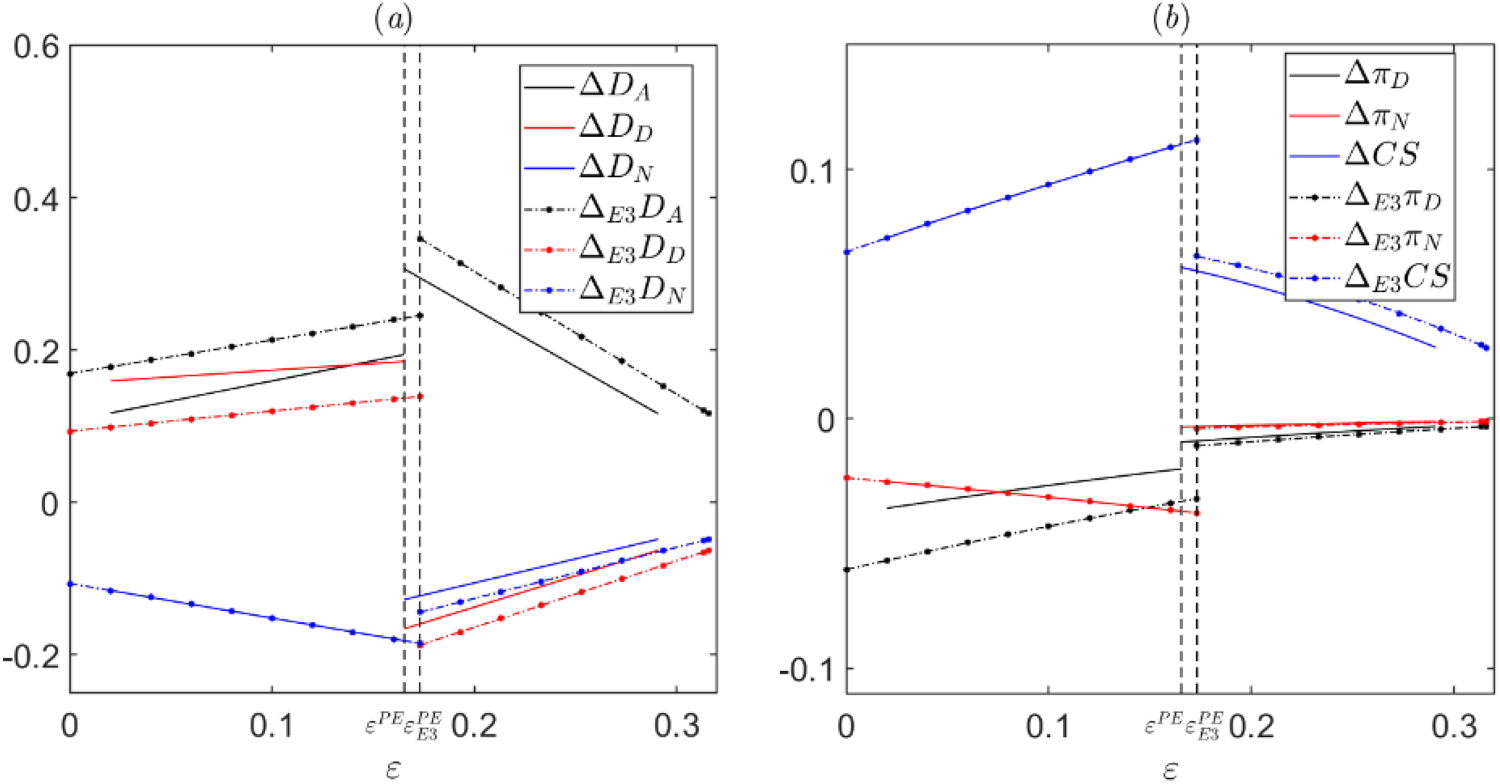
Comparison of the effects of BTS platform adoption between the base model and the extended model incorporating the number of sales points
Figure 13 illustrates a comparison of the impacts of quality information asymmetry between the base model and the extended model incorporating the number of sales points, with results for the latter denoted by the subscript “E3” (we use
Some blockchain-based transaction platforms (e.g., Everledger) require consumers to register their digital identities and upload personal information when utilising verification functions. Since consumers are unaware of how this private information will be used by platforms, the adoption of the BTS platform may lead to consumer privacy concerns (Pun et al., 2021). In this subsection, we consider that while adopting the BTS platform can eliminate quality information asymmetry, it may cause consumer privacy concerns and decrease their utility of purchasing authentic products. We use
Figure 15 illustrates a comparison of the effects of BTS platform adoption between the base model and the extended model incorporating consumers’ privacy concerns, with the results for the latter denoted by the subscript “E4”. The numerical results demonstrate the robustness of our findings.
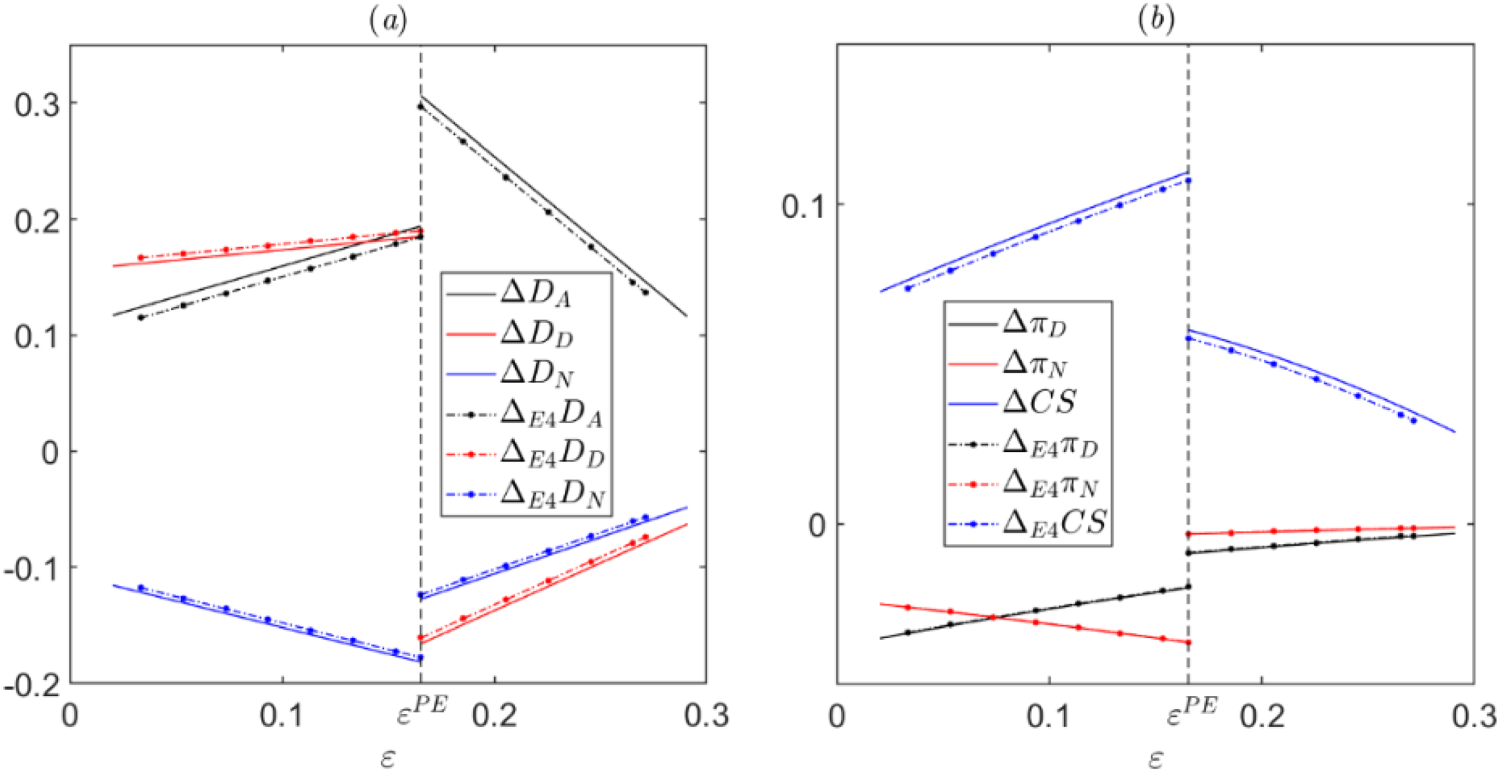
Comparison of the effects of BTS platform adoption between the base model and the extended model incorporating consumers’ privacy concerns
This study highlights how deception heterogeneity fundamentally alters the effects of transparency-enhancing technologies in counterfeit markets. By distinguishing between deceptive and non-deceptive counterfeits, our analysis shows that the economic consequences of quality information asymmetry and blockchain-based authentication depend not only on the presence of counterfeits, but also on how deception is strategically employed.
Using a signaling game framework that incorporates consumers’ perceived risk concerning product authenticity (CPRPA), we show that quality information asymmetry reshapes pricing, demand, and profits in nontrivial ways. In particular, deceptive counterfeiters may strategically engage in non-deceptive sales when perceived authenticity risk is sufficiently high. While quality information asymmetry consistently harms manufacturers and consumers, it benefits counterfeiters, underscoring the strategic importance of eliminating such asymmetry. Importantly, when deceptive sales are present, blockchain adoption may reduce quality-based price competition, leading manufacturers to optimally forgo adoption even at relatively low adoption costs. This result explains why brand-name firms hesitate to adopt BTS platforms to combat counterfeits. Moreover, the impact of CPRPA on adoption incentives is non-monotonic, challenging the intuition that higher perceived risk always strengthens firms’ incentives to adopt authentication technologies.
From a broader perspective, this study assesses the value of adopting BTS platforms in markets with deceptive and non-deceptive counterfeits. Extending existing research on anti-counterfeiting, we find that brand-name firms may need to set a higher price to offset the costs incurred by such adoption in markets with two types of counterfeits. We reveal that although higher adoption costs undermine the effectiveness of BTS platform adoption, such adoption will increase the demand for authentic products and consumer surplus, while reducing the profits of both types of counterfeiters. However, the adoption of BTS platforms may increase the demand for deceptive counterfeits. These results emphasize that BTS platform adoption contributes more to improving consumer surplus than to combating counterfeits, and is more effective in combating non-deceptive counterfeits than deceptive ones.
A key theoretical implication of our findings is that treating counterfeits as homogeneous can lead to systematically misleading conclusions about the value of transparency. In models that abstract from deception heterogeneity, blockchain-based authentication appears uniformly beneficial and adoption incentives are monotonic in adoption costs and consumer risk perceptions. Our analysis demonstrates that once deceptive behavior is explicitly modeled, these conclusions no longer hold. As a result, policy and managerial prescriptions derived from homogeneous-counterfeit frameworks may overstate the effectiveness of authentication technologies in combating counterfeits.
From a managerial perspective, our findings suggest that brand-name firms should evaluate blockchain adoption strategies in light of both counterfeiters’ sales tactics and consumers’ perceptions of authenticity risk. We offer several key managerial implications for brand-name firms. First, it is commonly held that the presence of deceptive sales practices will undermine the profitability of brand-name firms. However, we reveal that brand-name firms may benefit from the mitigation of quality-based price competition resulting from deceptive sales. Consequently, we propose that in the presence of deceptive sales, brand-name firms may not have an imperative to adopt BTS platforms, even though the associated adoption costs are quite low.
Second, while brand-name firms can attempt to influence the sales strategies of deceptive counterfeiters by adjusting their own prices, the detrimental effects of quality information asymmetry on their profits still persist. As such, we argue that brand-name firms ought not to restrict their adoption of BTS platforms exclusively to scenarios involving deceptive sales.
Third, it may be a common judgment that a rise in consumers’ perceived risk concerning product authenticity will incentivize brand-name firms to adopt BTS platforms. However, we find that the impact of such perceived risk on brand-name firms’ optimal adoption decisions is non-monotonic. Hence, we argue that brand-name firms ought to consider both the sales strategies of deceptive counterfeiters and consumers’ attitudes toward counterfeiting when deciding whether to adopt BTS platforms.
Our analysis deliberately abstracts from several institutional features in order to isolate the strategic roles of deception and information asymmetry, which suggests several directions for future research. First, under our setting, all consumers cannot distinguish between deceptive counterfeits and authentic products when deceptive counterfeiters implement deceptive sales. However, in reality, expert consumers who have a deep understanding of the authentic product and a rich shopping experience may not be deceived. Our results indicate that brand-name firms may set a lower price when adopting BTS platforms. However, in scenarios where expert consumers are present, reducing price may not be an optimal decision. Thus, the presence of expert consumers will influence brand-name firms’ pricing decisions, which in turn affect their adoption strategies for BTS platforms. Future research can examine how the size of the expert consumer segment affects brand-name firms’ strategies for adopting BTS platforms. Second, in our analysis, we assume that brand-name firms sell only a single product type. However, in practice, brand-name firms may offer a range of products. In such cases, counterfeiters may target one or more product types for imitation, which exerts a notable influence on the firms’ strategic decisions regarding BTS platform adoption. Consequently, exploring BTS platform adoption strategies among brand-name firms with multiple product types also constitutes a worthwhile research topic. More broadly, our study suggests that the benefits of transparency-enhancing technologies cannot be evaluated independently of the strategic behaviors they are intended to discipline.
Supplemental Material
sj-docx-1-pao-10.1177_10591478261465974 - Supplemental material for Using blockchain to combat multiple types of counterfeits: Adoption strategy and value analysis
Supplemental material, sj-docx-1-pao-10.1177_10591478261465974 for Using blockchain to combat multiple types of counterfeits: Adoption strategy and value analysis by Chao He, Chunqiao Tan, Yangyan Shi and Arvind K Tripathi in Production and Operations Management
Footnotes
Acknowledgments
This research was supported by the National Natural Science Foundation of China (No. 72371132), the Jiangsu Provincial Key Discipline Construction Project (Statistics), and open project of the Joint Lab for Statistics and Finance (2026JLSF203).

Funding
The authors received no financial support for the research, authorship, and/or publication of this article.
Declaration of conflicting interests
The authors declared no potential conflicts of interest with respect to the research, authorship, and/or publication of this article.
Notes
How to cite this article
He C, Tan C, Shi Y and Tripathi AK (2026) Using blockchain to combat multiple types of counterfeits: Adoption strategy and value analysis. Production and Operations Management XX(XX): 1–20.
References
Supplementary Material
Please find the following supplemental material available below.
For Open Access articles published under a Creative Commons License, all supplemental material carries the same license as the article it is associated with.
For non-Open Access articles published, all supplemental material carries a non-exclusive license, and permission requests for re-use of supplemental material or any part of supplemental material shall be sent directly to the copyright owner as specified in the copyright notice associated with the article.
