







Abstract
Research on the role of affect in the entrepreneurial process has surged over time, resulting in a vibrant field of inquiry. To advance scholarship in this area, we conduct an inductive analysis of 162 published articles, critically analyzing the state of research on affect in entrepreneurship. We develop an organizing framework to capture three major conversations in existing research—affect valence (feelings), discrete emotions, and emotional competencies—and encompass several outcomes studied within each conversation. We find that limited work has been done to explore the antecedents of affect (both feelings and discrete emotions), anticipated affect deserves greater consideration, and affective influence of stakeholders on entrepreneurs remains overlooked. Research on negative affect and emotional competencies also remains scarce in the entrepreneurship literature. Future inquiry would do well to take a multilevel approach to affect, explore affective phenomena over time, and cast light on the role of emotional competencies in the entrepreneurial process. We also spotlight crucial empirical advancements, including big data and artificial intelligence, for affect research going forward.
Affect, which includes feelings and emotions (Baron, 2008), is deeply intertwined with the entrepreneurial process. From discussions of new ventures as the entrepreneurs’ “baby” (Cardon, Zietsma, Saparito, Matherne, & Davis, 2005) to thinking of business failure as a time to grieve (Shepherd & Wolfe, 2015), affect is routinely invoked by entrepreneurship researchers (Shepherd, 2015; Uy, Sun, & Foo, 2017). The fascination with affective issues among entrepreneurship scholars parallels the attention to affect among management researchers more generally (Ashkanasy, Humphrey, & Hay, 2017), with some scholars celebrating the onset of an “affective revolution” in organization studies (Barsade, Brief, & Spartaro, 2003, p. 3). Not surprisingly, then, the transformative potential of scholarship that makes the study of affect central to advancing knowledge about entrepreneurial phenomena draws considerable interest and enthusiasm (Cardon, Foo, Shepherd, & Wiklund, 2012; Shepherd, 2016).
Researchers have summarized the affect-based literature in other fields (e.g., Gooty, Connelly, Griffith, & Gupta, 2010), but only limited efforts have been made in this direction within entrepreneurship. Our efforts build on and extend two recent attempts to consolidate knowledge of affect-related research in entrepreneurship (Garcia, De Quevedo Puente, & Blanco Mazagatos, 2015; Huang, Foo, Murnieks, & Uy, 2020) by considering the full scope of the actor–opportunity dominant logic to define the domain of entrepreneurship research (Shane, 2003). The publication of Shane and Venkataraman (2000) motivated entrepreneurship researchers to coalesce around the actor–opportunity framework, bringing greater coherence and legitimacy to academic inquiry about the entrepreneurial phenomena. Departing from prior attempts to consolidate knowledge of affect research in entrepreneurship, our work also highlights methodological developments that can advance the study of affect in entrepreneurship specifically as well as in organizational research more broadly. Notably, research methodology provides the tools to begin answering the questions that “focus and define the contested areas of a field” and influences the questions that researchers are able to ask (Chiles, Vultee, Gupta, Greening, & Tuggle, 2010, p. 149).
Our review provides entrepreneurship researchers with a guide to different approaches to study discrete emotions and affect valence. Baron’s (2008) article on affect in entrepreneurship has spurred much interest among researchers on the distinction between affect valence and discrete emotion. Despite this distinction, most researchers do not explain why they study valence or discrete emotions. Even Baron (2008) made predictions of valence neglecting discrete emotions. In general, a valence approach is incomplete, as affect of the same valence can have differing effects. Two negatively valenced affects, anger and fear, are good examples: The former is an approach affect but the latter a withdrawal affect (Lerner & Keltner, 2000). Studying discrete emotions would allow researchers to disentangle approach versus withdraw tendencies. Yet although this approach should be preferred, we do not imply abandonment of the study of affect valence. A valence approach, specifically a focus on feelings, is appropriate when the source of affect is unknown. For example, an individual can get out of bed in the morning with either positive or negative feelings, yet be uncertain about the source of the feelings.
While affect—that is, feelings and emotions—results in specific thoughts and behaviors (Baron, 2008), these outcomes can also be influenced by emotional competencies and self-regulatory abilities (Lerner & Keltner, 2000). Such abilities allow modification of emotions and feelings (e.g., taking deep breaths to calm oneself), thoughts (e.g., engage cognitively to reappraise a situation), and behaviors (e.g., exercising self-restraint). We provide conceptual clarity on the links among affect valence (as represented by feelings), discrete emotions, and emotional competencies, as summarized in Figure 1. In so doing, we build on Baron’s (2008) distinction of feelings versus discrete emotions and add emotional competencies as another aspect of affect. When examining feelings in entrepreneurship, we review articles that have focused mainly on affect valence. For discrete emotions, we review articles that have gone beyond affect valence to examine other attributes of affect (e.g., intensity). Because most entrepreneurship research has failed to explain why a valence or emotion approach was used, we do not assume that the reviewed papers used the most appropriate approach (i.e., feelings or emotions). Finally, when reviewing emotional competencies, we focus on articles in which emotional competencies directly or indirectly influence the entrepreneurial processes. Our organizing framework.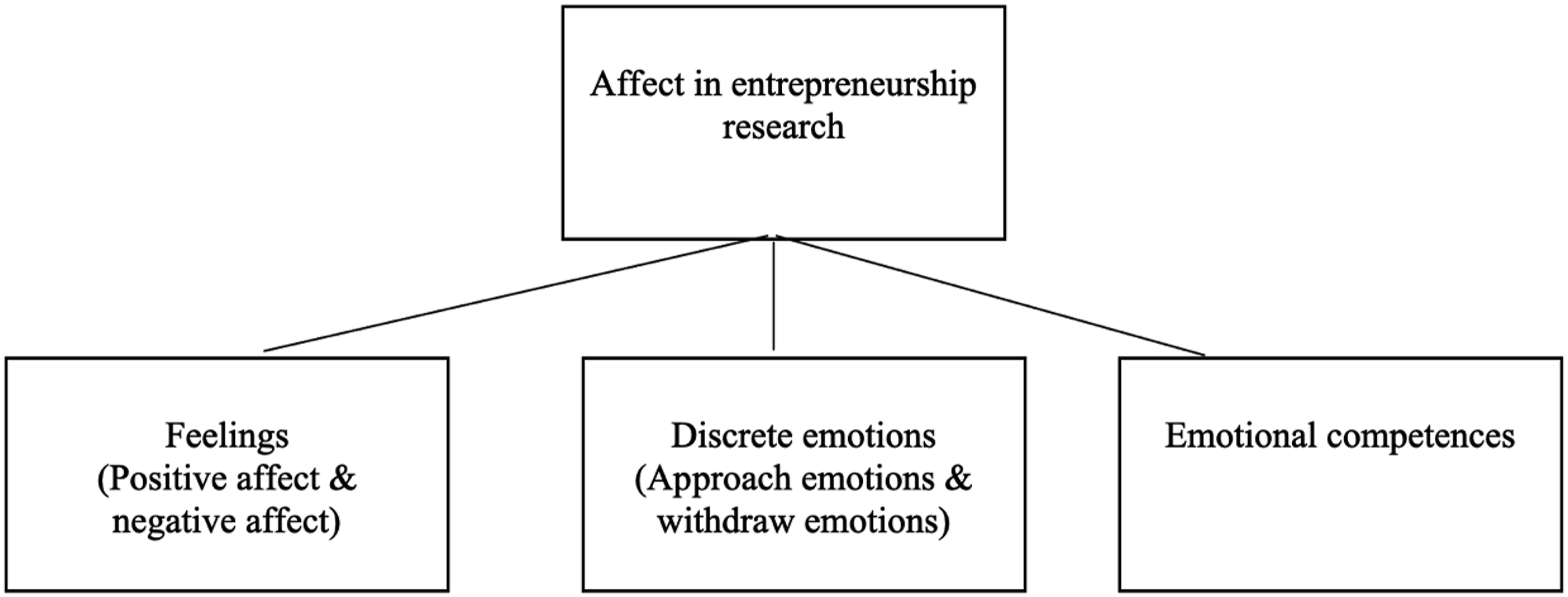
As a field of scholarship develops, periodic critical examinations are warranted to take stock of what has been done and how the various pieces fit together and to use that information to uncover areas for inquiry. Individual studies “have limitations of time-, sample- and context-specificity,” so that any single study “illuminates only one part of a larger explanatory puzzle” (Davies, 2000, p. 366), leaving researchers with “the big task and the big problem” of integrating disparate investigations (Wales, Gupta, & Mousa, 2013, p. 358). Moreover, groups of adherents (or invisible colleges; Crane, 1972) tend to sprout around certain concepts and methodologies, which can influence—and bias—future knowledge development. Formal inquiries into rapidly growing research streams—such as the present effort—can help consolidate and analyze existing research while revealing ideational ruts and cul-de-sacs, thus playing an important role in scientific progress. In doing so, we take to heart Gilson and Goldberg’s (2015, p. 128) dictum that efforts to consolidate the extant literature should summarize and critique relevant research and then “offer future directions that are oriented toward where the literature ought to be going based on where it has been.”
In the next sections, we review research on affect in entrepreneurship using our framework, as summarized in Figure 1. We start with affect comprising feelings or discrete emotions and then cover emotional competencies. For each of these three components of affect, we discuss different types of outcomes as well as antecedents, mediators, and moderators. Next, we review methodological advances used in affect in entrepreneurship research. Finally, we identify overlooked or understudied facets of affect in entrepreneurship, providing actionable guidance for scholars interested in making novel contributions. Future research directions are included in each section of our review.
Methodology
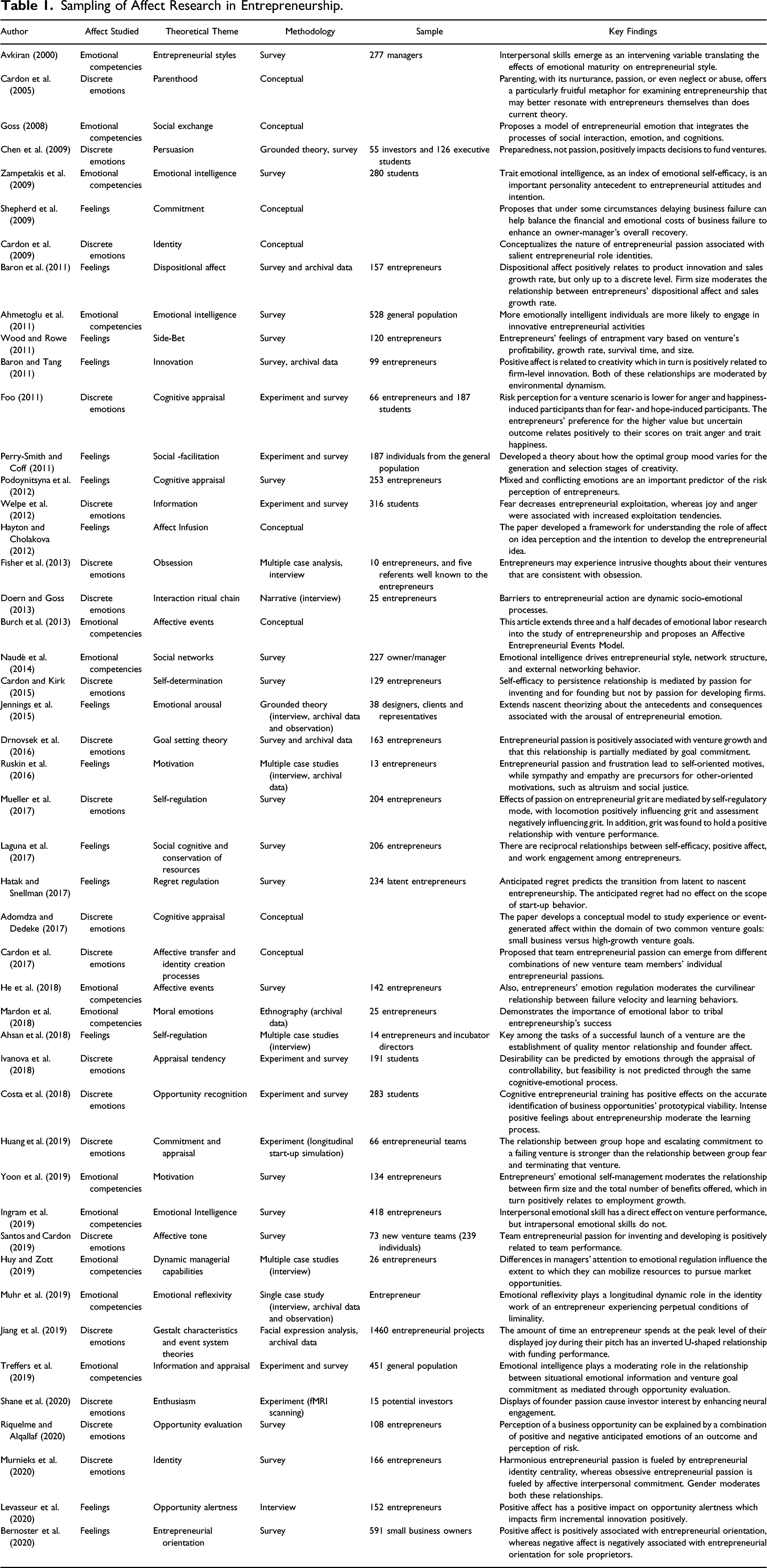
Sampling of Affect Research in Entrepreneurship.
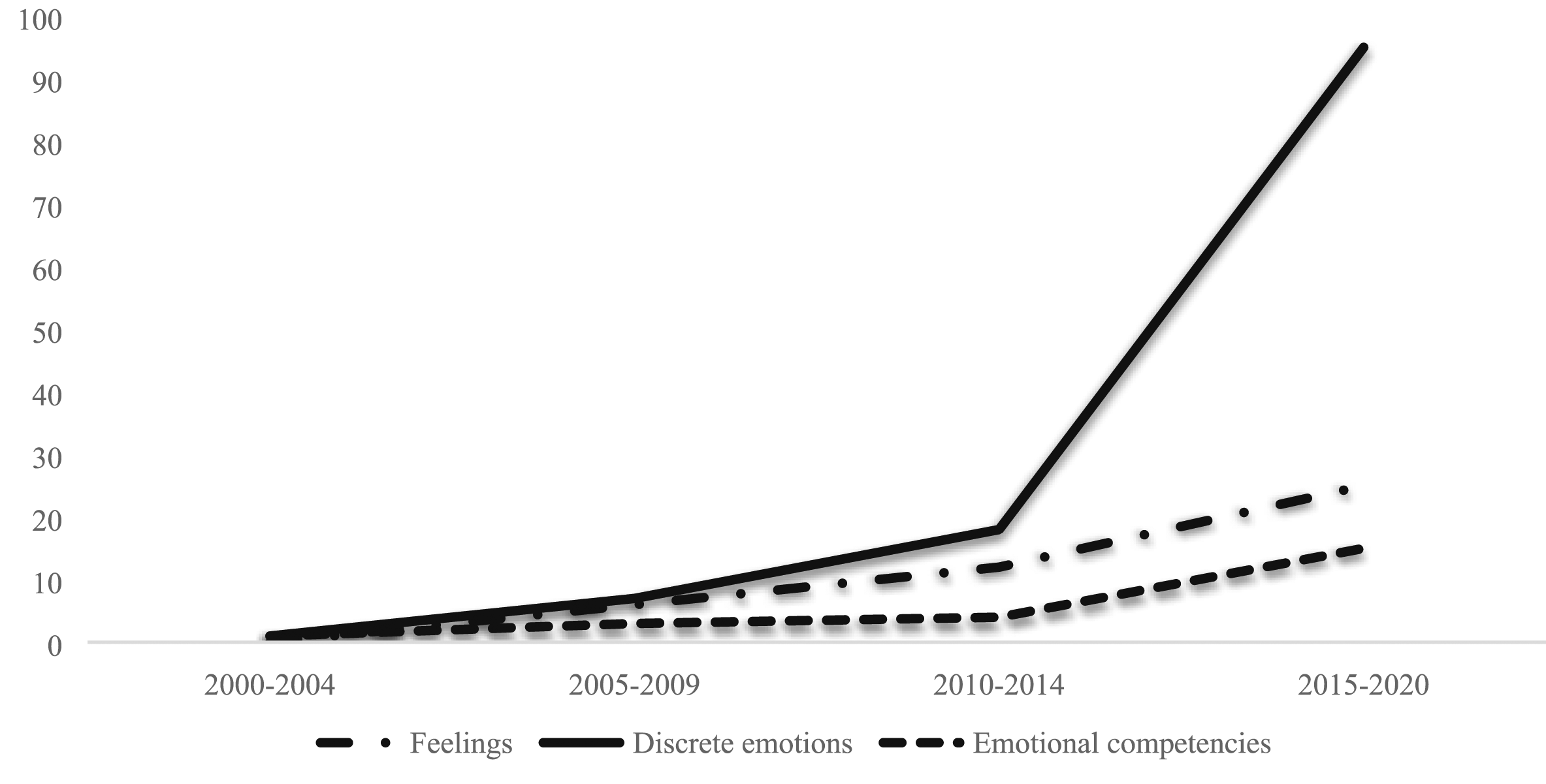
Affect in entrepreneurship research trend.
Knowledge Accumulated About Affect–Entrepreneurship Research Feelings
Feelings are categorized into two groups based on their valence: Positive affect (PA), which includes excitement, enthusiasm, inspiration, and attentiveness (Watson, Clark & Tellegen, 1988), and negative affect (NA), which includes guilt, hostility, and shame (Watson et al., 1988). In this section, we discuss entrepreneurship research on PA and NA, which focused on valence as the only attribute of affect. This stream of research generally points toward the favorable implications of PA and mixed outcomes of NA for entrepreneurs. Figure 3 shows the summary of the research on feelings, which we discuss in detail below. Research on feelings.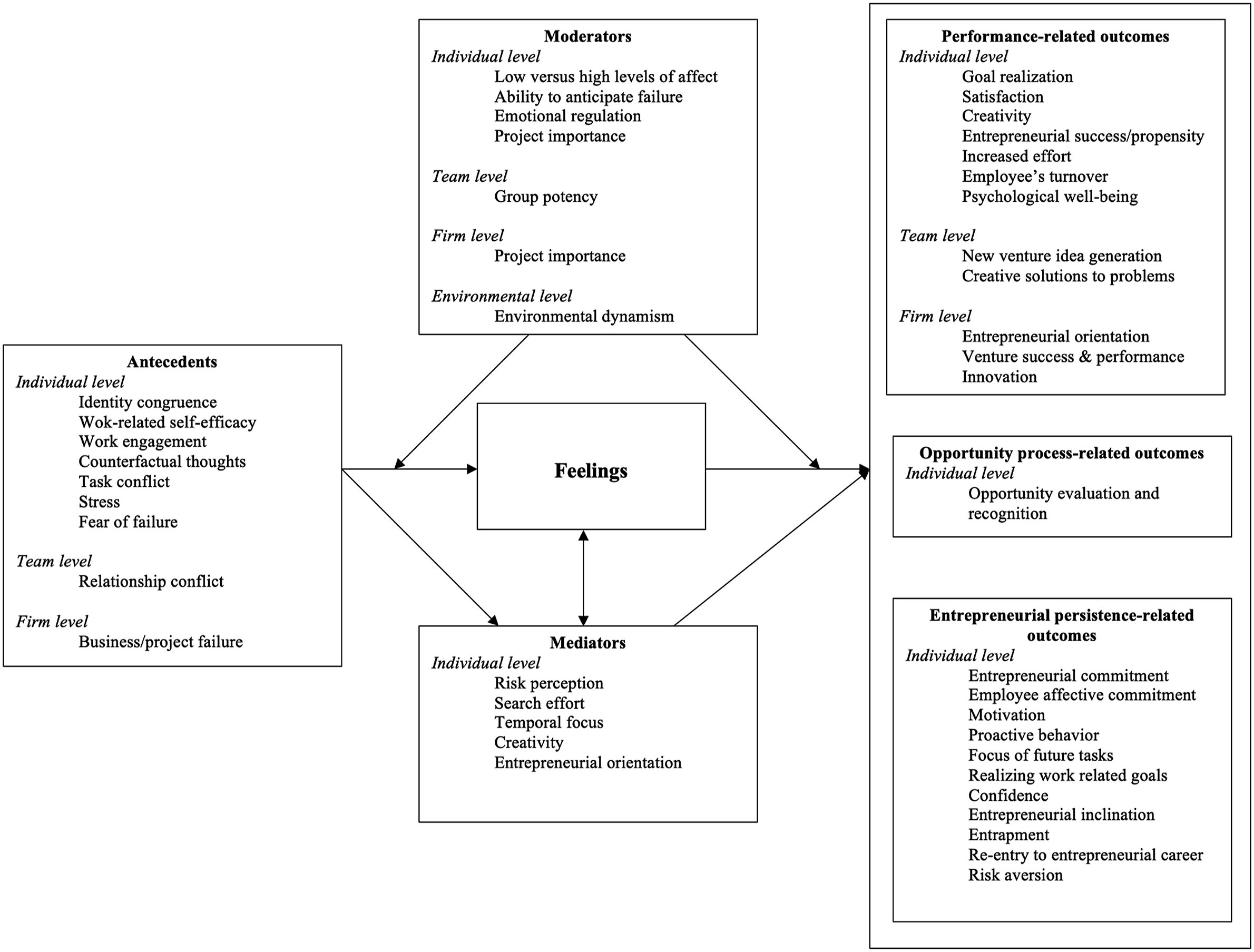
Outcomes of Feelings
Feelings and Performance-Related Outcomes
Evidence points toward the favorable implications of entrepreneurs’ PA on performance at the individual (Gorgievski, Moriano, & Bakker, 2014) and firm levels (Levasseur, Tang, Karami, Busenitz, & Kacmar, 2020). Yet, findings are mixed regarding the influence of entrepreneurs’ NA on performance-related outcomes, including at the individual (Delgado-García, Rodríguez-Escudero, & Martín-Cruz, 2012), team (Perry-Smith & Coff, 2011), and firm levels (Bernoster, Mukerjee, & Thurik, 2020).
PA broadens entrepreneurs’ scope of knowledge, attention, and cognition and helps entrepreneurs assemble resources to take the business forward (Ahsan, Zheng, DeNoble, & Musteen, 2018), satisfaction with business performance (Delgado-García et al., 2012), venture success (Bernoster et al. 2020), creativity (Hayton & Cholakova, 2012), and firm-level innovation (Levasseur et el. 2020). The favorable effects of PA on creativity and innovation are more pronounced in dynamic and uncertain environments than in stable environments because the former produces high activation (Baron & Tang, 2011); high activation affect (e.g., excitement) is more energizing than low activation affect (e.g., calm; da Motta Veiga, Sun, Turban, & Foo, 2021).
While most studies document favorable outcomes of PA, high PA can also have unfavorable consequences. Entrepreneurs have higher PA than non-entrepreneurs (Baron, Tang, & Hmieleski, 2011), which can prove detrimental owing to optimism bias (Baron, 2007), resulting in errors in selecting ideas for new products (Adomdza & Baron, 2013).
NA appears to have mixed effects on performance. It has been shown to have negative effects on some performance-related outcomes but positive effects on others. For example, using data of 337 Dutch sole proprietors and 254 French small business owners, Bernoster et al. (2020) found that NA is negatively associated with entrepreneurial orientation and entrepreneurial success at the individual and firm levels. It has also been found that NA drives entrepreneurs to set short-term goals, leading to lower satisfaction with their business (Delgado-García et al., 2012). Conversely, NA has been shown to result in positive outcomes, such as enhanced creativity (Jennings, Edwards, Jennings, & Delbridge, 2015). Unpleasant moods at the team level have also been found to help groups select more useful ideas (Perry-Smith & Coff, 2011) and trigger creative solutions to problems (Jennings et al., 2015), presumably because a negative mood signals that a situation is hostile and causes people to conscientiously evaluate ideas. This logic is consistent with the work of Foo, Uy, and Baron (2009), who found that NA causes entrepreneurs to increase their efforts so as to accomplish urgent tasks.
Wolfe and Shepherd (2015) showed that the negative or positive outcomes of NA are dependent on low versus high levels of NA. Based on computer-aided text analysis of narratives of press conferences, their study found that head coaches’ discussion of the team’s first loss with negative emotional content has an inverse U-shaped relationship with subsequent performance (so that negativity is good, but only up to a point).
In sum, research suggests that NA can result in both beneficial and detrimental outcomes for entrepreneurs. We find, based on the studies analyzed here and consistent with affect-as-information (Schwarz & Clore, 1988), that performance outcomes depend on affect type. Because NA signals that a situation is unfavorable (Schwarz & Clore, 1988), it should be associated with risk aversion and lower satisfaction. However, to address this unfavorable situation, NA drives task effort, which could result in success (Foo, 2011); effort is also needed to be creative (Conti, Coon, & Amabile, 1996).
Feelings and Opportunity-Related Outcomes
Researchers have examined the favorable effects of PA on opportunity process through the effects of risk perception (Podoynitsyna, Van der Bij, & Song, 2012) and search effort (Foo, Uy, & Murnieks, 2015). NA, by contrast, has been shown to cause entrepreneurs to evaluate opportunities negatively (Grichnik, Smeja, & Welpe, 2010), but we have limited understanding of the indirect effects of NA. Also, process-related outcomes are more likely to change with past entrepreneurial experience for those experiencing PA versus those experiencing NA since entrepreneurs experiencing PA are more likely to rely on previous information gained from past experience (Baron, 2008). Thus, PA seems to have positive implications for opportunity-related outcomes.
Feelings and Entrepreneurial Persistence–Related Outcomes
Entrepreneurs operate under uncertainty so that they have to remain committed to increase their chances of success (Foo et al., 2009). Scholars have long been interested in finding out why some entrepreneurs persist but others do not. Ruskin, Seymour, and Webster (2016) found that social entrepreneurs experience positive emotions such as sympathy, which motivate them to engage in working toward societal benefit. Research suggests that PA, which is associated with “high energy, full concentration, and pleasurable engagement” (Watson et al., 1988, p. 1063), broadens individuals’ scope of attention, allowing them to engage in proactive behaviors. For example, using the experience sampling methodology (ESM), Foo et al. (2009) found that PA helps entrepreneurs anticipate and focus attention on future events, enhancing effort on future-oriented tasks. In a longitudinal field study with Polish entrepreneurs, Laguna, Razmus, and Żaliński (2017) found that positive goal-related affect helps entrepreneurs realize their work-related goals and increases work-related self-efficacy and work engagement. Entrepreneurs’ PA influences not only their own commitment but also enhances their employees’ work engagement and commitment. Brundin, Patzelt, and Shepherd (2008) found that when managers display confidence and satisfaction concerning entrepreneurial projects, employees are more willing to act entrepreneurially.
NA, by contrast, appears to have mixed effects on entrepreneurial persistence. There is some evidence that NA can undermine entrepreneurial persistence. For example, when managers display NA such as frustration, worry, and bewilderment concerning entrepreneurial projects, employees are less willing to act entrepreneurially (Brundin et al., 2008). Similarly, Wood and Rowe (2011) found that entrepreneurs with high dispositional fear of failure are more likely to feel trapped in a venture, although as ventures became more successful, there was less sense of entrapment.
There is also evidence for positive outcomes of NA. Although NA such as grief can be a debilitating experience, it can also segue into recovery and even facilitate reentry into the entrepreneurial career, as grief can in some instances motivate new learning (Shepherd, 2003). In fact, grief is known as one of the distinctive phases of post-entrepreneurial business failure, which entails reflecting and learning from business failure experiences (Amankwah-Amoah, Boso, & Antwi-Agyei, 2018), and is considered to be a positive outcome of failure. Other research has also shown that, for example, delaying business failure may allow entrepreneurs to experience anticipatory grief during a slower letting-go process, which helps them balance the financial and affective costs of failure and thereby enhances their overall recovery and ability to take subsequent action (Shepherd, Wiklund, & Haynie, 2009). Building on this work on the consequences of failure, Shepherd, Haynie, and Patzelt (2013) proposed numerous moderators of the failure-to-NA linkage, including project importance, ability to anticipate failure, desensitization to failure, and emotion regulation capability. In a similar vein, Hunter, Jenkins, and Mark-Herbert (2020) found that fear of failure can motivate entrepreneurial action among active entrepreneurs who believe they have the necessary abilities and skills to deal with failure. Relatedly, Hatak and Snellman (2017) found that anticipated regret pushes latent entrepreneurs toward engaging in business start-up behavior.
Overall, NA results are mixed. NA can result in lower entrepreneurial persistence because of heightened perceptions of risk, but also results in perceptions of a situation being unfavorable, spurring persistence to correct the situation (Schwarz & Clore, 1988) and motivation to avoid regret (Hatak & Snellman, 2017). These factors mitigate, and in some instances can flip, the negative association between NA and entrepreneurial persistence.
Research Gaps and Opportunities for Future Directions
Future PA Research
To better understand the role of PA on opportunity-related outcomes, we need to consider the role of past experience (Baron, 2008). Thus, we encourage future researchers to examine the moderating role of past experience in the relationship between PA and opportunity-related outcomes. We observe increasing work on the origins of PA, with researchers using cognitive-related theories such as social identity theory and cognitive appraisal theory to understand how PA originates in entrepreneurs. Murnieks, McMullen, and Cardon (2019) showed that PA can be influenced by the extent to which entrepreneurs experience the congruence between their self-identity and the prototypical entrepreneur social identity, particularly in highly dynamic environments. Laguna et al. (2017) found that work-related self-efficacy and work engagement lead to PA and specifically more enthusiasm. However, further research is needed to better understand how certain events (e.g., securing a business grant) and milestones (e.g., reaching a certain number of followers on social media) can generate PA for entrepreneurs. Researchers could use the affective events theory (Weiss & Beal, 2005; Weiss & Cropanzano, 1996), which sees events as the proximal causes of affective states.
Our analysis reveals that the majority of research on PA focuses on experienced PA. However, beyond experienced affect, people are influenced by what future affect they anticipate would result from their actions or decisions (Lowenstein & Lerner, 2003). However, there is limited research on anticipated PA in entrepreneurship. Anticipated PA is a promising research area, since entrepreneurs operate in an uncertain environment and have to speculate on various potential outcomes and how they could feel if each occurs. For example, Li (2011) found that anticipated feelings about potential outcomes of starting a venture (hope) boost the likelihood of successful venture creation. We recommend that future researchers look into anticipated affect in addition to experienced affect.
A specific area for future research is on PA and entrepreneurial health, a consequential outcome to the focal entrepreneur. There is growing interest in entrepreneurs’ physical and mental well-being (White & Gupta, 2020; Wiklund, Nikolaev, Shir, & Foo, 2019). Stress is ubiquitous among entrepreneurs (Uy et al., 2017), and PA acts as a stress-buffering resource, mitigating the negative influence of stress on entrepreneurs’ health (Cardon & Patel, 2015). Furthermore, the entrepreneurial journey is full of ups and downs, which deplete entrepreneur’s psychological resources (Uy et al., 2017). High-quality sleep seems to be a significant mechanism for entrepreneurs to recover waning psychological resources, allowing them to feel excited and inspired (Williamson, Battisti, Leatherbee, & Gish, 2019). Although research on PA and entrepreneurial health is still nascent, given the interest in this topic (Wiklund et al., 2019) and methodological advances that can provide real-time measurements of affect (e.g., smart watches revealing data that can proxy affect, such as blood pressure and pulse rate changes), we see this as a fertile area for inquiry. This inquiry is especially relevant currently given the effect of the COVID-19 pandemic on small businesses and individual health (Trougakos, Chawla, & McCarthy, 2020).
Future NA Research
Less attention has been paid to antecedents and outcomes of NA than to those of PA. Because the influences of NA tend to be stronger than those of PA (Fredrickson, 2001), including for self (e.g., on one’s thoughts, actions, and behaviors) and others, studying NA can improve understandings of what drives entrepreneurial motivation, learning, and outcomes. However, most research on NA relates to its effects on the focal entrepreneur, so that research on how entrepreneurs can arouse NA in others is also needed (Schwarz & Clore, 1988). For instance, Barberá-Tomás, Castello, De Bakker, and Zietsma (2019) found that social entrepreneurs can elicit NA in other people by presenting them with shocking images and words (e.g., an image of a bird killed from eating plastic), inspiring action to address social issues. It would be interesting to investigate how commercial entrepreneurs can use NA in customers or investors for their own benefit. For example, how do entrepreneurs use customers’ frustration with competitors’ products to promote their own?
Moreover, research on antecedents of NA remains limited. We know that business failure triggers NA (Grichnik et al., 2010) such as grief, sadness, regret (Shepherd, 2003), and fear (Hunter et al., 2020). There is room for future research to investigate other possible cognitive- and event-related antecedents of NA, such as work–family conflict, entrepreneurial team disagreements, and rejection of financial assistance.
Entrepreneurship, with its affective ups and downs, can be emotionally draining (Uy et al., 2017). Despite the high emotional context of engaging in entrepreneurship, self-employed people experience less NA than employed individuals—contingent on emotion regulation (which we review in a later section), being engaged in an activity that they are passionate about (Cardon et al., 2009). The studies we reviewed reveal the need to educate potential entrepreneurs on how to manage NA so that they can cope with, and perhaps learn from, it. We encourage researchers to examine the mechanisms and boundary conditions that affect entrepreneurs’ capabilities to manage NA.
PA and NA Level of Analysis
We encourage future researchers of PA and NA to expand the level of analysis beyond the individual level and investigate the antecedents and outcomes of PA and NA at the team level. Entrepreneurship is a multilevel phenomenon (Low & Macmillan, 1988; Chiles, Bluedorn, & Gupta., 2007), as is affect (Ashkanasy, 2003). However, the studies we found predominantly studied PA at the individual level, even though teams can also come together to evaluate and exploit opportunities. Moreover, due to emotion contagion effects, affective influences can be stronger in teams, with the affect experienced by one member shared or held by other members (Huang, Liu, Cheung, & Sun, 2021). Emotion contagion is especially salient if the affect is exhibited by an influential member, such as the leader (Volmer, 2012). We observed the same issue with regard to NA. Although many entrepreneurial ventures are started by teams (Chen & Zhang, 2021), most papers on NA in entrepreneurship are at the individual level (e.g., experiencing failure). Because of the challenging entrepreneurial environment, disagreements among team members are common, creating task and relationship conflicts (Foo, 2011). However, the link between conflict and NA is unclear. For example, Breugst and Shepherd (2015) found that relationship conflict increases NA in both field and laboratory settings, whereas task conflict increases NA in the field but not in a lab study setting. Furthermore, task conflict appears to increase NA in teams, all the more so when uncertainty is high, because team members feel that engaging in lengthy conversations to resolve task conflicts is inefficient and unproductive (Breugst & Shepherd, 2015). The ubiquity of venture teams motivates us to call for more research into how interactions among team members can result in NA and into the consequences of NA for team functioning and venture outcomes (e.g., see Chi & Lam (2021) work on the impact of negative group affective tone on creativity in high-tech teams). Although building and testing models of affect at multiple levels is challenging (Ashkanasy, 2003), the reality of entrepreneurial endeavors is that a majority of high-growth firms are founded by teams (e.g., Klotz, Hmieleski, Bradley, & Busenitz, 2014). Interactions among team members are likely to have affective content, and future scholarship should incorporate multiple levels of analysis and multiple paths of affective influence among team members.
Exploring the Effects of Stakeholder PA and NA on Entrepreneurs
Beyond the founding team, entrepreneurs need to network with others, such as advisors and investors, to garner resources from their social networks and contacts. Because of the importance of external stakeholders, social competence is important to achieving entrepreneurial success (Baron & Markman, 2003; Baron & Tang, 2009; Murnieks, Cardon, & Haynie, 2020). However, we found few studies that explore the role of other stakeholders’ affect in the entrepreneurial process. We acknowledge notable exceptions, such as Chen, Yao, and Kotha (2009); Breugst, Domurath, Patzelt, and Klaukien (2012); and Davis, Hmieleski, Webb, and Coombs (2017), who studied how the affective expressions of entrepreneurs influence other stakeholders, such as potential investors (see also Jiang, Yin, & Liue, 2019). However, other stakeholders, such as customers, employees, and partners, have been missing from this stream of research. We also encourage further research into how stakeholders’ affect, including their PA and NA, impacts entrepreneurs. Given that the socio-emotional interaction of entrepreneurs and others in their environment is an important area of inquiry (Biniari, 2012), better understanding the affective nature of such interactions is essential.
Gender Distinctions in PA and NA
Gender is an important theme in entrepreneurship research (Jennings & Brush, 2013), with researchers studying who becomes an entrepreneur (Gupta, Turban, & Bhawe, 2008), the funding entrepreneurs receive (Malmström, Johansson, & Wincent, 2017), and how funders approach entrepreneurs during their pitches (Kanze, Huang, Conley, & Higgins, 2018). We observe that for affect research in entrepreneurship, gender is used primarily as a control rather than as a variable of substantive interest (see Murnieks et al., 2020 for an exception). We find little research about the influence of gender on affective experiences, including PA and NA, affective expressions, or affective outcomes in entrepreneurship. Gender stereotypes—cultural beliefs about the qualities of men and women—could cause the same affect to hold different implications for men and women. For example, expressions of fear may be perceived as acting judiciously for men but as a weakness for women, whereas anger may be viewed as symptomatic of toxic masculinity for men but a strength for women in entrepreneurship. More research can investigate gender influences on how affect is experienced, conveyed, and interpreted (Fischer, 2000; Ragins & Winkel, 2011; Shields, 2005).
Discrete Emotions
In this section, we cover articles on discrete emotions in entrepreneurship research, including emotions such as joy, fear, happiness, and passion. When studying discrete emotions, attention is paid to arousal components (e.g., intensity of emotion) in addition to valence components (Russell, 1980). Among the implications of this approach, emotions that have the same valence can produce different outcomes. For example, although both hope and happiness have positive valence, hope-induced individuals have higher risk perceptions than happiness-induced individuals (Foo, 2011), because hope is associated with low certainty and situation control, whereas happiness is associated with high certainty and individual control (Foo, 2011). Additionally, high arousal is often linked with approach discrete emotions (e.g., passion and anger) but low arousal with withdraw discrete emotions (e.g., fear; Devos, Silver, Mackie & Smith, 2003; Frijda, Kuipers, & Ter Schure, 1989; Roseman, Wiest, & Swartz, 1994).
Among discrete emotions, passion, or intense positive emotions (high arousal, positive valence) experienced by engaging in activities one likes (Cardon, Wincent, Singh, & Drnovsek, 2009), has drawn the most interest in the entrepreneurship literature. The interest in this topic is reflected in a recent literature review (e.g., Newman, Obschonka, Moeller, & Chandan, 2021), meta-analysis (Pollack, Ho, O’Boyle, & Kirkman, 2020), and book (Cardon & Murnieks, 2020) on this topic. Entrepreneurship researchers have studied passion generally in terms of an overall intense interest or liking for entrepreneurship (e.g., Murnieks, Mosakowski, & Cardon, 2014); for specific sub-identities, such as inventor, founder, and/or developer (Cardon et al., 2009); and more recently passion for a product (Lewis & Cardon, 2020). Passion may be internalized either harmoniously or obsessively (e.g., Ho & Pollack, 2014), a topic to which we will return later. Figure 4 shows the summary of the research on discrete emotions which we will discuss below. Research on discrete emotions.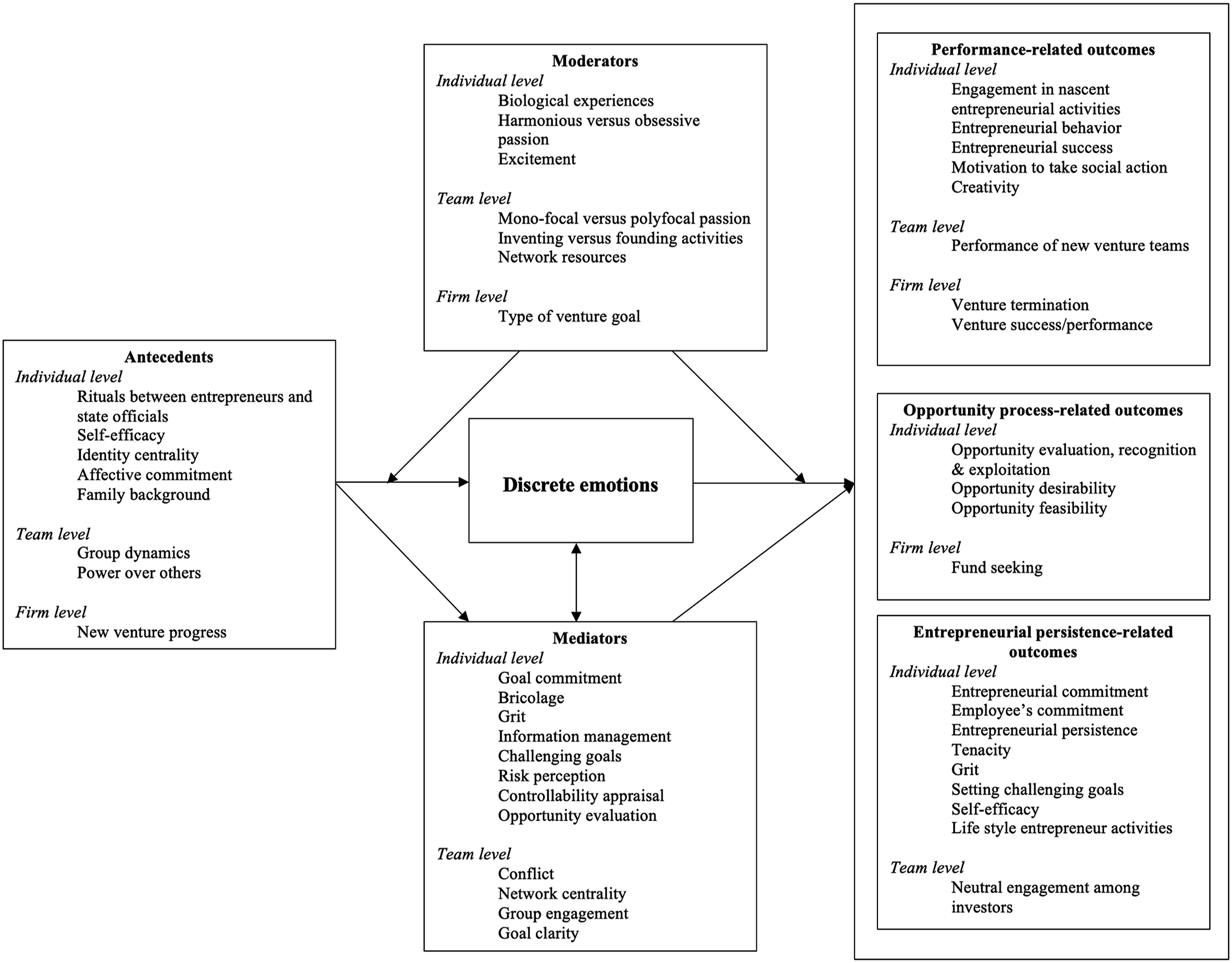
Discrete Emotions and Outcomes
Discrete Emotions and Performance-Related Outcomes
Studies in this category examine the effects of discrete emotions such as pride (Goss, 2005), shame (Doern & Goss, 2013), joy (Jiang et al., 2019), fear and hope (Haung, Souitaris, & Barsade, 2019), and passion (de Mol, Cardon, de Jong, Khapova, & Elfring, 2020) on performance-related outcomes ranging from engagement in nascent entrepreneurial activities (Hatak & Snellman, 2017) to entrepreneurial actions (Goss, 2005) and venture termination (Haung et al., 2019). Researchers have examined these associations with performance for individuals (Fisher, Merlot, & Johnson, 2018), teams (Santos & Cardon, 2019), and firms (Mueller, Wolfe, & Syed, 2017). Also, some of the discrete emotions studied are socially embedded and impact the innovativeness and behaviors of others. For example, eliciting emotions of pride and shame, such as through giving and withholding deference, can motivate action that resists the innovation-inhibiting effect of social situations (Goss, 2005).
Passion has been linked to outcomes such as entrepreneurial creativity (Cardon et al., 2009), entrepreneurial success (Fisher et al., 2018), and venture performance (Drnovsek et al., 2016; Mueller et al., 2017). Although passion has generally been linked with positive outcomes, some forms of passion can result in negative outcomes. For example, Ho and Pollack (2014) found that entrepreneurs who are high on obsessive passion receive fewer referrals from peers and accrue lower income, whereas the reverse is true of harmonious passion.
There is also growing research on passion in entrepreneurial teams (or team entrepreneurial passion [TEP]; Cardon et al., 2017). de Mol et al. (2020) found that TEP has no significant direct short- or long-term performance implications. The effects of TEP may be contingent on various factors and through various mediating mechanisms. For example, Santos and Cardon (2019) show that TEP does not unilaterally improve team performance but rather is contingent on the type of TEP (monofocal or polyfocal 4 ) and activities (inventing and founding) exhibited by the new venture teams. Based on survey data from 86 new venture teams, Boone, Andries, and Clarysse (2020) examined the influence of TEP on team performance in new venture teams, finding that TEP decreases relationship conflict, which in turn benefits team performance.
Although various mediating mechanisms have been proposed, limited consideration has been given to moderators. We know that goal commitment (Drnovsek, Cardon, & Patel, 2016), bricolage (Stenholm & Renko, 2016), network centrality (Ho & Pollack, 2014), grit (Mueller et al., 2017), group engagement (Haung et al., 2019), management of information (Adomdza & Dedeke, 2017), and challenging goals (Drnovsek et al., 2016) mediate the relationship between discrete emotions and performance-related outcomes. Our understanding of moderators is limited to the roles type of founding goal (Adomdza & Dedeke, 2017), network resources, and biological experiences (Doern & Goss, 2013).
Discrete Emotions and Opportunity Process–Related Outcomes
Research suggests that discrete emotions when evaluating a business opportunity are crucial (Riquelme, & Alqallaf, 2020). The direct effect of discrete emotions on the opportunity process, as well as indirect effect through risk perceptions (Riquelme, & Alqallaf, 2020) and controllability appraisal (Ivanova, Treffers, & Langerak, 2018), has been examined. However, discrete emotions appear to have a differential effect on the various opportunity processes. For example, anger, fear, and happiness predict the desirability of an entrepreneurial opportunity but not its feasibility (Ivanova et al., 2018). Also, whereas some discrete emotions seem to be beneficial for opportunity identification and evaluation, support is mixed for the connection between the same emotions and opportunity exploitation. For example, using an experimental setting in which 144 cofounders and employees of young German entrepreneurial firms were induced with joy using a video clip, Grichnik et al. (2010) found that consistent with the affect-as-information perspective (Schwarz & Clore, 1988), joy positively influences opportunity evaluation but negatively influences exploitation. Grichnik et al. (2010) reasoned that because business exploitation entails risk, those experiencing joy avoid taking risks so that they can maintain their positive state (i.e., affect maintenance). However, in a questionnaire-based experimental study with graduate German students, Welpe, Spörrle, Grichnik, Michl, and Audretsch (2012) found that joy increases exploitation mediated by opportunity evaluation, seemingly contradicting the findings of Grichnik et al. (2010). Perhaps entrepreneurs are more aware of the risks of business failure than students, which could reduce joy among the former compared with the latter. In sum, the results on the effects of discrete emotions (except for passion) on opportunity process–related outcomes seem to be mixed.
More consistency is seen for the effects of passion on opportunity-related outcomes when research examines only the display and experience of passion without considering different types of passion (e.g., harmonious vs. obsessive; Vallerand et al., 2003). Overall, research suggests that displaying and experiencing passion results in favorable outcomes. For example, Costa, Santos, Wach, and Caetano (2018) found that high levels of passion are associated with more accurate evaluation of business opportunities by motivating attention to the task. Displayed passion also seems helpful when seeking financial resources from angel investors (Mitteness, Sudek, & Cardon, 2012), informal investors (Shane, Drover, Clingingsmith, & Cerf, 2020), and crowdfunders (Li, Chen, Kotha, & Fisher, 2017), because passion is a strong signal of how motivated entrepreneurs are to build their ventures (Chen et al., 2009). However, when different types of passion are considered, results are not as straightforward. Specifically, Klaukien, Shepherd, and Patzelt (2013) found that although harmonious passion positively influences managers’ decision to exploit opportunities, the effect of obsessive passion is contingent on the high level of excitement that managers experience from non–work-related activities.
Discrete Emotions and Entrepreneurial Persistence–Related Outcomes
Among different discrete emotions, research has mainly investigated persistence-related outcomes of passion. Entrepreneurial passion has been shown to have positive implications for persistence (Cardon & Kirk, 2015), tenacity and grit (Mueller et al., 2017), setting more challenging goals (Drnovsek et al., 2016), self-efficacy, and entrepreneurial behavior (Murnieks et al., 2014). Entrepreneurs’ passion also increases commitment among their employees through goal clarity (Breugst et al., 2012; Cardon, 2008). Passion triggers neural engagement among investors evaluating pitches (Shane et al., 2020) and influences individuals’ willingness to engage in business activities as a lifestyle entrepreneur (Guercini & Ceccarelli, 2020).
Research Gaps and Opportunities for Future Directions
Antecedents of Discrete Emotions
Only a handful of articles in the sample explore the antecedents of discrete emotions. Goss (2005) argued that entrepreneurial emotions will be particularly strong when an individual actively participates in group rituals, especially when the individual has power over others in the group, whereas exclusion from group membership and having to take orders generate strong negative emotions. Doern and Goss (2013) showed that shame can result from power rituals between entrepreneurs and state officials, which may impair entrepreneurial motivation. We also know little about the sources of entrepreneurial passion, although more work is emerging on this topic (e.g., Gielnik, Uy, Funken, & Bischoff, 2017). Passion seems to result from self-efficacy (Cardon & Kirk, 2015), entrepreneurial effort through new venture progress (Gielnik, Spitzmuller, Schmitt, Kleisma, & Freese, 2015), identity centrality (Murnieks et al. 2014), and affective commitment (Murnieks et al. 2020). Studies on family background also suggest that passion is developed through the socialization process (Stenholm & Nielsen, 2019).
To better understand the antecedents of discrete emotions, we need to have a better understanding of not only the sources of positive versus negative activation of emotions but also factors that influence emotions’ intensity. For example, research in psychology has indicated that discrete emotions with different valence and intensity arise from individuals’ disadvantaged position compared with others’ (Osborne, Amith, & Hua, 2012). Given the documented unequal access to entrepreneurial resources among individuals from different social status (e.g., women and Black entrepreneurs; Fairlie, Robb, & Robinson, 2021; Jennings & Brush, 2013), meaningful contributions can be built on how inequality in entrepreneurship may generate different forms of discrete emotions. These generated emotions can then help us build insights into why ventures owned by women and minorities have lower performance outcomes.
Research on entrepreneurial intentions might also be a possible avenue for informing antecedents of entrepreneurial passion. In addition to having entrepreneur parents (Laspita, Breugst, Heblich, & Patzelt, 2012), other predictors of entrepreneurial intentions include work experiences (Lee, Wong, Foo, & Leung, 2011) and even so-called dark-side traits such as ADHD (Verheul et al., 2015). These predictors could result in entrepreneurial passion through perceived job fit (Hsu et al., 2019).
Potential Moderators
As discussed, results on the effects of discrete emotions (expect for passion) on opportunity-related outcomes seem to be mixed. A possible solution for resolving these mixed findings would be for future researchers to explore contextual factors or moderators that may result in emotions of the same valence having different outcomes. Research suggests that demographics such as age and gender as well as cultural differences moderate the magnitude of the discrete emotion on cognitions, judgments, experiences, and behaviors (Lench, Flores, & Bench, 2011). Future research can examine whether the same moderating effects are observed in the entrepreneurship context.
Our review also indicated that different types of passion may result in different outcomes. Particularly since the influential paper by Cardon et al. (2009), most entrepreneurship studies have defined passion as experiencing positive affect in an identity central activity. We believe that it may be time to move beyond Cardon et al.’s conceptualization of entrepreneurial passion (i.e., inventing, founding, and growing). Researchers are starting to realize that other passion types are important in entrepreneurship, such as for the product (Lewis & Cardon, 2020); context can also elicit other passion types, such as for scientific progress in academic entrepreneurship (Huyghe, Knockaert, & Obschonka, 2016). We also encourage more research using the dualistic model of harmonious and obsessive passion, which covers both desirable and undesirable aspects of passion (Vallerand, 2010). Research using this model can extend to its antecedents. For example, Murnieks et al. (2020) finds that entrepreneurial identity centrality drives harmonious passion and that affective interpersonal commitment triggers obsessive passion for men but not women. Moreover, whereas most studies have documented the positive aspects of passion on persistence, we see potential in studying the negative aspects of passion. For example, passion may lead to dysfunctional outcomes, such as rigid persistence and failure to pivot when needed (Mitteness et al., 2012). Thus, in addition to different types of passion, it would be beneficial to study the negative aspects of passion.
Concurrent Affect
Most of the articles we examined focused on only one affective experience, and it would be interesting to explore multiple concurrently experienced discrete emotions (e.g., fear and hope). Research investigating a broader range of affective experiences and how they work in conjunction or competition with one another is warranted. For example, positive (compassion) and negative (disappointment and grief) feelings can co-occur after failure (Williams & Shepherd, 2018). Other issues, such as how passion can be reconciled with imminent failure and grief, how hope might spark renewal in the face of severe challenges, or sadness at a personal loss, can inspire entrepreneurial activity to produce joy, fostering interesting research questions.
Within the study of concurrent affect, we encourage the study of valence and activation. Valence has been studied frequently in the entrepreneurship literature, but with little discussion of activation. To fully understand affective influences, we need to look at both valence and activation, because activation provides the energy that drives action (Foo et al., 2015). For example, activated discrete emotions (e.g., enthusiastic, alert, excited, nervous, stressed, and tense) are more conducive drivers of action than their deactivated counterparts (e.g., relaxed, contented, serene, sad, tired, and gloomy). Incorporating multiple affective experiences with different activation might be fruitful, such as how contentment and enthusiasm together motivates entrepreneurial actions. We encourage research that incorporates more divergent affective experiences as well as their potential collisions and synergies in the models.
Emotional Competencies
Emotional competencies (ECs) are the personal and social abilities displayed in individual interactions (Kierstead, 1999), which includes emotional intelligence (Ingram, Whitney, Stewart, & Watson, 2019), emotional labor (Burch, Batchelor, & Humphrey, 2013), and other affective skills (e.g., emotional maturity; Avkiran, 2000). In this section, we discuss articles on emotional intelligence (EI), emotional labor (EL), and emotional regulation (ER). Figure 5 shows the summary of the research on emotional competencies which we discuss below. Research on emotional competencies.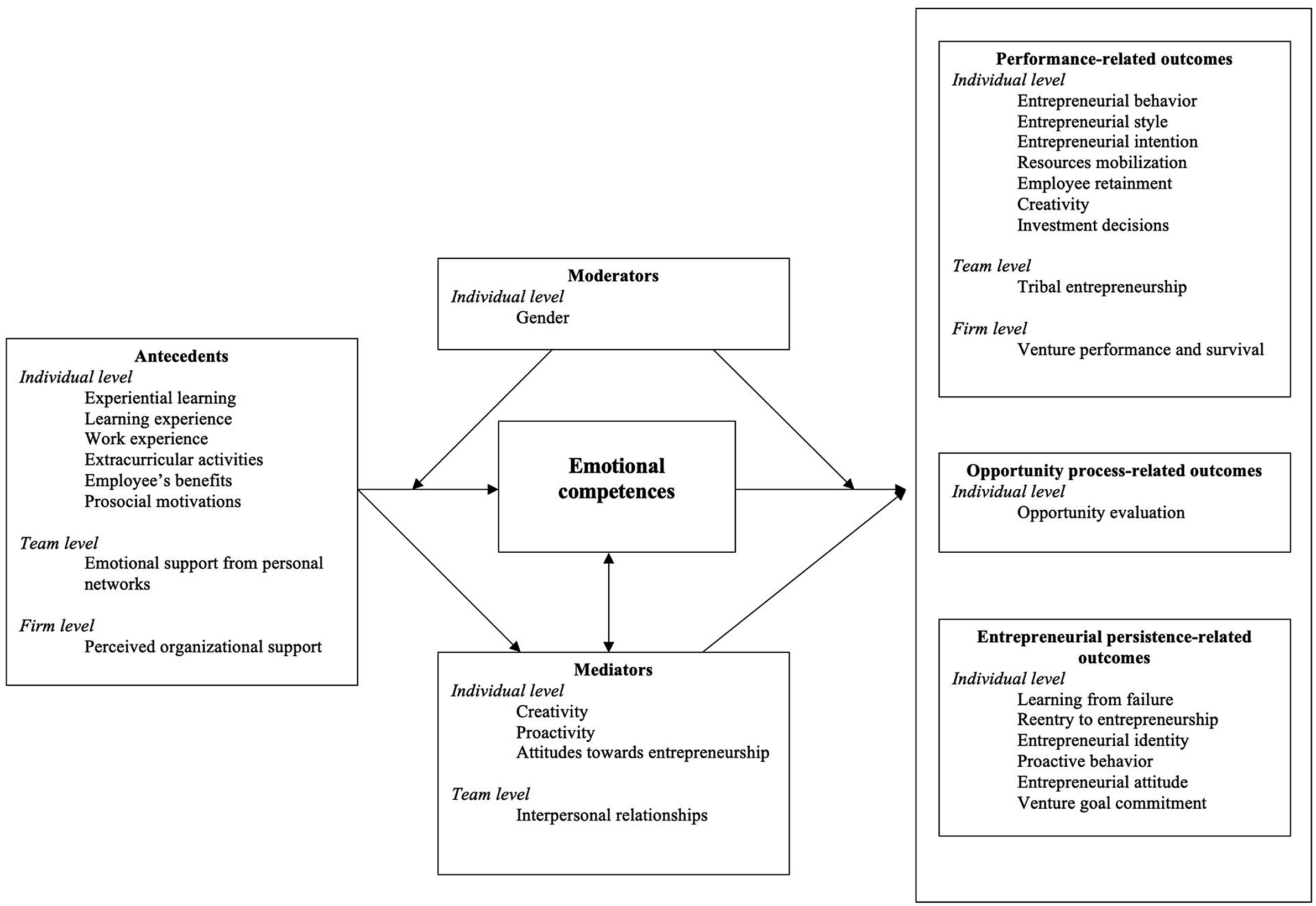
EI is a broad concept that comprises the capacity to (1) monitor one’s own and others’ affective states and (2) use affect-laden information as a guide to stimulate one’s thinking, actions, and behavior (Mayer & Salovey, 1997). There are three streams in EI research (Ashkanasy & Daus, 2005): (1) EI defined as an ability and measured using “abilities-measures” (e.g., Mayer, Salovey, & Caruso, 2002), (2) EI defined as ability and measured using self-reports (e.g., Wong & Law, 2002), and (3) EI defined as trait and measured using self-reports (e.g., Petrides, Frederickson, & Furnham, 2004). We found only a handful of papers capturing EI ability using self-report measures (e.g., Ingram et al., 2019) and fewer papers assessing the EI trait using self-reports (e.g., Ahmetoglu, Leutner, & Chamorro-Premuzic, 2011). We found no studies using abilities measures.
Whereas EI is about having a deeper understanding of oneself and others and then using this understanding to achieve one’s goals, EL entails displaying appropriate emotional expressions (Glomb & Tews, 2004). EL is defined as “displaying emotional expression in accordance to the organizational or occupational ‘display rules,’ which refer to expectations about appropriate emotional expression” (Glomb & Tews, 2004, p. 2). In 2012, Cardon et al. reported that “we do not have much evidence to date on how emotional labor might shape the entrepreneurial process” (p. 4). To date, this assertion is still true, as witnessed by the dearth of studies on this topic. In a notable exception, Mardon, Molesworth, and Grigore (2018) found that EL is effective in the success of tribal entrepreneurship (involves an online consumer tribe whose active members use social media to discuss, review, purchase, and post about beauty products).
Similarly, only a handful of studies have focused on ER. He, Siren, Singh, Solomon, and von Krogh (2018) found that ER buffers the negative emotions experienced after failure, facilitating learning that then facilitates reentry (Shepherd, 2003). Huy and Zott (2019) recognized that entrepreneurs often find constructive ways to respond to emotion-inducing work events and circumstances so that those who consciously regulate their emotions are likely to acquire and mobilize resources during strategic change. Given that individuals’ decision-making is closely related to their ability to handle their emotions (Seo & Barrett, 2007), it is surprising to see the lack of research on ER in the entrepreneurship field, where entrepreneurs’ decisions play a crucial role in the success of ventures (Baron, 2007).
Besides these three forms of EC (EI, EL, and ER), we found a handful of articles on other EC-related topics, including emotional reflexivity (Muhr, De Cock, Twardowska & Volkmann, 2019), emotional maturity (Avikiran, 2000), emotional energy (Goss, 2008), and recovery (Weinberger, Wach, Stephan, & Wegge, 2018). These articles discussed the positive effects of these capabilities on a range of outcomes from entrepreneurial behavior to entrepreneurial style and entrepreneurial identity.
EC and Performance-Related Outcomes
EI is the only dimension of EC for which performance-related outcomes have been explored in our sample. These articles suggested that EI results in better venture performance (Ingram et al. 2019). The EI-to-performance link is produced by both interpersonal (skills pertaining to recognition and management of affect in others) and intrapersonal dimensions (skills that entail awareness and management of self-affect) of EI (Ingram et al. 2019). Entrepreneurs who are skilled in regulating and managing others’ affect accrue high venture performance through better interpersonal relationships. For example, Naudé, Zaefarian, Tavani, Neghabi, and Zaefarian (2014) found that EI drives CEOs’ entrepreneurial style and activities, helping them build, maintain, and use their social network to acquire resources. EI also helps in retaining employees. Entrepreneurs high on the self-management component of EI are able to retain employees while offering fewer benefits, which helps them achieve lower overall labor costs (Yoon, May, Kang, & Solomon, 2019).
EC and Entrepreneurial Opportunity Process–Related Outcomes
As a type of emotional competence, EI influences proactive and creative behaviors, propelling the decision to start a business (Ahmetoglu et al., 2011). Interestingly, EI’s influence on entrepreneurial intentions may manifest differently for females and males. For females, EI has a positive effect on entrepreneurial attitude through creativity; for males, this effect is through creativity as well as proactivity. For both men and women, attitude toward entrepreneurship influences students’ intention to start a business. Beyond the start-up context, employees who have high EI are more likely to display entrepreneurial behavior in their organizations (Zampetakis, Baldekos, & Moustakis, 2009).
Research Gaps and Opportunities for Future Directions
While there is scholarly agreement that ECs (e.g., EI) bring about favorable outcomes for entrepreneurs (Humphrey, 2013), employees, and organizations (Baron & Markman, 2003), research on ECs in entrepreneurship is limited. Given that entrepreneurs use social skills to persuade other stakeholders to provide resources (Baron & Markman, 2003; Baron & Tang, 2009) and to manage the affective swings in the entrepreneurial journey that can negatively affect well-being (Uy et al., 2017), the lack of attention to ECs in entrepreneurship research is surprising. Although ECs can influence the cognitive and behavioral outcomes associated with affect (Lerner & Keltner, 2000), only one article has explored the moderating role of EI (Treffers, Klyver, Nielsen, & Uy, 2019), finding that EI moderates the relationship between emotional support from one’s personal network and venture goal commitment through opportunity evaluation. Individuals high on EI were found to interpret negative information in positive ways that help them evaluate new opportunities favorably and, in turn, remain committed to their venture goal despite having received discouragement from their personal network. Further studies are needed to better understand how different forms of EC (e.g., EI, ER, and EL) moderate the degree to which affect (feelings or discrete emotions) influences different entrepreneurial outcomes.
In addition to exploring the moderating effects of EC, we recommend future research to examine the antecedents of EC. We could identify only two studies examining antecedents of EC, both of which involve student participants. Padilla-Meléndez, Fernández-Gámez, and Molina-Gómez (2014) found that an outdoor training program, an experiential learning method, helped develop EC. Bonesso, Gerli, Pizzi, and Cortellazzo (2018) found that prior learning experience, work experience, and participation in international activities, and extracurricular activities, shape ECs.
We also call for more researchers on EL specifically, because entrepreneurs need to adapt their affective displays to influence stakeholders (Humphrey, 2013), such as by projecting PA while interacting with investors. EL is typically categorized as either surface acting (e.g., faking an emotion) or deep acting (reappraising to change the felt emotion). Theoretical work also suggests the importance of a third aspect of EL—expressing felt affect without regulation so as to be perceived as authentic (Burch et al., 2013; Cardon, Post & Forster, 2017), but empirical research is missing in this area. EL may even be associated with health-related outcomes. Burch et al. (2013) argue that, compared with non-entrepreneurs, entrepreneurs have greater flexibility to set norms for affective displays, resulting in greater expressive natural emotions and deep acting than in surface acting. By expressing genuine emotions or through deep acting, entrepreneurs experience less dissonance between felt and displayed emotions, which should result in less emotional exhaustion and better well-being for entrepreneurs than non-entrepreneurs. Burch et al.’s (2013) assertion remains untested, providing a straightforward avenue for future research.
Methodological Developments and Future Directions
Because most of the papers in our review are empirical (85%), analyzing methodological progress in this area is crucial to further developing affect–entrepreneurship research. A majority of empirical research in our sample are quantitative (about 70%), with a large proportion classified as cross-sectional research based on questionnaires (62%). About 74% of the sample studies assess affect among entrepreneurs, followed by about 10% among students, with employees or investors receiving considerably less attention. Several studies temporally separate independent and dependent variables (e.g., He et al., 2018), helping offset potential common method bias.
We find that 16% of our empirical sample was experimental studies, 13% of which reported lab studies with student participants “in an environment that was created for research purposes” (Colquitt, 2008, p. 616). One example of this approach is Chen et al.’s (2009) 2 × 2 factorial design (high or low passion of entrepreneurs by high- or medium-quality business plan), with investment decisions made by 126 MBA and EMBA students as the dependent variable. Because experiments are widely considered the gold standard for making causal claims (Williams, Wood, Mitchell, & Urbig, 2019), we look forward to more such studies. Our sample also includes papers based on field experiments, such as a controlled experiment to understand strategic decision-making among 133 Romanian entrepreneurs (Fodor, Curşeu, & Fleştea, 2016) and a conjoint investigation of opportunity exploitation with 90 owner–managers of young German firms (Klaukien et al., 2013). Interestingly, experiment research in our sample is dominated by between-subject design (82%), even though within-subject design is the dominant approach in entrepreneurship more generally (Stevenson, Josefy, McMullen, & Shepherd, 2020), primarily using conjoint investigations (Hsu et al., 2019). Because of the dynamic variations that typically occur in how individuals experience emotions (e.g., De Cock, Denoo, & Clarysse, 2020), researchers may want to capture within-subject variations when possible (Beal, Weiss, Barros, & MacDermid, 2005).
Experimental research in affect research can incorporate objective measures. For instance, technologies such as fMRI have been used to delve into how investors respond to the entrepreneurs’ displayed emotions when pitching their business ventures (Shane et al. 2020). As another example, Schermuly, Wach, Kirschbaum, and Wegge (2021) studied effectiveness of coaching outcomes of insolvent entrepreneurs for reducing stress (where stress was objectively measured using cortisol concentrations in hair).
A number of tools, such as daily diaries (e.g., Dashtipour & Rumens, 2018) and ESM (Uy, Foo, & Aguinis, 2010), have been developed to capture within-person affective variance (Brose, Schmiedek, Gerstorf, & Voelkle, 2020). Both approaches involve repeated measurement of the same construct for participants engaged in their daily lives, with a focus on assessing the ways in which different affective variables fluctuate over time (Fisher & To, 2012) or in response to different stimuli (e.g., Foo et al., 2009). ESM and daily diaries remain uncommon in affect–entrepreneurship research, with only 3% papers in our empirical sample using this approach. A key benefit of such studies is that they enable researchers to move beyond the simplistic—and erroneous—assumption that emotions are stable and unchangeable over time. Researchers are increasingly providing convenient ways for participants to complete the surveys; historically, such data were usually collected using paper and pencil, but today, the use of cell phones (e.g., through an app) is becoming more accepted (Foo et al., 2009; Uy et al., 2017). We encourage more longitudinal research (including diary studies and ESM), as a way to include and specify the role of time in expanding knowledge (Gilson & Davis, 2018), and to use technologies that provide greater convenience and allow the collection of objective measures, such as smart watches to capture affective state (e.g., changes in blood pressure and pulse rate). Other devices in the researcher’s toolkit for collecting unobtrusive and objective data include those used to recognize facial cues and gestures (e.g., Stroe, Sirén, Shepherd, & Wincent, 2020). Recent studies have included video diaries (Zundel, MacIntosh, & Mackay, 2018), capturing participants’ bodily expressions along with verbal information (Zundel et al., 2018). While innovative, there are challenges to such psychophysiological research efforts: (1) potential participants need to allow recording of their affective experiences and (2) displayed affect may not necessarily align with the affect experienced.
About 26% of the empirical papers can be classified as qualitative research, including multiple case studies (7%), single case studies (5%), and narratives (5%). As an example, Jennings et al. (2015) used a combination of longitudinal content analysis and narratives to study the superyacht industry, seeking understanding of the antecedents and consequences associated with arousal of emotions among entrepreneurial actors. Biniari (2012) collected data from multiple case studies of two multinational corporations through semi-structured interviews with key informants, supported and extended by information from archival data such as corporate annual reports and media releases.
Researchers now also have access to big data that can contain affective information (George, Osinga, Lavie, & Scott, 2016). For instance, researchers can extract data from online social media posts, business pitches, and newspapers. There are five major sources of big data—public data, private data, data exhaust, community data, and self-quantification data. However, most big data studies currently involve analyzing language patterns on public social platforms, primarily Facebook or Twitter (Luhmann, 2017), perhaps because of the ease with which researchers are able to access massive amounts of data quickly without the need to obtain informed consent. Smartphones and wearable devices such as smart watches or fitness trackers are another promising big data source, offering the opportunity for unobtrusive collection of information about things such as phone usage patterns, location, or context information (e.g., light, noise) and indicators of affect (such changes in pulse rate and sleep quality). As George, Haas, and Pentland (2014, p. 321) explained, a “defining parameter of big data is the fine-grained nature of the data,” providing researchers access to “granular information” about the individual or the event.
The rapid development of big data technologies, such as improved computing storage capability, also opens the door for use of artificial intelligence (AI) (Duan, Edwards, & Dwivedi, 2019). AI refers to machines performing tasks usually associated with the human mind, such as learning, interacting, and problem-solving (Lévesque, Obschonka, & Nambisan, 2020). AI techniques can be applied to mine and analyze big data. Maula and Stam (2019) contend that AI can help with very complex analyses (e.g., Bayesian, nonlinear relations, and multilevel or cross-level approaches) and data visualization as well as in triangulating different data sources. For example, Kaur, Kaul, and Zadeh (2020) used natural language processing to monitor changes in emotions during the COVID-19 outbreak using Twitter data. This technique can be adapted to study topics of interest to entrepreneurship scholars, such as how customers respond to entrepreneurs’ social media posts. Whereas existing textual analyses techniques are usually dictionary-based (e.g., LIWC) and tend to ignore the context of the text being analyzed (Gupta & Gupta, 2015), AI tools can help researchers consider the context where the text appears. Affect information is available from big data sources such as crowdfunding campaigns, tweets, and blogs and even from whole populations, revealing ongoing developments and associated mechanisms in real time.
Although affect scholars should explore the use of big data and accompanying AI techniques, we share Parry, Cohen, and Bhattacharya (2016)’s concern that ethical and moral challenges may arise from using AI-based systems. Such challenges include prioritizing quantitative targets over qualitative values, imposition of rationality, and undermining of human accountability. Further, easy access to large amounts of data and the relative ease with which such data can be analyzed can tempt researchers to remain at a descriptive level while underestimating the importance of—and so failing to perform—careful validity checks (Pollack et al. 2020).
Conclusion
Interest in understanding the role of affect in entrepreneurship has grown over the past two decades, during which research on entrepreneurial affect has come a long way. Our systematic analysis reveals the state of the art in the field, confronts critical gaps, and suggests new paths forward. Offering three categories of affect, we organize the growing scholarship into feelings, discrete emotions, and emotional competencies. In so doing, we enable researchers to quickly get the flavor of what has been done and uncover oversights and omissions that need attention going forward. By taking stock of this literature, we hope to inspire more work on entrepreneurial affect and stimulate efforts toward affect research that highlights the uniqueness of entrepreneurship—acknowledging the affectively charged nature of entrepreneurs’ work as well as the importance of others and the context throughout the entrepreneurial process.
Footnotes
Acknowledgements
We thank Special Issue Editor Lucy Gilson and the anonymous reviewers at Group & Organization Management for constructive suggestions and feedback, which helped strengthen and improve the paper. Melissa Cardon provided helpful comments and edits on prior versions of this paper. Of course, all errors and omissions remain our own.
Declaration of Conflicting Interests
The author(s) declared no potential conflicts of interest with respect to the research, authorship, and/or publication of this article.
Funding
The author(s) received no financial support for the research, authorship, and/or publication of this article.
