







Abstract
Recent studies indicate that a team with entrepreneurial passion performs positively. To understand the dynamics of new venture teams (NVTs), however, more research is needed on cross-level interactions and the cyclical relationship between passion and performance. We hypothesize that the perception of a lead entrepreneur’s passion and entrepreneurial passion diversity are team-level constructs that influence the relationship between entrepreneurial passion and performance. Furthermore, utilizing the input-mediator-output-input (IMOI) model, we investigate whether the performance of NVTs affects members’ pre- and post-entrepreneurial passions while developing their businesses. We collected and analyzed multi-wave data from 160 individuals nested in 53 NVTs. The results indicate that entrepreneurial passion predicts perceptions of performance in general. However, the focal relationship is moderated by how NVT members perceive the lead entrepreneur’s passion. Our findings also suggest that entrepreneurial passion diversity directly hinders performance perception, although it does not influence the passion-performance link. Moreover, this study reveals that the perception of NVT performance mediates the effect of prior passion on subsequent passion, supporting the cyclic nature of the passion-performance relationship in NVTs. The theoretical and practical implications of this study are discussed.
Keywords
Entrepreneurial passion, referred to as “intense positive feelings experienced by engagement in entrepreneurial activities” (Cardon et al., 2009, p. 517), has drawn increasing attention as a key emotion that leads to new venture success (Cardon et al., 2009, 2020; Javadian et al., 2022). Studies on entrepreneurial passion have advanced an understanding of entrepreneurs’ emotions and affective phenomena in new venture teams (NVTs). More recently, scholars have extended the concept of entrepreneurial passion to the team-level phenomena that occur when team members’ entrepreneurial passion interacts with each other in NVTs (Cardon et al., 2017), while criticizing that the previous entrepreneurial passion research has been conducted mainly at the individual level (Cardon et al., 2017; Newman et al., 2021). For example, recent empirical studies have shown the influence of team passion (Santos & Cardon, 2019) and passion diversity (de Mol et al., 2020) on venture performance.
Despite the recognition of the relationship between entrepreneurial passion and performance in NVTs, a more comprehensive examination of cross-level interactions (Cardon & Murnieks, 2020; Newman et al., 2021) and the cyclical nature of entrepreneurial passion (Gielnik et al., 2015; Uy et al., 2021) within NVTs could enhance our understanding. First, there is a research gap in our knowledge of the contingent roles of team-level passion constructs in the passion-performance link (Cardon & Murnieks, 2020; Jachimowicz et al., 2022). To capture the nested nature of team affective states (Mathieu et al., 2017), it is critical to investigate the cross-level interactions between the team and people in NVTs addressing entrepreneurial passion (Eftekhari & Timmermans, 2022; Newman et al., 2021).
The second research gap concerns the cyclical dynamics of entrepreneurial passion and performance. Recent research indicates that ex-ante efforts and progress may nurture and influence entrepreneurial passion (Gielnik et al., 2015; Uy et al., 2021). Particularly, empirical evidence showing evolving entrepreneurial passion via performance in NVTs is still scarce. Hence, further studies need to be conducted beyond the unidirectional effect of entrepreneurial passion on performance. Specifically, the input-mediator-output-input (IMOI) model advances unidirectional path models in the team literature (Ilgen et al., 2005). By adding an additional “I”, the IMOI model emphasizes the concept of cyclical causal feedback from outcomes to inputs and mediators. Also, this model illustrates the possibility of nonlinear and conditional connections by eliminating the hyphens between letters (Ilgen et al., 2005). Implementing the IMOI model, therefore, is important to comprehend a cyclical mechanism of entrepreneurial passion and performance.
In addressing these research gaps, we first examine two moderating effects of team-level passion constructs: 1) NVT member perception of a lead entrepreneur’s passion and 2) entrepreneurial passion diversity on the entrepreneurial passion–performance link from a multilevel approach. Considering these two moderators, we argue that entrepreneurial passion positively affects the perception of NVT performance, but this effect significantly depends on how NVT members perceive a lead entrepreneur’s passion and how diverse NVT members’ passion is. Regarding the perception of a lead entrepreneur’s passion, prior research has explored its effects on how other entrepreneurs or team members perceive, behave, and feel, such as their commitment (Breugst et al., 2012) and the decision to join (Fu et al., 2022). However, little is known about the role of a lead entrepreneur’s passion as a team-level factor in shaping the relationship between members’ passion and performance. Similarly, while scholars have found that entrepreneurial passion diversity, defined as the difference in passion levels among NVT members (Cardon et al., 2017), is negatively related to NVT performance (De Mol et al., 2020), its potential role as a boundary condition remains a question.
Then, applying the IMOI model as a basis, we develop a passion-performance cyclical model that proposes NVT performance as a mechanism by which prior entrepreneurial passion stimulates subsequent entrepreneurial passion. We suggest that performance engenders passion by testing the cyclical model, which answers the call to discover the antecedents of entrepreneurial passion (Gielnik et al., 2015; Uy et al., 2021). It advances our understanding of the cyclical nature between entrepreneurial passion and NVT performance.
This study is expected to contribute to the entrepreneurial team literature in several ways. First, our study advances how entrepreneurs in NVTs interact with team-level passion constructs, which addresses the research gap regarding cross-level interactions in NVTs (Cardon & Murnieks, 2020; Jachimowicz et al., 2022). Second, this is one of the first studies to demonstrate that NVT member perceptions of a lead entrepreneur’s passion can be an essential team condition. Third, we attempt to provide a better understanding of entrepreneurial passion diversity in an NVT, building on the previous theoretical and empirical studies (Cardon et al., 2017; De Mol et al., 2020). Lastly, we draw on the IMOI model (Ilgen et al., 2005) to test the cyclical nature of the passion–performance relationship in NVTs.
Theoretical Framework and Hypotheses
Entrepreneurial Passion and NVT Performance
In the entrepreneurship literature, scholars have continuously researched the pathways through which entrepreneurial passion impacts venture performance such as sales, profits, employment growth, and survival. Entrepreneurs with a strong passion are goal-oriented: establishing clear goals, challenging their own goals, and committing to venture success (Baum & Locke, 2004; Cardon et al., 2009; Drnovsek et al., 2016). Scholars have empirically shown that entrepreneurs’ passion leads to venture performance through goal commitment and perseverance (Drnovsek et al., 2016; Mueller et al., 2017). Entrepreneurial passion increases innovative behaviors in small and young firms (e.g., Hubner et al., 2020; Kang et al., 2016). Highly passionate entrepreneurs eagerly seek advice, gain information from various external networks (Ho & Pollack, 2014), and find ways to effectively use their resources to achieve targeted venture goals (Laskovaia et al., 2022; Stenholm & Renko, 2016). Entrepreneurs with high agency related to their jobs improve performance by dedicating their available resources and finding solutions to uncertainty in NVTs (Cardon & Kirk, 2015). Moreover, NVTs led by less passionate entrepreneurs are more likely to operate on a calculus-based trust, which may result in a team culture in which team members strive for individual gains rather than team benefits (Lau & Cobb, 2010). Thus, we posit that:
Entrepreneurial passion positively influences NVT performance.
The Moderating Role of a Lead Entrepreneur’s Passion
In an NVT, a lead entrepreneur plays an important role in creating a venture, including inviting NVT members and establishing a vision (Ensley et al., 2000; Shepherd et al., 2021). Since every member of an NVT is an entrepreneur, the relationship between the lead entrepreneur and the other NVT members differs from the leader–member relationship in typical teams or the leader–employee relationship in established companies. As the initial leadership of a new venture, NVT members share responsibility for the ongoing operations and strategic decision-making in a venture. At the same time, a lead entrepreneur, as the most responsible NVT member, generally shows high levels of entrepreneurial passion and drive (Ensley et al., 2000; Shepherd et al., 2021).
This study focuses on a lead entrepreneur’s display of passion from NVT members’ perspective (Breugst et al., 2012). Applying the literature on transformational leadership to NVTs, we argue that lead entrepreneurs with a strong passion motivate NVT members by sharing visions, supporting them, and setting an example (Bass & Avolio, 1990; Cardon, 2008; MacKenzie et al., 2001). Leadership can be defined as an intrinsic emotional procedure where leaders demonstrate emotion and try to induce members’ emotions (Dasborough & Ashkanasy, 2002). Lead entrepreneurs with high passion consciously communicate their vision, optimism, and enthusiasm to NVT members and unconsciously establish an emotional bond with NVT members (Dubinsky et al., 1995). With shared positive emotions, we expect that lead entrepreneurs effectively set challenging venture goals and find meaningfulness in teamwork (Cardon, 2008). Furthermore, with the charismatic influence of a lead entrepreneur, NVT members experience positive emotions toward their team and naturally internalize venture missions (Breugst et al., 2012; Hubner et al., 2020). Hence, we posit:
NVT member perception of a lead entrepreneur’s passion positively influences NVT performance. Beyond the direct effect in H2a, we further argue that NVT members’ average perception of a lead entrepreneur’s passion can be a team-level contingency of their passion–performance link. Research on team-level entrepreneurial passion is still in the early stages. Since Cardon et al. (2017) theoretically developed the concept of team entrepreneurial passion, a few recent studies have demonstrated the influence of team entrepreneurial passion on NVT performance (de Mol et al., 2020; Santos & Cardon, 2019). However, the current literature has paid little attention to the interaction between a lead entrepreneur’s and NVT members’ passion by differentiating between a lead entrepreneur and NVT members. We provide detailed logical explanations regarding the interaction effects of a lead entrepreneur’s and NVT members’ passion levels on NVT performance. When NVT members perceive a lead entrepreneur’s passion as high, NVT members with strong passion enjoy a passionate team culture and perform better. In the context of early-stage ventures, NVT members may actively enjoy the passionate team environment built by a lead entrepreneur in which they put more effort, make progress, and feel passionate (Gielnik et al., 2015). The affection from collective team passion increases agreement on team goals among NVT members and decreases relational team conflict (Boone et al., 2020), leading to an affirmative perception of NVT performance (Seong & Choi, 2014). NVT members have a psychological commitment and try to enhance NVT performance when they have positive emotions toward venture activities (Breugst et al., 2012; Huyghe et al., 2016). Taking together, we argue that the presence of a lead entrepreneur exhibiting a strong passion creates a conducive environment wherein NVT members’ passion can readily translate into enhanced NVT performance. However, NVT members with a low level of entrepreneurial passion can experience a passion gap with their lead entrepreneurs with a high level of passion, which can lessen the positive influence of lead entrepreneurs’ passion on the perception of NVT performance. For example, the passion gap may cause emotional conflict in NVTs that diminishes trust and brings communication issues between the lead entrepreneur and members (Lau & Cobb, 2010). In this situation, if NVT members perceive their lead entrepreneurs’ passion as low, they become demotivated, lowering their positive perception of NVT performance (Jachimowicz et al., 2022). In other words, a lead entrepreneur with a low level of passion may hinder NVTs from converting members’ passion to performance because the low level of a lead entrepreneur’s passion dampens NVT members’ passion. Hence, we hypothesize that:
NVT member perception of a lead entrepreneur’s passion positively moderates the positive relationship between entrepreneurial passion and NVT performance.
The Moderating Role of Entrepreneurial Passion Diversity
At the team level, we focus on the importance of balancing entrepreneurial passion among NVT members for the congruent advancement of performance. Entrepreneurial passion diversity can be conceptualized into intensity separation and focus variety (Cardon et al., 2017; de Mol et al., 2020). Intensity separation refers to “dispersion in the level of activation of emotion experienced by team members” (Cardon et al., 2017, p. 289), and focus variety refers to dispersion in “the specific roles or objects for which they feel passion” (Cardon et al., 2017, p. 289). In other words, intensity separation focuses on the differences in NVT members’ passion as a single continuum. In contrast, focus variety focuses on the different areas that NVT members are passionate about as categories.
This study conceptualizes entrepreneurial passion diversity using the concept of intensity separation because we view entrepreneurial passion as an overall affective experience in an NVT without distinguishing areas of entrepreneurial passion. In other words, we aim to investigate entrepreneurs’ overall affective experience in NVTs regardless of the focus of their passion. Notably, de Mol et al. (2020) demonstrated the negative influence of intensity separation on NVT performance, including the business idea’s quality. However, it found that focus variety did not significantly influence the business idea quality but strongly influenced long-term performance. Based on the findings, de Mol et al. (2020) argued that affective diversity (i.e., intensity separation) can cause tasks and relationship conflict in an early stage of team development. In the context of the current study, which explicitly examines early-stage venture teams, our attention is directed toward the affective facet of passion diversity, employing the concept of intensity separation. By framing passion diversity as intensity separation, the influence of the team-level passion condition in NVTs can be theoretically developed based on the literature on affective diversity (Barsade & Gibson, 2012; de Mol et al., 2020).
The negative effects of conflict emotions in NVTs can be explained by social categorization theory, which describes a process in which team members tend to favor other members who share similar attributes in a team (Hogg & Terry, 2000). The categorization process leads to subgroups, which impedes team integration and increases affective conflict, negatively influencing performance (Van Knippenberg & Schippers, 2007). Affective conflict triggers unnecessary tensions, produces disagreements on work procedures, impedes perseverance, and hinders team creativity (Jiang et al., 2013; Lau & Cobb, 2010), negatively influencing the perception of NVT performance. Thus, we posit that:
Entrepreneurial passion diversity negatively influences NVT performance. Beyond the direct negative influence of passion diversity (i.e., intensity separation) on NVTs, we consider it a moderator of the relationship between passion and performance from a contingency perspective. An imbalance among team members’ affection toward venture activities creates disparate expectations of individual roles in the team and forms incongruent perspectives on the NVT’s goals (de Mol et al., 2020). These incongruent perspectives build a team climate in which team members with a strong passion experience emotional waste and lose efficiency. In an NVT with high passion diversity, team members with a high level of passion may experience more affective conflicts, tensions, and negative emotions, including frustration, because of team members with lower levels of passion. On the other hand, in an NVT, including members with various levels of passion, members with lower levels of passion may feel pressured to work harder due to the presence of highly passionate team members. Although the pressure may cause negative emotions and conflicts in the NVT, the forced efforts might facilitate members with lower levels of passion to perceive enhanced NVT performance. Despite scarce theoretical and empirical research, this logical rationale supports the idea that entrepreneurial passion diversity can weaken the positive relationship between NVT members’ passion and the perception of NVT performance. Thus, we propose that:
Entrepreneurial passion diversity negatively moderates the positive relationship between entrepreneurial passion and NVT performance.
The Mediating Role of Team Performance
In their seminal paper on team entrepreneurial passion, Cardon et al. (2017) theoretically articulate that team performance directly influences the formation of entrepreneurial passion. Positive affective events advance entrepreneurial passion, and an NVT’s previous success is a form of an affective event (Cardon et al., 2017). Thus, drawing on the IMOI model (Ilgen et al., 2005), we theorize the cyclical nature of the passion–performance relationship in NVTs, in that an NVT accomplishing performance objectives, such as reaching financial goals or securing new investments, boosts NVT members’ positive feelings toward venture activities.
Recently, scholars have empirically found that new venture progress drives the development of individual team members’ entrepreneurial passion (Gielnik et al., 2015). Lee (2022), for instance, found that previous performance that exceeds the aspirational level advances entrepreneurial passion. Moreover, past performance predicts self-efficacy (Sitzmann & Yeo, 2013), increasing entrepreneurial passion (Cardon & Kirk, 2015; Dalborg & Wincent, 2015). Building on the empirical evidence, we argue that previous team performance is critical to NVT members’ entrepreneurial passion. This echoes the argument that the entrepreneurial passion–performance relationship is bidirectional. Thus, in our entrepreneurial passion–NVT performance cyclical model (see Figure 1), we hypothesize the mediating role of the perception of NVT performance as follows: An entrepreneurial passion-NVT performance cyclical model.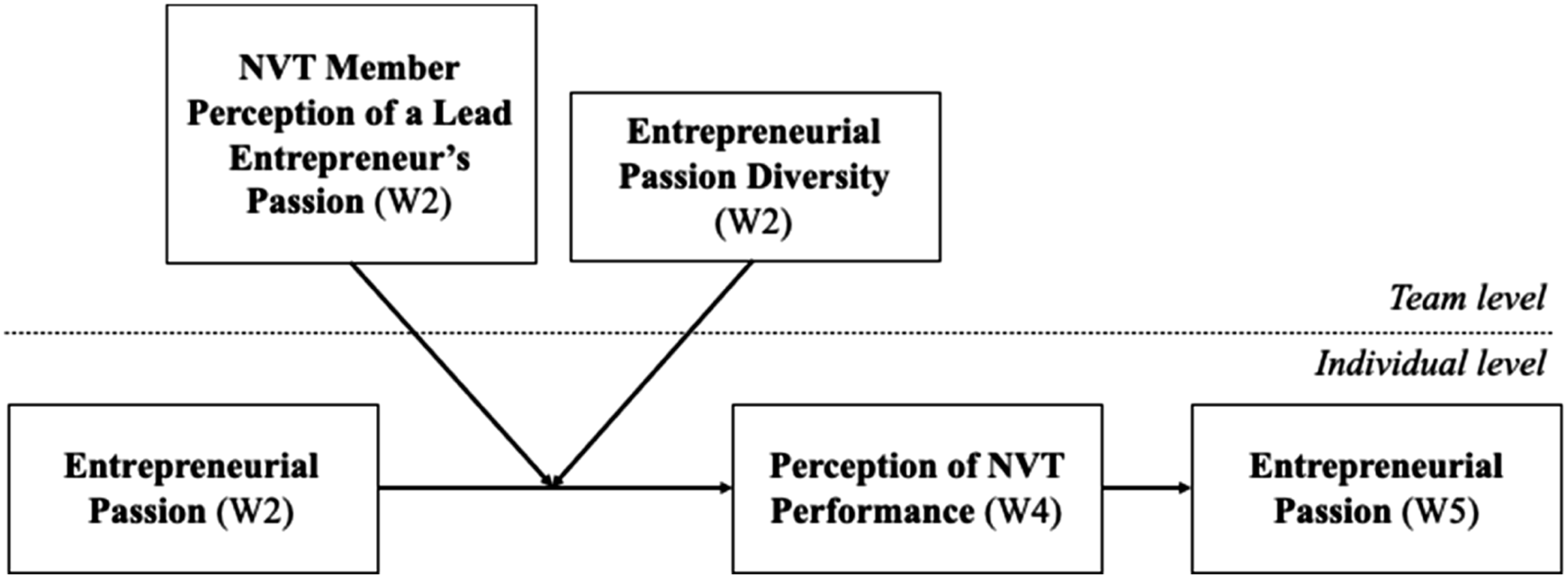
NVT performance mediates the influence of prior entrepreneurial passion on subsequent entrepreneurial passion.
Methods
Study Context: New Venture Teams in an Incubating Program at a University in Korea
In this study, we focus on NVTs participating in an incubating program offered by an entrepreneurship center at a large private university in South Korea (hereafter Korea). In Korea, universities actively contribute to fostering entrepreneurs (Choi et al., 2018). The most common approach is to use university-based entrepreneurship incubation programs, which provide resources and assistance to students or alumni who wish to develop their ideas and start real businesses (Pittaway & Cope, 2007). Entrepreneurial activities in entrepreneurship incubation programs are genuine attempts to build companies with the guidance and support of university entrepreneurship centers, in contrast to extracurricular activities tied to specific courses (Bagheri et al., 2013; Kuratko, 2005). In the entrepreneurship literature, thus, many scholars have drawn samples of entrepreneurs from incubator programs (e.g., Ahsan et al., 2018; Guerrero et al., 2018; Kuratko et al., 2021; Marvel et al., 2022; Uy et al., 2015, 2021).
Similarly, scholars have also identified students who actively participate in the entrepreneurial process as nascent entrepreneurs (e.g., Bergmann et al., 2016; Gabay-Mariani & Boissin, 2021). Specifically, students or alumni participating in the incubating program at university-level entrepreneurship centers have been involved in gestation activities such as devoting significant time to the business or formally registering it (Bergmann et al., 2016; Ko et al., 2021). For example, Choi et al. (2018) demonstrated that engagement in student venture teams was positively related to the successful launch of student-led ventures. According to data from Higher Education in Korea (2022),1 a substantial number of students in Korea, precisely 23,774 students, participated in venture teams in 2021, leading to 1,959 students successfully establishing their own businesses.
Additionally, an NVT represents a group of individuals collaborating to create a new firm, with each member assuming leadership responsibilities within the team (Klotz et al., 2014). NVT members are commonly recognized as co-entrepreneurs in entrepreneurship incubating programs, which aligns with the prevalent approach in team-based ventures (e.g., Foo et al., 2009; Uy et al., 2015, 2021). For example, Foo et al. (2009) conducted a study involving 46 individuals from 22 ventures, considering the entire NVT members as entrepreneurs. Kier and McMullen (2020) also analyzed 230 members from 51 teams at startup competitions as entrepreneurs. According to previous research, we consider NVT members in this study to be co-entrepreneurs if they confirmed that they were actively involved in the development of the business and made key decisions collectively (Breugst et al., 2020).2
Furthermore, we identify and distinguish a leader from other venture team members. A lead entrepreneur is generally responsible for articulating the company’s vision and developing its strategy (Ensley et al., 2020). In addition, scholars argue that a lead entrepreneur is a person who develops new enterprises and identifies possibilities (Grossman et al., 2012; Shah et al., 2019). Accordingly, while there is no universally accepted criterion for selecting a lead entrepreneur, we assume that NVTs in an incubating program choose their leaders from the members who play a critical role in identifying business opportunities, actively recruiting and attracting NVT members, mobilizing resources, and making final decisions (Gupta et al., 2004; Rickards & Moger, 2006). In our study context, teams already had designated leaders before applying for the incubating program. Each team had a single leader rather than two or more co-leaders. The initially assigned leaders of the NVTs maintained their position throughout the program. This setup enables us to investigate the NVT members’ perceptions of the lead entrepreneurs’ entrepreneurial passion.
Sample and Data Collection
During the 2019–2020 academic year, 145 NVTs applied to an entrepreneurship center’s incubating program at a large private university in Korea. The entrepreneurship center’s mission includes supporting students, faculties, and alumni who engage in venture activities (Miller & Acs, 2017). The entrepreneurship center thoroughly evaluated the feasibility of its venture projects via application documents and interviews before accepting the founding teams. This evaluation aligns with the pre-venture assistance programs, including university-based incubators (Ahsan et al., 2018; Lanivich et al., 2021). To generate a more complete picture of NVTs (Preller et al., 2020), we invited all members of 145 NVTs to participate in this study.
Sample Characteristics.
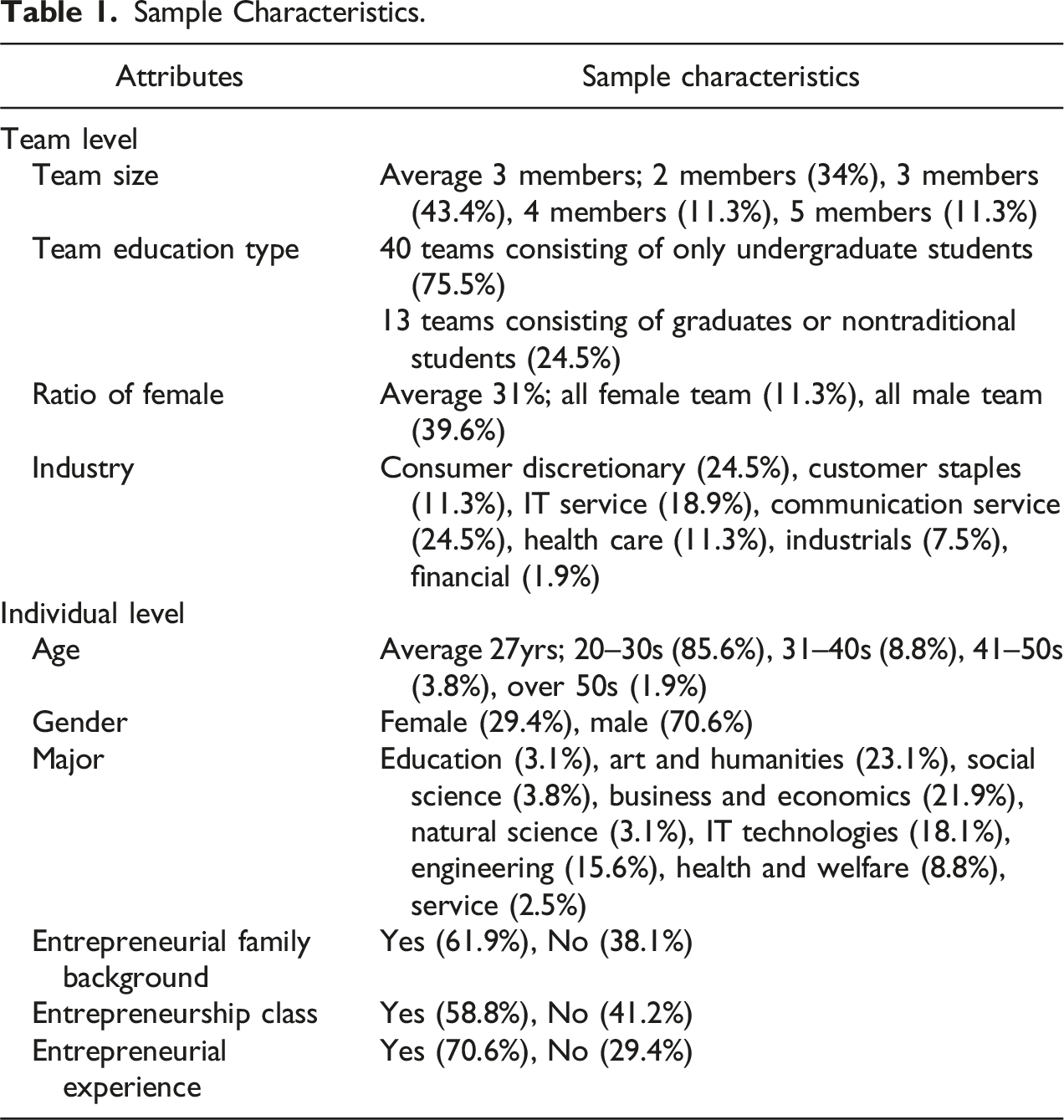
To examine the cyclical relationship between entrepreneurial passion and NVT performance, we collected data at four times throughout the incubating program. These time points were Weeks 1, 2, 4, and 5, corresponding to one month after the entrepreneurial center selected the NVTs. In Week 1, we gathered demographic information from individual participants and information about the NVTs. Then, we assessed participants’ entrepreneurial passion in Weeks 2 and 5, their perception of the lead founder’s entrepreneurial passion in Week 2, and their perception of NVT performance in Week 4. Our final sample consisted of 782 useable observations, with a response rate of 97.75% across four time periods. This approach allowed us to investigate the dynamic nature of NVT development (Gielnik et al., 2015; Uy et al., 2021). It is important to note that there were no changes in the lead entrepreneurs of the participating NVTs during the data collection period.
Measures
To measure the variables in this study, we first prepared the questionnaires in English and later translated them into Korean, consistent with Brislin’s (1970) translation-back-translation approach. The Korean version was pilot tested using 38 team members from 11 teams who did not participate in this study.
Entrepreneurial Passion
In Week 2 and Week 5, we used two items developed by Cardon et al. (2013) to assess the entrepreneurial passion of NVT members. Following previous research (Gielnik et al., 2015), our measure included two items focused on the emotional aspect of passion using a five-point Likert scale from 1 (strongly disagree) to 5 (strongly agree). These items were “In the last week, it was exciting to figure out new ways to solve unmet market needs that can be commercialized” and “In the last week, establishing a new company excited me.” A shortened survey of entrepreneurial passion has been prevalent in studies with similar research designs (Foo et al., 2009; Gielnik et al., 2015; Uy et al., 2021). Responses were averaged to create an overall measure of individuals’ entrepreneurial passion. The scale’s internal consistency was .74 (Week 2) and .75 (Week 5). Using the two-item scale of entrepreneurial passion, we further operationalized two team-level constructs as follows.
Perception of a Lead Entrepreneur’s Passion
In Week 2, we assessed NVT member perception of a lead entrepreneur’s entrepreneurial passion as a team-level factor. We modified the same entrepreneurial passion items so that team members could rate their leaders’ level of entrepreneurial passion. Accordingly, each member was asked to respond to two revised items: “From my point of view, in the last week, it is exciting for our venture team leader to figure out new ways to solve unmet market needs that can be commercialized”; “From my point of view, in the last week, establishing a new company excited our venture team leader.” Using the modified scale, we calculated leaders’ entrepreneurial passion by aggregating team members’ ratings on the team level.
Measuring entrepreneurs’ passion using others’ perceptions can be conceptualized as perceived passion; it allows researchers to understand how others perceive the passion displayed by entrepreneurs (Lee & Herrmann, 2021). In the entrepreneurship literature, many empirical studies have used the perceptions of others like employees and investors to measure entrepreneurial passion (e.g., Breugst et al., 2012). Given the contagious nature of passion, we operationalize the NVT members’ average perception of a lead entrepreneur’s entrepreneurial passion to team-level constructs (Bhansing et al., 2018). Statistically, to justify the team-level aggregation of this scale, we calculated
Entrepreneurial Passion Diversity
As entrepreneurial passion diversity is conceptualized as intensity separation, we operationalized entrepreneurial passion diversity using the standard deviation of NVT’s entrepreneurial passion scores in Week 2. We calculated entrepreneurial passion diversity following Harrison and Klein (2007) to capture the within-group separation
Perception of NVT Performance
In Week 4, participants were asked to evaluate NVT performance based on the intended goals (Aladwani, 2002; Henderson & Lee, 1992) and comparisons to similar ventures (Stam & Elfring, 2008). In the entrepreneurial passion literature, scholars have widely adopted perceptual measurement of performance on satisfaction-level on venture progress and comparative indicators (Laskovaia et al., 2022; Mueller et al., 2017; Santos & Cardon, 2019). Moreover, team goal accomplishments have been continuously utilized to capture team performance in the team research (De Jong & Elfring, 2010). Based on these precedents, we used two items rated on a five-point Likert scale ranging from 1 (strongly disagree) to 5 (strongly agree): “Our team reaches the desired goal” and “Our team’s overall performance is better than similar venture team.” The internal consistency of the scale was .77.
Control Variables
We controlled for participants’ status, gender, entrepreneurial family background, entrepreneurship class, entrepreneurial experience, team size, and team education type. We measured all control variables in Week 1. At the individual level, first, a lead entrepreneur in an NVT was coded as “1”; otherwise, “0”. Second, entrepreneurial passion is significantly different across gender (Cardon et al., 2013). Thus, we dummy coded gender as “1” = male and “0” = female. Third, growing up in an entrepreneurial family influences individuals’ attitudes toward entrepreneurship (Lindquist et al., 2015). Following previous research (Toft-Kehler et al., 2014), we included a dummy variable for entrepreneurial family background. We coded “1” if the participant’s parents (either father or mother) run their own business (es), “0” otherwise. Fourth, entrepreneurship education is positively associated with entrepreneurial passion (Lee et al., 2021). We assessed whether participants took an entrepreneurship class and used a dichotomous variable of “1” = yes, and “0” = no. Fifth, prior exposure to entrepreneurship positively influences one’s entrepreneurial passion (Türk et al., 2020). We asked respondents whether they have previous venture establishment experience and coded their responses as “1” if yes, “0” if no. At the team level, team size was operationalized as the number of members in the NVTs. Additionally, we controlled team education type to indicate whether a team includes undergraduate students or graduate/nontraditional students (1 = graduate/nontraditional student team; 0 = undergraduate student team).
Analysis
Entrepreneurs are nested within an NVT. The present study adopted hierarchical linear modeling (HLM) using Raudenbush and Bryk (2002) to reflect the nested structure of our data. To test our hypotheses, we analyzed 1) a model estimating the influence of independent variables on the mediator (NVT performance in Week 4) and 2) a model estimating the influence of independent variables including the mediator on the dependent variable (entrepreneurial passion in Week 5). Each model consists of a plurality of hierarchical models, and detailed information about these models is described in the Results section. Further, to test the mediating effect directly, as a post hoc test, the significance of the mediating effect was examined with a bootstrapping technique using Hayes’ PROCESS in R. Given the limitation of the PROCESS program, we included individual-level variables only for the post hoc analyses. Further, to test a holistic model, the moderated mediating effects were tested using Model 9 of the PROCESS in R, including two moderators (W and Z) and one mediator (Mi). Although we did not hypothesize the moderated mediation, it provides a holistic picture of the research model we proposed.
Results
Means, Standard Deviations, and Correlations.
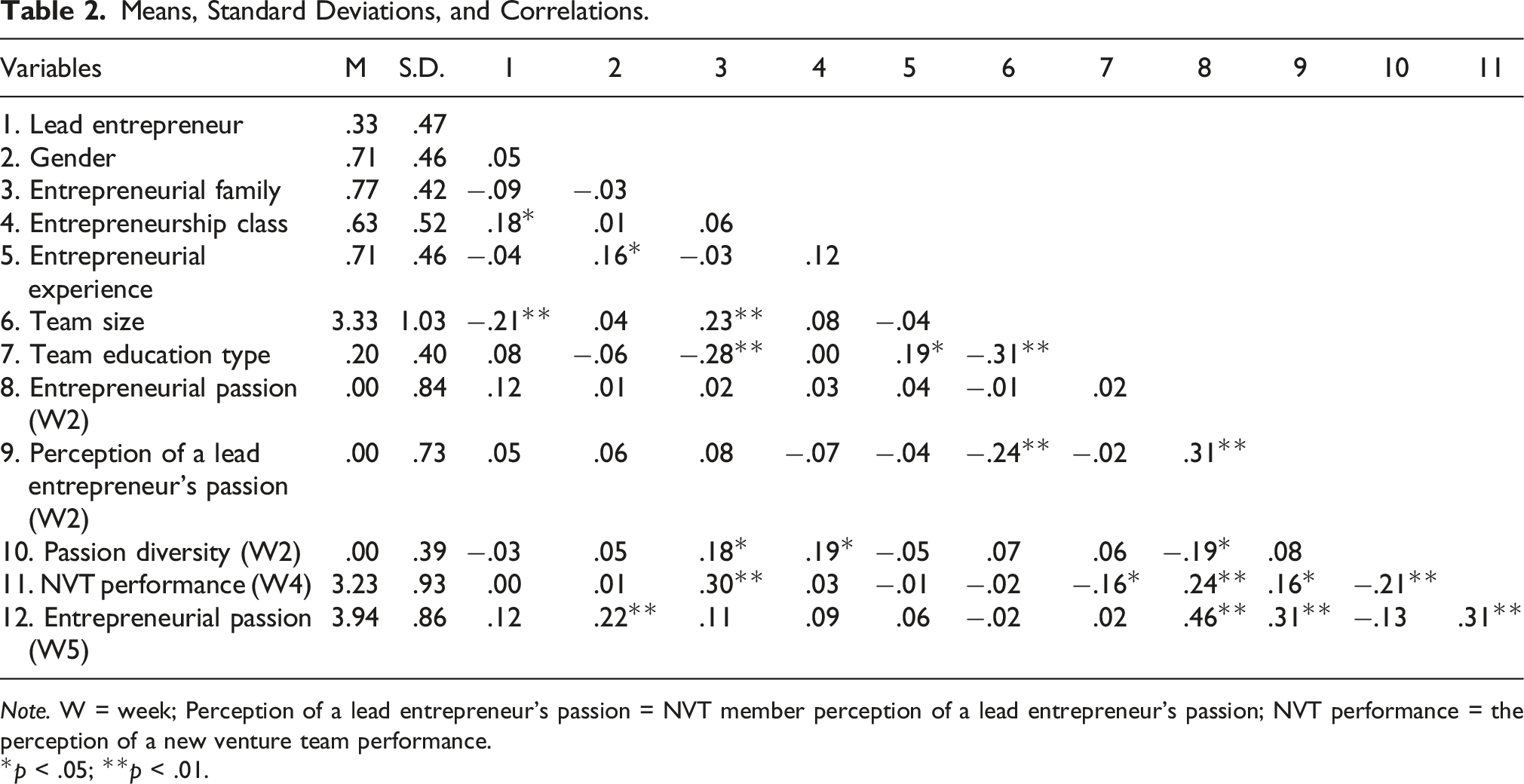
Note. W = week; Perception of a lead entrepreneur’s passion = NVT member perception of a lead entrepreneur’s passion; NVT performance = the perception of a new venture team performance.
*p < .05; **p < .01.
The Direct Effects of Passion-Related Factors on NVT Performance
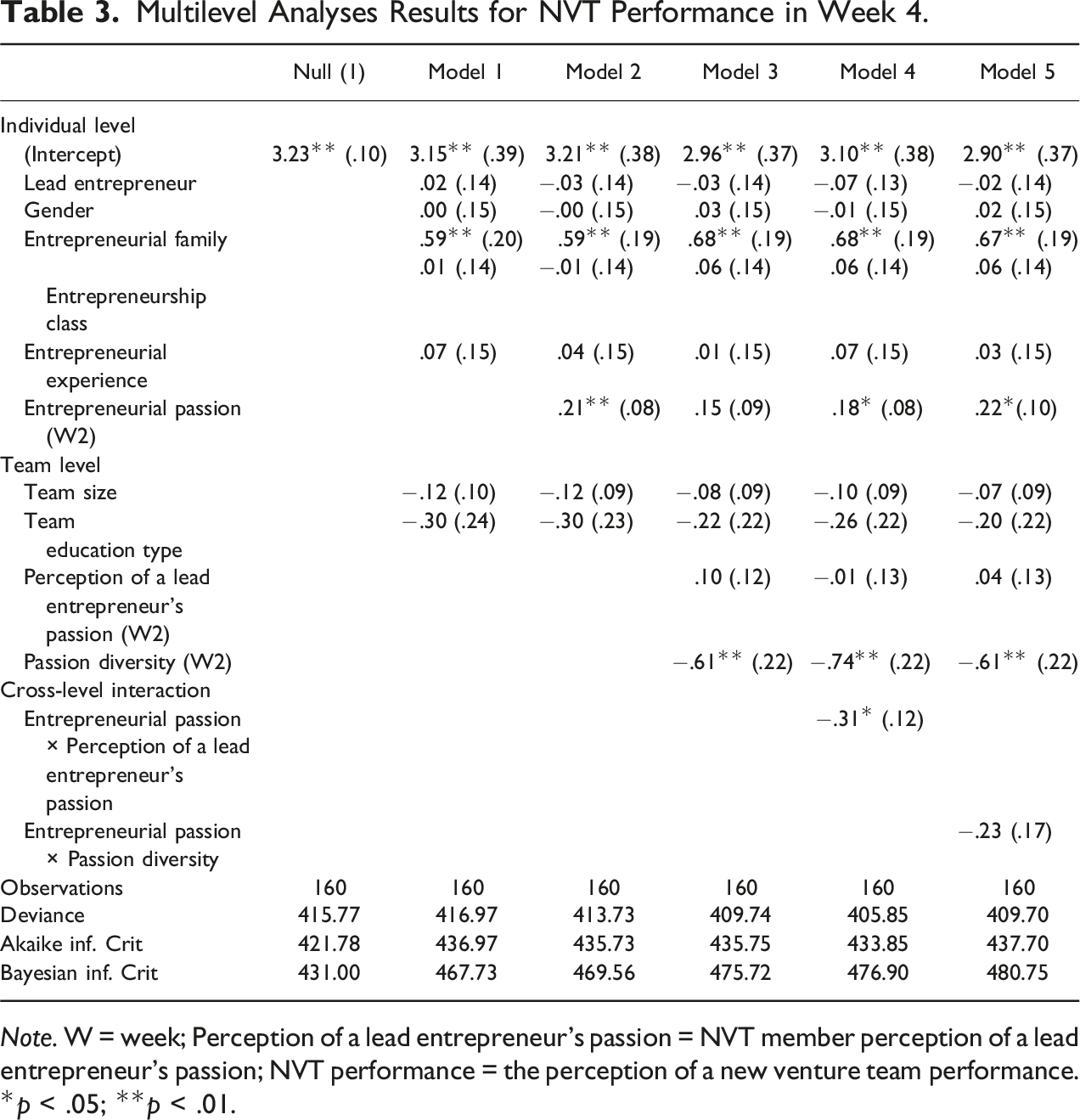
Multilevel Analyses Results for NVT Performance in Week 4.
Note. W = week; Perception of a lead entrepreneur’s passion = NVT member perception of a lead entrepreneur’s passion; NVT performance = the perception of a new venture team performance.
*p < .05; **p < .01.
In Table 3, Model 2 estimated the effects of entrepreneurial passion in Week 2 on the perception of NVT performance in Week 4. The results showed that the effect was positive and significant (b = .208, p < .05), which supports H1. Furthermore, Model 3 estimated the effects of NVT member perception of a lead entrepreneur’s passion (H2a) and entrepreneurial passion diversity (H3a) in Week 2 on the perception of NVT performance in Week 4. NVT member perception of a lead entrepreneur’s passion was not significant but entrepreneurial passion diversity was negatively significant (b = −.636, p < .01), supporting H3a but rejecting H2a. As entrepreneurial passion diversity was operationalized using the standard deviation of the within-team entrepreneurial passion, the greater the difference in entrepreneurial passion among team members, the lower the NVT performance.
The Moderating Effects of Team-level Passion Constructs
Building on Model 3 which includes NVT member perception of a lead entrepreneur’s passion in Week 2 and entrepreneurial passion diversity in Week 2, Model 4 estimated the moderating effect of NVT member perception of a lead entrepreneur’s passion in Week 2 on the passion–performance relationship. The results showed that the moderating effect was negative and significant (b = −.299, p < .05), indicating that H2b was not supported. Although a positive moderating impact was hypothesized, an adverse effect was found. Figure 2 depicts the change in the marginal effect of entrepreneurial passion in Week 2 on NVT performance in Week 4. It suggests that the marginal effect decreased as NVT member perception of a lead entrepreneur’s passion increased. Figure 2 further shows that the marginal effect became non-significant if NVT members’ average perception of a lead entrepreneur’s passion exceeded the average of the sample. The change in the marginal effect of the passion-performance relationship by NVT member perception of a lead entrepreneur’s passion. Note. The gray area indicates 95% confidence interval of the estimation.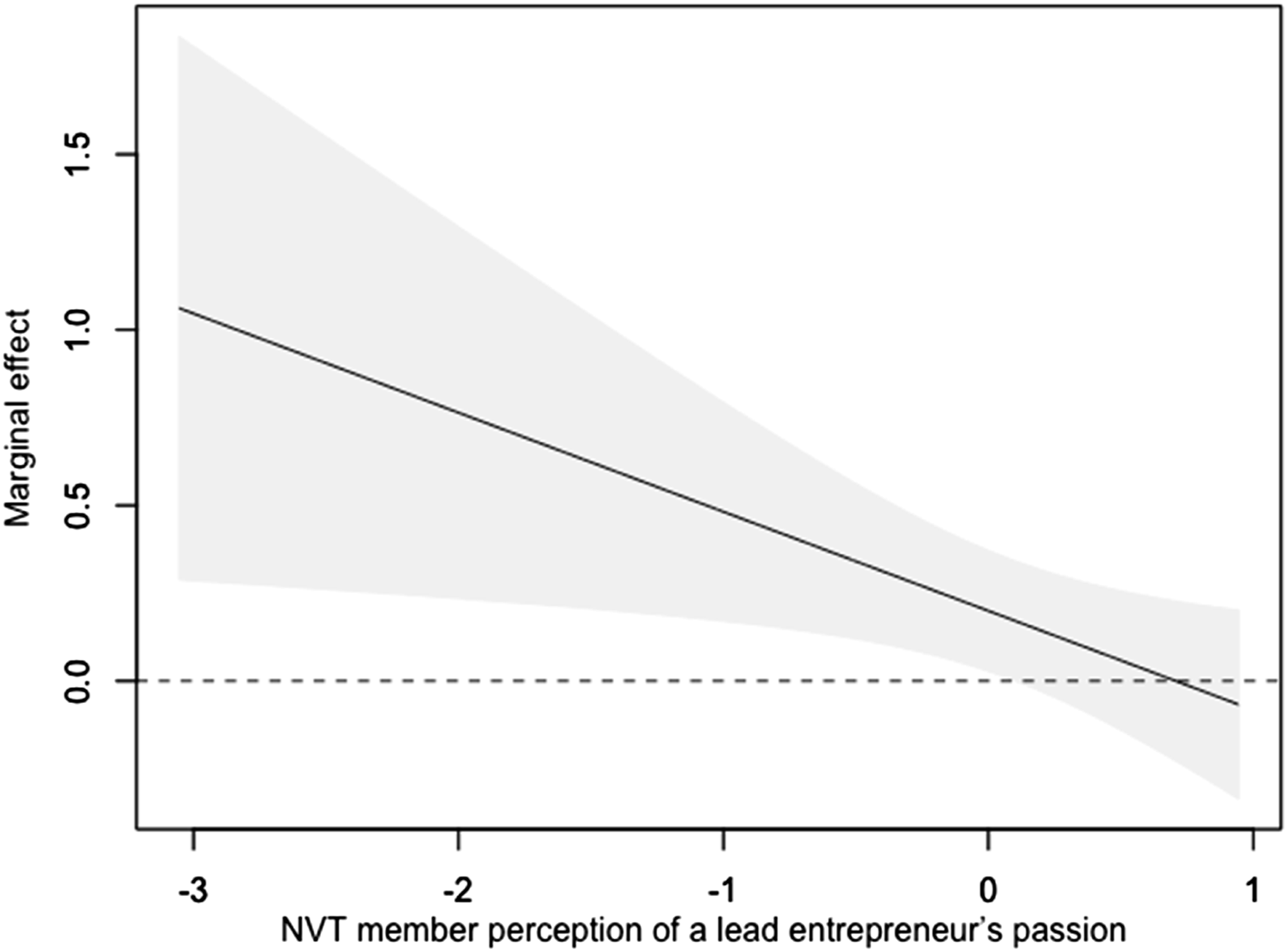
Based on Figure 2, we further depicted the moderating effect in Figure 3. Because the moderating effect was not significant when NVT members perceived a high level of passion in a lead entrepreneur, Figure 3 only includes two lines, representing the average and −1 standard deviation of the moderator. Specifically, when NVT members perceive that the lead entrepreneur’s passion is average, the higher the NVT members’ entrepreneurial passion, the higher the NVT performance. Interestingly, if NVT members perceive that a lead entrepreneur lacks passion at one standard deviation below the average, then NVT performance is more reliant on NVT members’ entrepreneurial passion. Thus, when all entrepreneurs including a lead entrepreneur in an NVT have a low level of passion, NVT performance suffers. However, when NVT members’ entrepreneurial passion is very strong, NVT performance can be high even if they perceive the lead entrepreneur’s passion to be low. The moderating effects of NVT member perception of a lead entrepreneur’s passion on the passion-performance relationship. Note. The moderating effect was significant only when a lead entrepreneur’s passion was below its average in the sample. This figure covers the significant values of the moderator (e.g., +1SD). Gray areas indicate 95% confidence interval of the estimations.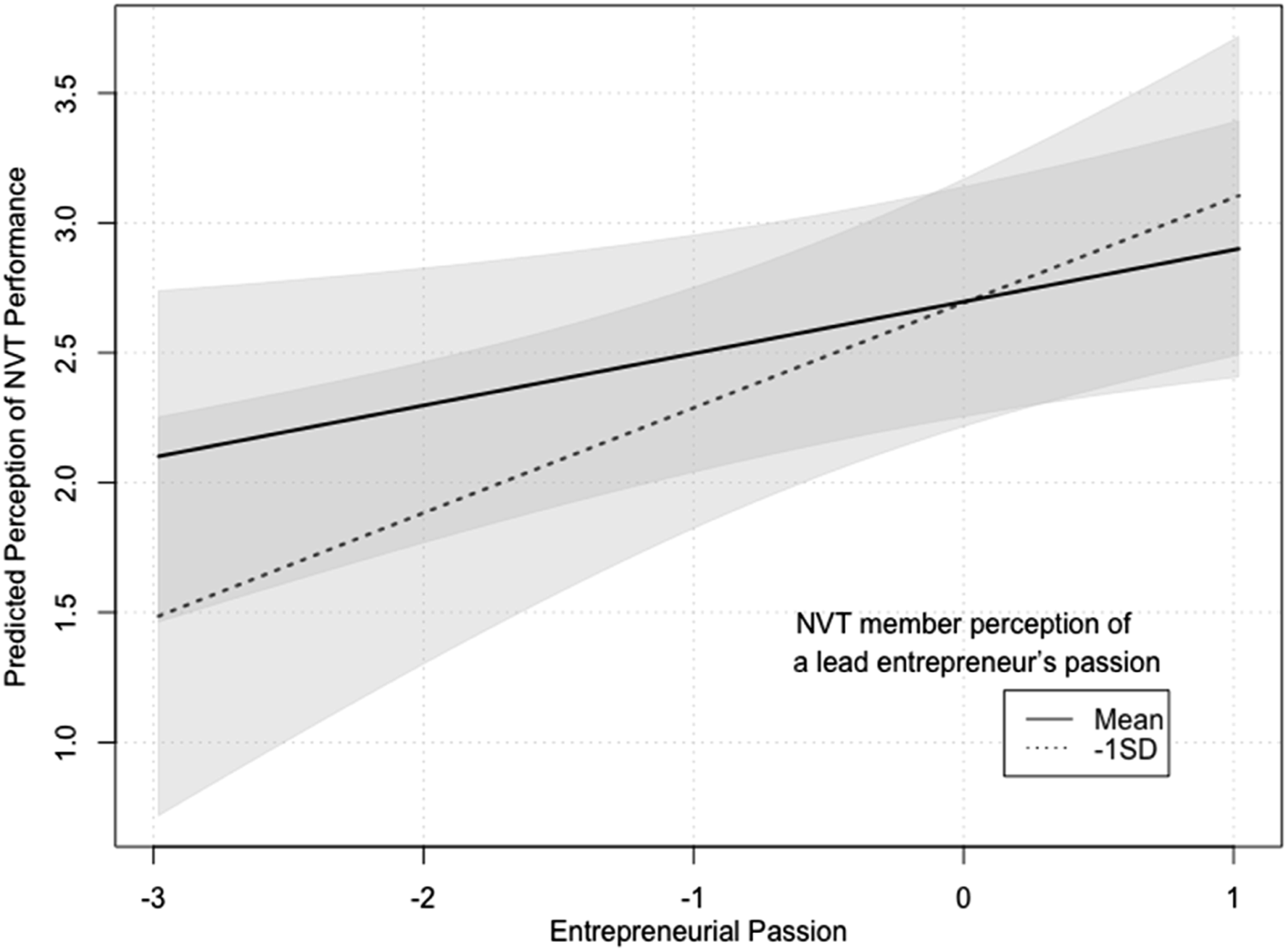
Building on Model 3, Model 5 estimated the moderating effect of entrepreneurial passion diversity in Week 2 on the passion–performance relationship. The result showed that the moderating effect was not significant, indicating that H3b was not supported.
The Mediating Effect of Team Performance
Multilevel Analyses Results for Entrepreneurial Passion in Week 5.
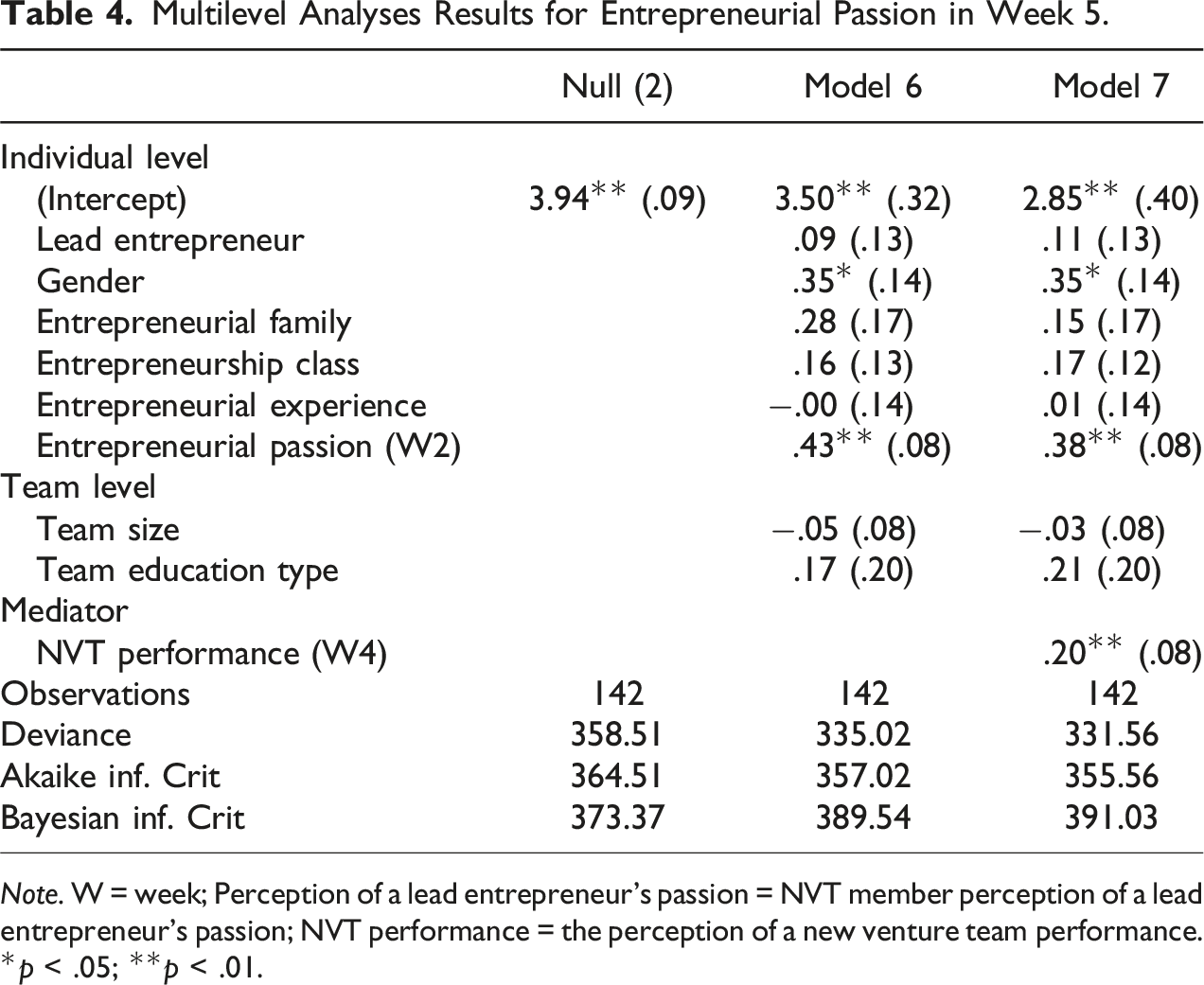
Note. W = week; Perception of a lead entrepreneur’s passion = NVT member perception of a lead entrepreneur’s passion; NVT performance = the perception of a new venture team performance.
*p < .05; **p < .01.
Post-hoc Analysis of the Mediating Effects by PROCESS.
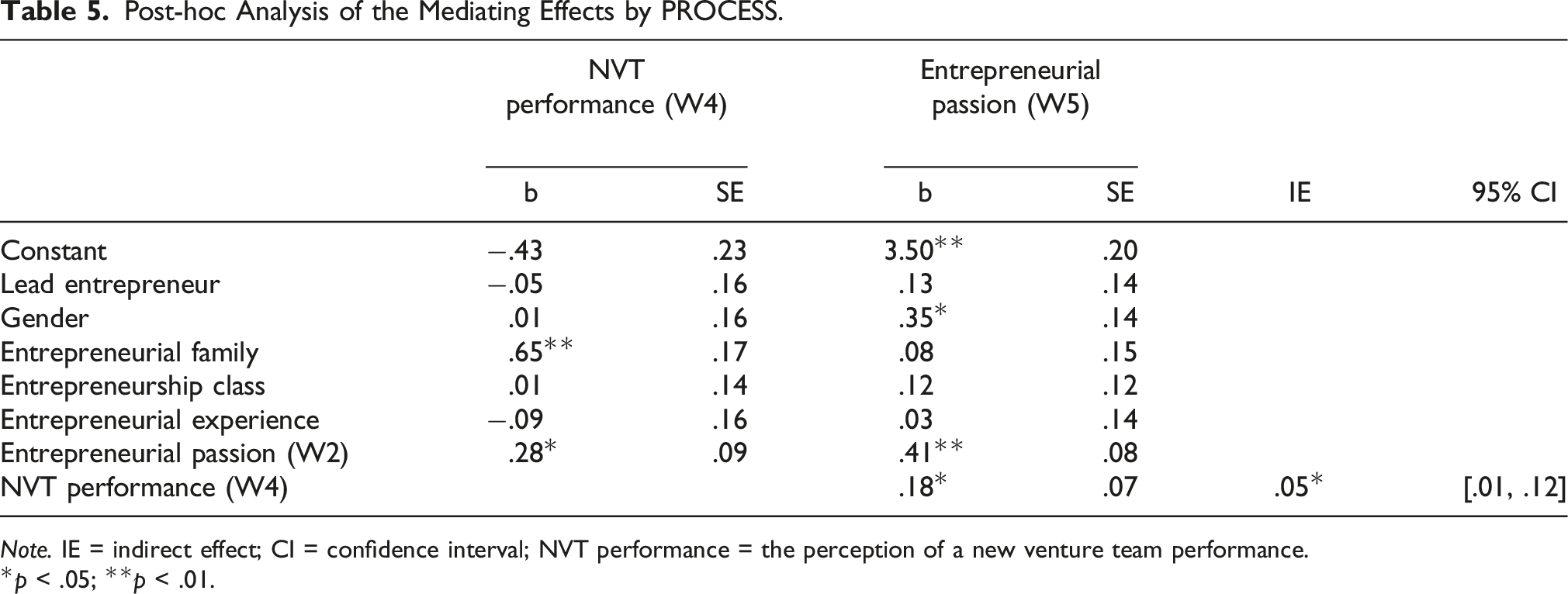
Note. IE = indirect effect; CI = confidence interval; NVT performance = the perception of a new venture team performance.
*p < .05; **p < .01.
We conducted an additional post hoc test to examine moderated mediation effects using Model 9 in Hayes’ PROCESS. The results indicated that the moderated mediating effects were not statistically significant. However, significant regions were found through the Johnson-Neyman technique (Preacher et al., 2007). Specifically, when NVT members perceived the lead entrepreneur’s passion to be below average, the mediating effect of the NVT performance between the entrepreneurial passion in Week 2 and Week 5 was statistically significant, regardless of entrepreneurial passion diversity. The 95% CI estimates did not include zero for passion diversity levels of -1SD ([.014, .229]), mean ([.013, .193]), and +1SD diversity ([.003, .141]). However, when NVT members perceived the lead entrepreneur’s passion to be average, the moderated mediating effects were significant only when passion diversity was average ([.004, .183]) or -1SD ([.004, .183]). Moreover, when NVT members perceived the lead entrepreneur’s passion as above average, the moderated mediating effect was insignificant. In other words, when the NVT members’ average perception of a lead entrepreneur’s passion was above average, the 95% CI estimates included zero regardless of the level of passion diversity; the 95% CI estimates were [−.192, .560], [−.195, .409], and [−.252, .271], for passion diversity levels of −1SD, mean, and +1SD, respectively.
Discussion
Our study advances an understanding of a cyclical and conditional relationship between entrepreneurial passion and performance in an NVT in two ways. First, from a contingency perspective, our findings of the cross-level interactions imply that team-level passion constructs including NVT member perception of a lead entrepreneur’s passion can be boundary conditions on the passion–performance relationship in NVTs. Second, our study suggests the bidirectional relationship between entrepreneurial passion and NVT performance by theorizing and testing the mediating role of performance on the relationship between prior and subsequent entrepreneurial passion.
Theoretical Implications
We contribute to the literature by demonstrating the dynamic and complex nature of entrepreneurial passion and performance among NVTs during company development. Since Cardon and colleagues (2005) introduced entrepreneurial passion to the literature, it has become a critical success factor for entrepreneurs (Cardon et al., 2009; Cardon & Kirk, 2015; Drnovsek et al., 2016). After Cardon et al. (2017) shifted our attention from individual to team-level entrepreneurial passion, subsequent research has sought to corroborate its positive influence on team performance. Our investigation expands upon this existing line of inquiry.
We theorized and found that entrepreneurial passion positively leads to high performance in NVTs. Building on the entrepreneurial passion literature, we argue that entrepreneurs with a strong passion attain positive attitudes toward teamwork, feel less compulsion to work, and take charge of NVT tasks with responsibility (Karimi, 2020). They, especially, have high agency in their jobs, where they attempt to solve assigned tasks with innovative methods (Kang et al., 2016). Moreover, entrepreneurs with high passion enjoy their work within NVTs (Karimi, 2020), build an affective commitment toward NVTs, and endeavor to achieve NVT objectives (Breugst et al., 2012; Huyghe et al., 2016), which eventually improves their perception of NVT performance. As scholars have continuously called for studies on the relationship between passion and performance (Cardon & Murnieks, 2020; Lee & Herrmann, 2021), the current study is one of few empirical studies that examine the relationship between entrepreneurial passion and performance in the context of NVTs.
Building on our findings of the passion–performance relationship in NVTs, we provide empirical evidence of the contingency role of NVT member perceptions of a lead entrepreneur’s passion in this relationship. Interestingly, we found that NVT member perception of a lead entrepreneur’s passion negatively moderated the passion and performance relationship, which is inconsistent with our expectations. This finding implies that the passion of a lead entrepreneur can supplement NVT members’ lack of passion. More specifically, when NVT members’ passion is relatively low, the positive effect of their perception of the lead entrepreneur’s passion on NVT performance is strengthened. A lead entrepreneur with a high level of passion can motivate other entrepreneurs in NVTs. Our empirical results align with a previous study on the contagion effect of entrepreneurial passion (Hubner et al., 2020). Hubner et al. (2020) further found the ceiling effect of entrepreneurial passion; when employees already have high passion, the contagion effect becomes less effective in the context of established firms. In this respect, our finding also implies the contagion–ceiling effects of entrepreneurial passion in the context of NVTs. Specifically, when NVT members are already passionate, the contagion effect of a lead entrepreneur’s passion does not influence the NVT’s performance. Contrarily, when NVT members are less passionate, perceiving a lead entrepreneur’s passion becomes more important to increase NVT performance. To better understand the contagion-ceiling effects of entrepreneurial passion in NVTs, future research can qualitatively investigate NVT cases comprising a lead entrepreneur with a high level of passion and NVT members with low levels of passion, and vice versa.
Contrary to NVT member perception of a lead entrepreneur’s passion, our findings indicate that entrepreneurial passion diversity directly impedes the perception of NVT performance, whereas it does not moderate the relationship between entrepreneurial passion and NVT performance. This finding adds to the literature on team entrepreneurial passion (Cardon et al., 2017; de Mol et al., 2020) that passion intensity separation negatively relates to team performance. An NVT consists of entrepreneurs with different emotions toward venture activities, and how they engage in team tasks influences the quality of overall NVT outcomes. The negative effect of passion diversity that we found in this study can be explained by social categorization theory (Hogg & Terry, 2000). Our findings imply that the more balance between entrepreneurs’ passion levels in an NVT, the higher the positive perception of NVT performance, suggesting the importance of having similar levels of entrepreneurial passion among entrepreneurs for venture success. Emotional disparity among team members hinders team integration and incites affective conflict (Van Knippenberg & Schippers, 2007), prompting gratuitous tensions, arousing disagreements on work procedures, and impeding team creativity (Jiang et al., 2013; Lau & Cobb, 2010). As our study does not show the contingency role of passion diversity in NVTs, we suggest that future research investigate other team-level constructs that strengthen or weaken the relationship between entrepreneurial passion and performance.
Lastly, our findings of NVT performance’s mediating role advance an understanding of the cyclical nature of the passion–performance relationship in NVTs based on the IMOI model. Our results illustrate how prior entrepreneurial passion translates into subsequent passion through NVT performance, implying a bidirectional relationship between entrepreneurial passion and performance. We have answered the calls to explore the stimulating factors of entrepreneurial passion (Gielnik et al., 2015; Uy et al., 2021). Our findings emphasize that successful experiences in NVTs, occurring in an early stage of the venture, are important to foster entrepreneurial passion, which is consistent with previous findings on the antecedents of entrepreneurial passion (Gielnik et al., 2015; Lee, 2022). Based on our findings, we propose a virtuous cycle in which entrepreneurial passion improves NVT performance, further stimulating entrepreneurial passion. Our findings also suggest that an initial level of individual entrepreneurial passion should be controlled when investigating other antecedents of entrepreneurial passion.
Practical Implications
This research has important practical implications. First, our findings support a relationship between NVT members’ passion and performance. Our theorizing suggests that an NVT may benefit from gathering entrepreneurs based on their entrepreneurial passion for inventing and founding. In the funding decision process, investors have usually rated the passion of lead entrepreneurs, not members. Moreover, investors are more likely to invest in early-stage ventures with lead entrepreneurs showing a strong passion (Mitteness et al., 2012). Based on our findings, we practically advise investors to pay sufficient attention to NVT members when they evaluate NVTs’ potential.
Second, our findings also show that the more diverse the passion is among entrepreneurs in an NVT, the worse the perception of NVT’s performance. This evidence indicates that it may be necessary for an NVT to minimize the negative effects of discrepancies in members’ passion levels on team performance. Entrepreneurs can consider teaming up with those whose passions are similar, following the homophily principle (McPherson et al., 2001). After teaming up, adopting a training program to increase integration is recommended (Roberson et al., 2003). However, our findings do not blindly support the homophily principle in NVTs. Many studies have demonstrated the benefits of team diversity on idea generation and innovative performance in NVTs (e.g., Dai et al., 2019; Kristinsson et al., 2016). We advise interpreting our results about team diversity only in the context of entrepreneurial passion.
Finally, given our result that NVT performance also enhances members’ passion, educators, investors, and entrepreneurs should be aware that focusing on achieving intended goals and performing better than similar ventures may be significant for a new venture. Entrepreneurs’ passion can diminish over time as an intensive positive feeling (Collewaert et al., 2016). Therefore, early startups are encouraged to practice setting up achievable internal and external reference points to maintain their members’ passion for entrepreneurship. In addition, having multiple realistic milestones and achieving them during the early process of a new venture can help keep a high level of entrepreneurial passion (Uy et al., 2015).
Limitations and Future Research
Several limitations should be discussed. First, we used a short-version instrument focusing on an emotional state toward a general venture activity to measure entrepreneurial passion. Although the instrument has been validated in previous studies (Gielnik et al., 2015), it does not reflect the different venture activities, such as developing, inventing, and founding (Cardon et al., 2013). Because the participants were asked to answer the survey weekly, the short version was beneficial to maintain the number of respondents. Building on our findings, we suggest that scholars use a comprehensive measure of entrepreneurial passion to explore entrepreneurial team dynamics due to entrepreneurs’ different levels of passion toward various venture activities.
Second, from a separation intensity perspective, future research can advance an understanding of passion dynamics in NVT by investigating different approaches to investigate the difference in passion intensity, such as the range of perceptions and the maximum or minimum passion. Furthermore, while we presume that NVT members take the entrepreneurial process seriously, we did not provide a precise indicator for judging it. Thus, we suggest that future research explore the direct indicators for the seriousness, such as engagement level or time invested of members, as these could be important factors in understanding the intricacies of passion dynamics within NVTs.
Third, we explored a lead entrepreneur’s passion from an NVT members’ perspective, as we posited a lead entrepreneur’s passion as a team context for NVT members. In this regard, we can further imagine how a lead entrepreneur’s self-rated passion differs from NVT members' perceptions of the leader’s passion. This raises an interesting research question about the role of lead entrepreneurs’ self-perception accuracy in NVTs. Entrepreneurs who accurately evaluate themselves can lead NVTs by clearly illustrating themselves to other NVT members; at the same time, high precision of self-perception can limit entrepreneurs’ potential. Future research on the gap between self-rating and others' evaluation of entrepreneurial passion could advance an understanding of the dynamic characteristics of entrepreneurial passion in NVTs from a relational perspective.
Fourth, our study collected data from NVTs in which the initially designated leaders maintained their positions. Although this research design allows us to investigate a lead entrepreneur’s passion as a team-level passion construct, it does not reflect the possibility of a change in a lead entrepreneur in an NVT. Based on our findings, future research can explore the impact of the change in leadership on NVTs by incorporating studies on founder exit and new leadership in a venture.
Fifth, our findings should be carefully interpreted given the context of our data. On one hand, culture influences venture activities (Li & Zahra, 2012). Eastern culture is characterized by higher in-group collectivism, “the degree to which individuals express pride, loyalty, and cohesiveness in their organizations or families” (House et al., 2002, p. 5), compared to Western culture. Korean culture is known for a high degree of conformity to others because of the collectivistic nature of society compared to that in other OECD countries (House et al., 2002; Yousef, 2003). As such, the interconnections between team members in Korea would influence the perceptions of other’s passion because individuals are strongly connected with others in societies with high in-group collectivism (Oyserman & Lee, 2008). Thus, we suggest future studies to explore the relationships tested in this study in differing cultures and apply various cultural boundary conditions of the passion–performance relationship in NVTs. On the other hand, it should be discussed a potential issue of self-selection in our sample. Although we tested and confirmed that there was no difference between responding and non-responding, we acknowledge that self-selection may limit our findings’ generalizability (Bethlehem, 2010).
Sixth, individual-level perceptual measures in this paper limit our holistic understanding of NVT performance. To measure the perception of NVT performance, we used two items on an NVT’s progress and comparative performance. Although these measures are widely adopted in the entrepreneurial passion literature (Boone et al., 2020; Mueller et al., 2017; Santos & Cardon, 2019), subjective assessment from NVT members might be biased with positive in-group affective states. Contemplating the multilevel research design, we attempted to be careful about the level of theory and analysis. For instance, we framed our NVT performance variable as the perception of NVT performance as we operationalized it at the individual level. Although obtaining objective performance outcomes from early-stage NVTs is complex, unbiased growth measures (e.g., financial reports, external evaluations, or number of employees) would advance our knowledge of the passion and performance relationship. Accordingly, we call for future studies to adopt diverse secondary data to capture NVT performance.
Finally, the findings of our study contributed to promoting a more in-depth understanding of the passion dynamics using longitudinal data. However, the dynamics of passion within NVTs can fluctuate more microscopically. With the development of technology, it has become relatively easy to collect intensive longitudinal data using smartphones or wearable computer devices. Future research can track microscopic passion changes within NVTs from intensive longitudinal data by utilizing state-of-the-art techniques such as dynamic structural equation models.
Footnotes
Declaration of Conflicting Interests
The author(s) declared no potential conflicts of interest with respect to the research, authorship, and/or publication of this article.
Funding
The author(s) received no financial support for the research, authorship, and/or publication of this article.
