







Abstract
Keywords
It is estimated that more than 36 million people worldwide are living with HIV/AIDS. 1 Over the past 20 years, management of HIV with antiretroviral therapy (ART) has led to substantial improvements in morbidity and mortality. Individuals who initiated ART in the past 10 years and achieved adequate CD4 counts have life expectancy close to that of the general population. 2 The success of ART has changed the outlook of HIV from a short life span to a manageable chronic disease. As the population of people living with HIV (PLWH) age, their health care needs become more complex as age-related comorbidities develop.
In the pre-ART era, malignancies in PLWH were considered to be AIDS-defining malignancies (ADMs), with Kaposi sarcoma and non-Hodgkin lymphoma (NHL) accounting for 99% of ADMs. 3 In the current ART era, the decrease in mortality rates has led to a significant decline of ADMs but increased incidence of non–AIDS-defining malignancies (NADMs), with PLWH having a higher risk of NADMs than the general population.4-8 The most frequent NADMs in PLWH include lung, anal, prostate, liver, breast, head/neck, rectal, and renal cancers.4,5,9,10 Contributors to development of NADMs include aging, presence of viral coinfections, or cigarette smoking. A recent modeling study projected a shift in the cancer burden among PLWH, suggesting that by 2030 prostate and lung cancers will emerge as the most common NADMs. 4 These epidemiological shifts in the observed types of cancers and the aging of the PLWH population increase the likelihood that PLWH will receive concomitant antineoplastics and ART.
Traditionally, management of malignancies has involved the administration of intravenous cytotoxic agents given over multiple cycles with defined time periods. In the past decade, the oncology landscape has dramatically changed, with exponential growth of numbers of novel oral targeted agents and immunotherapies. In the past 5 years, more than 60 new active substances have been launched for 23 different tumor types and many more immunotherapies, and targeted agents are still in the pipeline. 11 As malignancy treatment strategies become more complex, multiple lines of therapy are used, and individual agents may be administered for longer periods of time than previously. Although oral antineoplastics have been advantageous for patients with convenience and improved quality of life, there are additional considerations for patient safety, such as drug interactions, comorbidities, and reduced contact with the health care system. Patients with malignancies receive multiple medications both for cancer management and for supportive care needs.
The increased need for antineoplastics in PLWH and the additional complexities associated with the modern cancer chemotherapies has led to recommendations for multidisciplinary care of this unique population.10,12 It is recommended that PLWH who develop cancer should receive treatment for both conditions as recommended by standard guidelines for either condition, with drug adjustments as necessary. 10 Information regarding PLWH with concomitant malignancies, particularly management of drug interactions, is scarce. This review summarizes available data of managing selected NADMs in PLWH and HIV in individuals affected by both conditions.
Data Sources
Literature searches were performed in PubMed and EMBASE (2005 to December 2018) to identify studies of malignances in PLWH in the modern ART era. Article bibliographies and drug interaction databases were reviewed. Search terms included HIV, antiretroviral therapy, antineoplastic agents, malignancies, drug interactions, acquired immunodeficiency syndrome, immunotherapy, drug therapy/combination, HIV infections/drug therapy, and neoplasms/drug therapy. Animal and non-English language studies were excluded. Information from Food and Drug Administration (FDA)-approved drug products, the FDA Drug Development and Drug Interactions website, and clinical practice guidelines were the main sources utilized to assess metabolic pathways of medications.13-15 To predict potential drug-drug interactions (DDIs), prescribing information and the University of Liverpool HIV drug-drug interaction checker were consulted for each drug.13,16 Attention was given to prior DDI studies, case reports/case series, in vitro data, and modeling studies.
Non–AIDS-Defining Malignancies
Lung Cancer
The risk of lung cancer is generally 2 to 3 times higher in PLWH compared with the HIV-negative population.9,17,18 Furthermore, PLWH diagnosed with lung cancer have a higher risk for mortality. A meta-analysis of 12 observational studies that evaluated the impact of HIV infection on the risk of mortality among lung cancer patients reported a pooled relative risk of mortality risk among lung cancer patients with HIV infection of 1.48 (95% CI = 1.22-1.78). 19 The mechanisms underlying the increased rates of lung cancer are multifactorial. Cigarette smoke, along with HIV infection and chronic inflammation, exacerbates oxidative stress, leading to oxidative DNA lesions and DNA double-strand breaks. 20 PLWH are also more likely to be diagnosed with lung cancer at a younger age compared with the general population. It is hypothesized that these patients could be predisposed to other immunological risk factors that are associated with the development of lung cancer. 20
Some recommend that PLWH and non–small-cell lung cancer (NSCLC) should be treated as per usual management of NSCLC. 10 Evidence or guidance is not clear for other lung cancers. PLWH and NSCLC may be more likely to have benign lung nodules; hence, infectious etiologies must be excluded. Reasons for poor performance status in PLWH should be evaluated when making treatment decisions because treatment of NSCLC may potentially reverse cancer-related symptoms. 10 Modifications of cancer therapy should not be made solely on the basis of HIV status. As immunotherapy checkpoint inhibitors such as pembrolizumab are becoming more commonly used in NSCLC, this raises the question of whether these agents may benefit PLWH who are diagnosed with lung cancer. Limited studies suggest that tumor PD-L1 expression is similar or higher in PLWH.21,22 Two case series were published with combined 15 patients who received ART and either pembrolizumab or nivolumab for NSCLC.23,24 One patient (with baseline CD4 count of 194 cells/mm3) received 9 doses of nivolumab and experienced grade 3 pneumonitis. 24 No other grade 3 or 4 immune-related adverse events were noted. Ongoing studies are evaluating whether PD-1 inhibitors are safe to be administered in PLWH. 25
Anal Cancer
Anal cancer is common among PLWH. In the United States, the risk of developing anal cancer is 19-fold higher (standardized incidence ratio [SIR] = 19.1; 95% CI = 18.1-20.0) compared with the general population. 26 Anal cancer, similar to cervical cancer, is caused by persistent human papillomavirus (HPV) infection because of immunosuppression; HPV 16 and 18 subtypes are predominantly associated with anal cancer. Anal cancer may arise from a precursor dysplastic lesion—namely, anal squamous epithelial neoplasia (AIN)—which is more commonly observed in PLWH. AIN is a known precursor to anal cancer and is highly influenced by HIV seropositivity, low CD4 counts, and serotype of HPV infection. A recent study found no evidence to support an adjunctive role for HPV vaccination to improve outcomes to prevent new anal HPV infections or for treatment of anal high-grade squamous intraepithelial lesions on biopsy in PLWH who are aged 27 years or older. 27
Treatment of anal cancer in PLWH, which conventionally involves chemoradiation, should follow usual management standards as for those who are not infected with HIV. 10 Recent studies have evaluated whether cetuximab, an epidermal growth receptor inhibitor, in addition to concurrent radiation with cisplatin and 5-fluorouracil would improve locoregional control in patients with squamous cell anal cancer. 28 However, more than 70% of patients receiving this regimen experienced grade 3 or higher toxicities, with 26% experiencing grade 4 toxicities. Therefore, the addition of cetuximab to routine care is not recommended for management of anal cancer in PLWH. 10 Findings from an observational study that evaluated the survival and safety outcomes in PLWH who have good control of their HIV infections suggested that HIV-positive patients with anal cancer had survival outcomes similar to anal cancer patients who were HIV negative. 29 On multivariate analysis, only male gender and higher stage of cancer were predictive of worse survival outcomes.
Other Cancers
The status of immunosuppression is often linked to increased risk of cancer in PLWH. However, several reports have suggested that the incidence rates of a number of cancers that are commonly screened in the community (such as breast cancer, prostate cancer, and colorectal cancer) may be much lower in PLWH. The incidence of breast, prostate, and colorectal cancer in PLWH against the general population were compared using data from the HIV/AIDS Cancer Match Study (1996-2012) in the United States. 30 It was reported that PLWH had lower rates of invasive breast (SIR = 0.63; 95% CI = 0.58-0.68), prostate (SIR = 0.48; 95% CI = 0.46-0.51), proximal colon (SIR = 0.67; 95% CI = 0.59-0.75), distal colon (SIR = 0.51; 95% CI = 0.43-0.59), and rectal cancers (SIR = 0.69; 95% CI = 0.61-0.77). This lower risk is present for both early-stage tumors that are primarily detected by screening and larger tumors that are likely clinically detected, arguing against a screening effect as the primary explanation for these HIV-related cancer deficits. Some studies suggest that HIV could potentially affect breast and prostate cancer risk by altering hormone levels, hence possibly leading to a lower risk of developing cancer.31,32 Specific recommendations for management of these cancers in PLWH are not available.
Management of HIV Infection in the Patient With Cancer
Initiation/Continuation of ART
Initiation of ART in PLWH regardless of CD4 count is recommended to reduce morbidity and mortality associated with the infection and to prevent transmission. 15 ART should not be delayed by a diagnosis of malignancy; similarly, assessment of HIV infection and subsequent initiation of ART should not delay treatment of the malignancy.10,15 A consideration for ART initiation in some patients is the risk of unmasking lymphoma immune reconstitution inflammatory syndrome (IRIS); this was studied in 482 patients with lymphoma in the Center for AIDS Research Network of Integrated Clinical Systems. 33 A total of 56 (12%) of these patients met the criteria for unmasking lymphoma IRIS, and this occurred a median of 2.2 months before the diagnosis of lymphoma was made. However, the benefits of ART treatment on lymphoma mortality are substantial. Another assessment of 224 patients diagnosed with lymphoma between 1996 and 2011 who were alive 6 months following diagnosis and having at least 2 HIV RNA values showed that the adjusted hazard ratio for mortality with cumulative HIV viremia during the 6 months following diagnosis was 1.35 (95% CI = 1.11-1.65). 34 The authors concluded that the occurrence of each 1-unit log10 increase in HIV RNA throughout the 6 months following lymphoma diagnosis results in a 35% increase in mortality, thus emphasizing the importance of early initiation of ART.
ART should be initiated immediately, and it is preferable to start at least 7 days prior to initiation of cancer treatment. 10 If antineoplastics have already been started, ART can be initiated once tolerance to the cancer regimen has been established. There may be exceptions where ART should be initiated immediately without regard for timing of antineoplastics, such as in patients with progressive multifocal leukoencephalopathy. 10 Additionally, if a patient is coinfected with hepatitis B virus, the ART components should provide coverage for both viruses.10,15
Two nucleoside reverse transcriptase inhibitors (NRTIs) in combination with a an integrase strand transfer inhibitor (INSTI) is a recommended initial regimen. 15 INSTI-based regimens are preferred because they are effective and are better tolerated than protease inhibitor (PI)- or nonnucleoside reverse transcriptase inhibitor (NNRTI)-based regimens. 15 Studies have demonstrated durable efficacy with INSTI-based regimens in patients with cancer.35,36 One observational cohort study of 30 patients who initiated or were changed to a raltegravir-based ART as a result of a cancer diagnosis showed a mean increase in CD4 count of 49 cells/mL; only 1 discontinuation as a result of virological failure, which was attributed to nonadherence; and no additive adverse effects attributed to ART. 35 A retrospective study in 154 patients that compared various HIV regimens showed that INSTI-based treatment was 9 times (95% CI = 1.4-50.8) more likely to be effective, as shown by HIV RNA <200 copies/mL at 6 months, than PI-based treatment. 36 Adverse effects related to ART occurred in 35% (17/49) of patients receiving PIs and 3% (1/30) of patients receiving INSTIs. 36 Thus, INSTI-based treatment is an attractive option for this population of patients.
Options for INSTI-based regimens include bictegravir/tenofovir alafenamide (TAF)/emtricitabine, dolutegravir/abacavir/lamivudine (only if HLA-B*5701 testing is negative), dolutegravir plus tenofovir/emtricitabine, or raltegravir plus tenofovir/emtricitabine. 15 Tenofovir is available as either tenofovir disoproxil fumarate (TDF) or TAF; the former is associated with less elevations in lipids, whereas the latter has less renal and bone toxicity. Recommended initial regimens for patients in certain clinical situations that may warrant use of alternative agents that have less data in clinical trials or may be disadvantageous with respect to other characteristics, such as adverse effects or pill burden, are also described. These include PI-based and NNRTI-based regimens. 15 However, because of an increased risk of toxicity and DDIs, use of these regimens requires caution in the patient being treated for cancer.
An HIV treatment regimen should be individualized for each patient based on virological efficacy, comorbidities, DDI potential, adverse effect profile, dosing frequency, food requirements, pill burden, results of resistance testing, and cost. 15 For example, raltegravir-, bictegravir-, and dolutegravir-based regimens can be taken without regard to food; this may be useful for patients who experience chemotherapy-induced nausea and vomiting. Additionally, use of TAF instead of TDF is preferable in those patients who are at risk of or who already have bone mineral density loss secondary to antineoplastics. HIV specialists can assist in optimal regimen selection for patients with unique needs. Communication and coordination between specialists is important for timely treatment initiation and follow-up. 37
For patients who are already taking ART, interruptions should be avoided because this leads to immune system compromise, opportunistic infections (OIs), and death. 38 In fact, continuing ART may lead to improved tolerance of cancer chemotherapy, better response rates, and improved survival. 10 The ART regimen may need to be modified to reduce the risk of DDIs and adverse effects, and this should be done in collaboration with HIV and oncology pharmacists. 10 Recognition of factors that may compromise virological efficacy in cancer patients is helpful in taking a proactive approach to adjustments in ART as needed. For example, a patient may have difficulty swallowing tablets and capsules as a result of the cancer and/or its chemotherapy, thus requiring use of liquid or crushable dosage forms. 37 Changes to a patient’s current regimen can be made prior to initiation of antineoplastics to minimize toxicity, avoid DDIs, and prevent missed doses. 37 As with initiation of treatment, changes in treatment should be discussed among providers to determine the optimal approach for the individual patient.
ART and Antineoplastic Drug Interactions
Assessing possible DDIs between antineoplastics and ART is a crucial component of care in PLWH and malignancy. Metabolic pathways, absorption mechanisms, and the role of various drug transporters should be considered when coadministering antineoplastics and ART. Information regarding metabolic pathways for the most commonly used agents in PLWH and selected malignancies is given in Tables 1 and 2.13-15 Information about less commonly prescribed ART is not included. If an ART not listed in the tables is part of a patient’s regimen, clinicians should consider consulting with an expert in HIV pharmacology to discern any potential DDI.
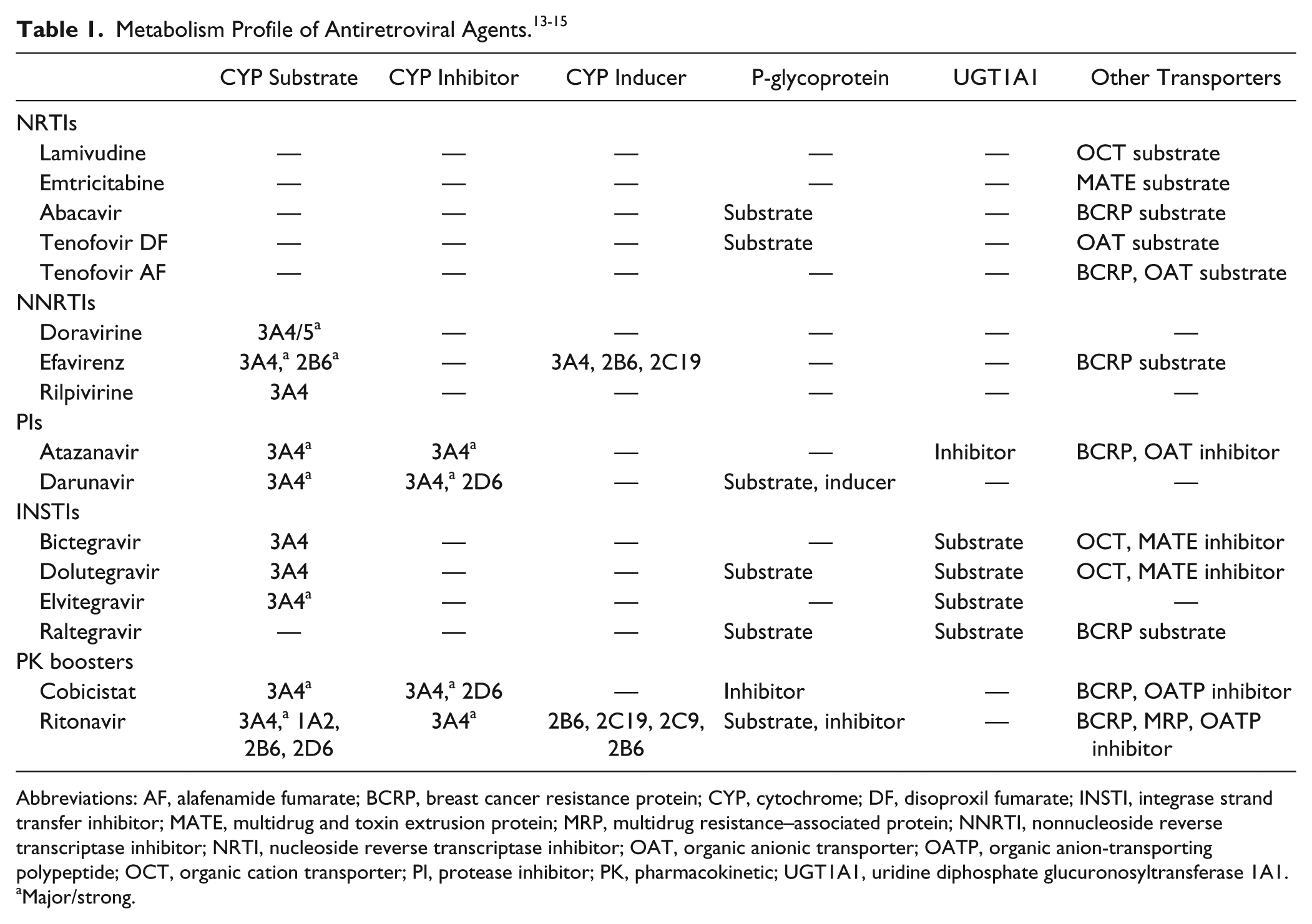
Abbreviations: AF, alafenamide fumarate; BCRP, breast cancer resistance protein; CYP, cytochrome; DF, disoproxil fumarate; INSTI, integrase strand transfer inhibitor; MATE, multidrug and toxin extrusion protein; MRP, multidrug resistance–associated protein; NNRTI, nonnucleoside reverse transcriptase inhibitor; NRTI, nucleoside reverse transcriptase inhibitor; OAT, organic anionic transporter; OATP, organic anion-transporting polypeptide; OCT, organic cation transporter; PI, protease inhibitor; PK, pharmacokinetic; UGT1A1, uridine diphosphate glucuronosyltransferase 1A1.
Major/strong.
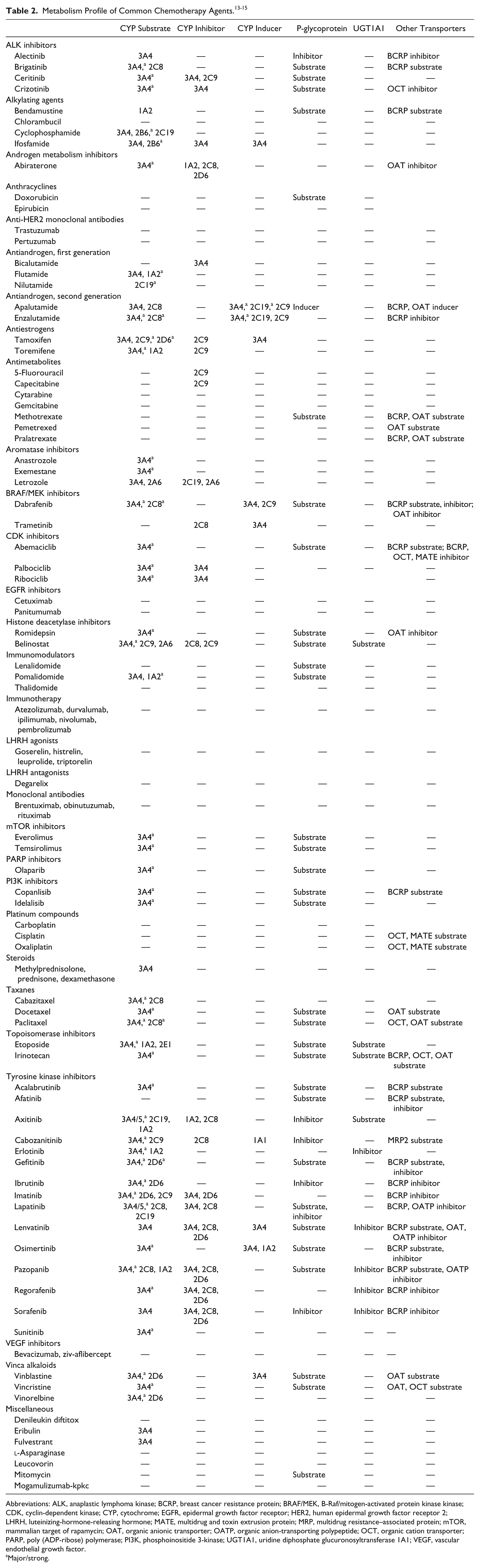
Abbreviations: ALK, anaplastic lymphoma kinase; BCRP, breast cancer resistance protein; BRAF/MEK, B-Raf/mitogen-activated protein kinase kinase; CDK, cyclin-dependent kinase; CYP, cytochrome; EGFR, epidermal growth factor receptor; HER2, human epidermal growth factor receptor 2; LHRH, luteinizing-hormone-releasing hormone; MATE, multidrug and toxin extrusion protein; MRP, multidrug resistance–associated protein; mTOR, mammalian target of rapamycin; OAT, organic anionic transporter; OATP, organic anion-transporting polypeptide; OCT, organic cation transporter; PARP, poly (ADP-ribose) polymerase; PI3K, phosphoinositide 3-kinase; UGT1A1, uridine diphosphate glucuronosyltransferase 1A1; VEGF, vascular endothelial growth factor.
Major/strong.
Many ART and antineoplastic drugs are metabolized by the hepatic cytochrome P450 (CYP) system and can also induce or inhibit the CYP enzymes. Among ART, strong CYP inhibitors, such as ritonavir and cobicistat, and strong CYP inducers, including efavirenz, have a high probability of interactions with antineoplastics metabolized by the CYP.14,15 The uridine diphosphate glucuronosyltransferase (UGT) 1A1 enzyme is responsible for the glucuronidation of INSTIs and several antineoplastic drugs, including etoposide, irinotecan, axitinib, and belinostat. The PI, atazanavir, and several tyrosine kinase inhibitors have the potential to inhibit UGT1A1 and alter the exposure of its substrates.15,39-41
One of the evolving areas in pharmacokinetics is the role of drug transporters in DDIs. The P-glycoprotein (P-gp) efflux transporter is widely distributed in the body and is directly responsible for the transport and elimination of many ART and antineoplastics, with some of the drugs also having the potential to modulate P-gp activity via induction or inhibition. In addition to inhibiting the CYP system, ritonavir and cobicistat also inhibit P-gp, which can lead to increased exposure of antineoplastics that depend on the P-gp for their metabolism, absorption, and/or transport.15,39,41,42
Hepatic, renal, and biliary clearance of drugs may also be affected by other drug transporters, such as the multidrug resistance–associated proteins, the breast cancer resistance protein, the organic anion-transporting polypeptides, and the organic anion and cation transporters. Evolving data with ARTs and antineoplastics suggest that many of these drugs can be substrates, inducers, and/or inhibitors of these transporters.15,42-45
In addition to pharmacokinetic (PK) DDIs, additive toxicities and other pharmacodynamic interactions should also be considered. Caution should be used, and renal function should be closely monitored if TDF is coadministered with chemotherapy that is nephrotoxic or that competes for renal tubular secretion (eg, ifosfamide, platinum compounds).40,41 The newer TAF prodrug results in higher levels of intracellular tenofovir in HIV-infected CD4 lymphocytes and 90% lower systemic exposure of tenofovir, thereby decreasing the risk of nephrotoxicity. 15 Cardiotoxicity and QT-interval prolongation is another overlapping toxicity of concern with some ART (rilpivirine, atazanavir) and multiple antineoplastic drugs such as anthracyclines, luteinizing-hormone-releasing hormone agonists/antagonists, some tyrosine kinase inhibitors, and others. Such combinations should be avoided or very closely monitored to avoid the risks of ventricular arrhythmias and sudden death.15,40,41
Given the toxicity profiles of antineoplastics and their potential narrow therapeutic indices, clinical PK studies are not ethical to conduct in many cases, and data with most combinations are lacking. The potential DDIs of the most commonly used ART with selected injectable and oral antineoplastics are described in Tables 3 and 4.15,16,37,46-60 These tables should be used as a guide, and whenever possible, oncology and HIV clinicians, along with pharmacists specializing in these fields, should review the proposed combination therapies for possible DDIs and overlapping toxicities. 10 The possibility of enhanced toxicity or decreased efficacy as a result of the DDI should be evaluated. 10 In general, ART combinations that include a boosted PI, elvitegravir with cobicistat boosting, or efavirenz have the highest risk for DDIs with antineoplastics, whereas a regimen that contains INSTIs bictegravir, dolutegravir, or raltegravir along with a NRTI such as emtricitabine, TAF, or abacavir have a minimal DDI potential.
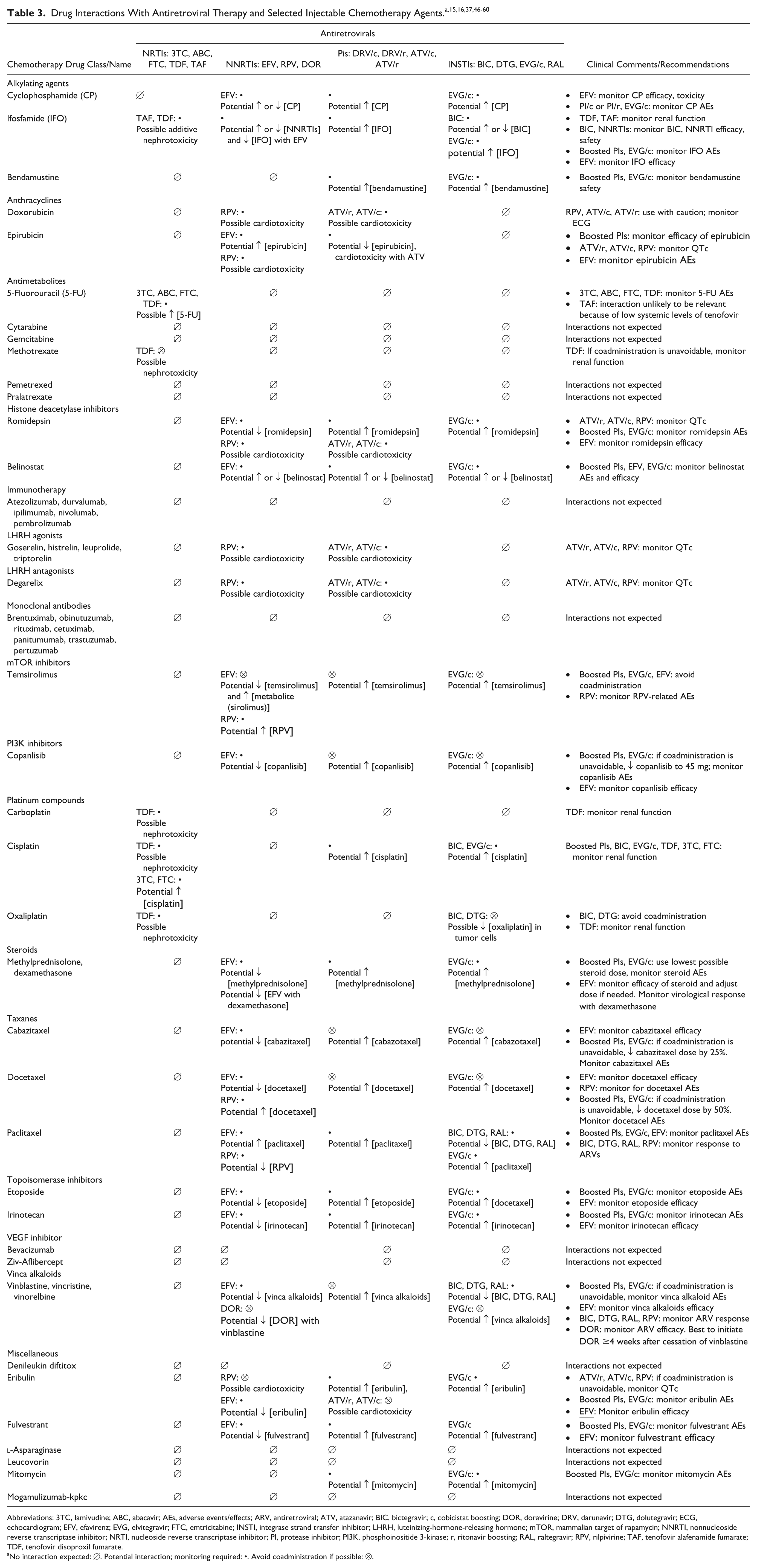
Abbreviations: 3TC, lamivudine; ABC, abacavir; AEs, adverse events/effects; ARV, antiretroviral; ATV, atazanavir; BIC, bictegravir; c, cobicistat boosting; DOR, doravirine; DRV, darunavir; DTG, dolutegravir; ECG, echocardiogram; EFV, efavirenz; EVG, elvitegravir; FTC, emtricitabine; INSTI, integrase strand transfer inhibitor; LHRH, luteinizing-hormone-releasing hormone; mTOR, mammalian target of rapamycin; NNRTI, nonnucleoside reverse transcriptase inhibitor; NRTI, nucleoside reverse transcriptase inhibitor; PI, protease inhibitor; PI3K, phosphoinositide 3-kinase; r, ritonavir boosting; RAL, raltegravir; RPV, rilpivirine; TAF, tenofovir alafenamide fumarate; TDF, tenofovir disoproxil fumarate.
No interaction expected: ∅. Potential interaction; monitoring required: •. Avoid coadministration if possible: ⊗.
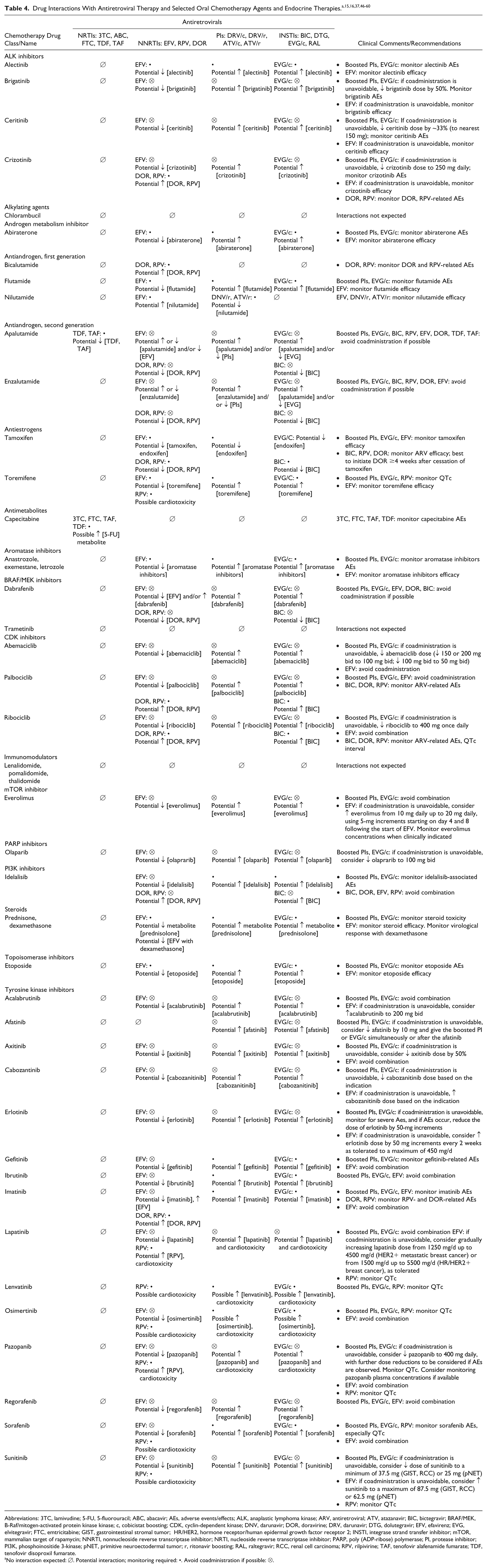
Abbreviations: 3TC, lamivudine; 5-FU, 5-fluorouracil; ABC, abacavir; AEs, adverse events/effects; ALK, anaplastic lymphoma kinase; ARV, antiretroviral; ATV, atazanavir; BIC, bictegravir; BRAF/MEK, B-Raf/mitogen-activated protein kinase kinase; c, cobicistat boosting; CDK, cyclin-dependent kinase; DNV, darunavir; DOR, doravirine; DRV, darunavir; DTG, dolutegravir; EFV, efavirenz; EVG, elvitegravir; FTC, emtricitabine; GIST, gastrointestinal stromal tumor; HR/HER2, hormone receptor/human epidermal growth factor receptor 2; INSTI, integrase strand transfer inhibitor; mTOR, mammalian target of rapamycin; NNRTI, nonnucleoside reverse transcriptase inhibitor; NRTI, nucleoside reverse transcriptase inhibitor; PARP, poly (ADP-ribose) polymerase; PI, protease inhibitor; PI3K, phosphoinositide 3-kinase; pNET, primitive neuroectodermal tumor; r, ritonavir boosting; RAL, raltegravir; RCC, renal cell carcinoma; RPV, rilpivirine; TAF, tenofovir alafenamide fumarate; TDF, tenofovir disoproxil fumarate.
No interaction expected: ∅. Potential interaction; monitoring required: •. Avoid coadministration if possible: ⊗.
Laboratory Monitoring and Drug Toxicities
Baseline labs that should be performed at entry into HIV care to permit selection of initial treatment and assessment of response/toxicities include HIV RNA, HIV resistance testing, CD4 count, hepatitis B virus serologies, hepatitis C virus screening, basic metabolic panel, liver function tests, complete blood count with differential, fasting lipid profile, fasting glucose or hemoglobin A1C (A1C), urinalysis, and pregnancy test (prior to ART initiation in women of childbearing potential. 10 If ART is started soon after entry into care, repeating baseline laboratory studies is not needed. 10 Once ART is initiated (or changed), within 2 to 8 weeks, basic metabolic panel and liver function tests should be assessed. These should be repeated every 3 to 6 months as well. Fasting glucose (or A1C) and lipid profile should be performed annually if a normal baseline is established. 10
CD4 count should be assessed prior to and 3 months after initiating ART. 10 During the first 2 years of ART, CD4 counts should be monitored every 3 to 6 months and then extended to every 6 months in patients who have demonstrated virological suppression for at least 2 years. 10 Observed decreases in CD4 counts may represent adverse effects of antineoplastics or the cancer itself and not necessarily poor virological control. 10 However, continued CD4 count monitoring is important for predicting risk for OIs.
In an ART-naïve patient, HIV RNA should be assessed prior to start of treatment and then within 2 to 4 weeks of starting ART, continuing to monitor every 4 to 8 weeks until the viral load is suppressed. 10 During the first 2 years of ART, HIV RNA should be assessed every 3 to 4 months, and if a patient achieves virological suppression for at least 2 years, HIV RNA assessment can be extended to once every 6 months. Following the start of induction chemotherapy, HIV RNA should be assessed once monthly in the first 3 months and then every 3 months to assess any effect the antineoplastics may have on potential reduction in ART concentrations because of DDIs.10,37 Since HIV RNA monitoring is a more precise reflection of virological efficacy of an ART regimen than CD4 count, it is a crucial way to assess a regimen’s effectiveness, potential DDIs, and potential nonadherence.
In addition to the above laboratory monitoring, a patient’s ART regimen should be reviewed to determine if any additional monitoring is needed. For example, serum phosphorous should be checked at baseline and every 3 to 6 months in patients with chronic kidney disease who are taking regimens that contain TAF or TDF. Urine glucose and protein testing should be performed before and every 6 months during treatment with TAF and TDF. 15 Reference information for drug toxicities and special considerations are available for each drug class of ART. 15 Monitoring patients’ medication regimens for DDIs is crucial for minimizing toxicities and maintaining virological suppression.
Opportunistic Infections
OIs occur more frequently in PLWH as a result of the immunosuppression that can occur in the course of HIV disease. However, because of the improved virological control that has resulted from durable, suppressive ART, OI-related morbidity and mortality have been reduced substantially. 15 This reemphasizes the need for timely initiation and monitoring of ART to achieve virological suppression in an effort to also reduce the incidence of OIs.
When considering antimicrobial prophylaxis for PLWH and cancer, an individual’s OI risk can be assessed via CD4 count thresholds and serological testing and history of exposure to OIs. 61 The use of ART, achievement of virological suppression, and duration of its use are considered. Additionally, overall infection risk in patients with cancer can be graded as low, intermediate, or high, factoring in malignancies that cause immunosuppression, duration of neutropenia, history of exposure to antineoplastics, and the intensity of immunosuppressive therapies used. 62 It is also helpful to consider DDIs between agents used for OI prophylaxis and ART and antineoplastics. Thus, a multidisciplinary approach involving the oncologist, infectious diseases, and clinical pharmacists is beneficial in balancing all these considerations. In a given patient, OI prophylaxis can be prescribed based on CD4 count and HIV status. Once cancer chemotherapy is prescribed, additional agents for OI prevention are added accordingly. 37 Agents used for OI prophylaxis may require adjustment if CD4 counts decline during chemotherapy, if they increase following completion of treatment, or if they augment toxicities of antineoplastics, such as myelosuppression. These recommendations also advise collaboration among providers to permit modifications and adjustments. 37
Management of Malignancy in PLWH
As previously described, the pharmacist caring for PLWH and malignancies must critically review potential interactions resulting from the overlapping of medications. A desired plan will minimize or avoid PK interactions and optimize timing of medications for both conditions. In addition to the therapies for malignancy, drug interactions should be screened between ART and medications used for supportive care. Antiemetics, opioids, and antibiotics are commonly used for symptom prevention and management. One area of concern is the potential for cardiotoxicity with QT-interval prolongation from the combination of some oral antineoplastics, serotonin antagonist antiemetics, and PIs. Additional aspects related to management of malignancies include radiation and surgery.
Radiotherapy in combination with other modalities is part of treating many cancers. It can be used in curative and palliative settings. Studies of the efficacy and tolerability of various radiotherapy approaches with or without antineoplastics in PLWH were evaluated in a review of 44 studies, with most in anal cancer. The authors concluded that for the majority of patients, clinical outcomes were similar to those in patients without HIV. 63 Another review of data from 21 studies, primarily in anal cancer, demonstrated similar tolerability of radiation therapy between PLWH and uninfected individuals. 64 However, data are more limited in other cancers and in combination with immunotherapies.10,65 A 52-year-old man with NSCLC experienced pericardial effusion and interstitial pneumonia after 5 weeks of stereotactic body radiotherapy and 3 cycles of pembrolizumab. After the interruption of pembrolizumab, tumor growth progressed. It is not clear whether the stereotactic body radiotherapy and pembrolizumab interaction was the cause of these events. 65
Surgery is a primary part of treatment for solid tumor malignancies such as lung, anal, prostate, liver, and breast cancers. In the modern ART era, some experts believe that the overall health or performance status is a more reliable indicator of successful surgical outcomes than CD4 count or viral load in PLWH, and that HIV status should not affect choices about surgery. 10 However these recommendations are based on studies with small sample sizes, which are not necessarily representative of all types of surgeries involved in removal of malignancies. The 30-day postoperative mortality was compared in a retrospective analysis of PLWH and uninfected individuals undergoing a variety of procedures. The population of PLWH included 202 individuals with cancer. In this cohort, overall mortality rates were low, but mortality in PLWH was increased compared with uninfected individuals at all CD4 levels. Age and hypoalbuminemia also affected surgical outcomes. 66
Conclusion
The availability of more effective ART has transformed AIDS into a chronic medical condition. PLWH are receiving more effective care and living longer lives. They are experiencing age-related comorbidities consistent with the general population, which include malignancies. Additional information regarding management of DDIs in PLWH and malignancy is a need. Pharmacists play an important role in the multidisciplinary management of this patient population by helping assess DDIs and minimizing drug-related problems.
Footnotes
Declaration of Conflicting Interests
The authors declared the following potential conflicts of interest with respect to the research, authorship, and/or publication of this article: The authors have no conflicts of interest to report, including consulting fees, paid expert testimony, employment, grants, honoraria, patents, royalties, stocks, or other financial/material gain that involves this article.
Funding
The authors received no financial support for the research, authorship, and/or publication of this article.