







Abstract
Objective:
To review the available literature regarding the treatment effects and efficacy of benzonatate needed to better inform patients, providers, and regulators evaluating its role in modern medical therapies.
Data Sources:
Comprehensive literature searches were conducted in PubMed, Embase (Elsevier), Cochrane Library, and Scopus for original research articles evaluating the effectiveness, tolerability, and safety profile of benzonatate from January 1956 through August 2022.
Study Selection and Data Extraction:
The identified studies were screened for relevance and then assessed for inclusion through a full-text review, data extraction, and quality assessment by multiple reviewers using the online software Covidence.
Data Synthesis:
The selection process resulted in 37 articles consisting of 21 cohort studies, 5 experimental studies, and 11 case studies and series. Initial clinical studies exploring potential therapeutic benefits collected data from very small populations and limited clinical settings. Safety is primarily assessed in terms of toxicity due to overdose or inappropriate use. Quality assessment raised concerns for high degrees of biases primarily related to the limited sample size, data collection, generalizability, and study design.
Relevance to Patient Care and Clinical Practice:
This review reveals substantial limitations within existing evidence pertaining to the safety and clinical effectiveness of benzonatate and thus, a need for large observational studies or randomized trials to better characterize its role and value in modern medical practice.
Conclusions:
Rising safety concerns should bring closer scrutiny upon the prescription of benzonatate whose approval is founded upon evidence that would not stand up to current regulatory review.
Introduction
Benzonatate was approved by the US Food and Drug Administration (FDA) in 1958 and marketed as Tessalon. It is currently indicated for symptomatic relief of cough in adults and children over 10 years of age.
1
Its approval occurred shortly prior to the Kefauver-Harris Drug Amendments issued by Congress in 1962 that required drugs seeking FDA approval to demonstrate efficacy and safety through clinical studies.
2
Benzonatate was among over 4000 drugs already being marketed in the United States, that were independently assessed in 1966 by the National Academy of Science and National Research Council for effectiveness and safety.
3
The assessments were performed by expert panels assembled to review drugs already on the market. According to the guidance of this review and subsequent report, in cases such as benzonatate where there are limited data on clinical efficacy The informed judgement and experience of the members of the panels is valid evidence contributory to the final decision on the efficacy of a drug for the indications presented. In justifying its decision however, the panel is expected to delineate the extent to which it is supported by the substantive evidence available for its review.
3
Following the 1966 expert panel’s deliberations, benzonatate, along with thousands of other drugs, was deemed to have sufficient clinical evidence for effectiveness and safety determinations by expert opinion. These drugs were allowed to remain on the market without further studies. Benzonatate was not subjected to the more rigorous efficacy assessments and FDA approval process required by drugs attempting to enter the market following the then recently enacted, Kefauver-Harris amendments. 4 The results of this evaluation were completed and implemented in 1968. Following the determinations of the 1966 expert panel, few studies assessing the clinical use, effectiveness, and safety of benzonatate in the context of cough suppression were conducted. This study was conducted to comprehensively review the literature that is now available pertaining to the clinical effectiveness and safety of benzonatate.
The proposed mechanism of action of benzonatate is a peripheral suppression of the cough reflex by anesthetizing the stretch receptors located in the respiratory passages, lungs, and pleura. This novel mechanism of action made it appealing compared with the existing standard of care, namely opioids. Centrally acting opioids have previously been the antitussive drug of choice used to treat cough but may not be preferred given their high risk of adverse effects.5,6 Providers had sought novel antitussive medications as alternatives to opioid-based antitussive agents such as codeine that act centrally with some peripheral action. 7
Early evaluations attempting to assess the clinical benefit of benzonatate have described some subjective impact on sputum production in asthmatic bronchitis or emphysema, but it is not categorized as an expectorant medication in the same manner as guaifenesin. 8 Patients have also described some analgesic effect provided by the numbing of the mouth and throat. This effect is more pronounced with inappropriate use of the medication in which it is chewed or sucked upon which can result in significant oral numbness, loss of gag-reflex, and cardiac arrhythmias. Additional known off-label uses for benzonatate include use for local anesthetization prior to intubation for alleviations hiccups.9,10
Benzonatate remains one of the most commonly used medications in the United States. 11 Acute and chronic cough is one of the most common symptoms associated with medical problems. 12 There continues to be a need for effective treatments with benzonatate remaining one of the few nonnarcotic antitussive agents available.13,14 Use of benzonatate in various clinical settings continues to rise as do reports of its toxicities and misuse. These toxicities include cardiac arrhythmias, seizures, and death due to cardiac arrest, which may be attributed to sodium channel blockade.15,16 With the further rise in acute and chronic cough in the setting of the coronavirus 2019 pandemic, there is a great need for potent, safe, and evidence-based therapy options for cough. However, with limited data on its true clinical effectiveness and performance in comparison with other antitussive agents, providers may question the value of its continued use. The objective of this study thus is to review the available literature regarding the treatment effects and efficacy of benzonatate needed to better inform patients, providers, and regulators evaluating its role in modern medical therapies.
Methods
The systematic review was conducted using the Cochrane methodology, and findings were reported according to Preferred Reporting Items for Systematic Reviews and Meta-Analyses. 17 Comprehensive searches were conducted in PubMed, Embase (Elsevier), Cochrane Library, and Scopus from January 1956 through August 2022. The search strategy was designed to capture articles with at least 1 subject heading or keyword related to benzonatate and cough or toxicity. Terms included benzonatate, Tessalon, nonopioid antitussive, cough, pertussis, and overdose. The search was limited to human studies. Studies in English, French, German, and Italian were included. Studies assessing all formulations of benzonatate were included to comprehensively assess the existing evidence regarding the compound. See Supplemental Appendix 1 for the full database search strategies. Article bibliographies were cross-referenced for additional citations.
Original research, including clinical studies, clinical trials, comparative studies, controlled clinical trials, multicenter studies, case reports, case series, and observational studies, was included. The studies must have evaluated the effectiveness, tolerability, or safety profile of benzonatate. Reviews, commentaries, and studies focusing on cost were excluded. In addition, articles with abstracts only, nonhuman participants, with all of a majority of patients under the age of 10, and not directly evaluating benzonatate were excluded.
The identified studies were screened for relevance and then assessed for inclusion through a full-text review by reviewers (R.C., J.L., D.V., A.B., and L.G.). Following the full-text review, data extraction for included studies as well as quality assessment was performed. Quality of studies was assessed using the Cochrane Risk of Bias tool. 18 The tool assesses a study’s risk of bias in 6 domains: selection bias, performance bias, detection bias, attrition bias, reporting bias, and other biases. Reviewers were asked to classify the bias as “high,” “low,” “not applicable,” or “unsure.” The screening, eligibility assessment, data extraction, and quality assessment were performed by a minimum of 2 researchers independently and in parallel using the online software Covidence. 19 Any identified discrepancies were discussed and resolved.
Results
A total of 797 articles were identified using the search strategy. Following the removal of duplicates, 522 articles were screened of which 160 were included in the full-text review. Studies found to not be relevant presented treatment options for conditions, for example, but did not directly evaluate benzonatate or presented a study where benzonatate was a concomitant medication or used by the study population but benzonatate was not the primary drug evaluated. The selection process resulted in 37 articles for data extraction and quality assessment (Figure 1).
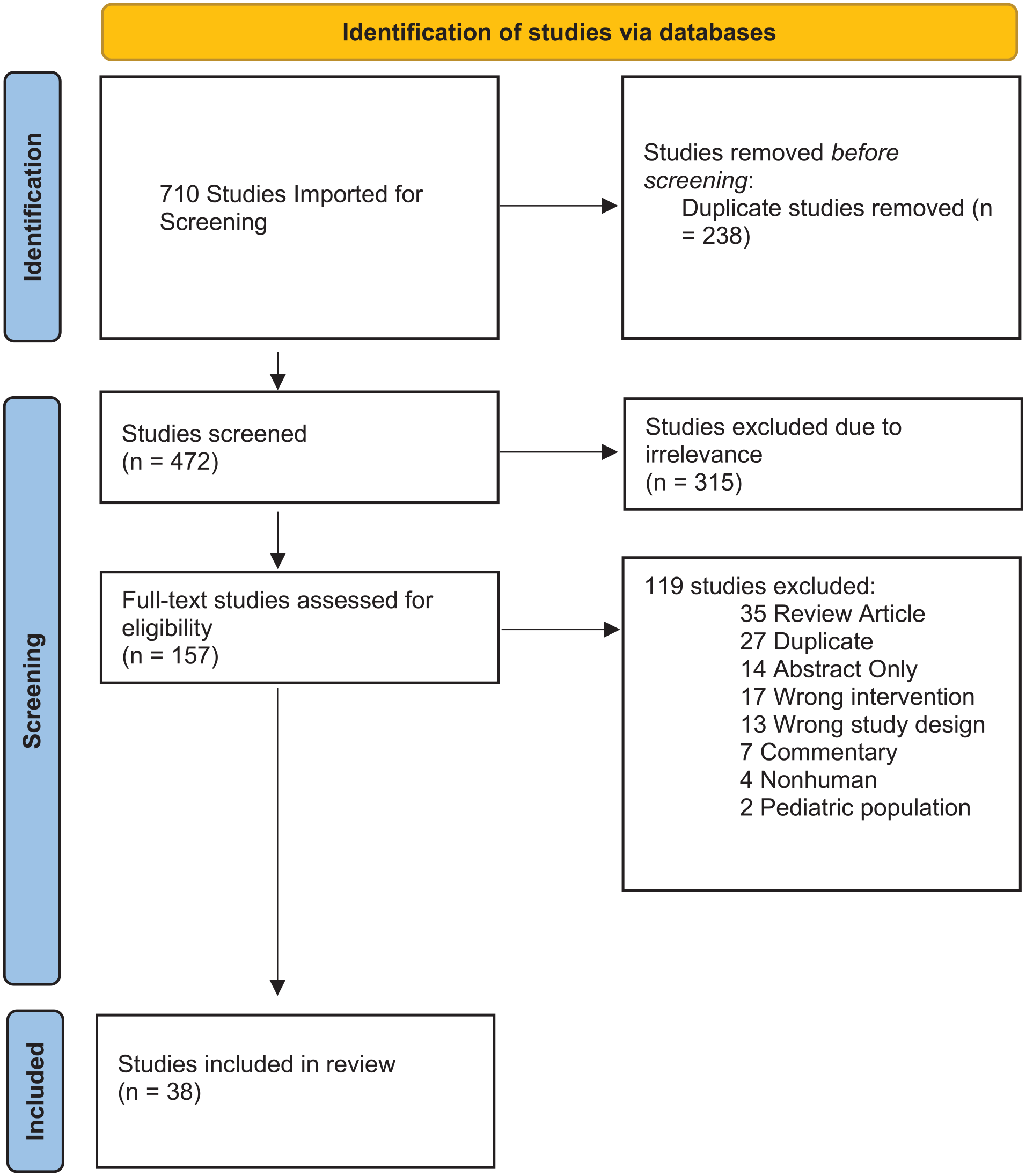
PRISMA diagram.
Cohort Studies
Most studies selected were cohort studies published from 1956 to 2022.20 -40 The cohort studies were published from Italy,20,26-28,32,34,41 Switzerland, 21 the United States,23-25,35-40,42 Canada, 29 Germany, 30 and Austria. 31 The primary focus of the studies was the assessment of effectiveness only,21,22,24,26,27,29,31-33,35,36 safety only37-39,42 effectiveness and safety,20,23,25,28,30,34 tolerability, 22 dosing, 34 and utilization. 40 The indications of interest were cough,20,23,26-30,32,33,36,40,42,43 tuberculosis,21,29,31 bronchitis,22,33,34 pulmonary emphysema or malignancies,24,25,34 severe gag reflexes, 35 and benzonatate ingestion or overdose.37-39 Included formulations of benzonatate include perles,20-22,26,28,32 intramuscular injection,20,24,28,31,34,35 intravenous injection,22,26-28,31,32,34 syrup/drops,21,22,26,28,42 capsules,30,31 oral,23-25,27,29,34,35 aerosol solution, 33 and suppositories.22,28,30-32 Studies assessing the effectiveness, tolerability, and dosing had follow-up periods between 1 day and 1 year. The safety studies included up to 18 619 patients from retrospective databases and calculated odds ratios.37-39 Cohort studies with primary data collection included between 15 and 162 patients and were primarily descriptive in nature.20-36 Few adverse events were reported and included syrup tasting poorly,21,22 discomfort due to the suppository, 22 erythema, 24 skin itching or rash, 24 increased sputum, 25 pleural effusion, 30 encapsulated residual castings, 30 insomnia, 33 dyspnea, 33 and overdose.37,38 With regard to effectiveness, the majority of studies defined the effectiveness of benzonatate as good or excellent.20-27,29-31,33-35,42,43 The cohort studies are summarized in Table 1.
Summary of Cohort Studies.
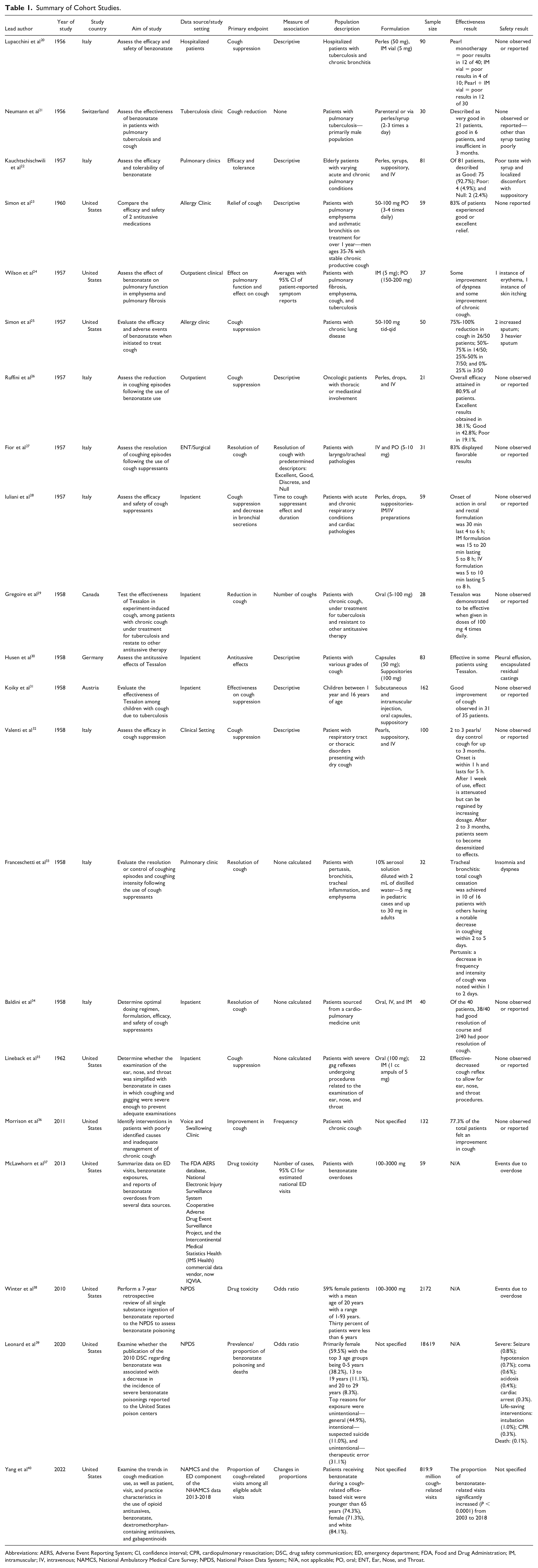
Abbreviations: AERS, Adverse Event Reporting System; CI, confidence interval; CPR, cardiopulmonary resuscitation; DSC, drug safety communication; ED, emergency department; FDA, Food and Drug Administration; IM, intramuscular; IV, intravenous; NAMCS, National Ambulatory Medical Care Survey; NPDS, National Poison Data System;; N/A, not applicable; PO, oral; ENT, Ear, Nose, and Throat.
Experimental Studies
Four studies were categorized as nonrandomized experimental studies,44-47 and 1 study was a randomized controlled trial. 8 The studies were performed in outpatient settings in Switzerland,44,48 Canada, 47 and the United States.8,46,47 Primary objectives included assessing the therapeutic usability 44 and effectiveness8,45-47 of benzonatate with the primary endpoint being suppression of cough for the nonrandomized experimental study. The randomized experimental study’s primary objective was to identify the concentration of capsaicin required to induce 5 or more coughs. 8 Secondary endpoints included ease of chest tension and breathing, 44 as well as control of sputum production.46,47 Indications included for assessment were pleurogenic, bronchogenic, and spontaneous cough,44-48 and acute viral upper respiratory infections. 8 Safety events of oral anesthesia were noted in 2 studies.46,48 The studies enrolled between 20 and 230 patients. Formulations of benzonatate included pearls, 48 subcutaneous injections, 44 liquid solutions, 46 and oral.44,45,47 The experimental studies are summarized in Table 2. With regard to effectiveness, the majority of studies defined the effectiveness of benzonatate as good or excellent. One study 46 report oral anesthesia as an observed adverse event while the other 4 studies did not report or observe any adverse events.8,44,45,47
Summary of Randomized and Experimental Study.
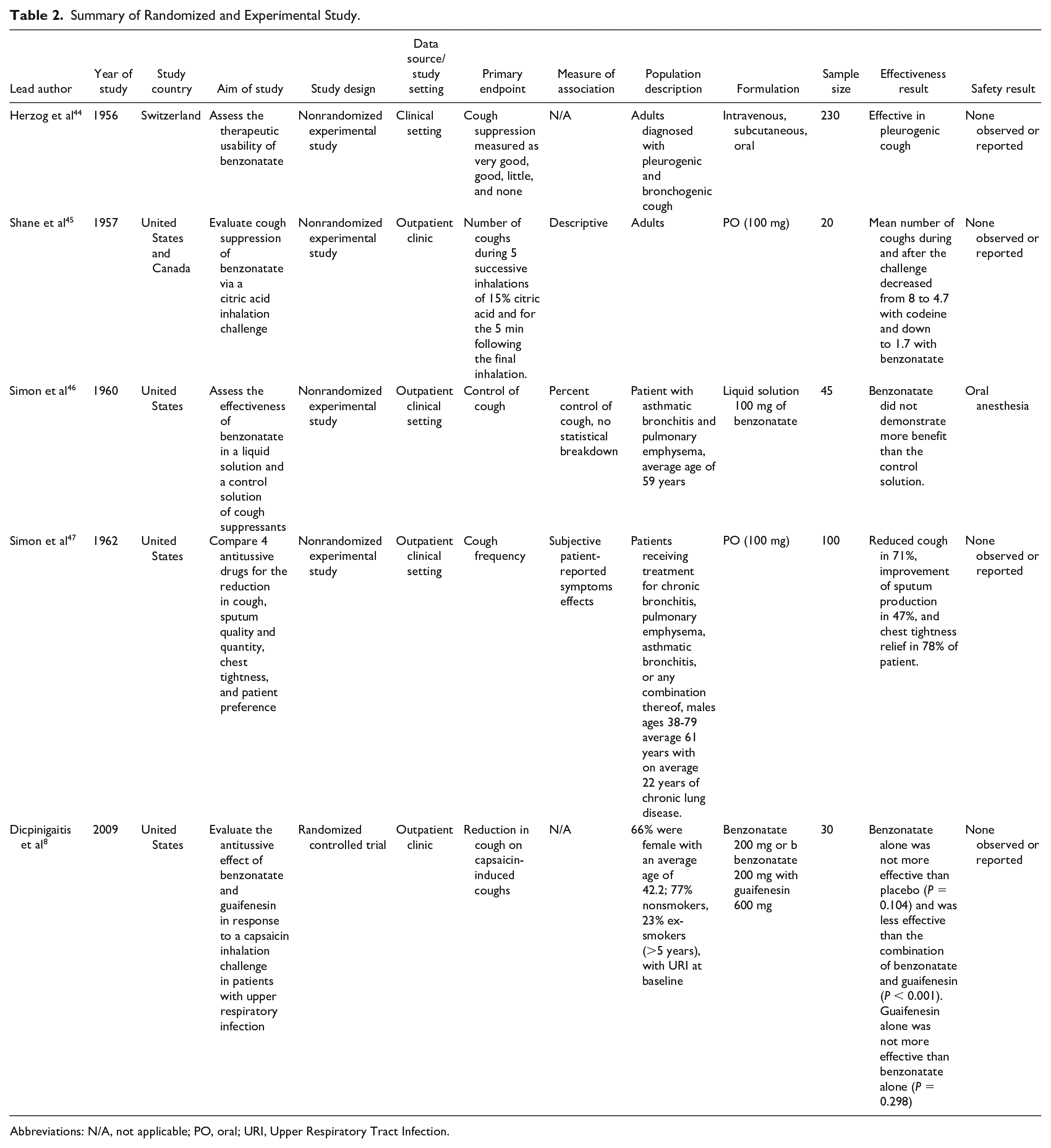
Abbreviations: N/A, not applicable; PO, oral; URI, Upper Respiratory Tract Infection.
Case Studies and Series
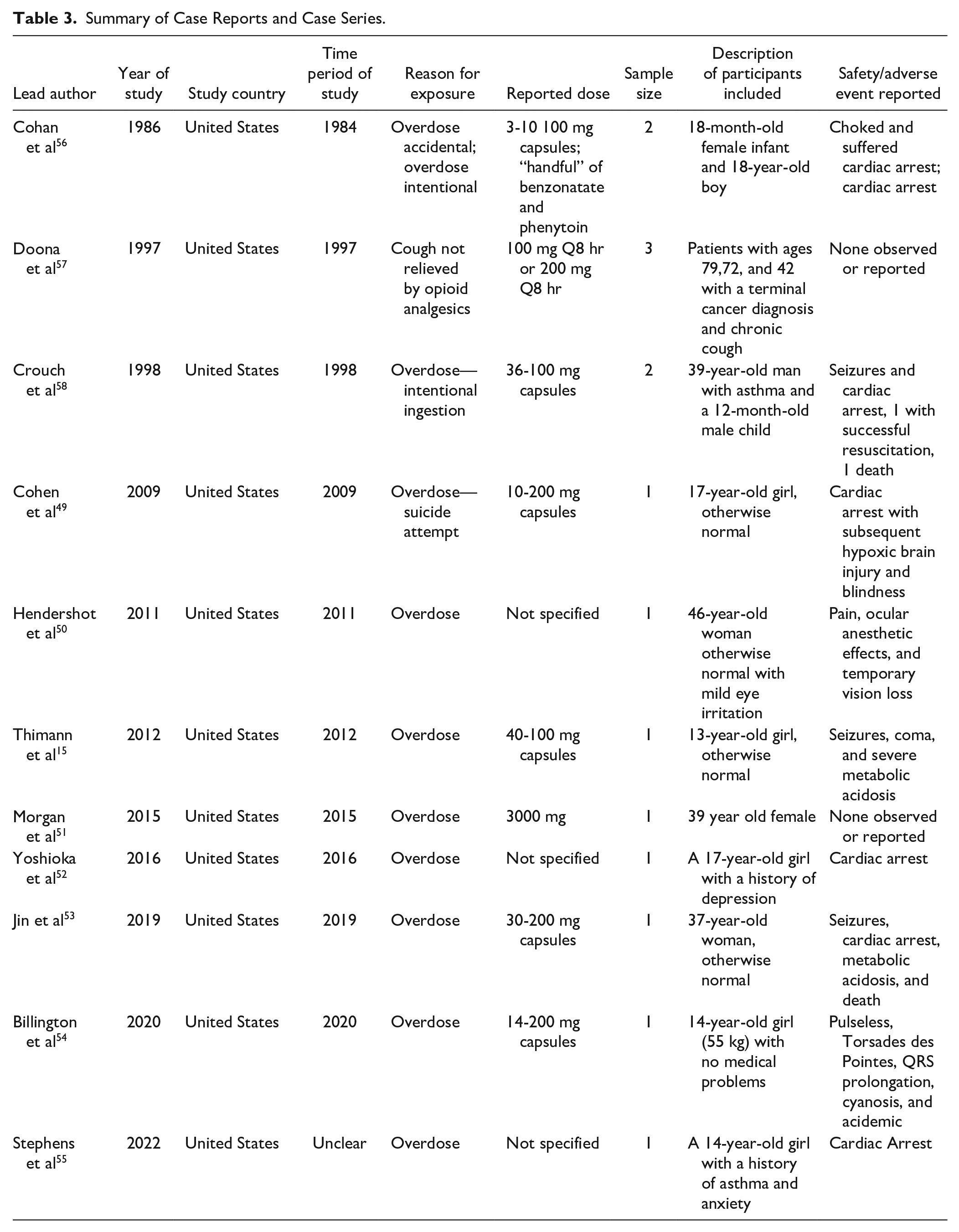
In total, 11 case studies15,49-55 and case series56-58 were identified. All case studies and series were published within the United States between 1986 and 2022. The discussed cases ranged between 18 months and 46 years of age. The majority of the case studies/series occurred in an emergency department15,49-51,53,54,56,58 setting while 1 case series occurred in a palliative care hospice outpatient setting 57 and 1 case occurred in a tertiary care pediatric hospital. 55 The cases primarily focused on overdoses with recorded ingested doses of benzonatate of 2000, 49 2800, 54 3000, 51 3600, 58 4000, 15 and 6000 mg, 53 and a suspected ingestion ranging between 300 and 3000 mg. 56 The associated adverse events reported with the overdoses of benzonatate included cardiac arrest, 49,52,53,55,56,58 seizures,15,53,58 pain, 49 vision loss, 50 coma, 15 metabolic acidosis, 15 Torsades des Pointes, 54 QRS prolongation, 54 cyanosis, 54 acidemia, 54 and death.53,58 The case studies and series are summarized in Table 3.
Summary of Case Reports and Case Series.
Quality Assessments
In the quality assessments, biases associated with sequences generation, allocation concealment, and blinding of participants, personnel, and outcome assessment were not applicable for most studies because they were not randomized.20-40,42,43 Many cohort studies had low risks of incomplete data and selective reporting given the short follow-up period and data collection process. The potential of other sources of biases was high and was primarily related to the limited sample size, data collection, generalizability, and study design. The results from the quality assessment are summarized in Supplemental Appendix 2.
Discussion
The systematic review of publications describing the efficacy and safety of benzonatate revealed a paucity of data on the effectiveness of benzonatate in controlling acute and chronic cough. Few comparative studies directly assessing its clinical effectiveness to other modern antitussives were identified. The existing studies assessing the use and effectiveness of benzonatate were primarily single-arm observational studies conducted in the mid-20th century and do not meet the current standards for evidence-based medicine. These studies have crucial limitations that could overcome using other research methods.
Many of these earliest experimental and cohort studies included comparisons of different formulations of benzonatate, comparisons to placebo or included no comparison group. Some of the assessed formulations such as oral suspensions did not enter the market or are no longer in use today. In addition to the various formulations assessed, the duration of intervention and timing of assessments for effect and adverse effects varied widely with observational periods ranging from less than 1 day to 100 days. The measured outcomes were often reported by means of patients’ subjective descriptions of effect (eg, good, poor, and excellent) rather than more objective measures that could be compared or assessed between different experimental and cohort populations. When effectiveness in reduction in cough was assessed, this may have referred to acute cough, chronic cough, or cough induced by medical means such as capsaicin or citric acid. These descriptive assessments were collected at inconsistent time intervals after the described benzonatate intervention ranging from 1 hour to several weeks often without clear measures of association. Similar experimental studies conducted today might capture these results via patient-reported outcomes (PROs),59,60 which can be leveraged as reliable and validated means of capturing subjective patient experiences. Many experimental and cohort studies assessed indications including sputum production, sputum consistency, or improvement of pulmonary function testing as secondary endpoints for which it has never been approved. Experimental studies that utilized nonopioid comparators utilized agents that are now out of date, not relevant, or no longer on the market (eg, dibunate). 47 Sample sizes ranged from a dozen to several hundred patients. Often the clinical setting was limited in scope with studies having been conducted in a single inpatient or outpatient facility, which may greatly limit generalizability.
The patients prescribed benzonatate today are also far different than the patients in which it was originally studied. While many today often receive benzonatate to treat symptoms of an acute cough from an upper or lower respiratory infection, the original studies exploring the benefit of benzonatate did so in patients experiencing cough from chronic conditions such as tuberculosis, chronic asthma, emphysema, and pulmonary fibrosis. At the time, people living with these conditions had far fewer options than people do today. While some studies did include patients with symptoms of acute cough, inclusion and exclusion criteria were inadequately described making it difficult to understand whether a symptomatic benefit exists for either acute or chronic cough.
The more recent cohort studies are retrospective analyses that describe and characterize the toxicity of benzonatate and describe the morbidity and mortality related to overdose. These cohorts were derived from the FDA Adverse Event Reporting System, the National Poison Data System and other data vendors to describe and characterize drug toxicities from intentional and unintentional ingestion of benzonatate.37-39 Case reports and case series primarily describe instances of benzonatate overdose by accidental or intentional ingestion and their subsequent clinical course in an emergency department and hospital setting. Death due to cardiac arrhythmias or severe clinical sequela of cardiac arrhythmias, cardiac arrest, and seizure in the setting of overdose are described in detail across multiple case series and case reports. Toxicities due to inappropriate use such as local anesthetization from topical application of the contents of broken pearles are noted, including corneal anesthesia from application to the eye. 50 A recurring theme of multiple case series is the clinical challenge presented in the recognition and detection of benzonatate overdose with examination of blood benzonatate levels by ultraviolet and high-pressure liquid chromatography and mass spectrometry as the most reliable means of quantifying unobserved ingestions.56,58 With the majority of recent studies illustrating the toxicities of benzonatate and its potential misuse, providers may question its continued use without substantive evidence and justification of its role and effectiveness as an antitussive.
Prospective and retrospective cohort studies assessing the effectiveness of benzonatate in larger populations with more complete medical and demographic information are not presently available. The available smaller cohort studies that use comparators often draw comparisons between different formulations of benzonatate or placebo rather than head-to-head comparisons to other antitussives which would may be more reflective of clinical decision-making. The exceptions to this trend include a study by Morrison et al 36 utilizing antitussives that was primarily descriptive in outcomes without measures of association or statistical comparison of outcomes between antitussives. The only randomized comparative study by Dicpinigaitis et al 8 assessed the effectiveness of guaifenesin, benzonatate and the 2 in combination in 30 patients with acute viral cough. The search for novel antitussive agents continues with the recent development of agents including P2X3 inhibitors.61,62 However, at the time of this study, these drugs have not received FDA approval and do not have comparative data with benzonatate.63,64 The paucity of nonopioid antitussive options certainly leaves patients with few options for relief, but does not change the fact that these medications carry risks with unproven benefit. Dextromethorphan, a centrally acting opioid agonist antitussive, received FDA approval the same year as benzonatate and also received clearance by the 1966 review panels. Some more modern studies also challenge its clinical effectiveness, 65 further illustrating the need for more comprehensive effectiveness and comparative studies among existing approved antitussive agents. 66
The FDA-approved agents with limited efficacy are often replaced by newer and more evidence-based therapies that better address unmet patient care needs. 67 The FDA has the authority to remove drugs from the market when their risks outweigh their benefits. While not known at the time of approval, real-world evidence has highlighted the significant safety concerns with benzonatate. There are significant gaps in the literature pertaining to the clinical efficacy of the drug similar to the literature questioning the effectiveness of available over-the-counter cough and cold medications. 67 If further more robust studies examining the effectiveness of benzonatate are not conducted, pharmacy formulary managers could explore removing benzonatate from their local formulary based on the safety concerns and lack of evidence to support its use for any indication or off-label use. Doing so would not only protect patients, but also potentially save millions of dollars in low-value health care. Should patients or other groups desire to keep benzonatate on the market, a well-designed randomized controlled trial should be conducted. Well-designed clinical trials should employ objective metrics to assess cough reduction. Given that very few cough suppressants with robust evidence demonstrating a significant reduction in cough relative to placebo exist, a study that compares benzonatate to other drugs might result in a conclusion that it does have efficacy. Comparing benzonatate directly to a placebo may not support such a conclusion. If conducting a clinical trial is not possible, studies leveraging large retrospective databases could assess the clinical effectiveness of benzonatate but may be limited by the availability of clinical endpoints. These studies should compare benzonatate to both supportive care alone and active comparators such as other modern antitussive agents or well-controlled nonpharmacologic treatments in generalizable clinical settings. More robust and clearly defined measures of efficacy based upon objective measures or consistent subjective measures such as PROs could better capture the observed clinical effect and facilitate comparisons better treatment approach. Patient-reported outcomes may also be expanded to address other patient concerns and symptom relief in addition to cough suppression including outcomes such as missed days of work, time to resolution of acute disease, and return to health care.
Relevance to Patient Care and Clinical Practice
Antitussives address the significant symptom burden faced by a multitude of patients suffering from acute and chronic cough with relatively few available therapeutic options. These agents are not benign drugs with extensive overdose and toxicology information well documented in the literature available for benzonatate. With much of the existing literature being primarily descriptive or related to toxicity, studies utilizing more robust methodologies to compare agents and examine the associations between effectiveness and safety measures among these agents are needed to best inform clinical practice and minimize harm to patients. In line with the recommendations from other expert panels, until such time as better evidence is brought forward demonstrating that medications to treat cough result in less frequent or less severe symptoms, clinicians should recommend against their use and council patients accordingly. 67
Conclusion
This systematic review reveals substantial limitations with existing evidence pertaining to the safety and clinical effectiveness of benzonatate. Initial clinical studies proposed therapeutic benefits without robust evidence or further examination in larger study populations. Safety data were only collected from very small populations of patients prior to its approval. These limited clinical settings, at times a single inpatient or outpatient facility, greatly limit generalization. While toxicities are primarily explored in overdose or inappropriate use, this drug has required a drug safety communication regarding morbidity and mortality after overdose. Rising safety concerns should bring closer scrutiny upon drugs whose use is founded upon evidence that would not stand up to current regulatory review. Review of the available literature regarding the safety and effectiveness of benzonatate demonstrates a need for, at minimum, large observational studies characterizing the population in which it is used, indication for use, and if possible, its clinical effectiveness. Ideally, regulatory agencies would request additional randomized controlled trials with endpoints that matter to patients so patients, providers, payers, and regulators can reassess its value in medicine.
Supplemental Material
sj-docx-1-aop-10.1177_10600280221135750 – Supplemental material for Benzonatate Safety and Effectiveness: A Systematic Review of the Literature
Supplemental material, sj-docx-1-aop-10.1177_10600280221135750 for Benzonatate Safety and Effectiveness: A Systematic Review of the Literature by Ryan C. Costantino, James Leonard, Emily F. Gorman, Davide Ventura, Alan Baltz and Laura Elisabeth Gressler in Annals of Pharmacotherapy
Footnotes
Declaration of Conflicting Interests
The authors declared no potential conflicts of interest with respect to the research, authorship, and/or publication of this article.
Funding
The authors received no financial support for the research, authorship, and/or publication of this article.
Supplemental Material
Supplemental material for this article is available online.
References
Supplementary Material
Please find the following supplemental material available below.
For Open Access articles published under a Creative Commons License, all supplemental material carries the same license as the article it is associated with.
For non-Open Access articles published, all supplemental material carries a non-exclusive license, and permission requests for re-use of supplemental material or any part of supplemental material shall be sent directly to the copyright owner as specified in the copyright notice associated with the article.
