







Abstract
Many of the contemporary treatment recommendations and guides for adapting therapy for men originates from the context of the United States. This qualitative study invited 15 Australian therapists, who advertised themselves as working with men, to describe their recommendations for male-friendly counseling. Three themes and 14 subthemes were identified, each explained from an understanding of their male client group’s experiences and common male norms. The themes included ensuring a safe space, to enact masculinity-informed respect, and to enhance client awareness and motivation. Therapists’ suggestions for working with Australian men were congruent with recommendations in the existing literature; however, variations were noted in how traditionally masculine or feminine-consistent their emphasis was.
Male-friendly counseling is a designation used to describe therapy intentionally customized to enhance treatment engagement, retention, and outcomes for men and boys. Gender-sensitive psychological treatment guidelines for females have been available for almost half a century (American Psychological Association, 1978); however, only recently have they been written for the psychological treatment of men and boys (Australian Psychological Society, 2017; American Psychological Association Boys and Men Guidelines Group, 2018). The rationale for the development of these standards was twofold. The first was the recognition of where men and boys disproportionately experience a range of social, mental, physical, and academic challenges (American Psychological Association Boys and Men Guidelines Group, 2018). These include, but are not limited to, higher rates of suicide and mortality (Värnik, 2012; World Health Organization [WHO], 2018), violence (Australian Bureau of Statistics [ABS], 2016), imprisonment (ABS, 2013; Federal Bureau of Prisons, 2019), substance abuse (ABS, 2012; WHO, 2009), and antisocial personality disorders (Grant & Weissman, 2007). The second rationale is that men are less likely to access timely treatment for their mental health concerns. This is due to a combination of men’s adherence to masculine norms that have been associated with lower levels of help-seeking and external barriers such as gender-insensitive service design and delivery (Parnell & Hammer, 2018; Seidler, Rice, River, Oliffe, & Dhillon, 2018). The treatment guidelines recommend therapists working with males understand men and masculinities, offer respectful nondiscriminatory services, and develop gender-aware skills for working with men and boys.
Recommendations for how to adapt therapy for men can be found from multiple sources. The first is through practice guidelines such as those mentioned previously, which focus on broad principles and guidelines. A second can be found in the scholarly literature, including books, book chapters, and journal articles. These are commonly written by authors who are both researchers and practitioners (Brooks, 2010; Englar-Carlson, 2014; Pollack & Levant, 1998), with most produced from a North American context (Beel, Jeffries, Brownlow, Winterbotham, & du Preez, 2018). Another source of recommendations and practice wisdom is from therapists (Brewer & Tidy, 2017).
Therapists can be considered an interface between client experience and the application of therapeutic knowledge. To our knowledge, only one study on male-friendly psychological practice has sought recommendations from mental health professionals. Mahalik, Good, Tager, Levant, and Mackowiak (2012) asked psychologists for their opinions on helpful and harmful practices in clinical work with males. Half of the respondents described themselves as specializing in working with men. The authors of this study noted that the findings were generally consistent with, and complementary to, existing scholarly literature. However, the study was limited to members of the American Psychological Association and may not adequately represent therapists who work with men outside of the United States.
More broadly, male-friendly counseling recommendations are based in understanding male norms. The focus can be on the dominant idealized male norms referred to as hegemonic masculinity or alternatively the focus may be on variations (i.e., other nondominant masculinities) that are practiced but may socially be viewed as less favorably in comparison with hegemonic ideals (Connell, 2005; Connell & Messerschmidt, 2005). The concept of masculinities encapsulates beliefs, attitudes, behaviors, and social prescriptions associated with males and are influenced by age, place, nationality, class, sexuality, race, time period, and individual (Beynon, 2002).
The men’s counseling literature predominantly originates from North America underpinned by understandings of masculinities performed in its region. There is a dearth of literature on male-friendly counseling adaptations for men in other nations. This study has the potential to illuminate unique Australian adaptations and recommendations. Australia has several similarities with the United States including both being a diverse immigrant nation with a history of colonialization and the sharing of many similar Western values. Yet, Australia has unique idealized masculinity images in its national narrative including the independent, rugged bushman, the protective surf life saver, the loyal and sacrificing Anzac soldier, and the tough and skillful sportsman; all of whom are portrayed as Caucasian (Moore & Crotty, 2007; Murrie, 1998). Each of these ideals have risk factors; the bushman may be vulnerable to isolation, the life saver to neglect his own welfare, the solider to trauma, and the sportsman to workaholism and perfectionism. These masculine archetypes represent a miniscule portion of the population and fail to capture the heterogeneity of masculinities in modern Australia. However, they point to distinctive Australian narratives that may, to varying degrees, influence and reflect conceptions of hegemonic masculinity in Australia (Mahalik, Levi-Minzi, & Walker, 2007). Studying an Australian cohort of therapists may shed light on how regional differences might impact recommendations for working with Australian men specifically; for example, making therapists’ sensitive to Australian men experiencing a sense of failing in not living up to these iconic ideals.
This study aims to identify and explore recommendations for working with men from Australian therapists. The data gathered may reflect regional influences on the therapists, and a diversity of educational backgrounds, treatment modalities, and experiences with clients. It will not focus specifically on more nuanced adaptations for more specific subgroups or individual men, though individual therapists’ suggestions may be influenced by their experience and understandings of various subgroups. Unlike the Mahalik et al.’s (2012) study which used email questionnaires to gather data from psychologists alone, this study interviewed therapists from a broader range of professional identities to gain a more in-depth understanding of recommendations for working with men.
Aims
The aim of this study was to develop an in-depth understanding of what a sample of men’s counselors in Australia recommend for working with men. It was expected that this study would identify commonalities in practice from the sample of Australian therapists in comparison with recommendations from existing studies and conceptual literature. The main research question was, “What do Australian men’s counselors recommend for counseling men?”
Method
The purposive sample aimed to recruit practitioners who counsel men, practiced primarily in Australia, and advertised a focus in providing counseling for men. The rationale for selecting practitioners who advertised a specialty with men is that it was assumed they would evidence higher awareness of male gender norms in treatment in contrast to other therapists. Initially, an online search was conducted for counseling services that explicitly focused on men. Private practitioners were deemed likely to reflect a greater diversity of thought and practice than therapists employed by specialist men’s services, who may be constrained and shaped by organizational philosophies, values, and training.
A search was conducted on the Google.com.au search engine for participants. The search terms included “men” and “counselling,” and the search restricted to Australian websites. Twenty result pages were explored until relevant site scarcity was evident. For practitioners to be selected, the website needed to indicate a specialization in working with men among no more than five listed specializations. A total of 26 therapist names were identified. All were contacted by phone or email. Sixteen therapists consented to participate in the research, and of these, 15 participated in interviews. The number of therapists is consistent with similar qualitative studies interviewing therapists (Binder, Holgersen, & Nielsen, 2008; Lawrence & Love-Crowell, 2007; Niño, Kissil, & Davey, 2016).
Twelve of the therapists were males and three were females. Thirteen therapists had graduate qualifications and two had undergraduate qualifications. All except one were registered in their respective professions. Nine were registered counselors, 1 three psychologists, two social workers, and one who identified as a counselor in training and not yet registered with a counseling association. In Australia, psychologists, social workers, and registered counselors each have distinct professional identities, training standards, and professional associations. From those who provided their length of practice, there was an average 15.5 years overall counseling experience and 10.5 years’ male-focused counseling. In place of real names or pseudonyms, anonymity of participants is supported by assigning a two-letter code denoting gender and profession and a numeral based on the order in which participants had been interviewed. The therapists’ characteristics are summarized in Table 1.
Therapist Characteristics.
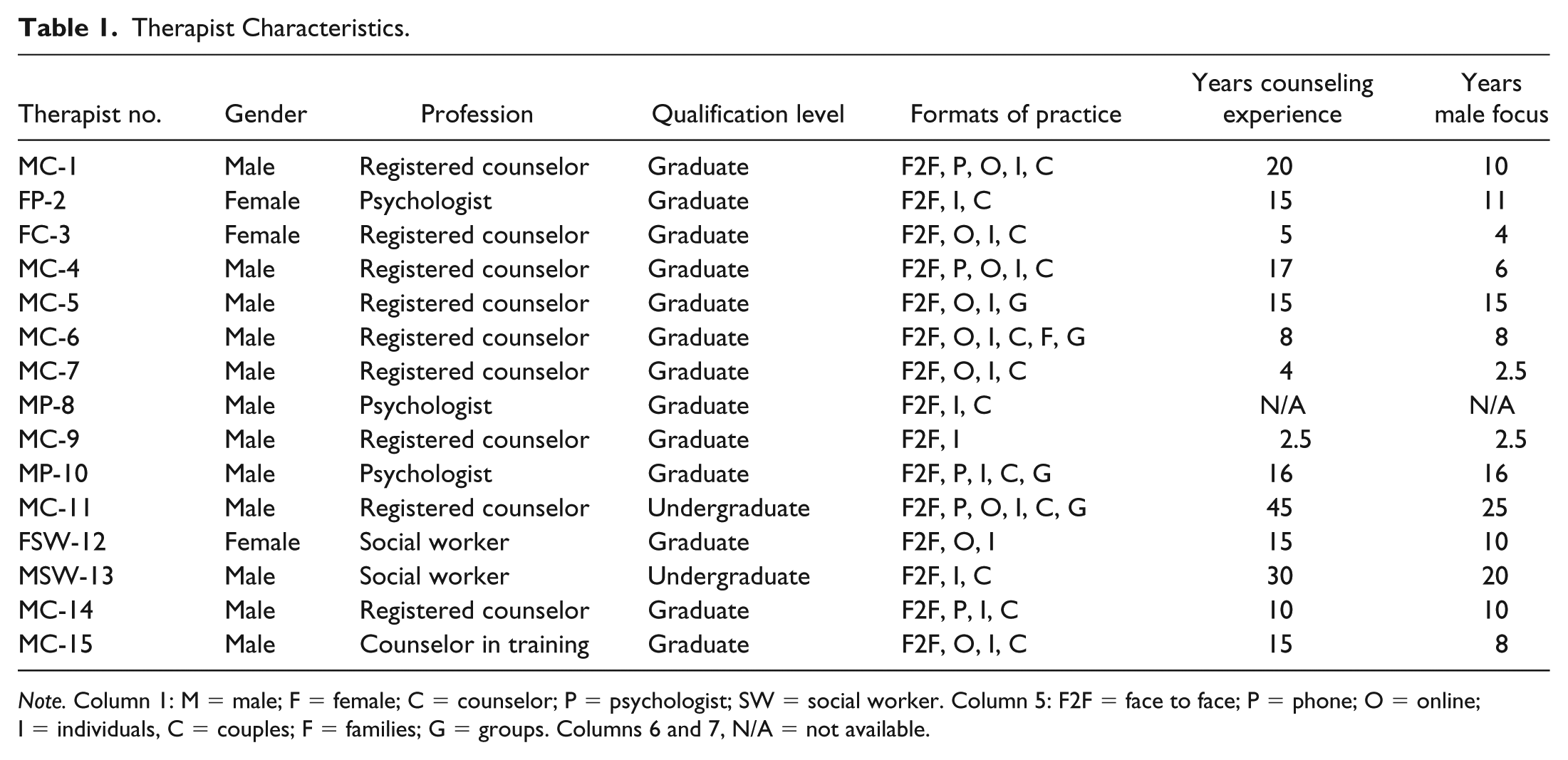
Note. Column 1: M = male; F = female; C = counselor; P = psychologist; SW = social worker. Column 5: F2F = face to face; P = phone; O = online; I = individuals, C = couples; F = families; G = groups. Columns 6 and 7, N/A = not available.
All interviews, except one, were conducted and recorded using an online videoconferencing platform. The exception was held over the phone due to technical difficulties. They ranged from 29 to 82 min in length, with the average length being 46 min. All interviewees had one interview each, with the exception of one who requested a second interview to provide additional information. The interviews followed a semi-structured format using an interview guide, with invitations to provide more information about the answers provided. Interviewees were asked a number of conversation prompts including what they thought therapists needed to know about men, what strategies they could use to build rapport with men, what strategies they recommended to help men change, and what therapists needed to avoid doing with men.
The transcriptions were entered and coded in NVivo 11 (“NVivo Qualitative Data Analysis Software,” 2012). Thematic analysis (Braun & Clarke, 2006) was used to guide the process of identifying and developing categories, themes, and subthemes. The corresponding male researcher conducted the interviews, read and coded the transcripts, and proposed initial themes. A female researcher then read the transcripts and reviewed the coding and initial themes. The proposed themes were then discussed in a wider research group consisting of two males and two females until the final themes were determined by way of consensus. The coding was inductive in that it attempted to identify themes that related to the research question, but without coding according to specific criteria or predetermined theoretical constructs. The coding was semantic in that it focused on the surface meaning rather than implicit meaning (Braun & Clarke, 2006) and the researcher adopted a constructivist position in developing themes.
Results
The sample represented a diversity of professional identities, theoretical backgrounds, and experience with different client groups. Some therapists identified with working predominantly with particular subgroups of men. These subgroups included gay, bisexual, transgender, Christian, working class, domestic violence perpetrators, and young men. Some counselors promoted conceptualizations associated with traditional masculinity, whereas the majority emphasized more gender role flexibility.
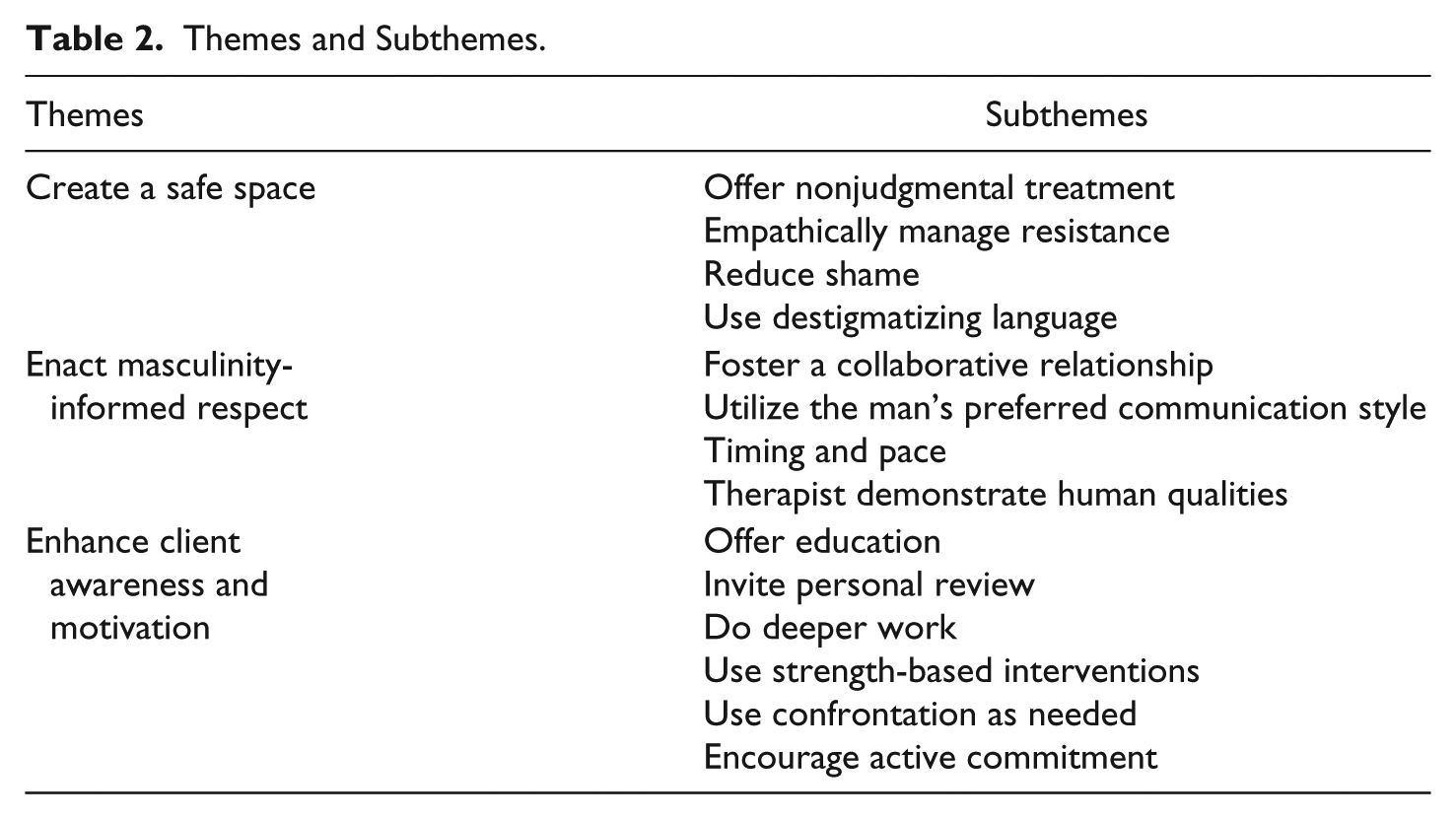
The researchers developed three themes and 14 subthemes from across the interviews. Descriptions within themes will include quotations to represent the practitioner’s voices (Corden & Sainsbury, 2006). These are summarized in Table 2.
Themes and Subthemes.
Theme 1: Create a Safe Space
Participants spoke of men not having a safe place, or feeling safe, where they can self-disclose, and that men often have a fear of being judged, including fearing stigmatization by therapists. Some claimed the fear was primarily due to a social context more inclined to criticize men. Others highlighted it was a consequence of men’s conditioning from childhood to suppress pain and to show strength. Irrespective of the perceived sources of stigma, the participants emphasized that it is the therapist’s responsibility to build a context where this threat is reduced. The therapeutic space is to be noncritical, nonshaming, empathic, and inviting, where reluctant men can begin to relax their defenses, to build trust, and to psychologically engage with the therapist and therapy: I think is about holding that space for them and creating a space where there is not a competitiveness, or a sense of shame, or a sense of judgement or criticism. (MC-1)
Offer nonjudgmental treatment
The participants described how men can be cautious early into treatment and may expect criticism, negativity, stereotyping, and judgment. Respondents urged therapists to resist critically judging male clients: I think all of our clients, they’re quite on guard. People are on guard because they have been whacked around enough. I tried not to be judgmental . . . They don’t need more of that. They’re got enough of that. (MC-7) I’m not there to beat them over the head . . . [I] just get them to feel comfortable talking about what’s going on and knowing that there’s another male that can hear them and without judging them. (MC-14)
Respondents highlighted risks of dehumanizing male clients by defaulting responsibility for problems solely with them while additionally failing to recognize the client’s own unique needs. There was a perception that in heterosexual couple counseling, therapists may side with female partners and fail to appreciate the relative contribution to problems from both parties. One participant highlighted how therapists should recognize men’s vulnerabilities on their own merit: I think a lot of people [work] with women in counseling and men are often seen as the problem and I think it’s not about knowing about bad men but it’s keeping an open mind in that men have just as many worries and feelings and problems as women do; to not put them into the bag of “they’re the problem” because often that can be “men are the ones who are violent, men are the ones who are abusive.” I’ve certainly worked with men who do those things but they’ve much more complicated stories than that. (FP-2)
Therapists were not only called to resist negatively stereotyping their male clients, but to maintain unconditional positive regard and empathic attitudes toward them, ensuring therapist interactions reflected these attitudes. This positive regard and empathic acceptance is aimed to facilitate a sense of safety for the men to enable them to engage the therapist and the therapeutic process: You got to keep it safe. They got to feel safe. They got to know that they can trust you. (MC-11) If I were to describe the metaskill of the attitude of positive regard for the person. They pick up that as soon as they—from the first handshake and the first eye contact is that, again, “I value you, I think you’re courageous,” all that is perceived in the look or a gesture or an attitude. (MC-15)
This safe environment and relationship where men may self-disclose without fear of humiliation may be an unfamiliar experience for many men. Therapists believed when men are given a context that feels supportive and safe, they will lower their psychological guards and may display emotions that are more vulnerable: I can tell you virtually every man that comes to see me in the first session, they’ll be crying because they’ve never been allowed to cry before, and it’s just being heard. (FC-3)
Empathically manage resistance
Many of the therapists described male resistance in therapy and how this can be challenging for therapists to engage men in therapy. Some highlighted resistance as being ambivalence associated with being mandated to attend counseling. Others framed it as defenses associated with traditional masculinity, such as protecting one’s image against appearing weak and attempting to hide one’s shame and vulnerabilities. Respondents viewed the resistance as understandable and encouraged therapists to appreciate it, to look beyond it, and to roll with it while maintaining compassion toward the client: It’s like the old adage of “don’t judge the book by the cover.” . . . So you have to have that compassion. See past that front whether it’s an aggressive front or . . . like a Tazzie Devil
2
in front of your face. (MC-7)
Reduce shame
Therapists talked about the importance of de-shaming men. They described men as carrying shame due to concealing their pain and insecurities, of men believing that they are inadequate, flawed, and failing, and fearing that others recognize this, critically judge, and then humiliate them. The respondents believed therapists themselves could potentially trigger shame with judgmental attitudes toward men. Reducing shame was viewed as a means of connecting and engaging men toward therapeutic change: So, coming to a therapist, I think, is about getting through part of that stuff to access that part of themselves that is really deeply held. They may not use the word shame but it’s in the room. (MC-1)
The de-shaming strategies recommended included normalizing the men’s experiences while being careful not to excuse problematic behaviors. It also included reframing problems and vulnerabilities as strengths, and recognizing and acknowledging successes and strengths: I also look at the positives. I’m praising them for the inroads that they make. It’s a sense of making them feel good about themselves but without letting them get away with the minimization or colluding with the poor behavior. Calling [out poor behavior] and when they see other men talk about successes; that helps them to not quit. (MC-5)
Use destigmatizing language
A small number of respondents highlighted how they use destigmatizing language to assist men feel at ease with entering therapy. They attempted to reframe counseling as a casual conversation, thereby reducing the stigma and taking away pressure to perform in a way that may feel alien to the male: What I normally do, I will first talk to the men and I’ll say, “Hey, this is about a conversation that we’re having. Let’s just have a chat about what’s going on.” If I have to talk about counseling, I will always bring it back to the fact that what we’re doing is, we’re just having a chat, we’re just going to look, let’s see, and I always let them know that it’s a safe place. (MC-14)
The interviewees highlighted men often come to counseling guarded, and at times defensive, due to their experiences of judgment by society, their socialization to conceal and manage internal pain independently, and their expectations that counseling may be a place of humiliation. Interviewees highlighted that it is desirable for the therapist to create a sense of safety through nonjudgmental unconditional positive regard, a place where proactive support is provided for the client’s sense of self-worth and dignity, so that the counselor will earn a right to address sensitive and potentially disturbing material. They emphasized creating a climate of connection whereby the person of the therapist connects with the person of the client using strategic gender-consistent relational processes.
Theme 2: Enact Masculinity-Informed Respect
Participants often portrayed men as reluctant to seek help and who may experience various therapy processes as incompatible with their masculinity. The second theme requires therapists to understand and demonstrate respect toward the male client and his gendered norms in an effort to strategically engage him with the therapeutic process. This theme suggests therapists give due regard to accommodate therapy to men’s relationship, treatment, and communication preferences, and also their vulnerabilities.
Foster a collaborative relationship
Interviewees recommended therapists develop collaborative and egalitarian relationships with men. Enacting these principles aim to reduce men’s apprehension of losing power and respect in the therapy process and to enhance the client’s willingness to engage with therapy. This included the therapist seeking information on what the client’s goals and preferences were, particularly when mandated to attend by a partner, employer, or court: I don’t set this thing up that I’m the expert and they’re not. I say straight away, “It’s a collaborative process. You tell me what you need. I’m here to work with you. We do this together.” (FC-3)
Utilize the man’s preferred communication style
The majority of therapists recommended that counselors respected and utilized men’s own preferred relational styles. Language was a strategic means of bridging the therapist to the client. Several respondents recommended, “bloke-speak,” a direct, “tough,” layman style of speech that men, particularly those from the working classes, may utilize. This speech includes swearing, traditionally masculine-oriented metaphors, and may be deemed offensive by some groups in society: The language we use where they can kinda [sic] connect with that. I’ll use whatever it takes to get them over the line. (MC-5)
A number of both male and female therapists interviewed tended to utilize this style of speech in the interview. The style was used both to join with men and to create a more egalitarian relationship with them: I think a lot of my approach with males . . . is to be on their level. I use the language they use. If it’s swearing, then I’m happy to replicate. (MP-8)
Some therapists reported actively using humor to lighten the mood and assist the men to feel comfortable with them: And, this room, space for humor, I incorporate a lot of that into what I do. I feel like if we take the process too seriously, it becomes uncomfortable. (MP-8)
Timing and pace
Interviewees spoke of respecting men’s timing and pace for change. Timing may include when to start addressing specific concerns, whereas pace includes recognizing that working with men can progress slowly. Patience was recommended for therapists to practice: It’s different for everyone. It can be very hard. Some clients are very resistant and they do not want to do it. It could take months and months and months of work before someone can actually sit there and do that. (FC-3)
Therapists underscored that men often needed to warm up to the therapist and the therapy hence incorporating “non-therapy” behaviors as a prelude was recommended. Warming up might be spending time discussing the man’s own interests or the therapist acting more informally and with increased personal transparency: I think giving the space. Starting softly. There’s a fellow the other day, we must have talked for 20 minutes about music before we even got down to the nuts and bolts. Taking the time to talk about farming or talking about motorsports or whatever their passion is. I’m very honest. I say, “Look I know shit all about fishing, but tell me about it, what’s it like?” I think having a natural curiosity in what they’re interested in helps. (FSW-12)
Therapist demonstrate human qualities
The interviewees emphasized therapist characteristics associated with existential humanistic therapies as being generally preferred by male clients. Therapist authenticity, transparency, honesty, humility, and congruence were all qualities mentioned as resonating with men. Therapists also emphasized the need to adapt to the individual client. Although they recognized common features of masculine socialization, they also recognized variation between groups of men and individuals. The therapist was to be a role model of humanity offering a human to human connection. Although therapists admitted professionalism was important, the main qualities emphasized were those of the human practitioner, first and foremost: Well, I think it’s very important to be authentic, to be genuine. Not to be what you’re not. Whether you’re male or female it doesn’t matter. I think it’s to be genuine. (MC-4)
The participants emphasized the importance of being sensitive to men’s needs and vulnerabilities as men and ensuring the treatment was adjusted accordingly. They encouraged nondiscriminatory treatment and cautioned about the risk of insensitivity to the male client’s needs and preferences: I think it’s very easy to flick to “But what about the children? What about the wife? What about others?” Men don’t tend to get a lot of “What about you?” I find. It’s not as common for men to get, “Well, what’s that like for you? How are you going with that? How do we support you in this moment?” (FSW-12)
Enacting masculinity-informed respect with male clients included recommendations for therapists to pace entry into therapeutic processes, adjust their communication style, treat the man as an equal, and ensure therapist behavior did not trigger feelings of humiliation. Creating a safe and respectful context for men to connect with their therapists might be interpreted as a laying the groundwork for engaging the man to address the areas requiring attention.
Theme 3: Enhance Client Awareness and Motivation
In the previous theme, participants recommended respectful gender-sensitive customization to enhance therapist engagement with men. In Theme 3, participants recommended that therapists work toward two key aims. The first is expanding client awareness. This is done through education, personal review, and facilitating transformational insight. The second aim is motivating clients. Therapists are to help clients develop a richer awareness of their concerns, their goals, alternative perspectives, and solutions while motivating them in the therapy to commit to address their concerns and make the desired changes.
Offer education
Educating male clients was a common strategy recommended by therapists. The main topics that the counselors mentioned teaching men about were emotions, relationships, communication, work/life balance, self-care, and about masculinity and men. Relationship problems were often cited as the presenting issues in therapy, with men flagged as having deficits in these areas due to socialization. Therapists can help motivate men to become receptive for the information and then help them acquire knowledge in the deficit areas: Communication is a big one. We might do conversations around communication and managing emotion. How not to lose your shit with your kids or your partner or when you’re tired and recognizing that you’re tired. That now is not the time to have that big conversation or now is not the time to tackle the kids or if the household is tired, take a break and put it on the back burner. There’ll be a lot around managing emotions and communication. (FSW-12)
Therapists also discussed a variety of educational strategies. They recommended the usage of metaphors, storytelling, self-disclosure, role-modeling, and teaching cognitive behavioral interventions (often referred to as “giving tools”) as male-friendly ways of expanding their awareness: I think that, to relate to men, you need to use metaphors. If they’re a tradie,
3
I will their field. If they’re building something, we’ll use building-related concepts . . . If they’re a truck driver, I’ll use stuff from their world to explain what they’re feeling and thinking. (MC-4) . . . that role modelling of—positive behavior of confidence and assertiveness in myself and that it was exceptionally helpful and I’ve done a lot of work with . . . your everyday man. (MP-8)
Invite personal review
Less than half of the therapists talked about helping men review their past, whether it be their childhood or the recent past. These reviews were to assist the men to develop more thorough understanding and insight into their inner worlds, their coping, the reasons for problematic behavior, and to facilitate enhanced self-compassion and emotional resolution: I wouldn’t think that they came seeking that understanding about themselves. They’re really looking at why the relationship is failing and what’s going on, and often the case is, more often than not, it’s what she’s doing [according to the client], and so on and so forth, when then, the idea is to turn it back to themselves and see why they’re behaving like they’re behaving, and what might be causing the behavior. (MC-14)
Do deeper work
A majority of therapists recommended that counselors aim to expand client awareness and insight into preconscious and unconscious material. Therapists highlighted that often men’s behavioral problems stemmed from unresolved trauma or unmet developmental needs. They recommended that rather than staying with men’s preferences for cognitive and behavioral interventions only, the therapist’s goal was adding deeper insight and emotional awareness to education and skill building: We usually scratch around a little bit in the family of origin, sometimes just to help somebody understand that they might feel weird or weak, but they developed through influences that weren’t very helpful or haven’t proved to be very helpful. (MP-10)
Use strength-based interventions
Participants felt it was important that therapists stimulate men toward action, whether this be seeking personal insight, learning to identify and express emotions, or making behavioral changes. One means of motivating men was by using what may be termed positive-focused interventions. These include the therapist focusing attention to men’s strengths, reflecting on their successes, focusing on solutions, and exploring what a more desirable future might look like for them: Definitely, you have to build agency. I work from a perspective of strength, I’ll highlight clients’ strength and resilience. You definitely want to build agency. (FC-3) Well, again it’s strength-based, so that metaskill of always looking for the good, so to speak. Often men’s framing has been around shame or guilt so somebody actually noticing their other qualities can be very powerful for them. (MC-15) I work with these guys, it’s more focused solutions. Work out “How would you imagine it being different, how do you want your life to be?” and empowering them to imagine that and then working through the tools that will bring [change and] learning new choices. (MC-5)
Use confrontation as needed
Most of the therapists regarded skillful confrontation as an important aspect of motivating men. Confrontation was balanced with support and a trusting relationship. They highlighted that confrontation can be done badly and do damage, but nonetheless, skillful confrontation is important to use with men: It’s a very fine balance, I think, between challenging them and supporting them. Sometimes you get it wrong because you can be a bit too challenging and that can then elicit a response in them that’s not helpful. You’ve got to walk alongside them and just not push them too much, not push them before they’re ready. (FC-3)
Generally, participants regarded men as better candidates for confrontation than women because they regarded men as less vulnerable to damage, and more likely to be receptive to direct approaches. This confrontation may be delivered as direct challenge, with self-disclosure, or with humor: The style is much more direct and can even use language which they get so it could include an expletive to really make them go, “Woh, okay.” That gets them confronted initially, but there’s also a kind of a respect with directness from a man to a man. It’s used very deliberately at a given time within the therapeutic process. (MC-15)
Encourage active commitment
Just under half of the respondents advocated that therapists directly encourage active commitment to their therapy goals. Therapists are encouraged to highlight to men that improvement and change requires they take responsibility for change. Therapists might help the men review the impact or potential impact of their actions. Alternatively, the therapist may communicate this directly using an educative or confrontational approach: . . . now the idea in counseling of shared responsibility and that’s the challenge and sometimes of getting men to buy into that but I haven’t got a magic wand and we’ll work together to come up with ideas but they have to act it out. (MP-10) I give that straight to the man and I say “This is your session. We’re here for you, you’re not here for your partner, I want you to be able to sign this and I want you to take some ownership responsibility and so essentially just making this as voluntarily as possible.” (MP-8)
The third theme recommended therapists use strategies to expand men’s awareness into areas that they had previously not considered in any depth, due to a lack of opportunity or motivation. Respondents recommended a range of strategies to educate and help elucidate new awareness and knowledge for male clients. In addition to this, therapists were to help motivate the men toward engagement in the change processes and tasks. They might do this by building confidence in men, confronting them, or a combination of both.
Discussion
This study provided an opportunity to develop a thematic understanding of what male-friendly therapists in Australia recommend for counseling men. The therapists varied in length of practice, gender, training, professional identity, modality, and location of practice. There was diversity among therapists in their views on men and masculinities, on how to connect with and help men, and how best to assist male clients to change. With the diversity of recommendations across the domains mentioned, there was a surprising amount of similar recommendations aligning with the themes presented. Each interviewee emphasized the importance of creating a safe space, of forming respectful masculinity-informed connections with their male clients based on genuine empathy, expanding men’s awareness, addressing topics relatively deemphasized among men, and motivating them to engage with the treatment goals. What was also common to all therapists surveyed was a personal commitment to effectively counsel men and a recognition of the role gender and male socialization played in men’s lives and in treatment. Each of the therapists introduced their recommendations by contextualizing them in their understanding of men, masculinity, and male socialization experiences in society. Although the participants did not explicitly emphasize the need to develop a strong knowledge of men and masculinities generally, they justified their recommendations from their own understanding of men and their socialization thus implying this could be viewed as an additional, though implicit theme.
The respondents often positioned themselves as providing an important safe place for men, as reflected in Theme 1. Although providing a safe space is incumbent on therapists working with any and all clients, therapists underscored this as particularly important with men due to men’s own reluctance with self-disclosing processes, and that this population were particularly vulnerable to therapist insensitivity and prejudice. Various authors have highlighted that standard counseling processes can be incompatible with various dominant masculine norms and behavioral expressions (Brooks, 1998; Kiselica, 2005), that males may be judged more harshly in therapy (Mahalik et al., 2012), and that men can be experienced by practitioners as being more difficult clients (Vogel, Epting, & Wester, 2003). There is some evidence that men and boys are vulnerable to insensitive treatment by therapists (Ashfield, 2011; Mahalik et al., 2012), and it is conceivable that therapists who advertise as specializing with men may hear more complaints of gender-biased treatment. Available guidelines for working with men and boys warn psychologists not to treat men in ways that demean or demonstrate bias toward them (APS, 2017) rather therapists are urged to become critically mindful of their own gender assumptions and preconceptions. Higher endorsement of norms of traditional masculinity has been linked to increased negative attitudes toward counseling, increased self-criticism and shame for needing assistance, concerns of negative responses from practitioners, and concerns about disclosing distress (Heath, Brenner, Vogel, Lannin, & Strass, 2017; Pederson & Vogel, 2007). Men’s own internal self-shaming processes, their projections about potential threat, and the potential for therapists to create an unsafe experience provide justification for the recommendations in Theme 1.
The first theme emphasized safety, whereas the second emphasized adaptations to join with men in masculine-sensitive ways to help them ease into the process. These aligned with texts recommending egalitarian and collaborative positioning (Robertson & Williams, 2010), masculinity-informed relational styles (Englar-Carlson, Stevens, & Scholz, 2010; Wexler, 2009), using metaphors (McKelley, 2014), de-shaming (Stevens & Montes, 2014; Wexler, 2014), and attention to pacing (Stevens & Montes, 2014). The third theme focused more on enabling men to be challenged and stretched toward growth. These included skillful confrontation (O’Neil, 2015), psychoeducation (Englar-Carlson, 2014), client self-review (Englar-Carlson, 2014; O’Neil, 2015), the use of strengths (Blundo, 2010), and facilitating deeper insight with men (Rabinowitz & Cochran, 2002). The recommendations from these Australian therapists appear congruent with established literature.
The recommendations also appear to align with research exploring men’s own experiences of counseling. In research exploring men’s alliance building preferences (Bedi & Richards, 2011) and damaging alliance incidents (Richards & Bedi, 2015), findings included that men wanted counselors to bring out their issues, provide practical help, and demonstrate formal respect (Bedi & Richards, 2011). What men did not want was to be misjudged, pressured, hurried, or to have therapy that did not fit their preferences (Richards & Bedi, 2015). In both the studies, men felt a responsibility to put in sufficient effort into the treatment, believing this to be important. Other studies have found men have tended to prefer therapists who matched their personal preferences, cognitive and problem-solving approaches, and therapists who played a role of educator, to help raise awareness of issues and help identify solutions (Bieliauskienė, 2014; Ryan, 2011). The therapists’ emphasis on awareness-raising, education, and motivating the client toward action seems to affirm and support men’s socialization to be agentic (Eagly & Wood, 1991) in relation to their therapy preferences and goals.
There was evidence of a continuum of what could be viewed as stereotypically masculine and feminine style, approach, and aims of therapy. At one end of the spectrum, some respondents encouraged therapists to connect and intervene with men utilizing masculine-consistent interventions. This included masculine-consistent communication styles and language, a focus on behaviors and cognitions, formal instruction and role modeling, and a willingness to use direct confrontation as needed. One of the three female therapists promoted a more traditionally masculine approach. Moving toward the middle, the majority of respondents recommended more traditionally masculine-consistent joining until sufficient trust was gained and then gradually moving toward more emotionally deep work with men. A smaller number of therapists promoted what might be more stereotypically feminine emotionally sensitive approaches from the beginning. These therapists emphasized emotional sensitivity and attunement as the primary means for establishing trust in the therapist and to facilitate increased client self-awareness. These therapists emphasized safety, nonconfrontational awareness raising, and the importance of the therapist maintaining a facilitator role rather than educator to help men connect with their authentic inner voice. One difference that did emerge between male and female therapists was that no female therapist discussed a gender advantage with working with males, whereas some male therapists believed their gender gave them an advantage with rapport building and empathy, while they believed female therapists were generally more vulnerable to prejudice against men. A larger sample size with equal proportions of therapists of both males and females may have revealed more differences not captured in the existing data.
This research relied on recommendations provided solely by therapists practicing in Australia. However, the findings revealed no recommendations that might be regarded as Australian-region specific. This may suggest that male-friendly counseling principles are sufficiently translatable across western nations and that the man’s expression of, and commitment to masculine norms might be a more pertinent variable for treatment adjustment than the man’s geographic residency. Therapists typically described their male clients as negatively impacted by emotional restriction, duress from relationship discord, gender strain in attempting to perform responsibilities associated with their understanding of masculinity, and fears of vulnerability, whereas most reported their clients were generally motivated to attend counseling due to relationship difficulties. These descriptions are congruent with features and impacts of traditional masculinity (O’Neil, 2008).
Although the aim of the interviews was focused on therapist recommendations for treating men generally, most of the therapists provided responses with specific reference toward subgroups of men. Those mentioned included young men, Chinese men, Christian men, gay, bisexual and trans men, working class men, traumatized men, incarcerated men, or violent men. This serves as a reminder that although general male-friendly recommendations provide a helpful starting place, it is important to recognize and consider nuances and variations between men’s lived experiences, social identities and contexts, gender norms, and individual histories and values. This position aligns with cautions about failing to account for the diversity of masculinities between men and in men (Liu, 2005) and recognizes the multiplicity of masculinities in a culturally and generationally diverse nation (Moore & Crotty, 2007).
The recommendations in this study were based on therapist self-report and, in reference to gender-sensitive therapies, should be viewed as descriptive and exploratory. They represent practitioner viewpoints and should not be presumed to reflect desirable practice in the absence of additional supporting evidence. The therapists were self-advertised as having expertise with males and external recognition or peer endorsement in this specialization was not determined. A limitation of the study was its sole use of online search-engine recruitment of participants, thus restricting the sample size. A future study might advertise via psychology, social work, and counseling professional bodies to capture therapists without searchable web presence. The study also gained a significantly higher proportion of counselors in comparison with psychologists and social workers. While qualitative research is not intended to be representative or generalizable by design, it is possible that profession-focused participant recruiting may have led to more proportionate professional representation.
Conclusion
The practitioners in this study all contextualized their work from their understanding of men and masculinities, including the impact their gender socialization and experiences have on their presenting issues, existing psychological injuries, treatment preferences, and treatment requirements. Although there was a diversity of training, gender, modality, clientele, and experience with the therapists, there was considerable overlap between therapist concerns and recommendations. The recommendations underpinning the themes align with various recommendations found in existing literature of male-friendly counseling, which may suggest that practitioners who are willing understand men’s values and sensitivities sympathetically, may tend toward similar ideas about working with them, whether researcher or clinician, in Australia or elsewhere. Male-friendly therapy, as implied by these practitioners, is not solely doing therapy with men but would appear to rely on a commitment to understand, value, and prioritize their male client’s needs within an understanding of the wider social context; and to create conditions that connect with them in meaningful and effective ways that help expand the client’s knowledge, awareness, options, and motivation.
Footnotes
Acknowledgements
The authors express appreciation to the therapists who generously provided their time and perspectives in participating in this study.
Declaration of Conflicting Interests
The author(s) declared no potential conflicts of interest with respect to the research, authorship, and/or publication of this article.
Funding
The author(s) disclosed receipt of the following financial support for the research, authorship, and/or publication of this article: This research has been supported by an Australian Government Research Training Program Scholarship.
