







Abstract
There is a well-researched relationship between sexual satisfaction and relationship satisfaction, and recent literature has explored how body image impacts this relationship. The purpose of this study was to assess the degree to which the body dissatisfaction-sexual satisfaction-relationship satisfaction causal sequence varied at levels of pornography use and depression. Mechanical Turk data from a related study was used to explore three sets of hypotheses for the variables’ relationships. Surprising results prompted the exploration of a three-way interaction outside of the original hypotheses. The exploratory analysis revealed that the moderating impact of pornography use on the relationship between body dissatisfaction, sexual satisfaction, and relationship satisfaction depends on the level of depression. These findings carry important implications for research and clinical practice.
Keywords
The positive relationship between body image and sexual frequency and satisfaction is well established (Gündüz et al., 2020). Negative body image and sexual dissatisfaction are consistently related to lower levels of relationship satisfaction (van den Brink et al., 2018a). While body dissatisfaction has been well-studied in women, only a few studies have focused on men (Blashill & Wilhelm, 2014; Karsay et al., 2018; Sevic et al., 2019). Researchers have theorized that higher rates of online pornography use among male children and adolescents could contribute to more body image issues for men (Maheux et al., 2021; Sevic et al., 2019; Tylka, 2015). Further, high levels of pornography use have also been associated with lower levels of relationship satisfaction and higher levels of depression in men (Bridges & Morokoff, 2011; Maas et al., 2018; Sommantico et al., 2021; Willoughby et al., 2021). However, there is a lack of research evaluating the effect of male body dissatisfaction on relational outcomes and the roles of pornography consumption and mental health in this relationship.
Literature Review
Body Dissatisfaction and Sexual Satisfaction
Male body dissatisfaction (BD) has steadily increased across the past several decades, with emerging research indicating that men experience BD at rates comparable to women (You & Shin, 2020). Rates of male BD can range between 10–30%, sometimes reaching as high as 60%, compared to average female BD rates of 20–40% (Griffiths et al., 2016; Quittkat et al., 2019). Using a social comparison theory lens to understand contributors to BD, this dissatisfaction can result from perceived deviation from the cultural body ideal through ongoing assessment and evaluation to others (Festinger, 1954). Emotionally driven cognition can occur because of these negative body perceptions. People who perceive themselves as unattractive experience feelings of being unwanted or undesired, especially during sexual encounters (Woertman & van den Brink, 2012). Some have found that a man’s poor body image can result in diminished sexual functioning and satisfaction due to cognitive distraction. Cognitive distraction describes the diversion of attention that can occur when an individual is “distracted” from the enjoyment of the sexual encounter due to worry about how they are viewed by their partner during the act (Silva et al., 2016). Perceived negative verbal and non-verbal communication by their partner during sexual acts can contribute to a spectator role of the individual, resulting in the decrease in sexual well-being and sexual functioning.
Individuals with this negative self-body image and worries about how their partner perceives them are more likely to avoid sexual activities (La Rocque & Cioe, 2011). Thus, a negative cyclic pattern can develop, where negative body image is unconsciously reinforced by lower levels of sexual encounters, resulting in less sexual satisfaction (SS). Research results vary on how a man’s drive for a more masculine body image could impact SS. Alperin and Barlow (2018) found that a desire for muscularity was not predictive of sexual dysfunction, however, a higher drive for thinness was indicative of lower sexual self-esteem and greater rates of sexual dysfunction (Alperin & Barlow, 2018). In contrast, others have found that a positive body image resulted in greater relationship quality when mediated by SS (van den Brink et al., 2018a).
Body Dissatisfaction and Relationships
Current literature on the relationship between body dissatisfaction (BD) and relationship satisfaction (RS) has been overwhelmingly concentrated on the female perspective but emergent literature calls attention to the male perspective (Friedman et al., 1999; Stiles et al., 2023). Personal feelings of attractiveness have been related to changes in SS. Meltzer and McNulty (2010) found that female appraisal of their attractiveness accounts for 19% of the variance in marital satisfaction and 6% variance in their husband’s RS and suggested future research should examine this phenomenon in males. A study of women indicated that those who reported low satisfaction in their sexual life also reported significantly lower perceived attractiveness (Stapinska-Syniec et al., 2018). For both men and women, components of a relationship, such as trust, support, and commitment, are negatively correlated with body image dissatisfaction (Juarez & Pritchard, 2012). Stiles and colleagues (2023) found that higher RS is correlated to lower level of BD, regardless of relationship length. BD experiences may differ in severity between different-gender and same-gender relationships, with some research indicating that gay men experience BD at higher rates (Stiles et al., 2023). Karsay and colleagues (2018) suggest that self-objectification associated with BD is comparable to women for both straight and gay men. Considering men experience BD similarly to women it is critical to understand how BD affects RS for males.
Sexual Satisfaction and Relationship Satisfaction
There is a positive correlation between sexual satisfaction (SS), relationships satisfaction (RS), and life satisfaction (McClean et al., 2020) with support for a bidirectional relationship between SS and RS (Vowels & Mark, 2020). A classic “chicken or the egg” causation conundrum remains but research suggests the development of both is parallel, and the impact of RS mirrors the effect of SS (Levitan et al., 2019). RS typically ebbs and flows within a committed relationship, decreasing over the first several years of marriage, but increasing over time (Vowels & Mark, 2020). Longitudinal studies found that improvement in RS was influenced by higher reported SS. Examining these relationships at specific time points found that improved RS was preceded by increased SS (McNulty et al., 2016). Positive variation of SS in a committed relationship is didactic. A man’s beliefs, behaviors, and attributes affect their sexual, relational, and life satisfaction, their partner’s, and vice-versa (Yucel & Gassanov, 2010).
Sexual satisfaction (SS) is contingent on interpersonal and intrapersonal experiences for oneself and one’s partner (Pascoal et al., 2014; Schoenfeld et al., 2017). The presence of depression in one or both partners complicate the relationship between SS and relationship satisfaction (RS). Depression has been correlated to lower intimacy and RS levels, so much so that the spouse’s low levels of RS have been found to be predictive of the other partner’s depression levels (Rehman et al., 2015; Starks, et al., 2017). Evidence supports SS and RS as being cyclical illustrated by the reciprocal cycle of lower marital satisfaction causing low sexual desire, leading to dissatisfaction and concerns of attractiveness towards partner, leading to lower levels of SS and RS (Manohar et al., 2017; McNulty et al., 2016). Since the satisfaction of the relationship is dependent on the climate within the relationship, the interpersonal relationship factors found in married or committed relationships should be evaluated to prevent cyclic patterns from forming. Pornography use is one of these interpersonal related factors and has been found to be negatively correlated with relationship quality and sexual intimacy, especially when the pornography consumer in the relationship is male (Camilleri et al., 2021).
Pornography, Depression, and Their Interaction
Media depicting the tall, muscular male ideal and the increased emphasis on male appearance impact male objectification, male sexual confidence, and body dissatisfaction (BD) (Sommantico et al., 2021; Spreckelsen et al., 2018; van den Brink et al., 2018b). Objectification theory suggests that media consumption acculturates men, and women, to internalize an objectified view of themselves (Karsay et al., 2018). Extending on objectification theory, if less sexually explicit media can impact body satisfaction, more sexually explicit media may have a similar impact. In a sample of male undergraduates, pornography use indirectly exacerbated men’s body fat and muscularity dissatisfaction through internalization of the male mesomorphic ideal (Tylka, 2015). Exposure to sexualizing experiences and pornography contributes to cultural body and appearance ideals that link to mental health challenges through self-objectification (Karsay et al., 2018). Dissatisfaction with one’s body can exacerbate risk for psychological stress and mental health difficulties, such as depression (Blashill & Wilhelm, 2014; Goldsmith & Byers, 2016; Stice et al., 2000; You & Shin, 2019).
In addition to negative body image issues, pornography consumption is related to depression and anxiety in men (Camilleri et al., 2021; Sommantico et al., 2021; Whitfield et al., 2018). One study found that men and women were primarily motivated to use pornography to meet their sexual needs, however, men were also driven by sadness (Esplin et al., 2021). Depression is associated with lower sex life satisfaction in men, especially younger men (Flynn et al., 2016). Depression, and at times the antidepressants prescribed to help, have a negative impact on sexual functioning (Berdychevsky et al., 2013; Manohar et al., 2017). These results suggest that depression may drive use while use for some users may also drive depression. In other words, some men experiencing depressive symptoms may be consuming pornography as a coping mechanism to gain short term relief from depression (Perry, 2018).
Given that most young men have consumed sexually explicit material by college age (average age of first exposure to pornography is 9–13 for males), it is likely that both intra- and interpersonal impacts of pornography use are emerging in current romantic relationships (Camilleri et al., 2021; Morgan, 2011). Outside of these negative influences on self, an individual’s pornography use can have a negative impact on a person’s relationship (Doran & Price, 2014; Perry, 2016) with caveats. Within committed relationships, pornography use is complicated and dyadic, with implications on the individual and the overall satisfaction of the relationship (Yucel & Gassanov, 2010). Men consuming pornography alone experience negative impacts on sexual satisfaction (SS) and relationship satisfaction (RS), while the effect of intra-relational pornography consumption is less clear. Some research indicates at low to moderate levels of pornography use, there is an increase in SS and RS (Morgan, 2011; Shuler et al., 2021; Willoughby et al., 2021).
Current Study
Extending past research, this study evaluates the potential for sexual satisfaction (SS) to mediate the relationship between male body dissatisfaction (BD) and relationship satisfaction (RS) (see Figure 1). Furthermore, the purpose of this study is to assess the degree to which the BD→SS→RS causal sequence is influenced by pornography use and depression. Investigating the impact of male BD may offer new insight into the gender-specific factors related to SS and RS. While male BD has a demonstrated relationship with mental health outcomes (Gillen, 2015), how those things subsequently affect RS is unclear. Simple mediation model.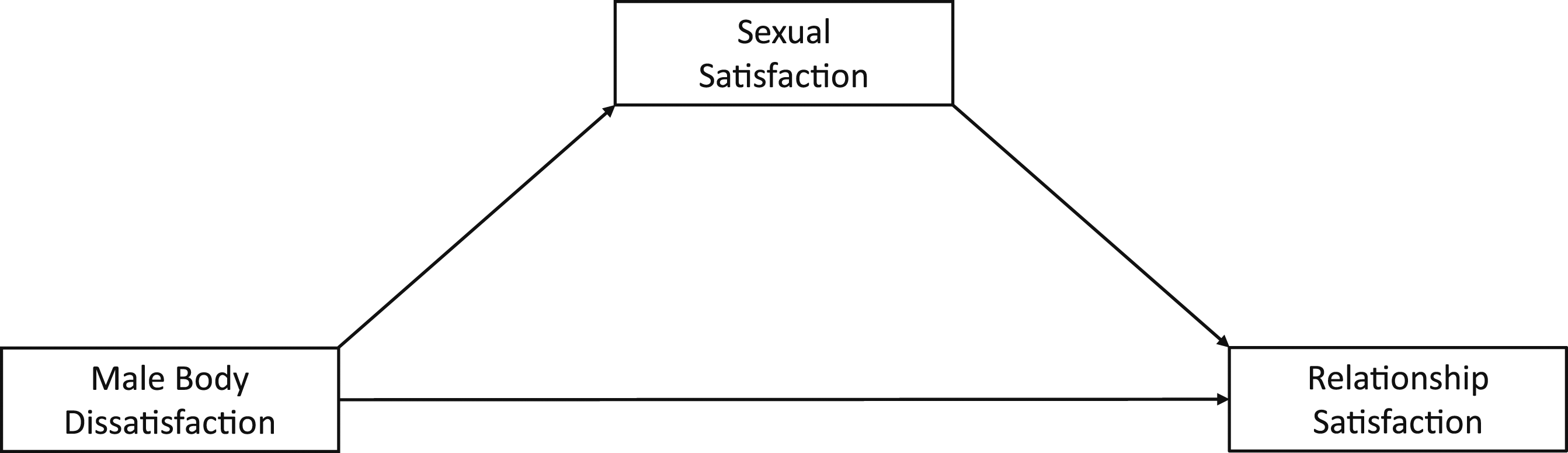
A positive relationship has been consistently found between sexual satisfaction (SS), relationship satisfaction (RS), and life satisfaction, while body shame has been found to negatively relate to overall life satisfaction (McClean et al., 2020). Given the research, we proposed that body dissatisfaction (BD) influences SS, and SS drives RS in men. Consistent with the research that suggests that body image is related to sexual functioning (Silva et al., 2016), we hypothesized that male BD would be negatively related to SS (H1a). Furthermore, given the previous literature on RS and the frequency and quality of sex in committed relationships (McNulty et al., 2016; Vowels & Mark, 2020; Yucel & Gassanov, 2010), we asserted that SS would be positively related to RS (H1b). Finally, we hypothesized that BD would be related to RS, both directly (H1c) and indirectly (H1d), mediated by SS.
Social comparison theory suggests that less sexually explicit material can impact body image beliefs (Goldsmith & Byers, 2016; Sommantico et al., 2021). Logically, we asserted that more pornography use will have the same or intensified effects on body image and sexual satisfaction (SS) (Tykla, 2015; van den Brink et al., 2018a). For our second set of hypotheses, we asserted that the frequency of pornography use will strengthen the negative relationship between male body dissatisfaction (BD) and SS (H2a). Tylka’s (2015) findings inform our hypothesis, which suggests that pornography use negatively impacts body appreciation and body monitoring, which is a factor of BD. We also argued that the frequency of recent pornography use will strengthen the negative relationship between male BD and relationship satisfaction (RS) (H2b). Pornography consumption is correlated to decreased RS and increased BD independently (Doran & Price, 2014; Perry, 2016). Taken together, we believe that the independent effects will produce a statistically significant negative relationship.
Research has shown that depression negatively correlates to SS (Busby et al., 2021; Mat Din et al., 2019). Winter and colleagues (2018) supported a positive relationship between depression and body dissatisfaction (BD) through cyclically self-construed cognitions that reinforce depressive symptoms. Males who perceive themselves as overweight regardless of literal comparison to societal averages or BMI have an increased probability for depressive symptoms. A cyclical pattern of negative self-appraisal is then reaffirmed through self-objectification, thus affirming views of self which lead to depressive symptoms (Richard et al., 2016). Relatedly, we expect that depression will strengthen the negative relationship between male BD and sexual satisfaction (SS) (H3a). We further asserted that depression would intensify the negative relationship between male BD and RS (H3b). This rationale follows similar logic as previous research, where depressive symptoms exacerbate BD (Li & Johnson, 2018). The more depressive symptoms displayed correlate to less satisfaction in their relationships for both men and women in a committed relationship. See Figure 2 for a conceptual model of the proposed moderated mediation. Hypothesized moderated mediation model.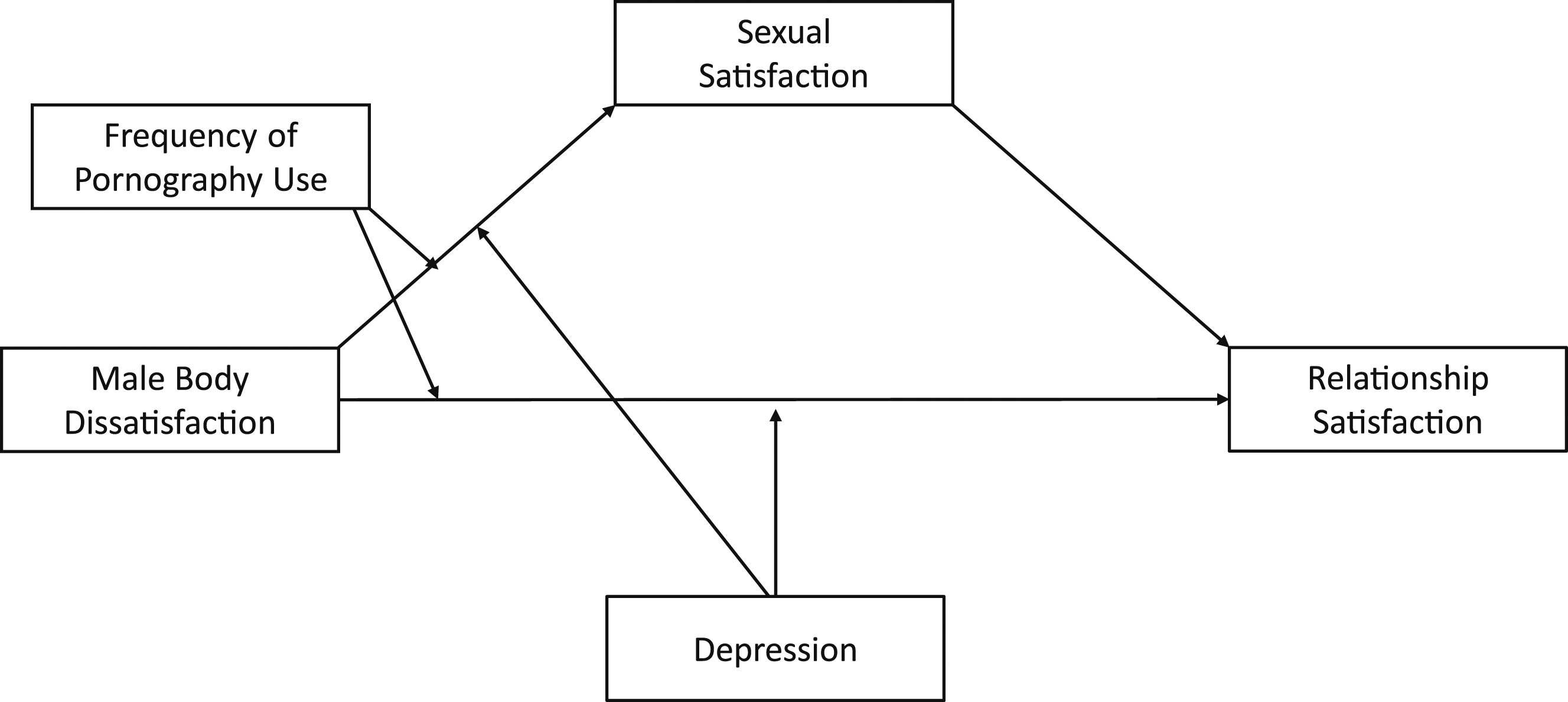
Method
Participants and Procedure
Data was collected via Mechanical Turk (MTurk) as part of a larger study that also measured additional variables not used for this study. All participants were voluntary and completed an online survey. While the larger study had N = 1876 total respondents, the final sample for this study was 192 adult men after removing responses that did not meet the criteria for the study (being male, sexually active in the last six months, between the ages of 30 and 55, and in a monogamous or married relationship). The sample was primarily Caucasian (52.6%), followed by African American/Black (30.7%) and Non-Caucasian/Other (16.7%). Participants ranged in age from 30 to 55 (M = 37.9, SD = 7.42). We chose this age range based on national averages from the United States Census Bureau of first marriage (age 30.2 for males) and used a 25-year window as an accepted standard for a “generation”. Further, this range encapsulates wider access to internet access, and thus access to pornography. The participants’ sexual attraction included Men Only (21.9%), Women Only (69.8%), and Men and Women (7.8%). While being in a committed relationship was an inclusion criterion, the primary relationship type was Married/Life Partner (93.2%) with only 6.8% in a Monogamous Dating Relationship (6.8%). For relationship length, participants reported being in a married or committed relationship for between 0-5 years (32.8%), 6–10 years (25%), 11–15 years (8.9 %), 16–20 years (13%), and more than 20 years or other (20.3 %). This study was approved by the university’s Institutional Review Board.
Measures
Male Sexual Shame Scale (MSSS)
Body Dissatisfaction (BD) was measured using the BD subscale of the MSSS (Gordon, 2018). The BD subscale is a 5-item assessment using a 5-point Likert-style scale. Items on the BD subscale include “I am self-conscious about the way my body looks.” Answers range from 1 (strongly disagree) to 5 (strongly agree) and are summed to produce a total score. The full measure is a strong predictor of shame proneness, and BD held the highest mean score of the subscales. The MSSS possesses good internal consistency with Cronbach’s α = .96 for this sample, and α = .90 in its development (Gordon, 2018).
Depression Anxiety Stress Scales (DASS-21)
Depression was measured using the depression subscale of the DASS-21. The DASS-21 depression subscale is a 7-item self-report used to measure depression, with items such as “I felt down-hearted and blue” (Lovibond & Lovibond, 1995). The DASS-21 uses a 4-point Likert-style scale, from 0 (did not apply to me at all) to 3 (applied to me very much, or most of the time). This measure possesses strong internal consistency among this sample, illustrated by Cronbach’s α = .98 in the current study and .94 in prior research (Antony et al., 1998).
The New Sexual Satisfaction Scale (NSSS)
Sexual Satisfaction (SS) was measured using the Total SS score on the NSSS. The NSSS is a 20-item self-report used to measure the SS of its participants, with a higher score representing elevated levels of SS (Štulhofer et al., 2011). This assessment uses a 5-point Likert-style scale, from 1 (not at all satisfied) to 5 (extremely satisfied) and participants were instructed to rate their satisfaction with specific items, such as “my focus/concentration during sexual activity” (Štulhofer et al., 2011) The NSSS is a reliable measure with strong internal consistency, Cronbach’s α = .93 for this sample, consistent with the validation study which reported α = .91 to .95 (Štulhofer et al., 2011).
Couples Satisfaction Index -16 (CSI16)
The CSI16 was developed in response to growing data showing a lack of information and clarity in relationship satisfaction (RS) measures (Funk & Rogge, 2007). The CSI16 possesses strong random sample halves for men and women. Participants evaluate their RS with items such as “Our relationship is strong” (Funk & Rogge, 2007). Scores are summed from answers on a self-report 6-point Likert-style scale with higher scores indicative of greater RS. The CSI16 possesses strong internal consistency among this sample illustrated by Cronbach’s α = .90 and in prior research, α = .98 (Funk & Rogge, 2007).
Frequency of Pornography Use
The frequency of pornography use in the last 30 days was measured using a single item. Participants were asked to answer how many times they had used pornography in the last 30 days by answering categorical questions, ranging from 1 (0 number of times in the last 30 days) to 5 (10 or more times in the last 30 days).
Analyses Plan
A three-phased approach was utilized to conduct the analyses. In the first phase, we conducted data screening to remove inattentive responses, incomplete responses, and nonsense responses to eight catch items. In the second phase, Pearson’s r was computed to assess zero-order correlations of the variables in the study. In the third phase, we utilized Hayes Process Macro (Version 4.0; 2022) to evaluate the degree to which sexual satisfaction mediated the relationship between male body dissatisfaction and relationship satisfaction and to what degree this relationship was moderated by frequency of pornography use and depression. Predictors were mean centered prior to calculating products for the interaction effects to aid interpretation (Hayes, 2022). Regression coefficients, p-values, and confidence intervals with 5000 bootstrap samples were computed with Hayes Process (2022) for each of the necessary regressions.
Results
Correlations
Pearson’s r, Means, and Standard Deviations.
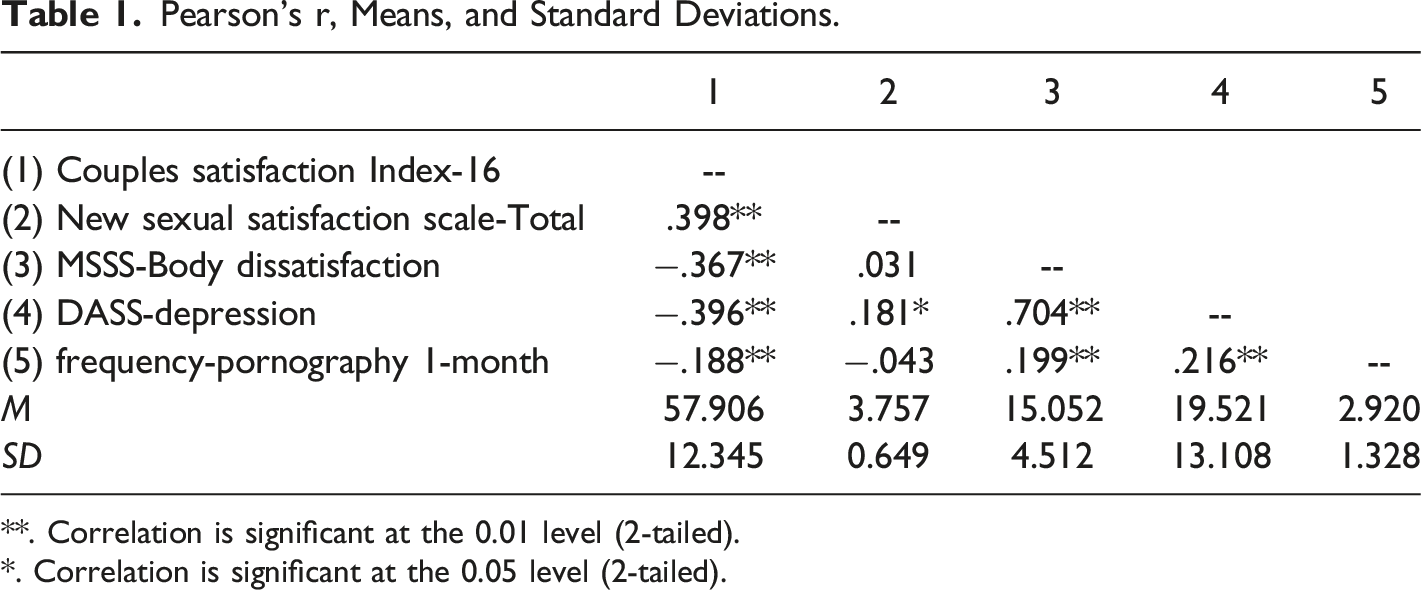
**. Correlation is significant at the 0.01 level (2-tailed).
*. Correlation is significant at the 0.05 level (2-tailed).
Simple Mediation Analysis
A simple mediation model was generated with Hayes Process Macro (2022; Model 4) to assess the extent to which SS mediated the relationship between male body dissatisfaction (BD) and relationship satisfaction (RS) (see Figure 3). Counter to H1a, BD did not have a significant effect on SS (CI = [-0.016, .0250]). However, sexual satisfaction (SS) had a significant effect on relationship satisfaction, with the bootstrap confidence interval completely above zero (CI = [5.507, 10.073]; H1b). There was a significant direct effect of BD on RS as the bootstrap confidence interval for the direct effect does not include zero (CI = [-1.366, −0.709]). This demonstrates that BD influences RS independent of its effect on SS (H1c). Overall, the bootstrap confidence interval for the indirect effect contains zero which suggests that there is not a significant indirect effect of BD on RS through SS (ab = .034, CI = [-.1176, .2233]). While the overall model explained 30% of the variance in RS, contrary to H1d, SS did not significantly mediate the relationship between male BD and RS. Simple mediation model results.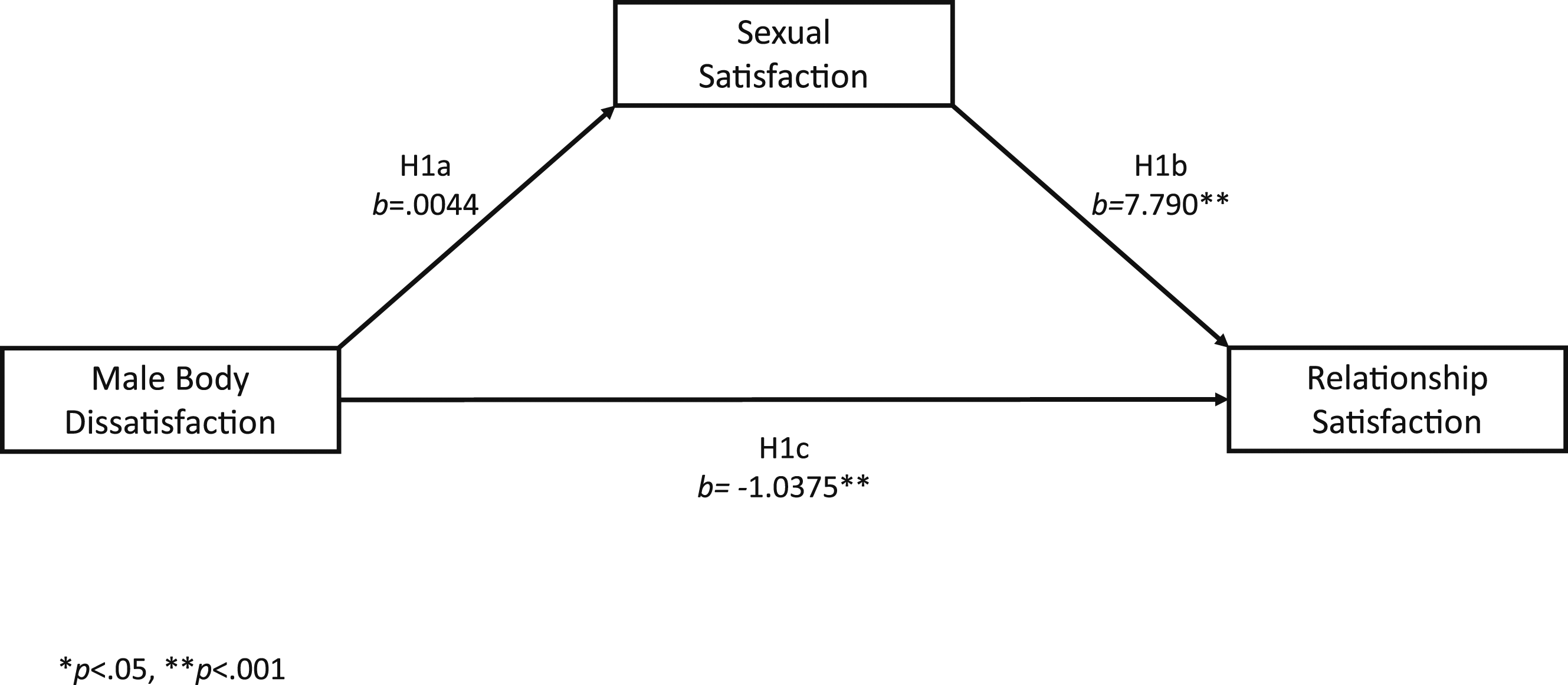
Moderated Mediation Analysis
Building off the simple mediation model, conditional process analysis (Model 10) was utilized to evaluate an additive moderated mediation model. This quantifies the extent to which the relationships between body dissatisfaction (BD) and relationship satisfaction (RS) (both directly and indirectly via sexual satisfaction (SS)) are contingent on frequency of pornography use and depression. Frequency of pornography use and depression were found to significantly moderate the relationship between BD and SS (see Figure 4). However, neither variable moderated the direct relationship between BD and RS. For the indirect relationship, the 95% confidence intervals for the indices of partial moderated mediation for both moderators did not include zero. This suggests that holding depression constant, frequency of pornography use significantly moderates the indirect relationship between BD and RS through SS (index = .191, CI = [.053, .383]). Similarly, holding frequency of pornography use constant, depression significantly moderates the BD à SS à RS pathway (index = .037, CI = [.016, .064]). In sum, the relationship between BD and RS, mediated by SS, is contingent on frequency of pornography use and level of depression, which supports Hypotheses 2a and 3a. The moderated mediation model predicted 39.3% of the variance in RS, however, the direct relationship between BD and RS was not moderated, which is contrary to Hypotheses 2b and 3b. Conditional process analysis of moderated mediation model.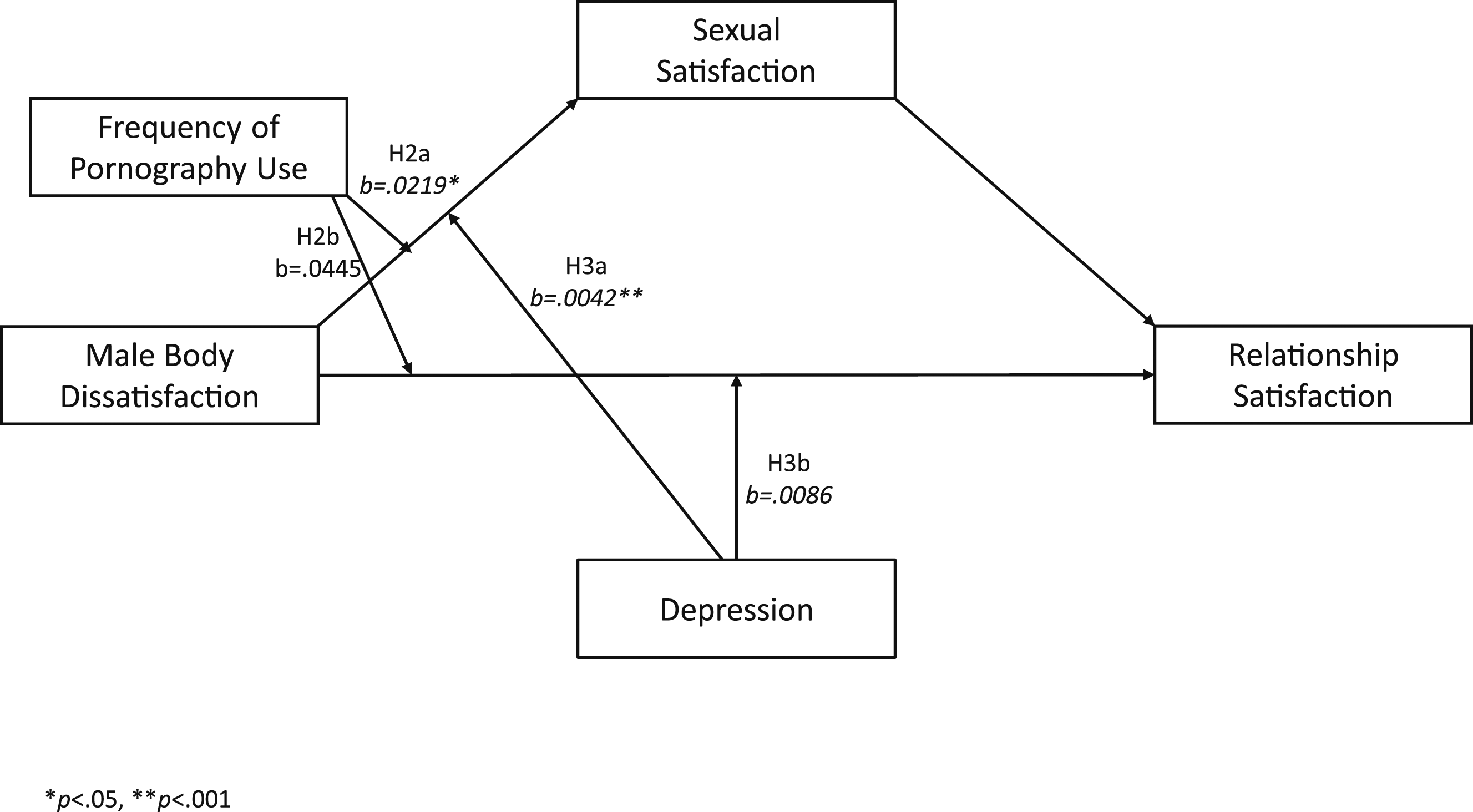
Conditional Indirect Effects at Values of the Moderators.
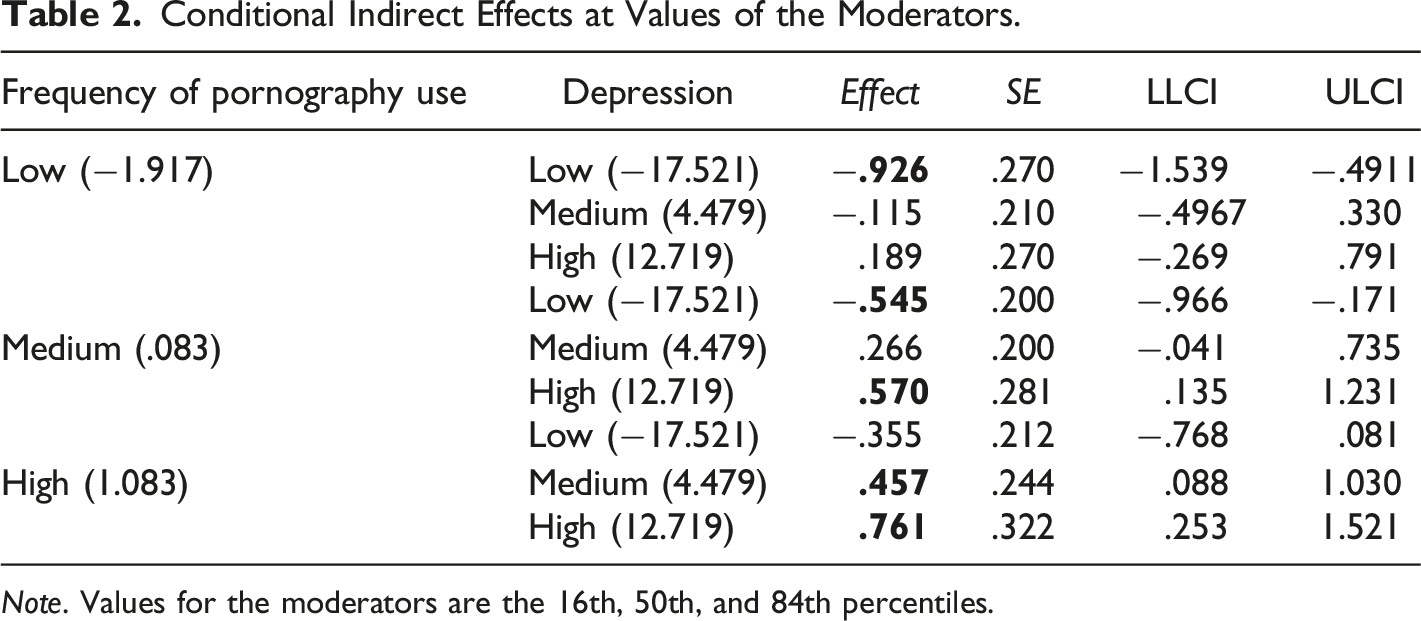
Note. Values for the moderators are the 16th, 50th, and 84th percentiles.
Exploratory Three-Way Interaction Analysis
The conditional indirect effects allude to a more complex relationship between the variables, which we explored using Hayes Process Macro (v.4; 2022; Model 12). To disentangle the interacting effects of pornography use and depression, we evaluated a moderated moderated mediation model in which the moderators themselves may interact in their influence on the indirect effect (Hayes, 2017; Hayes & Rockwood, 2020). In this model, we tested the extent to which the indirect relationship from body dissatisfaction (BD) to relationship satisfaction (RS) via sexual satisfaction (SS) is contingent on the frequency of pornography use, the effect of which is contingent on the level of depression (see Figure 5). Conditional moderated mediation results.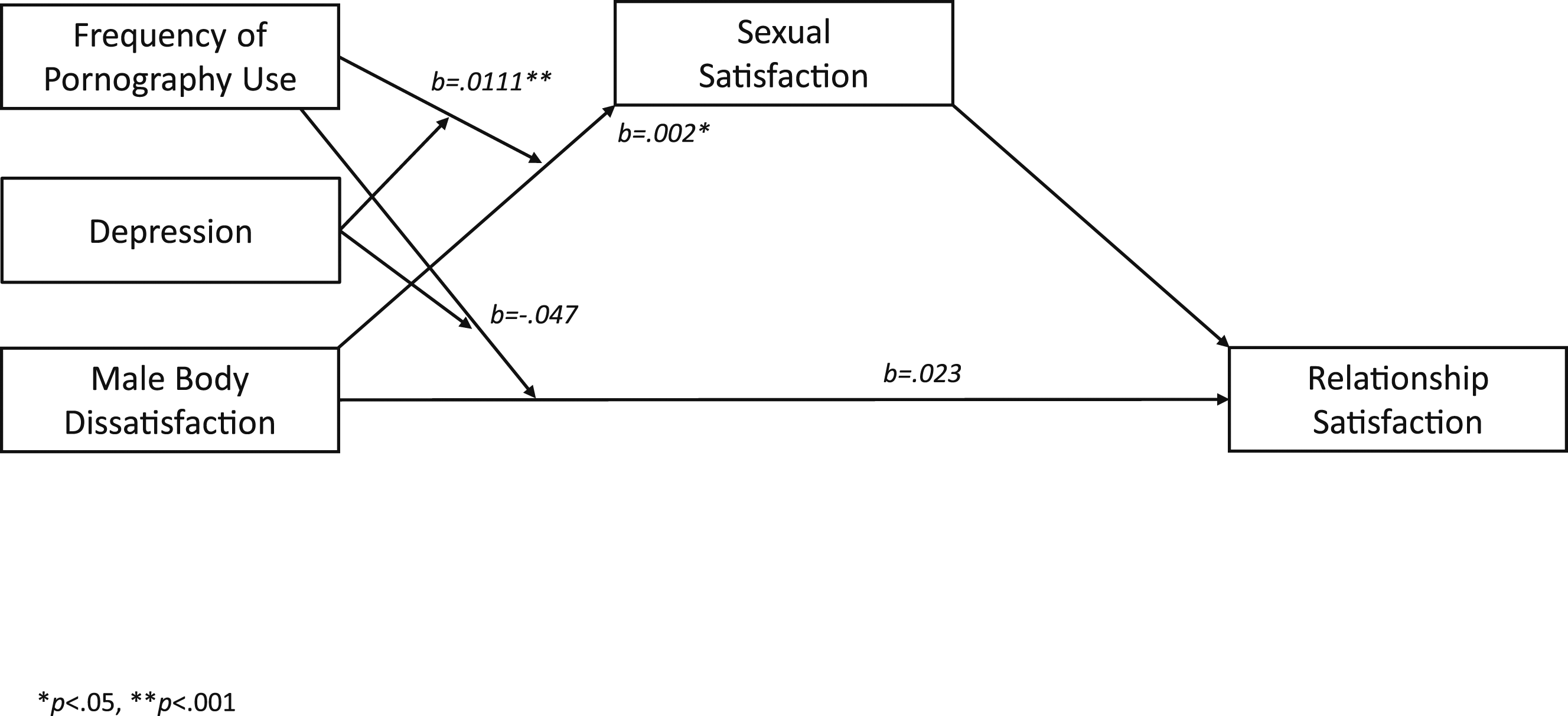
Conditional Process Analysis Results for Conditional Moderated Mediation Model.
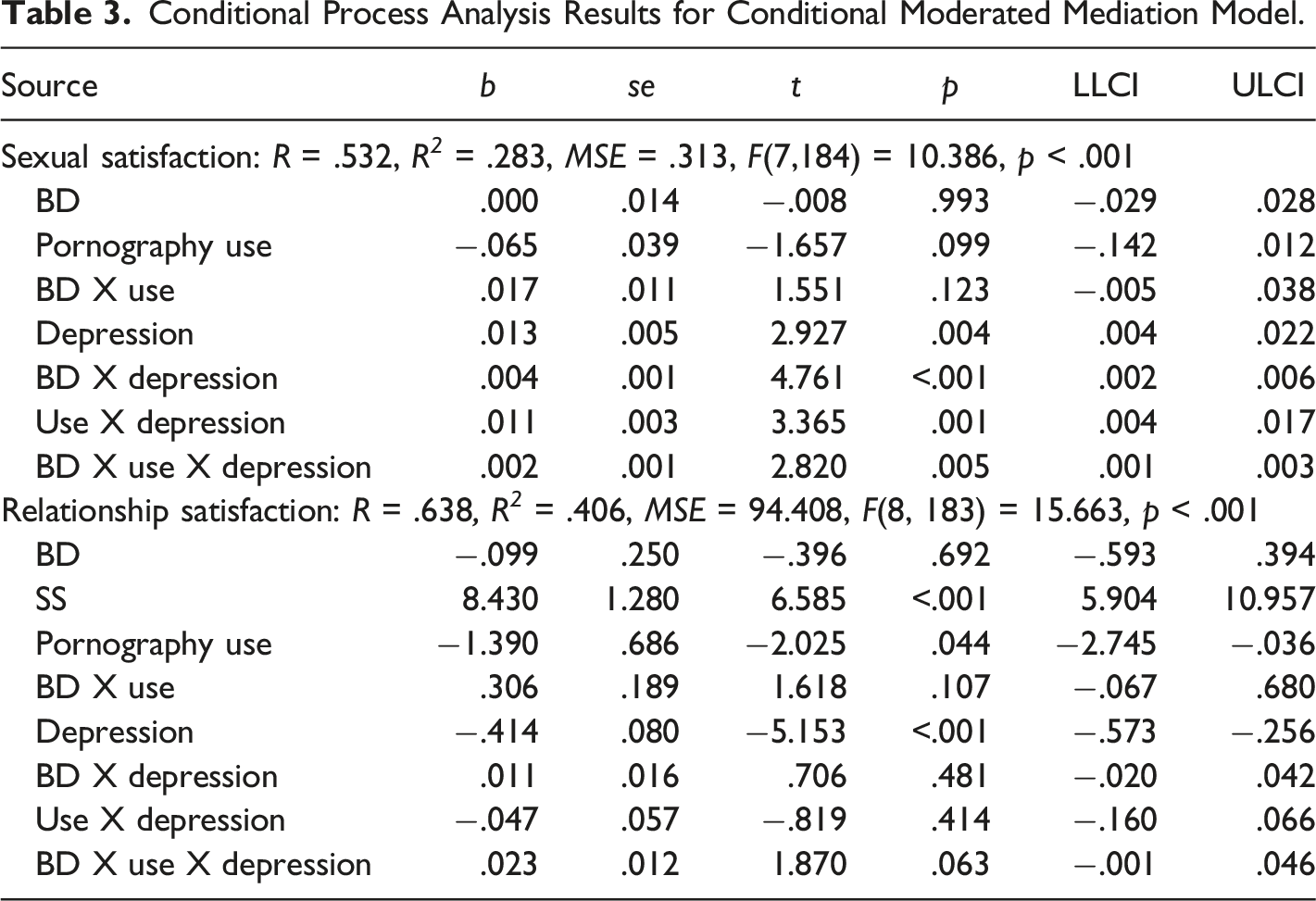
Specific Conditional Indirect Effects at Indicated Levels of Moderators.
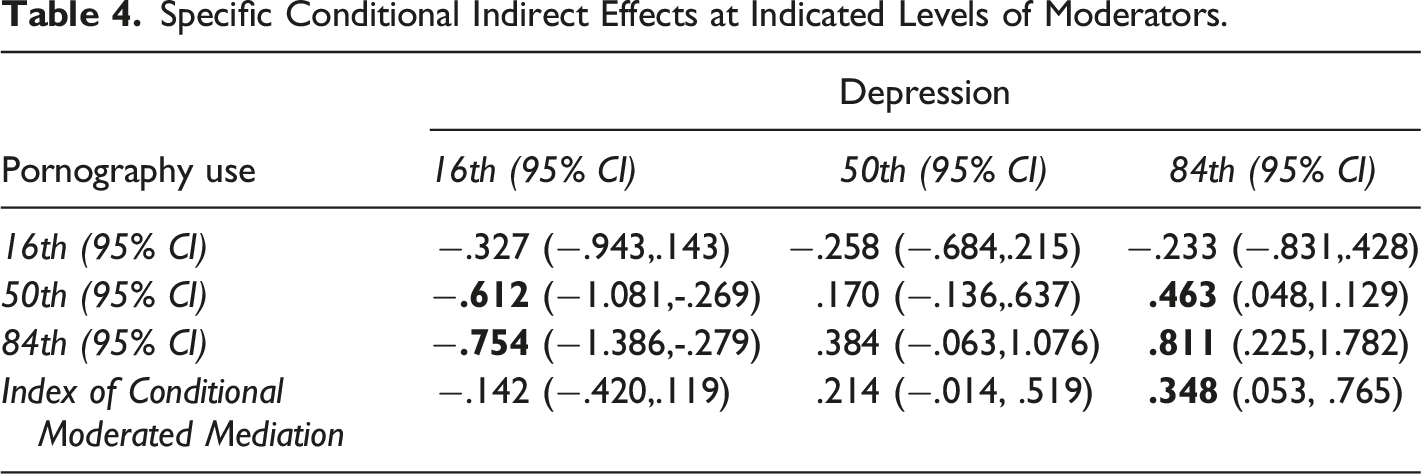
In this sample, there appear to be certain conditions where pornography use and depression combine to have either negative or positive impacts on sexual satisfaction (SS) that are transmitted to relationship satisfaction (RS) (see Figure 6). The combination of body dissatisfaction (BD), moderate to high pornography use, and low levels of depression has a negative impact on RS through SS. In contrast, BD, moderate to high pornography use, and high levels of depression have a significant positive impact on SS, which, in turn, heightens RS. The index of conditional moderated mediation excludes zero only at high levels of depression. This suggests that pornography use’s moderation of the BD→SS→RS pathway is contingent on high levels of depression. Three-Way Interaction of Pornography Use, Depression, and Body Dissatisfaction. Note. This figure demonstrates the impact of BD on RS at different levels of monthly pornography use and depression.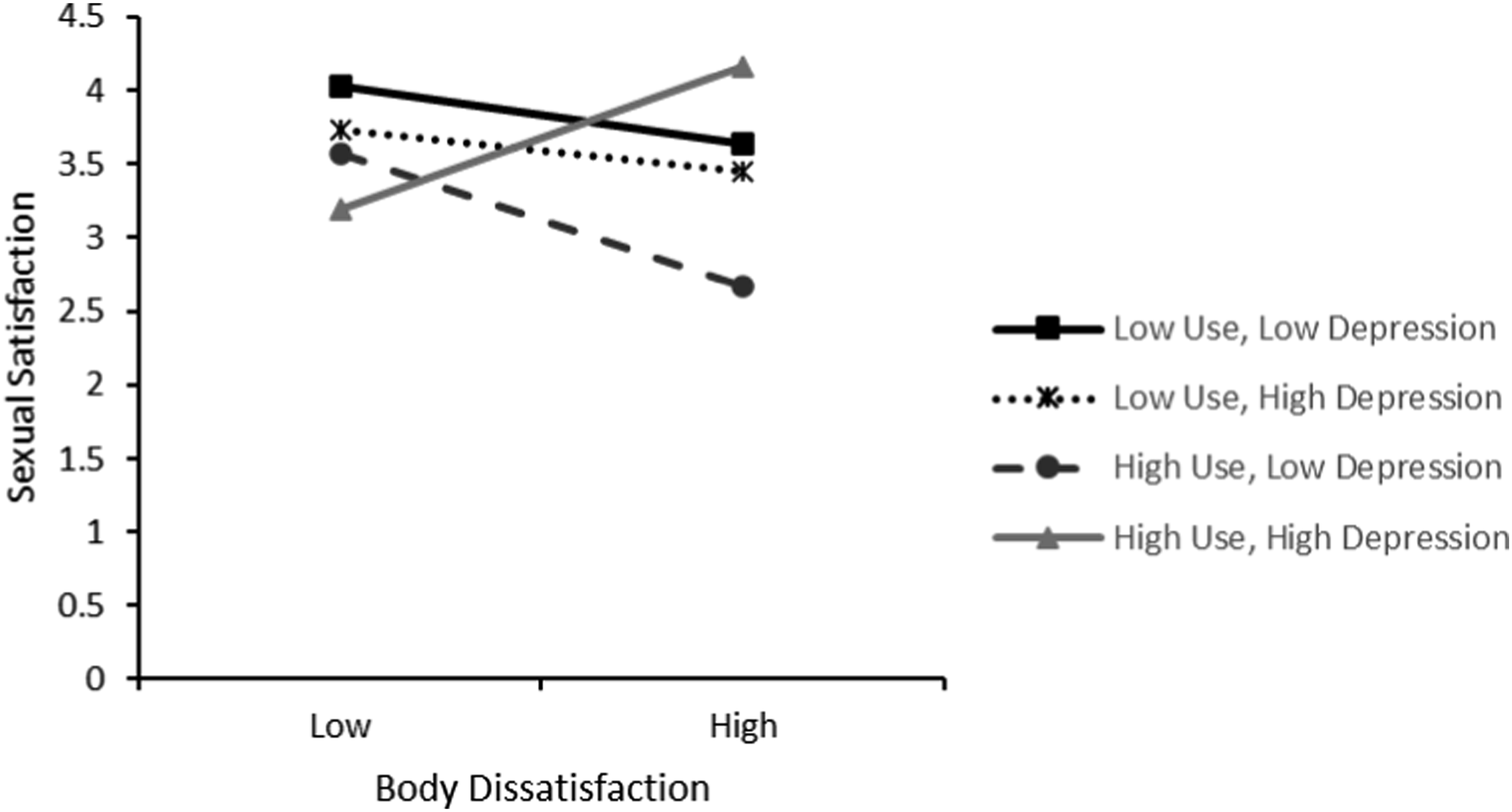
Further Exploratory Analysis
Our initial hypotheses suggested that moderation of the indirect relationship took place in the first stage, that is, depression and pornography use impact the relationship between body dissatisfaction (BD) and sexual satisfaction (SS). However, considering the interesting interaction between depression and pornography use, we considered whether they moderate both the first stage (BD→SS) and the second stage (SS→RS) of the pathway. To leave no stone unturned, we utilized an exploratory conditional process analysis (Model 76). We confirmed our previous findings along the BD→SS which supported moderation of the first stage (p < .05 for both moderators) but did not support moderation of the second stage along the SS→RS pathway (p > .05 for both moderators). The direct effect of BD on relationship satisfaction (RS) was still not moderated (p > .05). Specific outcomes for this model are summarized in the supplementary materials. Confirming that there are non-significant findings along the SS→RS pathway from the interaction of depression and pornography helped solidify our understanding of the interaction of the variables.
Discussion
To date, few studies have investigated the conditions under which male body dissatisfaction (BD) might influence sexual satisfaction (SS) and relationship satisfaction (RS). This study attempted to consider how depression and monthly pornography use might moderate this potential relationship. Across the study, three main hypotheses were tested. Consistent with our first hypothesis, participants who reported higher levels of BD were found to have lower reported levels of RS. Our results converged with current research that shows how media images and repeated exposure to “ideal” bodies can impact a person’s perception and satisfaction of personal body image (Saiphoo & Vahedi, 2019). We believe that our data adds to the argument that this is not a gender-specific phenomenon.
Moving on, we found that SS does not significantly mediate the negative relationship between BD and RS. This is inconsistent with other findings that have found both gender specific and non-gender specific body image related factors significantly interacting with RS in the presence of SS (Meltzer & McNulty, 2010; van den Brink et al., 2018a). These past findings challenge our unsupported hypothesis leading us to assume that there are other mechanisms at work in the role male BD has in a relationship such as body part specific issues (Komarnicky et al., 2019) or partner’s appreciation of their body (Côté et al., 2021).
We evaluated if and how monthly pornography use and depression may moderate the relationships between body dissatisfaction (BD), sexual satisfaction (SS), and relationship satisfaction (RS). Neither depression nor monthly pornography use was found to significantly moderate the direct relationship between BD and RS. Though no current research directly analyzed this relationship, there are inconsistent findings on the intra- and inter-personal effects of pornography in marriage (Morgan, 2011; Willoughby et al., 2021). Additionally, our scale may not have accounted for more extreme use of pornography use by male partners. While there are differing opinions on what constitutes problematic pornography use, a common quantitative threshold is daily use which would far exceed the minimum top threshold of 10 times per month as used in our scale (Sniewski et al., 2018). Depression can be considered in much the same way. We could argue that intrapersonal effects of depression, like lower libido and sexual desire, could influence a couple’s desire to use sexually explicit material to maintain SS and RS (Kohut et al., 2017). Hypothesis 2a and 3a postulated that the moderating relationship of depression and monthly pornography use occurs between body dissatisfaction (BD) and sexual satisfaction (SS), which was found to have significant results. In support of our findings, the directional influence of depression has been clearly described in research. Sexual disturbance can occur because of depression, and because of the antidepressant medications prescribed to help alleviate symptoms of depression (Berdychevsky et al., 2013). Our data, which indicates pornography consumption can negatively impact SS in committed relationships, is consistent with previous research (Maas et al., 2018).We have clearly made the argument thus far regarding depression and its correlation to BD (Duarte et al., 2014; Duarte & Pinto-Gouveia, 2017; Gois et al., 2018) and how pornography consumption can negatively impact relationship satisfaction (RS) (Bridges & Morokoff, 2011; Maas et al., 2018; Maddox et al., 2011; Willoughby et al., 2021). Considering the unexpected conditional indirect effects found during our analysis of the moderated mediation relationship for hypotheses 2b and 3b, we decided to explore a three-way interaction. Surprisingly, we found a statistically significant three-way interaction between BD, depression, and 30-day pornography use on SS. At low levels of depression and moderate to high levels of pornography use, BD negatively relates to SS. However, at higher levels of depression, the increasing frequency of pornography use moderates the relationship such that BD positively impacts SS. Knowing whether there is a negative and positive relationship between BD and SS depends on the frequency of pornography use and degree of depression. The question then becomes why higher levels of pornography use and depression result in a positive relationship between BD and SS, which must be explored in further research.
Implications
This study adds continued support to the large amount of existing literature showing a strong relationship between sexual satisfaction (SS) and relationship satisfaction (RS); however, the other relationships indicated in our analysis require more attention. To our knowledge, there is no literature that highlights the three-way interaction between body dissatisfaction (BD), frequency of 30-day pornography use, and depression on SS. With statistics showing the high frequency of depression (Perry, 2018) and the high exposure of most men to pornography use (Camilleri et al., 2021), it is important to fully understand these variables and their complicated relationship. A better understanding of these variables and relationships can illuminate strategies to identify problematic behavior impacting relationships.
The implications of our models are varied for clinicians and researchers. Our results suggest a new focus on male BD and relationships is needed as previous research has been primarily focused on females and how their level of BD impacts intimate relationships (Friedman et al., 1999; Karsay et al., 2018). BD seems to be exacerbated by levels of depression and increased pornography use. As pornography can be used in committed relationships to enhance sexual experiences (Shuler et al., 2021), future research may explore male body image concerns to discover if consuming pornography is confirming body image doubt instead of enhancing couples’ satisfaction via an improved sex life.
For clinicians the theoretical implications begin with a lack of an agreed upon measure for problematic pornography use or behavioral diagnosis, a way to gauge the impact of pornography use in a relationship, and an overall a gap in therapeutic recommendations for pornography use (Sniewski et al., 2018). As this research suggests, there is a need for further exploration into researcher and clinician beliefs about pornography use as a large proportion of literature operates from the assumption, or bias, that pornography use in any form is inherently bad (Kohut et al., 2017). Developing a framework for clinicians to better understand the effects of pornography use as either good or bad in a relationship and to measure problematic use could improve outcomes for males and their relationships when depression and pornography use are present. Our research provides a rationale that therapists should be aware of when treating men experiencing body image distress.
To improve overall relationship satisfaction (RS), our analysis revealed that there are conflicting interactions involving depression, pornography use, and body dissatisfaction (BD) that impact sexual functioning. For someone with high depression and high BD, high pornography use was associated with greater sexual satisfaction (SS), which strengthens relationship satisfaction. While our data suggests possible benefits of pornography use in these specific conditions, we are aware that a cycle could emerge where an increase in pornography use could improve SS in the short term but negatively alter the interactions in the BD→SS→RS relationship long term. The mixed results of the moderated mediated data seemingly support this. Moreover, there could be negative outcomes because of an increase in pornography use, such as worsened depression (Camilieri et al., 2021). While some research has suggested individuals use pornography to cope with depression (Perry, 2018), clinicians should consider how their clients can reduce their depression as well as its negative effects. Thus, further investigation is necessary to provide guidance for clinicians addressing RS. For clinicians, we recommend regularly assessing for pornography use in males presenting for depression as their perception of their relationships could be impacted by underlying depression symptoms, as our results indicate. Knowing the level of depression in a client will help the clinician better conceptualize the impact the client’s pornography use could be having in their relationship. This should then inform the treatment plan and amount of focus given to pornography use when treating a client’s body dissatisfaction.
Future Research and Limitations
Although our models suggest a causal relationship, we are aware of the limitations of using cross-sectional data. We have asserted a rationale for the time order model we outlined but we concede alternate time order constructs are plausible (Floyd et al., 2020). Conceding other possibilities, or a bidirectional interaction, we provide this model as one possible representation of relationships which may shed light on experience of other males who are in committed relationships where body dissatisfaction (BD), pornography use, and depression are present. We suggest continued research based on our findings to explore this interaction as well as to develop therapeutic themes which may assist participants such as these. Future research should include longitudinal research to further explore time order of the variables presented.
Pornography use has research supporting positive and negative effects on sexual and relationship satisfaction (Shuler et al., 2021). Part of the issue here, as highlighted by Kohut and Campbell (2019) is that there is a lack of agreed upon assessment of pornography use and its meaning. Having a clearer definition of pornography use and its details might further highlight its impacts with relationship satisfaction (RS) and sexual satisfaction (SS), as well as these newer factors of depression and male body image. Moral disapproval of pornography use by each member in the couple may impact the relationships between SS and RS (Guidry et al., 2020). Our exploratory conditional analysis between SS and RS showed no significance but future research may be needed to understand the insulating factors in the SS→RS relationship that prevents deleterious effects caused by pornography use and depression. Future research should account for how the male perceives pornography use, if his partner knows of his use, if his partner approves of the use, and finally if they engage in pornography use together. Viewing pornography alone for the purpose of masturbation or consuming pornography with a partner to stimulate sexual experiences may impact this relationship. Future research would benefit from utilization of a measure which can account for problematic pornography use. This measure should account for extreme use characterized by an agreed upon definition for problematic use such as daily use or multiple use per day. The frequency of use measure we utilized was limited in this manner. Controlling these variables should be considered for future research.
The present sample of participants consisted of men who reported being in a mix of different-gender and same-gender relationships. Our sample size was not large enough to examine our hypotheses based specifically on sexual preference. There is mixed research that shows that sexual orientation does result in differences in body image, sexual satisfaction (SS), and relationship satisfaction (RS) (Peplau et al., 2009; Stiles et al., 2023), though one recent study seems to indicate that pornography use in sexual minority males has no impact on body image related factors (Gleason & Sprankle, 2019). Some studies have shown that gay men have been found to report lower levels of ideal body image, but higher levels of SS compared to straight men (Gil, 2007), whereas others have found no significant difference in reported SS between sexual orientations (Sánchez-Fuentes & Sierra, 2015). Further research in this area is needed to strength these findings regardless of sexual preferences.
Our research required participants to be engaged in a committed or married relationship. However, our research did not evaluate the impact of relationship type or length. While a recent meta-analysis suggested relationship length did not moderate RS (Stiles et al., 2023), future research would benefit from scholarship on relationship type as well as relationship length and their effect on the body dissatisfaction (BD), sexual satisfaction (SS), relationship satisfaction (RS) interaction.
Participant BMI was not considered in our analysis of BD, and there are known relationships between body shape, weight, and BD, especially as males age (Calzo et al., 2012). As our sample includes males between the ages of 30 and 55, assessing BMI data against the participant’s reported BD levels might have helped to understand alternative reasons for BD and its impact on SS and RS. Future studies should consider participants’ BMI and body shape, and potentially the partner’s view of each participant’s body.
Another limitation of this study is that relationship and SS were only observed from the participants’ point of view and did not consider the satisfaction of the other party. There is some data on SS and RS, influenced heavily by actor and partner effects for males in long term relationships. This data showed that those who have been in long term relationships (averaging 25 years or more) provided significantly similar responses to their spouse regarding these satisfaction levels (Fisher et al., 2015). We believe that having spousal or partner data could illuminate further interaction of pornography use, depression, and BD within a relationship.
Conclusion
This study adds to the growing body of literature examining male body image and the impact it may have on the well-researched relationship between sexual satisfaction (SS) and relationship satisfaction (RS). We initially set out to evaluate the possible two-way interactions that could be present when considering how male body dissatisfaction (BD) might impact RS. Our data indicated a three-way interaction between BD, depression, and 30-day pornography use on SS, which subsequently impacts RS. Though these results were unexpected and surprising, we believe that this data can help expand the limited research currently available regarding men’s body issues on relationship considerations. This can also inform the understanding and treatment of body dissatisfaction in the clinical setting. Further research needs to be conducted to understand how these variables may affect men and their intimate relationships.
Supplemental Material
Supplemental Material - The Effect of Male Body Dissatisfaction on Sexual and Relationship Satisfaction in the Presence of Pornography Use and Depression
Supplemental Material for The Effect of Male Body Dissatisfaction on Sexual and Relationship Satisfaction in the Presence of Pornography Use and Depression by Thomas Gogolin, Emily Norris, Fred Volk, and Hannah Murch in The Journal of Men’s Studies
Footnotes
Declaration of Conflicting Interests
The author(s) declared no potential conflicts of interest with respect to the research, authorship, and/or publication of this article.
Funding
The author(s) received no financial support for the research, authorship, and/or publication of this article.

Supplemental Material
Supplemental material for this article is available online.
Author Biographies
References
Supplementary Material
Please find the following supplemental material available below.
For Open Access articles published under a Creative Commons License, all supplemental material carries the same license as the article it is associated with.
For non-Open Access articles published, all supplemental material carries a non-exclusive license, and permission requests for re-use of supplemental material or any part of supplemental material shall be sent directly to the copyright owner as specified in the copyright notice associated with the article.
