Abstract
The unexpected surge of K-pop and Korean pop culture, particularly in the United States, has sparked growing interest in fandom studies, which increasingly documents K-pop fans’ nuanced awareness and prospects for breaking down cultural barriers. This study contributes to the growing Hallyu literature by examining the gender perspectives of American K-pop fans regarding the masculinities performed by K-pop male idols. Based on the original data collected through a large online survey (N = 920) and in-depth interviews (N = 110), our research addresses the ongoing discourse surrounding K-pop’s potential to expand conceptions of masculinities. Our findings suggest that, at least among fans, exposure to and engagement with K-pop have the potential to reevaluate the narrow criteria underpinning traditional masculinities and engender acceptance of alternative forms of masculinities.
Korean popular culture has transcended from a niche phenomenon into a global sensation. From the chart-topping achievements of BTS on the Billboard charts to the historic 2020 Academy Award win for Best Picture by Bong Joon-Ho’s Parasite and the record-breaking popularity of Netflix’s Squid Game, Korean pop culture has captivated audiences worldwide. The unexpected surge of interest in Korean popular culture, particularly the success of the K-pop genre, has led to a dominance of textual analyses focusing on the meanings behind K-pop music and its artists in earlier literature (Choi & Maliangkay, 2014). However, K-pop offers more than just music and performance to its fans; it also interacts with fans’ social attitudes and behaviors, often leading to perceptional changes on sociocultural issues (Cicchelli et al., 2023; W. Jang & Song, 2017; Ju & Lee, 2015).
Among the numerous sociocultural effects of K-pop on fans, we focus on the reception of male artists’ non-traditional masculinity, which the literature refers to as “soft” (Ainslie, 2017; Jung, 2011; King-O’Riain, 2024; Lee et al., 2020), “liminal” (Oh, 2015), or “multifaceted” (Ha, 2021). In particular, we ask: How do diverse fans of K-pop and Korean popular culture receive and negotiate the unconventional, and often stigmatized, masculinities of K-pop male idols? Does exposure to K-pop masculinities promote greater acceptance of alternative forms of masculinities? Or, in the face of the hegemonic masculinities with which the masculinities of these male idols are juxtaposed, do fans submit to the expectations of established gender norms?
A growing body of literature on K-pop masculinities has emerged in recent years. However, the analytical focus has primarily been on the textual analysis of K-pop masculinities themselves, with far fewer studies examining fan perceptions of these masculinities. More importantly, even within the limited literature on fan reactions, we find rather conflicting findings. Some studies suggest that K-pop can expand fans’ understanding of gender norms through the transcultural de- and re-construction of “soft” or “versatile” masculinity (e.g., Jung, 2011, pp. 165-166), while others contend that fan perceptions of K-pop still operate within the epistemological confines of hegemonic masculinities (King-O’Riain, 2024; Lee et al., 2020). To our knowledge, a systematic analysis using comprehensive fan data to engage in this debate has been lacking, leaving the theoretical and empirical landscapes surrounding fan responses to K-pop masculinities in Western society largely undelineated.
In this article, we contribute to filling this lacuna through an analysis of American fans’ perspectives on K-pop masculinities. We highlight K-pop’s potential to reevaluate the narrow criteria undergirding traditional masculinities through fans’ engagement with alternative expressions of masculinities. Utilizing two different bodies of data—a large online survey (N = 920) and in-depth interviews (N = 110)—we demonstrate that exposure to and engagement with male K-pop idols’ masculinities can reshape fans’ perspectives and foster greater acceptance of nonconventional forms of masculinities. We advance the literature by systematically documenting the significant patterns emerging from American fans’ understanding of K-pop masculinity that earlier literature has only alluded to due to limited and saturated samples.
The rest of the article is comprised of three parts. First, we explore the existing studies on masculinities in popular culture in general and K-pop in particular. Next, we present our empirical analysis of both online survey and interview data, underlining the impact of fans’ exposure to and engagement with K-pop masculinities. We conclude with discussions on whether and how the multifaceted masculinity enacted by K-pop fans can amplify their conception of masculinity, leading to greater embrace of alternative presentations of masculinities.
Literature Review
The social science literature on masculinity has come a long way since the “critical shift” of the 1980s, when the focus moved from the traditional sex roles to more multifaceted gender studies (E. Anderson & Magrath, 2019; Connell, 2005; Schrock & Schwalbe, 2009, p. 278). Hegemonic masculinity, one of the most influential theories in gender studies, addresses power dynamics by centering its analysis on the continued dominance of men over women. According to Connell (2005), hegemonic masculinity refers to a structure of power relations in which men assert dominance over women across both public and private domains, including material and physical superiority, cultural and ideological hegemony, sexual prowess, rationality, and adherence to heterosexuality (Connell, 2005; Min, 2021, see pp. 172-173). Connell (2005, see pp. 77-81) also emphasizes stratification within masculinities along lines of race, class, and sexuality, with hegemonic masculinity maintaining dominance over complicit, subordinated, and marginalized masculinities.
While hegemonic masculinity theory advances the study of masculinities, it has been less effective in accounting for the emergence of more inclusive masculinities in recent times, particularly the decline of homophobia and the growing acceptance of diverse masculine behaviors among heterosexual men (E. Anderson & Magrath, 2019). According to inclusive masculinity theory, the key factor shaping these shifts is the level of cultural homophobia in society, which influences how men regulate their behaviors. When there are high levels of homohysteria--namely, the fear of being perceived as gay, it leaves little room for diverse expressions of masculinities, as men and boys are pressured to police their behaviors to avoid stigmatization (E. Anderson & Magrath, 2019, p. 82). However, as homohysteria declines, greater opportunities emerge to perform nonhegemonic masculinities, such as metrosexuality (Hall et al., 2012).
Hybrid masculinities, which, according to Bridges and Pascoe (2014, p. 246), involve the “selective incorporation of elements of identity typically associated with various marginalized and subordinated masculinities and—at times—femininities into privileged men’s gender performances and identities,” have also become more common, suggesting a potential disruption to traditional masculinities. However, as Bridges and Pascoe (2014, see pp. 246-247) note, the integration of marginalized and subordinated masculinities into dominant ones has been primarily stylistic rather than substantive, failing to challenge systems of gender and sexual inequality (Demetriou, 2001; Messner, 1993). Thus, while hybrid masculinities may expand and allow for new forms of masculine presentation, such as “softer” and more “sensitive” forms of masculinity, they do not reconfigure traditional systems of male power and dominance (Messner, 1993, p. 725).
Subversive masculinity has also been noted for its challenge to conventional gender norms and expectations through “certain forms of cultural defiance” (Kenway & Hickey-Moody, 2009, p. 838), such as the non-traditional, norm-breaking “dandiness” exemplified by David Bowie (Hawkins, 2009) or Prince’s non-traditional masculinity during the Purple Rain era (Whiteneir, 2019). However, most of these studies on non-normative, subversive masculinity draw on the analysis of individual artists who achieve mainstream status. The implications of these studies, therefore, are closely tied to the idiosyncrasies of individual artists and offer limited insight into diverse masculinities as a broader sociocultural phenomenon. Emerging K-pop literature departs from this trend by outlining a genre-wide non-conventional masculinity reflected in fan perceptions. This shift to a genre-wide focus enables researchers to delineate a wide array of non-normative masculinities exhibited by K-pop artists, allowing researchers to identify a broader socio-cultural phenomenon rather than a short-term sensation tied to a specific artist.
K-Pop Masculinities
Scholarly discussions on the global appeal of K-pop have emphasized various factors for its success, including the role of cultural entrepreneurs (Lie, 2015), government support (Kwon & Kim, 2014; Nye & Kim, 2019), technological affordances such as social media (Jin & Yoon, 2016), cultural proximity (Yang, 2012, p. 109), cultural hybridity (Chun, 2017), and non-nationality (mugukjeok) (Jung, 2011, p. 166).
Among these, K-pop masculinity has been noted for attracting a devoted female fanbase through its deployment of what Oh calls a hybridized male femininity in their gender performativity, which deviates from and challenges the narrow conceptions of masculinity prevalent in the West (Ainslie, 2017; Oh, 2015). Referred to as soft masculinity, Jung (2011, p. 39) defines it as “a hybrid product constructed through the transcultural amalgamation of South Korea’s traditional seonbi masculinity (which is heavily influenced by Chinese Confucian wen masculinity), Japan’s bishõnen (pretty boy) masculinity, and global metrosexual masculinity.” 1 Based on their unorthodox presentations of masculinity, ranging from the feminine to the hyper-masculine, K-pop masculinities strategically employ a multifaceted approach (Kray & Haselhuhn, 2017) to cater to a wide array of audience desires and fantasies, successfully garnering attention and devotion from fans (C. Anderson, 2014; Louie, 2012, p. 930).
Studies indicate that the reception of soft masculinity in both Asia and in the West occurred within the context of broader societal changes, including intergenerational shifts, a reduction in homophobia, globalization, the rise of social media and youth culture, the emergence of softer, heterosexual masculinity in the West, and the increasing purchasing power of women (E. Anderson & Magrath, 2019; Louie, 2012; Min, 2021). Changes within Korean society have also been significant in the transformation of masculinity ideals in South Korea. For example, in the 1970s, Korea’s industrial economy emphasized a rugged, brawny masculinity. With the transition to a post-industrial economy in the 1980s, white-collar worker masculinity became the new ideal (Min, 2021). This was followed by the emergence of urban youth culture in the 1990s and 2000s, which elevated the “flower boy” aesthetic. In the 2000s, K-pop boy groups began transgressing gender norms and advancing soft masculinity through their gender-bending performances alongside girl groups (Jung, 2011).
The review of studies on K-pop masculinities suggests that K-pop fans “accept” the non-traditional masculinities of idols. Some literature explores “how” such acceptance took place in relation to existing gender norms and masculinity ideals. They find that both fans and non-fans evaluate soft masculinity through the lens of hegemonic masculinity and heteronormativity (heteromasculinity), often rendering K-pop masculinities as effeminate for diverging from established norms (Ainslie, 2017; King-O’Riain, 2024; Lee et al., 2020; Min, 2021; Song & Velding, 2020). In her study of young Malaysian men, Ainslie (2017) finds that male K-pop fans, due to marginalization and exclusion from hegemonic masculinity, turn to the soft masculinity portrayed in Korean pop culture to construct alternative forms of masculinities and identities. However, the stigma attached to their participation in what is perceived as “female-coded texts” leads fans to question their sexuality, masculinity, and Malaysianness, pushing them to conceal their interests (Ainslie, 2017, pp. 629-630).
Similarly, in a study of Chilean K-pop fans, Min (2021) finds that K-pop masculinity is assessed within the framework of traditional gender ideals of masculinity and femininity, rendering it unmasculine. Consequently, upper-class Chilean fans respond to stigmatization by hiding their interest in K-pop, while lower-class Chilean fans, excluded from hegemonic masculinity defined as white and upper-class, are more receptive to K-pop’s masculinity and identify with Asian aesthetic and beauty standards (Min, 2021, pp. 178-180).
Studies on the reception of K-pop masculinities in the United States reveal similar understanding of masculinity within the context of local gender norms. For example, in a survey study of 722 American college students and their views of K-pop idols, Song and Velding (2020) report that participants appraise the masculinity of these male idols through the framework of American gender norms and expectations. When asked to evaluate the level of masculinity of BTS members in a music video and its acceptability to the respondents, they find that college students generally rate the band members as neither highly masculine nor feminine, departing from the hegemonic masculine ideal but also aligning with dominant views of Asian American emasculation, including not being muscular, being perceived as shorter in height, and having soft skin (Chua & Fujino, 1999; Kao et al., 2018; Song & Velding, 2020, p. 13). Interestingly, respondents focus on features that convey femininity, while overlooking physical attributes indicative of traditional masculinity, such as height and body build.
Lee et al. (2020) document that the majority of American fans in their study assess K-pop male idols’ masculinity through the frame of U.S. gender norms and expectations. In contrast to the pervasive image of “strong and rugged” masculinity in the West, K-pop idols are perceived as embodying soft masculinity, characterized by their slender body types, use of makeup, dyed hair, and unconventional fashion choices (Lee et al., 2020, p. 5907). They note that while some fans found K-pop masculinity refreshing compared to traditional masculinity, many still agreed with characterizations of male idols as feminine, effeminate, or gay. They conclude that exposure to alternative forms of masculinity, such as those presented in K-pop, can both reinforce existing gender ideals and facilitate the exploration of other expressions of masculinity.
Finally, in a study of K-drama fans in the U.S. Midwest and Ireland, King-O’Riain (2024) finds that K-dramas appeal to Midwestern viewers through their portrayals of an alternative, soft masculinity that contrasts with traditional hegemonic masculinity. These dramas also help Irish fans cope with the “melancholia” of everyday life by offering dreams of global and cultural mobility (King-O’Riain, 2024). While K-dramas raise expectations for a gentler, more caring, and respectful form of masculinity compared to the toxic masculinity present in their communities, the study concludes that these idealized masculinities ultimately fail to challenge hegemonic masculinity. Despite their preference for soft masculinity, fans struggle to shed persistent perceptions of Asian American men as less masculine than White men (King-O’Riain, 2024, see pp. 211-212), a limitation perhaps closely related to the traditional media portrayal of Asian American men as nerdy, effeminate, sexually undesirable, and/or gay (Chong & Kim, 2022; Espiritu, 2008; Kao et al., 2018; Shimizu, 2012).
While extant research focusing on fan perceptions of K-pop masculinity advances our understanding of the reception and negotiation of idols’ masculinities amid stigma and marginalization, it is constrained by small sample sizes for interviews (Lee et al., 2020) and a narrow target group for survey participants (e.g., college students in introductory sociology and anthropology courses) (Song & Velding, 2020). In sum, emerging K-pop studies extensively engage in discussions of the non-normative masculinities of K-pop artists, pointing out the importance of the social contexts in which these masculinities are construed. However, despite some notable examples, a systematic analysis of fan perceptions is in short supply. For the remainder of this article, we present the results of our empirical analysis, documenting the potential of K-pop for expanding and redefining ideas of masculinity.
Method
Our study draws on comprehensive data collected through a large online survey (N = 920) and in-depth interviews (N = 110) conducted across racial/ethnic groups. To our knowledge, the data represent the most extensive empirical research to date on the reception of Korean popular culture in the United States. The sampling in both data is voluntary in nature and thus have the limitations of self-selection. However, by coupling two distinct data-generating processes—each with different strengths (i.e., anonymity in survey vs. clarity in interview)—we expect that our findings are more robust against selection bias compared to relying on a single data source.
Online Survey
The survey was conducted online using Qualtrics between 2020 and 2021. A total of 1710 participants, 17 years or older, completed the survey. Among those who answered the survey, 952 respondents reside in the United States. The mean age was 26.01 with the median about 22. As shown in the Appendix Figure A3, the great majority of the survey respondents were in their late 10s or early 20s, a demographic distribution reasonably comparable to that of the actual K-pop fandom.
The participants were recruited through convenient sampling and advertisement in online fan communities. Given that we drew on voluntary, anonymous participants, some observations were excluded through multiple validity checks. This reduces the sample size to 920 whose responses were used for the present study. While our sample is skewed towards college-age female respondents (see Appendix Figures A2 and A3 for details), it is not inconsistent with the general fan base of K-pop in North America (see, for example, KOCCA, 2019). It is indeed much more inclusive of diverse sociocultural identities than data from previous studies.
In-Depth Interviews
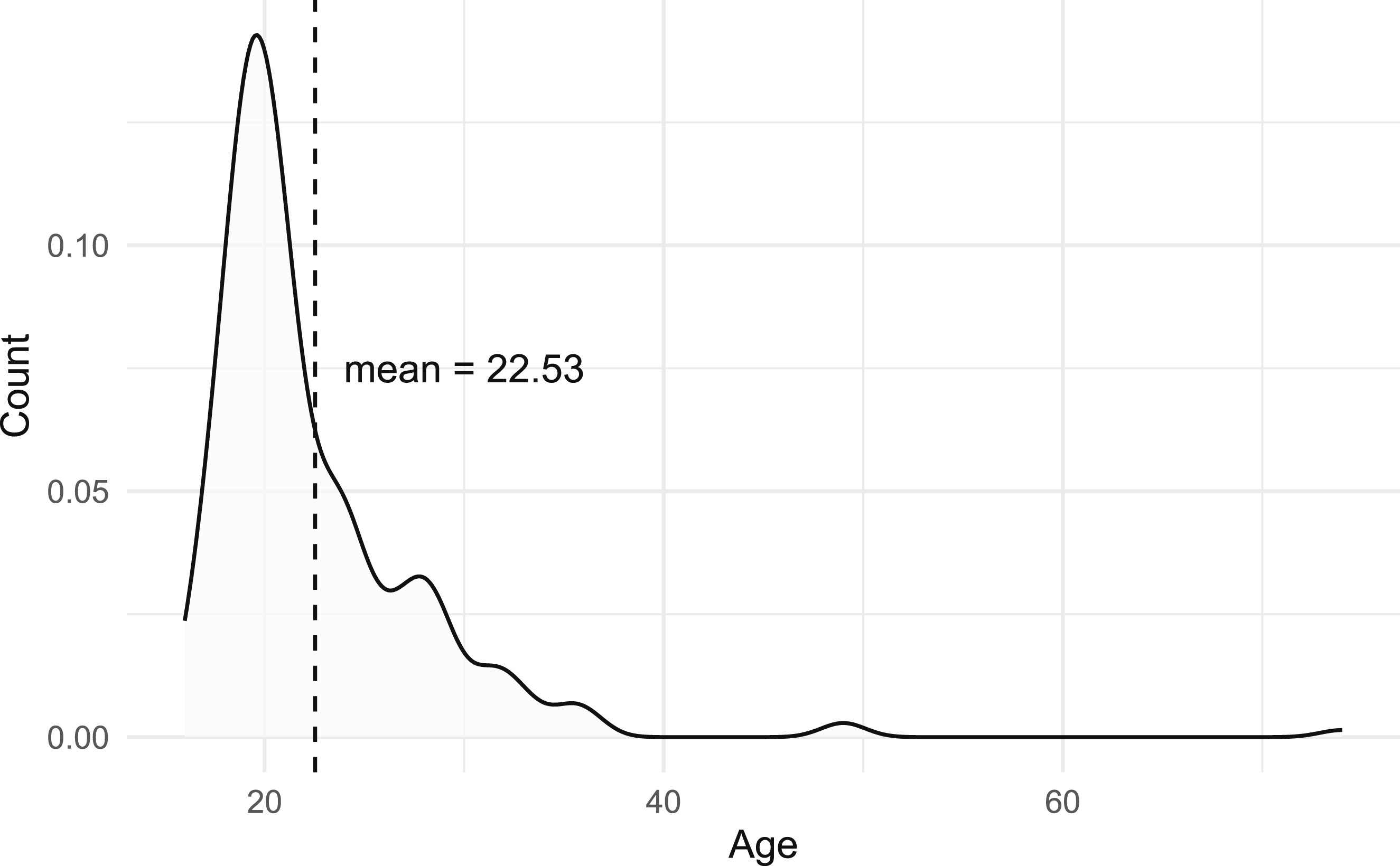
We conducted the in-depth interviews in two phases: 57 interviews during phase one (2020–2021) and 53 interviews during phase two (2022–2023). 2 While the age distribution in our interview data closely parallels that of the survey data (the mean age of interviewees was 22.53; see Appendix Figure A4 for details), our sampling strategy was primarily aimed at obtaining a sufficient number of interviewees from five distinct demographic groups: Asian Americans (N = 24), Black Americans (N = 22), Korean Americans (N = 19), Latine Americans (N = 18), and White Americans (N = 23). We deliberately constructed the category of Korean Americans apart from Asian Americans given the possibility that the former has different perceptions on K-pop than the latter does. The interview covered a wide array of questions on K-pop, the fandom, and their interactions with the broader society. For this article, we draw on our analysis of K-pop masculinities to examine their reception by American fans.
To recruit participants, we employed a snowball and quota sampling approach, starting with college-age fans in the Washington-Baltimore metropolitan area and expanding beyond this group through online recruitment linked to the survey. About two dozen of our interviews were recruited through this effort. This allowed us to secure a diversified interview sample inclusive of college-age as well as older fans across the United States.
The semi-structured interviews varied in duration, lasting between 30 minutes to 3 hours. Due to the Covid-19 Pandemic, most interviews were conducted via videoconferencing, recorded, transcribed, and subsequently hand-coded. The initial hand-coding was carried out by undergraduate research assistants. The first author then conducted systematic sub-coding of key topics using grounded theory approach, which involves developing themes from the data itself rather than applying coding schemes based on theoretical frameworks (Corbin & Strauss, 2008; Williams & Moser, 2019). To ensure intercoder reliability, the second author reviewed the sub-coding schemes and concurred with the coding patterns established by the first author. This process helped to ensure consistency and validity in our analysis of the interview data.
Patterns of Fan Perceptions of K-pop Masculinity: Online Survey
The online survey data sketches a broad portrait of fans’ perceptions of masculinity featured in K-pop and their interpretation of non-fans’ perceptions. We present the data in the format of a tile graph (Figure 1). The vertical axis represents fans’ perceptions of masculinity, while the horizontal axis represents those of non-fans. Darker tiles indicate higher concentrations of respondents in terms of these two perspectives. Masculinity Perception: Do You Think Male K-Pop Idols are Masculine? What Do You Think Non-fans Would Say?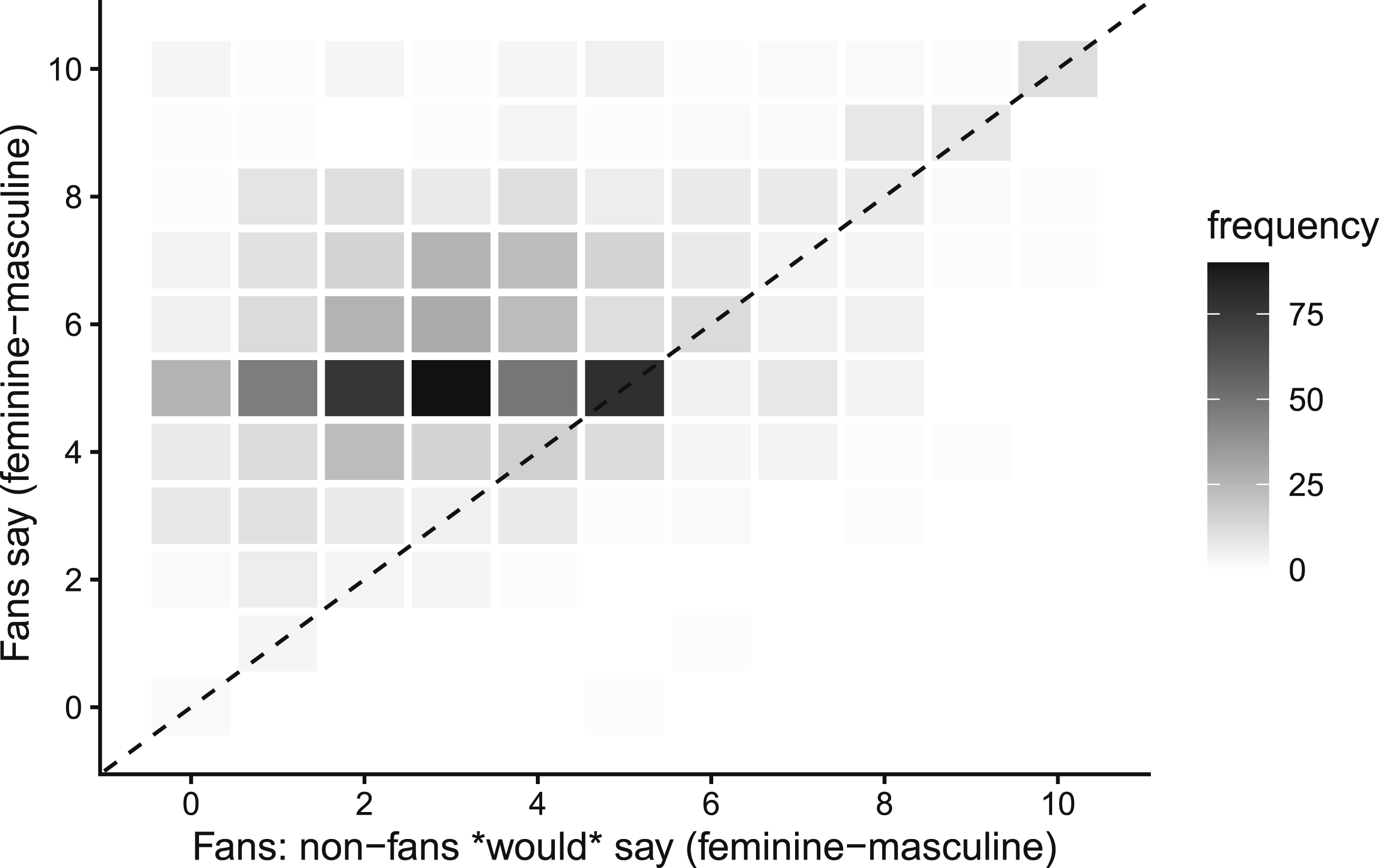
A couple of important empirical patterns emerge. First, fans do not lean one way or another when it comes to describing male K-pop idols’ masculinity. When asked “Thinking of your favorite male K-pop artists: You think the artists are feminine (0) – masculine (10),” fans predominantly choose a “neutral” score, as seen in Figure 1 where in terms of the horizontal axis, the “dark tiles” are clearly concentrated on 5 (mean = 5.63, SD = 1.70). This result aligns with Song and Velding’s (2020) findings, indicating that respondents generally do not perceive male idols as neither highly masculine nor feminine.
Second, this neutral position, however, marks a strong contrast with the non-fans’ perceptions of masculinity. When asked to evaluate how non-fans would rate the masculinity of male K-pop idols (“Non-fans would think the artists are feminine (0) - masculine (10)”), fans seem to believe that non-fans view male K-pop idols as generally feminine (mean = 3.45, SD = 2.20). This difference between fans and non-fans is clearly indicated by the overwhelming presence of observations (darker tiles) in the upper-left quadrant of the 45-degree angle (dashed line). 3 The difference is strongly statistically significant (t-test statistics = 23.663, p = 0.000). 4
Taken together, fans view male K-pop idols neither masculine nor feminine, while they believe that non-fans would lean towards the latter. One possibility driving this result is that fans may not perceive K-pop male idols within the traditional feminine-masculine gender frame, thus opting for, with very few exceptions, neutral answers, such as five or six, in their assessments. After all, it would be difficult for fans to find a clear position for a new type of masculinity (e.g., soft masculinity) in the traditional gender dimension. This perceived positionality would also be fans’ deliberate choice to signify that (1) their views diverge from traditional gender norms that non-fans might hold (“male K-pop idols are feminine”), but (2) they do not wish to ascribe male K-pop idols within traditional masculinity either. In the following section, we explore our interview data, which can better substantiate these interpretations.
Fan Perceptions and Understanding of K-Pop Masculinity: In-Depth Interviews
Our interview data provides a much more nuanced perspective on fans’ perceptions and understanding of K-pop masculinity compared to the survey data. Figure 2 summarizes the most frequently discussed themes in the interviews. Overall, the findings from the interview data allow us to articulate what fans might have meant in their responses to the survey questions. We identify three interconnected realms in the interview data that highlight the contours of how fans engage with, and are affected by, K-pop masculinity. First, fans acknowledge the uniqueness of K-pop masculinity as they often refer to the distinctiveness of male K-pop idols, be it their appearance or how they are perceived, in comparison with gender norms in American popular culture or society (Understanding). This strong pattern is consistent with the significant gap between the “neutral” ratings that fans assign to K-pop masculinity and “feminine” ones that (they perceive) non-fans ascribe. Most Frequently Discussed Themes. Only Those With Five or More Interviewees Discussed are Shown. One Interviewee can Discuss Multiple Themes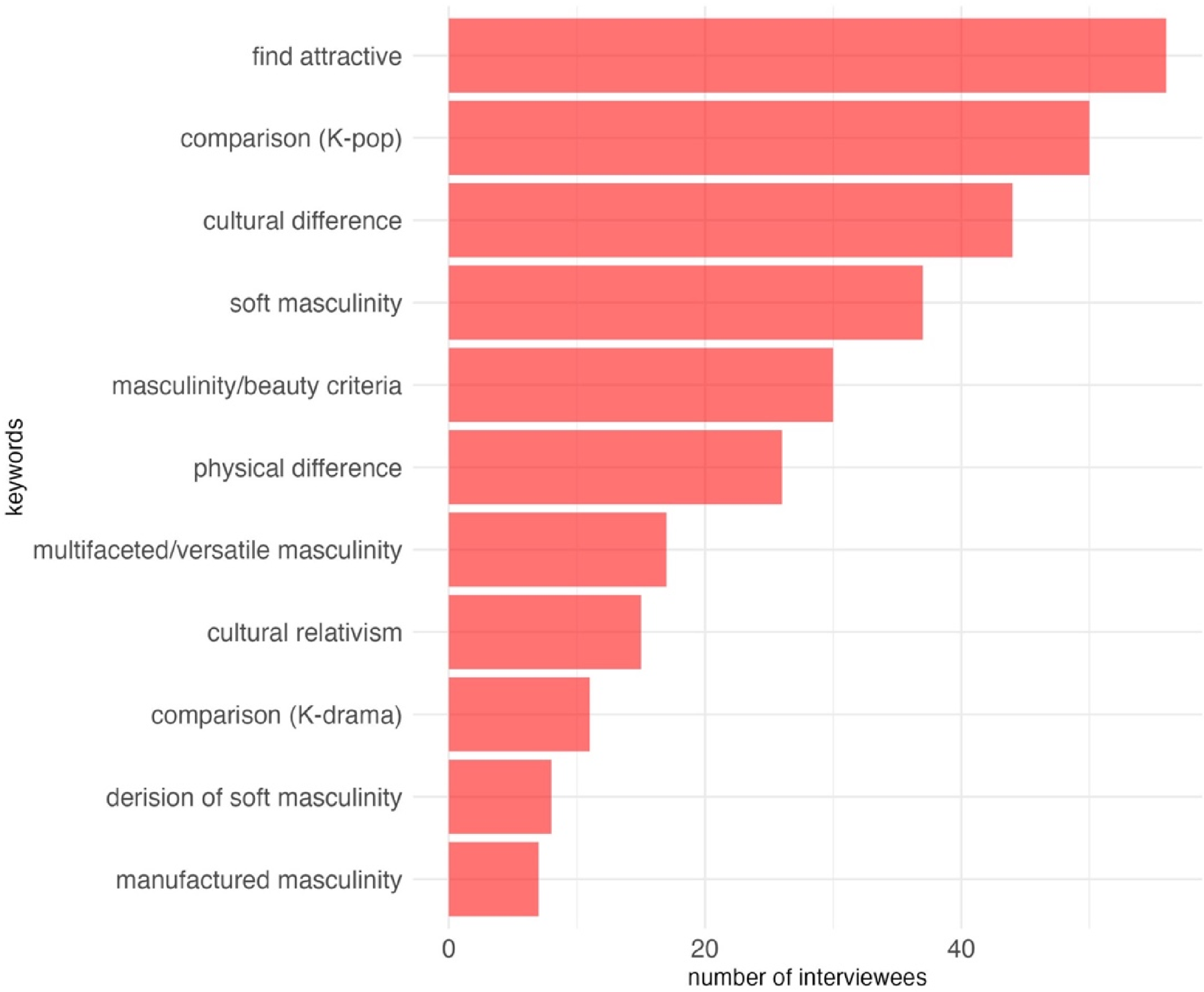
Second, more than half of the fans in the study unambiguously express that these male idols are “attractive” while discussing masculinity. This implies that the “neutrality” observed in the survey may not really be about the mid-point on the traditional gender spectrum. Instead, as we speculated, it may point to a new kind of masculinity that could not be easily defined within traditional/western norms. Fans assign strong attachment to and affection for this new masculinity for varied reasons (Normalization).
Third, fans’ strong approval of this new masculinity, however, seems to clash with their perceived understanding of American society’s reaction to K-pop, which involves the stigmatization of K-pop masculinities (King-O’Riain, 2024; Lee et al., 2020). Fans shared how they cope with these challenges by concealing their passion for K-pop, dropping hints, and rejecting toxic masculinity (Negotiating Stigma).
To be clear, we do not argue that K-pop fans reevaluating traditional gender norms on masculinity necessarily follow an exact sequence of understanding, normalization, and negotiating stigma. Instead, what we highlight here is the perceptional and behavioral aspects of fans’ engagement with K-pop masculinity, each of which provides empirical support for our inference that the new masculinity may broaden conceptions of masculinity.
Understanding of K-Pop Masculinity
We start with an ontological question about male K-pop idol’s masculinity: do fans recognize it? In-depth interviews offer a straightforward answer to this question, particularly those related to fans’ stance toward idols’ physical attractiveness and masculinity. Our interviews reveal that more than half of fans unambiguously agree that male idols are “attractive” while discussing masculinity. For instance, one fan (Latine, Dominican, Female, 20-year-old, 4/18/23) puts this point aptly by stating that “I think they are very handsome. That’s the only thing I can say…. Yes, I find K-pop male actors to be attractive. I’m attracted to them.”
Some fans observe that male K-pop idols
Asian American fans bring up idols’ Asianness as the reason why some find them attractive. A fan explains that the attractiveness of K-pop idols fits into notions of racial proximity (Yoon, 2022), stating that “whenever I think about, like, who I’m going to marry, I usually think of someone Indian or Chinese or something. You know, because I grew up around that and like, all of my crushes were people who were like, Indian or Chinese” (Asian, Indian, Female, 21-year-old, 2/27/23).
However, many fans clarify that the masculinity they find appealing is unique to K-pop and distinctively different from the traditional western masculinity, such as their appearance (“physical difference”; “beauty criteria”) or cultural differences in the perception of masculinity (“cultural relativism”). Studies indicate that both fans and non-fans attribute the acceptance of soft masculinity in K-pop and Korean popular culture to cultural differences in gender ideals between South Korea and the United States (Kim & Lopez, 2021; Lee et al., 2020; Song & Velding, 2020). Many fans in our study also noted these cultural differences as the primary reason for the greater acceptance of alternative forms of masculinity in South Korea, forms that are perceived as more open and tolerant of diverse expressions of masculinity than those found in the United States. One fan (White, Female, 19-year-old, 2/28/23) states: … [T]here’s definitely a difference in how Korean idols and American men, you think, their take on masculinity. I think that American men are very, very tied to masculinity in their physique and male and kind of masculine fashion choices and, and appearances. K-pop, while they also appear very masculine, have a lot of feminine sides as well.
It is important to note that this perceived difference in masculinity between K-pop and traditional western gender norms is not only about appearance. Fans point to cultural differences in masculine and feminine behaviors such as expressing emotions, physical closeness, and use of skincare products as a key difference between the two countries. For instance, unlike the United States where affectionate behaviors are deemed feminine and discouraged, K-pop idols have greater latitude to convey their emotions without compromising their masculinity and sexual identity. A fan (White, Female, 17-year-old, 7/8/21) adds: I think it’s nice because it’s different to how American culture perceives masculinity. They’re, I think, a lot more emotionally available. In some cases, like they're more willing to cry, show emotion and like, be touchy with their friends without it being like, perceived as gay.
Latine fans, raised in immigrant families with deeply rooted gender norms of “machismo,” speak of the clear boundaries between masculine and feminine behaviors. They observe that in Latine culture, physical closeness or touch between men is generally frowned upon. Such behavior raises suspicions about their sexual orientation which is regarded as a threat to heteronormativity. In contrast, male K-pop idols often take part in close physical contact with other members during live shows without facing the same scrutiny and suspicion in South Korea. As one fan describes (Latine, Mexican, Female, 20-year-old, 1/11/21): I remember getting into K-pop, the men are so touchy with each other and I was just like, “Is that normal?” I think because in my culture if … a guy just touches a man, you might get hurt, right? But over there [in Korea] I was like okay, … it's something normal in their culture … they don't really care about, like they’re not super masculine.
This behavioral difference in K-pop leads fans to question heteromasculinity, which restricts the range of acceptable masculine presentations, such as an interest in fashion or personal care. In discussing the masculinity of male K-pop idols, many express a disclination towards such heteronormativity, suggesting an underlying affinity between their socio-behavioral preferences and the multifaceted masculinity of K-pop idols. For example, a fan (Asian, Indian, Female, 21-year-old, 10/11/22) has this to say: I far prefer the acceptance of femininity because it's, like, you should be able to do both. Like men in America ... it's, like, it's girly to wear Chapstick. Come on! Like, you should be able to take care of yourself, like, it's considered unmasculine to care about fashion.
Among the multiple masculinity traits that draw the most attention and disparagement, casting the idols as unmasculine, “girly,” and “gay” from family, friends, and non-fans, is the widespread use of makeup and features of idols’ stage presentation such as dyed hair, nail polish, lipstick, and flashy outfits. Non-fans often deride these practices for departing from conventional masculine ideals. As noted earlier, “cultural differences” in gender expectations emerge as key reasons for the more varied presentation of masculinity in K-pop. According to one fan (White, Female, 20-year-old, 12/22/22): I feel like sometimes there is … the makeup.... It's also just [that] Korea has a different, like, beauty standard in what they view as attractive that I think is different from American culture in what they view as, like, masculine and … an attractive man.
Overall, fans clearly acknowledge a novel type of masculinity that is unique to male K-pop idols and attach strong affection to it. However, this warm feeling does not equate with blind following. More than ten fans we interviewed displayed a complex understanding of K-pop masculinity by pointing out its non-monotonic nature, particularly their multifacetedness and versatility. A fan (Latine, Mexican, Female, 21-year-old, 7/7/21) notes: I think it’s super awesome how masculinity is reinterpreted in a sense by male K-pop idols. I like the fact that there can be idols like Wonho, who are showing their abs, super muscular, dancing, and just the embodiment of what masculinity is like here in the West. But you can also see masculinity be integrated with androgyny. For example, Taemin from SHINee and how a lot of his solo works are very sexual and moody in nature even though Taemin’s own physique is the complete opposite of Wonho. He’s very slender and his moves are very fluid, almost feminine. I find it so cool that male artists have a lot more to work with. I find it interesting how they don’t have to strictly be X or Y.
Several fans (seven) speculate that such multifacetedness and versatility might have a commercial origin. For example, one discerning fan (White, Female, 21-year-old, 2/13/23) observes that K-pop’s manifold masculinity is a deliberate deployment of multifaceted, manufactured masculinity from the entertainment industry to appeal to the female gaze and cultivate their fanbase: Specifically with K-pop, you have these boy bands specifically curated with different kinds of boys to target different customer segments … and the management gets to decide that usually. So like, you'll have a sexy one, you'll have a very sweet, cute one, angelic whatever. And you have all these different types that the fans just get to pick from.
Others explain that the media genre in which celebrities are featured affects the type of masculinity they perform. Typically, soft masculinity is highly visible in K-pop because it aligns with fans’ preferences for “pretty boys” (Jung, 2011; Louie, 2012). However, in K-dramas, due to greater latitude in the roles actors get to play, there is more flexibility in their presentation of masculinity, ranging from tough to soft. Some fans point out that the music genre of the artists influences the type of masculinity expressed in K-pop. For example, idols in the R&B and hip-hop genres articulate a more overtly aggressive masculinity, while genres like pop allow for greater gender fluidity. Thus, while most fans ascribe cultural differences in gender expectations as the reason for K-pop’s soft masculinity, others make nuanced observations that expressions of masculinity are not uniform across K-pop and vary according to the music genres the idols are associated with.
Exposure and Normalization of Soft Masculinity
In our study, the most significant factor amplifying conceptions of masculinity and normalizing soft masculinity among fans is exposure to K-pop masculinities. First and foremost, few non-Asian fans encountered Asian American masculinities during their upbringing due to the demographics of their communities and the scarcity of Asian Americans in American media. And if they were exposed, Asian American men were depicted in stereotypical, one-dimensional ways in mainstream media, such as effeminate, nerdy, or asexual (Chong & Kim, 2022; Espiritu, 2008)—which Shimizu (2012) described as the sexual “straightjacketing” of Asian men in traditional Hollywood movies. As a result, most had little to no exposure to Korean masculinities during their formative years to develop ideas about non-hegemonic masculinities.
Nevertheless, participation in K-pop and Korean pop culture has led fans to view male idols and actors as attractive and masculine, underscoring the importance of engagement in reshaping fans’ perspectives on physical attractiveness and masculinity—particularly among those who did not have pre-existing preferences for soft masculinity. Indeed, engaging with alternative forms of masculinities is helping a reevaluation of traditional notions of masculinity and femininity. While many fans needed time to acclimate to K-pop’s multifaceted masculinity, given fans’ socialization in hegemonic masculinity and heteronormativity, the vast majority have since come to regard soft masculinity as a viable alternative. This suggests that exposure to alternative expressions of masculinities can reconstruct fans’ criteria of masculinity, leading to expanded and redefined notions of what it means to be masculine. A fan (White, Female, 26-year-old) explains: And I think it’s changed my view on what is masculine and like, like for the longest time I was not used to seeing men express emotions and as much as like K-pop idols do. Like the first year I was kind of like almost awkward when I would see them cry and now I'm like, I expect men to be that emotional, I want to see them express themselves like that. Um, I want to see them take care of themselves like that so it's, I think, changed my view on masculinity and what is masculine and acceptable for men. Or what, you know, they’re so much more comfortable being physically, like being physical with their friends. Like hugging your guy friend it's totally normal and the dudes here would never do that.
The normalization of alternative presentations of masculinity through exposure to K-pop helps redefine notions of masculine behaviors and leads to an appreciation for the softer side of K-pop masculinities. Fans opine that the “super androgynous looking” appearance of male idols is not associated with “acting feminine at all” (Asian, Filipina, Female, 32-year-old, 6/29/21) because masculinity is “really about the way, the way that you can carry yourself” (White, Female, 17-year-old, 7/2/21). In fact, there is no one-size-fits-all definition of what it means to be masculine and calls for broadening the concept are being made by fans. From fashion choices to activities traditionally considered feminine, masculinity in the West has been strictly defined in opposition to feminine traits. However, through engagement with diverse presentations of masculinity, K-pop fans begin to reevaluate societal norms and expectations related to masculinity, helping to normalize alternative forms of masculinity. This has the potential to reassess established notions of masculinity, allowing for a more expansive and less rigid definition.
Negotiating the Stigma Against K-Pop’s Masculinities
Goffman (2009) observes that stigma and stigmatization compel conformity to societal norms and attitudes by ascribing discrediting attributes to individuals and social groups who deviate from them (see p. 3). Studies have found that fans of stigmatized popular culture often experience marginalization and othering when they are perceived as diverging from the norms and tastes of the dominant pop culture (e.g., Lopes, 2006). This stigmatization produces “double marginality” for consuming popular culture seen as inferior to high culture and for engaging with a racialized foreign culture (Otmazgin & Lyan, 2013; Yoon, 2018). K-pop fans have to contend with a third stigma: disparagement and ridicule for following K-pop idols who do not conform to hegemonic masculinities (Lee et al., 2020; Min, 2021; Yoon, 2019).
Gregory (2019) notes that all boy groups in the past, from the Beatles to the New Kids on the Block to One Direction, have faced criticisms and derision for their predominantly teenage female fanbase, for projecting a hybridized masculinity characterized by attractiveness, fashion, youthfulness, and androgenous aesthetics, and for being perceived as manufactured/inauthentic. Similarly, fans in our study have experienced hurtful comments from family, friends, and acquaintances, mocking idols for performing masculinities that do not conform to the dominant ones espoused in American media, culture, and society. Much of their criticism has been directed to the body build and facial appearance of the idols, labeling them as feminine for their slender bodies and “pretty” faces, while also disapproving of what they perceive as feminized practices, such as being expressive with emotions and using makeup, nail polish, and hair dye. A fan (White, Female, 19-year-old, 11/20/22) elaborates: God, like, I mean, when I first got into K-pop, I got like, the same comments from every one of my family members. You know, they looked like girls. And you know, that's like a common comment that you get from kind of, that was before I was out to. A lot of my family though do and so they were like, you know, “why do you like feminine men?” and I'm like, “oh, maybe it's because I like…” that was hard for them to grapple with.
Fans respond to stigmatization in various ways. Some keep their enthusiasm for K-pop private for fear of stigma and scorn, forcing them to become closeted fans, while others distance from the object of ridicule by disidentifying with the stigmatized identity to reduce denigration and taunting (Lee et al., 2020, pp. 5908, 5911). According to one fan (Black, Male, 28-year-old, 3/7/23): I think … growing up … you have this feeling of, like, kind of be like, embarrassed … that you're listening to something that you don't understand, that only a handful of people probably would understand, and so you just kind of keep it under wraps and you don't say anything. But when you get home, you're like a maniac, you just, as opposed to if you listened, listen to, like, general Western music.
A main strategy to avoid drawing unwanted attention and ostracism has been seeking safe spaces online or “dropping clues” to hint at others their enthusiasm for K-pop (Lee et al., 2020, p. 5910). This strategy helps fans to connect with like-minded individuals who are passionate about K-pop and recognize the clues. For instance, a fan (Latine, Male, 20-year-old, 7/30/20) states: Like I don’t have it anymore, but I had a clear phone case with Jungkook photocard in it and I used to feel self-conscious. Like when people would like to see my phone, like “who's that?” I felt kind of ashamed and like self-conscious about it … somebody that is interested in K-pop would know what those are, but other people be like, “oh, it's just words in a phone case.”
While broader society seems uninterested in or unwilling to commiserate with and approve of fans’ passion for K-pop—often stigmatizing the masculinity of male idols—the growing popularity of Korean pop culture in the United States, along with the rise of a critical mass of K-pop fandom, has emboldened fans to be more vocal about their preference of soft masculinity and their rejection of heteromasculinity. For instance, many fans recall struggling to enjoy K-pop in middle and high schools because of its perception as weird, different, and unmasculine. However, with the increased visibility and popularity of the genre, along with growing assertiveness among college-age fans, many now feel more confident embracing K-pop as an important part of their identity. A fan (White F, 32-year-old, 2/23/23) explains: Yeah, for me I’m always gonna have personal preference, but I definitely find some attractive and I, and I witnessed other people being like, “how can you find these people attractive? They look like girls.” I'm like “um, excuse me.” Like okay, toxic American masculinity is something that I don't like anyway.… [M]y personal … preference always being sort of like the pretty boy type, which is not really an American.… I don't want to call it alternative because it's, that makes it sound like it's not as valid, but like, almost an alternative expression of masculinity of like, “why is this not masculine? Just because you say so because you look like a lumberjack?”
Such an observation suggests that, at least for fans, the prospects of K-pop disrupting hegemonic masculinity are in formation, broadening notions and normalizing alternative expressions of masculinity. To be sure, non-fans and the wider society will continue to stigmatize K-pop masculinities, looking to police them and reinforce heteromasculinity, thereby stifling fans’ support for multifaceted masculinities.
Discussion and Conclusion
In this article, we explored the contours of K-pop fans’ reactions to the masculinity of male idols. First, fans clearly identify the distinctive masculinity of K-pop artists that are often multifaceted and versatile. It is not only the appearance, but also the behaviors and attitudes, of the artists that fans appreciate as key traits of K-pop masculinity. Second, exposure to soft masculinity helps fans “normalize” it. Third, as more fans approve of K-pop masculinities, despite the stigma associated with consuming a racially marked and emasculated text (Lee et al., 2020, see p. 5907), they are likely to challenge narrow conceptions of masculinity focused exclusively on body build, muscularity, and hyper masculine behaviors and attitudes. For instance, although K-pop idols may not adhere to the ideals of the body build of traditional masculinity, fans argue that their fitness, stamina, and stage performance fully demonstrate their masculinity. In short, masculinity is not defined by physical features, but by idols’ ability to enact multifaceted masculinity. This is clearly a point of contention between how fans delineate masculinity and how the wider American society sees it, creating fault lines and stigma against non-normative masculinities.
Interestingly, as examined in the article, many fans credit the cultural differences in gender ideals between Korea and America for the more varied—and less restrictive—forms of masculinity in Korea. The visibility of soft masculinity in idols’ aesthetics, behavior, and self-presentation leads fans to form an image of a hyper, gender-inclusive Korea. However, the versatile, manufactured masculinity promoted by the cultural industry may not reflect broader Korean society’s views on masculinity and femininity, which can be as stringently restrictive and hypernormative as those in the United States.
Nevertheless, with the rise of the cultural industry and digital and social media platforms, there has been a broadening of what is considered masculine, expanding the range of acceptable masculine behaviors in South Korea. Practices such as metrosexuality, pretty boys, slender bodies, makeup, nail polish, and dyed hair have been incorporated into idols’ self-presentation and are now being adopted by young Korean men (E. Jang, 2019), often in the name of neoliberal self-development in a society under hyper competition (Chung, 2024). We find that K-pop fans notice these aspects of subversiveness within the cultural industry and conclude that South Korea allows for and performs a masculinity less rigid than that practiced in the United States. Whether this will produce a significant moderation of hyper/toxic masculinity in favor of a more inclusive one remains to be seen, but our empirical analysis suggests that K-pop’s effect on fans has at least a strong potential to do so.
An important caveat regarding the generalizability of our findings is the selection bias of our sample, which primarily consisted of younger, highly educated, and dedicated—rather than casual—fans who willingly volunteered to be interviewed for hours, making the sample generally more cosmopolitan and open to cultural differences. Thus, fans’ embrace of K-pop masculinities that we document may, in part, reflect their age, educational selectivity, and cosmopolitan aspirations rather than K-pop itself. 5 Still, many fans noted that prior to their exposure to K-pop masculinities, they were unfamiliar with Asian American masculinities (and South Korean culture in general) and typically upheld hegemonic masculinity as normative in American society. After engaging with K-pop masculinities, however, these fans began to question the narrow logics and practices of conventional masculinity, realizing that masculinity does not have to conform to traditional gender expectations. This suggests the potential of K-pop masculinities to expand conceptions of masculinity. Yet, a significant barrier to wider acceptance of alternative forms of masculinities remains the ongoing stigmatization and policing of non-conventional masculinities in American society.
Footnotes
Acknowledgments
We would like to thank the many fans who willingly participated in both the online survey and the in-depth interviews, without which this project would not have been possible. We also acknowledge the invaluable assistance of numerous undergraduate (and some graduate) research assistants from the George Mason University and University of Virginia, who helped conduct, transcribe, and code the interviews.

Funding
We acknowledge support for this research from the George Mason University’s Faculty Research Development Award (2020) and the 4-VA Grant of the Commonwealth of Virginia (2022).
Declaration of Conflicting Interests
The authors declared no potential conflicts of interest with respect to the research, authorship, and/or publication of this article.
Notes
Author Biographies
Appendix
Fan Perception of Masculinity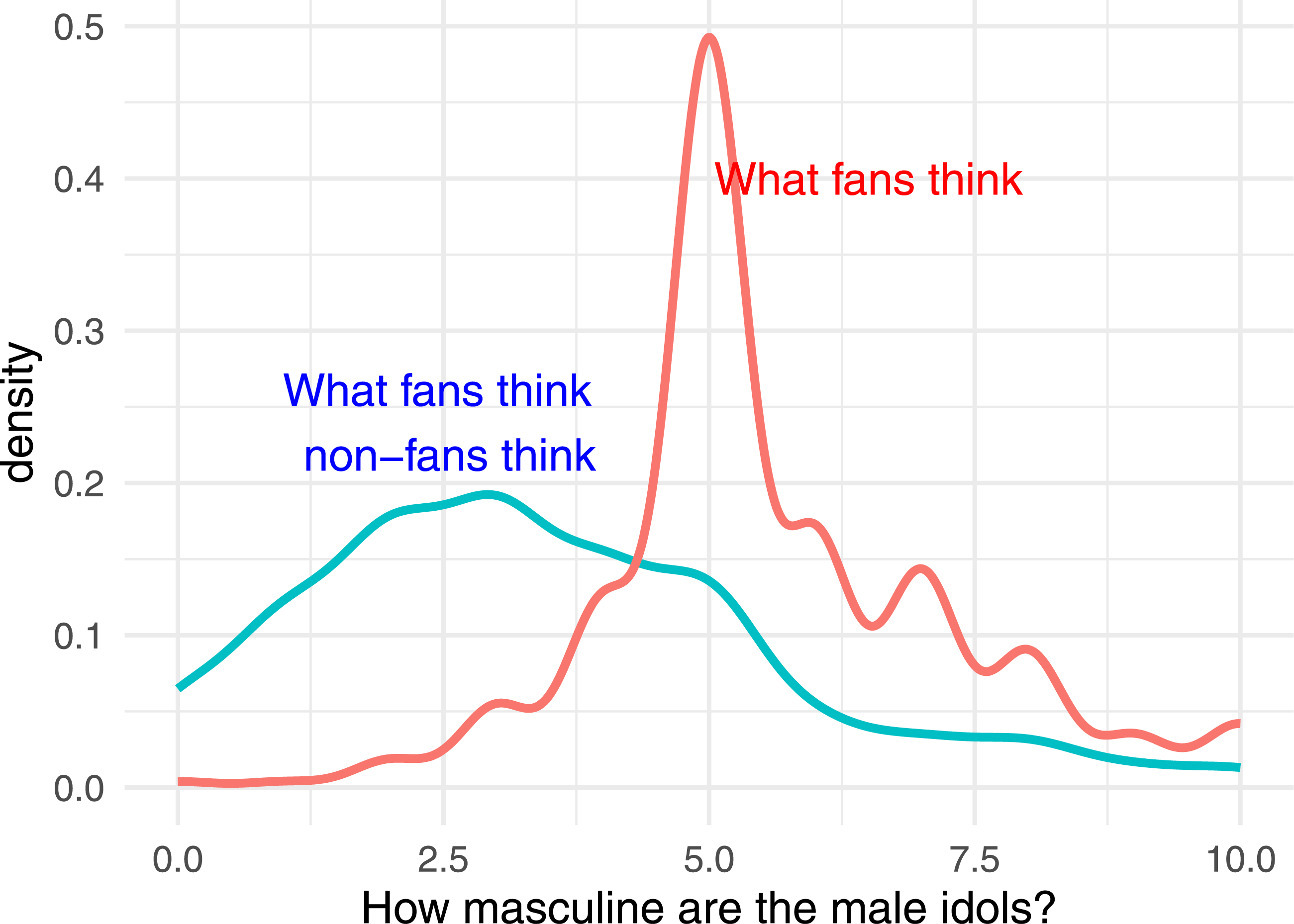
Race/Gender Breakdown, U.S. Participants
Age Distribution, Survey Respondents
Age Distribution, Interviewees