







Abstract
The aim of this descriptive and cross-sectional study is to examine the relationship between gender roles and coping skills among male individuals who have experienced an earthquake. The sample of the study consisted of 203 male individuals who experienced the Türkiye earthquake on February 6, 2023. There was a positive and significant relationship between the scores obtained from the Bem Sex-Inventory Index and the Ways of Coping with Stress by the participants who were exposed to the earthquakes (p < .01). Of the participants, those who used the feminine gender role more used strategies such as self-confident approach, adoption of an optimistic approach and resort to social support more.
Disaster studies are a field in which the social and behavioral dimensions of emergencies or disasters, generally defined as sudden-onset and mass-impact events, are investigated. In such studies, analyses are conducted on the hazard and vulnerability levels of communities at risk, and strategies are developed to reduce these risks by focusing on the actual and potentially threatening aspects of emergencies (Lindell, 2013). Vulnerability refers to a person’s tendency to be harmed by a hazard and to be unable to cope with this harm within the social processes that create and sustain this tendency (Faas, 2016; Kelman et al., 2016). In the context of disaster, the concept of vulnerability was initially defined as a cumulative indicator of the unequal spatial and social distribution of specific communities’ exposure to environmental and technological hazards. This concept also refers to a multidimensional framework in which the capacity of an individual or group to anticipate, cope with, resist and recover from a disaster is expressed (Blaikie et al., 2014). The greatest challenges faced in disaster studies are that communities are not homogeneous, and therefore, their vulnerability to the effects of a disaster varies. These vulnerabilities may be associated with demographic characteristics such as gender, ethnicity, and poverty (Fothergill & Peek, 2004). Although men are more exposed to traumatic events than are women throughout their lives (Silove et al., 2017), women are twice as likely to be affected by trauma as are men (Chapman et al., 2012). It has been stated that women tend to show trauma symptoms more than do men after various natural disasters (Heid et al., 2017), and that being a woman is a factor that predicts post-traumatic stress disorder (Galea et al., 2008; Haering, Schulze, et al., 2024).
Gender is the behaviors, norms, and roles that express the socially constructed prototypical characteristics of men and women. According to the gender role compatibility theory, society tends to assign men and women to certain jobs by taking certain characteristics of gender into account (Mayor-Silva et al., 2025). In the socially constructed gender model, differences between women and men are explained within the framework of social norms, roles, and expectations rather than biological characteristics (Stets & Burke, 2000). Due to gender inequalities, it is argued that women are at higher risk of grievance and victimization in disaster processes (Ünür, 2021), and that masculine characteristics attributed to male identity can have a protective or buffering effect on traumatic stress reactions that emerge especially immediately after disasters (Valdez & Lilly, 2014). In the context of disasters, examining gender issues has highlighted that, with regard to vulnerability and preparedness, women are primarily responsible for domestic roles due to culturally shaped, gender-based divisions of labor (Ashraf & Azad, 2015). No research has been found examining men’s engagement with domestic roles and coping skills traditionally attributed to women in disaster-affected areas. In exceptional situations such as disasters, experiences of women and men may differ in line with their biological sex and gender characteristics. However, the search for studies in which the positive and/or negative effects of gender characteristics in disasters are addressed revealed a gap in the literature. Although various studies have been conducted in the literature on the vulnerabilities of women in disasters (Demirci & Avcu, 2021; Gaillard et al., 2015; Llorente-Marrón et al., 2020), the number of studies in which the effects of disasters on men are addressed is limited (Usta et al., 2024). Although women are generally in a more disadvantaged position during disasters, studies report that men have a higher likelihood of disaster-related mortality. Men’s greater involvement in disaster response activities may increase their vulnerability to the destructive impacts of disasters (Erman et al., 2021). It is suggested that there is a gap in the literature regarding how characteristics attributed to men through gender roles influence their coping and survival capacities in disaster-affected areas.
It is emphasized that advancing gender and gender studies in the field of disasters and emergency management is crucial for improving the field and ultimately supporting more gender- and socially gender-sensitive emergency and disaster management practices (Muñoz-Nieves et al., 2025). An in-depth analysis of experiences of male individuals stated in studies conducted on disaster and gender can play an important role in providing sustainable solutions for the future. The search for studies in which traditional gender roles were addressed as a potential risk factor that could increase the psychological effect of trauma demonstrated that the issue was investigated in only one study (Seldomridge et al., 2024). Considering the variability in psychological responses to natural disasters, understanding who is likely to experience long-term psychological effects of disasters is of importance in terms of providing information about interventions aimed at allocating limited disaster recovery resources and increasing resilience (Haering, Seligowski, et al., 2024). Clarifying gender inequalities in traumatic life events may help provide post-traumatic psychological support according to the specific needs of men and women (Iverson et al., 2013; Silove et al., 2017). Therefore, the present study was conducted to determine the relationship between gender roles and coping skills of male earthquake survivors. Thus, it is believed that this study conducted with male disaster-affected individuals in Turkish culture provides culture-specific evidence in the literature regarding the impact of gender roles on individuals’ mental health and survival skills in coping with disasters.
Methods
This study was conducted using a descriptive and cross-sectional research design. This study was conducted between February and June 2025 in the central district of Adıyaman, one of the provinces affected by the February 6, 2023, earthquake in Türkiye. While male individuals who were exposed to earthquakes comprised the population of the study, the sample of the study included 203 male individuals who were exposed to the February 6, 2023 earthquakes in Adıyaman, Türkiye. The minimum sample size required for the statistical analyses to be conducted in order to investigate the coping status of male individuals with earthquake-induced stress was determined through the priori power analysis using the G*Power 3.1 program. Within the scope of the analysis, the hypothesis “There is a significant relationship between the scores individuals obtained from the Ways of Coping Inventory and their perceived social support levels” put forward by Ateş and Bilgili in their study was taken into account as a reference (2013) (Ateş & Bilgili, 2013). In line with the data in the reference study, the effect size was considered as medium and Cohen’s d was accepted as 0.472. Two-tailed independent samples t-test was preferred as the test type, the type I error level was determined as (α) = 0.05, and the statistical power of the test was targeted to be at the level of 90% (1–β = 0.90). The results of the analysis carried out with the assumption of equal distribution between the groups indicated that at least 192 participants should be included in the study. The study was completed with 203 participants.
The inclusion criteria for participants in the study were: residing in Adıyaman province, being male, literate, aged 18 years or older, and having experienced the February 6, 2023, earthquake in Türkiye. Exclusion criteria included: not having experienced the earthquake, being under 18 years of age, not speaking Turkish, having cognitive impairments or deficits in perception, and having visual or hearing disabilities.
Measures
Data were collected using the “Sociodemographic Data Form”, “Earthquake Data Form”, “Bem Sex-Inventory Index” and “Ways of Coping Inventory” through face-to-face interviews.
Sociodemographic Data Form
The form includes six items questioning the respondents’ sociodemographic characteristics such as age, marital status, education level, occupation, place of residence, economic status and family structure.
Earthquake Data Form
The form developed by the researchers to investigate challenges faced by male individuals during and after the earthquakes consists of 15 items.
Bem Sex-Inventory Index (BSRI)
The BSRI developed by Bem (1974) to determine the gender role orientations of individuals is used to characterize individuals as masculine, feminine or androgynous (Bem, 1974). No score is calculated for the overall BSRI. Each of the two dimensions namely “Femininity” and “Masculinity” is scored separately. The medians of the Femininity and Masculinity scores are calculated, and gender roles are classified into the following four groups: feminine, masculine, androgynous and undifferentiated. The BSRI was adapted to Turkish society by Kavuncu (1987). This BSRI contains 40 items. While half of them are about masculinity (M), and the other half are about femininity (F). The scale contains labels representing feminine and masculine gender roles. Responses given to the items are rated on a 7-point Likert-type scale ranging from 1 to 7 (1: never appropriate (true), 2: usually appropriate (true), 3: sometimes not appropriate (true), 4: undecided, 5: sometimes appropriate (true), 6: usually appropriate (true), 7: always appropriate (true). In the BSRI, respondents are expected to determine to what extent the items in the form describe them (how well the option the respondent chooses describes him or her). While items 1, 3, 5, 6, 7, 9, 11, 14, 16, 19, 22, 23, 24, 30, 31, 34, 36, 37, 39, and 40 are related to the feminine gender role, items 2, 4, 8, 10, 12, 13, 15, 17, 18, 20, 21, 25, 26, 27, 28, 29, 32, 33, 35, and 38 are related to the masculine gender role. The Cronbach’s alpha internal consistency coefficient of the BSRI was 0.73 for women (femininity) and 0.75 for men (masculinity) in Dökmen’s study (1999) (Dökmen, 1999). In the present study, it was 0.85 for the overall Bem Sex-Inventory Index.
Ways of Coping Inventory (WCI)
The WCI was developed by Folkman and Lazarus (1980). The validity and reliability study of the Turkish version of the WCI was conducted by Şahin and Durak (1995). The WCI consists 30 items whose responses are rated on a four-point Likert type scale ranging from 0 to 3, and the following five dimensions: self-confident approach (items 8, 10, 14, 16, 20, 23, 26), optimistic approach (items 2, 4, 6, 12, 18), submissive approach (items 5, 13, 15, 17, 21, 24), helpless approach (items 3, 7, 11, 19, 22, 25, 27, 28) and seeking social support (items 1, 9, 29, 30). Items 1 and 9 in the seeking social support dimension are reverse scored. No score is calculated for the overall WCI. Each of the dimensions is scored separately. The score obtained from a dimension indicates how much the respondent uses the approach in question. The higher the score is, the more the respondent uses that approach; in other words, the lower the score is, the less the respondent uses that approach. The mean score for a dimension is calculated by summing the scores obtained from all its items and by dividing the summed score by the number of the items included in that dimension (Şahin & Durak, 1995). In the present study, the Cronbach’s alpha coefficient for the Ways of Coping Inventory was calculated as α = 0.71.
Data Collection
During the data collection phase, the questionnaire was administered to participants both face-to-face and online, and responses were obtained in both online and printed formats. The data were collected through face-to-face interviews with individuals who could be directly accessed by the psychiatrist involved in the study in the province where the research was conducted. For individuals who could not be reached physically, data were obtained using convenience sampling. After explaining the purpose of the study and obtaining voluntary informed consent, the survey created via Google Forms (Google LLC, Mountain View, USA) was shared through the WhatsApp application (Meta Platforms Inc., USA). In this way, the data were collected using a hybrid approach that combined in-person and online methods.
Data Analysis
The SPSS IBM (Statistical Package for Social Sciences) version 27 and AMOS (Analysis of Moment Structures) version 24.0 were used for the analysis of the data. In the analysis of the data, in order to decide which tests (parametric/nonparametric tests) would be performed; first, the assumptions that must be met were tested. To decide whether the data were normally distributed, the Kolmogorov-Smirnov test was used. Since the skewness-kurtosis coefficients of the data were in the range of ±2.0 (George & Mallery, 2010), the distribution was accepted as normal. While the independent samples t-test was used for the comparison of two independent groups since the data were normally distributed, the One-way ANOVA analysis was used for the comparison of more than two unrelated groups. To determine from what the difference stemmed, the Bonferroni test was used in cases where the variances were homogeneous for the post-hoc analysis, and the Tamhane’s test was used in cases where the variances were not homogeneous. In order to determine whether the variances were homogeneous, the Levene statistics was used. The relationship between the scales was checked with the Pearson correlation coefficient. The 0.05 significance level was used as a criterion in interpreting whether the obtained values were significant or not.
Compliance With Ethical Standards
Before the study was conducted, ethical approval was obtained from the Adıyaman University Non-Interventional Clinical Research Ethics Committee (Ethics Committee Approval No: 2025/1-4, date: 14.01.2025). The study was carried out in accordance with the ethical standards established in the Declaration of Helsinki. After the participants were told that participation in the study was voluntary, the written informed consent was obtained from them. The participants’ personal information were kept confidential and were not disclosed to third parties. Informed consent was obtained from all participants. For the online data collection, participants were informed about the ethical approval, informed consent procedures, confidentiality and anonymity safeguards, and data security measures. There is no conflict of interest between the researchers and any third parties or institutions in this study.
Results
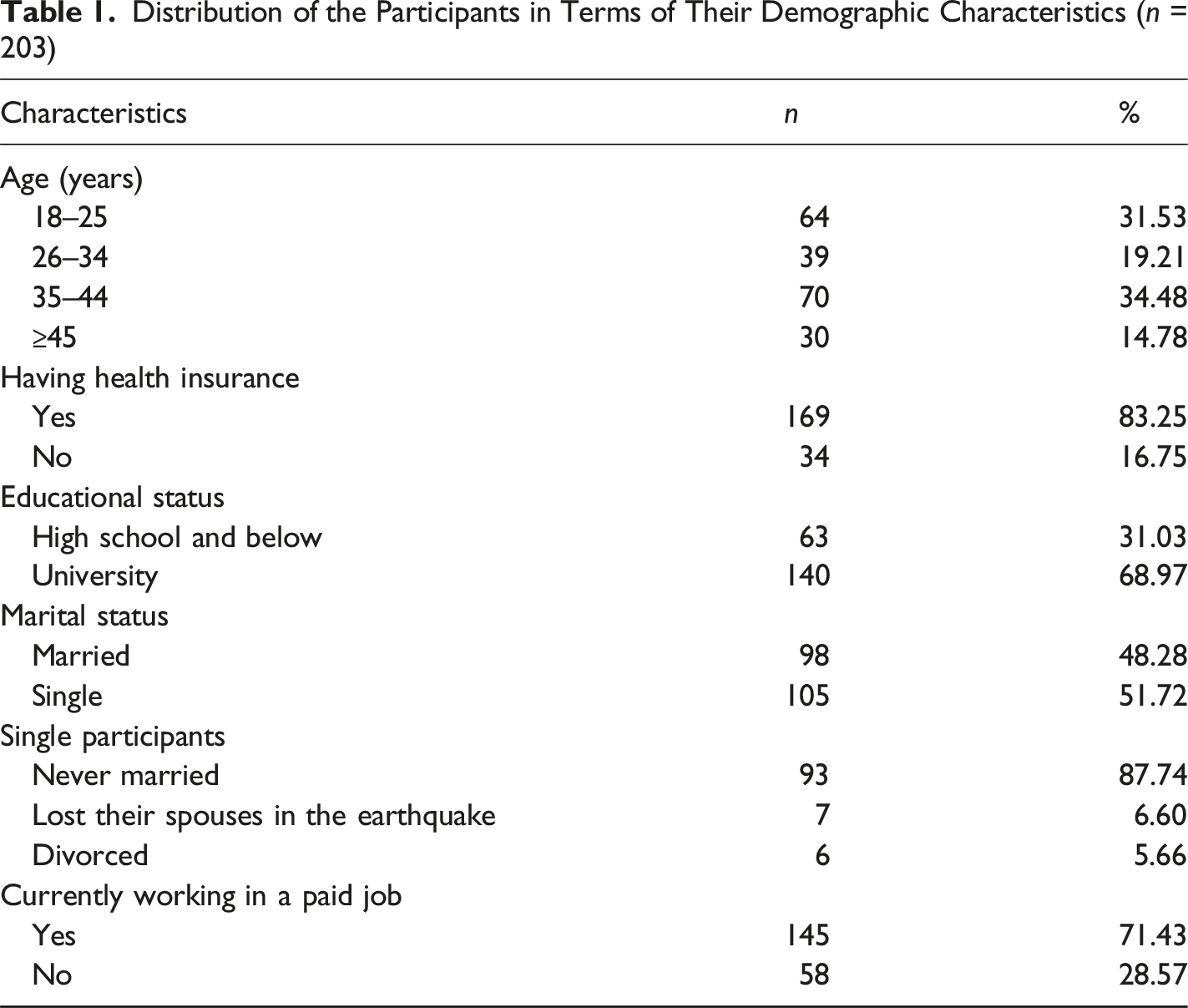
Distribution of the Participants in Terms of Their Demographic Characteristics (n = 203)
Distribution of the Participants in Terms of Their Earthquake-Related Experiences (n: 203)
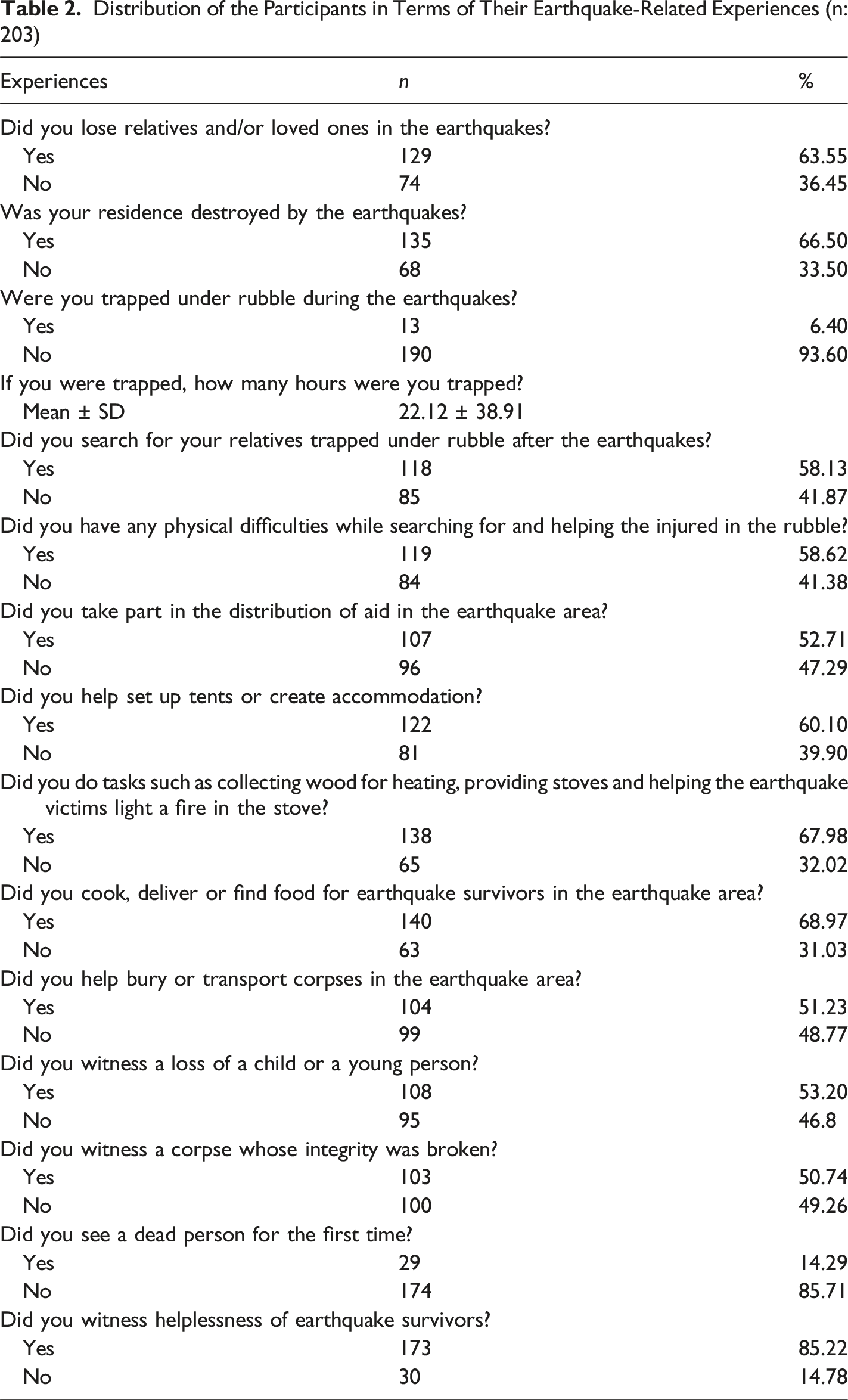
According to the analysis of the work and/or tasks undertaken by the participants in the earthquake zone, 52.71% were involved in aid distribution (distributed aid), 60.10% set up tents or performed accommodation activities, 67.98% collected wood for heating, provided stoves and helped the earthquake victims light a fire in the stove, 68.97% participated in the processes of preparing, distributing or providing food, and 51.23% carried out the transportation or burial of dead bodies (corpses).
Witnessing the helplessness of survivors (85.22%), the loss of a child or young person (53.20%) and a corpse whose integrity is broken (50.74%), and seeing a dead body for the first time in their lives (14.29%) affected the participants psychologically most.
Descriptive Statistics of the Mean Scores Obtained From the Bem Sex-Inventory Index and Ways of Coping Inventory, and Their Dimension and Skewness and Kurtosis Values
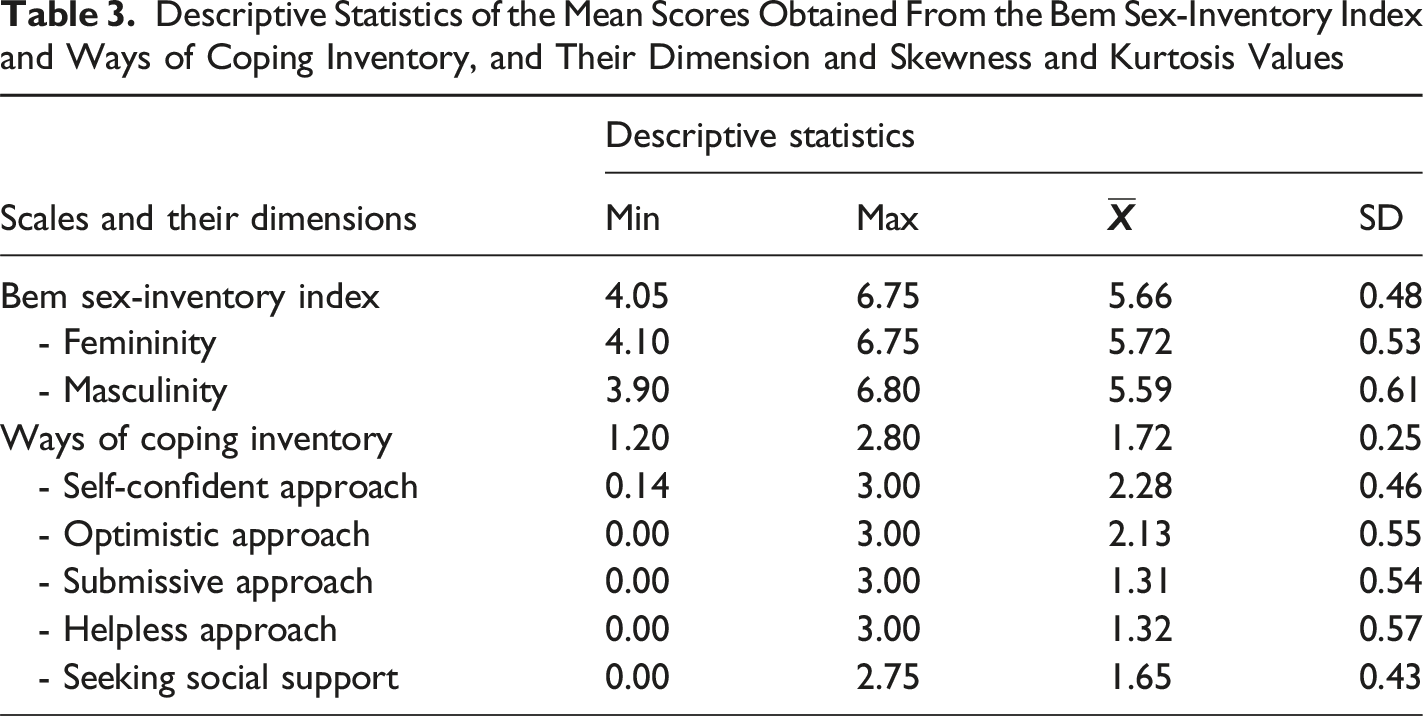
The mean scores the participants obtained from the Ways of Coping Inventory and its dimensions were as follows: Ways of Coping Inventory: 1.72 ± 0.25 (min: 1.20 max: 2.80), self-confident approach: 2.28 ± 0.46, optimistic approach: 2.13 ± 0.55, submissive approach: 1.31 ± 0.54, helpless approach: 1.32 ± 0.57, seeking social support: 1.65 ± 0.43 for.
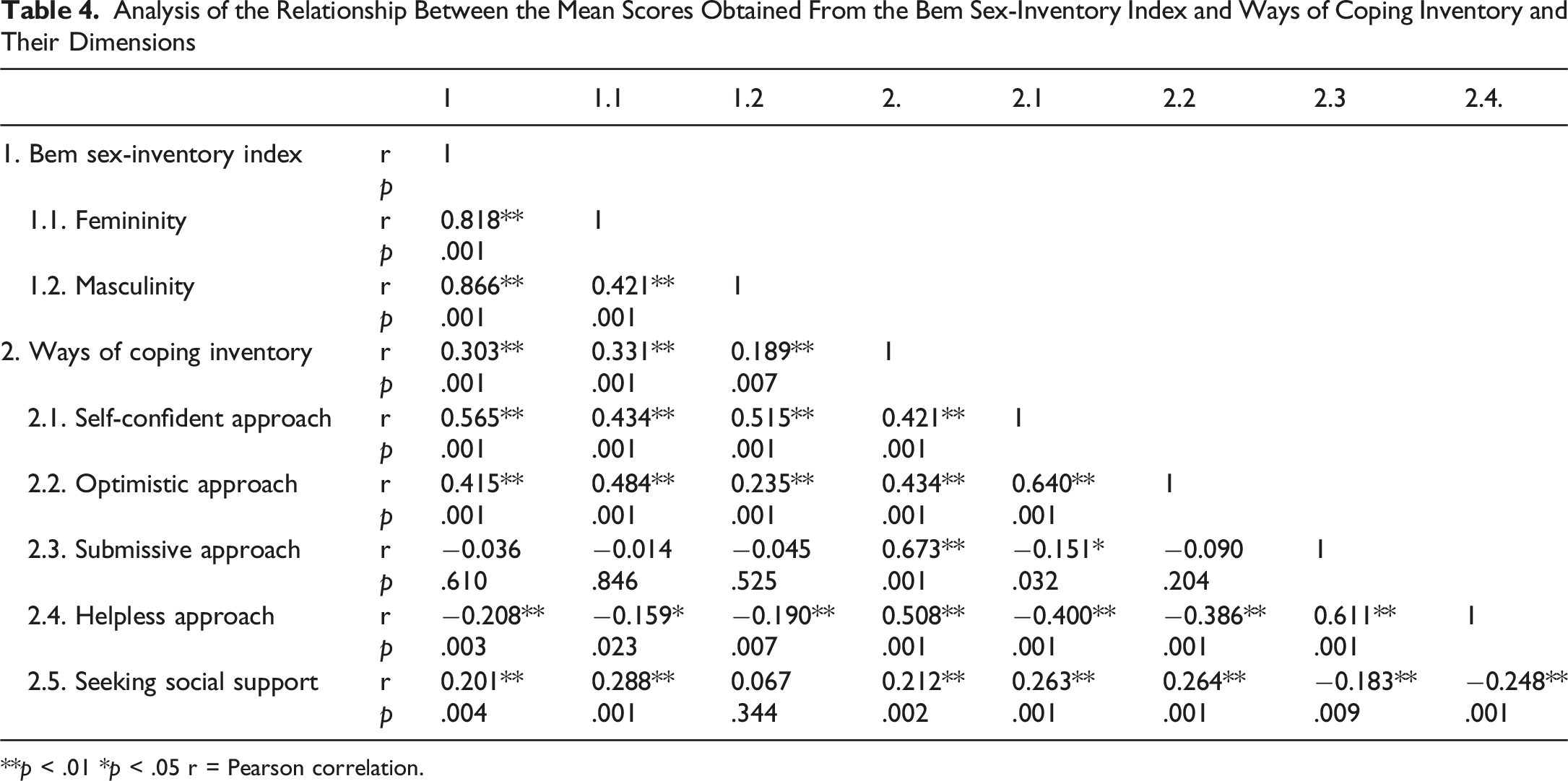
Analysis of the Relationship Between the Mean Scores Obtained From the Bem Sex-Inventory Index and Ways of Coping Inventory and Their Dimensions
**p < .01 *p < .05 r = Pearson correlation.
There were positive and highly significant relationships between the mean scores obtained from the Self-Confident Approach dimension of the Ways of Coping Inventory and the overall Bem Sex-Inventory Index (r = 0.565; p < .01) and its femininity (r = 0.434; p < .01) and masculinity (r = 0.515; p < .01) dimensions. There were positive and significant relationships between the mean scores obtained from the Optimistic Approach dimension of the Ways of Coping Inventory and the femininity (r = 0.484; p < .01) and masculinity (r = 0.235; p < .01) dimensions of the Bem Sex-Inventory Index.
There were negative and significant relationships between the mean scores obtained from the Helpless Approach dimension of the Ways of Coping Inventory and the overall Bem Sex-Inventory Index (r = −0.208; p < .01) and its femininity (r = −0.159; p < .05) and masculinity (r = −0.190; p < .01) dimensions. While there was a positive and significant relationship between the mean scores obtained from the Seeking Social Support dimension of the Ways of Coping Inventory and the femininity dimension of the Bem Sex-Inventory Index (r = −0.288; p < .01), there was no significant relationship between the mean scores obtained from the Seeking Social Support dimension and the masculinity dimension (r = −0.190; p < .01).
There were no significant relationships between the mean scores obtained from the Submissive Approach dimension of the Ways of Coping Inventory and the overall Bem Sex-Inventory Index (r = −0.036; p < .05) and its femininity (r = −0.014; p < .05) and masculinity (r = −0.045; p < .05) dimensions.
The effects of the variables “Femininity” and “Masculinity” on various coping styles were analyzed with the structural equation model (SEM) developed after the study. Direct effects and correlations were specified in the model. The measurement model used in the study is shown in Figure 1. In Figure 1, the latent variables are Femininity and Masculinity. The manifest variables are Self-Confident Coping, Optimistic Coping, Submissive Coping, Helpless Coping, and Seeking Social Support. e1-e5 indicate the measurement errors for each observed variable. Path analysis for the research model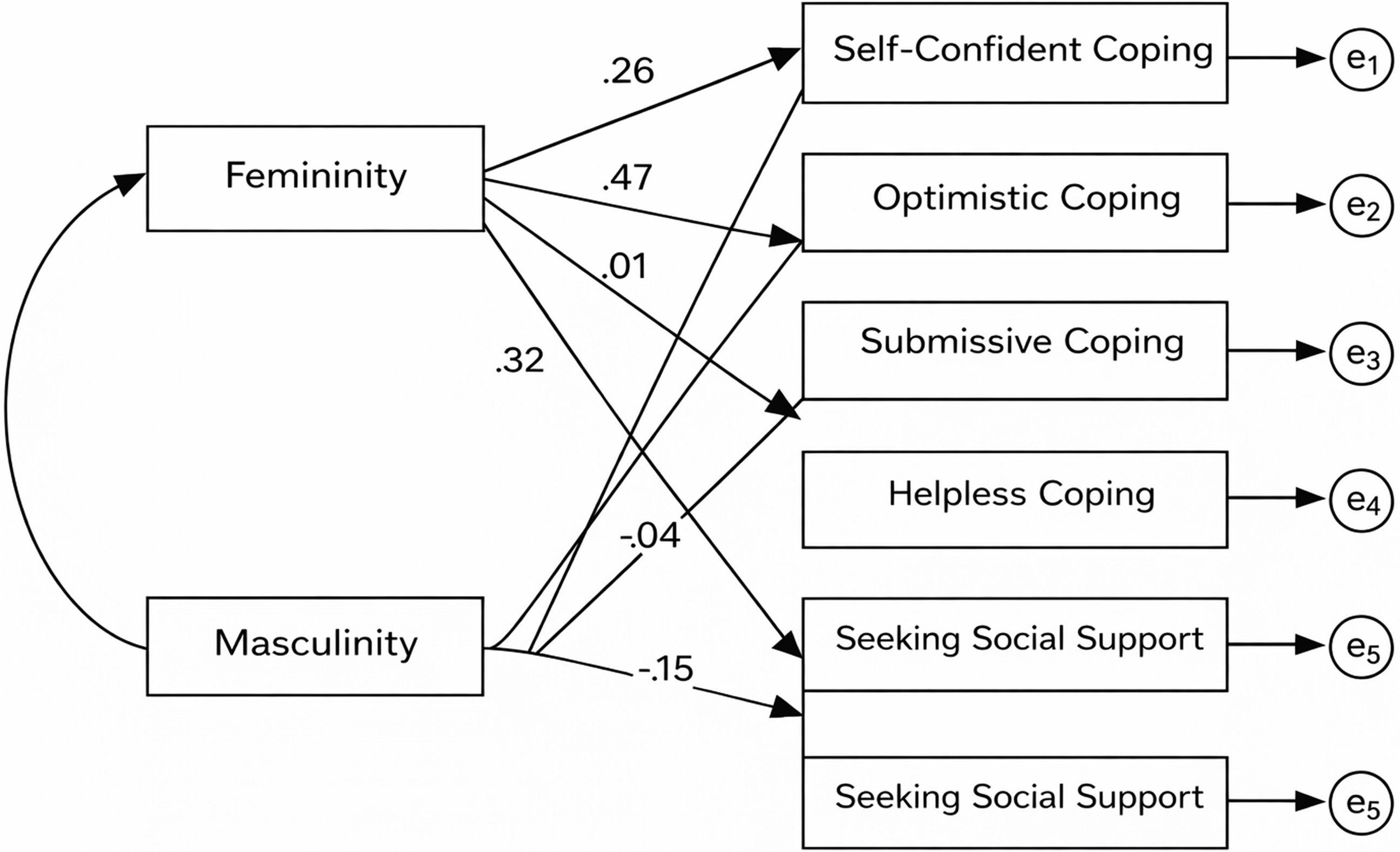
Path Analysis Estimates for the Proposed Model
*S.E.: Standard Error **C.R.: Critical Ratio.
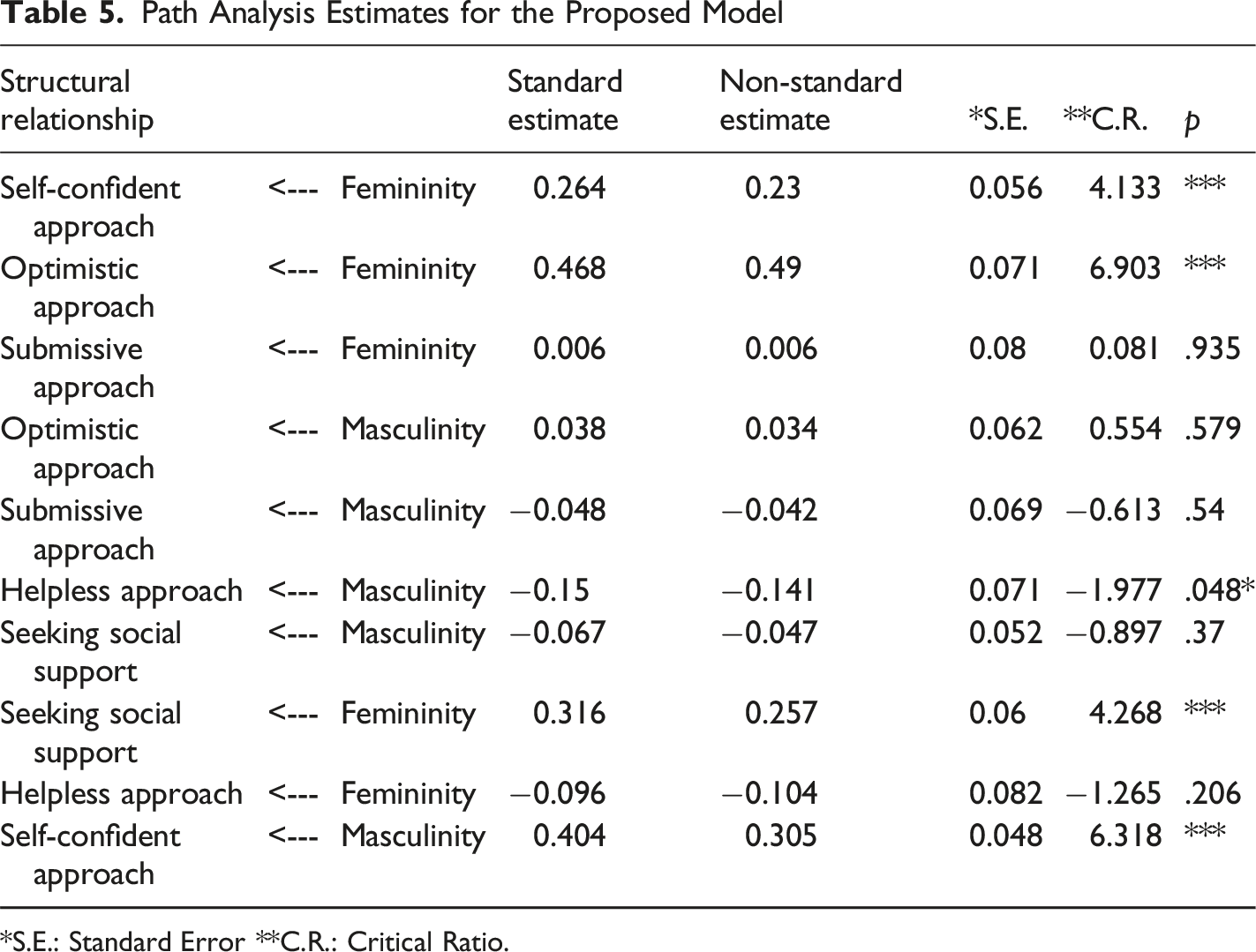
The results of the path analysis regarding the effects of femininity and masculinity characteristics on coping styles revealed that the femininity variable had a significant and low effect on the self-confident approach (β = 0.264, p < .05) and explained 32.2% of the variance of this variable (R2 = 0.322). Femininity also had a significant and moderate effect on the optimistic approach (β = 0.468, p < .05) and explained 23.5% of the variance of this variable (R2 = 0.235). Femininity also had a significant and moderate effect on the seeking social support variable (β = 0.316, p < .05) and explained 8.7% of the variance of this variable (R2 = 0.087).
The masculinity had a significant and moderate effect on the self-confident approach variable (β = 0.404, p < .05). The masculinity together with femininity explained 32.2% the variance of this variable (R2 = 0.322). Masculinity also had a significant and negative low effect on the helpless approach (β = −0.15, p < .05) and explained 4.4% of the variance of this variable (R2 = 0.044).
On the other hand, femininity had no significant effect on submissive approach (β = 0.006, p > .05) and helpless approach (β = −0.096, p > .05), whereas masculinity had no significant effect on optimistic approach (β = 0.038, p > .05), submissive approach (β = −0.048, p > .05) and seeking social support (β = −0.067, p > .05).
Based on the results obtained from Table 5, femininity traits in male individuals support coping styles such as self-confident, optimistic, and seeking social support, whereas masculinity traits increase self-confident coping and decrease helpless coping.
Discussion
In the present study, the analysis of the coping styles of the participants who were earthquake victims in terms of gender revealed that of them, those with feminine characteristics used adaptive coping methods more. They also used the strategies such as optimistic approach and seeking social support more. According to Bem’s theoretical framework (1974), relation- and emotion-based qualities such as compassion, helpfulness, kindness, sensitivity and emotionality which were among the characteristics attributed to women in line with the traditional gender roles by society came to the forefront. In contrast, according to Özkan and Lajunen, social characteristics attributed to men are more individualistic and power-based and include qualities such as self-confidence, leadership skills, ambition and courage (Özkan & Lajunen, 2005). In a society, divisions of labor are evident in certain activities to be performed by men or by women. For example, if women look after children, they are expected to be nurturing and compassionate, and if men join the war, they are expected to be tough and brave (Wood & Eagly, 2012). However, in extraordinary situations such as disasters, when the balance can be disrupted, in individuals acting only in one gender pattern, his or her adaptation processes in the disaster area can be negatively affected. Bem (1974) challenged the perceptions that femininity and masculinity can be independent structures and that women with the best mental health exhibit feminine characteristics and men with the best mental health exhibit masculine characteristics (Dean & Tate, 2017). They stated that determining social roles with strict boundaries, rigidly attaching women to femininity and rigidly attaching men to masculinity could lead to cognitive inflexibility (Dean & Tate, 2017). According to the gender schema theory, which reflects feminine and masculine characteristics as two different poles, individuals’ personality traits divided into masculine and feminine categories play a cognitive filter function (Davis & Wilson, 2016). The gender roles acquired by an individual affect his or her entire life during the socialization process and drawing sharp boundaries between gender roles can negatively affect the individual’s coping systems in extraordinary situations (Uçtu & Karahan, 2016). For instance, in the present study, feminine and masculine characteristics supported heterosexual men’s coping skills in the process of coping with earthquake stress. A man’s having characteristics of both genders in his emotions, thoughts and behaviors may have positively affected his coping skills in disasters.
In the present study, of the participants, those with dominant masculine characteristics tended to display the self-confident approach more and to cope with helplessness more. Traditional gender perception assigns different roles to women and men: While women should be passive, remain silent in the face of problems, and accept the wishes of their family members or spouses without questioning, men should display a more assertive and aggressive attitude (Wood & Eagly, 2012). Based on the stereotypes associated with the division of labor of gender roles (Wood & Eagly, 2012), it was deemed important to investigate the effect of gender stereotypes on the distribution of tasks and responsibilities assigned to individuals in disaster areas. The participants in the present study stated that they helped search and rescue teams in the disaster area, distributed the aid allocated to the disaster area to earthquake victims, and helped earthquake victims to set up tents and to provide basic needs. Most of them stated that they also worked in the transportation and burial of the corpses. In their study, Usta et al. stated that men worked with the instinct to protect their relatives in earthquake zones and took part in tasks requiring physical strength (Usta et al., 2024). Following the 2011 earthquake in Lorca, Spain, it was reported that women supported their families by acquiring household necessities such as clothing and medicine, while men engaged in more risky tasks, such as accessing their damaged homes (Cocina Díaz et al., 2024). Gender roles vary from society to society and from culture to culture (Wood & Eagly, 2012). It is reported that gender roles assigned to Turkish women are not in favor of women in terms of division of labor, motherhood, morality and basic human values. In addition, stereotyped statements such as women should do household chores and not meddle in men’s business, or stereotyped phrases such as speaking manly, and making manly promises, which are settled in daily discourses in terms of sexual codes in Turkish culture, can reinforce gender codes (Güvendi, 2023). Culturally defined masculinity and femininity concepts (Young et al., 2017) were studied in the context of disaster in only one study (Gündüz, 2022). In her study, Gündüz emphasized that traditional gender roles in Turkish society were also decisive in the context of disaster. As stated within this context, many stereotypes such as the exclusion of women from search and rescue operations that require physical strength and courage, social expectations that men should assume a protective role, assumptions that women have limited mobility, that providing shelter is the men’s responsibility, that ensuring the hygiene and order of shelter areas is the women’s responsibility, and the attribution of food-fetching tasks to men and cooking tasks to women prevail in disaster areas (Gündüz, 2022). A systematic review examining the impact of gender on disasters indicated that strict adherence to traditional roles may be associated with poor mental health outcomes. The review further emphasized that, rather than reinforcing gender stereotypes—such as men being protective and women being caregivers—adaptive coping strategies tailored to communities should be encouraged (Muñoz-Nieves et al., 2025). In the present study, the participating men who were earthquake victims used compatible coping strategies more by adopting the characteristics of feminine gender roles in the process of coping with earthquake stress, which suggests that feminine characteristics may positively affect survival, and problem-solving skills. Their coping styles, which included their self-confident approaches, may have contributed to their taking more active roles in many activities that require physical effort in the earthquake region.
Conclusion and Recommendations
This study found that male participants who experienced the February 6, 2023, earthquake in Türkiye tended to utilize femininity-related gender roles more in adopting an optimistic coping style and seeking social support. Masculine gender roles, on the other hand, were found to promote a self-confident coping style while negatively influencing helpless-oriented coping tendencies. In line with disaster risk reduction goals, male individuals’ overcoming the polarized structure of gender roles and adopting both feminine and masculine behavioral patterns can positively affect their survival and problem-solving skills in disasters. Especially in patriarchal societies, men’s using both feminine and masculine characteristics together to produce solutions to problems can be considered as an important factor that can contribute to the reduction of vulnerability in disasters. It should be emphasized that gender equality can be achieved by emphasizing that an individual’s displaying both feminine and masculine behavioral characteristics can increase survival skills in a disaster area and reduce vulnerability in disasters. In disaster and emergency management, it is recommended that mental health professionals, such as psychiatrists, psychiatric nurses, and psychologists, consider gender and gender-related variables when supporting individuals to enhance their resilience to disasters. Psychiatric nurses can integrate a gender perspective into intervention processes aimed at addressing the psychological impacts of disasters. Within the framework of trauma-informed care and empowerment-based approaches, they can develop a holistic understanding of assessment and intervention. In this context, they can contribute to the planning and implementation of comprehensive and inclusive practices that promote mental health at the individual, familial, and community levels.
Limitations and Strengths of the Study
The fact that the psychological variables of male individuals related to earthquakes were not addressed in the present study can be considered as one of the limitations of the study. Another limitation of the present study was its cross-sectional design which limited the determination of causal relationships between the variables. However, the fact that the gender roles of male individuals were investigated for the first time with a descriptive approach in the context of a natural disaster stands out as one of the original and strong aspects of the study.
Clinical Implications
Mental health professionals’ preparedness processes for disasters, providing psychosocial support during disasters, and post-disaster crisis management skills can contribute to the protection of the mental health of all individuals, which enables them to overcome these difficult processes in a healthier way. Thus, going beyond gender stereotypes and preparing individuals for disasters in line with their current physical and mental characteristics can improve their survival skills. Overcoming the gender schemas imposed on individuals in disaster preparation processes and supporting everyone to use their skills and competencies effectively are of great importance. Equipping individuals with skills that will enable them to survive independently in preparation for emergencies can be made more effective and sustainable through psychosocial interventions to be provided in the pre-disaster period.
Footnotes
Author Note
This study was presented as an oral presentation at the 3rd Psychiatry Midi Summit, held in Elazığ, Türkiye, on October 18–19, 2025.
Acknowledgments
The authors would like to thank all participants of the present study.

Ethical Considerations
The ethics committee certificate numbered XXX was obtained from XX Ethics Committee on XX. After all the participants were informed about the purpose of the study verbally and in writing, their informed consent was obtained in accordance with the Declaration of Helsinki.
Funding
The authors received no financial support for the research, authorship, and/or publication of this article.
Declaration of Conflicting Interests
The authors declared no potential conflicts of interest with respect to the research, authorship, and/or publication of this article.
Data Availability Statement
The data that support the findings of this study are available on request from the corresponding author. The data are not publicly available due to privacy or ethical restrictions.