






Abstract
The objective was to explore variation by insurance status in patient-reported barriers to accessing primary care. The authors fielded a brief, anonymous, voluntary survey of nonurgent emergency department (ED) visits at a large academic medical center and conducted descriptive analysis and thematic coding of 349 open-ended survey responses. The privately insured predominantly reported primary care infrastructure barriers—wait time in clinic and for an appointment, constraints related to conventional business hours, and difficulty finding a primary care provider (because of geography or lack of new patient openings). Half of those insured by Medicaid and/or Medicare also reported these infrastructure barriers. In contrast, the uninsured predominantly reported insurance, income, and transportation barriers. Given that insured nonurgent ED users frequently report infrastructure barriers, these should be the focus of patient-level interventions to reduce nonurgent ED use and of health system-level policies to enhance the capacity of the US primary care infrastructure.
Treatment of nonurgent cases in the emergency department (ED) has implications for the cost and quality of health care services delivered in the United States. The ED treatment paradigm, which is fragmented, episodic, and problem-focused, is ill suited to address a patient’s ongoing primary care and continuity of care needs.1,2 Aggregate quality scores can be significantly lower for patients receiving care through ED visits than for patients seeking care in ambulatory settings. 3 Furthermore, the financial impact of ED use for nonurgent routine health services is significant. Insurance charges for treatment of common illnesses in the ED can be 5 times higher than for care provided in a primary care setting ($100 vs $570). 3 Nonurgent ED use also results in higher operational costs for hospitals and health systems because there are no economies of scale in EDs; nonurgent cases cannot be treated at a lower cost than the average ED case given the operational and staffing requirements of the ED setting. 4
Compared with those with private insurance, Medicaid enrollees have higher rates of ED use.5,6 However, insurance status is not associated with whether or not a patient is triaged; nonurgent patients with private insurance who visit the ED are just as likely to be triaged as nonurgent patients who are uninsured or have public insurance.6,7 Despite this fact, studies on this topic are typically large-scale data analyses that either control for insurance status2,7,8 or focus on identifying the predictors of nonurgent ED use for those with Medicaid coverage and/or those who are uninsured.9,10 It has been noted that there is a lack of in-depth information on patients’ perspectives about obtaining nonurgent care in the ED.1,11
To improve understanding of this issue, the research team surveyed patients who presented to the ED for nonurgent medical care. The survey included an open-ended question asking the patient to describe barriers to primary care utilization, and collected information about patient insurance status, among other patient characteristics. Specifically, this survey was designed to answer 3 research questions:
What is the sociodemographic profile of patients who use the ED for nonurgent concerns?
Among a sample of nonurgent ED users, what are patient-reported barriers to receiving health care in a primary care office?
Do the types of barriers reported vary by insurance status?
The results of the survey provide insight into these issues and add to the body of research exploring barriers to access in primary care settings.
Methods
Study Site
The study site consisted of 2 hospital EDs within a large academic medical center. The first ED is the sole ED for 4 freestanding campus hospitals and serves a high-acuity, high-complexity, tertiary care patient population. The second ED service population includes significant numbers of underserved and minority patients. Staffing is the same at both EDs, including attending physicians in the Department of Emergency Medicine, residents, fellows, and students. At both sites patients with less urgent needs are cared for in a “pod,” which is a designated area within the ED.
Data Collection
The research team administered a brief, anonymous, voluntary survey to patients who sought care at either of the 2 study sites between January and October 2010. Research team members were assigned to the study sites on various days of the week between the hours of 8
The survey instrument and data collection process were granted exemption from written consent by the study site’s Biomedical Sciences Institutional Review Board.
Variables and Measurement
The first page of the survey consisted of sociodemographic questions, including age, sex, race/ethnicity, education level, income, and employment status. Health insurance status was operationalized as “What health insurance do you have?” Response choices included Medicaid, Medicare, private insurance/commercial, self-pay/no insurance, and other—please specify. Write-in responses were coded into the appropriate category by the first author. Dual Medicaid/Medicare eligible respondents were coded as “dual Medicaid/Medicare.” Respondents who reported private insurance and either Medicare or Medicaid were coded as privately insured based on the convention of the National Center for Health Statistics. 6 The final question of the survey was an open-ended prompt followed by space for a write-in response: “Please tell us in your own words what you think are some barriers to receiving health care in a primary care office?”
Theoretical Framework for Analysis
The research team used the widely accepted Aday and Andersen Framework for the Study of Access 12 to guide the analysis of barriers to care. Specifically, 3 components of this model framed the coding of patients’ open-ended responses: characteristics of the population at risk, characteristics of the health delivery system, and consumer satisfaction. These 3 categories were adapted to the specific health services utilization problem of nonurgent ED visits resulting in the a priori construction of 5 broad response categories: individual characteristics, primary care infrastructure/organization, ED infrastructure/organization, primary care dissatisfaction, and ED satisfaction.
Analysis
To answer Research Question 1, descriptive statistics were calculated for the sociodemographic variables using Stata/SE 12 (StataCorp LP, College Station, TX). 13 This analysis was conducted for the entire study sample and again for only the sample that provided a write-in response. Research Questions 2 and 3 were addressed by qualitatively coding the open-ended responses. Each written response was independently coded into the 5 nonexclusive a priori categories by the first and second authors, and discrepancies were resolved by discussion to reach consensus. Responses within these 5 categories were then coded into subcategories that emerged during the response coding process.
Results
The full survey sample consisted of 859 surveys collected over the 10-month data collection period. The response rate was 65%; nonresponse was attributed to refusal to complete the survey. A total of 349 respondents (41% of the sample) wrote in a response to the open-ended question. Sociodemographic characteristics for these 349 respondents are presented in Table 1. The majority of the sample was 26 to 75 years old and educated to the level of a high school graduate or higher; the sample was split almost evenly between whites and African Americans, with little representation from other racial or ethnic groups. The breakdown of insurance coverage is displayed in Table 1. When compared with the full sample of respondents (n = 859) on the basis of insurance coverage, the distribution of this sample was within 2 percentage points of the full sample for all insurance types with the exception of the uninsured; 19.7% uninsured for full sample versus 25.2% for the sample with write-in responses.
Respondent Sociodemographic Characteristics.
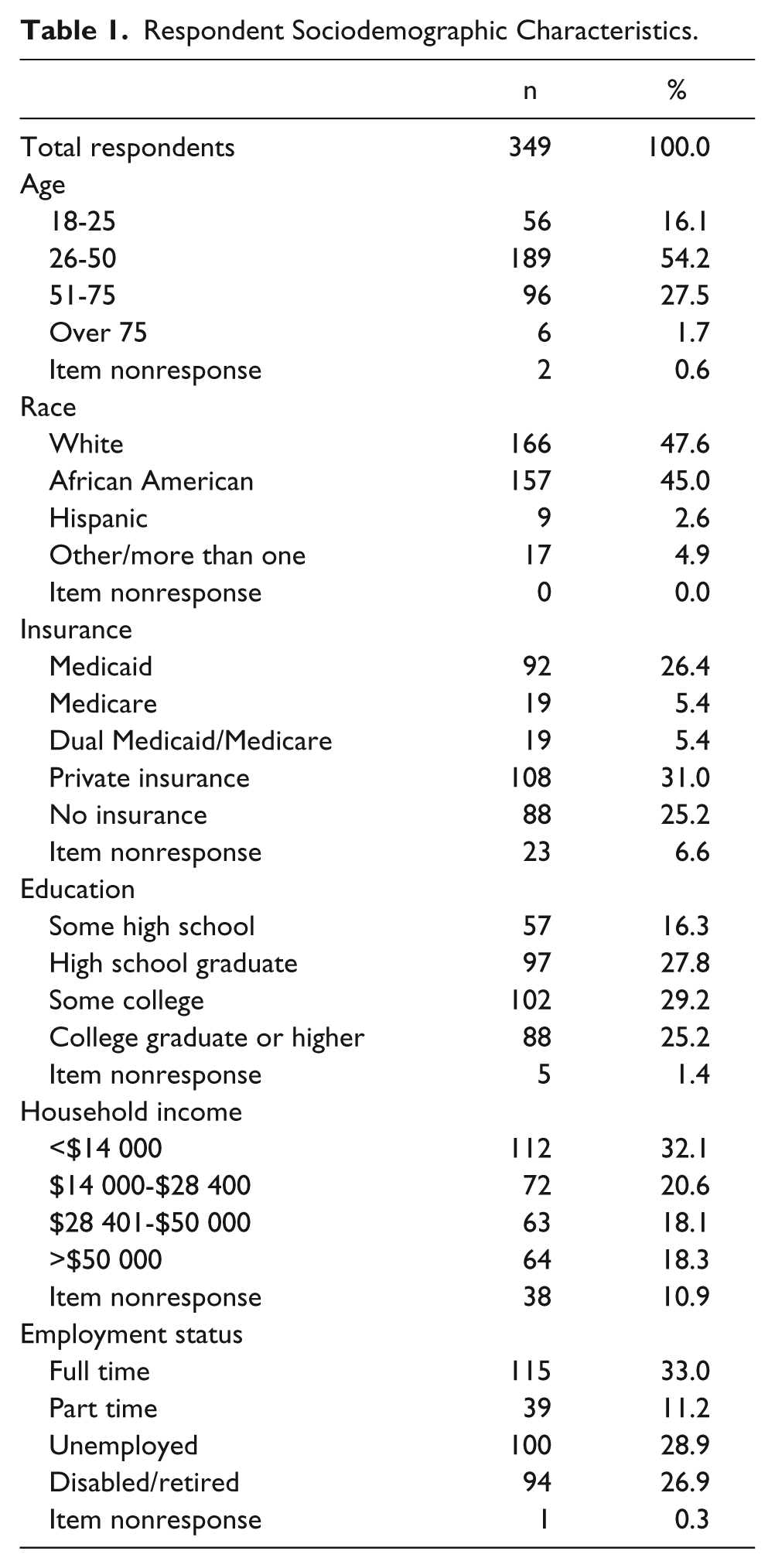
Table 2 presents the categories and subcategories identified by the analysis process. The most frequently mentioned categories were individual characteristics and primary care infrastructure. Six subcategories emerged within the individual characteristics, with the most frequent being no insurance and income, financial, cost. There also were 6 subcategories under primary care infrastructure; the most frequent were waiting time (in clinic/for an appointment) and conventional business hours. Fewer than 10% of patients across insurance types reported ED infrastructure/organization, primary care dissatisfaction, or ED satisfaction categories. During qualitative coding, the research team also found evidence of a sixth emergent category—respondent stated “no barriers.”
Percentage Reporting 3 Categories and Subcategories of Barriers to Accessing Primary Care. a

The categories of ED Infrastructure, Primary Care Dissatisfaction, and ED Satisfaction were reported by less than 10% of the sample.
Table 3 presents the percentage of respondents who reported the 3 most common access barrier categories by insurance status. The overwhelming majority of the uninsured reported individual characteristics as barriers, compared to approximately one third or fewer of the publicly and privately insured respondents. In contrast, primary care infrastructure barriers were reported by only about 14% of the uninsured compared with nearly half of those insured by Medicaid and approximately 60% of those with private insurance. Among the Medicaid and privately insured populations, waiting time (in clinic and for an appointment) was the most frequently reported barrier. Constraints related to conventional business hours and difficulty finding a primary care provider (because of geography or lack of new patient openings) also were frequently reported barriers. Nearly 1 in 5 respondents with private insurance stated they faced no barriers accessing primary care, and 10% to 15% of those with public insurance similarly reported having no barriers. Only about 1% of the uninsured made that statement.
Percentage of Respondents Who Reported Barriers, by Insurance Status (N = 349).

Discussion
Among a sample of 349 nonurgent ED patients reporting barriers to receiving health care in a primary care office, there was considerable variability by insurance status. Although uninsured patients reported barriers associated with individual characteristics such as insurance, income, and transportation, privately insured patients predominantly reported primary care infrastructure barriers, including waiting times and the constraints associated with conventional business hours in primary care settings. Half of those respondents with Medicaid and/or Medicare insurance coverage also reported infrastructure barriers.
Variation in Barriers to Accessing Primary Care
Past research exploring access to primary care and nonurgent ED use has either focused on the Medicaid and uninsured populations9,10,14,15 or failed to stratify by insurance status.1,8 The finding in this study that among a large sample of nonurgent ED users the insured and uninsured report different barriers to primary care adds an important dimension to this body of research. This finding is consistent with results from a prior small-scale (N = 31) qualitative study of privately insured nonurgent ED users. 16 In addition, Kangovi et al 15 recently published a small-scale interview study of low-income uninsured and Medicaid ED users reporting both individual-level and infrastructure barriers. However, the results of the present study indicate the potential for Kangovi et al’s findings to vary by insurance status. It is imperative that future studies, both qualitative and large-scale surveys, analyze variation in reported barriers by insurance status.
Interesting among the results of the present study was the finding that 1 in 4 insured respondents stated they did not face any barriers to receiving health care in a primary care office, yet they were still visiting the ED for concerns that could be addressed in a primary care setting. These respondents may face barriers they are not aware of and cannot articulate, or they indeed face no barriers but have a preference for receiving primary care through the ED. Either way, the prominence of this response category among the privately insured population is a unique finding that warrants further exploration.
Implications for Programs to Reduce Nonurgent ED Visits
Programs to reduce nonurgent ED visits have shown modest positive results by focusing on scheduling follow-up appointments for ED patients who do not have a usual source of care—typically patients covered by Medicaid or who are uninsured.17-21 The findings of the present study suggest that programs to reduce nonurgent ED visits should include privately insured patients, and perhaps even those who report a usual source of care. Ideal interventions in the ED would be designed to ascertain individual patient barriers (eg, based on a questionnaire informed by the list of barriers presented in Table 2), and then tailor the intervention accordingly. In practice, programs that already provide individual attention from a care coordinator or health promotion advocate may be well positioned to implement this type of tailored intervention.
Potential Health Policy Solutions
Interventions focused on individual patients will have little impact on the primary care infrastructure problems highlighted by the present study. Large-scale policy solutions are necessary to reduce nonurgent ED use. However, current policies aimed at expanding access to a usual source of care, a factor strongly associated with fewer nonurgent ED visits, 22 can have unintended negative consequences for insured Americans who face primary care infrastructure access barriers. For example, the 2010 Affordable Care Act that implemented universal insurance coverage 23 will place further strain on the primary care infrastructure, thereby increasing access barriers among insured patients and further stressing EDs.
To alleviate the strain on the primary care infrastructure and significantly reduce the volume of nonurgent ED visits, the results of the present study support the need for a concurrent policy focus on the structure of primary care services. Solutions proposed to strengthen the primary care infrastructure include increasing the numbers of primary care physicians in the United States (eg, family physicians, general internists) and enhancing the precepts of team-based care in which other licensed providers such as nurse practitioners and physician assistants provide primary care services.9,24,25 Expansion of hours and locations of community primary care providers, including urgent care centers and retail clinics,26-28 also would increase access; however, it should be recognized that the potential positive impacts of these approaches may be offset because of fragmentation of services and the lack of “full service” primary care delivered at many locations of this nature. Colocating primary care providers within EDs also has been suggested 29 and may have promise. Looking ahead, addressing these elements of access to care will be crucial to efforts to reduce barriers to primary care among privately insured individuals who indeed constitute a large proportion of nonurgent ED users.
Limitations
One limitation of this study is the potential for nonresponse bias by insurance status. Given the anonymous nature of the survey, it was not possible to collect insurance and other personal information for nonrespondents. Furthermore, it appears that the privately insured had a higher response rate than other insurance groups, as evidenced by the higher than expected percentage of privately insured respondents. Nationally, a higher proportion of Medicaid patients use the ED than privately insured patients. 6 However, the privately insured are just as likely as those on Medicaid and the uninsured to be triaged as having nonurgent care needs. Overrepresentation of insured patients in this study sample has allowed for deeper study of this typically neglected subgroup of nonurgent ED users.
The location of this study in a single Midwestern large metropolitan area is another limitation to the generalizability of these findings. It is possible that the organization of the health care system at the study site is unique to this geographic region resulting in a higher proportion of infrastructure barriers. The barriers also may differ in rural settings as opposed to the urban settings that were the focus of the present study. Replication and expansion of this descriptive study in a variety of geographic service areas is necessary to further explore the variations by insurance status identified here.
Conclusion
Shifting nonurgent ED visits to community primary care settings will not only generate cost savings3,28,30 but is a necessary step toward improving patient quality of care by increasing continuity of care and care coordination. 31 To achieve these goals, however, health care stakeholders must recognize that barriers to accessing primary care vary by insurance status. Interventions focused on inappropriate ED use should recognize and address the barriers faced by privately insured patients. Additionally, targeted policy efforts to enhance the primary care infrastructure can reduce care access barriers, thereby alleviating strain on EDs caused by patients with nonurgent needs, and thereby make strides toward improving population health.
Footnotes
Acknowledgements
The authors are extremely grateful to the patients who participated in this study, and to the hospital emergency departments that enabled access to these patients. We also thank our research assistant, Daniel Gaines, BA, who was affiliated with The Ohio State University, Department of Family Medicine, during the study.
Declaration of Conflicting Interests
The authors declared no conflicts of interest with respect to the research, authorship, and/or publication of this article.
Funding
The authors received no financial support for the research, authorship, and/or publication of this article.