







Abstract
To the best of our knowledge, there is no method in the literature for solving such differential equations in which all the parameters except independent variables are represented by intuitionistic fuzzy numbers. In this article, a new method is proposed for solving such nth-order time-dependent intuitionistic fuzzy linear differential equations. To show the application of the proposed method in real-life problems, the time-dependent intuitionistic fuzzy Kolmogorov’s differential equations, obtained by Markov model of condensate system, are solved by the proposed method, and the obtained solution is used to analyze the intuitionistic fuzzy reliability of condensate system.
Keywords
Introduction
In real-life situations, usually experts are not able to estimate the exact number of failures and repairs of components of industrial systems with respect to time. Therefore, fuzzy set theory (Zadeh, 1965) is used to evaluate the fuzzy reliability of industrial system. However, in some situations, there may be hesitation about the number of failures or repairs. The fuzzy set considers only the degree of belongingness and degree of nonbelongingness. Fuzzy set theory does not incorporate the hesitation degree. To handle such situations, Atanassov (1986) extended the concept of fuzzy set theory by intuitionistic fuzzy set (IFS) theory.
The IFS is being studied and used in different fields of science. Since, in the IFS proposed by Atanassov (1986), all the elements of IFS are independent from time. So, it cannot be used to represent parameters that depend upon time, for example, the reliability of industrial systems depends upon time, which cannot be represented by IFS proposed by Atanassov (1986). To handle such situations, Kumar et al. (2011) extended the concept of time-dependent fuzzy set (Aliev and Kara, 2004) by time-dependent IFS.
Since then, for analyzing the intuitionistic fuzzy reliability (IFR) by using Markov model, there is a need to solve time-dependent intuitionistic fuzzy Kolmogorov’s differential equations (IFKDEs), but till now, there is no method in the literature for solving time-dependent intuitionistic fuzzy differential equations (IFDEs). So, several authors (Cheng et al., 2009; Mahapatra and Mahapatra, 2010; Mahapatra and Roy, 2009; Manjit Verma et al., 2012; Shu et al., 2006) have extended the concept of fuzzy fault tree by intuitionistic fuzzy fault tree, but till now, no one has extended the concept of fuzzy Markov model by time-dependent intuitionistic fuzzy Markov model for analyzing the IFR of industrial systems.
In this article, a new method is proposed for solving nth-order time-dependent intuitionistic fuzzy linear differential equations. To show the application of the proposed method in real-life problems, the time-dependent IFKDEs, obtained by Markov model of condensate system, are solved by the proposed method, and the obtained solution is used to analyze the IFR of condensate system.
This article is organized as follows. In section “Preliminaries,” some basic definitions and arithmetic operations between time-dependent trapezoidal intuitionistic fuzzy numbers (TrIFNs) are presented. In section “Proposed method for solving time-dependent IFDEs,” a new method is proposed for solving time-dependent IFDEs. In section “Case study,” to show the application of the proposed method in real-life problems, the time-dependent IFKDEs, obtained by using time-dependent intuitionistic fuzzy Markov model of condensate system, are solved by using the proposed method. The conclusion is discussed in section “Conclusion.”
Preliminaries
In this section, some basic definitions and arithmetic operations between time-dependent TrIFNs are presented (Kumar et al., 2011; Mahapatra and Mahapatra, 2010; Mahapatra and Roy, 2009).
Basic definitions
In this section, some basic definitions are presented (Kumar et al., 2011).
Definition 1
Let

where
Definition 2
A time-dependent IFS
Membership function

Nonmembership function

Definition 3
A time-dependent intuitionistic fuzzy subset
Supremum
Definition 4
A time-dependent IFN
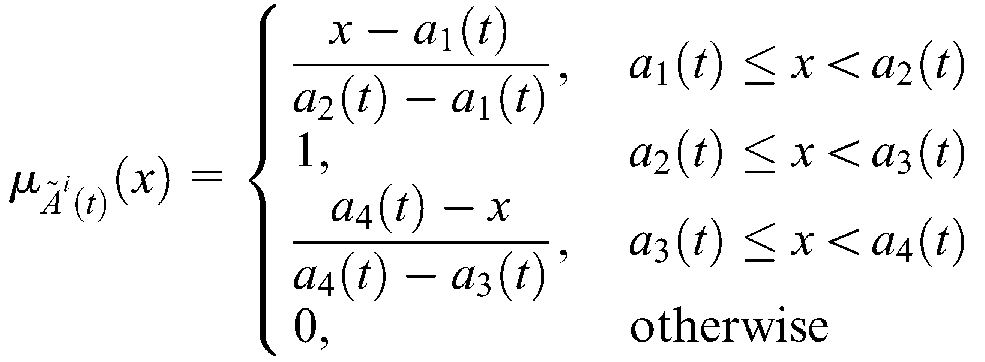
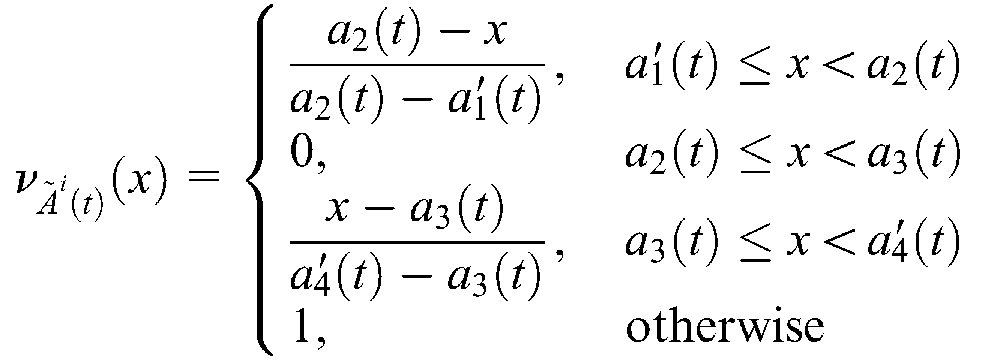
where
Definition 5
Two time-dependent TrIFNs
Arithmetic operations between time-dependent TrIFNs
In this section, some arithmetic operations between time-dependent TrIFNs, defined on a universal set of real numbers
Let
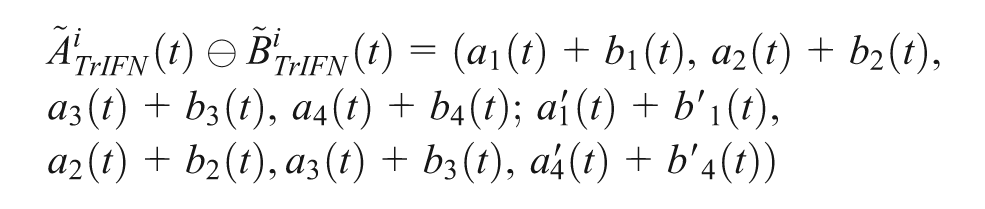
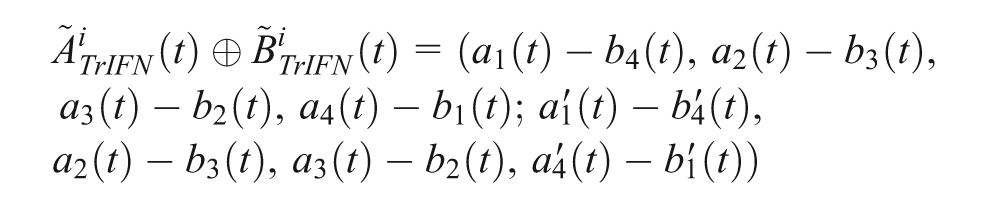


where


and

Proposed method for solving time-dependent IFDEs
In this section, a new method is proposed for solving nth-order time-dependent intuitionistic fuzzy linear differential equation with initial conditions.
Any nth-order time-dependent intuitionistic fuzzy linear differential equation with initial conditions can be written as

where

and
The solution of equation (1) can be obtained as follows:
Step 1. Assuming

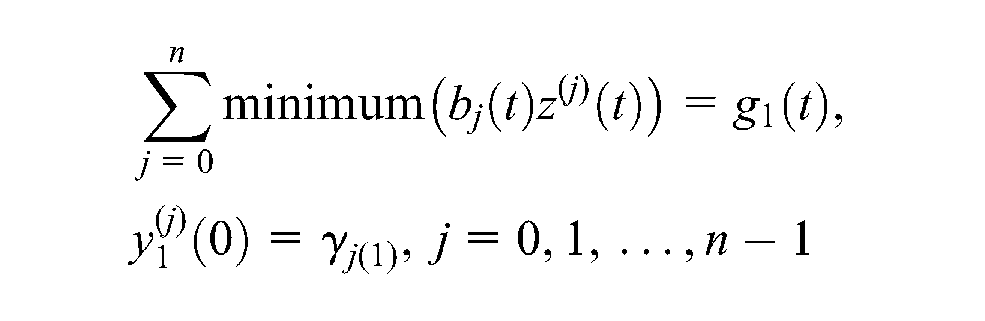
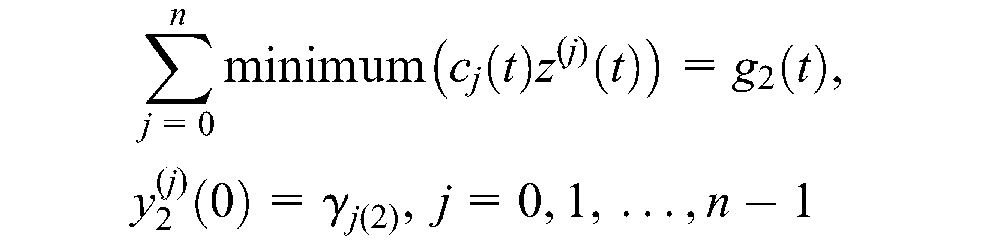
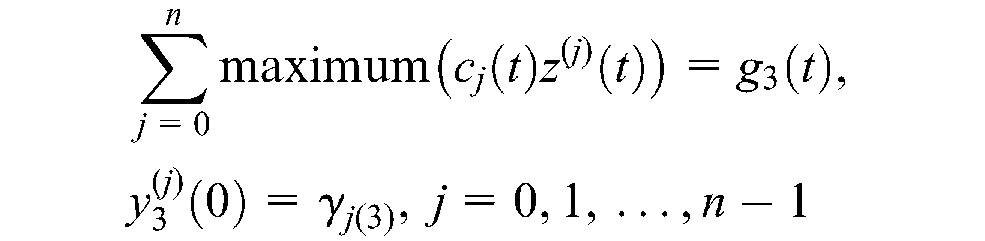
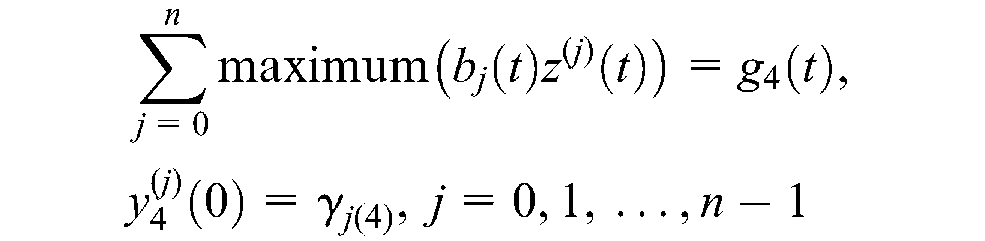
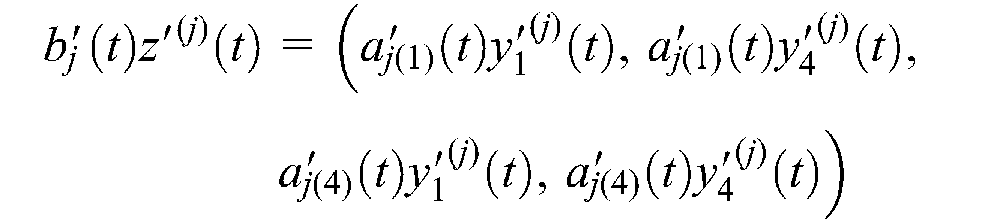
Step 2. Using Definition 5 and section “Arithmetic operations between time-dependent TrIFNs,” the time-dependent IFDE equation (2) can be transformed into following ordinary differential equations
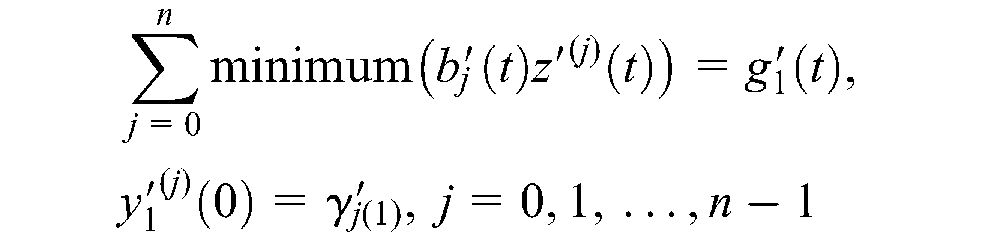
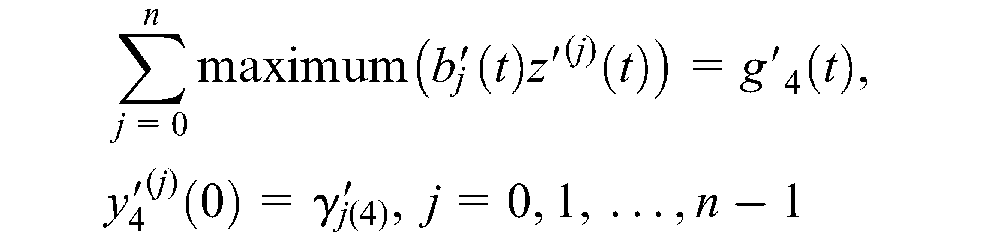
where
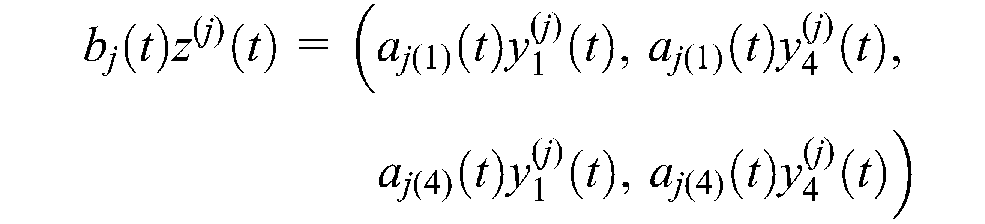
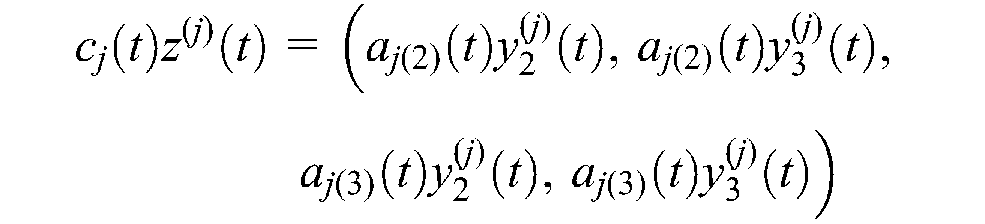
Step 3. Solve the ordinary differential equations, obtained in Step 2, to find the values of
Step 4. Put the values of
Case study
The condensate system helps the power plants to function efficiently and keeps them in continuous operation for optimal performance. The condensate system consists of six subsystems, namely,
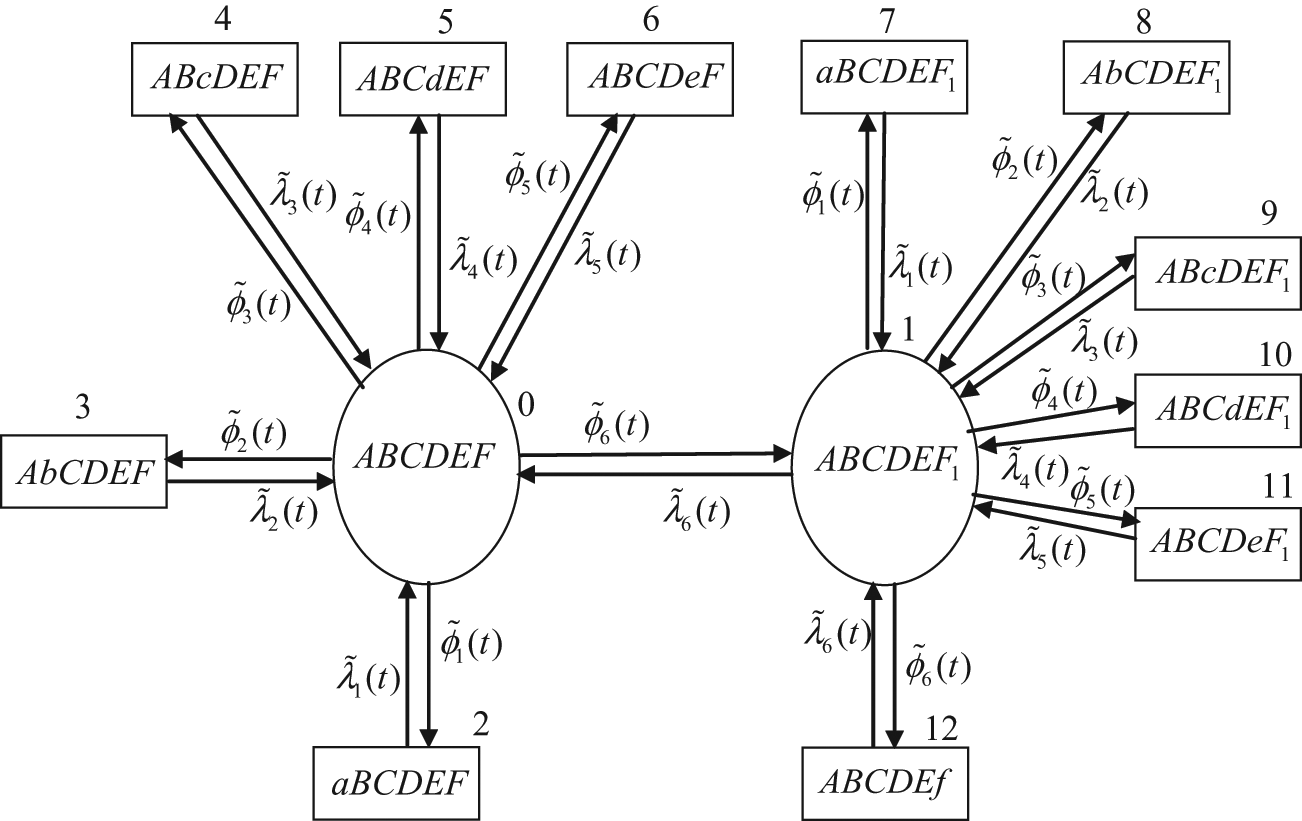
Time-dependent intuitionistic fuzzy Markov model of condensate system.
Subsystem
Subsystem
Subsystem
Subsystem
Subsystem
Subsystem
Notation
In this section, notation that is used for analyzing the IFR of condensate system is presented.
Data
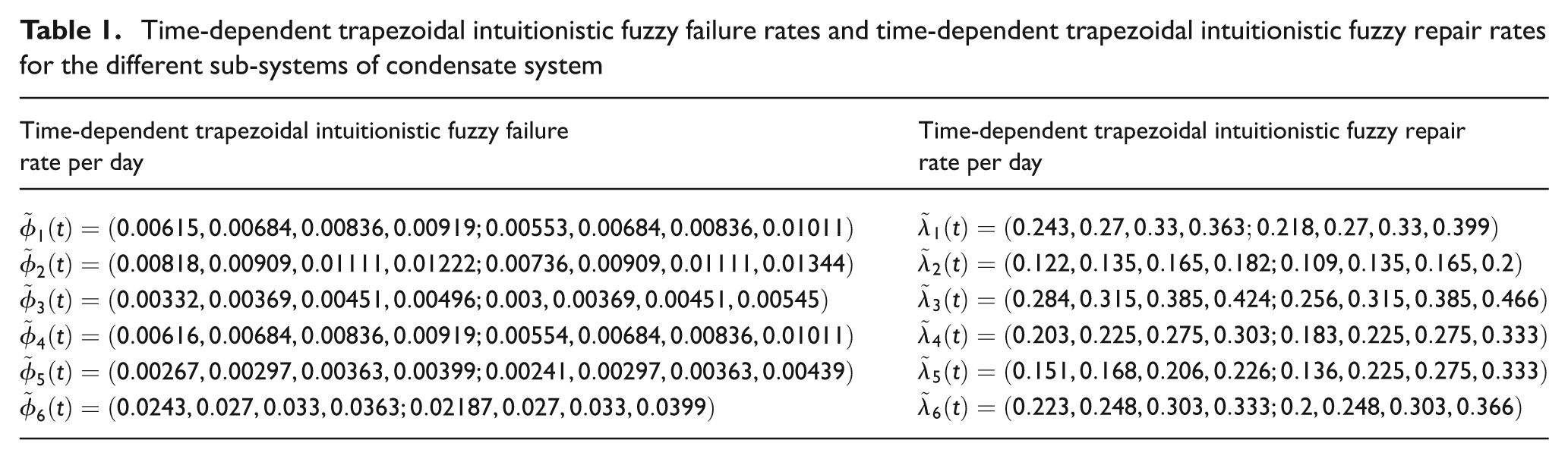
The time-dependent trapezoidal intuitionistic fuzzy failure rates and time-dependent trapezoidal intuitionistic fuzzy repair rates that are assumed for analyzing the IFR of condensate system are shown in Table 1.
Time-dependent trapezoidal intuitionistic fuzzy failure rates and time-dependent trapezoidal intuitionistic fuzzy repair rates for the different sub-systems of condensate system
Time-dependent IFKDEs for the condensate system
In this section, time-dependent IFKDEs are developed by using time-dependent intuitionistic fuzzy Markov model of condensate system. Time-dependent IFKDEs for the condensate system, developed by using intuitionistic fuzzy Markov model, are given as follows

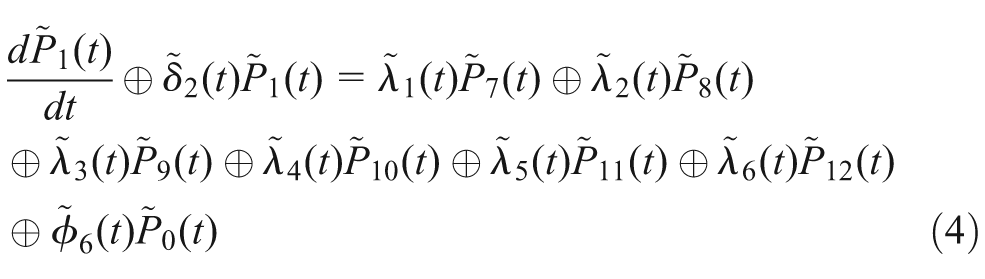


where


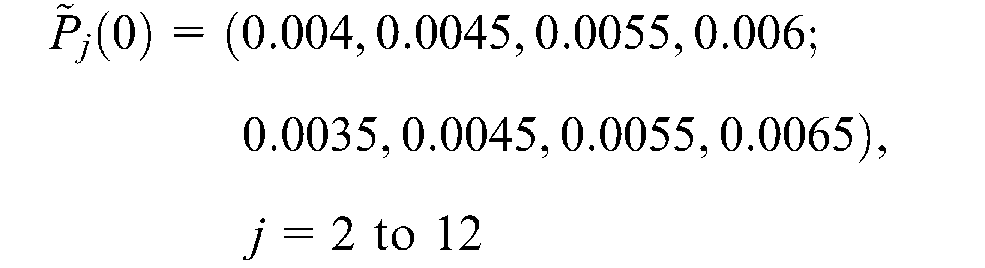
with time-dependent intuitionistic fuzzy initial conditions


and
Solution of time-dependent IFKDEs for the condensate system
Since, there is no method in the literature that can be used for solving time-dependent IFKDEs for the condensate system, developed in section “Time-dependent IFKDEs for the condensate system,” So, the proposed method is used to find the solution of these equations. The results obtained by using the proposed method at = 12 days, = 24 days, = 36 days and = 48 days is shown in Table 2.
Solution of time-dependent IFKDEs for the condensate system obtained by using proposed method
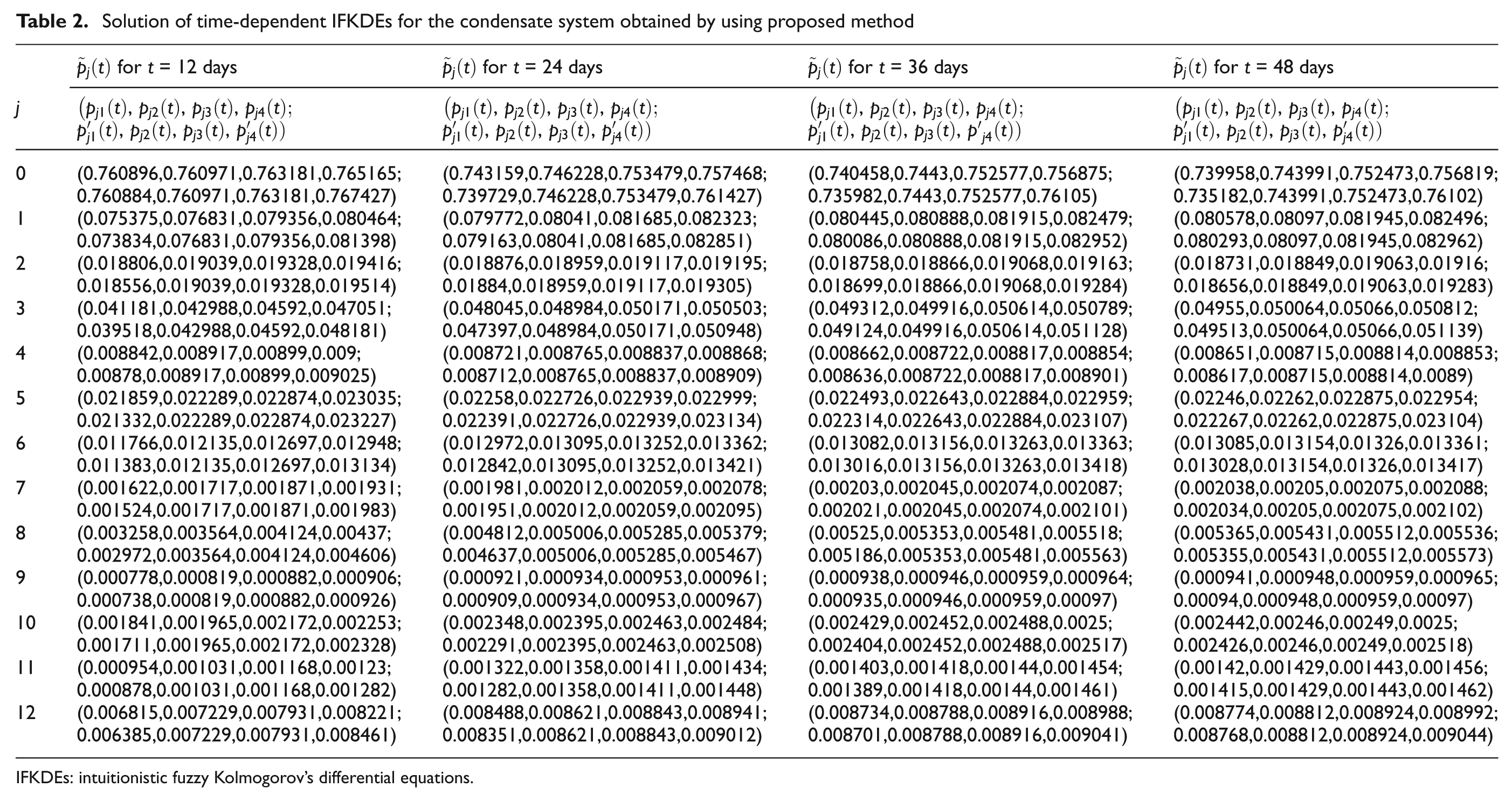
IFKDEs: intuitionistic fuzzy Kolmogorov’s differential equations.
IFR evaluation of condensate system
In this section, the results of time-dependent IFKDEs, shown in Table 2, are used to analyze the IFR of condensate system. Using the time-dependent intuitionistic fuzzy probabilities for the subsystems of condensate system, shown in Table 2, IFR
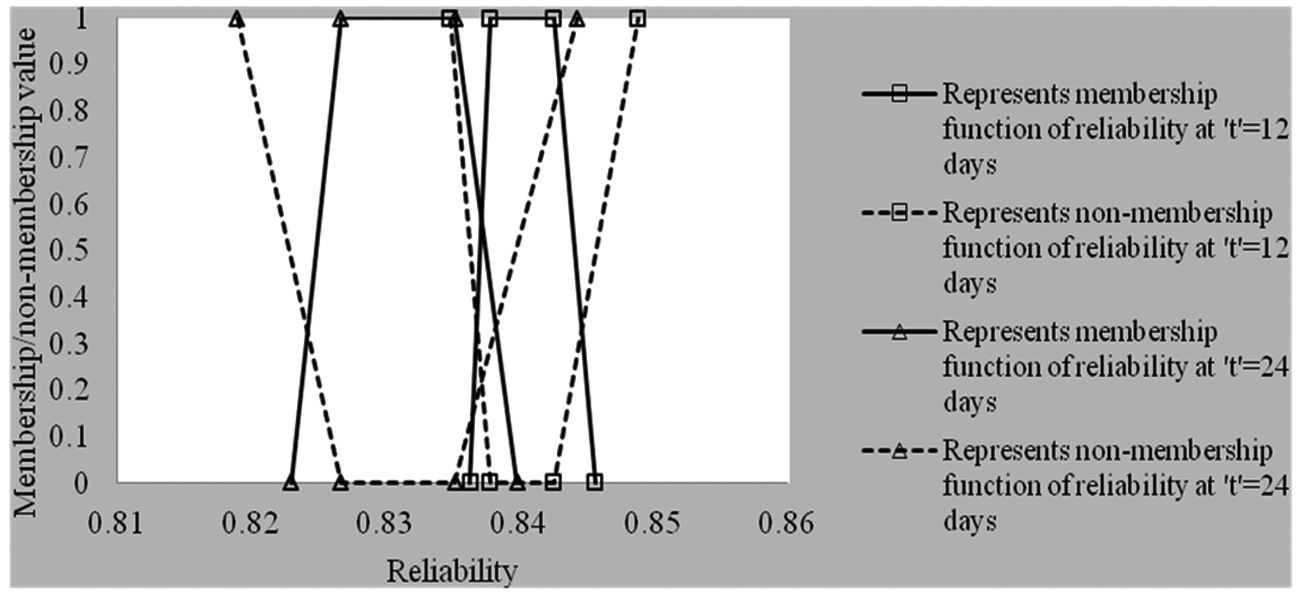
TrIFN representing IFR of condensate system.
Also, the variation in reliability of condensate system with time is shown in Figure 3.
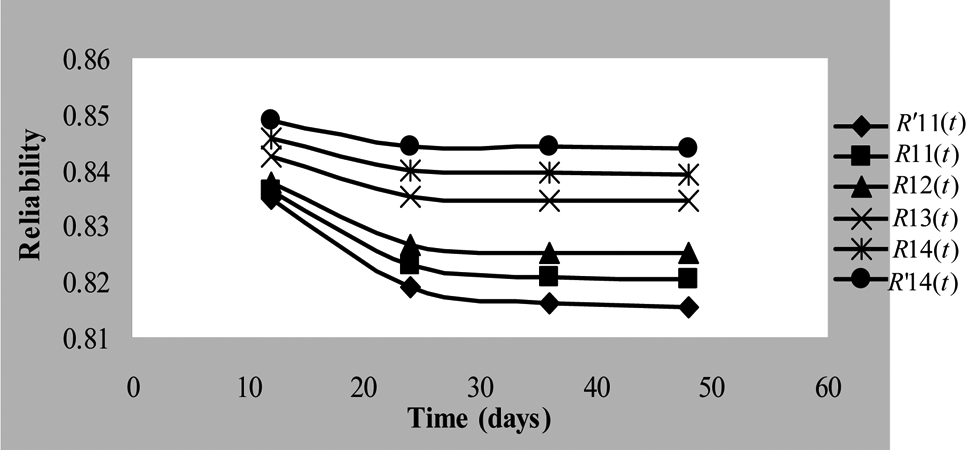
Variation in reliability of condensate system with respect to time.
Conclusion
A new method is proposed for solving time-dependent IFDEs. To illustrate the proposed method, time-dependent IFKDEs, obtained by using time-dependent intuitionistic fuzzy Markov model of condensate system, are solved and the obtained solution is used to evaluate the IFR of condensate system. The proposed method cannot be used for solving nonlinear IFDEs. So, in future, it may be tried to modify the proposed method for the same.
Footnotes
Acknowledgements
The authors would like to thank the Editor-in-Chief “Biren Prasad” and anonymous referees for various suggestions that have led to an improvement in both the quality and clarity of the article. Dr Amit Kumar would also like to acknowledge the adolescent inner blessings of Mehar. Amit Kumar believes that Mehar is an angel for him and without Mehar’s blessing it was not possible to think the idea proposed in this article. Mehar is the lovely daughter of Parmpreet Kaur (Research Scholar under his supervision).
Funding
This research received no specific grant from any funding agency in the public, commercial, or not-for-profit sectors.