







Abstract
Structural topology optimization provides an effective computational approach for determining optimal material distributions that achieve lightweight and high-performance structures. In this study, the Solid Isotropic Material with Penalization (SIMP) method is employed to investigate and compare single-material and multi-material topology optimization for interconnected automotive structural components. Three material configurations—steel, aluminum, and a steel–aluminum hybrid—are evaluated through numerical simulations. A simplified truck chassis model was used to demonstrate the proposed method. The results show that the proposed multi-material design significantly improves weight reduction and material cost efficiency. The SIMP formulation drives all designs toward a comparable level of material efficiency, with mass reductions exceeding 95% in each case of different materials of the truck chassis model. These findings demonstrate the effectiveness of multi-material topology optimization for developing lightweight automotive structures and provide design insights for next-generation vehicle body systems.
Keywords
Introduction
In contrast to single-material structures, multi-material structures can more effectively utilize materials with diverse qualities to collaboratively support structural loads and fulfil varied design specifications. Furthermore, multi-material structures can offer a wider variety of lightweight design concepts and further improve the structure’s level of lightweightness. Specifically, the advantages of additive manufacturing technology have made it easier and more affordable to create multi-material structures. Multi-material structural design has therefore garnered a lot of interest and become the most optimal conceptual design that satisfies structural specifications (Arabi and Kordani, 2023; Han and Lee, 2020; Wan et al., 2024; Wang et al., 2022). For instance, Michell (1904) pioneered the research on layout optimization of truss structures; he derived exact solutions by analytical methods for some simple problems constrained by limit stresses. His research is recognized by scientists and the structural optimization community today as a first achievement in the field of topology optimization (Rozvany et al., 2014). Another important study on structural optimization by Foulkes (1954), Cox (1965), and Hemp (1958) was investigated. They considered the golden age and an important milestone in the development of the field of topology optimization. In addition, Barta (1957) studied volumetric optimization design for plane and space structures. The results have proven the important theorem, as by removing several properly selected redundant bars from the connections, it is possible to create a new structure that can withstand the same load as the original structure and at the same time create a structure with the smallest specific weight.
Nowadays, structural optimization methods are receiving special attention from design engineers from all over the world because of the benefits that this design support solution brings, such as saving time, cost, supplementing design experience and helping to achieve the best designs. There are many structural optimization methods, including size optimization, shape optimization and topology optimization. In which, topology optimization is a method that includes simultaneous optimization of size, shape, and structural connections and is considered one of the most difficult areas in structural optimization (Olason and Tidman, 2010; Meng et al., 2025a, 2025b).
Berke and Khot (1974) established the mathematical basis for applying numerical techniques to structural optimization, and later Rossow and Taylor (1973) introduced the first finite element-based numerical procedure for topology optimization. Numerical methods subsequently developed rapidly, as evidenced by the important contributions of Bendsøe and Kikuchi (1988) and Rozvany (1989). The development of these computational methods played a key role in transforming structural optimization from a conceptual framework into a practical engineering tool, thus accelerating progress in the field and enabling early industrial adoption (Coverstone-Carroll, 2000; Kesseler, 2006; Wang et al., 2004). Notably, Airbus used structural optimization during the development of the A380, achieving a mass reduction of more than 40% in a large side panel assembly (Krog et al., 2002). Wu et al. (2021) reviewed the evolution of multiscale topology optimization from its origins to current methods. The methods fall into two groups: full-scale methods, which explicitly model structural details at small scales using iterative constraints or local volumes but are computationally expensive; and multiscale methods, which accelerate the analysis through analytical or numerical homogenization, assuming a clear separation between length scales—an assumption that can cause compatibility and accuracy problems. They categorized existing methods and provided several recommendations as follows: (1) Since optimized microstructures often violate the assumed scale separation, homogenization predictions may not accurately reflect actual behavior; therefore, full-scale analysis should be used for verification, (2) Multiple microstructural parameterizations aimed at connecting full-scale and homogenized models may limit design freedom, so performance should be compared with conventional single-scale optimization under similar computational budget conditions, (3) Although multi-scale structures offer potential advantages in terms of light weight, strength, and multifunctionality, their claimed benefits must be validated through rigorous numerical and/or experimental testing.
There are two main types of structural optimization: single-material structures and multi-material structures. Single-material structural optimization is a popular approach in lightweight structural design, bringing many advantages such as simple design and production; however, single-material structures show low weight reduction efficiency in some complex structures. On the other hand, a single-material design cannot simultaneously meet the performance criteria in all working conditions. Optimization of multi-material structures involves optimizing the distribution of two or more materials in a design space. Compared with single-material structures, multi-material structures can achieve higher performance, multi-functionality, and optimal cost and weight (Gu et al., 2021). In addition, thanks to recent advances in various technologies (SL printing, light processing, laser technology, material technology, etc.), additive manufacturing (AM) technology is gradually shifting from prototype production to final product production (Rafiee et al., 2020; Thompson, 2016), which is the basis for ensuring mass production of multi-material structures in modern industry. Therefore, multi-material structures now have great potential to become the main structural form in modern industries such as aviation, aerospace, and automobile manufacturing. In addition, the optimization of multi-material bonded structures applied in AM manufacturing also results in reducing the carbon footprint of the overall manufacturing process due to the maximum saving of materials (Jiang et al., 2017).
There are several algorithms used in the optimization of different bonded structures that can be used in AM manufacturing. Among them, the SIMP (Solid Isotropic Material with Penalization) algorithm uses the finite element method and is one of the most commonly used algorithms (Bendsøe and Sigmund, 1999). In addition, the SIMP algorithm is also the main technical solution implemented in famous computer-aided engineering (CAE) optimization software such as Optistruct, Tosca, and Nastran (Hu et al., 2022). The artificial densities of the elements in SIMP are design variables (Damtsas et al., 2025; Wang et al., 2025). The material properties of these elements are described as material interpolation functions, reducing the intermediate properties, often through the use of power functions. The prior methods for optimizing multi-material topology can be divided into four categories: level set-based, phase field-based, homogenization/SIMP-based, and combinatorial optimization-based. The majority of these methods increase the computational cost by introducing extra design variables to handle the numerous materials (Cui et al., 2021, 2022; Wan et al., 2024).
Optimization design has become a key approach for improving the stiffness-to-weight efficiency of automobile frame structures while satisfying structural strength and manufacturability constraints. Recent studies have explored various topology-based optimization methods to support lightweight frame design. For instance, a hierarchical optimization framework combining multi-material topology optimization and cross-sectional size optimization was proposed to determine optimal load paths and member dimensions for vehicle frames, enabling significant weight reduction without compromising stiffness (Lu et al., 2019). Firstly, the multi-material topology optimization was employed to identify the optimal load paths and material distribution within the frame under stiffness constraints. Subsequently, the cross-sectional size optimization is conducted to refine the dimensions of the beam members and further reduce structural mass while satisfying stress and manufacturing requirements. The results demonstrate that the integrated topology–size optimization framework can significantly improve the stiffness-to-weight efficiency of the frame structure. This approach provides an effective design methodology for lightweight automotive frames, particularly during the conceptual and preliminary design stages. Furthermore, advanced topology optimization techniques, such as multi-material interpolation schemes and the moving morphable component (MMC) method, have been developed to simultaneously optimize structural layout and material distribution, thereby enhancing structural efficiency. For instance, Zuo and Saitou (2017) proposed a multi-material topology optimization approach using ordered SIMP interpolation to design structures composed of multiple candidate materials. The method introduces an ordered interpolation scheme within the SIMP framework to ensure physically meaningful material distribution and avoid numerical instabilities during optimization. This formulation enables the optimizer to simultaneously determine optimal material selection and structural topology under stiffness and volume constraints. Numerical examples demonstrate that the proposed approach can significantly improve stiffness-to-weight efficiency compared with single-material designs while maintaining computational stability. Such multi-material topology optimization provides an effective theoretical basis for the lightweight design and material distribution optimization of automotive frame and chassis structures. Bai and Zuo (2020) proposed a topology optimization framework for designing lightweight hollow structures using the moving morphable component (MMC) method. The method explicitly represents structural components as geometric entities, allowing the optimization process to directly control structural boundaries and internal cavities. This formulation improves computational efficiency and produces manufacturable hollow structural layouts compared with conventional density-based topology optimization approaches. The results demonstrate that the MMC-based strategy can effectively generate lightweight structures with improved stiffness-to-weight performance while maintaining structural integrity. Such an explicit topology optimization approach provides useful theoretical support for the conceptual design and lightweight optimization of automotive frame and chassis structures.
In addition to topology optimization, several studies have investigated the optimization and crashworthiness of thin-walled structural members that are widely used in automotive frames. For instance, the crash performance and bending collapse behaviour of thin-walled tubes have been analyzed to provide design guidance for conceptual vehicle structures (Bai et al., 2019), while cross-sectional shape optimization methods considering manufacturing constraints have been developed to improve the crashworthiness of thin-walled beams (Bai et al., 2017). Recent efforts have focused on bridging topology optimization results with practical thin-walled frame structures, providing a systematic pathway to translate optimal continuum layouts into manufacturable frame configurations applicable to automotive chassis design and fabrication. For instance, Bai et al. (2021) developed a design framework that interprets topology-optimized continuum layouts and converts them into manufacturable beam- or frame-based structures while preserving the optimal load paths. The approach incorporates geometric simplification and manufacturability constraints to ensure that the resulting frame structures can be realistically produced using conventional fabrication methods. Numerical case studies demonstrate that the converted thin-walled frame designs maintain comparable structural stiffness and efficiency to the original topology-optimized models. This work provides important guidance for the lightweight design of automotive frame structures by bridging the gap between theoretical topology optimization results and practical frame-type structural configurations used in vehicle chassis design. Li et al. (2023) proposed a multi-material structural optimization framework for designing the simultaneous layout of lattice and reinforcing elements in thin-walled structures, where lattice unit cells are homogenized as equivalent materials and optimized in conjunction with solid stiffeners. This approach allows for the automatic determination of optimal load-carrying paths while satisfying global mass constraints, thereby improving stiffness-to-weight performance. The results show that optimizing the combination of lattice layout and reinforcing elements can significantly enhance the structural efficiency of thin-walled systems, providing useful insights for the lightweight design of engineering structures such as aerospace panels and vehicle body components.
In this study, the SIMP algorithm was used to optimize the structural connection configuration using both single-material and multi-material models subject to minimum strength and mass constraints. The resulting optimal connection structures were evaluated and compared to determine the most efficient structural solution. In addition to its methodological contributions, this work provides a foundational framework for future research on interconnected and multi-material structures in the domestic research landscape. With the rapid shift toward lightweight, high-performance vehicle architectures, these findings are timely and relevant to advanced automotive material design, where multi-material integration, such as steel-Aluminum hybrid joints and composite-metal interfaces, is becoming essential for next-generation mobility. As the automotive industry increasingly prioritizes structural efficiency, crashworthiness, and emissions reduction, the optimization strategies presented here are expected to support potential advanced automotive applications, including the monocoque body design, battery pack optimization for electric vehicles, and lightweight chassis systems.
Methodologies
General problems in optimal design associated with linear elastic structures
A general shape design problem using the material distribution domain finding method is described as shown in Figure 1: Design problem to find a general material distribution and connection.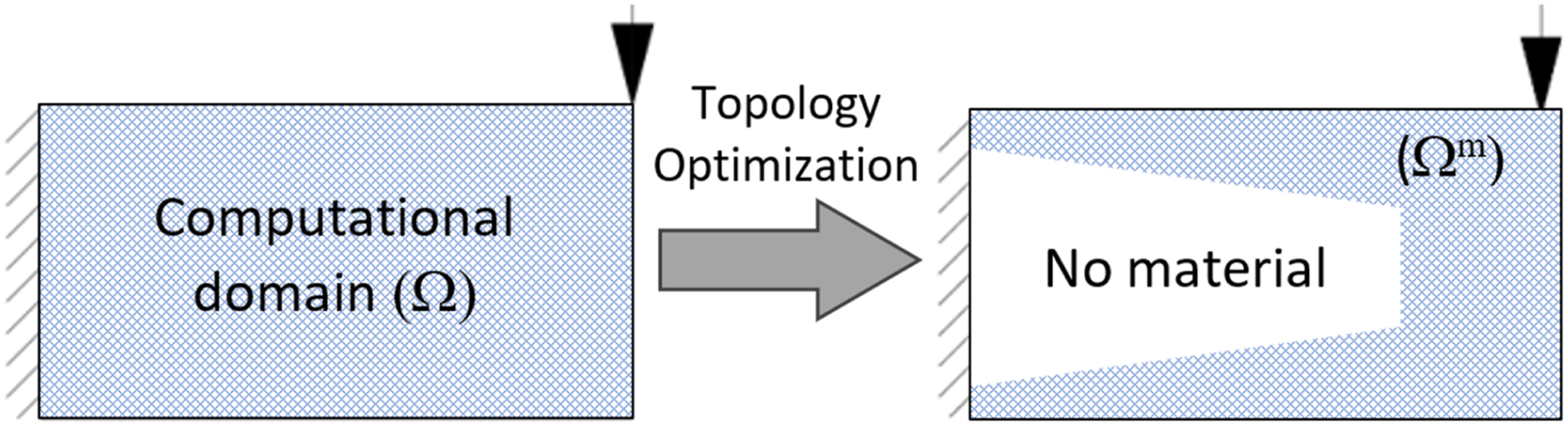
Considering a problem of designing the optimal structural shape is to minimize the force multiplied by the displacement (Bendsøe and Sigmund, 1999):

The equation (1) satisfies the conditions:


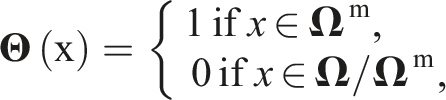


SIMP model
With the SIMP interpolation model, a continuous variable ρ, 0 ≤ ρ ≤ 1, such as the density of the material, then the actual volume of the structure is evaluated (Lo wen, 2016):

In the calculation, a lower bound 0 < ρmin < ρ is usually imposed. The relationship between the density and the material stiffness tensor

In which the material is assumed to be isotropic, i.e.,

Results and discussion
Research model
A structural domain Research model.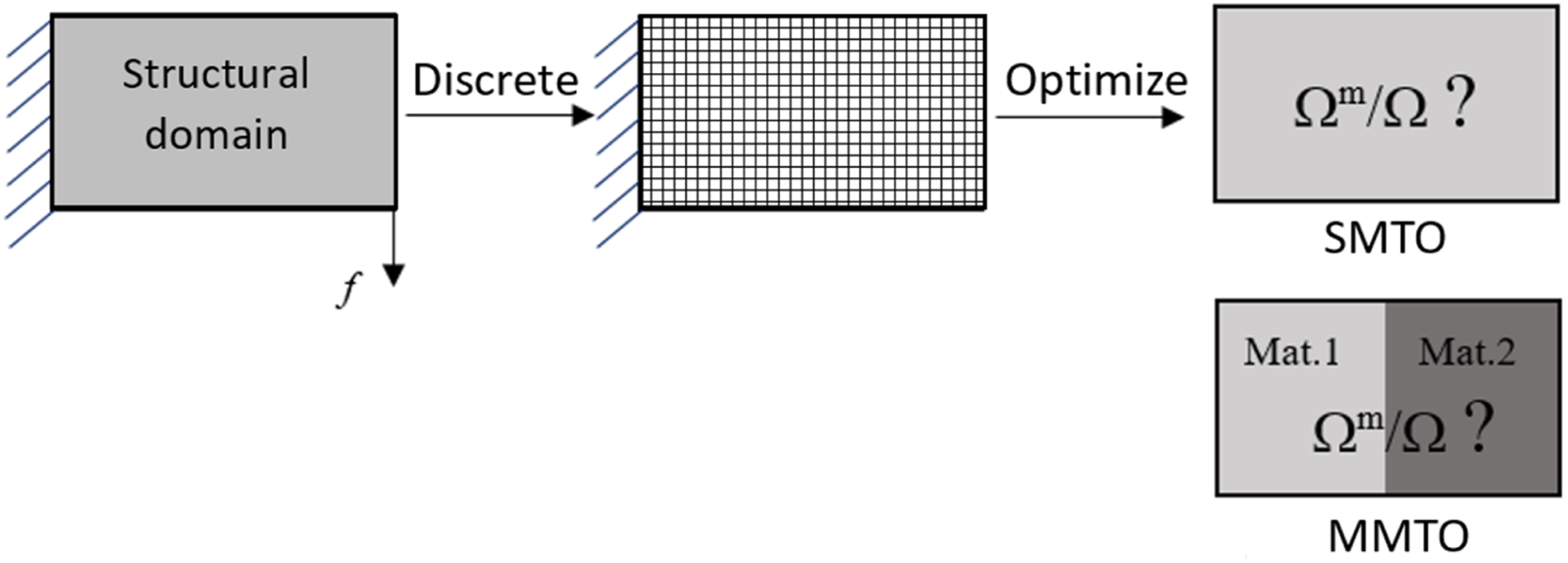
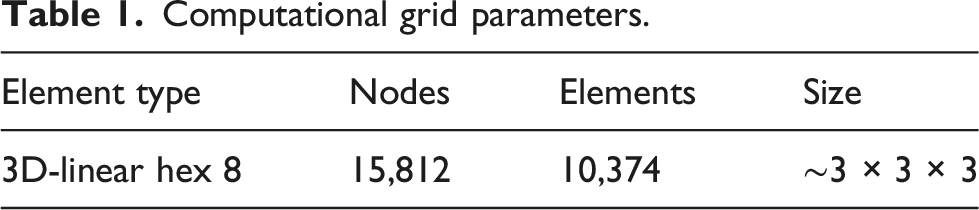
Computational grid parameters.
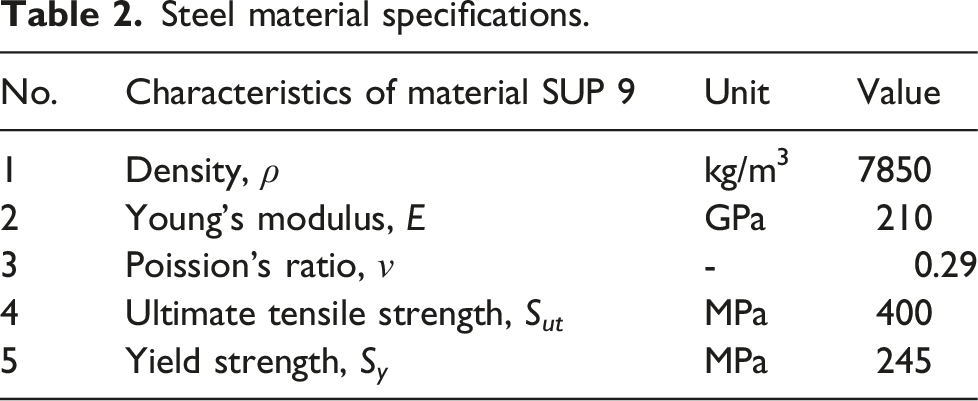
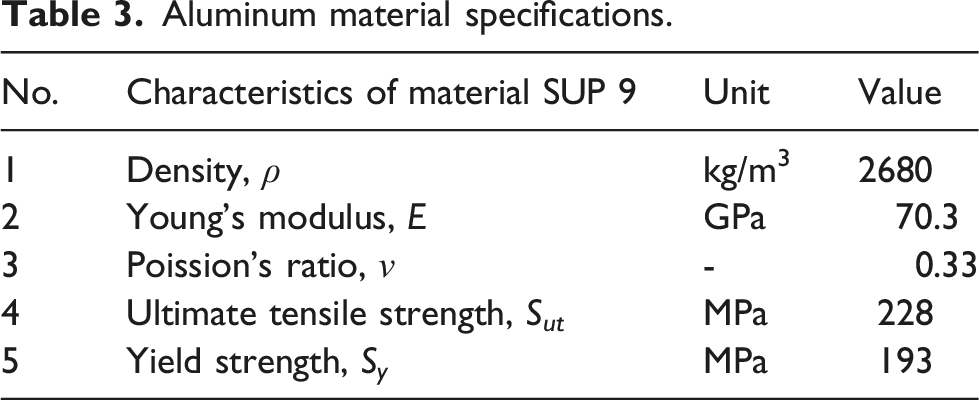
The main objective of this study is to find the optimal design in a design space • Model 1: Single-material model, with the common material in the manufacturing of industrial components being steel (as shown in Table 2): • Model 2: Single material model, with the material currently widely used in industries as a weight reduction solution being Aluminum (as shown in Table 3): • Model 3: Multi-material model, i.e., combining Aluminum and steel materials. In addition, for the multi-material model, the cost function condition is added in the calculation. Steel material specifications. Aluminum material specifications.
Optimization analysis results
The analysis of the multi-material connection structure is performed by the finite element method with the support of HyperWorks 2017 software. The problem is solved by the SIMP algorithm on the OptisTruct module; the geometric results of material distribution and connection are analyzed on the Hyperview module; the results of the relationship between iteration step and optimization goal are analyzed on the HyperGraph module.
In this study, the topology optimization problem is formulated based on the density-based approach implemented in Altair OptiStruct. Dual Optimizer based on separable convex approximation (i.e., DUAL) was used to solve the optimization problem. Within this framework, the material density of each element is treated as a continuous design variable ranging from 0 to 1, where intermediate values represent fictitious material. To suppress the presence of intermediate densities, the SIMP scheme is employed. In this method, the element stiffness is interpolated using a power-law relationship, i.e.,
In the context of topology optimization for linear elastic problems, the convergence performance of the optimization algorithm is not directly governed by the material type itself, but rather by the formulation of the optimization problem and the associated numerical settings. In the present study, variations in material properties primarily influence physical parameters such as stiffness and stress distribution, which in turn lead to differences in the resulting optimized topologies. However, the fundamental structure of the optimization algorithm, as well as its convergence characteristics, remains unchanged with respect to the material type. Therefore, while different materials may yield different optimal designs due to their mechanical properties, they do not intrinsically alter the convergence behaviour of the optimization procedure.
Single material model (SMTO)
The single material topology optimization (SMTO) model is described as follows:

where φ - Objective to be followed in the simulation problem;
Simple boundary conditions are established for the optimal model, with a hard constraint applied at the far right of the model, and external forces applied at the top left, as shown in Figure 3. External force configuration.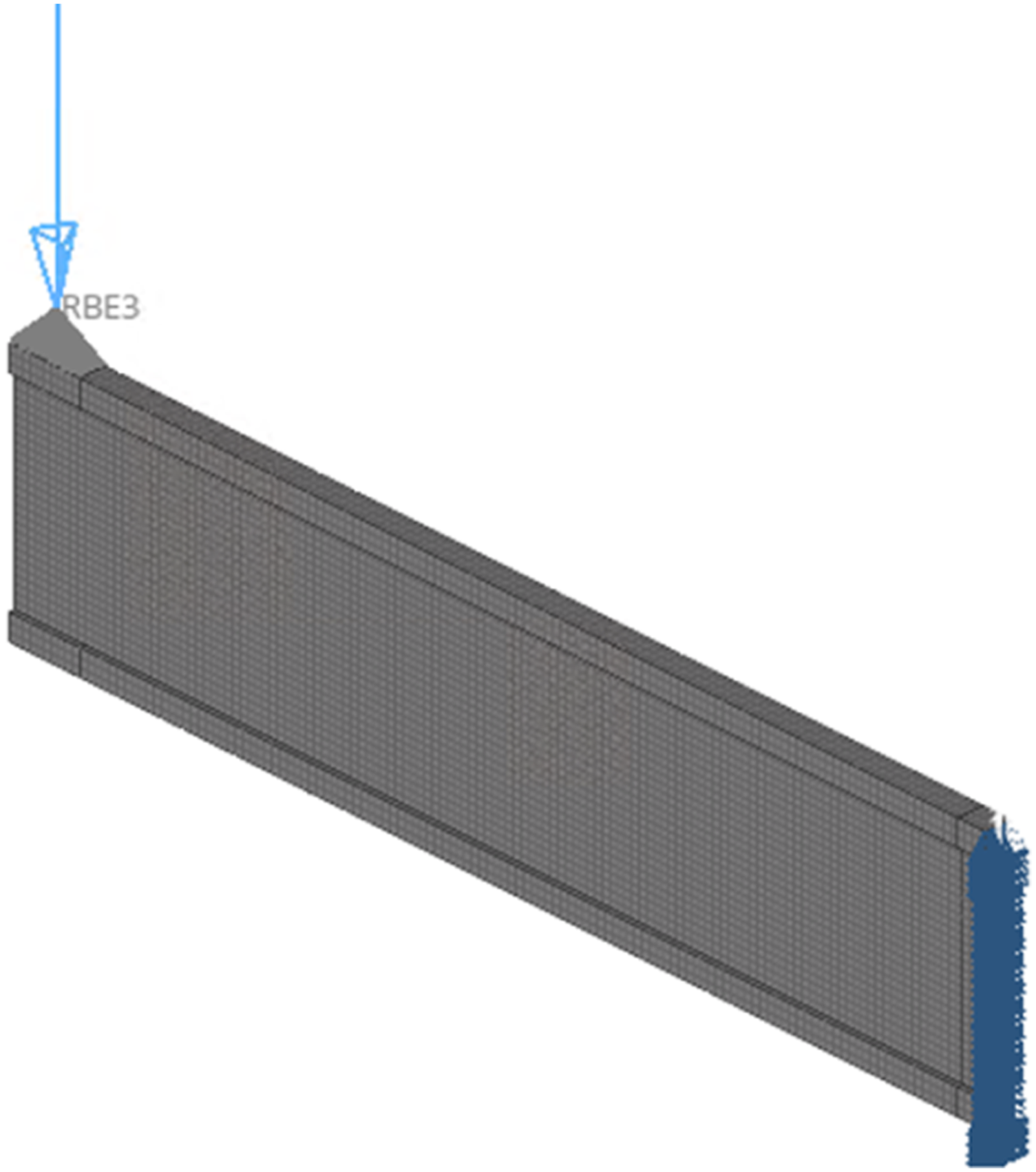
Steel material model
The results of the material bond state of the steel structure are shown in Figure 4, while the evolution of mass change according to the iteration step is shown in Figure 5. Figure 5 shows the mass evolution over the course of iterations of the Single Material Topology Optimization (SMTO) procedure applied to a steel structure using the SIMP formulation. The initial design shows a steel mass of approximately 1.93 kg, which serves as a baseline for evaluating the effectiveness of the optimization strategy. Evolution of the bond state according to the iteration of the steel material model. Mass change over iterations of the steel model.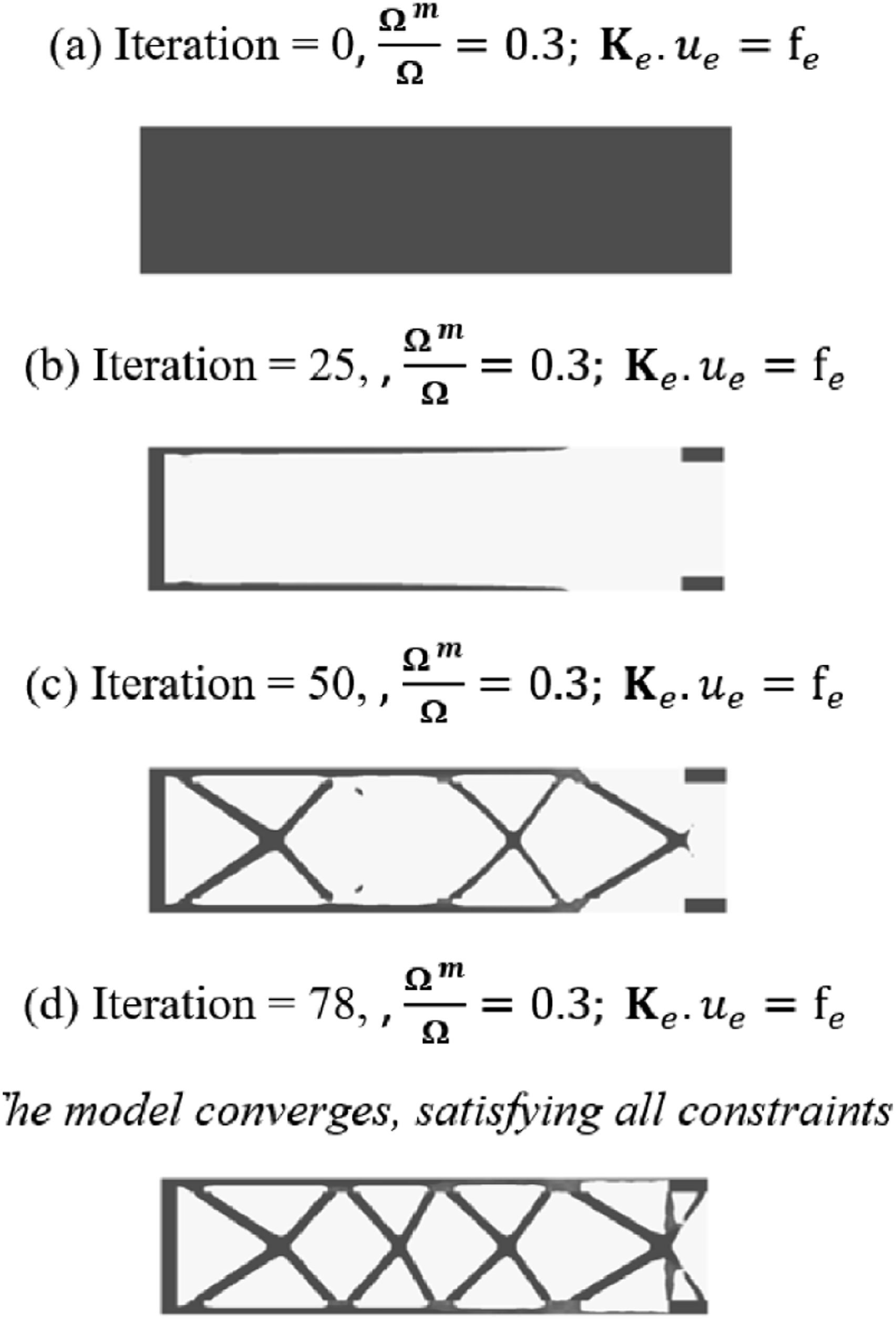
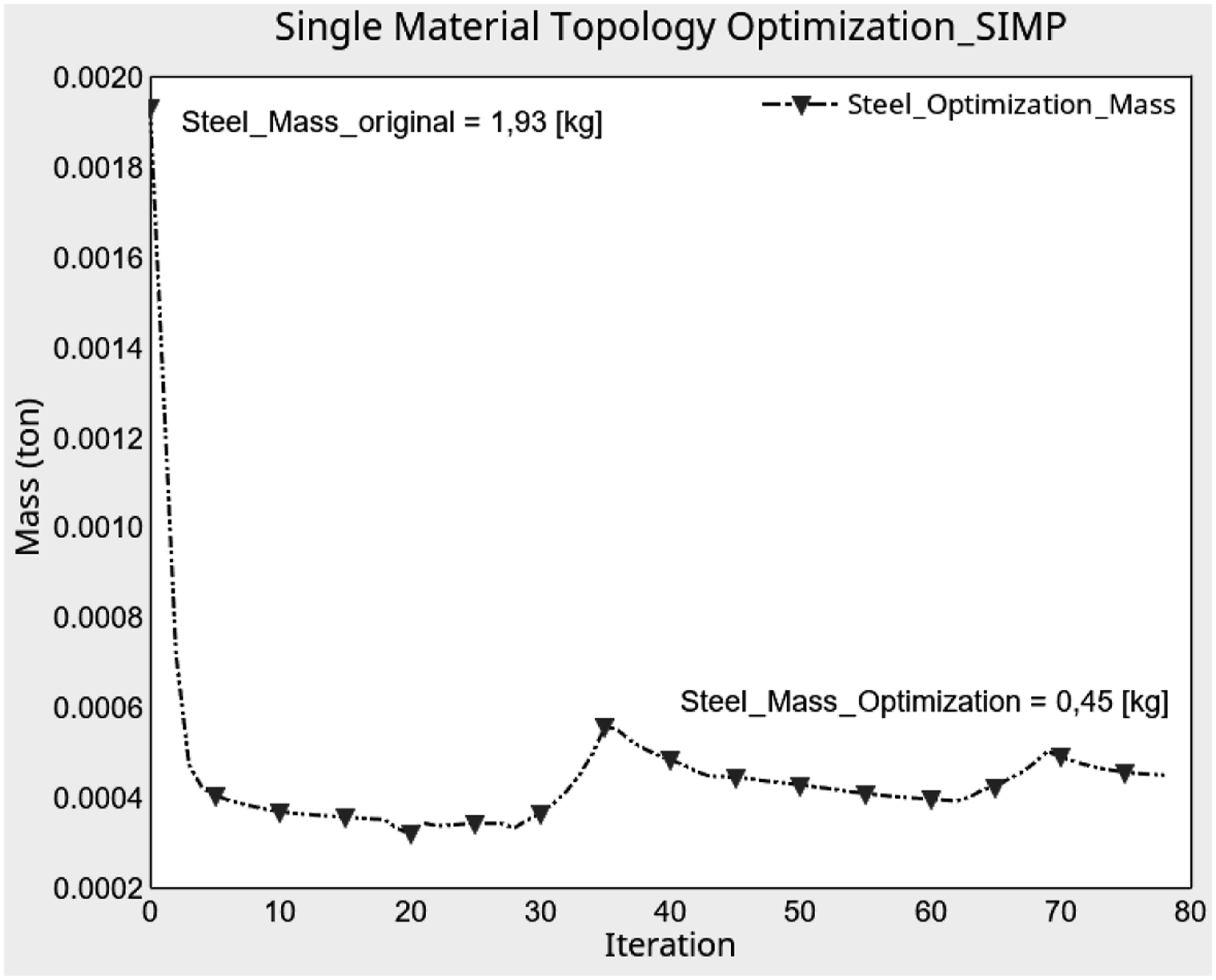
As shown in Figure 5, during the first few iterations, the mass rapidly decreases, indicating the removal of non-stress-bearing material as the algorithm converges to a structurally efficient topology. This sharp decrease is characteristic of SIMP-based density filtering and sensitivity-based element removal, which rapidly eliminate regions that contribute minimally to the overall stiffness. After this initial phase, the mass stabilizes in the range of 0.35–0.45 kg. Small fluctuations observed around iterations 30 to 45 correspond to intermediate design updates, where the optimizer alternates between removing and reinserting material to satisfy constraints such as minimum stiffness or structural connectivity. These fluctuations are typical in topology optimization when balancing penalty effects and imposed volume fraction constraints. Ultimately, the solution converges to a final optimal mass of approximately 0.45 kg, as the iterations of 78, representing a significant mass reduction of nearly 77% compared to the initial configuration. This demonstrates the ability of the SMTO frame, assuming a steel-only material, to achieve significant material savings while maintaining structural integrity under optimal constraints. Consequently, the mass convergence curve confirms the stability and efficiency of the optimization algorithm, resulting in a lightweight yet mechanically feasible design.
Aluminum material model
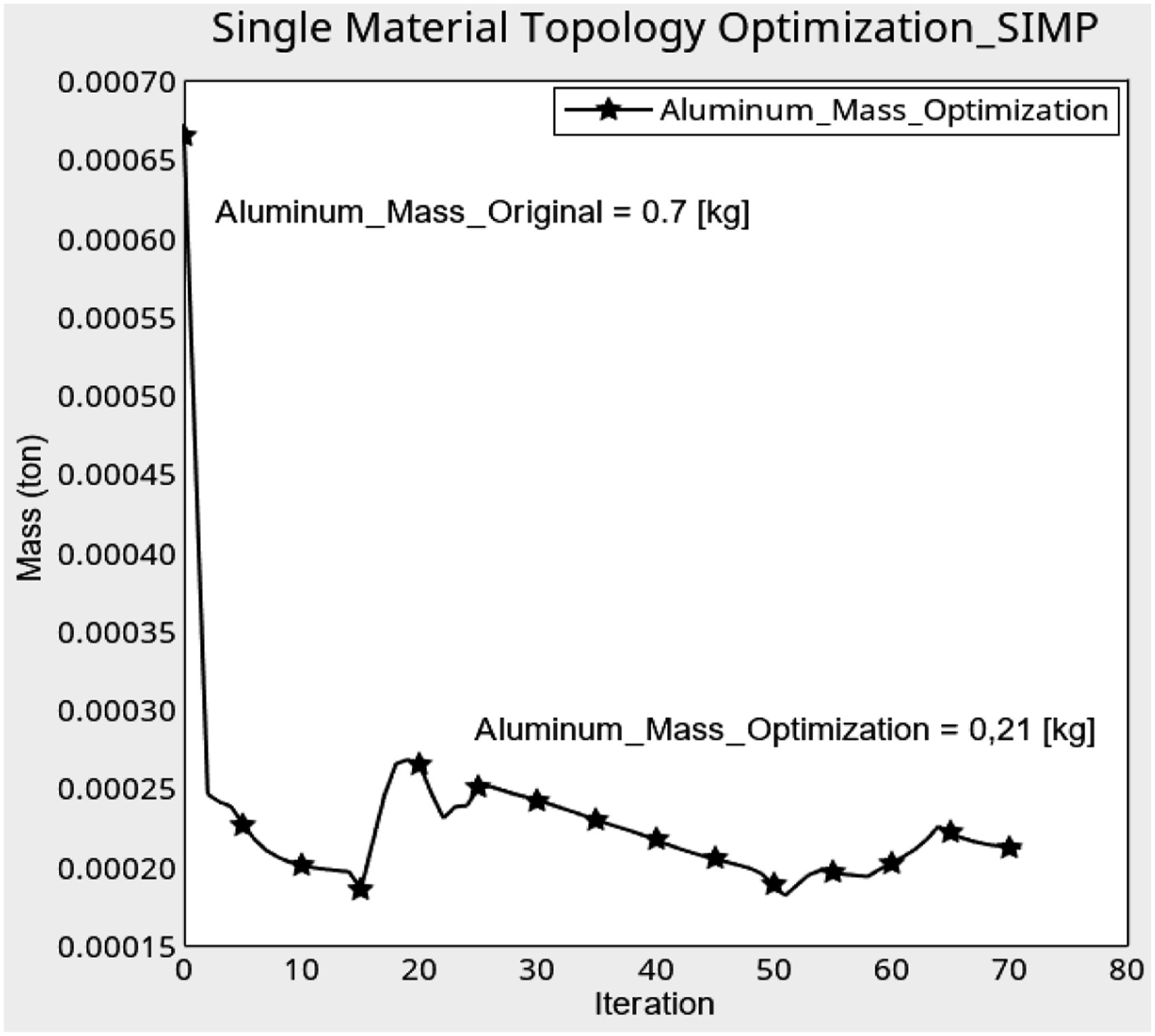
The results of the material bonding state of the aluminum structure are shown in Figure 6, while the convergence behaviour of the Single Material Topology Optimization (SMTO) procedure performed using aluminum as the structural material within the SIMP framework is shown in Figure 7. As shown in Figure 7, the initial configuration corresponds to an aluminum mass of approximately 0.7 kg, which represents a reference point for evaluating the effectiveness of the optimization strategy. Similar to what occurred in Figure 5, at the beginning of the process, the structural mass drops rapidly, reflecting the optimizer’s immediate removal of unnecessary material while still satisfying the stiffness and volume constraints. This early mass reduction is typical of density-based topology optimization methods, where elements with low sensitivity are quickly pushed towards the voids. After the initial sharp decrease, the mass stabilizes in the range of 0.18–0.27 kg. The local fluctuations that occurred between iterations 15 and 30 are attributed to small-scale adjustments to the algorithm, where material is redistributed with each iteration to maintain structural connectivity and compliance performance. This fluctuating behaviour is typical of SIMP-based methods, especially when the design is transitioning between intermediate density and near-solid regions. The optimization process converged to a final mass of approximately 0.21 kg, which represents a significant mass reduction of nearly 70% compared to the original aluminum structure. This mass reduction demonstrates the ability of the SMTO method to produce lightweight yet mechanically robust designs. Evolution of bonding state in iteration of aluminum material model. Mass change over iterations of the aluminum model.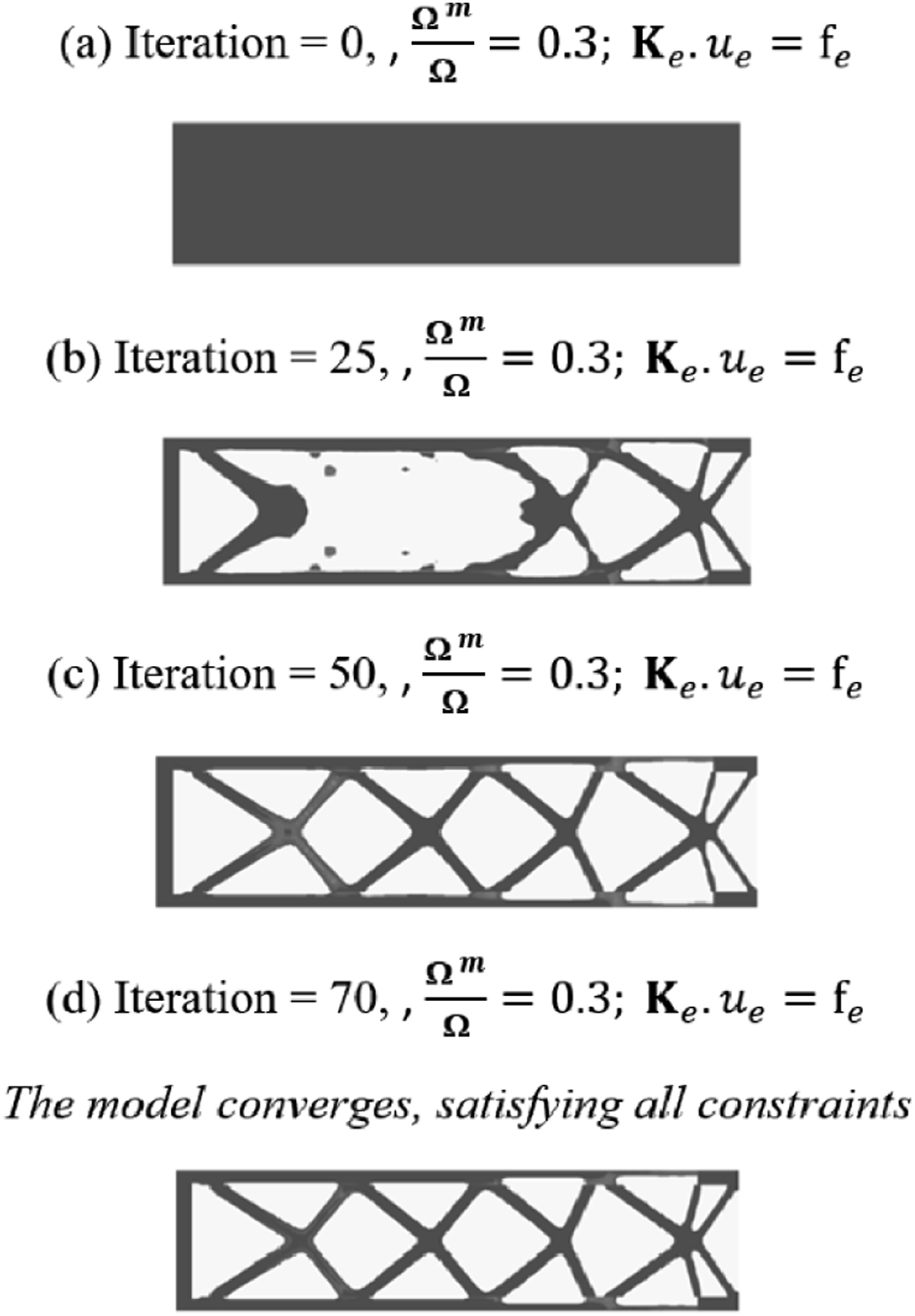
Multi-material connection model, steel – aluminum
The multi-material topology optimization (MMTO) model is described as follows:


where 
Additionally, for the multi-material joint model, a cost constraint function is added to the algorithm to ensure the objective of minimizing material mass and cost:
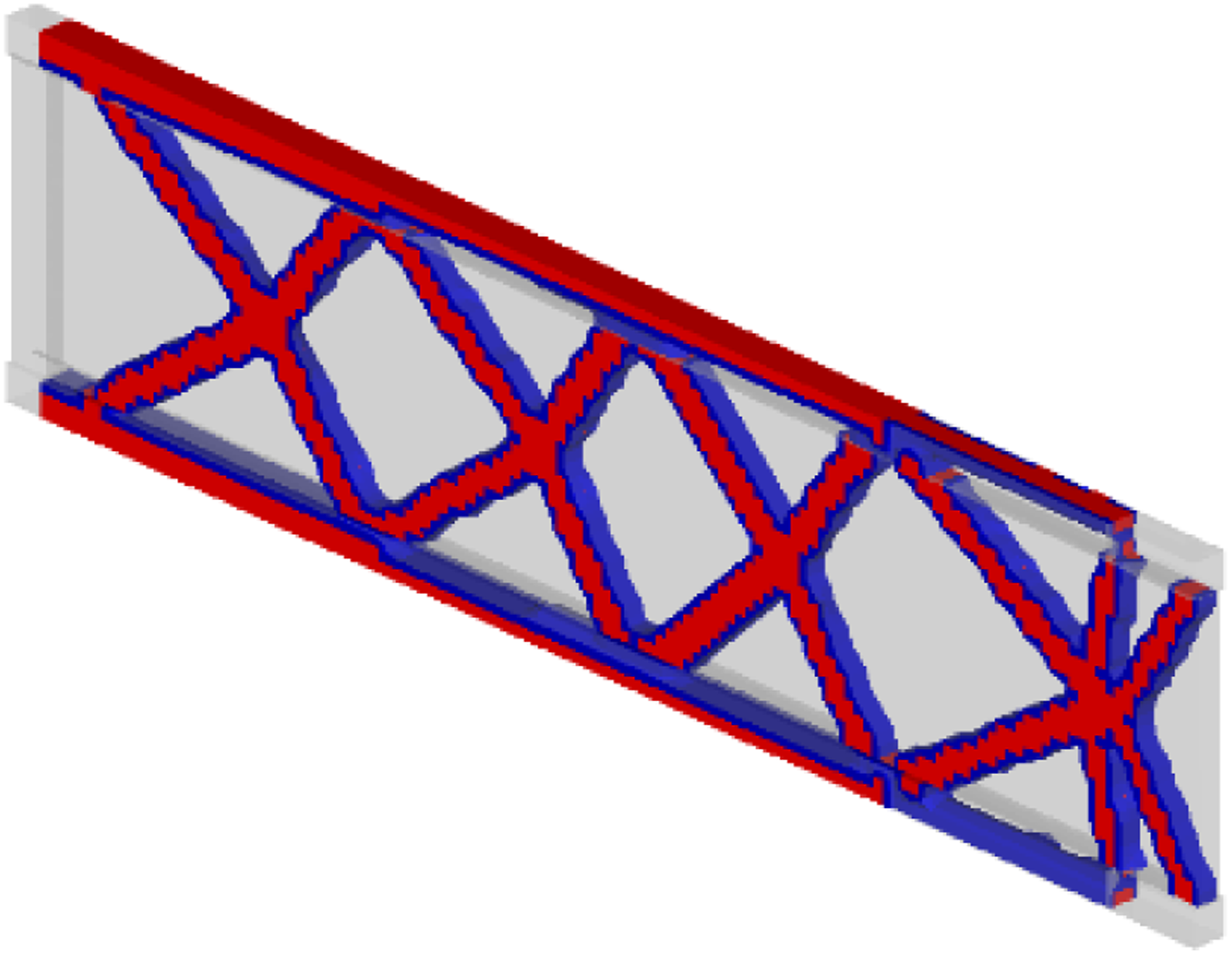
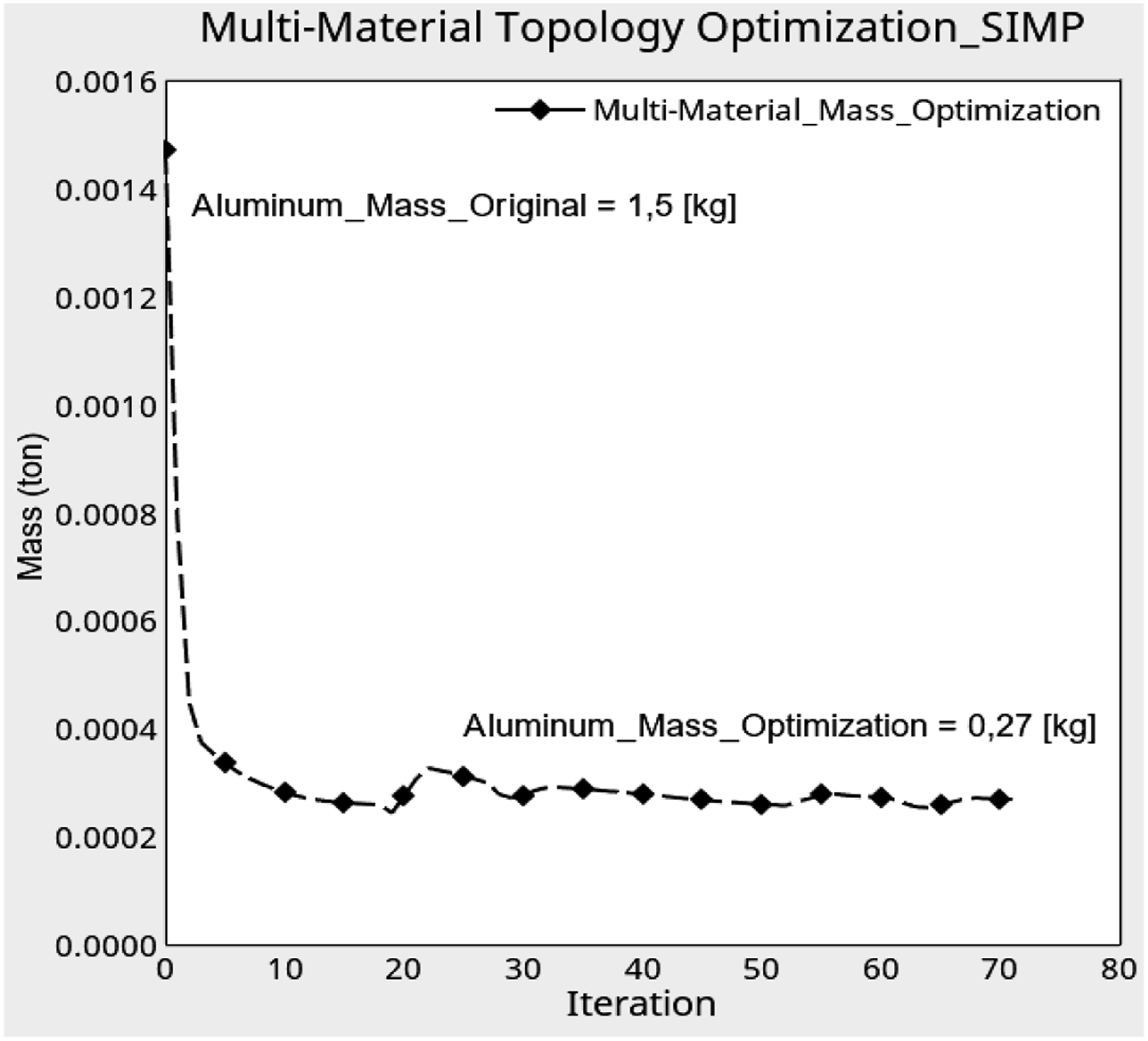
The results of the linkage state in the aluminum-steel multi-material model are shown in Figure 8, while the distribution of aluminum and steel materials in the optimization model is shown in Figure 9. The evolution of mass changes according to the iteration is shown in Figure 10. As shown in Figure 10, the mass convergence history is obtained from the multi-material topology optimization (MMTO) procedure, in which aluminum and steel are considered simultaneously in the SIMP-based formulation. For instance, the initial structure has a total mass of approximately 1.5 kg, representing the unoptimized reference design. The mass drops significantly in the first few iterations, indicating the rapid removal of inefficient material regions as the optimizer balances material selection and spatial distribution, same as that which occurred in Figures 5 and 7. After an initial transition, the mass gradually stabilizes in the range of 0.23–0.30 kg. The small variations observed between iterations 15 and 30 represent subtle adjustments in the material layout as the optimizer explores the trade-off between material contrast and structural performance. These fluctuations are consistent with multi-material SIMP formulations, where the algorithm reallocates material states stepwise to meet compliance targets while minimizing total mass. The final optimization process converges to a final mass of approximately 0.27 kg, representing an 82% reduction from the original design. This significant reduction highlights the enhanced capabilities of multi-material structural optimization compared to single-material formulations. By leveraging the complementary mechanical properties of aluminum and steel, the MMTO frame defines a more efficient structural configuration that maintains load-carrying capacity with a significantly reduced mass. Evolution of bond state in iteration of aluminum-steel multi-material model. Material distribution in multi-material model (Red: Aluminum; Blue: Steel). Mass change over iterations of the multi-material model.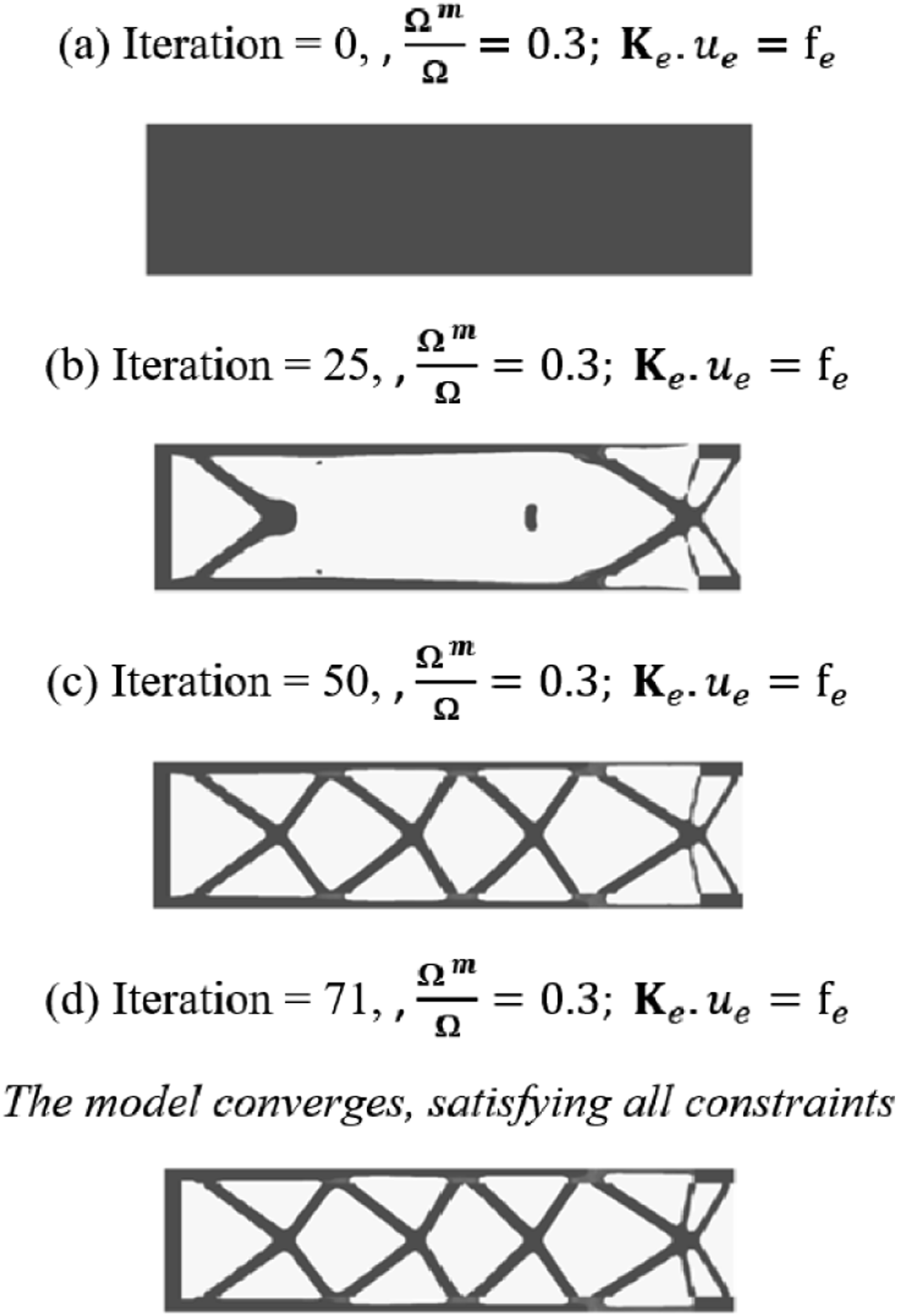
In comparison, Figure 11 presents the mass optimization results over iteration cycles for three material configurations, i.e., multi-material, steel-only, and aluminum-only models. All three cases show a rapid mass reduction in the first ten iterations, indicating effective early-stage convergence. In addition, the multi-material optimization method shows the most significant mass reduction and achieves the lowest final mass, stabilizing at approximately 0.3 kg. The aluminum-mass optimization method also shows stable convergence. In contrast, the steel-only optimization method results in relatively higher mass values and shows noticeable instability after the 30th iteration, with clear fluctuations indicating suboptimal convergence behaviour. In other words, these observations exhibit the advantages of using multi-material configurations, which provide greater design flexibility and improved optimization performance compared to strategies using only one material. Comparison of the mass of the optimal models.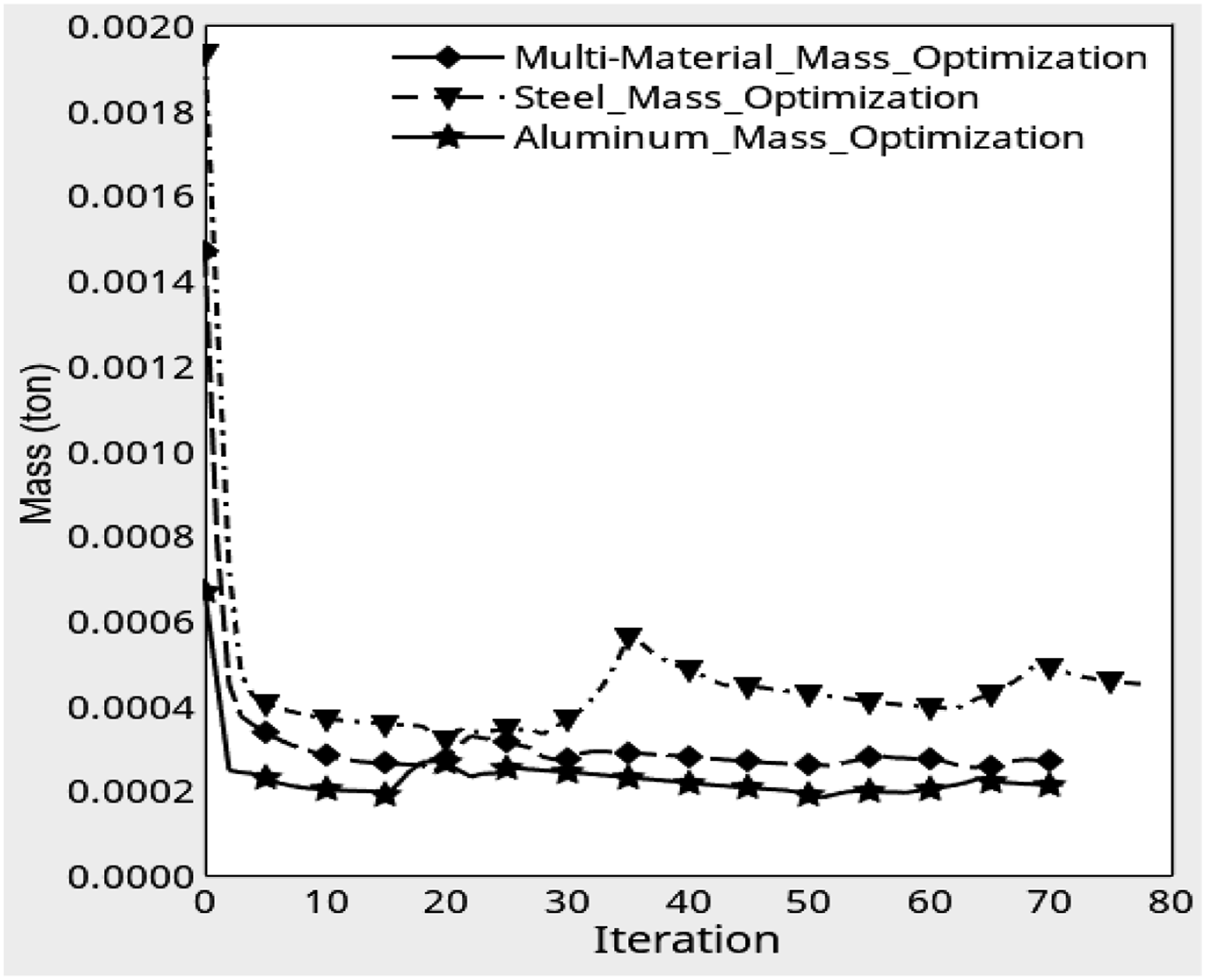
It should be noted that, in addition to minimizing the structural mass, the optimizer must simultaneously satisfy all prescribed constraints. During the early iterations (e.g., approximately the first 10–15 iterations, as shown in Figures 5 and 7), the structural mass may appear lower than that of the final solution. However, at these stages, the constraints are not yet fully satisfied and may be temporarily violated.
As the optimization progresses, the algorithm incrementally adjusts the design variables to enforce constraint satisfaction. This process may lead to a slight increase in mass compared to some intermediate iterations. Nevertheless, the final solution represents a feasible and converged design, in which both the objective function and all constraints are satisfied. Therefore, although the iteration curves may not exhibit a strictly monotonic convergence trend in terms of mass, the optimization process has indeed converged according to the defined convergence criteria and constraint satisfaction requirements.
The results clearly show the cost and mass optimization in the “lightweight” design for multi-material structures. For instance, the final mass of the steel structure msteel = 0.45 kg; the aluminum structure maluminum = 0.21 kg; and the steel-aluminum structure mmulti-Mat = 0.27 kg. The aluminum structure and the multi-material structure have approximately the same mass. It should be emphasized that with the multi-material structure, steel is limited to 80%, and a cost function is added to the simulation algorithm, which means that, in terms of cost, the multi-material structure has a greater advantage over the aluminum structure. Therefore, with the rapid development of AM manufacturing technology, multi-material structures are expected to dominate and gradually replace single-material structures in the future.
Application to automotive structure: Truck chassis case study
To further validate the effectiveness of the proposed approach, an additional case study related to automotive structural design has been incorporated based on a simplified truck chassis model. Specifically, a single-frame truck chassis is considered within the framework of topology optimization. The truck chassis model was simplified based on the truck frame designs reported in Le et al. (2025a; 2025b) and Le and Le (2025). The model is subjected to simplified yet representative boundary conditions to capture the essential load-bearing behaviour. Rigid constraints are applied at the leaf spring mounting locations, reflecting the typical support conditions of the truck chassis. External loads are introduced as two concentrated forces, denoted as P1 and P2, acting on the front and rear sections of the frame, respectively, as illustrated in Figure 12. This configuration enables the evaluation of the optimization method under conditions that resemble practical automotive loading scenarios while maintaining computational efficiency. Simplified truck chassis with boundary conditions and loads P1 and P2 for topology optimization.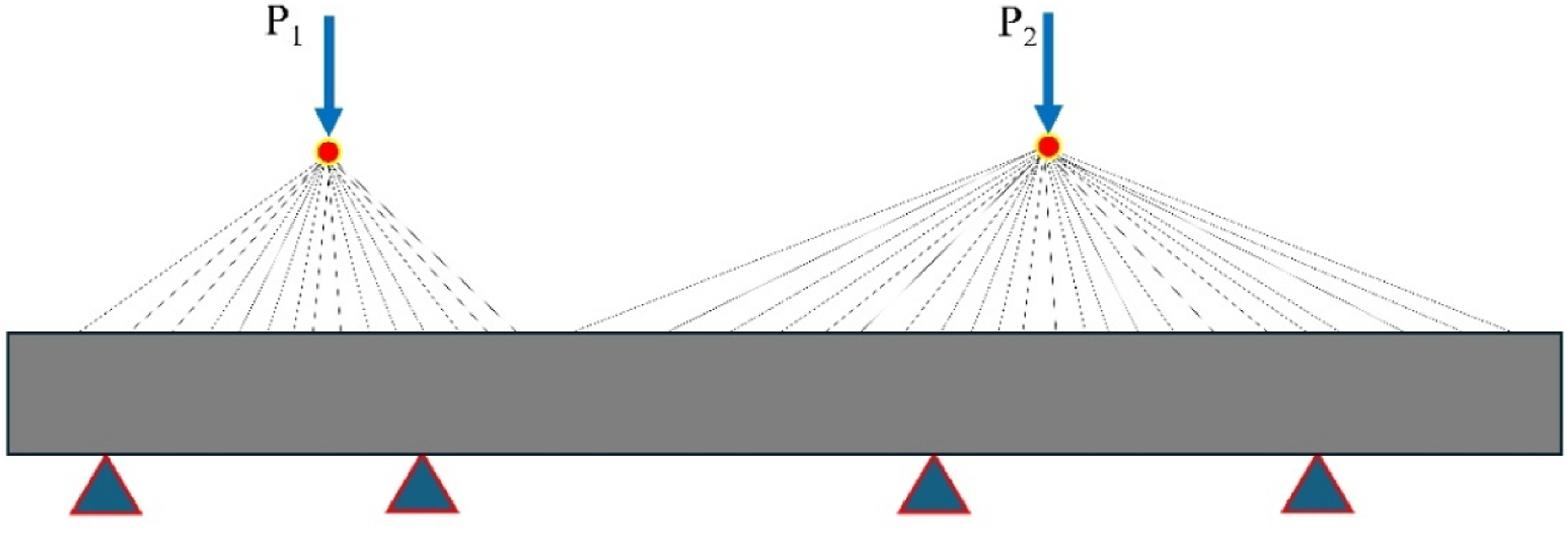
Figure 13(a) and (b) present the optimized topologies of the truck chassis obtained from the topology optimization method for the single-material cases using steel and aluminum, respectively, under the loading and boundary conditions defined in Figure 12. As shown in Figure 13, the optimization results exhibit a clear load-path-driven material distribution, where structural members are formed along the primary force transmission paths between the applied loads (P1, P2) and the supports. The optimized designs reveal truss-like reinforcement patterns that enhance structural efficiency while reducing unnecessary material. Mass optimization for single-material: (a) Steel and (b) Aluminum.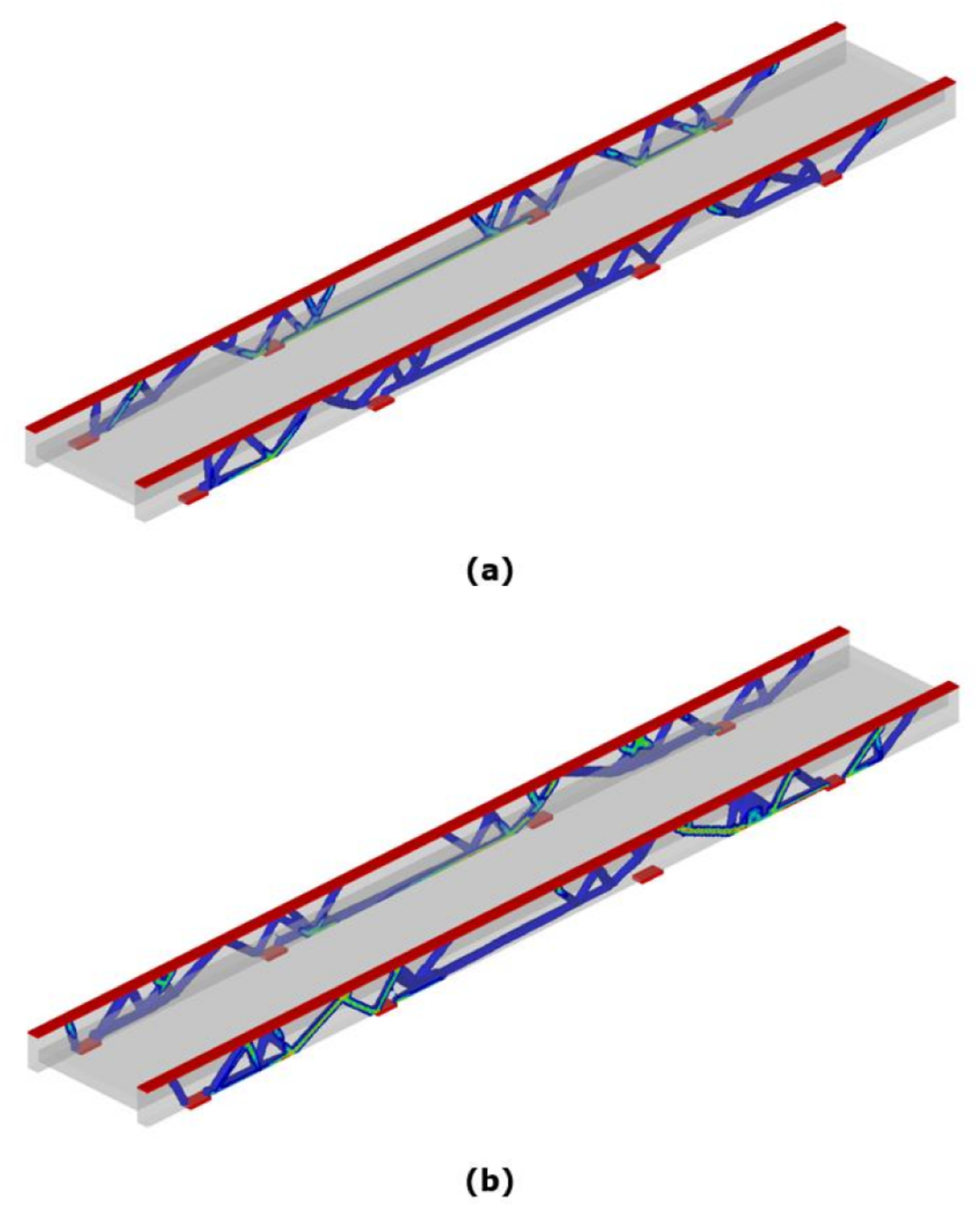
For the steel case (Figure 13(a)), the higher stiffness of the material leads to a relatively more compact and concentrated load-bearing structure, with fewer but stronger members. In contrast, the aluminum case (Figure 13(b)), due to its lower elastic modulus, results in a more distributed topology with additional reinforcing members to satisfy the same structural constraints. This demonstrates the influence of material properties on the resulting optimal topology, while maintaining similar overall structural behaviour.
Figure 14 illustrates the optimized material distribution for the multi-material case (steel and aluminum) obtained using topology optimization under the same loading and boundary conditions defined in Figure 12. Compared with the single-material results in Figure 13(a) and (b), the multi-material design demonstrates a more efficient and functionally graded material allocation. For instance, the steel (blue), with its higher stiffness, is predominantly assigned to the primary load-carrying paths and regions experiencing higher stress levels, forming the main structural skeleton. In contrast, the aluminum (red) is distributed in secondary load paths and less critical regions, contributing to weight reduction while still maintaining structural integrity. Mass optimization for multi-material of Steel and Aluminum.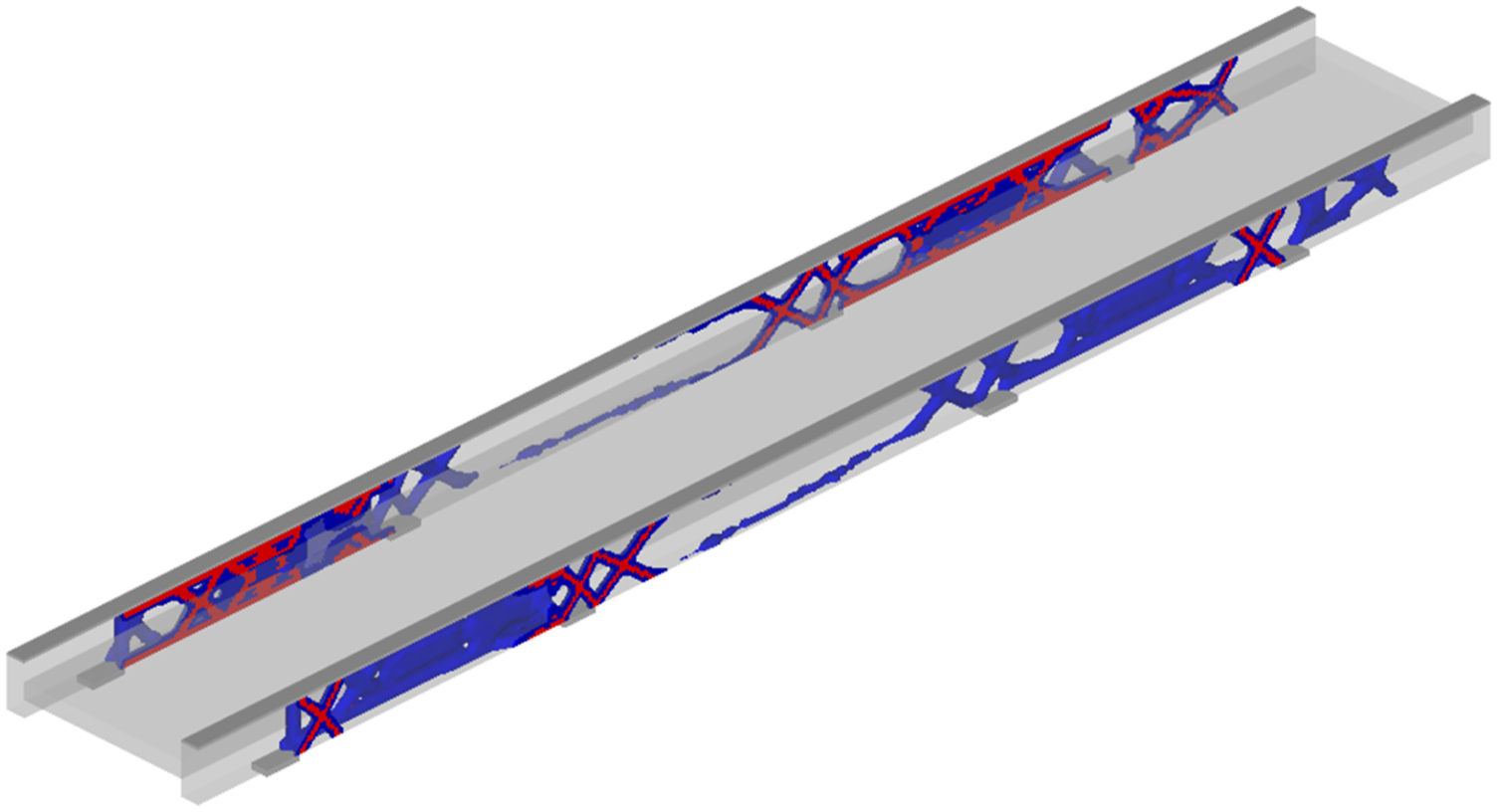
Compared to the steel-only design (in Figure 13(a)), the multi-material result achieves a similar load-bearing framework but with reduced overall material usage due to the substitution of aluminum in lower-demand areas. Meanwhile, relative to the aluminum-only case (in Figure 13(b)), the multi-material configuration exhibits a more compact and structurally efficient topology, as the inclusion of steel reduces the need for excessive reinforcement.
Figure 15 highlights the effectiveness of the SIMP-based topology optimization framework in achieving consistent and physically meaningful solutions across different material configurations. The key advantage of the SIMP algorithm is its ability to represent material distribution using a continuous density field while enforcing near-discrete (0–1) designs through penalization. This enables a smooth yet robust optimization process, as reflected by the stable convergence trends observed for all three cases. The similar convergence rates and stable iteration histories indicate that the SIMP algorithm is not sensitive to material type in terms of numerical performance. Comparison of the mass of the optimal truck chassis models.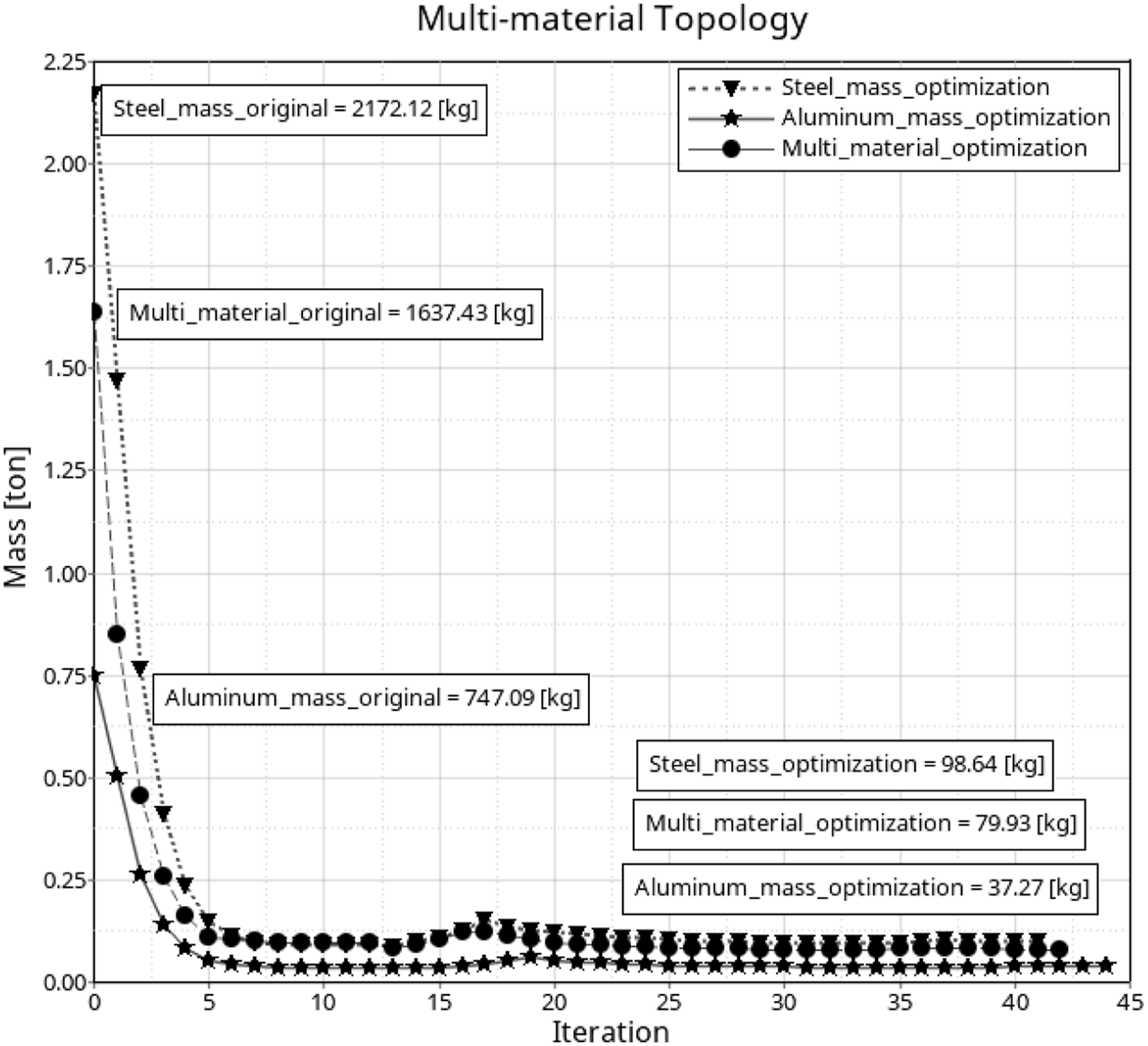
As shown in Figure 15, despite the significant differences in initial mass (i.e., 2172.12 kg for steel, 747.09 kg for aluminum, and 1637.43 kg for the multi-material model), the SIMP formulation drives all designs toward a comparable level of material efficiency, with mass reductions exceeding 95% in each case. This demonstrates the algorithm’s strong capability to systematically eliminate inefficient material while preserving the structural load paths required to satisfy the imposed constraints.
From a mechanical perspective, the steel-only case retains a higher mass due to its superior stiffness, which allows the structure to maintain load-carrying capacity with a relatively compact topology. In contrast, the aluminum-only design achieves the lowest mass but requires a more distributed material layout to satisfy the same constraints. The multi-material case provides an intermediate solution, where steel is strategically allocated to critical load paths while aluminum is used in less demanding regions, resulting in a balanced trade-off between stiffness and weight.
In other words, the SIMP approach inherently links material stiffness to the design variable through penalization, allowing the optimizer to naturally adapt the topology according to material properties. This is particularly evident in the multi-material case, where the algorithm effectively differentiates between high- and low-stiffness regions, assigning steel to primary load paths and aluminum to secondary regions. Such behaviour emerges without the need for explicit rule-based material assignment, underscoring the flexibility and generality of the method.
Conclusions
In this study, the SIMP algorithm was applied to estimate the optimal connection structure of two main groups of structures, i.e., single-material structures and multi-material structures. Both single- and multi-material models were used in this investigation, which was constrained by minimum mass and strength requirements. The important observations can be listed as follows: • In the optimization of connection structures, the SIMP algorithm has demonstrated its strong ability to generate efficient structural layouts while meeting weight and stiffness requirements. Its density-based formulation allows for the representation of continuous design variables, allowing for smooth convergence towards optimal structures. However, to fully exploit its computational efficiency and avoid unmanufacturable features such as checkerboard patterns or overly thin members, the integration of fabrication-oriented constraints remains essential. • In the optimization field, comparative simulations show that multi-material configurations offer significant benefits over single-material designs when pursuing lightweight objectives. Under identical loading and constraint conditions, multi-material optimization significantly reduced the structural mass compared to the single-material models for steel and aluminum. For the truck chassis case study, the initial masses differ significantly due to material density: 2172.12 kg for the steel model, 747.09 kg for the aluminum model, and 1637.43 kg for the multi-material configuration. After optimization, the final masses are reduced to 98.64 kg (steel), 37.27 kg (aluminum), and 79.93 kg (multi-material), corresponding to mass reductions of approximately 95.46%, 95.01%, and 95.12%, respectively. These results highlight both the sensitivity of the SIMP algorithm to material selection and its effectiveness in exploiting material heterogeneity to enhance structural performance. • To further improve the accuracy and practical relevance of the optimization framework, future studies will incorporate explicit manufacturing constraints as well as interface properties related to different materials. Additional mechanical performance comparisons (e.g., stress distribution or compliance values) could further enrich the discussion. These developments will be validated through a combination of numerical simulations and experimental testing.
Footnotes

Author considerations
Minh Duc Le: Supervision, Conceptualization, Writing- Reviewing and Editing. Cong Tin Le: Data curation, Formal analysis, Resources Methodology, Writing- Original draft preparation, Validation. Quang Phat Vu: Software, Visualization, Investigation.
Funding
The authors received no financial support for the research, authorship, and/or publication of this article.
Declaration of conflicting interests
The authors declared no potential conflicts of interest with respect to the research, authorship, and/or publication of this article.