







Abstract
Students who exhibit emotional and behavioral disorders (EBD) typically have high frequencies of disruptive and noncompliant behavior including physical and verbal aggression (VA). Physical aggression attracts great concern from school professionals yet VA is often overlooked, despite being a highly pervasive and harmful social act. We surveyed 279 first to 12th grade teachers of students with EBD to assess their perceptions about the harmfulness of VA, students’ intent to harm, their concern about the frequency and/or intensity of VA, and concern about types of verbally aggressive messages. We investigated if these perceptions differed when teachers considered students with EBD compared with typical peers and if special education certification related to responsiveness to VA. The majority of teachers reported that VA was either somewhat or very harmful and perceived students with EBD to be just kidding around and not intending to hurt others when perpetrating VA. Compared with noncertified colleagues, certified teachers reported more concern about VA, more intent to harm when students with EBD exhibit VA, and they were more likely than their noncertified counterparts to report the use of a structured intervention/curriculum to reduce VA. We discuss implications for special education teacher preparation and offer suggestions for further research.
Keywords
Numerous sources estimate that between 2% and 7% of the school population in the United States exhibit significant, long-term emotional or behavioral problems that often involve strong negative emotions and aggression that interfere with academic and social learning (Forness, Kim, & Walker, 2012; Kauffman & Landrum, 2017). Students who receive special education (SE) services for emotional and behavioral disorders (EBD) often display high rates of externalizing (e.g., chronic noncompliance, verbal and physical aggression) and internalizing (e.g., anxiety and depression) behavior problems and they constitute a significant percentage of students isolated from the mainstream of education (Kauffman & Landrum, 2017; Office of Special Education and Rehabilitative Services, Office of Special Education Programs, 2017; Taylor & Smith, 2019). According to C. R. Smith, Katsiyannis, and Ryan (2011), students with EBD are more likely than other students with disabilities to be educated in more restrictive environments.
It is well-known that classrooms for students with EBD have high rates of disruptive, maladaptive, and noncompliant behavior, and many students with EBD exhibit both verbal and physically aggressive behaviors (Kauffman & Landrum, 2017). Although physical aggression tends to decline as students mature (Côté, Vaillancourt, LeBlanc, Nagin, & Tremblay, 2006), rates of physical aggression for students with disabilities remain stable throughout the school age years (Rose, Espelage, & Monda-Amaya, 2009) and students with EBD engage in significantly more fighting than all other student groups (Rose & Espelage, 2012). Students with EBD, among other students with disabilities, are also more likely to receive threats from peers, which can perpetuate a physical aggression cycle (Hartley, Bauman, Nixon, & Davis, 2015). For adolescents, chronic physical aggression has been associated with increased rates of physically violent criminal behavior and overall delinquency (Nagin & Tremblay, 1999). Researchers report that acts of physical aggression are a primary reason that practitioners move students with EBD to restrictive placements (Hendrickson, Smith, Frank, & Merical, 1998). Furthermore, physical aggression is a primary reason for suspension (Burke & Nishioka, 2014), a form of exclusionary discipline experienced by students with EBD at two to three times the rate of other disability categories and typical peers (Bradley, Doolittle, & Bartolotta, 2008; Zhang, Katsiyannis, & Herbst, 2004).
Acts of physical aggression generally attract the most concern and reaction from school staff; however, verbal aggression (VA) is now considered a pervasive, harmful, and unnecessary social act that is an often-overlooked contributor to undesired outcomes for students with significant behavior problems (e.g., Atkin, Smith, Roberto, Fediuk, & Wagner, 2002; Morrow, Hubbard, Barhight, & Thomson, 2014; Poling, Smith, Taylor, & Worth, 2019; Taylor & Smith, 2019). Defined as behavior that attacks a person’s self-concept to cause psychological pain (Infante, 1995) including attacks on character, competence, background, and physical appearance, as well as episodes of teasing and ridicule (Bradshaw, Waasdorp, & Johnson, 2015; Infante, 1987; Taylor & Smith, 2019), VA significantly predicts physical aggression among children and adolescents (Cole et al., 2014; Roberto & Wilson, 1996). In fact, Atkin et al. (2002) reported a strong correlation between the frequencies of reporting VA and committing physical aggression and a strong relationship, r(2,108) = .55, p < .001, between being victimized by VA and subsequent physical aggression.
As an increasing number of researchers recognize the high levels of VA among the general school population (e.g., Goldweber, Waasdorp, & Bradshaw, 2013; Poling et al., 2019; Wang, Iannotti, & Nansel, 2009), there is emerging research indicating that the prevalence of VA among students with EBD is substantial and they perpetrate and experience higher levels of VA than their nondisabled peers (Taylor & Smith, 2019). Specifically, these researchers found that among students with EBD, 71% of the teachers reported daily observance of student-to-student VA and 57.3% indicated daily student-to-adult VA. In the same study, Taylor and Smith (2019) found that 64% of the teachers who served students with EBD reported that their students were more verbally aggressive than their typical peers and that their students responded to acts of VA primarily with retaliatory acts of verbal or physical aggression. Moreover, these researchers found that a majority of teachers described students frequently reporting, complaining, or seeking advice about issues related to VA, and they reported that VA takes place in multiple locations, with at least one bystander present, and they observed victim verbal retaliation and physical assaults because of VA. Interestingly, Taylor and Smith (2019) found that teacher responses included redirection and verbal warnings, and few teachers reported instruction of alternative prosocial behaviors.
To pursue further information about VA and students who exhibit VA, Taylor and Smith (2019) suggested a need to understand better teachers’ perceptions about (a) the harmfulness of types of VA victimization, (b) students’ intent to harm when engaged in VA, and (c) levels of concern about VA among students. According to Hektner and Swenson (2012), a significant relationship exists between teachers’ beliefs and their tendency to intervene in instances of student on student aggression. Specifically, students of teachers with normative beliefs toward aggression (i.e., part of a typical developmental process) reported reduced levels of teacher intervention and increased rates of peer victimization (Hektner & Swenson, 2012). Given that teachers’ beliefs about student-on-student aggression impact their responses (e.g., P. W. Garner, 2017; Troop-Gordon & Ladd, 2015), examining their perceptions about VA and their use of strategies or established curriculum can provide valuable insights into effective program implementation resulting in improved student outcomes. Furthermore, Taylor and Smith recommended understanding the relationship between certified and noncertified teacher status and their responses to student VA that would provide clarity about the impact of SE teacher certification and implications for working with students with EBD.
Oliver and Reschly (2010) believed that many teachers may not be adequately prepared to meet the needs of students with EBD, who are often the most difficult to teach given their challenging behavioral, social, and academic needs (Kauffman & Landrum, 2017; Reid, Gonzalez, Nordness, Trout, & Epstein, 2004; Simpson, Peterson, & Smith, 2011). According to Browder, Wood, Thompson, and Ribuffo (2014) and McLeskey and Brownell (2015), special educators require specialized preparation to serve students with high-intensity needs such as students who exhibit EBD. Accordingly, traditional SE teacher preparation programs should provide specialized knowledge, skills, and competencies for certification to facilitate effective instruction for with students with high-intensity academic and behavior problems and to collaborate effectively with other special educators, general educators, and related service providers. Identified shortages in certified SE teachers, however, result in many teachers receiving temporary or emergency certification (Rosenberg & Sindelar, 2005; U.S. Department of Education, Office of Postsecondary Education, 2016). Often, these types of certification require no more than a bachelor’s degree and a passing score on licensing tests that assess basic knowledge of educational practices (Stotsky, 2009). Ostensibly, discrepant routes to teacher licensure suggest that teachers who experienced an extensive and formalized training program in education, compared with those who received nonstandard preparation, have more content and pedagogical knowledge to support the quality of services necessary for students who require SE programming (Boe, Shin, & Cook, 2007; Darling-Hammond, Holtzman, Gatlin, & Heilig, 2005).
The highest percentage of noncertified or alternatively certified SE teachers are those charged with the instruction of students with EBD (Bradley et al., 2008) creating a concerning trend, given these teachers have likely not been exposed to much of the specialized knowledge required for efficacious practice involving students with EBD. Teachers who have foundational knowledge about effective, efficient, and positively oriented evidence-based practices (e.g., structured interventions and curricula) are better positioned to decrease the frequency and intensity of VA in their classrooms without relying on punitive practices such as time out, exclusion, and seclusion (Alvarez, 2007). According to Bradley et al. (2008), students with EBD experience these disciplinary practices three times the rate of students in other disability groups.
The high prevalence and reciprocal norm for VA among adolescents and adults postulated by Infante, Sabourin, Rudd, and Shannon (1990) and Rancer and Avtgis (2006) and the putative pervasiveness of VA establish the need for skilled and certified educators with the requisite knowledge to mollify the effects of VA, especially among students who exhibit EBD. Succinctly, teachers of students with EBD need a comprehensive understanding of VA to guide their response in the classroom as students with EBD require effective interventions to alter VA and their historically negative outcomes. Thus, the purpose of our exploratory study was to add to the prefatory work of Taylor and Smith (2019), by focusing on teacher perceptions about (a) the harmfulness of types of VA victimization, (b) students’ intent to harm when engaged in VA, (c) concern about the frequency and/or intensity of VA, (d) level of concern about types of VA, and (e) the potential relationship among these perceptions with teacher certification status. In addition, we focused on teachers’ use of a curriculum/structured intervention to evaluate the impact SE certification may have on teacher response to VA. Finally, we wanted to gather responses from teachers about their perceptions of VA among all students in their school to act as a comparative point and to aid in interpretation of results.
As such, we posed the following research questions:
(a) The level of harmfulness and level of concern about types of VA among students with EBD?
(b) Intent to harm nature of VA and concern about the frequency/duration of VA among students with EBD?
Method
Substantive details about the sampling procedures, instrument validity, research design, response rate, and participant demographics can be found in Taylor and Smith (2019), along with the survey procedures. We provide a brief description here as context for this investigation.
Settings and Participants
We queried 279 first to 12th grade teachers who directly served students identified as EBD across five school districts in a southeastern state. As shown in Table 1, we collected data about teachers’ gender, age, and race. We also asked them to report on their education level, SE certification status (yes/no), and education settings (e.g., general, resource, and self-contained).
Demographic Characteristics of Survey Respondents.
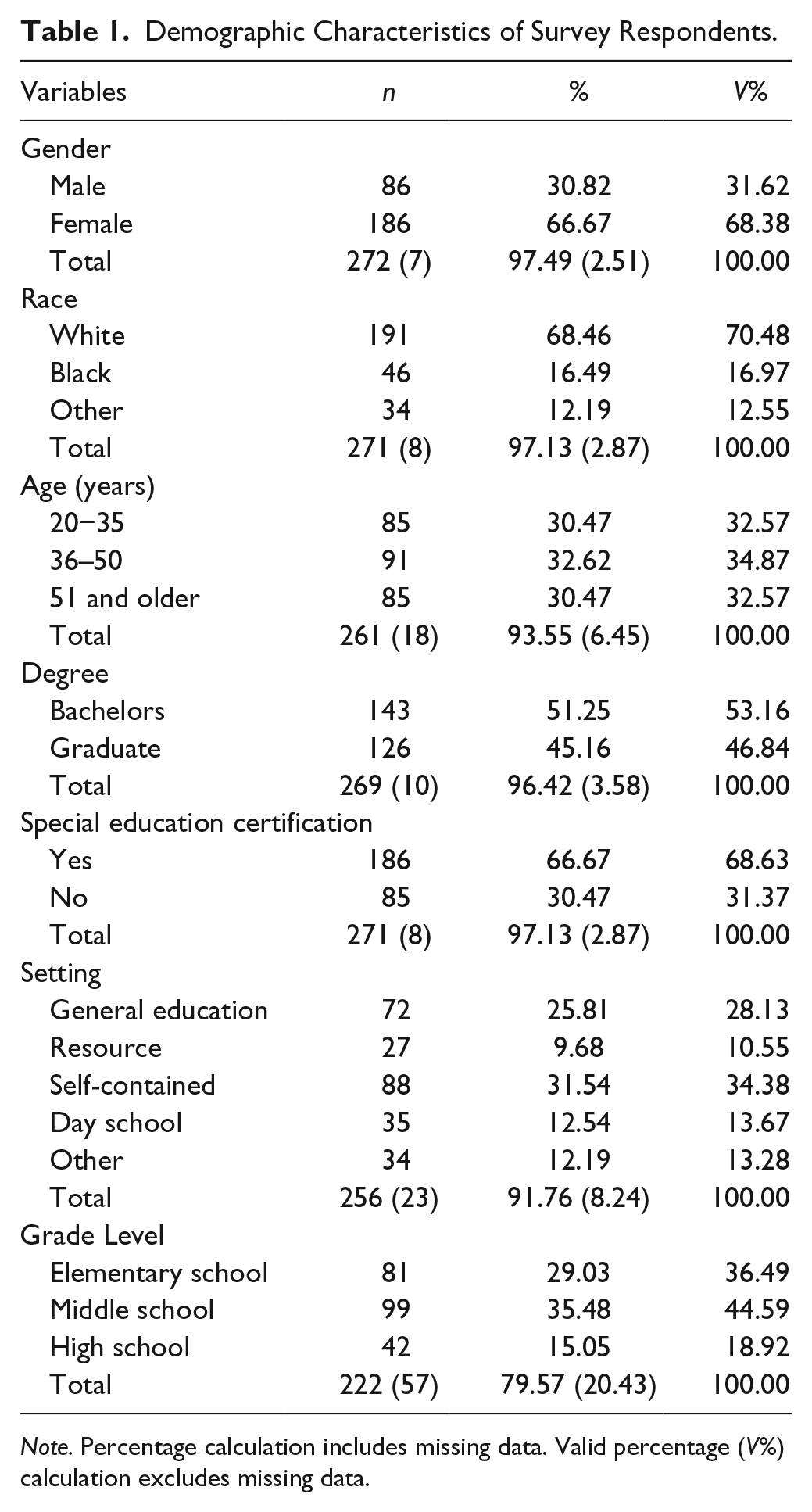
Note. Percentage calculation includes missing data. Valid percentage (V%) calculation excludes missing data.
Instrument
As detailed in Taylor and Smith (2019), we designed the Verbal Aggression Survey–Teacher (VAS-T) using a systematic progression of steps to support validity and reliability. As part of the process, we identified major themes and constructs related to VA in the relevant literature (e.g., prevalence, locations, bystanders, student responses to VA, and teacher consequences for students with EBD who use VA), which we then organized into an initial conceptual framework to create an array of research questions. These research questions provided the basis for the construction of the sections, scales, and individual items included in the VAS-T.
The VAS-T is composed of 36 items across six sections: Personal Information, Education and Experience, Current Assignment, Prevalence, Attitudes and Beliefs, and Strategies and Interventions. The last two sections provide for an examination into teacher perceptions about the level of harmfulness of types of VA victimization, students’ intent to harm when engaging in VA, concern about the frequency and/or intensity, and their level of concern about types of VA, along with teacher and student responses to VA. The VAS-T was designed to capture both teachers’ perceptions of VA victimization (or being targeted) and perpetration of VA (intent to harm). We provided a cogent definition of VA along with nonexamples of VA at the beginning of the survey.
Instrument validity and reliability
We validated the VAS-T, by conducting expert reviews, cognitive interviews with one elementary, three middle, and one high school teacher of students with EBD, and we conducted a pilot test. We revised the VAS-T based on expert-reviewer and cognitive interview feedback (i.e., content and format).
We piloted the VAS-T and online survey procedures with 52 teachers from a variety of school districts who worked with students with EBD. Over a 4-week period, we received 30 responses resulting in a 57.7% response rate that we hoped could be improved for the full study by offering an incentive upon survey completion (Dillman, Smyth, & Christian, 2009).
Our construct of VA, derived from an extensive literature review, included six items that describe verbally aggressive behavior: (a) swearing/profanity, (b) using insulting names, (c) yelling or using aversive tone of voice, (d) character comments, (e) competence comments, and (f) appearance comments. We used these six items in each of four questions posed to teachers about VA’s level of harmfulness for students with EBD (α = .87) and for all students (α = .86), level of concern about types of VA for students with EBD (α = .87) and for all students (α = .87).
Research Design, Sampling, and Procedures
We used the mixed-mode cross-sectional survey design as detailed in Taylor and Smith (2019) to gather information on a population at a single point in time (Creswell, 2015). Personnel in multiple education departments at the state level were unaware of any available comprehensive databases to provide an inclusive list of qualified teachers. After thoroughly investigating the sampling options available, we concluded a comprehensive, valid, and reliable state-wide list from which to randomly select participants for this study was unattainable. We then contacted individual school district representatives about acquiring a list of teachers who worked with students with EBD, and their ability and willingness to assist us.
We learned that district personnel varied in their ability to identify those teachers we wished to query and, in their willingness, to collaborate. As such, we used a purposive nonrandom sample of districts that were willing to participate (de Leeuw, Hox, & Dillman, 2008). When using purposive sampling, researchers identify a specific predefined group (i.e., census) and then seek participants that meet the group inclusion criteria. Our administration of the VAS-T included the entire sampling frame (i.e., census) for each participating district. According to Creswell (2015), purposive sampling is useful when situations are of a short timeline for implementation and when sampling for proportionality is not possible, or the primary concern.
Survey Items
To assess teachers’ perceptions about the level of harmfulness of types of VA victimization, we provided a six-item measure of student-to-student verbally aggressive behaviors (i.e., swearing/profanity, using insulting names, yelling or using aversive tone of voice, character comments, competence comments, and appearance comments) to which teachers responded using a 4-point Likert-type scale from 0 (not harmful) to 3 (very harmful). To query teachers if they thought that students engaged in VA with an intent to harm, teachers responded to a single-item question (When [students] engage in verbal aggression by using, for example, profanity, insulting names, or negative comments, how often do you feel students are just kidding or playing around with no intent to harm?) using a 4-point Likert-type scale from 0 (never) to 3 (very often). We used a single-item question (How concerned are you about the present level [frequency and/or intensity] of verbal aggression?) with a 4-point Likert-type response from 0 (not concerned) to 3 (very concerned). Finally, to assess teachers’ concern about types of VA, we provided the same six-item measure of VA for level of harmfulness but used a 4-point Likert-type scale from 0 (not concerned) to 3 (very concerned). For each of the items (i.e., harmfulness, intent to harm, concern about the frequency and/or intensity, and level of concern about types of VA), teachers were instructed to answer separately for students with EBD and for all students in the school population. Teachers provided a yes/no response for both certification in SE and about their use of a curriculum or structured intervention to teach students with EBD strategies for dealing with VA.
Data Analysis
We used SPSS (v21) for all analyses. Missing data across all survey items ranged from 9.32% to 18.64%, and results of a Fisher’s exact test revealed no significant differences in missingness based on each demographic variable shown in Table 1. We conducted Wilcoxon signed rank tests to answer Research Questions 1 through 4 to assess differences in teacher perceptions of VA (i.e., harmfulness, intent to harm, and concern) when comparing students with EBD with all students. To answer Research Question 5(a), we performed linear regression analyses to determine if teachers’ perceived level of harmfulness of types of VA victimization and level of concern about types of VA could be predicted from SE certification status (0 = noncertified, 1 = certified). Teachers’ perceived level of harmfulness of VA and level of concern about VA were composite scores created based on teacher responses to each type of VA (i.e., swearing/profanity, using insulting names, yelling or using aversive tone of voice, character comments, competence comments, appearance comments), with higher scores indicating more harmfulness and higher concern. We measured both intent to harm and concern about the frequency and/or intensity of VA among students with EBD with ordinal response questions that generated data that were not normally distributed. As such, we conducted Mann–Whitney U tests for Research Question 5(b) to assess median differences between certified and noncertified SE teachers. For Research Question 6, we used logistic regression to assess whether teacher use of a curriculum or intervention (0 = no use, 1 = use) could be predicted by SE certification status.
Given that school-based aggression intervention effects (e.g., bullying programs) vary for students across grade levels (Ttofi & Farrington, 2011) and because VA peaks in middle school (Taylor & Smith, 2019), we sought to control for any variance in our regression model that may be explained by teachers’ grade level (elementary, middle, high school). Note: For reporting clarity, we use valid percent which is the percent when missing data are excluded from the calculations.
Results
Harmfulness of VA
As shown in Table 2, the majority of teachers reported that all the six items measuring student-to-student verbally aggressive behaviors were either somewhat or very harmful when all students (i.e., entire student population) and students with EBD engaged in VA. Notably, a majority of teachers indicated that insulting names were very harmful among all students (77.97%) and students with EBD (79.04%) as well as comments about appearance for all students (75.42%) and students with EBD (74.01%). As shown in Table 3, the teachers in our sample reported yelling or using aversive tone of voice as significantly more harmful (Z = −2.77, p = .006) for students with EBD compared with all students. Specific to teachers’ perceived harmfulness of the other types of VA victimization, there were no significant differences between students with EBD and all students.
Frequency and Percentage of Teachers’ Perceptions Toward VA’s Harmfulness by Student Group.
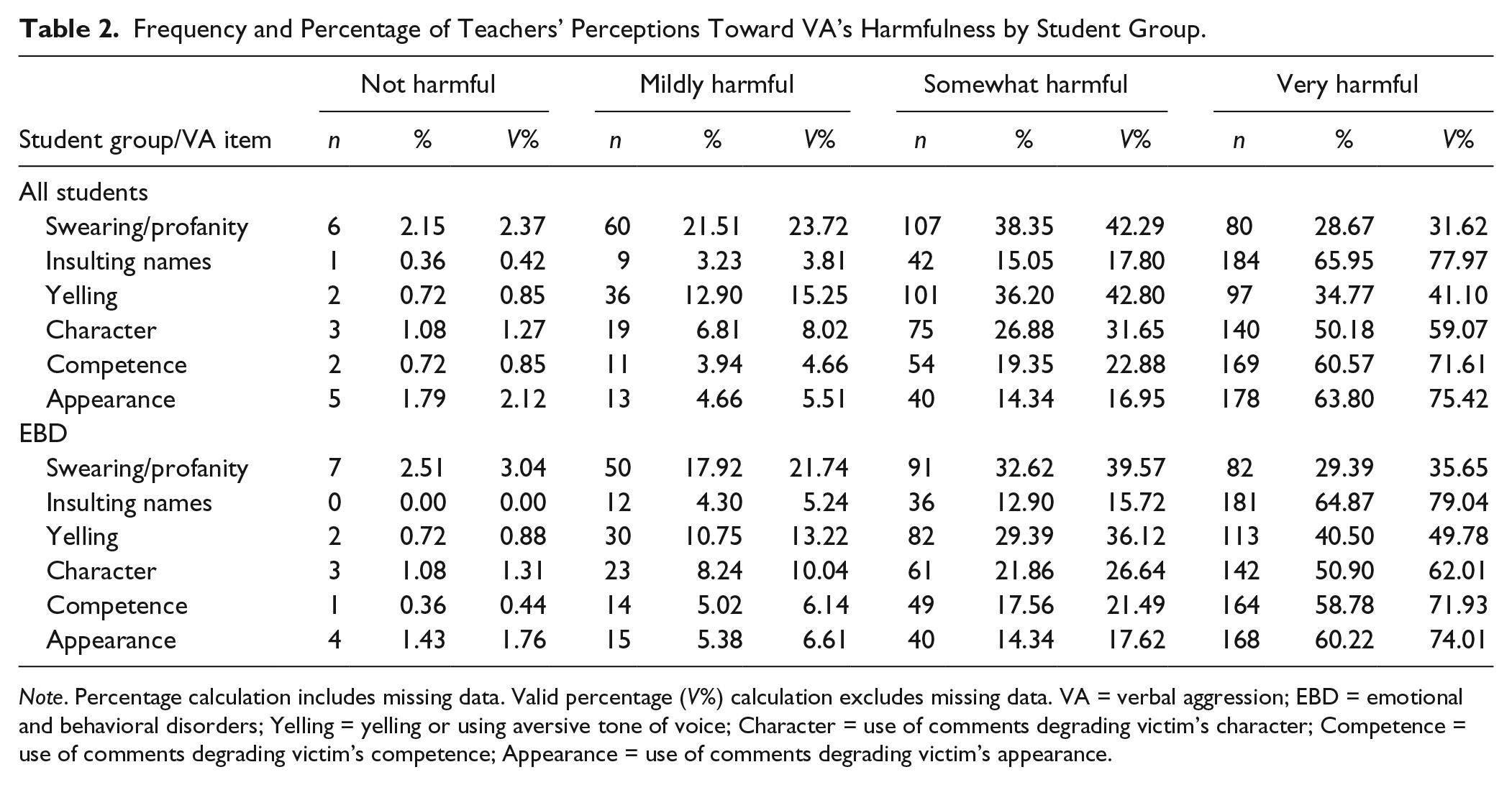
Note. Percentage calculation includes missing data. Valid percentage (V%) calculation excludes missing data. VA = verbal aggression; EBD = emotional and behavioral disorders; Yelling = yelling or using aversive tone of voice; Character = use of comments degrading victim’s character; Competence = use of comments degrading victim’s competence; Appearance = use of comments degrading victim’s appearance.
Comparing Teachers’ Perception of VA’s Harmfulness Toward all Students and Students With EBD Using the Wilcoxon Signed-Rank Test.
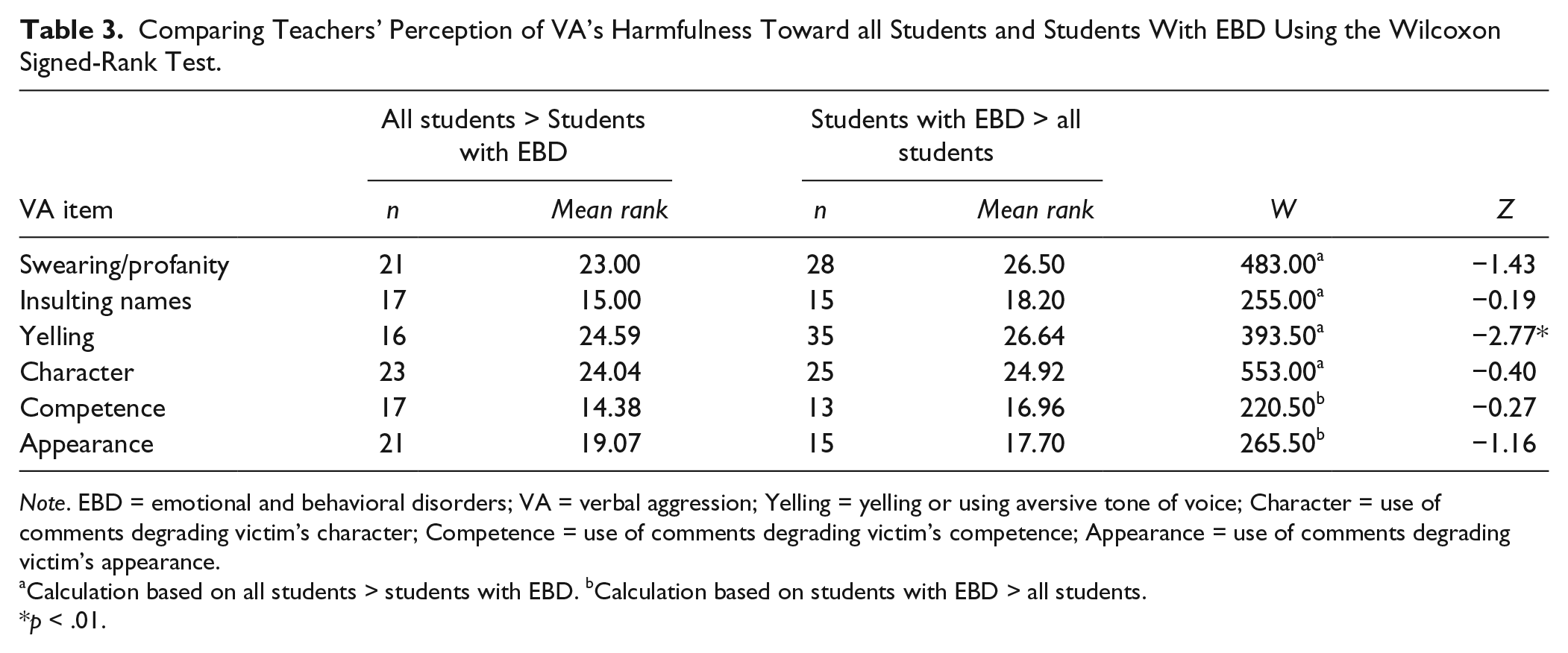
Note. EBD = emotional and behavioral disorders; VA = verbal aggression; Yelling = yelling or using aversive tone of voice; Character = use of comments degrading victim’s character; Competence = use of comments degrading victim’s competence; Appearance = use of comments degrading victim’s appearance.
Calculation based on all students > students with EBD. bCalculation based on students with EBD > all students.
p < .01.
Intent to Harm Nature of VA
Just over half of teachers indicated that students with EBD never or rarely committed acts of VA with the intent to harm (59.0%), whereas 43.9% reported the same for all students. Only 3.5% of the teachers surveyed felt that students with EBD very often used VA with the intent to harm another student, whereas a similar percentage reported the same for all students (4.6%). In our sample, teachers reported lower intent to harm for students with EBD (mean rank = 31.17) compared with all students (mean rank = 30.00), a statistically significant difference (Z = −5.5, p < .001). In other words, teachers perceived that students with EBD are more often just kidding around and do not intend to hurt others when perpetrating VA.
Concern About VA
Concern about the frequency and/or intensity of VA
A small number of teachers, about 18.4% and 16.5%, indicated that they were mildly or not concerned about the frequency and/or intensity of VA for all students and students with EBD, respectively. Approximately 42% of the teachers reported being very concerned for all students, whereas 57% reported being very concerned about the frequency and/or intensity of VA among students with EBD. Compared with all students (mean rank = 43.45), teachers reported significantly more concern about the frequency and/or intensity of VA among students with EBD (mean rank = 45.22; Z = −3.17, p = .002).
Level of concern about VA types
As shown in Table 4, when asked about their concern about the six specific types of VA, the majority of teachers found the use of insulting names among all students (75.63%) and students with EBD (74.89%) to be very concerning. Most teachers also reported being very concerned about competence comments (e.g., you are stupid) for all students (61.92%) and students with EBD (66.67%). A comparison of teachers’ level of concern about VA across the six items (i.e., swearing/profanity, using insulting names, yelling or using aversive tone of voice, and character, competence, and appearance comments) revealed three differences between all students and students with EBD (see Table 5). With regard to character comments (e.g., you are a liar), teachers reported significantly more concern (Z = −3.28, p = .001) for students with EBD, compared with all students. In addition, for VA that targets appearance (e.g., facial features, weight), teachers indicated significantly more concern for students with EBD than all students (Z = −3.74,p = .001). Interestingly, teachers reported significantly less concern (Z = −2.10, p = .036) for students with EBD compared with all students for VA in the form of swearing/profanity.
Frequency and Percentage of Teachers’ Level of Concern Toward VA Types by Student Group.
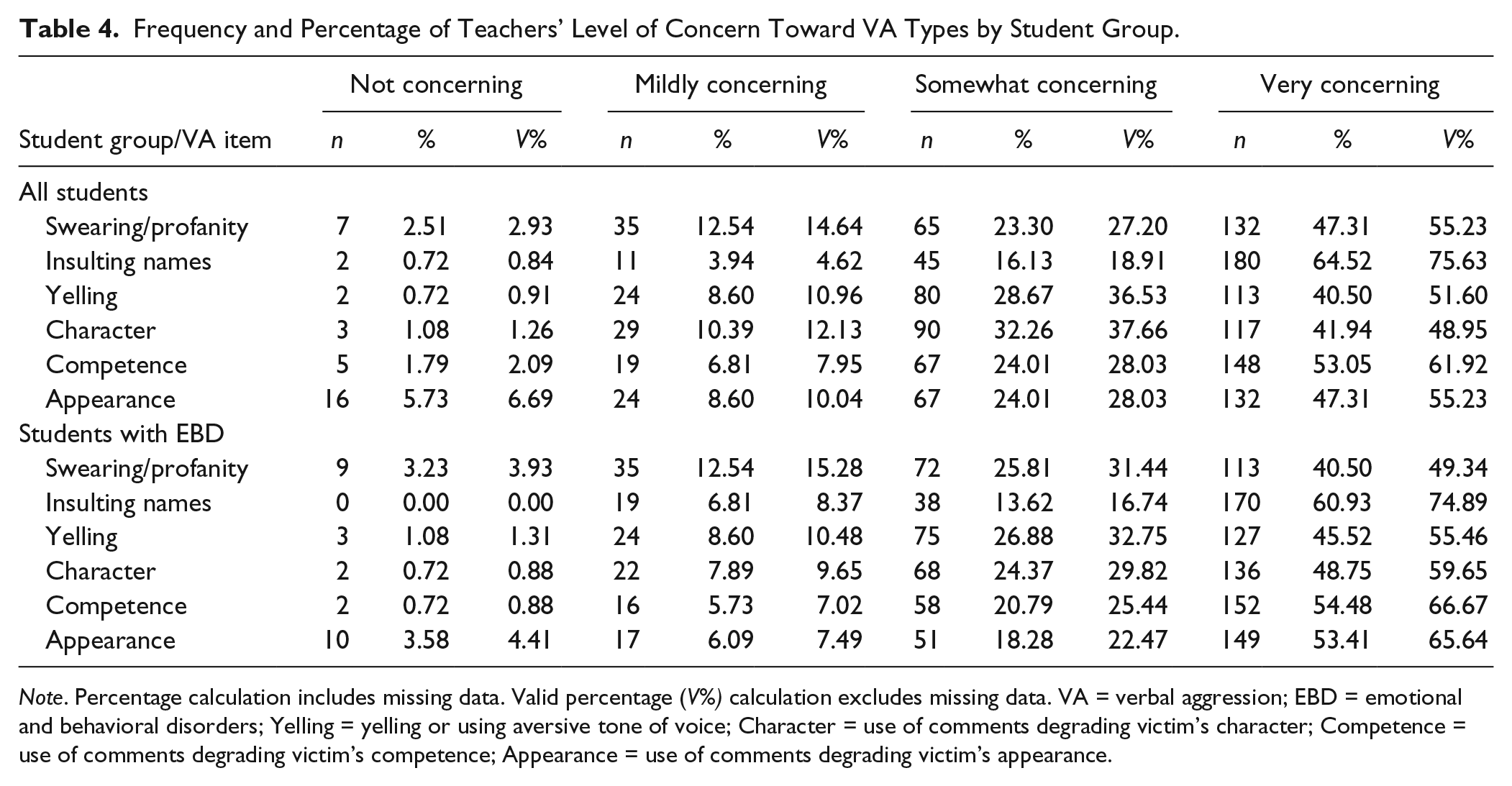
Note. Percentage calculation includes missing data. Valid percentage (V%) calculation excludes missing data. VA = verbal aggression; EBD = emotional and behavioral disorders; Yelling = yelling or using aversive tone of voice; Character = use of comments degrading victim’s character; Competence = use of comments degrading victim’s competence; Appearance = use of comments degrading victim’s appearance.
Comparison of Teachers’ Level of Concern Toward VA Types for All Students and Students With EBD Using the Wilcoxon Signed-Rank Test.
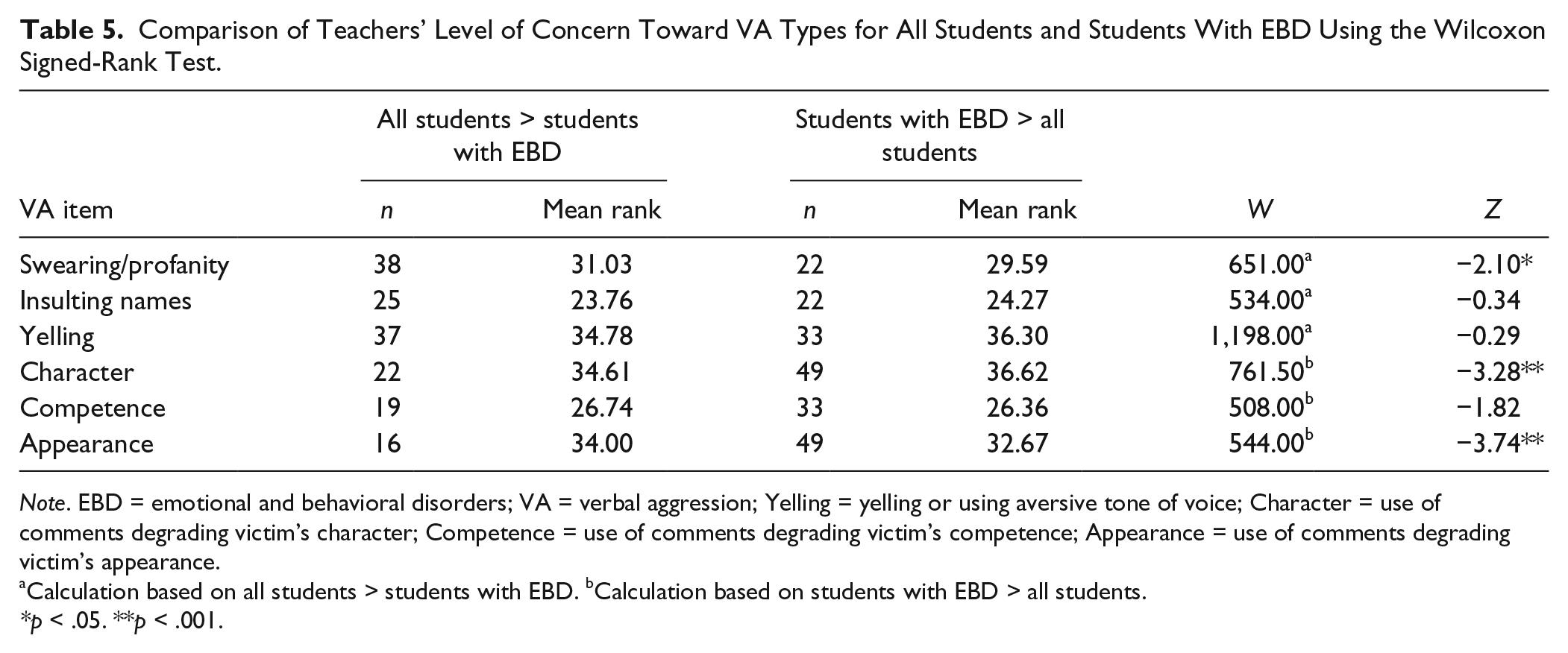
Note. EBD = emotional and behavioral disorders; VA = verbal aggression; Yelling = yelling or using aversive tone of voice; Character = use of comments degrading victim’s character; Competence = use of comments degrading victim’s competence; Appearance = use of comments degrading victim’s appearance.
Calculation based on all students > students with EBD. bCalculation based on students with EBD > all students.
p < .05. **p < .001.
Teacher Certification and Perceptions of VA
We conducted linear regression analyses to determine if teachers’ perceived level of harmfulness of types of VA victimization and level of concern about types of VA could be predicted from SE certification status. In our sample, SE certification was not a significant predictor of these composite variables. The results of the Mann–Whitney U tests suggest, however, that compared with their noncertified peers (mean rank = 126.75), SE-certified teachers reported significantly more intent to harm (mean rank = 109.19) for VA perpetration (U = 4,646.5, p = .039). That is, SE-certified teachers reported more often that students with EBD intend to harm when they exhibit VA. The Mann–Whitney U tests also revealed that SE-certified teachers (mean rank = 121.97) reported significantly higher concern than noncertified peers (mean rank = 100.71) about the frequency and/or intensity of VA (U = 4,565.0, p = .012). In other words, teachers in our sample who have SE certification reported more concern about the frequency and/or intensity of VA among students with EBD than their noncertified counterparts.
Curriculum/Structured Intervention Use and SE Certification
Of the 212 teachers who reported on curriculum or structured intervention use, 61.3% indicated the use of a curriculum or structured intervention to teach students with EBD strategies for dealing with VA, whereas 38.7% reported they did not. Results of the logistic regression indicated that SE certification is a significant predictor of the use of a curriculum/structured intervention in response to VA, Exp(B) = 4.46, Wald = 19.95, p < .001. That is, teachers in our sample with SE certification, controlling for grade level, were about four and half times more likely than noncertified teachers to report using a structured intervention or curriculum to teach students with EBD strategies for dealing with VA.
Discussion
In addition to physical aggression in school settings attracting significant concern and attention, researchers are now considering VA equally concerning, exceedingly pervasive, and psychologically harmful with significant negative effects (e.g., Cole et al., 2014; Taylor & Smith, 2019). As students with EBD perpetrate and experience higher rates of VA than those of their typical peers (Taylor & Smith, 2019), they are particularly situated for negative school and long-term outcomes.
Taylor and Smith (2019) sought to query teachers to generate descriptive data about VA among students with EBD (e.g., prevalence, locations, bystander presence, and teacher consequences), whereas our current exploratory study aimed to examine teacher perceptions about the harmfulness of types of VA victimization and whether teachers thought students intended to harm others when engaged in VA. We also wanted to assess teachers’ concern about the frequency and/or intensity of VA, their level of concern about types of VA, and we sought to determine whether teacher perceptions (harmfulness, intent to harm, and concerns about VA) differed when teachers considered students with EBD and all students. We sought to identify any relationships among these perceptions and teacher certification status as well. Finally, we wanted to investigate if teachers used a curriculum/structured intervention to teach students with EBD strategies to deal with VA and if teacher certification was related.
Harmfulness
Student VA is especially detrimental given the unique association between victimization and deleterious internalizing outcomes such as depression, anxiety, and hopelessness (Cole et al., 2014; Hanley & Gibb, 2011; Rueger & Jenkins, 2014) along with the destructive nature of reciprocal retaliation associated with VA (Geiger & Fischer, 2006). As such, it was encouraging that across all six types of VA, 75% to 95% of the teachers indicated VA among students with EBD was either somewhat or very harmful, similar to their perception about all students. About one in four teachers, however, indicated that swearing/profanity for all students and students with EBD were mildly or not harmful. We did discover that teachers reported yelling as more harmful for students with EBD compared with the general student population. This finding suggests that teachers believe (a) yelling and using an elevated voice level may signal an escalation in aggression intensity that could precede a physical altercation, (b) yelling may be socially stigmatizing for victim and perpetrator, or (c) this form of VA further disrupts learning environments with the existing classroom management concerns (Kauffman & Landrum, 2017) and increases the likelihood of exclusionary discipline (Achilles, McLaughlin, & Croninger, 2007). In contrast to our findings, Coyne, Archer, and Eslea (2006) found that pre- to mid-adolescent students reported “being yelled at” (p. 302) as the least harmful form of VA.
Intent to Harm
Perhaps due to saturation and lack of observable harm, more than half (59%) of the teachers in this study reported students with EBD never or rarely intended to harm others while committing acts of VA, which was higher compared with all students (43.9%). Given that less than half of the teachers (41%) indicated students with EBD often or very often intend to harm their victim, the high levels of reported harmfulness among types of VA (75%–95%) seem inconsistent. T. Garner (1983) suggested that cultural influences of verbal games and insult rituals in which participants take turns affronting each other could reduce perceptions of intent to harm by observers (see also Neu, 2008). Coyne et al. (2006) maintained that indifference about a student’s intention to harm others when engaging in VA may be because the effects of VA (e.g., insulting, make fun of clothes or personality to a person’s face, teasing) are not perceived to be as injurious or long-lasting as indirect or direct relational or social aggression (e.g., destroying someone’s relationships, malicious gossiping, spreading rumors). Perceptions that students with EBD rarely or never intend to harm others indicate that some teachers may not fully appreciate that VA messages inflict harm, irrespective of intent. As Geiger and Fischer (2006) explained, “the extent to which a message is perceived to be offensive, threatening, or provocative is related to the interpretation of the receiver of the message, regardless of the intention of the person transmitting it” (p. 338). Overall, these findings suggest that some teachers may lack knowledge or understanding of the unseen psychological harm VA may cause.
Concern About VA
Teachers in this study reported more concern about the frequency and/or intensity of VA among for students with EBD compared with all students, which further supports findings by Taylor and Smith (2019) who found that students with EBD exhibit more VA than the general student population. Along with findings about the frequency and/or intensity of VA, evaluating concerns about different types of VA provides a more nuanced picture about teacher perceptions. Large majorities of teachers reported that they were somewhat or very concerned across all types of VA among students with EBD and all students, however, up to one in five teachers reported low levels of concern (not concerned or mild concern) for both groups for swearing/profanity. We also discovered that teachers indicated significantly less concern for swearing/profanity for students with EBD compared with all students.
Interestingly, teachers in our sample reported higher concern about both character and appearance comments for students with EBD when compared with all students. Given that the malice of VA often lies in the personalized nature of the messages (e.g., Cole et al., 2014), teachers may understand character and appearance comments as the most disparaging type of VA, which, in turn, may likely provoke a retaliatory and escalating verbal or physical response. This aligns with qualitative findings from Geiger and Fischer (2006), who discovered that VA messages that emphasized a youth’s unalterable characteristics (e.g., facial features) elicited a strong emotional response such as anger and humiliation and a frequent reaction of physical aggression.
Our finding that up to 17% of the teachers expressed low levels of concern for all students about the use of comments degrading students’ appearance is in line with Cohn and Canter (2002) who reported that one in four teachers see nothing wrong with VA in the form of putdowns. Relatedly, researchers report that teachers who perceive peer aggression as typical student behavior are less likely to use effective strategies to reduce it (Troop-Gordon & Ladd, 2015). The reporting of low concern by some teachers about students’ use of VA may be due to the omnipresent frequency of VA in the school setting reported by Taylor and Smith (2019) and the lack of observable harm (e.g., Coyne et al., 2006). More specifically, Taylor and Smith found that the majority of teachers (71%) who worked with students with EBD reported witnessing acts of student-to-student VA on a daily basis, with 57.3% reporting the daily occurrence of student-to-adult VA.
Low levels of concern about VA among some teachers in this study may be related to findings from numerous other studies that students often do not report instances of victimization to their teachers (Bauman, Meter, Nixon, & Davis, 2016; Mishna, Pepler, & Wiener, 2006; Smith & Shu, 2000). For example, Bauman and colleagues discovered that VA in the form of calling names was the only type of aggression that did not predict telling school staff. Furthermore, researchers have found that students reported that teacher response would make the situation worse (e.g., Bradshaw, O’Brennan, & Sawyer, 2008). In fact, specific to VA, Hillard, Love, Franks, Laris, and Coyle (2013) found that 42% of the students rated teacher responsiveness as not effective, whereas only 55% reported that teachers stopped acts of VA. Student under- or nonreporting may leave teachers and other school professionals with the mistaken perception that students are not troubled by VA and that current strategies are adequate. This phenomenon may be exacerbated for SE teachers exposed to an excess of VA in EBD classrooms (Taylor & Smith, 2019) that may desensitize some practitioners to the intentions of aggressors or its impact on their students. In addition, in restrictive settings such as self-contained or special schools with high concentration of students and perhaps elevated rates of other forms of problematic or unsafe behavior, teachers may perceive VA as a comparatively less serious offense possibly influencing the nature of their beliefs and related responsiveness.
SE Certification and Teacher Perceptions
When compared with their noncertified colleagues, SE-certified teachers reported more often that students with EBD are not joking or playing around and aim to intentionally harm when they perpetrate VA. Certified teachers may view acts of VA as proactive and purposeful attempts by students with EBD to guard against potential peer victimization (Rose, Monda-Amaya, & Espelage, 2011). By acquiring certification to teach in SE programs, teachers can gain general awareness about behavioral disabilities and specific knowledge about the atypical behaviors exhibited by students with EBD (Kauffman & Landrum, 2017). Thus, SE-certified teachers may understand better the seriousness of VA and be less likely to view it as a normative form of behavior, which is an important factor in the decision to intervene (e.g., Hektner & Swenson, 2012; Troop-Gordon & Ladd, 2015).
The relationship between certification and increased recognition of intentionality aligns with our finding that SE-certified teachers reported more concern about the frequency and intensity of VA compared with their noncertified colleagues. Given that teachers play a central role in preventing acts of student-to-student aggression (e.g., Mishna, Scarcello, Pepler, & Wiener, 2005) and teacher beliefs about aggression are associated with the quality of their response (Ellis & Shute, 2007; Troop-Gordon & Ladd, 2015), this is particularly relevant for the preparation of special educators. Accordingly, SE-certified teachers trained in preventive behavior management may be more attuned to the problematic nature of VA.
Given that Taylor and Smith (2019) found that 64% of the teachers reported that students with EBD responded to VA with physical aggression, SE-certified teachers may be more aware that VA can be an antecedent to physical altercations or fights in their classrooms, which provides a plausible explanation for elevated levels of concern. Notably, varying paths to SE certification (i.e., alternative route, 4-year program, graduate degree) tend to offer different courses, content, or experiences, which may have a distinct correlation with the development of teachers’ perceptions about VA. As such, investigations into these possible relationships are an important area of future research.
SE Certification and Use of Curriculum/Structured Intervention
Interestingly, 38.7% of those who responded indicated that they did not use a structured curriculum or intervention for teaching students strategies to curb the proliferation of VA. This finding mirrors the high percentage of teachers in the Taylor and Smith (2019) study, who reported reactive responses (e.g., verbal warning) to VA rather than providing proactive and explicit skill instruction to increase more prosocial behavior and thus reduce VA. In total, 27% of the teachers surveyed by Taylor and Smith indicated daily reports by students with EBD about VA suggesting some informal instructional opportunities. These unplanned opportunities, however, are not substantive nor comprehensive enough to remediate VA.
Teachers in our sample with SE certification were four and a half times more likely than noncertified teachers to report using a structured curriculum to teach students who were involved in VA. It may be that SE-certified teachers, given their specialized training, are more often assigned by school administrators or school-based teams to provide behavioral support services to students with EBD (e.g., social skills or conflict resolution instruction). Relatedly, SE certification programs may increase teacher’s interventionist-orientation (i.e., belief that student’s disability-related needs are the responsibility of the teacher and can be addressed with accommodations), which Jordan and Stanovich (2001) explained is associated with frequent and effective engagement in meaningful instructional interactions with students with disabilities. As there are no known curricula or evidenced-based interventions targeting VA exclusively, it can be assumed that teachers used general behavioral programs focusing on social skills, antisocial behavior, or bullying that included aspects related to VA perpetration and victimization. Future researchers should investigate the types and effectiveness of interventions teachers use and, importantly, the perceptions of these efforts as judged by students.
Limitations and Future Research
Although a cross-sectional design has distinct advantages such as efficiency of time and resources, and the ability to generate a multitude of findings useful for creating new or more in-depth research (Creswell, 2015), it is not without its limitations. A cross-sectional design is not useful for analyzing behaviors/perceptions of a long period of time, because it only captures a snapshot of a population at a single point.
In addition, our sample was restricted to one state and SE teacher training programs, employment requirements, and certification standards vary across the country (Rosenberg, Boyer, Sindelar, & Misra, 2007; Rosenberg & Sindelar, 2005). Some states require as little as a passing score on a subject exam before individuals receive provisional licenses allowing them to fill positions in subjects/areas of known teacher shortages (e.g., SE, rural schools). Although provisional, emergency, or temporary licenses are usually given for a limited time period, standards for qualifying for a full professional license are state specific (Kaye, 2012). The various licensure pathways available, especially when compared with traditional teacher preparation programs, result in critical differences between teachers’ experience with and knowledge of quality pedagogy (Darling-Hammond, Chung, & Frelow, 2002). Thus, as the sample was restricted geographically, the results of this study may not generalize to all teachers who work with students with EBD.
A dichotomous response option was adequate to identify teacher certification status; however, we did not consider the many pathways to certification that a teacher might pursue based on a myriad of circumstances and access to resources (e.g., admittance to teacher education program, funding, and suitable life situations). For establishing the use of a structured curriculum or intervention, we felt it was prudent to use the yes/no option as opposed to having teachers identify the myriad of curricula or programming that they use, which would only allow us to report as anecdotal data. Although a yes/no response option may not be optimal to distinguish nuances relative to the route an individual teacher may have taken to acquire teacher certification and the use of a curriculum or intervention, we believe these areas are worthy of additional scrutiny. Future researchers, in their quest to understand aberrant student behaviors, should gather data about teacher preparation standards, certification requirements, and years of experience to facilitate additional moderator and mediator analyses to discover possible relationships between preparation and use of instructional practices. Correspondingly, specific preservice course content, certification requirements, and completed professional development need to be evaluated as related variables that may impact teacher responsiveness to student behavior in general and specifically to VA.
The SE field could benefit from a thorough review of the available evidenced-based interventions to assess to what extent, if at all, VA is an aim of instruction. Little is known about how VA is situated within interventions, but it is clear from literature reviews and meta-analyses focused on school-based anti-bullying programs (cf. Evans, Fraser, & Cotter, 2014; Merrell, Gueldner, Ross, & Isava, 2008; Ttofi & Farrington, 2011) that VA is not a specified focus of intervention effects. As researchers point out, VA significantly predicts physical aggression among children and adolescents (Cole et al., 2014; Roberto & Wilson, 1996), yet they have distinct attributes conceivably requiring separate intervention strategies. Given the correlation between VA and physical aggression (Hanley & Gibb, 2011) and the corpus of studies indicating that VA victimization predicts depressive symptomology (e.g., Cole et al., 2014), it is necessary for SE teachers who work with students with EBD to have a strong understanding of VA and learn strategies for teaching students’ prosocial responses. Thus, the high rate of VA among students with EBD and the negative short- and long-term outcomes associated with its use require the development of empirically validated curricula and intensive interventions that aim to reduce VA among students with significant behavior problems.
Factors related to teacher beliefs and classroom ecology warrant further investigation as well as data collection from multiple informants. For example, future researchers should examine whether teacher appraisal and decision processes related to general aggression affect their responsiveness to observed VA. Associations among multiple factors may provide salient focal points to guide the reduction of student VA and could inform preservice coursework or in-service professional development about managing general behavior problems and specifically developing new knowledge structures about VA. We did not query teachers about their perceptions on the different motives that may underlie students’ use of VA. Some students with EBD may be highly reactive in their use of VA, whereas other students may rely on VA as a form of proactive aggression. For example, students with poor behavioral self-regulation may react with VA when provoked by peers or when frustrated completing assigned tasks. According to Gumpel and Sutherland (2010), these “provocative victims” (p. 352) often have significant internalizing difficulties and low social status. On the contrary, some youth with EBD may be more socially adept aggressors who engage in proactive VA, such as making threats to harm as a way to exert dominance over their peers. These proactive aggressors often have elevated social standing and belong to a group of other aggressive peers (Pellegrini, 1998). Given the qualitative differences between students who may exhibit reactive and proactive VA and the distinct reasons that drive their use of VA, teachers may have different perceptions about their intent to harm and this may be an area of exploration in future research.
Researchers should also investigate teacher authoritative practices and classroom management procedures as potential ecological variables related to VA among students with EBD (Gest & Rodkin, 2011; Luckner & Pianta, 2011). In addition, the frequency and intensity of VA among students with EBD may vary based on the restrictiveness of educational placement (e.g., self-contained, resource, mainstream) and grade level, thus future studies could test statistical models that include student placement and grade level as variables that effect teacher perceptions about, and/or responses to VA. Finally, little is known about student and parent perspectives about VA. Thus, future researchers should investigate students and parent attitudes and beliefs.
Given the extent and perniciousness of VA and the negative outcomes associated with both experiencing and perpetrating this form of aggression, it is imperative that researchers continue the study of VA and teacher educators prepare school professionals to be aware of, and address effectively, this harmful behavior. Teachers who possess adequate knowledge structure and skills to neutralize VA in school settings will be better positioned to proactively reduce occurrences of physical violence, while also mitigating unhealthy intrapersonal effects.
Footnotes
Declaration of Conflicting Interests
The author(s) declared no potential conflicts of interest with respect to the research, authorship, and/or publication of this article.
Funding
The author(s) received no financial support for the research, authorship, and/or publication of this article.
