







Abstract
Despite decades of federal mandates, students with Emotional and Behavioral Disorders (EBD) continue to experience stark disparities in postschool outcomes: struggling to gain employment, to access postsecondary education, and with community integration. The purpose of this systematic review was to examine the existing research regarding the barriers and facilitators influencing postsecondary outcomes for individuals with an EBD special education label. Using a Mixed Methods Research Synthesis (MMRS) approach, 13 empirical studies (published 1998–2025) from three major database searches were analyzed and thematically coded. Findings included three overarching categories of challenges: personal barriers (e.g., academic/life skill deficits, negative self-perception, mental health needs), family-related barriers (e.g., low expectations, resource scarcity), and school-related barriers (e.g., restrictive educational settings, low educator expectations, lack of postsecondary support utilization). Key facilitators included participation in employment during high school years, strong family support, and positive school staff relationships. These consistent findings highlight the compounding effects of personal skill deficits and systemic barriers like exclusion and low expectations. The review underscores the critical need for comprehensive, interventional research focused on self-determination, life skills training, and systemic reforms to ensure successful transition for this vulnerable population.
Keywords
Despite nearly three decades of federal mandates intended to improve postschool transition planning, including the Individuals with Disabilities Education Act (IDEA, 2004), many students diagnosed with emotional and behavioral disorders (EBD) leave K–12 education without the skills, supports, or connections needed to thrive in adult life (National Center for Education Statistics [NCES], 2023b). The transition outcomes for these students are equally concerning: many experience difficulty finding and maintaining employment, entering or completing postsecondary education, or accessing necessary community resources (Mitchell et al., 2019; Yeager et al., 2020).
Students with EBD, though a relatively small portion of the special education population at approximately 5% (NCES, 2023b), often have multifaceted needs that extend beyond academics. To be eligible for special education services under the emotional disturbance category (which is how EBD is referenced in IDEA), a student must exhibit specific characteristics that negatively influence their educational performance (IDEA, 2004). These challenges can limit a student’s ability to participate in elective courses, advanced academics, career training, extracurricular activities, and even successfully complete high school (Mazzotti et al., 2021; Mitchell et al., 2019; NCES, 2023a).
The disparities in educational outcomes for students with EBD are stark. National data from the 2017–2018 school year reveal that only 60% of students with EBD graduated with a standard high school diploma, compared to 73% of students with disabilities overall (U.S. Department of Education, 2020). During the 2021–2022 school year, nearly 30% of students with EBD who exited school dropped out (NCES 2023b), a rate nearly twice that of students with learning disabilities (U.S. Department of Education, 2019). While graduation is a significant milestone, it alone does not guarantee a student’s readiness to enter and sustain postsecondary education or employment, as many students with EBD leave high school without the necessary tools to navigate adult systems and establish independence (Mazzotti et al., 2021).
These consistent disparities highlight a population that continues to struggle with access to opportunities, consistent support, and meaningful preparation for life after high school (Lipscomb et al., 2017; Mitchell et al., 2019). Although research consistently reports poor outcomes among students with EBD, there is a lack of research focusing on the unique challenges faced by high school-age students with EBD. Until educators and decision makers understand these challenges, it will be impossible to address the root causes that contribute to poor postsecondary outcomes among this population. Likewise, understanding facilitators and barriers will make any interventions or school system reforms more effective. To examine the scope and depth of existing research on this issue, the author team conducted a systematic review of the research base focused on the barriers and facilitators related to a variety of postsecondary outcomes (e.g., graduation, employment rates, college completion rates) for individuals with EBD.
The Current Review
The purpose of this systematic review was to examine the body of research related to postsecondary outcomes for individuals with special education labels of EBD. This review was guided by the following research question: What is known about the barriers and facilitators that contribute to postsecondary outcomes for individuals with a special education label of EBD? Although there are various terms used to represent this population, the authors use the term “EBD” throughout this review to represent the disability category for students qualifying for individualized education programs (IEPs) under a variety of labels, including serious emotional disturbance and emotional behavioral disorder.
Method
The purpose of a systematic literature review is “to collate all the empirical evidence that fits pre-specified eligibility criteria in order to answer a specific research question” (Higgins et al., 2019, p. 4). The researchers used the systematic literature review guidelines outlined by Heyvaert et al. (2013) in designing the mixed methods research synthesis (MMRS) approach. As a result, the focus was on peer-reviewed studies, but gray literature (i.e., dissertations) was also included if it contained empirical research with findings or results that addressed the research question. To minimize human error, systematic procedures (i.e., title and abstract screening, full text review, and extraction) were conducted by team of five researchers using the collaborative software program Covidence, which is a systematic review management program (Covidence, 2022). The findings were then documented using a Preferred Reporting Items for Systematic Reviews and Meta-Analyses (PRISMA) flow diagram (see Figure 1).
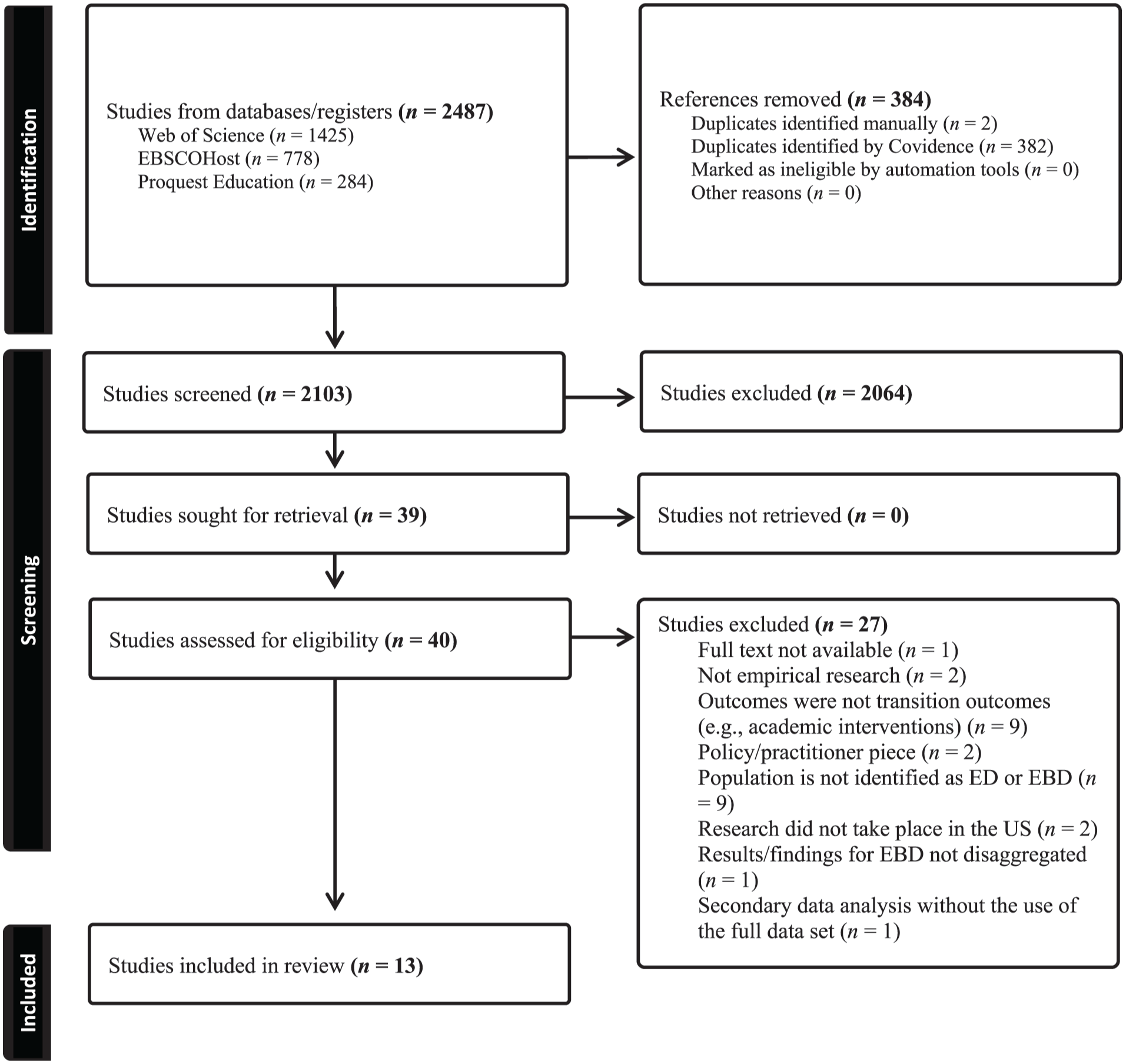
PRISMA flowchart showing the systematic review process.
Search Procedures
For this review, the initial electronic databases accessed through EBCOHost were APA PsycInfo, ERIC, and Education Research Complete. These selections were made based on the recommendations of faculty members with experience researching special education topics. After multiple test searches conducted over a 2-week period and a consultation with the George Mason University Educational Librarian, two additional databases were added to the EBSCOHost search: Child Development and Adolescent Studies and Psychology and Behavioral Sciences Collection.
Part of the preliminary search procedure included identifying common EBD search keywords used in relevant literature, both in current (e.g., emotional disability, EBD) and older (e.g., emotional disturbance, emotionally disturbed) literature, to capture as much relevant information as possible. This consisted of investigating key terms used across each database and conducting preliminary searches with relevant vocabulary. In the preliminary searches, the results were cross-referenced against databases. In addition, the researchers looked at the number of results in tandem with the relevance of materials and evaluated the similarities of literature across databases. In addition to the key terms identified, the primary author also added Boolean terms to ensure that as much literature as possible was captured with the purposeful use of “AND” and “OR” to capture each aspect of the research questions. The Boolean phrases used were: (emotional disability or emotional behavior disability or EBD or emotional disturbance or emotionally disturbed) AND (“postsecondary outcome” or “post-secondary outcome” or “post secondary outcome” or transition or outcome or “post-school life” or adulthood) AND (barrier*or facilitat* or influence).
The electronic search in the EBSCOhost database resulted in the initial identification of 778 studies. When this same search was repeated in Web of Science, an additional 1,425 results were found. Because previous related searches yielded research conducted a decade or more ago, the primary author also searched the ProQuest system using the same search terms to identify dissertation research. This search yielded 284 results, for a total of 2,487 studies. Once these were identified, the team moved into the title and abstract screening phase.
Screening Procedures
The following inclusionary criteria were utilized for this review: (a) the population examined are/were students a special education label of EBD (with or without co-occurring educational disabilities); (b) research took place in the United States; (c) research study focused on postsecondary outcomes (e.g., attending college or training, holding a job, independent living); (d) full text available; and (e) written in English. Exclusionary criteria included: (a) research indirectly related to transition outcomes (e.g., academic interventions); (b) secondary data analysis without the use of the full data set; (c) research where disability labels among participants were not disaggregated; (d) practitioner papers or policy pieces; and (e) full text unavailable.
Once all titles and abstracts were uploaded into Covidence, 384 duplicates were removed, resulting in 2,103 studies available for screening. A team of five researchers engaged in the screening process. The primary author read all of the articles, while the other team members divided up the articles for a second review, resulting in each article title and abstract pair being reviewed by at least two researchers. Using the established research question and inclusionary/exclusionary criteria (See Table 1), the team identified study abstracts and titles that met the inclusionary criteria. To ensure systematic procedures, the researchers met weekly for the duration of this review to discuss conflicts (i.e., one reviewer indicating the study should be included and another indicating it should be excluded) and ensure consistent understanding of the research question and inclusionary/exclusionary criteria.
Inclusionary/Exclusionary Criteria.
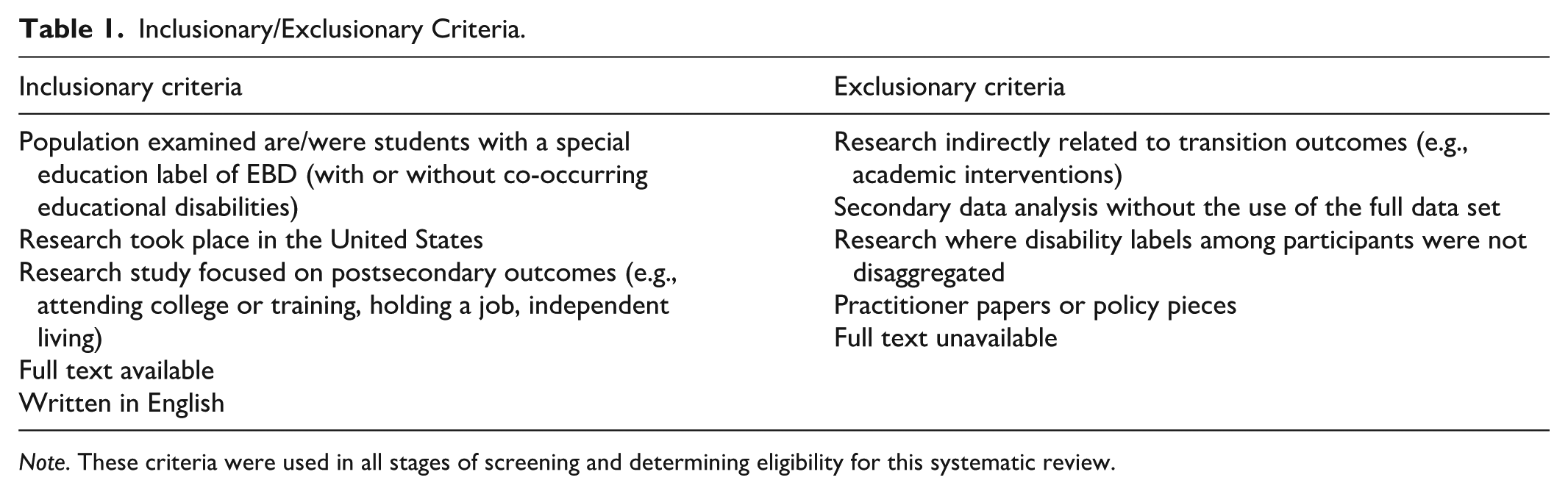
Note. These criteria were used in all stages of screening and determining eligibility for this systematic review.
Eligibility Procedures
Following screening and exclusion of several studies (n = 2,063), the team conducted full text reviews of 40 studies, though the full text of one study could not be located and was excluded at this point. As with the screening of articles and abstracts, the primary author completed an eligibility review for each study, while team members completed second eligibility determinations and determined eligibility when a conflict between the first and second reader. Figure 1 includes detailed information about how many studies were excluded for each reason (e.g., not empirical research, research outside the United States, incorrect population). Once studies were reviewed for eligibility based on full study texts, 13 studies remained for analysis.
Coding Procedures
The research team deductively coded each article, including the study descriptors (i.e., author[s], publication year, type of publication, purpose, publication type, location, participant description, examined transition outcome). Deductive codes also included (a) study design; (b) methods used; (c) research question; (d) participant disability; (e) sample size; (f) recruitment notes; (g) postsecondary outcome focuses (e.g., graduation, postsecondary education, postsecondary employment); (h) barriers identified; and (i) facilitators identified. As with previous screening and eligibility determinations, two of the researchers conducted each coding process separately. Instead of having a third researcher make final decisions when there was a conflict, however, the two researchers worked together to reach 100% agreement before completing the coding process for each study. Information about barriers and facilitators was grouped and sorted thematically.
Results
Study Characteristics
The 13 studies included 8 journal articles (representing 7 journals), 1 executive summary, and 4 dissertations. The studies ranged in publication dates from 1998 to 2025. Study characteristics are included in Table 2.
Characteristics of Included Studies.
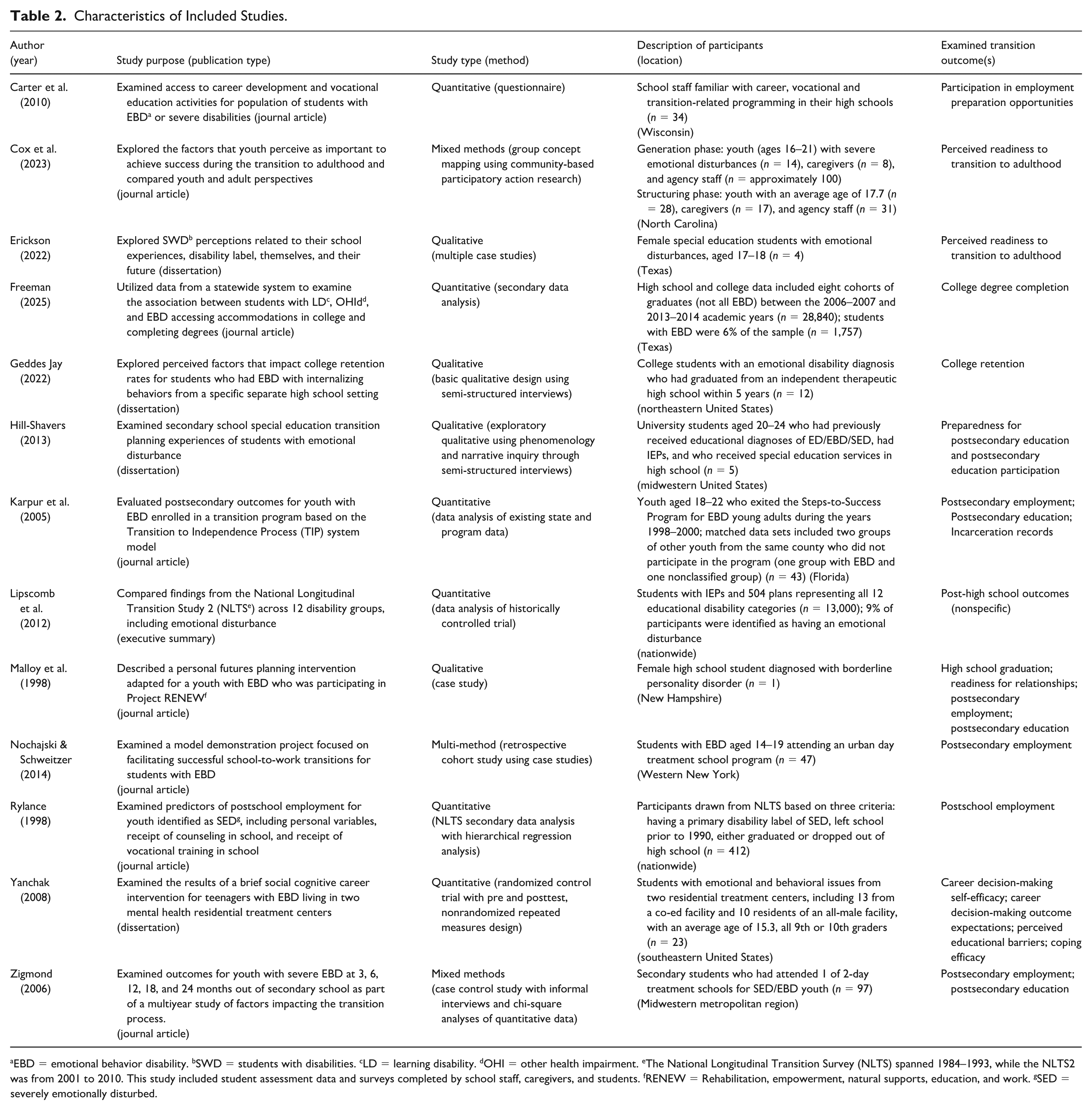
EBD = emotional behavior disability. bSWD = students with disabilities. cLD = learning disability. dOHI = other health impairment. eThe National Longitudinal Transition Survey (NLTS) spanned 1984–1993, while the NLTS2 was from 2001 to 2010. This study included student assessment data and surveys completed by school staff, caregivers, and students. fRENEW = Rehabilitation, empowerment, natural supports, education, and work. gSED = severely emotionally disturbed.
Participants
Eleven of the studies focused exclusively on individuals with EBD, though the actual disability category name (e.g., emotional disability, emotional disturbance) varied by study (see Figure 2). The other three studies included students with other types of special education eligibilities (i.e., specific learning disability, other health impairment) but also included participants with EBD. Of the studies, nine included input from participants with EBD (see Table 2 for more information). All individuals with EBD were either enrolled in high school (Cox et al., 2023; Erickson, 2022; Lipscomb et al., 2012; Malloy et al., 1998; Nochajski & Schweitzer, 2014; Yanchak, 2008) or college (Freeman, 2025; Geddes Jay, 2022; Hill-Shavers, 2013; Karpur et al., 2005; Rylance, 1998; Zigmond, 2006). One study included only school staff participants (Carter et al., 2010), and another included staff, caregivers, and individuals with EBD as participants (Cox et al., 2023). The gender of participants was not noted in many of the studies. However, a portion of participants in Yanchak’s (2008) study were from an all-male treatment facility, and both Erickson (2022) and Malloy et al. (1998) exclusively studied female participants.
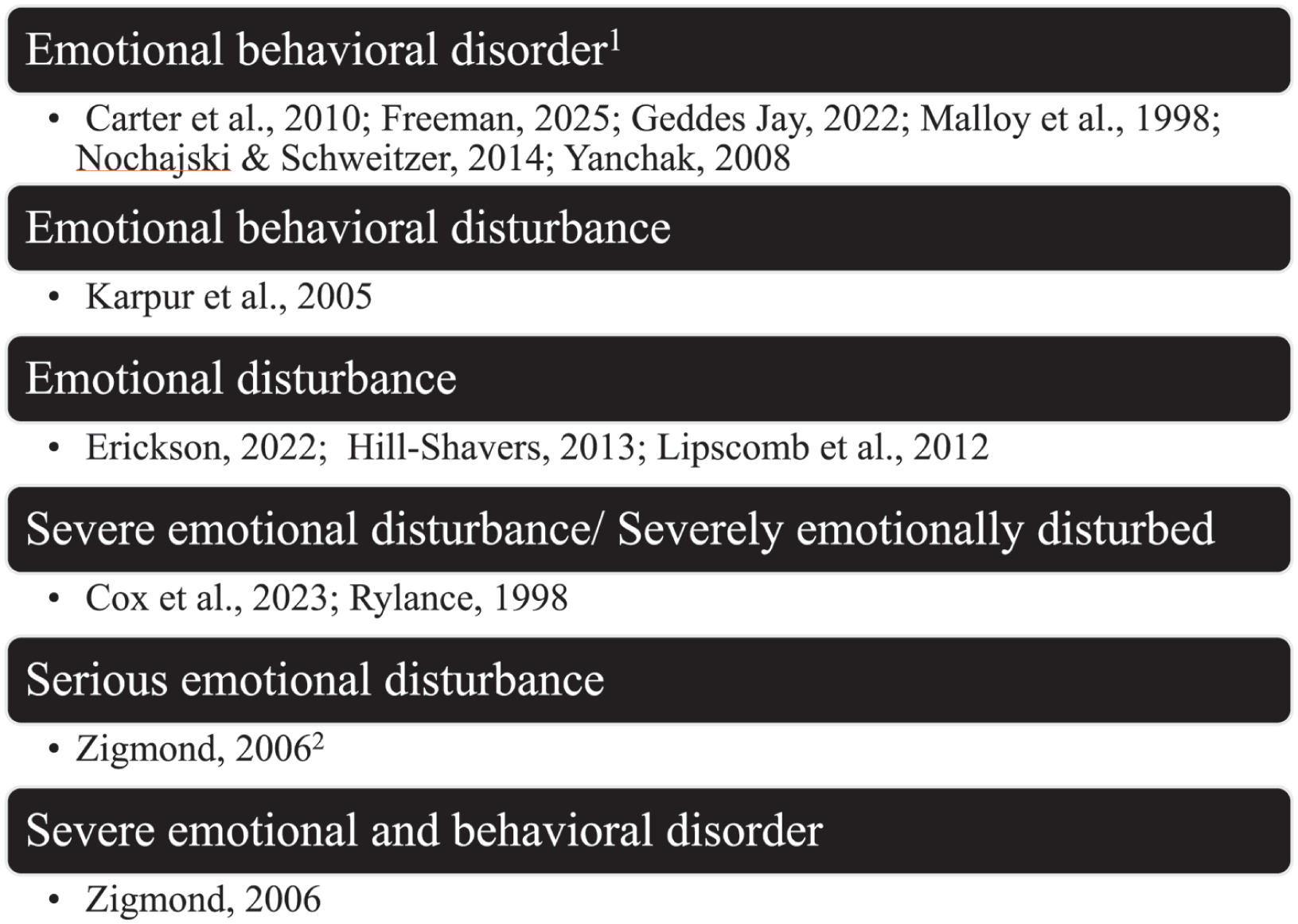
Different versions of terminology for EBD used in included studies.
Settings
All the studies took place in the United States. Two were national studies (Lipscomb et al., 2012; Rylance, 1998), while others took place in specific states (e.g., North Carolina, Texas, Wisconsin) or regions (northeastern United States, Midwestern metropolitan region). Empirical study settings included: (a) segregated residential (Yanchak, 2008) or day treatment settings (Nochajski & Schweitzer, 2014), (b) a therapeutic separate high school (Geddes Jay, 2022), (c) a participant’s home (Malloy et al., 1998), (d) college or university settings (Freeman, 2025; Geddes Jay, 2022; Hill-Shavers, 2013; Karpur et al., 2005; Rylance, 1998); or (e) more traditional, neighborhood school settings (Carter et al., 2010). In addition, participants in Zigmond’s (2006) study had previously attended a day treatment school setting.
Methods
Of the 13 studies, 4 were qualitative (Erickson, 2022; Geddes Jay, 2022; Hill-Shavers, 2013; Malloy et al., 1998), 2 were mixed methods (Cox et al., 2023; Zigmond, 2006), 6 were quantitative (Carter et al., 2010; Freeman, 2025; Karpur et al., 2005; Lipscomb et al., 2012; Rylance, 1998; Yanchak, 2008), and 1 was a multi-method study (Nochajski & Schweitzer, 2014). Two of the six quantitative studies were secondary data analyses, with one using state data (Freeman, 2025) and another using national data (Rylance, 1998). Researchers used a variety of methods across these 13 studies, including semi-structured interviews, participatory action research, questionnaires, and statistical analysis (See Table 2 for more details).
Postsecondary Outcomes Examined
Postsecondary outcomes studied are listed by study on Table 2. Lipscomb et al. (2012) referenced nonspecific post-high school outcomes for youth with EBD, while two other studies focused on participants with EBD and their perceived readiness to transition to adulthood (Cox et al., 2023; Erickson, 2022). The most common outcome examined across this sample of studies was postsecondary employment (Karpur et al., 2005; Malloy et al., 1998; Nochajski & Schweitzer, 2014; Rylance, 1998; Zigmond, 2006), though they varied in whether the outcome was employment, employment readiness, or maintaining employment. Similarly, Carter et al. (2010) examined whether students with EBD participated in employment preparation opportunities before graduating high school and Yanchak (2008) looked at participants’ career decision-making self-efficacy and career decision-making outcome expectations.
Four studies focused on postsecondary education as an outcome (Hill-Shavers, 2013; Karpur et al., 2005; Malloy et al., 1998; Zigmond, 2006). Geddes Jay (2022) focused on college retention and Freeman (2025) used college degree completion as a postsecondary outcome measurement. Yanchak (2008) assessed participants who perceived educational barriers to postsecondary education. Other studies focused on graduation, community, and personal outcomes. Malloy et al. (1998) noted high school graduation as an outcome for their case study participant. Karpur et al. (2005) also reported incarceration rates. Finally, Yanchak (2008) and Malloy et al. (1998) reported personal outcomes including coping efficacy and readiness for relationships.
Barriers Contributing to Postsecondary Outcomes
The researchers identified three categories of barriers contributing to postsecondary outcomes: personal barriers, family-related barriers, and school-specific barriers. See Figure 3 for categories and subcategories and Table 3 for additional details about these barriers, including factors, respondents, and specific studies.
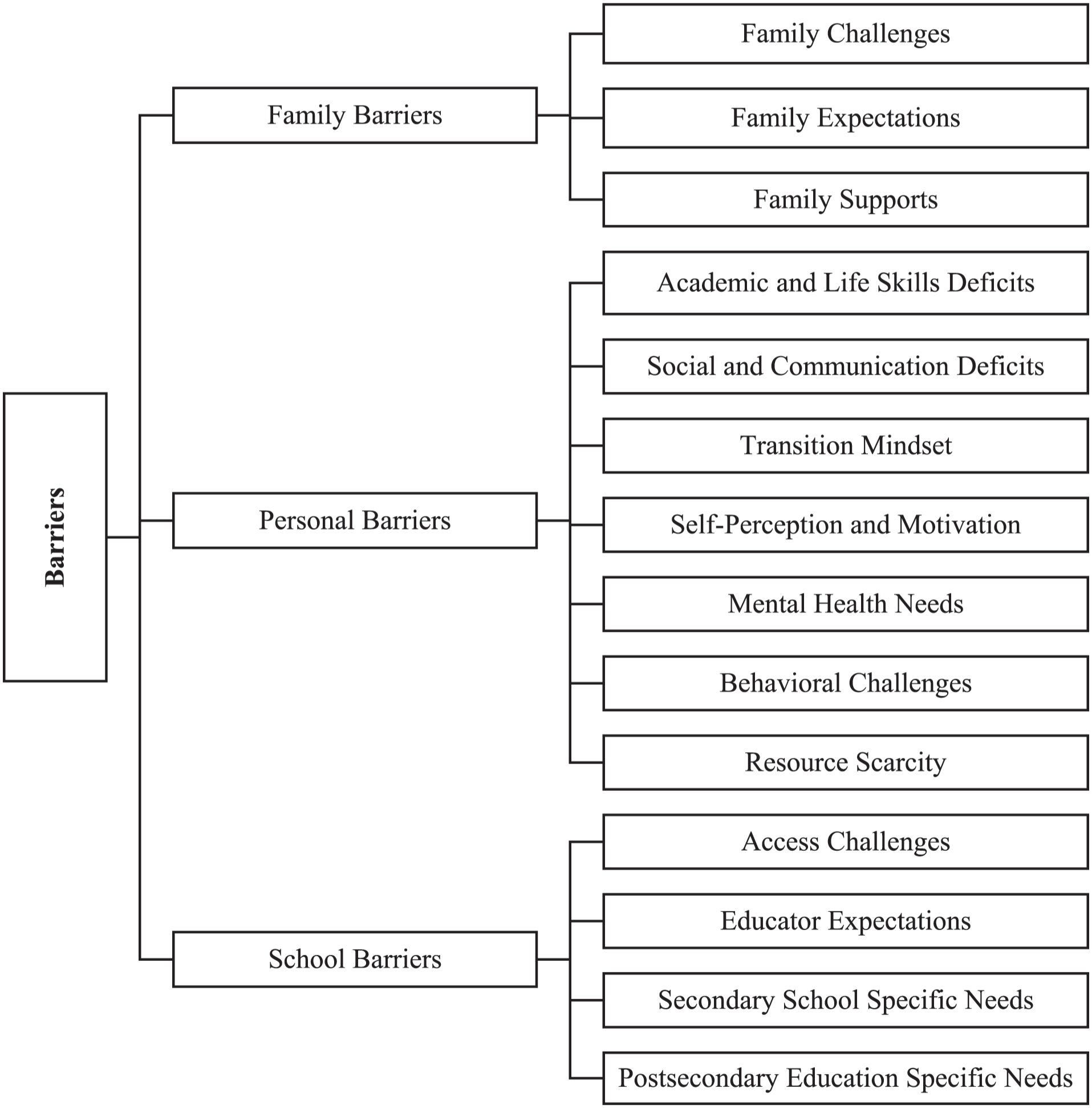
Barrier categories and subcategories identified in included studies.
Barriers Identified in Findings/Results/Discussion of Included Studies.
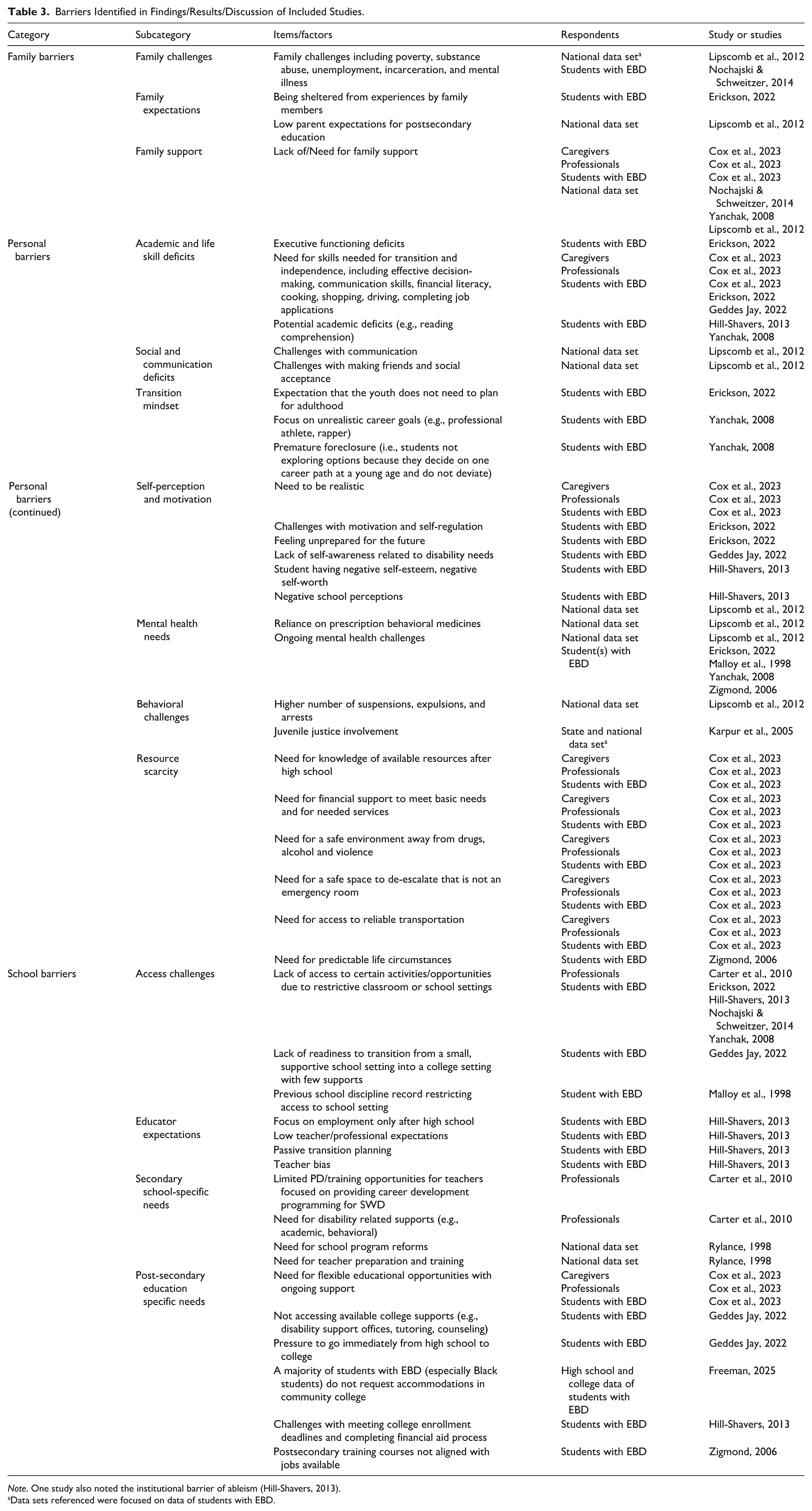
Note. One study also noted the institutional barrier of ableism (Hill-Shavers, 2013).
Data sets referenced were focused on data of students with EBD.
Personal Barriers
The personal barrier of academic and life skill deficits was noted across five studies by students with EBD, their caregivers, and their school staff. Participants in three studies noted the need for skills needed for transition and independence, including effective decision-making, communication skills, financial literacy, cooking, shopping, driving, and completing job applications (Cox et al., 2023; Erickson, 2022; Geddes Jay, 2022). Both high school students with EBD (Yanchak, 2008) and university students with EBD (Hill-Shavers, 2013) indicated that academic deficits (e.g., reading comprehension) were a potential barrier to postsecondary outcomes. In addition, the high school students with EBD in Erickson’s (2022) study made note of executive functioning deficits as a barrier to success. Comunication deficits and challenges with making friends were noted by Lipscomb et al. (2012), along with challenges of being accepted socially by peers.
Other personal barriers identified were related to the transition mindset of students with EBD or their self-perception and motivation. One of the participants in Erickson’s (2022) study indicated that she never planned for her future because of her expectation that she would not live until adulthood. Yanchak (2008) reported that students with EBD sometimes experience premature foreclosure, which is when students do not explore or consider various career options because they decide on one career path at an early age and do not deviate from it. Yanchak (2008) also reported that students with EBD sometimes focus on unrealistic career goals (e.g., professional athlete, rapper), which may impact their ability to plan appropriately. Similarly, Cox et al. (2023) made note of the need for students with EBD to be realistic when planning for the future. The college students in Geddes Jay’s (2022) study reported the challenges related to having a lack of self-awareness related to disability needs. Students with EBD also experience challenges with motivation and self-regulation (Erickson, 2022) and negative self-esteem and negative self-worth (Hill-Shavers, 2013), which contribute to negative school perceptions (Hill-Shavers, 2013; Lipscomb et al., 2012) or feeling unprepared for the future (Erickson, 2022).
Other subcategories related to personal barriers included mental health needs, behavioral challenges, and personal resource scarcity. Students with EBD may have a higher reliance on prescription behavioral medicines (Lipscomb et al., 2012). They also may experience ongoing mental health challenges into adulthood (Erickson, 2022; Lipscomb et al., 2012; Malloy et al., 1998; Yanchak, 2008; Zigmond, 2006), which may impact their ability to participate in adult life independently. This population also experiences higher numbers of school suspensions and expulsions compared to students with other disabilities or without disabilities (Lipscomb et al., 2012) and higher arrest records than other students with disabilities (Karpur et al., 2005; Lipscomb et al., 2012). Zigmond (2006) made note of this population’s challenge with unpredictable life circumstances. Students with EBD, their caregivers, and their school staff reported the need for (a) knowledge of available resources; (b) financial support to meet basic needs and for needed services; (c) access to reliable transportation; (d) a safe environment away from drugs, alcohol and violence; and (e) a safe space to deescalate that is not an emergency room (Cox et al., 2023).
Family-Related Barriers
Family barriers centered on family challenges, overall family expectations, and the need for family support. In their analysis of NLTS2 data, Lipscomb et al. (2012) highlighted that students with EBD are more likely to have parents with low employment rates when compared to other students with disabilities. Nochajski and Schweitzer (2014) also found that unemployment rates impacted families of students with EBD and described family challenges (e.g., poverty, mental illness, substance abuse, incarceration) experienced by their participants as “situational contexts” that may impact the ability of students to access and make progress in educational settings (p. 420).
In addition, Lipscomb et al. (2012) noted that parents of students with EBD generally have low expectations that their students will engage in postsecondary education. Student participants in Erickson’s (2022) study shared that their families were not always willing to help them build independence skills because they were being sheltered. Further, a lack of family support was noted as a barrier for postsecondary transition by caregivers (Cox et al., 2023), professionals (Cox et al., 2023), and students with EBD (Cox et al., 2023; Nochajski & Schweitzer, 2014; Yanchak, 2008). It was also noted by Lipscomb et al. (2012) that although parents attended IEP meetings, parent–teacher conferences, school events, and helped with homework as compared to the parents of students with other disability categories. Although parents of students with EBD attended IEP meetings and parent–teacher conferences at a rate higher than the parents of youth with an IEP overall, they were much lower than average in helping with homework and attending school events.
School-Related Barriers
Researchers across the 13 studies found a variety of school-related barriers to postsecondary outcomes for students with EBD, including access issues and educator expectations. In regard to access, many students with EBD are educated in separate special education settings away from general education peers, leading to a lack of access to certain activities/opportunities due to restrictive classroom or school settings (Carter et al., 2010; Erickson, 2022; Hill-Shavers, 2013; Nochajski & Schweitzer, 2014; Yanchak, 2008). In their case study of a high school female with EBD, Malloy et al. (1998) found that the participant’s previous school discipline record restricted access to her neighborhood school, which impacted her ability to complete her coursework and work toward graduation. In another study (Geddes Jay, 2022), graduates of a small, separate therapeutic school indicated their appreciation for a supportive school environment while also recognizing their lack of readiness to transition from this special education-only school setting into a college setting with few supports. Educator expectations were highlighted in Hill-Shavers’s (2013) study, where university students with EBD indicated that they had experienced low teacher/professional expectations and teacher bias. These participants also noted that their participation in transition planning was only passive and that their educators “tracked” them for employment (p. 168), not considering postsecondary education, which made it difficult for students to plan for other options.
Other school-related subcategories included high school and postsecondary school needs. Rylance (1998) indicated the need for school program reforms (e.g., creating programs in greater alignment with student needs and abilities, focusing on programs that motivated students to remain in school) and the need for more teacher preparation and training for working with students with EBD. Carter et al. (2010) also made note of the need for more teacher training, calling out the limited professional development and training opportunities for teachers focused on providing career development programming for students with disabilities (e.g., Carter et al. (2010). Studies also identified barriers that were specific to postsecondary education/training. For example, Geddes Jay’s (2022) participants felt pressure to go immediately from high school to college, and Cox et al.’s (2023) participants indicated a need for flexible educational opportunities with ongoing support. In addition, Geddes Jay (2022) found that participants were not consistently accessing available college supports (e.g., disability support offices, tutoring, counseling), and Freeman (2025) found that a majority of students with EBD do not request accommodations in community college. Hill-Shavers’s (2013) participants indicated that they had challenges with independently meeting college enrollment deadlines and completing the complicated financial aid process. Although most of these barriers are related to college coursework, Zigmond’ s (2006) participants indicated that their postsecondary technical training courses were not aligned with the actual jobs available to them after they completed training.
Facilitators Contributing to Postsecondary Outcomes
Facilitators of the examined postsecondary outcomes were also grouped thematically into personal, family-related, and school-related (see Figure 4). Information about these findings, respondents, and associated study is indicated in Table 4.
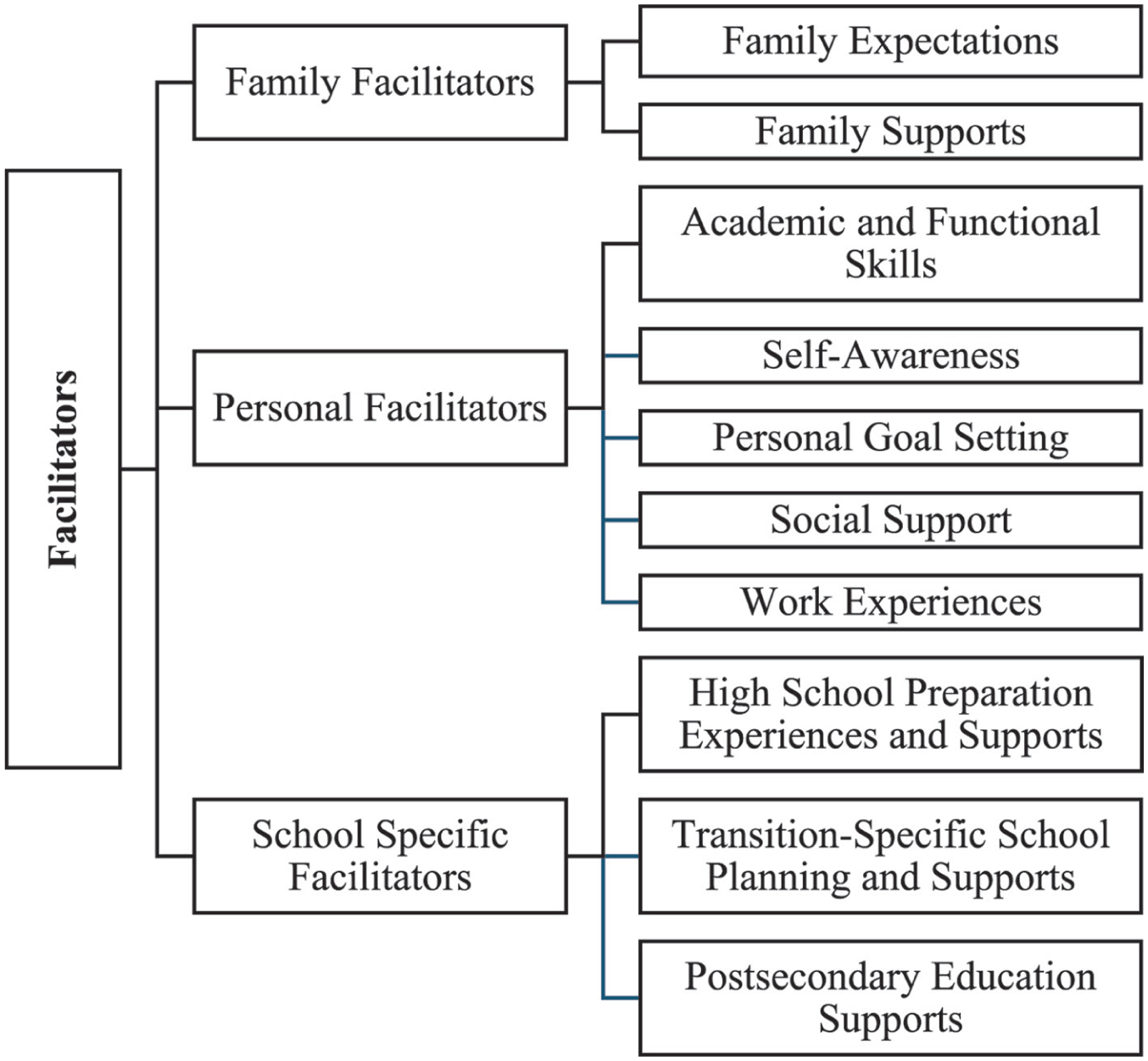
Facilitator categories and subcategories identified in included studies.
Facilitators Identified in Findings/Results/Discussion of Included Studies.
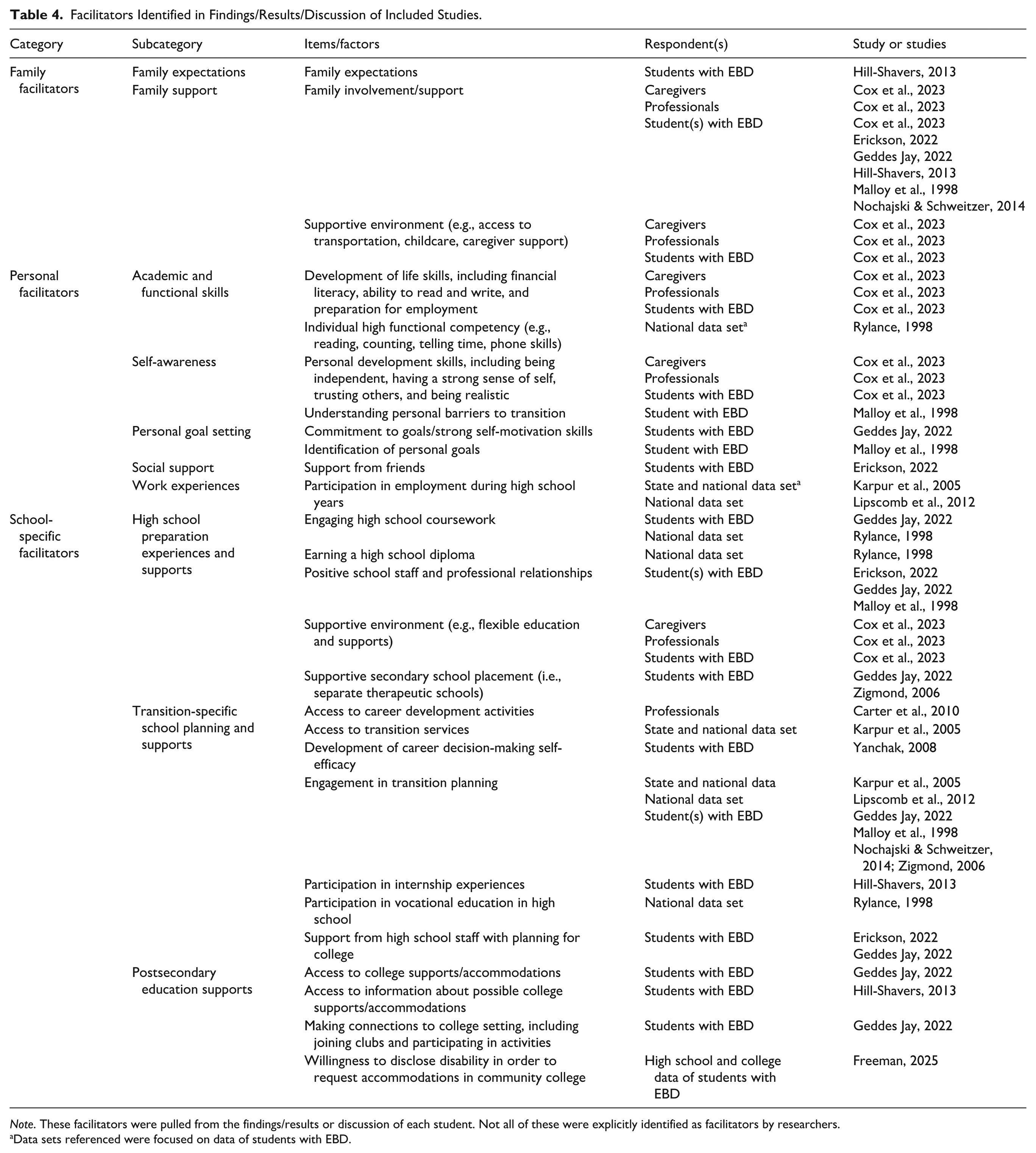
Note. These facilitators were pulled from the findings/results or discussion of each student. Not all of these were explicitly identified as facilitators by researchers.
Data sets referenced were focused on data of students with EBD.
Personal Facilitators
The personal facilitators include academic and functional skills, self-awareness, personal goal setting, social support, and work experiences. Academic and functional skills as facilitators included the development of life skills (e.g., financial literacy, ability to read and write, and preparation for employment; Cox et al., 2023) and individual “functional competency and skills” (e.g., counting, telling time, reading, phone skills; Rylance, 1998, p. 190). In addition to academic skills, other facilitators were related to self-awareness, including personal development skills (e.g., being independent, having a strong sense of self, trusting others, and being realistic; Cox et al., 2023) and understanding personal barriers to transition (Malloy et al., 1998). Other facilitators were related to goal setting (Malloy et al., 1998). For example, the high school graduates in Geddes Jay’s (2022) study also indicated the importance of being able to commit to goals and possess strong self-motivation skills. Another facilitator noted by the high school students with EBD in Erickson’s (2022) study included support from their friends. Overall, the facilitator mentioned in most studies in the personal category was a student’s participation in employment during their high school years (Karpur et al., 2005; Lipscomb et al., 2012), whether they secured a job on their own or participated in school-supported employment. Additional facilitators related to work are described in the subsequent school-related facilitator section.
Family-Related Facilitators
Although some studies characterized family expectations as a barrier to transitioning to adulthood, the college-aged participants in Hill-Shavers’s (2013) study reported family expectations as a facilitator to engaging in postsecondary education. Similarly, while a lack of family support was noted as a barrier, the availability of family support and family involvement was noted by students with EBD in 6 of the 13 studies as a facilitator (Cox et al., 2023; Erickson, 2022; Geddes Jay, 2022; Hill-Shavers, 2013; Malloy et al., 1998; Nochajski & Schweitzer, 2014). In addition, participants in Cox et al.’s (2023) study noted the value of a supportive environment, including those with transportation access, child care, and support from caregivers.
School-Specific Facilitators
Participants noted a variety of school-specific facilitators, including high school preparation experiences and supports, transition-specific school planning and supports, and postsecondary education supports. Facilitators related to high school preparation experiences and supports included the ability to participate in engaging high school coursework (Geddes Jay, 2022; Rylance, 1998) and earning a high school diploma (Rylance, 1998). Other facilitators in this subcategory were related to support in the school setting, including having positive school staff and professional relationships (Erickson, 2022; Geddes Jay, 2022; Malloy et al., 1998), participating in a supportive environment (e.g., flexible education and supports; Cox et al., 2023), and having a supportive secondary school placement (i.e., separate therapeutic schools; Geddes Jay, 2022; Zigmond, 2006).
Transition-specific school planning and supports were noted in 11 studies. The most noted in this subcategory referenced student engagement in transition planning (Geddes Jay, 2022; Karpur et al., 2005; Lipscomb et al., 2012; Malloy et al., 1998; Nochajski & Schweitzer, 2014; Zigmond, 2006). Karpur et al. (2005) also identified access to transition services, and Carter et al. (2010) identified access to career development activities as a potential facilitator to postsecondary employment for students with disabilities. In addition, participation in internship experiences (Hill-Shavers, 2013) and participation in vocational education in high school (Rylance, 1998) were noted as facilitators. Other transition facilitators were the development of career decision-making self-efficacy (Yanchak, 2008) and support from high school staff in planning for college (Erickson, 2022; Geddes Jay, 2022).
Three of the studies reported facilitators related to postsecondary education. Geddes Jay (2022) found that students benefited from supports like accommodations in college settings, including disclosing their disabilities to request accommodations in community college settings (Freeman, 2025). Similarly, university participants in Hill-Shavers’s (2013) study indicated that having information about how to access accommodations in college supported success. In addition to accommodations and general supports in college, the importance of making social connections (e.g., participating in clubs and activities) was also noted as a facilitator to degree completion and college retention (Geddes Jay, 2022).
Discussion
The purpose of this systematic review was to examine the body of research related to postsecondary outcomes for individuals with a special education designation of EBD. Unfortunately, this systematic review revealed that this is an underexplored area of research. Overall, the barriers and facilitators identified in the 13 studies were grouped into three main categories (i.e., family, person, and school) and multiple subcategories. However, only one (Cox et al., 2023) attempted to examine the weight of various factors examined. For example, while only Zigmond (2006) identified the barrier of postsecondary training courses not being aligned to available jobs, it is unclear how big an impact this was for the participants with EBD compared to other barriers identified (e.g., ongoing mental health challenges, unpredictable life circumstances). In addition, the researchers of these studies were not necessarily attempting to identify barriers and facilitators so it is difficult to determine which might impact this population of students the most.
Although it may not be possible to understand from this research base which barriers or facilitators to postsecondary outcomes impact individuals with EBD the most, 5 of the studies in this review noted family barriers, 9 noted personal barriers, and 11 noted school barriers. Overall, the school barriers noted in most studies fell under the subcategory of access issues (n = 7 studies), while the personal barriers noted by most studies were in the subcategory of mental health needs (n = 5 studies). The family barrier subcategory indicated most was family support (n = 4 studies). Conversely, 6 studies noted family facilitators, 7 noted personal facilitators, and all 13 studies noted school facilitators. The most frequently reported school facilitators were under the subcategory of transition-specific school planning and supports (n = 11), while the family facilitators noted were family involvement/support (n = 6). The personal facilitators noted in most studies were under the subcategory of work experiences (n = 2). This suggests that school experiences significantly impact student readiness to transition to postsecondary life. However, of the three categories of barriers and facilitators, the personal and family categories will extend beyond K–12 education, where the school barriers/facilitators are associated with a significant, defined period of an individual’s life. This means that school-specific interventions or program reforms will only address one of the three main areas of barriers and facilitators, leaving the others to families or private providers. In addition, while collaboration between school staff and private mental health providers is crucial for supporting students with EBD (Tucker & Matson, 2024), the current lack of systematic approaches impedes this essential practice and other efforts required to address students’ unique needs (Skaar et al., 2021).
Although some of the barriers and facilitators had a direct counterpart, not all did. For example, family expectations were noted as both a potential barrier and a potential facilitator to postsecondary outcomes; a lack of family support was noted as a barrier (Cox et al., 2023; Lipscomb et al., 2012; Nochajski & Schweitzer, 2014; Yanchak, 2008), while having family support was noted as a facilitator (Cox et al., 2023; Erickson, 2022; Geddes Jay, 2022; Hill-Shavers, 2013; Malloy et al., 1998; Nochajski & Schweitzer, 2014). Low teacher expectations were also noted by Hill-Shavers (2013), which may account for the passive transition planning that was also identified by her participants as a barrier. However, engagement in transition planning was identified as a facilitator by students with EBD in six other studies. This suggests that interventions focused on specifically addressing certain barriers might lead to the barriers turning into facilitators for students with EBD.
Although reviewed studies explored a variety of postsecondary outcomes, results emphasizing employment outnumbered postsecondary education outcomes or other aspects of adult living (e.g., independent living skills, readiness for relationships). This focus on work as a postsecondary outcome may reflect adult expectations (i.e., family expectations, school staff expectations) for this population. For example, if a parent does not believe that a youth will ever be able to live on their own, they may limit opportunities for that youth to practice independent living skills.
Adult expectations also contribute to how behaviors are viewed in a school setting and how decisions are made about special education programming and services (Becker et al., 2014). Access to resources and support was one of the main school barriers noted across these studies (e.g., lack of access to certain activities or opportunities due to restrictive classroom or school settings, previous school discipline record restricting access to the school setting; n = 8). In a national online survey, high school and middle school teachers indicated that they considered aggressive and disruptive behavior to be the most relevant factors when determining eligibility for special education due to EBD, rating these factors higher than medical diagnoses and achievement levels (Becker et al., 2014). This emphasis on behavioral concerns and resulting restrictions aligns with the research base itself. As noted previously, 4 of the 13 studies were set in segregated settings (i.e., day treatment schools, a residential treatment facility, home) outside of traditional high school settings, and an additional study focused on the graduates of segregated settings. In general, research shows that students with EBD often experience exclusion from peer relationships, general education settings, and extracurricular activities (Becker et al., 2014; Mills & Sabornie, 2022). Because of the prominent focus on participants in special education-only settings in this review, it is difficult to determine if any of the barriers and facilitators identified can be generalized across the broader population of individuals with EBD. This pattern highlights the difficult balance between providing necessary support and creating overly restrictive environments. Although some schools and families maximize supports to avoid any challenges for their special education students with EBD based on their expectations around what their students will do or how they will behave in general education settings (Hornby, 2021; Lanterman et al., 2021), consideration needs to be given to balancing support while avoiding overprotection in segregated settings. Because schools need to consider how to maximize opportunities to prepare all students (including those with mental health needs or behavioral challenges) for life after high school, it is essential to better understand the unique challenges of individuals with EBD.
Implications for Future Research
Future researchers should explore existing interventions related to preparing this population of youth for postsecondary transition. Instead of simply documenting poor outcomes for this population, it is essential to identify and evaluate possible solutions to the known barriers. Researchers should also consider the weight of the impact of various barriers to support transition planning for youth with EBD and to support educational programming decisions for school staff and administrators. This may help educators and school leaders intentionally focus interventions to address school-related barriers or to build up school-related facilitators so the postsecondary outcomes for individuals with EBD can improve.
In addition, though the research focuses on the potential harmful effects of segregated settings, participants in Geddes Jay’s (2022), Hill-Shaver’s (2013), and Zigmond’s (2006) studies characterized their small, special education settings as supportive and not overly restrictive. While IDEA requires that students with disabilities be educated in their least restrictive environments (LRE), students with EBD may require (or prefer) special education-only settings at times. Future research could explore whether the potential benefits of special education separate day schools serving students with EBD outweigh the opportunities and experiences that youth with EBD would have in general education settings. Students with EBD should be recognized as social agents who are able to construct knowledge (Mason & Hood, 2011). Future research should focus on the perspectives of students with EBD so that educators and families can learn from their experiences.
Researchers should continue to explore the impact of adult expectations for this population of students and how those expectations can serve as barriers. By directly investigating potential causal links between school staff expectations and student postsecondary outcomes, the field can develop strategies to mitigate negative bias and tracking that may limit student opportunities. Finally, future systematic reviews may expand on this work by addressing potential limitations (i.e., the team’s inability to access one article, exclusion of works written in languages other than English) and expand an understanding of barriers and facilitators internationally.
Footnotes

Funding
The authors received no financial support for the research, authorship, and/or publication of this article.
Declaration of Conflicting Interests
The authors declared no potential conflicts of interest with respect to the research, authorship, and/or publication of this article.