







Abstract
Many hearing aid (HA) users are dissatisfied with HA performance in social situations. One way to improve HA outcomes is training the users to understand how HAs work. Play&Tune was designed to provide this training and to foster autonomy in hearing rehabilitation. We carried out two prototype evaluations and a prerelease evaluation of Play&Tune with 71 HA users, using an interview or online survey. Users gave detailed feedback on their experiences with the app. Most participants enjoyed learning about HAs and expressed a desire for autonomy over their HA settings. Our case study reinforces the importance of user feedback during app development.
Many hearing aid users are not satisfied with hearing aid performance in social situations. Play&Tune provides training for users to understand how the devices work and fosters autonomy in hearing rehabilitation.
The Problem with Hearing Aid Fittings
Hearing aid (HA) use by adults with hearing loss (HL) is typically at a less than optimal level. EuroTrak, a large-scale survey (11,867 adults with hearing impairment), found that less than half (37%) of adults with HL in the United Kingdom, Germany, and France actually use HAs (Bisgaard & Ruf, 2017), perhaps owing to forgetfulness, discomfort, or stigma associated with wearing HAs. Among the reasons for low usage is the perception that HAs do not provide enough benefit, that is, those with HL do not think that a HA makes a vast difference to their hearing ability (Kochkin, 2000).
One explanation for dissatisfaction with HAs is that they are being used incorrectly (Desjardins & Doherty, 2009). Correct usage and user satisfaction rely heavily on the calibrations made by the audiologist (or HA fitter), who needs to configure the optimal calibration for the patient (Dillon et al., 2006). Yet audiologist’s calibrations are based predominantly on average fitting rationales, which may not be preferable or acceptable for each unique patient (Keidser & Dillon, 2006). Additionally, any modifications that they might make during fittings are based on the client’s self-report of their hearing level in response to artificial sounds produced in a sound-controlled environment. The differences between hearing sounds in a clinic (sound-controlled) and hearing sounds in everyday life (unpredictable) result in a lack of ecological validity of HA calibrations (Dahl & Hanssen, 2017). Consequently, HA users often report issues relating to their audiologist’s calibrations (Keidser & Dillon, 2006), which necessitate a laborious and continuous process of perfecting a HA fitting. For example, a HA user might return to the clinic to adjust their HA to fix a particular problem but finds that this change causes new problems in other situations (Bennett et al., 2018). HA users are not (currently) encouraged to alter the calibrations of their HA themselves, indeed in many cases this is not possible unless they possess certain expensive software, equipment (i.e., Bluetooth-enabled HAs) and expertise. Efforts have been made to produce smartphone technology to help HA users to train their HA through personalizing their settings in different environments. Emerging techniques using smartphone apps connected to Bluetooth-enabled HAs have been recently described (Aldaz et al., 2016; Pasta et al., 2019; Søgaard Jensen et al., 2019), in which user preference is incorporated into an ongoing calibration process. These studies reported positive findings relating to different aspects of the hearing experience for conditions in which HAs had been optimized by the user. However, in these studies, participants were fitted with specific Bluetooth-enabled HAs for the trials, while the general population of HA users use a wide variety of types of HA, many operating without smartphone connectivity. Until the universal baseline functionalities of HAs include connectivity to smartphone apps, it makes sense to examine alternative means of involving users in the ongoing optimization of their HA fittings.
Intervention: 3D Tune-In
The 3D Tune-In (3DTI) project (http://3d-tune-in.eu/) sought to address the gap in services for HA education and autonomy by developing game applications that could improve the everyday experiences of HA users (see D’Cruz et al., 2017; Eastgate et al., 2016; Patel et al., 2016). Through developing serious and leisure games, the project aimed to educate HA users about the functionalities of their HAs, train HA users in the optimal use of their HAs in different environments, and provide an enjoyable leisure activity for HA users. The initial objective was to produce services that could be used with the audiologist at the clinic but could also bridge the gap between audiology appointments in which the user must assess their hearing ability in different contexts.
The games make use of a virtual HA (VHA), which can be calibrated using the HA user’s audiogram entered manually, or users can take an in-built hearing assessment to set the VHA to mimic the amplification of a real HA, such that users can remove their HA and use headphones to play. The VHA calibration process is designed to be simple to use, allowing users to quickly enter details relating to their hearing. A large number of parameters can be adjusted and personalized within digital HAs. A subset of these was selected for the current project, namely, tone control (low, mid, and high frequencies), microphone directivity, overall dynamic range compression, and overall amplification level, all independently controlled for each ear. Since the games are designed to help users understand how their hearing can be improved through adjustments to these parameters, it was not a requirement for the VHA to be calibrated to the exact specifications of the user’s existing HA. Rather, the VHA is simply calibrated to the extent that the user can hear an audio source before starting the games in which calibrations are refined.
The games employ the 3DTI toolkit to produce realistic sounds in three-dimensional (3D) space to mimic the demands of binaural hearing in different real-life environments (Cuevas-Rodríguez et al., 2019; Levtov et al., 2016). Through gamification, HA users are provided with a risk-free environment in which to test the VHA in different sound environments and an engaging means to learn more about the terms that their audiologist uses to describe the HA calibration process in the clinic. HA users can explore the affordances and limitations of different HA calibrations and examine the effects of making changes to the VHA to hear better within the games; for instance, what happens if they increase compression in a restaurant situation?
Play&Tune, developed by Vianet, includes a number of engaging games, each simulating a series of virtual scenarios with realistic sounds where players face different challenges and learn how to calibrate a HA: tone control, overall amplification level, overall compression, microphone directivity, and so on (Simeone et al., 2018); see Figure 1. Since the development team had not developed services for HA users before, a bespoke evaluation protocol was employed to provide the development team with crucial user feedback on their designs, in the hope of ensuring the final design met the needs of the target user group. The aim of this article is to describe the process of iterative prototype evaluation, as a case study of the development of an app for a unique target audience with multiple, often-complex needs.
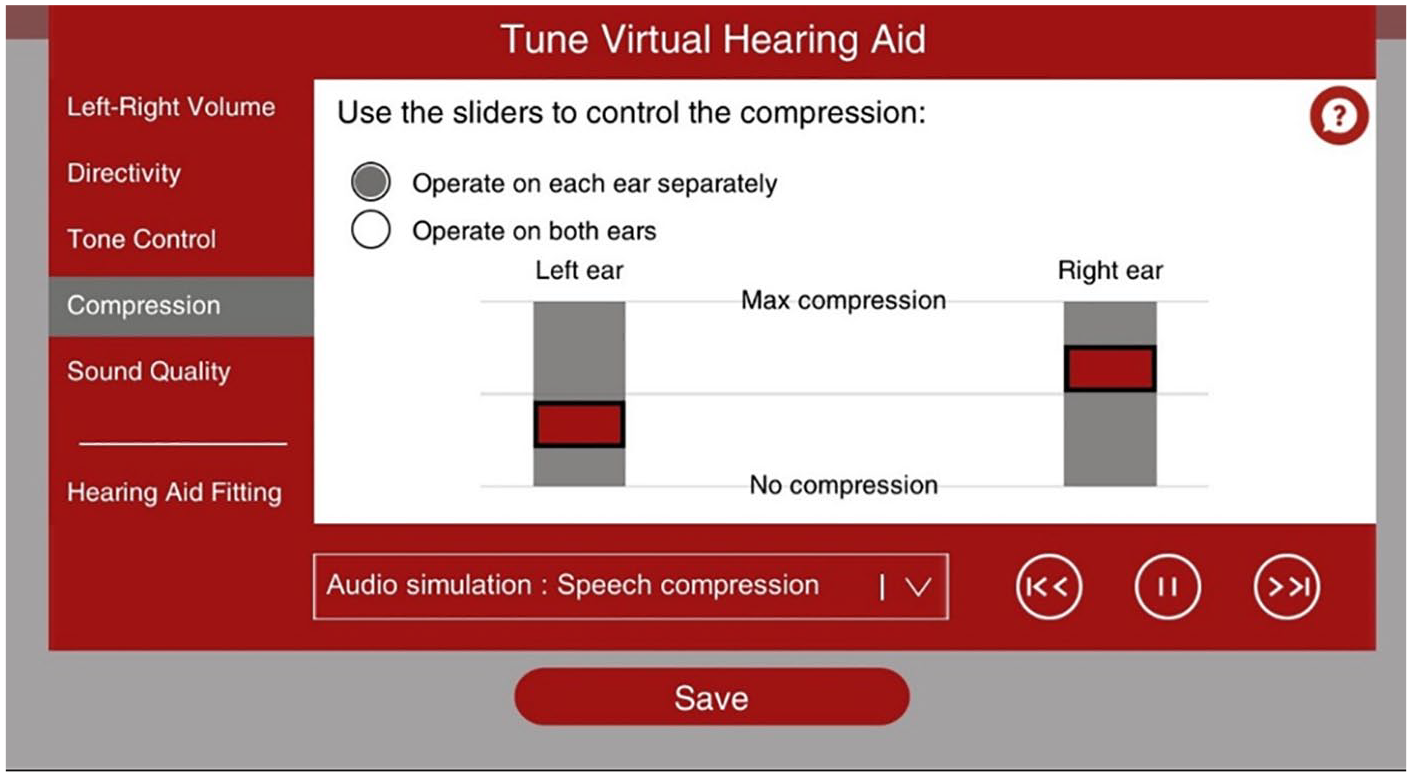
Screenshot from the virtual hearing aid.
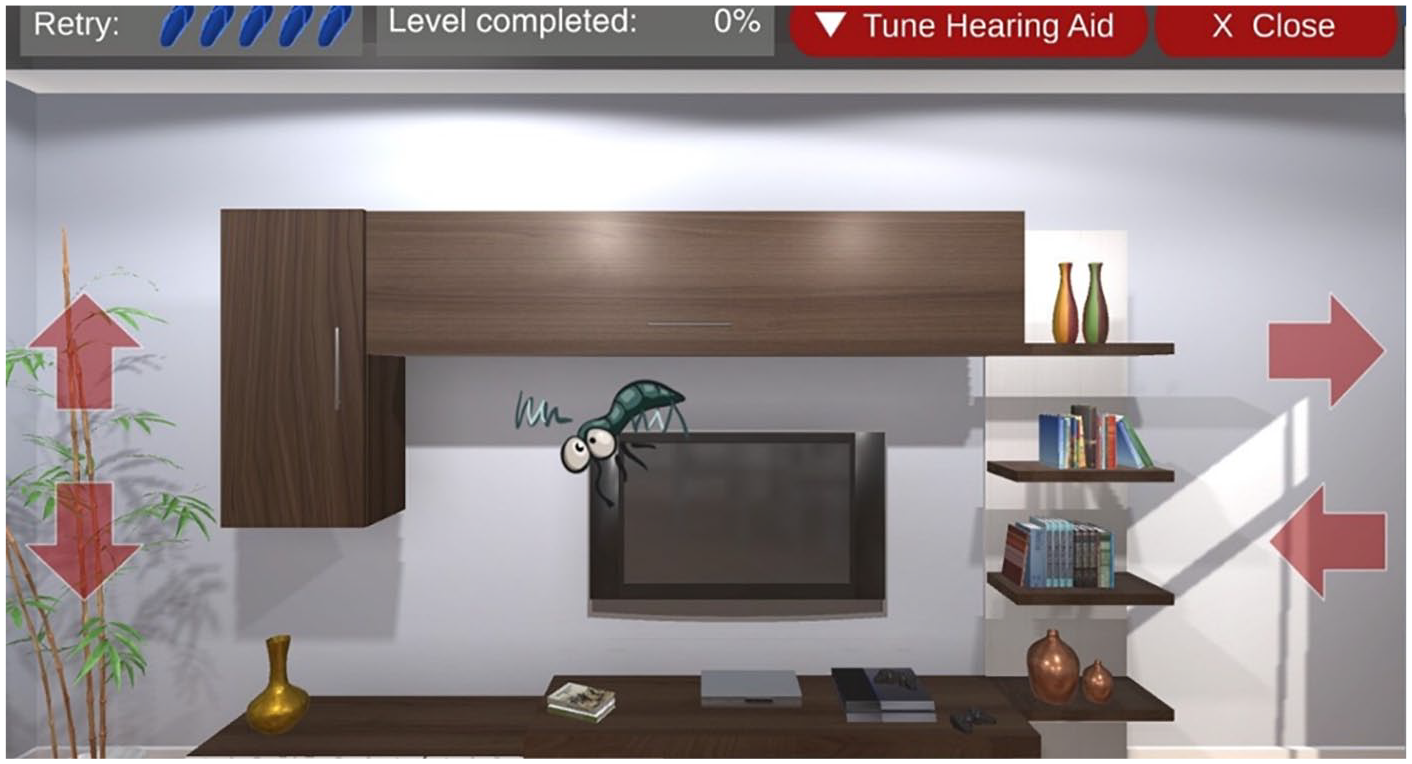
Screenshot from the game Mosquito Catch.
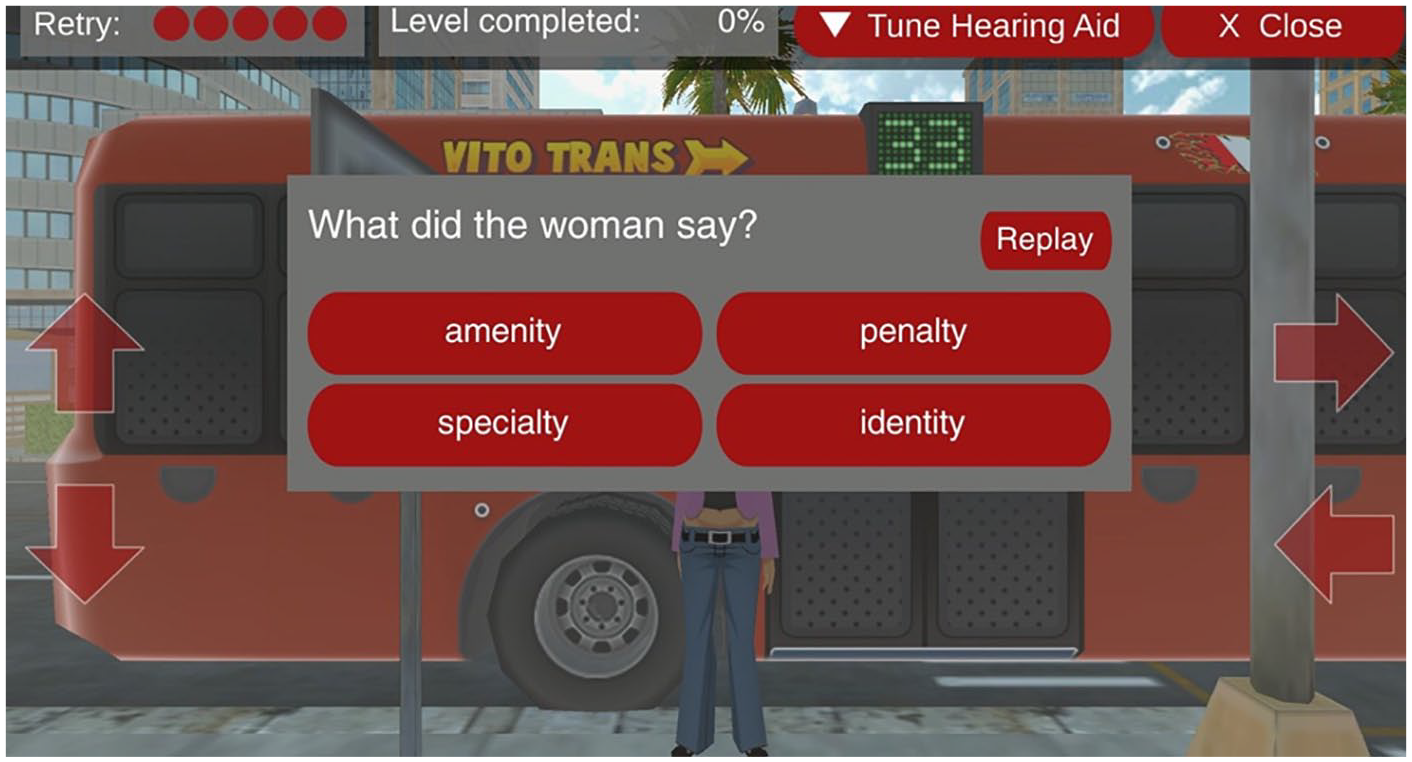
Screenshot from the game Noisy Street.
When choosing the specific hearing challenges to be implemented in the game, attention was focused on two main tasks: sound sources localization and speech understanding. These typically require different calibration of certain HA controls. For example, when trying to localize a sound source located in the surrounding space, the HA microphones should be set to an omnidirectional pattern, therefore not attenuating sources when these are behind or on the side of the listener. When trying to understand speech in noise, considering that the target speech source is generally located in front of the listener, while the noise comes from the surrounding environment, the setting of the microphones to a directional pattern can prove to be very useful for improving intelligibility.
Timetable of Evaluations
After a period of user requirements generation (reported in Patel et al., 2016), initial idea development, and a low-fidelity prototype evaluation (in which paper-based descriptions were evaluated for acceptability with end users), there were two prototype evaluation stages and a final evaluation throughout the 36-month project. Table 1 details these different stages.
Participant and Prototype Details for Each Stage of Evaluation
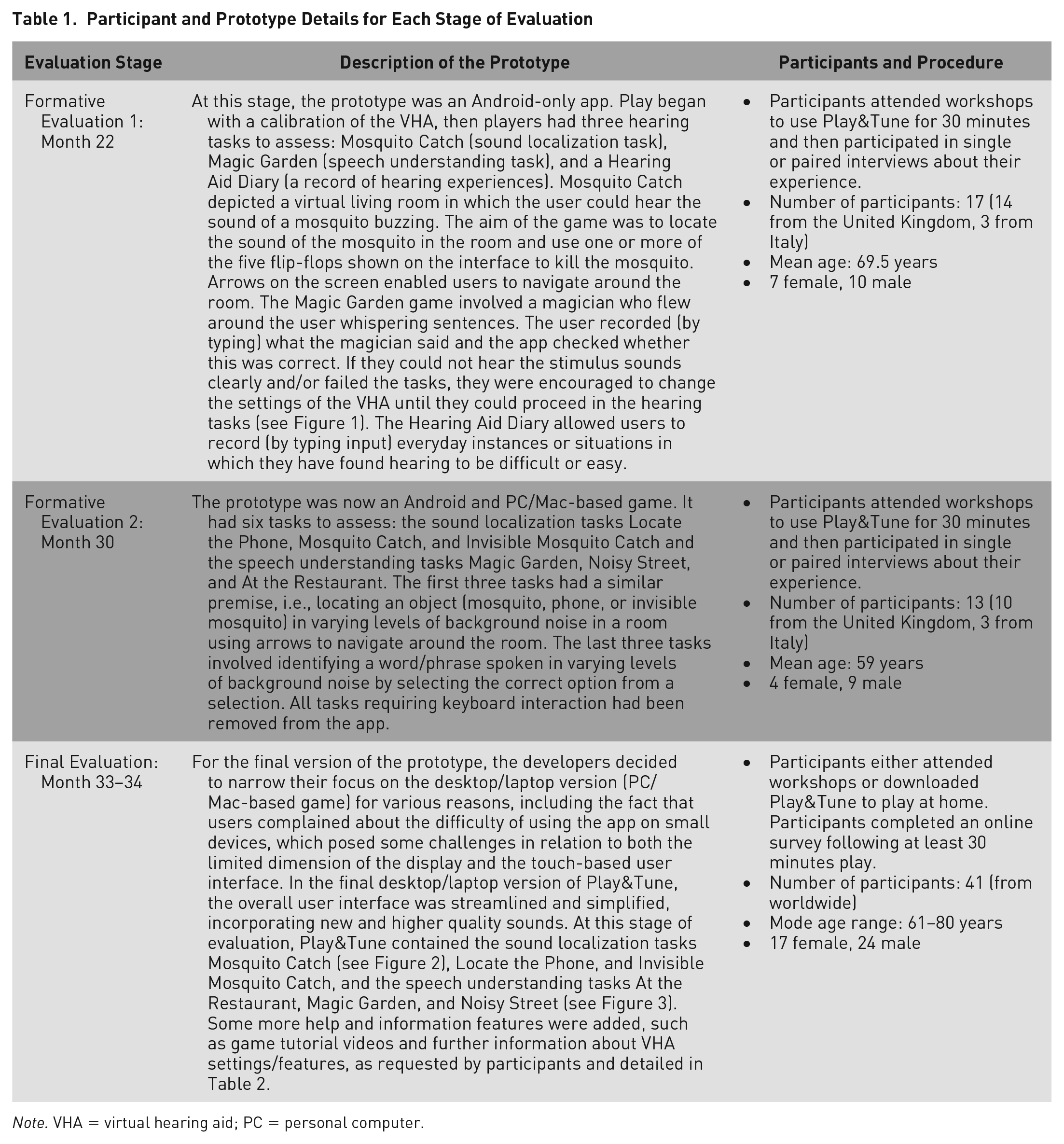
Note. VHA = virtual hearing aid; PC = personal computer.
Participants were adult HA users from the United Kingdom, Italy, and worldwide with mild to moderate HL over the age of 18 years who were users of behind-the-ear, in-the-ear, or completely-in-the-canal HAs, that is, devices that did not require surgery.
Formative Evaluations: Shaping the App Development Process
For both stages of evaluation, participants first completed a demographics questionnaire, then used Play&Tune for 30 minutes on an Android tablet device (Month 22 prototype) or Windows PC (Month 30 prototype) and good quality over-the-ear headphones, which they wore instead of their HA. We gave participants minimal instructions about the game to evaluate the ease with which they could “pick-up-and-play,” however researchers assisted participants if requested. Following the game play session, we interviewed participants about their experience of the game using a semistructured interview covering the following areas:
Month 22 prototype: audiological aspects, game play and game story, game mechanics, accessibility, and usability
Month 30 prototype: the extent to which the game met the overarching objectives of the project, learning opportunities, relevance to project aims, usability, and acceptability. We also asked users to assess the VHA functionalities
We recorded interview responses using a digital voice recorder, then transcribed these recordings. To extract clear user requirements to feed back to the developers, a document was created outlining positive feedback (aspects of the app that participants liked and reasons for this), negative feedback (aspects that participants disliked and reasons for this), and suggestions from participants. These points were then rephrased into actionable changes, consisting of suggestions made by the participants and recommendations made by researchers for additions to or deletions from the game or refinements to be made. In this way, each of the actionable changes was supported by an identified user requirement and exemplar quotes taken directly from the interviews to provide context. Owing to the significant overlap of areas of questioning for the two stages of evaluation, the results are combined and summarized below in Table 2. This table also summarizes some examples of solutions implemented by the developers based on the recommendations made during the formative evaluation process.
Summary of Feedback and Design Implications
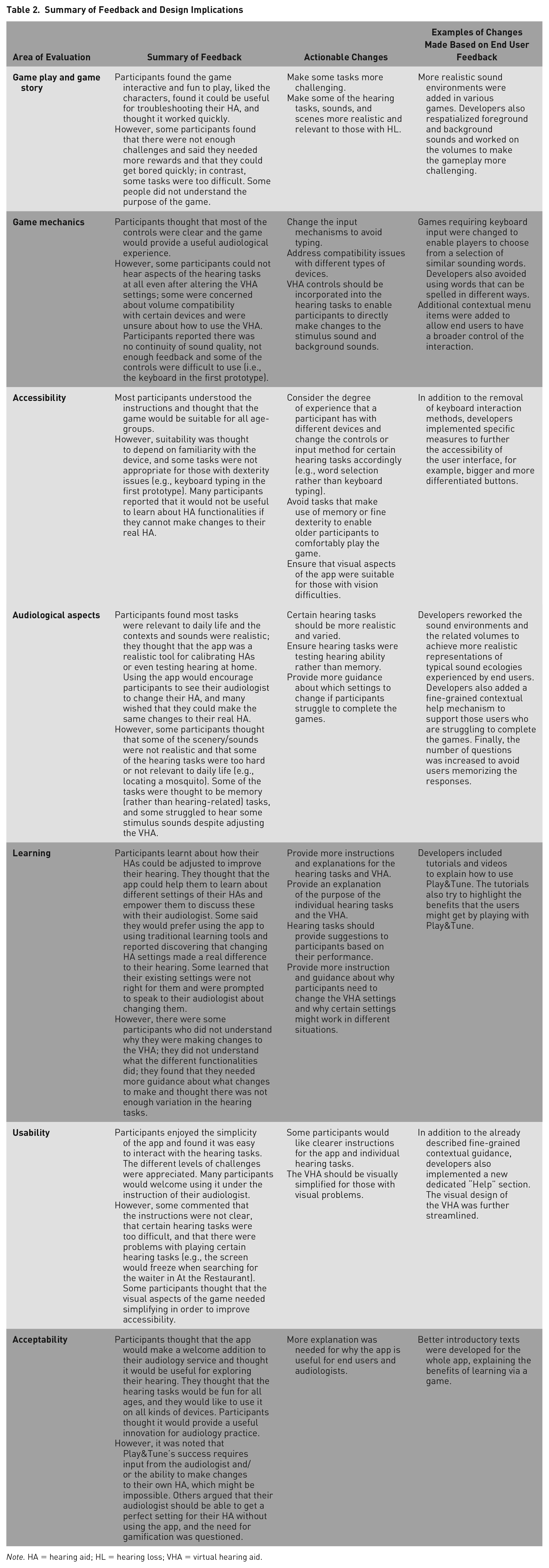
Note. HA = hearing aid; HL = hearing loss; VHA = virtual hearing aid.
Final Evaluation: Meeting to Project Aims
For the final evaluation, HA users used Play&Tune for a minimum of 30 minutes and then completed an online survey. Participants were asked to select their age-group – the numbers of participants in each age-group were as follows (mode age range in bold): 19 to 40 years = 8, 41 to 60 years = 9,
Participants who opted to attend workshops used a Windows PC or Mac laptop with good quality over-the-ear headphones, which they wore instead of their HA. Again, we gave participants minimal instructions about the game, although one or two researchers were present to assist the participants if requested. Participants who opted to download Play&Tune at home were sent an email including a short description of the game, a web link to download it, and instructions for installation and for completing the survey. Researchers and the game developers were available via email or phone if participants had any difficulties downloading or using the app.
The online survey included some demographic questions: open questions about what they liked and disliked about the app and what they thought should be changed, and a series of Likert-type scale questions that asked participants to rate the game on a number of descriptors (Figure 4). Participants were then asked to judge the extent to which Play&Tune met the project aims and whether they would consider buying/recommending Play&Tune in the future.
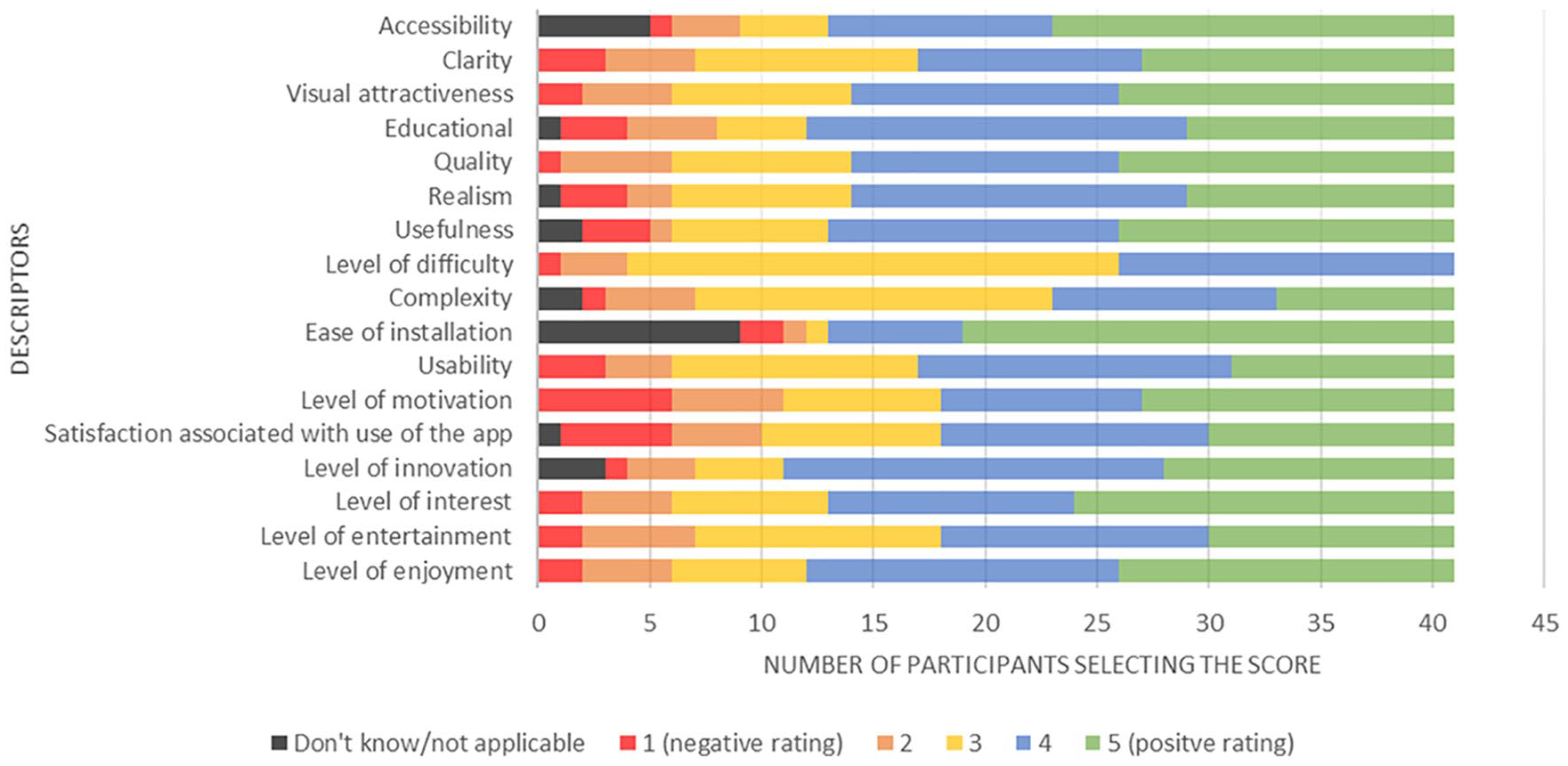
Responses to Likert-type questions regarding descriptors of the apps.
Generally, participants had positive opinions about Play&Tune: The majority of participants selected positive ratings to describe the app. Figure 4 shows the responses to each of the Likert-type questions that asked participants to rate the app on a number of descriptors, with the lowest numbers relating to negative dimensions of the descriptors and the highest numbers relating to positive dimensions of the descriptors. For example, for the descriptor “complexity,” the negative dimension was “complicated” scoring 1, and the positive dimension was “simple” scoring 5. Of the total ratings, 61.84% were on the positive end of the scale, scoring 4 and 5, and 14.35% of ratings were on the negative end of the scale, scoring 1 and 2.
In response to open questions regarding what they liked or disliked about Play&Tune, participants particularly liked the variety of games, tuning the VHA, ease of use of the controls, the interesting nature of the games, the idea behind the app, and that it was engaging, fun, realistic, challenging, and enabled users to better understand HA settings. Some participants did not like the difficulty of all or some of the games, they sometimes did not understand what to do, the controls were too slow to respond, some did not have an interest in these types of games, some found the games were stressful, and some found that they got no benefit from playing. Suggested improvements included more and clearer instructions, a reset option, more accuracy of the controls, more play options (increase the difficulty levels), new scenarios, the ability to change the settings of the VHA within the individual game rather than separately, and adding more communication options, for example, asking a character to speak more loudly.
Most of the participants agreed or strongly agreed that Play&Tune has achieved the aims proposed, as shown in Figure 5.
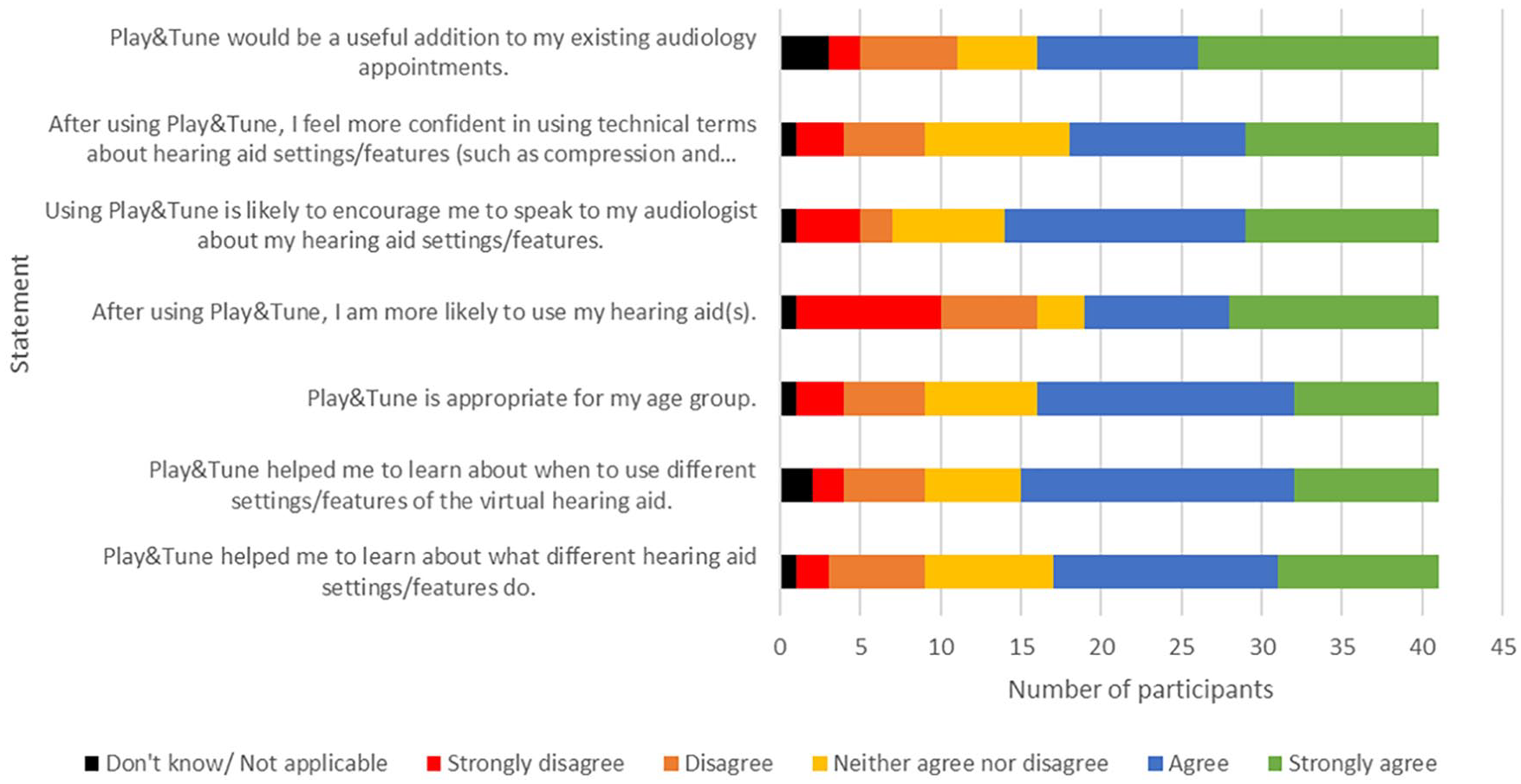
Responses to questions regarding the extent to which Play&Tune meets the 3D Tune-In project aims.
The project aims with the highest level of agreement (indicating that participants agreed that the game has met those aims) were that it helped participants to learn about when to use the different settings/features of the VHA and that using Play&Tune is likely to encourage users to speak to their audiologist about their HA. For the remaining project aims, more participants agreed that Play&Tune had met the aim than disagreed or gave neutral responses.
We asked whether the participants would buy Play&Tune and whether they would recommend it to others. The majority of participants would recommend Play&Tune to others: 56.10% selected either “probably would” or “definitely would,” while 39.02% selected either “probably would not” or “definitely would not” and 21.95% selected “unsure” or “don’t know.” However, when asked if they would buy Play&Tune, 39.02% selected either “probably would not” or “definitely would not” buy the app, while 41.46% selected either probably would or definitely would buy it, and 19.51% selected “unsure” or “don’t know.”
Discussion
We evaluated two prototypes of one of the 3DTI applications in order to provide feedback for developers to incorporate into their designs and then perform a final evaluation on the prerelease game. Participants provided feedback on the practical aspects of the app along with the higher level consideration of the extent to which the app met the 3DTI project’s wider aims. From carrying out single and paired interviews with 30 adult HA users and a final evaluation survey with 41 participants, we found that the prerelease version of Play&Tune could help HA users feel more confident in using technical terms such as compression and directivity, encourage HA users to discuss their HA settings with their audiologist, and help HA users to learn about what the different settings and features of HAs do and when to use them. Most participants saw the benefits of Play&Tune and thought that it would provide an engaging way to explore different features, although some would probably need a greater incentive to buy the app. This incentive could be a clearer description of the app and its aims. Furthermore, people with HL or HA users would benefit from more instructions about what to do in the games, and general technical support is needed for those who are less confident with computers.
The iterative evaluation process resulted in many key decisions and changes that helped the developers to better design the app for its target users. For instance, it was noted that the hearing tasks that required typing using a tablet’s keyboard were too difficult in the first prototype, especially for those with visual or dexterity problems. For this reason, developers replaced the keyboard input mechanism with an on-screen selection of similar sounding words. Additionally, the developers focused on a desktop version rather than a tablet version owing to the end users’ difficulties in using small devices. The positive response of participants during the final evaluation is evidence of the value of the iterative evaluation process, however there is still some work required to improve the app’s usability. Some specific changes were suggested to improve the games further.
Participants felt that Play&Tune could help them learn more about HA features and settings and when to use them, as well as feeling more confident in using technical terms. A crucial element of the provision of services to HA users is the shared understanding of the client’s experience of HL, as well as a shared understanding of the nature of the problem and treatment options (Dahl & Hanssen, 2017). One major implication of our findings is that HA users are open to and enthusiastic about learning to make changes to their HA independently of their audiologist. The current audiology paradigm is resistant to allowing HA users to make any adjustments, and indeed most U.K. National Health Service HAs are configured to prevent any changes by the HA user. However, most of our participants would welcome learning about their HA functionalities and settings as part of their audiology service, and participants noted that they would find the app more useful if they were able to make changes to their real HA. Although there are questions over the extent to which HA users’ subjective preferences for HA settings are actually beneficial for them, it has been found that subjective input from participants to a “genetic algorithm”–style HA fitting system produced solutions with good intelligibility (Baskent et al., 2007).
Advances are being made in provisions of technologies to assist HA users with calibrating their own HA, for example, via smartphones (see Pasta et al., 2019; Søgaard Jensen et al., 2019), and indeed many modern HAs are sold along with proprietary smartphone apps that enable some extent of personalization. These services enable HA users to change their HA calibrations while in a “live” situation, so as to correct their hearing as they go about different everyday activities. Play&Tune, on the other hand, could help HA users understand what those changes could do for their hearing before they enter these environments, thus shortening the trial and error process that is necessary as they attempt to compare different settings in a live context. The service provided by Play&Tune then could influence the experience of making calibrations to a HA as the user could learn exactly which settings to target to alleviate particular difficulties in a live situation.
Conclusion
Current audiological practices along with a relative sparseness of technological interventions pose a significant barrier to the training of HA users in relation to the functionalities of their HA. Digital games like Play&Tune could be a practical approach to addressing this gap in services for HA users. We examined HA users’ experiences in response to prototypes of a game designed to train them to understand the full range of functionalities of their HA and provided this feedback from the target audience to the game developers, which informed their redesign and further development processes. Game designers were given the opportunity to reflect on their preliminary designs to consider the extent to which Play&Tune will be acceptable to the target audience. The app benefitted from the iterative design and evaluation, as evidenced by the changes made between the first and the second prototypes, and the positive results of the final evaluation. A user-centered design and evaluation process, in which extensive qualitative and quantitative feedback is sought from the target audience is strongly recommended when developing a new service for a target audience with many differing needs, such as HA users.
The market for digital services for the considerable population of people with HL is growing. Play&Tune could offer an important service for those who wish to educate themselves about the functions of HAs with the end goal of being able to hear better in different sound environments. However, a key step change in the rehabilitation of HA users is required, that is, enabling HA users more control over the calibration of their HA. Thus, we would advocate the opening up of technologies and education interventions that would facilitate greater autonomy for HA users regarding how their HA is calibrated and which functionalities are made available to them. Furthermore, we would urge audiologists to encourage and promote this autonomy among their clients.
Footnotes
This research has received funding from the European Commission’s Horizon 2020 Programme (GA 3D Tune-In No. 644051). This article reflects the authors’ views. The European Commission is not liable for any use that may be made of the information contained therein.
Luca Simeone and Mauro Simeone are co-inventors of intellectual property licensed by Vianet and are entitled to royalties received in relation to the sale of Play&Tune.
Ethical approval for the collection of data during the evaluations was granted by the ethics boards of the University of Nottingham’s Faculty of Engineering, Imperial College London, and the University of Malaga. Following local practices, no ethics permissions were sought for conducting the research in Italy, although researchers followed the ethics procedures outlined by U.K. partners.
All participants provided written informed consent before participating in any research activities.
 .
.