







Abstract
As hybrid work becomes more common, understanding employees’ experiences of diverse work environments is crucial. This paper presents three empirical studies using participatory methods—autophotography, cultural probes, and game-based workshops—to engage employees in reflecting on their everyday work. Our findings suggest that participatory methods can enhance employees’ awareness of their work environments and provide organizations with actionable insights for creating more supportive and adaptive workplaces. This study shows that actively involving employees in workplace research and design can lead to meaningful changes, and encourages the broader adoption of creative, participatory approaches in organizational studies.
Keywords
Modern offices as we know them today have undergone many transformations. Modern technology and the COVID-19 pandemic have reshaped the role of the office, as employees now blend on-site and remote work. In response, many organizations have reduced office space, reorganized their offices and adopted flexible desk arrangements (Hou & Sing, 2025). While many studies have examined workers’ experiences in office environments—often through statistical and quantitative methods—these approaches, though insightful, rarely involve employees directly in the research process. As a result, they tend to overlook the personal, everyday experiences of individuals using these spaces. To gain a more sensitive and nuanced understanding of employee experiences and to, therefore, better understand the role of the office in their everyday lives, we aim to show how involving employees in evaluating the workplace (e.g., the office) can provide novel and valuable insights. In this paper, we present three participatory methods that, we think, have the potential to uncover both workers’ experiences of the spatial arrangements of today’s offices as well as provide an in-depth understanding of the multiple other aspects that influence workers’ day-to-day working life. By presenting three empirical studies employing each a different participatory method, namely, autophotography, cultural probes, and game-based workshop, we explore social, cultural, and psychological aspects of contemporary knowledge work that may contribute to a more holistic understanding of the potential role of the office today.
Recent Directions in Workplace Studies
Workplace studies are characterized by traditional research methods, often relying on reductionist approaches such as survey studies or conventional qualitative methods like interviews. In recent decades, the phenomenon of survey fatigue has emerged in the context of employee research. Although employee engagement is often the intended outcome of such surveys, the experience can have the opposite effect, leading to frustration and disappointment among employees (Sanchez, 2007). In addition to this, such conventional methods may fall short in capturing employees’ perceptions, impressions, and subjective experiences of their work environment. In contrast, participatory approaches offer a more immersive and dynamic way to explore these aspects. While workplace studies have only recently begun to embrace more creative approaches, a growing shift toward methodological expansion is underway (Tagliaro et al., 2023).
Kara (2020) emphasizes the value of creative research methods, ranging from arts-based, embodied, and technology-supported approaches to multi-modal and transformative frameworks that involve either innovative techniques or the creative use of traditional ones. The rise of more transdisciplinary and creative methods in workplace studies highlights the ongoing and most recent changes in the workplace (Tagliaro et al., 2023).
Participatory Methods
A key characteristic of participatory research is that the researcher does not examine or observe the studied subject from an external point of view, but actively involves research participants throughout or at certain stages of the research process. This approach involves participants in problem identification, evaluation, and sometimes even the design and assessment of potential outcomes (Kogi, 2006). The literature on participatory research suggests that this approach enhances the engagement of participants, as they are more likely to gain a more comprehensive understanding of the studied context, for example, problems in their own community, and thereby understand its complexity. This may lead participants to develop a personal commitment to solutions and necessary changes, including behavioral shifts (Brown & Kara, 2025). Participatory methods vary in terms of participant profiles, the objectives of participation, and the level of involvement (Rotmans et al., 2001). Participatory research can be enhanced using modern technologies or art-based elements. It often draws on multiple methodologies, taking advantage of mixed methods that can be creatively combined to develop a deeper and more comprehensive understanding (Kara, 2020; Mertens, 2021). Participatory research is applied across various fields of social science, including education, social services, rural development, organizational studies, public health, and urban and environmental planning (Thiollent, 2011).
The involvement of participants became also a priority in the field of workplace ergonomics. Selamat et al. (2021) concluded from their literature review that the implementation of participatory ergonomics contributes to the well-being of employees and thus benefits the organization, and that a participatory approach is essential to achieve quality performance. Within the context of workplace studies, applying participatory methodologies can lead to deeper insights about the workplace and more employee-centered interventions, ultimately influencing how work environments are designed and experienced and who is involved in decisions regarding workplace developments.
Research Objectives
In this paper, we explore how participatory methods can deepen our understanding of the relationship between hybrid work and the physical work environment, that is, the office. By presenting three participatory methods and examining their application in three empirical studies on worker experiences in different work environments, we highlight the insights these approaches provide. We discuss (1) how each method engages participants, (2) the type of data each method produces, and (3) the insights these data offer to enhance our understanding of contemporary workplaces and worker experiences.
Selected Participatory Methods
The three selected methods—autophotography, cultural probes, and game-based workshops—share a participatory and creative approach to workplace evaluation and design, yet they differ in their structure, purpose, and the level of participant involvement.
By presenting these three methods, we demonstrate a spectrum of participatory research highlighting how creative approaches can deepen workplace evaluation and design and contribute to both understanding and shaping the work environment. In the following, we describe in more detail how we applied each method and the insights each method produced.
Autophotography
Autophotography is a visual research method rarely used outside the field of sociology, which actively involves research participants in both data collection and interpretation. With this method, researchers ask participants to take photographs related to the research topic (Byrne et al., 2016). Participants have a specific time frame to select and capture moments they believe best represent their experiences and emotions (Noland, 2006). This makes the method highly self-reflective: the photography phase is followed by interviews, where participants discuss their photographs, recall their experiences, and connect their lived experiences with the visual representations (Hurworth, 2003).
Objectives
The objective of applying the autophotography method in the office context was to explore, from the employees’ own perspectives and lived experiences, the environmental elements that contribute to their sense of well-being during their office workday.
Participants
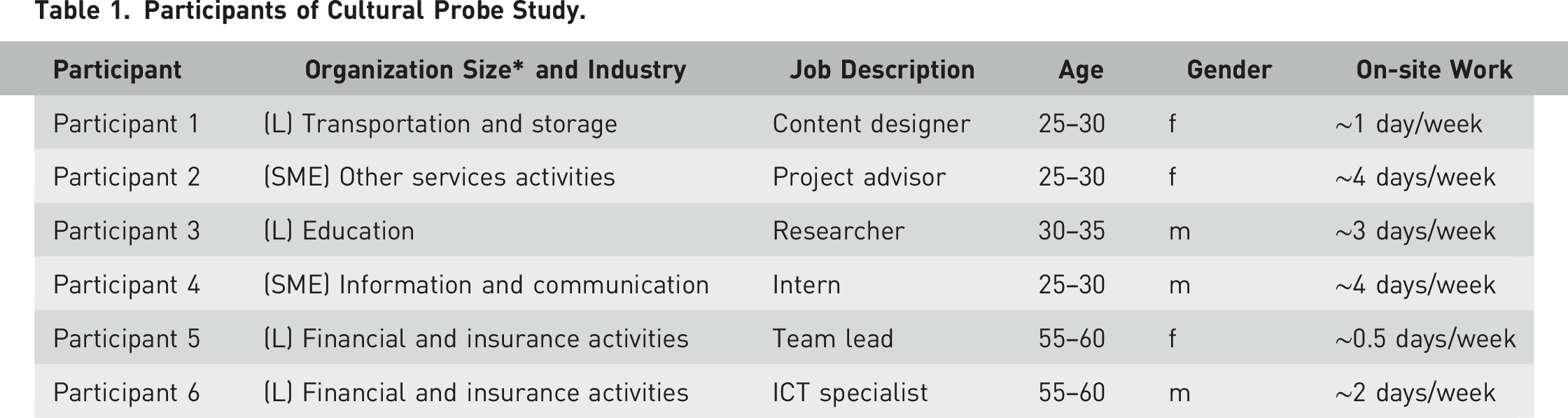
We recruited 18 office workers with hybrid work schedules (1–3 days/week in the office), using personal networks. The sample included 8 men and 10 women, aged 22–54, working in diverse roles such as economist, engineer, HR manager, IT specialist, lawyer, agronomist, and marketing assistant. Apart from one middle manager and two team leaders, the participants represented subordinates. The participants represented a mix of company types: multinational, national companies, and state owned institutions.
Process
Participants were asked to take 4–8 photographs over the course of two weeks, capturing objects and moments in the workplace that inspire them and positively influence their well-being (Figure 1). We assured that the photos are used strictly for analysis and they are not shared externally. A reminder email was sent after the first week, and at the end of the second week, participants were contacted to schedule a personal interview. Each interview lasted between 60 and 90 min, where we discussed the photos that were taken: participants explained or tried to interpret the meaning and significance of the spaces, objects, colors, people, or events captured in the images. The interviews were audio recorded. Examples of the photos taken for the pilot autophotography research.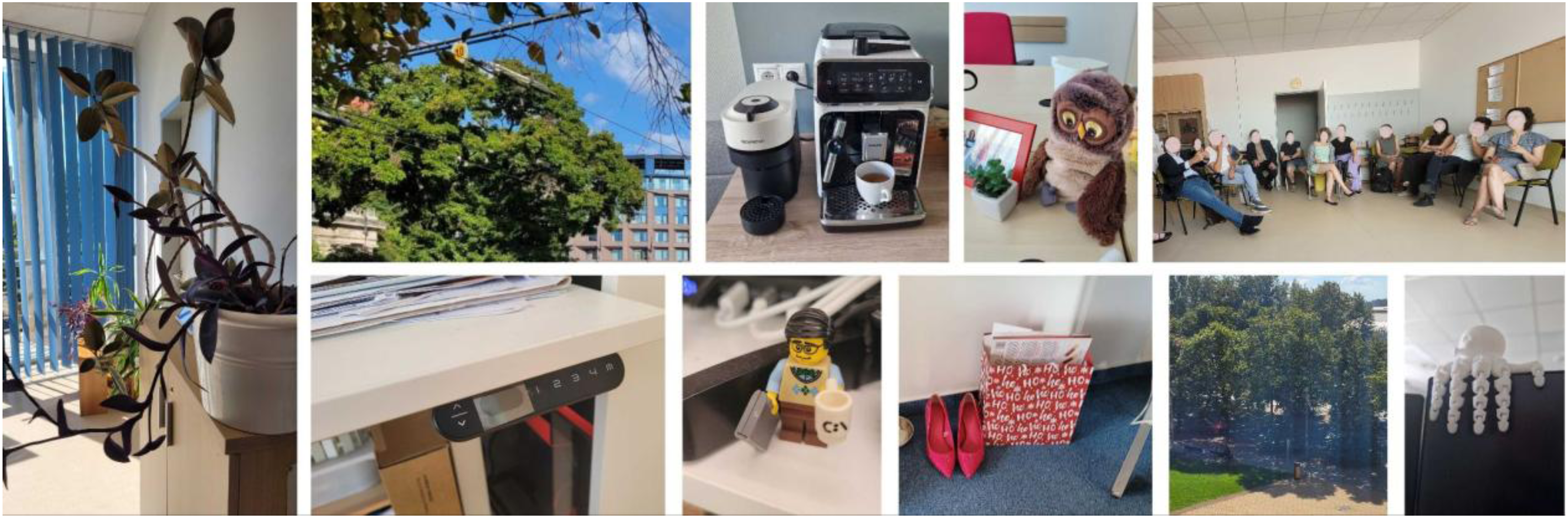
Data and Analysis
During the individual interviews, 68 photographs were discussed. After thematic coding of the interviews, themes were written on post-its and attached to the corresponding photos. A team of three researchers then grouped the photos by themes. These thematic groups were first named individually and then finalized by consensus. The thematic coding resulted in groups that were closely linked to the physical office environment, and additional groups emerged in relation to organizational culture and social relations (Figure 2). Finally, we were able to formulate concrete recommendations for companies by the themes—for example, teams should have their own dedicated and personalized space with photos of shared experiences and team successes, and the company should show the “care for employees” through specific services. Thematic groups based on the photograph’s content.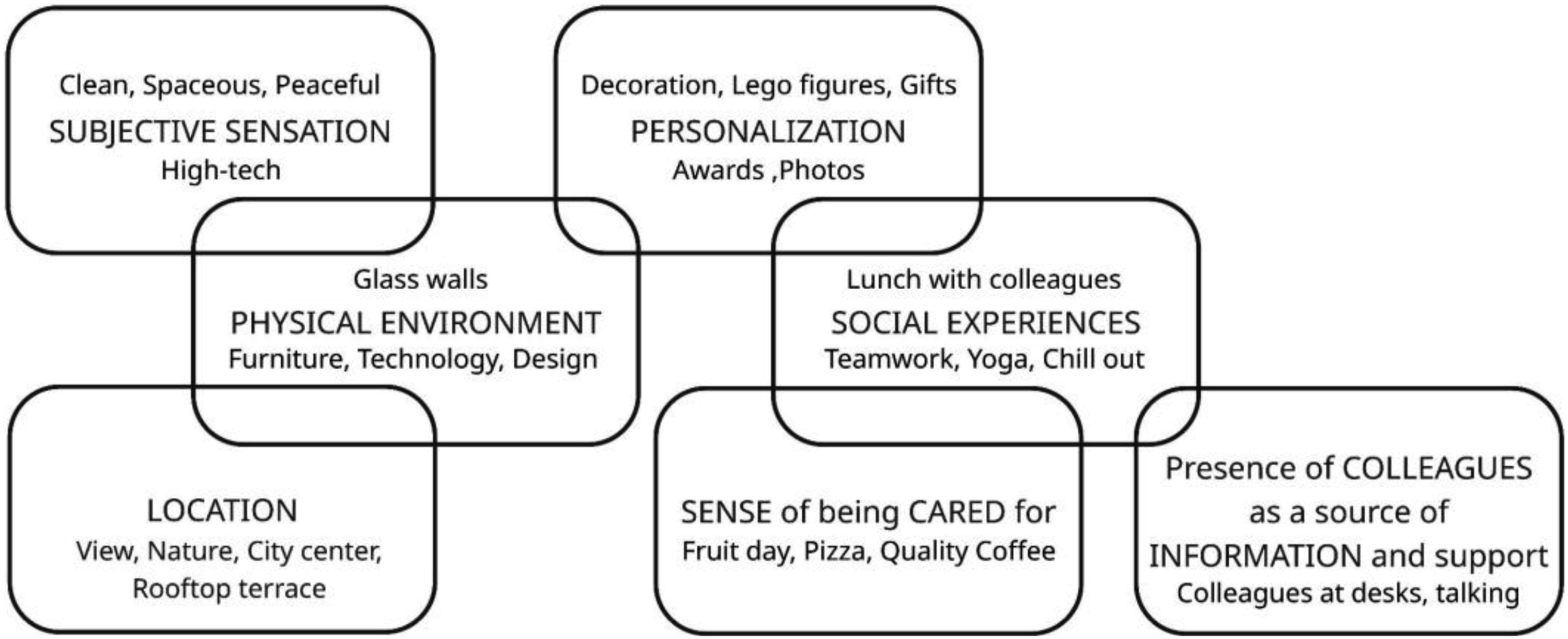
Cultural Probes
Cultural probes are a design research method that was developed to actively engage participants during data collection (Gaver et al., 1999). Typically, cultural probes are physical toolkits that participants use over the course of the given research period. Common tools include a diary and a camera, however, depending on the research interests and objectives, the tools included in a cultural probe study may vary vastly. The fundamental idea of cultural probes is that participants independently document and observe the studied subject without interference of the researcher. Their intention is to both document and “provoke inspirational responses” (Gaver et al., 1999, p. 22) about the topic under study.
Objectives
The objective of the cultural probes in this study was to understand the work practices and experiences of employees working in a hybrid work setting. The interest was in understanding how participants practice, and experience hybrid work as well as exploring how participants actively shape and influence their work to fit their personal preferences and needs, that is, craft their jobs. Although the cultural probes were intentionally designed to be open-ended and exploratory, the individual artifacts were designed to prompt participants to reflect on aspects of job crafting, including cognitive, social, spatial, temporal, and task-related dimensions (Eloranta et al., 2023).
Participants
Participants of Cultural Probe Study.
Process
After a careful selection, participants were met one-on-one to introduce them to the study as well as brief them about the objectives. In this meeting, participants received their personal cultural probe set. The cultural probes of this study included a diary, a logbook, postcards and letter paper, and a single-use camera (alternatively, phone), as well as two maps (one for the home and one for the office). Each of the artefacts served a different purpose. The diary was intended to let participants reflect on their day-to-day working experiences in written format. While the diary included prompts, such as questions and tasks, participants were allowed to disregard these and write freely, by sharing thoughts, feelings, and observations that they found interesting. The logbook intended to let participants report on their time-use and the allocation of time used for different working tasks, that is, the content of their day-to-day work. Moreover, in the logbook, participants could visually document their subjective experiences of stress, focus and sense of achievement by drawing graphs. The postcards and letters were tools for participants to capture single moments that they could direct to a certain person, such as a colleague or a team lead. With the camera participants were asked to capture environments or elements that are central to their working days or weeks. Lastly, the two maps were intended for drawing the physical spaces that participants use in the hybrid work context, focusing on the office and the home. While participants were encouraged to try each artefact, they were instructed to focus on using those that best enabled them to continue participating in the research.
The package was accompanied by a bag as well as instructions (Figure 3). Once participants received their cultural probes package, they had four weeks to use the different tools and share and reflect on their hybrid work practices and experiences. Thereafter, a semi-structured interview was scheduled with each participant to follow-up on participants’ experiences as well as their views on the individual tools. The follow-up interviews lasted around 1 h each. Cultural probe package.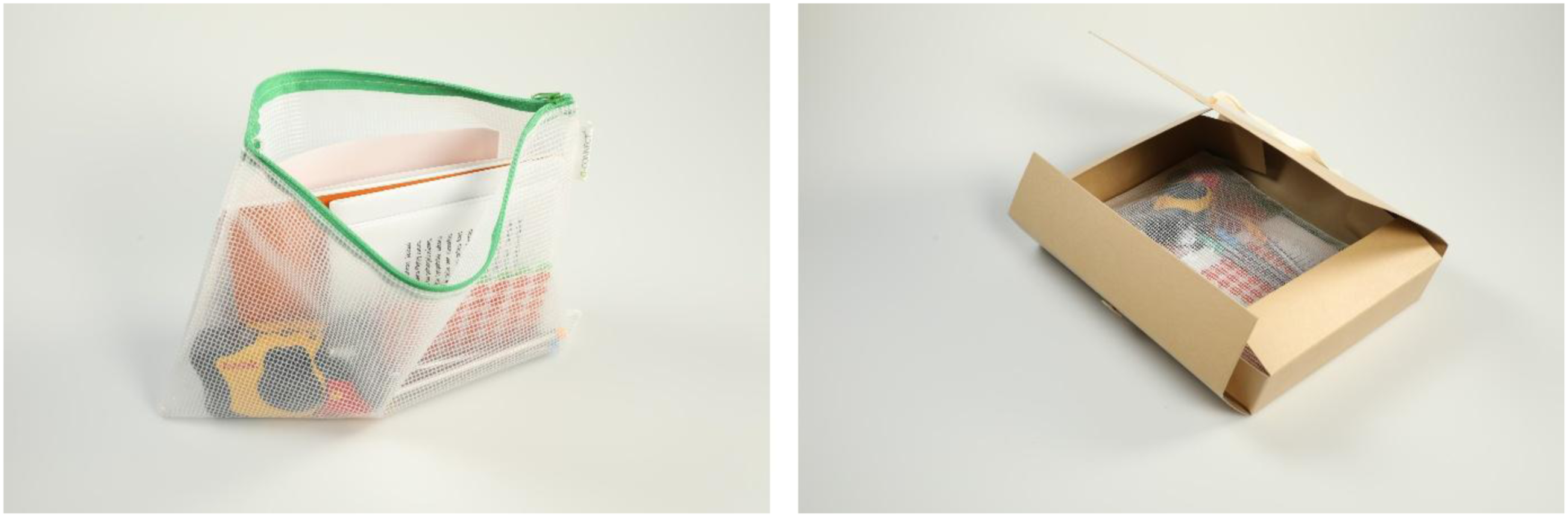
Data and Analysis
The cultural probes produced a rich data set, including diary entries, documentation of time-use and work tasks, photographs, and drawings of working environments as well as postcards and letters (Figure 4). The data was analyzed thematically, using a directed content analysis approach (Hsieh & Shannon, 2005). The themes that directed the analysis were based on the job crafting framework as presented in Eloranta et al. (2023). Cultural probe data examples.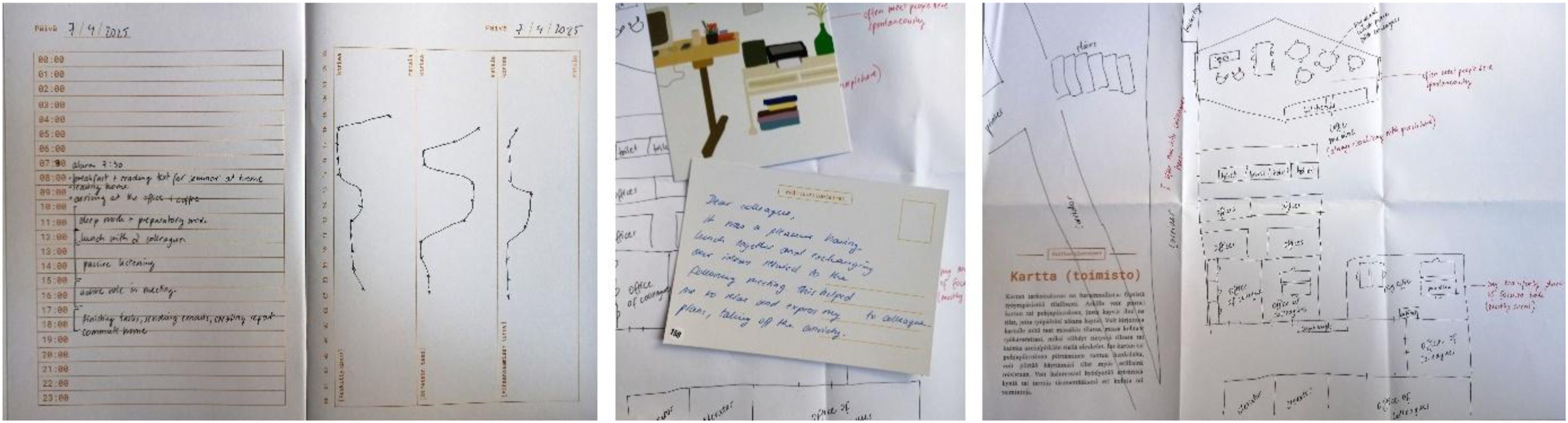
Game-Based Workshop
The idea for the third methodology emerged from a focus group exploring possibilities for improving the office environment. Given that gamification aims to enhance users’ positive motivation toward specific activities (Morschheuser et al., 2018), we applied principles of gamification to the office development process in order to enrich the experience of participatory design. The research group, in collaboration with a gamification expert, developed the game concept in 2022, which was incorporated into a workshop format.
Objectives
The objective of the game-based workshop is to engage participants in a design process, enabling them to collaboratively identify workplace challenges and co-create office design concepts that reflect both workflow demands and individual preferences and scheduling needs.
Participants
The game-based workshop opportunity was advertised through the university department’s communication channels and attracted applications from company executives and HR managers. The workshop was introduced to five selected companies facing challenges related to changing work schedule and workplace requirements in post-covid era. At the time of the workshop, all five organizations operated in a hybrid mode (1–2 days in office per week), with a high degree of flexibility. We aimed for diversity in company size and sector: participating teams came from organizations with 44, 70, 300, 1200, and 5000 employees, respectively. The companies represented a range of industries: HR services, software development, project management, engineering, and telecommunications. From each organization, four people were chosen by the HR managers. When selecting participants, it was important that they knew each other but were not in a direct hierarchical relationship, and that they shared the same physical office area—meaning the same floor in the case of larger office buildings.
Process
The game was played by teams of four, under the facilitation of a moderator and an observer. The game challenges participants to complete tasks outlined on “challenge cards” (Figure 5), which guide them step-by-step through various aspects of office design, resulting in a new design concept of their office. The tasks are embedded within a storyline. The first task is to sketch the current office layout using cards that represent different office functions. This is followed by creating a proposal for how the space could be redesigned. In the next step, various work activities—such as individual focused work, solo desk work, client meetings, hybrid meeting, and teamwork—have to be assigned to specific areas within the office. The goal is for the participants to reach a consensus on which areas should support which activities and to refine their initial layout based on how frequently each function is used. At the end of the game, participants are tasked with clarifying their design concept and presenting it to the moderator (Figure 6). These presentations are audio recorded. Example of challenge card.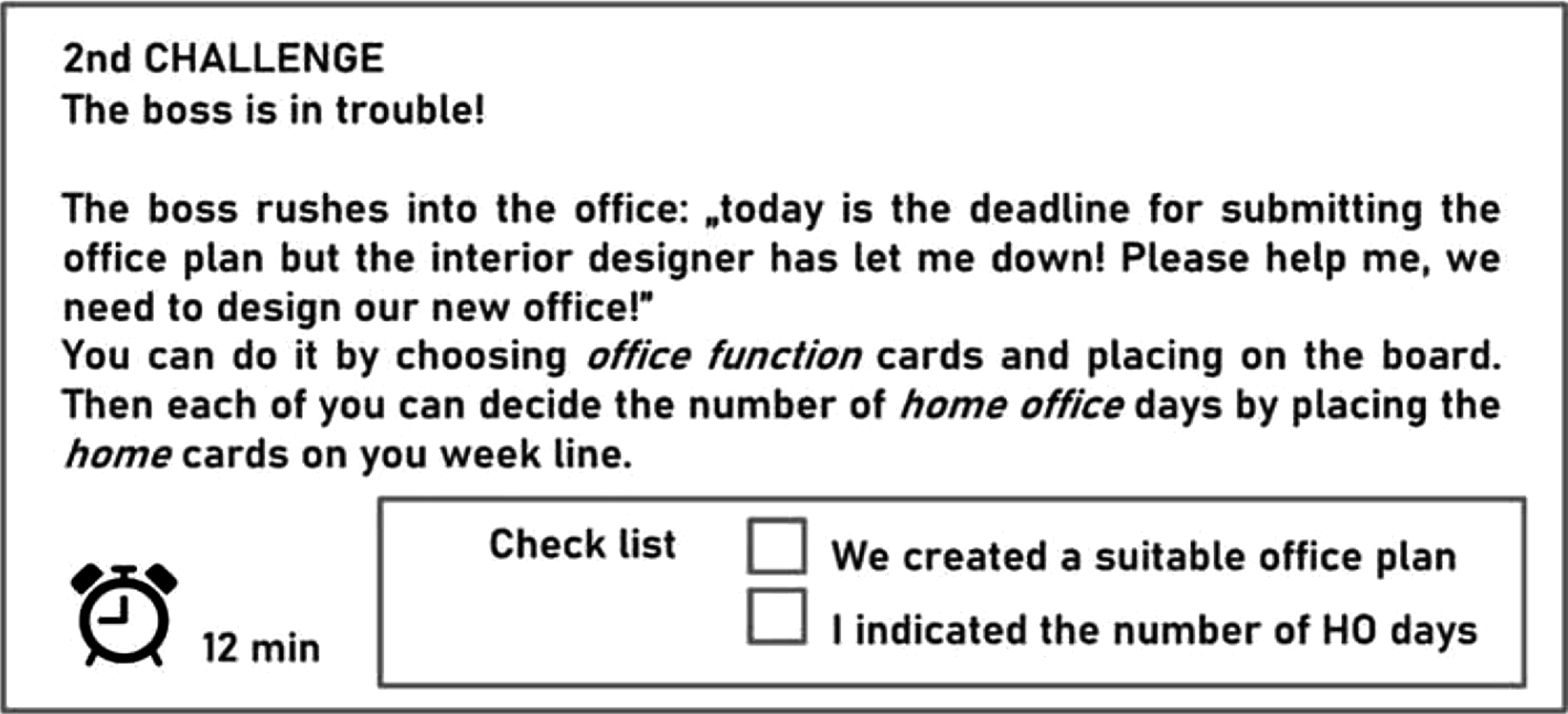
Data and Analysis
The finalized concepts were presented by the moderator to the management team, followed by a discussion and evaluation based on the following criteria: work schedules, office partitions (walls), diversity and proportion of office functions, spatial allocation of these functions, presence of dedicated vs. shared desks, and the types of activities assigned to different areas. The outcomes of this discussion provided valuable input for management on employee perspectives regarding the office redesign and initiated a dialogue about feasible solutions. The change of an office layout during the game-based workshop.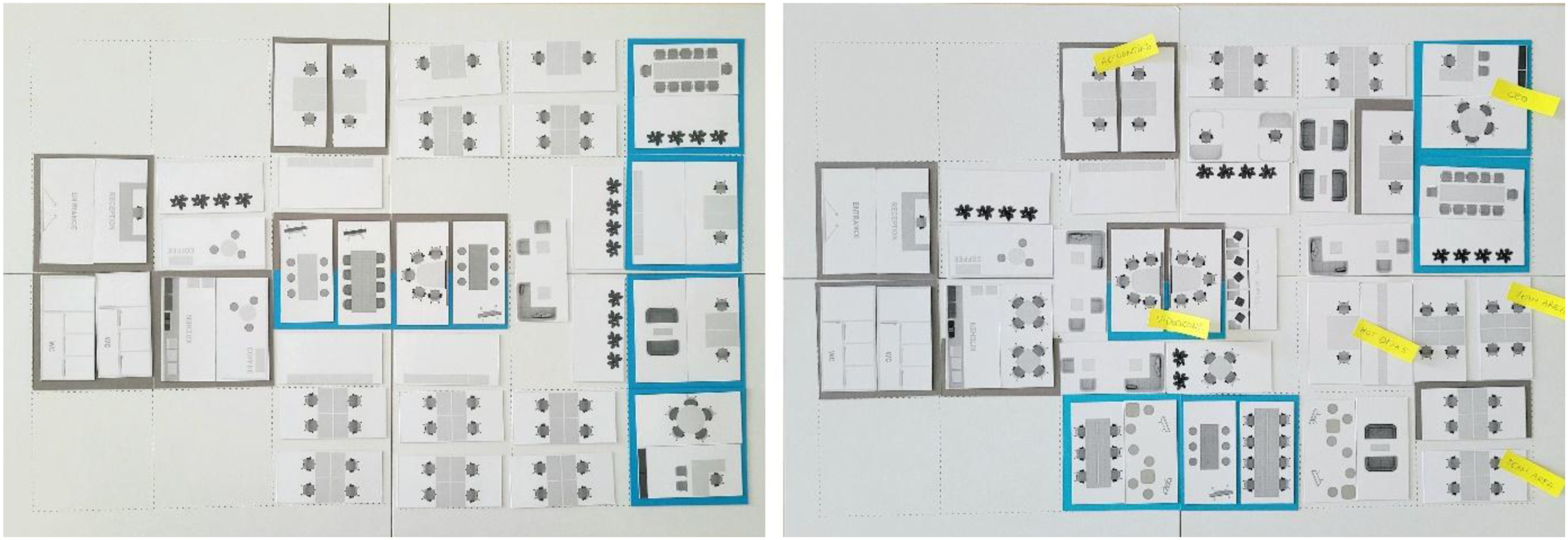
Conclusions
In this paper, we presented three creative and participatory methods to deepen our understanding of how employees experience their hybrid work environments. By presenting three separate empirical studies using each a different participatory method, we aimed to uncover how the engagement of employees in studying the workplace may enhance and widen our understanding of the multitude of factors that contribute to employees’ everyday experiences and their relationships with their work environments.
Across all three participatory methods, participants reported high levels of engagement, enjoyment, and reflection. Participants expressed appreciation towards the creative and exploratory nature of the activities, which enhanced their awareness of their work environment and its impact on their well-being. Many noted that the methods enabled them to notice overlooked aspects of their daily routines and physical spaces, fostering a deeper awareness of their surroundings.
Through photography and diaries, participants gained new perspectives on their work, often recognizing elements that previously went unnoticed. This self-observation among participants prompted ideas for improving their environment and highlighted the value of their contributions.
The cultural probes method was more varied in experience than autophotography, which led the participants to make diverse observations not only regarding work environments and physical spaces, but relational and cognitive dimensions, such as interactions with colleagues and clients, work content, and tasks as well as their perceptions of their own role in the organization.
The game-based workshop was noted for its collaborative and team-building aspects. Most participants enjoyed the problem-solving board game format, and the workshop fostered critical reflection on the complexity of designing hybrid workspaces and the trade-offs involved in group consensus.
In summary, participants gained new perspectives on (1) the role of the physical work environment, (2) its inspiring and supportive effects, and (3) the factors involved in identifying an ideal environmental solution for both the individual employee and the organization. Through the assigned tasks, employees developed a deeper understanding of their relationship with their work environment and the impact it has on them as employees.
Practical Implications
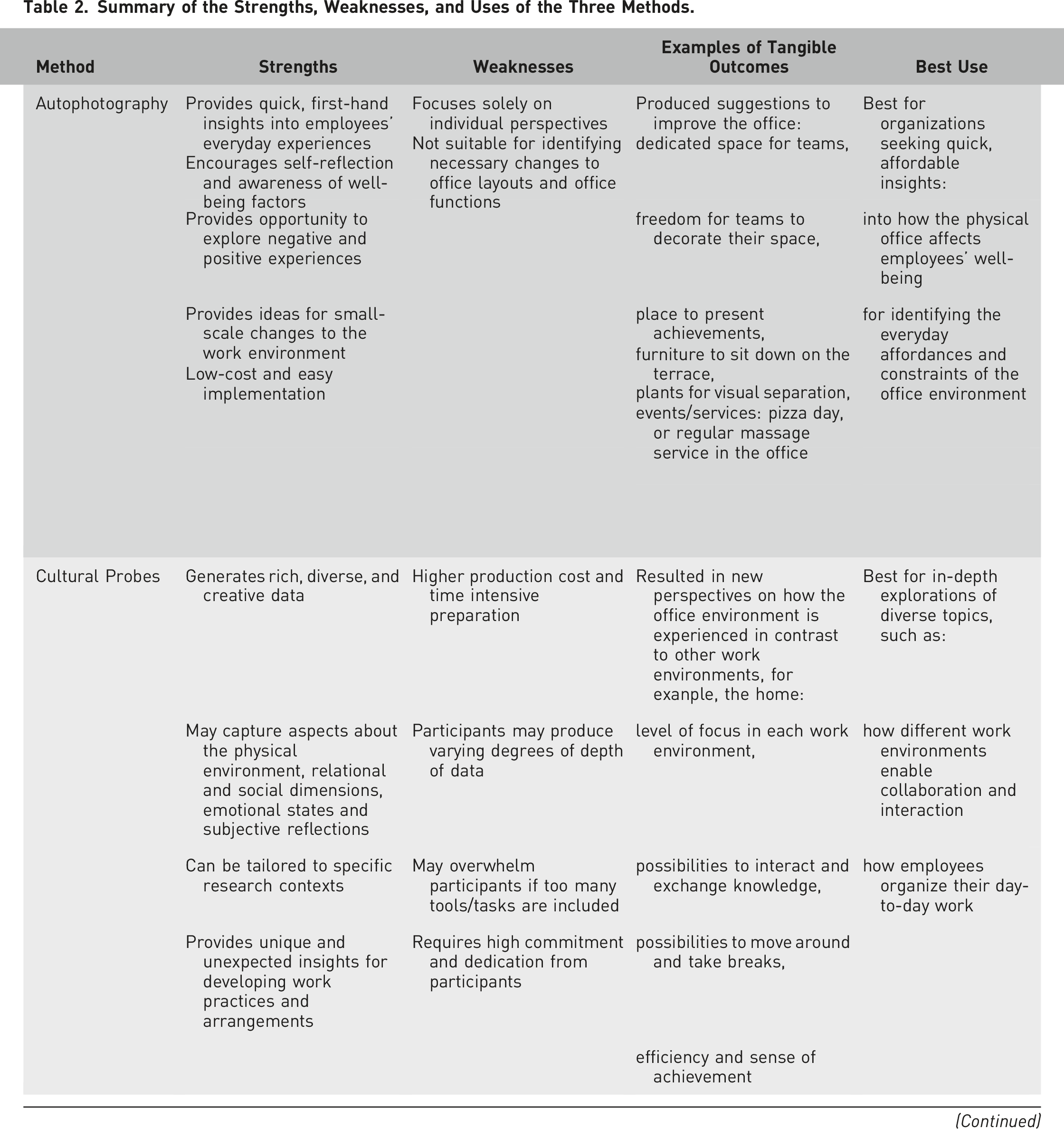
Summary of the Strengths, Weaknesses, and Uses of the Three Methods.
For companies planning major workplace changes, gamified participatory workshops offer an effective way to involve employees. It can be beneficial to run workshops with multiple teams and subsequently compare and evaluate the design concepts together with employees. While the method may feel like team-building, it is crucial that final designs reflect employees’ expressed needs and priorities.
By presenting three different participatory methods, we intend to open the way for creativity in workplace research and demonstrate that the working environment is a dynamic space, which employees can actively shape and be part of. This requires awareness about how employees use and experience their work environments. The methods introduced here may serve as a starting point for fostering this understanding.
Footnotes
