






Abstract
We observed secondary school students in Peru to see how posture changes with different classroom tasks. Forward leaning was by far the most common posture, especially while writing, where students often stayed bent over for long periods. Reading allowed more alternation, with arm support and relaxed postures providing short breaks. Listening to the teacher produced the most variety, combining upright and relaxed positions. These findings show that posture depends strongly on the task and suggest opportunities for better furniture design, posture awareness, and active breaks.
Keywords
SETTING THE STAGE: WHY POSTURE MATTERS IN THE CLASSROOM
When we step into a classroom, posture is one of the first things we notice. Students spend long hours seated, switching between writing, reading, and listening, yet their bodies rarely remain still (Castellucci et al., 2015; Parcells et al., 1999). Instead, posture is constantly adapting to the demands of each task. For us as ergonomists, this is a crucial observation: sustained forward bending may allow students to focus on their notebooks, but it also increases static load on the neck and trunk. Similarly, sitting upright supports attention, while more relaxed positions provide comfort and short microbreaks (Resende et al., 2023; Valenciano et al., 2021).
Previous studies have linked prolonged sitting and poorly designed school furniture to musculoskeletal discomfort in adolescents (Castellucci et al., 2010; Dianat et al., 2013; Parcells et al., 1999; Resende et al., 2023). Classic ergonomic research, such as the work of Branton and Grayson (1967), has highlighted how posture reflects not only physical constraints but also cognitive and attentional demands. Yet, many analyses remain descriptive, reporting prevalence without capturing the dynamics of how students alternate between postures or how specific academic tasks influence body positioning.
In this article, we aim to fill that gap by examining the postural behavior of Peruvian secondary school students during everyday classroom activities. Instead of treating posture as a static outcome, we explore its variability, transitions, and temporal stability. By combining systematic observation with statistical analysis, we show how posture adapts in real time to different tasks and what this means for ergonomics in schools.
HOW WE CONDUCTED THE STUDY
We observed 30 secondary school students (22 girls and 8 boys), aged 12–17 years, during regular classroom sessions. Activities were recorded using two discreet video cameras placed in the classroom. Each recording lasted approximately 35 min; however, only the final 30 min were analyzed to ensure that students had adapted to the classroom environment (Graf et al., 1995; Tahernejad et al., 2022). Postural behavior was captured using a time-sampling observation protocol. Still frames were extracted from the recordings every 30 s, a sampling interval selected to balance sensitivity to postural changes with feasible observational coding (Diego-Mas, 2015; Tahernejad et al., 2022). This procedure yielded 60 observations per student and a total of 1800 observations across typical classroom activities such as writing, reading, and listening to the teacher.
Postures were classified following a hierarchical strategy that prioritized trunk and neck position as primary determinants of seated posture (Helander, 2005; Pheasant & Haslegrave, 2006). Micro-postures sharing similar trunk flexion and neck orientation patterns were grouped into four broader ergonomic configurations representing meaningful seated postures during classroom tasks. Each frame was also assigned to the corresponding classroom task (writing, reading, or listening to the teacher) based on the activity observable at the moment the image was captured. Observations were coded using a standardized classification scheme, producing 216 distinct micro-postures. Inter-rater reliability was assessed in a random subset of images (10%), yielding a Cohen’s kappa of 0.86, indicating high agreement (McHugh, 2012).
To simplify, we first identified the “Top 10” most frequent postures, which accounted for a large share of the dataset. Then, following the methodology of Branton & Grayson (Branton & Grayson, 1967; Kamp et al., 2011), we regrouped all codes into four broader ergonomic categories, prioritizing trunk and neck positions as the main axes of classification, while limb positions were treated as secondary descriptors: Stable upright (relatively vertical trunk), Forward leaning (trunk flexion toward the desk), Relaxed/variation (slight backward or lateral trunk inclination), and Arm support/change (postures involving arm or forearm support that modify trunk position). A residual category included rare postures (<1% frequency) but was excluded from inferential analysis.
To examine task-related postural behavior, we analyzed associations between classroom tasks and posture categories using chi-square tests with standardized residuals. Segment-specific analyses identified which body regions adapted most strongly to each task. Postural dynamics were further examined through transition network analysis and survival curves to evaluate how frequently students changed posture and how long specific postures were maintained over time. The study was reviewed and approved by the University Research and Ethics Committee. All procedures followed institutional and international ethical guidelines, ensuring participant anonymity and confidentiality.
WHAT WE FOUND: PATTERNS AND FREQUENCIES
From the 1800 photographs coded, students displayed 216 unique postural combinations. Despite this variability, a small number of postures concentrated most of the observations. The “Top 10” postures captured nearly one-third of all data points, demonstrating that while posture shifts constantly, students tend to cycle around a limited set of configurations.
To illustrate the ergonomic classification used in the study, Figure 1 presents the four final postural categories derived from the coding system. Each posture is represented by a five-digit numerical code describing the position of five body segments (neck, trunk, arms, forearms, and legs). Graphical representation of the four ergonomic posture categories. Each posture is labeled with a five-digit code indicating the position of five body segments (neck, trunk, arms, forearms, and legs). The illustrations show representative configurations of the categories: stable upright, forward leaning, relaxed/variation, and arm support/change.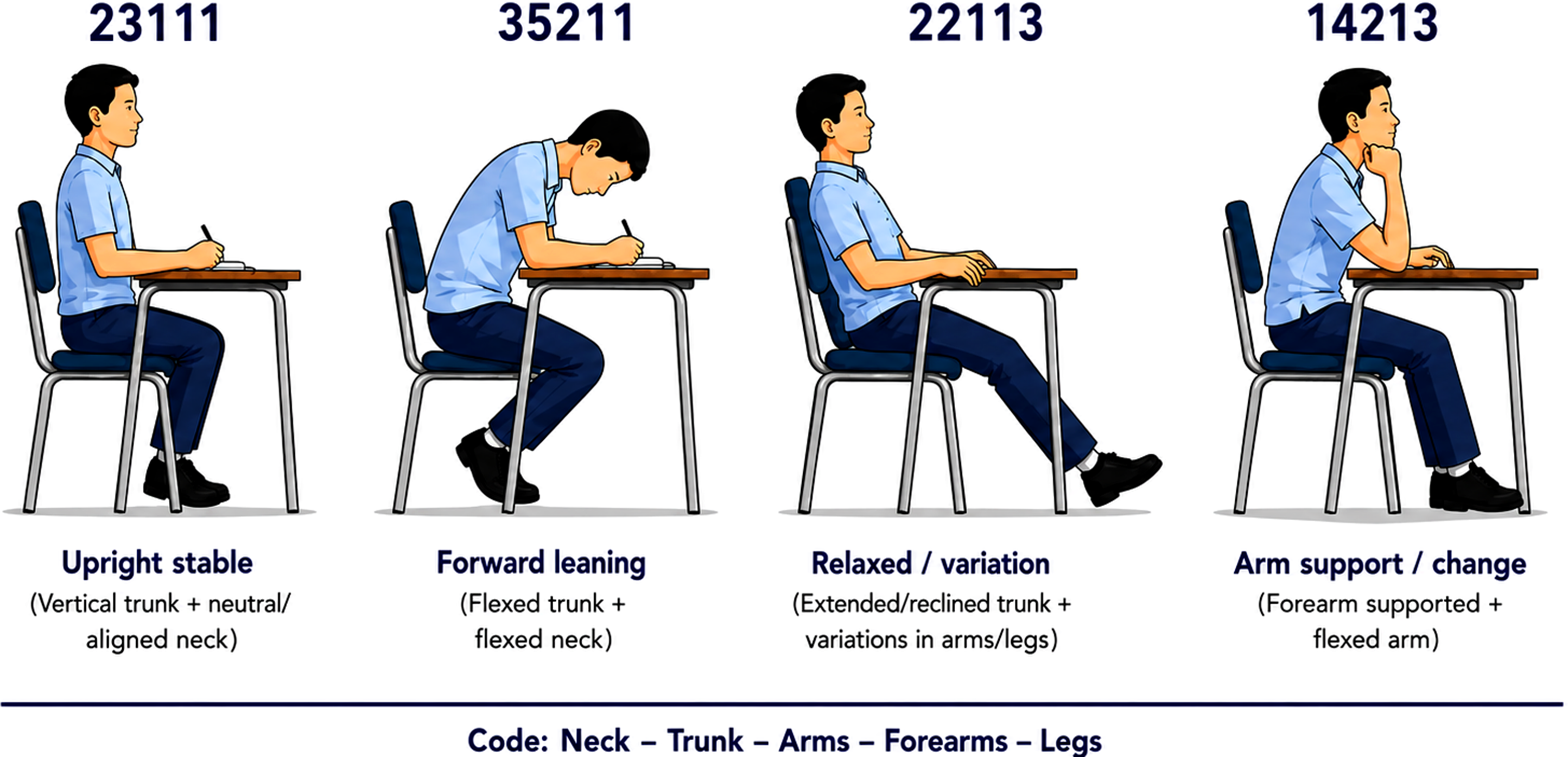
When grouped into the four ergonomic categories, the pattern became even clearer. Forward leaning accounted for 78.3% of all postures, followed by stable upright (10.6%), relaxed/variation (6.9%), and arm support/change (5.7%). This means that nearly four out of every five observations showed students bent forward toward the desk, particularly during tasks involving reading or writing.
Task–Posture Relationships
To understand how postures related to activities, we compared posture categories with the three main tasks: writing, reading, and listening to the teacher. The chi-square test of independence revealed a highly significant association (χ2(6, N = 1712) = 144.5, p < .001), showing that posture choice was not random but strongly task-dependent. Writing was overwhelmingly associated with forward leaning, often sustained for long durations. Students bent forward much more than expected (+3.88 residual), while upright positions were rare (−5.45 residual). Reading showed a different pattern: although forward leaning remained common, arm support/change postures appeared more frequently than expected (+6.24 residual). Listening displayed the greatest variation. Students were more often upright (+4.45) or in relaxed/variation postures (+2.37), and less often forward leaning (−1.57) (see Figure 2). Standardized residuals from the chi-square analysis of task–posture associations. Green cells indicate combinations occurring more frequently than expected, whereas red cells indicate under-representation. Asterisks denote residuals exceeding |2|, suggesting meaningful deviations from independence.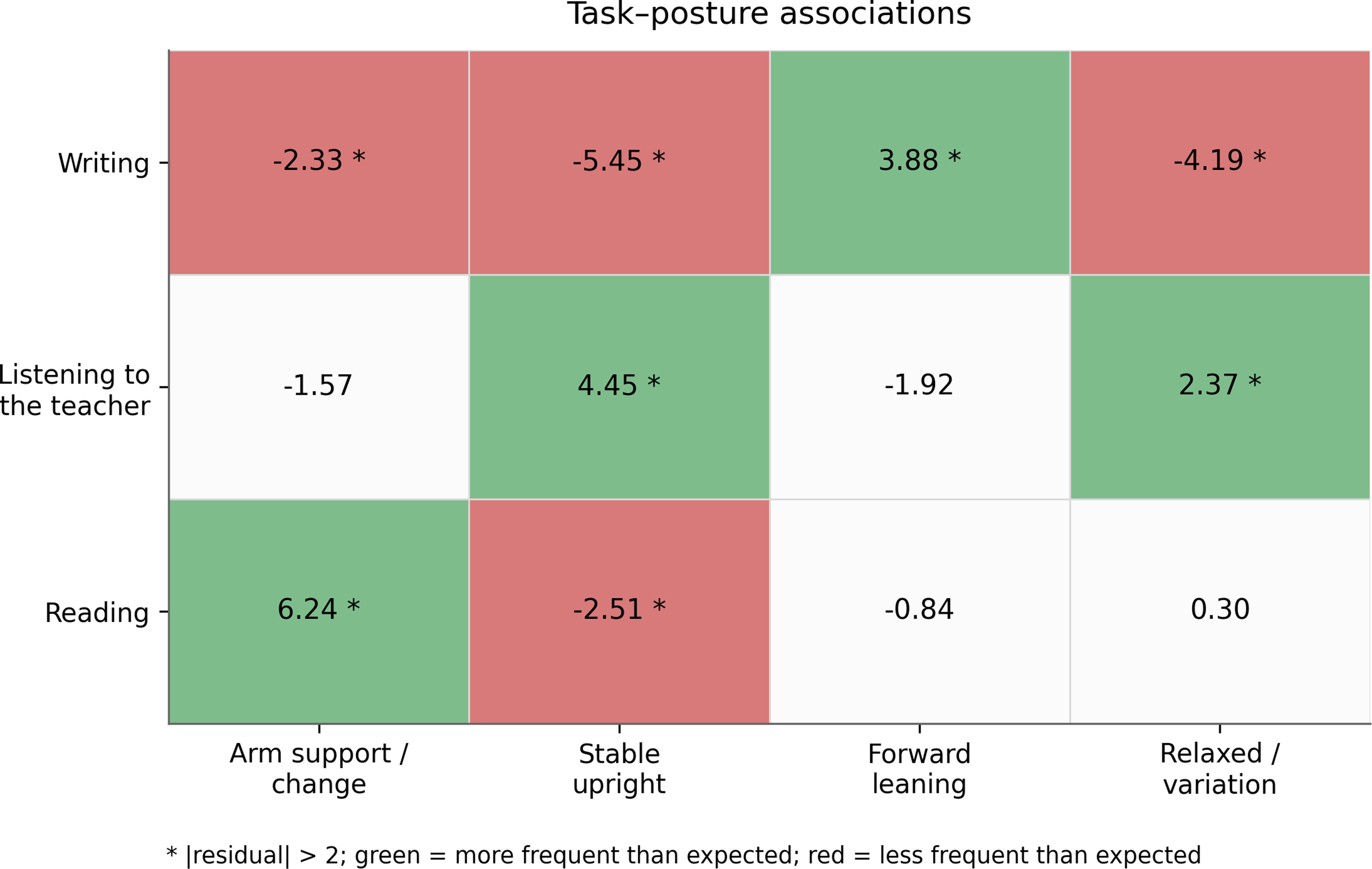
This confirmed that posture reflects the functional demands of each activity: intense visual-motor engagement for writing, a balance of concentration and microbreaks for reading, and more flexibility during listening.
Segmental Analysis
When analyzing posture by body segments, we found that the neck and trunk were the strongest determinants of task adaptation. The association was especially strong for the neck (χ2 = 298.9, p < .001) and trunk (χ2 = 139.8, p < .001), while forearms (χ2 = 81.3, p < .001) and arms (χ2 = 34.9, p < .001) played secondary roles. Legs contributed minimally, though still reached significance (χ2 = 10.5, p = .033). Neck: Writing was characterized by sustained forward flexion (+10.54 residual), while listening was linked to extended or upright positions (+5.08 and +4.56, respectively). Reading most often involved moderate flexion (+3.58). Trunk: Writing again showed strong forward flexion (+7.68), while listening was associated with upright or slightly extended trunks. Forearms: During listening, extended forearms were frequent (+5.06), contrasting with writing, where extended forearms were rare (−5.65). Legs: Differences were modest but consistent, with writing associated with flexion and listening with more extended positions. Together, these results demonstrate that neck and trunk posture are the main ergonomic indicators of task-related load, while arms, forearms, and legs adjust to support these primary movements.
LOOKING BEYOND SNAPSHOTS: POSTURAL DYNAMICS
Counting how many times a posture appeared was only the first step. What really mattered was how long students stayed in each posture and how they moved between them. To capture this, we built transition networks, where each category became a node and the arrows represented shifts between postures. The size of the node reflected accumulated time, and the thickness of the arrows showed how often transitions occurred.
The network confirmed the central role of forward leaning. On average, students maintained this posture for about 3.4 min per episode, far longer than any other category. Stable upright and arm support/change appeared in shorter bursts (less than 1 min on average), while relaxed/variation lasted slightly longer but still much less than forward leaning. In other words, the classroom posture system revolved around forward leaning as the “default” mode, with other categories functioning as transitional microbreaks (see Figure 3). Global postural transition network. Nodes represent the four ergonomic posture categories identified in the analysis. Node size corresponds to the mean duration of postural bouts, indicating how long each posture tends to be maintained. Arrow thickness represents the relative frequency of transitions between postures. Forward leaning shows the longest mean duration (μ = 3.37 min), whereas stable upright (μ = 0.74 min), relaxed/variation (μ = 1.02 min), and arm support/change (μ = 0.75 min) appear mainly as short transitional or compensatory postures.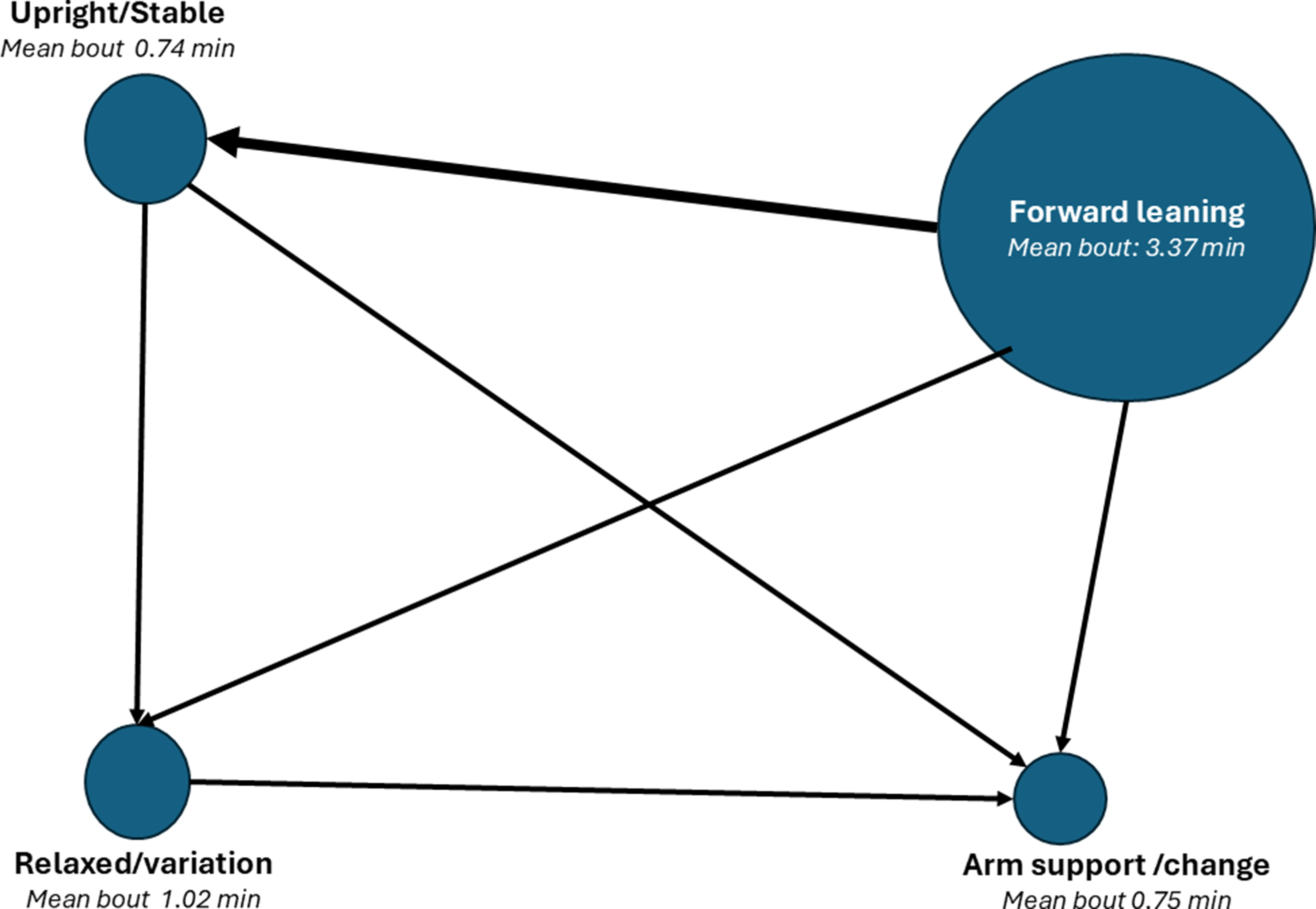
During writing, forward leaning dominated not just in frequency but also in duration. Students often remained in this posture for long uninterrupted intervals, with maximum bouts lasting over 17 min and even one episode reaching 22 min. This lack of variation suggests prolonged forward trunk and neck positions, which have been associated in previous research with increased musculoskeletal load (Kamp et al., 2011; Kroemer et al., 2020; Parcells et al., 1999; Resende et al., 2023). Other categories—stable upright, relaxed/variation, and arm support/change—appeared briefly, typically less than a minute, serving as short resets rather than true alternatives. Writing therefore emerged as the most posturally constrained classroom activity, with the longest sustained periods of forward leaning. In reading tasks, the posture network became more balanced. Forward leaning remained the most frequent, but students alternated more often with arm support/change and relaxed/variation. Average durations were shorter (≈2 min for leaning forward), while arm support and relaxed positions lasted around 0.9–1.0 min. This alternation suggests that reading, although still visually demanding, allows students to shift posture more freely, creating natural opportunities for relief. Unlike writing, which locked them into a fixed position, reading promoted a cycle between focus and micro-adjustment. Listening to the teacher displayed the richest network of transitions. Forward leaning still appeared, but it alternated frequently with upright and relaxed postures. The strongest connection in the network linked forward leaning to upright, suggesting that students often shifted from bending over their desks to sitting upright when redirecting attention.
Here, durations were shorter overall—2.6 min for forward leaning, less than 1 min for others—but transitions were constant. This variability showed that listening required less sustained motor engagement and more opportunities to adjust posture for comfort and attentional regulation.
To go beyond averages, we used Kaplan–Meier survival analysis (see Figure 4) to determine how long each posture persisted before switching. The results highlighted a clear hierarchy of stability: Forward leaning had the longest survival, often remaining dominant even after 5 min. Relaxed/variation and upright decayed more quickly, with most episodes lasting under 3 min. Arm support/change had the shortest survival, fading almost immediately, reinforcing its role as a transitional posture rather than a sustained one. Survival analysis (Kaplan–Meier curves) showing the probability of maintaining each postural category over time. Forward leaning demonstrates the longest bouts, while stable upright, relaxed/variation, and arm support/change show shorter and less stable durations.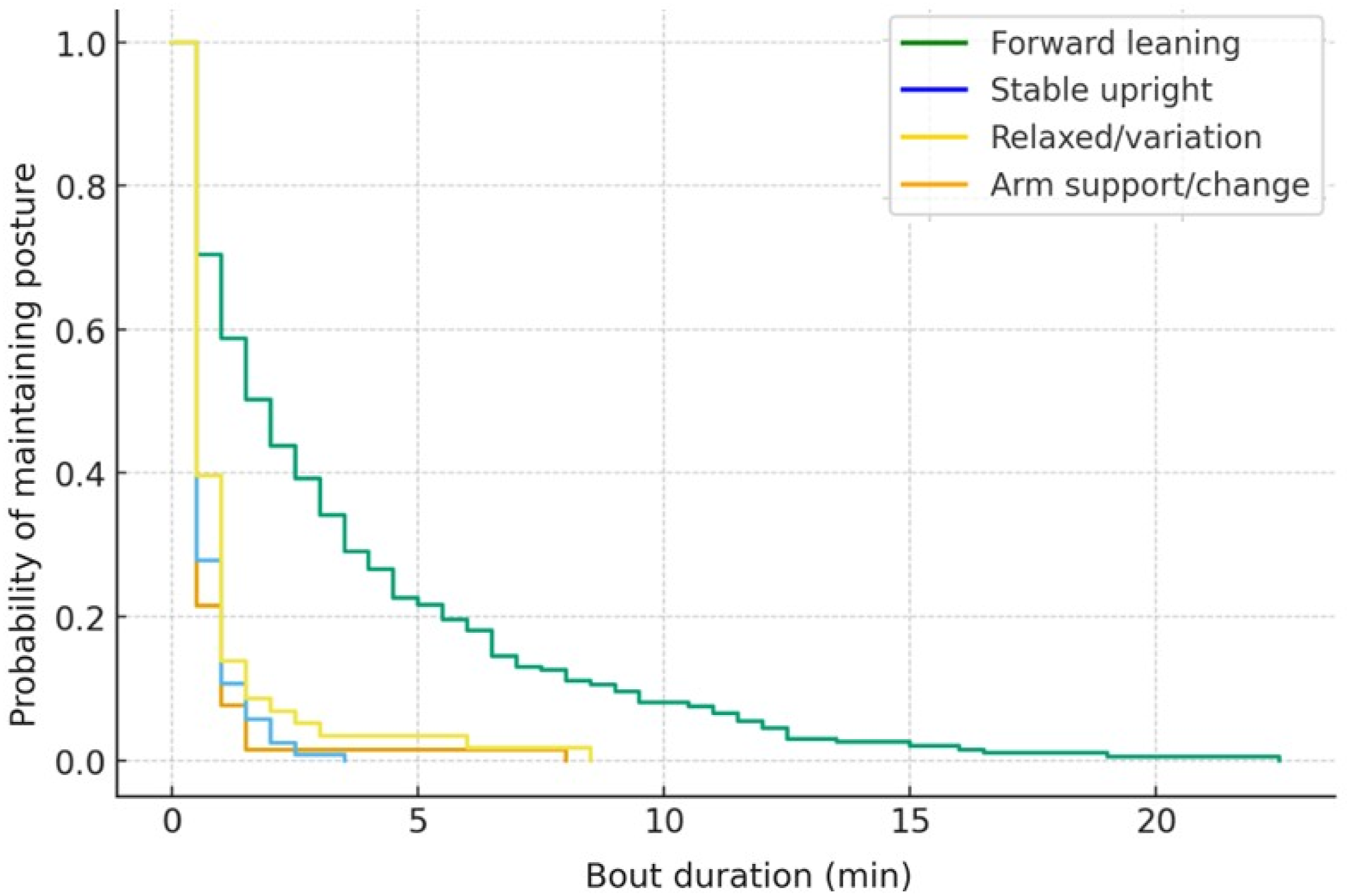
When compared across tasks (Figure 5), writing showed the least variability (median 0.29 changes per minute), while reading and listening promoted more frequent shifts (0.65–0.67 changes per minute). The Friedman test confirmed these differences (χ2(2) = 8.96, p = .011). By looking at transitions and survival patterns, posture emerges as a dynamic system rather than a static snapshot. Writing was associated with longer bouts of forward leaning and fewer opportunities for postural variation, whereas reading showed an intermediate pattern with periodic adjustments and listening promoted the greatest flexibility. From an ergonomic perspective, these findings suggest that academic tasks may influence postural loading patterns and opportunities for recovery through natural variations in movement. Boxplots of postural changes per minute across classroom tasks. Writing shows the lowest variability, reading shows the highest alternation, and listening falls in between.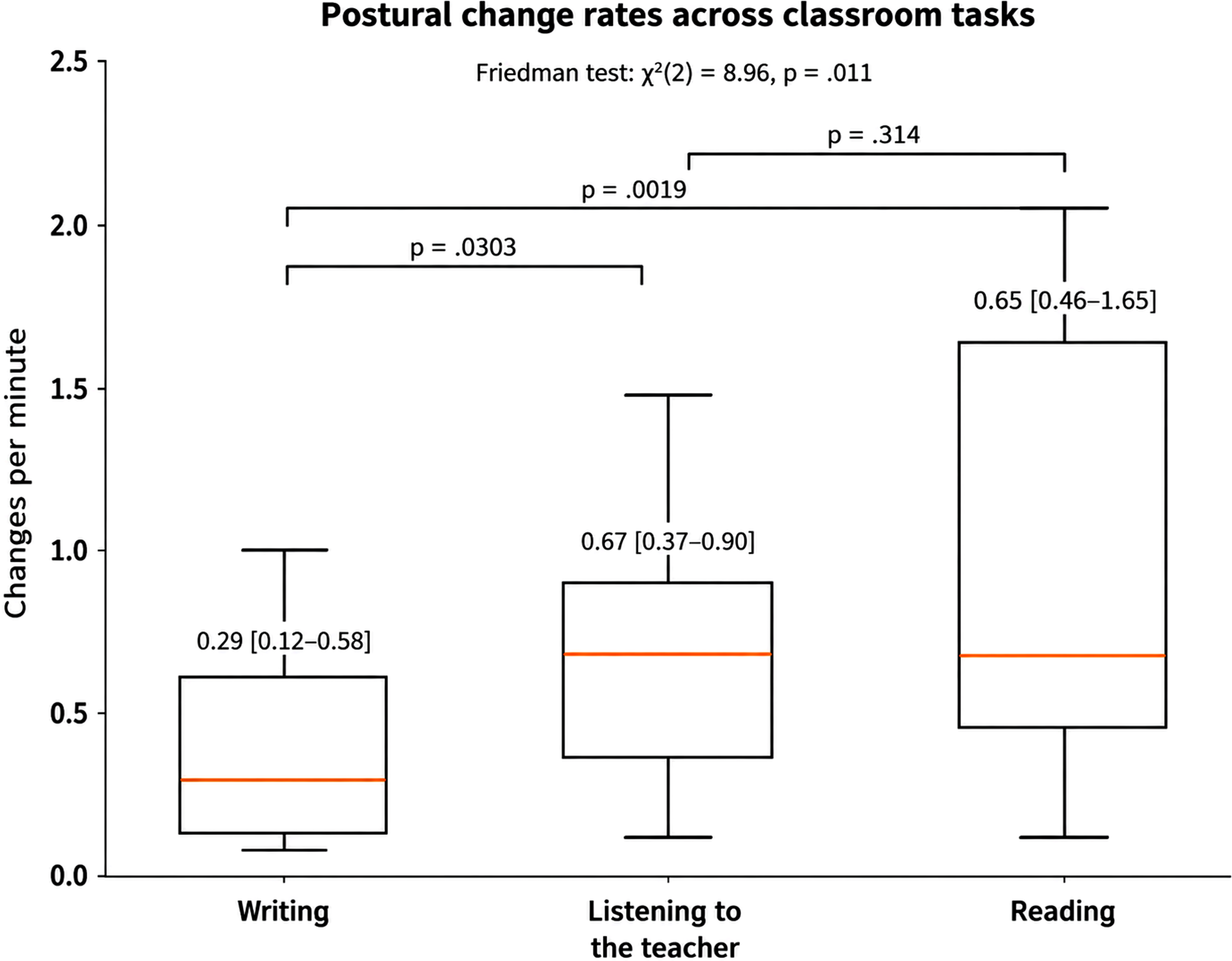
Summary of Forward-Leaning Posture and Postural Variability Across Classroom Tasks.
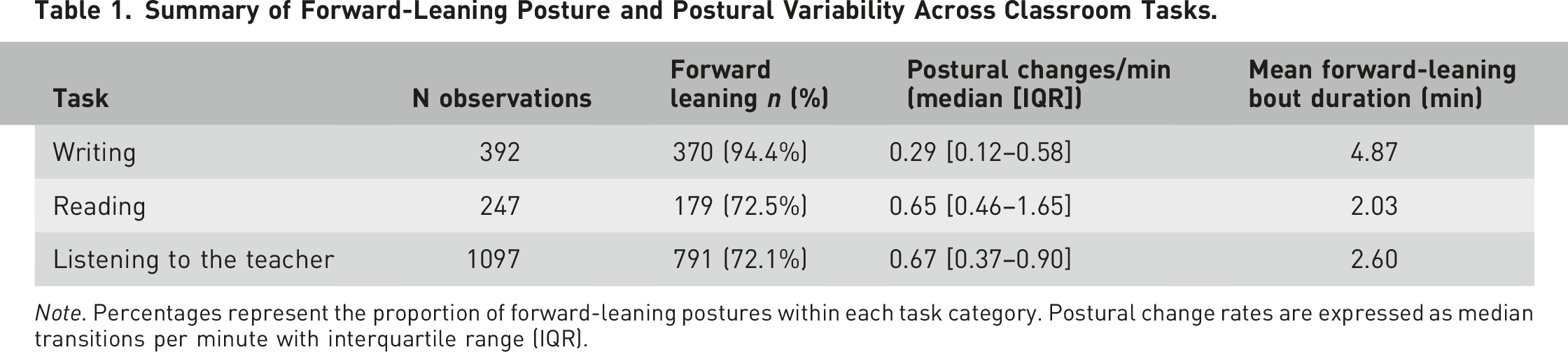
Note. Percentages represent the proportion of forward-leaning postures within each task category. Postural change rates are expressed as median transitions per minute with interquartile range (IQR).
WHAT THIS MEANS FOR ERGONOMICS IN SCHOOLS
Our study confirms what many teachers intuitively observe: posture in the classroom is not random. It follows a logic dictated by the task. Writing was associated with longer bouts of forward leaning, which may enhance visual precision but also increases static exposure in the neck and trunk. Reading creates a middle ground, allowing short shifts into arm-supported or relaxed postures. Listening to the teacher, in contrast, produces the most flexibility, with frequent switches between upright attention and relaxed positions.
These findings align with prior ergonomics research that has associated prolonged forward flexion with musculoskeletal discomfort and increased postural load (Parcells et al., 1999; Resende et al., 2023; Wang et al., 2025). They also reinforce the idea that posture is a functional response—students bend forward because it may facilitate visual precision during writing tasks rather than reflecting simple “bad habits.” At the same time, strategies that support task performance may increase exposure to sustained postural loading when maintained for long periods. However, our observational design did not directly assess discomfort, muscle activity, or spinal loading; therefore, these findings should be interpreted as indicators of potential ergonomic exposure rather than direct health outcomes.
The neck and trunk emerged as the most responsive segments, confirming their role as primary indicators of postural load in seated activities. Forearms, arms, and legs adjusted secondarily, modulating but not defining the core posture. This highlights where interventions, such as furniture design or posture education, should focus.
LESSONS LEARNED AND NEXT STEPS
What did we learn from this analysis? First, that posture in classrooms is highly task-dependent and dynamic, not static. Second, students already use spontaneous strategies such as shifting between upright and relaxed positions to manage their comfort and attention. Third, writing appears to be the most posturally constrained activity, requiring particular attention when designing desks, chairs, and schedules. From a design perspective, these insights point toward several practical strategies: • Furniture adjustments: Desks and chairs should allow closer visual access without forcing extreme forward flexion. Adjustable surfaces or tilted desktops may help. • Active breaks: Integrating short posture breaks between writing tasks can reduce static load (Dugan, 2018). • Awareness programs: Teaching students about posture variability may encourage them to use micro-adjustments consciously, rather than relying solely on spontaneous shifts.
Future research should expand these findings across multiple schools, larger and more diverse samples, and longitudinal designs, particularly because this study was conducted in a single Peruvian school setting. Incorporating physiological measures such as muscle activity, spinal loading, or discomfort assessments would also help determine whether the observed postural patterns translate into measurable musculoskeletal outcomes. Testing interventions such as ergonomic furniture prototypes, structured active breaks, or posture-awareness programs could further strengthen the evidence base.
Closing Thoughts
Classrooms are where many postural habits begin. By observing how posture adapts to tasks, we can see both the strengths and vulnerabilities of students’ bodies in action. Leaning forward appears functional for task performance, but it may also contribute to prolonged static exposure when maintained for extended periods. Upright and relaxed postures offer relief, but they are less frequent when tasks require precision.
The practical implication is straightforward: academic tasks influence posture, and posture, in turn, may influence comfort and musculoskeletal well-being over time, as suggested in prior research. By designing environments that respect this dynamic, ergonomists can help students learn more effectively and with less strain.
✓ Observations of classroom posture highlight several practical opportunities for improving student ergonomics. ✓ Writing tasks require supportive desk design. Prolonged forward leaning suggests that adjustable or slightly inclined desktops may reduce trunk flexion while maintaining visual precision. ✓ Encourage posture variability. Reading and listening activities naturally involve more posture alternation, suggesting that classroom environments should allow small postural adjustments. ✓ Introduce brief movement breaks. Short posture breaks during writing tasks may help reduce sustained neck and trunk loading. ✓ Improve visual ergonomics. Better lighting, document placement, and board visibility may reduce the need for excessive forward leaning.APPLIED SIDEBAR
Applied Design Insights for Classroom Ergonomics
Footnotes
Acknowledgments
The authors thank the participating school and students for their collaboration in this study.
Funding
The authors received no financial support for the research, authorship, and/or publication of this article.
Declaration of Conflicting Interests
The authors declared no potential conflicts of interest with respect to the research, authorship, and/or publication of this article.
AI Disclosure
Artificial intelligence tools were used only for language editing and writing support during manuscript preparation. No AI tools were used for data analysis, interpretation of results, or generation of scientific content. The authors take full responsibility for the integrity and accuracy of the manuscript.
