







Abstract
Border fortifications are a common tool for states to deal with mass migration and security concerns, encouraging scholars to understand the causes and consequences of these changes. We ask how individuals’ distance to state borders and the level of fortifications at that border influences public opinion on immigration. We argue that those who live closer to borders have increased interaction with migrants, which makes them more supportive of open migration policies. However, border fortifications serve as a mediating factor for this relationship, with greater fortifications increasing perceived cultural distance between the resident and migrant, furthering the gap in immigration attitudes. Using data from the Integrated Values Survey, we find that greater distance from the border decreases favorability towards migrants, but overall, fortifications do not. However, we find evidence indicating that border fortifications moderate the influence of border distance. Lastly, we do find that depending on the topic at hand, border distance and border fortifications can serve as either a moderator or amplifier of the role of ideology in immigration attitudes. These findings highlight the role of border fortifications and geography in immigration attitudes, complicating the existing literature while highlighting the role of the state in influencing public opinion.
Keywords
Introduction
In 2000, there were an estimated 150 million international migrants—this number has nearly doubled in 2024 to over 280 million (McAuliffe and Oucho, 2024). These mass migration flows are heavily influenced by armed conflict and climate vulnerability across the world (Braithwaite, Salehyan, and Savun 2019), making the topic of migration policy highly salient. Many states have responded to these flows by increasing the level of fortifications along their borders (Carter and Poast 2017). These fortifications are often in response to economic pressures (Carter and Poast 2017), migration fears (Avdan, Rosenberg, and Gelpi 2023), and security considerations (Linebarger and Braithwaite 2020). We ask how these fortifications, given their motivations, influence public opinion about immigrants and immigration policy.
As time goes on and the world becomes simultaneously more entrenched and more globalized, immigration will remain a salient issue for many countries’ politics. A better understanding of the factors that influence public opinion on immigration will give policymakers a more comprehensive understanding of how policy can shape opinion (in)directly. A better understanding of contextual factors when investigating attitude formation will also advance scholarship through an examination of how respondents’ political and social exposure with migrants may influence their attitudes. While it is a challenge to parse the effects of fortifications from potential government controversy and rhetoric regarding immigration, this paper takes a first attempt at beginning to unravel this oftentimes dual-headed strategy by examining how border fortifications themselves influence public attitudes.
Scholars have investigated this topic at the country level, particularly in rich states like America (Gravelle, 2018, 2024), and found that proximity to international borders influenced opinion on border walls. Much of the literature on immigration attitudes highlights the role of perceived economic security in shaping subsequent attitudes on immigrants and immigration policy (Arvanitidis et al. 2021; Binder, Polinard, and Wrinkle 1997; Hoskin and Mishler 1983; Young, Loebach, and Kim 2018). Further, the literature highlights the role of cultural similarity, perceived difference, and race or ethnicity (Burns and Gimpel 2000; Espenshade and Calhoun 1993; Heath et al. 2020; Heath and Richards 2020). Border fortifications serve as a unique policy intersection of these concerns because they concern state identity, economic policy, and security.
We theorize that proximity to international borders influences how citizens interact with and perceive immigrants. We adapt contact theory into border politics and theorize people more proximate to borders have more firsthand contact with people on the other side of that border. This contact could take many forms, such as economic interaction through cross-border trade, social interaction in border areas, or even residents who live near borders traveling abroad more frequently, which is an important part of improving views towards migrants (Buehler, Fabbe, and Kyrkopoulou, 2024). Thus, we argue that interaction should reduce the influence of negative narratives about migrants and perceived cultural differences (Pettigrew and Tropp 2006).
Further, we argue that border fortifications can also impact public opinion on migration in three main ways. First, higher levels of border fortifications increase psychological isolation for individuals on either side of the border, exacerbating perceptions of cultural distance or difference between the public and immigrants. Second, border fortifications serve as a highly visible and often heavily covered topic in the media, acting as both a heuristic for and catalyst of perceived differences between groups. Lastly, because of how far-right elites and media may portray immigration issues, utilizing ‘the border’ as a talking point, the role of ideology may have a stronger role in shaping immigration attitudes for respondents that live farther from the border.
We use information on respondents’ locations found in the Integrated Values Survey (EVS 2022; Haerpfer et al. 2024) to create a measure of a respondents’ distance to their nearest international border. Using existing data on the level of fortifications present at the border (Simmons and Kenwick 2022), we are able to derive new findings to suggest respondents’ personal experiences and level of exposure to relevant policy subsequently shapes their attitudes on the subject. We find evidence that individuals farther from international borders are more likely to take a negative position on immigration policy and have a negative stance on immigrants themselves. We also find that border fortifications mediate the effect of distance and ideology on public opinion. Specifically, we find that high levels of fortifications make the effect of distance to the border statistically significant and negative, highlighting the role of personal experience at the border on attitude formation regarding immigration. Lastly, we find that distance to the border moderates the effect of ideology on immigration attitudes, as the effect of higher levels of conservatism on immigration attitudes is either weakened or strengthened, depending on whether the topic is migrants themselves or immigration policy.
These results suggest nuances in how citizens form opinions on immigration. Answering a call for further investigation into this potential mechanism shaping immigration attitudes (Young, Loebach, and Kim 2018) and evidence suggesting opinions on immigration may vary among different localities (Arvanitidis et al. 2021), our paper provides evidence that border fortifications and barriers may impact perception of migrants through multiple pathways.
Literature Review
Public opinion on migration is generally attributed to factors such as economic security, cultural values, existing government policy, and heuristics (Kage, 2022). For economic security, evidence shows that individuals with lower levels of income are less supportive of immigration (Artiles and Meardi 2014; Arvanitidis et al. 2021; Gerber et al. 2017; Hoskin and Mishler 1983; Young, Loebach, and Kim 2018), although this evidence does not come without some conflicting results (Binder, Polinard, and Wrinkle 1997; Harris et al. 2018). Burns and Gimpel (2000), for instance, shows how individual economic fears could be a direct influence on attitudes through fears of immigrant labor ‘replacing’ them. However, Hainmueller and Hopkins (2014) shows that national-level economic factors play a meaningful role rather than individual circumstances. Our paper speaks to and furthers this literature through an examination of border fortifications, which are often built in part due to concerns related to economic security (Carter and Poast 2017), demonstrating that economic (in)security at a national level may influence immigration attitudes through more indirect pathways too.
Past economic influences, there is evidence for the role of cultural values, perceived differences, and prejudice in impacting attitudes (Heath et al. 2020; Heath and Richards 2020). For instance, while Burns and Gimpel (2000) find some evidence that individual economic fears impact attitudes, they also find that racial and ethnic stereotypical thinking about the work ethic and intelligence of other groups is a strong influence on individual attitudes towards immigration policy. Espenshade and Calhoun (1993) find evidence supporting the role of cultural affinity between respondents and undocumented migrants in impacting attitudes towards illegal immigration and migrants. Perceived differences between people may also play a role. For example, Ayers et al. (2009) highlights the impact of racial differences in the US in shaping opinion toward migration, as aversion to Latinos in the US was found to correspond to restrictionist attitudes about both legal and Mexican immigration.
Taken together, the amount of evidence highlighting the role of both economic and cultural factors in shaping public opinion on immigration ultimately emphasizes the importance of both of these factors. Relatedly, Solano and De Coninck (2023) find evidence that highlights the role of both economic factors like GDP per capita and welfare expenditure as well as political ideology in impacting policymakers’ actions on migrant integration policies. This paper highlights the role of border fortifications as a visible policy that could respond to both economic and cultural qualms. Border fortifications and border walls specifically have been in large response to both heightened levels of migrants (Avdan, Rosenberg, and Gelpi 2023), as well as concerns related to economic security (Carter and Poast 2017), and as such, serve as a visible reminder of both economic disparity between countries on either side of the border as well as perceived cultural difference and dissimilarity. Because of this, our study provides a unique opportunity to look at a potential intersection between these two major literatures.
Additionally, public opinion may be further shaped by existing policies. Evidence of public opinion being thermostatic has been found with immigration policy. For example, in the UK, more liberal and less restrictive immigration policies of the late 90s and early 2000s saw strong public demand for restriction in the late 2000s and onward (Ford, Jennings, and Somerville 2015). We argue that the saliency of immigration should vary at a subnational level as well—whether people are closer to the very borders that migrants are entering from should impact the perceived importance of the issue as well as influence perceptions of coverage and public debate. This latter argument is discussed further below.
A considerable amount of literature shows how the public may use heuristics, narratives, and frames to form opinions when information costs are high (Aarøe and Petersen 2014; Culpepper et al. 2024; Mondak 1993; Petersen 2009; Rugeley and Gerlach 2012). For instance, foreign affairs news on TV can result in changed perceptions of other countries, even if one has personal connections with people from said countries (Semetko et al. 1992).
In addition, racial and ethnic stereotypes may serve as one such heuristic because of how they can impact information processing and decision-making surrounding policies influencing those that are impacted (Burns and Gimpel 2000). Even if the public is not as uninformed on immigration as may be traditionally assumed (Danckert, Dinesen, and Kim 2017; Lahav 2004), this paper argues that tools like stereotypes, narratives, and heuristics can be influenced by state policy (in)validating such tools. Border fortifications serve as a useful tool to fuel or spark anti-immigrant narratives and anti-immigrant stereotypes, whether it be through validating concerns of migrant criminality or highlighting cultural and/or economic dissimilarity (Carter and Poast 2017; Jaramillo-Dent and Pérez-Rodríguez 2021; Mutz and Simmons 2022). We delve into this theory further below.
Theory
Distance From the Border and Immigration Attitudes
The broad argument of contact theory or the ‘contact hypothesis’ is straightforward: that prejudice between groups can be reduced, and that understanding can be increased through social contact/interaction (Allport 1970; Paluck, Green, and Green, 2019; Pettigrew and Tropp 2006). Through this contact, both sides of the exchange are provided more information about the out-group, helping circumvent stereotypes and complicating the in-group’s thoughts about the out-group through interaction and repeated exposure (Pettigrew and Tropp 2006). We expect interaction to be a function of distance from the border, where those closer to borders have more opportunity to interact with other groups of people. Literature provides some evidence in support of heightened exposure, influencing people’s political attitudes as well.
Research on cross-border contact between Czechs and Germans highlights how more frequent interaction improves perceptions of each neighbor (Mirwaldt 2010). Further, despite narratives in the U.S. that immigrants pose a criminal threat and create instability, research shows that residents of border regions near the U.S. such as El Paso, Texas report feeling safe and do not report insecurity because of their proximity to the border (Castañeda and Chiappetta 2020). However, the race of out-groups can impact whether contact helps or hinders future relations, so contact itself is not always a panacea (Ha 2010; Kao and Liu 2025). Together, these findings indicate that citizens who live far from border areas have limited information or suffer from higher information costs to learn about the state of immigration policy and those who cross the border. Further, they provide evidence to indicate that those closer to the border may hold different attitudes towards migrants themselves because of their increased exposure.
Additional evidence also indicates that this increase in contact can extend to people’s attitudes towards specific policies as well. For instance, at a country level, evidence shows a higher percentage of immigrants results in sharp declines in support for anti-immigration policy (Young, Loebach, and Kim 2018). Although contrary to contact theory’s more positive outlook on the effects of contact, some findings highlight how greater proximity to Latino populations led to higher levels of opposition to legal immigration and amnesty provisions, although actual contact with minorities led to higher levels of support for amnesty (Ayers et al. 2009). Other studies find that individuals who have more knowledge about migration or interaction with migrants are less supportive of border securitization and more empathetic to migrants (Adida, Lo, and Platas, 2018; Buehler et al., 2022). Lastly, research on Black Lives Matter protests also displays how people who live near said protests become more favorable towards the movement (Boehmke et al. 2023). Each of these studies suggests that exposure to different groups can influence their attitudes. Given these factors, we first lay out a hypothesis for how proximity to the border ought to influence immigration attitudes for locals if we were to find support for contact theory:
Border Infrastructure and Immigration Attitudes
Border fortifications are highly political and visual structures that can have a profound psychological impact on the people around them, creating psychological distance between those nearer them (Mutz and Simmons 2022). Drawing from this, we argue border fortifications can mediate the effect of distance on immigration attitudes. Additionally, we build on work from Mondon (2022), which emphasizes how elites play an active role in impacting public opinion and the legitimization of extreme political views. We expand this by arguing that walls and fortifications more generally serve as an explicit reminder of state power and a deliberate visual, tangible, narrative that can create or exacerbate negative attitudes towards immigrants. We expect this to add to the effect of distance on immigration attitudes for two reasons.
First, we argue that border fortifications increase the psychological isolation of one nation from another for individuals living nearby, exacerbating the perceived cultural distance between migrants and residents. Second, we argue that the visible, tangible, reality of border fortifications serves as a heuristic to those living further away from the border that the public may use to form attitudes and opinions on immigrants and immigration policy.
Absent border fortification, intergroup contact can help provide information to citizens and can circumvent heuristics such as stereotypes and media narratives. In turn, this complicates residents’ thoughts and reduces anti-migrant sentiment through interaction and exposure (see Pettigrew and Tropp (2006)). When border fortifications are introduced, the level of exposure to the fortifications serves as another important factor that could influence migration attitudes. It does so by creating a natural separation between the two groups of people, creating an “us” vs “them” dynamic (Mutz and Simmons 2022). These barriers also reduce international trade between countries, reducing the underlying levels of interaction between groups (Carter and Poast 2017). Further, with higher fortifications comes an increase in the symbolic ‘otherness’ of those who cross it (Jaramillo-Dent and Pérez-Rodríguez 2021). Therefore, we argue that the level of fortifications along a border can mitigate the effect of intergroup contact and worsen citizens’ views of migrants, even if they live close to the border.
We argue that in localities with lower levels of border fortification, respondents will be more favorable towards immigration and migrants. With less fortifications comes a decrease in the symbolic ‘otherness’ of those who cross it (Jaramillo-Dent and Pérez-Rodríguez 2021) as well as a decline in the psychological impediments that create feelings of cultural distance (Mutz and Simmons 2022). Further, a fortified border can make it more difficult for actual cross-border interpersonal interaction, a factor known to reduce support for border securitization and increase empathy for migrants (Buehler, Fabbe, and Kyrkopoulou, 2024). This better enables the mechanism of greater contact and exposure to migrants to counteract larger anti-immigrant narratives or stereotypes that may be salient or otherwise impact respondents’ attitudes towards immigration and migration more generally.
Moving to heuristics on immigration, previous research provides evidence that perceptions of identity and cultural similarity can play an important role (Carmel and Sojka 2021; De Coninck and Matthijs 2020). Further, media framing surrounding immigration policy can have tangible impacts on public opinion (Merolla, Karthick Ramakrishnan, and Haynes 2013) and dehumanizing language towards migrants can further decrease citizens’ views towards them (Utych 2018). Scholars have found that news media, especially those closer to borders, publish on the negative aspects of immigration more so than positive (Branton, & Dunaway, 2009). These narrative messages can prove effective—in the case of income inequality, for example, implementation of a populist narrative of systemic unfairness results in higher demands for economic redistribution (Culpepper et al. 2024).
We argue the same is true for narratives surrounding immigration and border fortifications; while media framing or media as a heuristic may not be solely negative towards immigrants when there are fortifications, media coverage of the fortifications and those who cross them may exacerbate negative attitudes, whether intended or not.
For instance, during the mass migration wave since 2015, campaign messages from the Hungarian government chose to take a more aggressive and anti-immigrant approach to the crisis as it built a wall along its border (Bajomi-Lázár 2019). Media outlets received or produced a barrage of anti-immigrant sentiment as a threat to Hungarian culture and physical safety, with opposition offering little resistance to these government-supported and oftentimes government-created messages (Bajomi-Lázár 2019). This also occurred in the United States where coverage of migrant crossings past the U.S.-Mexico border wall emphasized the migrant’s behavior as criminal or dangerous (Jaramillo-Dent and Pérez-Rodríguez 2021). Importantly, media coverage can create a negative view of immigrants through using words like “flood” or “wave,” helping foster negative views of migrants (Jimenez, Ardt, and Landau, 2021). Research also shows that nationally based but commercially independent media can still reflect the interests of political elites (Kasmani 2014).
These cases indicate that the media can play an important, additive role in making citizens more wary of migrants. Especially when there are high levels of border fortifications that make perpetuation of negative stereotypes and heuristics easier.
Ideology and Immigration Attitudes
Lastly, we argue barriers and heuristics can strengthen the ‘validity’ of far-right anti-immigrant narratives, bolstering the role of ideology and polarization in shaping the public’s attitudes towards immigration. We unpack each of these arguments by demonstrating how ideology is important for immigration attitudes, and how it can be conditioned by fortifications and distance.
Immigration plays an important role in people’s political conceptions because it relates to and captures salient political cleavages such as migration, national identity, and multiculturalism (O’Grady and Abou-Chadi 2019). This means that the core of a person’s ideology can be heavily shaped by attitudes on migration. On top of this, immigration is a useful tool for conservative partisans to acquire political capital and electoral success as part of a larger message to stoke right-wing populist support (Di Piazza and Soare 2023; Kamenova and Pingaud 2017). Further, far-right mobilization of anti-immigrant sentiment can result in a diminished impact on education’s influence on immigration attitudes (McLaren and Paterson 2020).
This can be frequently seen in the right-wing populist executives of today such as Victor Orbán or Donald Trump. In Hungary, for instance, themes of the anti-immigration campaign from 2015, 2017, and 2019 ranged from migration as a looming threat facing Hungary to migration as a conspiracy by the likes of Hungarian-American billionaire George Soros or the President of the EU Commission (Bajomi-Lázár 2019). Narratives like this lead to tangible harms, where members of the public would attack or discriminate against refugees or those supporting refugees, normalizing xenophobic views especially among those who lived in rural areas where pro-government media dominated (Bajomi-Lázár 2019).
Importantly, we expect the role of ideology to be amplified by distance from the border and levels of fortification. Analyses in the American context support this idea as Cortina (2020) finds conservative partisans farther away from the border are more supportive of a wall, but conservatives closer to the border, those with greater interaction with the reality and context of the border, are less supportive of a wall. Given these reasons, we argue immigration should be a salient issue that can create tangible attitude changes that are both highly politicized and influenced substantially by one’s political ideology and leanings. We argue that this is applicable to immigration politics more generally, which leads to our third hypothesis:
Research Design
Since we do not have our own original survey, we rely on data from the Integrated Values Survey (IVS) (1981–2022) (EVS 2022; Haerpfer et al. 2024). This survey combines data from the European Value Study (EVS 2022) and the World Value Survey (Haerpfer et al. 2024) into one cross-national time-series data set. To investigate the role of border fortifications and distance to the border on migration attitudes, we use two dependent variables provided by the IVS: respondents’ opposition to migrants or foreign workers as a neighbor, as well as their support for pro-immigrant policy. For models with the former dependent variable, we have a final sample size (N) of 73,746; for models with the latter, we have an N of 37,688.
The first question asks, “On this list are various groups of people. Could you please mention any that you would not like to have as neighbors?” “Immigrants/foreign workers” are one of the groups listed. This variable is binary and recoded so that respondents either mentioned (0) or did not mention (1) immigrants as a group they would not like as neighbors. Thus, higher values of this variable indicate more positive attitudes towards immigration. The second question asks respondents, “How about people from other countries coming here to work. Which one of the following do you think the government should do?” Responses are on an ordinal scale ranging from “let anyone come” (1) to “prohibit people from coming” (4). We recode this variable to be binary, in which respondents indicate support for immigration (1) if they answer with either “let anyone come” or “as long as jobs are available,” and 0 otherwise. By using these variables, we gain insights into respondents’ attitudes towards migrants themselves as well as their attitudes towards state immigration policy.
To measure distance to the border, we leverage data captured in the IVS that records the administrative district where the survey was conducted. Using GIS software, we calculate the centroid, or geographic center, of each first-level administrative district globally. 1 We then calculate the distance of that centroid to the nearest state-level border and capture what state is on the other side of the border. A demonstration of this method can be found in Figure A1 in the Appendix using Poland as an example. This distance is then recorded in kilometers and included in the data as Border Distance. Because Border Distance is heavily right-skewed, our primary analysis uses the logged distance to the border. As the GIS administrative districts’ names differ from the names recorded in the IVS, we utilize a fuzzy matching process to match the GIS district names to the IVS’ recorded district names. 2
For border fortifications, we use a latent measure from Simmons and Kenwick (2022) that captures the level of material infrastructure along a border. This includes the number of border crossings, number of police, and whether there is a border wall along the border. All of these factors are combined into a latent variable ranging from 0 to 3, with 3 indicating a highly fortified border. This data provides a useful measure for our concept because it explicitly uses satellite imagery to create the scores, creating a compelling measure of how visually securitized and fortified an international border is. Because we expect fortified borders to be visual tools that increase the perceived distance between groups of people, we believe this measure will correctly capture our concepts.
This measure gives a filtration score for each border crossing point, which we refer to as the fortification level. Because each international border has multiple crossing points along major highways, the original authors create a fortification score for each border crossing point. Because we are concerned with how visual a fortified border is, we collapse this to both the maximum fortification score and the mean along each international border. So, if a border between two countries has two major crossing points, each point receives a separate score based on factors such as police presence and whether there is a border wall. We take the larger of the two fortification scores as our main dependent variable and run separate models for the mean fortification scores in the appendix.
We also account for political ideology; we use a 10-point scale for respondents’ political orientation, where a 1 indicates a respondent is strongly left-leaning while a 10 indicates a respondent is strongly right-leaning. This measure is utilized in order to test Hypotheses 3, capturing the degree of conservatism among participants.
Finally, we control for multiple factors that could confound the relationship between our key variables. First, we include a litany of respondent demographic factors such as age, income (on an ordinal scale), education (on an ordinal scale), whether respondents are female (coded 1) or not (0), whether respondents are employed, and whether respondents are married (1) or not (0). Second, we include a number of factors influencing respondents’ more general worldview. Given findings from Davidov et al. (2020) on the role of individual values influencing attitudes on immigration, we include respondents’ interest in politics, general trust in the public, as well as belief in personal control over their life. Additionally, we include the country’s GDP per capita in order to capture country-level wealth characteristics that may influence individuals’ attitudes on migration as well as their country’s capacity to construct fortifications (World Bank, n.d.-a). Lastly, in order to account for larger systemic or temporal factors that are not otherwise controlled for in the initial analysis, we include year-level and region-level (e.g., Europe, Asia, Africa, etc.) fixed effects.
Results
We use logistic regression with country-level random intercepts to better account for country-level heterogeneity that is otherwise not captured with the existing variables (Bell and Jones 2015). For hypothesis 1 and for hypotheses 2 and 3, we create two sets of models; the first model examines whether our primary variables influence respondents’ willingness to live next to immigrants, and the second examines whether they influence respondents’ support for pro-immigration policy.
Distance, Fortifications, and Ideology’s influence on Immigration Attitudes
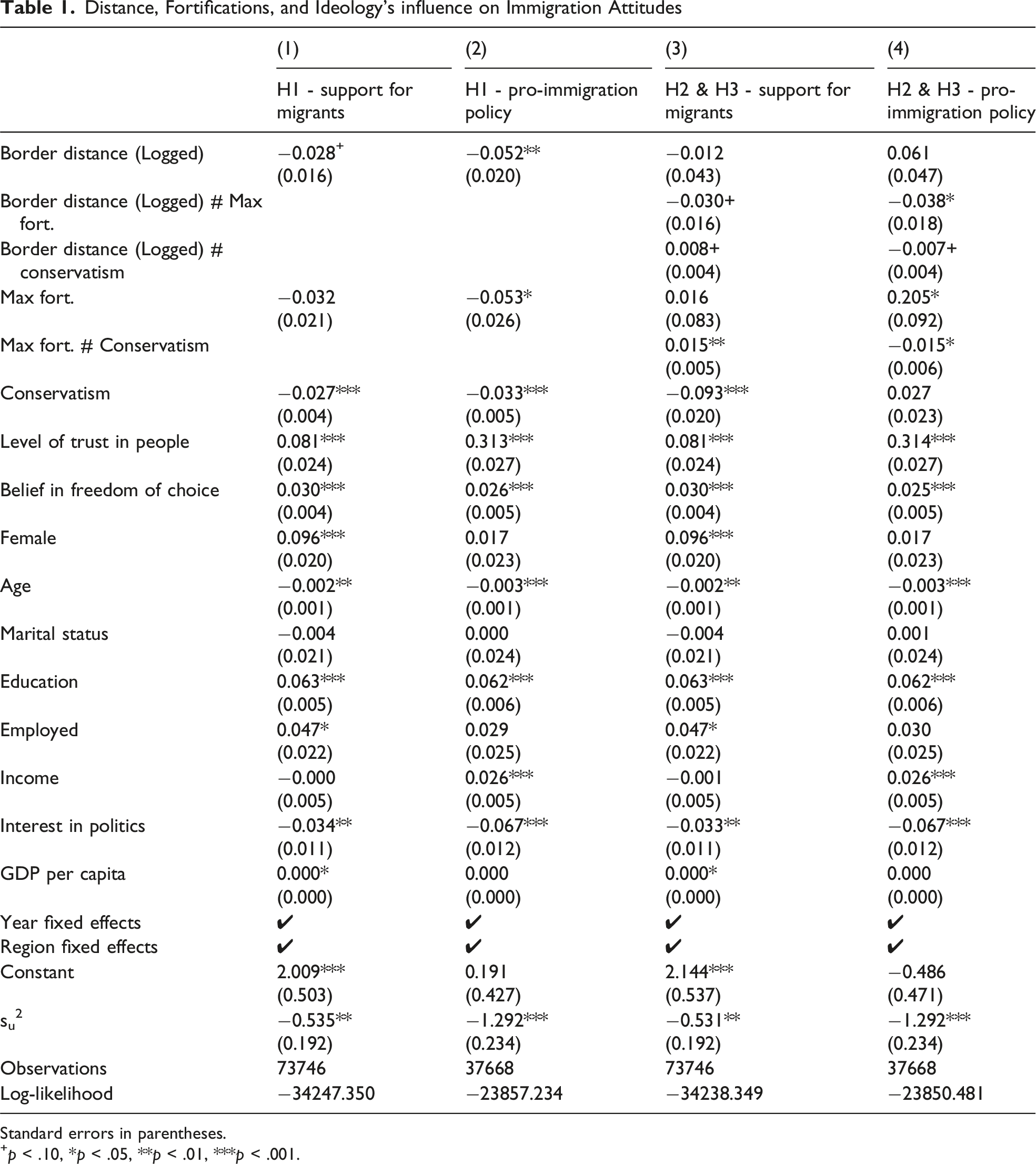
Standard errors in parentheses.
+p < .10, *p < .05, **p < .01, ***p < .001.
For hypotheses 2 and 3, we create interactions for each respective combination of factors. For a more robust interpretation, we primarily orient our discussion of these hypotheses around visualizations of the marginal effects. For H2, we expect the effect of distance will be conditional upon the level of fortification at a border because fortifications can create a higher perceived distance between two groups of people, thus mitigating the effect of distance and interaction. We find that the effect of border distance on immigration attitudes and policy becomes more negative as fortifications increase. This supports our second hypothesis that higher levels of border fortifications make the effect of distance more negative. This indicates that border fortifications increase the perceived distance between groups and lowers public acceptance of migrants.
Figure 1 shows that respondents further from the border are most affected by distance when there are high levels of border fortifications. They become more likely to have anti-immigrant attitudes and oppose to pro-immigration policy as distance and fortifications increase. Specifically, we find that for respondents who live nearest to a relatively unfortified border, the distance to that border is statistically insignificant for influencing attitudes towards migrants or towards policy. However, at high levels of fortifications, we find distance to that border is statistically significant and negative—those who live further away from heavily fortified international borders, are more likely to be opposed to migrants and less likely to support pro-immigration policy positions. This could indicate citizens who live far form borders are more likely to rely on visual and policy heuristics when assessing migration policy, if they lack personal exposure to immigrants. Marginal effects for Border Distance × Fortifications (H2) tested in Models 3 (left) and 4 (right) for Table 1.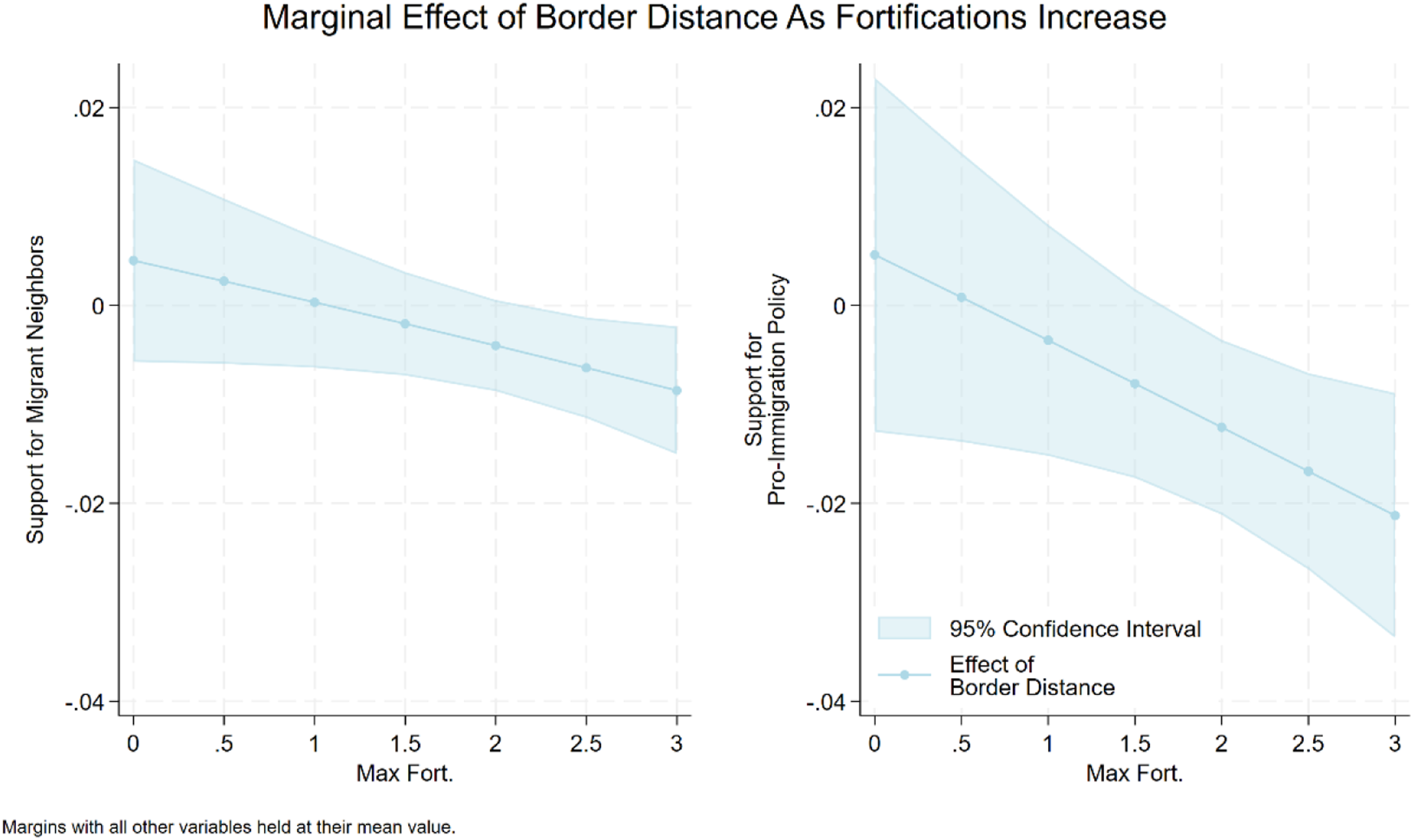
We expect that the effect of conservative ideology on anti-immigrant attitudes will become more negative as the distance from the nearest border increases. The results of the interactions are visualized in Figure 2. We find evidence that border distance conditions the relationship between ideology and immigration attitudes, albeit in divergent ways depending on whether it relates to immigrants themselves or immigration policy. While higher levels of conservatism have a negative effect for respondents closer to the border, we find that conservatism becomes statistically insignificant to respondents’ attitudes towards having an immigrant as a neighbor as respondents’ distance to the nearest border grows. This suggests that as distance from the border increases, conservatives either become more open having an immigrant as a neighbor, or rather, those on the left become more inclined to oppose immigrants as well. Marginal effects for Conservatism × Border Distance (H3) tested in Models 3 (left) and 4 (right) for Table 1.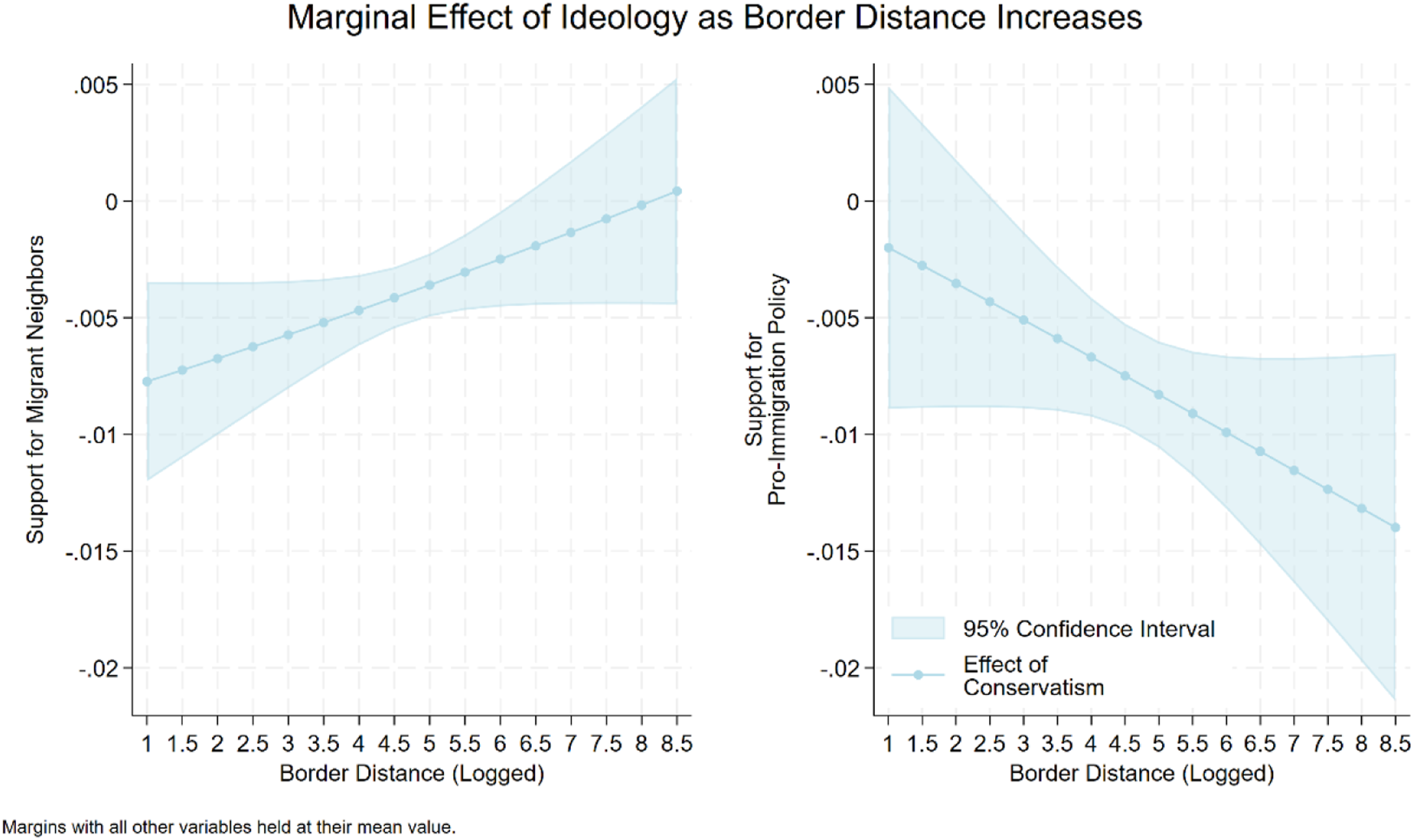
We do find support in the hypothesized direction when it comes to pro-immigration policy. As respondents’ distance to the border increases, the effect of conservatism becomes more negative. Specifically, we find that as respondents’ distance to the border increases, the effect of conservatism becomes distinguishable from 0 and considerably negative. Taken together, these results provide nuanced support for hypothesis 3—distance to the border does heighten the negative effect of conservative ideology, but only when it comes to pro-immigration policy. Rather, distance to the border moderates the effect of conservatism on immigration attitudes about migrants themselves.
In Figure 3, we investigate the potential for ideology’s influence on immigration attitudes to vary based on the level of fortifications at that border. In doing so, we find further divergent results indicating that the role of ideology is not consistent across levels of fortification. Specifically, ideology’s impact on attitudes towards immigration varies based on the survey question. The left-hand graph reflects that as the nearest border to a respondent is more fortified, the negative influence of conservative leanings on supporting migrant attitudes becomes more moderate, similar to the influence of distance to the border. In addition, for the right-hand figure, we find that as the coefficient for conservatism becomes more negative, nearly doubling as the nearest border moves from moderate to high levels of border fortifications. Marginal effects for the Conservatism × Fortifications interaction tested in Models 3 (left) and 4 (right) for Table 1.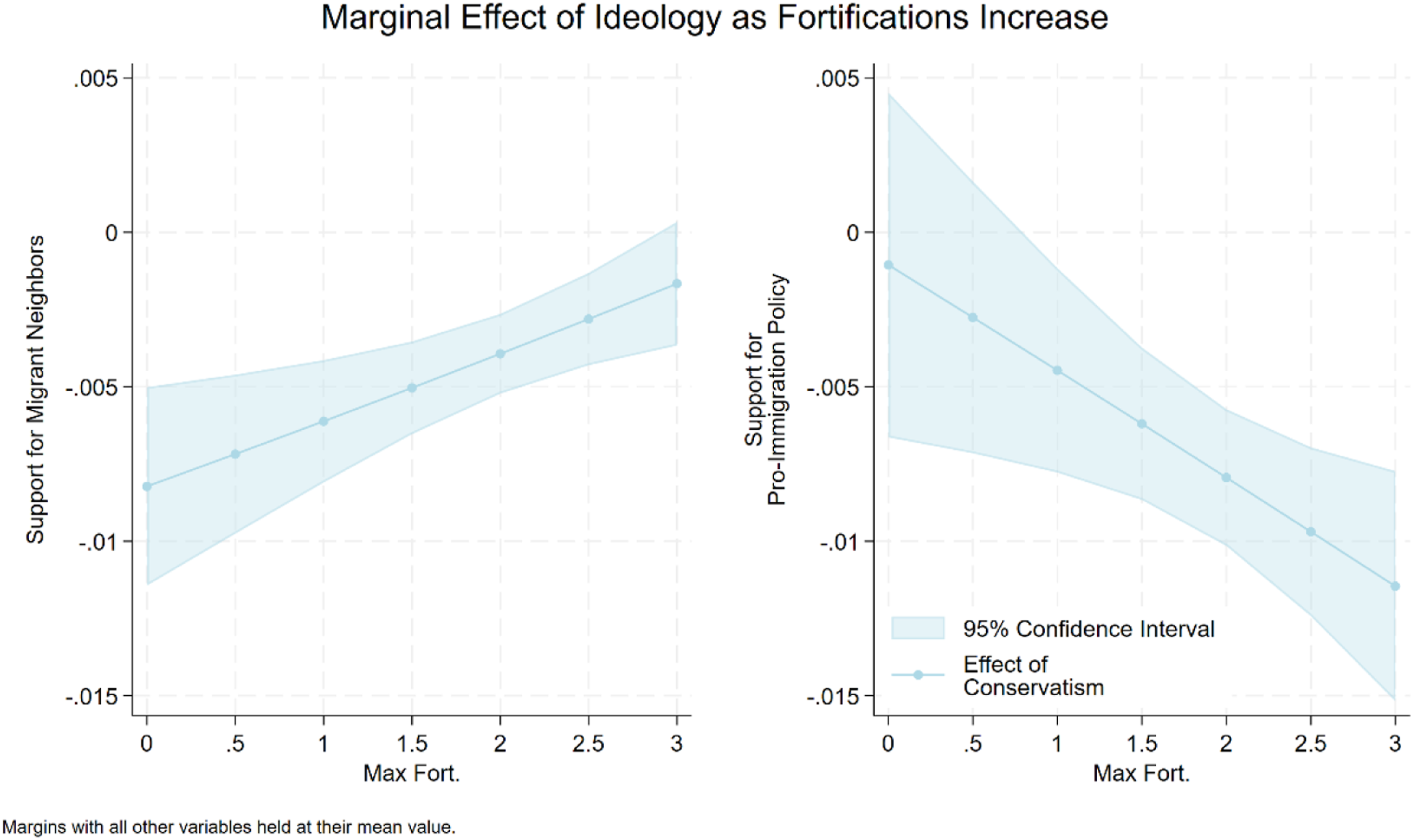
The divergent results of this interaction and the results for hypothesis 3 both ultimately demonstrate a core element of the argument: policies at the border, and individuals’ potential exposure to that border, can impact how individuals rationalize and internalize attitudes on immigration. The evidence here indicates that attitudes towards migrants themselves and attitudes towards immigration policy may have different underlying mechanisms that interact with the presence of visible, potentially polarizing, state policies like border fortifications. Further research should delve further into these potential disparate dynamics in shaping immigration attitudes.
Lastly, when looking at the control variables across the models, there are a few key trends worth highlighting. First, we find that other social attitudes are connected to people’s attitudes regarding immigration. Specifically, we find consistent positive and statistically significant effects for respondents’ trust in people and their belief in the freedom of choice on pro-immigration attitudes. Second, we find evidence in support of literature on the role of economic influences on pro-immigration attitudes. We find consistently positive and statistically significant relationships between education and pro-immigration attitudes, as well as some evidence for a positive relationship between income and pro-immigration attitudes, depending on the model; the same can be said for employment as well. In conjunction, these results provide evidence highlighting that both sociocultural and economic dynamics can play a role in impacting immigration attitudes. Interestingly, we also find that as respondents become more interested in politics, they become less likely to have pro-immigration attitudes.
Additional analyses and robustness checks
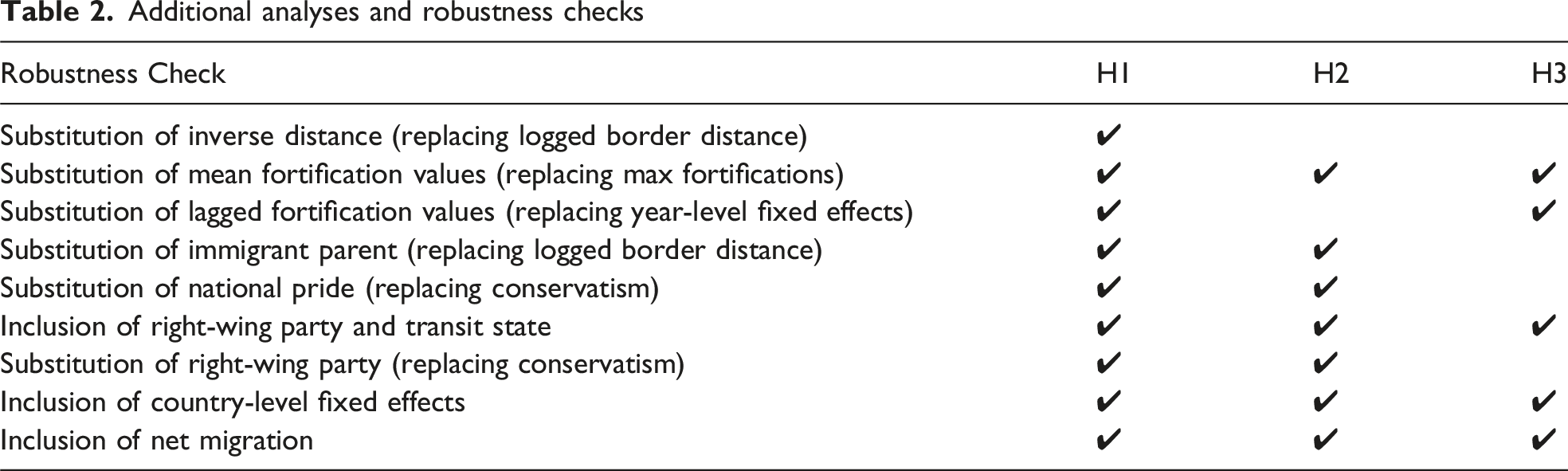
We also test new measures to account for political ideology at both the respondent and country level. First, we replace our measure of conservatism with whether a respondent is proud of their country, sourced from the IVS. Second, we examine whether the current government in power is a right-wing government, sourced from the Archigos dataset (Goemans, Gleditsch, and Chiozza, 2009). Whether these variables are included independently or interacted with distance/fortifications, we largely find support for our hypotheses.
We also test an alternative proxy for a respondent’s personal exposure to immigrants using whether a respondent has an immigrant parent, sourced from the IVS. While we believe geographic distance is a suitable way to measure interaction broadly, a more direct variable such as this may capture how respondents perceive and relate to people from other countries. This variable returns similar results to distance from the border. Respondents with at least one immigrant parent are more likely to support pro-immigrant policies and migrant neighbors. Similarly, as fortifications increase, the relevance of personal exposure in individual attitudes is heightened. This indicates that when governments increase border infrastructure, citizens may fall back on personal experience, such as their parents, as a reference point. Thus, we find that those closer to the border and those with immigrant parents are more open to migration and less affected by border infrastructure.
Following Buehler, Fabbe, and Kyrkopoulou (2024), who push for more consideration of how citizens in different types of states respond to migration, we also test the inclusion of indicator variables for buffer-states that are used to ‘externalize’ border security for richer countries (e.g., Morocco), as well as for migrant producing states (e.g., Afghanistan), and destination states for migrants (e.g., Germany). Citizens in states with different relationships to immigration flows may be affected differently by distance from the border. This variable is an indicator for whether a country is a common transit route for migrants, as operationalized by the International Organization for Migration’s Global Overview of Migration Routes (International Organization of Migration 2025). A list of transit states is included in Table A2. Additionally, we test models where we include whether a country is a net exporter or importer of migrants using data of net migration flows from the World Bank (World Bank, n.d.-b).
Lastly, to help account for other differences across countries that we otherwise do not control for, we test the addition of country fixed effects to isolate between group variation so we can see the average effect of our variables within groups. Table 2 displays these robustness checks and whether they were consistent with our findings for each hypothesis. Further discussion of these checks can be found in the Supplemental Materials.
Discussion and Conclusion
Overall, we find evidence that both validates and complicates the existing literature on public opinion and immigration. Specifically, we find that greater proximity to an international border creates a positive impact on attitudes towards immigration and that border fortifications may moderate other relevant factors impacting immigration attitudes. Respondents who live closer to an international border have more favorable attitudes towards immigrants and immigration policy. When a border is more fortified, the effect of distance can become even more negative, supporting our argument that border policy can emphasize the perceived distance between groups.
We find some evidence to suggest that the role of ideology on immigration attitudes is conditioned by border distance and border fortifications. As distance to the border increases, conservatism becomes more negative for an individuals’ support for pro-immigration policy, but it becomes statistically insignificant for their support for migrants themselves. We find a similar pattern with the role of border fortifications as well.
By leveraging subnational variation in potential exposure to policies or people, these results provide considerable evidence to highlight the potential for personal exposure to state policies and conduct influencing how individuals engage with politics and how their ideology may in part be shaped through this (lack of) exposure. Further investigation is needed to unpack how the impact of fortifications may change ideological influences domestically. Our models demonstrate significant findings for the role of general trust in the public on immigration attitudes as well as the negative impact of border fortifications on immigration attitudes. This indicates support for the idea of safety as a considerable influence on immigration, whether it be narratives used by the government (Bajomi-Lázár 2019; Heidenreich et al. 2020) or events that occur within a country that increase the saliency of such concerns (Young, Loebach, and Kim 2018). As such, perceptions of immigrant criminality and the safety of residents from ‘bad immigrants’, and how fortifications may reinforce such perceptions, is another potential avenue for further research.
There are other avenues for future research on this topic as well. For instance, this paper implicitly assumes that distance to the border serves as a useful proxy measure for intergroup contact between residents and migrants. However, migrant communities are not necessarily located along or near the border. While many migrants that travel by land or sea may be at a border for some given amount of time, migrants may also seek to leave border regions and live in the interior of the country for the long-term. Because of this, future research could improve the precision and more directly test the mechanism of intergroup contact by developing data on the location of migrant neighborhoods and diaspora communities, or survey questions that better ascertain a respondent’s perceived and actual level of contact with different groups of people. While this paper uses an imperfect measure, it provides a beneficial step towards investigating the role of intergroup contact in shaping public attitudes on topics that bridge foreign policy and domestic politics. The policies and state actions we investigate here provide further contribution to the ever-continuing debate on how immigration attitudes are shaped by, and subsequently shape, immigration policy (Böhmelt 2021).
As border fortifications continue to develop in the post-Cold War era (Carter and Poast 2017), policymakers are likely to continue using narratives related to criminality or safety as justifications for their actions. Future research could investigate how such narratives impact respondents’ levels of trust, and therefore make another empirical connection between state narratives, policymaker and elite conduct, and public opinion. Additionally, the role of ideology and immigration attitudes has been well studied. These findings continue to showcase this trend, but they further show that ideology is not necessarily independent of other contextual factors, especially factors that may be outside of the respondents’ control and rather in the control of policymakers, like border policy. The evidence here suggests that as states fortify, the role of ideology on immigration attitudes will change in divergent ways between attitudes about immigrants and about policies that encourage immigration.
Supplemental Material
Supplemental Material - Proximity to the Border and Border Fortifications’ Impact on Immigration Attitudes
Supplemental Material for Proximity to the Border and Border Fortifications’ Impact on Immigration Attitudes by Thomas Dainty, Adam Lappe in Political Research Quarterly.
Footnotes

Funding
The authors received no financial support for the research, authorship, and/or publication of this article.
Declaration of Conflicting Interests
The authors declared no potential conflicts of interest with respect to the research, authorship, and/or publication of this article.
Supplemental Material
Supplemental material for this article is available online.
Notes
Appendix
Descriptive statistics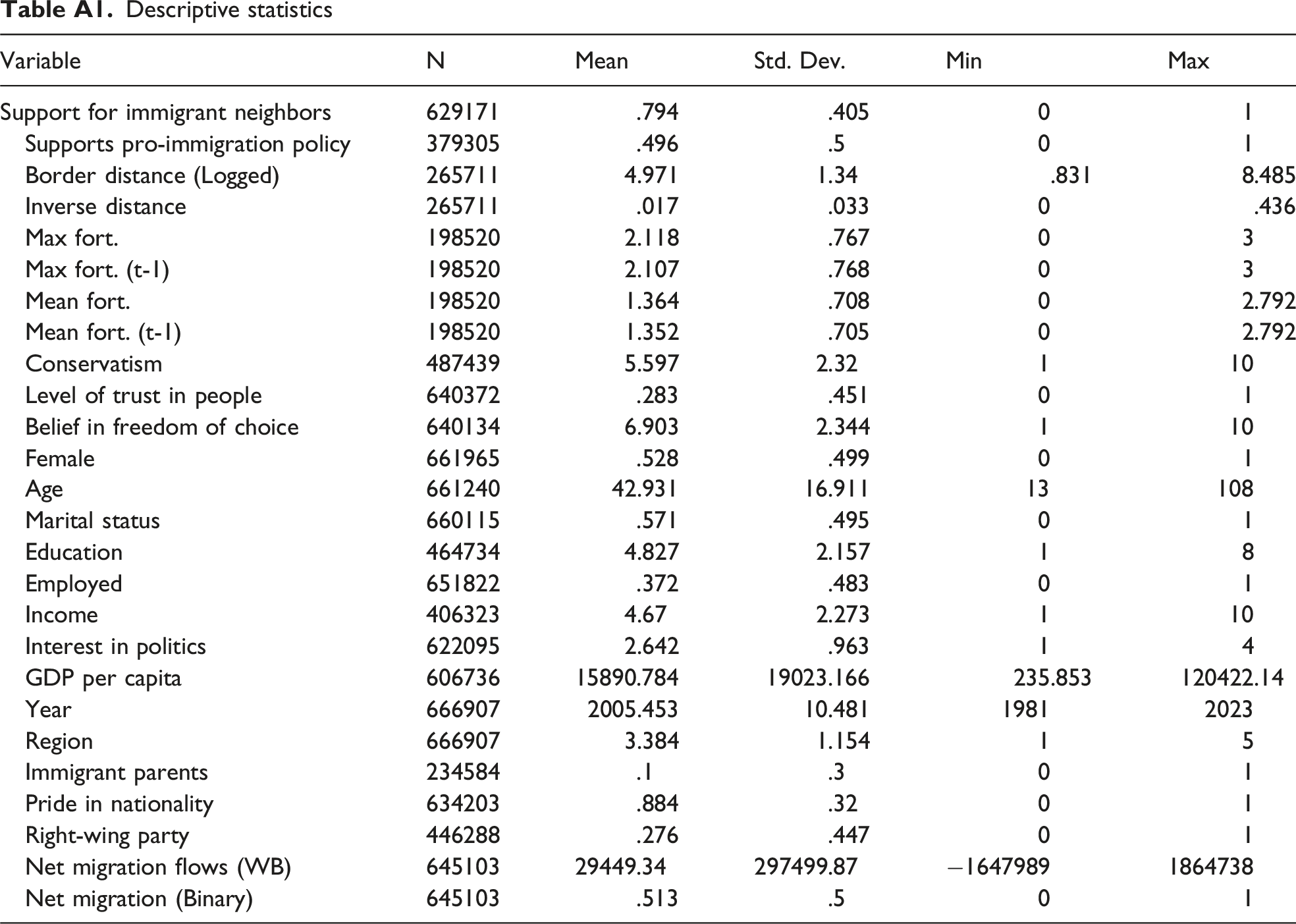
Variable
N
Mean
Std. Dev.
Min
Max
Support for immigrant neighbors
629171
.794
.405
0
1
Supports pro-immigration policy
379305
.496
.5
0
1
Border distance (Logged)
265711
4.971
1.34
.831
8.485
Inverse distance
265711
.017
.033
0
.436
Max fort.
198520
2.118
.767
0
3
Max fort. (t-1)
198520
2.107
.768
0
3
Mean fort.
198520
1.364
.708
0
2.792
Mean fort. (t-1)
198520
1.352
.705
0
2.792
Conservatism
487439
5.597
2.32
1
10
Level of trust in people
640372
.283
.451
0
1
Belief in freedom of choice
640134
6.903
2.344
1
10
Female
661965
.528
.499
0
1
Age
661240
42.931
16.911
13
108
Marital status
660115
.571
.495
0
1
Education
464734
4.827
2.157
1
8
Employed
651822
.372
.483
0
1
Income
406323
4.67
2.273
1
10
Interest in politics
622095
2.642
.963
1
4
GDP per capita
606736
15890.784
19023.166
235.853
120422.14
Year
666907
2005.453
10.481
1981
2023
Region
666907
3.384
1.154
1
5
Immigrant parents
234584
.1
.3
0
1
Pride in nationality
634203
.884
.32
0
1
Right-wing party
446288
.276
.447
0
1
Net migration flows (WB)
645103
29449.34
297499.87
−1647989
1864738
Net migration (Binary)
645103
.513
.5
0
1
Example of distance measure for district centroids in Poland.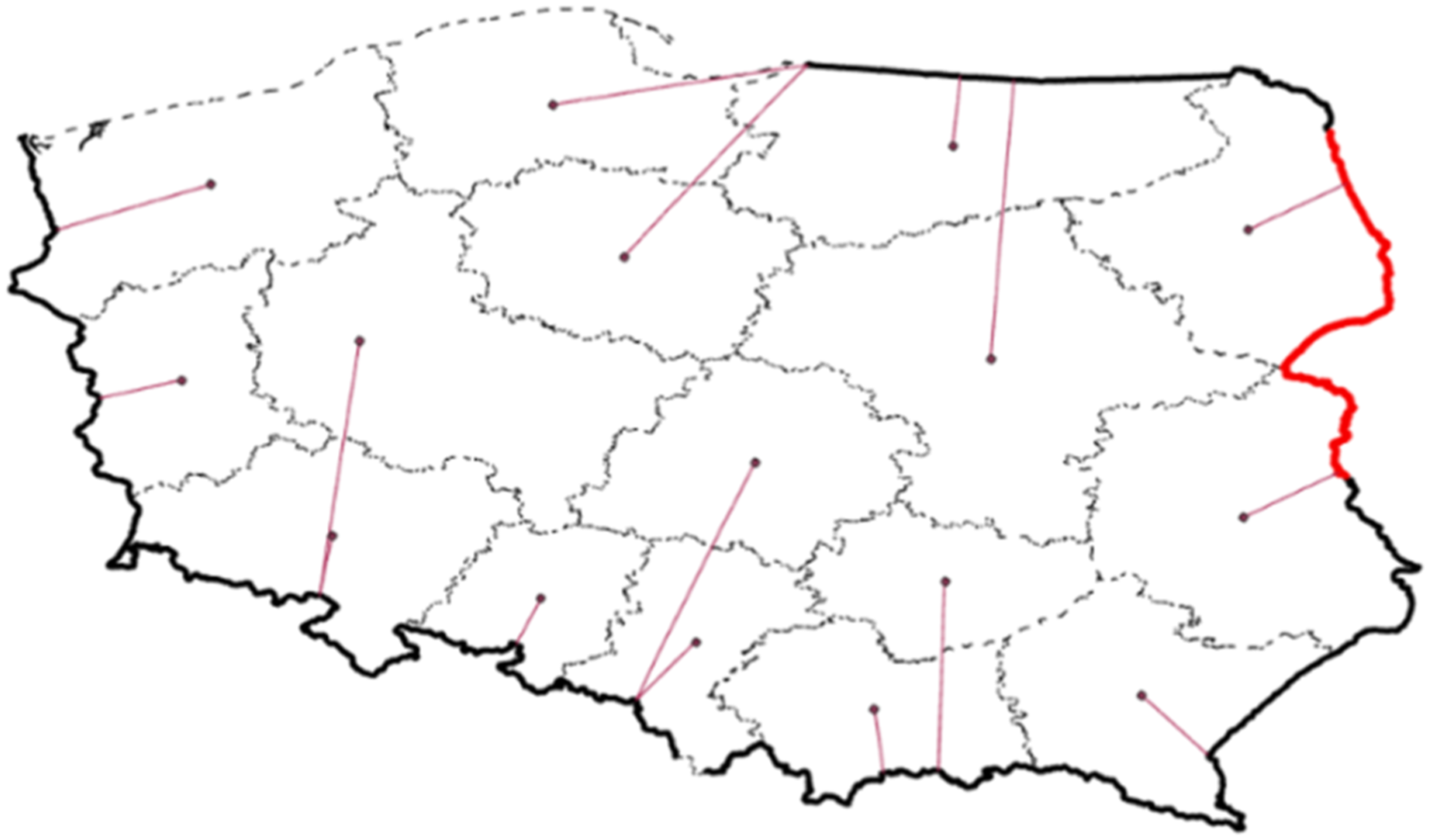
Kernel density plot of inverse distance.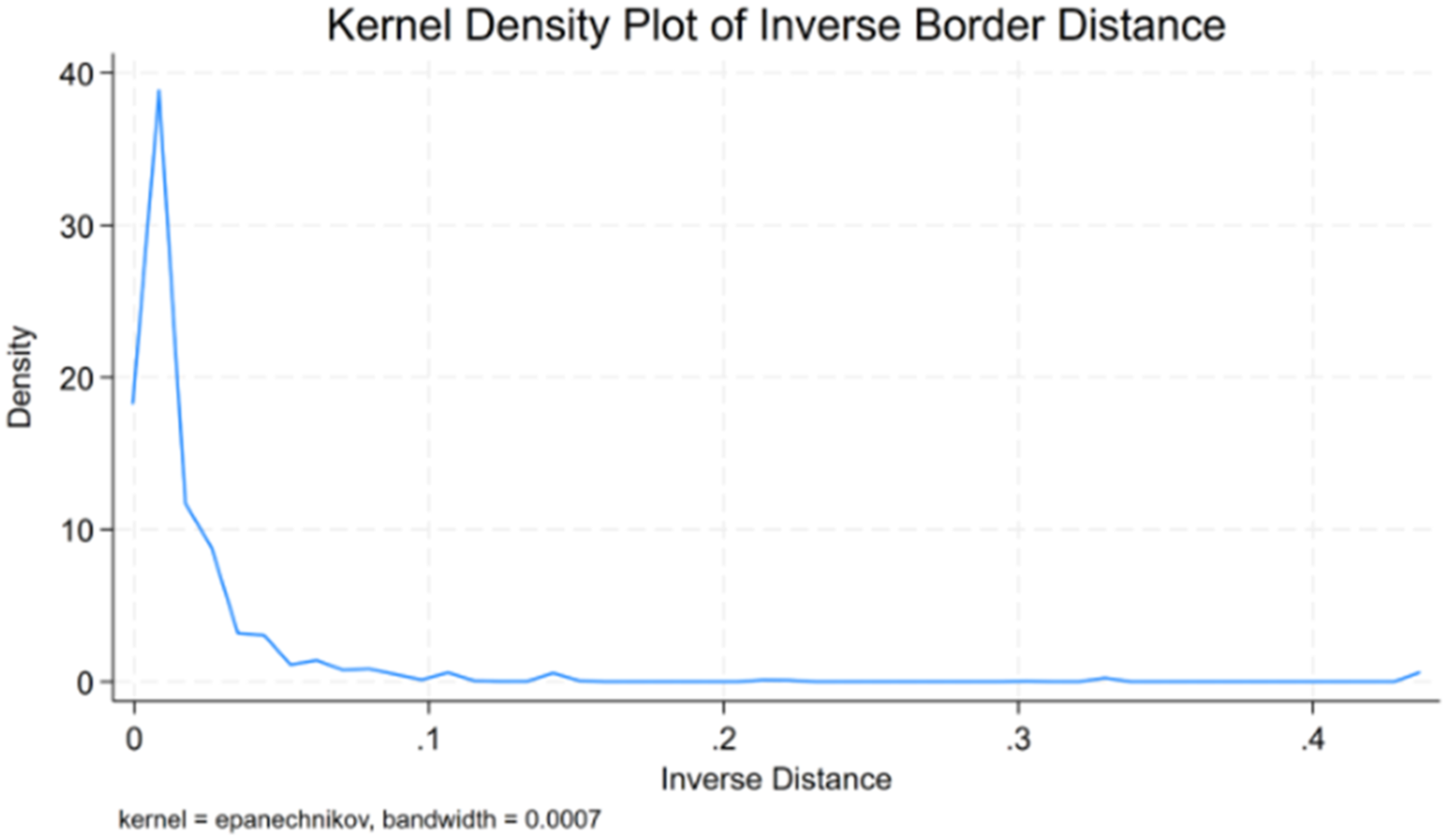
Kernel density plot of logged border distance.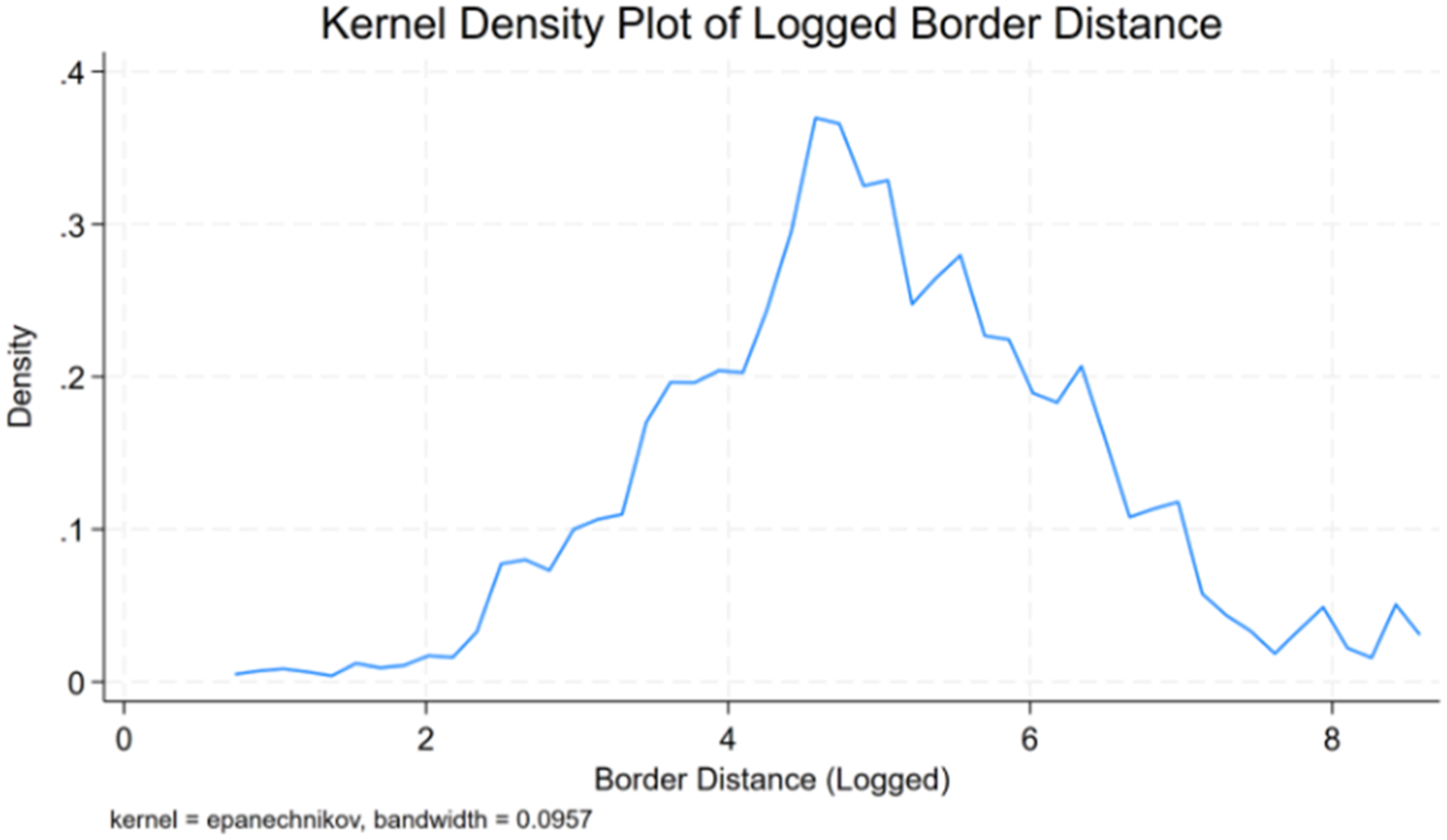
Transit migration states Source: Annual Global Overview of Migration Routes (2025) (International Organization for Migration).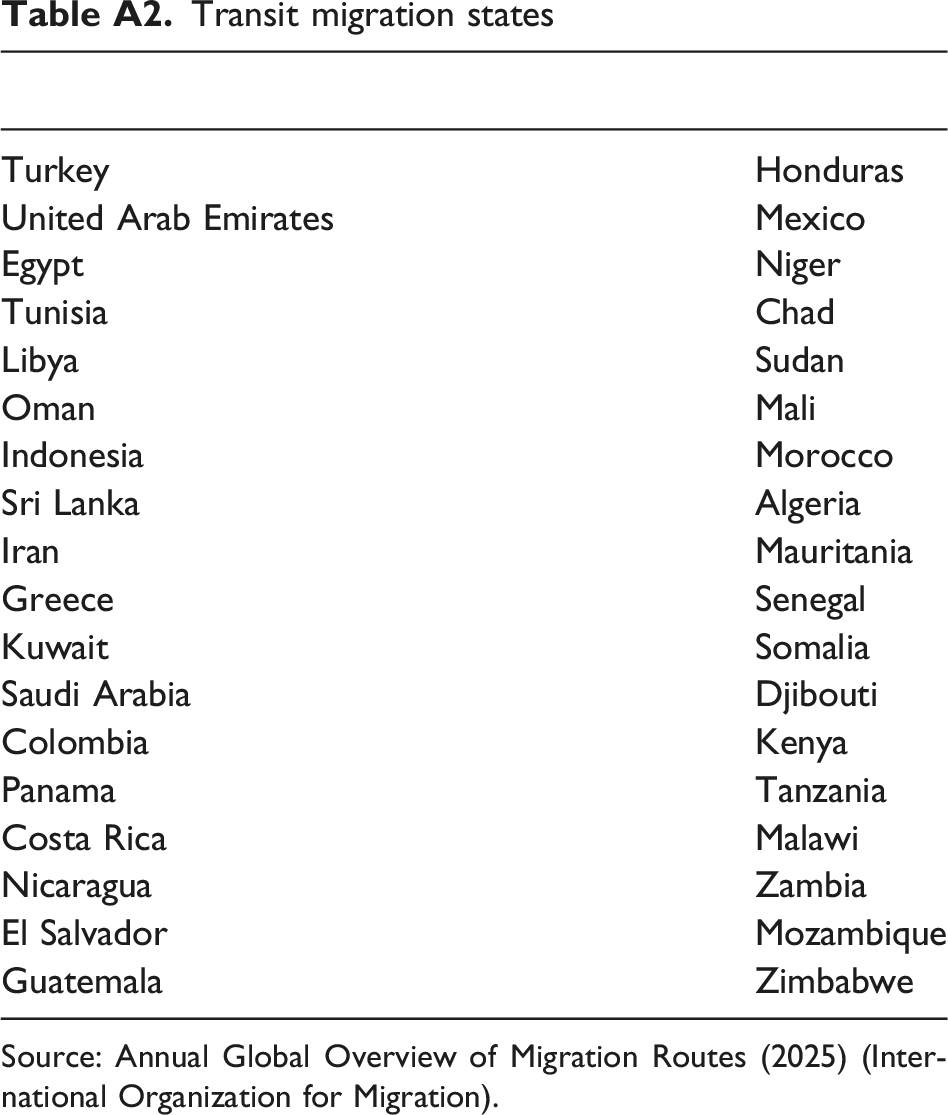
Turkey
Honduras
United Arab Emirates
Mexico
Egypt
Niger
Tunisia
Chad
Libya
Sudan
Oman
Mali
Indonesia
Morocco
Sri Lanka
Algeria
Iran
Mauritania
Greece
Senegal
Kuwait
Somalia
Saudi Arabia
Djibouti
Colombia
Kenya
Panama
Tanzania
Costa Rica
Malawi
Nicaragua
Zambia
El Salvador
Mozambique
Guatemala
Zimbabwe