






Abstract
Both parenting and peer relationship are essential in the formation of self-esteem among the adolescents which lead to overall psychological development. Life satisfaction is another outcome that describes the subjective well-being of any person and the quality of one’s life. Literature has already suggested the importance of parenting and peer relationships in the development of self-esteem which may lead to life satisfaction among adolescents. However, the relationship between three styles of parenting as well as peer attachment and life satisfaction mediated by self-esteem seems to be missing from the literature. This work is an important attempt toward fulfilling this research gap with respect to adolescents. The data were collected from 500 respondents which resulted in 412 functional responses. Structural equation modeling method was used to test the relationship in the study. The results revealed that both authoritative and permissive parenting have a positive influence on self-esteem in comparison to the negative influence of authoritarian parenting. Peer attachment also has an affirmative impact on self-esteem. Self-esteem also positively influences life satisfaction. Mediation results revealed that self-esteem partially mediates the association between three parenting styles, peer attachment, and life satisfaction. This study may offer unique insights to family counselors, couple counselors, and family educators about the role of different parenting styles and peer attachment with respect to the development of children’s self-esteem and life satisfaction. These results are also important for psychologists, sociologists, and other specialists with respect to understanding these factors for the well-being of adolescents.
Life satisfaction among the young population is in essence more than an epiphenomenon (Lavrič & Naterer, 2020). Satisfaction with respect to the adolescents’ life is a pertinent factor from the psychological perspective (Teismann et al., 2018) as it is associated with the lower rate of suicides and a good life (Diener, 2006). It is an important factor that can lead to vital outcomes like emotional conditions as well as psychosocial states (Lavrič & Naterer, 2020). Many research works have postulated and revealed the constructive and affirmative influence of life satisfaction on adolescent’s mental, learning, physical, and social functions (Grant et al., 2009; Huebner et al., 2004; Tuncay & Karababa, 2020). Life satisfaction is thus an essential aspect of an adolescent’s life, and many studies have explored and examined the influence of several variables influencing their life satisfaction (Lavrič & Naterer, 2020). This makes it vital to explore the causes that can predict life satisfaction in adolescents (Seligman, 2011). Among such factors as revealed by different studies, some demographic variables (e.g., ethnicity, gender, age) do not exhibit a strong association with life satisfaction and in some cases do not share any relationship with life satisfaction among the adolescents (Piko & Hamvai, 2010). But the literature also reveals many factors that predict adolescents’ life satisfaction such as one’s self-rated well-being (Proctor et al., 2009), self-esteem (Arslan, 2019), and one’s satisfaction in relation to their appearances (Lu et al., 2015). Also the health-promoting behavior factor positively correlates with life satisfaction (Piko & Keresztes, 2006), whereas a negative association exists between life satisfaction and the frequency of alcohol consumption, smoking, and drug use (e.g., marijuana; Proctor et al., 2009). Young people who belong to small, better societal class and homogenous living environment are more satisfied with their lives (Evans et al., 1999). On the contrary, adolescents belonging to lower socioeconomic classes show a weak but affirmative association with life satisfaction (Ash & Huebner, 2001; Piko & Hamvai, 2010). But one of the critical factors that can influence life satisfaction among adolescents is the family setup (Lavrič & Naterer, 2020) as studies show a positive correlation between adolescents’ life satisfaction and their family functioning (Grossman & Rowat, 1995; Piko & Hamvai, 2010). Some studies, however, show a negative association between adolescents’ life satisfaction and broken family functioning including parental conflicts (Grossman & Rowat, 1995). Parental attachment as well as relationship with the peers has been considered as fundamental aspects for the adolescent development (Lim, 2020). A study conducted by Nickerson and Nagle (2004) revealed that the peer attachment in adolescents has a strong influence on their life satisfaction from various perspectives in comparison to the parental attachment. Similarly, peer attachment was also found to be a predictor of the life satisfaction in the early adolescence period (Ma & Huebner, 2008). This implies that both parenting styles and peer attachment share a strong association with the self-esteem.
From parenting perspective, self-esteem of the children is closely correlated with the parent–child interactions (Buri et al., 1987; Klein et al., 1996), and studies do suggest that self-esteem is associated with the parenting style (Oh, 2004). However, some of the results with respect to self-esteem and parenting have been inconsistent (Zakeri & Karimpour, 2011) which make it essential to further explore the association between them in the current work. Literature also offers evidence that hints at the existence of an affirmative and associative relationship between peer attachment and self-esteem among adolescents (Laible et al., 2004; Wilkinson, 2004). Self-esteem among adolescents is formed by their own judgment and people’s appraisal (Baldwin & Hoffman, 2002), and any experience with their peers who are considerate, reliable, and receptive can lead to the development of an affirmative self-worth (Bowlby, 1988). On the other hand, there is also evidence that implies that the path from parental attachment and parenting style toward life satisfaction goes through self-esteem (Chen et al., 2017; Hesari & Hejazi, 2011), but such studies are limited. Similarly, the path from peer attachment toward its various outcomes also goes through self-esteem (Lim, 2020). Furthermore, the research in recent times has consistently emphasized the mediating character of self-esteem between various constructs and life satisfaction (Lu et al., 2015).
Hence, based on the research gaps discussed above, this work examines the pathway from three styles of parenting (authoritative, authoritarian, and permissive) and peer attachment to life satisfaction mediated through self-esteem. Surprisingly, it seems from the literature that authors have not studied the influence of three parenting styles as well as peer attachment on life satisfaction when mediated through self-esteem. The following section of this manuscript discusses the literature review of the studies concerning the variables in the study. The next segment discusses the research methodology followed by the data analysis. The last segment describes the discussions, implications, and future work directions.
Literature Review
Parenting Styles
Permissive, authoritative, and authoritarian are the three parenting styles put forward by Baumrind (1967, 1971, 1991), which are in essence related to the parenting authority. Authoritative type of parenting is a domineering style that attempts to control the activities of children based on some logic and issue, and parents support the two-way communication with their children and often explain to them about such policy (Baumrind, 1971). This style consists of more parenting directives and a positive motivation for children and also includes logical communication, affective relationship, and approachability. This particular style tends to make a child self-reliant, self-sufficient, and self-controlling (Lavrič & Naterer, 2020). On the contrary, authoritarian style of parenting is characterized by high degree of control and detached parenting (Baumrind, 1971). Parent–child relationship is less affectionate in this style as parents try to shape, direct, and appraise the child’s conduct and attitude with respect to some behavioral benchmark, which is typically quite absolute, set by a higher body, and is motivated by theological conventions (Baumrind, 1971). Permissive parental style is characterized by reasonably warm, lenient, nondemanding, and less controlling parents who exhibit assenting, nonpunitive, and accepting behavior with respect to their children’s impulses, needs, and activities (Baumrind, 1971).
Parenting Styles and Life Satisfaction in Adolescents
Most research works have revealed that an affirmative relationship exists between authoritative parenting and life satisfaction (Lavrič & Naterer, 2020). A study on adolescents by Suldo and Huebner (2004) also showed a similar relationship between authoritative parenting and life satisfaction. Studies have also found that the authoritative parenting highly associated with both self-esteem and life satisfaction in comparison to permissive or authoritarian style (Milevsky et al., 2007; Raboteg-Šarič & Šakić, 2014). Work carried out by Raboteg-Šarič and Šakić (2014) showed that the significant difference exists between adolescent’s life satisfaction with respect to authoritative and authoritarian parenting. Study conducted by Leung et al. (2004) also confirmed that authoritative style leads to life satisfaction among adolescents. Both life satisfaction and self-esteem were positively related with authoritative parenting in a study by Martínez and García (2007). Henceforth, there is greater evidence that implies that the effect of authoritative style is greater than the authoritarian style of parenting on life satisfaction (Lavrič & Naterer, 2020). Milevsky et al. (2007) confirmed that authoritative style has a greater influence on life satisfaction than any other style of parenting. Earlier works have revealed that life satisfaction shares a relatively moderate relationship with both permissive and authoritarian parenting in contrast to the strong association with authoritative parenting (Lavrič & Naterer, 2020). Furthermore, a lot of previous works have shown that life satisfaction among adolescents and the style of parenting share a significant relationship (Di Maggio & Zappulla, 2014; Gilman & Handwerk, 2001; Lavrič & Naterer, 2020).
Self-Esteem
Self-esteem could be described as a person’s broad sense of their worth or significance (Mäkikangas & Kinnunen, 2003). Self-esteem has also been illustrated as a person’s affirmative or pessimistic attitude in relation to them and also includes one’s assessment of their personal beliefs and opinions that actually convey a personal judgment of the individualistic worth or value (Rosenberg, 1965). The outcome framework of self-esteem postulates that the self-esteem is determined by the societal relationships that include the theories of attachment and sociometer (Lim, 2020). Sociometer framework reveals that an individual’s self-esteem is related to their experience of the communal approval and denial (Leary, 2005).
Peer Attachment
Peer attachment can be best described as the emotional bond or relationship that is formed between peers and is a sign of affective association characterized by dependence and confidence (Freeman et al., 2004). From societal perspective, peer attachments in adolescence mark sharing of the emotions and the personal issues and providing support to each other outside the parental relationships (Ju & Lee, 2018). Normal adolescents share their feelings with someone who they feel is attached to them (Freeman et al., 2004), and they also consider peer attachment as a strong foundation for societal competence (Ju & Lee, 2018) and social support (Ellis & Zarbatany, 2007).
Life Satisfaction
Personal well-being of a human being is closely associated with their life satisfaction (Suldo et al., 2006), and the latter is often considered as the parameter for assessing one’s life’s worth (Diener & Diener, 1995). Life satisfaction doesn’t just signify that a person’s life is successful and satisfying, but it is one of the underlying factors for achieving greater life objectives (Lyubomirsky et al., 2005). Similar findings were also found during the exhaustive review of studies in relation to life satisfaction among young people (Proctor et al., 2009).
Hypothesis Formulation
Parenting and self-esteem
The proponents of the attachment model describe that the relationship quality is directly connected to the self-esteem concept (Bowlby, 1982). Research works have shown that self-esteem is more strongly correlated with authoritative parenting in contrast to the authoritarian style (Pinquart & Gerke, 2019). Studies in the Western context also show that the caring style of parenting is more related with self-esteem among adolescents (Perez-Gramaje et al., 2019). Parental warmth is an important factor for the development of self-esteem during adolescence (Orth, 2018), and parental negligence can be a cause for lower self-esteem in adolescents (Lim, 2020). Permissive parenting nurtures autonomy in children as well as strong decision making (Hesari & Hejazi, 2011), but on the contrary, Reitman et al. (2002) propose permissive style leads to lower self-esteem among them. Authoritative style leads to exhibition of greater levels of self-esteem and control among the children (Wennar, 1994). Hesari and Hejazi (2011) propound that self-esteem is crucial for the development during the adolescence phase and parents are a major factor for shaping their self-worth. Excessive parenting control (Herz & Gullon, 1999) and low autonomy (Z. Y. Chen & Dornbusch, 1998) are inversely related with self-esteem in adolescents.
Thus, we can propose that
Peer attachment and self-esteem
Life satisfaction is positively related with peer attachment (Ju & Lee, 2018) as children share their problems with their peers which results in lower levels of guilt (Millings et al., 2012), strong development (Ju & Lee, 2018), and a sense of belongingness (Rosenberg, 1986). Highly satisfying relationship (e.g., with peers) can lead to more coping capabilities and, more importantly, self-esteem (Benson et al., 2006). Laible et al. (2004) also found an associative relationship existing between peer attachment and self-esteem.
Self-esteem and life satisfaction
Studies have postulated that self-esteem levels within an individual are strongly associated with their life satisfaction (Çivitci & Çivitci, 2009). It has been observed person’s higher degree of life satisfaction is closely related with their elevated self-esteem (W. Chen et al., 2017; Gilman & Huebner, 2003). An important study conducted in China also found that self-esteem positively predicts life satisfaction (Zhang et al., 2018).
Self-esteem as a mediating variable
The role of self-esteem as a mediator has found support in different research frameworks linking self-esteem, and different social interactions (Harris & Orth, 2019; Marshall et al., 2015), life satisfaction (Arslan, 2019), parenting (Hesari & Hejazi, 2011; Lim, 2020), and peer attachment (Lim, 2020). Moreover, enhancement of the emotional capacities indirectly influences life satisfaction through self-esteem development (Ruvalcaba-Romero et al., 2017). Thus, in this article, we also propose that self-esteem acts as a mediating factor between life satisfaction (outcome variable) and four independent variables, that is, authoritative parenting, authoritarian parenting, permissive parenting, and peer attachment.
Theoretical Framework
The contemporary paradigms of psychology deem it compulsory to address the factors that can make people happy and psychologically sound (Ruvalcaba-Romero et al., 2017). Over the last decade, the psychological research has been increasingly focused on life satisfaction (W. Chen et al., 2017), as it is one of the essential factors for the person’s good mental well-being (Suldo & Shaffer, 2008). Life satisfaction for adolescents is an important outcome as it shapes their personality and the future development. Various factors or antecedents have been researched which predict life satisfaction among adolescents like demographic variables, personal variables, environmental attributes, or even cultural aspects. Demographic factors in relation to the life satisfaction have been considered as weak predictors, whereas moderate association with respect to environmental characteristics and life satisfaction has been discovered (W. Chen et al., 2017). Parental and peer attachment relationships have been found to be strongly influencing life satisfaction in many studies (Pan et al., 2016). Previous researchers have also studied the influence of three parenting styles on life satisfaction. But this study makes an addition by also taking into account the influence of peer attachment on life satisfaction. Moreover, the framework in this work has included the mediating role of self-esteem in the relationship between life satisfaction and three parenting styles and peer attachment. The following framework (Figure 1) shows the proposed relationship between the variable under study in this work.
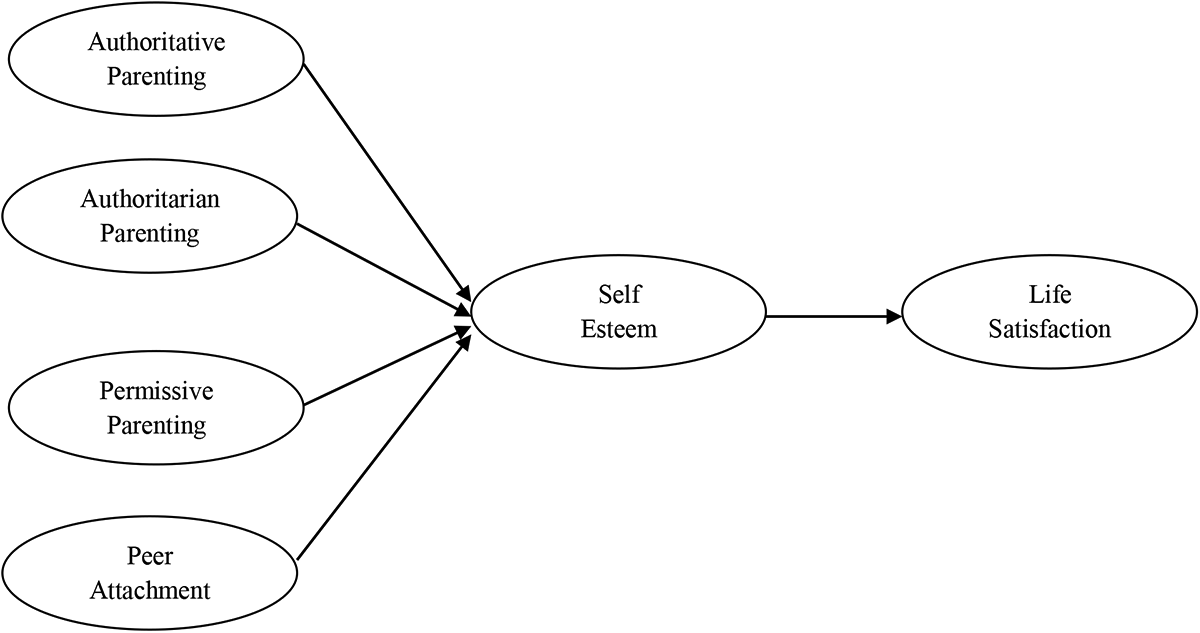
Conceptual framework. Source: Authors’ own.
Method
The research design applied in this work was causal (studying cause and effect relationship between variables in the study), and a survey method was used for collecting the responses from the subjects. The data were collected with the help of a questionnaire that was drafted in English. However, the questionnaire was shared with two prominent psychologists for modifying the instrument with respect to comprehension level of the respondents. The questionnaire was also shared with one English expert for any suggestions that were incorporated in the instrument. The respondents chosen for this research work were the adolescents targeted from five high schools in the union territory of Jammu and Kashmir in India. A total of 500 adolescents were targeted for this study, but only 412 functional responses were left after cleaning of the data.
Measures
Life satisfaction, authoritative style of parenting, authoritarian style of parenting, and permissive style of parenting were measured with three items each adopted from the study of Lavrič and Naterer (2020). Self-esteem in this study was measured with six items, and peer attachment was measured with four items adopted from the study of Ju and Lee (2018). The reason for adopting measures from these two studies was due to the fact that these works were based on youth population, and these measures have also been adopted in the previous studies on adolescents. All the items were measured on a 5-point Likert-type scale.
Respondent’s Profile
The average age of the respondents chosen for this was 18.3 years. The sample included 63% males and 37% females. Majority of the respondents, that is, 47% belonged to the family income group of Rs. 1,00,000–3,00,000, 27% of the subjects belonged to the family income group of Rs. 3,00,000–5,00,000, and the remaining respondents belonged to the family income group of Rs. 5,00,000–10,00,000.
Factor Analysis
Exploratory factor analysis (EFA) was run on the data set using Statistical Package for the Social Sciences Version 21.0 in order to confirm whether the items would load on their respective constructs (factors) or not. The value for sampling adequacy measure, that is, Kaiser-Meyer-Olkin is .854, and 10,863.7 is the value for Bartlett’s test of sphericity (df = 231 at p = .000). The following table (Table 1) shows the factor loadings of all the variables which are above .50 and all the items loaded on their respective factors.
Rotated Component Matrix.
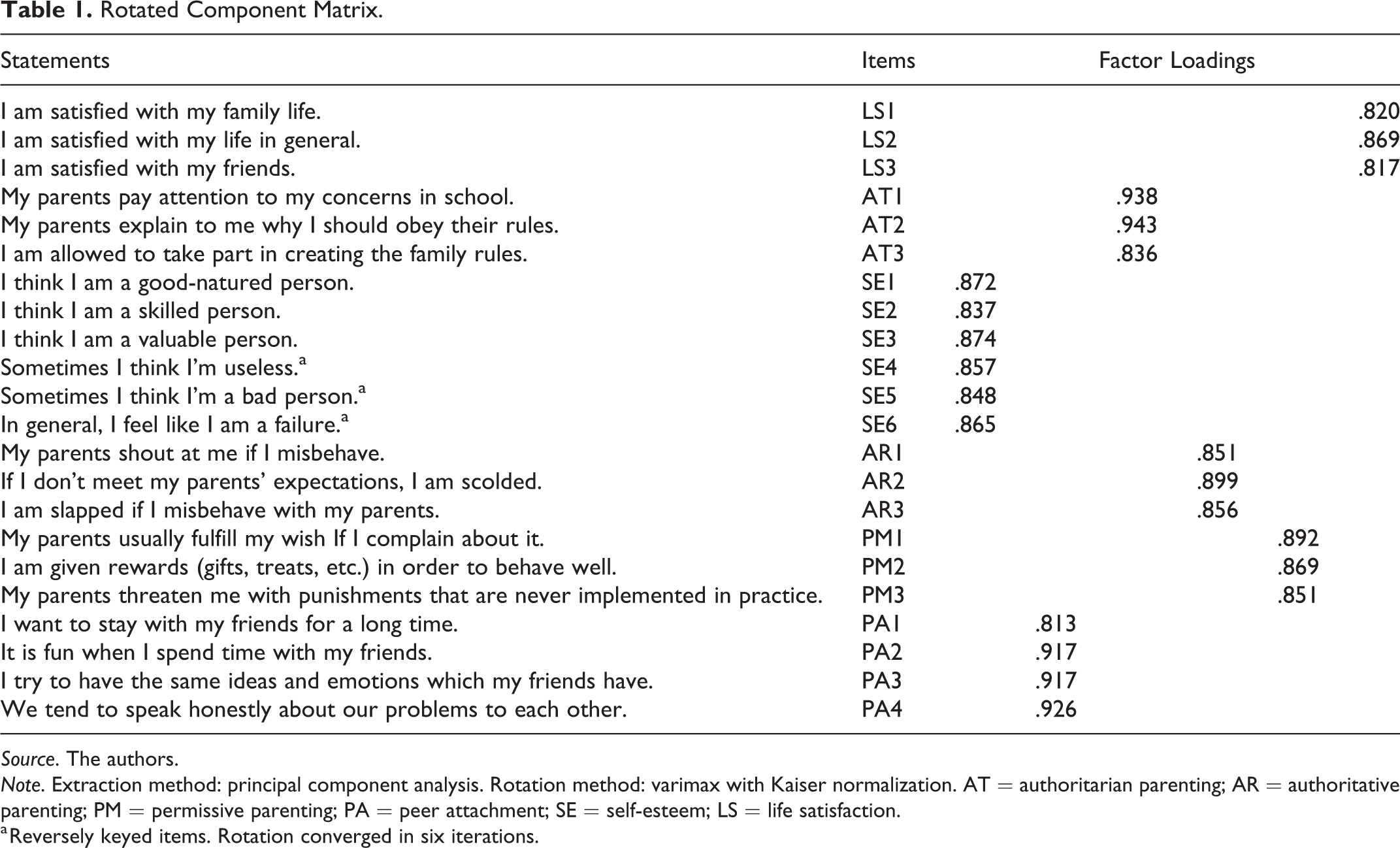
Source. The authors.
Note. Extraction method: principal component analysis. Rotation method: varimax with Kaiser normalization. AT = authoritarian parenting; AR = authoritative parenting; PM = permissive parenting; PA = peer attachment; SE = self-esteem; LS = life satisfaction.
a Reversely keyed items. Rotation converged in six iterations.
Data Analysis
Measurement Model
After running EFA, it is necessary to run (confirmatory factor analysis (CFA) to reconfirm whether all the items load on their respective constructs as per the theory or not. The measurement model (Figure 2) was obtained after running CFA using Analysis of Moment Structures (AMOS) Version 21.0. The model indices are a good fit as shown below:
Chi-square/degrees of freedom (CMIN/DF) = 2.17, goodness of fit index (GFI) = 0.923, adjusted GFI = .893, normed fit index (NFI) = .964, comparative fit index (CFI) = .980, Tucker-Lewis index (TLI) = .975 and root mean square error of approximation (RMSEA) = .05.
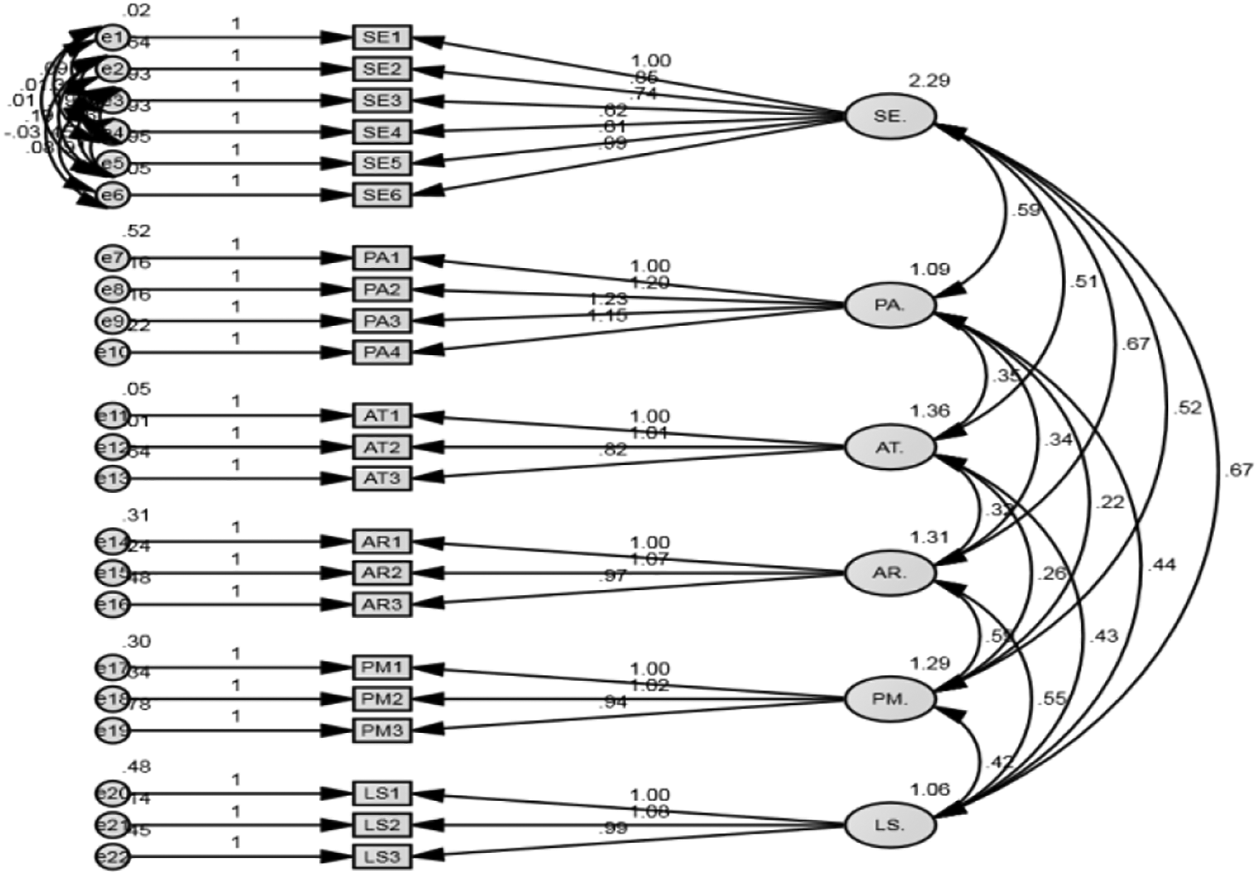
Measurement model. Source: The authors.
Reliability and Validity
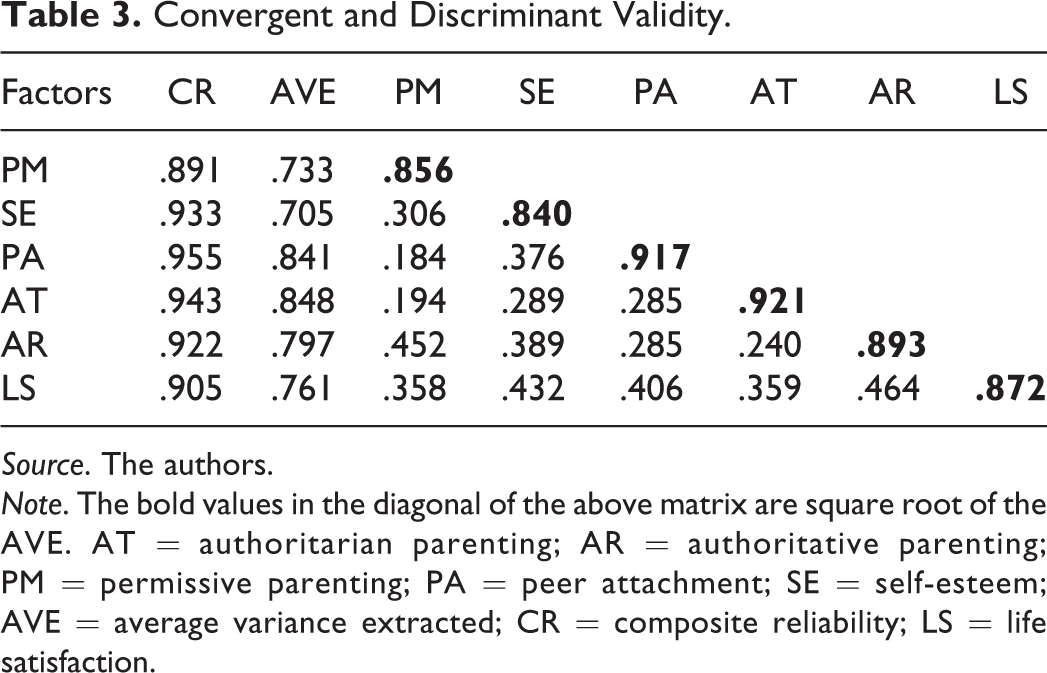
The values for the standard loading (Table 2) obtained after CFA are above .70 for all the factors, and average variance extracted (AVE) for every construct is above .50 (Table 3) which establishes convergent validity in the study (Fornell & Larcker, 1981).
Standard Loadings.
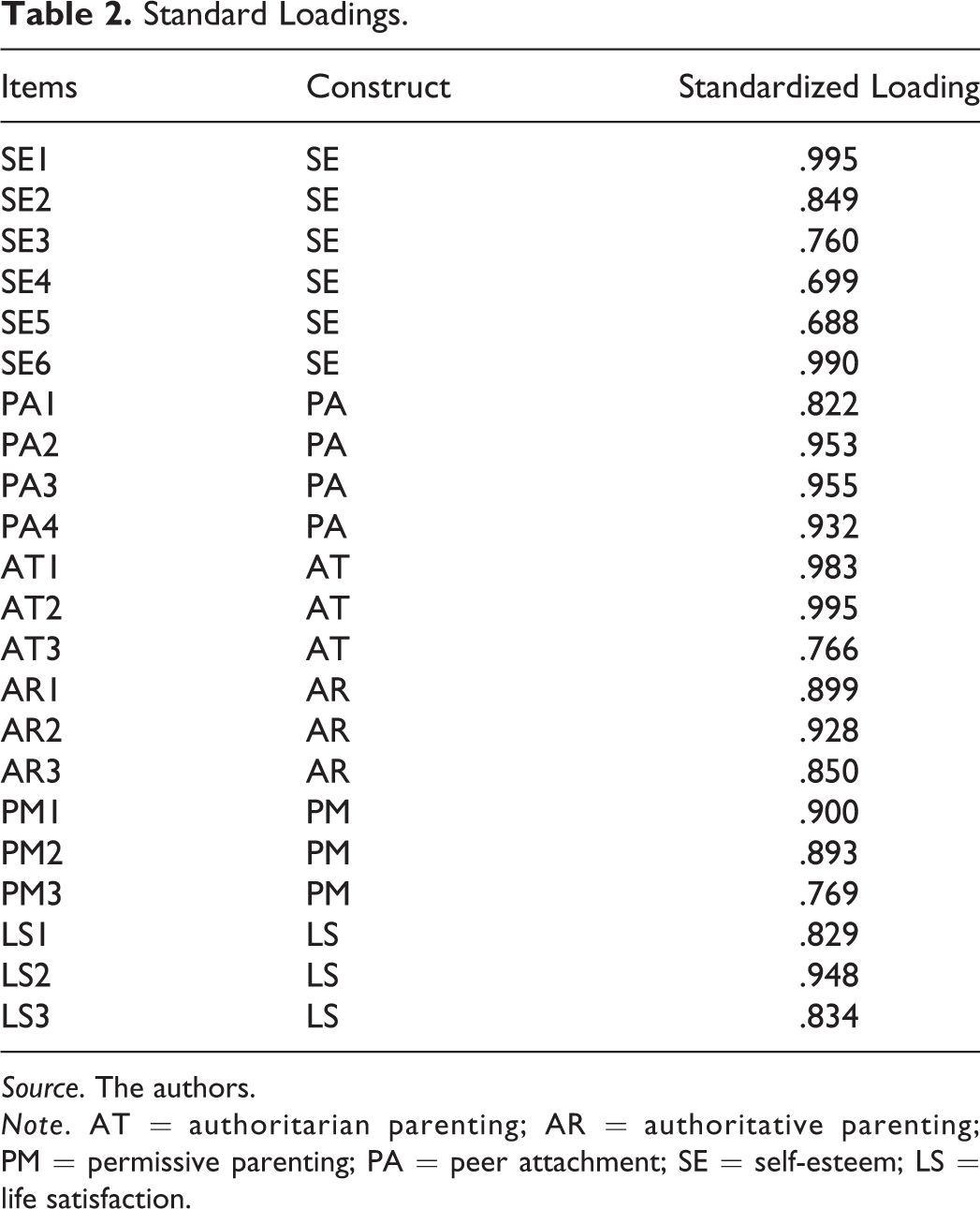
Source. The authors.
Note. AT = authoritarian parenting; AR = authoritative parenting; PM = permissive parenting; PA = peer attachment; SE = self-esteem; LS = life satisfaction.
Also, the values of AVE for all the factors are greater than the value of square of their intercorrelation coefficient (Table 3) which suggests discriminant validity (Anderson & Gerbing, 1988). Similarly, the reliability (Table 3) is also confirmed in the study as composite reliability for each construct is above .60 (Fornell & Larcker, 1981).
Convergent and Discriminant Validity.
Source. The authors.
Note. The bold values in the diagonal of the above matrix are square root of the AVE. AT = authoritarian parenting; AR = authoritative parenting; PM = permissive parenting; PA = peer attachment; SE = self-esteem; AVE = average variance extracted; CR = composite reliability; LS = life satisfaction.
Structural Model Analysis
The hypothesis testing was done using structural model analysis that shows the relationship between the study variables. The results from path analysis (Figure 3) after running structural equation modeling in AMOS Version 21.0 show moderate values for the model fit indices as CMIN/DF = 3.2, TLI = .952, CFI = .960, GFI = .868, NFI = .943 and RMSEA = .07.
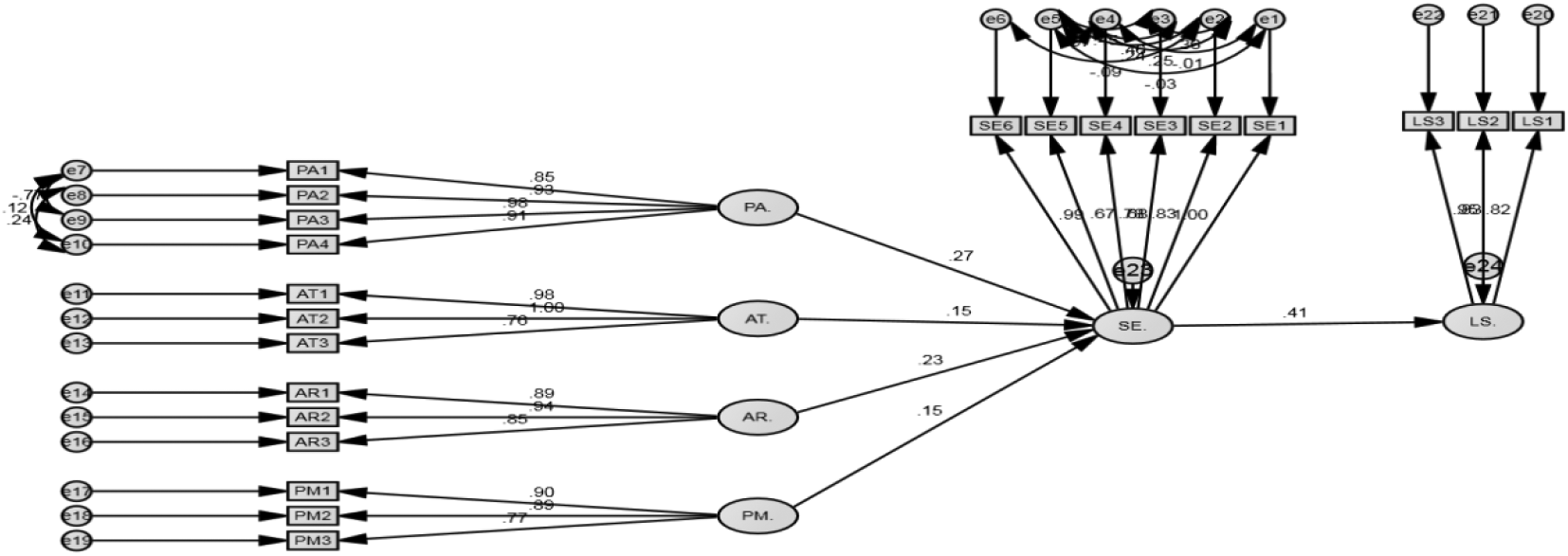
Structural model. Source. The authors.
Path Analysis Results
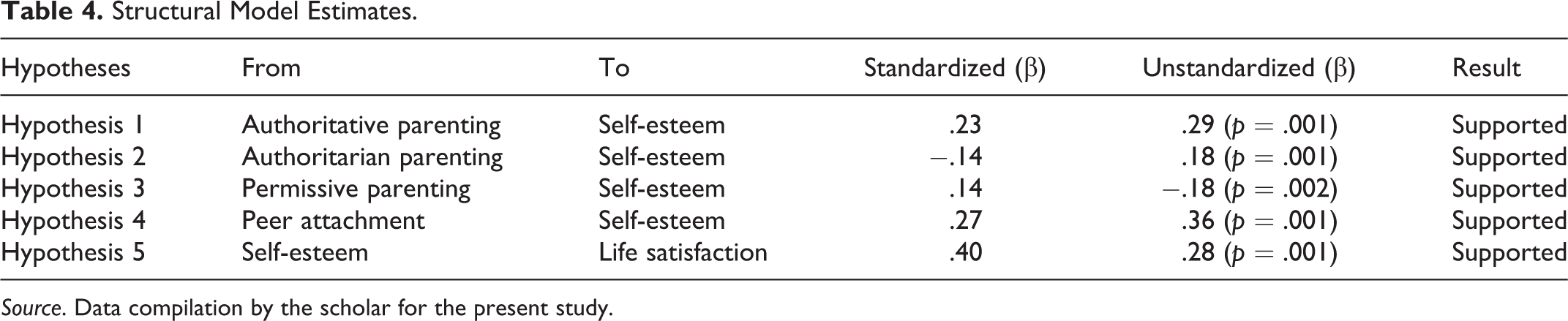
The results from the path analysis (see Table 4) suggest that all the hypotheses in the study are supported. A negative and significant relationship exists between authoritarian parenting (b = −.14, p = .001) and self-esteem. But there is a positive and significant relationship between authoritative parenting (b = .23, p = .001), permissive parenting (b = .14, p = .002), peer attachment (b = .27, p = .001), and self-esteem. Similarly, the relationship between self-esteem and life satisfaction is also affirmative and significant (b = .40, p = .001).
Structural Model Estimates.
Source. Data compilation by the scholar for the present study.
Mediation
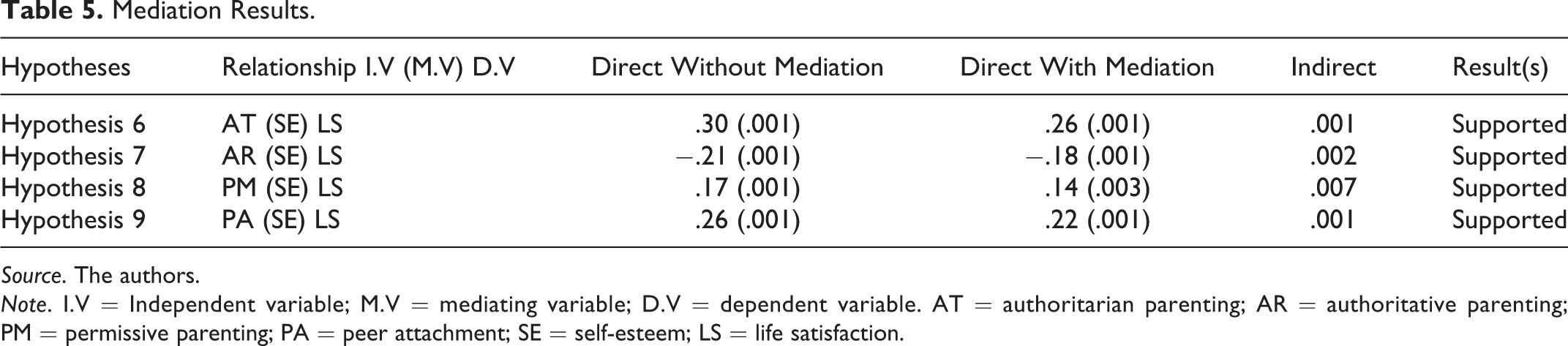
The mediating role of self-esteem between life satisfaction (dependent variable) and four independent variables, that is, authoritative parenting, authoritarian parenting, permissive parenting, and peer attachment was assessed with the help of bootstrapping approach (Baron & Kenny, 1986). The impact of authoritative parenting on life satisfaction reduced from .30 (direct relationship between authoritative parenting and life satisfaction) to .26 (with mediation) which means that this relationship is partially mediated by self-esteem. Similarly, the impact of authoritarian parenting on life satisfaction (see Table 5) reduced from −.21 (direct relationship between authoritarian parenting and life satisfaction) to −.18 (with mediation) which implies that this relationship is partially mediated by self-esteem. The impact of permissive parenting on life satisfaction reduced from .17 (direct relationship between permissive parenting and life satisfaction) to .14 (with mediation) which means that this relationship is partially mediated by self-esteem. The impact of peer attachment on turnover intentions reduced from .26 (direct relationship between peer attachment and life satisfaction) to .22 (with mediation) which means that this relationship is partially mediated by self-esteem (see Table 5).
Mediation Results.
Source. The authors.
Note. I.V = Independent variable; M.V = mediating variable; D.V = dependent variable. AT = authoritarian parenting; AR = authoritative parenting; PM = permissive parenting; PA = peer attachment; SE = self-esteem; LS = life satisfaction.
Conclusion
Discussion
The present work made an important attempt to study the influence of three parenting styles and peer attachment on life satisfaction when mediated by self-esteem. The earlier studies had tested the effects of these three parenting styles on life satisfaction without any mediator variable. A study conducted by Lavrič and Naterer (2020) examined the relationship between three parenting styles and life satisfaction without any mediator. Thus, this article has made important contributions to the literature. The results suggest that both authoritarian and permissive parenting styles show similar effects in terms of strength on self-esteem, but the effect of authoritative parenting is stronger on self-esteem. Moreover, the influence of the authoritarian style on self-esteem is negative unlike the permissive style of parenting. These findings are somewhat similar to the findings from the study conducted by Lim (2020) which showed a relationship between self-esteem and dysfunctional parenting. Another study also showed a strong relationship between authoritative parenting and self-esteem (Hesari & Hejazi, 2011). In the Indian context, authoritarian parenting has also been found to be negatively influencing the self-esteem, and both authoritative and permissive parenting resulted in higher levels of self-esteem among the adolescent (Sharma & Pandey, 2015). But, further studies need to be conducted for generalizing these results even in the Indian context. The current results also showed that peer attachment positively impacts self-esteem. A study conducted by Lim (2020) showed a relationship between peer attachment and self-esteem but in a different direction. The current work findings also revealed a positive and strong relationship between self-esteem and life satisfaction. These findings are in congruence with the work of Arslan (2019) which showed a similar association between the two factors. The mediation analysis showed that self-esteem partially mediated the relationship between life satisfaction among adolescents and four predictor variables, that is, authoritative parenting, authoritarian parenting, permissive parenting, and peer attachment. Self-esteem has also been found to mediate the relationship between authoritative parenting and aggression in an Iranian study (Hesari & Hejazi, 2011). Similarly, in another study on adolescents, self-esteem acted as a mediator between life satisfaction and social exclusion (Arslan, 2019).
Implications
These finding have important practical and social implications, especially for parents and their children. It becomes imperative that parents must be responsive toward the apprehensions of their children so that their self-esteem is not damaged which would be detrimental to children’s life satisfaction. However, children need to put under some restrictions, but parents need to make them understand the importance of such rules. Children may also be allowed to take part in the process of rule-creation exercise to a certain degree. Authoritative parenting has the highest influence on self-esteem as revealed by the study findings. This suggests that the parenting style that involves children in rule-making exercise with a concern for them and providing explanations for the restrictions needs to be adopted by parents in building their children’s self-esteem. The permissive parenting style also builds self-esteem to a lesser extent as suggested by results. This means the use of rewards for good behavior, holding off punishment, and even giving up to the children’s demands by the parents can also result in building children’s self-esteem to some extent. However, the authoritarian style of parenting has a negative influence on the self-esteem of the children. This means physical abuse, criticism, and yelling by the parents harm the self-esteem of the children which needs to be avoided. This work also offers many directives for psychologists, family counselors, couple counselors, and sociologist on the role of different factors that can increase adolescent well-being. It can help counselors understand the effective parenting style for enhancing adolescents’ self-esteem which would ultimately increase their life contentment. It can also provide insights into the interventions and support required during parenting for increasing adolescent well-being. At the same time, it also helps them understand as to how peer-to-peer contacts can lead to higher levels of self-esteem which is a perquisite for life satisfaction among adolescents. But more studies need to be carried out to generalize this study.
Future Work
This article has considered only three parenting styles and left out the dysfunctional and uninvolved style of parenting from the study. Scholars can consider them in their future endeavors. This study was carried out in one region of India, and thus, authors can include more regions in their future work. Future authors can also increase the sample size for attaining generalizations of this work. Prospective work can also look at the possibility of examining parenting styles from sociocultural context, ethnic variables, gender, or even societal class (Lavrič & Naterer, 2020; Utting, 2007). Future studies can also include more outcomes of parenting styles and peer attachment and also include more than one mediator in their studies. Future research in this domain can also consider the moderating effects of culture in the framework involving parenting styles and their outcomes.
Footnotes
Declaration of Conflicting Interests
The author(s) declared no potential conflicts of interest with respect to the research, authorship, and/or publication of this article.
Funding
The author(s) received no financial support for the research, authorship, and/or publication of this article.
