






Abstract
Parental monitoring is a set of correlated parenting behaviors involving attention to and tracking of the child’s whereabouts, activities, and adaptations. The impact of parental monitoring is ubiquitous and has broad relevance for youth outcomes. Similarly, although less commonly investigated, youth behaviors can impact parents’ or caregivers’ responses or behaviors. Longitudinal analysis was used to assess the gendered effects of youth behaviors—defined as internalized anger, externalized anger, and delinquency—on parent behaviors (i.e., parental monitoring). Results showed that adolescent’s levels of internalized anger, externalized anger, and delinquency were predictive of parental monitoring. Specifically, as the adolescents aged, parental monitoring decreased and parental monitoring was differentiated based on gender. Results and implications for the parent–child relationship are discussed.
Background
There is a plethora of literature that has focused on the effects of parental monitoring on child behaviors, however, there is a dearth of research that examines the effects of child behavior on parental monitoring. Historically, studies related to the determinants of parenting behaviors were conducted to determine the etiology of child abuse and neglect (Belsky, 1980; Parke & Collmer, 1975). These studies determined that parental functioning is generally influenced by three sources: the ontogenic origins and personal psychological resources of the parent, contextual sources of stress and support, and the individual characteristics of the child (Belsky, 1984). Based on the premise that characteristics of the child’s individuality strongly effects parental functioning, Belsky (1984) developed a process model for the determinants of parenting. Belsky’s (1984) model presumes that parenting is directly affected by the personality of the parent, the characteristics of the child, and the social context in which the parent–child relationship exists. Three general conclusions with regard to the determinants of parenting were provided based on the process model: (a) the determinants of parenting are nonsingular; (b) characteristics of the parent, child, and the social context do not equally influence growth-promoting parenting; and importantly, (c) the child’s developmental history and personality indirectly shape parenting (Belsky, 1984). The current study focuses on the most understudied aspect of Belsky’s model: how and to what extent child characteristics impact parenting behavior (i.e., parental responsiveness and monitoring).
Stice and Barrera’s (1995) reciprocal effects model theorizes that while parenting practices and behaviors affect child behavior, the reverse is also plausible. Their findings support the theory that child behavior elicits parental reactions and, as a result, parenting practices influence child behaviors (Bell & Chapman, 1986). Similarly, Patterson’s (1982) “coercive cycles” model demonstrates that reciprocity between parents and their children is such that a child who exhibits antisocial behavior elicits adverse reactions by the parent, which may in turn increase aggressive child behaviors. Therefore, the reciprocal effects model suggests that children’s more aggressive and threatening behaviors elicit parent responses such as increased tolerance levels for children’s deviant behavior, decreased attempts of control, and less supportive parenting practices (Stice & Barrera, 1995).
Parental Responsiveness and Parental Monitoring
The concept of parental responsiveness has evolved from a dimension of warmth or nurturance (Maccoby, 1992) to parental sensitivity that incorporates respect for child autonomy, emotional support, and acceptance (De Wolf & IJzendoorn, 1997). Parental responsiveness to child distress involves parental reaction when the child is upset (Davidov & Grusec, 2006) and may include parental hostility, dismissiveness, or comforting (Gottman et al., 1996). Parental responsiveness may be reflected in specific parenting behaviors, including parental monitoring.
Parental monitoring as a means of behavioral regulation stems from an active role played by parents in the primary socialization of their child(ren) (Barber & Harmon, 2001). Petit et al. (2001) found parental monitoring to be a reflection of parenting style as it relates to addressing problematic behaviors in middle childhood and adolescence. While parental monitoring of younger children typically involves behavior tracking, parental monitoring of older children calls for the use of skilled communication and listening (Dishion & McMahon, 1998). As children approach adolescence, parental monitoring wanes, thus, allowing children to spend a large amount of time participating in unsupervised activities with peers (Patterson & Stouthamer-Loeber, 1984; Stoolmiller, 1994).
Thus, normal variations in parenting practices occur over the course of a child’s development (Paikoff & Brooks-Gunn, 1991; Steinmetz, 1979; Wauchope & Straus, 1990). As children age, the use of positive discipline and the levels of parental monitoring and supervision tend to decrease (Paikoff & Brooks-Gunn, 1991; Steinmetz, 1979; Wauchope & Strauss, 1990) with the most significant decline occurring during adolescence (Frick et al., 1999). Similarly, when faced with developmental challenges associated with the transition from adolescence into young adulthood, flexibility in parenting practices is needed in order to maintain a positive parent–child relationship and assist in successful adolescent development (Steinberg & Silk, 2002).
The literature also shows behaviors such as adolescent delinquency impact parent behaviors (Stormshak et al., 2000). Laird et al. (2003) found that higher levels of adolescent delinquency accurately predicted a decrease in parental knowledge of the adolescent’s whereabouts and activities. In the context of inconsistent parenting practices, children may use defiant behaviors to elicit responses from the parent, despite the possibility of a punitive or negative response (Stormshak et al., 2000). Rueter and Conger (1998) conducted an observational study with a large sample of families in order to determine how adolescent interactions impact parenting practices. They found that disruptive adolescent behavior influenced parenting practices more so than positive adolescent behavior, specifically with adjustments in parental management skills (Rueter & Congo, 1998).
While there is extensive research describing how youth respond to parental monitoring, there remains a dearth of research on parental responses to child behaviors (e.g., changes in parenting practices, such as parental monitoring, as a consequence of a child’s behavior). The current study expands upon the small, but significant body of research detailing parental responses to adolescent behaviors. The current study makes use of longitudinal data to describe perceived changes in parental monitoring among adolescents who have engaged in delinquent behaviors and who report high levels of anger (externalized or internalized anger). The current study will address the following two research questions:
Method
Sample
Adolescents in the current study all participated in the Mobile Youth Survey (MYS), a subset of the Mobile Youth and Poverty Study (MYPS). The MYPS is a 14-year longitudinal study of adolescents living in low-income neighborhoods in Mobile, AL, and neighboring communities. The MYS survey was collected annually between the years of 1998 and 2011 from adolescents ranging between 9 and 19 years of age. The full MYS data set contains 12,387 adolescents and contains 35,828 data points.
Because of the longitudinal nature of the data set, several criteria informed the selection of our final study sample. First, due to a low prevalence of adolescents aged 9 and 19, observations from these ages were removed. Second, those adolescents missing key variables utilized in the planned analysis were removed, as imputation methods would have taken considerable computational power. Third, longitudinal models can be better estimated when adolescents have two or more data points (e.g., data collected at a minimum of two ages); therefore, adolescents with data points at only one age were removed prior to analysis. The resulting sample consisted of 3,885 adolescents between the ages of 10 and 18 who had two or more data points between the years of 1998 and 2011, consisting of a total of 16,575 observations, which averages to around 4 years of data from each adolescent.
The final study sample was evenly split between the two genders, with 51% (n = 1,980) females and 49% (n = 1,905) males. The median household income in the included neighborhoods (based on the 1990 census) was approximately US$5,000, and 73% of the residents in these neighborhoods lived below the poverty level. Adolescents in the MYS were relatively homogeneous with respect to other demographic characteristics. For example, the sample comprised 97% (n = 3,784) Black American adolescents, with only a few White American (n = 9) and adolescents self-identifying as another racial/ethnic minority (n = 92), with most of these reportings as mixed race. Additionally, almost 90% of the adolescents qualified for reduced-cost or free lunch at some point during their participation in the MYS.
Procedures
The MYS survey data set was collected over 14 years, utilizing a multiple-cohort design. New cohorts were added each calendar year. The following is a brief description of the methodology of the MYS (see Bolland, Bolland, Tomek, et al., 2016, for full details regarding the sampling procedure, survey instruments, and missing data). Through the use of flyers, handouts at local businesses, and door-to-door contact, as many adolescents as possible were contacted. Adolescents within 3 months of their 10th and 18th birthdays could choose to participate in the MYS after receiving parental consent. In the MYS, adolescents were encouraged to participate in each wave of the survey as long as they remained eligible. With both active and passive recruitment, adolescents were not excluded from participation as long as they were age-eligible and lived in one of the included neighborhoods.
Once parental consent and adolescent assent were obtained, adolescents typically were placed in groups of 20–30 and survey questions were read aloud by an intern. Each adolescent marked their answers in a survey booklet. In the event that an adolescent required individual attention, that adolescent was given the survey in a one-on-one environment, though this rarely occurred. Adolescents were given a monetary incentive for their participation (Bolland et al., 2013).
While every adolescent aged 10–18 (or within 3 months of that birthday, resulting in adolescents ages 9 and 19) who lived in an included neighborhood did not participate in the MYS, analysis of the representativeness of the sample did reveal that the sampling method did result in a representative sample of those adolescents living in extreme poverty in these neighborhoods (Bolland, Bolland, Bolland, et al., 2016). The population used for comparative purposes were all adolescents enrolled in public school within the selected neighborhoods. Yearly participation rates were between 60% and 70% of the included adolescents, with retention rates between 44% and 73% for each of the years.
Measures
Parental monitoring
Parental monitoring was measured using a scale adapted from Lamborn et al. (1991) and includes six items. Prior to responding to these items on the MYS survey, adolescents were asked to determine the person who they felt was most like a mother to them and most like a father to them. The adolescent was then asked to keep those individuals in mind when answering these questions. Parental monitoring then refers to how the adolescent’s parental figures monitor their behavior, who may or may not be their biological parents.
Of the six items, two items had dichotomous responses, three items had three response options, and one item had four response options. In order to establish a summative scale, all item responses were coded to range from 0 to 2 prior to summing. Adolescents responded to two items with a “no” or “yes” response (e.g., “Does your mother or father know who you hang out with?”), which were coded as 0 and 2. The next set of items (e.g., “How much does your mother or father really know about how you spend your time?”) had the following three response options, “they don’t know,” “they know a little,” or “they know a lot.” Responses were coded as 0, 1, and 2 for these two items. One additional item (“Does your mother or father try to find out how you spend your time?”) utilized the following three response options: “they don’t try,” “they try a little,” and “they try a lot,” which were coded as 0, 1, and 2. The final item on the scale (“How much does your mother or father really know about where you go at night?”) contained four response options: “I don’t go out at night,” “they don’t know,” “they know a little,” and “they know a lot.” In creating this response coding, both responses of “I don’t go out at night” and “they know a lot” were coded as 2, with the assumption that if the adolescent does not go out at night their parental figure will know a lot about where they are going, as they are not going anywhere. The other two response options were then coded as 0 and 1.
The results of these recodings were six items ranging from 0 to 2 that were summed to create a scale ranging from 0 to 12, with higher values indicating a higher level of parental monitoring. The effectiveness of creating a single summative scale was evaluated using a principal components analysis. The first eigenvalue was 2.7, with no other eigenvalues greater than 1, indicating a single summative scale was sufficient. This single summative scale had adequate reliability with an α = .74 and accounted for 44% of the variance in the responses of the six items.
Anger
Central to this analysis was the measurement of anger, which was defined in this study as both internal and external anger, as described by Spielberger and Sydeman (1994). The two scales utilized a subset of items from Spielberger and Sydeman’s State-Trait Anxiety Inventory that deals exclusively with responses to anger.
Internalized anger
Internalized anger was measured using the following two items: “When I get angry, I keep thinking about it for a long time” and “When I get angry, I figure out what to do about it by myself.” Response options were “often true for me,” “sometimes true for me,” and “almost never true for me.” The responses were coded as 0–2 and summed, creating a scale ranging from 0 to 4, with higher values indicating an increased level of internalized anger. The effectiveness of creating a single summative scale was evaluated using a principal components analysis. The first eigenvalue was 1.36, with no other eigenvalues greater than 1, indicating a single summative scale was sufficient. This single summative scale accounted for 68% of the variance in the responses of the two items; however, our α reliability measure was smaller than expected at α = .53, though not surprising considering the scale contained only two items with three response options each (Tavakol & Dennick, 2011). The Spearman–Brown reliability coefficient was also equal to .53 in the sample.
Externalized anger
Externalized anger was measured using the following three items, “When I get angry, I get into fights”; “When I get angry, I talk about it with other people”; and “When I get angry, I yell a lot.” Response options were, “often true for me,” “sometimes true for me,” and “almost never true for me,” which were coded from 0 to 2 and summed to create a scale ranging from 0 to 6, with higher scores indicating greater externalized anger. Principal components analysis was also conducted for this scale. The first eigenvalue was 1.73, with no other eigenvalues greater than 1, indicating a single summative scale was sufficient. This single summative scale accounted for 58% of the variance in the responses of the three items and held adequate reliability, α = .63, given the number of items (Tavakol & Dennick, 2011).
Delinquency
Delinquency was measured using 18 items from the MYS questionnaire. This delinquency measure comprises the recency and frequency of the following forms of delinquency: gun carrying and use, knife carrying and use, being arrested, and gang activity. The first five questions utilized in the scale addressed whether the adolescent had ever carried a gun, carried a knife, pulled a gun or knife on someone, cut or shot someone, or had been arrested. A sample item is, “Have you ever carried a gun?” Adolescents responded with a “yes” or “no” for these items. Additional questions were asked about the recency and frequency of each of these events. For both the gun and knife carrying, questions were asked about the previous year, 90 days, 30 days, and 7 days (four items). Pulling a gun or knife was asked about the previous year, 90 days, and 30 days (three items), while cut or shot someone was asked about the current year (one item). A sample item is, “In the past 3 months (90 days), did you carry a gun?” For each of these additional nine items, responses were collected with three options, “no,” “yes, just once,” or “yes, more than once.” One additional question was asked regarding being arrested that looked at recency within the last year, but responses were dichotomized to a “yes” or “no” for the current analysis.
Three questions regarding gang activity were also asked. The first question asked if they had been involved in gang activity over the previous year, the next question asked whether youth were currently involved in a gang, and the third question asked whether they hang out with gang members. All three questions had dichotomized “yes” and “no” responses; however, responses were combined to create a 4-point ordinal scale, based on the severity of gang activity, which was also added to the sum. The final summative scale, calculated from the 15 individual items and the three-item gang scale yielded a range between 0 and 28 points, with higher values indicating greater delinquency. As this scale was created for use in this analysis, a principal components analysis was used to determine the viability of creating a single summative score. The first eigenvalue was found to be 3.01, with no other eigenvalues greater than 1, indicating a single summative scale. This scale accounted for 50% of the variance in the items and had adequate Cronbach’s α reliability of α = .74.
Age and gender
Age was measured in years and was centered at 10 to aid in the interpretation of the intercept values in our models. Gender was dichotomous, with males coded as 0 in the analysis.
Data Analysis
The dependent variable for this study was parental monitoring, which was analyzed longitudinally using a set of three longitudinal growth models. First, an unconditional growth model was estimated independent of any study factors. The unconditional growth model, using Singer and Willett (2003) notation, is as follows:
Next, a conditional growth model was estimated with internalized anger, externalized anger, and delinquency added to the Level 1 portion of the model as main effects as time-varying covariates. Gender was added to the Level 2 portion of the model as a time-invariant covariate. Random effects were not added to the three additional time-varying covariates. The full conditional growth model estimated is as follows:
The factorial model including main effects and interactions with age was estimated with nonsignificant parameter estimates removed using backward elimination, beginning with the effects having the smallest F statistic.
Finally, a second conditional growth model was estimated including additional interaction terms between internalized anger and delinquency and externalized anger and delinquency in the Level 1 model. The purpose of including these interaction effects was to determine if differing forms of anger moderated the relation between delinquency and parental monitoring. Random effects were again not included in the new interaction effects, but gender was included in the Level 2 models. The full model was again estimated with nonsignificant parameter estimates removed through a backward elimination process.
All analyses were conducted using Proc Mixed with Full Information Maximum Likelihood in SAS Version 9.3 software (SAS Institute Inc., Cary, NC). Unstructured covariance matrices were assumed in our models. Additionally, nonlinear trends were explored by adding both a quadratic and cubic age term to the Level 1 models; however, no significant effects were found.
Results
Descriptive Statistics
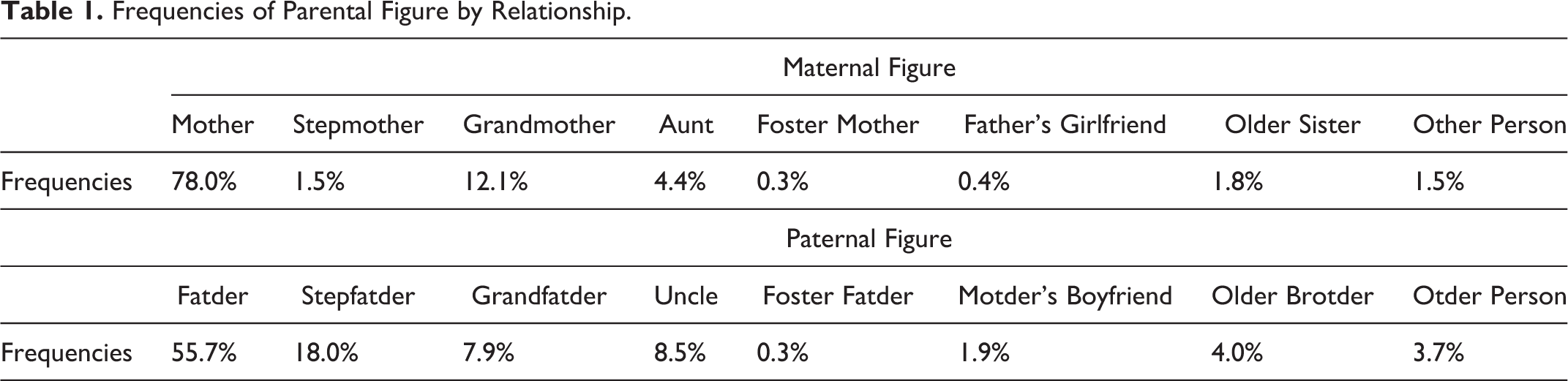
Given that parental monitoring was reported based on the adolescent’s parental figures, frequency distributions were tabulated for the relationship of both the parental figures of mother and father. As the adolescent may select different individuals each year to serve as their parental figure, frequencies were tabulated across all observations rather than across all individuals. Table 1 displays the frequencies of the relationship of the individual who was most like a mother or most like a father to the adolescents. Significant differences were present in relation to the parental figure, χ2(7) = 3,784.87, p < .001. The frequency that the maternal figure was a biological parent was significantly higher than the frequency the paternal figure was a biological parent. Additionally, there was a larger percentage of stepparents who were paternal figures as compared to the percentage of maternal figures that were stepparents. Frequencies of other relations were similar for both maternal and paternal figures.
Frequencies of Parental Figure by Relationship.
Unconditional Model
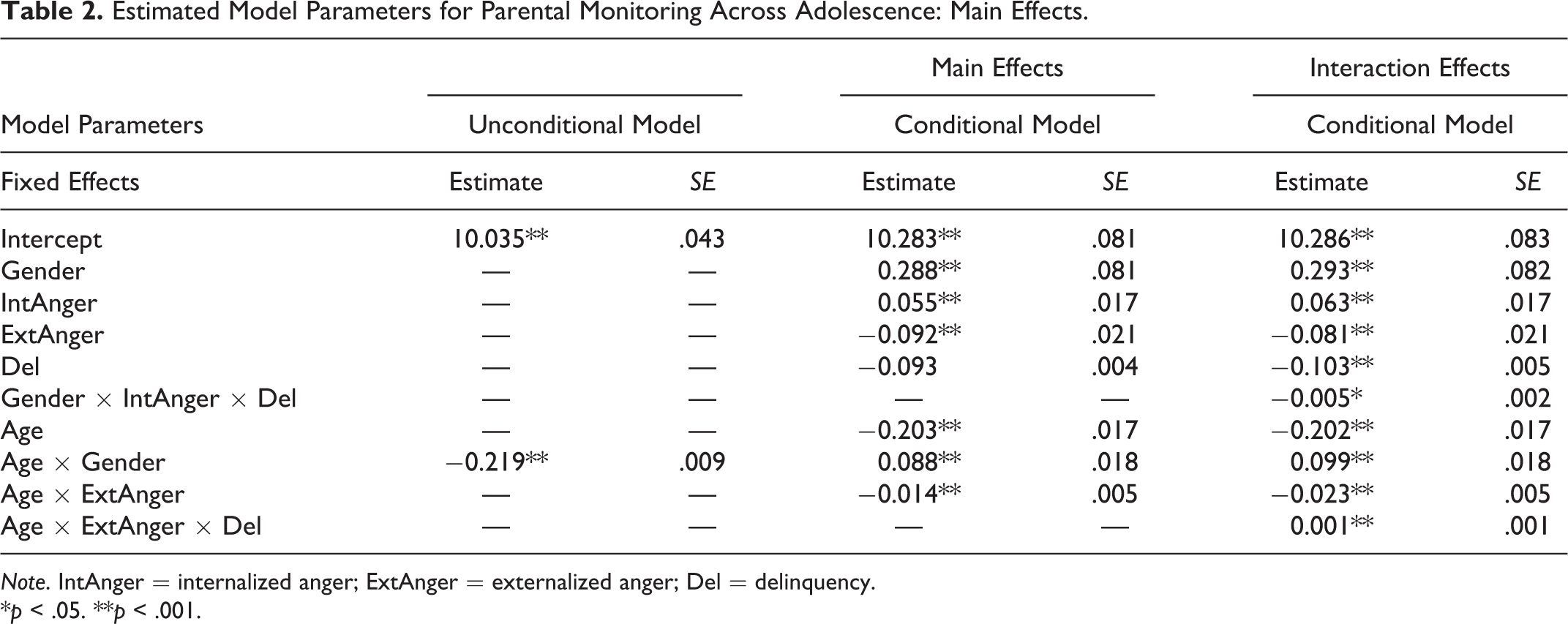
The unconditional growth model with parental monitoring as the dependent variables was first estimated, with parameter estimates displayed in Table 2. Results indicate that mean levels of parental monitoring at age 10 were significantly greater than 0, γ = 10.04, t(3,884) = 235.94, p < .001. With the scale ranging from 0 to 12, an average of 10 points indicates a high level of parental monitoring in this sample of adolescents. As the adolescents age, there was a significant decrease in parental monitoring, γ = −0.22, t(3,879) = −23.24, p < .001. Between the ages of 10 and 18, parental monitoring decreases by about two points.
Estimated Model Parameters for Parental Monitoring Across Adolescence: Main Effects.
Note. IntAnger = internalized anger; ExtAnger = externalized anger; Del = delinquency.
*p < .05. **p < .001.
Anger and Delinquency: Main Effects Model
A conditional model was next estimated and included only the main effects of internalized anger, externalized anger, and delinquency in relation to change in parental monitoring over time. The conditional model was found to have a significantly better fit to the data as compared to the unconditional growth model, χ2(6) = 1,221.6, p < .001. Results are displayed in Table 2. The average level of parental monitoring for males at age 10 was fairly high at 10.3 and this mean was significantly greater than 0, γ = 10.3, t(3,884) = 126.52, p < .001. Females had a significantly higher level of parental monitoring at age 10 as compared to males, γ = 0.29, t(8,804) = 3.57, p < .001, with an average of 10.6. Additionally, both genders experienced higher levels of parental monitoring at age 10 when they also exhibited higher levels of internalized anger, γ = 0.06, t(8,804) = 3.36, p < .001. Both genders had lower levels of parental monitoring at age 10 when they had either higher levels of externalized anger, γ = −0.09, t(8,804) = −4.49, p < .001, or higher levels of delinquency, γ = −0.09, t(8,804) = −26.29, p < .001.
Across adolescence, both males and females report a significant decrease in parental monitoring as they grow older, γ = −0.20, t(3,879) = −11.86, p < .001; however, the decrease in parental monitoring is significantly less for females, γ = 0.09, t(8,804) = 4.94, p < .001. While there are not significant longitudinal effects of internalized anger and delinquency, there were significant effects of externalized anger across adolescents, γ = −0.01, t(8,804) = −3.14, p = .002. Adolescents who exhibited higher levels of externalized anger experience a greater decline in parental monitoring as they aged. This effect does not differ for both genders.
In order to better illustrate the effects of internalized anger, externalized anger, and delinquency, parameter estimates were plotted in Figure 1 by varying the levels of the variable of interest while holding the other two constants at the mean. That is, to illustrate the effects of internalized anger, internalized anger values were plotted at the values of 1 and 3 while holding externalized anger and delinquency constant at their respective mean values.
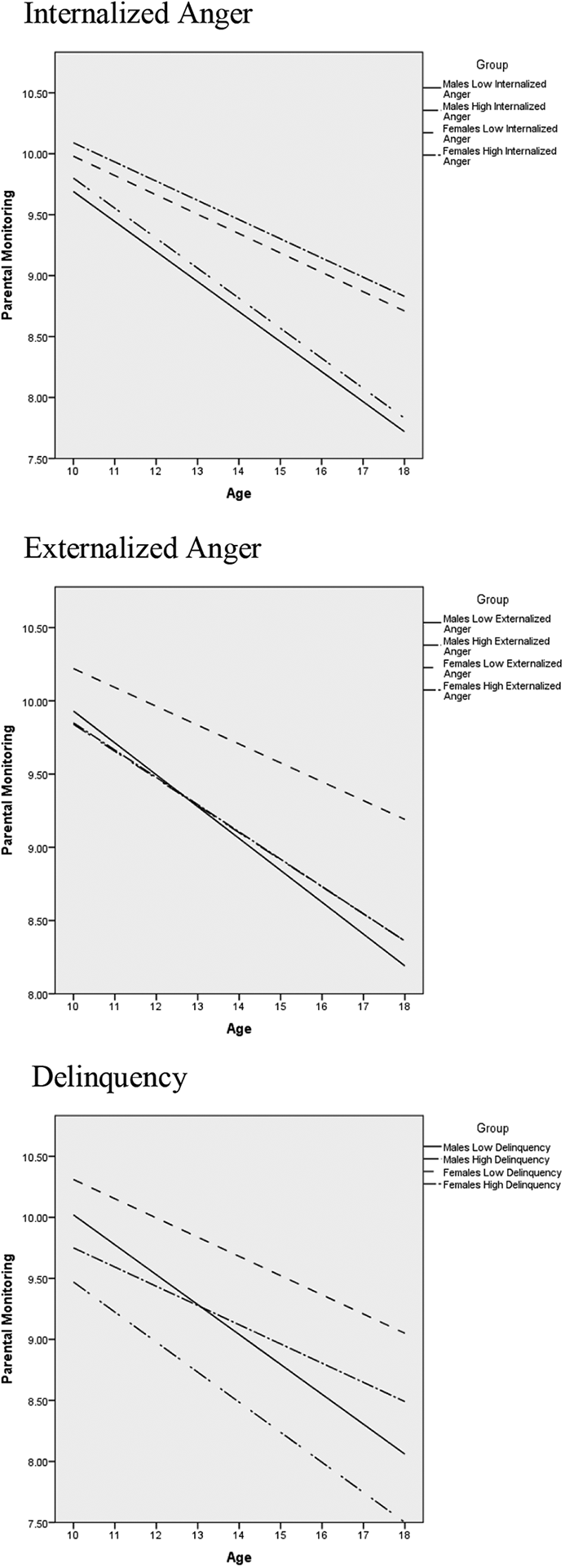
Trajectories of parental monitoring across adolescence: main effects.
Anger and Delinquency: Interaction Model
Lastly, interaction effects between anger and delinquency were added to the previous model. The interaction model was found to be a significantly better fit to the data as compared to the main effects model, χ2(2) = 54.2, p < .001. Parameter estimates are displayed in Table 2. In this model, all of the effects found in the main effects model were significant, with two additional interaction effects found in the best fitting model. The direction and magnitude of the overlapping effects between these two models are almost identical. The results for this section will focus on the additional two significant terms and their relation to the main effects model.
First, there was a significant interaction between internalized anger and delinquency, but this effect was only significant for the females, γ = −0.005, t(8,802) = −2.09, p = .037. Higher levels of internalized anger was found to be related to an increase in parental monitoring, γ = 0.06, t(8,802) = 3.72, p < .001, while higher levels of delinquency were found to be related to a decrease in parental monitoring, γ = −0.10, t(8,802) = −18.90, p < .001. Additionally, females with both high levels of internalized anger and delinquency had a significantly lower level of parental monitoring as compared to females with high levels of only one of the variables individually. This indicates that both internalized anger and delinquency in females results in decreasing levels of parental monitoring for females. This effect was stable over time.
Second, there was a significant interaction between externalized anger and delinquency, γ = 0.001, t(8,802) = 3.86, p < .001, which was identical for both genders. This interaction is related to change over time of parental monitoring. Individually, higher levels of delinquency relate to lower levels of parental monitoring, with this effect stable over time. Additionally, individually higher levels of externalized anger relates to lower levels of parental monitoring, γ = −0.08, t(8,802) = −3.88, p < .001, along with a greater decrease in parental monitoring over time, γ = −0.02, t(8,802) = −4.47, p < .001, if adolescents continue to exhibit high levels of externalized anger. However, the effects of both delinquency and externalized anger changed when both were high, indicating and exacerbating effect with high levels of delinquency and externalized anger. That is, if adolescents exhibit high levels of externalized anger and also have high levels of delinquency, this will significantly slow the rate at which parental monitoring decreases over time, γ = 0.001, t(8,802) = 3.86, p < .001. That is, adolescents who exhibit higher levels of externalized anger experienced lower levels of parental monitoring; however, higher levels of externalized anger in conjunction with high levels of delinquency will result in more parental monitoring as compared to exhibiting externalized anger alone. This interaction was identical for both genders.
In order to better illustrate the interaction effects present in this model, parameter estimates are plotted across time in Figure 2. Of note, the lines are estimated using arbitrary groups plotted based on differing levels of externalized anger and delinquency. High and low delinquency were plotting using the values 1 and 7, high and low internalized anger were plotted using the values 1 and 3, and high and low externalized anger were plotted using the values 1 and 5. The values were selected because they were equally distant from the average for that construct. As can be seen in the first set of graphs, females with high levels of both delinquency and internalized anger have a significantly sharper decrease in parental monitoring. In the second set of graphs, the parental monitoring for those adolescents with both externalized anger and delinquency decreases at a slower rate than what would be expected by those experiencing either one or the other.
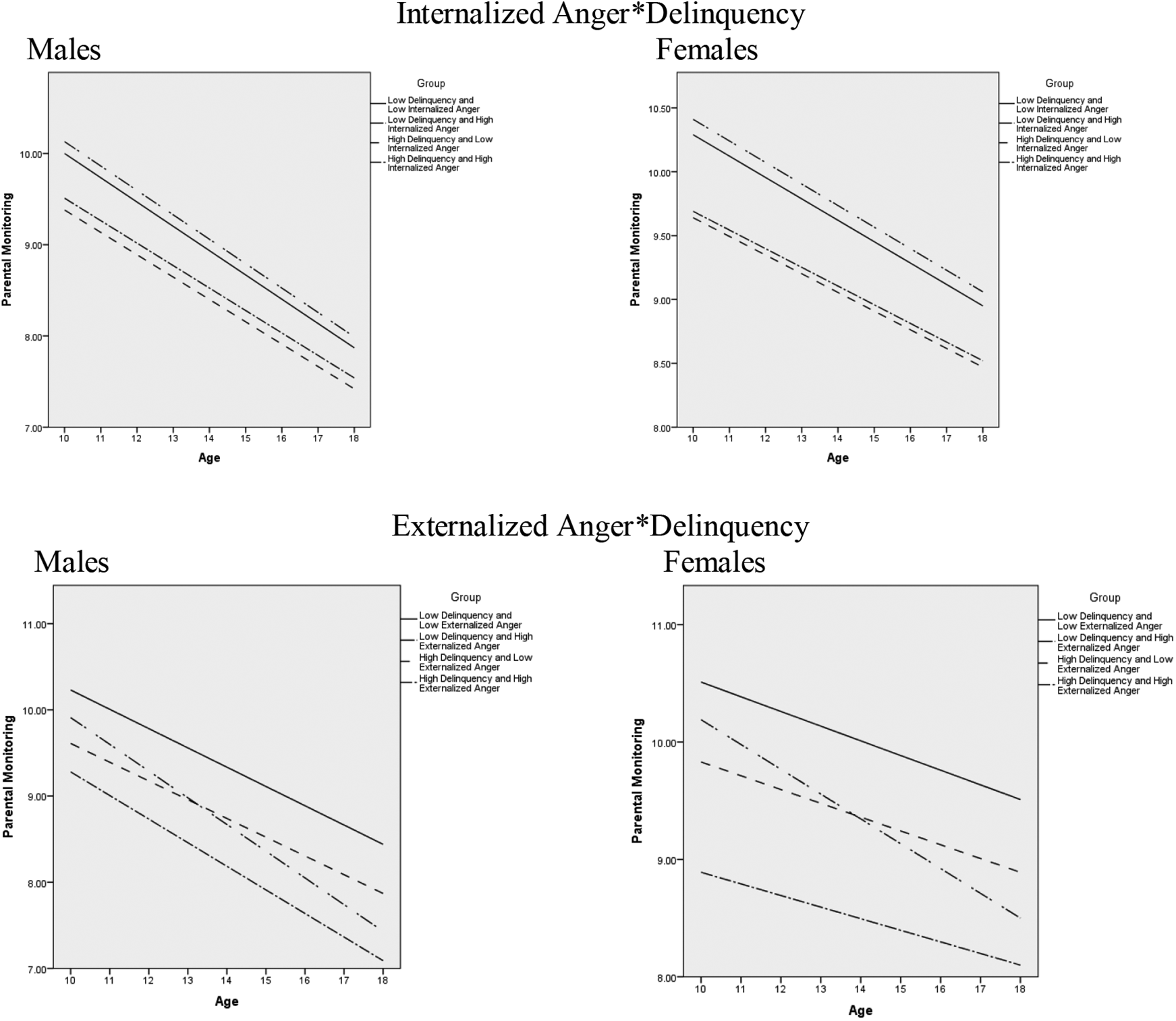
Trajectories of parental monitoring across adolescence: interaction effects.
Discussion
The current research analyzed the longitudinal change in parental monitoring in relation to youth anger and delinquency. Parental activities are often used to predict youth behaviors; there has been far less attention directed toward how youth behaviors predict parenting behaviors. By examining changes in parental monitoring, our results look instead at how deleterious behaviors exhibited in youth may affect parental response to these behaviors. Similar to previous research, parental monitoring decreased over time (Jaggers et al., 2015), although in the current study, the level of decrease was related to youth-focused behaviors (i.e., internalized and externalized anger and delinquency).
Internalized Anger and Delinquency
Internalized anger is the manifestation of anger that is largely suppressed with very little, if any, external signs. In the current study, internalized anger in the child increased parental monitoring, while delinquency alone decreased parental monitoring. Youth with high levels of internalized anger and high levels of delinquency yielded a different parental response than those with only high levels of one or the other. Namely, the combined effects of high internalized anger and high levels of delinquency resulted in lower levels of parental monitoring compared with the effects of each of these variables individually. This was especially true for females, who had higher levels of parental monitoring across time when compared to their male counterparts, indicating that the youths’ gender informed the level of monitoring among parents (or parental figures). Moreover, parents responded to females exhibiting internalized anger or delinquency more strongly than males who exhibited both of these behaviors. Our findings show that youths’ anger and delinquency significantly decreased parental monitoring for males to a greater extent than females. It is worth noting that monitoring of male’s behavior at age 10 was substantially lower than females. At age 18, males and females showed similar levels of parental monitoring. This may reflect a natural change in parental monitoring as a result of these behaviors or as a result of maturation and more freedoms allowed to older children.
Given that internalized anger may be difficult to detect, parental responses to both delinquency and internalized anger may be the result of delinquency itself (Newman et al., 1999). Still, the confluence of internalized anger with delinquency decreased parental monitoring more than delinquency by itself. Youth who have internalized anger seemed to respond by engaging in delinquent behavior, while simultaneously hiding the emotions and motivations influencing them to engage in such behavior. Since internalized anger may impact the family less than anger that is openly displayed, internalized anger may well inform the parental response to delinquent behavior (e.g., the ease with which they can detect delinquent behavior).
Females who had internalized anger absent delinquent behavior had parents who exhibited stronger parental monitoring when compared to males in the same situation. Additionally, parental monitoring decreased more slowly across time for these females as compared to the males. Though not unexpected, this provides valuable insight into parent–child dynamics. The parental response to delinquent behavior may explain differences in monitoring for youth who have internalized anger alone, compared to the interaction of anger and delinquency. That is, parents observing delinquent behavior may attempt to decrease that behavior by—counterintuitively—employing less restrictive, permissive parenting approaches to change the perception of parents who are “overbearing.” When considering internalized anger alone, a similar effect is not seen. There is no evidence that this approach is useful. In fact, the results of the current study are supported by Hirschi’s (1986) social control theory; delinquency often arises when parents, family, and community do not exert significant or age-appropriate control over youth behavior.
Female youth who have not engaged in delinquent behavior but have internalized anger may have stronger family supports and parents who are more observant of their child’s behaviors. Since levels of parental monitoring decrease more slowly for females than for males, this supports prior work demonstrating that there are gendered differences in parental monitoring (Li et al., 2000). Therefore, significant but slower decreases in parental monitoring for females may be the result of gender alone or a consequence of internalizing anger. Findings in the current study show that females who have higher levels of delinquent behavior and high levels of internalized anger see less parental monitoring than when they only exhibit internalized anger.
Externalizing Anger and Delinquency
Externalizing anger is the manifestation of anger that is observable, open, and verbally abusive and may be shown through lashing out. Externalizing behaviors alone significantly decreased parental monitoring throughout adolescence. However, when externalizing behaviors and delinquency co-occur, parental monitoring did not decrease as quickly, though it did continue to decrease significantly over time. That is, parents monitored adolescent behaviors more closely when an adolescent was delinquent and outwardly expressed anger.
Parental desire to monitor youth more closely appears to be a result of the externalizing behavior itself. As youth mature, parental monitoring generally decreases. When exhibiting externalizing behaviors, parental figures monitor their delinquent children more closely than youth who have only engaged in delinquent behaviors. There are a number of potential explanations for this behavior. Youth exhibiting externalizing anger and who engage in delinquent behavior may represent a greater threat to the stability of the family unit. Delinquent behavior occurs when social control is loosened (Hirschi, 1986) and youth who are already “pushing back” against parental controls might use visible anger as a means to assert independence from the family. Moreover, externalizing anger tends to manifest in a number of settings, including inside the home. Delinquency, however, is most often though not exclusively external to the home and parents are unlikely to be directly affected, and yet the consequences of delinquency often affect the whole family. When externalizing behaviors and delinquency co-occur, parents respond by increasing how strongly they monitor the child; a similar effect is noted when there is a high degree of externalized behavior and low or no amount of delinquency. Externalizing anger elicits the strongest parental response, irrespective of the level of delinquency evidenced by the child.
The slower decrease in parental monitoring among youth who show externalizing anger and delinquent behavior may be the result of perceived threats to the family and to the child. Externalized anger is an outward display of strong, assertive behaviors that can result in physical harm to self and others (Rubin, 1986). Parents who sense this anger may feel physically and emotionally threatened. The “push back” among these youths may make delinquency more difficult to detect. Parents may be too distracted by the anger itself to adequately respond to delinquent behaviors. Moreover, since delinquency is largely, though not exclusively, a personal risk to the youth, parental responses likely focus on preventing problems in the home.
Female behaviors resulted in greater levels of parental monitoring as compared to males, especially in cases of concurrent externalizing anger and delinquency. Females with lower levels of externalized anger showed a steady decrease in parental monitoring, even with the presence of high levels of delinquency. Females with high levels of delinquency were found to have lower levels of parental monitoring initially. The consistent decrease in parental monitoring for these youth may actually reflect developmentally appropriate decreases, even though initial levels of parental oversight were different and likely determined by behaviors beginning prior to age 10.
Since females were monitored more heavily than males, the steep decrease in parental monitoring when females exhibited high levels of externalizing anger and low levels of delinquency were somewhat unexpected. The resultant levels of monitoring for all groups were high during early adolescence, except in cases when there were already indications of serious delinquency and externally expressed anger by age 10. Those cases had substantially lower levels of parental monitoring throughout adolescence. Since data prior to age 10 was not available, it is difficult to ascertain what factors may have contributed to the lower initial levels of monitoring seen in this group. High levels of externalizing behavior are a key consideration, as females with high levels of externalizing anger had the lowest levels of parental monitoring at age 18 irrespective of delinquency. Parents may be reluctant to correct outwardly angry behaviors in early childhood, leading to hesitation in redirecting behaviors later in adolescence. In cases where parents do choose to reign in these types of behaviors, they may encounter resistance to increased monitoring at the point when there is a greater risk of engaging in deviant behaviors,
Low levels of delinquency seem to invoke the highest levels of monitoring at age 10. Typically, youth engaging in delinquent behaviors at an early age are more likely to desist from crime than older youth (Sampson & Laub, 2006; Stouthamer-Loeber et al., 2004). Increased parental monitoring in early adolescence is not unexpected, as younger children are monitored more heavily than older children. However, the presence of delinquent behavior results in higher levels of monitoring indicating that parents are seeking to encourage desistence.
Males reported the steepest decline in monitoring when externalized anger is low and delinquency is high. Delinquency alone was associated with decreases in parental monitoring, and externalizing anger seems to trigger an even steeper decline. Conversely, more externalized anger and less delinquency showed a relative increase in parental monitoring when compared to other potential circumstances. Since the expression of delinquent behavior was lower, placing the family at a lower risk, parents may be responding to the externalizing behavior to keep male children from engaging in further delinquent activity.
Gender and Parental Monitoring
The current study demonstrates a significant effect for gender in altering parental behaviors. In every instance, females were monitored more heavily at age 10 than males. Some have postulated that males are given more leeway by parents because of perceptions that males are more capable of caring for themselves at a much younger age than females (Skinner et al., 2016). Similarly, the “boys will be boys” mentality may account for the lower levels of monitoring seen at age 10. Parents who accept these ideas and act upon them may in fact be encouraging delinquency among male children. Once these behaviors have been detected by a parent, permissive parenting has already become the expectation, and efforts to increase supervision may well result in resistance, including higher levels of anger.
Female children are more closely monitored than male children of the same age. Perceptions about the vulnerability of females may be partially responsible for these differences. While males are given greater independence, females are more closely watched. Environmental and cultural contexts are an important consideration for explaining this phenomenon. The sample for this study was recruited from impoverished neighborhoods in Alabama. Throughout the Southeastern United States, historically, females are treated with greater deference than males but are also perceived to be more vulnerable and in need of greater family support (Connell, 2014; Rice & Coates, 1995).
Mental health practitioners working with youth who engage in delinquent behaviors should carefully consider not only parenting style but how females and males respond to parenting behaviors. Internalized anger in females may be particularly difficult to assess. Care should be taken to account for anger and not simply rely on delinquency as an indicator of problem behaviors. It may be that the internalized anger is a precipitating event that leads to delinquency. Moreover, how parents respond to child behaviors when making parenting decisions is critical. Parents who pay attention to their child’s behaviors may not necessarily have a positive impact on youth behaviors. Early and developmentally appropriate parental intervention to address deviant behaviors may prevent occurrences of delinquency. Monitoring itself is not enough. Rather, parents should consider how the child responds to their oversight, potential mitigating factors including culture, psychosocial development, and gender.
Strengths and Limitations
The current study has a number of strengths. The study used longitudinal data across a number of years to assess the moderating effects of type of anger on the relation between delinquency and parental monitoring. The current study also focuses on parental responses to youth-related behaviors, an issue not commonly empirically examined or discussed in the literature. This article uncovers a number of differential levels of parental monitoring in response to child behavior and provides further support for family interventions to prevent delinquency.
Limitations to the current research are largely an issue of operationalization. The measure of parental monitoring reflected the adolescent’s perception of behavior monitoring from either their mother or father parental figure. This measure should be interpreted as the adolescent’s perception of monitoring from one of their parental figures within a given year. Additionally, the parental figure of the adolescent can change from year to year (i.e., 42% changed maternal figures and 60% changed paternal figures), thereby affecting the perceptions. The measures used to define delinquency and parental monitoring were not specifically designed to measure these behaviors. Still, previous research using these data have also used this approach (Jaggers et al., 2015). In addition, both measures of anger demonstrated low reliability. While continuous data were used for this study, anger and delinquency were dichotomized in order to plot the trajectories of the model in an attempt to better evaluate these associations. In reality, the model provides estimates for every continuous value of these three variables. This is a common technique described by Singer and Willet (2003) and provides greater ease in the interpretation of results related to these parent–child dynamics.
Conclusion
The current research provides valuable insight into the influence of anger and participation in delinquency on parental monitoring. Results of this study provide empirical support for both the process model for the determinants of parenting (Belsky, 1984) and the reciprocal effects model (Stice & Berrera, 1995). It is clear that parent and child characteristics, when situated within social context, do not play an equal role in parenting. Child behaviors seem to play a role in parental monitoring to a degree that was previously unknown. This reciprocal effect means there is a nonzero influence by the child in a parent–child relationship.
It may be more difficult for parents to detect anger when there is considerable delinquency. Existing research has shown that delinquent behavior effects emotional and mental well-being. The importance of parenting under these circumstances cannot be overstated. Behavioral regulation, which is often associated with deviant behavior, is influenced by parenting behaviors. Supportive parenting has the potential to strengthen the child’s ability to regulate their own behaviors. Family-level interventions may then be used to reduce or prevent delinquent behavior by encouraging positive parenting and by reducing negative responses to those parenting practices by youth.
Information on the gendered effect of anger and delinquency evidenced in the current study provides important and precise information on developing strategies to mitigate anger and possibly delinquent behavior. Specific approaches should address these gendered effects since females and males are monitored in different ways. In addition, it is crucial that mental health professionals consider the reciprocal role of parental monitoring and child behaviors. Alterations to formal intervention strategies may be necessary in order to account for the already existing parent–child relationship. As behaviors change, the responses to those behaviors will also change.
Footnotes
Declaration of Conflicting Interests
The author(s) declared no potential conflicts of interest with respect to the research, authorship, and/or publication of this article.
Funding
The author(s) received no financial support for the research, authorship, and/or publication of this article.
