







Abstract
Raising a child with autism in the Philippines poses numerous challenges, yet many Filipino parents show notable resilience. While existing research often centers on children's resilience or ineffective parenting, little attention has been given to the resilience of parents themselves. This study investigates the role of the yaya, or domestic caregiver, as a culturally embedded support system that contributes to the resilience of Filipino parents of children with autism. Employing a narrative inquiry approach, the researchers gathered and analyzed the stories of eight parents, framing their experiences through ecological and systemic lenses and focusing on protective factors that buffer parenting stress. Thematic analysis revealed that yayas play a critical role in family resilience by offering emotional and caregiving support, functioning as surrogate parents, and being considered part of the family. Their presence provides parents with much-needed respite and helps mitigate the overwhelming demands of caregiving. The findings underscore the importance of acknowledging the yaya as a vital, culturally situated support figure in Filipino families. The study ultimately advocates for more localized research and culturally relevant frameworks to better understand and support parental resilience. It also emphasizes the need for policy and practice that recognize and strengthen these informal yet impactful caregiving relationships.
Introduction
The birth of a child with autism initiates an intensified process of family adjustment, requiring substantial emotional and practical adaptation (Ayasrah et al., 2022). As the prevalence of autism spectrum disorder (ASD) continues to increase, a more contextualized understanding of family life becomes essential to respond effectively to both child and family needs. ASD, a chronic neurodevelopmental condition characterized by persistent challenges in social communication and restricted or repetitive patterns of behavior, can significantly disrupt family functioning and necessitate sustained, high-level caregiving (American Psychiatric Association [APA], 2022). The process of accepting and managing the diagnosis often generates considerable stress for parents, who must balance the child's needs with their own well-being and the demands of the broader family system (de Aguiar & Ponde, 2020; Ilias et al., 2018; Galán-Vera et al., 2025; Smith-Young et al., 2020).
Filipino parents of children with autism may experience heightened stress due to tensions between societal parenting expectations and the distinctive caregiving demands associated with ASD (Roxas et al., 2022). Situated within a family-centered and collectivist cultural context, Filipino society places strong emphasis on close familial bonds and parental responsibility (Jocano, 1998; Tarroja, 2010). Parenting, particularly in the presence of developmental differences, becomes increasingly complex as parents are culturally expected to nurture young children with indulgence while simultaneously cultivating obedience and respect (Alampay, 2014). Autism can disrupt this dynamic, given the extended and specialized care it often requires. Moreover, the core Filipino value of kapwa, or shared identity, shapes parenting practices by underscoring relational interdependence and communal responsibility (Enriquez, 1992). While this interconnectedness can foster resilience, it may also intensify perceived parental obligations, thereby heightening the emotional and physical demands of caregiving in the context of atypical development.
Hoefman et al. (2014) posited that the cumulative emotional and practical demands of caregiving can adversely affect parents’ physical health, social engagement, and psychological well-being. Nonetheless, many parents exhibit notable strength, flexibility, and adaptive capacity. This adaptive capacity is conceptualized as parental resilience, defined as the ability to sustain effective parenting and psychological functioning in the face of significant adversity (Hoefman et al., 2014).
The development of parental resilience is influenced by protective factors that buffer the effects of stress and support sustained functioning. Social support has been identified as a critical protective factor among Filipino parents of children with autism, mitigating psychological distress while providing both emotional affirmation and instrumental assistance (Liwag et al., 2022). Support from extended family members, community networks, and religious institutions reflects deeply embedded collectivist values, promoting shared caregiving responsibilities and relational sustenance (Alampay & Jocson, 2011). These interconnected support systems help attenuate the impact of caregiving stress and enhance parental well-being amid ongoing challenges.
Despite its critical importance, parental resilience in families of children with autism remains underexamined, especially within culturally grounded contexts (Xavier et al., 2025). Xavier et al. (2025) continued by stating that existing research has largely emphasized burden and deficit, foregrounding stress and disruption while neglecting the dynamic coping processes, relational strengths, and culturally shaped adaptive capacities families cultivate. This imbalance obscures how families sustain wellbeing, navigate adversity, and construct meaning, limiting a more complete, strengths-informed understanding of autism and family life.
The present study examines the role of the yaya as a culturally embedded protective factor in the resilience of Filipino parents of children with autism. In the Philippine context, a yaya—a domestic caregiver who frequently assumes substantial caregiving and quasi–co-parenting responsibilities—represents a form of communal caregiving grounded in longstanding family values (De Guzman, 2014). Although raising a child with autism entails emotional, financial, and psychological strain, parents who receive consistent support from yayas may experience reduced caregiving burden, improved work–family balance, and enhanced emotional regulation, all of which contribute to resilience (Alampay, 2014). By foregrounding this underexamined yet culturally situated resource, the study advances a more localized and systemic understanding of parental well-being in autism care. It further contributes to policy and practice by underscoring the importance of culturally responsive support systems for neurodiverse families.
This study aims to answer the following research questions:
What are the roles of the yaya in the resilience of Filipino parents of children with autism? How do the yayas support the resilience of Filipino parents of children with autism?
On Autism
Autism spectrum disorder (ASD) is a lifelong neurodevelopmental condition characterized by persistent deficits in social communication and restricted, repetitive patterns of behavior (American Psychiatric Association [APA], 2022; House Bill 6934, 2018). The Diagnostic and Statistical Manual of Mental Disorders, Fifth Edition Text Revision (DSM-5 TR) reconceptualized ASD as a single spectrum encompassing previously separate diagnoses, including Asperger's disorder and pervasive developmental disorder–not otherwise specified (APA, 2022). ASD is more frequently identified in males, although females often present with greater symptom severity (Napolitano et al., 2022; Sadock & Sadock, 2003). The DSM-5 TR specifies three severity levels based on required support: Level 1 (requiring support), Level 2 (requiring substantial support), and Level 3 (requiring very substantial support) due to pronounced social and behavioral impairments (APA, 2022). More specifically, this study focuses on parents of children classified at Levels 2 and 3, whose caregiving responsibilities are typically intensive and have significant implications for parental well-being. Empirical evidence indicates that greater symptom severity is associated with heightened parental stress and increased risk of adverse health outcomes (de Aguiar & Ponde., 2020; Shan & Li-Tsang, 2003; Galán-Vera et al., 2025; Wang et al., 2004). Nevertheless, Gomez & Gomez (2013) reported that overall quality of life was not always significantly reduced, despite notable physical and environmental strain among caregivers.
Parental Resilience
Despite the challenges associated with raising a child with autism, many Filipino parents exhibit resilience through the maintenance of effective parenting practices and personal well-being. Existing scholarship has largely emphasized child or family resilience and dysfunctional parenting patterns, with comparatively limited attention to parental resilience as a distinct construct (Gavidia-Payne et al., 2015; Hill et al., 2007). Gavidia-Payne et al. (2015) conceptualize parental resilience as the capacity to sustain competent parenting under conditions of significant adversity. Resilience is widely understood as a dynamic process emerging from interactions between individuals and their environments and shaped by co-occurring risk and protective factors (Luthar et al., 2000; Black & Lobo, 2008). Protective influences attenuate adverse effects, whereas risk factors heighten susceptibility to negative outcomes (Armstrong et al., 2005; Teti & Cole, 2011).
Furthermore, parental resilience is supported by the interplay of internal capacities and external resources. Salient intrapersonal factors include purpose, adaptive coping, emotional regulation, and constructive cognitive reframing (Bayat, 2007). Extrapersonal supports—such as extended family networks, professional services, and caregiver assistance including yayas—buffer stress and promote caregiving sustainability (Altiere & von Kluge, 2009). In addition, spiritual orientations and culturally grounded values provide meaning-making frameworks that enable parents to manage caregiving demands with persistence and hope (Kayfitz et al., 2010). These findings highlight implications for culturally attuned family interventions and support services addressing sustained parental well-being and adaptive caregiving practices locally relevant. Grounded in ecological and systemic frameworks, the analysis considers how culturally embedded supports facilitate parental adaptation to chronic caregiving demands (Weisner, 2005; Ungar, 2011). The scarcity of localized scholarship, particularly within the Philippine context, underscores the need for culturally responsive investigations of resilience among parents raising children with autism.
The Role of the Nannies
The role of a nanny within a family extends beyond basic childcare, encompassing significant influence on family dynamics and child well-being. Nannies often integrate into the family unit, blurring traditional boundaries of employment and becoming a crucial part of the child's developmental environment (Akay, 2022). Their responsibilities frequently expand beyond direct child-minding to include broader household duties, indicating a fluid definition of their professional scope within individual households.
A significant aspect of a nanny's role is their direct relationship with the child, which has been shown to positively impact the child's psychological well-being. The nanny's sensitivity and responsiveness to a child's needs are critical for fostering security and encouraging exploration—paralleling the impact of parental sensitivity on attachment and development (Akay, 2022; Armstrong, Berg & Lachman, 2022). This underscores the importance of the caregiver's interaction style, regardless of whether they are a biological parent or a paid carer.
Hence, the employment of nannies also reflects broader societal and economic factors, particularly in the context of working mothers. The decision to hire a nanny is often a substantial financial one, typically made by families from middle- to high-income brackets who can afford such services (Zdravomyslova, 2010). In a third-world country like the Philippines, this rings true, as only those financially capable can hire nannies.
Additionally, the integration of nannies into family life, their direct impact on child development through sensitive caregiving, and their role in facilitating parental resilience all underscore the multifaceted and evolving nature of their position within contemporary families (Armstrong et al., 2022).
The Yaya
In the Philippines, the yaya or nanny plays a complex and multifaceted role within the Filipino family, often serving as a domestic care worker primarily responsible for childcare in private homes. Many yayas are internal migrants, predominantly women who have left their children in rural communities to work for more affluent families in urban centers (Reyes et al., 2020). This arrangement creates a unique dynamic where yayas act as “mothers from a distance” to their offspring, facing the emotional burden of separation while providing nurturing care for the children of their employers (Reyes et al., 2020; de Guzman, 2014).
Furthermore, having a yaya embodies the Filipino tradition of communal caregiving, where raising a child is a shared social responsibility. This reflects deep cultural values of trust, interdependence, and collective support, affirming that nurturing children extends beyond the nuclear family to a wider circle of committed caregivers (Carandang, 1987; Medina, 2001; Reyes, 2015).
These relationships formed between yayas and the children they care for, as well as with their employers, are significant aspects of their experience. These ties often take the shape of “fictive kinships,” where emotional closeness mimics family bonds, albeit within a hierarchical and transactional structure (de Guzman et al., 2018), which is almost family-like. Overall, yayas are increasingly recognized as “significant others” in early childhood care and development in the Philippines, highlighting their integral, though often challenging, contribution to family life (Lasco & Mendoza, 2025).
Thus, the yaya serves as a key protective factor in the resilience of Filipino parents of children with autism by providing consistent caregiving support, easing parental stress, and enabling work–life balance (Reyes, 2015). This caregiving arrangement reflects Filipino cultural norms of shared parenting and reliance on extended or surrogate kin (Medina, 2001). With a yaya's help, parents can preserve their mental well-being, focus on advocacy, and maintain stability in the household despite the challenges of raising a neurodivergent child.
Theoretical Frameworks
One of the theoretical frameworks that this study utilized is the
Additionally, Enriquez's (1992) Sikolohiyang PIlipino frames the study using an indigenous lens. Sikolohiyang Pilipino provides a culturally grounded theoretical scaffold for understanding the role of the yaya as a protective factor in Filipino families raising children with autism. Central to this framework is the core value of kapwa (shared inner reality), which emphasizes shared identity and interconnectedness. The relationship between parents and yayas reflects kapwa, as yayas are not merely employees but kin-like figures who become integral members of the caregiving system. The concepts of malasakit (deep concern and compassion) and pakikiisa (solidarity or unity of purpose) further explain how yayas support families beyond contractual obligation. Their emotional labor, caregiving commitment, and willingness to “stand in” for the parent embody malasakit and pakikiisa, fostering resilience in the face of parenting stress. Thus, Sikolohiyang Pilipino allows for a culturally relevant understanding of the yaya as a vital support within the Filipino ecological system of care.
Methods
This study is part of a larger study that explored the resilience of parents of children with autism and employed narrative inquiry to explore their experiences of raising children with autism, using storytelling as a method to understand how they develop resilience. Recognizing experience as the core of the narrative, the research framed parents’ accounts as phenomena unfolding within particular contexts and over time. In alignment with Suzuki et al. (2007), the study emphasized contextualization, acknowledging that environmental and temporal factors shape resilience. The narratives offered rich, contextual knowledge by illuminating how parents make meaning of their challenges.
The epistemological foundation of the study is rooted in social constructionism, which posits that knowledge is co-constructed through social interaction and discourse (Crotty, 1998; Schwandt, 2000). The parents’ varied interpretations of their experiences reflected multiple realities, shaped by personal histories, social environments, and relationships, including with the researcher (Clandinin & Connelly, 2000; Ponterotto, 2005). Thuse, social constructionism supported the study's goal of understanding how parents assign meaning to their experiences and how these meanings were co-created in the research process.
Narratives were seen as a primary way through which people understood and communicated their experiences (Pinnegar & Daynes, 2007), provided coherence to the adversity and acted as a means to externalize internal struggles (Andrews et al., 2008). Polkinghorne (2007) contended that storied descriptions offer the most authentic insight into human experience. The study used Polkinghorne (2007) descriptive narrative approach to elicit and analyze parents’ stories. This method enabled the researcher to uncover temporal connections and meaning-making processes, thereby contributed to a deeper understanding of parental resilience in the context of autism parenting.
Participants and Sampling
This study utilized purposive sampling to recruit participants, primarily from two private institutions that serve individuals with disabilities. Purposive sampling was deemed appropriate due to the study's exploratory nature. The study involved eight parents of children aged 10 to 22 years and above, all diagnosed with autism spectrum disorder (ASD) requiring Level 2 or 3 support as defined by Diagnostic and Statistical Manual of Mental Illnesses (DSM-5 TR) 5th edition Text Revision (APA, 2022). All of the eight participants have a hired caregiver/yaya for their child at present or have had the experience of having a yaya for their child. Beitin et al. (2012) suggests that 6–12 participants are adequate for narrative inquiry, especially when thematic saturation is achieved. In the larger study, the researcher interviewed 14 participants. However, only eight were included in this analysis because they were the only participants who had previously employed or were currently employing a yaya, making their experiences directly relevant to the focus of this study.
Below is a table of the demographic characteristics of the participants (Table 1).
Demographic Data of the Participants.
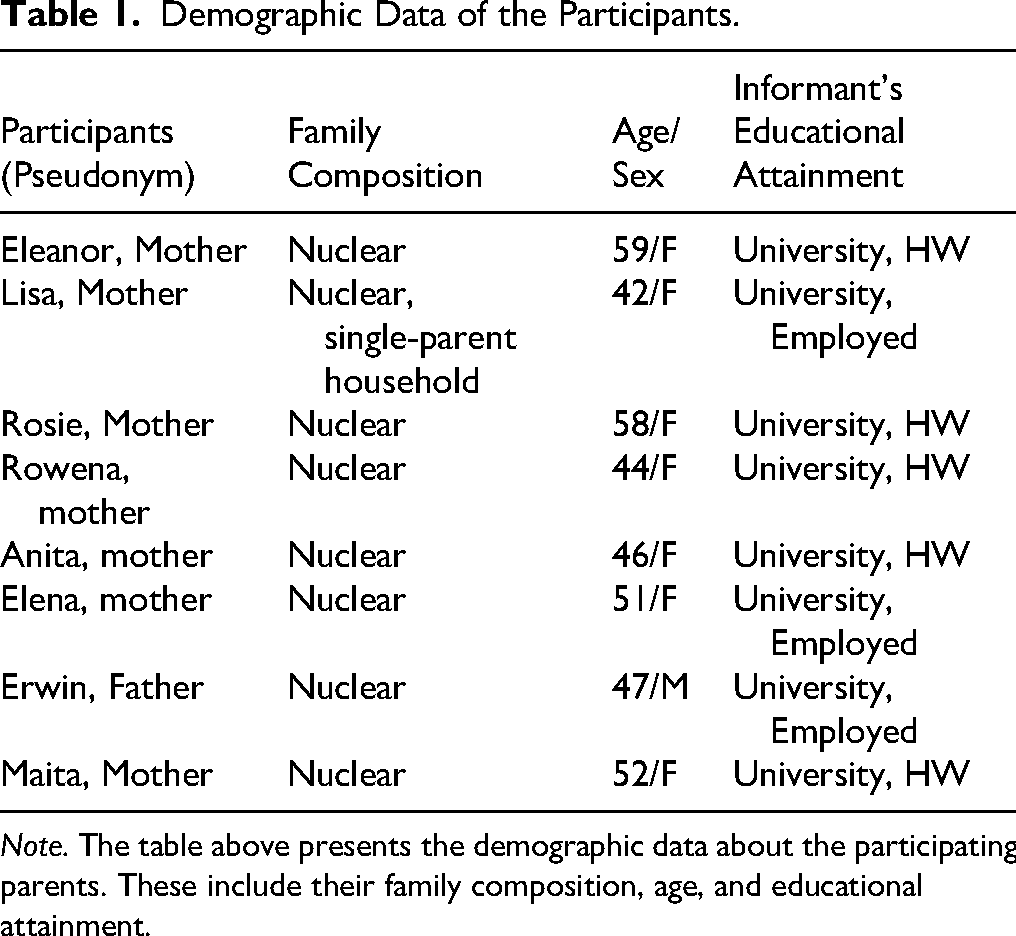
Note. The table above presents the demographic data about the participating parents. These include their family composition, age, and educational attainment.
Ethical Considerations
This study employed narrative interviews to explore the lived experiences of parents of children with autism, emphasizing privacy, safety, and participant comfort. Most interviews were conducted in private rooms within partner centers, scheduled during their children's therapy sessions to reduce parental burden. A few were held in other locations, such as cafes or offices, where efforts were made to ensure minimal disruption and maintain confidentiality. Consent procedures were rigorously followed, with participants receiving written invitations and informed consent documents in advance. No participants withdrew, and no compensation was given.
Instrument
The questionnaire was validated by three professionals: a neurodevelopmental pediatrician, a clinical psychologist, and a psychiatric nurse specialist with a doctorate in psychology. Once their comments were received, the questionnaire was revised and sent back for their approval.
Data Collection
Interviews were conducted in “Taglish” (a mix of Tagalog and English), with participants encouraged to express themselves freely. Interviews were audio-recorded, transcribed verbatim, and checked by participants for accuracy. Field notes—categorized into observational, theoretical, and methodological—were taken before, during, and after interviews, capturing researcher reflections, environmental details, and participant behavior (Wengraf, 2001). Some parents provided supplementary materials such as portfolios and social media posts, enriching the dataset. This qualitative approach enabled a rich, multidimensional understanding of family experiences (Cridland et al., 2014), and is essential in reconstructing the interview context during data analysis.
Each participant underwent three to four in-depth, semi-structured interviews, with follow-up sessions conducted two to four weeks later. Data saturation was determined by redundancy in responses (Creswell, 2003). Narrative interviews were treated as conversations to allow participants autonomy in storytelling (Clandinin & Connelly, 2000; Polkinghorne, 1988). The researcher, although guided by the questionnaire, made sure that the narrative interview had a conversational tone where the researcher enabled the parents to speak (relatively) uninterrupted and narrated their story (Clandinin & Connelly, 2000; Polkinghorne, 1988). Glover contrasts the narrative interview with traditional qualitative interviews that provide rigid or standardized questions and often results in the storyteller being cut off. Narrative researchers prefer less structure in interviews, which provides the storyteller with more control and the opportunity to tell the complete story.
Consequently, data were managed using Apple's Numbers software to link transcripts with notes and themes.
Data Analysis
The data analysis of this narrative inquiry adopted a multiphasic approach (Brooks et al., 2014), beginning with a thorough immersion into the participants’ stories. The researcher read transcripts repeatedly to gain familiarity and insight into the parents’ lived experiences (Braun & Clarke, 2006). Reflexivity, as emphasized by Clandinin and Connelly (2000), was central to this process, enabling the researcher to examine personal biases and values through journaling (Creswell, 2003). Transcripts were returned to participants for validation and to highlight narrative tensions.
The first analytical phase involved narrative analysis, which retains the sequence and meaning of participants’ experiences (Riessman et al., 2005). Using Labov and Waletzky's (1967) structural model, the researcher reconstructed each story with components such as abstract, orientation, complication, evaluation, and coda. These were validated through follow-up interviews.
The next phase employed paradigmatic analysis to identify recurring themes and patterns (Polkinghorne, 1995). Themes emerged inductively and were refined through successive readings (Braun & Clarke, 2006, 2012). Narrative threads, or plotlines (Clandinin, 2013), were established and organized into a thematic framework using visual mapping (Miles & Huberman, 1994). Latent themes were later explored to uncover underlying assumptions and ideologies.
Subsequent phases involved refining, collapsing, and integrating themes into a theoretical framework. This iterative theorizing process involved memo writing, comparative analysis, and reflective synthesis. Expert validation was sought, and a focus group discussion (FGD) with parents further refined the model. The final framework reflects a rigorous and collaborative analysis process rooted in both participant experiences and scholarly validation.
Results
The study looked into the experiences of eight parents of children with autism and their interaction with the yaya or caregiver of their child/children with autism. After thematic analysis of the narratives wrought from the transcripts and field notes, three themes were derived that describe the role of the yaya in supporting the resilience of Filipino parents with children with autism, namely, the yaya as respite from the caregiving burden, the yaya as parent surrogate, and the yaya as family.
The Yaya as Respite from the Caregiving Burden
This theme pertains to the significant role of the caregiver in lifting some of the caregiving burden from the parents. This role of the yaya affords the parents time and opportunity to focus on other concerns, such as work, time for other family responsibilities, and self-care. The yaya somehow acts as a “saving grace” for the parents because the task of caregiving may seem overwhelming physically, emotionally, and mentally. Thus, the yaya shares the yoke with the parents in caring for the child with autism. Being a respite from the caregiving burden, the yaya takes on the responsibility of giving care, serves as a means for the parents to do other roles in the family, and is a way for the parents to meet their self-care needs.
Lisa shared, “Because I am a solo parent, I am fully dependent on the yaya. In cases where the yaya resigns, my world crumbles.” For Lisa, having a yaya makes raising her son with autism more manageable. She feels that she can multiply herself to attend to all the needs and school and therapy appointments of her son while working full-time. She stated that her son's yaya brings him to school and therapy appointments, which she could not do physically because she needs to be at work. Also, because Lisa is suffering from a mental health condition herself, the yaya takes over in difficult situations where her son throws a fit. It was the yaya that calmed her son so she would not get triggered with the stress brought about by her son's behavior.
Lisa also recounted the time she did not have a yaya. She brought her son to work, which made her less productive and more distracted at work. For Lisa, the yaya sharing the caregiving burden offers significant help.
Similarly, Anita mentioned that their yaya helped her son with hygiene, feeding, and other activities of daily living. She considers the help of the yaya as very significant because it took some tasks off her plate. For her, it was a matter of delegation when she assigned the yaya with the more routine skills so she could focus on the other needs of her child and the rest of the family. She feels that the yaya's presence lifts a huge load from her shoulders.
In addition, Rosie recounted the time when her son was getting therapy for early intervention; the yayas would accompany her son to their appointment. She said that in some of those trips to therapy or school, her son would grab things he saw along the streets. This behavior usually resulted in tantrums, which the yayas had to face and pacify. Because she and her husband had to work, Rosie felt that the yayas afforded them time to focus on their professions so they could provide for the expensive treatments of both of her kids. She also felt that because her eldest daughter had Asperger's, she could not rely on her to help in the care of her brother, so the yaya was Rosie's respite.
For Elena, the yaya of her son also served as a way for her to do self-care, especially right after they got the diagnosis of her son. She felt that the diagnosis was a death sentence. To help herself cope, she would leave the house to escape the reality of her son's condition. Thus, having a yaya helped her meet the needs of her child and her own as well. Elena said the escapist coping helped her reflect and, eventually, accept her son's condition. She shared, “I would leave the house. I would spend all my time away from the house. That was the time I got a yaya for my son to help him while I coped and eventually accepted my son's condition.”
In line with the yaya's role in helping the parents manage their stress, Rowena, who had a roller coaster of emotions when she found out her son's diagnosis, had her son's yaya as an emotional confidante. She shared that when she was filling out forms for therapy centers, she could not help but cry. It was the yaya who was there to comfort and calm her down. She feels that because the yaya is there for her child, the common focus they share becomes a way for empathy and shared circumstance, usually seen among family members.
Surprisingly, the learning between the yaya and the parents was reciprocal, such as in the case of Elena. Elena mentioned that other than helping her care for her son, she also learned from the yaya how to take care of her son since they spent a significant amount of time with them. She said, “The yaya taught me that I should put his medicine in the bread to make administering much easier and less of a struggle.”
In sum, the yaya provides essential respite for parents of children with autism by sharing caregiving responsibilities, allowing parents time to rest and recharge. This support reduces stress, prevents burnout, and strengthens parental resilience, enabling them to better cope with challenges and maintain emotional stability in their caregiving journey.
The Yaya as Parent Surrogate
The theme of the
Erwin's experiences with their yaya for their two sons with autism reflect this theme. Erwin shared, “Since I work in the city and my wife mans the family business in the province, the yaya is the one usually left with the kids.” Based on their experiences, the yaya fills in the parenting and caregiving role because they cannot be there for their kids due to geographical circumstances. Because their children spend most of their days with the yaya, physical, emotional, and psychological care is rendered by the yayas with the guidance and instruction of the parents. Consequently, Erwin also shared feelings of guilt because of their situation, where he feels that they are neglecting their kids, but at the same time, he is grateful for having dependable yayas with them to fill in the needs they cannot give.
Similarly, Maita considers the yaya as an extension of her care—an extra pair of eyes and hands. She recounted a time when her twin boys with autism tended to wander out of the house to wander. The yayas provided a sense of safety and security for Maita. The yayas did what she could not do all the time, which was to be constantly beside her children. The yayas became surrogates by performing the tasks Maita could not do because it was physically impossible for her to attend to her boys 24/7.
The Yaya as Family
Because the yaya lives with the family and spends a lot of time with them, they are assimilated into the family system. The yayas are seen as partners in facing the challenges brought about by the child's condition. The yaya also feels personally connected, responsible, and accountable, even for the welfare of the child. The parents see the yaya as part of the family, as they share meals with them, important occasions, and adversities. Though not fully responsible for the child, the yaya is part of the decision-making process of the family in a collaborative capacity. As the adage goes, “It takes a village to raise a child.” This is not any truer than in the case of a family with a child with autism. Because of the genuine concern that the yayas show towards their child with autism, the parents treat them as part of the family, part of the system that plays a significant role in the functioning of the family.
Eleanor states, “My son's yaya is so close to him, and as you already know, children with autism like sameness. It's hard on us to change yayas. It's a whole orchestration, so we would like to keep the yayas for a long time if possible. They become a huge part of my child's life and also ours. They help in keeping the boat afloat. They are not just employees; they are family. When things happen in their personal lives, they confide in us, and we try to help as much as we can. It's reciprocal that way.”
In Eleanor's case. They see the yaya as a vital part of their family system, so when one resigns, the family system needs to reorganize.
She added that, “When they go on a vacation, it needs in-depth planning. Also, for our yaya, she struggles with going on vacations because she does not want to be a burden to our family. Of course, we want her to spend time with her own family, but it's a struggle on our and her end.”
Since the yaya has been integrated and is one with the struggles of the family of Eleanor, they are also conflicted between prioritizing the family of their employer and her own family's needs.
This also reflects the attachment of the family with the yaya and vice versa. Given the nature of ASD, children with ASD usually see the yaya as a staple person in the home environment. Through the lenses of attachment, boundaries, and co-regulation, the yaya is seen as a family member who forms secure emotional bonds, engages in shared caregiving roles, and supports children's emotional regulation. Flexible boundaries allow yayas to function beyond hired help, fostering deep, familial connections within the household.
Rosie shared, “The yayas are families. Because they helped us, we also want to help them. We have put several of our previous yayas through school, and some of them finished college and have professional work. It is a perk that we give to the yayas for the care they have given our children. I believe that families should be like that. We don’t hold them back because we need them, but we help them to have better lives.”
Rosie, who has two children with autism, sees the inevitability of the yayas leaving them as a fact of life. Much like family, where children leave because they need to be independent, they also give the yayas the freedom to have their own lives and contribute to their well-being.
Discussion
Within the context of Filipino families raising children with Autism Spectrum Disorder (ASD), the yaya, or domestic caregiver serves as a vital protective factor in promoting resilience. Using McCubbin and McCubbin's Resiliency Model of Family Stress, Adjustment, and Adaptation, the yaya contributes to both the family's adjustment phase—through immediate support—and the adaptation phase—by reinforcing long-term stability (McCubbin & McCubbin, 1993).
The presence of a yaya directly strengthens the family's social support system, a key resource in parental resilience. As caregiving demands intensify due to the child's condition, the yaya assists in maintaining daily routines, reducing role overload, and sustaining family cohesion. This assistance allows parents, particularly mothers who are often the primary caregivers, to avoid burnout and maintain psychological well-being (Ha et al., 2024). This was consistent with the findings of the study where the yaya took over the caregiving burden, offering parents respite from caregiving and allowing them the opportunity for self-care and other responsibilities.
Furthermore, the yaya facilitates successful adaptation by providing consistent care and promoting continuity and predictability—factors essential in families facing chronic stressors like ASD. In many cases, her emotional investment and commitment reflect Filipino cultural values of malasakit (deep empathy) and pakikiisa (being one with), enhancing emotional resilience.
Thus, by sharing parental goals and integrating into the caregiving ecosystem, the yaya becomes more than a helper; she becomes a stabilizing force essential to the family's resilience journey.
Contextually, the role of the yaya, or domestic caregiver, has long been a culturally embedded form of support within households, particularly for families raising children with developmental conditions like Autism Spectrum Disorder (ASD). For parents of children with ASD, caregiving demands are often overwhelming, encompassing behavioral management, therapy appointments, and constant supervision (Ha et al., 2024). The presence of a yaya offers critical respite, allowing parents to recuperate physically and emotionally, thus mitigating burnout and psychological distress.
Beyond meeting basic physiological needs like feeding and sleep, nannies are deeply involved in a child's psychological and intellectual development. They are expected to provide love, nurturance, and trust, acting as “surrogate mothers” when parents are absent (Akay, 2022). This intimate relationship fosters a secure environment, contributing to positive child outcomes such as improved well-being, behavioral regulation, and prosocial behavior. Research indicates that the quality of the nanny-child relationship directly impacts a child's psychological well-being, with nanny sensitivity being a crucial factor (Akay, 2022). Consistent with the narratives of the participants, the yaya also served as a surrogate while the parents were away.
Furthermore, nannies serve as a vital support system for families, offering insights into parenting and assisting with personal and family challenges. Their role often involves tasks beyond direct childcare, such as light household duties, reflecting the informal and flexible nature of their employment contracts (Akay, 2022; Zdravomyslova, 2010). This commercialization of childcare, while beneficial for working mothers, also highlights the unique blend of professional and intimate relationships that define the nanny's multifaceted role within the family unit.
Unlike formal respite care in Western contexts, yayas often live with the family and develop close emotional bonds with the child, fostering continuity of care. This arrangement provides a culturally appropriate, flexible, and accessible form of caregiving relief that contributes significantly to the family's overall well-being. While formal studies on Filipino yayas in autism caregiving remain limited, emerging research in similar settings suggests that consistent caregiver support enhances parental mental health and child developmental outcomes (Simelane, 2020).
Because of the mentioned setup where the yaya lives with the family, it becomes natural for the yaya (nanny/caregiver) to become a critical surrogate caregiver and emotional anchor for children with autism, especially when parents juggle work and therapy demands. Their role encompasses providing informational, emotional, and practical support, thereby acting as an extended parent figure. The setup also facilitates the yayas’ smooth integration into the family system, as seen in the narratives of the cohort who had their yayas live in their homes.
Research on extended caregivers highlights the emotional and informational benefits they provide. Zakirova-Engstrand et al. (2020) noted that extended family members frequently initiate the diagnostic process by raising initial concerns about developmental delays, paralleling the yaya's role in observing and reporting atypical behaviors to parents or specialists. Similarly, Li et al. (2025) emphasized that extended caregivers contribute significantly by financially and practically supporting therapy and educational needs.
Beyond diagnosis and logistics, yayas also deliver informational support. Their close daily interaction with the child positions them to reinforce evidence-based strategies from therapists, such as prompting joint attention or calming techniques. Such consistent support resembles parent-mediated intervention models, which robust meta-analyses show can improve joint attention, language, and adaptive functioning in children with ASD (Althoff et al., 2019)
From the perspective of caregiver mental health, the yaya's involvement can alleviate parental stress and isolation, particularly in dual-income families or single-parent families, as reflected in the experiences of the participants. Reviews confirm that having both informal and formal support correlates with reduced stress and better mental health for caregivers (Ault et al., 2021). Their presence helps parents sustain structured routines, provides an emotional buffer, and allows essential personal respite (Da Paz & Wallander, 2017).
In sum, the yaya functions as a surrogate parent within autism caregiving in the Philippines by bridging the gap between structured therapeutic strategies and the child's daily life, supporting the diagnosis journey, reinforcing interventions, and offering much-needed emotional and logistical relief for families. As they take on the surrogate parent role, the yaya assimilates into the family system and is treated as a part of the family of the child with autism.
Furthermore, in Filipino households raising children with Autism Spectrum Disorder (ASD), the yaya, or caregiver, is more than a hired helper; she often becomes a vital member of the extended family system. From the lens of Family Systems Theory, the yaya becomes a functional member of the family system of a child with autism, shaping and being shaped by its dynamics (Goldenberg & Goldenberg, 2017). Her consistent presence and caregiving role contribute to family stability, particularly in high-stress situations common in autism caregiving (Walsh, 2016). The yaya often participates in shared decision-making and emotional labor, reinforcing her integration into the family subsystem. As systems are interdependent, her support enhances the family's adaptability and emotional balance, promoting overall resilience (Nichols & Davis, 2020).
Culturally, this dynamic can be best understood through the lens of Sikolohiyang Pilipino, particularly the values of kapwa (shared identity), pakikiisa (unity with others), and malasakit (compassionate concern). These cultural concepts frame the yaya's integration into the family as an expression of shared responsibility and emotional connection.
Kapwa dissolves the boundary between caregiver and employer, fostering a relational bond where the yaya is seen not as an outsider, but as someone with an equal and valued role in the child's life ( Enriquez, 1992 ). Through pakikiisa, the yaya actively participates in daily caregiving, including therapy routines and behavioral interventions, aligning her efforts with those of the parents. Malasakit, or deep empathy, drives yayas to provide not just physical care but emotional support, often going beyond their job description out of genuine concern for the child.
Additionally, the values of malasakit (deep empathy and concern) and pakikiisa (solidarity) rooted in Kapwa—the shared inner self—are critical in understanding how yayas navigate their caregiving roles. These values enable yayas to transcend mere employment and form nurturing, almost maternal bonds with the children under their care. As internal migrants who often leave their own children behind, yayas reconstitute family-like connections through fictive kinship within their work environment (de Guzman et al., 2018). Their expressions of malasakit are evident in how they dedicate themselves to their ward's well-being, especially children with special needs, often providing emotional and developmental support beyond contractual duties (de Guzman, 2014).
Furthermore, pakikiisa emerges through the communal support yayas extend to each other and the way they adapt to the needs of both their employers and their own families left behind. Despite physical separation from their biological children, yayas continue to mother “from a distance,” showing malasakit through remittances and mediated communication and coping with emotional hardship by developing solidarities in host communities (Reyes et al., 2020). Ultimately, these indigenous values provide a culturally grounded lens to appreciate the complex emotional labor involved in caring for a child with autism within the Filipino caregiving context.
Thus, in families with children with ASD, where caregiving is continuous and intense, the yaya becomes a cultural anchor of support—an embodiment of Filipino collectivism and compassion where goals are shared and collective needs are met.
These results can be summarized by the framework below, where the yaya acts as respite, parent surrogate, and family support for the parents’ resilience (Figure 1).
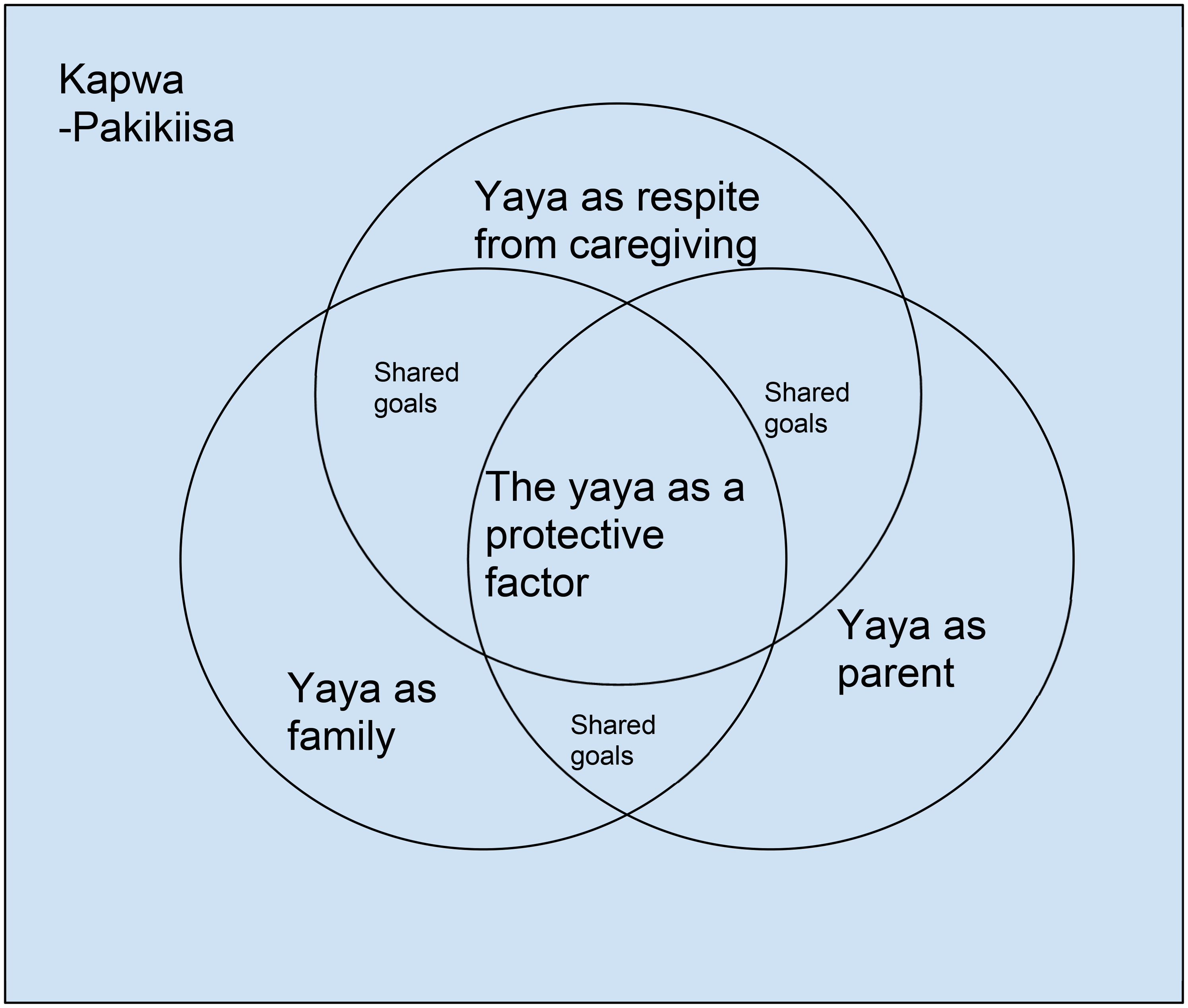
Yaya as a protective factor in the resilience of parents with children with autism
This study uniquely highlights culturally embedded caregiving roles, offering a localized lens on family resilience and enriching multicultural counseling literature with insights on non-Western, kin-like support systems in Filipino families. However, a key limitation of the study lies in its socioeconomic bias, as only middle to upper-class families can afford yayas, excluding voices from lower-income households. Additionally, the narrative centers solely on parental perspectives, overlooking the yaya's own experiences, agency, and well-being. Understanding the yaya's motivations, challenges, and emotional labor would provide a more balanced and ethical account of her role, ensuring that caregiving narratives do not silence those who perform the most intimate and essential work. Thus, it is highly recommended that researches that centers on populations in the lower socio-economic strata be conducted, and the yaya's perspective be a focus of further studies
Implications to Practice
The findings of this study have important implications across family therapy, special education, family research, autism services, policy development, and educational psychology. In family therapy, recognizing the yaya as a co-regulator and surrogate caregiver expands traditional family systems models by acknowledging culturally embedded, non-kin caregiving roles that significantly shape resilience and emotional regulation within Filipino families . Therapists are encouraged to include yayas in psychoeducation, goal setting, and intervention planning when appropriate.
In special education and work with families of children with ASD, the study underscores the value of consistent, informed caregiving. Yayas reinforce therapeutic routines, support behavioral interventions, and provide continuity, suggesting that caregiver training should extend beyond parents to include domestic caregivers. For family research, the study advances culturally grounded inquiry by shifting focus from deficit-based narratives to resilience and protective factors, highlighting the need for localized frameworks in autism research.
Policy development should recognize domestic caregivers as integral to disability care by promoting caregiver training, labor protections, and inclusion in multidisciplinary support systems. Finally, in educational psychology, the findings affirm ecological and cultural perspectives on learning and development, emphasizing that children's outcomes are shaped by interconnected caregiving environments rather than isolated parent–child dynamics.
Conclusion
The study highlights the critical and multifaceted role of the yaya in supporting the resilience of Filipino parents raising children with autism. The findings reveal that the yaya serves not merely as a helper but as a lifeline, offering respite from the daily caregiving burden, stepping in as a surrogate parent, and ultimately being embraced as family. These roles enable parents to manage work responsibilities, address personal and mental health needs, and focus on broader family functions. The yaya's consistent presence, emotional labor, and personal investment contribute to the family's stability and the well-being of the child with autism. As such, the caregiving relationship evolves into a reciprocal and deeply human connection, grounded in trust and shared purpose. This study affirms that in the Filipino context, the yaya's role extends far beyond employment, becoming essential to the family's coping, adaptation, and resilience in the face of the unique challenges of autism caregiving.
This paper emphasizes practical implications for strengthening family resilience. Family counseling practices should formally integrate yayas as co-regulators and caregiving allies, acknowledging their emotional and relational roles. Training programs for domestic caregivers must include modules on autism care, attachment, and communication strategies to enhance their competence. At the policy level, family service frameworks should recognize and support the contributions of yayas through protective labor policies, caregiver accreditation systems, and inclusion in multidisciplinary family support interventions.
Based on the study's findings, several recommendations can enhance the caregiving experience for families of children with autism. First, structured training programs for yayas should be developed to equip them with essential skills in managing children with autism, including basic behavioral strategies, communication techniques, and therapy support. Second, families and professionals should formally recognize the yaya's role as a co-parent and integral member of the support system, encouraging open communication, shared decision-making, and emotional validation. Third, policymakers and community organizations should advocate for support services tailored to domestic caregivers, such as access to counseling, respite breaks, and peer support groups. Fourth, family-employer relationships can be strengthened by establishing agreements that include fair compensation, opportunities for personal growth, and mutual respect. Finally, further research should explore the long-term impacts of this dynamic caregiving arrangement on both children and caregivers. Recognizing and investing in the yaya's role ultimately promotes holistic care and family resilience.
Footnotes
Author Note
This research is part of the dissertation of the corresponding author. The author declares no conflict of interest. Correspondence concerning this article should be addressed to Dominic Paguio at dominic.paguio@dlsu.edu.poh; dtpaguio@up.edu.ph

Ethical Approval and Informed Consent Statement
Ethical review was not required for this paper; however, strict adherence to universal ethical standards was observed. Written informed consent was obtained from all participants before data collection. Participation was voluntary, and participants were assured of confidentiality, anonymity, and their right to withdraw at any point during the study.
Funding
The authors received no financial support for the research, authorship, and/or publication of this article.
Declaration of Conflicting Interests
The authors declared no potential conflicts of interest with respect to the research, authorship, and/or publication of this article.