






Abstract
Gray divorce is defined as people divorcing over the age of 50 and represents the demographic experiencing the highest divorce rate increase since the 1990s. This narrative study explores the friendship and social support of cisgender heterosexual women following a gray divorce. Five themes emerged: social network reconfiguration, friendships as a protective factor, intentional relationship building, parent/child transformation, and reconstruction. Implications reveal substantial alignment with the convalescence model, accurately representing the gradual social rebuilding process following marital dissolution in later years. Participants demonstrated recovery trajectories moving from loss and abandonment toward authentic self-reconstruction. Friendship emerged as a crucial form of infrastructure serving multiple vital functions. Clinical implications emphasize phase-based intervention strategies and comprehensive assessment of social support, family dynamics, cultural considerations, and spiritual factors. Results suggest that mental health professionals can support older clients through divorce by recognizing friendship as protective infrastructure, avoiding premature recovery expectations, and employing phase-based strategies that address social isolation and identity reconstruction.
Introduction
A gray divorce is a divorce between a married couple where both individuals are 50 years of age or older at the time of the divorce (Brown & Lin, 2012). The gray divorce rate was initially low and grew modestly between 1970 and 1990 before doubling by 2010 (Brown & Lin, 2012). Since 2010, the gray divorce rate has remained stable among middle-aged adults; however, it has continued to rise among older adults (Brown & Lin, 2012). Despite the rising rates of gray divorce, little is known about how gray divorce specifically affects women's friendships and social support networks. This narrative study examines gray divorce's emotional and social components for cisgender heterosexual females, focusing mainly on its impact on individuals’ friendships.
Gray divorce presents unique difficulties compared to divorces among younger individuals, especially given the long-term nature of these marriages. Older adults facing gray divorce may grapple with profound emotional, financial, and social disruptions (Crowley, 2018; Hocaoglu & Yalcinkaya, 2020; Kołodziej-Zaleska & Przybyła-Basista, 2016; Leopold, 2018; Zafar & Kausar, 2014). These disruptions can include a sense of loss, identity crises, and grief due to the end of a long-standing relationship (Crowley, 2018; Kirby & Leopardi, 2016; Kołodziej-Zaleska & Przybyła-Basista, 2016; Yárnoz-Yaben, 2015; Zafar & Kausar, 2014). Gray divorce also often impacts family dynamics, including relationships with adult children, and may require adjustments to living alone after years of companionship (Kalmijn, 2007; Kaufman & Uhlenberg, 1998; Shapiro, 2003; Tosi & Gähler, 2016; Tosi & van den Broek, 2020; Ward et al., 2014).
The experience of gray divorce presents unique challenges for women in social relationships, particularly friendships. Gray divorcees potentially face the complex task of navigating significant shifts within their social circles. Couples who have shared decades of life often find their friendships and support systems deeply intertwined. The end of their marriage also risks fracturing the extensive shared family and social network built over the years. This situation can make it difficult to maintain once-communal friendships, as these relationships may become strained or divided after the divorce.
It is vital for counselors to gain greater knowledge and focus on the unique challenges of gray divorce as it pertains to the loss or changes in friendship and social support for women. Research indicates differences between husbands’ and wives’ experiences with close friends, suggesting that wives are more likely to see their friendships as essential sources of emotional support (Helms et al., 2003; Lowenthal & Weiss, 1976; Rubin, 1985). Women who have experienced a gray divorce need counselors who address these challenges in ways that help process pain, loss, and the necessary evolution and changes while remaining cognizant and empathetic to their distinct situations. Understanding these complexities allows counselors to address issues particularly relevant to this age group, such as mental health concerns, loneliness, financial pressures, and the need for social support (Greif & Deal, 2012; Hocaoglu & Yalcinkaya, 2020; Piotrowski, 2018; Zafar & Kausar, 2014). Ultimately, understanding the nuances of gray divorce enables counselors to offer targeted and practical support, helping clients form and maintain healthy relationships and social networks that enhance their wellbeing throughout the divorce process.
As people age, they tend to value quality emotional connections more, and their social network size declines (Carstensen, 1992, 1995; Carstensen et al., 1999). As a result of the loss of acquaintances, close relationships are increasingly vital as individuals prioritize the depth of their relationships over the sheer number of connections they have (Carstensen, 1992, 1995; Carstensen et al., 1999).
The dissolution of the combined social circle is anticipated upon divorce, as most people will lose parts of their shared social network and the social activities they engaged in during their marriage (Kalmijn & van Groenou, 2005). Family members comprise at least half, and often more, of individuals’ social support networks, with an even higher representation among their closest supporters (Antonucci, 1994). When a relationship ends in later life, the probability that other relatives will become the closest friends increases (Antonucci, 1994).
Adult offspring serve as a critical pillar of support and companionship for older adults (Dykstra et al., 2014; Steinbach et al., 2020; Tosi & van den Broek, 2020), a bond that may be threatened by parental divorce. Conflicts between parents can lead adult children to favor one parent over the other, potentially straining or severing the bond with the other parent. Adult children of divorce might sometimes distance themselves from both parents (Greenwood, 2012). Studies have consistently found that the occurrence of parental divorce is linked to reduced frequency of interactions between parents and their adult children and a decline in the quality of their relationship, even when the divorce happens later in life and the children are adults (Kalmijn, 2007; Kaufman & Uhlenberg, 1998; Shapiro, 2003; Tosi & Gähler, 2016; Tosi & van den Broek, 2020; Ward et al., 2014).
Research has indicated that adjusting to divorce becomes more challenging with age. Gray divorce presents distinct challenges, with losses of friendships at an older age and a need to reestablish a support system. Despite the growing prevalence of gray divorce, no qualitative research has specifically examined how cisgender heterosexual women experience the loss and reconfiguration of friendship networks following marital dissolution in later life. Existing literature addresses gray divorce broadly in terms of financial and emotional consequences, yet women's friendships, a primary source of emotional support across the lifespan, remain largely unexamined in this context. This represents a critical gap for counselors, who lack evidence-based guidance for supporting women's friendship networks following gray divorce. Counselors educated on gray divorce are well-equipped to navigate the often-disruptive changes to long-standing social networks and the journey toward newfound independence, which are essential for maintaining mental health and overall well-being. The findings will inform counselor practice by deepening their understanding of the multifaceted nature of gray divorce, enabling them to provide more comprehensive and practical support to clients. This knowledge enables them to guide women through identity reconstruction, emotional healing, and personal growth, ultimately fostering resilience and promoting a positive trajectory as they move forward.
Methods
Participants and Data Collection
A qualitative research design was employed to investigate the dynamics of friendships among cisgender heterosexual women following a gray divorce. A qualitative approach was well-suited to this population, as gray divorce involves deeply personal processes of social identity reconstruction that resist reduction to numerical measurement. Narrative inquiry is especially fitting, as it directly aligns with the research question and the personal narratives of friendship.
Eligibility criteria were established to ensure participants reflected the population being researched. Consistent with Brown and Lin's (2012) definition of gray divorce, participants had to be at least 50 years old at the time of their divorce. A minimum marriage length of 10 years ensured participants had sufficient time to establish a shared social network, central to this study's focus. At least one child from the marriage was required to explore how adult children influence post-divorce friendship and social support. This study focused on marriages between a cisgender man and a cisgender woman; not to disregard other relationship structures, including those within the LGBTQIA + community, but to reflect the historical context and existing literature defining gray divorce within this study's parameters. Finally, the 3-month to 5-year post-divorce window ensured participants had enough distance to reflect meaningfully on their experiences while remaining close enough to recall them with clarity.
Criterion sampling, a form of purposive sampling, was employed to select participants who met the specific eligibility criteria established for this study (Creswell & Poth, 2018). A sample of 8 to 15 participants was anticipated, consistent with sample size recommendations for narrative inquiry (Creswell & Poth, 2018), with the final sample size determined by data saturation. Participants were recruited through gray divorce support groups on Facebook and through DivorceCare, a national divorce group that facilitates a 13-week structured program for individuals recovering from divorce. Also, one participant was identified through colleagues at a professional convention.
Research Question and Data Collection
This study addressed one research question: What are the personal narratives of friendships and social support among cisgender heterosexual women following a gray divorce? Data were collected through pre-interview questionnaires and semistructured interviews. Participants received questionnaires and interview questions via email in advance, allowing time for reflection before their scheduled interviews. Sampling continued until data saturation was achieved, with no new themes emerging from participant narratives.
Ethical Procedures
Human Subjects Research Committee (HSRC) approval was obtained before data collection. All participants provided informed consent, acknowledging their voluntary participation and right to withdraw at any time without penalty. To protect confidentiality, participants selected pseudonyms. Interviews were conducted via Zoom in private locations chosen by participants to ensure comfort and facilitate open dialogue. Follow-up emails inquiring about the participants’ mental and emotional health were sent to all participants after their interviews.
Researcher Positionality and Bias Mitigation
The primary researcher conducting the interviews has not personally experienced divorce. The researcher disclosed no conflicts of interest related to this study. To address potential bias, reflexive journaling, member checking, and peer debriefing were employed throughout data collection and analysis.
Data Analysis
The data analysis for this research was conducted in collaboration with an analytical team to minimize bias and ensure precise theme identification. Interviews were transcribed, and information was verified with participants. The preliminary coding and analysis utilized the Data Analysis Spiral (Creswell & Poth, 2018). The Data Analysis Spiral approach starts with gathering data and then moves through a cyclical process of reviewing, organizing, and refining insights. This iterative method involves repeatedly examining and interpreting the data, gradually allowing themes and patterns to emerge organically, which is consistent with narrative inquiry. As the analysis deepens, the focus narrows, funneling insights into a structured framework. This process continued until clear and coherent themes were distilled, resulting in a comprehensive understanding of the data (Creswell & Poth, 2018). Sampling and thematic analysis continued until data saturation was reached, meaning no new themes, patterns, or insights emerged from the interviews (Creswell & Poth, 2018). In collaborative analysis, the participants were engaged through member checking in a cooperative investigation of the identified themes and meanings, involving the review of transcripts and thematic analysis, ensuring a comprehensive examination and validation of the narrative.
Results
Demographic Data
Twelve women were interviewed for this study. The women ranged in age from 53 to 74, with a mean age of 59. The women had been married for 20 to 49 years, with a mean of 30 years. The women participating in the study had been divorced between 7 months and 4 years. The 12 study participants represented diverse racial and ethnic backgrounds across the United States. Seven women identified as Caucasian, while five were Women of Color: two African American, two Latina, and one Asian American. Their geographic distribution spanned multiple time zones, with the majority (seven) residing on the East Coast. The remaining participants were distributed across the country: one in the Central time zone, one in the Mountain time zone, two in the Pacific time zone, and one in Hawaii. The participants also brought diverse religious perspectives to the study. Seven women identified as Christian, two identified as Catholic, while Buddhist, Jewish, and Methodist faiths were each represented by one participant. Educational backgrounds varied significantly among the participants, ranging from high school to doctoral and law degrees. Two participants held high school diplomas as their highest level of education, while one had earned an Associate's degree and another held a Bachelor's degree. Advanced degrees were well represented in the sample: three participants had earned Master's degrees, three had earned Juris Doctor degrees, and two had completed PhDs (Table 1).
Participant Demographics.
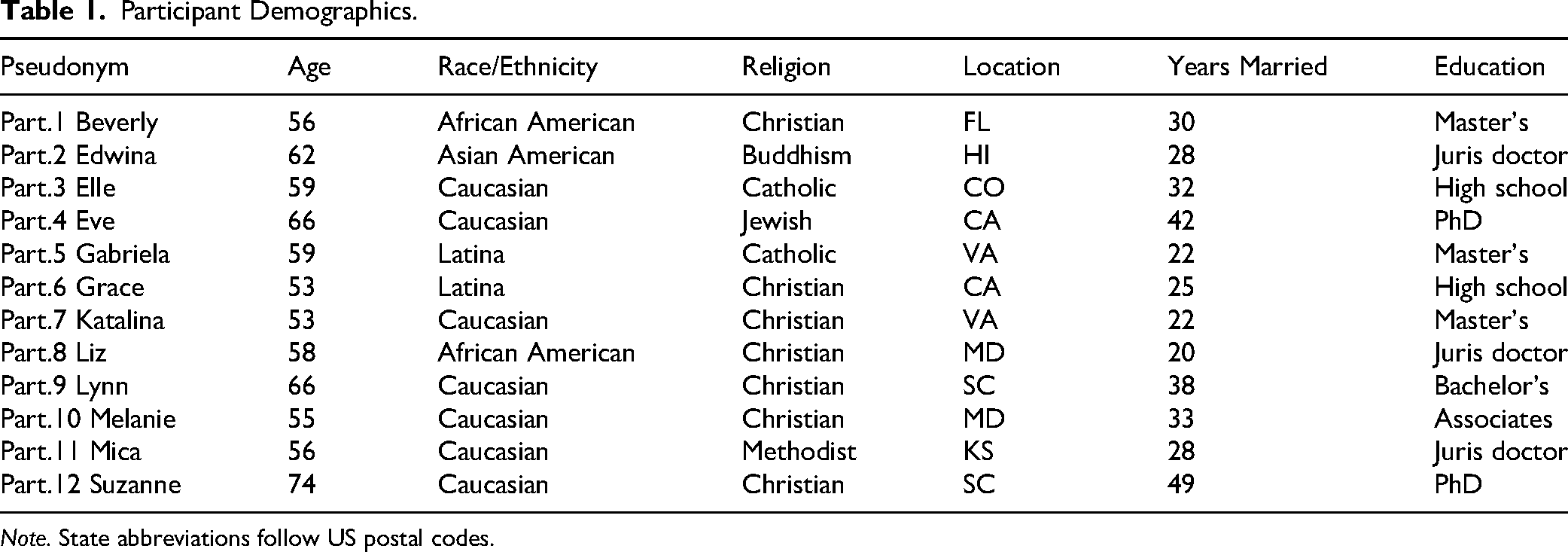
Note. State abbreviations follow US postal codes.
Themes
The coding analysis of participant interviews revealed five central themes that follow a clear progression. Although each woman's story was unique, the study aimed to identify commonalities and meaningful insights that addressed the core research question. The themes include social network reconfiguration, friendship as a protective factor, intentional relationship building, parent/child transformation, and reconstruction.
Social Network Reconfiguration
The dissolution of marriage created a multifaceted loss for study participants, with approximately 10 out of 12 women reporting that their ex-spouse had been either their best friend or one part of a close group of friends. The impact of this primary relationship loss was compounded by secondary social losses, particularly among participants who had established social networks composed primarily of other couples. This experience revealed a painful truth: many participants discovered that their coupled friendships were maintained mainly because they were part of a marital unit, and once that unit dissolved, they were effectively ostracized from these social circles. Participant Elle's divorce experience revealed how the participants’ social acceptance had been built upon marital status rather than personal identity. She explained that her husband was her “best friend,” and their social circle shared deep connections. Following her divorce, she suddenly became isolated, stating, “I wasn't one of them anymore. […] When you divorce, especially after an entire lifetime, it's extremely lonely.”
As participants navigated rejection from coupled friends, they encountered age-specific challenges in building new social connections. Many expressed difficulty forming deep relationships at a later life stage, with participant Beverly questioning, “How do you navigate [friendship] after being with someone for 30 years? [How do you] make […] friends when you're older?”
The overall findings of the social network reconfiguration for the participants highlight how gray divorce often creates a cascading effect of social losses beyond the marriage itself. Participants had to navigate not only the emotional impact of marriage dissolution but also the substantial reconstruction of their social support systems at a time when building new connections was particularly challenging.
Friendships as a Protective Factor
The analysis revealed that 11 of 12 participants identified friendship as a crucial protective factor during their gray divorce. Ninety-two percent of the participants recognized the essential value of friendship in their divorce process, supporting research indicating that women, particularly those in midlife, tend to cultivate more friendships following a divorce as they proactively utilize diverse forms of social support (Crowley, 2018; Miller et al., 1998). For the participants, these supportive relationships manifested through various forms of assistance, including emotional validation, consistent presence, and practical help during a highly vulnerable transition period.
Participants particularly valued having safe spaces where they could express vulnerability without judgment, with several describing how friends provided critical validation of their divorce decisions when they experienced doubt. The emotionally uplifting and protective dimension of individual friendship support starkly contrasted with the abandonment many participants experienced from coupled friends following their divorce announcements. Instead of continued isolation, participants found meaningful connections through single friends, previously divorced individuals, and supportive family members who collectively provided emotional sustenance during a period of profound instability.
The emotional and practical dimensions of support appear fundamentally intertwined. Practical assistance alleviated physical and psychological burdens, while emotional support provided the resilience needed to tackle challenging logistical tasks in divorce proceedings. An integrated support system enabled participants to navigate complex processes, such as home sales and legal requirements, while simultaneously processing the emotional impact of their marital dissolution. One participant, Katalina, voiced the essential importance of friendship for her during her divorce, stating her family and friends “showed up. They […] just rose to the occasion. […] I could not have probably survived without it.”
Intentional Relationship Building
Gray divorce prompted significant changes in participants’ social networks, with each individual describing unique ways of forming new relationships after their marriage ended. Participants engaged in intentional relationship analysis and rebuilding as they recovered from their divorce. Participants also sought connection through professional support, with all 12 participating in counseling.
Participants consciously chose healthy relationships, both old and new, and increased their selectivity by setting boundaries and changing their standards for friendships. They established criteria for healthy relationships, learning to identify and avoid draining connections while encouraging themselves to form relationships where they could feel safe and vulnerable. Participants actively cultivated new connections, seeking communities with similarly situated individuals in person and virtually.
One aspect of the transition in support networks that was consistent among all 12 participants was the intentionality each displayed in the steps they took to build individual friendships during their gray divorce. Following marital separation and throughout the divorce process, participants demonstrated deliberate intentionality in seeking out and engaging with communities of similarly situated individuals. Participant Gabriela exemplifies this intentionality, describing that post-divorce, she created “an organization called Hispanic Professional Women's Organization, where [I've] met a lot of women. What my purpose is to create a new friendship club.”
As participants navigated these profound shifts in their friendship dynamics, they simultaneously faced equally complex transformations within their extended family relationships. For all of the participants, family and extended family relationships underwent significant reconfiguration following the participants’ gray divorce, characterized by both unexpected losses and surprising new connections. Some participants discussed unforeseen support from in-law relationships, typically from cousins or sisters-in-law, while sibling support was surprisingly scarce. However, those who received sibling support said it was vital to their healing. Grace expressed that her sister was one of the few supports she had at the beginning of her divorce, stating, “I had my sister, and that helped me so much […] If I didn't have her to talk to […] I would have held [the pain] in even longer.”
Parent/Child Transformation
The parent–child relationship is a crucial source of support, particularly for older individuals with shrinking social networks (Brown et al., 2023; Carstensen et al., 1999). Adult children respond widely to their parents’ divorce (Brown et al., 2023). Some adult children are sympathetic or tolerant of their parents’ divorce, while others experience distress regarding parental separations following lengthy marriages (Brown et al., 2023; Crowley, 2018; Jensen & Bowen, 2015).
Divorce can be transformative in parent–child dynamics in complex ways. This transformation may change the relationship, such as an unconscious attempt by adult children to become the caretaker, which occurred in 75% of the participants studied. Though motivated by love and concern, these attempts at role reversal were ultimately unnecessary, as the participants demonstrated emotional and physical self-sufficiency. Participants who experienced the role reversal dynamic discussed the importance of boundary-setting to prevent it and of consistently communicating to their adult children that they were still the parents and did not require caretaking.
Reconstruction
The journey of self-discovery and the ability to navigate the grief and shame associated with divorce were facilitated through friendships for each participant. The participants’ progress in reconstructing their identities was consistently evident throughout the interviews, with friendship playing a significant role in their evolution. The research in this study revealed that friendship served a purpose beyond emotional support, playing a transformative role for the participants. Friendship was a catalyst for identity reconstruction, a protective barrier against isolation, a pathway to developing new interests and skills, and a mediator for self-discovery and personal growth. Melanie credited her friendships with facilitating her healing process. She reported that her self-worth improved significantly through supportive friendships, noting poignantly, “We are harmed in relationships, and we are healed in relationships.”
Discussion
This study reveals that recovery from gray divorce follows a trajectory best understood through the convalescence model rather than traditional crisis strain or chronic grief models. Researcher Amato (2014) developed the divorce-stress-adjustment model, explaining how marital breakups adversely impact most individuals. Amato (2014) argued that while divorce benefits a few, most people either experience a temporary decline in well-being before recovering quickly, the crisis strain model, or follow a downward trajectory from which they may never fully recover, the chronic grief model. Participants in this study demonstrated gradual healing rather than quick resolution or prolonged stagnation, aligning with the convalescence model of recovery. The convalescence model outlines a gradual healing process, acknowledging that emotional wounds take time to heal (Lin & Brown, 2020). It is particularly relevant to gray divorce, where long-term relationships end later in life, often resulting in significant emotional, social, and personal consequences. The recovery trajectory showed universal experiences across diverse racial, religious, and educational backgrounds, moving from loss and abandonment toward authentic self-reconstruction.
Unlike other models, the convalescence model captures the unique social dynamics of late-life marital dissolution. Participants experienced social network evolution through changes in partnerships, social attrition, and dissolution of couple friendships, requiring gradual rebuilding rather than immediate replacement. Recovery involved incremental acceptance of loss and deliberate cultivation of new support networks. Participants strategically developed new networks to face life challenges, demonstrating intentional rather than passive recovery approaches. Relationships with adult children and extended family evolved gradually, often involving ambivalence and role adjustments as family systems transformed over time.
The Role of Friendship in Recovery
Friendship emerges as a crucial infrastructure for healing, serving multiple vital functions in the recovery process. Friendships help fill the void left by a spouse who often served as a primary friend, creating safe spaces for grieving processes during profound instability. These relationships counterbalance isolation when couples-based socializing dissolves and provide a sense of community and belonging when previous networks fragment. Additionally, friendships offer reciprocity that allows for growth and exploration during radical life transitions, enabling participants to gradually transition through grief, confusion, pain, and humiliation to create new lives rather than remaining in an unrecovered state.
Implications for Counseling, Training, and Research
Understanding the convalescence model has critical implications for the counseling community, as it helps establish an infrastructure for recovery. Counselors must conduct comprehensive evaluations, including an assessment of the quality and quantity of existing social supports, as well as any gaps and barriers to forming new relationships. Evaluating shame levels connected to divorce, family culture, and childhood messages is essential. Assessment of family dynamics, including adult–child relationships, cultural considerations, extended family support, and boundary issues, provides crucial information for treatment planning. Spiritual factors and religious beliefs that may support or complicate adjustment require careful consideration, along with cultural considerations regarding religious background and cultural interconnections.
Phase-based intervention strategies are crucial when working with someone through the convalescence model of gray divorce. During the early phase, counselors must validate emotions and create safe spaces for vulnerability while normalizing feelings of shame, fear, anger, and confusion. Providing consistent presence without premature solution-focused interventions is essential, avoiding approaches that minimize client experiences or rush emotional processing.
The middle phase involves supporting ongoing emotional processing while building support networks. Counselors assist clients in managing social stigma, rejection, and the loss of friendships, while also facilitating strategies for forming intentional new friendships. This phase also includes examining evolving relationships with adult children and family members as clients navigate changing family dynamics.
The latter phase emphasizes reconstructing relationships, friendships, and identity. Counselors encourage the exploration of new and renewed interests, support authentic self-expression and engagement in new activities, and foster confidence in relationship decisionmaking. This reconstruction phase signifies the transition from spousal identity to a more genuine, self-defined identity.
Effective counseling approaches include guiding intentional cultivation of diverse friendship networks and teaching relationship evaluation based on quality and reciprocity. Counselors support client outreach despite age-related barriers while recognizing friendship as a protective factor. Connecting clients to healthy, non-shaming spiritual communities and helping navigate parent–child relationship changes while maintaining appropriate boundaries are additional essential interventions.
Common clinical mistakes include timeline misjudgment, where counselors push clients to recover too quickly or expect rapid grief resolution. Gray divorce recovery differs significantly from younger divorce patterns and requires patience from both counselor and client. Cultural neglect represents another significant error, as failing to address religious and cultural factors that influence divorce adjustment and recovery expectations can impede progress. Social network minimization, or underestimating the difficulty of building new connections in later life and the dual loss of both spouse and primary friend, can also hinder effective treatment.
Limitations and Directions for Future Research
Limitations within the study begin with the topic of friendship, which is subjective and open to multiple interpretations. Participant recruitment proved a limitation; 10 out of 12 participants were located through social media. Although there are advantages to using social media, such as reaching a diverse population, focused participant selection, and cost-efficiency, there are downfalls in data protection issues, representativeness, and participation access (Oudat & Bakas, 2023).
The collaborative researcher–participant dynamic produced uneven results, as some individuals shared more openly while others remained more guarded in their disclosures. Also, the study captures experiences at specific points in participants’ post-divorce journeys, potentially missing longitudinal developments. One final interesting potential limitation is that 10 out of the 12 participants experienced marriages that ended due to their husband's infidelity. This raises a question about selection bias. Participants may have been more willing to join this study because of unresolved anger or betrayal stemming from how their marriages ended. This potential motivation for participation could influence the nature of the data collected.
Suggestions for future research include conducting longitudinal studies tracking gray divorce recovery over 5 years to better understand the complete convalescence process. It would also be beneficial to investigate gender differences in social support utilization and network rebuilding following gray divorce. Comparing recovery patterns between individuals who initiate divorce versus those who are divorce recipients would contribute to understanding the differences in their experiences.
Exploring how pre-divorce friendship networks influence post-divorce recovery trajectories and investigating spiritual and religious community responses to gray divorce and their impact on healing would provide valuable insights. Gray divorce is an understudied occurrence despite being increasingly prevalent in the United States. More research is needed because this demographic has the highest rate of divorce, and there are significant literature gaps in understanding their experiences, which presents a substantial area for future research.
Future research on gray divorce that explores cultural values, beliefs, and traditions for all women would be beneficial. Conflicting expectations substantially contribute to the stigma associated with divorce. Women undergoing divorce may internalize a deep sense of guilt, perceiving marriage disintegration as a significant failure to adhere to ingrained societal expectations for femininity and familial obligations (Orth et al., 2010; Tangney, 1999; Tracy & Robins, 2004). Research suggests this shame becomes especially pronounced in communities of color, where marriage often carries additional cultural significance tied to community stability and intergenerational traditions (Alegria et al., 2010), although shame was universally expressed among all participants of this study.
Conclusion
Successful counseling aims to help clients develop and sustain healthy friendship networks with clear boundaries, create meaningful experiences beyond the divorce identity, and foster resilience in social systems to reduce future disruptions. The ultimate goal involves transitioning from spousal identity to an altered, authentic self through gradual reconstruction.
Counselors would find significant benefit in utilizing the convalescence model when counseling their gray divorce clients, as all participants in the study (100%) demonstrated alignment with this therapeutic framework. The participants showed growth from the beginning stages of loss, grief, and isolation to a trajectory where they connected with friendships and utilized these friendships to work through their grief, ultimately restructuring their lives to be able to support themselves emotionally through these social connections. The convalescence model aligned with the gradual healing that occurred in all participants, and this finding provides valuable insight for counselors working with people experiencing gray divorce. Given that there has been a significant increase in gray divorce over the last decades, the model's emphasis on progressive recovery through social connection and friendship development offers a practical framework that counselors can utilize when working with this increasingly relevant population.
Footnotes

Author's Note
This article addresses a significant gap in gray divorce literature by examining friendship and social support among women divorcing after age 50. IAMFC members will gain practical clinical guidance grounded in the convalescence model, which more accurately represents late-life divorce recovery than traditional crisis or grief models. The findings provide phase-based intervention strategies, comprehensive assessment protocols that cover social support, shame, family dynamics, and spiritual factors, and the identification of common clinical mistakes. Clinicians across diverse settings, including private practice, community agencies, university counseling centers, and senior services, will benefit from understanding friendship as a crucial healing infrastructure and strategies for supporting intentional network rebuilding in later life. For researchers, this narrative study contributes empirical evidence to the emerging gray divorce scholarship by specifically addressing social support mechanisms and recovery trajectories, and by identifying directions for future investigations into friendship dynamics, protective factors, and intervention effectiveness for aging populations.
I confirm that this is my original work, I have the rights in the work, this is my first publication in this Journal, this article is not being considered for/has not already been published elsewhere, and that I have obtained and can supply all necessary permissions for the reproduction of any copyright works not owned by me.
Funding
The authors received no financial support for the research, authorship, and/or publication of this article.
Declaration of Conflicting Interests
The authors declared no potential conflicts of interest with respect to the research, authorship, and/or publication of this article.