







Abstract
Psychology of Working Theory (PWT) is a relatively new vocational theory applicable to various cultural contexts around the world. However, proper examination of the theory within a Turkish context has been limited due to measurement concerns. Thus, in the present studies, we aimed to first translate the most frequently used PWT measures into Turkish by following best practices for scale translation and proceeded to then examine the full PWT model among Turkish working adults. We conducted two separate studies to address our primary aims. In Study 1, we translated the scales and conducted initial validity, and data was collected from 390 Turkish working adults to test the dimensionality and reliability of the scales. Results indicated that both the Economic Constraints Scale and Lifetime Experiences of Marginalization Scale were unidimensional models and the Work Needs Satisfaction Scale had a higher-order model consistent with the original development studies. In Study 2, using these newly translated scales, we examined the full PWT model among a new group of 564 Turkish working adults. Results showed that overall, PWT propositions were largely supported by the sample except for the role of work volition. Limitations and implications of the studies are discussed.
Cultural context is an essential factor that needs to be considered in vocational research (Fouad & Bingham, 1995; Savickas & Walsh, 1996). Many scholars in vocational psychology have acknowledged the essentiality of culture and have conducted studies that aim to address cultural influences on a variety of vocational behaviors and outcomes (e.g., Savickas & Porfeli, 2012). One recently developed theory that has gained attention from international vocational psychologists as potentially applicable to various cultural contexts is the Psychology of Working Theory (PWT; Duffy et al., 2016). At the core of PWT is the concept of decent work, defined as work that provides “(a) physical and interpersonally safe working conditions, (b) hours that allow for free time and adequate rest, (c) organizational values that complement family and social values, (d) adequate compensation, and (e) access to adequate health care (Duffy et al., 2016, p. 130).” PWT proposes several predictors and outcomes of decent work attainment and mediators and moderators that explain the relationships.
Spurred by a recent special issue in the Journal of Vocational Behavior (Duffy et al., 2020), PWT has now been studied in over twenty countries. Specifically, decent work and the theory around the construct is importantly studied in Türkiye because of the issues the country faces with employment and the need to create decent work due to the rapid growth of people of working age, the dissolution of agricultural employment, and its pressure on the labor market (ILO, 2008). However, a major measurement concern remains in terms of validly testing propositions from PWT. Namely, although the Decent Work Scale (Duffy et al., 2017) has been validated and supported (Buyukgoze-Kavas & Autin, 2019), measures of other key constructs (i.e., economic constraints, marginalization, and work needs satisfaction) have not been formally validated. Turkish working adults. TürkiyeThe lack of measurement tools may have hindered what could have been a more active area of research that contributed to a better understanding of decent work in the Turkish context. Thus, one purpose of the present studies is to translate the most frequently used PWT measures into Turkish by following best practices (Ægisdóttir et al., 2008) and to examine the initial validity and reliability of the new scales (Study 1 & 2).
Another limitation in the current literature on PWT including those in the Turkish context is the lack of studies that have examined the validity of the full PWT model including predictors and outcomes of decent work and the mediators that explain these relationships. The majority of studies have focused on investigating the effects of predictors on decent work and mediators that explain the links (e.g., England et al., 2020), and only a small portion of studies have examined the effect of decent work on outcomes (e.g., Duffy et al., 2019). To date, only a few studies have tested the PWT model in its entirety including both predictors and outcomes of decent work (Kim et al., 2022; Kozan et al., 2019; Wang et al., 2019). Although these studies tested models with both predictors and outcomes of decent work, a few important components such as work needs satisfaction and marginalization were missing. Thus, another purpose was to investigate the full PWT model including predictors and outcomes of decent work, and the mediators that explain these relationships (Study 2).
Theoretical Perspective: Psychology of Working Theory
PWT (Duffy et al., 2016) is a vocational theory that emerged as a complement to existing theories in the field to emphasize the essentiality of work in human life. PWT posits that securing decent work is vital in that work fulfills an individual’s basic needs and leads to fulfillment with work and overall well-being. Moreover, PWT postulates that many people in society, due to the adverse contexts they are in (conceptualized as economic constraints and marginalization in the theory), often are not able to attain decent work. PWT is thus made up of two parts with decent work being the central construct: (1) predictors of decent work and (2) outcomes of decent work.
In the predictor portion, PWT proposes that structural oppression in the form of economic constraints and marginalization (e.g., racism, classism, sexism, and social class), creates barriers to securing decent work (Duffy et al., 2016). For example, people with disabilities, people with low income, and immigrants among other vulnerable populations face institutional and structural barriers that hinder resources to promote decent work (Allan et al., 2014; Autin et al., 2018; Diemer & Rasheed, 2009; England et al., 2020). Previous studies show that these structural factors affect educational and vocational outcomes across the lifespan (Diemer et al., 2009; Chaves et al., 2004; Masdonati et al., 2021). For example, low-income schools provide fewer resources and opportunities for students to engage in programs that foment career preparedness and vocational development (Chaves et al., 2004). In turn, this may lead to a diminished likelihood of attaining decent work. Additionally, the model positions work volition, the power to navigate and make decisions over one’s work life, and career adaptability, the ability to adapt to changing work and career-related tasks, as mediators that may lessen the effects of these predictors. (Autin et al., 2018; Duffy et al., 2016). The literature overwhelmingly confirms the role of work volition Specifically, several studies demonstrate work volition directly and indirectly predicts attaining decent and meaningful work (Duffy, Diemer, & Jadidian, 2012; Duffy et al., 2015; Duffy et al., 2015, 2015; Kim et al., 2020; Kozan et al., 2019).
In the outcome portion, PWT proposes that individuals who secure decent work tend to have greater overall well-being and need fulfillment (Buyukgoze-Kavas & Autin, 2019; Duffy et al., 2016). This is the case because working under these conditions typically provides the financial security to make ends meet and live comfortably. In general, people desire to feel connected to others and have a sense of belonging, and often, an emotionally safe workplace can provide the opportunity to fulfill social connection needs by fomenting positive relationships among employees (Tebbe et al., 2019). Additionally, the workplace has the potential to fulfill self-determination needs by engaging in work that is intrinsically and extrinsically motivating (Baard et al., 2004). Need fulfillment, in turn, promotes greater overall well-being and work fulfillment. Importantly, it should be noted that the outcomes of need fulfillment tend to be more prominent for those in higher-paying jobs or those who are more educated (Duffy et al., 2016).
Full Model Testing
Many studies have tested specific portions or parts of the PWT. However, only two studies have tested the PWT model in full, including both the predictors and the outcomes of decent work. For example, Wang et al. (2019) tested a model including subjective social status and work volition as predictors of decent work and work satisfaction and turnover intentions as outcomes, with a group of Chinese workers. They found that work volition mediated the relation between subjective social class and decent work. Moreover, they found that work volition and decent work mediated the links between subjective social status to work satisfaction and turnover intentions, indicating the PWT model that included hypothesized predictors and outcomes was largely supported.
Kozan et al. (2019) tested a similar model with a group of low-income Turkish workers. Social class predicted work volition, career adaptability, and decent work, and work volition and career adaptability mediated the link between social class and decent work. Moreover, decent work attainment predicted both job satisfaction and life satisfaction. Although these two studies tested models with both predictors and outcomes of decent work, important components were not included. For example, neither of these models included measures of needed satisfaction or marginalization experiences. Additionally, each used social class as a proxy for economic constraints, which does not properly attend to how this construct was conceptualized within PWT. Thus, in the present study, we planned to use validated instruments to directly test the PWT model including key predictors and outcomes of decent work as they were originally proposed in PWT (Duffy et al., 2016).
Turkish Adults’ Work Experiences
Most of the propositions of PWT have been supported in previous studies and thus we hypothesized that those will also apply to Turkish working adults whose experiences are relevant to PWT. One out of every three workers in Türkiye is working in informal jobs characterized by low wages, long working hours, and lack of social security benefits (Turkish Statistical Institute, 2022a, 2022b). And women, refugees, disabled, lesbian, gay, bisexual, transgender, and queer (LGBTQ+) individuals face greater work-related barriers given the exposure to discrimination in the Turkish labor market. Specifically, these individuals experience discrimination in recruitment, restricted career possibilities, limited job offers, low-wage, inappropriate jokes, unfounded job termination, and workplace discrimination (Duman, 2013; Fazla et al., 2021; Yılmaz & Göçmen, 2016). Those with low socioeconomic status in Türkiye are also likely to not have decent work. For example, many people who migrate from the rural areas of Türkiye (e.g., Eastern Anatolia) to suburban areas (e.g., Western Antaolia) for work live under the poverty line and are unable to meet their basic needs (Adaman & Keyder, 2006). An empirical study conducted on low-income Turkish working adults also supported that those with lower social class were less likely to have decent work (Kozan et al., 2019). Thus, we hypothesize that those experiencing more marginalization and economic constraints are less likely to attain decent work in Türkiye (Hypothesis 1-2). Further, marginalized individuals in Türkiye are also more likely to experience economic difficulties due to lower pay and fewer job opportunities and vice versa. For example, ethnic minorities and refugees are exposed to marginalization in their work experiences and are also the population that needs the most financial support from the government (Fazla et al., 2021; Leghtas, 2019). Thus, we also hypothesize that Turkish working adults who experience more marginalization will be more likely to experience economic constraints (Hypotheses 3).
As posited in the PWT, several empirical studies have demonstrated that work volition, directly and indirectly, predicts attaining decent and meaningful work in the U.S. and in Türkiye (Duffy et al., 2018; Kozan et al., 2019). Those who are marginalized and economically constrained are less likely to attain decent work because they have lower perceived freedom in choosing their career. There was less support for the mediating role of career adaptability in the U.S. (e.g., Duffy et al., 2018; England et al., 2020; Tokar & Kaut, 2018), while a study conducted in Türkiye supported it (Kozan et al., 2019). Besides the empirical support, the two mediators are relevant for Turkish working adults because of the current economy in Türkiye. The unemployment and long-term unemployment rates are high, the Turkish Lira depreciated to a record low, and inflation is at a record high (OECD, 2021, 2022). Because it is difficult to secure any kind of work, Turkish workers, particularly those who experience more economic constraints and marginalization are likely to perceive less choice in choosing their work and feel less adaptable in the current work world. Based on the PWT theory, empirical support, and understanding of the Turkish context, we hypothesized that economic constraints and marginalization will be inversely related to work volition and career adaptability (Hypothesis 4–7) and work volition and career adaptability will mediate the relationship between contextual barriers and decent work (Hypothesis 8–11). We also hypothesized that work volition and career adaptability will be positively related (Hypothesis 12); those who perceive more choice in their career would also be more adaptable in career-related tasks.
In the outcome portion, PWT posits that individuals who secure decent work tend to have greater work fulfillment and overall well-being. The link between decent work and well-being outcomes has been supported both in the U.S. and in Türkiye (Buyukgoze-Kavas & Autin, 2019; Duffy et al., 2016). It is particularly important to investigate the role of decent work on wellbeing in Türkiye. It has the second-lowest earnings quality and second-highest job strain among Organization for Economic Cooperation and Development (OECD) countries (OECD, 2018). Both the OECD (2018) and the European Commission (EC, 2019) emphasized the prevalence of informal work in Türkiye, predominantly described by unsafe and unhealthy working conditions, long working hours, low wages, and low levels of skills. Also, employees in informal jobs are not recognized or registered with any social security institute indicating their lack of access to any health coverage. Moreover, Türkiye has the highest number of fatal work accidents in Europe (Eurostat, 2019; Koçali, 2021). The harsh reality of the work environment in Türkiye compromises Turkish people’s mental and physical health (Kanbur, 2018; Kanten, 2013; Çalışkan & Pekmezci, 2019). Inversely, Turkish adults who had more decent work were more likely to have higher job satisfaction, work meaning, and life satisfaction (Buyukgoze-Kavas & Autin, 2019; Kozan et al., 2019). As such, we hypothesized that those with decent work are more likely to be satisfied with their job and overall life (Hypotheses 13–14).
PWT model place work needs satisfaction, the satisfaction of three essential needs (– survival, social contribution, and self-determination needs), as an outcome of having decent work and a mediator that explains the decent work to well-being link. In other words, decent work fulfills essential human needs, and this in turn helps them be satisfied with their job and their overall life. To explain further, working under decent conditions typically provides the financial security to make ends meet and live comfortably (survival need). In general, people desire to feel connected to others and have a sense of belonging, and often, an emotionally safe workplace can provide the opportunity to fulfill social connection needs by fomenting positive relations among employees (social connection; Tebbe et al., 2019). Additionally, the workplace has the potential to fulfill self-determination needs by engaging in work that is intrinsically and extrinsically motivating (Baard et al., 2004). PWT posits that the fulfillment of these needs further promotes greater overall well-being and work fulfillment. Previous studies have supported these prepositions in the U.S. and in other countries (Autin et al., 2022; Duffy, Kim, et al., 2019; Duffy, Prieto, et al., 2021). Specifically, in Türkiye, studies have shown positive relations between basic need satisfaction, autonomy, relatedness, and psychological well-being (Imamoğlu & Beydoğan, 2011) and negative relations between self-determination needs and depression (Timuroğlu, 2018). Thus, we specifically hypothesize that decent work will be positively related to work need satisfaction (Hypothesis 15) and that work need satisfaction will mediate the relation between decent work, job satisfaction, and life satisfaction (Hypotheses 16–17). Further, we hypothesize that the outcomes, job satisfaction, and life satisfaction will be positively correlated (Hypothesis 18).
Present Studies
The primary goal of the present study was to investigate the propositions of PWT as they apply in the Turkish context. In Study 1, we translated and conducted initial validity and reliability analysis on the Economic Constraints Scale (Duffy et al., 2019), the Lifetime Experiences of Marginalization Scale (Duffy et al., 2019), and the Work Needs Satisfaction Scale (Autin et al., 2019). In Study 2, using these newly translated scales, we examined the PWT model among a new group of Turkish working adults. Specifically, we tested the entire PWT model including the predictors and the outcomes of decent work and the mediators that explain these relationships. In addition, we gathered further evidence for the reliability and validity of the translated scales in Study 2.
Study 1
Procedure
Data were collected in person from 390 working adults throughout nine cities and four regions of Türkiye in 2019 after receiving necessary ethical approval from the second author’s university. We selected public institutions (for example, schools and government offices) and private companies (for example, shopping malls and department stores) with the highest number of employees in each city to contact for data collection. Then, we communicated with the human resources managers and supervisors to explain the purpose of the study and get their permission to send out invites to their employees. Two paid graduate students visited these organizations to recruit participants. After a brief description of the study, participants were asked if they could participate voluntarily without compensation and if agreed, were provided with an informed consent form and all measures. Participants completed the measures by paper-and-pen format.
Participants
The sample consisted of 390 working adults (M = 37.58; SD = 10.21) from nine different cities in Türkiye. Half of the participants identified as women (50%, n = 195), and the other half of them identified as men (50%, n = 195), none of the participants selected the “other” option. Regarding their employment status, 303 (77.7%) participants reported being employed full-time, 54 (13.8%) participants reported being self-employed full-time, 28 (7.2%) participants reported being employed part-time, and 5 (1.3%) participants reported being self-employed part-time. Education levels were categorized as less than high school (n = 19, 6.4%), graduated high school (n = 90, 22.9%), trade/vocational school (n = 22, 5.7%), undergraduate degree (n = 234, 60.1%), and a professional degree (n = 19, 4.9%). In addition, participants indicated their perceived social class on a ladder shown by a picture with a scoring system from 1 (worst off) to 10 (best off), relative to other people in Türkiye (M = 5.86; SD = 1.82; Adler et al., 2000).
Instruments
For the translation of the Economic Constraints Scale (ECS), the Lifetime Experiences of Marginalization Scale (LEMS), and the Work Needs Satisfaction Scale (WNSS), we followed scale translation recommendations by Ægisdóttir et al. (2008). Specifically, the scales were independently translated by three experts who were fluent in both English and Turkish and had doctoral degrees in counseling. Then, five faculty members including the second author compared the translations to reach a consensus on the best translations of the scales. Next, the translated scales were back-translated to English by an expert with a Ph.D. in counseling psychology who is fluent in both English and Turkish. To minimize the item bias and misconceptions of the expert, another three experts compared the original and back-translated versions of the scales in terms of appropriateness, clarity, and meaning of the items. After generating the Turkish versions of the three scales, a small number of participants (n = 12) were asked to provide verbal feedback regarding each item of the scales. See Tables A1-A3 for the translated scales.
Economic Constraints
Experiences of economic constraints were assessed by using the 5-item Economic Constraints Scale (ECS) developed by Duffy, Gensmer, et al. (2019) to measure economic constraints defined as “limited economic resources (e.g., household income, family wealth) which represent a critical barrier to securing decent work” (p. 133; Duffy et al., 2016)” within the PWT framework. Participants were asked to answer the items on a 7-point rating scale ranging from Strongly Disagree (1) to Strongly Agree (7). In the original scale development study, the estimated internal consistency of the scale as .94, and the explained variance was 81% (Duffy et al., 2019). Similar to Duffy et al. (2019), various studies have found notably high internal consistency reliability (e.g., Duffy et al., 2020; England et al., 2020) and provided moderate to strong relations between lifetime marginalization, decent work, mental health, life satisfaction, work volition, and career adaptability (Duffy et al. 2019, 2020). In the present study, we found the internal consistency reliability of scale scores to be .97.
Marginalization Experiences
The Lifetime Experiences of Marginalization Scale (LEMS; Duffy, Gensmer, et al., 2019) was used to measure the extent to which participants felt marginalized. The scale is comprised of three items in which participants indicate their experiences on a 7-point scale ranging from Strongly Disagree (1) to Strongly Agree (7).
At the beginning of the items the following prompt was provided to participants: We are interested in the degree to which you consider yourself to be marginalized in Türkiye. By marginalized, we mean being in a less powerful position in society, being socially excluded, and/or having less access to resources because you are a member of a specific group, have a specific identity, or life history. This often occurs due to one’s gender, race/ethnicity, sexual orientation, disability status, religious beliefs, physical appearance, or being a part of other minority groups/identities. With this definition in mind, please respond to the following items below considering the experiences you have had throughout your entire life.
In the original scale development study, the estimated internal consistency reliability of the scale as .94 and three items accounted for 87% of the variance (Duffy et al., 2019). Previous studies (Duffy et al. 2019, 2020) suggested that the LEMS significantly correlated with decent work, life satisfaction, mental health, economic constraints, work volition, and career adaptability. In the current study, the estimated internal consistency reliability of the LEMS was .98.
Work Need Satisfaction
The degree to which participants’ survival, social contribution, and self-determination needs are satisfied through work was measured by the Work Needs Satisfaction Scale (WNSS; Autin, Duffy, et al., 2019). The scale includes 20 items answered on a 7-point rating scale ranging from Strongly Disagree (1) to Strongly Agree (7). In addition, it has five 4-item subscales corresponding to survival needs (e.g., have the resources to provide nutritious food for myself and my family), social contribution needs (e.g., make a contribution to the greater social good), competence needs (e.g., feel like I am good at my job), relatedness needs (e.g., feel like I fit in), and autonomy needs (e.g., do tasks the way I want). Autin, Duffy, et al. (2019) in their scale development article reported strong internal consistency reliability for each subscale (αs = .85- .94), and these subscales accounted for 80.49% of the variance. WNSS significantly correlated with decent work, job, and life satisfaction, work engagement, turnover intention, and affective commitment (Autin, Duffy, et al., 2019; Xu et al., 2022). In the present study, the estimated internal consistency reliabilities of the subscale scores ranged from .95 to .98.
Results
Preliminary Analyses
Prior to analysis, we examined all variables in terms of normality, outliers, and missing data. Economic constraints, marginalization, survival needs, social contribution needs, competence needs, relatedness needs, and autonomy needs had no outlier scores and had no greater values for skewness (<3.0) and kurtosis (<10.0) than suggested thresholds (Weston & Gore, 2006). No missing values were observed in the dataset except two missing values for employment status and education level so we decided to keep them in the dataset. Moreover, given that scholars (e.g., Bentler & Chou, 1987; Nunnally, 1978) suggested that 5 participants per variable or 10 participants per item would result in an adequate sample, we deemed our sample size adequate for factor analysis.
Confirmatory Factor Analyses
Given that confirmatory factor analysis is recommended “when the researcher has some knowledge of the underlying latent variable structure,” (Byrne, 2010, p. 6) we conducted a series of confirmatory factor analyses using Mplus (Muthén & Muthén, 2017) to test the factor structure of the Economic Constraints Scale, Lifetime Experiences of Marginalization Scale, and Work Needs Satisfaction Scales Turkish versions. To evaluate the model fit, we used well-known indices such as chi-square, root mean square error of approximation (RMSEA), comparative fit index (CFI), and Tucker-Lewis index (TLI). Scholars have suggested cutoff values for the good fit have ranged from CFI, TLI ≥.90, RMSEA ≤.10 to CFI, TLI ≥.95, RMSEA ≤.06 (Hu & Bentler, 1999; Weston & Gore, 2006).
The Economic Constraints Scale (ECS; Duffy, Gensmer, et al., 2019) was developed as a single-factor model which means all items load on a single economic constraint factor. Thus, we tested a single-factor model in which five items of the scale loaded on economic constraints and this model had a good fit to the data, χ2 (5) = 20.198, p < .001, CFI = .97, TLI = .94, RMSEA = .06, 90% CI [.05, .07], SRMR = .02. Factor loadings for all items ranged from .89 to .95. Similar to ECS, The Lifetime Experiences of Marginalization Scale was developed and validated (LEMS; Duffy, Gensmer, et al., 2019) as a single factor model hence three items of the scale loaded on a marginalization factor. To test the factor structure of the LEMS, we conducted a CFA and the results suggested a good model fit, χ 2 (2) = 1.700, p < .001, CFI = 1.00, TLI = .99, RMSEA = .04, 90% CI [.02, .05], SRMR = .02. Factor loadings for all items ranged from .93 to .96.
The Work Needs Satisfaction Scale was developed and validated (WNSS; Autin, Duffy, et al., 2019) as a result of a series of factor analyses. Thus, to understand which model would best fit the data, we tested correlational, higher-order, and higher-order SDN models. The correlational model is composed of the five needs, namely survival, social contribution, competence, relatedness, and autonomy correlated with each other. The correlational model did not fit the data: χ
2
(160) = 1178.293, p < .001; CFI = .92, TLI = .90, RMSEA = .12, 90% CI [.12, .13], SRMR = .04. Then, we tested a higher order model that indicated the same five-factor structure as the correlational model but incorporated a higher order factor labeled as need satisfaction. The higher order model also did not fit the data well: χ
2
(165) = 1213.410, p < .001; CFI = .92, TLI = .90, RMSEA = .12, 90% CI [.12, .13], SRMR = .04. Lastly, we tested the higher-order self-determination needs (SDN) model composed of two subscales measuring survival and the social contribution need satisfaction and three subscales measuring features of self-determination - autonomy, competence, and relatedness. Hence, we employed a CFA to test the higher-order SDN model (Figure 1) which provided the best fit to the data, χ
2
(164) = 432.327, p < .001; CFI = .93, TLI = .92, RMSEA = .06, 90% CI [.05, .07], SRMR = .04. Factor loadings for all items ranged from .87 to .98. Higher order SDN model (Study 1).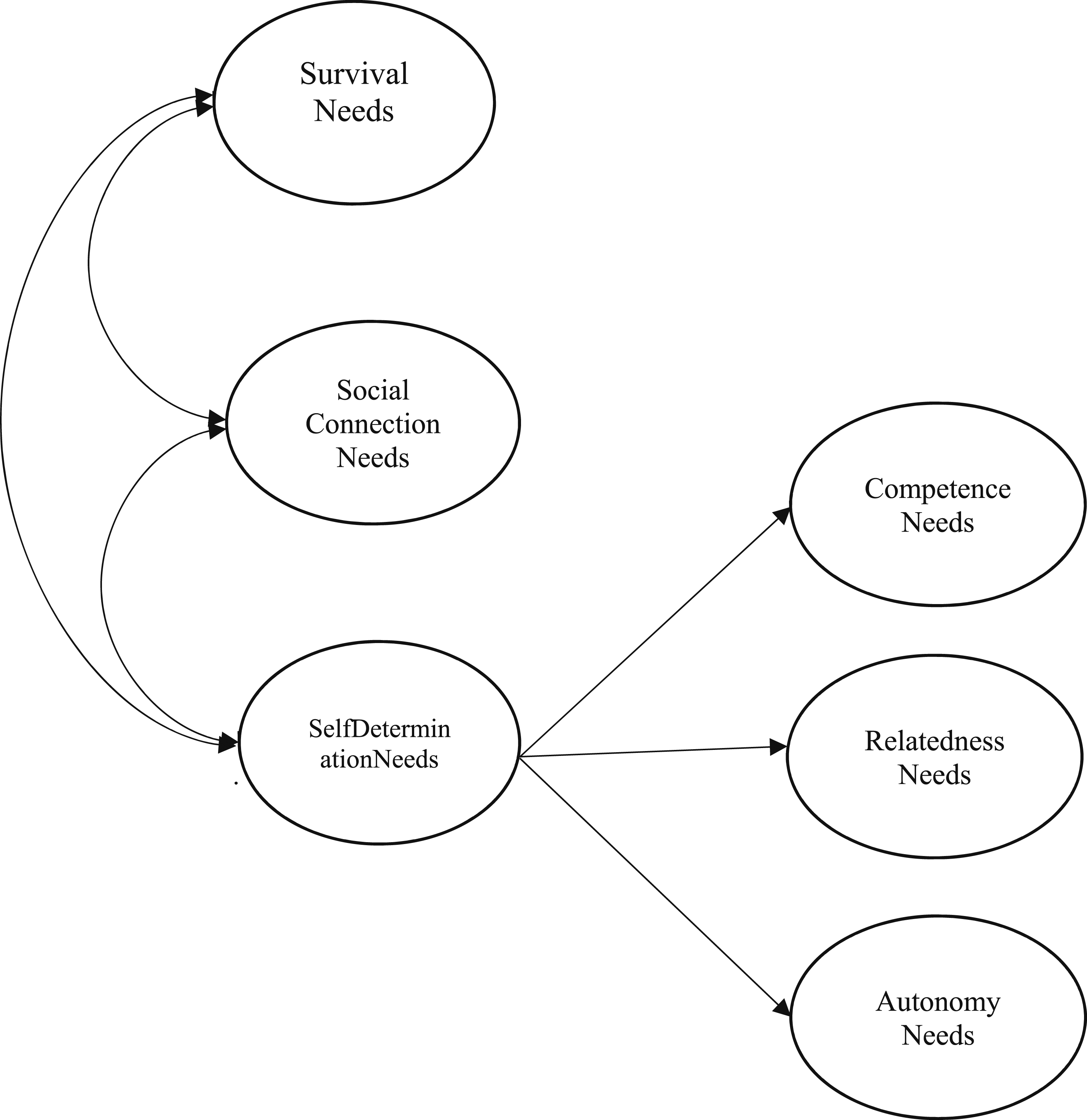
Lastly, we constructed a measurement model including economic constraints, experiences of marginalization, and work needs satisfaction to investigate the goodness of fit of the observed indicators on their associated latent constructs. The measurement model fit the data well: χ 2 (337) = 1590.720, p < .001, TLI = .93, CFI = .94, SRMR = .04, and RMSEA = .07, 90% CI [.07, .08], p < .05. Factor loadings for all items ranged from .77 to .98.
Study 1 Discussion
The aim of Study 1 was to provide evidence for the factor structure of the Turkish versions of the three PWT scales: The Economic Constraints Scale (ECS), the Lifetime Experiences of Marginalization Scale (LEMS), and the Work Needs Satisfaction Scale (WNSS). The CFA results suggested that both the ECS and LEMS were confirmed as unidimensional, consistent with the development study (Duffy, Gensmer, et al., 2019). Autin et al. (2019) developed the WNSS including survival, social contribution, and self-determination needs from a PWT perspective, and concluded that the higher-order SDN model fit their data well and closely matched PWT and SDT propositions (Ryan & Deci, 2017). Although Autin et al. (2019) suggested using a higher-order SDN model, we tested three models with the Turkish version of the WNSS. The results of the CFA also provided similar values to the development study; hence, the higher-order SDN model was confirmed with Turkish data. In line with the scale development studies, relatively high internal consistency estimates were found for all items from the ECS and LEMS, as well as the subscales of the WNSS. In Study 2, we used data from a new sample of working adults to test the full model of PWT that includes predictors and outcomes of decent work, and to further test the reliability and validity of the new scales.
Study 2
Procedure
Participants in the second study were recruited via online platforms like social media groups created by individuals from various professions in 2019. Before data collection, necessary ethical approval (e.g., IRB) were received both from the first and second authors’ university. Then, a link was prepared and posted with a brief description of the study to invite the participants. At the beginning of the survey hosted on Qualtrics, participants were presented with an informed consent form, and if consented, they were then taken to the page with questionnaires. We used two validity items embedded in the measures to exclude respondents who failed to choose correct responses (e.g., “Please click Slightly Disagree on this item to confirm you are paying attention”). Out of the 595 participants, 32 were excluded from the dataset due to their incorrect responses to these items. Participation in the study was completely voluntary and no compensation was provided to the participants.
Participants
The participants comprised 564 working adults with a mean age of 35.04 (SD = 9.08). Participants self-identified as women (52.1%, n = 294), and the remaining of them identified as men (47.9%, n = 270). Regarding their employment status, 503 (89.2%) of participants reported being employed full-time, 31 (5.5%) participants reported being self-employed full-time, 17 (3%) participants reported being employed part-time, 9 (1.6%) participants reported being self-employed part-time, and 4 (.8%) participants reported their employment status as other. Education levels were categorized as less than high school (n = 10, 1.8%), high school (n = 81, 14.4%), graduates, trade/vocational school (n = 50, 8.9%), undergraduate degree, (n = 286, 50.7%), and professional degree (n = 137, 24.3%). In addition, participants indicated their perceived social class on a ladder shown by a picture with a scoring system from 1 (worst off) to 10 (best off), relative to other people in Türkiye (Adler et al., 2000), and the mean score on this measure was 5.91 (SD = 1.62).
Instruments
Economic Constraints, Marginalization, and Need Satisfaction
The same measures translated in Study 1 (ECS, LEMS, and WNSS) were used in Study 2. The internal consistency reliabilities of the measures were .92, .96, and .95 in the present study. The subscale reliabilities for WNSS were .96, .91, .93, .89, and .77 (survival need, social contribution need, competence, relatedness, and autonomy).
Work Volition
The 4-item Volition subscale from the Work Volition Scale (WVS; Duffy, Diemer, et al., 2012) translated into Turkish (Buyukgoze-Kavas & Unal, 2019) was used to measure work volition. Sample items include, “I’ve been able to choose the jobs I have wanted” and “I feel total control over my job choices.” Participants answered these items on a seven-point Likert scale ranging from Strongly Disagree (1) to Strongly Agree (7). In the scale development study, the subscale had adequate internal consistency reliability (.69) and strong validity, correlating in the expected directions with job satisfaction, work locus of control, and core self-evaluations. The scale reliability and validity of the Turkish version were good and the estimated internal consistency reliability for scale scores in the present study was .81.
Career Adaptability
The 11-item career adaptability subscale of the Career Futures Inventory (CFI; Rottinghaus et al., 2005) which was translated in Turkish (Kalafat, 2012) was used to measure the degree to which participants felt adaptable in their careers. Sample items include “I can adapt to change in the world of work” and “I will adjust easily to shifting demands at work”. Participants answered these items on a seven-point Likert scale ranging from Strongly Disagree (1) to Strongly Agree (7). In the original scale development study, the subscale had good internal consistency reliability (.85) and correlated in the expected directions with career confidence, problem-solving confidence, and dispositional optimism (Rottinghaus et al., 2005). The scale reliability and validity of the Turkish version were good and the estimated internal consistency reliability for scale scores in the current study was .86.
Decent Work
The Turkish version (Buyukgoze-Kavas & Autin, 2019) of the 15-item Decent Work Scale (DWS; Duffy, Allan, et al., 2017) was used to measure decent work. The DWS consists of five subscales representing the five components of decent work: safe working conditions, access to healthcare, adequate compensation, safe working conditions, hours that allow for free time and rest, and organizational values that complement family and social values. Participants responded to each item based on a 7-point Likert-type scale ranging from Strongly Disagree (1) to Strongly Agree (7). Sample items for each of the subscales included the following: “At work, I feel safe from emotional or verbal abuse of any kind,” “My employer provides acceptable options for healthcare,” “I am rewarded adequately for my work,” “I have no time to rest during the work week,” and “The values of my organization match the values within my community.” In the instrument development study, the total scale to positively correlate with job satisfaction and working meaning and negatively correlate with withdrawal intentions (Duffy, Allan, et al., 2017). The scores of the subscales (.79-.97) and the total scale had good internal reliability (.86). The scale reliability and validity of the Turkish version were adequate and the reliability coefficient for the present study was .78 and the subscale score estimated reliabilities were as follows: safe conditions (.94), access to healthcare (.78), adequate compensation (.75), free time and rest (.68), and complimentary values (.85).
Job Satisfaction
The Turkish version (Bilgin, 1995) of the 5-item job satisfaction instrument developed by Judge et al. (1998) was used to measure work fulfillment. The items have been used to capture the degree to which individuals feel satisfied with their current job. Sample items include, “I feel fairly well satisfied with my present job” and “I find real enjoyment in my work.” Two items, items 3 and 5, were reverse coded items: “Each day of work seems like it will never end”, and “I consider my job rather unpleasant”. Participants answered the items using a 7-point Likert scale ranging from Strongly Disagree (1) to Strongly Agree (7). The scale had strong validity and reliability evidence with the total score positively relating to other measures of job satisfaction, work self-efficacy, organizational support, and core self-evaluations (Duffy, Bott, et al., 2013; Judge et al., 1998). In the scale development study, the reliability was .88. The scale reliability and validity of the Turkish version were good and the estimated internal consistency reliability for scale scores in the present study was .87.
Life Satisfaction
The Turkish version (Durak et al., 2010) of the 5-item Satisfaction with Life Scale (SWLS; Diener et al., 1985) was used to measure general well-being. Sample items include, “In most ways, my life is close to my ideal” and “If I could live my life over, I would change almost nothing.” Participants answered the items using a 7-point Likert scale ranging from Strongly Disagree (1) to Strongly Agree (7). The SWLS has been widely used as a valid and reliable tool to assess overall mental health (Lombardo et al., 2018). The scale had strong validity evidence with the total score positively relating to other measures of subjective well-being and relating in the expected direction with personality measures. The scale also had good internal consistency reliability of .87 and two-month test-retest reliability of .82 in the scale development paper (Diener et al., 1985). The scale reliability was .89 for the Turkish version. The estimated internal consistency reliability of scale scores for the present study was .91.
Results
Preliminary Analysis
Descriptive statistics and correlations of study variables (study (2).
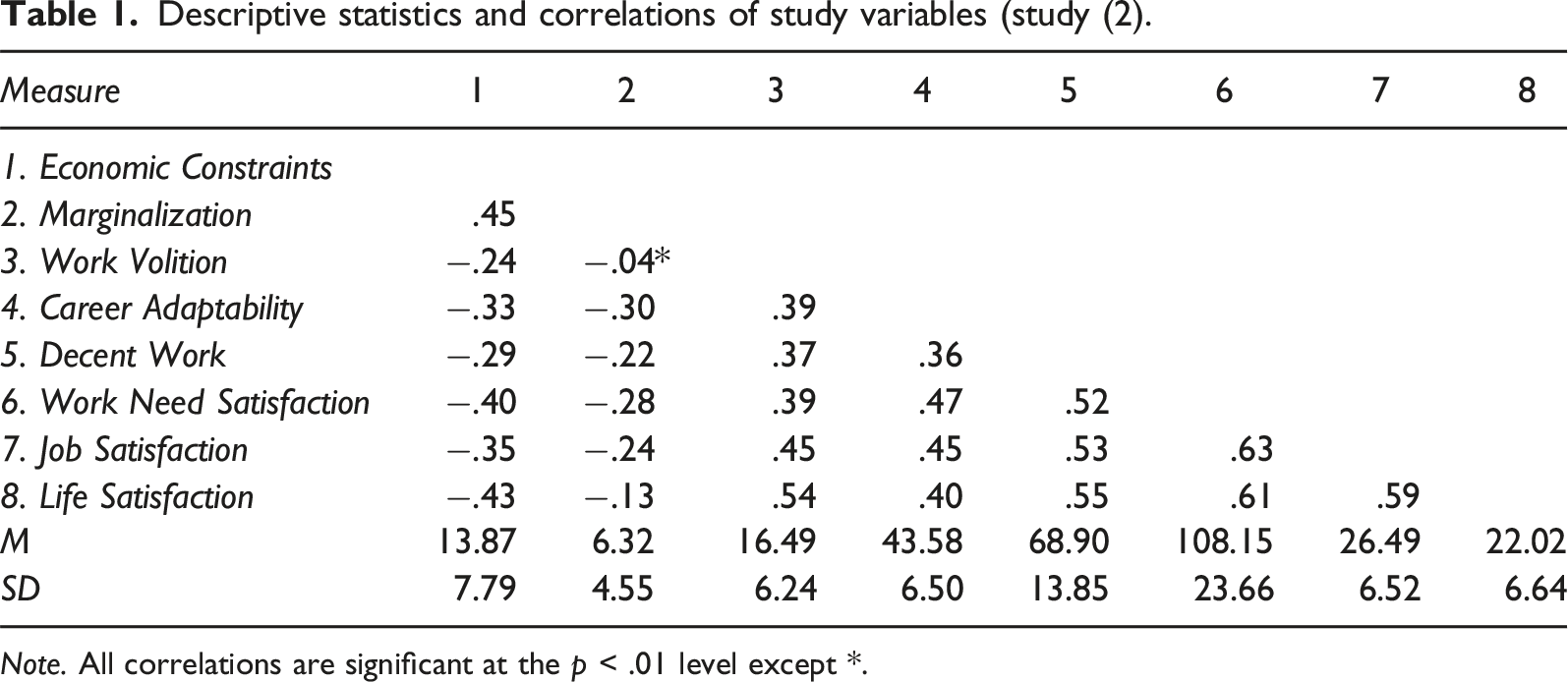
Note. All correlations are significant at the p < .01 level except *.
Model Testing
To construct the latent variables in the measurement and structural models, we used both individual items and parceled composite scores depending on the total number of items on each of the tools. For instruments with five or fewer items, we used the items as the indicators of the latent construct, and for instruments with subscales, we used the subscale composite scores as the indicators of the latent construct. For the WNSS, following guidance by Autin et al. (2019), we first loaded the subscales of self-determination needs-competence, relatedness, and autonomy-onto a higher-order self-determination latent construct. Then self-determination, survival, and social contribution need satisfaction all were loaded onto the higher overall need satisfaction latent construct. To evaluate if the measurement and structural models have adequate fit, we used the same fit indices used in Study 1. Following fit indices: Chi-square (χ2), relative chi-square (CMIN/DF), the Comparative Fit Index (CFI), root mean square error of approximation (RMSEA), and the standardized root mean residual (SRMR). Scholars have suggested cutoff values for the good fit have ranged from CFI, TLI ≥.90, RMSEA ≤.10 to CFI, TLI ≥.95, RMSEA ≤.06 and 2 ≤ CMIN/DF ≤ 5 (Hu & Bentler, 1999; Kline, 1998; Marsh & Hocevar, 1985; Weston & Gore, 2006). For models that did not fit adequately to data, we made adjustments by using theoretical rationale and modification indices to add correlations between indicators of the same latent construct. These correlations were added one by one to maintain the models parsimoniously.
Using Mplus 8.0 (Muthén & Muthén, 2017), we first constructed a measurement model to examine correlations among latent variables and to examine the goodness of fit of the observed indicators on their associated latent constructs. The measurement model had fit indices slightly off from suggested cut-offs: χ 2 (817) = 2387.16, p < .001, TLI = .87, CFI = .89, SRMR = .08, and RMSEA = .06, 90% CI [.056, .061], p < .05. We then tested three structural models to examine which model fit most appropriately to the data: (1) a model that only reflected PWT propositions (Figure 2; paths that connect predictors with decent work and decent work with outcomes but not between predictors and outcomes), (2) a model that contained all possible direct and indirect paths between all latent variables, and (3) a model that only included paths that were significant. The models also did not adequately fit the data thus to examine if the final model could be improved, we examined the modification indices.
The modification indices suggested that fit could be improved by correlating several items. We only considered modification indices that were between items of the same latent construct and the indices higher than 10. Then we added the paths starting from that with the highest modification indices until the model fit and stopped adding the additional paths to keep the models parsimonious. Finally, the following paths were added to the model: job satisfaction items 3 and 5, work volition items 4 and 5, and economic constraints items 1 and 2, 4 and 5. Then, the measurement model and three structural models were run again with the modifications. The measurement model had adequate fit to data: χ
2
(813) = 2067.97, p < .001, TLI = .90, CFI = .91, and RMSEA = .05, 90% CI [.050, .055], p < .05. All indicators loaded onto their respective factors at values of .46–.94 except for DWS indicators. For structural models, the model with hypothesized paths had a slightly less adequate fit to the data: χ
2
(825) = 2238.80, p < .001, CMIN/DF = 2.71, TLI = .89, CFI = .90, and RMSEA = .06, 90% CI [.052, .058], p < .05. The model with all possible paths had better fit to the data: χ
2
(813) = 2067.98, p < .001, CMIN/DF = 2.54, TLI = .90, CFI = .91, and RMSEA = .052, 90% CI [.050, .055], p < .05. Lastly, the model with significant paths had the slightly better fit to the data: χ
2
(823) = 2079.44, p < .001, CMIN/DF = 2.53, TLI = .90, CFI = .91, and RMSEA = .052, 90% CI [.049, .055], p < .05. We chose the model with significant paths as the final model also based on parsimony; lower Akaike’s information criterion (AIC) and Bayesian information criterion (BIC) indicate more parsimonious model (Akaike, 1974; Schwarz, 1978). The model with significant paths (AIC = 85351.495; BIC = 86071.114) was more parsimonious than the model with all paths (AIC = 85743.08; BIC = 86488.71). In the final model, the significant direct paths included: (1) economic constraints to work volition, career adaptability, decent work, need satisfaction, and life satisfaction, (2) marginalization to career adaptability and decent work, (3) work volition to work need satisfaction, job satisfaction, and life satisfaction, (4) career adaptability to decent work, (5) decent work to work need satisfaction and job satisfaction, and (6) work need satisfaction to job satisfaction and life satisfaction. The model explained 7.90% of the variance in work volition, 16.00% in career adaptability, 40.20% in decent work, 57.00% in work need satisfaction, 68.80% in job satisfaction, and 62.80% in life satisfaction. See Figure 3 for a graphical representation of the final structural model tested. Theoretical model.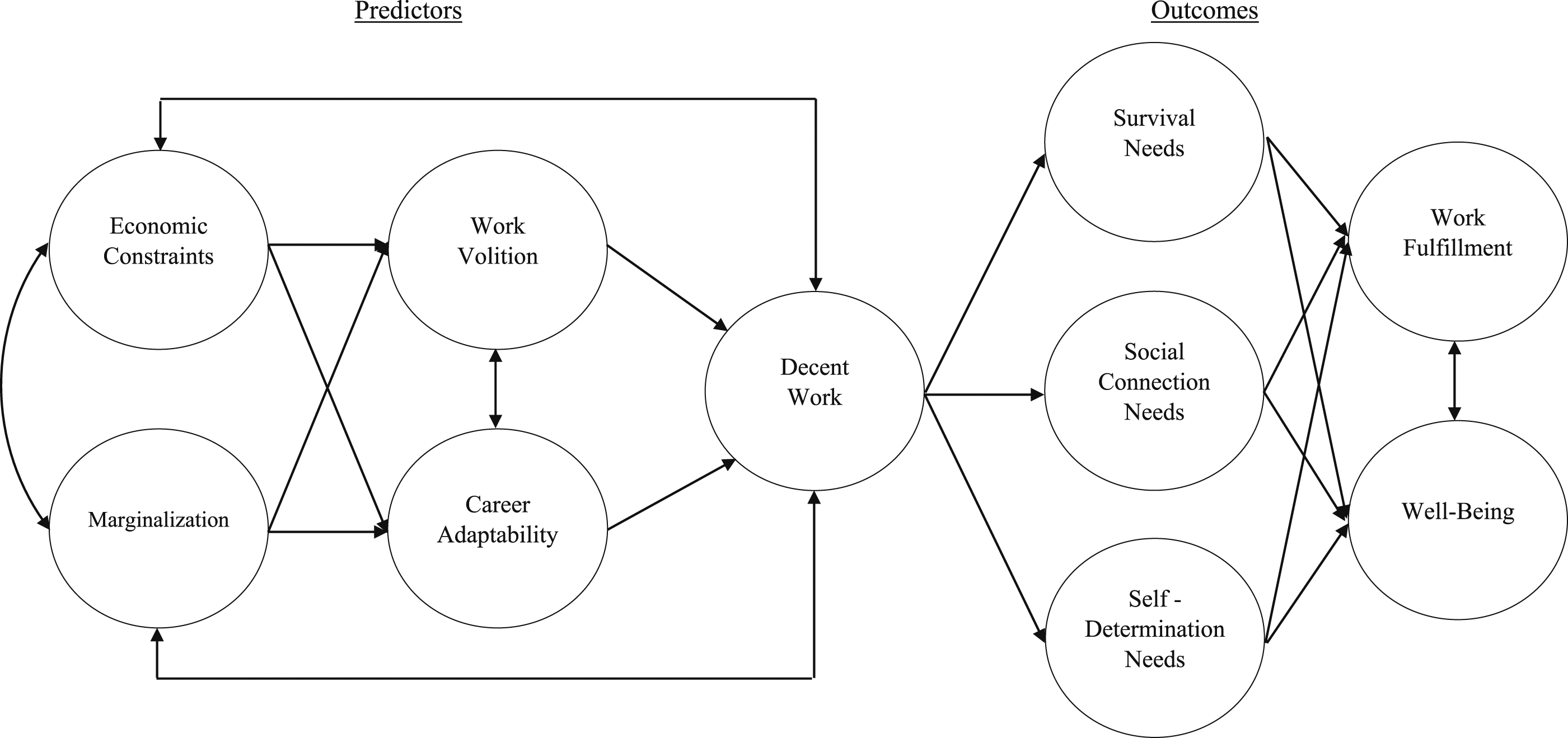
Test of unique indirect effects.
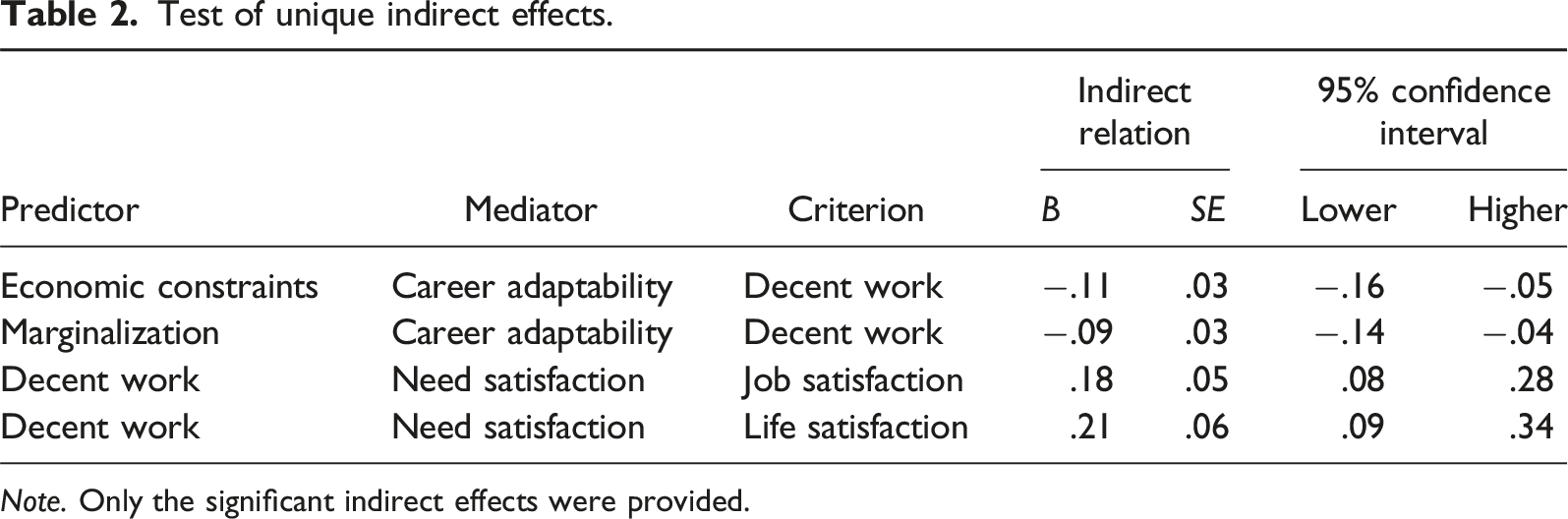
Note. Only the significant indirect effects were provided.
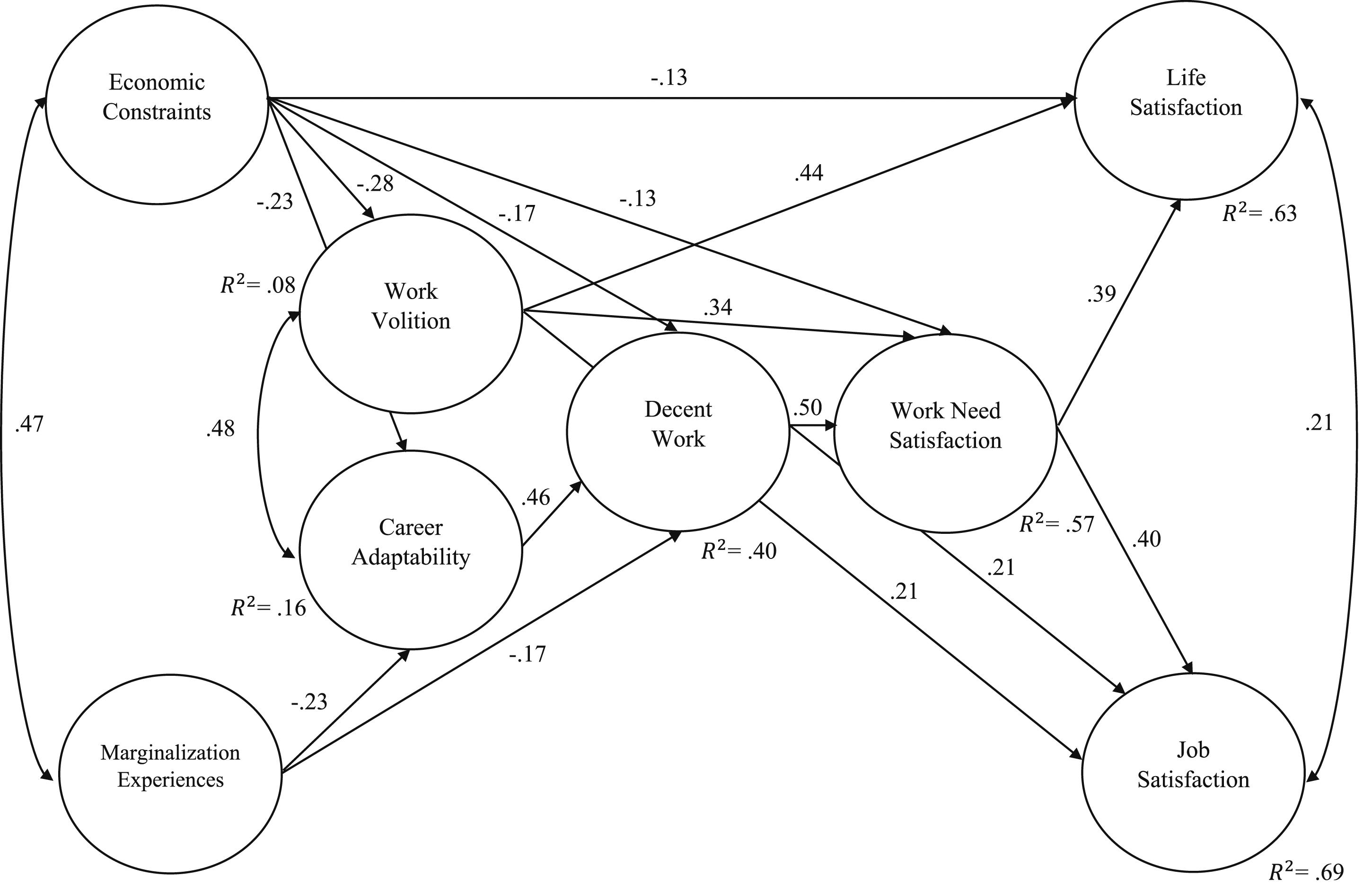
Final model with significant path.
Study 2 Discussion
The results of Study 2 suggest that, in line with the previous studies conducted in TürkiyeTürkiye, PWT variables and propositions are relevant to Turkish working adults. Specifically, the results of the analyses indicated that many of the hypothesized paths in PWT were replicated with Turkish data. As hypothesized, economic constraints and marginalization were significantly, and negatively correlated with decent work, indicating that Turkish workers who experienced more economic hardship and marginalization in their lifetime were less likely to attain decent work. The result is in line with the systemic discrimination such as limited career opportunities, underpayment, pay gap, and workplace discrimination that marginalized and economically constrained individuals experience in the labor market in Türkiye (Buyukgoze-Kavas et al., 2021; TurkStat, 2022; Yılmaz & Göçmen, 2016). Also, as hypothesized and supported in a previous study (Kozan et al., 2019), career adaptability mediated the relationships between contextual predictors and decent work; those with more economic constraints and marginalization experiences were less likely to attain decent work in part due to having more adaptability in work. Decent work was positively related to work need satisfaction, job satisfaction, and life satisfaction. As mirrored in previous studies (Buyukgoze-Kavas & Autin, 2019; Kozan et al., 2019), the positive correlations between decent work and job satisfaction and life satisfaction had large effect sizes. As hypothesized, work need satisfaction also had large positive correlations with job satisfaction and life satisfaction. There also was a significant mediating effect of work need satisfaction on decent work to job satisfaction link. These results indicate that having decent work is essential to Turkish working adults’ satisfaction with their job and overall life because decent work fulfills their essential needs.
There were also findings that were different from propositions in PWT which may provide evidence for cross-cultural differences. For example, contrary to the hypothesis, results indicated that marginalization and work volition were not significantly correlated and work volition did not significantly mediate the relationship between predictors and decent work. The result suggests that there may be more relevant mediators that explain the link between marginalization and decent work in the Turkish context. For example, decent education and career readiness are mediators that could potentially explain this relationship (Duffy, Kim et al., 2021). Specifically, individuals who are marginalized in society likely have indecent work because they did not have access to decent education that could have prepared them for those decent jobs. In Türkiye, for example, Roma women are part of one of the marginalized communities and have very low levels of education (Fazla et al., 2021; Çelik & Yüce Tar, 2016). Moreover, in addition to the theoretically hypothesized relations, economic constraints was directly related to life satisfaction. The finding is in line with the well-documented literature that those experiencing financial strain and feelings of marginalization have their well-being compromised (Ngamaba et al., 2020; Priest et al., 2013; Schmitt et al., 2014). Work volition was also directly related to work need satisfaction, job satisfaction, and life satisfaction. The non-significant mediation effect of work volition along with the significant direct effects of work volition on outcomes suggest that work volition may work better as a predictor of the outcomes rather than a mediator in the Turkish context. Though work volition was positioned as a mediator in the PWT model, the theory and the larger framework based on which was developed, the Psychology of Working Framework (Blustein, 2006), work volition also likely play an important role in job and life satisfaction (Duffy et al., 2015). As supported in this study, the direct relations between work volition and the outcomes were mirrored in previous studies conducted in Türkiye (Buyukgoze-Kavas et al., 2015; Kozan et al., 2019).
General Discussion
The purpose of the present studies was to translate scales of economic constraints, marginalization, and need satisfaction, to investigate the cross-cultural validity of PWT with Turkish working adults, and to test the full PWT model with predictors and outcomes of decent work. To achieve this, in Study 1, following the best practices, we translated the Economic Constraints Scale (ECS; Duffy et al., 2019), the Lifetime Experiences of Marginalization Scale (LEMS; Duffy et al., 2019), and the Work Needs Satisfaction Scale (WNSS; Autin et al., 2019) into Turkish. We administered the translated scales to a sample of Turkish working adults and conducted factor analyses and reliability analyses. For WNSS, a higher-order factor structure similar to the one presented in Autin et al. (2019)’s paper was found. All three new scales, ECS, LEMS, and WNSS had good internal consistency reliabilities. In Study 2, using these newly translated scales, we examined the PWT model with another group of Turkish working adults. Again, the new scales had good internal consistency reliabilities and correlated with other PWT variables in a theory-consistent manner, providing support for the construct validity of the scales. These results support that the translated scales are reliable and valid enough to be used for studies conducted in Türkiye. We hope that the scales will provide tools for researchers to investigate and expand on the prepositions of PWT in the Turkish context.
One other purpose of Study 2 was to test the full model of PWT, which includes predictors and outcomes of decent work. We tested a model including all the hypothesized paths laid out in the theory paper and another model that included all possible paths that link the variables included in the model. The results indicated that overall, most of the PWT propositions were supported. The finding is in line with previous empirical studies conducted in Türkiye that found PWT propositions relevant to the Turkish context (e.g., Kozan et al., 2019). There, however, were notable theory-inconsistent findings: the non-significant relation between marginalization and work volition and the mediating effect of work volition. Not many previous studies conducted outside of the United States have tested marginalization experiences as a predictor of decent work and have mostly just included factors related to economic constraints (e.g., subjective social class). One of the few studies that tested the role of marginalization collected data from a group of impoverished Chinese college students (Wei et al., 2022). Similar to the results of the present study, their analysis showed that marginalization was not significantly related to work volition, career adaptability, and future decent work perception. These results may be due to the relatively high level of education both samples had (Wei et al., 2022). In other words, the samples of the present studies may not report high levels of marginalization because high percentage of them are full-time and highly educated. Furthermore, the absence of groups widely recognized as some of the most marginalized in Türkiye, such as the LGBT community and Syrian immigrants, as well as individuals from diverse ethnic backgrounds like the Roma, may have influenced the relationships between marginalization and other variables.
However, given the significant link between marginalization and work volition in similar samples collected in the U.S. (Duffy, Kim, et al., 2021; Duffy, Velez, et al., 2018), there could be other explanations. For example, it could also be due to the cultural context in which these studies were conducted, namely, how people perceive marginalization experience itself. It could also be due to the wording of the questionnaire (i.e., LEMS) which may be perceived differently by people in other countries. For example, in another study conducted in Korea, marginalization was significantly correlated with work volition, career adaptability, and decent work (Kim et al., 2020). In this study, marginalization was measured using a different scale on perceived social marginalization (e.g., “With my background I will have problems when looking for work” and “In our society, people like me are not offered any chances”). In other words, the definition of marginalization was different in this study and this may have resulted in an inconsistent finding. In sum, there could be several explanations as to why marginalization did not have a significant relation with work volition in this study and several previous studies conducted in other countries. Thus, it would be important for future studies to explore the role of marginalization experiences in countries outside of the U.S. in relation to people’s work experiences.
Implications for Practice
The current study may have implications for practice in vocational research and counseling. Namely, the study provides further support that career adaptability may be a more important mediator that explains why economic constraints and marginalization experiences limit one’s attainment of decent work in Türkiye. Moreover, it can be beneficial to further understand the role of work volition in attaining decent work within a Turkish context. For example, the results of this study suggest there may be value in positioning work volition as a predictor of decent work as opposed to a mediator, which was more appropriate in the U.S. context. This study provides translated scales for economic constraints, marginalization, and work need satisfaction that can be useful for future research looking to explore these constructs. Working from a PWT framework can help career counselors consider structural factors to better understand their client’s unique context and implement more equitable interventions. The results of this study demonstrate that attaining decent work is essential not only for satisfaction in their work-life but also in their personal lives more broadly.
Limitations and Future Directions
There are several limitations in this study that are important to consider. First, most participants were employed full-time (77.7% and 89.2%, respectively) and were highly educated (more than half receiving higher education) which can signal they may have more privileged identities in society and leaves a gap in our understanding of part-time, less educated employed people. It would be interesting for future research using a PWT lens to intentionally recruit a representative sample or focus on a population that has limited economic resources are or marginalized in Turkish society. Second, the studies were cross-sectional in nature thus limiting the implications and generalizability of the findings. Thus, future studies that adopt longitudinal designs should be conducted to test the prepositions of the present study in a more robust manner. Third, we used modification indices to improve the fit of the model by adding correlations between items. Although these additions could be justified on theoretical grounds (i.e., the items were of the same latent construct), the modified model would need to be tested in another sample. Lastly, future research should aim to include more culturally relevant variables that better capture decent work and its predictors and outcomes. For example, marginalization was not significantly correlated with work volition, however, there may be other variables specific to this population that are more applicable. Provided this information, qualitative studies could be insightful and help identify additional variables in attaining decent work and its related outcomes among this group.
Conclusion
This study has made a significant contribution to the expanding body of research within the Psychology of Working Theory. It has achieved this by successfully validating the three scales of the PWT and examining the full PWT model with predictors and outcomes of decent work within the framework of a collectivistic cultural context. The findings of Study 1 revealed robust validity and reliability evidence for the Turkish versions of the Economic Constraints Scale, the Lifetime Experiences of Marginalization Scale, and the Work Needs Satisfaction Scale. As proposed by PWT and hypothesized in Study 2, economic constraints and marginalization exhibit significant negative correlations with decent work, indicating that Turkish workers who have encountered greater economic hardships and marginalization over their lifetime are less likely to attain decent work. While the results confirmed the hypothesized mediating roles of career adaptability and need satisfaction, work volition serves as a predictor variable in the model with direct paths to work need satisfaction, job satisfaction, and life satisfaction. Thus, findings provided that overall, PWT propositions were largely supported by the sample except for the role of work volition.
Footnotes
Author’s Note
Haram J. Kim, Department of Psychology, University of Florida; Aysenur Buyukgoze-Kavas, Psychological Counseling and Guidance Program, Ondokuz Mayıs University; Ryan D. Duffy, Department of Psychology, University of Florida; Gianella Perez, Department of Psychology, University of Florida
Declaration of Conflicting Interests
The author(s) declared no potential conflicts of interest with respect to the research, authorship, and/or publication of this article.
Funding
The author(s) received no financial support for the research, authorship, and/or publication of this article.

Appendix
English and Turkish items of the Economic Constraints Scale.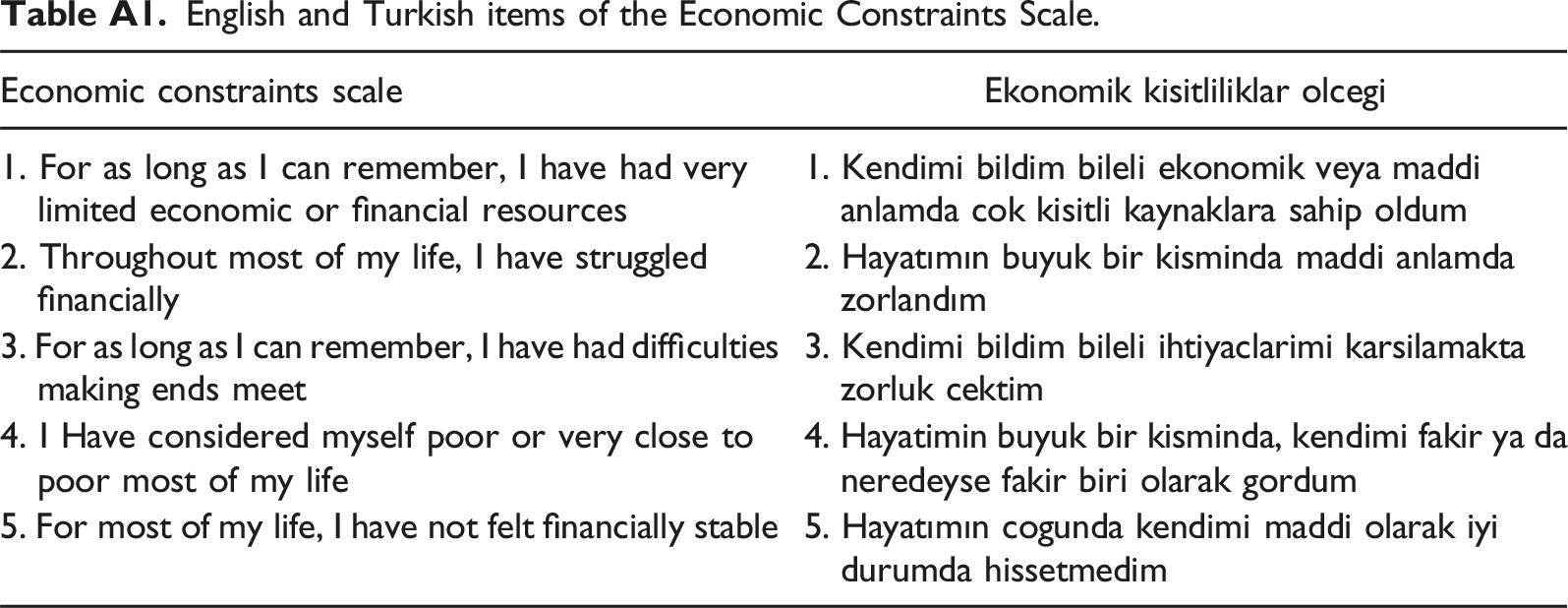
Economic constraints scale
Ekonomik kisitliliklar olcegi
1. For as long as I can remember, I have had very limited economic or financial resources
1. Kendimi bildim bileli ekonomik veya maddi anlamda cok kisitli kaynaklara sahip oldum
2. Throughout most of my life, I have struggled financially
2. Hayatımın buyuk bir kisminda maddi anlamda zorlandım
3. For as long as I can remember, I have had difficulties making ends meet
3. Kendimi bildim bileli ihtiyaclarimi karsilamakta zorluk cektim
4. I Have considered myself poor or very close to poor most of my life
4. Hayatimin buyuk bir kisminda, kendimi fakir ya da neredeyse fakir biri olarak gordum
5. For most of my life, I have not felt financially stable
5. Hayatımın cogunda kendimi maddi olarak iyi durumda hissetmedim
English and Turkish items of the Lifetime Experiences of Marginalization Scale. Bu arastirma kapsaminda otekilestirilmek kelimesi ile kast edilen toplumda daha az guclu bir konumda olmak, sosyal olarak dislanmis olmak veya belirli bir grubun/ kimligin uyesi olmaktan dolayi kaynaklara daha az erismektir. Bu genellikle insanların cinsiyeti, etnik kokeni, engellilik durumu, cinsel yonelimi, dini inanci, fiziksel gorunumu veya diger azinlik gruplarin /kimliklerin bir parcasi olmasindan kaynaklanir.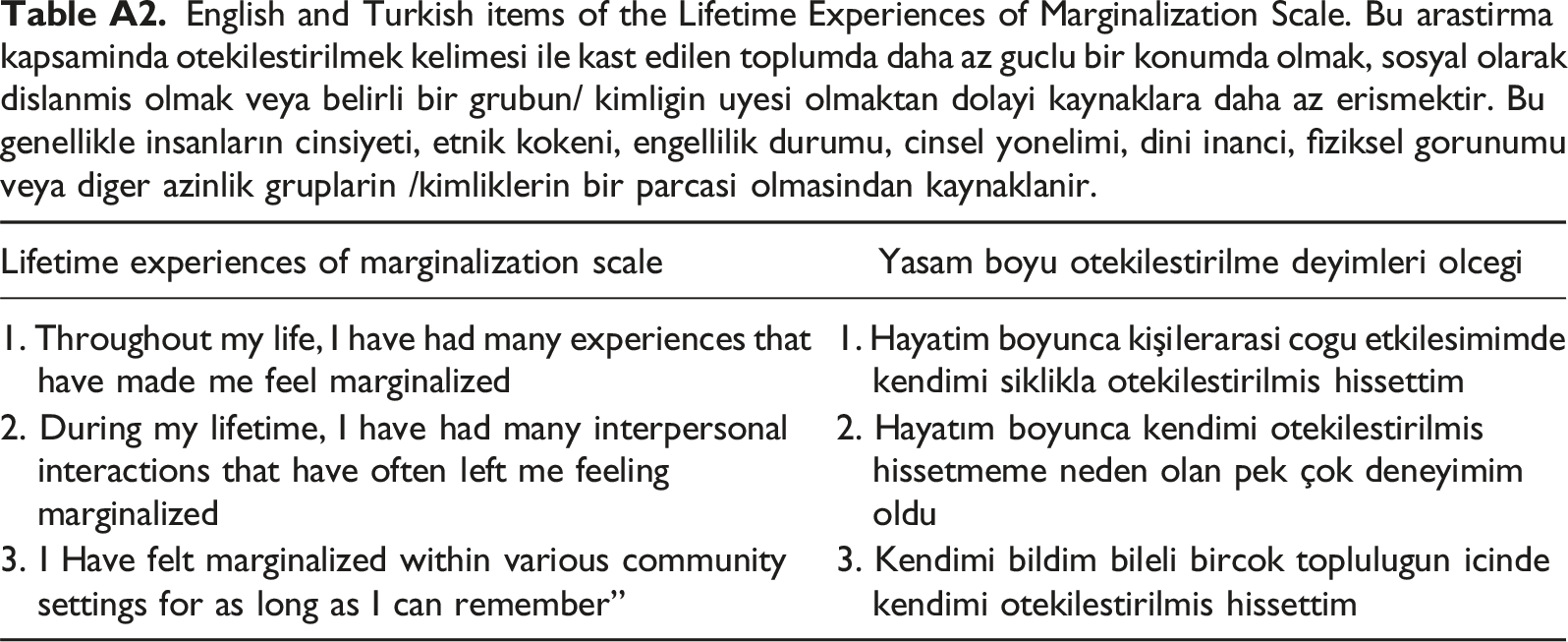
Lifetime experiences of marginalization scale
Yasam boyu otekilestirilme deyimleri olcegi
1. Throughout my life, I have had many experiences that have made me feel marginalized
1. Hayatim boyunca kişilerarasi cogu etkilesimimde kendimi siklikla otekilestirilmis hissettim
2. During my lifetime, I have had many interpersonal interactions that have often left me feeling marginalized
2. Hayatım boyunca kendimi otekilestirilmis hissetmeme neden olan pek çok deneyimim oldu
3. I Have felt marginalized within various community settings for as long as I can remember”
3. Kendimi bildim bileli bircok toplulugun icinde kendimi otekilestirilmis hissettim
English and Turkish items of the Work Needs Satisfaction Scale.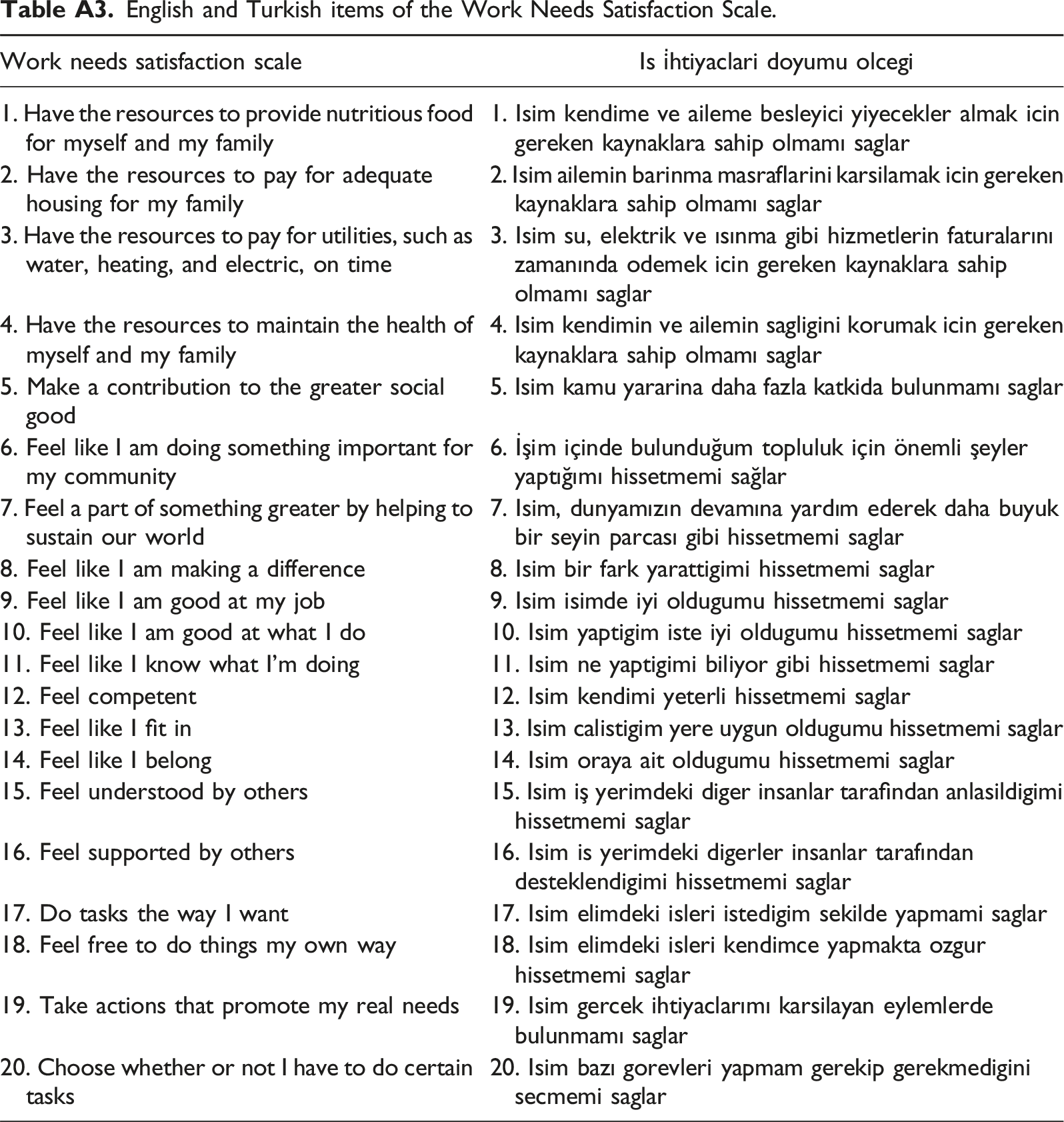
Work needs satisfaction scale
Is i̇htiyaclari doyumu olcegi
1. Have the resources to provide nutritious food for myself and my family
1. Isim kendime ve aileme besleyici yiyecekler almak icin gereken kaynaklara sahip olmamı saglar
2. Have the resources to pay for adequate housing for my family
2. Isim ailemin barinma masraflarini karsilamak icin gereken kaynaklara sahip olmamı saglar
3. Have the resources to pay for utilities, such as water, heating, and electric, on time
3. Isim su, elektrik ve ısınma gibi hizmetlerin faturalarını zamanında odemek icin gereken kaynaklara sahip olmamı saglar
4. Have the resources to maintain the health of myself and my family
4. Isim kendimin ve ailemin sagligini korumak icin gereken kaynaklara sahip olmamı saglar
5. Make a contribution to the greater social good
5. Isim kamu yararina daha fazla katkida bulunmamı saglar
6. Feel like I am doing something important for my community
6. İşim içinde bulunduğum topluluk için önemli şeyler yaptığımı hissetmemi sağlar<
7. Feel a part of something greater by helping to sustain our world
7. Isim, dunyamızın devamına yardım ederek daha buyuk bir seyin parcası gibi hissetmemi saglar
8. Feel like I am making a difference
8. Isim bir fark yarattigimi hissetmemi saglar
9. Feel like I am good at my job
9. Isim isimde iyi oldugumu hissetmemi saglar
10. Feel like I am good at what I do
10. Isim yaptigim iste iyi oldugumu hissetmemi saglar
11. Feel like I know what I’m doing
11. Isim ne yaptigimi biliyor gibi hissetmemi saglar
12. Feel competent
12. Isim kendimi yeterli hissetmemi saglar
13. Feel like I fit in
13. Isim calistigim yere uygun oldugumu hissetmemi saglar
14. Feel like I belong
14. Isim oraya ait oldugumu hissetmemi saglar
15. Feel understood by others
15. Isim iş yerimdeki diger insanlar tarafindan anlasildigimi hissetmemi saglar
16. Feel supported by others
16. Isim is yerimdeki digerler insanlar tarafından desteklendigimi hissetmemi saglar
17. Do tasks the way I want
17. Isim elimdeki isleri istedigim sekilde yapmami saglar
18. Feel free to do things my own way
18. Isim elimdeki isleri kendimce yapmakta ozgur hissetmemi saglar
19. Take actions that promote my real needs
19. Isim gercek ihtiyaclarımı karsilayan eylemlerde bulunmamı saglar
< 20. Choose whether or not I have to do certain tasks
20. Isim bazı gorevleri yapmam gerekip gerekmedigini secmemi saglar