Abstract
The complex dynamics of racism and sexism in the workplace, particularly gendered racial microaggressions (GRMs), remain a critical concern for Black women. However, despite mounting research that experiencing GRMs predicts psychological distress and other adverse outcomes, the mechanisms through which GRMs influence workplace functioning and well-being remain understudied. Therefore, with a sample of working Black women (N = 156) from an online recruitment platform, we sought to identify mediators (sociopolitical participation and identity shifting) that explain the link from workplace GRMs to work well-being outcomes (workplace stress and work engagement). We also explored whether gendered racial identity centrality (GRI) and perceived organizational justice (POJ) moderated these indirect effects. Results indicated that identity shifting significantly mediated the relation between workplace GRMs and workplace stress, while sociopolitical participation significantly mediated GRMs and work engagement. GRI and POJ did not significantly moderate these paths. However, POJ was negatively associated with workplace stress and positively associated with work engagement, suggesting the importance of organizational fairness for Black women. Taken together, findings underscore the need for culturally responsive and equity-centered workplace practices that validate racial identity, reduce identity suppression, and encourage authentic sociopolitical expression.
Keywords
Workplaces are complex social environments where individuals’ well-being and engagement play critical roles in organizational success; however, for Black women, the experience of navigating the workplace landscape can be uniquely challenging due to the intersection of sexism and racism (Lewis et al., 2013, 2016; Lewis & Neville, 2015; Wingfield, 2007). For example, Black women encounter greater levels of workplace discrimination compared to other racial and gender groups, face barriers to career advancement (Hall et al., 2012), experience wage disparities, and feel undervalued and marginalized within their organizations (Cooke & Hastings, 2023; Hall et al., 2012; Lewis et al., 2013, 2016). Therefore, examining and addressing experiences of workplace discrimination for Black women is an important focus for psychological research.
Among the various forms of discrimination, gendered racial microaggressions (GRMs) have emerged as a significant concern, affecting the well-being and engagement of Black women (Lewis et al., 2013, 2016; Lewis & Neville, 2015; Wingfield, 2007). However, few studies have examined how GRMs in the workplace predict outcomes for Black women, and none have evaluated mechanisms (i.e., mediators and moderators) that explain these relations. Therefore, using intersectionality and Black Feminism (e.g., Carastathis, 2014; Crenshaw, 2013; Thatcher et al., 2023) as conceptual frameworks, the current study sought to identify factors that explain the links from workplace GRMs to Black women’s workplace stress and work engagement, two critical outcomes that relate to a host of distal outcomes, such as performance, turnover, burnout, and mental health (e.g., Bakker & Demerouti, 2017; Cooke & Hastings, 2023). Moreover, identifying different responses to GRMs, as well as malleable moderating factors, can illuminate ways to improving the lives of working Black women (e.g., Bakker & Demerouti, 2017; Cooke & Hastings, 2023). Therefore, we investigated the indirect effects of workplace GRMs on workplace stress and work engagement through two coping responses—sociopolitical participation and identity shifting—and examined whether gendered racial identity centrality (an individual factor) and perceived organizational justice (an organizational factor) moderated these pathways.
Intersectionality Theory and Black Feminism Theory
Intersectionality, a concept rooted in critical social theory, and Black Feminism, a prominent feminist framework, both offer invaluable lenses through which to analyze the complex and multifaceted experiences of individuals in the workplace, particularly Black women. Specifically, intersectionality argues that individuals hold multiple social identities (e.g., race, gender) that intersect and interact, influencing their experiences, privileges, and disadvantages in intricate ways (Crenshaw, 1989, 2013). Furthermore, the Black Feminist framework, a subset of feminist theory, critiqued traditional feminist perspectives, which often overlook the unique realities of women of color, and centered the experiences, voices, and struggles of Black women within a feminist discourse (Carastathis, 2014; Collins, 2000). Therefore, this lens empowers Black women to articulate their narratives and challenges the omission of their voices in broader feminist and sociopolitical discussions.
Within this context, intersectionality theory and Black Feminism have informed how psychologists consider and measure discrimination. For example, researchers have employed different methods to investigate discrimination, such as single-axis, comparative, additive, interactional, and intersectional approaches (Moradi & Grzanka, 2017). In the current study, we drew on these perspectives to directly measure the intersectional experiences of Black women, such as gendered racial identity centrality and gendered racial microaggressions, that may predict workplace stress and work engagement.
Intersectional theory has also detailed how multilevel systems of power (i.e., societal, organizational, interpersonal, and individual) operate to shape intersectional experiences in the workplace (Thatcher et al., 2023). For example, societal power structures (e.g., systemic inequities, racism, sexism) translate into oppressive organizational policies and practices (e.g., organizational climate), which the shape interpersonal interactions (e.g., discrimination). In this way, power operates through macro-level systems to affect individual intersectional experiences. However, people are not passive agents; rather, they can resist power structures at various levels, such as coping responses at the individual level or sociopolitical participation at the societal level (Blustein & Allan, 2025; Szymanski & Lewis, 2016; Thatcher et al., 2023). Therefore, experiences like gendered racism in the workplace may elicit different forms of resistance for Black women, but this area of research and how resistance relates to outcomes is relatively understudied, meriting further research.
Gendered Racial Microaggressions
Gendered racial microaggressions (GRMs) derive from the general concept of microaggressions to encompass the intersection of race and gender (Lewis & Neville, 2015). Specifically, while racial microaggressions refer to subtle, indirect expressions of racism that target individuals based on their racial or ethnic identity (Sue et al., 2007), GRMs specifically focuses on “gendered racism”, which describes how Black women can encounter gendered and classed forms of racism based on stereotypes associated with Black womanhood (Essed, 1991). Lewis and Neville (2015) adapted this prior work to define gendered racial microaggressions “as subtle and everyday nonverbal, verbal, behavioral, and environmental expressions of oppression based on the intersection of one’s race and gender” (p. 291). Furthermore, they developed three core themes of gendered racial microaggressions: (1) projected stereotypes (i.e., false and harmful assumptions of Black women), (2) silenced and marginalized (i.e., Black women being silenced and marginalized in professional settings), and (3) assumptions about style and beauty (i.e., assumptions about Black women’s cultural expressions of style and beauty).
Black women are likely to encounter GRMs in the workplace, academic settings, and daily interactions (Lewis et al., 2013, 2016; Lewis & Neville, 2015; Wingfield, 2007), and they often face a power struggle for respect, where their authority and intelligence are questioned or challenged (Hall et al., 2012). For example, as a key microaggression, Black women may encounter a distinct form of invisibility, which is rooted in gendered racial stereotypes and characterized by silencing and marginalization (Constantine et al., 2008; Cooke & Hastings, 2023; Lewis et al., 2016; Lewis & Neville, 2015). Black women have also described how these experiences of GRMs affect their relationships with their coworkers and negatively affect their ability to secure employment or be promoted (Hall et al., 2012). Workplaces may also have unwritten practices and systems that perpetuate sexism and racism for Black women, including imbalanced workloads, unrealistic workplace demands, limited resources, little support, and unnecessary scrutiny (e.g., Cooke & Hastings, 2023; Hall et al., 2012). In sum, initial research suggests that GRMs are a significant concern in workplace.
Workplace Outcomes of Gendered Racial Microaggressions
Despite limited research in this area, workplace GRMs experienced by Black women may relate to two key outcomes: workplace stress and work engagement. First, workplace stress refers to the physical, emotional, and psychological strain experienced by individuals and groups of employees due to work-related demands, pressures, and challenges (Vagg & Spielberger, 1998). Although stress can result from various factors, intersections of oppression must be explored to capture the experiences of Black women (Hall et al., 2012). For example, continued exposure to GRMs may lead to cumulative negative effects, such as a sense of powerlessness, invisibility, and diminished self-esteem, which could subsequently affect mental health and stress levels (e.g., Lewis & Neville, 2015). Accordingly, GRMs have been associated with elevated general anxiety (Burke et al., 2023), symptoms of depression (Williams & Lewis, 2019), and stress among Black women (Burke et al., 2023). For instance, Black women social workers have reported significant stress in the workplace, which may erode their mental health over time (Cooke & Hastings, 2023). Therefore, considering studies linking GRMs to stress and psychological distress, GRMs in the workplace might predict greater workplace stress for Black women.
Second, work engagement refers to a positive psychological state characterized by high levels of energy, dedication, and absorption in one’s work tasks, which arises when employees face substantial job demands but possess the resources to effectively address these demands (Schaufeli et al., 2006). Specifically, job demands encompass physical, psychological, social, or organizational factors that necessitate sustained mental and physical effort, while job resources pertain to the physical, psychological, social, or organizational components that aid in accomplishing work objectives (Bakker & Demerouti, 2017). In the context of the current study, workplace GRMs represent a critical job demand that might overload resources and threaten work engagement for Black women. Therefore, workplace GRMs may negatively predict work engagement for Black women.
Potential Mediators of GRMs and Workplace Outcomes
Although evidence suggests that GRMs are harmful, accumulating evidence has found that people resist oppressive power structures in ways that might be beneficial or detrimental (Blustein & Allan, 2025; Szymanski & Lewis, 2016; Thatcher et al., 2023). Accordingly, sociopolitical participation and identify shifting are two potential forms of resistance to workplace GRMs that target different structural levels (societal and individual, respectively). Furthermore, as responses to GRMs, they may mediate its relation to workplace outcomes as well as serve as targets for intervention. First, sociopolitical participation is a component of critical consciousness, which refers to the awareness and recognition of societal inequalities and oppression (critical reflection) and the consequent action to change the perceived inequities (critical action) (Diemer et al., 2017). In the current study, we focused on critical action, also referred to as sociopolitical participation, which involves using the analysis of power structures, social injustices, and systemic discrimination to actively bring about sociopolitical changes (Diemer et al., 2017; Prilleltensky, 2012).
Sociopolitical participation is particularly relevant in the context of gendered racism because it allows Black women to recognize and confront discrimination. Specifically, experiences of marginalization are highly related to sociopolitical action (Mosley et al., 2021), which suggests that marginalization spurs people to action (Diemer et al., 2017). Furthermore, active involvement in social and political activism may foster a sense of agency or control among marginalized individuals (Autin et al., 2022; Diemer et al., 2017). This heightened agency, in turn, can encourage them to perceive themselves as equally capable and empowered in their pursuits of social change (Autin et al., 2022; Diemer et al., 2017; Mosley et al., 2021). Finally, compared to other aspects of critical consciousness, scholars have found sociopolitical participation to be a key factor in mitigating marginalization (Autin et al., 2022; Kim & Allan, 2021), and engaging in activism or advocacy may provide a sense of empowerment and control, potentially reducing stress (Diemer et al., 2017; Prilleltensky, 2012). In sum, experiences of GRMs in the workplace might spur sociopolitical participation to resist power structures, which then might increase engagement and decrease stress.
Second, identity shifting is a form of individual coping that involves the conscious and unconscious process of adapting one’s behavior and language based on feelings of exclusion, expectations, and perceptions from others (Dickens et al., 2019; Jones & Shorter-Gooden, 2004). For example, identity shifting is often carried out to make White individuals feel more at ease (Dickens & Chavez, 2018), and Black women may use identity shifting to avoid confirming stereotypical ideologies and intragroup racism that perpetuates harmful stereotypes, including “Black token hire” narratives (Hall et al., 2012). Therefore, as a potential coping resource, Black women may strategically use identity shifting to minimize the impact of GRMs (Dickens & Chavez, 2018; Jones & Shorter-Gooden, 2004; Purdie-Vaughns & Eibach, 2008). Although identity shifting can be adaptative (e.g., Dickens et al., 2019), it can also come at a psychological cost and lead to feelings of inauthenticity and emotional exhaustion (Dickens & Chavez, 2018; Hall et al., 2012). For example, the continuous process of identity-shifting may be mentally draining and stressful and lead to internal conflict and distorted self-perceptions (Ladge & Little., 2019). In sum, workplace GRMs may lead to identity shifting strategies to adapt to an oppressive environment, which may subsequently cause increased psychological distress and decreased work engagement (Ladge & Little, 2019).
Potential Moderators: Gendered Racial Identity Centrality and Organizational Justice
In addition to the mediational pathways discussed previously, two variables may also alter these indirect effects: gendered racial identity and organizational justice. Like the mediators, these variables represent factors at different levels (individual and organizational) that might shape how Black women resistant power structures. First, gendered racial identity centrality (GRI) refers to the degree to which the intersection of race and gender is central to one’s self-concept (Leach et al., 2008; Lewis et al., 2017). Moreover, GRI might serve a protective factor when encountering discrimination by shaping how an individual perceives gendered racism (Neblett et al., 2012; Sellers et al., 2003; Sellers & Shelton, 2003). For example, GRI may heighten Black women’s awareness of gendered racism, which might empower them to take measures to mitigate the negative consequences of such experiences by engaging in sociopolitical participation or advocacy (Brondolo et al., 2009). Likewise, Black women who strongly align with their identity may be less likely to internalize harmful messages often associated with gendered racism (Neblett et al., 2012). This emphasis on their identity may serve as a protective factor, allowing them to maintain a positive self-image by drawing strength from their collective identity and focusing on the positive aspects of their group (Neblett et al., 2012; Sellers & Shelton, 2003). Consequently, this strong attachment to their identity may lead them to resist conforming to stereotypes or external pressures that might require them to shift or alter their identity.
Second, as opposed to oppressive organizational structures (e.g., biased recruitment, Thatcher et al., 2023), perceived organizational justice refers to employees’ perceptions of fairness and equity in the workplace (Ambrose & Schminke, 2009). A wealth of research has established perceived organizational justice as a key predictor of essential organizational attitudes and behaviors, including work engagement and psychological distress (Colquitt et al., 2013; Inoue et al., 2010). Furthermore, when employees perceive fairness, equity, and transparency within their organizations, they may be more likely to trust institutions and engage in broader sociopolitical activities (e.g., voting, community involvement) (e.g., Colquitt et al., 2013). Likewise, perceived organizational justice might promote authenticity at work, without fear of discrimination or bias, which can potentially reduce the need for identity shifting to conform to workplace norms (Ng & Feldman, 2013).
The Present Study
Despite research on the negative consequences of microaggressions, few studies have identified potential mediating and moderating factors in the relations between workplace GRMs and workplace outcomes, especially for Black women. Therefore, the primary purposes of this study were to recruit a sample of working Black women to test (a) the indirect effects of workplace GRMs on workplace stress and work engagement via sociopolitical participation and identity-shifting and (b) to assess whether gendered racial identity centrality and perceived organizational justice moderated these mediations.
Given the literature reviewed above, we predicted that workplace GRMs would positively predict sociopolitical participation, which would subsequently predict less workplace stress and greater work engagement. Likewise, we predicted that workplace GRMs would positively predict identity shifting, which would subsequently predict more workplace stress and less work engagement. In addition, we predicted that individuals with a stronger GRI would have a stronger positive relation between workplace GRMs and sociopolitical participation and a weaker positive relation between workplace GRMs and identity shifting. Finally, we predicted that individuals with higher POJ would have a stronger positive relation between workplace GRMs and sociopolitical participation and a weaker positive relation between workplace GRMs and identity shifting.
Method
Participants
The sample of 156 participants was composed entirely of Black women (N = 156; 100%). In terms of ethnicity, participants identified as African American/Black American (n = 130; 83.3%), Caribbean (e.g., Barbadian, Haitian) (n = 6; 3.8%), and African (e.g., Ghanaian, Nigerian) (n = 8; 5.1%). A small portion of participants identified as first-generation immigrants (n = 12; 7.7%). Participants ranged in age from 20 to 76 years (M = 41; SD = 12.66). Most participants were employed full-time (n = 122; 78.2%), while a smaller proportion worked part-time (n = 29; 18.6%) or as independent contractors (n = 3; 1.9%). Regarding education, 39.1% (n = 61) of participants held a four-year college degree, and 17.3% (n = 27) had obtained a master’s degree. Smaller proportions had associate degrees (n = 22; 14.1%), high school diplomas or equivalent (GED) (n = 11; 7.1%), a trade/vocational diploma (n = 10; 6.4%), some college but no degree (n = 15; 9.6%), and a professional degree or doctorate (5.1%; n = 8). Regarding yearly income, the largest group of participants (n = 69; 44.2%) reported earning between $25,000 and $50,000, while 28.2% (n = 44) earned between $51,000 and $75,000, and 12.8% (n = 20) earned less than $25,000. Smaller groups earned $76,000–$100,000 (n = 14; 9.0%) with some participants earning over $100,000 (n = 7; 4.5%). Participants reported a wide range of occupations, such as healthcare (n = 28; 17.9%), customer service and retail (n = 24; 15.4%), and administration (n = 19; 12.2%). See Table A1 for a completed breakdown of the sample's demographic characteristics.
Procedure
Following approval from the Institutional Review Board, we recruited participants through the online data collection platform Prolific. Prolific offers researchers access to a broad and diverse sample of working adults that resembles the demographics of the working population in the United States. Moreover, the platform provides higher-quality data and fosters greater participant diversity than other online recruitment platforms (e.g., Peer et al., 2017). In addition, based on a priori power analysis (α = .05, small to moderate effect size [f = 0.15]), we found that a linear multiple regression with a sample of 115 participants would provide adequate power (>80%) to detect a small to moderate effect size. Therefore, we aimed to recruit approximately 150 participants to account for missing data. At the time of data collection, there were 648 eligible participants on Prolific.
To join the study, participants had to (1) identify as African American or Black, (2) identify as a woman, (3) be 18 years or older, (4) have at least part-time employment, (5) possess a minimum of one year of work experience, and (6) reside in the United States. Participants were ineligible for participation if they were full-time students. Prolific only allows eligible participants to view the survey invitation. Before completing the items, participants reviewed a study description and informed consent. Given that the survey took approximately 15 minutes, we compensated participants 3.25 USD. To ensure quality control, we also used three attention check items to screen participants during the data analysis phase. We also screened the data set for errors and missing values, removing 16 participants who did not provide any data and 12 participants who only provided sociodemographic data. Additionally, we removed 3 participants who did not respond correctly to the attention check items, which led to the final sample size of 156.
Instruments
Gendered Racial Microaggressions
Gendered racial microaggression was measured using the 23 frequency items on the Gendered Microaggressions Scale (GRMS; Lewis & Neville, 2015), which we adapted by asking participants to only answer items based on their experiences in the workplace. The GRMS is rated on a 6-point Likert-type scale with response options ranging from “never” (0), to “once a week or more” (5). The GRMS consists of four subscales: Assumptions of Beauty and Sexual Objectification (e.g., “negative comments about my hair when natural”), Silenced and Marginalized (e.g., “I have felt unheard), Strong Black Woman Stereotype (e.g., “I have been told that I am too independent”), and Angry Black Woman Stereotype (e.g., “Someone has told me to calm down”). Scale scores positively correlated with assessments of perceived racial microaggressions, perceived sexist events, and psychological distress, and internal consistency reliability assessments have yielded Cronbach’s alpha estimates of .92 for the frequency scale (Lewis & Neville, 2015). The estimated internal consistency for the current study was α = .96.
Workplace Stress
Workplace stress was measured using a modified version of the 10-item Perceived Stress Scale (Allan et al., 2016; Cohen, 1988). Participants respond on a 5-point Likert-type scale including “never” (0) to “very often” (4). A sample item from the adapted measure is, “In the last month, how often have you been upset because of something that happened unexpectedly at work?” The presence of significant correlations between the PSS and other measures of appraised stress demonstrated external validity (Cohen, 1988). Scale scores from the modified PSS yielded a Cronbach’s alpha estimate of .89 (Allan et al., 2016). The estimated internal consistency for the present study was α = .81.
Work Engagement
Work engagement was measured using a short version of the Utrecht Work Engagement Scale (UWES-9; Schaufeli et al., 2006). The UWES-9 includes nine items rated on a 7-point Likert-type scale ranging from “never” (0) to “always every day” (6). The UWES-9 comprises three scales: Vigor (e.g., “When I get up in the morning, I feel like going to work”), Dedication (e.g., “I am enthusiastic about my job”), and Absorption (e.g., “I get carried away when I am working.”). Internal consistency reliability assessments of UWES-9 scores have yielded Cronbach’s alpha estimates ranging from .85 and .92. The presence of significant correlations between the UWES-9 subscales and the original longer instrument supports external validity (Schaufeli et al., 2006). The estimated internal consistency for the present study was α = .95.
Sociopolitical Participation
Sociopolitical participation was measured using the Critical Action subscale from the Critical Consciousness Scale (CCS-CA; Diemer et al., 2017). The CCS-CA subscale includes 9 items rated on a 5-point Likert-type scale ranging from “never did this” (1) to “at least once a week” (5). A sample item includes, “I participated in a civil rights group or organization.” Internal consistency reliability assessments for CCS yielded strong results for the Critical Action subscale, demonstrating Cronbach’s alpha estimates of .85 (Diemer et al., 2017). The estimated internal consistency for the present study was α = .90.
Identity Shifting
Identity shifting was measured using the 15-item Identity Shifting for Black Women Scale (ISBWS; Dickens et al., 2022). The ISBWS comprises two subscales: Navigating Gendered Racial Oppressive Contexts (e.g., “I change the way I act to prevent being a target of discrimination as a Black woman.”) and Enhancing Intraracial Relationships (e.g., “I adapt the way I behave to enhance my social relationships in predominately Black environments.”). The ISBWS is rated on a 5-point Likert scale ranging from “strongly disagree” (1) to “strongly agree” (5). We asked respondents to think about their experiences as Black women in the workplace when answering the items. Internal consistency reliability assessments for ISBWS yielded strong results for both subscales, demonstrating Cronbach’s alpha estimates of .86 and .88, respectively, scale scores demonstrated unique predictive ability over similar instruments (Dickens et al., 2022). Internal consistency for the present study was α = .95.
Gendered Racial Identity Centrality
Gendered racial identity centrality was measured using an 8-item modified version of the Multidimensional Inventory of Black Identity Centrality subscale (MIBI-Centrality; Sellers et al., 1997). The adapted version focuses on gendered race, rather than race alone. The MIBI-Centrality is rated on a 7-point Likert-type scale ranging from “strongly disagree” (1) to “strongly agree (7). A sample item includes, “Being a Black woman is important to my self-image.” Internal consistency of MIBI-Centrality scores from past studies have been acceptable (e.g., α = .80; Lewis et al., 2017). The presence of significant relations among the MIBI subscales and race-related behavior indicates that the instrument has construct validity (Sellers et al., 1997). The estimated internal consistency for the present study was α = .89.
Perceived Organizational Justice Scale
Perceived organizational justice was measured using the 6-item Perceived Organizational Justice Scale (POJS; Ambrose & Schminke, 2009). The POJS assesses two areas: (1) personal justice experiences (e.g., “In general, the treatment I receive around here is fair.”), and (2) overall fairness (e.g., “Usually the way things work in this organization are not fair”). The POJ is a 7-point Likert-type scale ranging from “strongly disagree” (1) to “strongly agree” (7). Internal consistency reliability assessments for the POJ have yielded a Cronbach’s alpha estimate of .93 (Ambrose & Schminke, 2009). Estimated internal consistency for the present study was α = .92.
Analysis Plan
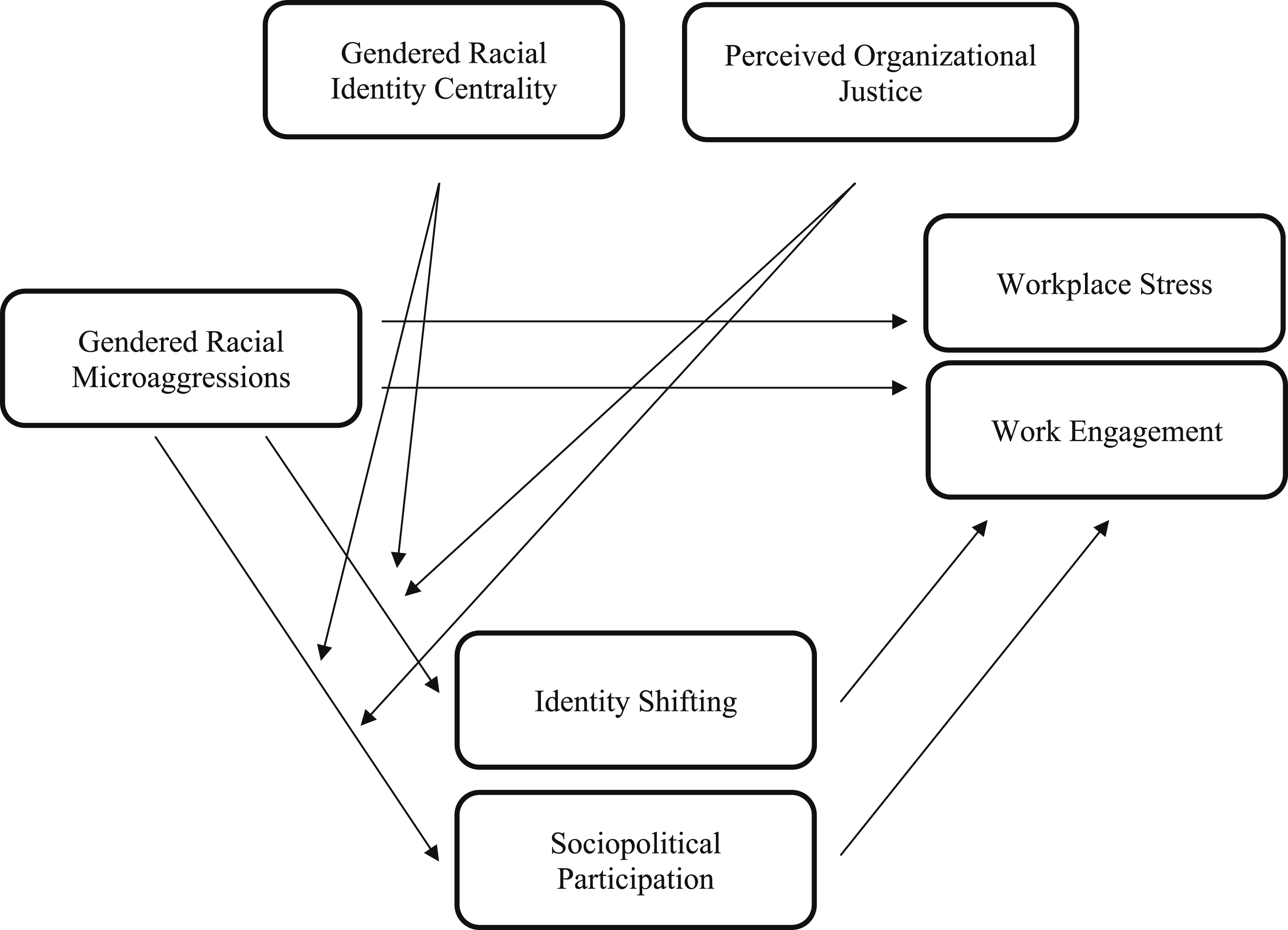
We analyzed the data with path analysis using Mplus and robust maximum likelihood estimation (Muthén & Muthén, 2017). We chose path analysis because it allowed us to test the proposed multivariate conceptual model, including simultaneously testing direct effects, indirect effects, and moderations. Although structural equation modelling would be ideal, a larger sample size would be necessary with the number of indicators and variables involved (e.g., 5 to 10 observations per estimated parameter would require a much larger sample size; Kline, 2016). To evaluate model fit, we used chi-square, the Comparative Fit Index (CFI), the Root Mean Square Error of Approximation (RMSEA), and the Standardized Root Mean Square Residual (SRMR). The benchmarks guiding acceptable fit include CFI values greater than or equal to 0.95 and RMSEA and SRMR values less than or equal to 0.08 (Kline, 2016). As seen in Figure 1, the primary structural model included relations from GRMs to sociopolitical participation and identity shifting, which then predicted workplace stress and work engagement. Within the model, we allowed sociopolitical participation and identity-shifting to correlate and workplace stress and work engagement to correlate. To further specify the model, we included GRI centrality and POJ as moderators, which we allowed to correlate and predict the mediators. We also calculated interaction terms by centering GRMs, GRI, and POJ and creating GRMs by GRI and GRMs by POJ product terms. We regressed these interaction terms onto the mediators. Finally, we tested the four hypothesized indirect effects, which are significant when their 95% confidence intervals do not include zero.
Proposed Structural Model
Results
Preliminary Analyses
Correlations Among Study Variables
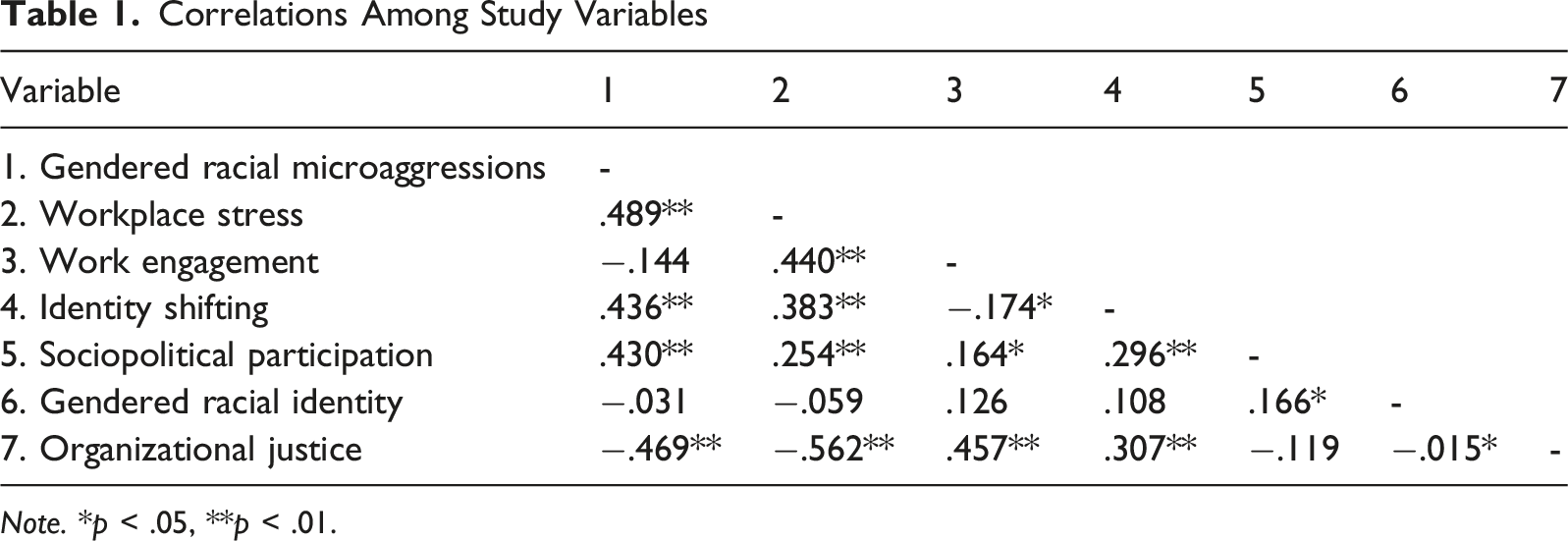
Note. *p < .05, **p < .01.
Main Analyses
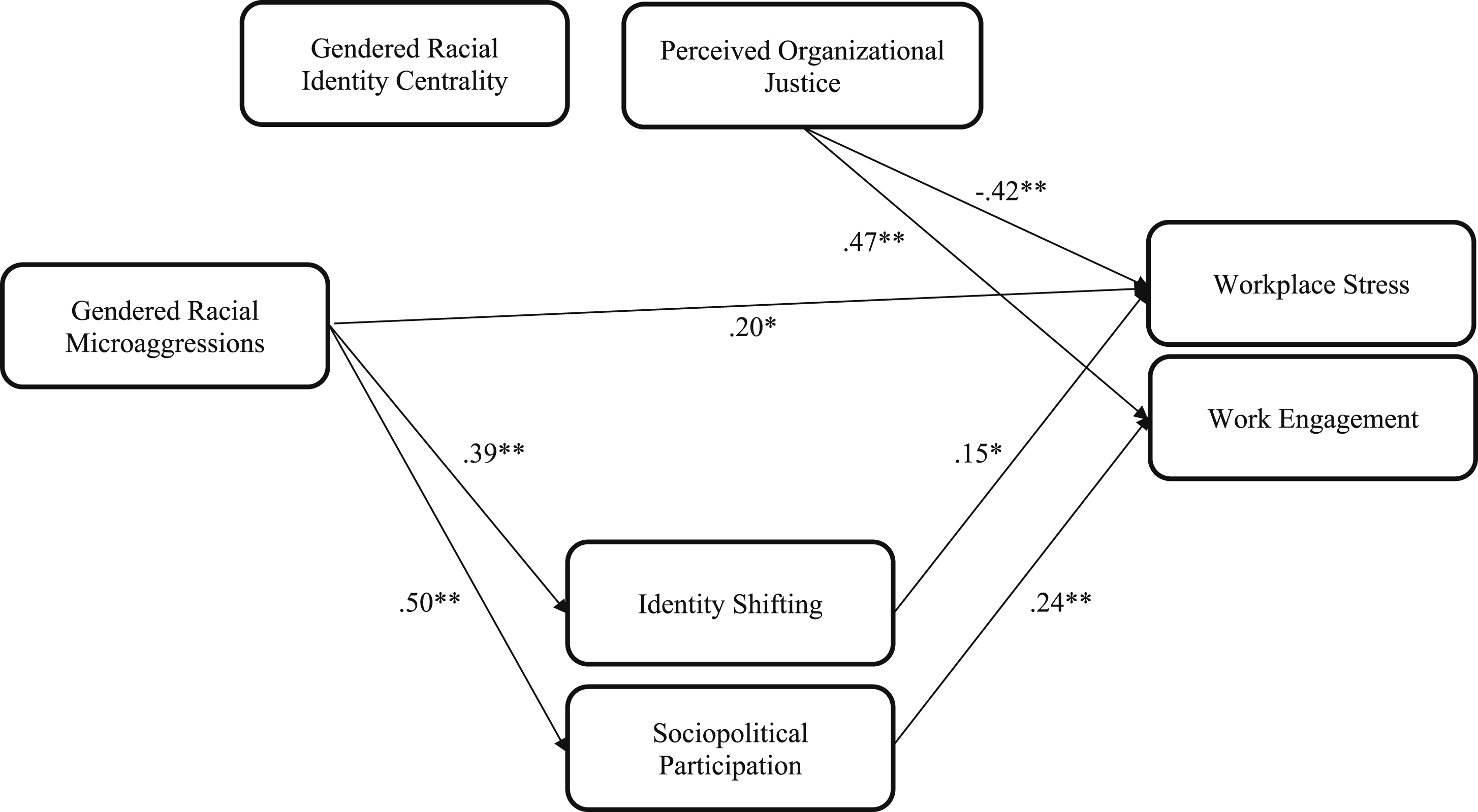
The initial moderated mediation model demonstrated a good fit to the data, χ2 (12) = 21.12, p = .049, CFI = .942, RMSEA = .070, 90% CI [0.005, 0.118], and SRMR = .075. However, we tested whether adding direct effects from GRMs to the outcomes improved fit. First, the path from GRMs to workplace stress significantly improved fit, χ2 (1) = 4.20, p = .040, but the path from GRMs to work engagement did not, χ2 (1) = 2.10, p = .148. Therefore, we only retained the path to workplace stress for further analysis. The revised model had strong fit to the data, χ2 (11) = 17.15, p = .104, CFI = .961, RMSEA = .060, 90% CI [<.001, 0112], and SRMR = .074.
Moderated Mediation Model Findings (N = 154)
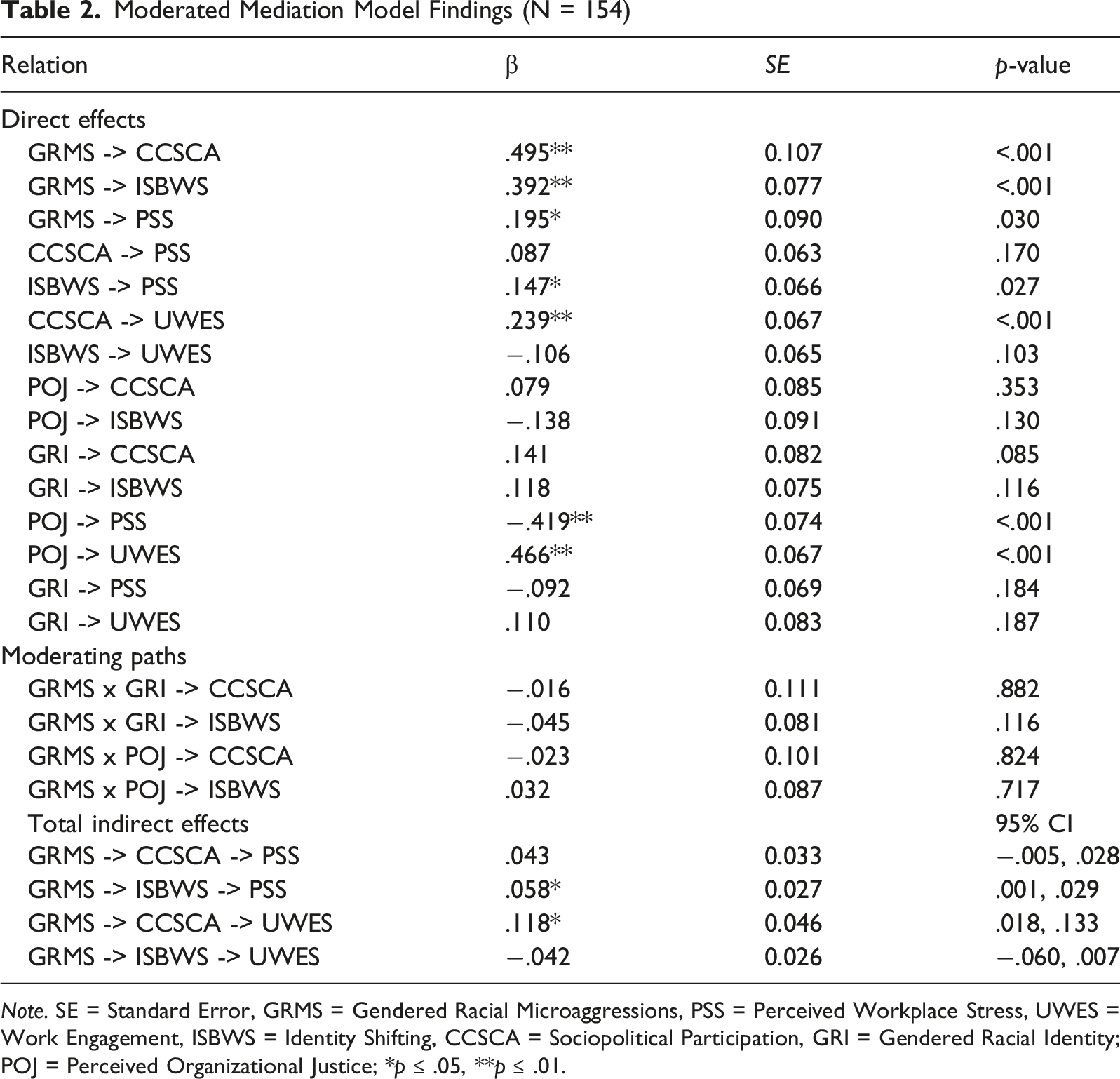
Note. SE = Standard Error, GRMS = Gendered Racial Microaggressions, PSS = Perceived Workplace Stress, UWES = Work Engagement, ISBWS = Identity Shifting, CCSCA = Sociopolitical Participation, GRI = Gendered Racial Identity; POJ = Perceived Organizational Justice; *p ≤ .05, **p ≤ .01.
Discussion
This study examined how workplace GRMs predicted workplace stress and work engagement among Black women, with sociopolitical participation and identity shifting behaviors as mediators. Additionally, we explored the moderating roles of gendered racial identity centrality and perceived organizational justice. Results revealed that identity shifting mediated the relation from GRMs to workplace stress, while sociopolitical participation mediated the relation between GRMs and work engagement. Additionally, although gendered racial identity centrality and perceived organizational justice did not moderate these mediation pathways, perceived organizational justice negatively predicted workplace stress and positively predicted work engagement. These findings highlight the unique intersectional experiences of Black women in navigating GRMs at work, emphasizing how sociopolitical engagement and identity management strategies shape their workplace experiences.
Although the overarching goal to extend prior work on gendered racial microaggressions (e.g., Lewis et al., 2017) to workplace well-being among Black women was successful, hypotheses were only partially supported. First, while workplace GRMs positively predicted sociopolitical participation, sociopolitical participation did not significantly predict workplace stress. This suggests that although experiencing microaggressions may motivate individuals to engage in activism as a form of resistance (Thatcher et al., 2023), this engagement does not necessarily reduce workplace stress. This differs from prior research suggesting that sociopolitical engagement might provide a sense of empowerment and control that ultimately reduces stress (Diemer et al., 2017; Prilleltensky, 2012). Although this might be broadly true, activism may function independently of workplace stress or other factors, such as workplace policies or individual coping mechanisms, may shape whether sociopolitical engagement translates into workplace stress. Alternatively, the lack of a significant relation here may be due to measurement issues; specifically, we measured general sociopolitical participation (e.g., protesting, writing members of congress), not activism related to workplace policies and practices. In short, domain specific resistance may better predict workplace stress.
In contrast, sociopolitical participation did positively predict work engagement, leading to a significant indirect effect from workplace GRMs to work engagement via sociopolitical participation. This suggests that Black women who engage in activism and advocacy may find greater meaning in their professional roles, which could enhance their work engagement. This finding also aligns with prior literature suggesting that sociopolitical engagement can foster a sense of empowerment and commitment to work, despite workplace challenges (Christens, 2012), and that experiences of oppression are related to resistance (Thatcher et al., 2023). However, third variables, such as proactive personality, may also lead to both sociopolitical participation and work engagement, so future research should explore this possibility.
Next, workplace GRMs predicted greater identity shifting, which positively predicted workplace stress. First, this is consistent with research finding that Black women may shift their identities to minimize the negative consequences of discrimination and marginalization (Dickens & Chavez, 2018; Jones & Shorter-Gooden, 2004; Purdie-Vaughns & Eibach, 2008). Second, this finding corroborates literature on identity shifting’s negative relation with well-being, such as emotional exhaustion, cognitive depletion, and heightened stress (Dickens et al., 2019; McCluney et al., 2021; West, 2019; Wingfield, 2007). Specifically, although Black women may adopt identity shifting as a strategy to navigate and cope with discrimination and mistreatment, there are likely psychological costs associated with continually modifying one’s identity to conform to dominant cultural expectations.
In contrast, identity shifting did not significantly predict work engagement, so there was no significant indirect effect here. Therefore, the energy required to engage in identity shifting may not always directly affect work engagement. However, the lack of significance in the model may in part be due to power issues, and the small effect from identity shifting to work engagement (β = −.11) would likely be significant with a larger sample. Regardless, this finding differs from literature suggesting that identity shifting in response to racial microaggressions ultimately reduces work engagement and increases stress by depleting emotional resources in work contexts (Cooke & Hastings, 2023; Dickens & Chavez, 2018; Hall et al., 2012). However, other factors may moderate this relation, such as coping strategies and contextual variables. Regardless, these findings highlight the complexity of coping strategies in response to GRMs and emphasize that they do not always yield uniformly positive outcomes. Instead, they may carry psychological costs, particularly in settings where discrimination persists.
The moderated mediation analyses revealed that neither gendered racial identity nor perceived organizational justice moderated the mediation pathways. First, these findings challenge several existing assumptions about the role of racial identity centrality in coping with discrimination. For example, evidence suggests that a strong racial identity centrality might encourage sociopolitical participation and discourage identity shifting as mechanisms for coping with microaggressions (e.g., Hope et al., 2016). Yet, we found that gendered racial identity centrality did not alter the relationship between workplace GRMs and activism, suggesting that workplace environments may restrict expressions of activism despite identity centrality. Likewise, previous studies have suggested that high identity centrality consistently benefits mental health by providing resilience against discrimination (e.g., Neblett et al., 2012). However, gendered racial identity centrality did not significantly moderate the relations between GRMs and identity shifting, which indicates that resistance does not operate uniformly across marginalized groups and that professional settings can shape coping choices differently (Outten et al., 2009).
Finally, research supports the idea that perceptions of organizational justice may mitigate the negative effects of discrimination and reduce turnover intentions (Colquitt et al., 2013; Mor Barak, 2005). However, perceived organizational justice did not significantly moderate the relationship between workplace GRMs and identity shifting, indicating that organizational fairness may not directly influence identity management behaviors. However, POJ negatively predicted workplace stress and positively predicted work engagement, which supports research highlighting the role of organizational justice in reducing psychological distress in marginalized employees (Hope et al., 2016).
In summary, this study tested a key theoretical proposition that experiences of intersectional discrimination lead to different forms of resistance, which can target different levels of power and differentially predict well-being (Blustein & Allan, 2025; Szymanski & Lewis, 2016; Thatcher et al., 2023). However, our findings that workplace GRMs operated on stress through identity shifting and on work engagement through sociopolitical participation suggest that GRMs may lead to complex pathways of resistance and well-being. For example, a previous study with Black women in college found that GRMs predicted resistance, advocacy, detachment, and internalization but that only detachment and internalization predicted psychological distress (identity centrality also moderated the relation between GRMs and detachment; Szymanski & Lewis, 2016). In short, although evidence supports the broad theoretical contention that GRMs leads to resistance, greater theoretical nuance is necessary to explain different pathways and explore how resistance targeting different levels affects outcomes.
Practical Implications
The current study provides several implications for mental health professionals working with employed Black women. Specifically, counselors should work to validate clients’ experiences with discrimination and microaggressions, helping them explore healthy adaptive coping strategies that do not exacerbate psychological distress. For example, evidence from the current study and previous research suggest that sociopolitical participation may be helpful for outcomes like work engagement and serve a protective role in other contexts (e.g., Autin et al., 2022). Therefore, counselors might explore sociopolitical participation as a potentially empowering and adaptive response to GRMs. Conversely, supporting clients in developing adaptive identity management strategies may help mitigate the psychological toll of identity shifting on outcomes like workplace stress. For example, cognitive-behavioral therapy, identity-affirming interventions, and mindfulness practices can improve stress resilience and emotion regulation for marginalized groups (Dickens et al., 2019; West, 2019).
The findings also have meaningful implications for organizational practices, particularly in addressing gendered racial microaggressions. Organizations must prioritize efforts to prevent and address GRMs because they contribute to downstream effects on work well-being, including workplace stress driven by identity management burdens, which might affect organizational outcomes as well (e.g., performance, turnover; Bakker & Demerouti, 2017). This suggests the need for prevention-focused policies that emphasize early intervention, accountability, and clear support mechanisms for employees facing microaggressions. In addition, given our finding that POJ predicted greater work engagement and less workplace stress, organizations should take steps to foster environments where Black women feel supported, heard, empowered, and fairly treated. Effective strategies include leadership accountability, regular education on bias and microaggressions, and transparent reporting and resolution mechanisms for incidents of discrimination (Purdie-Vaugns et al., 2008). Structured support systems, such as affinity groups, mentorship programs, and resources for civic engagement, can also provide employees with safe spaces to share experiences, seek guidance, and build resilience (Hope et al., 2016). For example, these practices can help mitigate burnout by strengthening workplace support networks and enhancing employees’ sense of belonging (Mor Barak, 2005). The specific impact of identity shifting on workplace stress further highlights the need for culturally responsive workplace policies that actively support diverse identities and reduce the necessity for identity management behaviors (Purdie-Vaugns et al., 2008).
Limitations and Future Directions
Despite these insights, several limitations affect interpretation of results. First, the cross-sectional design negates causal inference, and longitudinal research is essential to clarify the directionality relations over time. The study’s sample also restricted the generalizability of findings. For example, although this research focused specifically on the experiences of Black women—a demographic often underrepresented in organizational research—the findings may not apply to other racial or gender groups. Moreover, the sample largely reflects the perspectives of professionally active and educated Black women, which may not represent the full spectrum of Black women’s experiences across different socioeconomic and occupational backgrounds. These limitations were in part due to the smaller sample size, which also affected the power to detect smaller effects (e.g., the pathway from identity shifting to work engagement [-.11]). The smaller sample size also prevented us from conducting structural equation modelling, which would have better accounted for error. Therefore, future research should explore this topic with larger sample sizes that capture a broader range of socioeconomic, cultural, national, and occupational contexts.
The study also relied on self-report measures, which may introduce biases such as social desirability bias, common method bias, or recall bias. This highlights the need for future research to incorporate objective measures alongside self-reports to strengthen data accuracy. Additionally, workplace-specific factors—such as organizational culture or stress-reduction programs—were not accounted for in this study, though they could significantly influence responses to identity shifting and sociopolitical participation. Future research should consider these organizational variables to disentangle factors contributing to workplace stress related to microaggressions and identity management strategies.
Furthermore, this study’s findings suggest that while fairness perceptions are protective against stress, they may not directly shape identity management strategies or engagement in activism in response to discrimination. Future studies should examine how organizational interventions—such as formal anti-racist policies or inclusive leadership practices—interact with POJ to influence coping behaviors. Additionally, the findings suggest that alternative mechanisms, such as workplace cultural climate or burnout, may better explain stress outcomes. Future research should explore whether institutional factors, such as diversity and inclusion initiatives, affect how sociopolitical engagement is experienced by employees facing discrimination and examine whether coping interventions (e.g., culturally response coaching or employee resources groups) can mitigate the negative effects of identity shifting on occupational outcomes.
Footnotes

Ethical Consideration
Study was approved by the University of Houston Institutional Review Board.
Funding
The authors received no financial support for the research, authorship, and/or publication of this article.
Declaration of conflicting interests
The authors declared no potential conflicts of interest with respect to the research, authorship, and/or publication of this article.
Data Availability Statementse
Data is available upon reasonable request.
Appendix
Demographic Characteristics of Participants (N = 156) aCaribbean = comprised of Barbadian, Haitian bAfrican = comprised of Ghanaian, Nigerian, Cameroonian cOther = did not specify dPart-time = less than 40 hrs/week eFull-time = 40 hrs/week fDiverse = mix of various racial and ethnic background.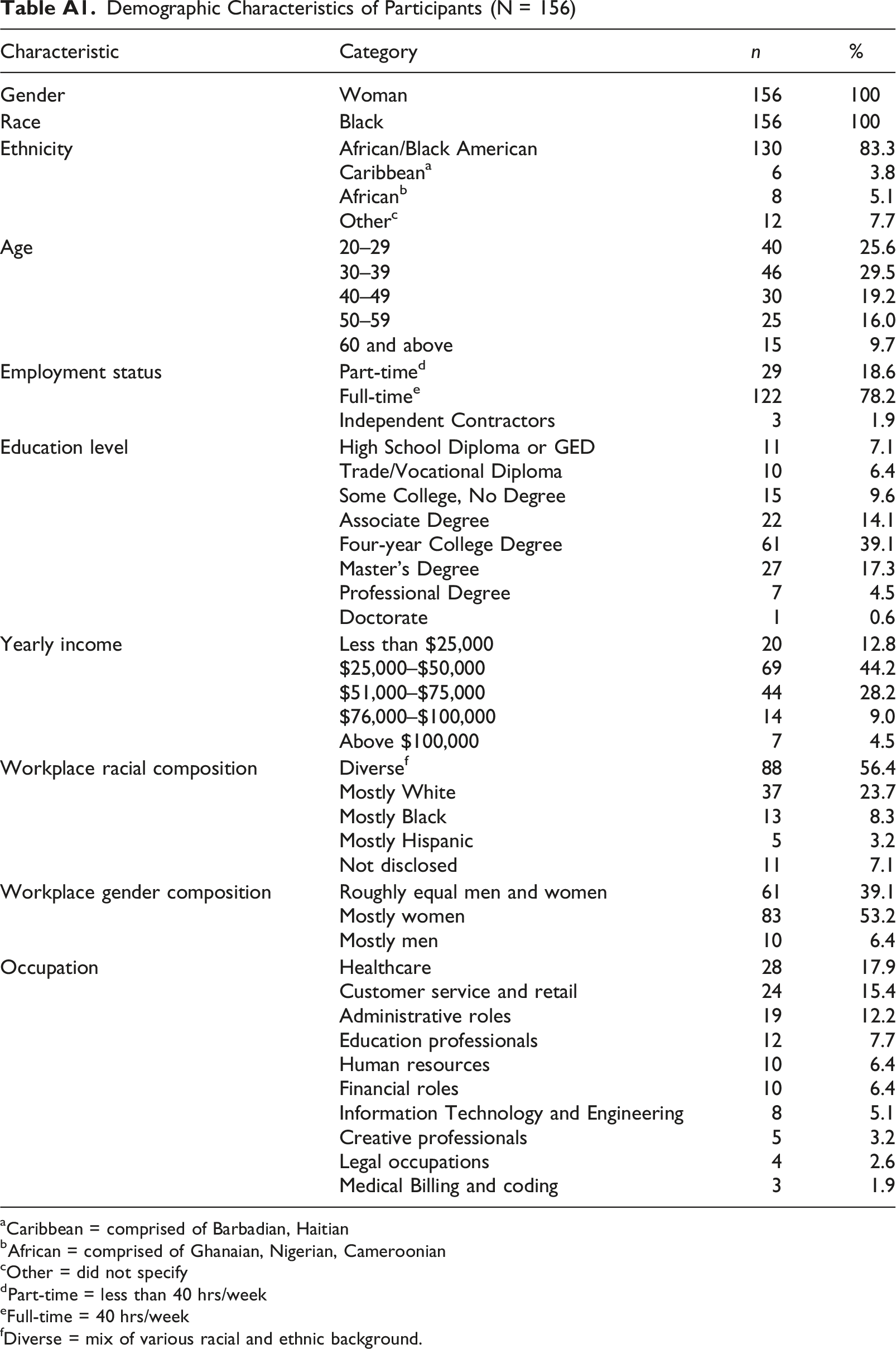
Characteristic
Category
n
%
Gender
Woman
156
100
Race
Black
156
100
Ethnicity
African/Black American
130
83.3
Caribbean
a
6
3.8
African
b
8
5.1
Other
c
12
7.7
Age
20–29
40
25.6
30–39
46
29.5
40–49
30
19.2
50–59
25
16.0
60 and above
15
9.7
Employment status
Part-time
d
29
18.6
Full-time
e
122
78.2
Independent Contractors
3
1.9
Education level
High School Diploma or GED
11
7.1
Trade/Vocational Diploma
10
6.4
Some College, No Degree
15
9.6
Associate Degree
22
14.1
Four-year College Degree
61
39.1
Master’s Degree
27
17.3
Professional Degree
7
4.5
Doctorate
1
0.6
Yearly income
Less than $25,000
20
12.8
$25,000–$50,000
69
44.2
$51,000–$75,000
44
28.2
$76,000–$100,000
14
9.0
Above $100,000
7
4.5
Workplace racial composition
Diverse
f
88
56.4
Mostly White
37
23.7
Mostly Black
13
8.3
Mostly Hispanic
5
3.2
Not disclosed
11
7.1
Workplace gender composition
Roughly equal men and women
61
39.1
Mostly women
83
53.2
Mostly men
10
6.4
Occupation
Healthcare
28
17.9
Customer service and retail
24
15.4
Administrative roles
19
12.2
Education professionals
12
7.7
Human resources
10
6.4
Financial roles
10
6.4
Information Technology and Engineering
8
5.1
Creative professionals
5
3.2
Legal occupations
4
2.6
Medical Billing and coding
3
1.9
Final Structural Model. Note: Only significant paths are depicted. *p ≤ .05, **p ≤ .01