







Abstract
In the increasingly competitive job market, college graduates inevitably encounter negative events of varying strengths in the job search process. The current study aims to explore how and when negative event strength influences their job search performance. Drawing on crisis decision theory, we argue that negative event strength interacts with individual characteristics (i.e., error aversion and social comparison orientation) to influence job seekers’ job search effort and subsequent job search performance (i.e., the number of job offers). Using a sample of 245 college graduates, we tested our hypotheses with the PROCESS macro Version 4.1. Our results show that the effect of negative event strength on job search effort was more pronounced for individuals with lower levels of error aversion and those with lower levels of social comparison orientation, leading to a greater number of job offers. This study contributes to the job search literature by shedding light on the mechanisms through which negative event strength influences job search performance.
Keywords
Introduction
Individuals’ first full-time job after completing their studies is critical in shaping their long-term career outcomes (Cooper-Thomas et al., 2018; Kondo, 2007). However, the job search process is inherently dynamic and unpredictable, requiring job seekers to adopt flexible coping strategies to deal with various challenges and uncertainty (Fu et al., 2023; Lent & Brown, 2013). For college graduates, negative events such as being rejected for an interview, being ignored by employers, or experiencing unfair treatment could have a non-negligible impact on their job search performance (i.e., the number of job offers). Given that college graduates often lack in-depth knowledge of the labor market and have relatively limited professional support networks (Boswell et al., 2012; Chima et al., 2023), they are particularly vulnerable to the adverse effects of such negative events during the job search process.
Despite extensive literature on job search behavior, most studies have focused on individual characteristics (e.g., self-efficacy) and contextual factors (e.g., social support) that influence job search outcomes (Ferreira et al., 2023; Leenders et al., 2019; Wanberg et al., 2012; Ślebarska et al., 2009). While these factors are undoubtedly important, a recent study by Guan et al. (2022) provides a new perspective, suggesting that the strength of events in job search can significantly influence job seekers’ psychological experiences and the number of job offers. Previous studies have adopted both quantitative (i.e., the frequency of an event) and qualitative (i.e., the novelty, disruption, and criticality of an event) approaches to measure the event strength (Akkermans et al., 2018; Morgeson et al., 2015). However, according to Guan et al. (2022), the frequency of negative events has a limited effect on the number of offers with a non-significant coefficient. Therefore, the current study particularly focuses on the qualitative aspect of negative event strength and aims to explore how and when negative event strength in job search affects individuals’ job search behaviors and job search performance (i.e., the number of offers).
To open the “black box” between negative event strength and job search performance, the current study introduces the crisis decisions theory (Sweeny, 2008). Combining the advantages of coping theory and decision-making research (Lipshits-Braziler et al., 2015), crisis decision theory focuses on how individuals respond to negative events (e.g., interview rejection, workplace bullying, workplace conflict, etc.). According to crisis decision theory, when individuals experience a negative event, they are forced to enter a “crisis situation”, a stressful mental state triggered by ambiguity and uncertainty (Duhachek, 2005). In this “crisis situation”, they assess the event based on available information and react with either positive (e.g., increasing effort, committing more resources, and seeking social support) or negative (e.g., avoidance, delay) behaviors (Liu et al., 2014; van Hooft et al., 2021). For job seekers, effective coping responses (e.g., increased effort), are essential for transforming the knowledge gained from negative experiences into future job search success (Wanberg et al., 1999).
However, not all individuals respond to negative events by increasing job search effort (Gabriel et al., 2021). According to the crisis decision theory (Sweeny, 2008), whether or not individuals increase their engagement after experiencing a negative event (a positive response) depends on individual characteristics. Specifically, people rely on various types of information when experiencing negative events (Gentzler et al., 2010). However, the process of searching for and utilizing this information is not always objective, and individual characteristics can significantly influence how the information is processed, which then affects their subsequent responses (Curtis & Payne, 2008). Thus, it is important to consider these individual characteristics as potential boundary conditions in the relationship between negative event strength and job search effort.
We first focus on error aversion, defined as a tendency to cover up and experience strain from errors (Van Dyck et al., 2005). Crisis decision theory suggests that individuals will carefully evaluate potential losses and gains when faced with a negative event (Sweeny, 2008). Individuals with higher levels of error aversion, tend to magnify the consequences of errors, leading to excessive risk-averse behavior when making decisions (Johnson et al., 2013). During the job search process, these job seekers may reduce their job search efforts due to an overwhelming fear of failure.
Furthermore, social comparison orientation that refers to individuals’ tendencies to assess their abilities and outcomes by comparing themselves to others (Affleck & Tennen, 1991), may influence individuals’ sensitivity and response to social information when they encounter a negative event. Individuals with higher levels of social comparison orientation are more sensitive to information from social contexts and engage in frequent comparisons, both upward (to those perceived as better) and downward (to those perceived as worse). While such comparisons can sometimes be motivating, they can also lead to information overload and negative emotions such as anxiety or self-doubt, which in turn influences their ability to make decisions in crisis situations. Further, these excessive information and emotional reactions may diminish the motivation to continue exerting effort in the job search process (Niu et al., 2022).
In sum, this study aims to investigate how and when negative events strength affects job search performance. As shown in Figure 1, we propose that negative event strength will influence job search effort conjointly with error aversion and social comparison orientation, which in turn, further predict the number of job offers that job seekers ultimately receive. Theoretical Model. Note: T1 = Time 1 (9 months before graduation); T2 = Time 2 (6 months before graduation); T3 = Time 3 (3 months before graduation)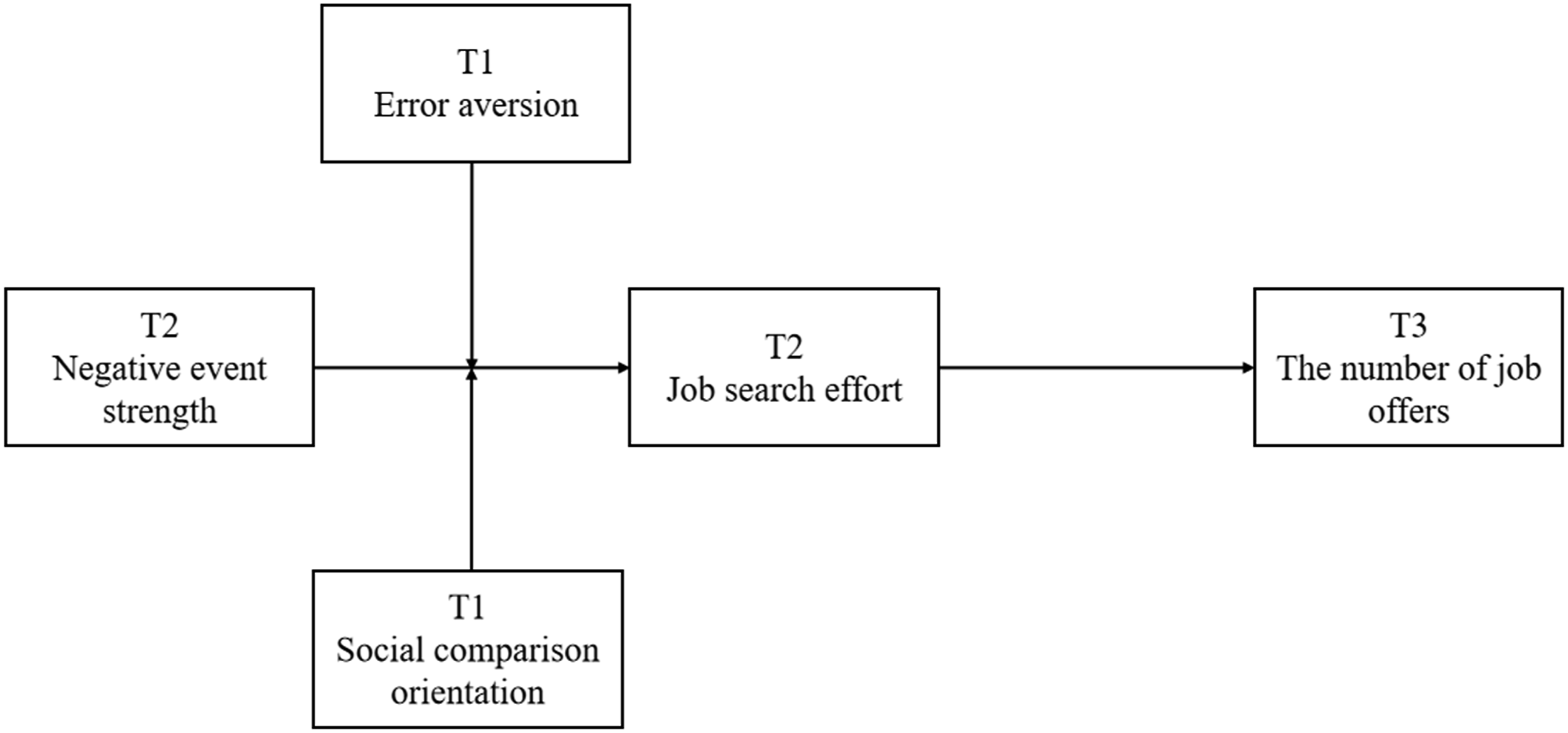
Theory and Hypothesis Development
According to crisis decision theory (Sweeny, 2008), negative events in a job search situation can create an oppressive crisis situation that influences job seekers’ responses. However, job seekers may exhibit different responses when faced with a negative event due to differences in event strength and individual characteristics (Kanfer et al., 2001; McFarland et al., 2020). Some job seekers may take positive responses, such as increasing job search activities, improving job search skills, and optimizing job search strategies, in order to enhance their competitiveness in the labor market (Saks, 2005). Conversely, others may adopt relatively negative strategies, such as escaping from reality or shifting their attention to other matters that are not related to job search. In what follows, we particularly focus on the moderating roles of two types of individual characteristics (error aversion and social comparison orientation), and how these individual characteristics and negative event strength interact to affect job search effort and then influence the number of job offers.
The Moderating Roles of Error Aversion and Social Comparison Orientation
Event strength, a core concept from event system theory, is captured by three qualitative dimensions: novelty, disruption, and criticality (Morgeson et al., 2015). Novelty reflects the extent to which the event distinguishes itself from present and past behaviors, characteristics, and events (e.g., encountering an unfamiliar AI-driven rejection process). Disruption refers to the extent to which the event subverts and disrupts routine activities, such as a target company’s sudden hiring freeze halting prepared job search plans. Criticality reflects the extent to which events need to be prioritized for response, such as such as receiving interview feedback from an industry-leading firm that fundamentally questions one’s professional fit, thereby threatening their core career identity and long-term positioning. Briefly speaking, the impacts of a certain negative event become more pronounced when it is novel, disruptive, and critical, which means higher negative event strength levels (Morgeson, 2005).
However, previous studies have shown that perceptions of and responses to negative event are highly heterogeneous and dependent on individual psychological traits (Luan et al., 2023). For instance, one job seeker might perceive a job rejection as highly novel (a first-time experience) and critical (a threat to his/her career prospects), triggering significant anxiety. Another might view the same rejection as an expected, non-critical part of the process, leading to a learning-oriented response. Such differential appraisals stem from individual factors, such as prior experiences, coping resources, and personality traits, which shape how event characteristics are subjectively weighted and interpreted (Creed et al., 2017). This highlights the need to look beyond the objective occurrence of events and examine their subjective, qualitative strength. Therefore, in the current study, we propose two specific individual characteristics—error aversion and social comparison orientation serve as critical boundary conditions. Specifically, they moderate the relationship between negative event strength and individuals’ job search effort.
Error aversion refers to individuals’ tendency to worry about, fear, or avoid errors and it influences how they process information that is directly related to the error (Van Dyck et al., 2005). Individuals with different levels of error aversion adopt different resource allocation strategies and self-regulation strategies when experiencing negative events (Boksem et al., 2008; Tait, 2015), and the choice of these strategies may directly affect their subsequent job search effort. During the job search process, job seekers high in error aversion usually fear the occurrence of high-strength negative events and attempt to cover them up, such as, not mentioning interview failure experience, blaming negative events on others or external factors, and falsifying interview results (Damgaard & Sydnor, 2019).
Error aversion is expected to mitigate the relationship between negative event strength and job search effort. First, given the finite nature of resources, job seekers with higher levels of error aversion invest more resources in covering up negative events (Deng et al., 2024), which may reduce their efforts in the subsequent job search process. Second, since individuals with higher levels of error aversion are relatively sensitive to negative feedback, they are likely to suffer from negative emotional experiences (e.g., anxiety and worry) after negative events (Pattershall et al., 2012). To cope with the effects of these negative emotions, they usually adopt emotional control as a self-regulatory strategy, which focuses more on managing emotions rather than solving the problem (Wanberg et al., 1999). As a result, job seekers with higher levels of error aversion tend to withdraw from the job search task, showing avoidance or withdrawal behavioral responses, which may ultimately affect their job search performance.
In contrast, job seekers who are low in error aversion usually exhibit a higher tolerance for negative events. First, instead of squandering resources to cover up negative events, they actively seek out hidden opportunities and learn from them (Cannon & Edmondson, 2001). Consequently, they could allocate more resources to the job search process, exploring potential opportunities and converting their accumulated experience into motivation for their job search (Affum-Osei et al., 2021). Second, when faced with negative events, job seekers with lower levels of error aversion tend to adopt problem-focused coping strategies, manifesting as maintaining effort through techniques such as goal setting (Kanfer & Heggestad, 1997). They can swiftly adjust their job search goals and facilitate the job search process through increasing job search effort (Carver, 2006; Wanberg et al., 2010). Accordingly, we proposed that:
Error aversion moderates the relationship between negative event strength and job search effort such that the positive relationship is weaker when error aversion is high as opposed to low.
As discussed above, error aversion influences how individuals process information directly related to the negative event; social comparison orientation, on the other hand, affects how individuals process information indirectly related to such events (Sweeny, 2008). Social comparison orientation refers to individuals’ tendencies to seek information from their social environment for self-orientation and self-assessment (Affleck & Tennen, 1991), which helps individuals gather information about themselves within a social context (Myers & Crowther, 2009). Depending on their level of social comparison orientation, individuals may respond differently to negative events based on the social information they receive and the way resources are allocate (Doan & Shaw, 2019; Ostrom et al., 1981).
Specifically, individuals with higher levels of social comparison orientation frequently compare their experiences with those of others (Ybema & Buunk, 1995). When faced with negative events, they rely heavily on these comparisons for information, attempting to draw solutions from others’ experiences (Roels & Su, 2014). However, processing this vast amount of information can deplete cognitive resources (Franco & Murawski, 2023), leaving individuals with insufficient energy to invest in their job search efforts. Additionally, information overload can make it challenging to discern which information is genuinely valuable (Che et al., 2019) complicating the direction and focus of their job search efforts. Furthermore, frequent social comparisons often also trigger negative emotions such as anxiety, worry, and fear (Gibbons & Buunk, 1999), which can further drain psychological resources and hinder concentration on the job search, thereby reducing effort in subsequent job search activities.
Conversely, individuals with lower levels of social comparison orientation are less inclined to compare their experiences with others (Gibbons et al., 2002). As a result, they receive less but more precise information from their social environment. This selective information helps them filter out what is truly valuable, potentially guiding their job search behavior in a more focused and efficient manner (Cai, 2020). Moreover, individuals with low social comparison orientation are more likely to use their limited cognitive resources for self-reflection and personal growth rather than expending them on unnecessary comparisons (Kruger et al., 2008). Consequently, when faced with negative events, they are less likely to be overwhelmed by external influences or negative emotions. Instead, they tend to concentrate on improving their competencies and refining job search strategies, often increasing their job search efforts in response to adversity (Buunk & Gibbons, 2007). Therefore, we propose that individuals with varying levels of social comparison orientation demonstrate different levels of effort in response to high-intensity negative events:
Social comparison orientation moderates the relationship between negative event strength and job search effort such that the positive relationship is weaker when social comparison orientation is high as opposed to low.
Job Search Effort and Job Offer
The job search literature suggests that the amount of time and effort an individual invests in their job search is a critical determinant of job search performance (Werbel, 2000). Conceptually, job search effort is defined as the total amount of time, physical energy, and cognitive persistence an individual devotes to job-seeking activities (Blau, 1993, 1994). In previous empirical studies, this construct has been primarily operationalized through the frequency and intensity of specific active behaviors, such as the number of hours spent searching per week, the frequency of submitting applications (Blau, 1994; Saks, 2005), and the intensity of reaching out to professional networks (Saks & Ashforth, 2000; Wanberg et al., 1999). This conceptualization aligns with common operationalizations in prior research, which often measure effort via self-reports of time and energy invested (Saks & Ashforth, 2000; van Hooft et al., 2022). Critically, meta-analytic evidence and process models confirm that such effort is a key self-regulatory driver in the unfolding job search process, leading to proximal outcomes like interviews and, ultimately, to distal outcomes like job offers (da Motta Veiga & Gabriel, 2016; Song et al., 2020; van Hooft et al., 2021). Building on this foundation, this study further explores how the level of job search effort directly or indirectly affects the number of job offers received.
First, job seekers who exert high levels of effort typically gain access to richer and more detailed employment information. Rather than relying on a single channel, these job seekers explore job opportunities through multiple channels, including job boards, social media platforms, and career fairs (Mussida & Zanin, 2020). This multi-channel information approach not only increases their engagement with potential employers but also allows them to more effectively identify positions that align with their skills and experience (Hall & Schulhofer-Wohl, 2018). Beyond expanding their search breadth, high-effort seekers also conduct deeper investigations into potential employers. Specifically, as Mankki (2023) demonstrated, they employ proactive and systematic digital search strategies to extract nuanced employer cues that are not immediately visible in standard job postings. Additionally, they go beyond job details (e.g., salary, benefits, and job description), and conduct in-depth research on the company’s culture, values, and growth prospects (Judge & Cable, 1997). This comprehensive information-gathering approach ensures they apply for roles that align with their career aspirations, ultimately granting them a competitive advantage and enhancing their likelihood of receiving offers (Saks & Ashforth, 2000).
Second, job seekers who exert higher levels of effort tend to focus on improving their job search abilities and skills. This improvement stems from the accumulation of experience with each job search, enabling them to refine their interview skills and prepare more accurate application materials for subsequent searches (Saks & Ashforth, 2000). This experience-driven skill development will significantly enhance their competitiveness in the job market. For example, the study of Wanberg et al. (2000) argues that individuals who prioritize self-improvement are more likely to secure job offers. The continuous enhancement of job search skills not only boosts their confidence during interviews but also allows them to more accurately highlight the competencies and strengths that match the position (Van Hoye & Lievens, 2007). This distinction helps them stand out among other candidates, which increases their chances of receiving a job offer. Therefore, we posit the hypothesis:
Job search effort is positively related to the number of received job offers, that is, the higher the level of job search effort, the larger the number of job offers.
An Integrative Moderated Mediation Model
Altogether, we further propose a first-stage moderated mediation model (Preacher et al., 2007). Specifically, we argue that error aversion and social comparison orientation not only moderate the direct effect of negative event strength on job search effort but also influence its indirect effect on job offers via job search effort.
Error aversion and social comparison orientation moderate the indirect effect of negative event strength on job offer via job search effort such that this effect is weaker when these two resources are high as opposed to low.
Method
Sample and Procedures
Data were collected from a university in Xi’an, China. In collaboration with the university’s career center, email invitations were distributed to final-year undergraduate graduates who are planning to enter the job market upon graduation. Students who were willing to participate were asked to sign a consent form and complete an online survey. Participants were informed of the general aim of the study and promised that the data would be used for research purposes.
To minimize common method variance concerns (Podsakoff et al., 2003) and align with the typical autumn recruitment (Qiuzhao) cycle for university graduates in China and to, data were collected at three-time points. Specifically, major campus recruitment for many enterprises occurs in the first semester of the final year (approximately 9 months before graduation), while the concluding offer-signing phase generally occurs around 3 months prior to graduation. The specific procedures were as follows: At Time 1 (9 months before their graduation, when most were about to begin to star their job search), participants were asked to assess their error aversion, social comparison orientation and demographic variables (e.g., age, gender, major, student ID); At Time 2 (6 months before graduation), participants were asked to describe a typical negative event in the job search process and rate the novelty, disruption, criticality, and frequency of the event. In addition, they were asked to rate job search effort based on their personal experiences during the past three months of the job search process; At Time 3 (3 months before graduation), participants were asked to report the number of job offers they have received. Thus, Time 1 captured pre-search traits, Time 2 captured core search-phase events and effort, and Time 3 captured outcomes.
A total of 372 students who planned to seek employment in their final year participated in the Time 1 survey. At Time 2, we received 299 questionnaires. To ensure that the Time 2 measures of negative job search events and job search effort were grounded in actual job-seeking experiences, we excluded 9 participants who reported not having started any job search activities (e.g., submitting applications or attending interviews) at that time. Subsequently, after applying attention checks in the Time 3 survey, we retained a final sample of 245 participants who provided valid matched responses across all three waves with an overall response rate of 65.86%. In the final sample, 35.9% of the participants were male (n = 88) and 64.1% were female (n = 157) The average age of participants was 22.14 years old (SD = 1.74).
Given study attrition from Time 1 (N = 372) to Time 3 (N = 245), we assessed the potential for nonrandom sampling bias following the recommendations of Goodman & Blum (1996). We compared participants who completed all three waves of the study (the retained group; n = 245) with those who completed only the Time 1 survey (the dropout group; n = 127) on key demographic characteristics and baseline study variables. Results of independent-samples t-tests and chi-square tests indicated no significant differences between the two groups regarding age (t (372) = 0.78, p = .43), gender (
In addition, we conducted a prior power analysis using G*Power Version 3.1.9.2 (Faul et al., 2007) to evaluate the adequacy of our sample size. Given that interaction effects in moderated multiple regression are typically small (Frazier et al., 2004), we adopted a conservative small effect size of f
2
= 0.05, with a significant level of
Measures
All items were measured on a Likert-5 scale, ranging from 1 (Strongly Disagree) to 5 (Strongly Agree), except for the number of job offers.
Negative Event Strength
As previously discussed, event strength includes novelty, disruption, and criticality (Morgeson et al., 2015). We measured negative event strength using a two-step procedure based on the validated scale developed by Guan et al. (2022), which was originally developed utilizing Chinese job seeker samples. First, participants were asked to recall and briefly describe the most typical negative event they encountered in their job search during these three months (i.e. at Time 2). To avoid demand characteristics and priming biases, the prompt intentionally did not reference any specific event dimensions. A content analysis of the qualitative responses confirmed that participants recalled representative stressors, primarily including rejections and ghosting (24%), interview challenges and anxiety (18%), and self-perceived skill deficits (16%). After recalling the typical event, participants rated the subjectively perceived strength of their described event using the validated scale by Guan et al. (2022). This scale specifically assesses the theoretical dimensions of novelty (sample items are “There is no clear or known way to respond to this event” and “There is no understandable sequence of steps that can be followed by me in responding to this event”), disruption (sample items are “This event altered my normal way of job search” and “This event caused me to stop and think about how to respond”), and criticality (sample item is “This event is of great significance to my job search” and “This event is important for my job search”). The Cronbach’s alpha coefficient was .94.
Job Search Effort
We used the four-item scale of general job search effort developed by Blau (1993) to measure job search effort. This scale has been widely used and validated in the Chinese context, particularly among Chinese university student samples (Guan et al., 2013; Liu et al., 2014). Sample items are “Spent a lot of time looking for jobs.” and “Devoted much effort to looking for other jobs.” The Cronbach’s alpha coefficient of this scale was .94.
Job Offers
Consistent with previous studies (Brown et al., 2006; Côté et al., 2006), the number of job offers each participant received was used to reflect their job search performance. A single question of “How many job offers have you received” was asked in the survey to indicate job offers.
Error Aversion
Error aversion was measured using an eleven-item scale developed by Van Dyck et al. (2005), which has been used and validated in the Chinese context (e.g., Zhang et al., 2022). Sample items are “I feel stressed when making mistakes.” and “ I often afraid of making errors.” The Cronbach’s alpha coefficient of this scale was .84.
Social Comparison Orientation
We measured social comparison orientation using a nine-item scale adapted from Gibbons & Buunk (1999), which has been extensively validated in Chinese cultural contexts (e.g., Pan et al., 2021; Sun & Yu, 2024). Sample items are “I always pay a lot of attention to how I do things compared with how others do things.” and “I often compare how my loved ones (boy or girlfriend, family members, etc.) are doing with how others are doing.” The Cronbach’s alpha coefficient was .83.
Control Variables
As prior research has found that demographics are associated with job search attitudes and performance (Mau & Kopischke, 2001), gender (0 = male, 1 = female) and age (in years) were included as control variables in the analyses. Besides, we also controlled for negative event frequency, which was measured by using two-item scales developed by Bright et al. (2009). The two items are “Similar events happened many times during my job search” and “Similar events happened very frequently as I search for jobs”. The Cronbach’s alpha coefficient was .92.
Furthermore, to account for potential variations in job search difficulty across different sectors, we collected data on participants’ academic majors. In the Chinese context, academic majors are closely tied to the industries graduates enter. We coded majors into a dummy variable (0 = Humanities and Social Sciences; 1 = STEM). Preliminary robustness checks revealed that including this major dummy variable did not substantively alter the significance or direction of our main hypothesized paths. To maintain model parsimony (Becker et al., 2016), we excluded it from our final analytical models but acknowledge its potential role in job search dynamics.
Results
To test the hypothesized model of relationships, we used the PROCESS v4.1 macro (Hayes, 2017) for SPSS Version 25. PROCESS uses an ordinary least squares regression-based path analysis to estimate direct and indirect effects in mediator models, moderation models, and conditional effects in moderated mediation models. In particular, we used the PROCESS because it allows for robust testing of relationships using bootstrapping analyses of moderated effects. We used PROCESS Model 4 for Hypothesis 1a, 1b to test the mediation effects, PROCESS model 14 for H2a to test the conditional indirect effect, and a custom model variation using PROCESS model 9 to report the index of moderated serial mediation.
Means, Standard Deviations, Reliabilities, and Correlations Among Study Variables
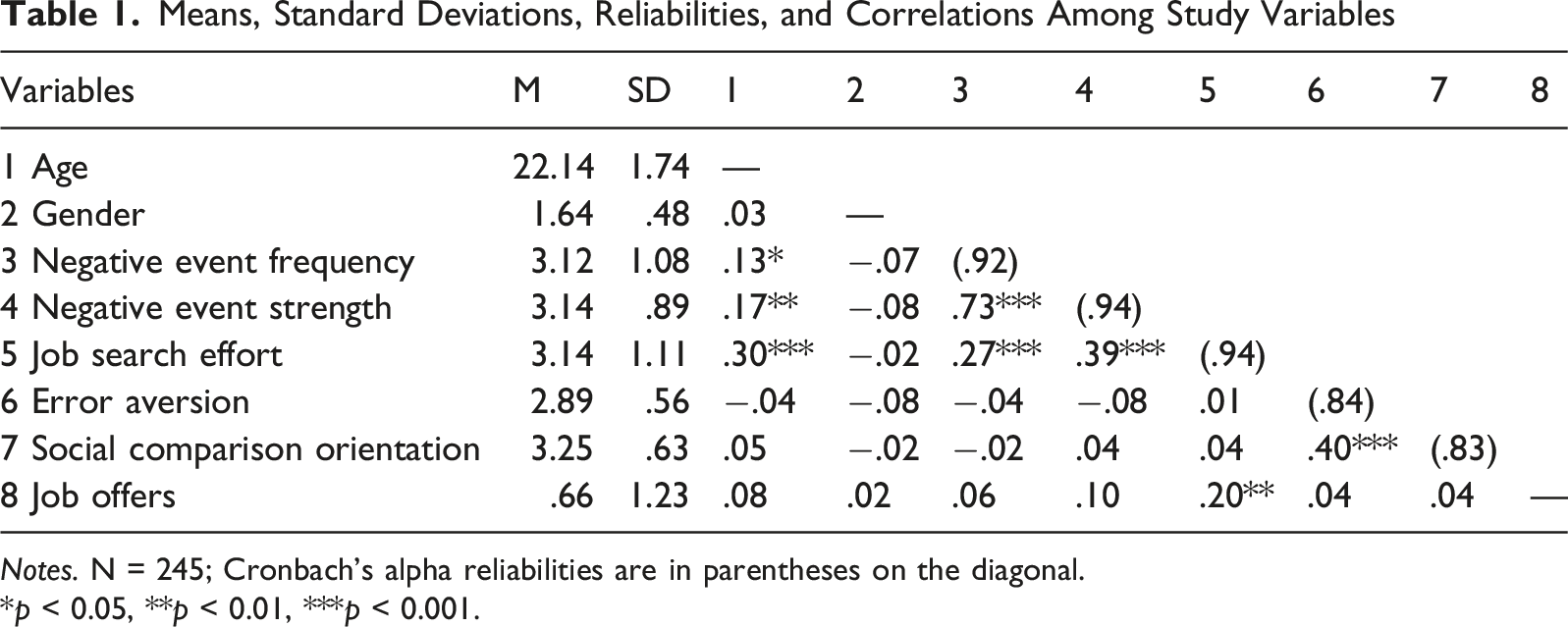
Notes. N = 245; Cronbach’s alpha reliabilities are in parentheses on the diagonal.
*p < 0.05, **p < 0.01, ***p < 0.001.
Results of Regression Analyses of H1 and H2
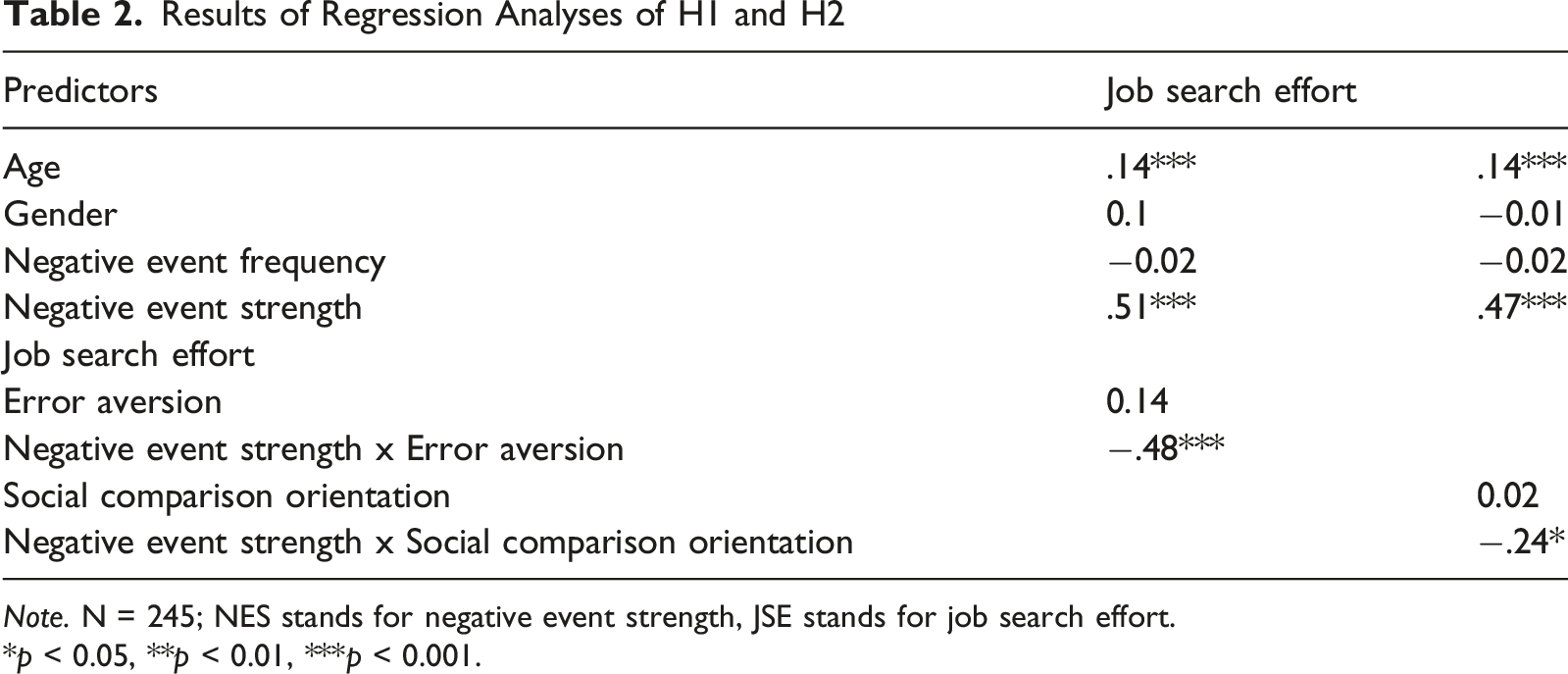
Note. N = 245; NES stands for negative event strength, JSE stands for job search effort.
*p < 0.05, **p < 0.01, ***p < 0.001.
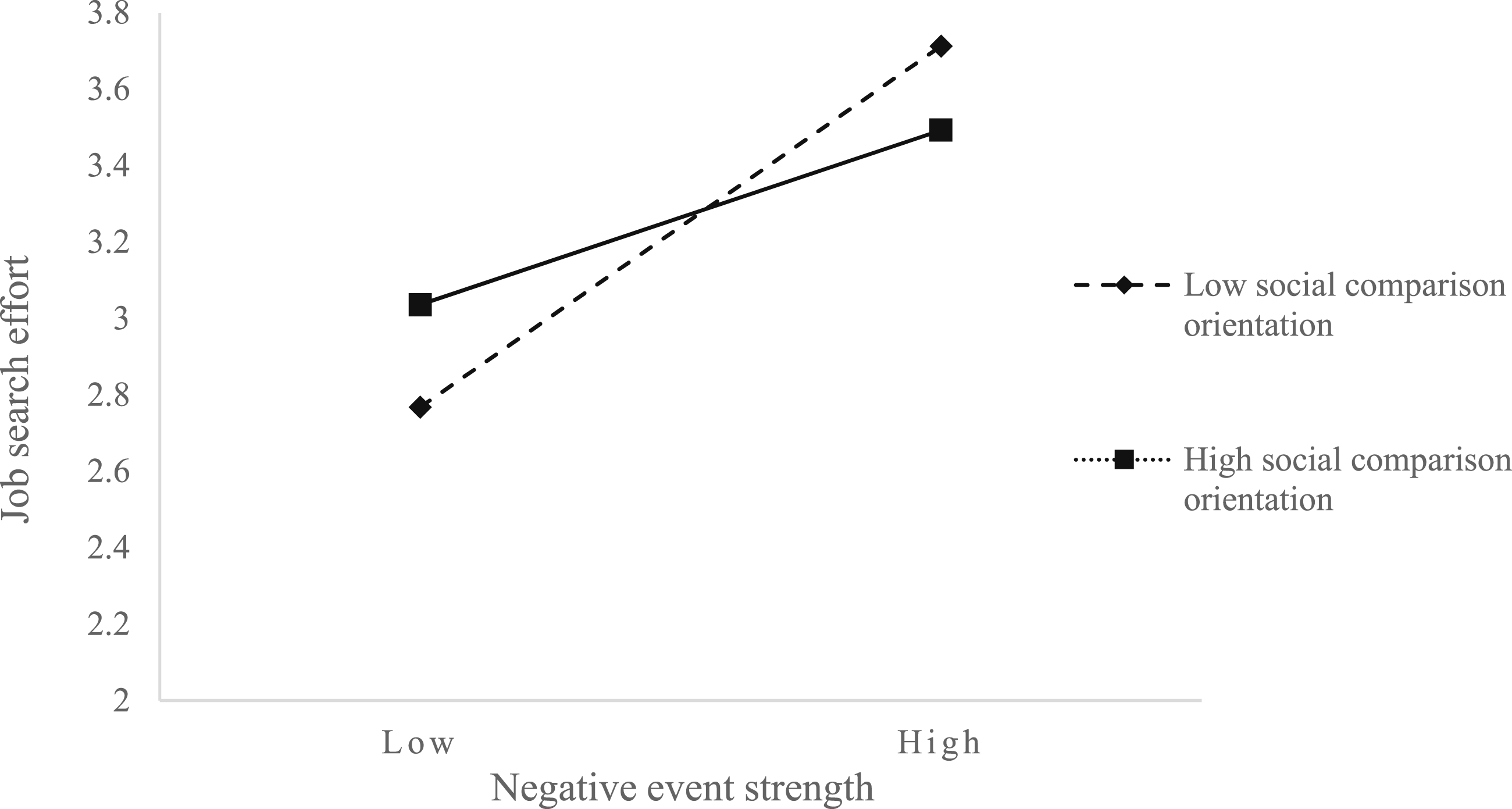
Following Preacher et al. (2006), we plotted interaction effects and conducted a simple slope analysis at conditional values of the moderators (1 SD above and below the mean). As shown in Figure 2, the relationship between negative event strength and job search effort was significantly positive for individuals with lower (−1 SD) error aversion (b = .78, p < .001), while the relationship was weaker for individuals with higher (+1 SD) error aversion (b = .23, p < .05). Thus, Hypothesis 1 was supported. As shown in Figure 3, the relationship between negative event strength and job search effort was significantly positive for individuals with lower (−1 SD) social comparison orientation (b = .63, p < .001), while the relationship was weaker for individuals with higher (+1 SD) social comparison orientation (b = .32, p < .01). Thus, Hypothesis 2 was supported. The moderating role of error aversion The moderating role of social comparison orientation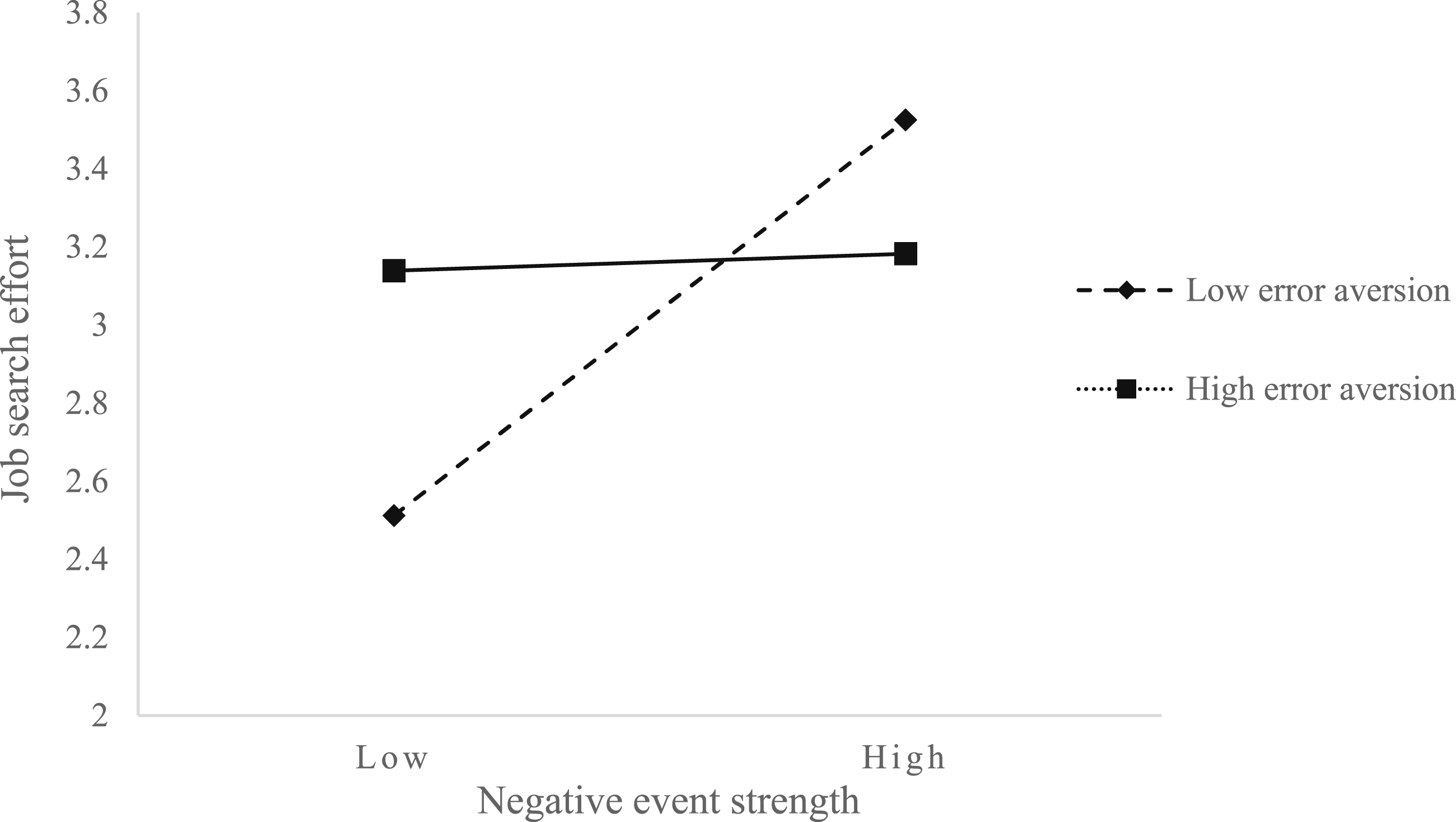
Results of Regression Analyses of H3 and H4
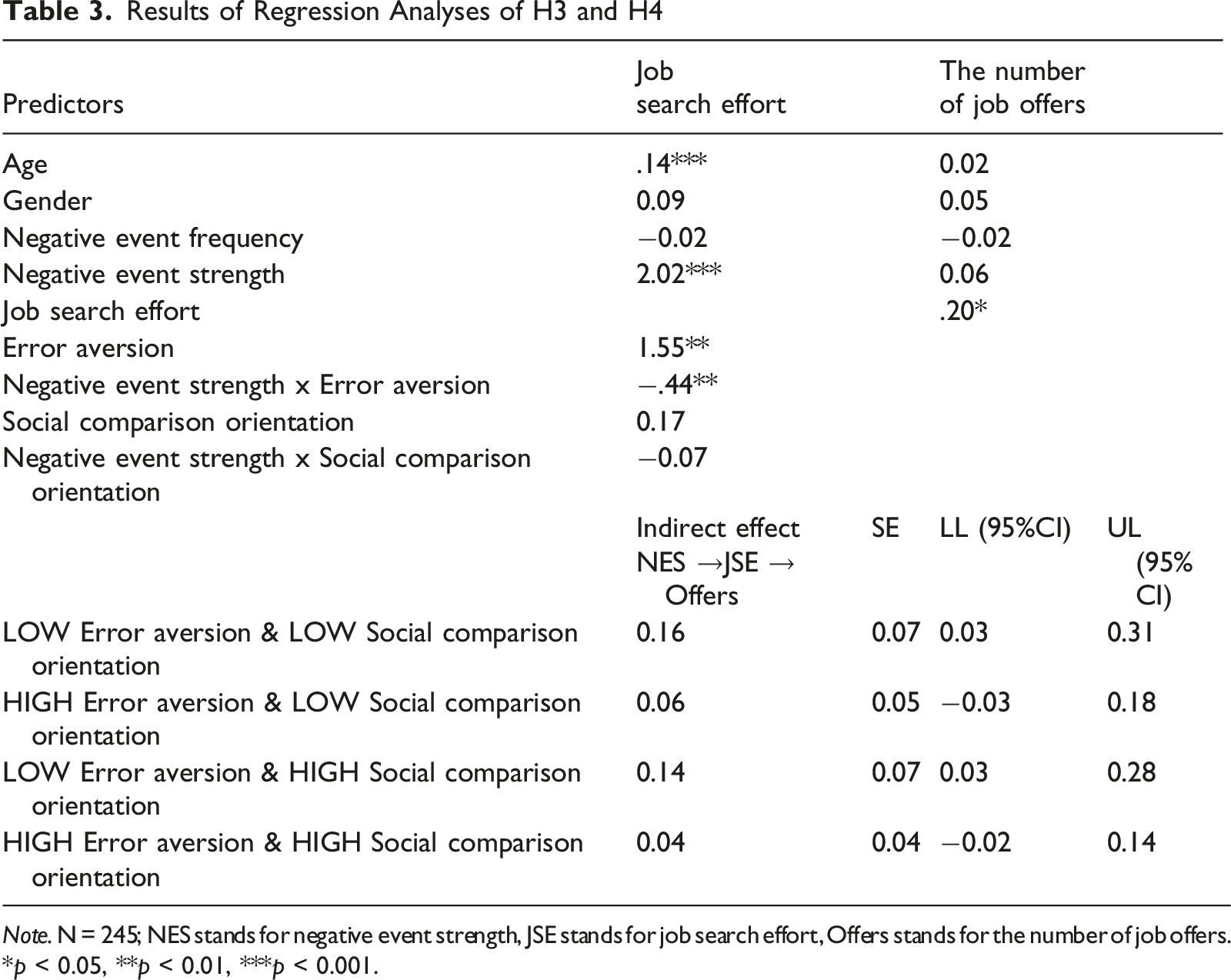
Note. N = 245; NES stands for negative event strength, JSE stands for job search effort, Offers stands for the number of job offers.
*p < 0.05, **p < 0.01, ***p < 0.001.
Based on Hypotheses 1-3, we further examined whether these two types of individual characteristics (error aversion and social comparison orientation) can moderate the indirect effect of negative event strength and job offer (i.e., moderated mediation effects). Following the approach of Edwards & Lambert (2007), we estimated the indirect effect of negative event strength on job offers via job search effort at higher (+1 SD) and lower (−1 SD) levels of moderators. As shown in Table 3, the indirect effect was strongest (indirect effect = .16, 95% CI [.03, .31]) when these two types of individual characteristics were both at lower levels (mean-1SD). In contrast, the indirect effect was weakest (indirect effect = .04, 95% CI [-.02, .14]), when these two types of individual characteristics were both at higher levels (mean+1SD). Therefore, Hypothesis 4 was supported.
Discussion
Integrating crisis decision theory with Event System Theory, this study aims to explore how and when negative event strength influences job search performance of college students. Our results indicate that job search effort mediated the effect of negative event strength on job search performance, supporting the core premise of crisis decision theory that heightened event perception mobilizes adaptive behavior (Sweeny, 2008). Furthermore, we found that error aversion and social comparison orientation alleviated the positive direct effect of negative events strength on job search effort and its indirect effect on job performance via job search efforts. These findings provide empirical support for the Event System Theory (Morgeson et al., 2015) in the job search context, demonstrating that individuals react differently to the same event. Altogether, this study deepens our understanding of post-event search behaviors and extends the boundary conditions of crisis decision theory. In what follows, we detail the theoretical and practical implications of these discoveries.
Theoretical Contributions
This study makes theoretical contributions in three ways. First, it expands the antecedents of job search performance by examining the role of negative events during the job search process. Prior research has primarily focused on individual characteristics, such as self-efficacy, and contextual factors, such as social support, as key predictors of job search outcomes (Kanfer et al., 2001; Montgomery, 1992; Wanberg et al., 2012). However, limited attention has been paid to the impact of acute negative events on job search performance. Guan et al. (2022) provided preliminary evidence that negative events during the job search process can have a significant impact on job seekers’ psychological experiences and the number of job offers they receive. Building on this, the current study reveals the underlying mechanism by which negative event strength influences the number of job offers. Based on crisis decision theory (Sweeny, 2008), we suggest that negative events can put individuals in a “crisis situation”, thereby shaping their subsequent behaviors. This provides a novel theoretical lens for understanding the role of negative events in the job search context, extending current literature beyond traditional job search determinants.
Second, our results highlight the moderating roles of individual characteristics (i.e. error aversion and social comparison orientation) during job search process. Event system theory suggests not all individuals react uniformly to significant events, and our findings align with this notion (Morgeson et al., 2015). Specifically, our moderated mediation analysis reveals that individuals with lower error aversion and social comparison orientation are more likely to show higher job search effort in the face of negative events. This extends the literature by identifying boundary conditions for job search effort, highlighting the critical role of individual differences in shaping job seekers’ responses to adverse situations (Gabriel et al., 2021). By doing so, we enrich the understanding of how job search motivation is dynamically influenced by both situational and personal factors.
Finally, this study advances crisis decision theory in two ways. Although crisis decision theory highlights how individuals respond to various negative events or crises (e.g., losing a job), it has not explicitly addressed the strength of a certain event. For example, losing a wallet or losing a job may both be classified as a crisis, but the perceived strength of these events and their consequences could vary across individuals (Sweeny, 2008). By integrating event system theory and employing the scale developed by Morgeson et al. (2015), we offer a concrete method to assess the strength of negative events, including dimensions of novelty, disruption, and criticality. Moreover, we extend the application of crisis decision theory beyond traditional domains, such as organizational crises, financial crises, international relations, and the COVID-19 pandemic research settings (Berger et al., 2020; Brecher, 1977; Claeys & Coombs, 2020; Gärling et al., 2009), by providing empirical evidence of its relevance in the job search context. This extension contributes to a deeper understanding of how crisis decision-making processes operate in more individualized and psychologically complex settings, such as the pursuit of employment.
Practical Implications
Our study captured the dynamic job search process during the critical pre-graduation period, a phase when career-related cognitions and behaviors are particularly salient and predictive of early transition outcomes (Akkermans et al., 2024; Blokker et al., 2025). While the current research design does not address longer-term career trajectories, it provides valuable insights into the proximal antecedents of successful labor market entry.
Specifically, our research findings offer several practical implications for job seekers, particularly college graduates, as well as for higher education institutions. First, this study reveals that individuals with higher levels of error aversion and/or social comparison orientation tend to reduce their job search efforts after encountering negative events, which adversely affects their overall job search performance. For college graduates, this suggests the importance of recognizing how these psychological traits may hinder their ability to navigate setbacks in the job search process. Job seekers could actively cultivate strategies to manage error aversion and reduce the potentially harmful effects of social comparison. For example, instead of fixating on concealing mistakes or comparing themselves to peers, graduates can adopt a growth mindset by learning from past failures and focusing on self-improvement. Engaging in proactive behaviors, such as revising job search strategies or seeking constructive feedback, may better position them to recover from setbacks and enhance their job search performance (Caniëls & Baaten, 2019).
Furthermore, universities and career services departments play a crucial role in supporting those who are vulnerable to the negative effects of job search challenges, particularly those high in error aversion and social comparison orientation. Universities can consider offering targeted interventions, such as workshops on self-regulation and resilience-building, that equip students with the psychological tools to handle setbacks more effectively. These workshops could focus on fostering emotional regulation, enhancing problem-solving abilities, and teaching adaptive coping strategies, which are essential for maintaining job search momentum in the face of adversity. Moreover, universities could benefit from incorporating failure or error management courses into their curricula. Such courses would teach students how to adopt a positive attitude toward failure, emphasizing that mistakes and setbacks are natural parts of the learning and growth process (Seckler et al., 2017). By normalizing failure and providing structured opportunities for students to learn from their errors, these courses can cultivate resilience and a more constructive response to adversity.
Limitations and Future Research
The current study inevitably has some limitations. First, the sample representativeness may restrict the generalizability of our findings. The data were collected from graduating undergraduates at a single university in China, which may not fully capture the diversity of job seekers across different regions and cultures. Given the significant variations in job seekers and job markets across different cultures, future studies should include more geographically and culturally diverse samples to enhance the external validity of the findings. This would enhance the external validity of the findings and allow for a more nuanced understanding of how negative events influence job search outcomes in different cultural and labor market contexts.
Second, this study only focuses on final-year undergraduate students approaching graduation. While this group represents a critical segment entering the job market, they differ significantly from other job seekers, which may limit the applicability of our findings to other job seeker populations. Final-year undergraduate students, typically lacking extensive work experience, may face different challenges compared to more experienced job seekers, such as those who are currently employed or have been displaced from their jobs (Barber et al., 1994; Berry et al., 2012). Future research could expand the scope by examining job search processes across a broader range of job seekers, including mid-career professionals, unemployed individuals, or those making career transitions. This would contribute to a more comprehensive understanding of how negative events affect job search behavior and outcomes across diverse job-seeking populations.
Third, all study variables were self-reported, which raises concerns about common method bias (Podsakoff et al., 2003). However, given that the key constructs, such as negative event strength, error aversion, and social comparison orientation, are closely tied to individual psychological experiences, self-reports are appropriate for capturing these internal states. Furthermore, as the meta-analysis of Berry et al. (2012) demonstrated that self-reports of behavioral constructs can be reliable. Therefore, future research should consider employing more nuanced methods, such as detailed coding and categorization of negative events, to better understand how different types and intensities of negative events influence job seekers’ behaviors and outcomes.
Fourth, while we intentionally focused on job search effort to capture the intensity, time, and psychological energy invested in the process, we did not measure the absolute number of applications submitted. This omission limits our ability to precisely isolate the effects of search quantity from search quality (van Hooft et al., 2021). Future research should therefore capture both qualitative effort (e.g., tailoring resumes, networking) and quantitative volume (Saks, 2006). Incorporating application counts as a control variable or dual predictor would offer a more granular understanding of how negative events shape distinct dimensions of job search behavior.
Fifth, although we utilized academic majors as a robust proxy for target industries within the context of Chinese university recruitment, we did not directly measure the specific occupational sectors participants targeted. Given that job search difficulty, competition, and offer rates vary across economic sectors, future studies should explicitly control for target industries and local labor market demand (van Hooft et al., 2021). This would help rule out macroeconomic variables that might independently influence the baseline likelihood of receiving job offers (Kanfer et al., 2001).
Finally, our data were collected entirely prior to participants’ graduation. Although this design is well-suited for examining the school-to-work transition process (Stremersch et al., 2021), it limits our ability to investigate the stability of these outcomes or longer-term career success. Future research could extend this timeline through longitudinal designs that track graduates into their first years of employment (Ng & Feldman, 2007). Such studies could investigate how pre-graduation job search experiences and psychological traits influence enduring career development and job satisfaction (De Vos et al., 2020; Ng et al., 2005).
Conclusion
Drawing on crisis decision theory, this study clarifies how and when negative event strength shapes the job search performance of college graduates. Specifically, our findings reveal that job search effort mediates the relationship between event strength and the acquisition of job offers, and this process is moderated by individual’s error aversion and social comparison orientation. By doing so, this research advances job search literature and offers critical practical implications for career counseling initiatives designed to help graduates navigate an increasingly volatile and competitive labor market.
Footnotes

Ethical Considerations
This study was approved by the Institutional Review Board (IRB) of Shanghai University in 2022. All procedures performed were in accordance with the ethical standards of the institutional research committee and with the Helsinki Declaration. This approval covered all aspects of the study, including participant recruitment, data collection, and data analysis, as well as the publication of anonymized findings.
Consent to Participate
Written informed consent was obtained from all individual participants prior to their involvement in the study. Consent was obtained during a face-to-face meeting and via email. Participation was voluntary, and were informed about the study’s purpose, procedures, potential risks, and their rights, including the right to withdraw at any time. The consent covered participation in the study, data collection and analysis, and consent to publish anonymized findings.
Author Contributions
Mengge Gan and Jing Qian contributed equally to this work and share first authorship, they performed the conceptualization, data analysis, and drafted the manuscript. Bin Wang and Xinye Cai contributed to the methodology and manuscript editing. Zijun Cai supervised the overall research process and provided critical revisions to the manuscript. Wenzhuo Niu coordinated communication among authors and helped with data analysis. All authors reviewed and approved the final version of the manuscript and agreed to be accountable for all aspects of the work.
Funding
The authors disclosed receipt of the following financial support for the research, authorship, and/or publication of this article: This work was supported by Foundation of Beijing Education Sciences 14th five-year Plan [grant number BFCA23124].
Declaration of Conflicting Interests
The authors declare that they have no known competing financial interests or personal relationships with other people or organizations that could have appeared to influence the work reported in this paper.
Data Availability Statement
The data that support the findings of this study are available from the corresponding author upon reasonable request.