






Abstract
Career decision-making is a critical developmental task for college students, yet many experience low self-efficacy, anxiety, and uncertainty during this process. Xin-Yang is a set of ideologies that is a manifestation of individuals’ values and has traits that are similar to and different from Western spirituality. It is culturally grounded psychological resources and may support career development; however, empirical evidence remains limited. This randomized controlled trial evaluated the effectiveness of Xin-Yang based group intervention on career decision-making self-efficacy (CDMSE) among Chinese college students. A total of 109 students were randomly assigned to either the intervention group or an active comparison group that received mindfulness psychoeducation. Measures of Xin-Yang and CDMSE were collected at baseline, post-intervention, and at 1- and 3-month follow-ups. A two-slope piecewise growth model assessed changes in CDMSE, career decision-making difficulties, and Xin-Yang over time. Participants in the intervention group showed significant improvements in two CDMSE dimensions—Problem Solving and Self-Appraisal—and reductions in the Anxiety dimension of career indecision at post-intervention and follow-ups. Both groups improved in other CDMSE dimensions and the Self-Identity Concept dimension of career decision-making difficulties. Additionally, the intervention group demonstrated increasing trends in two Xin-Yang dimensions: Mental Guidance and Relationship to Others.
Introduction
In recent years, the number of college graduates in China has been increasing year by year, but the employment situation for these students has become increasingly dire. The issue of college student employment has become a focal point of concern for the government and the society. Researchers have found that career decision-making self-efficacy (CDMSE) could be the key to increase individuals’ employability (Hu et al., 2019). According to Social Cognitive Career Theory (SCCT), personal values affect individuals’ career-related decisions by influencing their self-efficacy and goal-setting (Lent, 2005; Lent & Brown, 2013). Researchers should focus on career decision-making process to help college students with their current employment situation.
Spirituality plays a crucial role in shaping individuals’ value systems, which in turn, can significantly impact their career decision-making process. This influence occurs through a meaning-making process, where individuals align their career choices with their deeper values and sense of purpose (Lips-Wiersma, 2002). While the SCCT career self-management model (Lent & Brown, 2013) underscores the importance of values in career choices, there remains a significant gap in understanding how spirituality specifically influences career decision-making through the form of intervention, particularly within the Chinese population. Although previous research has examined Chinese spirituality-Xin-Yang (Ho & Ho, 2007) and developed tools to measure it (Li et al., 2019, 2021), the connection between Xin-Yang and career decision-making process in this cultural context remains underexplored, highlighting a need for further investigation into how spirituality could impact self-confidence in decision-making through intervention.
Career Decision-Making Self-Efficacy and Career Indecisions
Career decision-making is an important developmental task for college students as it shapes their future career paths and professional development. In China, the process is influenced by individual, familial, and socio-economic factors. The rapid expansion of higher education and increasing competition in the labor market have made career decision-making more challenging for Chinese college students (Wang et al., 2023). Social Cognitive Career Theory (SCCT) explains career decision-making through factors such as self-efficacy, outcome expectations, and personal goals (Hackett et al., 1994). Research applying SCCT in China suggests that career decision-making self-efficacy (CDMSE) is a critical factor influencing students’ career choices among other outcome variables (Guan et al., 2013). Those with high levels of CDMSE are generally more proactive in their career exploration, and are actively seeking out information and resources to guide their decisions (Choi et al., 2012; Lent & Brown, 2013; Saka et al., 2008). They are more likely to demonstrate resilience when facing setbacks or uncertainty, trusting in their ability to find a solution or an alternative path (Lent & Brown, 2013). In contrast, individuals with low CDMSE may feel overwhelmed by the range of available options or be uncertain about their own abilities and interests. This can result in career indecision, procrastination, or even avoidance of career-related tasks altogether (Zhang & Huang, 2018). Recent studies have confirmed the essential role of CDMSE in relation to Chinese college students’ employability, career coping styles (Hu et al., 2019; Zhang et al., 2022), highlighting the essential role that it plays in one’s career developmental process.
Spirituality in Western World and Xin-Yang in China
Spirituality in Western literature is a complex concept that has evolved over time. It encompasses themes related to human spirit, religious or sacred matters, a search for meaning and purpose, and a connection to a higher power or a transcendent (Hodge, 2000; Moberg, 2002). Spirituality in the Western world has been shaped by various religious traditions, including Christianity, Judaism, and Islam, as well as by philosophical and mystical movements (Moberg, 2002; Zinnbauer & Pargament, 2005). Over time, representations of spirituality have evolved to be deemed as multicultural considerations that allows some distance from religion, reflecting the changing cultural and intellectual landscape of Western society (Plante, 2016). In general, spirituality is often conceptualized as the way individuals understand and live their lives in relation to ultimate meaning and values (Emmons, 2003; Muldoon & King, 1995). Values themselves function as guiding principles that influence behavior and decision-making (Rokeach, 1973).
Researchers have examined spirituality among Chinese college students and found that many students were unfamiliar with the literal translation of “spirituality” (Li et al., 2019). However, when the culturally grounded concept of Xin-Yang was introduced, participants became more comfortable discussing related ideas and experiences (Li et al., 2019). Li et al. (2019) defined Xin-Yang as a set of “ideologies and principles that one subscribes, and it can serve as a source of emotional power that provides guidance and encouragement, facilitates growth, and offers self-disciplines for individuals” (p. 9). Conceptually, Xin-Yang reflects an internalized value system that shapes how individuals interpret life experiences, regulate behavior, and relate to others. To operationalize this construct, Li et al. (2021) developed the Xin-Yang Scale through a rigorous scale-development process. After item generation, expert review, pilot study, and several rounds of confirmatory factor analysis, the final scale identified three subdimensions: Mental Guidance, Relationship to Others, and Characteristics. The Mental Guidance dimension captures the role of Xin-Yang in providing direction, purpose, and internal motivation for personal conduct. Relationship to Others reflects the interpersonal and social orientation associated with Xin-Yang, including responsibility, moral commitment, and concern for others. The Characteristics dimension represents personal traits often associated with individuals who possess Xin-Yang, such as perseverance, self-discipline, and moral integrity.
Although Xin-Yang shares certain conceptual similarities with Western spirituality, important distinctions remain. In Western frameworks, spirituality often emphasizes a relationship with a sacred or transcendent entity (Hodge, 2000) and may retain implicit or explicit religious connotations. In contrast, Xin-Yang is not inherently religious; rather, it refers to a broader ideological and value-based orientation that may or may not involve religious beliefs (Li et al., 2019). This distinction aligns with broader sociological observations that many Chinese individuals do not identify strongly with a specific organized religion (Li, 2012). Additionally, Xin-Yang differs from related constructs such as meaning in life. While meaning in life reflects individuals’ perceived coherence and significance of life experiences, Xin-Yang represents a more comprehensive belief and value system that guides moral orientation, interpersonal responsibility, and personal development across life domains.
In summary, Xin-Yang can be understood as a culturally grounded construct that reflects a system of internalized values and guiding principles influencing individuals’ cognition, behavior, and interpersonal relationships. While it overlaps conceptually with aspects of Western spirituality, it is broader in its emphasis on ideological orientation and personal character and is not necessarily tied to religious belief. To explore culturally relevant influences on Chinese college students’ career-related processes and to maintain a decolonized and culturally appropriate research approach (Smith, 2021), the present study adopts Xin-Yang as the construct representing the culturally meaningful counterpart to spirituality within the Chinese context.
Impact of Spirituality on CDMSE and Career Indecision
Career values play a significant role in shaping students’ CDMSE (Wang et al., 2023). Research suggests that spirituality helps individuals develop values such as: purpose and meaning in life; integrity and ethical behavior; service to others; personal growth and self-development.
These values provide a clear framework for evaluating alternatives, which reduces uncertainty and increases confidence in decision-making (Dik et al., 2012; Fry, 2003). In fact, researchers have called for inclusion of spirituality into the career counseling process (Duffy, 2006), indicating the importance of spirituality. Although spiritual beliefs can positively influence self-efficacy via faith-based beliefs (Zusis et al., 2019) and decrease individuals’ career indecision (Puffer et al., 2023), it has been considered as a contextual factor when it comes to its impact on career-related variables in Social Cognitive Career Theory (SCCT; Lent, 2005).
SCCT proposes a model in which personal, contextual, and experiential factors all influence career-related choice behaviors through a chain of variables that include learning experiences and a sense of self-efficacy (Lent, 2005). Contextual factors are categorized as distal and proximal (Lent & Brown, 2013). Spirituality could provide immediate emotional or social support, potentially through spiritual communities or practices and function as a proximal factor. It could also function as a distal factor, since it shapes individuals’ values, attitudes, and beliefs over time. However, a contextual factor does not get embedded in the core model when evaluating its relationship to variables in SCCT.
Researchers have managed to fill this theoretical gap via alternative conceptualization of career-related process. SCCT career self-management model has managed to incorporate a fuller set of social cognitive variables in connection with career explorative behaviors (CDMSE) and furthermore with decisional outcomes (career indecision) (Lent & Brown, 2013). In this model, spirituality acts as a contextual support factor that directly influences one’s CDMSE as well as career indecision. Research has shown that having career Xin-Yang can help students improve their career aspiration (Hu, 2015). Furthermore, because teaching is a holy profession that requires teachers to hold searching for truth and spiritual freedom as their core task, teachers should have Xin-Yang in order to conduct these Xin-Yang related activities with students (Cao, 2012). We intend to situate Xin-Yang in this model and hypothesize that Xin-Yang is positively related to CDMSE while negatively related to career indecision.
Intervention Studies on Spirituality
Researchers have urged the incorporation of spirituality into counseling process regarding career development (Briggs & Rayle, 2005). To this date, there exist many spirituality integrated psychotherapies (SIPs) that managed to focus on incorporating clients’ own beliefs and spiritual practices in the therapy process to reduce the level of their psychological symptoms (Currier et al., 2024). In addition, intervention on CDMSE were encouraged to help clients link their learning experience with their CDMSE (Brown & Lent, 2019). One prior study has focused on value-based intervention to reduce individual adults’ level of career decision-making difficulties, and they have found that in contrast to an interest-based intervention, the value-based intervention was more effective in reducing career decision-making difficulties (Thul-Sigler & Colozzi, 2019). Spiritual discernment practices were found to significantly enhance the effectiveness of career development interventions (Campanario et al., 2020).
Despite ample spirituality integrated intervention being conducted, there is a lack of such intervention in China regarding Chinese spirituality and its potential impact on Chinese college students’ career-related process. With the potential gain identified for CDMSE relating to one’s and employability, it is indispensable for researchers to consider incorporating Xin-Yang in this type of intervention study.
The Present Study
Career indecision could lead to “the same final outcome (i.e., the inability to make a career decision)” (Gati et al., 1996, p. 521) and predict one’s level of CDMSE (Levin et al., 2025). Therefore, we decide to include both CDMSE and career indecision as the outcome variables in the current study. Since career indecision is a state, there is not much to assess. Therefore, we opted to assess the career decision making difficulties, which is a process that can better represent the process leading to career indecision (Brown & Lent, 2013). Emotional and personality-related career difficulties (EPCD) research demonstrates that emotional/personality factors often persist even when informational barriers are removed (Di Fabio & Palazzeschi, 2009). Rather than assessing developmental indecision (Gati et al., 1996), EPCD assesses stable trait-like difficulties that last (Saka et al., 2008). When it comes to effective interventions on this type of career indecision, it must address meaning-making, emotional regulation, and the development of a coherent sense of self (Lent, 2005), which is in alignment with the purpose of the current intervention. This study is based on the premise a Xin-Yang–based intervention that emphasizes reflection, value clarification, and alignment between internal beliefs and actions is expected to strengthen participants’ Xin-Yang compared to an active comparison group that does not directly target such cultivation. Enhanced Xin-Yang may foster greater self-understanding and emotional balance, which can increase one’s CDMSE and reduce emotional and EPCD, such as anxiety and internal conflict during career decision making. Accordingly, the intervention is expected to improve Xin-Yang and CDMSE while reducing EPCD relative to the comparison group, and within the intervention group, higher post-intervention Xin-Yang is expected to be positively associated with CDMSE and negatively associated with EPCD. Specifically, we have four research hypotheses. H1: The Xin-Yang-based intervention will significantly improve participants’ Xin-Yang compared to the active comparison group. H2: In the intervention group, post-intervention Xin-Yang will be positively associated with CDMSE (especially aspects related to self-understanding, such as self-appraisal) and negatively associated with EPCD (we expect all aspects would reduce after intervention). H3: The intervention group will demonstrate improvement in CDMSE compared to the active comparison group. H4: The intervention group will report reduction in EPCD compared to the active comparison group.
The objective of this study is twofold: firstly, to examine whether it is possible to cultivate Xin-Yang through counselling intervention. Secondly, to investigate whether this cultivated Xin-Yang is associated with improved career decision-making process. Rather than treating Xin-Yang solely as a predictor or mediator, it is regarded as a culturally meaningful capacity that is both targeted and mobilized through intervention. This capacity has the potential to engender cascading effect on efficacy in the career decision-making process.
It is through the integration of Xin-Yang in counseling intervention that we managed to investigate whether our hypotheses hold true or not. In our current study, we applied a group counseling process during which Chinese participants were encouraged to discuss on topics and questions that are developed based on existing research of Xin-Yang (Li et al., 2021) and closely tied to their CDMSE.
Methods
Transparency and Openness
We report how the sample size was determined, all data exclusions, intervention process, and the measures utilized in the proceeding sections. The study was preregistered, including its design, measures, and an initial analytical plan. However, the final analytic strategy reported in this manuscript differs from the preregistered plan in one important aspect. The preregistration proposed independent-sample and dependent-sample t-tests, whereas the final analyses used hierarchical linear modeling with piecewise growth models. This deviation was made because the final approach was better suited to the repeated-measures longitudinal structure of the data and allowed us to distinguish immediate post-intervention change from subsequent follow-up change more appropriately. The deviation from the preregistered plan is acknowledged here for transparency. Materials utilized for the intervention and active comparison group and other relevant information such as analysis code for this study are currently available via a repository at https://osf.io/nw3kh/overview?view_only=55a217e6f2a1406db51ff392d9660acb.
Participants and Procedures
The current study has been approved by the research ethics board at Institute Review Board at Guangzhou University (Protocol Number GZHUSE20240008). Participants were recruited through advertisements at the university that the principal researcher is associated with. Participants were paid $12.4 or 7 experimental participation hours for attending the whole process. The payment was delivered after the participants finished all group sessions and all post-intervention surveys. The 7 hours some participants chose to receive could be utilized in accumulation to their existing experiment credits, which is a requirement for completion of their degree. Participants must be at least 18 years old and not have any current diagnosed mental health conditions and be able to reflect on their thoughts.
Demographic Information of Participants in the Intervention and Active Comparison Group
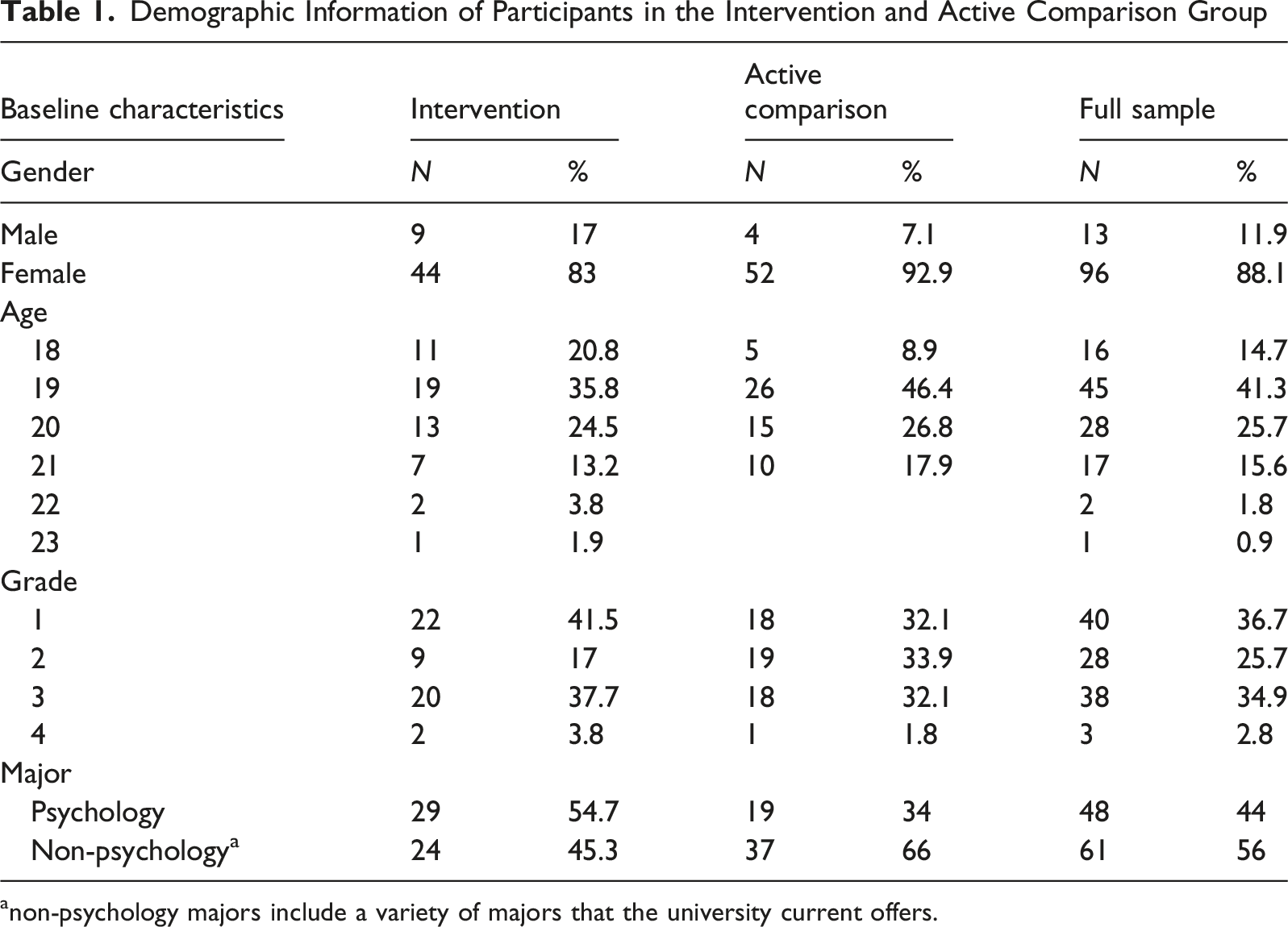
anon-psychology majors include a variety of majors that the university current offers.
Participants were randomly assigned to either intervention or active comparison group (see Figure 1). Participants in the intervention group were offered a series of questions regarding Xin-Yang and career decision-making. We developed questions that tapped all aspects of the Xin-Yang, including mental guidance, relationship to others, and characteristics. During the group process, participants were free to share their own understanding of the questions. The participants in the active comparison group were offered psychoeducation on mindfulness four times in total. The content is regarding educational information that can help individuals reduce the level of anxiety and depressive emotions and to focus on the present moment. Due to page limit, please see supplemental material for specific questions utilized in both groups. Research procedure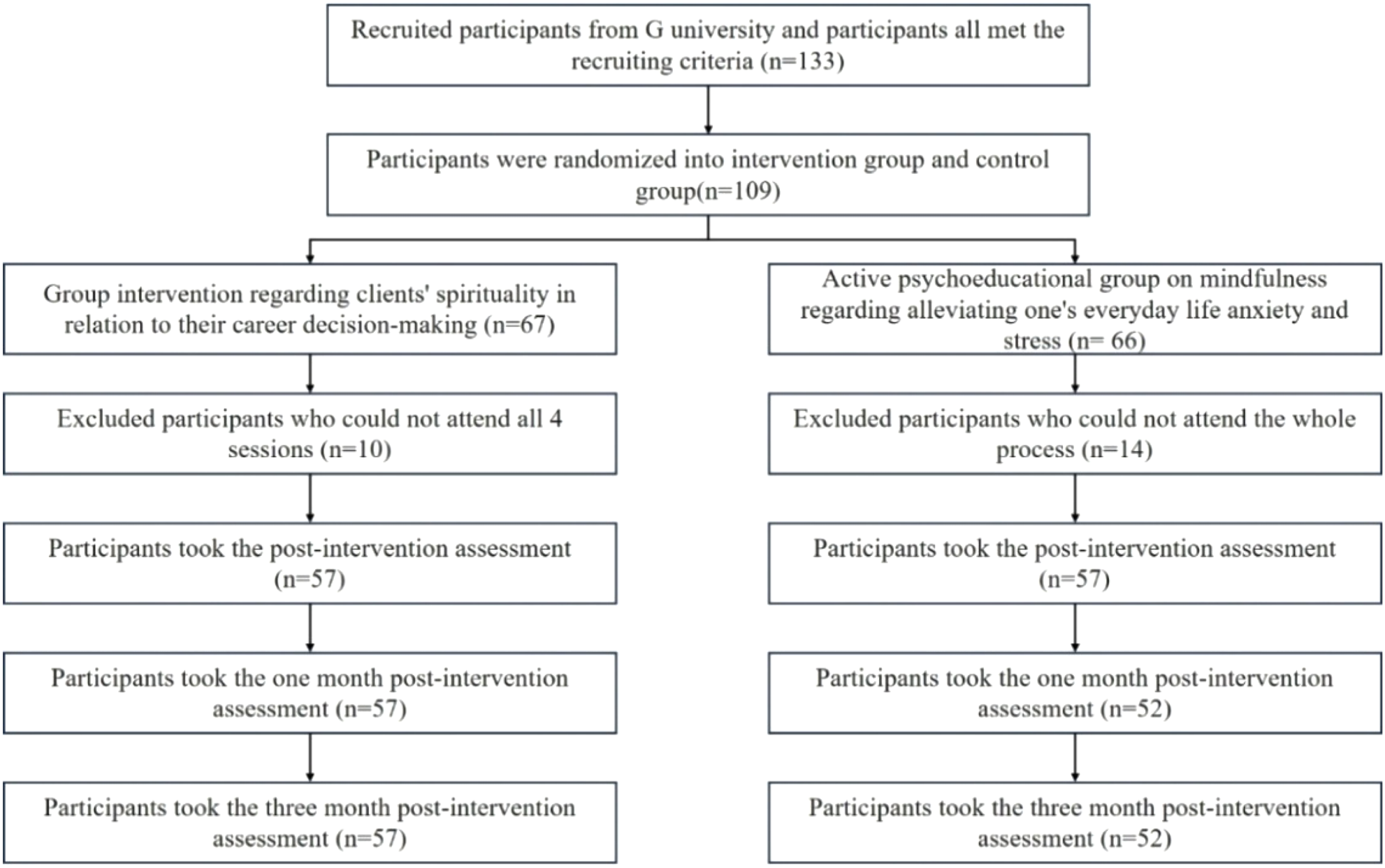
The intervention and active comparison group were led by the principal investigator (licensed psychologist in the US) and two masters level students who were trained before leading the group independently. Data were collected through multiple rounds (each round contains both intervention and active comparison group), since only 8 to 12 people were included in each group. The primary investigator led the first two rounds on her own, while the two masters’ students were observing. For the third and fourth round, the primary investigator only functioned as a backup for the two facilitators. The two facilitators ran the group independently during the last two rounds. To reduce researcher bias and ensure fidelity, we followed clear group protocols. After each session, the primary investigator provided close supervision based on observation and had discussion with the two facilitators regarding the group running process and reflected on things need to improve. Participants did not know which group they were assigned to, which helped control for researcher bias.
Study Design
We used a randomized controlled trial design to examine the effects of a Xin-Yang-based intervention on students’ career-related process. A between-subjects design was adopted with one independent variable at two levels: Xin-Yang intervention (n = 57) and an active comparison (n = 52). Participants were randomly assigned to either condition. Data were collected at four time points: Time 1 (T1) baseline (pre-intervention), Time 2 (T2) post-intervention, Time 3 (T3) one-month follow-up, and Time 4 (T4) three-month follow-up. This design enables examination of both immediate and sustained effects on CDMSE, EPCD, and Xin-Yang.
Measures
Career Decision-Making Self-Efficacy
CDMSE was measured using the 25-item CDMSE–Short Form (Buyukgoze-Kavas, 2014). The scale assesses five domains: self-appraisal, occupational information, goal selection, future planning, and problem-solving. Participants responded on a 5-point Likert scale (1 = Not confident at all, 5 = Completely confident). A sample item is [I plan to list a few majors (or careers) that I’m interested in.]. Internal consistency coefficients for the five subscales across T1–T4 ranged from α = .64 to .91, with most estimates in the acceptable-to-good range. Full reliability estimates for each subscale at each time point are reported in Appendix/Table A1.
Emotional and Personality-Related Career Decision-Making Difficulties
EPCD was assessed using the EPCD Scale (Saka et al., 2008), comprising three subscales: pessimism, anxiety, and self-concept/identity. Items were rated from 1 (Strongly disagree) to 5 (Strongly agree). A sample item is [Few jobs are interesting.]. Internal consistency coefficients across T1–T4 ranged from α = .66 to .88. Most estimates were acceptable, although the pessimistic views subscale at T1 showed somewhat lower reliability. Full reliability estimates are presented in Appendix/Table A1.
Xin-Yang Scale
Xin-Yang was assessed using the Xin-Yang Scale (Li et al., 2021), comprising three dimensions: (a) life meaning and values, (b) mental guidance, and (c) relationships with others. Responses were provided on a 5-point Likert scale. A sample item is [I feel fulfilled.]. Internal consistency was consistently strong across all dimensions and time points (αs = .86–.90). Full reliability estimates are reported in Appendix/Table A1.
Data Analysis Plan
For each outcome domain, mean subscale scores were computed at each time point. Subscale scores were analyzed because the study aimed to examine whether the intervention had differentiated effects across conceptually distinct dimensions of Xin-Yang, CDMSE, and EPCD, rather than only broad overall effects because the study hypotheses concerned whether the intervention would show differentiated effects across specific dimensions of Xin-Yang, career decision-making self-efficacy, and emotional/personality-related career decision-making difficulties. Psychometric evidence for the scales was examined by estimating internal consistency reliability at each wave and evaluating scale structure using CFA (with longitudinal measurement invariance testing to support interpretation of change). Reliability estimates for each subscale across T1 to T4 are reported in Appendix Table A1. Correlations among subscales were computed at each time point separately for the intervention and comparison groups to evaluate Hypotheses 1 and 2; correlation coefficients are reported in a table (too large please see supplemental material). Third, to evaluate intervention effect over time, a two-slope piecewise growth model (PGM) was estimated for each subscale.
The use of PGM enables us to compare growth rates across these two intervals, allowing for a more nuanced understanding of how and when the Xin-Yang intervention impacts participants (Seltzer & Svartberg, 1998). Phase 1 captures immediate change due to intervention: From Pre-Intervention (Time 1) to Post-Intervention (Time 2). Phase 2 captures sustained or delayed effects over time: From Post-Intervention (Time 2) to Three-Month Follow-up (Time 4). Although the preregistration originally proposed independent-sample and dependent-sample t-tests, the final analyses were conducted using hierarchical linear modeling with piecewise growth models. This analytic revision was made because the study involved repeated measures across four time points, and the growth-modeling approach was better suited to the longitudinal structure of the data and to the goal of distinguishing immediate intervention effects from follow-up change over time.
Piecewise Growth Model Specific
Coding for Time Variables
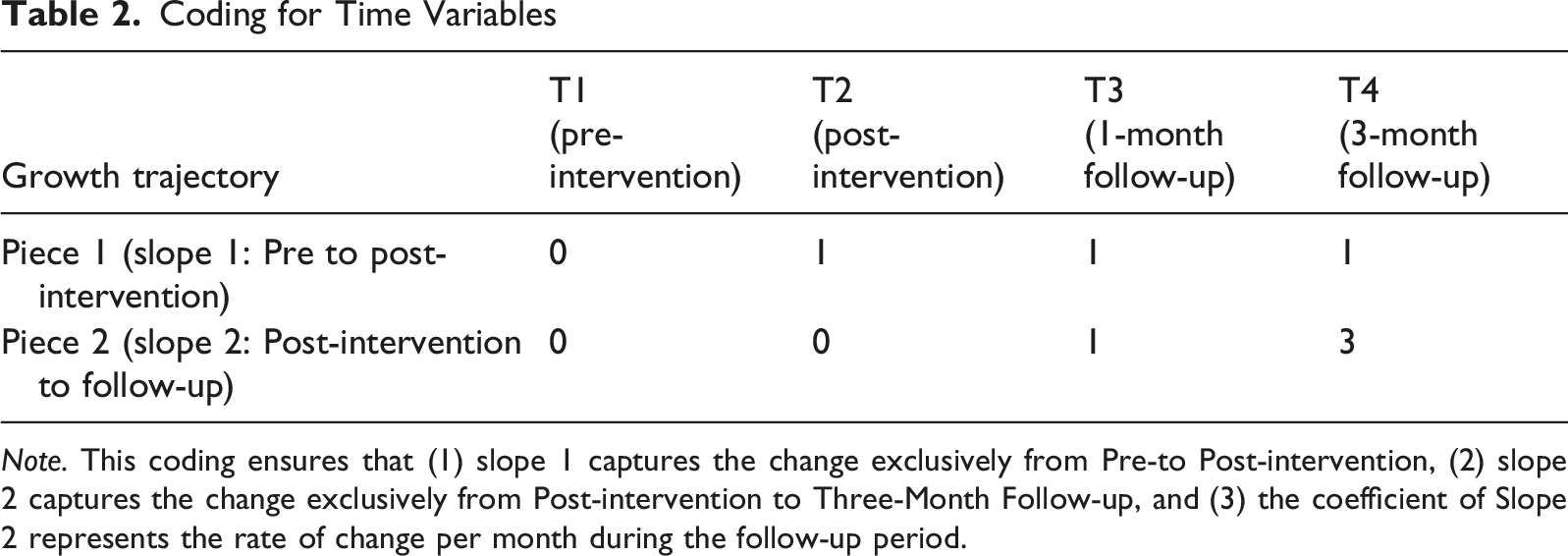
Note. This coding ensures that (1) slope 1 captures the change exclusively from Pre-to Post-intervention, (2) slope 2 captures the change exclusively from Post-intervention to Three-Month Follow-up, and (3) the coefficient of Slope 2 represents the rate of change per month during the follow-up period.
Following Morris and DeShon (2002), effect sizes for pre-to post-intervention change were also calculated. All analyses were conducted in the R programming environment using the lme4 package (Bates et al., 2015).
Results
Descriptive Analysis Results
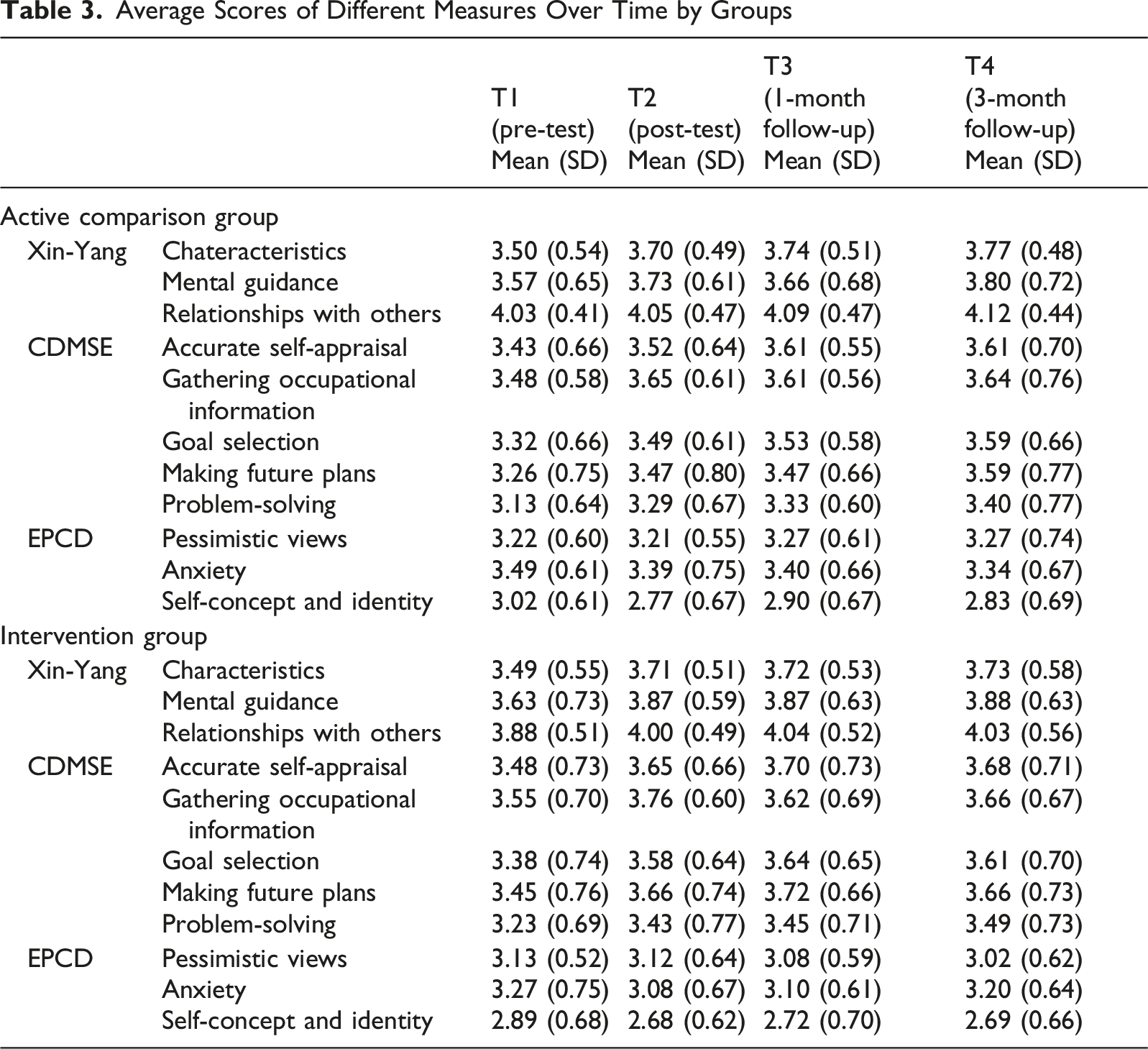
Average Scores of Different Measures Over Time by Groups
Correlations Among Subscales Across Time
Correlations among subscales across the four time points were examined to evaluate Hypotheses 1 and 2. Because the full set of coefficients was extensive, the complete correlation matrices are presented in the supplemental materials in a reformatted layout to improve readability. In the main text, we focus on the broad patterns most relevant to the study hypotheses, while Figure 2(a) and (b) provide visual summaries for the active comparison group and the intervention group, respectively. Across all four time points, the Xin-Yang subscales were generally positively associated with the CDMSE subscales, whereas the EPCD subscales were generally negatively associated with both Xin-Yang and CDMSE. These overall patterns were observed in both groups. In addition, the magnitude of these associations appeared to weaken over time, suggesting that the relations among the constructs became less pronounced across the follow-up period. (a) Correlation patterns among Xin-Yang, CDMSE, and EPCD subscales across time in the active comparison group. (b) Correlation patterns among Xin-Yang, CDMSE, and EPCD subscales across time in the Xin-Yang intervention group. Note. CDMSE = career decision-making self-efficacy; EPCD = emotional and personality-related career decision-making difficulties. Figures summarize the overall direction and relative strength of correlations across time; full correlation coefficients are reported in the supplemental materials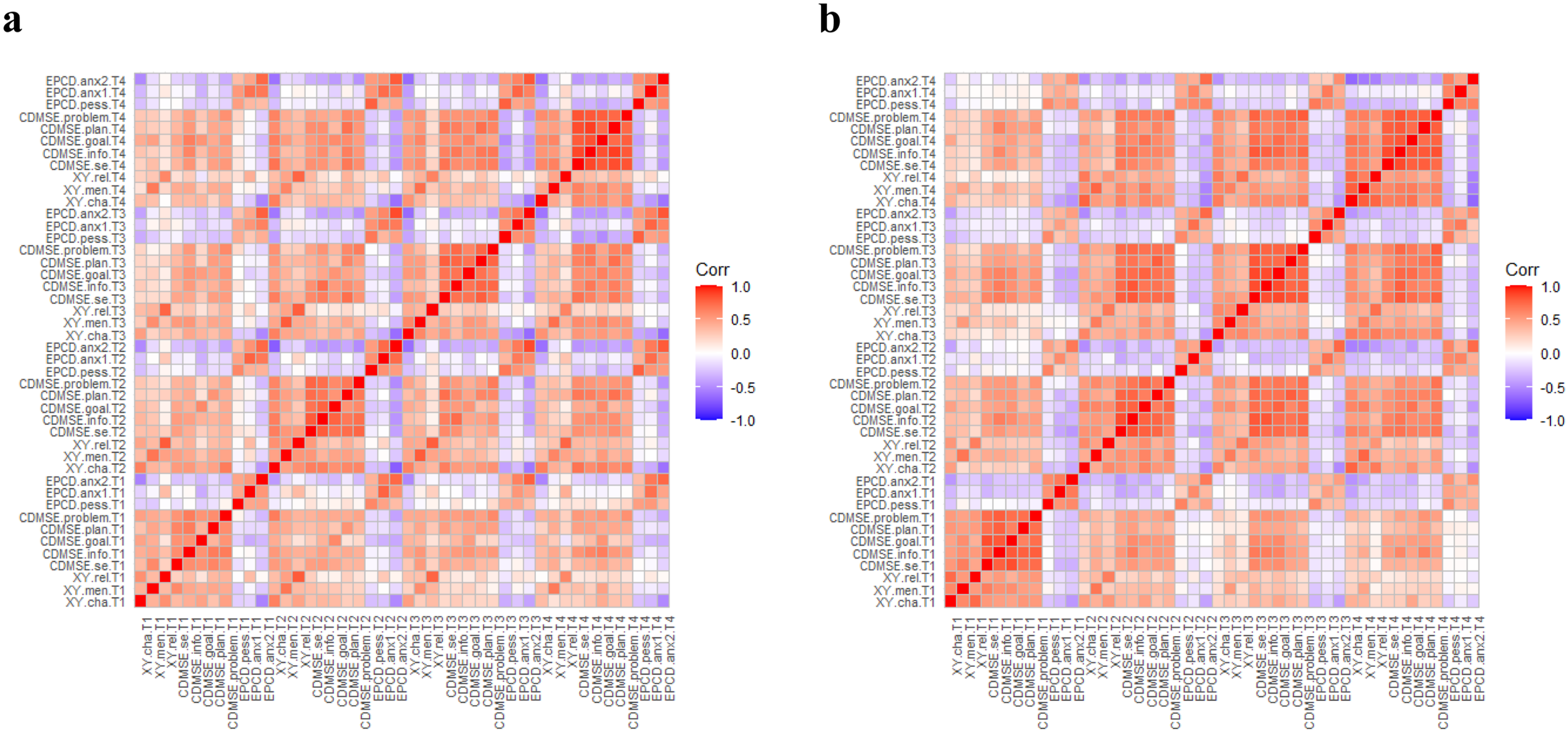
Piecewise Growth Model Results
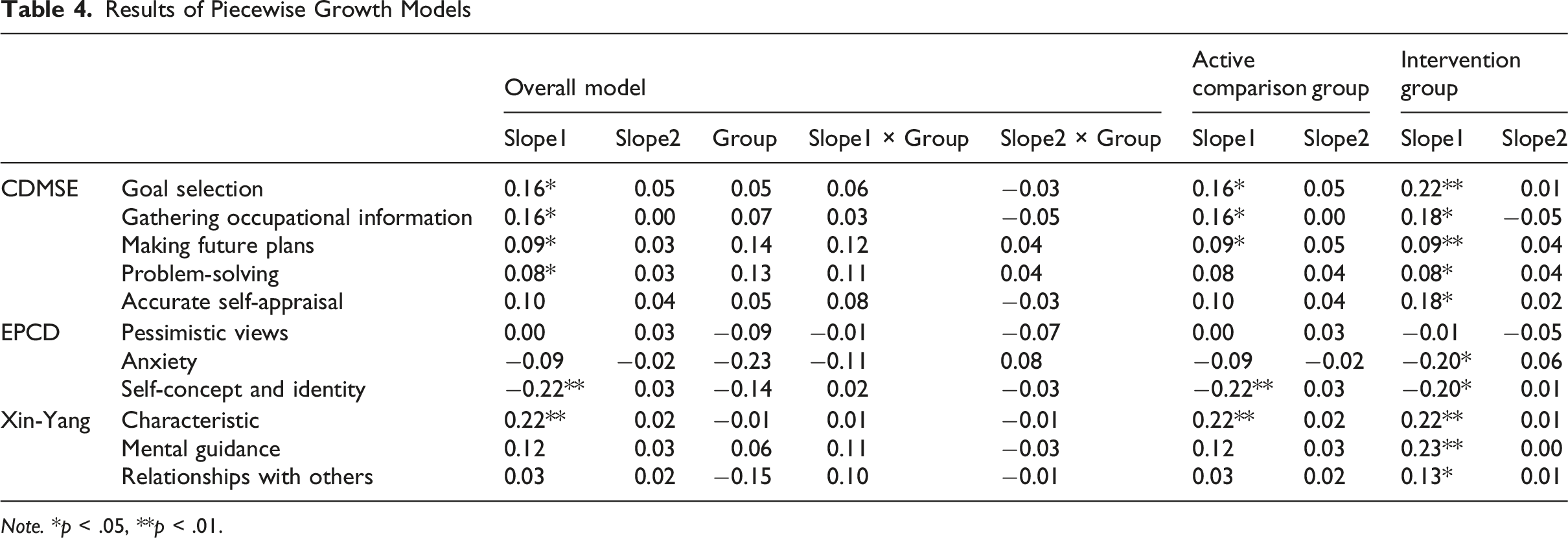
Results of Piecewise Growth Models
Note. *p < .05, **p < .01.
CDMSE
For goal selection, both groups showed an immediate increase, with control group slope from T1 to T2 is 0.16 (p < .05) and intervention group slope of 0.22 (p < .01); follow-up slopes were not statistically significant (control: 0.05; intervention: 0.01), suggesting maintenance rather than continued growth. For gathering occupational information, both groups improved immediately (control: 0.16, p < .05; intervention: 0.18, p < .05) with minimal change during follow-up (control: 0.00; intervention: −0.05). For making future plans, both groups improved immediately (control: 0.09, p < .05; intervention: 0.09, p < .01) with non-significant follow-up change (control: 0.05; intervention: 0.04). The intervention group showed immediate improvement in two domains: problem-solving increased from T1 to T2 in the intervention group (0.08, p < .05) not in the control group (0.08, ns), and accurate self-appraisal increased in the intervention group (0.18, p < .05) not in the control group (0.10, ns). Across these CDMSE subscales, follow-up slopes were non-significant, suggesting that gains observed immediately after the intervention were maintained through T4. However, because the slope × group interaction terms were not statistically significant, these patterns should not be interpreted as evidence that the intervention produced greater improvement than the active comparison condition. Overall, the CDMSE results suggest some positive change over time, but not statistically different change trajectories between groups.
Xin-Yang
For Xin-Yang, both groups demonstrated immediate improvement in Characteristic: control slope 0.22 (p < .01) and intervention slope 0.22 (p < .01), with non-significant follow-up slopes (control: 0.02; intervention: 0.01). In contrast, two dimensions showed clearer intervention-linked immediate gain: mental guidance increased in the intervention group (0.23, p < .01) but not in the control group (0.12, ns), and relationships to others increased in the intervention group (0.13, p < .05) but not in the control group (0.03, ns). Follow-up slopes for these dimensions were non-significant, suggesting maintenance of post-intervention gain through 3-month follow-up. Nevertheless, the slope × group interaction terms were not statistically significant for any Xin-Yang dimension. Therefore, these within-group patterns should be interpreted cautiously and do not provide evidence that the intervention produced significantly greater change in Xin-Yang than the active comparison condition.
EPCD
For EPCD, pessimistic views did not show meaningful change in either group (control slope1 = 0.00; intervention slope1 = −0.01; follow-up slopes also small). Anxiety decreased immediately in the intervention group (−0.20, p < .05) but not in the control group (−0.09, ns), with little evidence of additional change during follow-up (control: −0.02; intervention: 0.06). Self-concept and identity difficulties decreased immediately in both groups (control: −0.22, p < .01; intervention: −0.20, p < .05), suggesting improvement over time that may not be uniquely attributable to the intervention. However, the slope × group interaction terms were not statistically significant for any EPCD outcome. Thus, although some favorable within-group changes were observed, the rates of change did not differ significantly between the intervention and active comparison groups.
Discussions
We endeavored to explore the intervention effect of Xin-Yang on CDMSE and EPCD in a longitudinal developmental model and developmental trend of Xin-Yang. The results partially confirmed our hypotheses. After the intervention, two dimensions of CDMSE (Problem Solving and Self-Appraisal) were significantly different from the pre-intervention level, and the active comparison group did not have any significant difference between pre- and post-intervention in these two areas. For the rest of the CDMSE (Occupational Information, Goal Selection, and Planning), both intervention and active comparison group had a significant change from pre-to post-intervention. This has been confirmed by the SCCT-WB (Lent & Brown, 2008), in that spirituality actively influences one’s CDMSE through promoting individuals’ inner strength, clarity on life purpose, as well as a sense of meaning.
Outside of SCCT-WB, the potential reason for the positive relationship between Xin-Yang and Problem-Solving of CDMSE is that in discussing Xin-Yang, individuals were encouraged to initiate self-reflection, which help them better understand their own motivations, fears, and values. The attunement to their inner selves enabled participants to approach problems with deeper insight into career-related concerns and potential solutions (Chu & MacGregor, 2011). Participants might realize that the issue regarding their career planning is tied to their own beliefs or assumptions related to an existing barrier, and the guidance that Xin-Yang could provide (Li et al., 2019) lead them toward more constructive approaches. This occurred through the discussion of questions such as “what has played a significant role in the formation of your spiritual world in the past?” and “can you sense any impact this guidance has on your confidence in making career decisions?”.
Due to a lack of a passive control group, we cannot claim a causal relation between Xin-Yang and Self-appraisal; however, it is possible through the reflection on Xin-Yang that individuals gain clarity on their core values and use these values to guide self-appraisal (Conte et al., 2023) and their development of CDMSE (Zhou, 2024). Specifically, the process involves assessing how well one is living in accordance with their principles through the question of “what is your most steadfast belief currently?” and “can you sense any impact this belief has on your confidence in making career decisions?”. In this case, participants might evaluate whether they are choosing a career to live a life of integrity, compassion, or service so that it aligns with their self-appraisal. The level of Problem-Solving and Self-Appraisal of CDMSE in the intervention group did not change significantly three months after the intervention, which means CDMSE maintained its development over the course.
For Occupational Information, Goal Selection, and Planning, both intervention and active comparison group demonstrated a growing trend, and the two groups did not have a significant difference in their growth level. One possible reason is that these dimensions fall onto the more pragmatic and structured side of CDMSE, and they would usually be affected more by external factors, such as real-world outcome rather than internal reflection such as spirituality (Hoang & Huy, 2021). What is more, mindfulness practice helps individuals embrace a more holistic view of the world, which further enables them to ensure their actions align with their core values and a sense of integrity (Sheldon, 2014; Xie, 2023). Therefore, even though participants in the active comparison group did not receive intervention of Xin-Yang, their CDMSE also increased.
For career indecision, participants in the intervention group decreased significantly more than did the active comparison group on the Anxiety dimension. Due to the discussion Xin-Yang, participants were able to alleviate their level of anxiety through a sense of inner peace, acceptance, and trust in the process (Chérif et al., 2022). A positive relationship to others could also provide support that enhances a sense of calmness, and it was through the question of “what does building positive relationships with others mean to you?” and “can you sense any impact these relationships have on your confidence in making career decisions?” Consequently, they approach career-related decisions with calmness and less uncertainty. The active comparison group did not decrease on Anxiety might be because a lack of discussion of career-related issues, which caused no change on their career-related anxiety level at all. Furthermore, the level of the Anxiety dimension of career indecision in the intervention group did not change significantly three months after the intervention, which means career indecision maintained its reduction over the course.
At the same time, participants in both groups had a significant decrease in Self-Concept Identity dimension from pre-to post-intervention; however, we did not observe a significant difference between groups on the level of the decrease. Xin-Yang helps strengthen one’s self-awareness, which essentially taps into one’s core values. Once individuals become clearer about their core values, it eventually helps them form their self-concept and identity (Hitlin, 2003; Yue et al., 2022), which could further help clarify their career-related decisions. It possibly occurred through the discussion of the meaning of one’s life via the question of “what is the meaning of your life” and “can you sense any impact this meaning of life has on your confidence in making career decisions?” In a similar vein, mindfulness focuses on helping individuals get in touch with their authentic self. This process aims to facilitate self-reflection, and it further leads to a consolidation of self-concept and identity (Wietmarschen et al., 2018). Last but not least, there is no significant change in Pessimistic Views dimension in either intervention or active comparison group.
We also observed a growing trend within two dimensions of participants’ Xin-Yang (Mental Guidance and Relationship to Others) in the intervention group, such that there is a significant difference in these two areas between pre- and post-intervention. However, the Characteristics dimension of Xin-Yang demonstrated a growing trend in both groups. We postulate that the discussion of Xin-Yang empowered participants to initiate the guidance function of Xin-Yang (Li et al., 2021), which explained the increase of this dimension (Mubarak & Karim, 2022). The discussion regarding Relationship to Others concerns the sense of support one could get from others. Given the context of group intervention, participants are likely to feel supported by their peers in their growth of Xin-Yang (Dyson et al., 1997). Since mindfulness practice aims to regulate one’s emotions, promote self-awareness, and increase resilience, one could expect to produce more positive characteristics (Pang & Ruch, 2019). This explained why both groups experienced an increase in characteristic dimension.
Importantly, the slope × group interaction terms were not significant for any of the outcomes, suggesting that although some overall changes over time and some group-specific patterns were observed, the rates of change did not differ significantly between the intervention and active comparison groups. The findings provide preliminary evidence that the intervention is feasible and may support positive change, but they do not yet establish superiority over an active comparison condition. In addition, due to the lasting nature of career indecision that the EPCD is measuring, it might be relatively difficult for the current study to divulge any significant slope × group interaction within this short amount of time.
Overall, the findings should be interpreted cautiously. Although some descriptively favorable within-group changes were observed in the intervention group across selected CDMSE, EPCD, and Xin-Yang dimensions, the slope × group interaction terms were not statistically significant for any outcome. This indicates that the intervention and active comparison groups did not differ significantly in their trajectories of change over time. Therefore, the present study does not provide evidence that the Xin-Yang intervention produced statistically greater improvement than the active comparison condition. Nevertheless, the findings provide preliminary evidence that a Xin-Yang-based intervention is feasible and may support positive change in selected career-related outcomes, although they do not establish statistically greater improvement than an active comparison condition. The study also contributes by offering one of the first randomized evaluations of a culturally grounded Xin-Yang-based intervention and by identifying directions for refining future intervention design and comparison conditions.
Strengths, Limitations, and Future Directions
This study addressed a critical research gap in the area of intervention focusing on Xin-Yang in China. Research on spirituality in China mainly came from the Western theoretical framework and rarely paid attention to its connection with career-related concepts (Leung & Pong, 2021). Our current study was based on empirically supported research in terms of the conceptualization of Xin-Yang starting from the definition of it to the ideological discussion of it within the Chinese college student population (Li et al., 2019, 2021). At its core, Xin-Yang is the set of ideologies and principles that one subscribes and manifest as values one adheres to. During the critical stage that college students are in, Xin-Yang serves as a source of emotional power that provides guidance for them during their career exploration process and encouragement when they encounter difficulties. Essentially, Xin-Yang integrated intervention helps address career-related concerns and promote career developmental process among Chinese college students.
There are several limitations in our research. We have ensured that the mindfulness exercises fulfill the function that was different from that of Xin-Yang; however, mindfulness still helped participants in the active comparison group to improve some areas of their CDMSE as well as career-indecision possibly through the mechanism of promoting a better self-understanding and their relationship to their world view (Bulmer et al., 2022). For future studies, a more delineated differentiation between Xin-Yang and the theme for the control group would be a better option to ensure conceptual clarity. In order to manage the divergent nature of the current groups, one could consider using waitlist or treatment as usual group.
Another limitation is related to the generalizability of the results. The conceptualization of Xin-Yang came from previous studies among Chinese college students (Li et al., 2019, 2021), and the sample was drawn from a single university, we cannot guarantee that the results could be applicable or replicated in other populations. Also, the gender distribution is largely biased possibly due to female students’ interest in participating in group-based activities (Proverbio et al., 2008). Future research should replicate this study with more diverse samples, including individuals from different educational backgrounds, professional fields, and cultural contexts, to explore potential variations in the influence of Xin-Yang on career-related process.
Moreover, the study relied on self-report measures, which may introduce common method bias and social desirability effects. Although valid instruments were used, participants’ responses may not fully capture their actual career decision-making processes. Future studies could incorporate multi-method approaches, such as behavioral assessments, qualitative interviews, or observational data, to provide a more comprehensive understanding of these constructs. Furthermore, the intervention duration was relatively short (four sessions), which may not have been sufficient for participants to fully internalize and apply the impact of Xin-Yang into their career decision-making process. While the study tracked changes up to three months post-intervention, it remains unclear whether these effects persist over a longer period. Future research should examine longer-term effects of Xin-Yang-based interventions.
Moreover, another limitation concerns subscale-level measurement precision and statistical power. Although most subscales demonstrated acceptable to strong internal consistency across time, a few coefficients were lower than the conventional .70 threshold, particularly CDMSE Problem-Solving at T1 (α = .64) and EPCD Pessimistic Views at T1 (α = .66). These lower reliability estimates may have attenuated associations and reduced power to detect intervention effects for those specific subscales. In addition, the a priori power analysis was conducted during study planning to estimate a feasible recruitment target for the overall longitudinal intervention design using a repeated-measures ANOVA framework, whereas the final analyses were conducted using hierarchical linear modeling with piecewise growth models, which were better suited to the repeated-measures structure of the data. Accordingly, the study was planned to support the overall design rather than to provide separate power estimates for each individual subscale-level analysis. As a result, some subscale findings may have had more limited power to detect smaller effects and should therefore be interpreted with appropriate caution. At the same time, because the lower reliability coefficients were limited to a small number of subscales and time points, and because the measures were analyzed according to their established multidimensional structures, we retained the theoretically meaningful subscales rather than collapsing them into total scores.
Last but not least, without a passive control condition, it is difficult to determine whether the observed changes were due specifically to the Xin-Yang based intervention or to general factors such as time or participation in any structured program. Future research should include a no-intervention control group to better establish causal effects.
The current study is pioneering in taking the challenge that posed by traditional survey-based studies, which is not easy to conclude a causal effect (Savitz & Wellenius, 2023). It is a small step that was taken to understand the profound relationship that Xin-Yang could have with one’s career decision-making process. We urge future researcher to consider studying the role Xin-Yang could play in clients’ career decision-making process in the context of individual counseling.
Implications
We believe that the current intervention model could be considered in the career-related education process on college campus in China. Currently, the major form that the career-related education focuses on “career planning” more than anything else (Yu & Wang, 2024). It is essential that educators and career counselors in colleges consider incorporating the discussion of Xin-Yang in career counseling process, possibly through using the list of questions from this study. We recommend that counselors focus on the specific aspects of Xin-Yang when incorporating it into individual as well as group counseling process. Students could be invited to talk about the personal traits they have, the importance of relationship that they believe, and the mental guidance that they have in life in relation to Xin-Yang to shed some light on their career-related concerns. Meanwhile policy makers in college could also focus on Xin-Yang based conversations to improve students’ career development.
Conclusion
The present study endeavored to explore the relationship between Xin-Yang and individuals’ career-related decision-making process through the form of group intervention. The major findings in the study include: (1) intervention of Xin-Yang promoted Chinese college students’ Problem Solving and Self-Appraisal dimensions of CDMSE and (2) it decreased Chinese college students’ Anxiety dimension of EPCD. It provided informative findings for researchers to consider when conducting future research regarding these antecedents and for practitioners when working with Chinese college students regarding their career-related decision-making.
Supplemental Material
Supplemental Material - Xin-Yang and Career-Related Decision-Making Process Among Chinese College Student Population: An Intervention Study
Supplemental Material for Xin-Yang and Career-Related Decision-Making Process Among Chinese College Student Population: An Intervention Study by Shengnan Li, Qianqian Pan in Journal of Career Assessment.
Supplemental Material
Supplemental Material - Xin-Yang and Career-Related Decision-Making Process Among Chinese College Student Population: An Intervention Study
Supplemental Material for Xin-Yang and Career-Related Decision-Making Process Among Chinese College Student Population: An Intervention Study by Shengnan Li, Qianqian Pan in Journal of Career Assessment.
Supplemental Material
Supplemental Material - Xin-Yang and Career-Related Decision-Making Process Among Chinese College Student Population: An Intervention Study
Supplemental Material for Xin-Yang and Career-Related Decision-Making Process Among Chinese College Student Population: An Intervention Study by Shengnan Li, Qianqian Pan in Journal of Career Assessment.
Footnotes

Ethical Considerations
The current study has been approved by the research ethics board at Institute Review Board at Guangzhou University (Protocol Number GZHUSE20240008).
Consent to Participate
We have obtained participants’ consent to participate in written form at the beginning of the intervention.
Funding
The authors disclosed receipt of the following financial support for the research, authorship, and/or publication of this article: This study was funded by 2024 Guangdong Philosophy and Social Science Foundation Project: The Impacting Factors and Psychological Mechanism of Female College Students’ Career Decision-Making Self-Efficacy and the Intervention Study (Grant#: GD24CXL01) to Shengnan Li; the 2024 Guangzhou Education Scientific Research Project: The Research on the Practice of Educational Path of Adolescents’ Belief and Ideal in The New Era (Grant#: 202316579) to Shengnan Li; and by 2023 Guangdong Education Scientific Research Project (Higher Education): Research on Promoting Mechanism of Chinese College Students’ Career Decision-Making Self-Efficacy from the Perspective of Spirituality (Grant#: 2023GXJK010) to Shengnan Li.
Declaration of Conflicting Interests
The authors declared no potential conflicts of interest with respect to the research, authorship, and/or publication of this article.
Supplemental Material
Supplemental material for this article is available online.
References
Supplementary Material
Please find the following supplemental material available below.
For Open Access articles published under a Creative Commons License, all supplemental material carries the same license as the article it is associated with.
For non-Open Access articles published, all supplemental material carries a non-exclusive license, and permission requests for re-use of supplemental material or any part of supplemental material shall be sent directly to the copyright owner as specified in the copyright notice associated with the article.
