







Abstract
This study investigates which structural factors most strongly predict armed and unarmed revolutionary destabilization across Sub-Saharan Africa (SSA), the Middle East and North Africa (MENA), as well as Asia using country–year data for 1950–2022 and a set of economic, demographic, political, and climatic indicators. It employs an interpretable machine learning framework (CatBoost with SHAP values and permutation importance), which allows it to relax functional form assumptions, systematically compare predictor importance across outcomes and regions, and uncover nonlinear and interaction effects. Armed revolutionary destabilization is shown to be most strongly associated with prior conflict, economic contraction, natural-resource dependence, and weak state capacity, particularly in SSA and MENA, while in Asia it is driven more by domestic political-economic dynamics. Unarmed revolutionary destabilization is linked to institutional legitimacy, corruption vulnerability, population density, and external economic shocks, with export shocks most salient in Asia, incumbent duration in SSA, and trade integration in MENA.
Keywords
Introduction
In the early 21st century, countries of Africa, the Middle East and Asia have shown persistent vulnerability to revolutionary destabilization, which manifests in different forms: from armed insurgencies to large-scale nonviolent revolutionary protest movements. Notably, this instability unfolds against a backdrop of rapid economic grown that, in many of these countries, outpaces global averages (Eremin et al., 2025, pp. 97–98; Grinin & Korotayev, 2024a, 2024b). This paper asks: which structural factors most strongly predict armed and unarmed revolutionary destabilization across Sub-Saharan Africa (SSA), the Middle East and North Africa (MENA), and Asia? We argue that the determinants are multidimensional and region-specific, reflecting differences in demographic dynamics, state capacity, resource dependence, and political institutions. Using cross-national country–year data for 1950–2022 that combine economic, demographic, political, and climatic indicators, we apply machine learning (ML) methods – specifically the CatBoost gradient boosting algorithm with permutation feature importance and SHAP – to identify and compare predictors.
Our findings indicate that armed destabilization is most strongly associated with conflict persistence, economic contraction, natural-resource dependence, and weak state capacity, particularly in SSA and MENA. In Asia, armed revolutionary episodes are more closely linked to domestic political-economic dynamics. Unarmed revolutionary destabilization is more strongly related to institutional legitimacy, corruption, population density, and external economic shocks, with substantial regional variation.
We focus on SSA, MENA, and Asia because they represent contrasting political and economic trajectories. Many Asian countries have advanced further in industrial and demographic development (Korotayev & Zinkina, 2015). SSA combines rapid growth and resource wealth with structural economic constraints and demographic pressures (Guo et al., 2023; Korotayev, Shulgin, et al., 2022, 2023; Nkoa et al., 2023). MENA occupies an intermediate position, characterized by relatively high development indicators alongside youth bulges, resource rents, and geopolitical tensions. Despite these differences, all three regions face elevated risks of revolutionary destabilization, albeit in different forms (Medvedev et al., 2024).
This study contributes to the literature in three main ways. First, it provides new systematic region-stratified comparison of revolutionary destabilization using interpretable machine learning models, demonstrating how predictor importance and functional form vary across regions. Second, it identifies a range of previously underexplored determinants, particularly related to trade dynamics, agricultural stress, and macroeconomic instability, and demonstrates that their effects are often non-linear and contingent on regional context. Third, it advances comparative revolution research methodologically by integrating predictive machine learning techniques with post-hoc interpretability tools, thereby bridging the gap between high-accuracy prediction and theoretically meaningful explanation.
Conceptualizing Revolutionary Destabilization
In this paper, for the identification of revolutionary episodes, we rely on the following definitions of revolution: 1. “[Revolution is] an effort to transform the political institutions and the justifications for political authority in a society, accompanied by formal or informal mass mobilization and noninstitutionalized actions that undermine existing authorities” (Goldstone, 2001, p. 142). 2. “Revolution is a collective mobilization that attempts to quickly and forcibly overthrow an existing regime in order to transform political, economic and symbolic relations” (Lawson, 2019, p. 5). 3. “Revolution is anti-government (very often illegal) mass actions (mass mobilization) with the following aims: (1) to overthrow or replace the existing government within a certain period of time; (2) to seize power or to provide conditions for coming to power; (3) to make significant changes in the regime, social or political institutions” (Goldstone et al., 2022b, pp. 50–51).
Note that all these definitions imply the following main criteria for identification of revolutionary episodes: (1) Mass mobilization (operationalized as, e.g., “at least a thousand civilian participants” [Beissinger, 2022b, p. 4]). This excludes almost automatically coups that can well result in “quick and forcible overthrow of an existing regime” (e.g., replacing a partial democracy with autocracy), but that do not involve mass mobilization. (2) It should contain at least an attempt to overthrow or replace the existing government. This excludes so-called “quasi-revolutionary episodes” (see Beissinger, 2022b for detail). (3) It should be aimed at “significant changes in the regime, social or political institutions”.
In this respect, for example, the ISIS insurgency in Syria and Iraq fits all the above-mentioned criteria of a revolutionary episode very well. It was accompanied by very substantial formal and informal mass mobilization (some of whose survivors could be found until recently in a number of special detention camps in Syria and Iraq). It clearly attempted to quickly and forcibly overthrow existing regimes in Syria and Iraq. And it evidently aimed at significant changes in the regime, social or political institutions (though the changes that the Daesh revolutionaries wanted to make, and were actually making would not look attractive to us in any way). Incidentally, this reminds us that revolutions should not look necessarily attractive; in fact, they are sometimes unequivocally ugly events (another evident example is, of course, the Khmer Rouge revolution in Cambodia) (see Lawson, 2019 for more detail).
These definitions do not imply that revolutionary episodes should be necessarily violent, or successful. A salient recent example is the Byelorussian revolution of 2020–2021 that was both saliently nonviolent and clearly unsuccessful. But it fits the above specified criteria of the revolutionary episode as perfectly as the very violent and unsuccessful Daesh insurgency, as non-violent and successful Velvet revolutions in Czechoslovakia (1989) and Armenia (2018), or as very violent and successful Taliban insurgency in Afghanistan.
As is noted by Goldstone et al. (2022a), p. 2, “these definitions are broad enough to encompass events ranging from the relatively peaceful revolutions that overthrew communist regimes to the violent Islamic revolution in Afghanistan. At the same time, these definitions are strong enough to exclude coups, revolts, civil wars, and rebellions that make no effort to transform institutions or the justification for authority. They also exclude peaceful transitions to democracy through institutional arrangements such as plebiscites and free elections, as in Spain after Franco”.
Methodology
Traditional methods employing linear regressions often prove inadequate for forecasting multidimensional, non-linear socio-political processes. Classical regression models struggle when the predictor space expands: they become prone to overfitting, artificially inflating in-sample performance, and their strict assumptions are often violated in cross-national political data. Consequently, the study of complex multi-causal processes has increasingly turned to more advanced statistical and computational approaches, including Bayesian methods and machine learning algorithms (Athey & Imbens, 2019; Baehrens et al., 2010; Ben Bouallègue et al., 2024; De Mol et al., 2008; Lundberg & Lee, 2017; Lundberg et al., 2020; Molnar, 2020; Muthukumar et al., 2021; Štrumbelj & Konenko, 2014; Sun et al., 2012).
Revolutionary destabilization is shaped by a multitude of demographic, economic, institutional, and conflict-related factors. While previous scholarship has addressed revolutionary onset, much of it has either focused on narrower predictive tasks or examined isolated correlates rather than systematically evaluating a broad constellation of determinants (Goldstone et al., 2010; Korotayev, Medvedev, & Zinkina, 2022, Korotayev et al., 2014; Ulfelder, 2012). Only a few studies have attempted to simultaneously construct high-quality predictive models and assess the relative contribution of a wide set of explanatory variables (Beissinger, 2022b; Blair & Sambanis, 2020).
Machine learning algorithms can uncover hidden patterns in high-dimensional data that may remain obscured under classical analytical frameworks, improving both predictive accuracy and substantive understanding. However, the growing use of ML in political forecasting raises persistent challenges, particularly regarding interpretability and overfitting. These concerns have motivated the development of post-hoc interpretation techniques, which broadly fall into two categories: (1) feature importance methods that rank predictors by their contribution to model performance, and (2) approaches that evaluate the direction, non-linearity, and interaction structure of predictor effects (Borovsky, 2015; Grömping, 2015).
Given the historical structure of our dataset – country–year panel data spanning 1950–2022 with a substantial number of categorical predictors (e.g., regime characteristics, regional context, conflict history) alongside continuous economic and demographic indicators – we have selected CatBoost as the core modeling framework. CatBoost is a gradient boosting ensemble method based on decision trees, specifically designed to handle heterogeneous feature types efficiently and natively (Prokhorenkova et al., 2018).
Its native handling of categorical variables through ordered target statistics avoids artificial inflation of dimensionality and reduces the risk of overfitting, while its ordered boosting procedure mitigates information leakage by ensuring that target-based encodings are computed without using future information. Unlike alternative gradient boosting implementations such as XGBoost or LightGBM, which typically require extensive preprocessing of categorical variables (e.g., one-hot or label encoding), CatBoost incorporates categorical feature handling directly into the training procedure, avoiding distortions and overfitting risks. Taken together, these features make CatBoost particularly well suited for cross-national panel data characterized by skewed distributions, missingness, and complex feature interactions.
The analysis is conducted across three macroregions – Middle East and North Africa (MENA), Sub-Saharan Africa (SSA), and Asia – which represent distinct political and structural environments in which revolutionary destabilization unfolds. Following the concept of the “Greater Middle East” or “Broader Middle East and North Africa” (BMENA), which emphasizes shared socio-political dynamics across a contiguous zone from North Africa to Central Asia (Latif & Abbas, 2011; Markakis, 2015; Perthes, 2004), our MENA region is defined expansively. It therefore includes not only the core Arab states and Iran but also Afghanistan, Pakistan, Mauritania, Sudan, and the post-Soviet states of the South Caucasus and Central Asia. Thus, our MENA/BMENA region includes: Afghanistan, Algeria, Armenia, Azerbaijan, Bahrain, Egypt, Georgia, Iran, Iraq, Israel, Jordan, Kazakhstan, Kuwait, Kyrgyzstan, Lebanon, Libya, Mauritania, Morocco, Oman, Pakistan, Palestinian Autonomous Areas, Qatar, Saudi Arabia, Sudan, Syria, Tajikistan, Tunisia, Turkmenistan, United Arab Emirates, Uzbekistan, and Yemen.
The Asia region is defined in alignment with the scope of Departments of Asian Studies, encompassing East, South, and Southeast Asia, but excluding West Asian states which are part of our MENA region. The included countries are: Bangladesh, Bhutan, Brunei, Cambodia, China, Hong Kong, India, Indonesia, Japan, Laos, Macao, Malaysia, Maldives, Mongolia, Myanmar (Burma), Nepal, North Korea, Philippines, Singapore, South Korea, Sri Lanka, Taiwan, Thailand, Timor-Leste, and Vietnam.
Sub-Saharan Africa comprises all African states not included in the MENA region: Angola, Benin, Botswana, Burkina Faso, Burundi, Cabo Verde, Cameroon, Central African Republic, Chad, Comoros, Congo, Côte d'Ivoire, Democratic Republic of the Congo, Djibouti, Equatorial Guinea, Eritrea, Eswatini, Ethiopia, Gabon, Gambia, Ghana, Guinea, Guinea-Bissau, Kenya, Lesotho, Liberia, Madagascar, Malawi, Mali, Mauritius, Mozambique, Namibia, Niger, Nigeria, Rwanda, Sao Tome and Principe, Senegal, Seychelles, Sierra Leone, Somalia, South Africa, South Sudan, Tanzania, Togo, Uganda, Zambia, and Zimbabwe.
Dependent and Independent Variables
We use two binary dependent variables capturing the onset of revolutionary destabilization at the country–year level: (1) Onset of armed revolutionary episode – coded 1 for the first year of an intrastate armed conflict recorded in the UCDP dataset (Sundberg et al., 2012), applying the standard threshold of 25 battle-related deaths per year. (2) Onset of unarmed revolutionary episode – coded 1 for the onset year of a maximalist/revolutionary campaign in the NAVCO 1.3 dataset (Chenoweth & Shay, 2020a, 2020), defined as a nonviolent or primarily nonviolent campaign seeking regime change or territorial secession.
Distinguishing these two outcomes is essential, as previous research demonstrates that armed and unarmed revolutionary episodes are shaped by substantially distinct causal mechanisms and may respond differently to the same structural conditions (Beissinger, 2022b; Butcher & Svensson, 2016; Chenoweth & Ulfelder, 2017; Korotayev et al., 2025c; Korotayev & Zhdanov, 2023; Pinckney & Rezaee Daryakenari, 2022). Factors that increase the likelihood of unarmed mobilization may, under certain conditions, decrease the probability of armed insurgency, and vice versa. Modeling these processes jointly would therefore obscure important differences in their underlying dynamics.
The model includes 43 independent variables (predictors) covering economic performance, demographic structure, political institutions, conflict history, and environmental conditions. The selection builds on large-scale studies of revolutionary processes (e.g., Beissinger, 2022b) and includes predictors whose significance has been demonstrated in our previous work (Grinin et al., 2019; Korotayev et al., 2015, 2018, 2025a; Kostin & Korotayev, 2024). All these predictors are lagged by at least one year relative to the dependent variables to mitigate simultaneity and reverse causality; variables that explicitly refer to prior periods (e.g., “cereal yields in the preceding years”) therefore have an effective lag of two years or more.
Variables and Data Sources
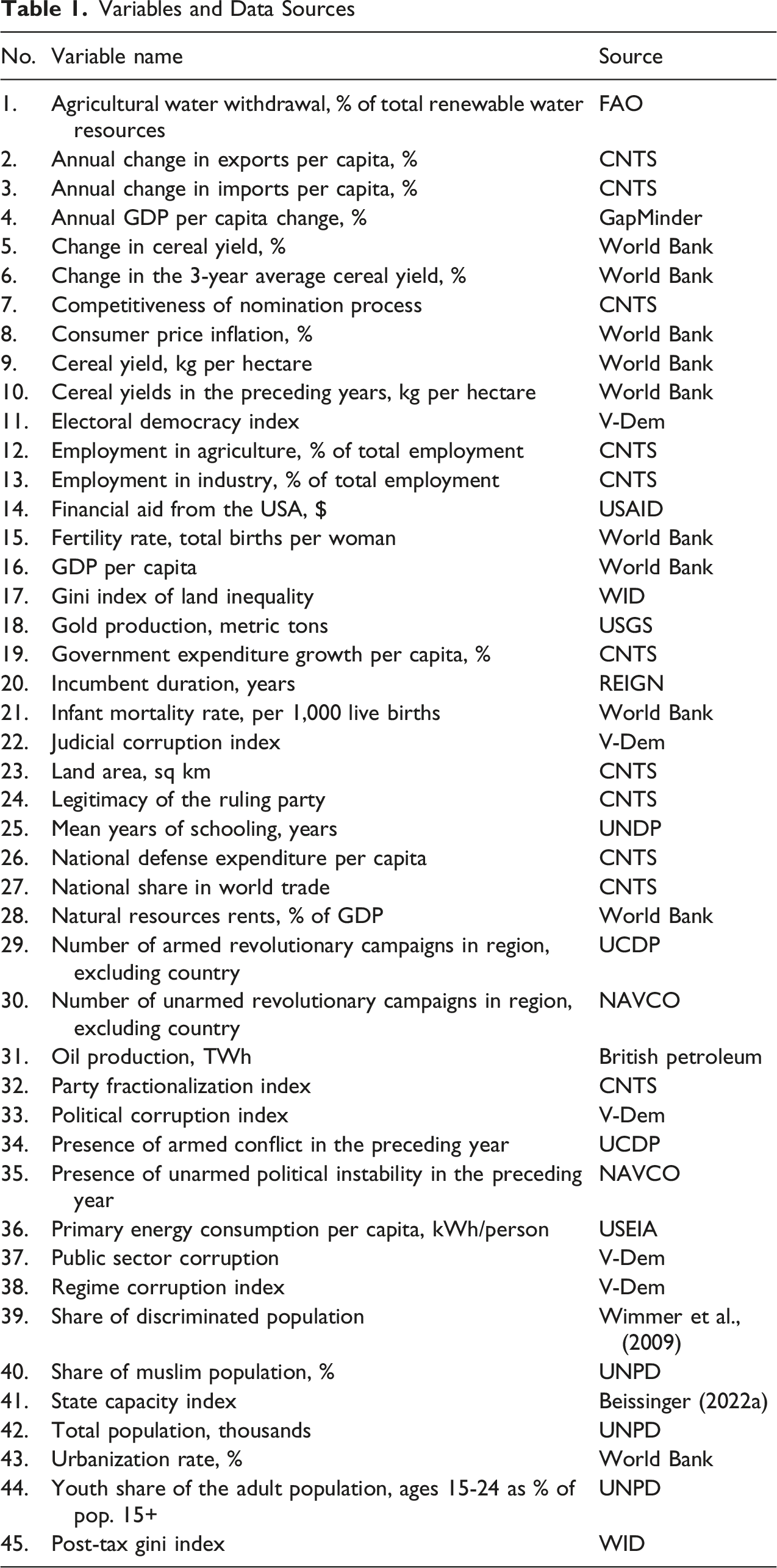
For the most part, the same set of predictors is used for both dependent variables. The only difference concerns two regional diffusion indicators: when modeling armed destabilization, we employ the number of armed revolutionary campaigns in the region (excluding country); when modeling unarmed destabilization, we use the number of unarmed revolutionary campaigns in the region (excluding country). All other 41 predictors are identical across the two model specifications.
Variables capturing cereal yields (absolute level, year-on-year percentage change, yield from the preceding year, and change in the three-year moving average) serve as proxies for climate-related stress. Agricultural productivity is highly responsive to droughts, extreme temperatures, and other environmental shocks. By combining contemporaneous and lagged measures as well as moving averages, we capture both short-term fluctuating and longer-term structural pressures. These indicators thus reflect baseline agricultural vulnerability and the impact of acute or sustained climate-related shocks, which may contribute to both armed and unarmed revolutionary destabilization.
Data Sources
For unarmed revolutionary destabilization, we use binary indicators for the onset of unarmed revolutions from the Nonviolent and Violent Campaigns and Outcomes (NAVCO) 1.3 dataset (Chenoweth & Shay, 2020a, 2020), which covers the period 1900–2019 and identifies maximalist campaigns that can be regarded as revolutionary episodes (Korotayev et al., 2025b). Primary data on armed insurgencies derive from the UCDP dataset on intrastate armed conflicts (Sundberg et al., 2012). Supplementary sources include: the Center for Stability and Risk Analysis (CSRA) database (Ustyuzhanin, Korotayev, et al., 2025), Cross-National Time-Series Data (CNTS) (Banks & Wilson, 2024), UCDP Dyadic Dataset (v.25.1) (Davies et al., 2022; Harbom et al., 2008), Varieties of Democracy (V-Dem) (Coppedge et al., 2025), World Development Indicators (World Bank, 2025), Rulers, Elections, and Irregular Governance (REIGN) (Bell et al., 2021), Revolutionary Episodes Dataset (Beissinger, 2022a), Ethnic Power Relations (EPR) Database (Cederman et al., 2010), UN Population Division (UNPD, 2025), UN Development Programme (UNDP, 2025), USAID Database (USAID, 2025a, 2025b), US Geological Survey (USGS, 2025), U.S. Energy Information Administration (USEIA, 2025), World Inequality Database (WID, 2025), British Petroleum (2025), and UN Food and Agriculture Organization (FAO, 2025) databases.
Modeling Strategy
Our modeling strategy is designed to address the challenges inherent in cross-national panel data on revolutionary destabilization, including high dimensionality, non-linearity, missing data, and class imbalance. We combine parametric and machine learning approaches to balance interpretability and predictive performance, while ensuring robustness through careful validation and model interpretation techniques.
We employ two complementary modeling frameworks: logistic regression as a baseline parametric specification and gradient boosting (CatBoost) as the primary predictive model.
Logistic regression links the probability of destabilization onset to a linear combination of predictors via a logit transformation and serves as a benchmark for comparison. In the classical notation using Greek letters for coefficients, the model takes the form:

The coefficients are interpreted as changes in the log odds of the outcome for a one-unit change in the corresponding predictor. Parameter estimation is performed using maximum likelihood.
Gradient boosting (exemplified by the CatBoost algorithm) represents an ensemble non-parametric model that approximates the outcome function 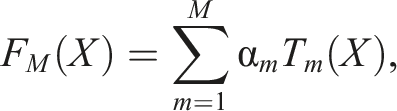

This compositional structure allows the model to capture complex non-linear interactions between features without requiring them to be specified manually. Thus, both models directly link the predictors to the outcome probability through a sigmoidal transformation. However, logistic regression accomplishes this through a linear function, while gradient boosting does so through a composition of non-linear trees. This distinction accounts for their differences in interpretability flexibility, and computational complexity.
The analysis is based on country-year panel data (1950–2020), which contain substantial missingness, often correlated with low state capacity and weak reporting. To address this, we apply multiple imputation using the Amelia II algorithm, which is specifically designed for time-series cross-sectional data (Honaker et al., 2011). All models are estimated across 50 multiply imputed datasets to reduce bias and account for uncertainty in missing values.
Both dependent variables – armed and unarmed revolutionary onset – are rare events, resulting in highly imbalanced data. Accordingly, model performance is evaluated using Precision–Recall AUC (PR-AUC), which provides a more informative measure of predictive accuracy than ROC-AUC in rare-event settings. To ensure generalizability and prevent overfitting, we employ 5-fold cross-validation. The data are partitioned into five subsets; in each iteration, the model is trained on four folds and validated on the remaining fold, with the process repeated until each fold serves as the validation set. Model hyperparameters, including the number of trees, tree depth, and learning rate, are optimized using grid search (GridSearchCV), selecting the configuration that minimizes validation error. To further assess out-of-sample performance, the most recent observations (2023–2024) are excluded from model training and reserved as a fully independent test set.
To account for structural heterogeneity, we estimate separate models for Sub-Saharan Africa, MENA, and Asia. This region-specific approach allows the models to adapt to different baseline risks and causal configurations of destabilization. It also avoids the need to impose uniform functional relationships across fundamentally different socio-political contexts. We deliberately refrain from including country and year fixed effects. The direct inclusion of high-dimensional dummy variables in both logistic regression and gradient boosting models presents serious methodological challenges, particularly in rare-event settings. In our dataset, many countries do not experience any revolutionary destabilization during the observation period. Introducing country-specific dummy variables in such cases creates strong incentives for the model to “learn” the absence of events by assigning large coefficients or constructing tree splits that perfectly predict zero outcomes. This leads to memorization rather than generalization, a phenomenon known in the machine learning literature as overfitting to rare categories (Hastie et al., 2009).
Moreover, the inclusion of numerous fixed effects exacerbates class imbalance and can produce unstable probability estimates. As demonstrated by King and Zeng (2001), standard logistic regression tends to underestimate the probability of rare events, and the addition of a large number of dummy variables can further amplify this bias. Our region-stratified modeling strategy therefore represents a deliberate trade-off: it captures broad contextual heterogeneity while avoiding the distortions and overfitting risks associated with high-dimensional fixed effects in imbalanced panel data.
To interpret the results of the machine learning models, we employ feature importance analysis alongside SHAP (SHapley Additive exPlanations) (Antonini et al., 2024; Hamilton & Papadopoulos, 2023; Shapley, 1953). In tree-based ensemble models, feature importance can be computed using several approaches, most prominently mean decrease in impurity (MDI) and permutation-based importance (also known as mean decrease in accuracy, MDA) (Altmann et al., 2010; Nicodemus et al., 2010). While MDI is computationally efficient and widely used during model training, it is known to be sensitive to variable scale and category cardinality. For this reason, we rely primarily on permutation importance, which provides a more robust and model-agnostic estimate of predictor relevance. Permutation importance is used to identify predictors that contribute meaningfully to model performance. This method measures the decrease in predictive accuracy when the values of a given variable are randomly shuffled. Variables are considered substantively significant if their importance exceeds a threshold based on comparison with random noise (Z-score criterion). This provides a robust ranking of predictors and serves as a basis for variable selection.
However, feature importance alone does not reveal how variables influence outcomes. To address this limitation, we use SHAP values, which decompose predictions into additive contributions of individual features. SHAP enables analysis of both global patterns and observation-level effects, allowing us to identify the direction, magnitude, and non-linearity of relationships, as well as interaction effects. Aggregated SHAP dependence plots further reveal threshold effects and conditional relationships, transforming the predictive model into an interpretable analytical tool (Antonini et al., 2024; Hamilton & Papadopoulos, 2023; Shapley, 1953).
To contextualize the variable importance rankings produced by our machine learning models, we compare them with coefficient estimates and statistical significance obtained from logistic regression models estimated on the same data. This comparison reveals systematic divergences between parametric and non-parametric approaches.
In some cases, variables that emerge as highly influential predictors in the CatBoost model appear statistically insignificant in the logistic specification. Conversely, a subset of predictors demonstrates consistent importance across both frameworks. We interpret these differences through the lens of the models’ respective capacities to approximate the underlying data-generating process. Logistic regression imposes a predetermined functional form that is linear and additive in parameters, whereas machine learning methods such as gradient boosting automatically capture non-linearities and higher-order interactions without requiring them to be specified ex ante (Grimmer et al., 2022; Muchlinski et al., 2016).
Consequently, predictors that are important in ML models but not in logistic regression are likely to operate through conditional, threshold-dependent, or interaction effects that are not well approximated by linear specifications. By contrast, variables that are consistently important across both approaches are more likely to exert stable, approximately linear marginal effects. This distinction has substantive implications: factors identified primarily through machine learning may require context-dependent interpretation, whereas robust predictors across both frameworks point to more generalizable mechanisms of revolutionary destabilization.
At the same time, this modeling choice entails certain limitations. By not incorporating explicit country-level random or fixed effects, we do not fully account for all forms of unobserved heterogeneity at the national level. We acknowledge this as a limitation of the present study. Future research could extend this framework by employing methods specifically designed for binary panel data, such as Generalized Linear Mixed Models (GLMM), or emerging machine learning approaches that incorporate hierarchical or random-effects structures.
Taken together, this integrated framework – combining CatBoost modeling, multiple imputation, cross-validation, region-specific estimation, permutation importance, and SHAP interpretation – provides both high predictive accuracy and substantive explanatory insight. It enables us not only to rank the determinants of revolutionary destabilization but also to uncover their non-linear, context-dependent effects across different macroregions.
Interpretation of Feature Importance
To quantify feature importance within the CatBoost framework, we rely on the PredictionValuesChange metric implemented in the CatBoost library. This measure captures the average change in the model’s prediction associated with splits on a given feature, holding all other features constant.
Formally, the importance 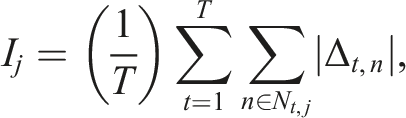
The resulting importance scores are non-negative and should be interpreted in relative terms. A higher value indicates that a variable contributes more strongly to the model’s predictions. For example, if the importance score for political rights is 10 and for GDP per capita is 5, the former contributes approximately twice as much to prediction as the latter.
Importantly, these values do not have a direct substantive or causal interpretation. Rather, they reflect the relative contribution of predictors within the model and should be interpreted alongside SHAP-based analyses, which provide complementary information on effect direction and non-linearity.
Contribution and Novelty
Research on revolutions has evolved through several theoretical and methodological “generations” (Beissinger, 2024; Goldstone, 1980, 2001; Korotayev et al., 2025b). The first generation, often labelled the “natural history” approach, emerged between the World Wars and is associated with the works of Crane Brinton, Lyford P. Edwards, George S. Pettee, and Pitirim Sorokin. The second generation (post-World War II through the 1970s) developed “social strain” of “functionalist” theories, with key contributions by James Davies, Seymour Lipset, Ted Robert Gurr, Samuel Huntington, Chalmers Johnson, Neil Smelser and Charles Tilly. The third generation (1970s–1980s) introduced a “structural” perspective, most prominently through the work of Theda Skocpol, alongside Shmuel Eisenstadt, Jeffrey M. Paige, Ellen Kay Trimberger, and the early writings of Jack Goldstone (Beck et al., 2022, pp. 5–11; Beissinger, 2022b, pp. 30–38; 2024; Goldstone, 1980, 2001; Goldstone et al., 2022b; Grinin & Korotayev, 2024c; Korotayev et al., 2025b, pp. 260–265; Lawson, 2016, 2019: 48–53). The fourth generation (1990s-2000s) incorporated “agency, culture, and international factors”, drawing on social movement theory, rational choice analysis, and the cultural turn (Beck et al., 2022, p. 9; Beissinger, 2022b, p. 35; Goldstone, 2001; Lawson, 2016). More recently, scholars have proposed that the studies emerging in the 2010s and 2020s constitute the fifth generation, characterized by (1) reliance on global databases of revolutionary events, (2) extensive use of modern quantitative methods, (3) a fundamental recognition that armed and unarmed revolutionary episodes are driven by distinct causal factors, and (4) a specific focus on unarmed maximalist campaigns/nonviolent revolutions (Allinson, 2019; Grinin & Korotayev, 2024c; Korotayev et al., 2025b, p. 271).
Within this tradition, most large-N empirical studies have relied on parametric statistical models, particularly rare-event logistic regression. For armed revolutionary destabilization, conventional specifications have consistently identified prior armed conflict (Fearon & Laitin, 2003), low income and economic downturns (Besançon, 2005), natural resource rents and oil dependence (Shaheen, 2015; Wimmer et al., 2009), youth bulges (Beissinger, 2022b; Slav & Korotayev, 2021; Urdal, 2006; Ustyzhanin et al., 2023b), weak state capacity (Fearon & Laitin, 2003), and ethno-social exclusion (Wimmer et al., 2009) as core predictors. More recent machine learning applications, such as gradient boosting, largely converge on this core set of variables while also pointing to the importance of additional economic shocks, inequality indicators, and nonlinear institutional effects (Medvedev et al., 2022; Medvedev & Korotayev, 2020, 2025; Pinckney & Rezaee Daryakenari, 2022; Ustyuzhanin, Medvedev, et al., 2025). In particular, the inverted U-shaped relationship with the electoral democracy index aligns with the well-established finding that both armed and unarmed destabilization is most likely in hybrid regimes (anocracies), where partial political liberalization interacts with weak institutions and elite fragmentation (Goldstone et al., 2010; Hegre & Ellingsen, 2001; Korotayev et al., 2025a; Slinko et al., 2017).
For unarmed revolutionary destabilization, prior research has highlighted as its significant predictors GDP per capita and its decline (Beissinger, 2022b; Knutsen, 2014; Ustyuzhanin et al., 2026), population size and density (Goldstone et al., 2011), fertility and education (Ustyuzhanin, Medvedev, et al., 2025), inflation and economic shocks (Cebul & Grewal, 2022), hybrid regime characteristics (Chenoweth & Ulfelder, 2017; Goldstone et al., 2010; Korotayev et al., 2025a), incumbent duration (Albrecht & Koehler, 2020; Beissinger, 2022b), corruption indicators (Beissinger, 2022b; Ustyuzhanin et al., 2023a), external financial assistance (Chin & Pinckney, 2025; Kostin & Korotayev, 2024) and so on. At the same time, recent approaches suggest that a broader set of economic and structural factors – particularly those related to external trade dynamics, macroeconomic shocks, and sectoral performance – may also play an important role in shaping the probability of unarmed revolutionary mobilization. This perspective is consistent with the broader theoretical framework linking economic deterioration, declining external integration, and reduced opportunity structures to increased risks of large-scale collective action (Beissinger, 2022b; Chenoweth & Ulfelder, 2017; Goldstone, 2001).
Despite the substantial progress of this literature, its empirical backbone remains dominated by parametric approaches—primarily logistic, probit, and Cox regression models applied to globally pooled data. Seminal studies employ logit and duration models to identify structural predictors (Besançon, 2005; Fearon & Laitin, 2003; Goldstone et al., 2010; Hegre and Ellingsen, 2001; Slinko et al., 2017; Urdal, 2006; Wimmer et al., 2009). Even studies explicitly addressing revolutionary destabilization largely rely on logistic or rare-events logit models (Albrecht & Koehler, 2020; Chenoweth & Ulfelder, 2017; Knutsen, 2014; Slav & Korotayev, 2021). While these approaches have generated a robust set of core predictors, they share several important limitations: they impose linear or pre-specified functional forms, are typically estimated on globally pooled samples, and provide limited insight into interaction effects and the relative contribution of predictors. As a result, they are ill-suited to capturing nonlinear, context-dependent, and region-specific causal structures—particularly for unarmed destabilization, where prior findings remain inconsistent.
A small but growing body of research has begun to apply machine learning approaches to the study of political destabilization. Notably, Pinckney & Rezaee Daryakenari (2022) develop a global forecasting framework for both armed and unarmed conflict using a wide range of algorithms and show that tree-based models outperform traditional regression approaches, while also demonstrating that unarmed conflict is more difficult to predict. While their findings provide important support for the advantages of non-parametric methods, their analysis remains focused on globally pooled models and predictive performance. In contrast, our approach shifts the focus from prediction accuracy alone to the structure of prediction, combining interpretable machine learning with regional disaggregation to uncover nonlinear, context-dependent, and region-specific configurations of risk factors.
In this way, our study employs an interpretable machine learning framework (CatBoost with SHAP values and permutation importance), which allows us to relax functional form assumptions, systematically compare predictor importance across outcomes and regions, and uncover nonlinear and interaction effects. Unlike coefficient-based inference in parametric models, this approach enables us to decompose predictions and identify how specific variables contribute across different contexts. This, in turn, makes it possible to demonstrate that previously weak or inconsistent findings – especially regarding unarmed revolutionary destabilization – reflect not the absence of structural determinants, but their nonlinear, heterogeneous, and regionally contingent nature.
Our study advances this literature in three key respects. (1) First systematic regional comparison with machine learning. Previous quantitative work on revolutionary destabilization has either been global or focused on single regions, but no study has systematically compared the predictive architectures of armed and unarmed revolution onset across Sub-Saharan Africa (SSA), the Middle East and North Africa (MENA), and Asia using gradient boosting or other modern machine learning methods. By estimating separate models for each macroregion and applying consistent interpretability tools (SHAP, permutation importance), we uncover region-specific hierarchies or risk factors that remain hidden in pooled specifications or region-fixed-effects-designs. (2) Identification of previously under-explored predictors. While our results largely confirm the established core variables (e.g., conflict persistence, low income, youth bulges for armed destabilization; GDP, regime type, incumbent duration for unarmed destabilization), the ML framework reveals several predictors that have received limited or no systematic empirical support in earlier quantitative studies.
For armed destabilization, these include: agricultural-climatic stress (cereal yield dynamics), inflationary pressures (especially in Asia), and non-linear institutional effects (e.g., the inverted-U relationship with electoral democracy, consistent with the anocracy thesis but more precisely mapped). For unarmed destabilization, we find robust effects of: export and import contractions per capita, national share in world trade, cereal yield dynamics (with non-linear thresholds), gold production, and land inequality. Many of these variables have been theorized in the qualitative or case-study literature but have rarely been tested in large-N quantitative designs, and their significance across regions differs markedly. The inclusion of such economic and structural factors, combined with ML’s ability to detect non-linearities, expands the explanatory scope beyond the conventional parametric framework. (3) Substantial regional heterogeneity in predictor sets. A central finding is that the drivers of revolutionary destabilization are not uniform across macroregions. For armed destabilization, the “conflict-trap” (previous-year conflict) dominates everywhere, but the contribution of other factors varies: demographic pressures are most salient in SSA, resource variables in MENA, and inflation in Asia. For unarmed destabilization, no single universal predictor emerges; instead, each region exhibits its own configuration. Export shocks and U.S. financial aid are central in Asia, export shocks and incumbent duration dominate in SSA, while population density and global trade integration are especially important in MENA. Corruption indicators are significant in Asia and MENA but not in SSA, reflecting different institutional contexts. This regional divergence underscores the limits of continent-level generalizations and highlights the value of region-stratified modeling.
Beyond these contributions, our findings generate several broader insights. First, armed revolutionary destabilization appears significantly less sensitive to cross-border diffusion than often assumed, reinforcing its domestically anchored and strongly path-dependent nature. Second, the results point to a fundamental distinction between structurally constrained armed processes and more contingent, context-dependent dynamics of unarmed mobilization. Third, economic volatility – particularly trade shocks and inflation – emerges as a robust and regionally differentiated driver of destabilization. Fourth, the impact of corruption proves to be highly context-dependent and does not generalize across macroregions, challenging conclusions derived from globally pooled models. Finally, climatic and agricultural variables operate not only through scarcity mechanisms, but also via development thresholds, indicating more complex links between structural conditions and destabilization risk.
Taken together, these contributions demonstrate that machine learning methods, combined with structured regional comparisons and post-hoc interpretation techniques, can uncover nuanced, non-linear, and context-dependent causal architectures that remain obscured under traditional parametric approaches. By simultaneously modeling armed and unarmed revolutionary processes across three distinct macroregions, we provide both a methodological innovation and a substantively refined understanding of the multiple pathways to revolutionary destabilization.
Factors Contributing to Revolutionary Armed Destabilization in MENA, Sub-Saharan Africa, and Asia
List of Significant Predictors for Large-Scale Armed Revolutionary Destabilization in MENA, Sub-Saharan Africa, and Asia, Ranked by Their Significance
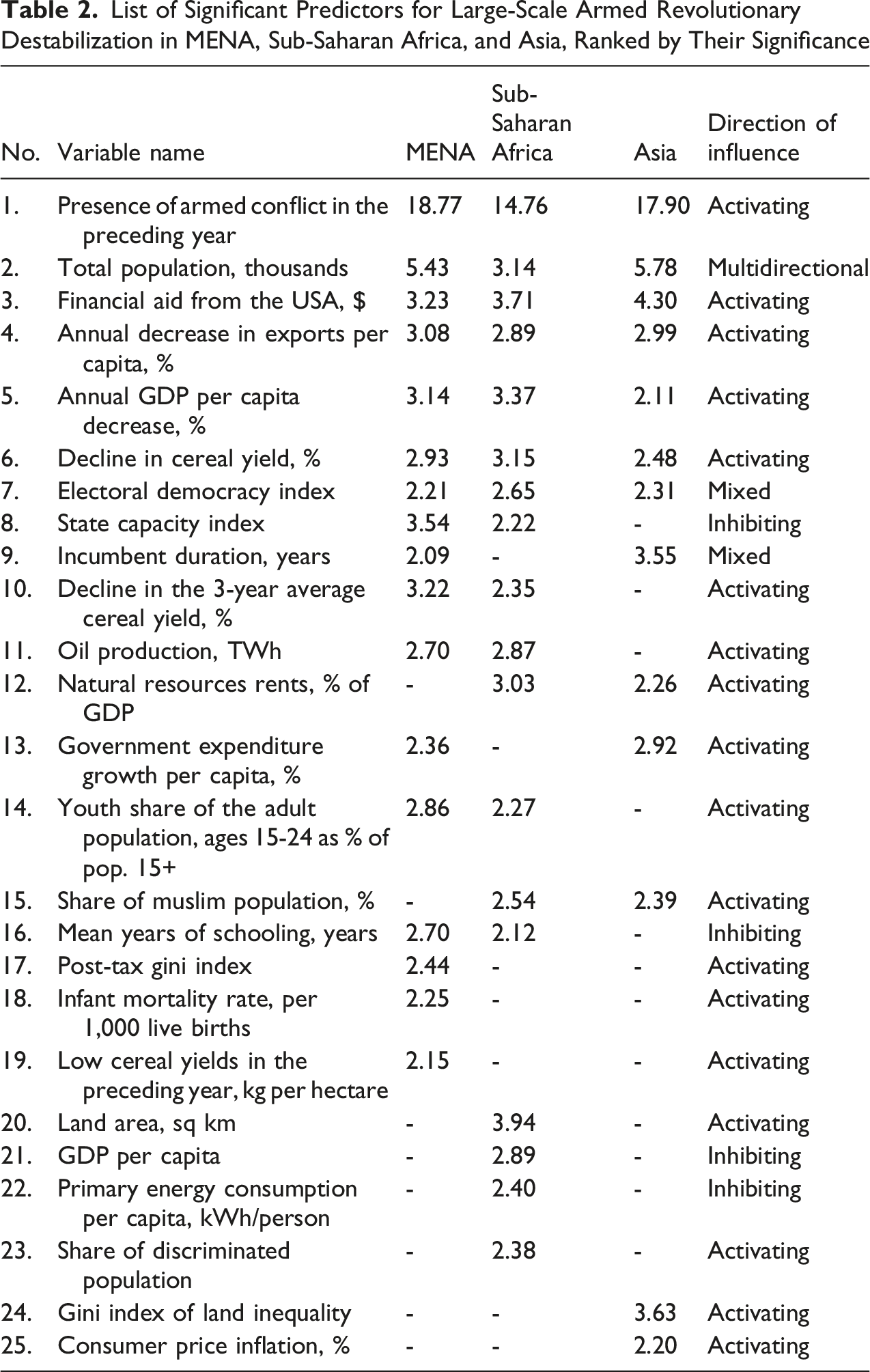
Across all regions, the presence of armed conflict in the preceding year is by far the dominant predictor (importance scores: 18.77 in MENA, 14.76 in Sub-Saharan Africa, and 17.90 in Asia). This result is consistent with the “conflict trap” logic (Fearon & Laitin, 2003), whereby violence becomes self-reinforcing once initiated.
Beyond this common core, regional differences emerge. In Asia, armed revolutionary destabilization is driven primarily by conflict persistence and domestic political-economic dynamics. In contrast, MENA and especially Sub-Saharan Africa exhibit a broader combination of structural vulnerabilities, including economic shocks, resource dependence, and weak state capacity, which explains a large share of revolutionary civil wars and insurgencies (Medvedev et al., 2024). Notably, diffusion variables (e.g., the number of armed conflicts in neighboring countries) are not statistically significant in any region. This suggests that armed destabilization remains largely domestically driven, in contrast to unarmed destabilization, where diffusion effects are more pronounced.
Economic Factors
Economic predictors play a central but heterogeneous role, with part of their apparent importance driven by reverse causality. The most consistently influential variables are U.S. financial aid, declines in exports per capita, and GDP per capita contraction. For example, U.S. aid reaches importance scores of 3.23 in MENA, 3.71 in Sub-Saharan Africa, and 4.30 in Asia, making it the strongest economic predictor across all regions. Similarly, export and GDP declines consistently exceed values around 2–3, placing them among the most influential non-conflict predictors.
However, part of this effect reflects reverse causality: economic deterioration often accompanies or follows the onset of armed conflict. ML models capture these sharp fluctuations as predictive signals, even when they are consequences rather than causes of destabilization. In contrast, several economic predictors reflect underlying structural mechanisms. Natural resource rents and oil production are significant in MENA and Sub-Saharan Africa (e.g., resource rents reach 3.03 in Sub-Saharan Africa), supporting the resource-conflict nexus. Resource wealth increases not only grievances but also the feasibility of rebellion by providing financial means for armed mobilization.
U.S. financial aid is significant despite previously identified association primarily with unarmed forms (e.g., Kostin & Korotayev, 2024). U.S. aid’s significance for armed destabilization likely stems from the fact that such aid is associated with processes of democratization (i.e., a shift toward hybrid regimes that are particularly prone to destabilization [e.g., Goldstone et al., 2010]). This relationship reflects a broader pattern: foreign aid is disproportionately directed toward politically fragile and transitional regimes. Such regimes often experience elite fragmentation, institutional weakening, and rising political competition, which increase the probability of both elite-driven and mass-driven armed destabilization. Foreign aid thus functions not as a direct causal driver, but as an indicator of underlying political vulnerability. Weak political institutions amplify its predictive power for armed conflicts in Africa. MENA’s significance likely reflects reverse causality, evidenced by Afghanistan’s trajectory: US aid declined as tensions eased but surged during escalation phases (Olasehinde-Williams et al., 2023).
In addition, theoretical models and empirical evidence (Steinwand, 2015) suggest that foreign financial aid can have counterproductive effects in fragile states. When recipient elites use foreign aid as rent, aid can undermine governance and state capacity, indirectly increasing the risk of armed destabilization – an effect particularly observed in Africa. However, this relationship should not be interpreted as purely causal; as has been already mentioned above, it likely also reflects the strategic concentration of American assistance in crisis-prone contexts such as Vietnam, Iraq, Yemen, Somalia, the DR Congo, South Sudan, Ethiopia, Liberia, and other fragile states, where aid surges systematically coincide with periods of political contention.
Economic inequality further amplifies fragility in MENA. The Post-Tax Gini index suggests that pronounced disparities in wealth and opportunity fuel grievances and erode cohesion. In Asia, a uniquely powerful predictor is land inequality (see Figure 1), underscoring the centrality of agrarian structure and rural justice in driving armed conflict risk. High inequality increases destabilization risk by intensifying perceived injustice and relative deprivation (Ustyuzhanin, Fain, & Korotayev, 2025). When economic disparities become extreme, large segments of the population experience systematic exclusion from economic and political opportunities, lowering the legitimacy of existing institutions and increasing support for radical or revolutionary alternatives. Predicted probability of armed revolutionary destabilization in Asia as a function of the land Gini index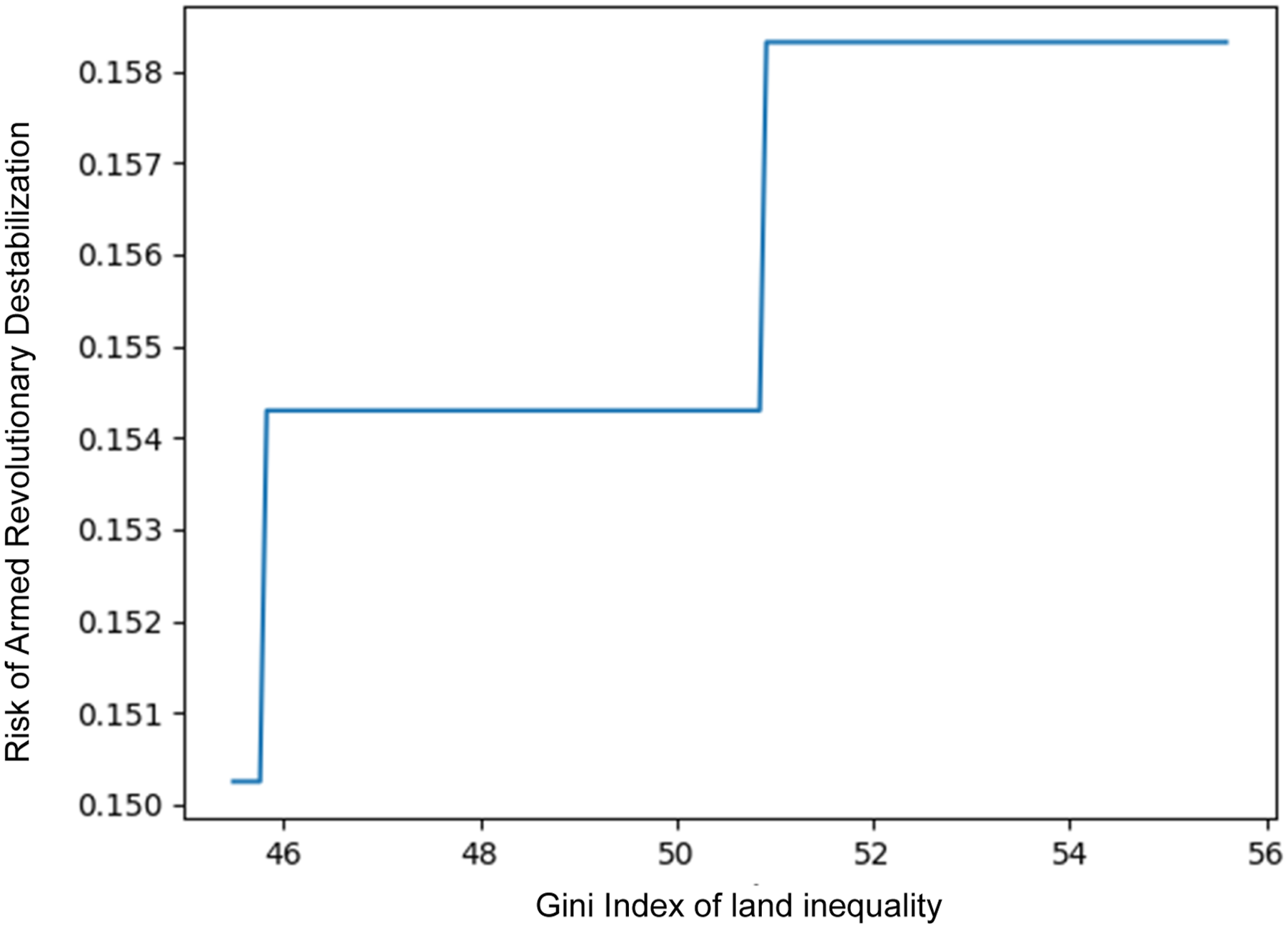
Overall, economic predictors combine two distinct mechanisms: short-term shocks (often endogenous to conflict) and structural conditions that increase both grievances and the feasibility of armed revolutionary mobilization.
Country Size and Demographic Factors
Country size variables are among the most robust predictors of armed revolutionary destabilization. Total population is consistently significant across all regions (5.43 in MENA, 3.14 in Sub-Saharan Africa, 5.78 in Asia), while land area plays a particularly important role in Sub-Saharan Africa (3.94). Large populations and territories increase the difficulty of maintaining political control, especially in peripheral and weakly governed regions where insurgencies tend to emerge (Raleigh & Hegre, 2009). However, threshold effects differ across regions. In Sub-Saharan Africa, armed destabilization risk increases sharply beyond approximately 20 million inhabitants, whereas in Asia similar effects appear only at much higher population levels, reflecting stronger institutional capacity in large Asian states.
Among socio-demographic variables, youth bulge indicators are significant in MENA (2.86) and Sub-Saharan Africa (2.27), supporting the well-established link between large youth cohorts and political instability (Goldstone, 2002; Korotayev et al., 2014; Korotayev & Khokhlova, 2025; Moller, 1968; Sawyer et al., 2022; Urdal, 2006; Weber, 2019). Large youth cohorts increase revolutionary potential because young adults are simultaneously the most politically mobilizable and economically vulnerable group. They face limited employment opportunities, weaker integration into existing institutional structures, and lower opportunity costs of political participation (Goldstone, 2002; Korotayev et al., 2025c; Korotayev & Zinkina, 2024). As a result, youth bulges expand the pool of individuals available for recruitment into both armed insurgencies and mass protest movements, increasing the structural feasibility of destabilization.
Other indicators often function as proxies for deprivation: infant mortality in MENA reflects weak service provision, while mean years of schooling captures human capital, with higher proliferation of modern formal education reducing armed destabilization risk (Korotayev et al., 2025d; Ustyuzhanin & Korotayev, 2023). Muslim population share shows higher significance in Asia than in Africa, where ethnic fragmentation dilutes religious identity. In Asia, Muslim minorities in Buddhist/Christian-majority states fuel ethno-religious conflicts and separatism – frequent civil war triggers (Grinin, 2021).
Political and Institutional Factors
Political variables highlight the central role of state capacity and institutional structure. State capacity is a key predictor in MENA (3.54) and Sub-Saharan Africa (2.22), with lower values strongly associated with higher destabilization risk (Andersson, 2024). Weak states face limitations in territorial control and coercive capacity, allowing insurgent actors to operate with lower risk of repression. As a result, even moderate political or economic shocks can escalate into large-scale destabilization (Andersson & Teorell, 2024; Korotayev et al., 2025c). However, in Africa, even stable states with a relatively high state capacity are vulnerable to cross-border threats (Medvedev et al., 2024); yet, the highest risk is primarily associated with low-index states (Braithwaite, 2010) (Figure 2). Predicted probability of armed revolutionary destabilization in Sub-Saharan Africa as a function of the state capacity index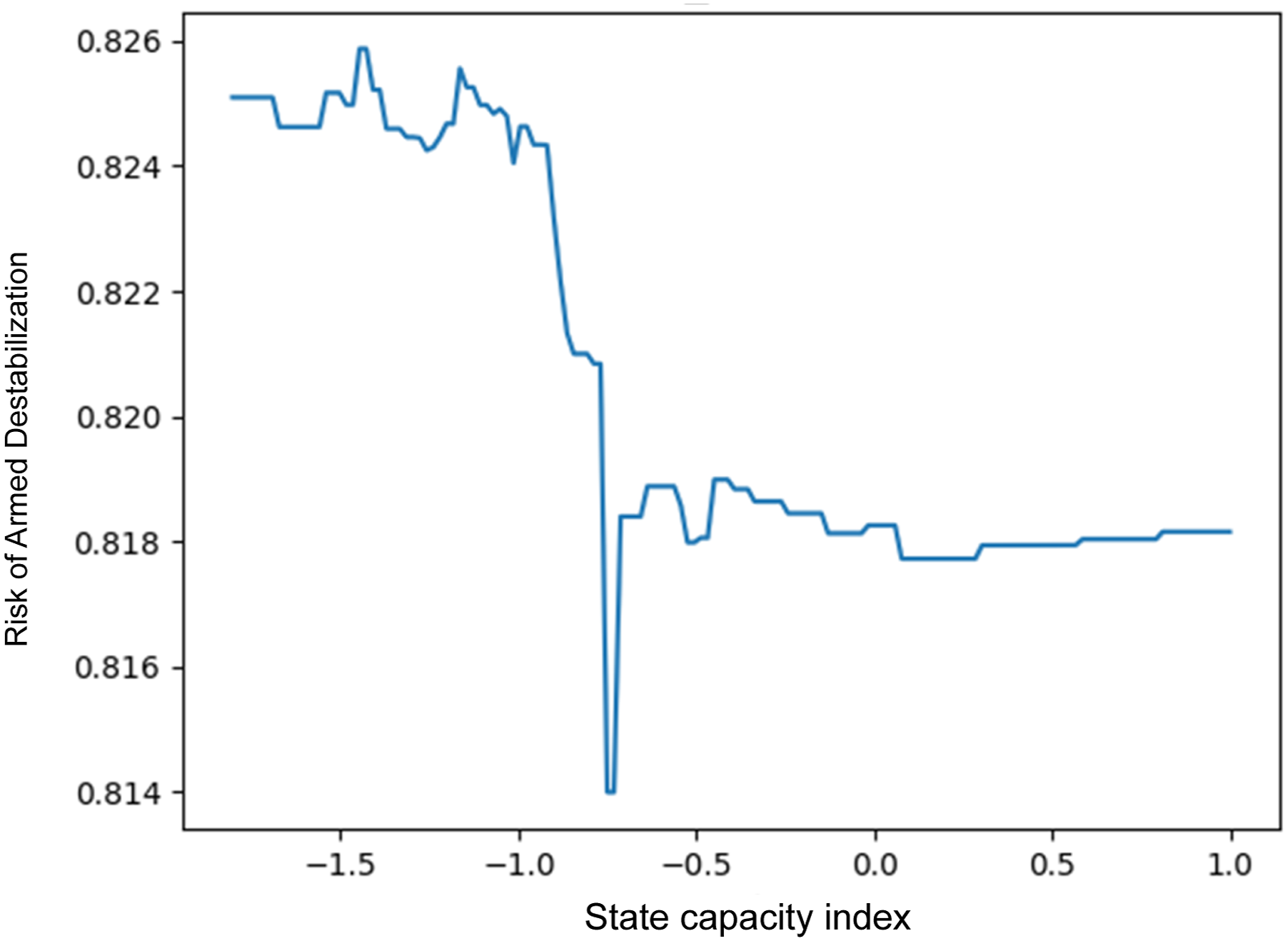
Electoral democracy index correlates with risk in Sub-Saharan Africa at values above 0.6 – a legacy of 1990s democratic reforms that often led to civil wars. Here, anti-government protests frequently escalate into prolonged armed conflicts. The relationship between incumbent duration and destabilization risk is both nonlinear and regionally heterogeneous. In MENA, risk is relatively low during the initial decade but escalates significantly after the 10-year mark, remaining elevated thereafter – a pattern consistent with theories of late-stage authoritarian brittleness and succession crises (Chernomorchenko, 2026). In Asia, risk rises notably towards the end of a first term (around 5 years) and increases further upon reaching a decade in power. The pattern in Sub-Saharan Africa is distinct and asymmetric: risk is high immediately after an election/coming to power, rises again near the end of the first term, then gradually declines until approximately 15 years in office. A sharp resurgence occurs during the 20–25 year period, after which risk diminishes. This reflects a complex interplay of term-limit politics, shifting elite coalitions, and generational change within regimes.
Notably, explicit corruption-related predictors, which are often significant for forecasting unarmed revolutionary destabilization (Beissinger, 2022b; Korotayev et al., 2019; Ustyuzhanin et al., 2023a), do not reach statistical significance for armed outcomes in this model. This suggests that while corruption may erode legitimacy, its direct effect on triggering large-scale armed revolutionary destabilization is less systematic than factors like state incapacity, demographic pressure, or resource competition. In Sub-Saharan Africa, the share of the discriminated population is a significant predictor of armed insurgencies. This captures the destabilizing potential of systematic political and social exclusion. Despite some observed decline in the overt role of ethnicity in electoral politics across many African states in the 21st century, ethnic and religious affiliation continue to serve as decisive categories for social mobilization, resource access, and political identification. Marginalized groups constituting a substantive share of the populace provide a latent base for grievance-driven armed mobilization or become targets of violent political contention (Chernomorchenko, 2025; Walter, 2022).
Climatic and Agricultural Factors
Climate factors related to cereal yields demonstrate significant, yet methodologically nuanced, predictive power for armed destabilization, with clear regional distinctions. Three distinct cereal yield indicators reveal different aspects of the climate-conflict nexus. The simple annual decline in cereal yield is a significant predictor across all three macroregions. However, this measure likely captures a mix of true climatic stress and reverse causality, as armed conflict itself can devastate agricultural production through displacement, infrastructure destruction, and market collapse.
A more robust indicator, the decline in the 3-year average cereal yield, which smooths out annual volatility and better isolates a genuine negative shock, remains highly significant in MENA and Sub-Saharan Africa but loses significance in Asia. The sustained significance of this predictor in Sub-Saharan Africa underscores the region’s acute vulnerability, stemming from its high proportion of rural population, dependence on rain-fed crops, low food security, and limited state capacity to buffer climatic shocks (Hendrix & Glaser, 2007). In contrast, its insignificance in Asia points to higher overall food security and greater urbanization in the macroregion, which collectively mitigate the destabilizing impact of agricultural volatility. At the same time, localized climate stressors retain relevance in specific subregions like South Asia (e.g., northern India and Bangladesh), where they exert a more pronounced effect (Werum et al., 2025).
Most tellingly, the low cereal yields in the preceding year – which most cleanly tests the causal sequence of agricultural failure preceding destabilization – is a significant predictor exclusively in MENA. In parts of Sub-Saharan Africa, cereal yields are often chronically low with less extreme interannual variation, dampening its predictive signal. In Asia, the link is weaker for the reasons stated above. In contrast, MENA’s acute vulnerability stems from high dependency of some of its important countries on rain-fed agriculture in a volatile climate zone, where sharp oscillations between productive years and severe droughts create pronounced social and economic shocks. The stark drop from a normal or good yield to a bad one – precisely what this variable captures – proves destabilizing. The pre-civil war droughts in Syria (Grinin et al., 2019; Ide, 2018) provide a canonical example of this mechanism, where a major yield decline exacerbated rural impoverishment and migration, fueling social unrest that intersected with political grievances, finally leading to a full-scale armed revolutionary insurgency.
Factors Contributing to Unarmed Revolutionary Destabilization in MENA, Sub-Saharan Africa, and Asia
List of Significant Predictors for Unarmed Revolutionary Destabilization in MENA, Sub-Saharan Africa, and Asia, Ranked by Their Significance
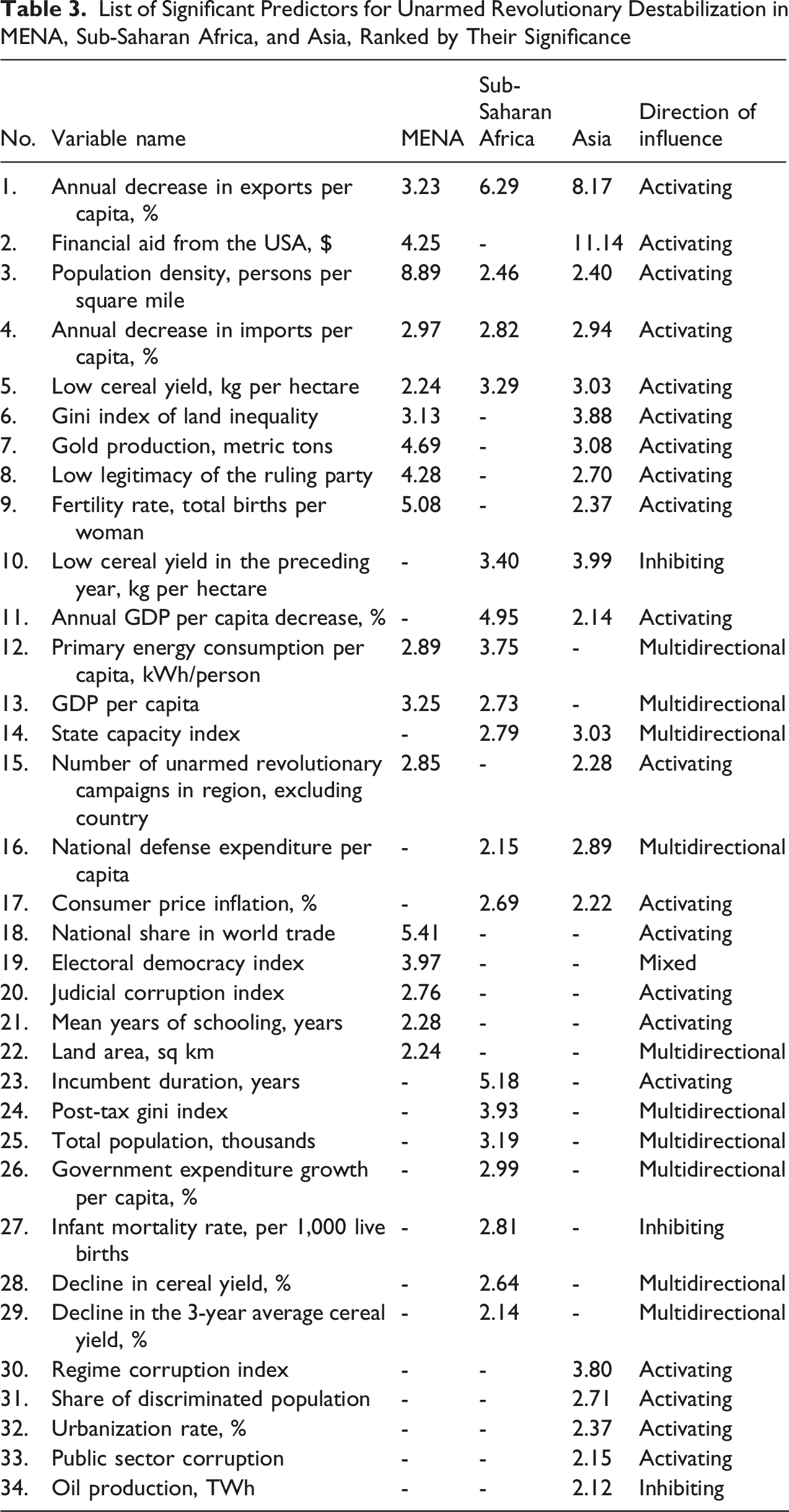
While the predictive structure of unarmed revolutionary destabilization is highly pluralistic – encompassing economic shocks, demographic pressures, institutional constraints, and corruption-related vulnerabilities – each macroregion exhibits a distinct hierarchy of risks. Within this framework, a small set of key drivers emerges as disproportionately influential in each region: the volume of U.S. financial aid and declining exports in Asia; export contraction and political tenure in Sub-Saharan Africa; and population density and global trade integration in MENA. Unlike armed destabilization, no single universal driver emerges as the presence of prior violent conflict for armed insurgencies; instead, risk is configured by a dominant, region-specific combination of factors operating within a broader pluralistic field.
In contrast to armed destabilization, where conflict diffusion variables do not demonstrate statistical significance, unarmed revolutionary destabilization displays a different pattern. In MENA and Asia, the number of unarmed revolutionary campaigns in the region (excluding the country itself) emerges as a significant predictor. This suggests that unarmed revolutionary destabilization is more sensitive to broader regional environments of contention, revolutionary protest diffusion, and cross-border demonstration effects. Compared to Sub-Saharan Africa, conflict environments in MENA and Asia are characterized by lower baseline saturation of armed instability, which makes increases in regional conflict intensity more salient and predictive for unarmed revolutionary mobilization.
Economic Factors
As in armed revolutionary destabilization, economic factors play a predominant role in unarmed revolution onset (see Table 3). A common element across all three macroregions is the significance of external economic shocks, captured by declines in both exports and imports per capita. Export contraction emerges as the most powerful destabilizing predictor in Asia and Sub-Saharan Africa, reflecting the particular sensitivity of these regions to disruptions in employment, income flows, and fiscal stability generated by export downturns. In MENA, decreases in both exports and imports are also significant predictors, indicating that revolutionary protest destabilization in the region is closely tied to trade-dependent vulnerability and exposure to global market fluctuations. Overall, the joint importance of export and import shocks demonstrates how abrupt interruptions in external economic linkages can rapidly translate into mass grievances, especially in settings where access to essential goods and macroeconomic stability is strongly conditioned by international trade dynamics (Morozenskaya et al., 2024).
In MENA, this trade-related vulnerability is not limited to short-term export or import contractions. The national share in world trade emerges as an additional region-specific driver, indicating that the structural degree of global economic integration itself shapes revolutionary protest probability. In highly import- and export-reliant economies, even moderate disruptions in international markets can generate fiscal strain and distributive tensions, creating fertile conditions for revolutionary protest mobilization.
This vulnerability does not necessarily manifest through aggregate consumer inflation indicators. Consumer price inflation emerges as significant in Asia and Sub-Saharan Africa, where price instability translates quickly into declines in real household purchasing power and can trigger widespread economic grievances (Zhdanov & Korotayev, 2024). In MENA, by contrast, inflation’s predictive power for unarmed destabilization appears weaker; many countries in the region maintain extensive price subsidies and administrative controls on key staples (e.g., bread, fuel), which can buffer aggregate CPI even when specific commodity prices experience politically salient shocks.
Land inequality emerges as a significant predictor of revolutionary destabilization in both MENA and Asia, but not in Sub-Saharan Africa. In Asia and parts of MENA, land distribution has become highly concentrated in the hands of narrow elites, creating entrenched distributive grievances that fuel protest mobilization when economic or political stresses intensify. By contrast, traditional Gini measures of land inequality in SSA tend to be lower or less consistently measured, partly due to the prevalence of customary tenure systems and the limitations of land data that do not fully capture land value or the landless population, reducing the variable’s predictive signal in the model.
In Asia, U.S. financial aid (see Figure 3) is the strongest driver. U.S. assistance has often accompanied political liberalization and externally supported democratization, producing hybrid regimes especially vulnerable to mass protest (Kostin & Korotayev, 2024): partial openings raise expectations while institutional constraints limit effective representation. This effect is regionally specific: aid is not significant in Sub-Saharan Africa, where assistance is more ubiquitous, but is concentrated in transitional Asian states such as the Philippines, Indonesia, South Korea, and Taiwan, historically coinciding with episodes of partial liberalization and protest mobilization (for possible mechanism see Anderson, 1999; Kostin & Korotayev, 2024). Predicted probability of unarmed revolutionary destabilization in Asia as a function of U.S. Financial aid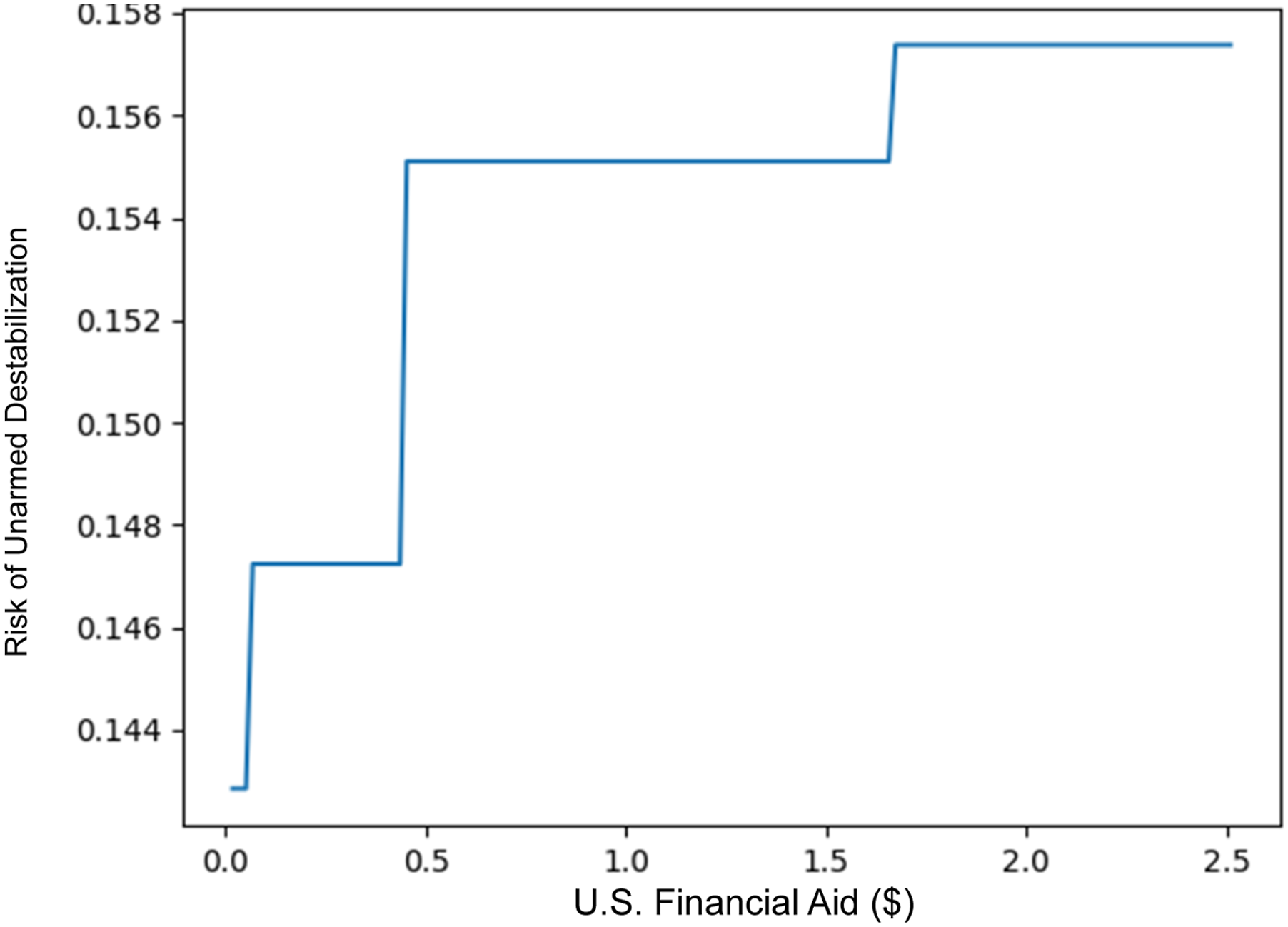
The significance of gold production in Asia, in contrast to MENA where its influence may be substantially concentrated in specific national contexts (e.g., Sudan), reflects a more widespread structural risk. Resource wealth fuels unarmed social conflict over distribution, environmental impacts, and rights, amplified by weak local institutions and subnational corruption. Oil production emerges as statistically significant only in Asia, but with a stabilizing rather than destabilizing effect, suggesting that in this microregion extractive capacity may operate more through a stabilizing “resource blessing” mechanism than through the classical destabilizing “resource curse” dynamic (for more on these effects, see Korotayev et al., 2025c; Musiyeva & Medvedev, 2024; Pinckney, 2020).
In Sub-Saharan Africa, unarmed revolutionary destabilization is driven by broad-based economic vulnerabilities. Sharp GDP per capita contractions (>3%) trigger heightened risk, while high post-tax inequality (Gini >0.55–0.60) constitutes a structural grievance. Fiscal volatility – abrupt cuts in per capita government spending – also drives protest, whereas very large spending surges may stabilize mobilization through patronage or stimulus. Primary energy consumption per capita appears as a predictor in some regions, but this effect largely aligns with proxies such as GDP per capita, which reflect underlying socio-economic development.
Average defense spending per capita in Africa remains low; countries with the highest levels, such as South Sudan and Burkina Faso, often experience institutional fragility and heightened nonviolent (as well as violent) mobilization risk. In contrast, high defense spending in Asia (South Korea, Taiwan) reflects state capacity, economic development, and strategic security rather than internal instability, where protest and civil resistance dominate political contention.
Demographic and Socio-Demographic Factors
For unarmed forms, the key demographic predictor is population density, which is significant across all three macroregions and the most influential in MENA (see Table 3). This is because unarmed revolutionary protests are overwhelmingly urban phenomena; high density acts as a fundamental enabling condition by facilitating rapid information diffusion, lowering coordination costs, and increasing the effectiveness of collective action. By contrast, in Sub-Saharan Africa, protests are more spatially dispersed, and lower urbanization with fragmented settlement patterns reduces the direct effect of density on mobilization. Similarly, in Asia, heterogeneous settlement structures weaken its predictive power.
Other significant sociodemographic predictors are fertility rate and mean years of schooling, confirming core tenets of “youth bulge” theory and the destabilizing effect of population size in states with weak institutions (Anisin, 2025; Cincotta & Weber, 2021; Goldstone, 2002; Korotayev et al., 2014; Korotayev & Khokhlova, 2025; Urdal, 2006). In MENA, youth bulge effects are particularly pronounced. High fertility sustains a continuous influx of young adults into constrained labor markets, while increasing education raises political awareness and expectations (Sawyer & Korotayev, 2022). Together with high population density, these factors create structurally mobilized educated urban youth cohorts, especially conducive to large-scale unarmed mobilization.
In Sub-Saharan Africa, youth bulge dynamics manifest differently. Total population size and infant mortality are more significant than fertility, reflecting structural underdevelopment, weak healthcare systems, and persistent demographic imbalances. Population density remains relevant but less influential than in MENA due to lower urbanization and less developed communication infrastructure, which reduce coordination efficiency for mass protest. A noteworthy finding specific to Sub-Saharan Africa is the significant, yet inverse, relationship of the infant mortality rate to unarmed destabilization risk. Higher rates correspond to a lower probability of large-scale nonviolent protest. In Asia, demographic pressures are less directly expressed through fertility or total population. The share of discriminated population emerges as the most significant predictor, followed closely by population density. Fertility rate and urbanization rate are also significant but with a slightly lower influence. Other demographic variables do not show statistical significance. This pattern reflects the region’s more advanced demographic transition: while fertility continues to contribute to population growth, it is no longer the dominant driver of unarmed destabilization.
Political and Institutional Factors
For unarmed revolutionary destabilization, no single political variable demonstrates statistical significance across all three macroregions (see Table 3). This contrasts with demographic and economic predictors, where several universal drivers emerge, and highlights the context-specific nature of political destabilization mechanisms. Instead, each region displays a distinct configuration of political vulnerabilities.
In MENA, declining legitimacy of the ruling party and intermediate levels of electoral democracy represent the most significant predictors. Hybrid regimes are particularly vulnerable, as partial political openness raises expectations and mobilization capacity while preserving institutional constraints that prevent effective grievance resolution. Declining ruling party legitimacy further accelerates this process by undermining regime authority and increasing protest potential.
The relationship between incumbent duration and unarmed destabilization risk in Sub-Saharan Africa is markedly nonlinear (see Figure 4). Risk is elevated in the immediate post-election period, reflecting contested transitions, then declines during the early consolidation phase. A first peak occurs around the 5-year mark, coinciding with first reelection bids and elite fragmentation. Risk remains elevated throughout the 5–15 year period, then declines temporarily before surging most dramatically after 20 years in power, with a peak at 24–25 years. This late surge captures the compounded effects of political stagnation, eroding legitimacy, and intensifying succession crises before declining sharply after 25 years, as only the most resilient or repressive incumbents survive beyond this threshold. Predicted Probability of Unarmed Destabilization in Sub-Saharan Africa as a Function of Incumbent Duration (years)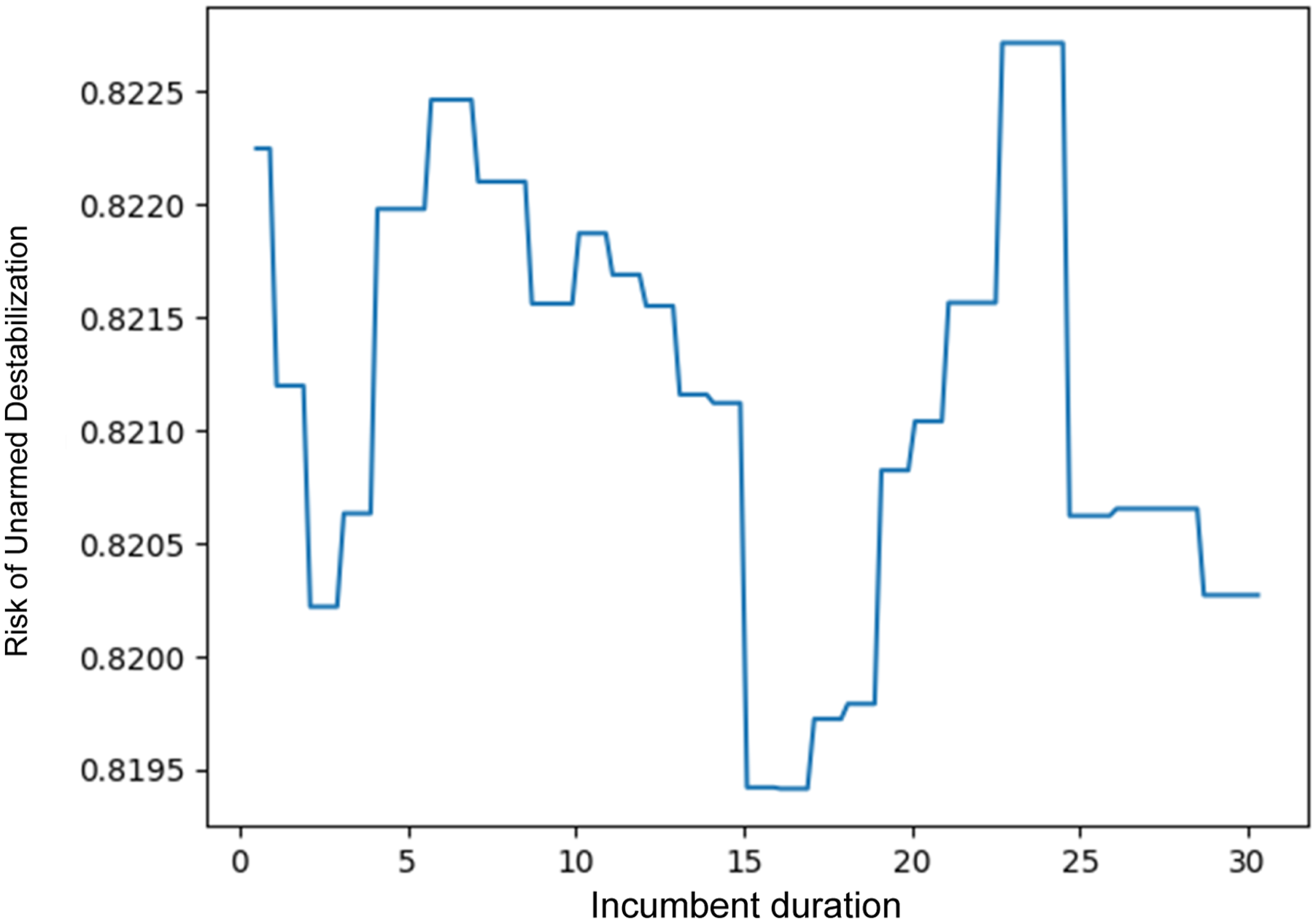
In Asia, political destabilization is defined by the combined significance of state capacity, share of discriminated population, and low legitimacy of the ruling party. Low state capacity emerges as the strongest political predictor in the region, indicating that unarmed revolutionary destabilization probability is concentrated in states with limited administrative reach and weaker ability to enforce authority. This produces a distinct regional configuration in which unarmed destabilization is driven less by leadership longevity or formal democratization thresholds, and more by the interaction between institutional limitations, legitimacy deficits, and structurally embedded patterns of political exclusion.
Corruption-Related Factors
Corruption predictors do not exhibit universal significance across all three macroregions, but instead reflect different institutional vulnerabilities (see Table 3). Corruption undermines institutional legitimacy and reduces compliance with state authority, increasing the likelihood of mass political mobilization. Judicial corruption in MENA reflects the central role of courts in maintaining regime legitimacy: when judicial institutions are perceived as politically controlled or unfair, legal channels for grievance resolution lose credibility. In Asia, regime corruption index represents one of the strongest political predictors, accompanied by public sector corruption. This indicates that destabilization risk in the region is closely tied to systemic corruption. No corruption-related predictors reach statistical significance in Sub-Saharan Africa. This likely reflects the normalization of corruption across many political systems in the region, reducing its capacity to distinguish between stable and destabilizing contexts within the model.
Climatic and Agricultural Factors
Climatic factors related to agricultural productivity demonstrate significant but regionally differentiated effects on unarmed revolutionary destabilization (see Table 3). Unlike economic shocks, which consistently increase destabilization risk, cereal yield indicators exhibit nonlinear and, in some cases, counterintuitive relationships with protest instability.
In MENA, the only significant climatic predictor is low cereal yield. This result mirrors its significance for armed destabilization and likely reflects reverse causality: declining agricultural productivity often follows the onset of political instability, disruption of rural economic activity, and population displacement. Higher yield levels, by contrast, are associated with greater structural stability, indicating that agricultural performance in this region reflects political conditions rather than acting as their primary driver.
A more reliable indicator of the relationship between agricultural productivity and destabilization risk is low cereal yield in the preceding years, which is significant in both Sub-Saharan Africa and Asia. However, the observed relationship is inverse relative to intuitive expectations (see Figure 5). The probability of unarmed revolutionary destabilization increases in countries with relatively higher yields – above approximately 2 tons per hectare in Sub-Saharan Africa and above 3.25 tons per hectare in Asia. This pattern is consistent with the broader distinction between armed and unarmed revolutionary destabilization: extremely low productivity environments are more likely to generate armed conflict, whereas higher-productivity agricultural systems provide the demographic concentration, economic integration, and institutional capacity necessary for large-scale unarmed revolutionary mobilization (cp. Korotayev et al., 2025d). Predicted Probability of Unarmed Revolutionary Destabilization in Sub-Saharan Africa as a Function of the Cereal Yield in the Preceding Year (kg per hectare)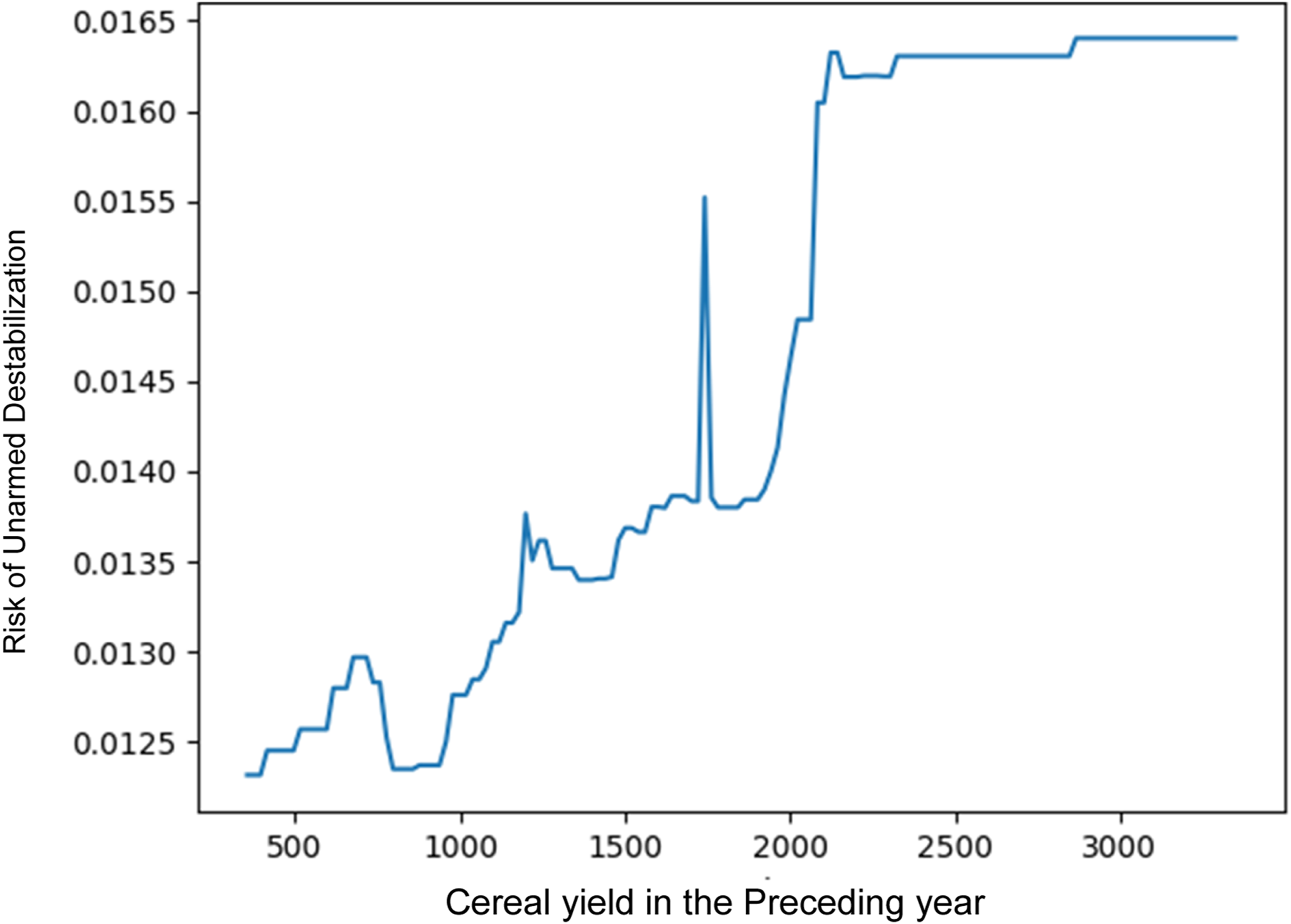
Additional yield dynamics in Sub-Saharan Africa reinforce this pattern. Decline in cereal yield is associated with increased destabilization risk primarily in contexts of stagnation or modest yield growth (up to approximately 6%), while larger increases have a stabilizing effect. Similarly, decline in the 3-year average cereal yield does not correspond to heightened risk during sustained declines or stagnation, but instead shows elevated destabilization probability during periods of modest yield growth (up to approximately 2%).
Conclusion
Summarizing the results, this study demonstrates that revolutionary destabilization is driven by distinct but partially overlapping configurations of structural risk factors across Sub-Saharan Africa, the Middle East and North Africa, as well as Asia. Armed and unarmed destabilization exhibit fundamentally different predictive architectures. Armed revolutionary events are strongly shaped by path dependence, whereas unarmed revolutionary episodes emerge from a more pluralistic combination of economic, demographic, institutional, and corruption-related pressures.
For armed revolutionary destabilization, the presence of armed conflict in the preceding year constitutes an overwhelmingly dominant predictor across all three macroregions, confirming the logic of the “conflict trap.” Once large-scale political violence begins, it becomes self-reinforcing, suppressing the relative contribution of many other variables, especially in Asia where fewer predictors reach statistical significance. Unlike unarmed revolutionary destabilization, diffusion variables capturing conflict spillovers from neighboring states do not reach significance for armed outcomes, suggesting that armed revolutionary destabilization remains primarily domestically anchored and path-dependent rather than regionally contagious (though this point, of course, needs further research).
By contrast, unarmed revolutionary destabilization is characterized by a substantially broader and more differentiated set of predictors. The machine learning framework identifies approximately 36% more significant drivers than in the armed models, revealing a much more complex and less hierarchical causal structure. No single universal predictor dominates across regions; instead, each macroregion exhibits a distinct configuration of vulnerability. This finding advances existing research by demonstrating that the apparent inconsistency of prior results is not due to weak effects, but to their nonlinear, context-dependent, and region-specific nature.
Economic predictors play a prominent role for both destabilization types, but their mechanisms differ. Export and import contractions consistently increase the probability of unarmed destabilization, reflecting vulnerability to external shocks. Inflation emerges as significant in Asia and SSA, where price instability rapidly translates into mass grievances. U.S. financial aid appears as one of the strongest predictors in Asia and remains important for armed destabilization in SSA, likely reflecting its association with hybrid regimes undergoing partial liberalization, which are especially prone to instability.
Demographic pressures operate differently across destabilization forms. Population size remains a key predictor of armed destabilization, especially in SSA where large territories and populations impose severe governance burdens. For unarmed revolutionary destabilization, population density emerges as the only demographic predictor significant across all three macroregions, underscoring the urban and spatially concentrated nature of mass protest mobilization. Fertility and youth bulge dynamics remain particularly important in MENA, while demographic predictors are less dominant in Asia due to more advanced demographic transitions.
Political predictors further differentiate destabilization types. State capacity is crucial for both armed and unarmed revolution onset, but its regional effects vary: low capacity correlates with armed destabilization in SSA and MENA, whereas unarmed destabilization in Asia is strongly linked to institutional weakness combined with exclusionary structures, such as discriminated populations and legitimacy deficits. Incumbent duration exhibits a strongly nonlinear relationship with unarmed destabilization in SSA. Risk is elevated during early tenure and around first re-election (∼5 years), remains elevated through the first decade, then surges most dramatically between 20–25 years, reflecting late-stage succession crises, before declining sharply after 25 years, as only the most resilient or repressive incumbents survive beyond this threshold.
Corruption variables display significance primarily for unarmed revolutionary destabilization, but their importance is region-specific: judicial corruption matters in MENA, while regime and public-sector corruption are among the strongest predictors in Asia. No corruption indicators reach statistical significance in SSA, likely reflecting the normalization of corruption across political systems, reducing its discriminatory power.
Finally, climatic-agricultural predictors related to cereal yields show nonlinear and macroregionally differentiated effects. Yield declines are significant predictors for armed destabilization, particularly in SSA and MENA, though reverse causality remains plausible. For unarmed destabilization, the most robust indicator is low cereal yield in the preceding year, but its effect is counterintuitive: protest risk increases in relatively higher-yield contexts, consistent with the broader pattern that extremely low-productivity environments are more prone to armed conflict, whereas higher-productivity societies possess the institutional capacity and mobilization potential for large-scale nonviolent uprisings.
These findings indicate that in Sub-Saharan Africa and Asia, climatic predictors of unarmed destabilization reflect structural development thresholds rather than agricultural crisis itself. Higher or moderately improving agricultural productivity is associated with increased unarmed revolution probability, likely because such conditions coincide with higher population density, greater economic differentiation, and stronger mobilization capacity. Conversely, severe agricultural decline more often corresponds to environments characterized by institutional collapse and armed rather than unarmed forms of revolutionary destabilization.
Taken together, the findings confirm that revolutionary destabilization cannot be explained through uniform continental generalizations. Instead, armed and unarmed destabilization represent qualitatively distinct phenomena with different causal architectures, whose predictors vary systematically across SSA, MENA, and Asia. Machine learning methods, combined with interpretability tools such as SHAP, provide a powerful framework for uncovering these nonlinear, regionally contingent pathways to revolutionary instability.
Footnotes

Funding
The authors disclosed receipt of the following financial support for the research, authorship, and/or publication of this article: The study was implemented in the framework of the Basic Research Program at HSE University (HSE-BR-2025-48) in 2026 with support by the Russian Science Foundation (Project Number 24-18-00650).
Declaration of Conflicting Interests
The authors declared no potential conflicts of interest with respect to the research, authorship, and/or publication of this article.