







Abstract
Finance is one of the essential enablers to mitigate climate change and adapt to climate action. The study examines a timeline, scientometric attributes of literature, high-interest research fields, cutting-edge Climate Change and Financial Markets achievements. CiteSpace and R’s Bibliometrix examine Scopus data for bibliometric study. Data show that climate change is hurting finance more since the 2015 Paris Agreement. Chinese and US proactive contributions are significant geographically. Paper and reference citation analysis reveals climate change and financial market clusters. The study findings divide the significant literature into three dimensions of the climate change risk in the financial market. This includes physical risk, transition risk and corporate climate risk disclosure. The study suggests policymakers should focus on a standardized framework for corporate climate risk disclosure and climate policy formation to achieve carbon targets. This article calls for more research. The research will help in understanding existing research and enable future research publication, execution, and dissemination.
Introduction
Climate change caused by human-caused global warming resulted in a significant transformation in the financial sector. The need for funding to mitigate and adapt actions is the primary reason for aligning climate actions in all financial systems. Because the impact of increasing greenhouse gas emission (GHS) is not exclusive, the risk of climate change is inherent in health, food security, the ecosystem, the economy, and finance as well. Extensive transparency in climate policy and action is required to mitigate and adapt to climate change. Therefore, many international negotiations are conducted regularly to set goals and policies. The 2015 Paris Agreement is a landmark achievement of the members under The United Nations Framework Convention on Climate Change (UNFCCC) and Kyoto Protocol, which focuses on target setting on different regional levels globally with GHS reporting and accounting. In addition, some more agreements that globally affect the response to climate change, namely, “Addis Ababa Action Agenda (AAAA)” for financing the Sustainable development based ESD practices (2015), “Sendai Framework for Disaster Risk Reduction (2015–2030),” “Kigali amendment of the Montreal protocol (2016)” to limit the use of hydrofluorocarbons to prevent the depletion of ozone layer, and “new urban agenda (2016). Later, 17 sustainable development goals launched by the UN at the 2015 New York Summit encouraged the reduction of poverty and the prevention of plants. Financial support is essential for advancing climate action and facilitating cooperation through various global agreements.
The importance of finance in mitigating and adapting to climate action is evident with the goal of incubating 100 billion dollars per annum by 2020 to accelerate climate actions and transparency (Paris Agreement 2015). Funding is needed for many adaption strategies, for example, transition in energy systems (Hydropower and thermos-electric power generation systems) to reduce GHG emission, efficient storage of energy to fulfil demand management, more responsive energy market towards climate change adaption and mitigation; industries getting disturbed with climate risk (mostly with extreme events) need adaption action to combat the negative impact of climate change on supply and operational management, decarbonization of manufacturing and lighting industry. However, present scenarios show that three to six times the capital of the current level is needed to limit the temperature to 2 or 1.5 degrees Celsius (Calvin et al., 2023). However, available capital is skewed towards economic activities and fossil fuel at the cost of adaptation and mitigation actions. The barriers to redirecting the capital towards climate action are inadequate measurement of climate risk and new investment prospects. Financial sector-related barriers include repulsive risk-return analysis, regional financial market, the need for strong regulations, lack of investment analysis, and standardization. Removal of barriers needs academic contribution to understanding climate change integration with the financial market.
Some existing literature studies the finance with climate change, for example, Ens and Johnston (2020) reviewed the financial and environmental risks due to climate change and discussed the climate change implications on a low-carbon economy. The study also found that the climate change transition impacts the financial institutions, financial sector, and resource-based industries. Monasterolo (2020) discuss the climate risk in the financial system and its impact on conventional investment and focuses on including climate risk in systematic risk to increase investors’ portfolio performance. By considering the financial market’s importance in implementing climate policy, this study also suggests an approach (Scientific) that helps in measuring climate risk in financial risk management. Battiston et al. (2021) focus on the risk imposed on financial stability due to climate change and the lack of methodology to analyze this risk. This study initially introduced a methodology to measure climate risk in financial stability, such as network modelling, analysis of financial risk related to climate change, and implications of low-carbon transition policy. Santi (2023) measures the investor sentiment related to climate risk and its impact on the performance of stock prices. The study’s findings show the importance of climate risk as indirect information on climate events also affects the perspective of investors and the price of stocks. These all show the financial market stability, stock prices, and financial system affected by the climate risk and the need to understand the financial risk.
Increased focus on climate change risk, laws, and frameworks to mitigate climate change also attain the academic focus. Emerged literature in the field raised a need to review the literature to understand the intellectual structure of any domain. Bibliometric analysis is a significant method to quantitatively analyze the extensive literature to identify the evolution of the domain and different characteristics of literature. Liu et al. (2022) show that climate change risk is present with variability, and its effect is interdisciplinary. The study extracted climate risk from five domains: nature, economy, politics, culture, and society. Many researchers have focused on bibliometric analysis related to climate change in different affected sectors, for example, economic vulnerability (Islam et al., 2022), human health (Sweileh, 2020), marketing (Urhan et al., 2023), cooperation (Zhang & Liang, 2020), carbon footprint (Cao et al., 2023), energy and environment (Hou & Wang, 2021), organizations (Andres et al., 2022). Very few literature reviews have been found on the climate change risk in the financial dimension, for example, Singhania et al. (2023) reviewed literature related to climate change relation with finance and accounting, Carè and Weber (2023) reviewed the literature concerning the inclusion of financial perspective in climate financing and found that research in climate finance needs more financial aspects. This study focuses on a single keyword for data collection: “Climate finance.” Muchiri et al. (2022) reviewed the literature focused on green finance to combat climate change after the 2015 Paris Agreement. This study covers the keywords related to “climate finance,” “Green finance,” “carbon finance,” “environmental finance,” and “climate change.”
However, based on our knowledge, we found no literature review related to climate change in the financial market domain. According to the IPCC report, finance is one of the most critical enablers in attaining climate action’s set goals and implications (Calvin et al., 2023). Integrating climate change in financial results into a change in financial instruments for adaption, change in framework to incorporate climate risk, investors perspective, regulations, and policies to implement the climate action, climate risk disclosure, and climate policy uncertainty. All these results in a change in the financial market, and its rapid change is increasing the academic contribution in this field. To fill the academic research gap and understand the evolution pattern, characteristics of literature, and future trends in the field, our study has focused on the bibliometric analysis related to climate change in the financial market domain. This study represents a novel and exclusive idea for conducting the bibliometric review in this field, expecting to present a holistic view and hot spots in the field. We use the bibliometrix package in R software and cite space software to visualize the network map, evolution trend, and hotspot to reach the objective. After that, we conducted a systematic literature review to explore the domain more deeply; for this purpose we use Antecedents, Decisions and Outcomes (ADO) framework. The Scopus database is the source to extract the data. To unveil the historical pattern, characteristics of literature, critical points, and future gaps in the field, we have focused on the following objectives, presented in the form of research questions: RQ 1: what are climate change literature's growth trends (Publication structure) in the financial market domain? RQ 2: Which contributors, institutions, countries, journals, and articles are more productive in relation to climate change in the financial market domain with a great impact on citations? RQ 3: What are the evolution patterns and hotspots of the research related to climate change in the financial market domain? RQ 4: What are the prospective trends for research related to climate change in the financial market domain?
The following section outlines the research methodology used for data collection and analysis. It then moves on to present the scientometric, thematic, and research frontier analyses conducted using various software tools. Following this, the discussion delves into the key research findings. The article also provides future recommendations based on the study's outcomes, and concludes with a summary and a note on its limitations.
Research Methodology
Data Collection
Data for Bibliometric analysis concerning climate change in the financial market domain is sourced from the Scopus Database. It is essential to mention that extraction for bibliometric analysis can be done using diverse databases, namely, Web of Science, Google Scholar, EBSCO, Research Gate, ProQuest, Thomson Reuters, Elsevier SciVerse (Rahman et al., 2022; Yadav & Chakraborty, 2023). Web of Science and Scopus are gaining significance for bibliometric analysis, but Scopus is challenging the Web of Science’s preeminent position (Zhu & Liu, 2020). In the context of an indexed journal, Scopus provides more coverage than the Web of Science, especially in the field of social science, humanities, engineering, and technology (Bartol et al., 2014; Kamath et al., 2022; Rahman et al., 2022). Scopus also shows a high percentage of citations (35%–77%) in comparison to Web of Science (27%–73%) (Martín-Martín et al., 2018). The Scopus database is more suitable for collecting the data for literature review.
Scopus is considered to collect the data of relevant documents. The “Climate Change” and “Financial Market” were used as the central concepts to construct the data search keywords. To identify the relevant research article keywords was considered, namely, ((“climate change” OR “climate crisis” OR “physical risk” OR “climate risk” OR “climate change risk” OR “transition risk” OR “climate policy uncertainty” OR “climate policy risk” OR “CO2 emission” OR “green finance” OR “climate finance”) AND (“stock market” OR “stock price” OR “stock return” OR “financial performance” OR “financial market” OR “corporate disclosure” OR “capital market” OR “investor attention” OR “public attention”)).
A total of 1431 documents were yielded from the query output. To select the relevant documents for the analysis, two major refining steps have been taken. Firstly, four subject areas were selected to get the document related to the relevant field, namely, “Economics, econometrics and science,” “Social Sciences,” “Business, Management and Accounting,” and “Decision Science.” In the line of getting relevant data, secondly, documents are filtered by “Journals article” in their publication stage “Final” and based on language “English.” In the end, 679 documents were found to be relevant and included in bibliometric analysis (Figure 1). After that for conducting the systematic literature review, an abstract screening of 679 documents was conducted, which led to exclusion of 546 documents, and we get 133 documents for further processing. Following this screening process, we exclude papers on the basis of journal effectiveness; for this, we exclude the journals not listed in the Journal Citation Report (JCR) issued by Clarivate. In this process, we got 84 final documents, and we read the full text of 85 documents to conduct a systematic literature review using the ADO framework. Flowchart of process of bibliometric analysis.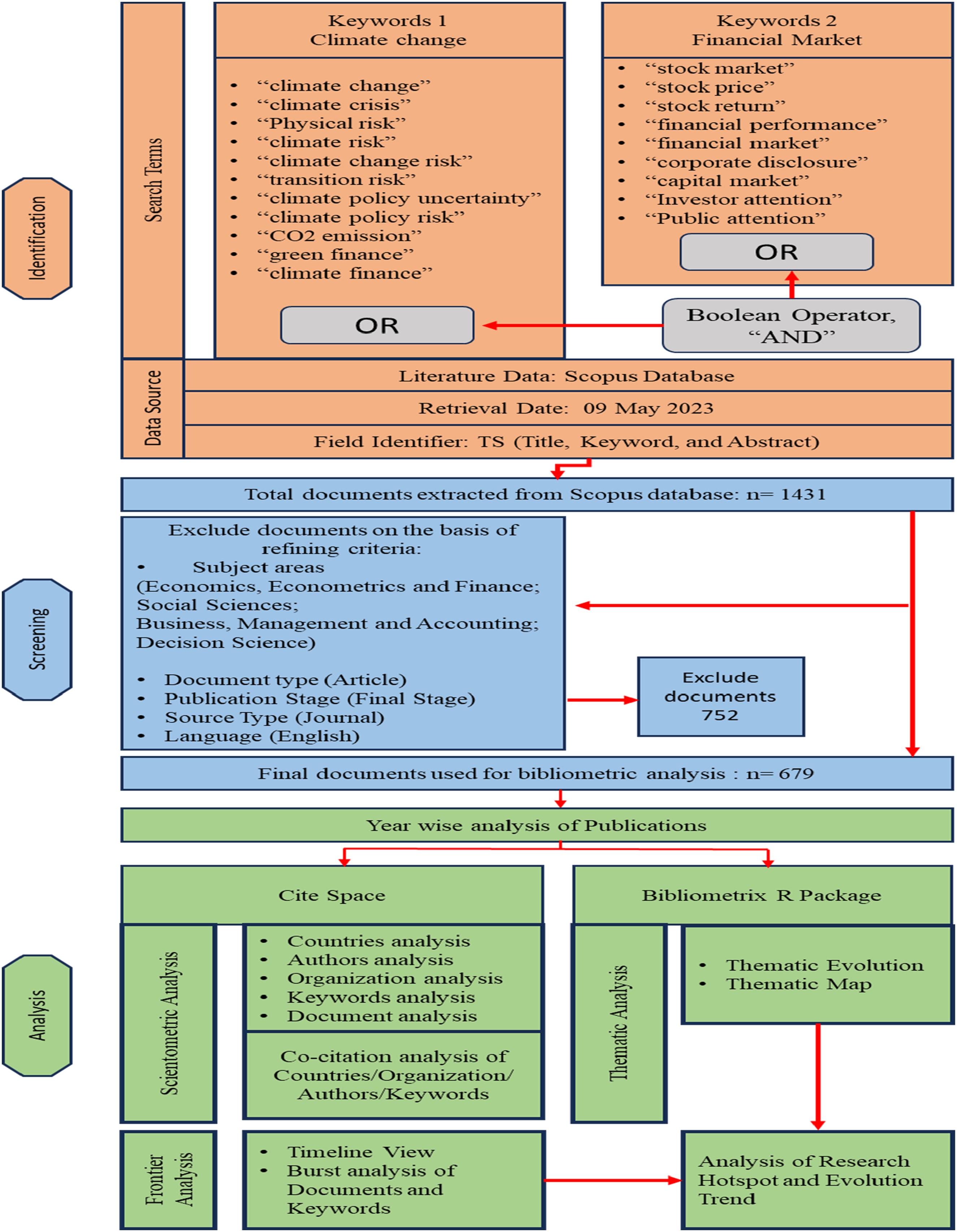
Methodology
Bibliometric analysis helps the researcher uncover the evolutionary pattern and emerging trends and understand the future research needs in the area. It is a meticulous method to analyze the big literature records (Donthu et al., 2021), and this method is becoming popular in business research (Donthu et al., 2020; Verma & Gustafsson, 2020). Researchers conduct bibliometric analysis to understand the domain, evaluate the journal performance, uncover the authors’ collaborative patterns, and explore the intellectual knowledge of the domain. Three main reasons exist to consider bibliometric analysis suitable for reviewing literature. First, bibliometrics as a quantitative analysis helps identify the past trends of the wide range of literature because a deeper analysis of a vast domain cannot be accomplished by qualitative analysis (Zhao et al., 2018). Second, bibliometric analysis is based on rich global-level scientific data and proves results based on relevant data, irrespective of the opinion of some experts (Zemigala, 2019). The third bibliometric analysis considered the network approach to explain the structure of the intellectual infrastructure of a domain. It aids in providing insights about current hotspots and research frontier in the area (Fahimnia et al., 2015).
To conduct the bibliometric analysis, Java-based software (Sabé et al., 2023), namely, cite space version 6.2.R3 (64-bit) Advanced (Chen, 2006). The Bibliometrix package with R version (4.2.2) is an effective tool (Aria & Cuccurullo, 2017) used to conduct the thematic analysis. Cite space uses different cluster labelling techniques and effective network visualization to explore the information in extant literature (Ye et al., 2020). The software enables it to do cluster functions with detailed characteristics of every node, and links help explore the domain’s research frontier. The burst functionality of this software sheds light on hotspots (Lin & Su, 2020). The timeline view provides the evolutionary pattern of the intellectual structure. To conduct scientometric and frontier analysis, Cite Space software is used. Later, the bibliometric R package with R version (4.2.2) is employed to shed light on thematic evolution and thematic map of pieces of literature (Figure 1).
Systematic review helps to advance research in a domain (Paul & Barari, 2022) and theory building (Tsiotsou et al., 2022) to find out the specific future scope. A systematic literature review (SLR) helps to develop an unbiased and comprehensive summary of a particular domain and it has capability of advancing the study in particular domain and play an important role in the progress of that domain. The ADO framework (Paul & Benito, 2018) serves as an excellent method for organizing research findings related to a construct and its relationships in a systematic way. Antecedents (A) represent the primary factors influencing engagement or disengagement in a behaviour. Decisions (D) refer to the various forms of behavioural performance or the dimensional structure of a construct. Outcomes (O) highlight the results stemming from either performing or not performing a specific behavior. We have used ADO framework to find out the future development needed in the domain of climate change and financial market.
Results
Publication Trend by Year
Figure 2 represents the growing trend of articles in the academic domain of climate change and the financial market. According to the publication data, the first article in this domain was published in 2001; Mustafa H Babiker from the USA published a paper titled “Subglobal climate-change actions and carbon leakage: The implication of international capital flows” (Babiker, 2001). The growing number of publications shows that this academic field is getting attention in researchers’ minds and will grow in upcoming years. In 2010, the first hike (7–13 articles) was noticeable in published articles. The Green Climate Fund (GCF) 2010 was established to equip developing nations with financial support to mitigate the climate change impact of and greenhouse gas emissions (Gomez-Echeverri, 2013). The growing international awareness and actions towards climate change mitigation can be the reason for the continued increase in published articles (Bhatnagar & Sharma, 2022). Chronological trend of publication over the years.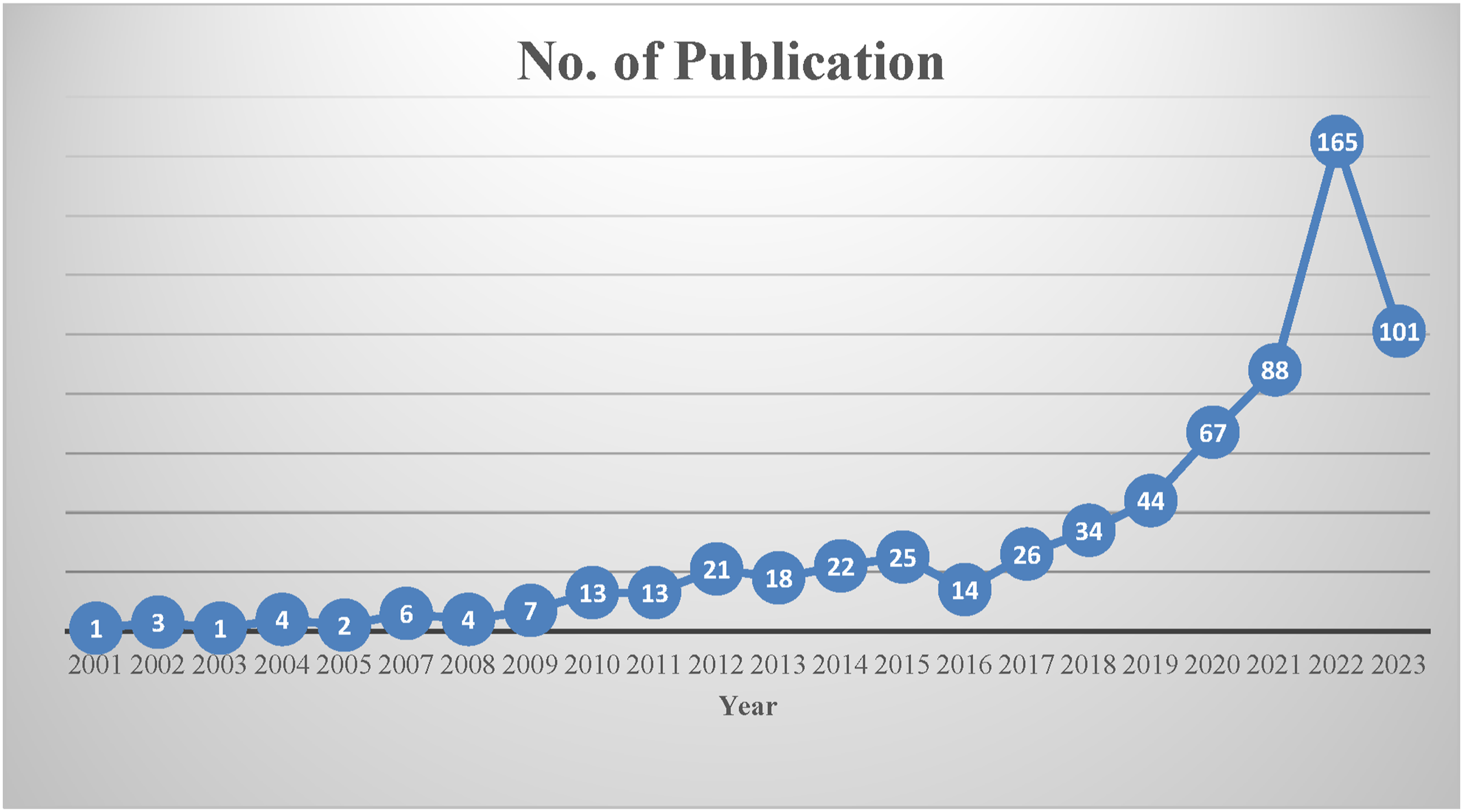
There has been a significant rise in published articles on climate change and financial markets since the 2015 Paris Agreement, with 80% (539 of 679 articles) published post-2015. Notably, over 50% (354 of 679) were published between 2021 and 2023, reflecting the growing academic interest. The lower article count for 2023 is due to data collection ending on May 9, 2023.
Major Sources of Publication
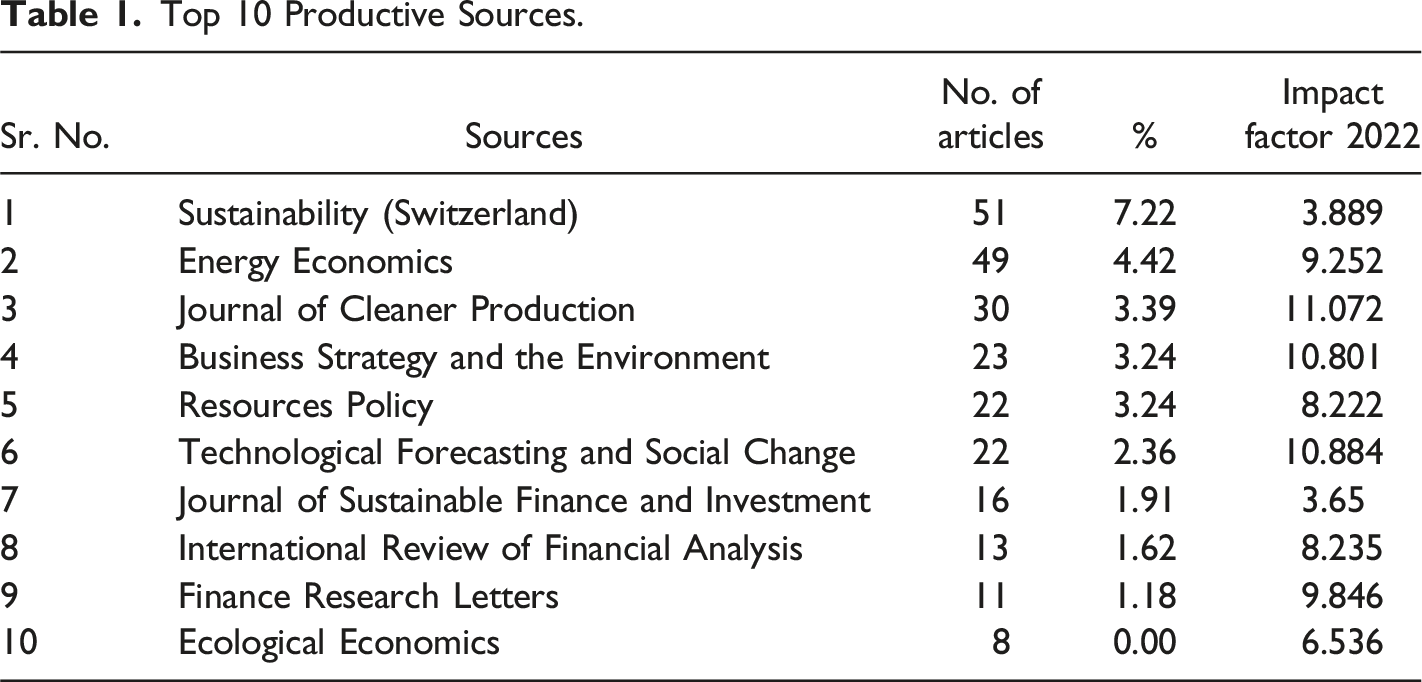
Top 10 Productive Sources.
Author’s Performance and Collaboration
The author’s contribution and collaboration are visualized using cite space software and execution of analysis is executed on the dataset with 2001 to 2023-time span and one year per slice. To obtain Figure 3, the node type selected is “author,” and selection criteria are the top 50 level of most cited items from each slice. In figures, the number of publications by an author is represented by the size of the author’s name and node size. Collaboration strength between the authors can be seen by the thickness of the link between the nodes. The 58 nodes shown in the figure represent the authors with at least two publications, as the e = 2.0 for the diagram. 25 links among 58 nodes manifest co-authorship relation only among 25 authors, and 0.0151 density indicates the author’s independence and less concentration in collaboration. Network map of Authors’ Collaborations.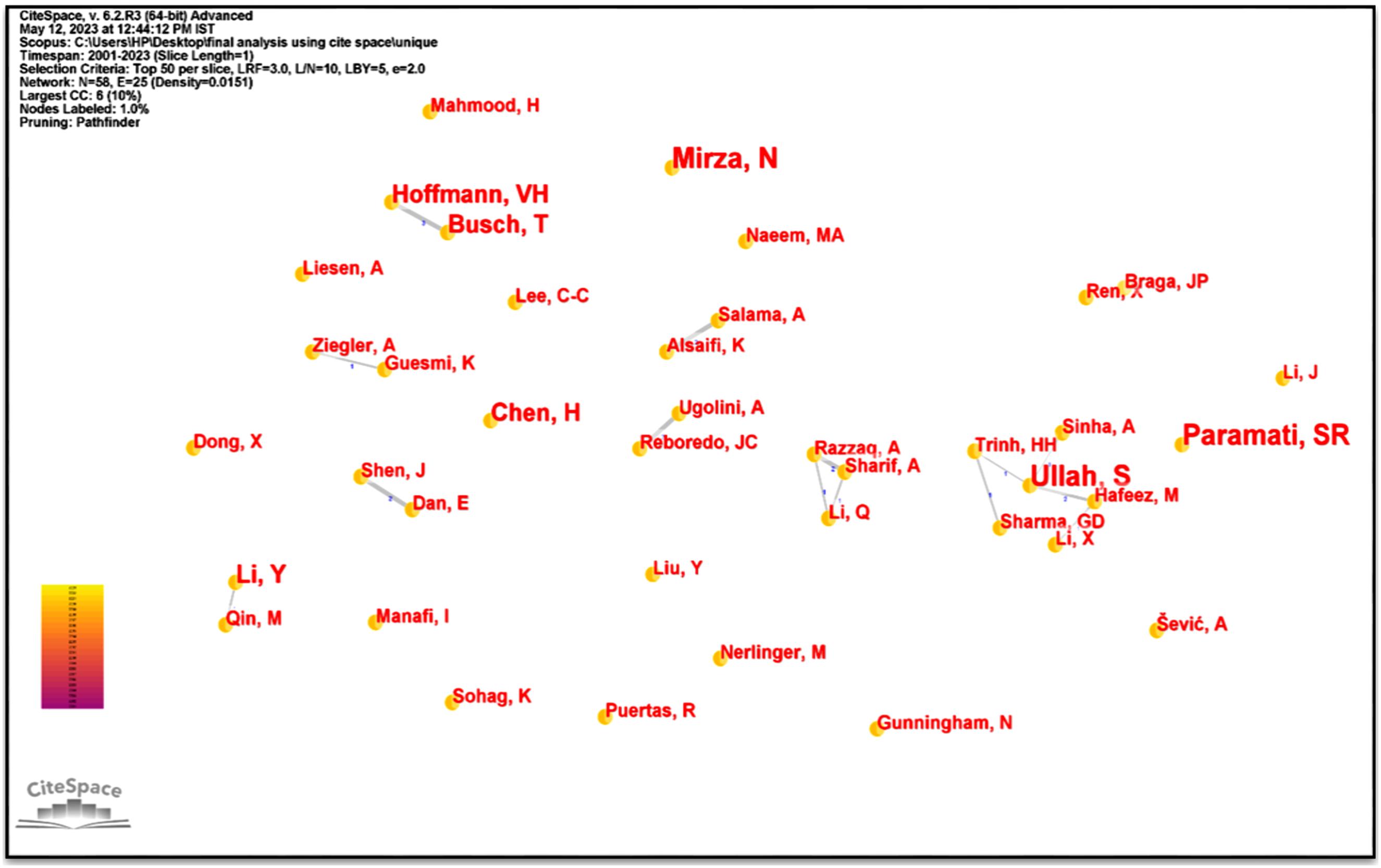
The most contributing authors in the climate change/stock market domain are Mirza. N, Paramati. SR, Ullah, S has four publications, followed by Busch, T, Chen, H, Hoffman, VH, and Li, Y with three publications. Only one collaboration cluster emerged among the author’s weak network, with one silhouette value indicating the strong connection among the cluster. Six authors comprised the cluster, with Ullah, S, Sharma, GD, and Trinh, HH being the three most cited authors. The collaboration of these authors resulted in a theme of research concerning environmental quality. The major article cited in this intellectual collaboration is “Considering the asymmetric effect of financial deepening on environmental quality in BRICS economies: policy options for the green economy.” The article focuses on environmental quality in relation to financial deepening and suggests that improvement in environmental quality can be made with an enhancement of financial deepening (Li et al., 2022). The analysis reveals the collaborative pattern among authors to explore the role of finance in environment quality.
Affiliation Analysis
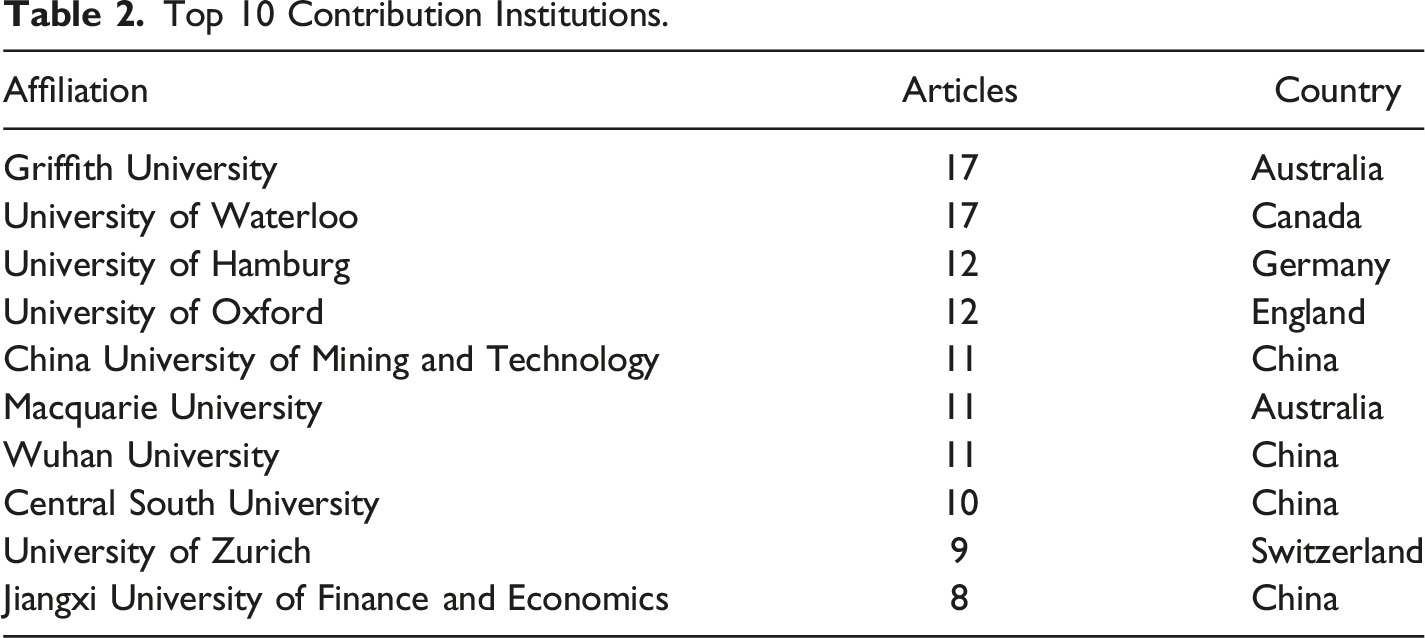
Top 10 Contribution Institutions.
Country Analysis
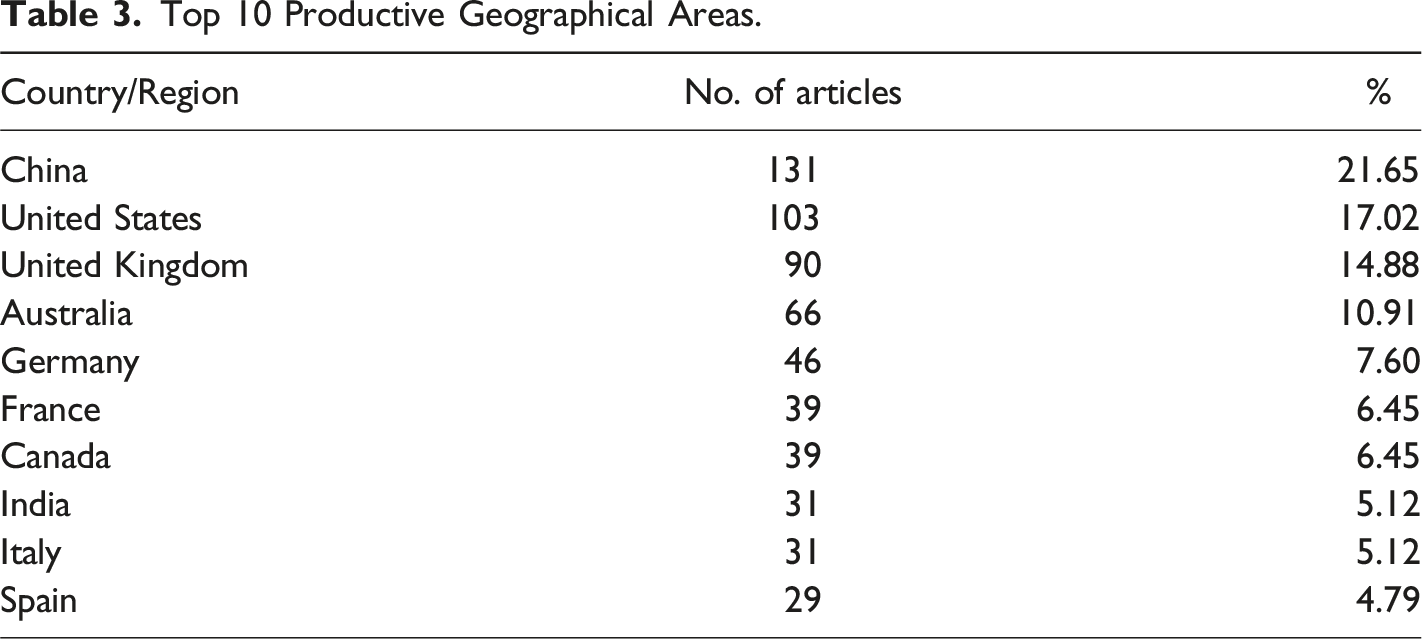
Top 10 Productive Geographical Areas.
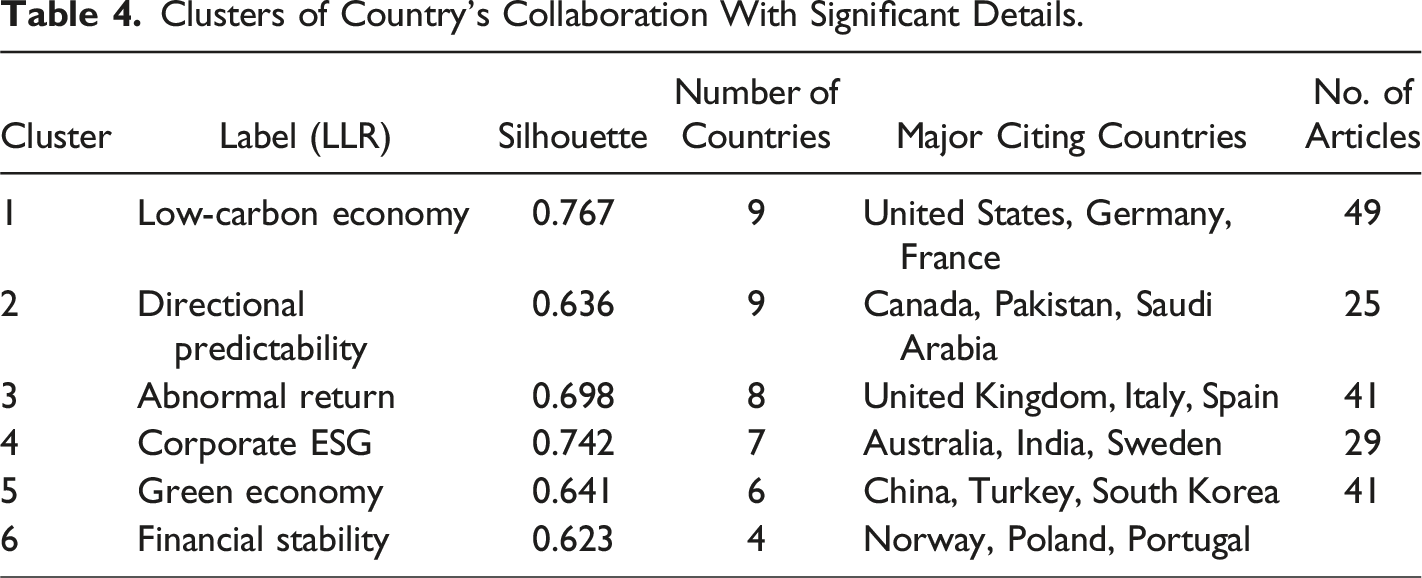
The collaborative pattern of countries is explored by Cite Space software for the time span of 2001–2023. The analysis is run in a similar setting, while the node type is kept as “country” to generate the visualization of the countries’ network (Figure 4). In Figure 4, nodes represent the countries (at least two publications as e = 2.0), and 115 links with 0.1274 density show the strong collaboration of countries. The thick and dark purple ring around the Australia node indicates robust and high connectivity with other nations. The collaborative network of countries consists of six significant clusters mentioned in Table 4. The largest and strongest collaborative network is formed by nine countries (United States, Switzerland, Vietnam, Singapore, Germany, France, Finland, Colombia, and Austria), of which the United States, Germany, and France are the most cited members. A high silhouette score (0.767) indicated that the clusters are lumped on some common basis and are more meaningful comparatively. The paper within the cluster with the highest citation is published by Liesen et al. (2017), which considers the carbon disclosure relevance in assets pricing. It suggests that investors and the financial market should efficiently price climate-related information. The second-largest cluster most citing article is published by Karim et al. (2022), which examines the connection between the clean energy market and the conventional market. Due to climate change integration in the stock market, this paper suggests that the stock market should focus on climate-friendly energy stocks. Australia, India, and Sweden form the second most robust cluster (silhouette score 0.742). Network map of Country’s Collaboration. Clusters of Country’s Collaboration With Significant Details.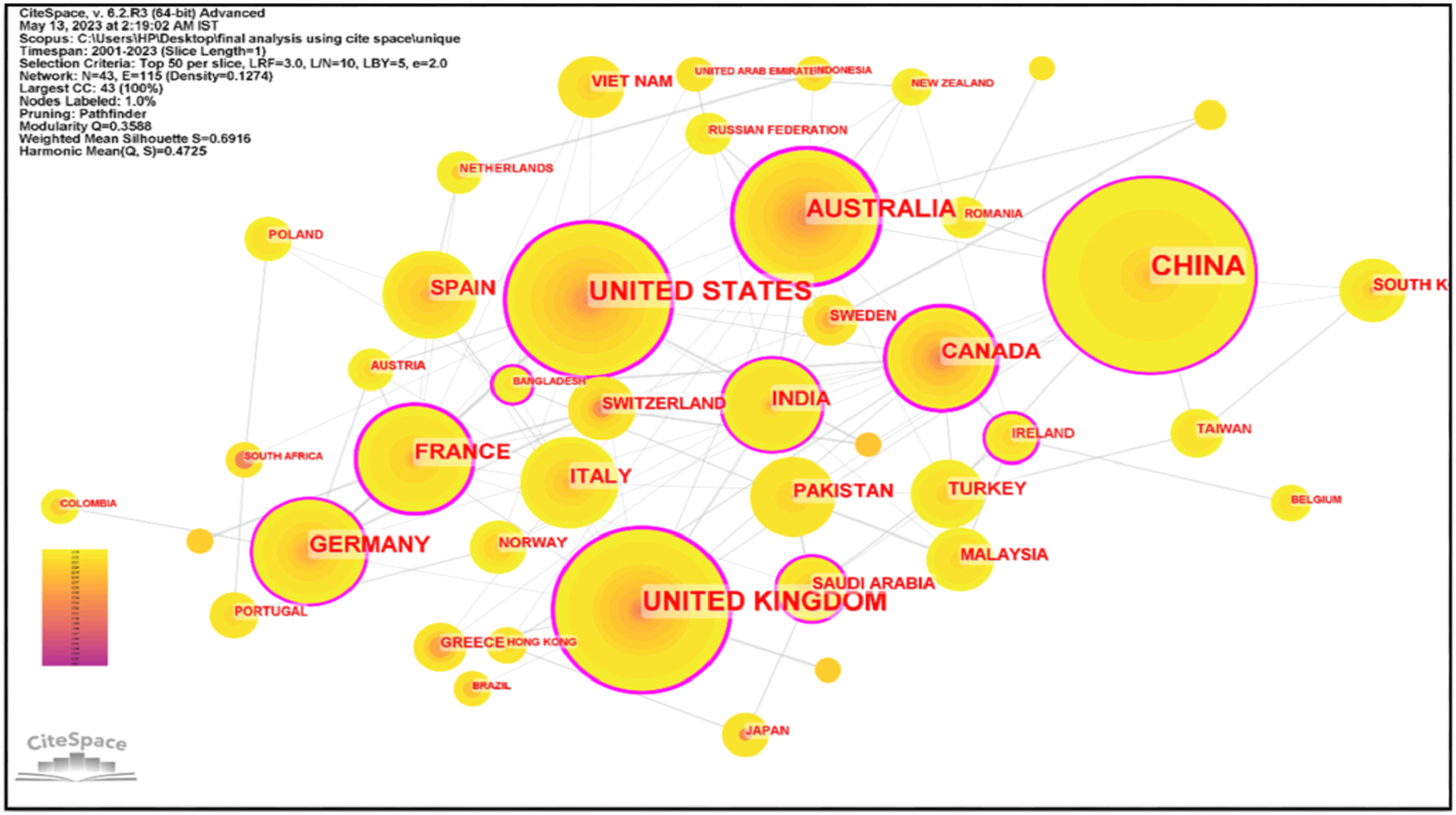
Citation Analysis of Documents
Top 10 Highly Cited Articles.
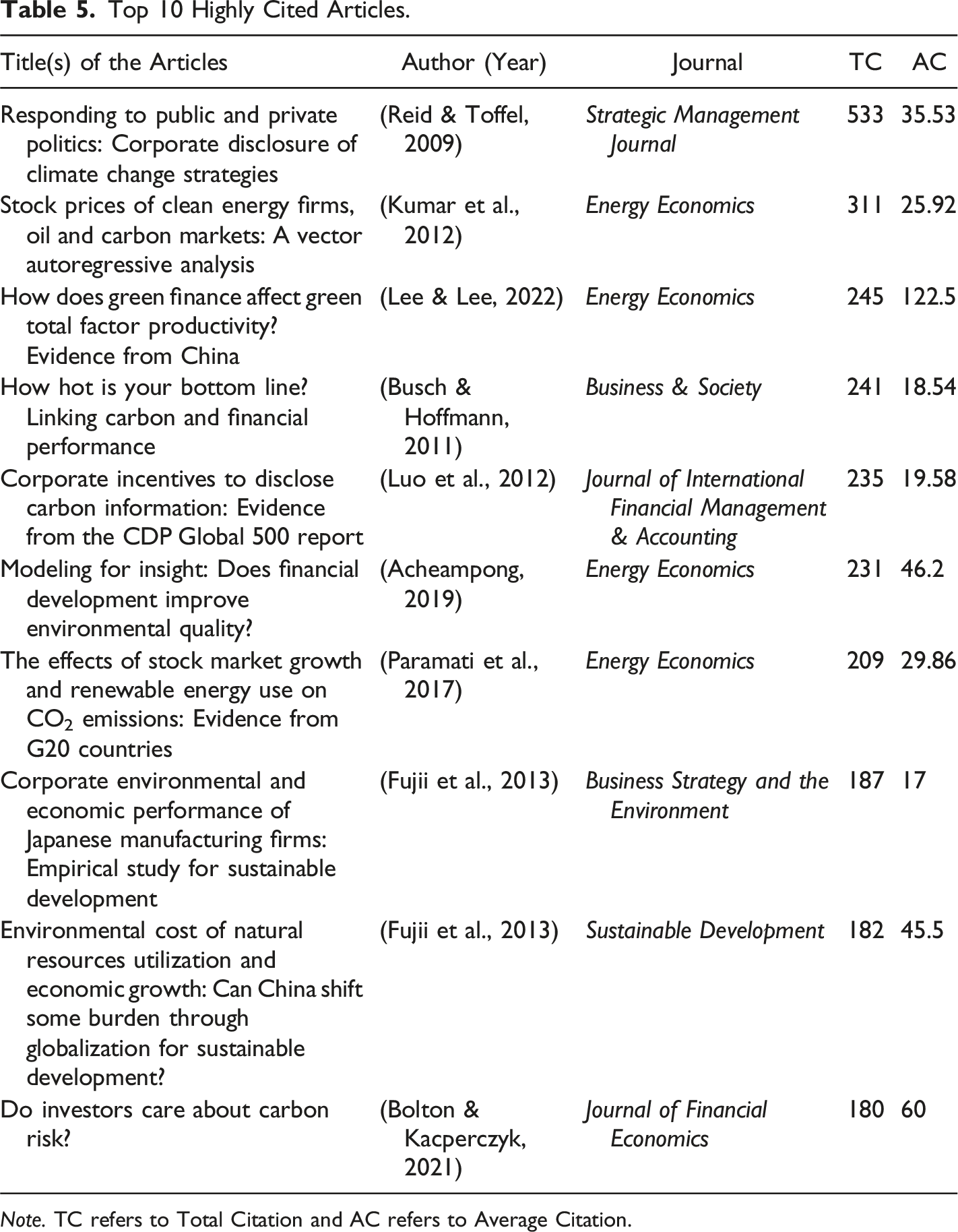
Note. TC refers to Total Citation and AC refers to Average Citation.
Chronological tendency keeps the most recent articles out of the highest-cited published articles (Lei et al., 2019). Though an article published in 2022 by Lee and Lee (2022) on the impact of green finance on green total factor productivity (TFP) has the highest average citation (122.5) up to date, The article found the significant impact of green finance on green TFP and suggests the green financing policy in China for green financial development. In the same pattern, one more recent paper by Bolton and Kacperczyk (2021) has the second-highest average citation (60). This research focused on investors’ perspectives on climate change and found that climate change positively influences stock prices. Nevertheless, they made a shocking revelation regarding the positive relationship between the firm’s carbon dioxide generation and its high return earnings. Other top-cited articles also focused on climate disclosure, the financial performance of firms, and the stock market.
It should be noted that four out of the ten most cited research articles are published in the “Energy Economics” journal, which is also the second most productive journal in Table 1.
Citation Analysis of References
Top 10 Cited References Based on Citations and Centrality.
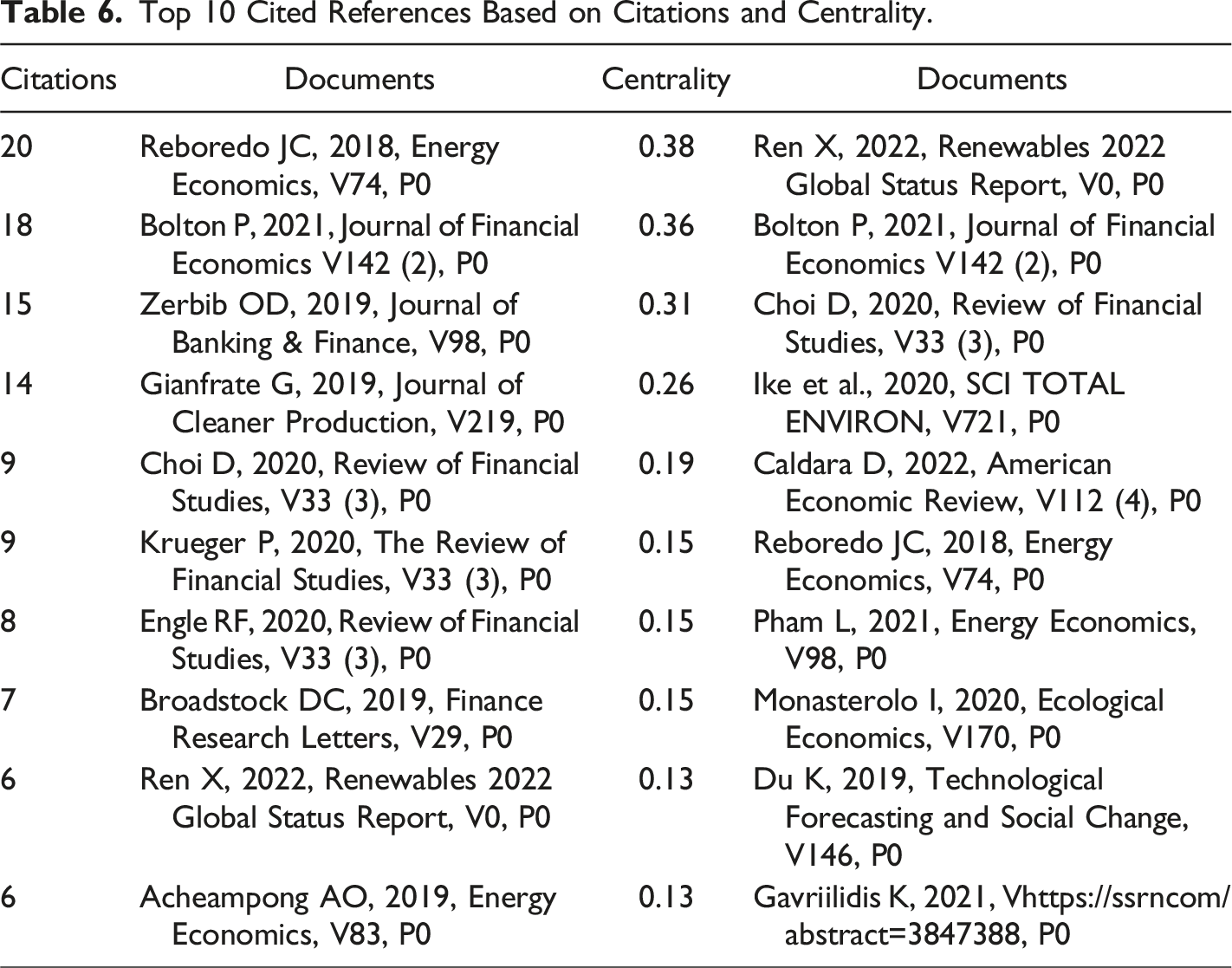
Based on the citation, we got two significant areas highly cited in references. The first one is the green bond-related article with a high citation rate. Diversification and co-movement analysis of green bonds with treasury bond market and stock market (Reboredo, 2018); movement in green bond prices concerning investors’ preferences on the pro-environment (Zerbib, 2019); green bonds financially convenient in comparison to non-green bonds (Gianfrate & Peri, 2019); time-varying correlation analysis of green bond with black bonds concerning macroeconomics determinants (Broadstock & Cheng, 2019) is the major cited article as references in the green bond area. The second major area in the citation of references is related to climate change and environmental impact on the financial market. Investors’ concern about carbon emission impact on the stock market (Bolton & Kacperczyk, 2021); Actions towards climate change and global warming and impact on the people and investors’ beliefs on carbon-intensive firms (Choi et al., 2020); Survey of the financial implication of climate risk for investment conducted among institutional investors (Krueger et al., 2020); climate risk hedging for investment purpose (Engle et al., 2020) are some related articles to this area. Other cited references focus on clean energy financial development to enhance the quality of the environment (Acheampong, 2019).
Centrality analysis shows the degree of connectivity of one node (References) with another one (References) (Chen, 2006) and highlights the turning point of intellectual knowledge in the field (Shin & Perdue, 2019). Based on centrality, we noted three major areas. The first one is climate risk; four articles among ten are focused on climate risk (global warming, CO2 emissions, policy uncertainty) and its impact on financial markets (Bolton & Kacperczyk, 2021; Choi et al., 2020; Monasterolo & de Angelis, 2020) and CO2 emissions (Gavriilidis, 2021). The second one is green bonds; two articles out of ten focus on the connectedness, co-movement, diversification, dependence, and spillover effect of green bonds on other equity markets and securities (Pham, 2021; Reboredo, 2018). The third area focuses on environmental quality and investigates the environmental quality effects of the financial market (stock prices, trade, and income) (Ike et al., 2020) and green technological innovations (Du et al., 2019). Geopolitical risk concerning the investment and firm-level indicators is also a part of the list and indicates that the risk, irrespective of financial risk, affects the financial markets (Caldara & Iacoviell, 2022).
Hotspot Analysis and Thematic Analysis
Top 10 Keywords Based on Frequency and Centrality.
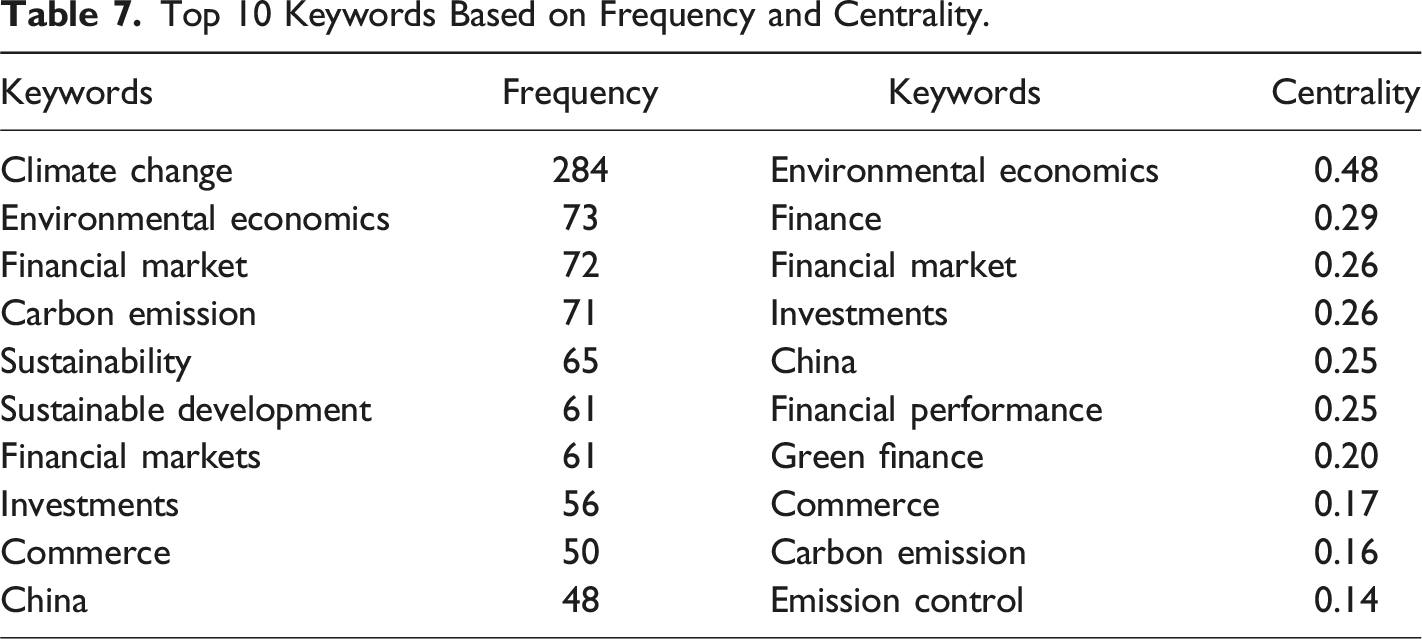
The network map of keywords is visualized in Figure 5, and climate change, the bigger node in the network, shows the high impact of the keyword in the domain. Additionally, purple squares around the nodes show the connectivity of nodes (keyword) with another node (keyword). According to the network map, “environmental economics,” with a thick purple square, is the most connected node in Table 7. Centrality highlights the turning point of intellectual knowledge in the field (Shin & Perdue, 2019). Thus, turning points in this domain are “environmental economics,” “Financial market,” “green finance,” “financial performance,” and “carbon emissions.” Connected links among keywords show the interconnection of intellectual patterns of keywords. Co-occurrence network map of keywords.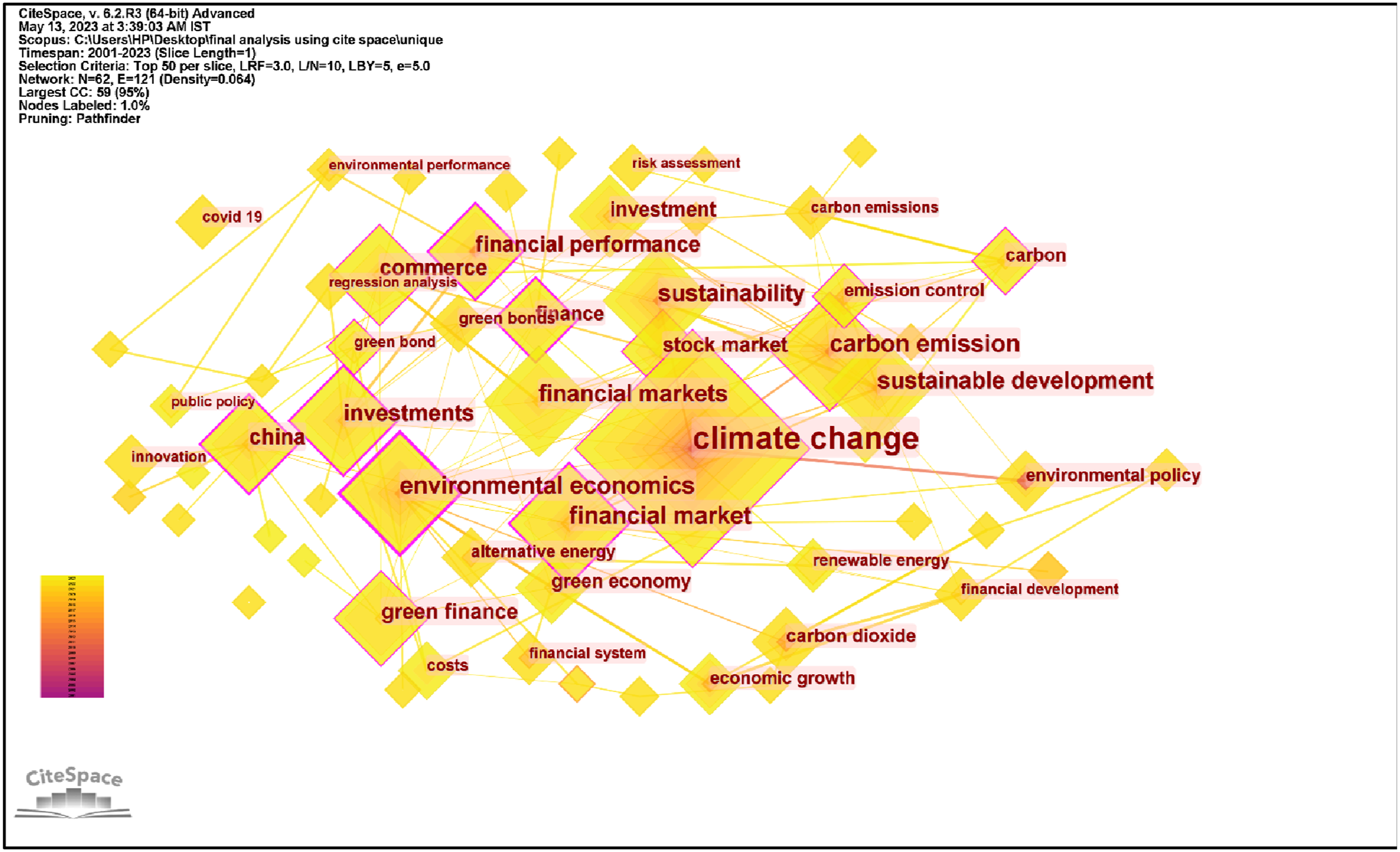
To unveil the clusters and their themes, cite space uses the log-likelihood ratio algorithm for clustering and labelling. Figure 6 identifies the six major clusters in the keyword network with Q (modularity) = 0.4984, which stipulates the loosely coupled keyword in the network, and the mean silhouette value is 0.845. Both the indicators show that the results are good enough for further analysis. These six clusters show how climate change is integrated with financial markets in different aspects. Clusters can be deeply understood by their silhouette value and top term as per the log-likelihood ratio provided in Table 8. Cluster identification map of keywords. Basic Details of Cluster Among Keywords.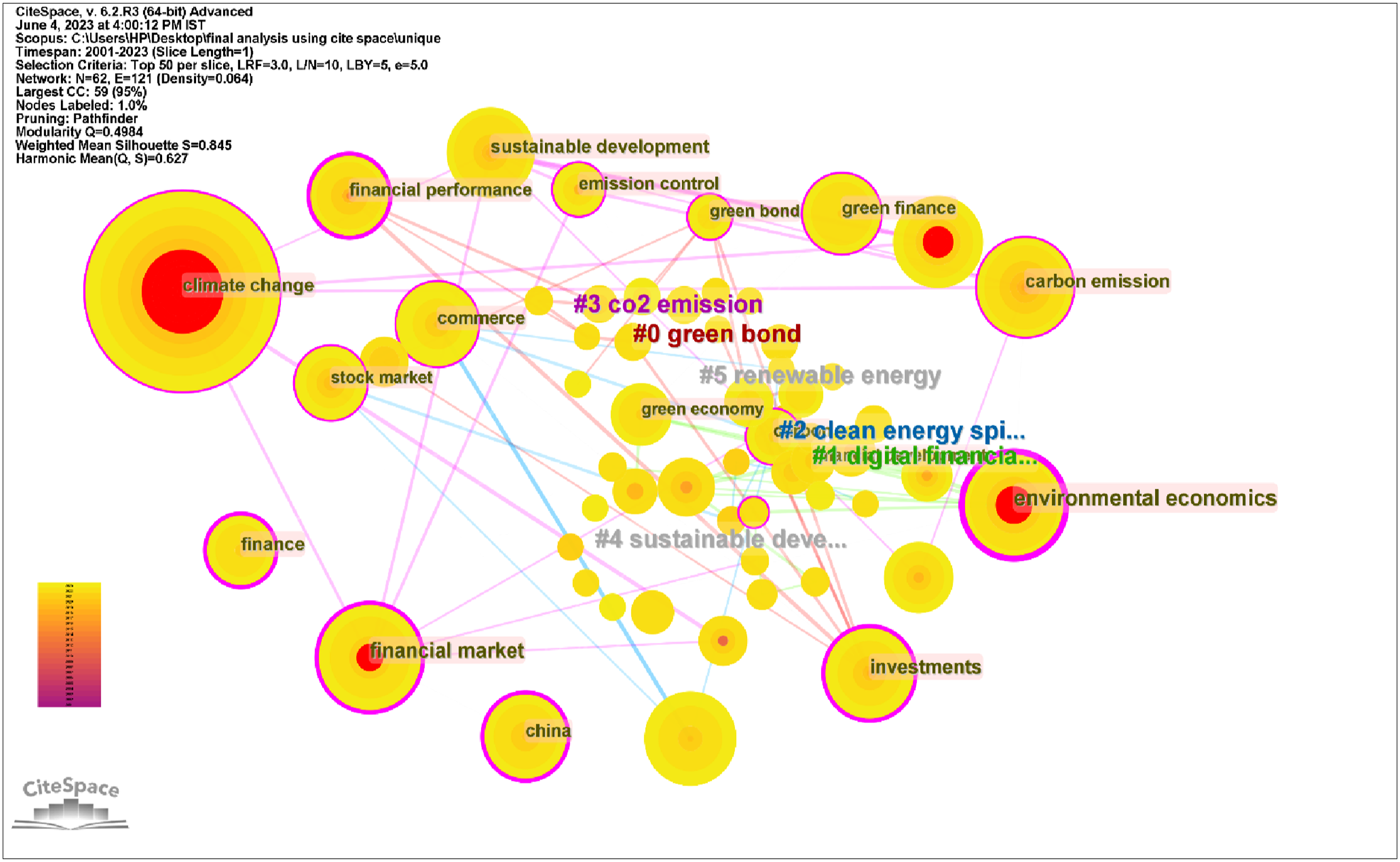
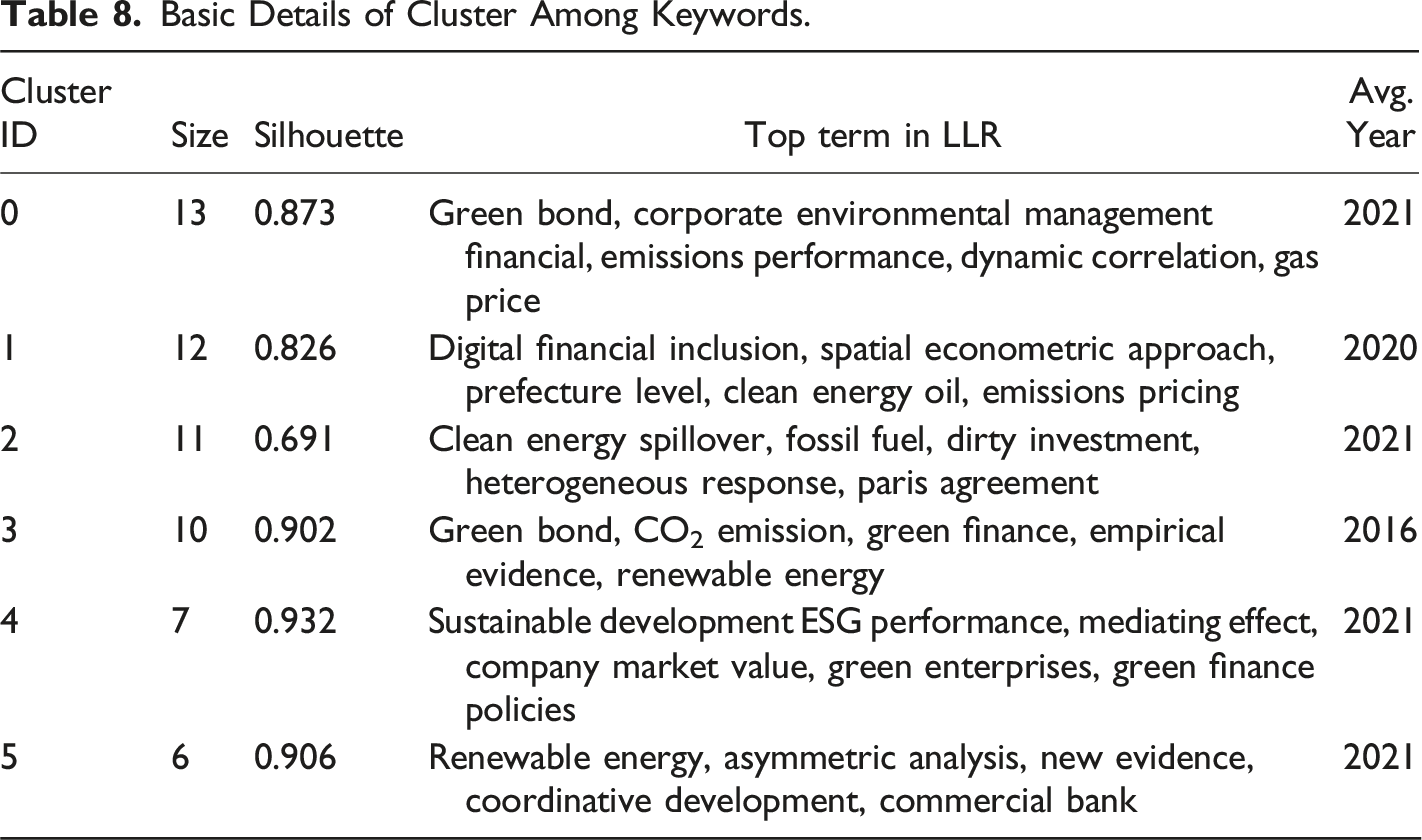
Major cluster #0 indicates the research trends towards the role of green finance in economic transition due to climate change. The keywords within the cluster with high citations are investments (56 citations), financial performance (45 citations), and cost (16 citations). The article within the cluster with the highest citation is written by (Pan et al., 2022), which indicates that the stock market systematically prices carbon emissions and investors need more incentives to lead towards sustainable investments. The formation of the cluster includes 33 documents related to climate risk, green bonds, and energy investment relations with financial markets and financial performance. One-third of the cluster contains published articles focused on the impact of climate and environmental risk on financial performance and the financial market. These articles concern how transition risk due to climate change affects financial performance, stock returns, volatility, and investments. Are the stock prices of firms adopting climate-mitigating strategies getting incentives? These articles try to figure out the investors’ perspective towards the environmental concerns of firms and investors themselves (Alkathery et al., 2022; Fahmy, 2022; Huang et al., 2022; Husain et al., 2022; Millischer et al., 2023; Ogunrinde et al., 2022; Pan et al., 2022; Pham et al., 2023).
The second major Cluster #1 inherent the research articles with a focus on the role of technology in combating climate change. The keywords within this cluster with effective citations are environmental economics (73 citations), green economy (27 citations), and carbon dioxide (24 citations). This cluster’s first most cited research article comes out with the negative co-movement between information and communication technology (ICT) and CO2 emissions. As a solution, the author suggests that policymakers be focused on investing in technology (Irfan et al., 2022); this indicates the importance of financial markets in combating the effects of climate change.
The third (#2) and fourth (#3) clusters have different themes, i.e, clean energy spillover and green bonds inherent in the theme regarding the financial market and its role in emission control, climate change, and risk assessment. The most cited keywords of the third (#2) cluster are financial markets (61 citations) and stock market (35). The fourth (#3) cluster shows climate change (284 citations), financial market (72 citations), and carbon emission (71 citations) are the major cited keywords. A research article written by Xu et al. (2022) was recognized as a major cited article in both clusters. This paper discusses the connection between financial development, renewable energy, and CO2 emissions. The study contribution provides an SDG-based framework for environmental policy.
Fifth (#4) and sixth cluster (#5) mainly depict the energy-related theme, that is, sustainable development, ESG performance, and renewable energy. Green finance with 43 citations, and innovation with 13 citations, are the highest-cited keywords of cluster fifth (#4). It shows that green finance and innovative practices in the financial market must be considered to achieve sustainable development. The highest-cited paper of this cluster focuses on green finance and economic indicators coordinative development (Yin & Xu, 2022). Energy-related keywords are highly cited in the Sixth cluster (#5), as the theme of the clusters depicts. The highest contributing keywords within this cluster are finance (33), alternative energy (17), and renewable energy (15).
The analysis of topical patterns reveals thematic evolution from 2001 to 2023, as shown in Figure 7’s timeline view. Cluster formation began in 2010, driven by events like extreme weather and the establishment of the Green Climate Fund. Cluster #3 (CO2 emissions), active until 2022, is the most interconnected, with “climate change” as its central, most-cited node. Keywords linked to “climate change” include “sustainable development,” “investments,” “carbon emissions,” and “financial markets,” highlighting the expanding scope of climate change in sustainable economies and financial markets. In 2023, clusters on “green bonds,” “clean energy spillover,” and “sustainable development ESG performance” lead, with key terms like “investments,” “financial performance,” and “energy market.” Timeline view of clusters with different keywords.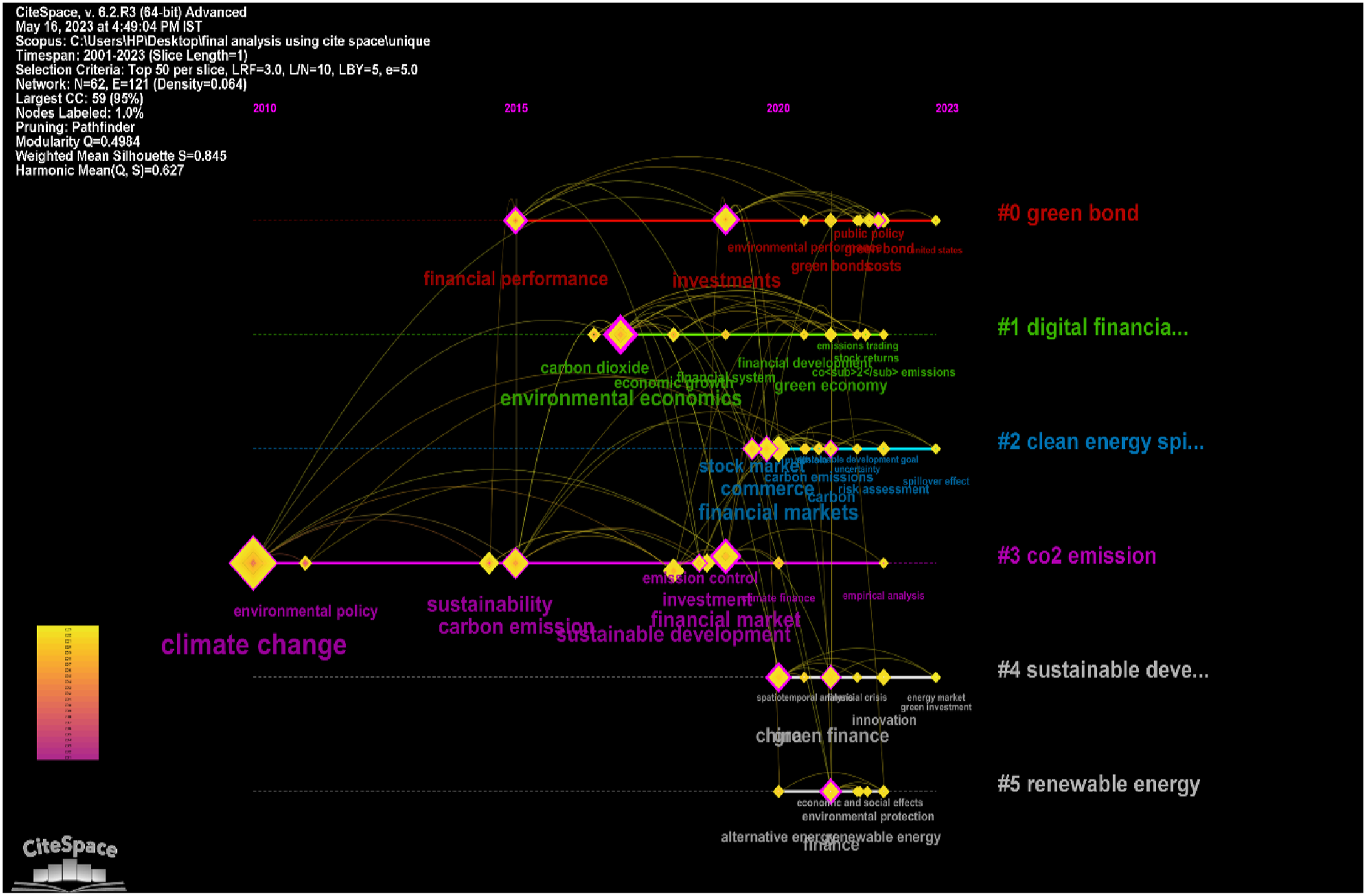
A thematic map is a strategic map divided into four quadrants with a coordinate measuring system of centrality and density (Callon et al., 1991). The Bibliometrix tool of the R package is used for thematic analysis. The four quadrants contain four types of themes based on keywords’ clusters, namely, motor themes (quadrant one), basic themes (quadrant two), niche themes (quadrant three), and emerging or declining themes (quadrant four). Figure 8 deduces two themes expressly: “investments, financial markets, commerce” and “climate change, sustainability, investment” are measured as motor themes. The theme “financial markets, environmental economies, carbon emissions” is in the middle of motor and basic themes. It signifies that these themes are most focused and most discussed in research of this domain. Besides “risk assessment, environmental protection, environmental assessment” is a basic theme that depicts the high centrality and less development (density). Three independent and small clusters in quadrant four, namely, “article,” “risk perception,” and “quantitative analysis,” are emerging or declining themes. Niche themes contain only one major cluster, which also lies in motor themes containing “spatiotemporal analysis, adaptive management, drought.” Thematic map of keywords.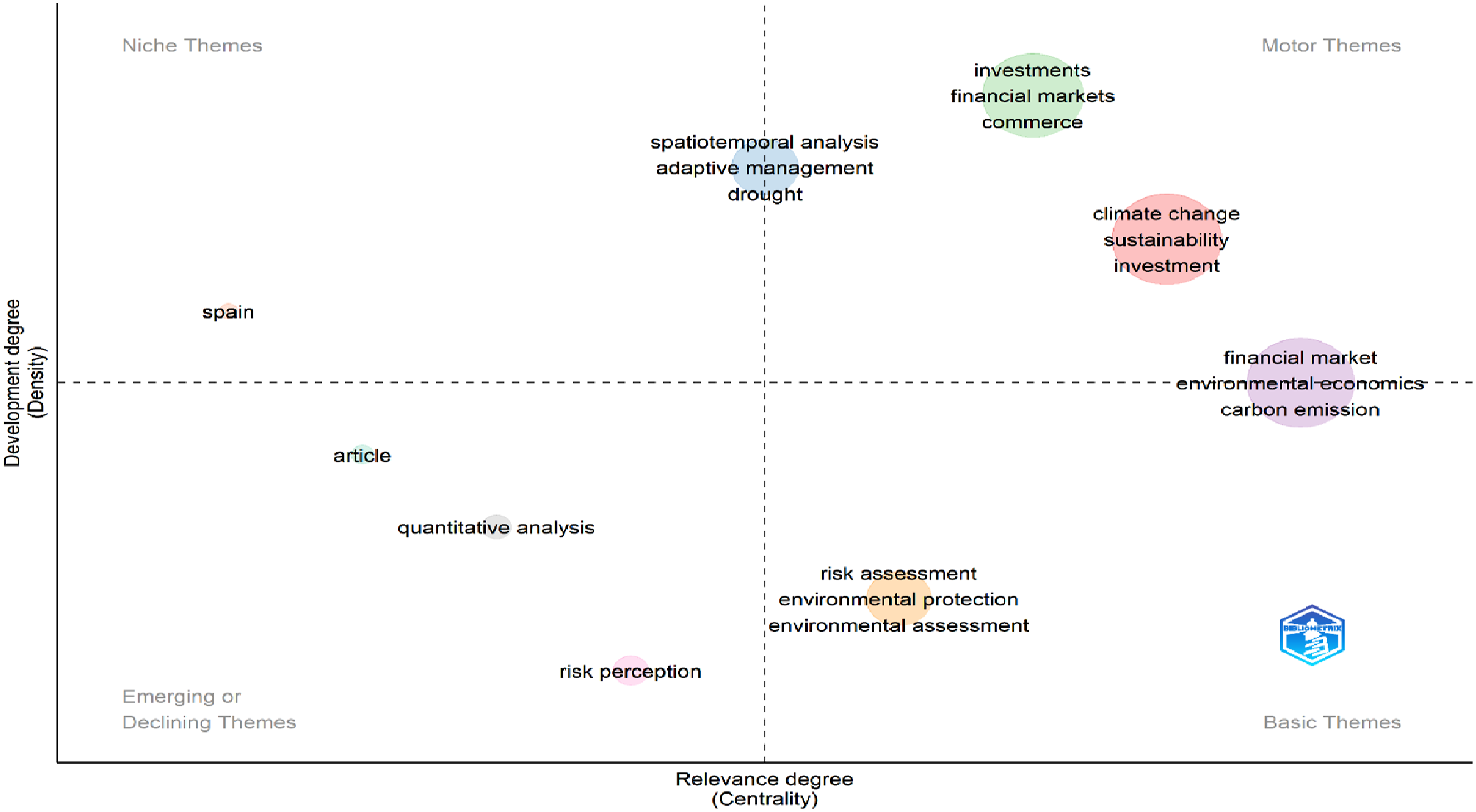
Thematic evolution of keywords gives insights into the field’s development. There has been an evident increase in published articles since the 2015 Paris Agreement (Figure 1). Therefore, as a cutting year in Figure 9, 2015, divide the whole period into two time slices, namely, 2001–2015 and 2016–2023. A comparative analysis of both time slices indicates the evolution pattern in keywords and research trends after a major action (Paris Agreement) on climate change. The first time slice (2001–2015) shows that in the initial phase, the research trend was scattered with different keywords related to climate, namely, “climate change,” “pollution control,” “environmental management,” and “carbon dioxide,” but later in second-time slice (2016–2023) all these keywords are concise in “climate change” and “carbon emission.” Similarly, “environmental management,” “financial market,” and “cost” majorly shifted to a major theme, “financial market.” Two new themes in second-time slice (2016–2023) expressly “risk assessment” and “quantitative analysis,” a new paradigm inclusion of “financial market” and “climate change.” Thematic evolution highlights that in second time slice (2016–2023), research paradigm shifting towards climate change, carbon emission, and the financial market with quantitative analysis and risk assessment. Thematic evolution of keywords.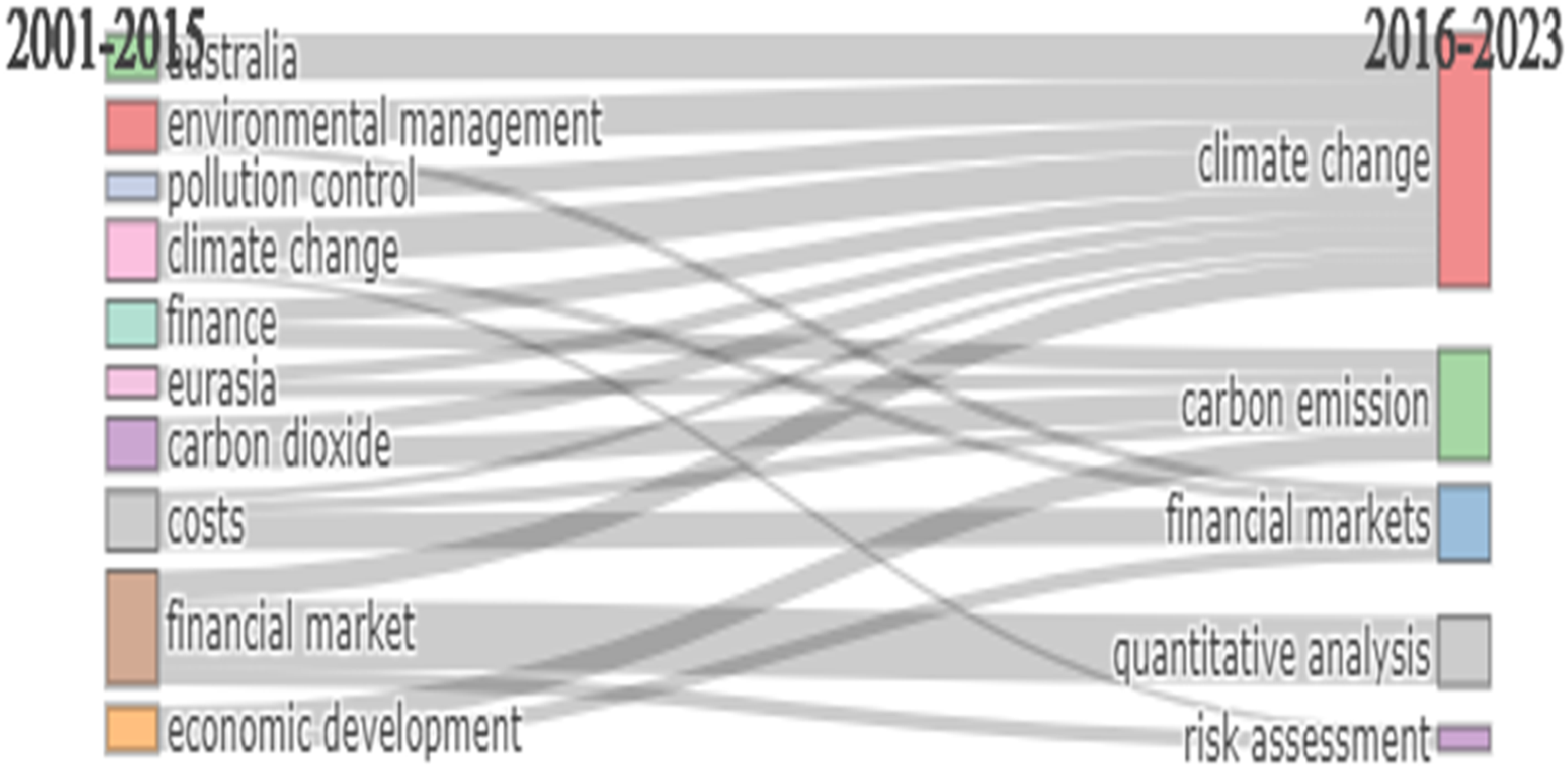
The burst detection function in cite space offers insights into a sudden increase in the frequency of keywords or citations of an article (Ye et al., 2020). A particular node with a citation burst indicates an increasing interest in the particular work for a specific period (Chen, 2016). Keywords with citations burst are depicted in Figure 10. The burst occurrence of keywords helps to identify the trend of topics and the future research direction. Figure 9 depicts the evolution of hot topics in this domain over 14 years (2010–2023) with 16 keywords of burst occurrence. The prolonged existence of citation bursts in some keywords, namely, climate change (2010–2019), sustainability (2015–2020), carbon emission (2015–2020), and environmental economies (2017–2020), deduces the impactful existence of these topics for the evolution of domain climate change and financial market. Initially, before 2015, only two keywords showed strong citation bursts. After 2015, researchers gained interest in many keywords: carbon dioxide, economic growth, green bonds, capital markets, and climate finance. Recently, four new keywords emerged with strong citation bursts from 2022 until now. Regression analysis and risk assessment are the latest keywords with citation bursts that show the future trend of research in climate change and financial market domain. Keyword citation burst details over time.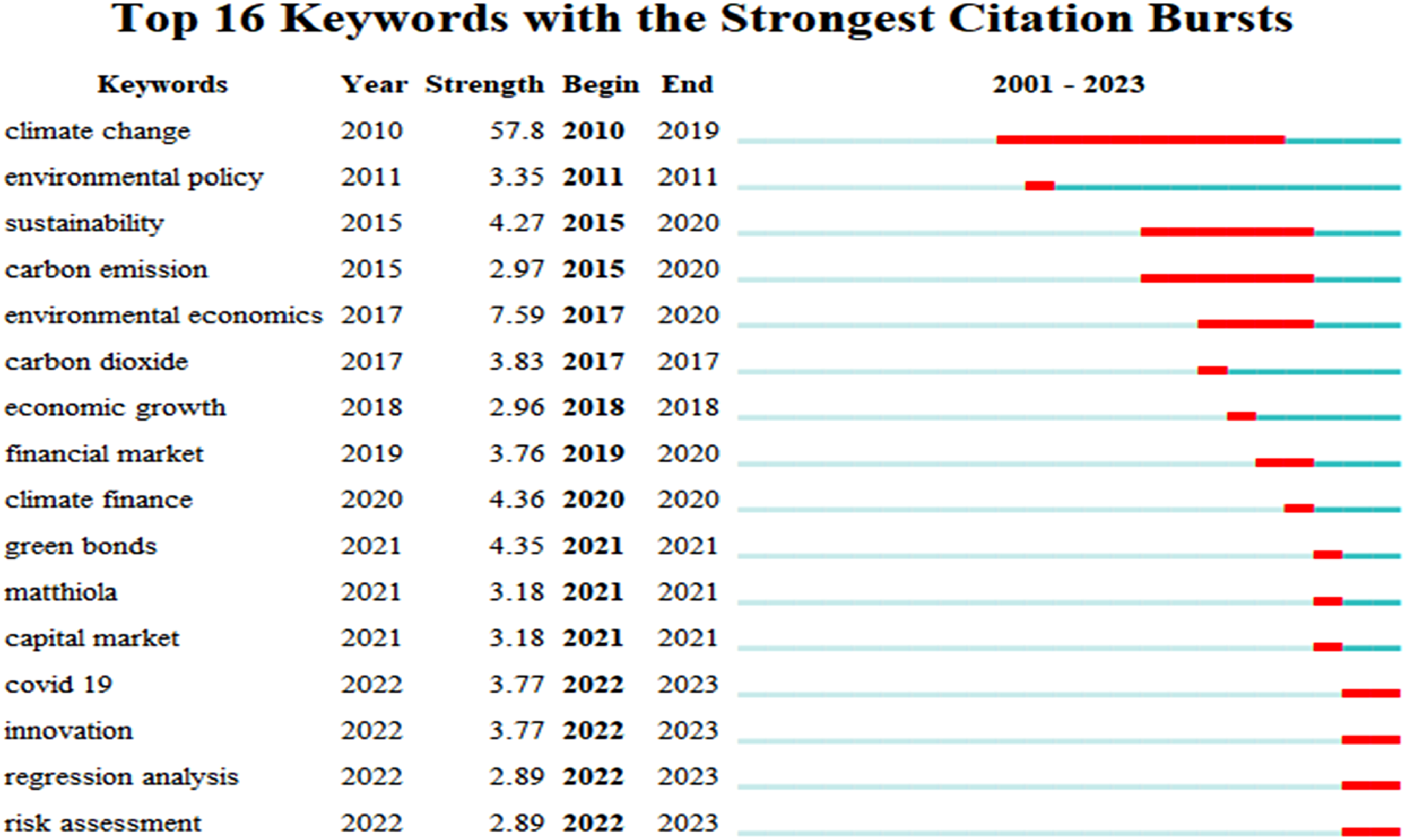
Evolution Trend
Phase 1 (2001–2009): Understanding Phase
Climate change started gaining interest among researchers in the initial phase. With the publication of the first article related to climate change in the financial market domain in 2001, this field started to evolve. As depicted in Figure 2, a few research articles can be seen up to 2010. Researchers have started to work understand the integration of climate with the finance field. The initial two published articles focused on analyzing the outcomes of the Kyoto Protocol regarding the financial markets of different economies (Babiker, 2001); they suggested a climate policy for individual economies (McKibbin & Wilcoxen, 2002). In continuation, the discounting of climate policy and its uncertainties was studied and suggested a stabilization policy for climate change (Howarth, 2003). Later, Hamilton (2004) suggested policy development in the insurance sector to combat the climate change risk that the financial sector will adopt in the future. After that, studies started focusing on the inclusion of investors' attention towards climate risk in different aspects. These researchers explore this academic field, but these studies only aim to understand climate integration in the finance field. Sustainable development, environmental economics, agricultural policy, and government approaches are some other concepts on which researchers are focused.
Phase 2 (2010–2015): Development Phase
During this period, research articles on climate change in the financial market domain started getting recognized in the academic field. Figure 10 shows the keywords “climate change,” “environment policy,” “sustainability,” and “carbon emission” beginning and citations during this period. Different themes in the domain started gaining the attention of researchers. The scattered theme of the domain is depicted in Figure 8 in the development phase, that is, “pollution control,” “environmental management,” “financial market,” “economic development,” and “carbon dioxide.”
Phase 3 (2016–2023): Specification and Collaborative Phase
Collaboration patterns are adopted by the researchers on specific themes. Table 8 demonstrates the comprehensive range of clusters that originated in this phase, which supports the conceptual framework of the phase. All clusters range between 2016 and 2021 and show six different thematic patterns. The timeline view in Figure 7 shows that five out of six cluster formations began after 2015 and involve specific areas related to economics and finance. Two specific areas are developed in this phase. First, the green bond introduction in the financial market and its relationship with other conventional financial markets and can be proved by the major cluster of keywords named “green bonds.” Second, climate change impacts the firm’s performance, financial markets, and nations’ economies concentrating on clean energy. The strong citation burst of some keywords in Figure 10 substantiates these specific areas’ evolutions. Keywords with strong citation bursts with beginning year in this phase are “environmental economics” (2017), “carbon dioxide” (2017), “economic growth” (2018), financial market (2019), climate finance (2020), green bonds (2021), capital market (2021). Subsequent development in the thematic evolution gives attention to the keywords “innovation” (2022), “regression analysis” (2022), and “risk assessment” (2022), as depicted in Figure 10. The changing pattern of thematic evolution can be witnessed in Figure 8
Antecedents, Decisions, and Outcomes Framework
Since the beginning of climate change, research has investigated the effect on the financial market in various dimensions. Conducting the systematic literature review led us to divide the literature in three major themes, (1) Transition risk and financial market, (2) Physical risk and financial market and (3) Corporate Climate risk disclosure and financial performance. Paul & Benito (2018) mention the theories to analyze the why (antecedent), how (decision) and what (outcomes). We used the ADO framework to explain climate change risk impact on the financial market with several other factors that affect these outcomes.
Transition Risk and Financial Market
Antecedents
Antecedents in this theme explain the key factor that defines the transitional risk that impacts the financial markets. Lee et al. (2022), Zhou et al. (2022) consider the green credit policy as one of major factors of transition risk to influence the debt financing and micro level carbon intensity. Winschel (2021) found that the regulatory landscape related to climate policy in the European Union affects the company’s organizational system. Lv & Li (2023), Ilhan et al. (2021), Shaikh (2022), Rubtsov et al. (2021) try to give focus on increasing severity of climate change which leads them to consider climate change policy uncertainty as major transition risk, following the same context Liang et al. (2022) recognize the climate policy uncertainty significantly impact the renewable energy index and include 9 variables including U.S. economic policy uncertainty, geopolitical uncertainty and climate policy uncertainty. Ye (2022) also considers the uncertainty in economic policies as a result of climate event news in the economy. Reboredo & Ugolini (2022) consider that firms face different levels of climate transition risk, which is assessed through form level carbon risk score and shows how efficient the firm to a low-carbon economy. Mariani et al. (2021) found that regulatory pressure acts as a motivator for companies to actively engage in environmentally responsible practices and consider the firm environmental strategies. Diaz-Rainey et al., 2021; Fahmy, 2022, Lee et al. (2023) consider the ratification of the Paris Agreement in 2015 serves as a critical antecedent, and Husain et al. (2022), Pham et al. (2023) consider the significant effect on environmental and government policy due to the Paris Agreement and leads to transition risk to the financial market. The above antecedent sheds light on how climate change leads to various transitions in the policies and strategies, namely, climate policy, government policy, economic policy and credit policy. These transitions lead to uncertainty in the policy as pause transition risks to the economy, firms, banks and companies as well.
Decisions
Earlier studies found different factors that affect the outcomes of the transition risk in the financial markets. Investors, lenders, government and policy makers consider these factors before taking financial decisions. Some studies shed light on Ownership, size and regional differences (Zhou et al., 2022); Diversification in nations climate change strategies (Leimbach & Bauer, 2022); sector specific characteristics in capital market (Lv & Li, 2023; Nam, 2021; Ye, 2022); firm size, leverage, turnover and market response to transition risk (Reboredo & Ugolini, 2022); financial dependency and capital intensity of a specific industry (Lee et al., 2022) as a major decisions intermediators. Corporate promptness in framing corporate strategies according to the carbon targets of environmental policy and their carbon performance (Mariani et al., 2021; Qian et al., 2020; Secinaro et al., 2020); also affects the impact of policy uncertainty on the financial performance.
Outcomes
Earlier studies empirically investigate various outcomes of transition risk in respect of financial market, financial attributes and financial performance. Zhou et al. (2022) reveal that the implementation of the Green Credit Policy reduces credit risk for major state-controlled banks, and Lee et al. (2022) found it also reduces the carbon emission intensity of polluted firms. Lv & Li (2023) indicate that climate policy uncertainty performs a crucial role in forecasting the market movement of energy, utility, health, industrial, materials and consumer discretionary sectors. Many studies effectively link the outcomes of climate change uncertainty with the volatility of the renewable energy market (Liang et al., 2022), green bond responsiveness (Husain et al., 2022). Companies' good environmental performance in response to environmental policies results in better financial performance (Mariani et al., 2021; Qian et al., 2020).
Physical Risk and Financial Market
Antecedents
To measure the underlying mechanism of financial market in response to the physical risk of climate change, different components have been studied, including various types of natural disasters, such as earthquakes, storms, and hydrological disasters (Y. Chen et al., 2023), CO2 emission as a driver of global warming (Garcia-Jorcano et al., 2022; Li et al., 2023; Zhang et al., 2021), Air pollution and Air Quality Index (AQI) (Fang et al., 2021; Yu et al., 2023), extreme weather conditions (Sun et al., 2023; Wang et al., 2023), greenhouse gas (GHG) emission (Kim et al., 2023; Noh & Park, 2023). Investor attention on these natural disasters and global warming can also significantly impact the financial market (Gao et al., 2023; Soboll et al., 2012; Zhang, 2022). Signalling theory motivates us to understand the effects of managerial perspectives on climate change, suggesting that a firm’s commitment to environmental issues can deliver a positive signal to the market (Jung & Song, 2023).
Decisions
Some studies found that risk taking capacity of the enterprises affect the prospect outcomes of physical risk impact on financial performance (Wang et al., 2023). Firm size, leverage, research and development, advertisement, capital expenditure, sales growth and different sectoral characteristics (Hain et al., 2022; Kim et al., 2023), and Corporate ESG score, setting of emission targets and carbon reporting (Zhang, 2022) also affect the exposure of physical risk on the financial market. Investor perspective, economic growth, GDP and capital market condition influence investor attention regarding climate change and decision of investors towards investment decisions (Bolton & Kacperczyk, 2021; Piñeiro-Chousa et al., 2020; Zhang, 2022).
Outcomes
The study finds that security companies are generally more sensitive to all types of disasters, showing statistically significant negative abnormal returns (Y. Chen et al., 2023). It is found that carbon risk is not adequately assessed in this sector’s risk registers The paper emphasizes the need for financial regulators to urgently address the emerging risks posed by climate change to the financial system (Garcia-Jorcano et al., 2022). The study finds a negative linear relationship between air pollution, extreme weather, natural disasters and stock makets, suggesting that increased pollution negatively affects financial markets. This finding supports the promotion of green investments (Boungou and Urom, 2023; Fang et al., 2021; Liu et al., 2021; Yu et al., 2023).
Corporate Climate Risk Disclosure and Financial Performance
Antecedents
The antecedents, such as the growing demand of investors, shareholders, the public, and society, raise the need for firms to disclose more climate-related risk in their financial statements and motivates the researcher to find the impact of disclosure on financial performance (Alsaifi et al., 2020a; Beauchamp & Cormier, 2022; Eleftheriadis & Anagnostopoulou, 2015; Guo et al., 2022; Kouloukoui et al., 2019). Different regulatory frameworks of climate change disclosure, including the Task Force on Climate-related Disclosure (TCFD), motivates to investigate the questionable meaningfulness of these frameworks for the effectiveness of investors' decisions and financial earnings (Attenborough, 2022; Maji & Kalita, 2022; Wasim, 2019). Voluntary inclusion of climate-related information disclosure is an important antecedent in earlier studies (Alsaifi et al., 2020b; Antoniuk, 2023; Haque et al., 2016; Lee et al., 2015; Ziegler et al., 2011); they want to find out the voluntary disclosure such as carbon disclosure project scores, corporate social responsibility disclosure will help in gaining investors intention and financial benefits.
Decisions
Corporate climate risk disclosure outcomes in terms of investor attention and financial benefits are decided on some factors such as firm size, sector specific characteristics, Profitability, market size, leverage (Eleftheriadis & Anagnostopoulou, 2015; Kouloukoui et al., 2019; Ziegler et al., 2011); Quality of reporting and voluntary disclosure initiatives (Alsaifi et al., 2020a; Beauchamp & Cormier, 2022; Maji & Kalita, 2022); distinguish shareholder type (Flammer et al., 2021).
Outcomes
Climate change disclosure and carbon reporting should be considered as a strategic issue by the managers (Alsaifi et al., 2020a) because investors are increasingly considering the climate risk to value the firm (Beauchamp & Cormier, 2022) and give positive responses to the stocks that report the climate risk to their stock (Ziegler et al., 2011). Climate Disclosure Standard Board (CDSB) suggest the need for accounting standards for better climate reporting (Thistlethwaite, 2015). Less carbon sensitive companies show poor climate reporting in comparison to carbon sensitive companies for their profit building (Braasch & Velte, 2023), even though many countries are taking moderate involvement in disclosing climate risk (Maji & Kalita, 2022) and indicating the need of standardize climate-related disclosure (Attenborough, 2022; Flammer et al., 2021; Guo et al., 2022; Haque et al., 2016).
Discussion
The study aims to provide a comprehensive review of literature on climate change within the financial market domain. It is the first to employ bibliometric analysis to examine publications, authors, journals, institutions, and themes in this area. Using CiteSpace software, the study conducts citation analysis, network mapping, timeline views, cluster analysis, and burst analysis. Additionally, the bibliometrix package in R software is used for thematic keyword analysis and document citation analysis. The research identifies the evolution patterns of the field, hotspots, and research frontiers. ADO framework helps to identify three major themes and future research areas in this domain. Findings are discussed in relation to research questions (RQs) and recommendations (RRs)
RQ 1: What are climate change literature’s growth trends (Publication structure) in the financial market domain?
The academic field related to climate change and the financial market began in 2001 and is enriched with 679 publications. The growth trend of the published article began after 2010, but the 2015 Paris Agreement lightened intellectual progress within the academic field. 50% of articles published in the last three years show an increasing interest in research in the academic field. Recent documents also have the highest average citation. It shows that climate change awareness is gaining momentum in the finance academia.
RQ 2: Which contributors, institutions, countries, journals, and articles are more productive in relation to climate change in the financial market domain with a great impact on citations?
Three major contributors, namely, Mirza. N, Paramati. SR and Ullah S are identified by the author’s analysis. Only one major collaboration of six authors emerged among a weak collaboration network of authors. That shows that the authors independently do impactful work related to climate-related in the financial market domain. The most influential journals in this domain are “Sustainability (Switzerland),” “Energy Economics,” and “Journal of Cleaner Production.” When we discuss the most active affiliations, they are “Griffith University,” “University of Waterloo,” and “University of Hamburg.” Four out of ten affiliations are based in China; in addition to the abovementioned information, China (with 131 publications) is the leading contributor based on the country analysis. That indicates China’s heightened dedication to the domain. Country analysis shows that the European continent, represented by five among the top ten leading contributing countries, participates in 60% of intellectual knowledge in the domain. Only two developing countries, namely, India and China, are the leading contributors, indicating less awareness of developing countries towards climate change’s impact on the financial market. Cross-country intellectual collaboration results in six major clusters with different themes, namely, “low-carbon economy,” “directional predictability,” “abnormal return,” “corporate ESG,” “green economy,” and “financial stability.” Document citation and reference citation analysis identified the “Do investors care about carbon risk?” written by Bolton and Kacperczyk (2021) as a highly impactful article in the domain. This article is common in the top ten articles based on document citation and reference citation analysis. The highest average citation of the recent three-year articles shows their significant impact on the intellectual knowledge of the domain. The article “Responding to Public and Private Politics: Corporate Disclosure of Climate Change Strategies” by Reid and Toffel (2009) is also impactful, with the highest citation.
RQ 3: What are the evolution patterns and hotspots of the research related to climate change in the financial market domain?
Keyword analysis indicates that the keywords “climate change,” “environmental economics,” “financial market,” and “investment” are the most connected and influential in this domain. The cluster analysis provides six major hotspots (themes) of research related to this topic and categorises the keywords into six parts. These hotspots are “green bond,” “CO2 emission,” “clean energy spillover,” “renewable energy,” “digital financial inclusion,” and “sustainable development ESG.” Time zone analysis with high-occurring terms in different time zones assists comprehension of the field’s evolution pattern. We classify the evolution trend into three phases: the understanding phase (2001–2009), when all studies were conducted from the perspective of understanding the climate change integration with the field of finance; the development phase (2010–2015), when the significant studies start to investigates the impact of policy uncertainty due to climate change on the financial sector; specification and collaborative phase (2016–2023) when studies start focusing on specific themes and start making group of collaboration for expertise knowledge enhancement.
RQ 4: What are the prospective trends for research related to climate change in the financial market domain?
Thematic evolution shows the specific area developed in recent years related to the “financial market,” “carbon emission,” “quantitative analysis,” and “risk assessment.” We found three major evolving themes similar to thematic map analysis: related to the variable “Financial market, environmental economics, and carbon emission”; related to the concept “risk assessment, environmental protection, and environmental assessment”; related to methodology “spatiotemporal analysis.” In addition, citation burst analysis of keywords explains the introduction of climate change and the changing pattern in the finance field over twelve years (2010–2022). Among these, “risk assessment,” “regression analysis,” and “innovations” are the newest citation bursts commenced in 2022 and extended up to the current time.
Systematic literature review makes capable us to divide the articles in three major themes that consider the risk exposure of climate change in three different directions. Physical risk, transition risk and climate change disclosure significantly affect the financial market. Air pollution, nature disasters, CO2 emission, climate policy uncertainty and climate reporting are the major factor that influence the market return, market stability, credit worthiness and financial performance of the firms. But some other factors like companies’ strategy toward climate policy, economic characteristics, size, investors’ attention also effect the outcomes due to climate risk on financial market.
Future Recommendations
Based on scientometric, thematic, hotspot, and frontier analyses, this study suggests future research directions to enhance the knowledge related to climate change in the financial market domain. The recommendations will enhance the financial market’s contribution to climate change adaptation. Achieving the agenda of climate change mitigation needs a consistent requirement of financial support. Any agreement or policy among nations on climate change impacts economies and the financial market. So, academicians should monitor the policies and uncertainty concerning the financial sector. Some literature supports the change in policy impact on financial markets and corporations (Alsaifi et al., 2020; Biesbroek & Candel, 2020; Z. Chen et al., 2023; Howarth, 2003; Liang et al., 2022; Lv & Li, 2023; Pham et al., 2023; Qian et al., 2020; Shaikh, 2022; Xu et al., 2023).
Authors should collaborate, which facilitates the exchange of ideas and knowledge, leading to a pool of expertise in the domain of climate change and the financial market. Following China’s lead, other developing countries should also focus on integrating climate change with financial markets. “Journal of Cleaner Production,” with the highest impact factor, is the third productive article in this domain. Other bibliometric studies supporting this result focus on climate change integration with another field (Bhatnagar & Sharma, 2022; Urhan et al., 2023; Ye et al., 2020; Zeng et al., 2021; Zhang & Liang, 2020). According to the document’s citation analysis, some highly impactful articles focus on investors’ perspectives on climate risk in the financial market. The “Journal of Cleaner Production” may consider a special issue titled “How risk assessment of climate change will affect the financial market and financial performance of firms?”
In recent years, the scope of reseach has moved towards specification with cross-sectional collaborations. Two major themes are developing: green bonds’ interrelation with the conventional financial market and investors’ perspectives on climate risk (carbon emissions, carbon disclosure, climate disclosure, policy uncertainty) concerning the financial market. Keyword burst shows the increasing importance of “Risk assessment,” “Quantitative analysis,” “Capital market,” and “financial market.” Risk of climate change affecting the firm’s performance, prices of the capital market, and disclosure requirements. So researchers should explore more climate risk exposure in the financial markets.
Furthermore, every economy worldwide is formulating various policies to collectively contribute to global efforts to adapt to climate change and the Paris Agreement goals. Formulating various policies related to renewable energy, green finance, carbon pricing, technology innovation, energy efficiency, and market regulation varies depending on a nation’s structure. Differences in economic structure and a lack of research on climate change’s effect on financial markets in developing nations (the exception is China) create large unexplored areas in different economies. The impact of transition risk on the financial market is another future demand for the researcher. It will help companies and the financial markets in dealing with the changing global scenario of financial market.
Climate disclosure or carbon reporting practices are also gaining popularity among investors to take investment decisions. Many countries are working on standardize the climate reporting framework. More research should be done to understand the need for climate disclosure in different nations and sectors. It will help the policymakers to formulate an effective framework for the climate disclosure.
Conclusion and Limitations
To conclude, the bibliometric analysis of climate change in the financial market, this study covers the literature in this field from 2001 to 2023. The results state the chronological growth trend in the domain with a turning point (2015 Paris Agreement). With 131 articles, China shows an effective geographical contribution in the domain, followed by the United States with 103 articles. With 17 published articles, Griffith University and the University of Waterloo are the most productive affiliations. Sustainability, Energy Economics, and the Journal of Cleaner Production are the most impactful sources for this domain. Three prominent authors are Mirza. N, Paramati. SR, and Ullah, S. Two major themes were developed based on cited documents and cited reference analysis.
First, green bond innovation in the financial market and its relationship with the conventional market. Second, the climate risk impacts the financial market and financial performance concerning renewable energy. Cluster analysis of keywords shed light on six major research hotspots, namely, “low-carbon economy,” “directional predictability,” “abnormal return,” “corporate ESG,” “green economy,” and “financial stability.” Thematic evolution and conceptual review enable us to describe the evolution of this domain in four major phases. In addition, for future academic attention, thematic and burst analysis of keywords shed light on emerging themes and keywords. Qualitative measurement of climate risk and its impact on the financial market and financial performance is the major theme to which future researchers can pay attention. Systematic review shed light on three major themes to explore in the future.
The findings of the study will enhance our comprehension of the intellectual framework of the literature concerning climate change in the financial market domain. The study suggests that Policymakers should standardize climate-related disclosures to enhance transparency and build stakeholder confidence while promoting the use of technology for accurate, real-time data reporting. Firms should be mandated to provide contextual explanations for carbon disclosures to mitigate market concerns. It is crucial to encourage voluntary climate risk disclosures, and raising awareness of their positive financial implications is crucial. Companies should adopt the climate change strategy to get investors' attention, which leads to financial benefits and stability. Studies suggest that accounting standards and a strong climate reporting framework are needed to combat and to shift the company’s objective towards carbon targets. Climate policy, green credit policy and economic policy also affect the financial market.
Further, research in this area can expand our study by covering some typical limitations in this paper. The Scopus database is the data extraction source (09 May 2023), but data from other sources may come with different analyses and conclusions (Zemigala, 2019). Only scientific articles are considered for bibliometric analysis, and we avoid non-scientific nature documents; this helps avoid highly polluted articles in the analysis (Kajikawa et al., 2007; Zhu & Hua, 2017). Even the Scopus database has some limitations, such as affiliations mistakes and a long time to update the datasets, but it contains impactful data. However, our study has emphasized the most suitable and largest database related to climate change in the financial market domain, which is relatively scientific and less polluted.
Footnotes
Declaration of Conflicting Interests
The author(s) declared no potential conflicts of interest with respect to the research, authorship, and/or publication of this article.
Funding
The author(s) received no financial support for the research, authorship, and/or publication of this article.

