






Abstract
Achieving the low-carbon transformation of energy consumption structure is central to carbon-neutral development, yet how artificial intelligence (AI) contributes to sustained structural change remains insufficiently understood. Addressing this gap, this study examines not only whether AI facilitates the green and low-carbon transformation of energy consumption structure in China, but also through which mechanisms and under what conditions this effect is sustained. Using provincial panel data for 2013–2022, we estimate the direct effect of AI and test the mediating role of green innovation resilience and the moderating role of green finance. The results show that AI significantly promotes the low-carbon transformation of energy consumption structure. Green innovation resilience serves as an important transmission mechanism, while green finance strengthens this relationship. These findings deepen understanding of the AI-energy transition nexus and provide policy implications for effectively coordinating digital technology, green innovation, and green finance.
Keywords
Introduction
The urgent challenges of climate change and the pressing need for carbon neutrality have made the low-carbon transformation of energy consumption structure a crucial strategy for sustainable economic and social development worldwide. However, conventional energy systems are hindered by high-carbon lock-in effects and path dependence, creating significant technical, economic, and institutional barriers to transformation. In this context, artificial intelligence (AI) has emerged as a key driver of the ongoing technological revolution, offering new possibilities for reshaping energy systems through autonomous learning, dynamic optimization, and complex decision-making (Shobanke et al., 2025). Investigating AI’s role in promoting the low-carbon transformation of energy consumption structure is therefore of considerable practical significance. Yet, existing research has primarily focused on AI’s direct effects on energy efficiency and pollution control, leaving a gap in understanding how AI systematically influences the dynamic transformation of energy consumption structure.
A growing body of literature supports the link between AI and low-carbon development. Studies indicate that AI can reduce high-carbon energy consumption by optimizing energy management systems (González-Briones et al., 2025) and accelerating clean technology innovation (Gubareva et al., 2025). However, the low-carbon transformation of energy consumption structure is not merely a process of technological substitution; it is a complex systemic challenge involving the co-evolution of technology, industry, and institutions. When external shocks—such as energy price fluctuations or policy shifts—occur, the system’s ability to maintain functional stability and achieve low-carbon goals through technological-institutional coordination becomes critical. This need has led to the application of resilience theory and the development of the concept of green innovation resilience (GIR). Unlike conventional efficiency-output paradigms, GIR emphasizes a system’s capacity to remain stable, adapt, and evolve in response to disturbances (Wu et al., 2024). Moreover, large-scale AI deployment requires institutional support, such as green finance mechanisms that mitigate market uncertainties in technological innovation through risk-sharing and capital allocation (Nepal et al., 2025; Zeng & Zhang, 2024). Given the increasingly uncertain external environment, clarifying the interplay between energy system resilience, financial innovation, and transformation pathways is an urgent research priority.
Building on these considerations, this study examines AI’s impact on the low-carbon transformation of energy consumption structure from the perspectives of green innovation resilience and green finance. Using provincial panel data from China (2013–2022), it investigates the mechanisms through which AI influences energy structure transformation at the regional level. Specifically, this study focuses on three interrelated issues: whether AI contributes to the low-carbon transformation of energy consumption structure; whether green innovation resilience serves as a mediating channel through which AI-related technological change is translated into sustained structural transition; and whether green finance provides supportive conditions that shape the strength of this relationship.
The main contributions of this study are as follows. First, this study extends the AI–low-carbon transition literature by shifting the focus from general environmental performance improvement to the sustained low-carbon transformation of energy consumption structure. Existing studies have examined how AI and digital technologies affect energy efficiency, carbon reduction, green innovation, renewable energy development, and sustainable development (Xu et al., 2023; Zheng et al., 2025). However, relatively limited attention has been paid to how AI is translated into a durable process of energy substitution and structural reallocation at the regional level. By focusing on energy consumption structure transformation, this study highlights whether AI-related technological capabilities can support a sustained shift from high-carbon energy consumption to cleaner energy consumption. Second, this study introduces green innovation resilience into the analysis of AI-driven energy structure transformation and provides a resilience-based mechanism. Unlike conventional green innovation studies that mainly focus on innovation inputs, outputs, or efficiency, green innovation resilience emphasizes the capacity of a green innovation system to absorb shocks, maintain functional continuity, adapt to external disturbances, and renew technological trajectories (Holling, 1973; Wu et al., 2024). This helps explain how AI-enabled technological advantages can be stabilized and continuously transformed into low-carbon transition outcomes under uncertainty. Third, this study incorporates green finance as an institutional support condition and further clarifies the boundary conditions under which AI promotes energy structure transformation. Existing studies have shown that green finance supports net-zero energy transition, green technological innovation, and regional carbon reduction (Li et al., 2024; Zeng & Zhang, 2024; Zhang et al., 2026). This study further emphasizes its institutional screening and risk-governance functions, through which financial resources are guided toward low-carbon AI applications and transition risks are mitigated. Taken together, these contributions provide an empirically testable framework linking technological capability, green innovation resilience, and institutional support from green finance in AI-driven low-carbon energy transition.
Literature Review and Hypothesis Development
Existing studies have shown that AI can facilitate low-carbon development by improving energy management efficiency, enhancing forecasting and control in integrated energy systems, and accelerating the development and application of clean technologies (Krishnamurthy et al., 2024; Oladosu et al., 2024; Shan et al., 2025). AI also contributes to energy efficiency improvement, intelligent upgrading, and greener production processes by strengthening data processing, predictive decision-making, and resource allocation capabilities (Li et al., 2025; Wang, 2024; Wang et al., 2025). However, this line of research has mainly emphasized AI’s direct technological effects, while giving less attention to how AI-related capabilities are stabilized and converted into durable changes in energy consumption structure.
Resilience theory provides a useful perspective for addressing this issue. It emphasizes a system’s ability to absorb shocks, maintain functional continuity, adapt to disturbances, and renew its development trajectory under uncertainty (Holling, 1973; Hu & Yu, 2022; Wu et al., 2024). Applied to AI-driven energy transition, this perspective suggests that AI’s contribution depends not only on technological capability itself, but also on whether such capability can be continuously embedded in regional green innovation activities. Green innovation resilience therefore helps explain how AI-enabled technological advantages are absorbed, sustained, and transformed into long-term low-carbon transition outcomes (Liu et al., 2025; Song et al., 2025; Weng, 2025). At the same time, the conversion of AI capability into low-carbon transition also depends on institutional support. AI applications and green technology commercialization are often capital-intensive, risk-sensitive, and characterized by uncertain returns. Green finance can guide this process by embedding environmental objectives into capital allocation, investment selection, and risk assessment, thereby alleviating financing constraints, sharing innovation risks, and directing resources toward low-carbon activities (Kwilinski et al., 2025; Nepal et al., 2025; Zeng & Zhang, 2024).
Based on the above theoretical logic, this study examines whether AI promotes the low-carbon transformation of energy consumption structure, whether green innovation resilience serves as a transmission mechanism, and whether green finance strengthens this relationship as an institutional support condition.
The Direct Impact of AI on the Low-Carbon Transformation of Energy Consumption Structure
The low-carbon transformation of energy consumption structure involves a gradual shift from high-carbon energy dependence toward cleaner and more efficient energy use. Unlike short-term reductions in energy intensity or carbon emissions, this transformation requires the reconfiguration of energy demand, technological applications, industrial production, and resource allocation (Duarte Alonso et al., 2025). AI is particularly relevant to this process because its value lies not only in improving production efficiency, but also in enhancing the capacity of regional systems to process complex information, anticipate energy-use changes, and coordinate low-carbon adjustment across sectors (Wang et al., 2025). AI can promote the low-carbon transformation of energy consumption structure through three related mechanisms. First, AI improves the identification of energy-use patterns. Through machine learning, intelligent sensing, and large-scale data processing, AI enables firms and public authorities to detect inefficient energy consumption, identify opportunities for clean energy substitution, and improve the precision of energy management (González-Briones et al., 2025; Lee et al., 2025). This function is important because structural energy transition depends on timely and continuous information on where high-carbon energy use is concentrated and where low-carbon substitution is technically feasible. Second, AI strengthens forecasting and coordination in energy systems. The integration of renewable energy is often constrained by intermittency, demand uncertainty, and mismatches between supply and consumption. AI-based forecasting and intelligent control can improve the forecasting of energy demand, renewable energy output, and system load fluctuations, thereby reducing uncertainty in energy scheduling and investment decisions (Wang et al., 2025; Zheng et al., 2025). By improving the coordination of production, transmission, consumption, and storage, AI can facilitate the integration of cleaner energy into regional energy systems and reduce reliance on high-carbon energy sources. Third, AI supports low-carbon technological upgrading in industrial production. AI applications in intelligent manufacturing, predictive maintenance, and process optimization can reduce energy losses, improve production efficiency, and accelerate the application of low-carbon technologies (Li et al., 2025; Wang et al., 2025). In addition, distributed computing and big data analytics improve the circulation and processing of energy-related information across regions and sectors, thereby enhancing resource allocation and reducing carbon emissions in production and transportation processes (Qu, 2025). Therefore, AI contributes to the low-carbon transformation of energy consumption structure by improving the information-processing, forecasting, and optimization capacities required for sustained energy substitution.
Based on the above analysis, the following hypothesis is proposed.
AI significantly promotes the low-carbon transformation of energy consumption structure.
The Mediating Role of Green Innovation Resilience
The contribution of AI to energy structure transformation depends on whether AI-enabled technological advantages can be absorbed and sustained within the regional green innovation system. Green innovation resilience captures this capacity. It refers to the ability of a green innovation system to absorb shocks, maintain functional continuity, adapt to disturbances, and renew its technological trajectory under changing external conditions (Wu et al., 2024). Compared with conventional green innovation indicators, which mainly capture innovation input, output, or efficiency, green innovation resilience emphasizes the stability and adaptability of green innovation activities under uncertainty (Hu & Yu, 2022; Wu et al., 2024).
AI can strengthen green innovation resilience by improving the way green innovation systems sense, respond to, and adapt to external changes. First, AI enhances technological search and opportunity identification. Through machine learning and big data analytics, innovation actors can more accurately identify green technological opportunities, monitor environmental constraints, and respond to market or policy changes (Liu et al., 2025; Song et al., 2025). Second, AI improves the adaptive response capacity of green innovation systems. Intelligent simulation, predictive analytics, and data-driven decision-making can shorten response cycles, reduce uncertainty in technological selection, and support timely adjustment of green R&D pathways (Weng, 2025). Third, AI facilitates technological renewal by promoting knowledge recombination across industries, technologies, and application scenarios. This helps green innovation move beyond isolated technological outputs and develop more stable, continuous, and adaptive technological trajectories.
Green innovation resilience further supports the low-carbon transformation of energy consumption structure. Regions with stronger green innovation resilience are better able to maintain green technology investment, sustain the diffusion of energy-saving and renewable technologies, and reduce interruptions caused by energy price volatility, policy adjustment, or market uncertainty (Guo & Tan, 2024; Wu et al., 2024). Under such conditions, AI-enabled technological advantages are more likely to be translated into persistent energy substitution and structural reallocation, rather than remaining limited to short-term efficiency improvement or fragmented innovation output. Accordingly, green innovation resilience provides a mechanism through which AI contributes to sustained low-carbon energy transition. It links AI-enabled technological capability with the continuity and adaptability of regional green innovation, thereby enabling technological change to support deeper transformation in energy consumption structure.
Based on the above analysis, the following hypothesis is proposed:
Green innovation resilience mediates the effect of AI on the low-carbon transformation of energy consumption structure.
The Moderating Role of Green Finance
The effect of AI on low-carbon energy transition is also shaped by the institutional environment in which AI applications are financed, evaluated, and scaled. As a general-purpose technology, AI does not inherently produce low-carbon outcomes. Its environmental outcomes depend on whether technological applications are directed toward renewable energy integration, energy efficiency improvement, and low-carbon industrial upgrading, rather than toward general productivity expansion without generating structural environmental benefits. Green finance plays an important role in this process by embedding environmental objectives into capital allocation, risk assessment, and investment selection (Hermawan & Khoirunisa, 2024; Zeng & Zhang, 2024).
Green finance can strengthen the relationship between AI and the low-carbon transformation of energy consumption structure in three ways. First, it provides an institutional screening function. Green credit standards, green bonds, ESG-oriented investment criteria, and related financial instruments help direct capital toward projects with environmental value. This increases the likelihood that AI applications are embedded in renewable energy integration, energy-saving technologies, and low-carbon industrial upgrading rather than in activities with limited environmental contribution (Nepal et al., 2025; Zeng & Zhang, 2024). Second, green finance reduces the uncertainty associated with AI-enabled low-carbon innovation. Many AI-related green technologies involve long investment cycles, high initial costs, uncertain commercial returns, and delayed environmental benefits. By providing risk-sharing mechanisms and stabilizing expectations for long-term investment, green finance enhances the willingness of firms and financial institutions to support AI applications in low-carbon sectors (Zhang et al., 2026). This function is particularly important for energy structure transformation, which requires continuous investment rather than one-time technology adoption. Third, green finance strengthens the alignment between technological investment and carbon-neutral objectives. Through environmentally oriented capital allocation, green finance can encourage firms to apply AI to low-carbon projects and guide financial institutions to support technologies with clearer environmental benefits (Kwilinski et al., 2025). In regions where green finance is more developed, AI-related technological capability is therefore more likely to be deployed in ways that support sustained energy substitution and structural low-carbon adjustment.
Based on the above analysis, the following hypothesis is proposed:
Green finance positively moderates the relationship between AI and the low-carbon transformation of energy consumption structure.
Variable Measurement and Data Sources
Sample and Data Sources
This study uses provincial panel data from China covering the period 2013–2022. The sample includes 30 provincial-level regions in mainland China, excluding Tibet due to data limitations; Hong Kong, Macao, and Taiwan are not included because of differences in statistical systems. After matching the relevant variables, the final sample consists of 300 province-year observations.
The data used in this study are drawn primarily from official statistical yearbooks and publicly available databases. Specifically, the main sources include the China Statistical Yearbook, China Energy Statistical Yearbook, China Environmental Statistical Yearbook, China High-Tech Industry Statistical Yearbook, and provincial statistical yearbooks. In addition, data on green invention patents are obtained from the China National Intellectual Property Administration based on the WIPO green patent classification list, while the proxy variable for public environmental awareness is derived from the Baidu Index. The data sources and construction methods for each variable are further described in the corresponding subsections below.
Dependent Variable
The dependent variable in this study is the low-carbon transformation of the energy consumption structure (LTECS). Drawing on the methods of Shi and Yang (2024) and Wan et al. (2023), this study constructs a low-carbon index of the energy consumption structure to measure its green and low-carbon transition. The low-carbon transformation of the energy consumption structure is not merely a simple change in the proportion of coal or clean energy consumption; rather, it is a systematic process involving continuous optimization and adjustment of dominant energy sources through substitution and complementarity. This process reflects China’s shift from high-carbon energy toward greener and lower-carbon energy sources. Therefore, relying solely on the share of coal or clean energy consumption to measure the progress of energy consumption decarbonization is insufficient (Shi & Yang, 2024). Accordingly, this study employs a more comprehensive low-carbon index of the energy consumption structure to assess the progress of green and low-carbon transition. The data used mainly come from the China Statistical Yearbook, statistical yearbooks of various Chinese provinces, the China Environmental Statistical Yearbook, and the China Energy Statistical Yearbook.
Following Shi and Yang (2024) and Wan et al. (2023), the calculation steps for the low-carbon index of the energy consumption structure are as follows:
First, energy consumption is categorized into three types: coal, oil and gas, and other energy sources. The proportion of each type of energy consumption in year t is treated as a component of a spatial vector, forming a three-dimensional vector
Second, the angle
Independent Variable
The independent variable in this study is artificial intelligence (AI). At the regional level, AI should not be narrowly understood as the isolated application of a specific algorithm or a single intelligent device. Rather, the development and economic effects of next-generation AI are embedded in a broader process in which digitalization, network connectivity, knowledge creation, and intelligent application evolve in an integrated manner (Zhou et al., 2023). Under current technological and economic conditions, the realization of AI depends on a set of material and organizational carriers within the regional economy, including infrastructure support, human capital, technological creation, and industrial embedding, especially those associated with high-technology industries and related enabling conditions (Huang, Chin, et al., 2025; Zhou et al., 2023). Therefore, in the context of provincial panel analysis, AI is more appropriately conceptualized as the regional foundation for AI development, rather than as a narrowly defined single technology input.
AI Measurement Indicators
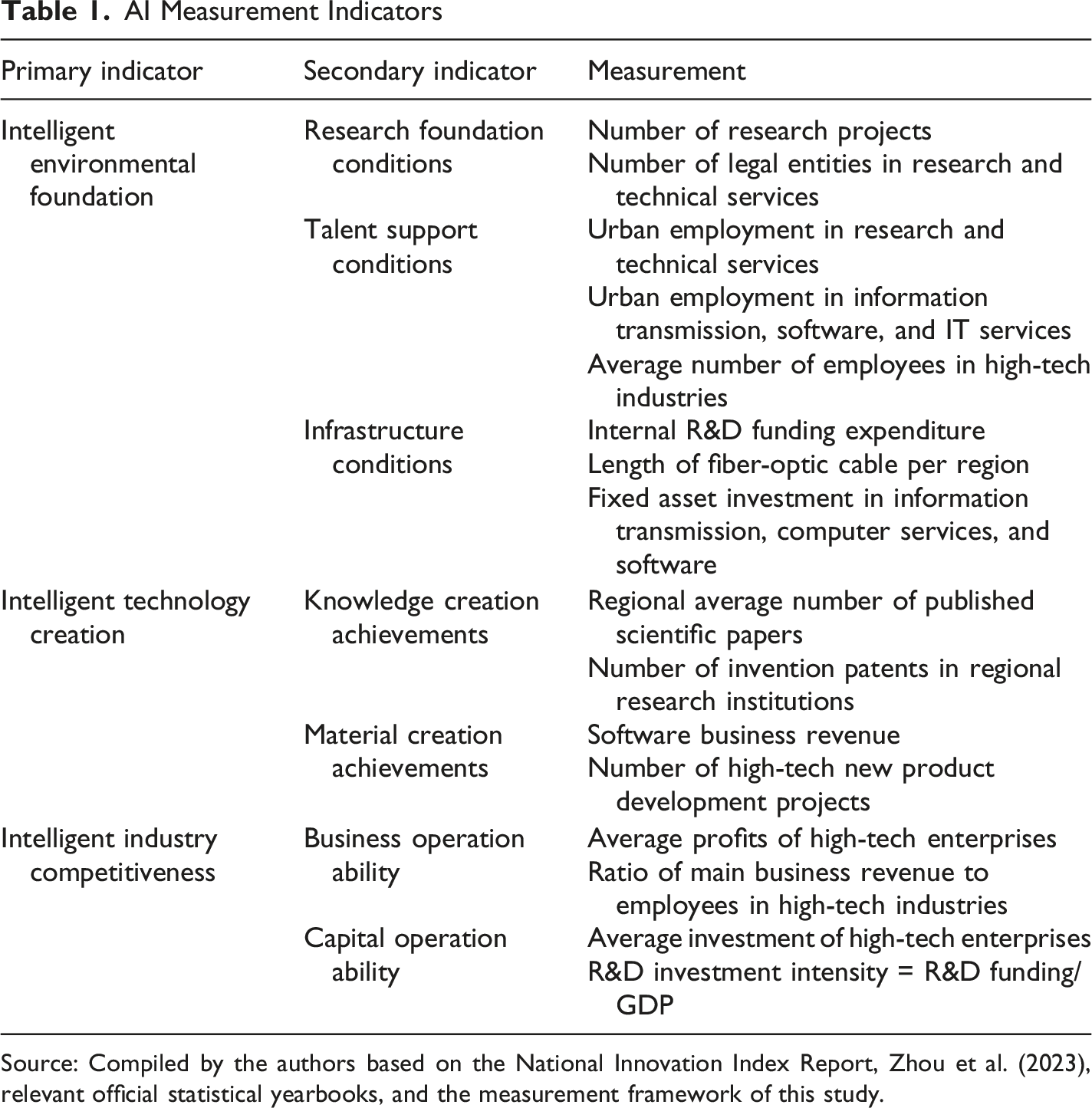
Source: Compiled by the authors based on the National Innovation Index Report, Zhou et al. (2023), relevant official statistical yearbooks, and the measurement framework of this study.
Following Zhou et al. (2023), the steps for calculating the AI development index are as follows:
First, the min-max normalization method is applied to standardize each indicator using the following formula:
Then, the entropy method is used to assign objective weights to the measurement indicators, with the weight calculation formulas as follows:
Finally, the calculated weights are used to measure the AI development index for each province using the following formula:
A larger comprehensive index indicates a higher level of AI development.
Mediating Variable
The mediating variable in this study is green innovation resilience (GIR). According to resilience theory, green innovation resilience emphasizes the dynamic capability of a system to maintain functional stability, adapt to changes, and evolve under external shocks. Its core characteristic lies in responding to and regulating innovation volatility (Su et al., 2025; Zhang et al., 2024). From a quantitative perspective, green innovation resilience should reflect the adaptive capacity in response to fluctuations of regional innovation systems relative to the national trend. That is, by comparing the deviation of each province’s green innovation level from the national average, it captures the buffering effectiveness in response to environmental changes (Wu et al., 2024). To quantify this multidimensional concept, this study follows the measurement method proposed by Wu et al. (2024), constructing a relative resilience index from a provincial perspective by calculating changes in the number of authorized green invention patents in each province. The data on authorized green invention patents are obtained by identifying green patent codes from the green patent list published by the World Intellectual Property Organization (WIPO) and then retrieving the provincial-level data from the National Intellectual Property Administration.
Following Wu et al. (2024), the calculation formula for green innovation resilience is as follows:
To further enhance interpretability, the min-max normalization method is applied to standardize the indicator, ultimately obtaining the standardized green innovation resilience
Moderating Variable
The moderating variable in this study is green finance (GF). Green finance is an essential component of green economic development. Its essence lies in incorporating potential environmental impacts into market investment and financing transactions, thereby achieving coordinated development between the ecological environment and financial development. Unlike traditional finance, green finance encompasses a more diverse range of elements. By creating diversified green financial instruments, green finance restricts activities that contribute to pollution, ultimately promoting green industrial adjustment (Bai & Lin, 2024). Referring to prior studies (Bai & Lin, 2024), this study measures green finance using five dimensions: green credit, green securities, green insurance, green investment, and carbon finance. The green finance index is calculated using the entropy weighting method. Table 2 reports the indicator system used to construct the green finance index, including the primary dimensions, secondary indicators, and their specific measurement methods. The specific indicators are as follows:
Measurement Indicators of Green Finance
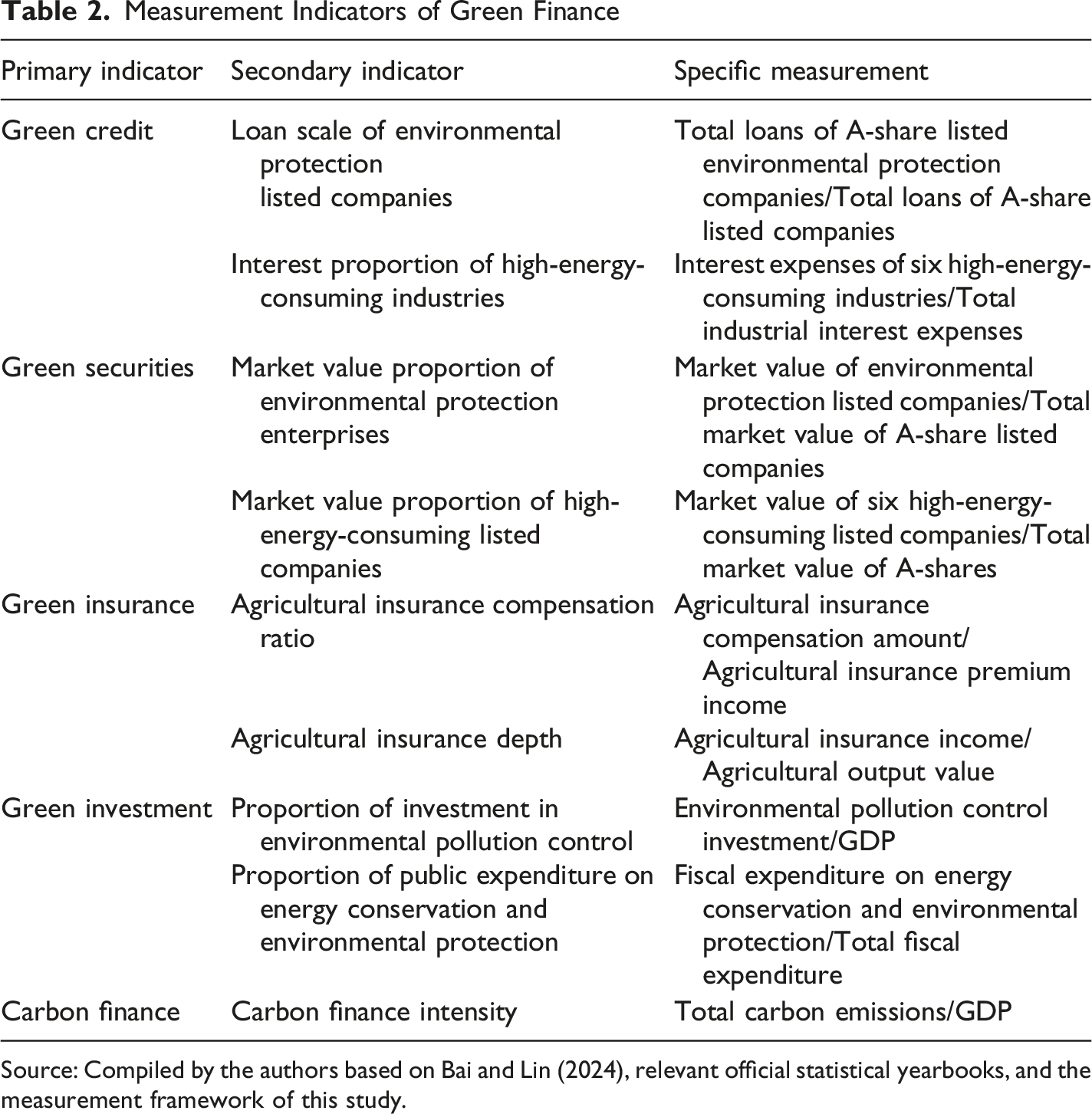
Source: Compiled by the authors based on Bai and Lin (2024), relevant official statistical yearbooks, and the measurement framework of this study.
Control Variables
(1) (2) (3) (4) (5) (6)
Data Analysis and Discussion of Results
Selection of Econometric Model and Descriptive Statistics
To address missing values in the sample data, this study applies the nearest-neighbor trend imputation method in SPSS 25.0. Subsequently, Stata 15.0 is used to conduct model selection tests on the panel data. Given that panel data often exhibit heteroscedasticity and serial correlation, this study performs relevant statistical tests. The results show that χ2 (30) = 5331.25, Prob>chi2 = 0.000, indicating the presence of heteroscedasticity. Additionally, F (29,233) = 10.84, Prob>F = 0.000, confirming the existence of serial correlation. Under such conditions, conventional panel estimation methods may lead to inefficient estimates and biased standard errors. Compared with ordinary least squares (OLS) or standard fixed-effects estimation, the feasible generalized least squares (FGLS) method is better suited to panel data with heteroscedasticity and serial correlation because it explicitly corrects for these error-structure problems and can improve estimation efficiency. Following Fan et al. (2024), this study therefore employs the FGLS estimator for the baseline regression analysis.
Descriptive Statistics of Variables
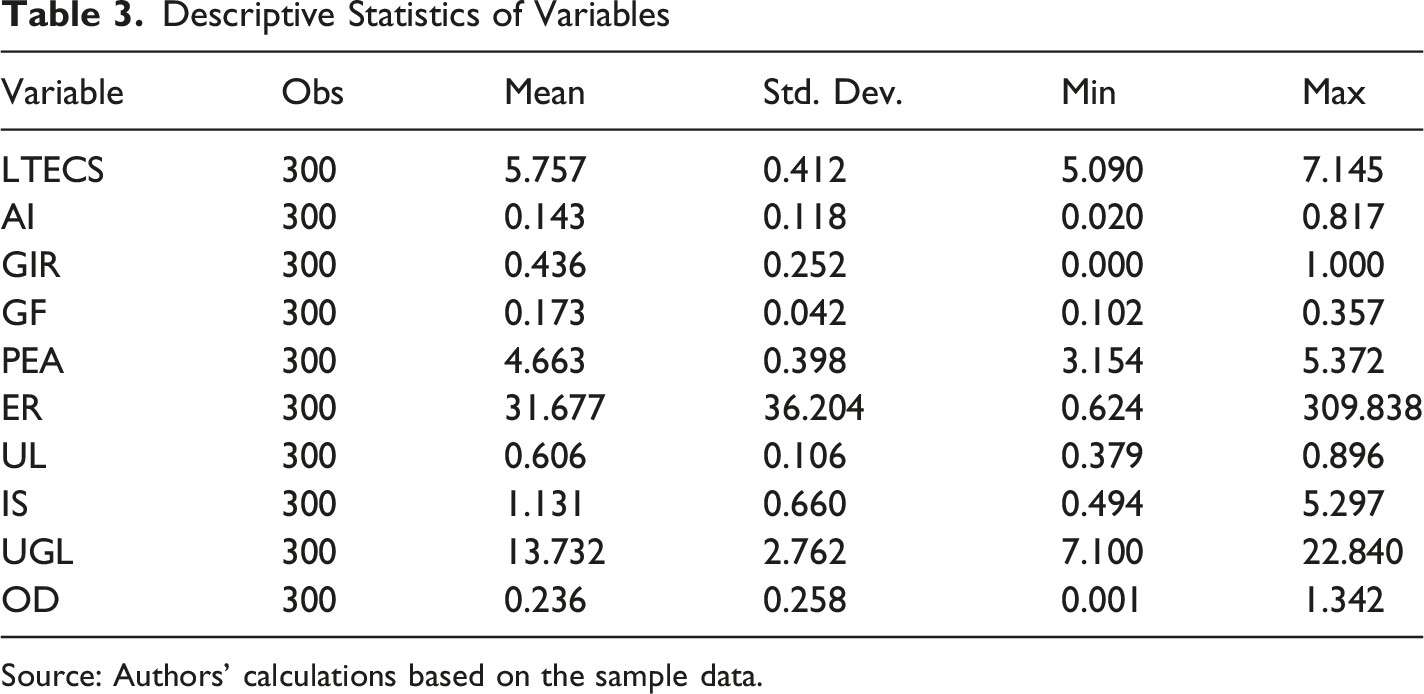
Source: Authors’ calculations based on the sample data.
Baseline Regression Analysis and Robustness Tests
Baseline Regression
Regression Results of AI’s Impact on the Low-carbon Transition of Energy Consumption
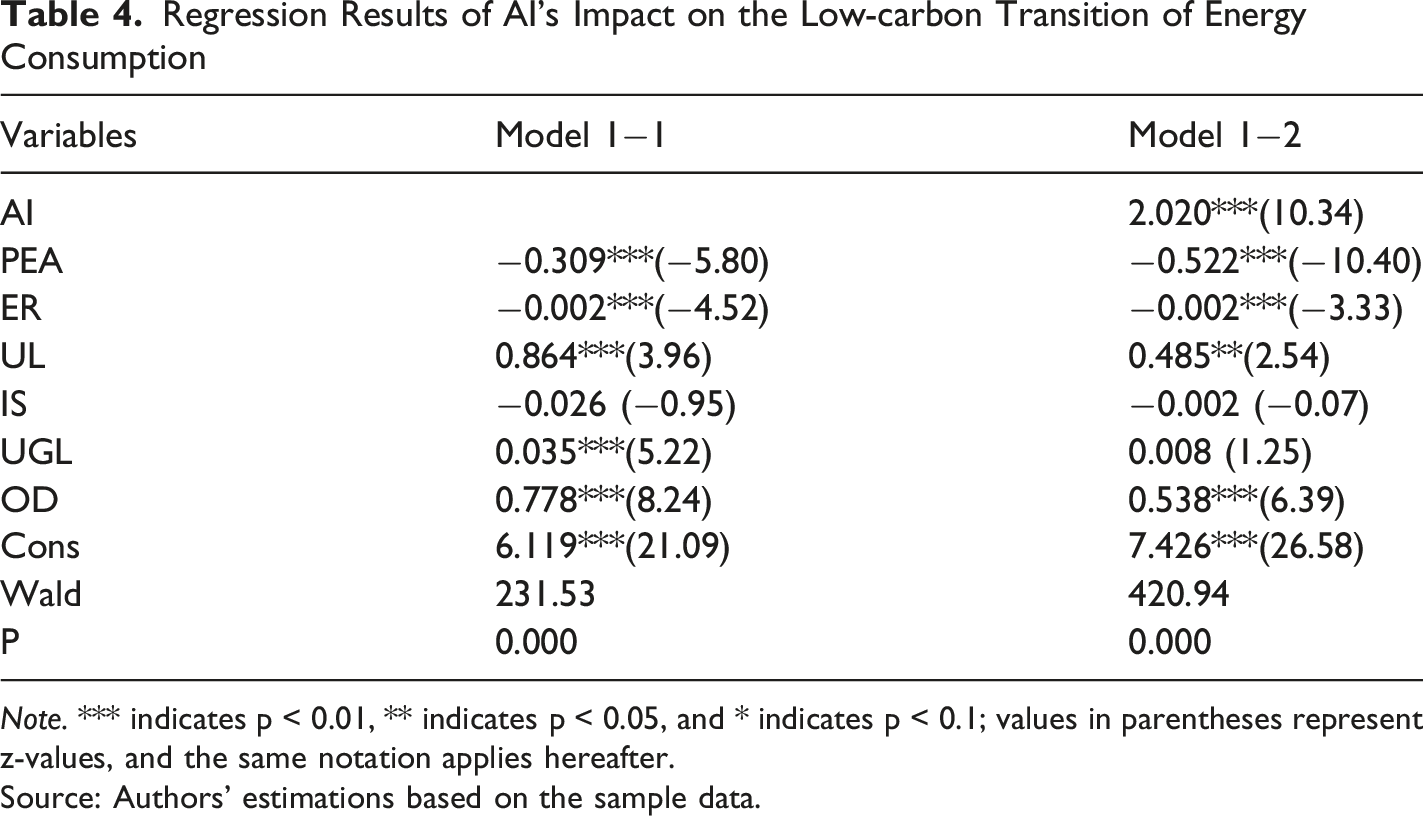
Note. *** indicates p < 0.01, ** indicates p < 0.05, and * indicates p < 0.1; values in parentheses represent z-values, and the same notation applies hereafter.
Source: Authors’ estimations based on the sample data.
From the regression coefficient of AI in Table 4, it can be observed that AI has a significantly positive impact on the low-carbon transition of the energy consumption structure (β = 2.020, p < 0.01). This finding indicates that AI systematically promotes the low-carbon transition by optimizing energy allocation efficiency and accelerating the substitution of traditional energy with clean technologies.
Robustness Tests
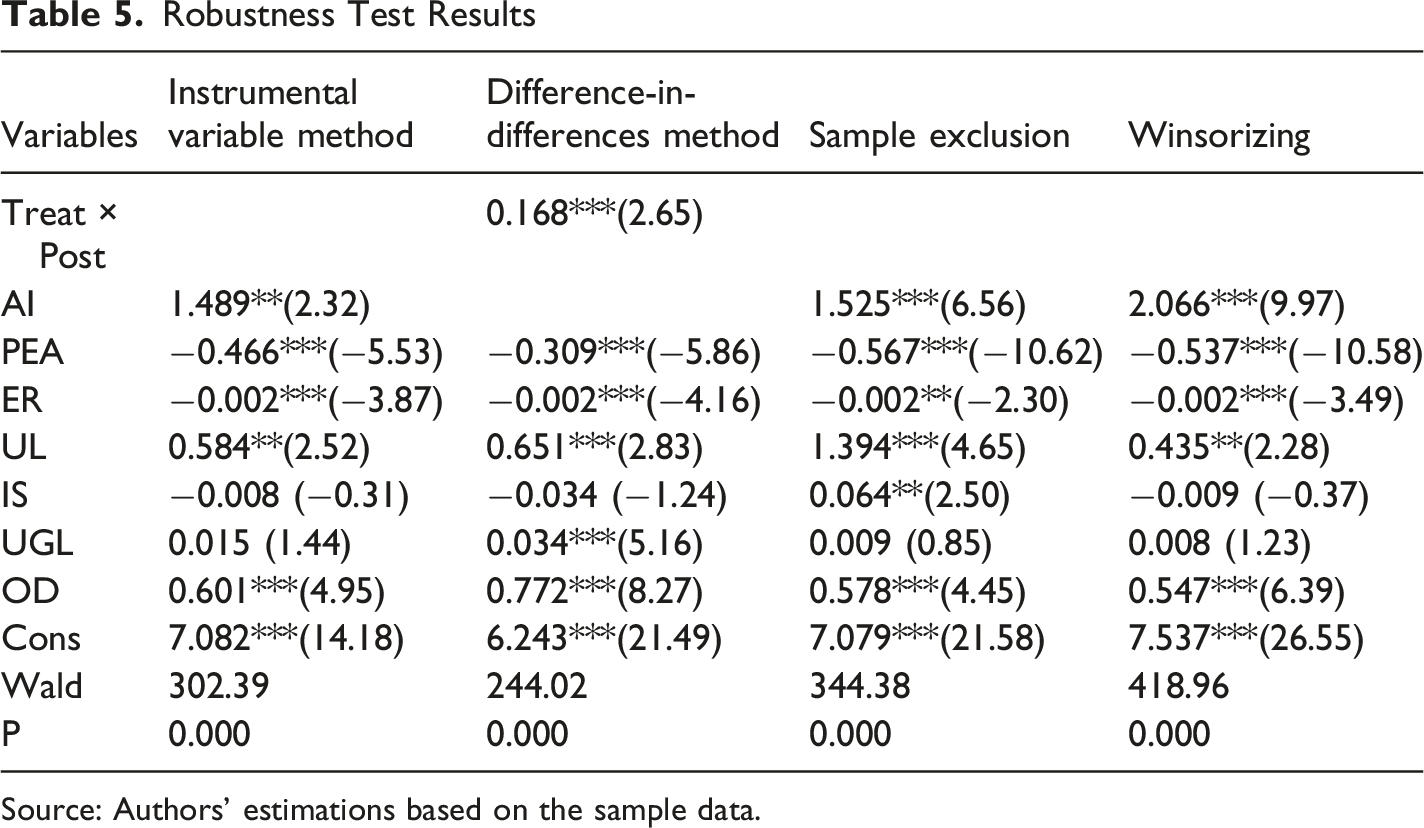
To ensure the reliability of the baseline regression results, this study conducts robustness tests from the following four aspects. (1) (2) (3) (4)
Robustness Test Results
Source: Authors’ estimations based on the sample data.
Analysis of the Mediating Effect
The Mediating Effect of Green Innovation Resilience
Source: Authors’ estimations based on the sample data.
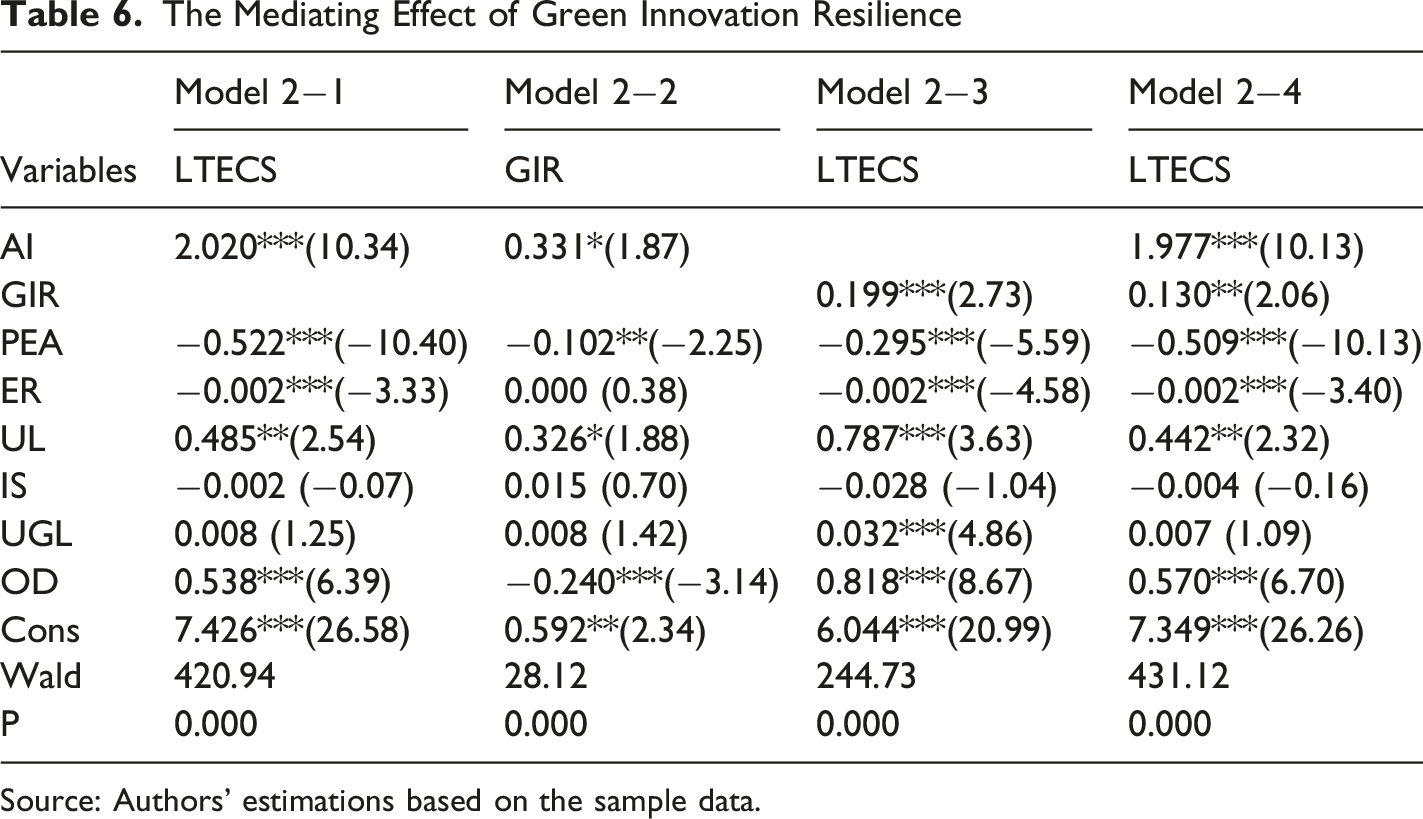
In Model 2-2, artificial intelligence has a significant positive impact on green innovation resilience (β = 0.331, p < 0.1). In Model 2-3, green innovation resilience significantly promotes the low-carbon transition of the energy consumption structure (β = 0.199, p < 0.01). Furthermore, in Model 2-4, green innovation resilience still exerts a significant influence on the low-carbon transition of the energy consumption structure (β = 0.130, p < 0.05), while the coefficient of the independent variable AI remains significant (β = 1.977, p < 0.01). These results indicate that green innovation resilience partially mediates the impact of AI on the green and low-carbon transition of the provincial energy consumption structure, thus confirming Hypothesis H2. AI enhances the low-carbon transition by improving green innovation resilience.
As a carrier of dynamic capabilities, green innovation resilience enables regional innovation systems to effectively absorb AI technology spillovers, ensuring the continuity of green technology R&D amid external environmental fluctuations (Wu et al., 2024). The data integration capability driven by AI strengthens the dynamic optimization mechanism of technological pathways, helping innovation entities quickly identify breakthrough directions in low-carbon technology. This, in turn, amplifies AI’s long-term effect on the transformation of the energy consumption structure, ultimately facilitating the green and low-carbon transition of energy consumption.
To further validate the mediating effect of green innovation resilience, this study applies the bootstrap method proposed by Preacher and Hayes (2004) to test the mediation effect. Using SPSS 25.0 software, with 5000 bootstrap resamples and a confidence level of 95%, the obtained confidence interval for the indirect effect of green innovation resilience is [0.002, 0.107], which does not contain zero. This indicates that the mediating effect of green innovation resilience is significant and the results are robust.
Analysis of the Moderating Effect
The Moderating Effect of Green Finance
Source: Authors’ estimations based on the sample data.
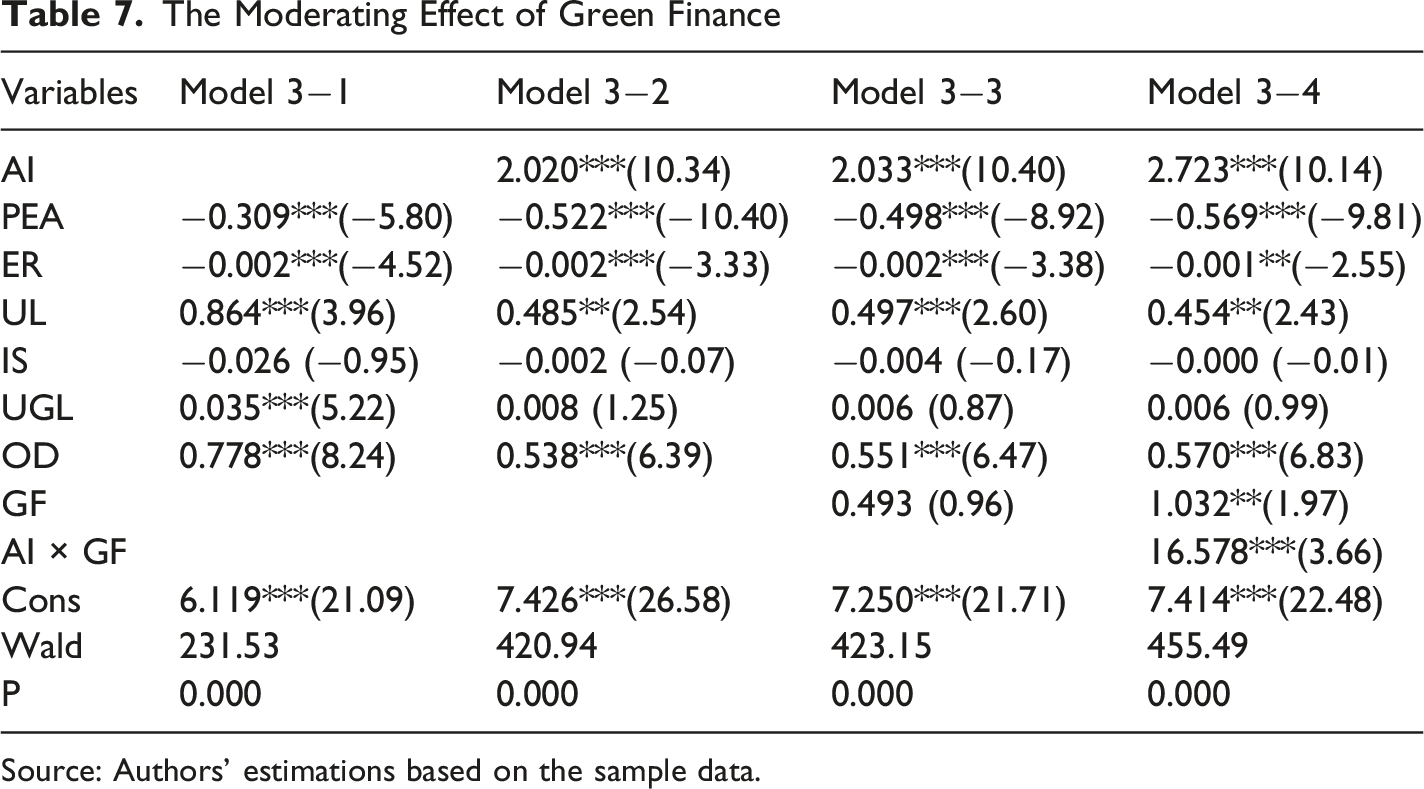
From Model 3-4 in Table 7, it can be observed that the interaction term between green finance and AI is significantly positive (β = 16.578, p < 0.01), confirming that green finance enhances the positive impact of AI on the green and low-carbon transition of the energy consumption structure. This suggests that green credit and carbon finance instruments can alleviate financing constraints in AI-driven technological R&D and reduce the commercialization risks of clean technologies. Additionally, the signaling effect of green finance policies, when combined with AI-powered energy big data, strengthens market entities’ stable expectations regarding returns on low-carbon investments (Nepal et al., 2025).
This institutional-technological synergy mechanism demonstrates that green finance is not only a resource allocation tool but also an “accelerator” for embedding AI’s economic effects into the energy system, providing a critical foundation for policy coordination design.
To further verify the moderating effect of green finance, this study also applies the bootstrap method to test its moderation effect. With 5000 bootstrap resamples and a confidence level of 95%, the obtained bootstrap confidence interval for the interaction term between AI and green finance is [5.778, 26.602], which does not contain zero. This confirms that the moderating effect of green finance is significant and that the results are robust.
Discussion
Existing studies have increasingly examined the relationship between artificial intelligence and the green and low-carbon transition of the energy consumption structure, yielding a series of findings (Huang, Li, & Li, 2025; Tao, Weng, et al., 2024; Wang et al., 2025; Zhao et al., 2025). However, research remains insufficient regarding the roles of green innovation resilience and green finance in the process through which AI affects energy consumption structure transformation. This study examines the impact mechanism of AI on the green and low-carbon transition of the energy consumption structure from three dimensions: AI technology application, the mediating role of green innovation resilience, and the moderating effect of green finance. More importantly, these relationships are closely related to ongoing processes in the real economy, including industrial upgrading, intelligent energy management, renewable energy integration, innovation continuity under uncertainty, and the financing of long-cycle low-carbon projects.
Scholars (Huang et al., 2025; Shobanke et al., 2025) generally believe that AI technology contributes to improving energy efficiency and promoting the adoption of clean energy, thereby facilitating the low-carbon transition of the energy consumption structure. The results of this study further confirm this view. The results for H1 indicate that AI has a significant positive impact on the green and low-carbon transition of the energy consumption structure. In practical terms, this finding is closely related to economic processes such as industrial energy management, smart grid dispatching, renewable energy integration, and energy-saving technological upgrading. Through intelligent management, AI can improve energy allocation, reduce energy waste, and enhance energy-use efficiency, thereby helping regions move from high-carbon energy dependence toward cleaner and more efficient energy use.
The results for H2 show that green innovation resilience plays a mediating role in the process through which AI affects energy consumption structure transformation. This finding aligns with the view of Wu et al. (2024), who emphasized that green innovation resilience is a crucial pathway for promoting energy structure transformation. The enhancement of green innovation resilience not only helps improve the adaptability and risk resistance of the energy system to external changes but also promotes the green and low-carbon transition of the energy consumption structure through optimized resource allocation and enhanced innovation capabilities. This result is also meaningful in practical terms, because low-carbon transition in the real economy is often interrupted by energy price fluctuations, policy adjustments, market uncertainty, and discontinuity in innovation investment. The mediating role of green innovation resilience suggests that the effect of AI depends not only on technological capability itself, but also on whether regional innovation systems can absorb shocks, maintain continuity, and sustain green technological upgrading over time.
The results for H3 reveal the moderating role of green finance in the process through which AI influences the green and low-carbon transition of the energy consumption structure. This is consistent with Nepal et al. (2025) and Zeng and Zhang (2024), who emphasized the critical role of financial support in the development of green technology. Green finance strengthens AI’s role in energy consumption structure transformation by providing financial support and risk-sharing mechanisms, reducing the costs and uncertainties associated with AI technology applications. This finding is particularly relevant to the current economic reality, in which many AI-enabled low-carbon projects face long payback periods, high initial investment requirements, and insufficient risk-sharing arrangements. The positive moderating effect of green finance indicates that the practical contribution of AI to energy transition is more likely to materialize when financial systems are able to identify, support, and sustain low-carbon technological projects.
Overall, this study not only provides empirical support for the role of AI in the green and low-carbon transition of the energy consumption structure, but also highlights the critical roles of green innovation resilience and green finance in this process. The effectiveness of AI in promoting low-carbon energy transition depends on a broader transformation environment, including the stability of regional innovation systems and the maturity of green financial support. Therefore, policymakers should consider the synergistic effects of technology, innovation resilience, and finance when designing policies for energy transition, while practitioners should pay greater attention to embedding AI into concrete energy-use scenarios and ensuring that innovation and financial support mechanisms remain continuous under real-world uncertainty.
Conclusions and Recommendations
Conclusions
Based on provincial panel data from China spanning 2013 to 2022, this study explores the direct impact of AI on the green and low-carbon transition of the energy consumption structure and further analyzes the mediating role of green innovation resilience and the moderating role of green finance. The main conclusions are as follows. (1) AI significantly promotes the low-carbon transition of the energy consumption structure. The baseline regression results show that the coefficient of AI is significantly positive (β = 2.020, p < 0.01), indicating that AI provides important technological support for the low-carbon transformation of the energy consumption structure. This finding suggests that AI is not only closely associated with the transition process, but also serves as an important driver of energy structure transformation. (2) Green innovation resilience plays a mediating role in the process through which AI affects the green and low-carbon transition of the energy consumption structure. The empirical results show that AI has a significantly positive effect on green innovation resilience (β = 0.331, p < 0.1), and green innovation resilience in turn significantly promotes the low-carbon transition of the energy consumption structure (β = 0.130, p < 0.05). This indicates that AI contributes to the transition not only directly, but also indirectly by enhancing the stability, adaptability, and continuity of green innovation activities. (3) Green finance positively moderates the effect of AI on the low-carbon transition of the energy consumption structure. The coefficient of the interaction term between AI and green finance is significantly positive (β = 16.578, p < 0.01), suggesting that green finance strengthens the role of AI in driving the low-carbon transformation of the energy consumption structure. This finding implies that the synergy between AI and green finance is important for translating technological progress into sustained transition outcomes by reducing uncertainty and improving the financial conditions for low-carbon innovation.
Recommendations
(1) The policy value of AI for low-carbon energy transition does not lie in expanding digital investment indiscriminately, but in improving the capacity of regions to convert AI-related capabilities into structural energy adjustment. Provincial governments should prioritize AI deployment in sectors and regions where energy substitution pressure is high but coordination efficiency is low, such as industrial energy management, power dispatching, and renewable energy integration. In these areas, the key is not only technology adoption itself, but the establishment of application scenarios in which AI can reduce information asymmetry, improve demand forecasting, and optimize cross-sector energy allocation. (2) The policy design should move beyond one-time innovation subsidies and strengthen the continuity of green innovation activities under uncertainty. This includes supporting long-cycle R&D, pilot demonstration platforms, joint university-industry research, and mechanisms that help innovative actors maintain technological upgrading when facing market volatility or policy adjustment. In other words, policy should enhance not only green innovation output, but also the capacity of the regional innovation system to absorb shocks, recover, and renew. (3) Green finance should be embedded more directly into AI-enabled low-carbon projects. Financial institutions and regulators can develop specialized credit standards, risk-sharing tools, and information disclosure rules for projects that combine AI with energy saving, renewable integration, and industrial decarbonization. Compared with broad green finance expansion, a more effective approach is to identify those projects in which AI can generate measurable low-carbon benefits and then provide targeted financing support to reduce uncertainty in commercialization and scaling.
Limitations and Future Research Directions
This study examines the impact of AI on the green and low-carbon transition of the energy consumption structure. Although this study yields several findings, there are still some limitations. First, the analysis is limited to data from China. Future research could expand the sample to include more countries or regions, enabling cross-national comparative analyses to explore how AI influences the green and low-carbon transition of energy consumption structure under different political and economic conditions.
Second, this study is conducted at the provincial level and therefore cannot capture heterogeneity across different types of firms. Future research could employ firm-level data to examine whether the effects of AI, green innovation resilience, and green finance differ by firm characteristics, such as industry, size, or energy consumption intensity.
Third, this study primarily focuses on the roles of AI technology, green innovation resilience, and green finance in the transition of the energy consumption structure, potentially overlooking other relevant factors such as policy environments, market structures, and social and cultural contexts, which may also play significant roles in the energy transition process.
Footnotes

Funding
The authors disclosed receipt of the following financial support for the research, authorship, and/or publication of this article: This research was supported by the National Natural Science Foundation of China (Grant No. 72174137) and Shanxi Province Basic Research Program (Industrial Development Category) Joint Funding Project (No. 202303011222001). The authors express their gratitude to the team members for their help in the data collection.
Declaration of conflicting interests
The authors declared no potential conflicts of interest with respect to the research, authorship, and/or publication of this article.
Data Availability Statement
Data will be made available from the corresponding author on request.