







Abstract
This article deals with the development and initial validation of the Existential Loneliness Scale (ELS). An initial pool of 40 items, generated based on literature review, qualitative studies, and previously developed scales, was evaluated by the experts’ judgment, so 30 items were retained and then administered to an Iranian sample of 433 youth and adult participants aged 20 to 85 years. Participants also completed other measures relevant for construct validity: Existential Loneliness Questionnaire (ELQ), De Jong Gierveld Loneliness Scale (DJGLS-6), Existential Anxiety Questionnaire (EAQ), Meaning in Life Questionnaire (MLQ), Beck Depression Inventory (BDI-13), and Satisfaction with Life Scale (SWLS). Exploratory factor analysis and parallel analysis showed strong evidence of unidimensionality. This result was also supported by confirmatory factor analysis test. Finally, 19 items were kept, which were free from DIF by gender and by marital status. The scale had high internal consistency (α = .95 and ω = .95) and adequate test–retest reliability with a 1-month interval (r = .74). Examination of the ELS’ correlation with criterion measures indicated that the scale has good concurrent, discriminant, and convergent validity. Findings revealed the ELS as a reliable, valid, and suitable instrument to measure existential loneliness in the Iranian adult population.
There are two conceptual approaches to measuring loneliness in the literature, global and multidimensional (DiTommaso & Spinner, 1993). According to the former, loneliness is considered as a unidimensional phenomenon. According to the latter, loneliness is considered as a multifaceted phenomenon which has different types one of which is existential loneliness (EL). The EL as an ontological aspect of loneliness has generated a few empirical studies and little discussions among scholars (Ettema et al., 2010; Mayers & Svartberg, 2001; Sand & Strang, 2006), presumably due to the lack of a generally accepted methodology of assessment and the lack of an adequate instrument which can measure the EL precisely. Measuring EL accurately is made difficult because conceptual ambiguity and overlap with similar concepts make it hard to differentiate EL from other types of loneliness (e.g., general, emotional, or social). These may be reasons why the topic of EL has received limited attention by researchers so far.
The EL has been mostly investigated in populations whose members live in the shadow of death, such as elderly people and those who are grappling with death and severe diseases (Edberg & Bolmsjö, 2019; Ettema et al., 2010). Research often focuses on the experience of EL in older people (Chung et al., 2020; Larsson et al., 2018; Olofsson et al., 2021; Sundström et al., 2018, 2019), frail older people (Edberg & Bolmsjö, 2019; Sjöberg et al., 2017, 2018), HIV-infected people (Cherry & Smith, 1993; Mayers et al., 2002), cancer patients (Hlubocky et al., 2019; Ida et al., 2016; Razban et al., 2022; Rosedale, 2009; Sand & Strang, 2006; Sekse et al., 2010), and people with mental disorders (Erdner et al., 2005; Nilsson et al., 2008; Nyström, 2006; Nyström et al., 2002).
It is argued that such people are more vulnerable to experiencing EL and feel it with more frequency and intensity. In fact, the conditions they face trigger their basic sense of loneliness in large amounts. Thus, such populations seem to provide scholars with an ideal situation in which the EL can be best studied (Mayers et al., 2002). Of course, EL is characterized as an ever-present feeling of aloneness everybody experiences at some point in one’s life (Mayers & Svartberg, 2001; Yalom, 1980). Indeed, it may be experienced at any time in life course but is often more experienced when people get older (Edberg & Bolmsjö, 2019; Ettema et al., 2010; Sjöberg et al., 2017).
Over recent decades, the number of measurement instruments of loneliness has been rapidly increased. Now, many scales are available, including the UCLA Loneliness Scale (Russell et al., 1980), the Loneliness and Aloneness Scale for Children and Adolescents (LACA; Marcoen et al., 1987), the Three-Item Loneliness Scale (TILS; Hughes et al., 2004), the Loneliness in the Workplace (Wright et al., 2006), the University of Philippines Loneliness Assessment Scale (UPLAS; Tharayil, 2012), the Cancer Loneliness Scale (CLS; Adams et al., 2017), the Buenos Aires Loneliness Scale (BALS; Aune et al., 2019), and Brief Scale of Fear of Loneliness (BSFL; Ventura-León et al., 2020).
Among all the scales already designed, there are only two scales purporting to assess EL, each of which suffers from a variety of problems: Belcher Extended Loneliness Scale (BELS; Belcher, 1973) and Existential loneliness Questionnaire (ELQ; Mayers et al., 2002). The BELS is an old instrument designed to measure different types of loneliness, so it is not exclusively assigned to EL. It has been criticized for being lengthy and unwieldy and for its conceptual complexity (Scalise et al., 1984; Solano, 1980). The ELQ is developed to particularly assess EL, but it also has its own limitations. For example, the ELQ was designed only for measuring EL, but further it was revealed that the questionnaire is an aggregate scale addressing different types of loneliness (Gökdemir-Bulut & Bozo, 2018). The ELQ’s subscales have also been criticized for being weakly homogeneous and being inadequately reliable, and for that, they do not contribute sufficiently to the conceptualization of loneliness (Van Tilburg, 2020). The ELQ actually measures how people respond to circumstances in which EL occurs rather than whether they have a sense of being existentially lonely (Ettema et al., 2010). Another matter requiring attention is that the ELQ concentrates more on interpersonal aspects of the EL than other aspects. As pointed out by Marker (2019), the ELQ is based upon a definition of the EL most pertaining to the quality of interpersonal relationships. It is also to be noted that both of these scales have not either been broadly applied or generally accepted as a standard measurement scale. None are based on the major conceptualization that is found in the existing literature on EL, and none have incorporated all required conceptual elements in themselves.
Therefore, the lack of an adequate measurement scale is the major obstacle to moving research on EL forward. This indicates the necessity of a psychometrically sound and suitable instrument for measuring EL. The current study is designed to develop a new scale that would more accurately capture feelings, thoughts, and expressions regarding the experience of the EL, present more conceptual precision than previous ones, and facilitate empirical research on EL in the future. The article aims to describe the development of the initial item pool of the ELS, to examine the internal structure of the scale items, and to evaluate its psychometric properties. Therefore, it is hypothesized that the new scale has a good internal consistency and adequate reliability. It is also hypothesized that the scale has a unidimensional structure as it assesses the concept (EL) which is essentially unidimensional. Regarding construct validity, it is hypothesized that the new scale has significant positive correlations with previously developed measures of the EL and with measures of general loneliness, depression, and existential anxiety on the one hand, and has significant negative correlations with measures of satisfaction with life and presence of meaning in life on the other.
Conceptualization and Measurement of Existential Loneliness
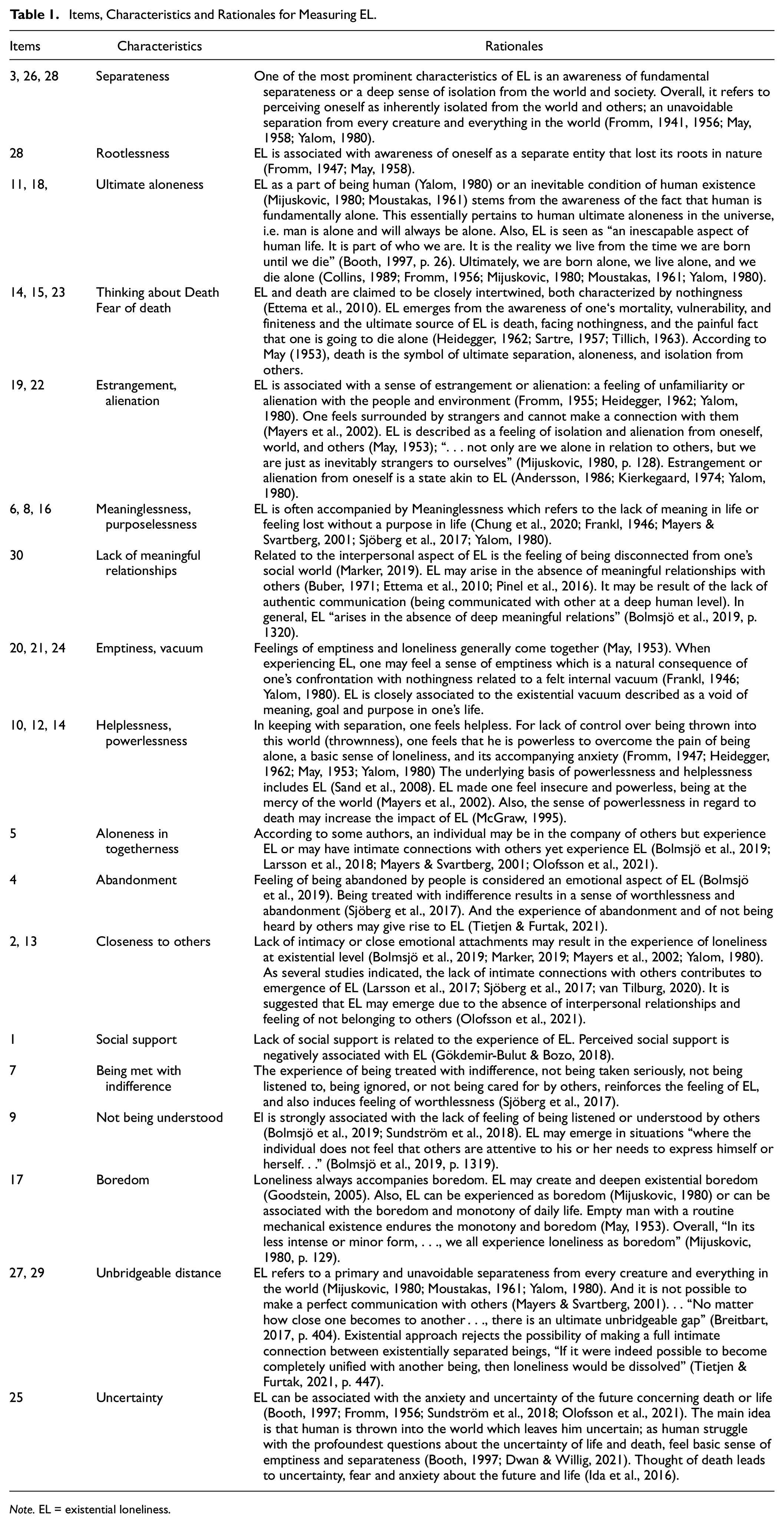
The EL is an elusive phenomenon without a general consensus on its definition (Bolmsjö et al., 2019; Ettema et al., 2010). Bolmsjö et al. (2019) suggest the most suitable definition of the EL: “an awareness of being fundamentally separated from other people and from the universe, and typically, because of this awareness, experiencing negative feelings (i.e., moods and emotions) . . .” (p. 1321). In the present study, the basic idea is that the EL may be better measured by a comprehensive formulation that is created in terms of its key characteristics, referring to main notions that are included in different descriptions of EL, contributing causes or situations in which EL arises, and correlated concepts that are closely interrelated with the EL. Accordingly, the existing literature is explored to get a full understanding of the EL (see supplementary file, part 3). Finally, conceptual analysis resulted in several characteristics that together form a comprehensive model applicable to develop a comprehensive measure of the EL (see Table 1). All the identified features become items that address feelings and thoughts perceived by people in the context of experience of EL. Thus, the EL would be assessed directly by means of the items asking about the symptoms regarding main notions (e.g., being aware of ultimate aloneness, unbridgeable gap, or fundamental separateness from the world and people, and feeling of being isolated, alienated, abandoned, and feeling of being empty, being alone forever, etc.) and indirectly by means of the items focusing on contributing causes (e.g., not being understood, listened, or cared by others, being met with indifference, thinking about and fear of death, the lack of social support and intimacy, etc.) or correlated concepts (e.g., existential vacuum, meaninglessness, boredom, uncertainty, helplessness, etc.). All the contents need to be addressed by the scale items are presented in Table 1.
Items, Characteristics and Rationales for Measuring EL.
Note. EL = existential loneliness.
Method
An initial item pool (40 items) was generated based on a literature review, previously constructed scales, and qualitative studies on EL. Content validity was established by five experts who rated the relevance of the items on a scale with five-category rating: 1 (completely irrelevant), 2 (irrelevant), 3 (less relevant), 4 (relevant), and 5 (extremely relevant). The content of the items was analyzed and 30 items were retained; conceptually overlapping items were merged into one and redundant or irrelevant items were excluded (for detailed information see supplementary materials, part 1). Based on a 5-point Likert-type scale, an ordered response categories was selected for items, ranging from 1 (Never true) to 5 (always true). The scoring is based on the addition of the number of response categories; high scores indicate a high intensity or great expression of EL. Table 2 presents the 30 items remained in the second pool.
Descriptive Statistics for 30 Items of Existential Loneliness Scale (ELS).
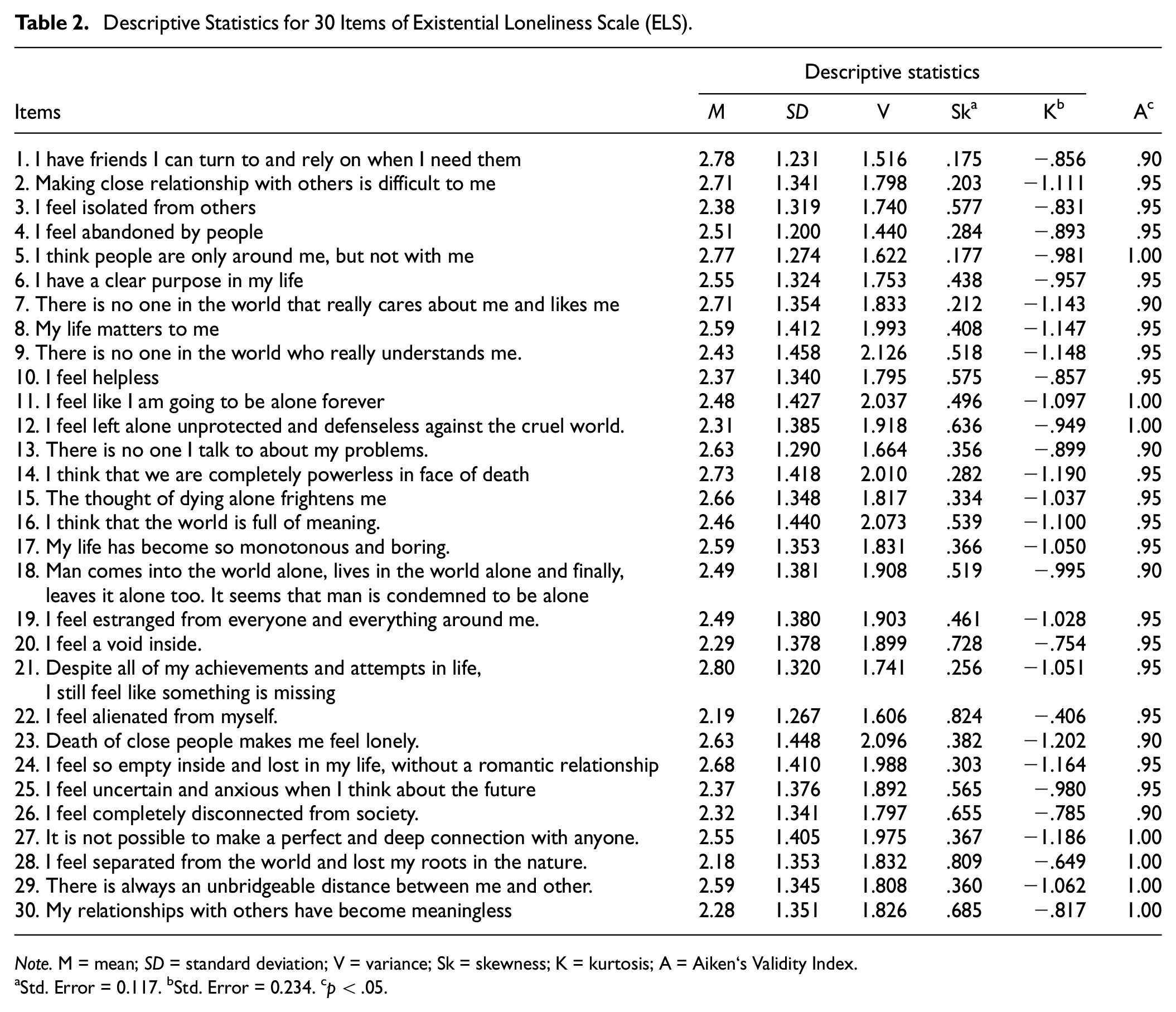
Note. M = mean; SD = standard deviation; V = variance; Sk = skewness; K = kurtosis; A = Aiken‘s Validity Index.
Std. Error = 0.117. bStd. Error = 0.234. c p < .05.
The package given to the participants included 30-item ELS and five other instruments. All data were collected via online surveys, from a convenience sample of Iranian adults. Also, snowball sampling was used to reach more participants. Participants were recruited through social media platforms. The link of the questionnaire package was distributed to potential participants through WhatsApp and Telegram, and Gmail. First page of the package provided participants with full information about the study and included informed consent form (https://survey.porsline.ir/s/R5VOnnq). Inclusion criteria were being an adult aged (at least) 20 years and over, being a resident of Iran, and being able to read and write in Persian. Ethical approval was obtained from the Review Board of the Islamic Azad University. Based on the Declaration of Helsinki, participants were given a brief description of the purpose and content of the study. They were informed about the fact that participation in this study is completely voluntary and they are free to leave the study whenever they want. They were also assured of confidentiality and anonymity of their information, and informed about how collected data would be stored and used. Informed consent was gained from participants electronically before answering any question.
Participants
There was a convenience sample from Iranian people, consisting of 433 youth and adult participants (288 females, 66.5%, 145 males, 33.5%) with ages ranging between 20 and 85 years (M = 48.28, SD = 16.26) The participants reported their perceived socioeconomic status as low (n = 99, 22.9%), middle (n = 216, 49.9%), and high (n = 118, 27.3%). Also, participants’ marital status was as follows: 33% single (never married; n = 143), 49.4% married (n = 214), and 17.6% separated (divorced or widowed; n = 76; for more information see supplementary file, part 4).
Instruments
In addition to the new scale described above, criterion measures were administered to examine construct validity of the ELS. Demographic information was collected by questions of participants’ age, sex, marital status, occupation, education, and perceived socioeconomic status.
Existential Loneliness Questionnaire (ELQ)
The Existential Loneliness Questionnaire (ELQ) was developed by Mayers et al. (2002) particularly to measure EL, made up of 22 items rated on a 6-point Likert-type scale. The questionnaire items were constructed in terms of the Rasch model, showing high internal consistency (α = .90). Items 1, 2, 7, 14, and 18 have the reverse scoring. The high EL is reflected by high scores on the ELQ. The questionnaire was translated into Persian by Hadeei and Aminikhoo (2023). They reported a satisfactory construct validity, a high internal consistency (α = .91), an adequate 1-month test–retest reliability (r = .73), and a unidimensional structure for the Persian ELQ. The internal consistency of the ELQ was .91 in this study.
Satisfaction With Life Scale
The Satisfaction With Life Scale (SWLS) was created by Diener et al. (1985) to assess one’s satisfaction with life. It is made up of 5 items rated on a 7-point Likert-type scale. One’s high satisfaction with life is reflected by high scores on the scale. The internal consistency and 2-month test–retest reliability coefficients were estimated to be .87 and .82, respectively. And Bayani et al. (2007) reported that the Persian version of the scale has adequate internal consistency (α = .83) and 1-month test–retest reliability (r = .699 p< .001) as well as good concurrent and discriminant validity. The internal consistency of the SWLS was .85 in this study.
Meaning in Life Questionnaire
The Meaning in Life Questionnaire (MLQ) designed by Steger et al. (2006) to assess meaning in life, is made up of 10 items and two constructs or sub-scales, namely Presence of Meaning (MLQ-P; α = .82) and Search for Meaning (MLQ-S; α = .88), each of which is measured by 5 items that are rated on a 7-point Likert-type scale. One-month test–retest reliability coefficients for subscales of MLQ-P and MLQ-S were estimated to be .70 and .73, respectively. In this study, Presence of Meaning Subscale was used. A higher score of the subscale reflects a higher level of presence of meaning in one‘s life. The scale was translated by Naghiyaee et al. (2020) into Persian. They reported high internal consistency for Persian version of the MLQ (α = .90), and its subscales MLQ-P (α = .88) and MLQ-S (α = .84). The internal consistency of the subscale MLQ-P was .89 in this study.
Beck Depression Inventory (BDI-13)
The Beck Depression Inventory (BDI-I3) is the short form of the BDI designed by Beck and Beck (1972) to assess the intensity of depression in various populations. It is a multiple-choice self-reporting instrument made up of 13 items, with the internal consistency reliability ranging from .78 to .97. Dadfar and Kalibatseva (2016) reported high internal consistency (α =.85), acceptable split-half reliability (Spearman-Brown coefficient = .70; Guttman Split-Half coefficient =.67), and good construct validity for the Persian BDI-13. The BDI-13 internal consistency was .85 in this study.
Existential Anxiety Questionnaire
The Existential Anxiety Questionnaire (EAQ) was designed by Weems et al. (2004) to assess existential anxiety in terms of Tillich’s (1952) work. It is a true-false rating scale made up of 13 items six of which are positively worded and seven negatively worded. It was found that the questionnaire had acceptable internal consistency (α = .71) and test–retest reliability (r = .72) (with 2 weeks interval). Psychometric evaluation results also supported convergent and incremental validity of the EAQ. Etemad et al. (2017) reported adequate internal consistency (r = .73) and good construct validity with three-factor structure for the Persian version of the EAQ: death-fate (α = .51), emptiness-meaninglessness (α = .41), and guilt-condemnation (α = .51). The internal consistency of the EAQ was .76 in this study.
De Jong Gierveld Loneliness Scale (DJGLS-6)
The De Jong Gierveld Loneliness Scale (DJGLS) was designed by De Jong Gierveld and van Tilburg (1999) to measure loneliness and consisted of 11 items. The scale has a short version consisting of 6 items (De Jong Gierveld & van Tilburg, 2006). The quality of DJGLS-6 was the same as that of the 11-item scale. It was proved that the short scale was a valid measure with acceptable internal consistency (α = .76) and two reliable subscales, emotional loneliness (α = .73) and social loneliness (α = .74). The DJGLS-6 was translated by Hosseinabadi et al. (2020) into Persian. They reported adequate intra-class correlation (ICC = .74, p < .01) and internal consistency (α = .69). The DJGLS-6 internal consistency was .84 in this study.
Data Analysis
After calculating missing values percent and descriptive statistics for the scale items, Exploratory Factor Analysis (EFA) with the extraction method of Robust Unweighted least squares (RULS) was conducted using Factor software version 11.05.01. The polychoric correlation matrix was the most appropriate because the variables type was ordinal (Likert-type items). Weighted Least Square Mean and Variance Adjusted was the estimator (Rogers, 2021). Also, parallel analysis (PA) was used to determine the number of factors (Timmerman & Lorenzo-Seva, 2011). Next, Confirmatory Factor Analysis (CFA) with RULS method was conducted using Lisrel version 8.8. Then, psychometric characteristics of the scale were examined using SPSS version 21; reliability was assessed by test–retest method and internal consistency was estimated using the McDonald’s omega (ω), Ordinal alpha and Cronbach alpha (α); the scale’s correlation with other measures was evaluated to examine construct validity; Differential Item Functioning (DIF) was analyzed using Ordinal Logistic Regression method (Zumbo, 1999) and also, gender and marital status difference in ELS mean scores was examined by 2×2 ANOVA test.
Results
Content Validity
Item content was analyzed by experts whose ratings were quantified by means of Aiken’s V (Aiken, 1985). The V coefficient was calculated for 40 items based on the Relevance criterion to determine item quality; the value of V coefficients ranges from .65 to 1.00. The validity index for 30 items was greater than the critical value of 0.80 (p < .05) with reference to Aiken’s (1985) significance table. And finally 30 items were retained (Table 2; see supplementary file, part 2).
Descriptive Statistics
Statistical descriptions including mean, standard deviation, variance, skewness, and kurtosis were calculated for 30 items of the ELS (see Table 2). Data follows a univariate normal distribution, since the value of univariate skewness and kurtosis of items was in the proposed range (between +1.5 and −1.5; Tabachnick & Fidell, 2007). Based on Mardia’s (1970) indexes, the data did not follow a multivariate normal distribution, Skewness (z): 34.13, p < .001; Kurtosis (z): 20.73, p < .001).
Factor Analysis
An EFA was performed to examine the internal structure of the ELS. For violation of the multivariate normality assumption, the extraction method of RULS was performed, with the bootstrap sampling method (Rogers, 2021). The RULS using the polychoric correlation matrix is a method most recommended for violations of multivariate normality and ordinal variables (e.g., Likert-type items; Rogers, 2021). Of course, the EFA was at first done on data with the most widely and commonly used method, principal component analysis (PCA), and the results were controversial (for more detailed information see supplementary file, part 5). Also, the dimensionality of the ELS was investigated through Optimal Parallel Analysis (PA) suggested by many authors as the best method for assessing dimensionality and identifying number of factors (Timmerman & Lorenzo-Seva, 2011). In addition to PA, the unidimensionality of the scale was evaluated using Closeness to Unidimensionality Test (Ferrando & Lorenzo-Seva, 2017; see supplementary file, part 6).
The EFA method was performed on the 30 items of the scale. The Kaiser-Meyer-Olkin (KMO) index of adequate sampling was 0.95 with 95% Confidence Interval (CI): [0.911, 0.946]. Bartlett’s sphericity test was significant for the sample (χ2(435) = 4848.9; p = .000010). The result of the PA based on the minimum rank factor analysis revealed the scale has one dimension explaining 52.93% of the total variance.
Based on the results of the EFA, 11 items should be eliminated due to low item-total correlation <.30, low communality value <.40, and high standardized residuals >|2.58| (Hair et al., 2013). Therefore, these items were eliminated from other statistical analyses. And the EFA was performed again on the other items. The value of the KMO index was .96 and Bartlett’s sphericity was also significant, χ2 (171) = 4891.1 p = 10. The explained variance by the main factor was 67.59% and the largest standardized residual was estimated to be 2.52. The first eigenvalue was 11.07 and others were less than one. And factor loadings of the unrotated matrix were between .637 and .849. Regarding one-factor model, goodness-of-fit statistics were as follows: χ2 (152) = 283.91 (p = .000010); χ2/df = 1.86; comparative fit index (CFI) = .995 with 95% CI [.994, .996]; Tucker–Lewis index (TLI) = .994 with 95% CI [.993, .996]; goodness-of-fit index (GFI) = .994 with 95% CI [.994, .995]; root mean square residual (RMSR) = .047 with 95% CI [.045, .048]; and root mean square error of approximation (RMSEA) =.045 with 95% CI [.0399, .0461]. These results indicated that there was a good fit between the one-factor model and observed data.
Of the 30 items in the second pool 19 items were retained for the final version of the scale. Factor loading, Communality, and item-total correlation of these items are presented in the Table 3. Subsequently, the CFA test was performed to verify the EFA results. As expected, results supported the unidimensional structure of the 19-item ELS and the one-factor model showed evidence of good fit: χ2 (152) = 355.34 (p = .000); χ2/df = 2.33; CFI = .986; TLI = .984; GFI = .994, SRMR = .045, and RMSEA = .073. Regarding modification indices, correlating error covariances of the items 20 and 21 was selected because the items had a close theoretical relationship and both focus on the feeling of the emptiness interrelated to experience of EL. The modified model fit indices were as follows: χ2 (151) = 327.32 (p = .000); χ2/df = 2.16; CFI = .987; TLI = .985; GFI= .994, SRMR= .044, and RMSEA= .070. Path diagram of this model is presented in Figure 1.
Factor Loadings of the ELS Items (Final Scale).
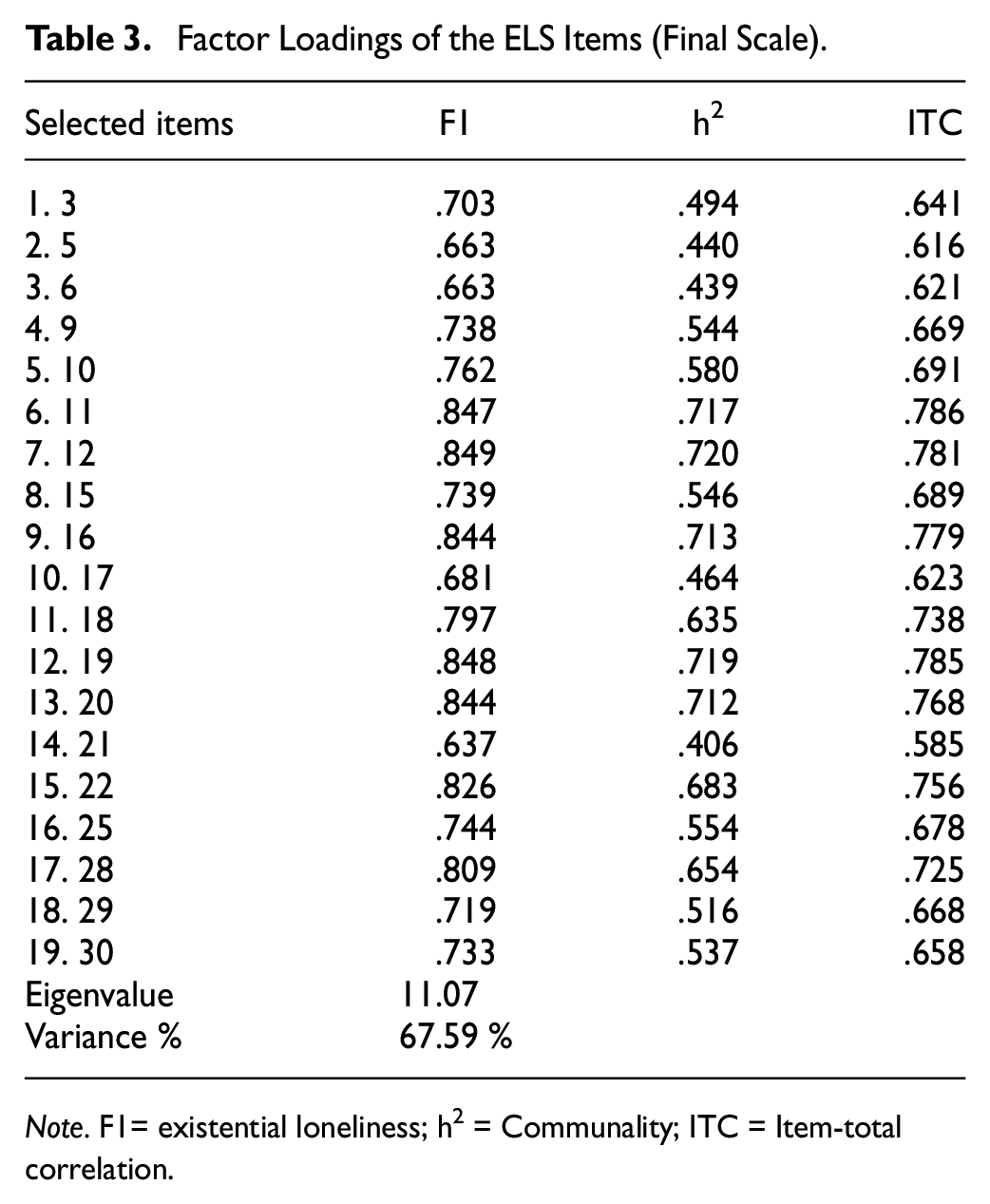
Note. F1= existential loneliness; h2 = Communality; ITC = Item-total correlation.
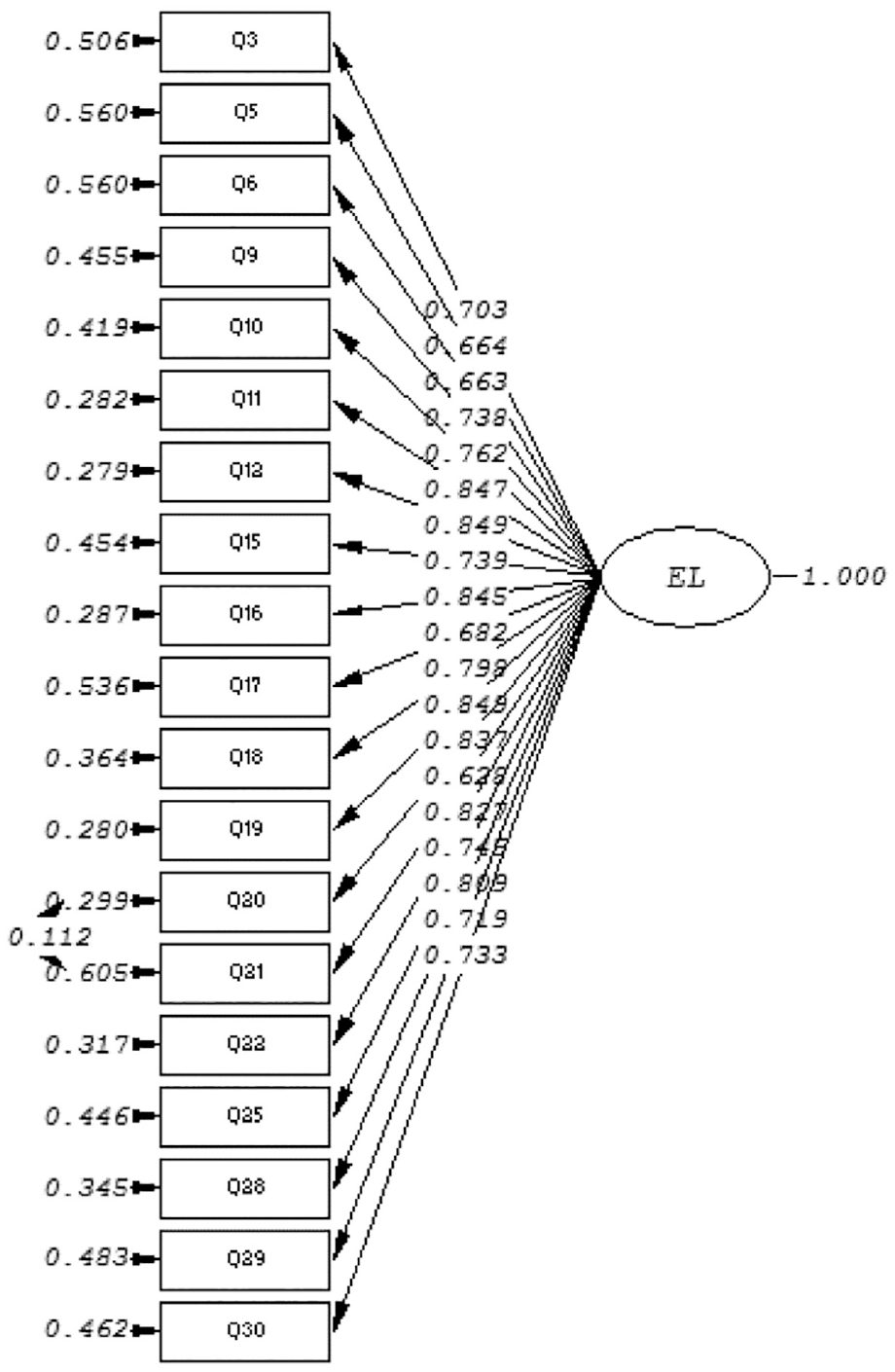
Factorial Structure of the ELS.
Differential Item Functioning Analysis
An important aspect of scale validation is to establish measurement equivalence across subgroups and to examine whether the items are biased in favor of a certain sub-group or give rise to the same score in different populations (Zumbo & Koh, 2005). Differential Item Functioning (DIF) analysis is recommended when a scale has a unidimensional structure. The presence of DIF is supposed to be a threat to fairness and validity of a unidimensional scale. Here, DIF was calculated to determine whether the ELS items work differently across different groups.
Therefore, the presence of DIF by gender and by marital status was explored using an ordinal logistic regression procedure (Zumbo, 1999). Regarding marital status, the sample was divided between those who selected married status (N = 214) and participants who selected other statuses of single (never married) and separated (divorced or widowed) (N = 219). As regards gender, there were more females (n = 288) than males (n = 145).
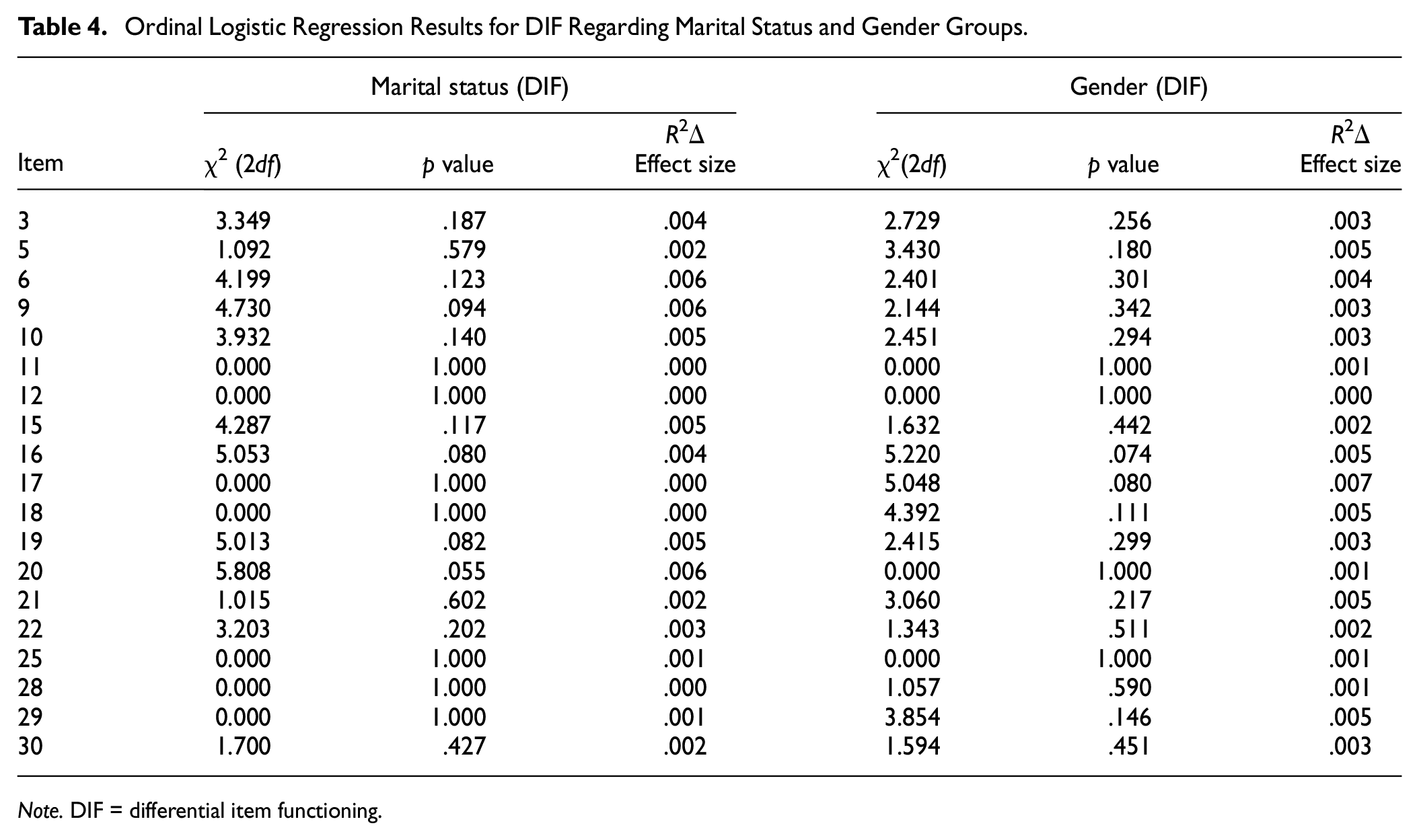
According to Zumbo (1999), one item exhibits DIF when p value of the chi-square test (for DIF) with two degrees of freedom is less than or equal to 0.01 and also R 2 value of relevant effect size is greater than or equal to .035, that is, DIF for each item is assessed from difference between chi-square of Model 3 and that of Model 1 (chi-Square test with two degrees of freedom) and from the difference between Nagelkerke’s R 2 of Model 3 and that of Model 1 (R 2Δ; effect size measure). Statistically significant results of the test exhibit the presence of DIF for item. The results of the test indicated that 19 items of the ELS are free from DIF by gender and by marital status (see Table 4).
Ordinal Logistic Regression Results for DIF Regarding Marital Status and Gender Groups.
Note. DIF = differential item functioning.
Also, a 2 × 2 ANOVA Test was conducted to examine difference among the single and married men and women. The F test results, F (1, 429) = 2.596, p > .05, displayed no statistically significant difference between averages of the four groups in the ELS, indicating that the experience of EL as measured by the ELS is the same for the single and married men and women. This confirms that the ELS items reliably and validly measure EL across different sub-groups.
Reliability Analyses
Cronbach’s alpha (α = .95), McDonald’s Omega (ω= .95), and Ordinal alpha (α = .96) were estimated to assess the overall scale’s internal consistency. The attenuation index was estimated to be 1% (< 30%) which indicated Cronbach alpha is not significantly distorted. Only 51 participants engaged in the second stage and completed the questionnaire after a month. So test–retest reliability of the ELS was estimated to be 0.74 over 1-month interval, meaning that the 19-item ELS has an adequate reliability.
Construct Validity
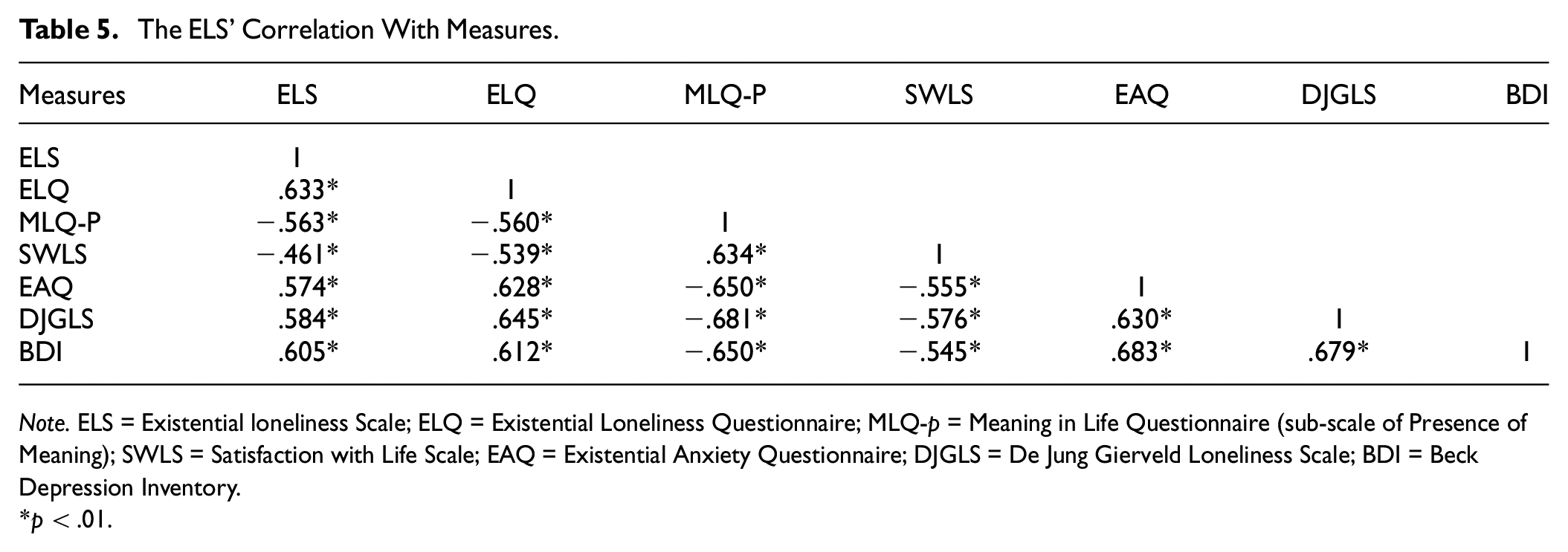
To establish construct validity, the relationship of the EL with closely related psychological constructs was evaluated. To establish concurrent validity, the ELS scores should be positively correlated with the ELQ scores. As expected, the two scales scores had a moderate positive correlation (r = .633, p < .01). To establish convergent validity, the relationship of the ELS scores with the measures of general loneliness, existential anxiety, and depression was evaluated, consistent with the literature and previous studies (Gökdemir-Bulut & Bozo, 2018; Mayers et al., 2002; Mayers & Svartberg, 2001). Regarding the validity evidence, relationship between the ELS scores with the DJGLS, EAQ and BDI scores was moderate, positive and statistically significant. As expected, the ELQ was positively associated with the DJGLS (r = .584 p <.01), the EAQ (r = .574, p < .01) and the BDI (r = .605, p < .01). To establish discriminant validity, relationship of the ELS scores with the measures of meaning in life and satisfaction with life was evaluated, consistent with previous studies on the EL (Gökdemir-Bulut & Bozo, 2018; Mayers et al., 2002; Mayers & Svartberg, 2001). According to correlational analysis, the ELS had a moderate, negative, and significant association with the SWLS and MLQ-P (see Table 5).
The ELS’ Correlation With Measures.
Note. ELS = Existential loneliness Scale; ELQ = Existential Loneliness Questionnaire; MLQ-p = Meaning in Life Questionnaire (sub-scale of Presence of Meaning); SWLS = Satisfaction with Life Scale; EAQ = Existential Anxiety Questionnaire; DJGLS = De Jung Gierveld Loneliness Scale; BDI = Beck Depression Inventory.
p < .01.
Discussion
This study was an attempt to design and evaluate a new scale to measure EL in Iranian youth and adults. The initial item pool was developed in terms of information obtained from existing literature, previously designed measures, and qualitative studies on EL. Items were created in a way that stimulated perceptions and feelings that emerged in the context of EL. The content of the items was analyzed by experts’ judgment and 30 items were retained. Based on EFA results, 19 items from the second item pool were selected for final version of the scale, two of which (Items 3 and 9) are positively worded and others negatively worded. Most of the items are directly oriented toward the states and signs of the experience of EL, four of which (Items 6, 7, 8, and 11) consist of the word “alone.” Validity and reliability analyses verified the quality of selected items. In general, the scale items are based on the criteria that allow addressing EL in a more accurate and complete way. Regarding the internal structure, the EFA and PA results revealed that the 19-item ELS is unidimensional. The unidimensionality of the scale was also confirmed by the CFA results. And based on fit indexes, there was an excellent fit between one-factor model and dataset. The results of DIF analyses indicated that the ELS items are free from DIF by gender and marital status. Also, there was no significant difference in EL mean scores across different sub-groups.
Evidence of high internal consistency and acceptable test–retest reliability was found for the scale. Also, results of validity analyses were satisfactory. The ELS was associated in expected directions with criterion measures, which provided evidence of construct validity. As expected, ELS scores had a positive correlation with the measures of existential anxiety, depressive symptoms and general loneliness and also had a negative correlation with the measures of life satisfaction, and meaning in life. The findings support the results of previous studies (Gökdemir-Bulut & Bozo, 2018; Mayers et al., 2002).
The present study has some limitations. Although a good model fit for the 19-item ELS was obtained, one should bear in mind that this version of ELS should be considered preliminary and so there is a need for further research to replicate these findings in larger and more diverse samples. The findings are based on data collected from adults living in Iran and caution should be exercised in generalizing the findings to adults from other countries or to samples with different demographic characteristics. The scale should therefore be tested on various populations to settle the issue of generalizability. And further studies are needed to adapt the scale to other cultures and countries. It is also recommended to explore the scale operation in clinical populations as it may be useful to clinical diagnosis. Overall, results of the validity and reliability tests show that the newly designed instrument is a reliable and valid psychometric tool supporting the theoretical understanding of EL.
Conclusion
The ELS has a significant positive association with some negative psychological outcomes, such as existential anxiety and depressive symptoms, and has also a significant negative association with some variables that are closely related to better functioning of the psychological system, such as meaning in life and life satisfaction. Thus, EL can be assumed as a warning sign indicating problems in the human psychological system. Following further scale development, future studies should examine whether EL has negative effects on psychological health or is the predictor of negative psychological outcomes (i.e., depression, anxiety, etc.) over time. It is obvious that the main obstacle to conduct research on EL is the lack of a simple and reliable method of assessment. The ELS appears to be a reliable, valid, and suitable scale for measuring EL in a sample of Iranian adults. Results suggest the scale has a research utility and so is applicable to investigate the intensity and prevalence of EL among general adult populations. With a broad usage area, the scale is (hopefully) expected to be universally accepted as a standard measure of EL and be useful for future research.
Supplemental Material
sj-docx-1-asm-10.1177_10731911231204831 – Supplemental material for Development and Validation of a New Measurement Scale for Existential Loneliness
Supplemental material, sj-docx-1-asm-10.1177_10731911231204831 for Development and Validation of a New Measurement Scale for Existential Loneliness by Sohrab Hadeei in Assessment
Footnotes
Acknowledgements
The author would like to thank all participants who contributed in this research.
Declaration of Conflicting Interests
The author declared no potential conflicts of interest with respect to the research, authorship, and/or publication of this article.
Funding
The author received no financial support for the research, authorship, and/or publication of this article.

Data Availability Statement
The raw data supporting the conclusions of this article will be made available from the corresponding author on reasonable request.
Supplemental Material
Supplemental material for this article is available online.
References
Supplementary Material
Please find the following supplemental material available below.
For Open Access articles published under a Creative Commons License, all supplemental material carries the same license as the article it is associated with.
For non-Open Access articles published, all supplemental material carries a non-exclusive license, and permission requests for re-use of supplemental material or any part of supplemental material shall be sent directly to the copyright owner as specified in the copyright notice associated with the article.
