







Abstract
Applying the solution aversion model in the context of the COVID-19 pandemic, we examine how ideology and support for free markets influence Americans’ assessment of COVID-19 risks and support for mitigation policies. Results from an experiment (N = 438) indicate that conservatives are more likely to dismiss the risks of COVID-19 when governmental regulations are highlighted. In contrast, liberals are less likely to support Emergency Use Authorization of COVID-19 vaccines when market-oriented solutions are highlighted. Findings from this study suggest that in addition to party elite cues, polarization in public opinions on the pandemic may also stem from solution aversion.
As of April 2021, more than 32 million Americans have contracted the coronavirus disease–2019 (COVID-19) and 570,000 have died (World Health Organization [WHO], 2021). Epidemiological and laboratory research further corroborates the severity of the pandemic (Fauci et al., 2020). However, along with the rapid spread of this deadly disease, we are also witnessing a widening gap between conservatives’ and liberals’ perception of and response to the COVID-19 pandemic (Green et al., 2020). Among conservative elites, some politicians have openly dismissed the severity and prevalence of COVID-19 (Green et al., 2020). For instance, President Donald Trump has repeatedly downplayed the dire consequence of COVID-19, even after contracting it himself (Yamey & Gonsalves, 2020). Among the grassroots conservative groups, opposition toward public health measures such as stay-at-home order and mandatory social distancing have led to protests and even criminal activities (Bogel-Burroughs et al., 2020; Dyer, 2020). In contrast, liberals tend to agree more with scientific evidence and comply with public health recommendations (Freira et al., 2020; Green et al., 2020; Kushner et al., 2021). Different from the political disagreement surrounding climate change, this polarization in public opinion toward COVID-19 has led to more immediate social consequences. For example, disobedience of public health measures such as mask wearing and social distancing have contributed to the drastic increase in COVID-19 cases in late 2020 (Gonsalves & Yamey, 2020; IHME COVID-19 Forecasting Team, 2021). Polarized public opinion surrounding the pandemic also had profound impact on the 2020 Presidential Election (Baccini et al., 2021).
Coordinated efforts are needed to control public health crises such as the COVID-19 pandemic. Projection models show that thousands of deaths may ensue if stringent public health guidelines were not followed (IHME COVID-19 Forecasting Team, 2021). It is thus crucial to understand how to build consensus in public support for COVID-19 response measures. To achieve this goal, we need to understand why people disagree about the solutions proposed by public health authorities. Recent research suggests that conservatives dismiss the severity of COVID-19 because of the top-down influence from Republican Party elites (Calvillo et al., 2020; Freira et al., 2020; Green et al., 2020). For instance, conservatives who showed higher approval of President Trump’s handling of the pandemic also perceived COVID-19 as a less severe risk (Calvillo et al., 2020). Corroborating this claim, studies investigating social media posts by Democrat and Republican politicians show significant differences in how frequently they mention the pandemic, with Democrats more likely to stress the challenges of COVID-19 than Republicans (Green et al., 2020).
Though party elites undoubtedly have strong influence on partisan views of scientific issues such as the pandemic, individual differences in policy preferences may also contribute to polarized public opinion. Replicating and expanding the solution aversion model (Campbell & Kay, 2014), this study seeks to identify how political ideology and policy preferences influence people’s perceived risk of COVID-19 and their support for response measures. Specifically, we aim to examine whether conservatives dismiss the severity of COVID-19 because they dislike the policy solutions proposed by scientists and public health authorities. Furthermore, we also seek to understand if emphasizing the different solutions to the pandemic will motivate different levels of support for mitigation policies among liberals and conservatives.
Solution Aversion Model
In a rational world, people process information to gain a more comprehensive and accurate understanding of their physical and social environment (Taber & Lodge, 2006). However, in reality, information processing is often directional as people seek for evidence in support of their existing beliefs while discrediting those incongruent with their views (Kunda, 1990; Taber & Lodge, 2006). Termed as motivated reasoning, the biased assimilation of information explains why people with different beliefs often have different reactions to the same information (Kunda, 1990). In terms of political polarization related to scientific issues such as climate change and the COVID-19 pandemic, multiple theories exist as to why motivated reasoning occurs. Some argue that conservatives are more sensitive to threats and negative stimuli in general, which leads to heighted counterarguing or denial of disastrous impacts (Carraro et al., 2011). Others suggest that the association between the conservative ideology and psychological predispositions (e.g., close-mindedness) accounts for conservatives’ rejection of scientific information (Jost, Glaser, et al., 2003).
Building on the motivated reasoning framework, Campbell and Kay (2014) argue that conservatives and liberals may have different perceptions about social issues because of their inherent aversion to specific solutions. Particularly, these authors argue that conservatives tend to dismiss climate change and other environmental problems because they dislike the solutions proposed to solve these problems (Campbell & Kay, 2014). For instance, climate change mitigation inevitably requires stringent government regulations such as carbon tax or reduction in fossil fuel consumption, but these solutions are extremely unpopular among conservatives. Indeed, one salient characteristic of the conservative ideology is to advocate for less government control and more reliance on free market solutions (Jost, Blount, et al., 2003). Correspondingly, as shown in Campbell and Kay (2014), emphasizing the need for governmental regulations to mitigate climate change resulted in significant deviation in the estimate of global temperature increase, in comparison with the IPCC report, among conservatives. That is, when exposed to information that highlighted governmental regulations as a solution to climate change, conservatives estimated smaller temperature increase as compared with the estimates provided in the IPCC report. Notably, solution aversion also applies to liberals. In particular, liberals were more likely to underestimate the prevalence of crimes when the solution proposed was to relax gun control in order to deter violet crimes, which was against their beliefs in gun control (Campbell & Kay, 2014).
Because stringent public health measures enforced by the government are critical to combat the COVID-19 pandemic, we anticipate that different solutions (i.e., government regulation vs. market-driven solutions) will lead to different risk judgment and policy support between conservatives and liberals. In particular, because COVID response measures such as lockdown, social distancing, and contact tracing often require governmental oversight that may jeopardize individual freedom and privacy (Freira et al., 2020), conservatives may show stronger aversion to these policies. Supporting this conjecture, recent protests and conspiracy theories against statewide lockdown, mandatory social distancing, and mask wearing are often directly linked to denial of scientific assessment of COVID-19 risks (Bogel-Burroughs et al., 2020; Gonsalves & Yamey, 2020).
Notably, in addition to response measures such as social distancing and mask wearing, controlling the COVID-19 pandemic also needs market-driven solutions (Shin et al., 2020). As governmental agencies and pharmaceutical companies worldwide compete to develop new treatments and vaccines, it is also possible that compared with liberals, conservatives may find these market-driven solutions more appealing because support for free markets is the hallmark of conservatism (Jost, Blount, et al., 2003). Supporting this conjecture, Campbell and Kay (2014) found that conservatives were more likely to agree with science when market-driven solutions were highlighted. Specifically, when exposed to information that highlighted market-driven solutions to climate change, conservatives made temperature increase estimates that were on a par with the data provided in the IPCC report.
Based on the solution aversion model, we first hypothesize that conservatives will perceive the COVID-19 pandemic as a more severe risk when presented with market-driven solution, as compared with government-regulation solution (Hypothesis 1a). Differently, since liberals generally have stronger belief in science (Calvillo et al., 2020), message frames (i.e., government regulation vs. market-driven solution) may have limited impact on their risk estimate (Hypothesis 1b). More central to the support for free markets as the hallmark of conservatism, we hypothesize that it will moderate this relationship. Specifically, individuals with stronger support for free markets will report higher risk estimate when market-driven solution is highlighted, as compared with government-regulation solution (Hypothesis 2a). In contrast, different solutions would have similar impacts on people who showed lower support for free markets (Hypothesis 2b).
In addition to risk estimate, solution aversion may also influence people’s support for policies designed to combat the COVID-19 pandemic. For instance, conservative politicians including President Trump have repeatedly promoted pharmaceutical drugs such as remdesivir and hydroxychloroquine, as well as advocated accelerated approval of vaccines. Due to different preference for government or market-oriented solutions, it is possible that conservatives and liberals will show different policy support depending on whether government regulations or market-driven solutions are highlighted. Here, we specifically focus on two types of policies that rely on different levels of governmental or market involvement: (1) appropriating government funds into research on COVID-19 treatment and vaccines and (2) accelerating treatment and vaccine availability via Emergency Use Authorization (EUA), which relax government regulations by delegating authority to the Food & Drug Administration (FDA; 2020) to facilitate the use of unapproved drugs. We thus hypothesize that our message themes (i.e., government regulation vs. market-oriented solutions) would interact with ideology and support for free markets respectively to influence support for different policies addressing the COVID-19 pandemic. Specifically, we expect that support for relaxed regulation such as EUA would be stronger among conservatives as compared with liberals (Hypothesis 3a), as well as among those who favor free markets as compared with people with limited support for free markets (Hypothesis 3b) when market-oriented solutions instead of government regulation were proposed.
Method
Sample
On institutional review board approval, an experimental survey was conducted in September 2020. A group of adult participants (N = 611) were recruited on Proflic.co, a survey sampling platform connecting researchers with interested individuals with diverse backgrounds (Prolific.co, 2019). Only participants living in the United States were invited to take part in the survey. As liberal-leaning individuals are often overrepresented on opt-in recruitment platforms (Berinsky et al., 2012), we purposely recruited a sample with more balanced partisanship distribution. Specifically, half of the sample were recruited from a pool of participants who self-identified as Republicans (n = 310), and the other half were recruited from a Democrat pool (n = 301). Only responses from participants who completed the survey and passed the attention checks were retained (n = 438). 1 Among them, 206 (47%) self-identified as Republican or Republican learning, and 232 self-identified as Democrat or Democrat learning (52%). There were no significant between-condition differences in ideology (government-regulatory solution: M = 3.43, SD = 1.53; free-market solution: M = 3.40, SD = 1.49; t[436] = 0.97, p = .32) or support for free markets (government-regulatory solution: M = 3.17, SD = 1.20; free-market solution: M = 3.05, SD = 1.25; t[436] = 0.20, p = .40). Table 1 shows the demographic composition of the final sample.
Sample Demographics.
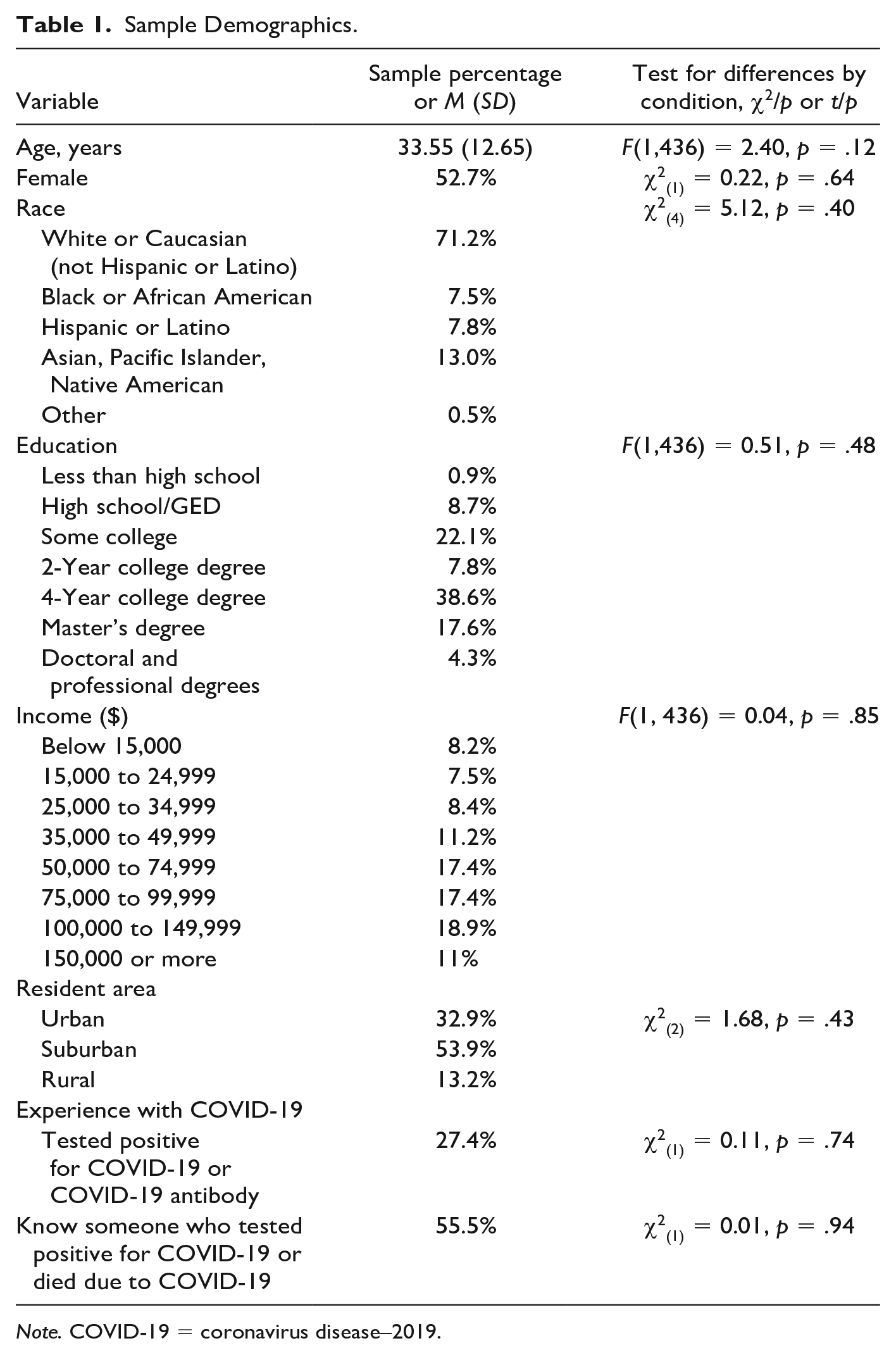
Note. COVID-19 = coronavirus disease–2019.
Procedure
After providing informed consent, participants were first asked about their political ideology and support for free markets. They were then shown one of the two experimental stimuli videos that either emphasized government-regulatory solution or market-driven solution to the pandemic. 2 The government regulation video highlights the importance of stringent government policies to control the spread of COVID-19. Differently, the market-driven solution video features the importance of market competition in dealing with the COVID-19 pandemic. Similar to Campbell and Kay (2014), to avoid priming effect, the experimental videos do not mention specific solutions but highlight solutions that favor either government regulations or market-driven economy. We argue that this design will maximize the effects of solution aversion because it rules out personal preference for specific response measures. For instance, a conservative-leaning individual who adheres to mask-wearing may still find the market-driven solution more appealing. Both videos conclude with scientific estimates of COVID-19-related death tolls by the end of 2020 in the United States if public health guidelines were followed or not followed (IHME COVID-19 Forecasting Team, 2021). The videos are equal in length (60 seconds) and feature similar footages. These stimuli were created by the authors and designed based on the original stimuli used in Campbell and Kay (2014).
Measures
We adopted similar measures from Campbell and Kay (2014) to assess participants’ agreement with the scientific assessment of COVID-19 risks (i.e., death tolls). Specifically, participants were reminded of the expert estimates of death tolls depending on whether public health guidelines were followed (280,000 deaths) or not followed (480,000 deaths), and then they were asked to indicate how many people in the United States they believed would die by the end of 2020 in these two scenarios. Participants used the same slider ranging from 200,000 to 600,000 to indicate their estimates. We then used the standardized difference between participants’ estimates and the expert estimates as an indicator of risk estimate. Notably, we did not categorize the estimates like Campbell and Kay (2014) because the estimated number of deaths, unlike temperature increase estimate in their study, is a more direct risk assessment. Therefore, it is reasonable to argue that a higher estimate indicates not only more agreement with scientific projection but also higher risk perception. Participants’ policy support was measured with four items, focusing on funding more research and using the EUA to approve treatment and vaccines. Table 2 shows detailed wording and descriptive data for all measures.
Descriptive Statistics and Composite Reliability of Survey Measures.
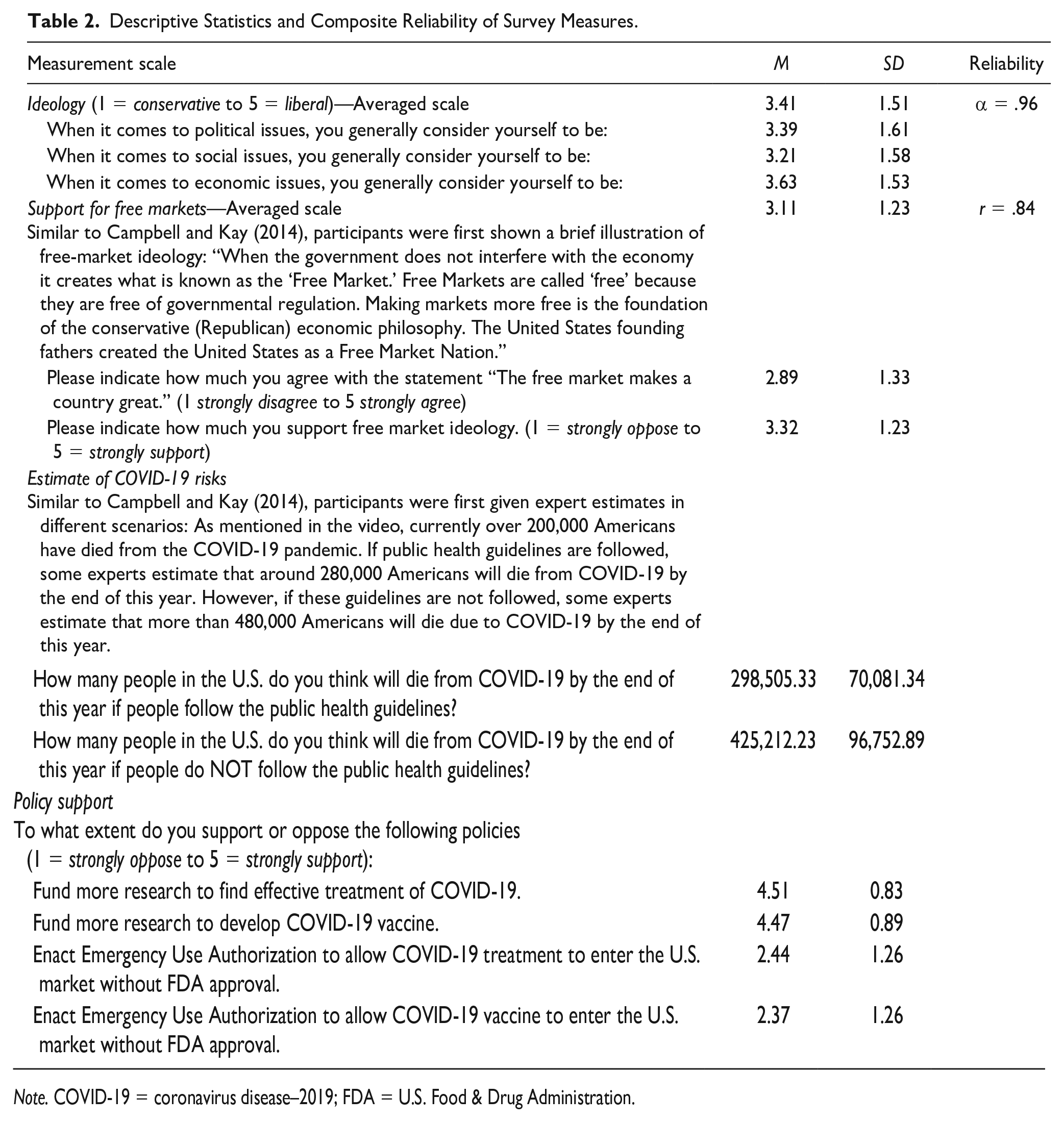
Note. COVID-19 = coronavirus disease–2019; FDA = U.S. Food & Drug Administration.
Results
A series of analyses of variance were first utilized to test the experimental condition’s influence on key outcome variables (i.e., risk estimates and policy support). The only significant difference was observed in support for funding more research related to COVID-19 vaccines, F(1,436) = 4.08, p < .05. Specifically, participants who watched the market-driven solution video showed stronger support for this policy (M = 4.55, SD = 0.80) than those who watched the government regulation video (M = 4.38, SD = 0.98). No other significant main effects were identified.
In response to Hypothesis 1a/1b and Hypothesis 2a/2b, we ran a series of regression models with experimental condition, ideology, or support for free markets, and their respective interaction terms as predictors, to evaluate how each variable influenced risk estimate and policy support (Table 3). Following Campbell and Kay (2014), ideology and support for free markets were modeled separately to isolate the effects of solution preferences. As an overarching construct shaped by values and beliefs (Jost, Glaser, et al., 2003), modeling ideology concurrently with the context-specific support for free markets may obscure its specific effects on risk estimates and policy support. Demographics and participants’ prior experience with COVID-19 were included as control variables to gauge the possible influence of these variables on people’s risk estimate. Findings remain unchanged when the control variables were removed from the regression models (see Supplemental Appendix Tables A1-A2).
Regression Models Predicting COVID-19 Risk Estimates.
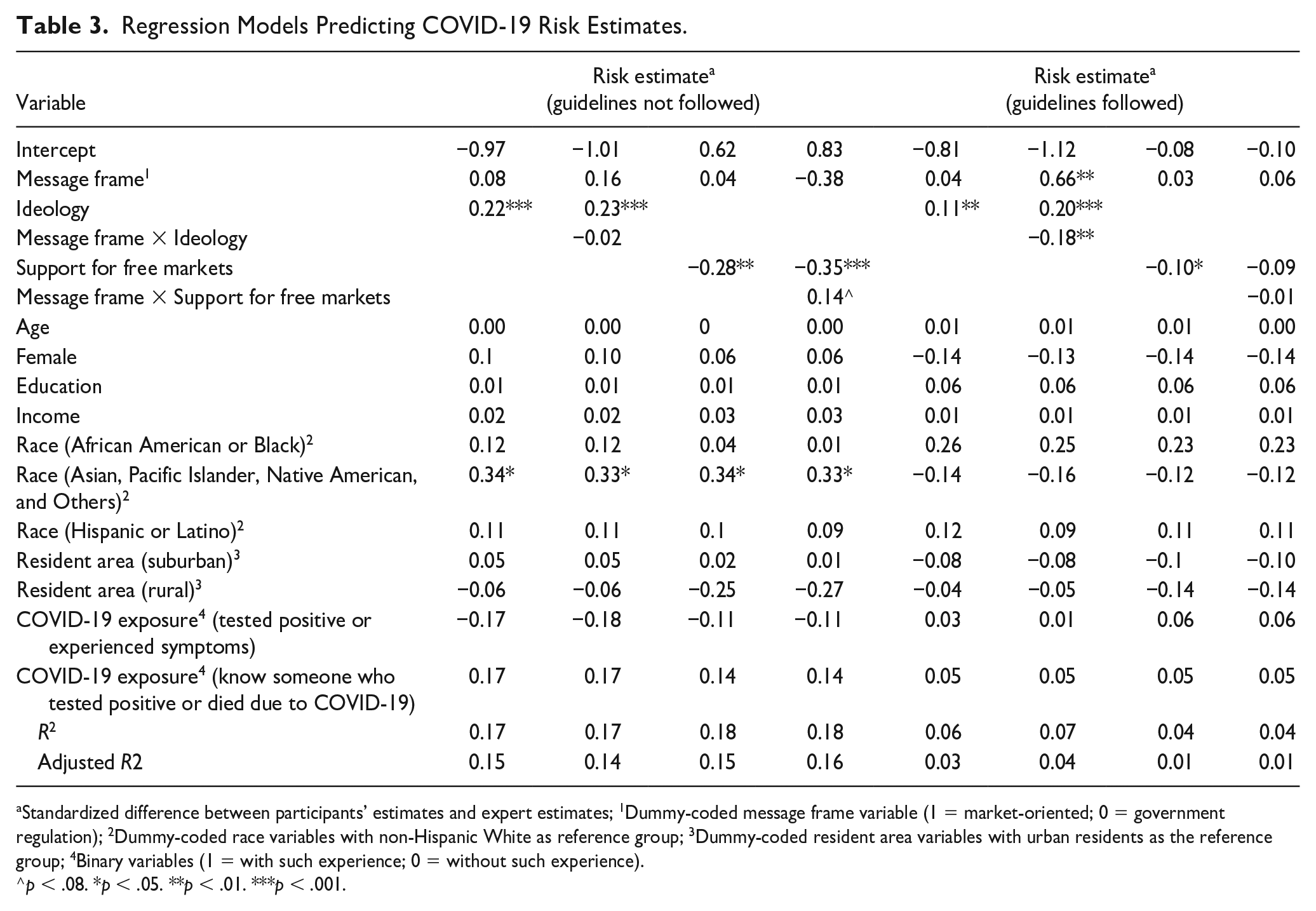
Standardized difference between participants’ estimates and expert estimates; 1Dummy-coded message frame variable (1 = market-oriented; 0 = government regulation); 2Dummy-coded race variables with non-Hispanic White as reference group; 3Dummy-coded resident area variables with urban residents as the reference group; 4Binary variables (1 = with such experience; 0 = without such experience).
p < .08. *p < .05. **p < .01. ***p < .001.
Observably, ideology and support for free markets separately predicted risk estimate, where liberals and those with lower support for free-market policies tended to perceive COVID-19 as a greater threat than conservatives and strong supporters of free-market policies. Ideology also interacted with message condition to influence risk estimate in the scenario where public health guidelines were followed. Differently, support for free markets interacted with message condition to influence risk estimate in the scenario where public health guidelines were not followed. A closer look at the simple effects using Johnson-Neyman method (Hayes, 2017) indicates that conservatives and participants who strongly supported free markets were more likely to recognize COVID-19 as a severe risk when exposed to the market-driven solution video (Figure 1 and Figure 2 plot the significance region of these effects). Differently, risk estimates of liberals and those who were not in strong favor of free markets did not differ significantly across conditions. Therefore, Hypothesis 1a/1b and Hypothesis 2a/2b were partially supported.
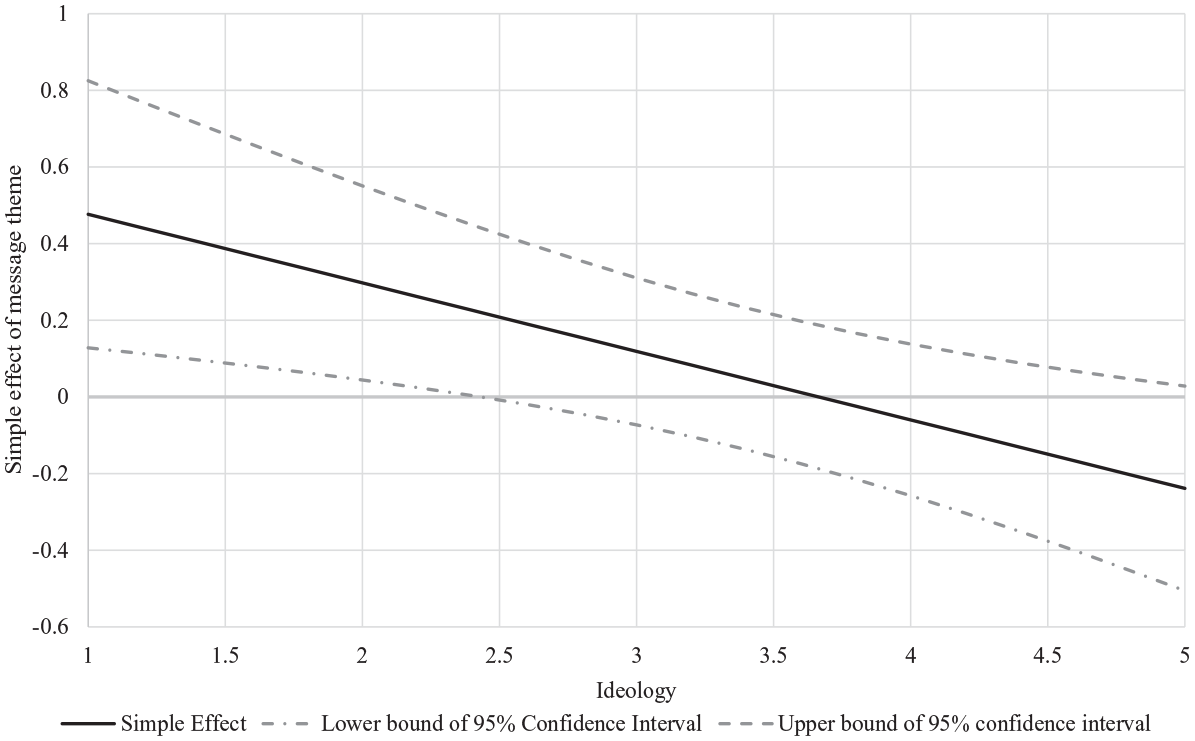
Significance region of message frame’s impacts on risk estimates when public health guidelines are followed conditioned by ideology.
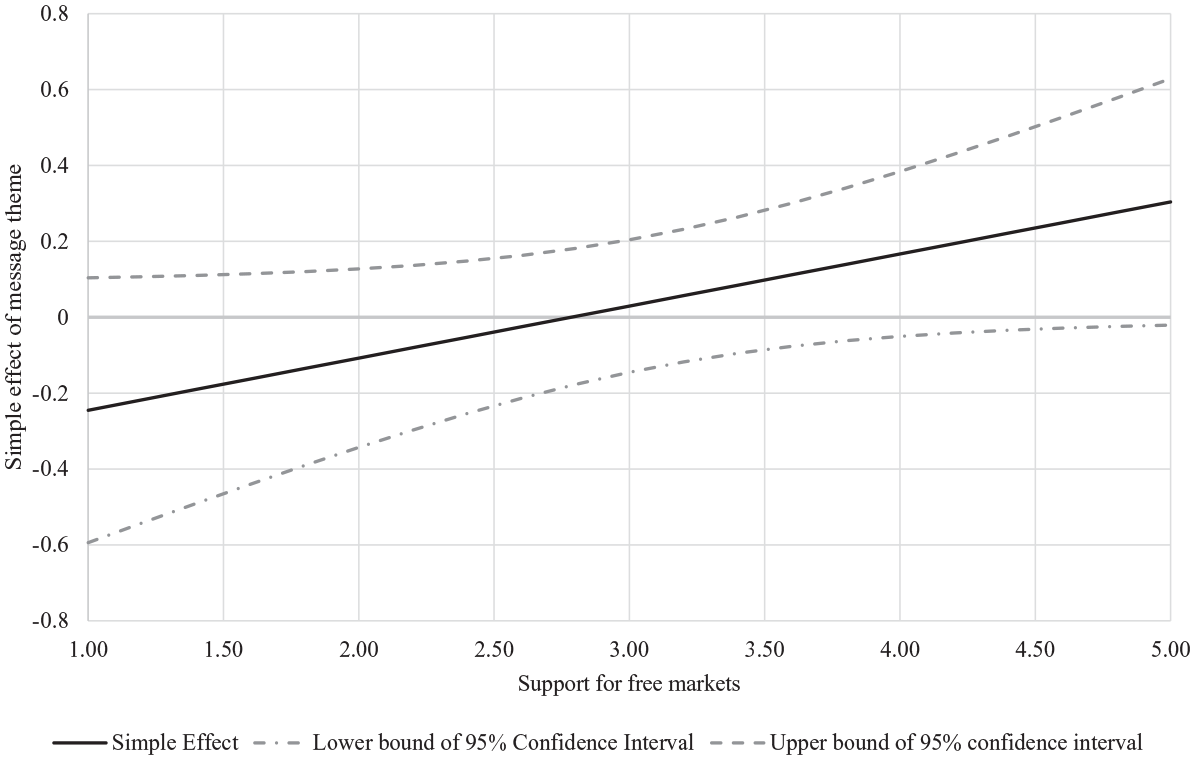
Significance region of message theme’s impacts on risk estimates when public health guidelines are followed conditioned by support for free markets.
Similar regression models were utilized to analyze ideology’s impacts on policy support (Hypothesis 3a/3b; results shown in Table 4 and 5). In general, liberals were more supportive of COVID-19 treatment and vaccine research than conservatives. In contrast, those who favored free-market policies indicated more support for emergency authorization of COVID-19 vaccines and treatments, but not for funding more research. Ideology and support for free markets interacted with message condition to influence participants’ support for EUA of COVID-19 vaccine. A closer look at this interaction reveals that liberals and those who favored free-market policies less were less likely to support this policy after watching the market-driven solution video (see Figure 3 and Figure 4 for the significance region), as compared with the government regulation solution video, providing partial support for Hypothesis 3.
Regression Models Predicting Policy Support With Ideology and Message Frame as Key Predictors.
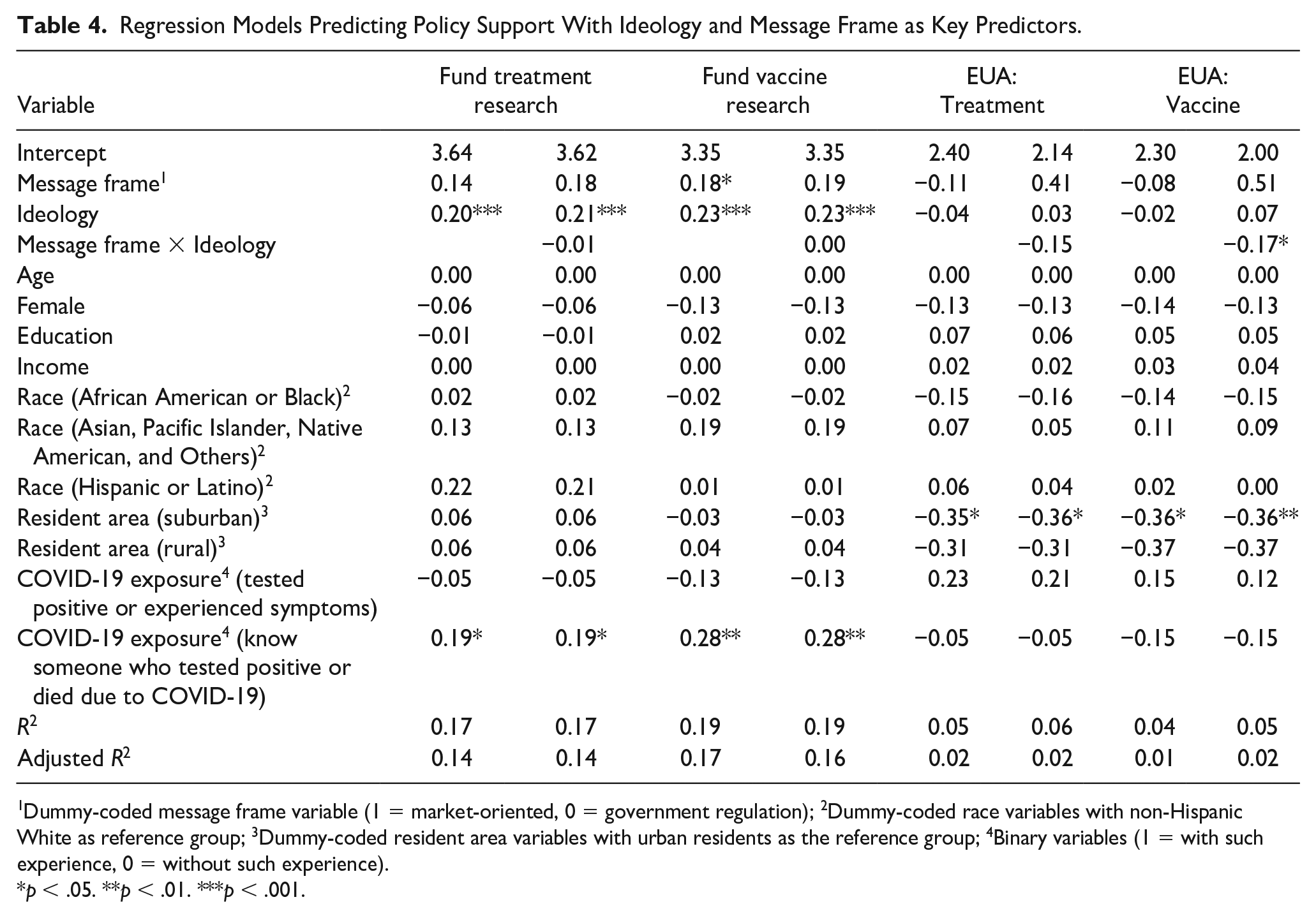
1Dummy-coded message frame variable (1 = market-oriented, 0 = government regulation); 2Dummy-coded race variables with non-Hispanic White as reference group; 3Dummy-coded resident area variables with urban residents as the reference group; 4Binary variables (1 = with such experience, 0 = without such experience).
p < .05. **p < .01. ***p < .001.
Regression Models Predicting Policy Support With Support for Free Markets and Message Frame as Key Predictors.
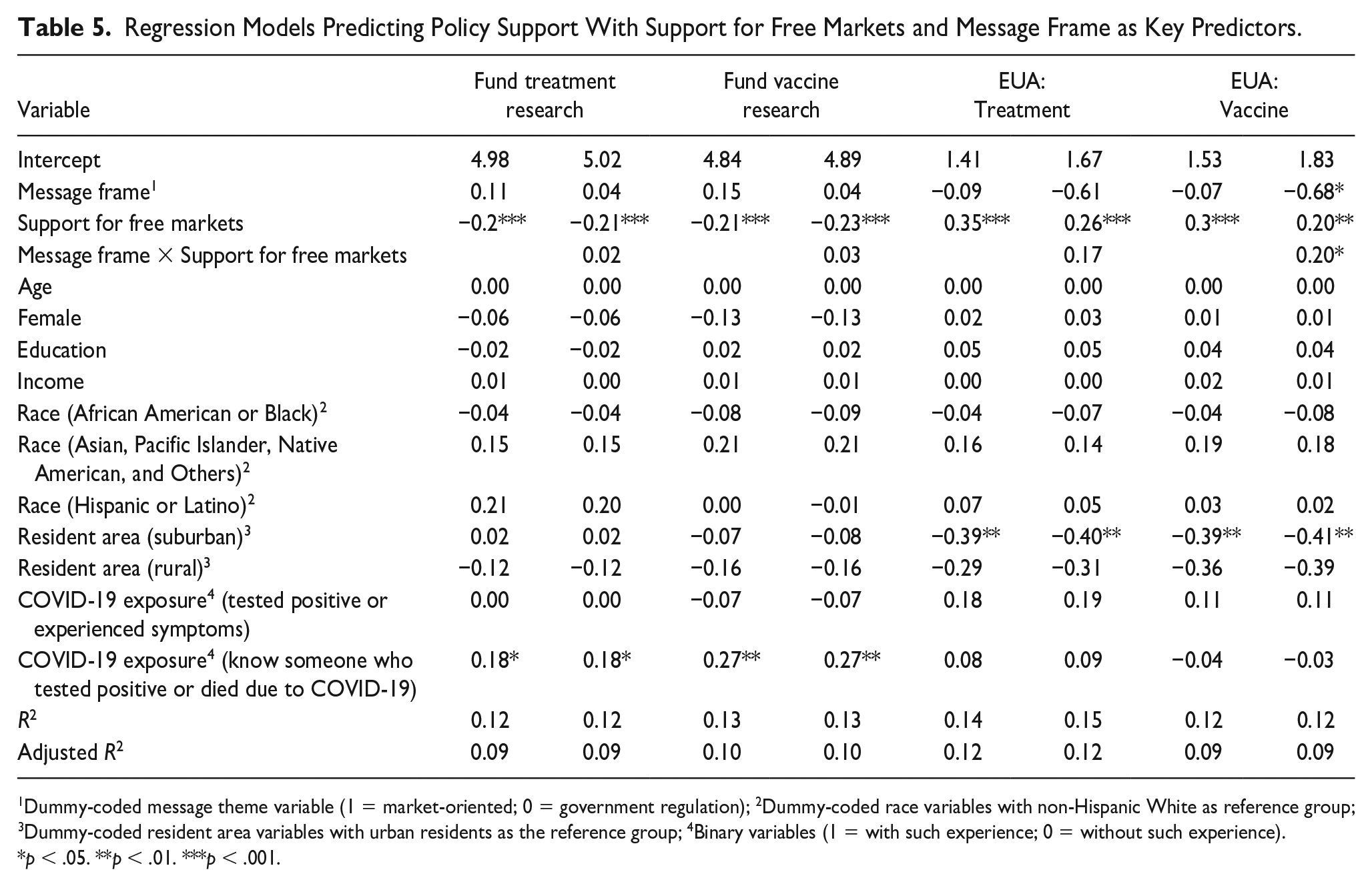
1Dummy-coded message theme variable (1 = market-oriented; 0 = government regulation); 2Dummy-coded race variables with non-Hispanic White as reference group; 3Dummy-coded resident area variables with urban residents as the reference group; 4Binary variables (1 = with such experience; 0 = without such experience).
p < .05. **p < .01. ***p < .001.
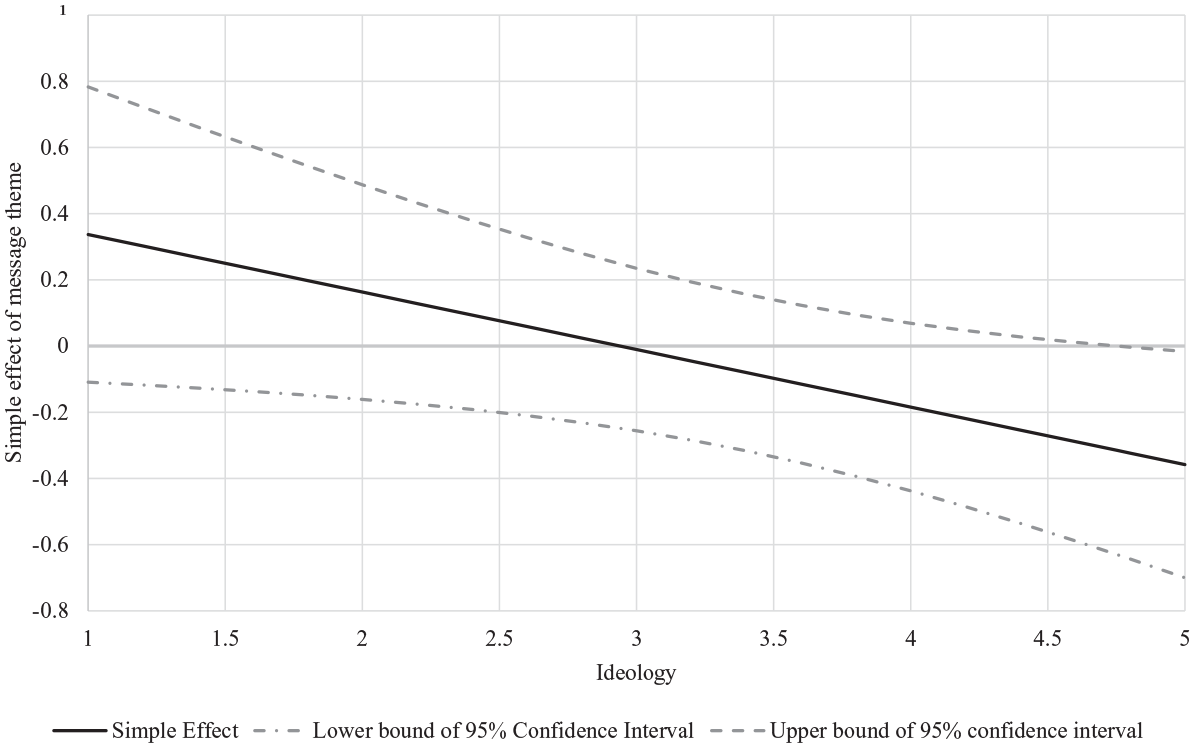
Significance region of the impact of message theme on support for Emergency Use Authorization for COVID-19 vaccines conditioned by ideology.

Significance region of the impact of message theme on support for Emergency Use Authorization for COVID-19 vaccines conditioned by support for free markets.
We also tested the possible three-way interaction among message frame, ideology, and support for free markets in predicting the outcome variables (i.e., risk estimates and policy support). However, no significant three-way interaction was identified (see Supplemental Appendix Table A3).
Discussion
In line with findings from other national surveys (Calvillo et al., 2020), we also identified ideological polarization in public perception of the COVID-19 pandemic. Liberals, as compared with conservatives, were more likely to recognize the risk of the COVID-19 pandemic. However, different from other research that largely focused on elite cues to explain this polarization (Calvillo et al., 2020; Freira et al., 2020; Green et al., 2020), we identified an important dispositional drive behind conservatives’ and liberals’ perceptions of the pandemic (Campbell & Kay, 2014). Specifically, due to their disdain for government regulation solutions, conservatives were more likely to underestimate the severity of COVID-19 when the role of government regulation in controlling the spread of COVID-19 was emphasized. Similarly, this finding also emerged among people who favored free markets, a key element of the conservative ideology (Jost, Blount, et al., 2003), where regulation-focused message backfired among those with strong support for free markets.
In addition to successfully replicating the solution aversion model in the COVID-19 context, we also identified differences in conservatives’ and liberals’ policy support. Specifically, liberals and those who favored free-market policies less were less likely to support EUA of COVID-19 vaccines when they watched the market-driven solution video. One possible explanation is that EUA may be construed as a more market-driven solution because it essentially relaxes government control in the development and approval of vaccines. Another explanation is that the politicized debates on the approval process of COVID-19 vaccines may have rendered liberals less trusting in EUA. This disapproval, therefore, is further amplified when the market-driven solution is highlighted.
This study has limitations. First and foremost, the nonprobability sample we recruited limits the generalizability of our findings. Although we purposely balanced political ideology in our sample, future replication of the solution aversion model should employ a nationally representative sample. Second, as we fielded our study a few weeks before the 2020 Presidential Election in the United States, findings reported here may reflect the overly politicized public discourse on the pandemic and possible solutions (Baccini et al., 2021).
In conclusion, this study confirms that solution aversion indeed contributes to the polarization in public opinion surrounding the COVID-19 pandemic in the United States (Green et al., 2020). That is, liberals and conservatives may perceive different risks from the COVID-19 pandemic at least partially due to their varied preference for policy solutions. Considering that the pandemic is likely to have prolonged impact (Fauci et al., 2020), we recommend public health authorities and other government agencies to use caution when communicating to the public about specific response measures. To this end, highlighting public health measures as ways to ensure that we could resume normalcy and revive national economy may be particularly appealing to a conservative audience.
Supplemental Material
sj-docx-1-scx-10.1177_10755470211022020 – Supplemental material for Not My Pandemic: Solution Aversion and the Polarized Public Perception of COVID-19
Supplemental material, sj-docx-1-scx-10.1177_10755470211022020 for Not My Pandemic: Solution Aversion and the Polarized Public Perception of COVID-19 by Haoran Chu, Janet Z. Yang and Sixiao Liu in Science Communication
Footnotes
Declaration of Conflicting Interests
The author(s) declared no potential conflicts of interest with respect to the research, authorship, and/or publication of this article.
Funding
The author(s) received no financial support for the research, authorship, and/or publication of this article.

Notes
Author Biographies
References
Supplementary Material
Please find the following supplemental material available below.
For Open Access articles published under a Creative Commons License, all supplemental material carries the same license as the article it is associated with.
For non-Open Access articles published, all supplemental material carries a non-exclusive license, and permission requests for re-use of supplemental material or any part of supplemental material shall be sent directly to the copyright owner as specified in the copyright notice associated with the article.
