







Abstract
This study uses climate change visuals to test to what extent individuals’ threat and efficacy perceptions of climate change interact with their abstract and concrete mind styles to influence their responses to the issue. Findings from online experiments reveal that abstract images intensified the negative effect of threat perceptions on psychological distance as well as the positive effect of vulnerability perception on behavioral intention. Pairing abstract images with emphasis on behaviors’ desirability also promoted intention to act. When viewing abstract images, higher levels of response efficacy raised behavioral intention among people who valued behaviors’ desirability (vs. feasibility).
Introduction
There is an overwhelming scientific consensus that climate change is real, human-driven, and it is already causing significant negative consequences throughout the world. Until now however, the global response to climate change has been lacking. Large-scale states’ changes in energy structures and development plans contribute to addressing climate change. In the meantime, there is a growing recognition of the role individuals’ behaviors can play in coping with climate change (K. Kim, 2024).
Encouraging climate-friendly behaviors at the individual level is extremely difficult first due to the problem being abstract, psychologically distant, involving uncertainty, happening far away to other social groups and future generations (M. Chen et al., 2024; Jones et al., 2017). Second, changes in behavior call for not only threat perception but also coping efficacy, come at a price as they often require more inconvenient efforts (e.g., recycling), cost more (e.g., buying sustainable products), and so on. However, each of the two barriers has its own limitations in explaining the lack of climate actions. On one hand, recent research on construal level theory (CLT) has suggested that perceiving the issue as psychologically distant does not necessarily hinder climate change engagement (K. Kim, 2024; van Valkengoed et al., 2023). On the other hand, drawing on protection motivation theory (PMT), researchers have no consensus on whether threat perception or coping efficacy is more effective in directing behavioral change on climate change. Fear appeal often had the tendency to evoke helplessness, anxiety (O’Neill & Nicholson-Cole, 2009), and thus lower levels of engagement. Efficacy, hope, and other positive frames also did not always produce positive effects (Ettinger et al., 2021).
Explaining these inconclusive findings, researchers argue that mental construal of message-level features (abstract/distant vs. concrete/proximal) interact with individual-level appraisals (i.e., self-efficacy) to influence climate change responses (F. Chen et al., 2020; Kothe et al., 2023; S. J. Lee, 2019). Moreover, individual differences should be considered in the application of psychological distance (K. Kim, 2024; van Valkengoed et al., 2023), and psychological processes may moderate the individual cognition-behavior gap (Kothe et al., 2023; Vieira et al., 2023). Building on these studies, the current research explores in which threat or efficacy perceptual contexts construal level elicited by climate visualizations is more effective in encouraging climate-friendly behaviors, extending prior construal-level and PMT perspectives of effective climate change communication (M. F. Chen, 2020; van Valkengoed et al., 2023; Vieira et al., 2023). The integrated theoretical framework (PMT, CLT) in visual communication of climate change also offers practical guidelines for communicators, advocates, and media workers regarding the effective use of visuals for promoting public engagement on climate change.
Literature Review
Applying Protection Motivation to Climate Change Engagement
Protection motivation theory (PMT; Rogers, 1975) explains that individuals’ protective behaviors against a risk are motivated by threat and coping appraisals. Threat appraisal consists of perceived severity (i.e., the degree to which people perceive the seriousness of a threat) and perceived vulnerability (i.e., the degree to which people perceive the risk causing harm personally). Coping appraisal includes self-efficacy (i.e., perceived ability in carrying out behaviors to mitigate the risk), response efficacy (i.e., perceived effectiveness of the protective behaviors), and response costs (i.e., perceived cost of taking the protective behaviors).
The Limitations of PMT in Climate Change Context
PMT has been applied to contexts of natural disasters and climate change-related environmental behaviors (e.g., flooding, Bubeck et al., 2023; ski tourism, F. Chen et al., 2020). In the literature on climate change, PMT constructs explain both mitigation and adaptation behaviors (Purwanti et al., 2023). However, results are mixed regarding which combinations of threat and coping appraisals motivate more climate-friendly behaviors. In China, perceiving high threat with high collective efficacy increased climate change-related pro-environmental behavioral intention (Chen, 2016). In both Korea and the United States, perceived severity and self-efficacy predicted behavioral intentions, whereas perceived vulnerability and response efficacy did not predict behavior responses (S. Kim et al., 2013). In a systematic review study, Kothe et al. (2019) found that both response efficacy and self-efficacy were positive predictors of a variety of pro-environmental behaviors, and response cost was a negative predictor of such behaviors (e.g., Bockarjova & Steg, 2014; Rainear & Christensen, 2017). First, this literature is inconclusive because PMT plays different roles in different behavioral contexts, and certain constructs are sometimes predictive or unpredictive, depending on the level of cost of the target behavior(s). Considering that there are increasing suggestions for advancing climate change research by focusing on individual-level behavioral efforts (Stoddard et al., 2021), the current study addresses this limitation by studying a reliable composite measure of behavioral intention at the individual level, which consists of 17 specific behaviors and six generic behavioral statements encompassing both mitigation and adaptation dimensions.
Furthermore, PMT, by nature, is a social cognitive model focusing on cognitive drivers of protective behaviors. It does not explain the relative importance of threat versus coping appraisals under different psychological processes (Marikyan & Papagiannidis, 2023). In psychological research, it is found that people tend to perform demanding actions when they use abstract (vs. concrete) thinking style (Carrera et al., 2020). In this abstract mindset, the cognitive aspect of response efficacy (e.g., desirability of the behavior) may be more impactful than response cost (e.g., feasibility). Thus, the current research explores if psychological processes help explain the gap between cognition and behavioral motivation. The section below explains the proposed psychological moderation process in detail.
Does Construal Level Moderate the Cognition-Behavior Gap?
Psychological distance is defined as the extent to which an event is perceived as being removed from one’s direct experience on geographical, temporal, social, and hypothetical (i.e., the certainty of an event actually occurring) dimensions (Liberman & Trope, 2008). According to Construal Level Theory (CLT), distant events are construed at higher levels of construal in a more abstract way. In turn, mental abstraction would make people perceive the target events as psychologically distant (Trope & Liberman, 2010).
Applying CLT to climate change communication, Geiger et al. (2017) claim that abstract mindsets may lead people to the perception that climate change is a global issue not requiring individual-level behavioral change. However, climate change is a long-term issue centering on a superordinate goal, and such goal-driven thinking may also encourage more eco-friendly behaviors by enhancing people’s commitment to environmental values (Reczek et al., 2018). Abstract construal, though increases psychological distance, is found to promote people’s willingness to perform desirable but demanding behaviors and increase their sustainability engagement (Carrera et al., 2020; S. Kim & Tam, 2024). To sum up, construal level only represents a psychological process and not necessarily leading to positive or negative climate change behavioral outcomes (M. F. Chen, 2020; K. Kim, 2024). Instead, it may play a moderating role influencing the cognition-behavior gap, determining the relative effects of threat and efficacy-related appraisals, which this study aims to explore.
A Construal-Level Perspective of Threat Perception
There is initial evidence that construal-level perspective of severity and vulnerability perceptions may apply to climate change context. For example, abstract construal heightens the effect of threat perception, making the negative consequences of a risk more salient (A. Y. Lee & Aaker, 2004). Considering health behaviors in abstract (vs. concrete) style increases threat (Achar et al., 2020), and abstract (vs. concrete) construal mitigates the gap between environmental concern and behavioral commitments (J. O’Connor & Keil, 2017). On climate change, threat perception also motivates mitigative intention when being processed abstractly with greater psychological distance (Chu & Yang, 2020). It is found that effects of both severity and vulnerability dimensions of threat perception on green purchase intention intensify when people’s construal is abstract (Ibrahim & Al-Ajlouni, 2018).
Coping Efficacy: Self-Efficacy, Response Efficacy, and Response Cost
In addition to threat perception, construal level likely also moderates coping efficacy. High levels of construal may reduce the consideration of feasibility and enhance commitment to desirable actions (Carrera et al., 2020; Liberman & Trope, 1998; Torelli & Kaikati, 2009). Reczek et al. (2018) theorize that abstract construal, by definition, is more oriented toward future goals, and eco-friendly behaviors also require future-oriented thinking.
According to PMT, response efficacy refers to the perceived effectiveness of the recommended protective behaviors and targets the desirability aspect of the behaviors, whereas self-efficacy and response cost focus on feasibility concerns. This characterization specifically suggests that various efficacy perceptions may interact with construal level in predicting behavioral outcomes (Sagristano et al., 2002). Unlike previous literature examining how construal level increases or decreases each efficacy perception (e.g., Han et al., 2016), this study proposes that mental construal only likely moderates the effects of coping efficacies, making people place different weights on their existing feasibility versus desirability concerns, and this mechanism is explained below.
Perceived Importance of Desirability Over Feasibility
PMT was originally proposed in health promotion and intervention research targeting personal health behaviors. Applying PMT in climate change setting also requires the additional consideration of moral obligation, namely, the perceived moral correctness of performing a behavior, as well as the subjective norm and normative beliefs deriving from Theory of Reasoned Action (TRA) and the Dragons of Inaction Psychological Barriers (DIPB). These moral commitment aspects positively predict climate change mitigation behavioral intention (M. F. Chen, 2020; S. Chen et al., 2022; Lacroix et al., 2019). In CLT, Trope and Liberman (2008) argued that the moral aspect of an object is reinforced by abstract construal, and abstractness, by nature, emphasizes the goal-oriented desirability thinking (Trope & Liberman, 2008). Thus, when applying PMT and CLT in climate change context, such moral commitment dimension is likely reinforced by abstract construal and should be integrated into the model.
Previous research has shown that construal level should match message psychological distance to make positive effects on behaviors (White et al., 2011), such as using abstract lens to frame distant objects. It is possible that people who place more importance on desirability of the behaviors are more likely to take climate actions when using abstract lens, whereas people who place more importance on feasibility take more actions when using concrete lens. This pairing between construal level and perceived importance of desirability versus feasibility may further motivate climate-friendly behaviors when people have matching coping appraisals. Specifically, high response efficacy could motivate climate actions when people value desirability with abstract construal, and low response cost and high self-efficacy could also be motivative when people emphasize feasibility with concrete construal. The current research explores these potential two-way and three-way interactions in the context of climate change visualizations.
Visuals as Tools for Climate Change Engagement
Today, visuals of climate change are widely seen in the media, affecting public perceptions of the issue and willingness to act. Previous research focused on content analyses of visual frames relevant to climate change, emotions in the visuals (e.g., Nurmis, 2021; O’Neill & Nicholson-Cole, 2009), effects of different modalities and visual platforms (e.g., Fauville et al., 2020; Qian et al., 2024). There is a lack of scholarship on how visuals’ content holistically affects the audience (Hart et al., 2023; Metag, 2020).
Among the limited evidence, it is found that visuals generally raise low-carbon awareness (Liu et al., 2021), affect collective action via efficacy (Gulliver et al., 2020). Specifically, images featuring threats of climate change impact strongly encourage issue salience but not self-efficacy (Metag et al., 2016), and action-oriented images trigger greater possibility for personal change (Feldman & Hart, 2018). Scholars argue that key features of images need systematic examination, and key individual differences that moderate responses to images should also be considered (Wang et al., 2018).
Following these calls, the current study proposes the perspective of construal level to examine the effect of climate change visuals. Previous research has suggested that mental construal of visuals may influence behavioral intentions. For example, images containing concrete features (e.g., depicting climate change impacts) could evoke most motivating reactions (Chapman et al., 2016). When visuals are abstract, decontextualized, devoid of congruent text captions, they carry less potential to engage the audience (Dahl & Fløttum, 2017). The idea of visual abstraction can also be studied from the perspective of episodic versus thematic visual framing—vivid exemplar images that are concrete and episodic are found to have positive indirect effects on collective efficacy and political actions (Hart et al., 2023). However, concrete images depicting the threats of climate change impacts may also trigger negative emotions, which further distance people from behavioral engagement (Sobol & Giroux, 2017). The direct effects of abstraction are inconsistent and sometimes limited (Hart et al., 2023; Mosallaei & Feldman, 2024).
The Current Research
Overall, most existing PMT studies reviewed above (a) did not systematically examine climate-change related behavioral intentions but instead focused on a particular sustainability behavioral outcome (e.g., sustainability consumption). In addition, (b) different construal styles and their psychological effects via visuals were not considered. The current research proposes that people’s PMT-related cognitive process is moderated by their construal-level mindset. Considering that higher perceived threat in PMT generally associates with enhanced risk perception, behavioral intention, and abstract mindsets enhance such association (Chu & Yang, 2020; J. O’Connor & Keil, 2017), this study first proposes:
Hypothesis 1 (H1): Threat perception negatively affects psychological distance of climate change. Compared with concrete images, abstract images will strengthen this negative effect of threat perception (H1a, perceived severity; H1b, perceived vulnerability) on psychological distance of climate change.
Hypothesis 2 (H2): Threat perception positively affects climate change behavioral intention. Compared with concrete images, abstract images will strengthen this negative effect of threat perception (H2a, perceived severity; H2b, perceived vulnerability) on climate change behavioral intention.
As reviewed in the literature on PMT, both response efficacy and self-efficacy are positive predictors and response cost is a negative predictor (Kothe et al., 2019) of pro-environmental behavioral intention. According to CLT, abstract construal emphasizes the consideration of desirability (vs. feasibility) concern, making response efficacy more important. Formally stated, this study proposes the following hypotheses:
Hypothesis 3 (H3): The positive effect of response efficacy on behavioral intention will be stronger when images are more abstract than when they are more concrete.
Hypothesis 4 (H4): The negative effect of response cost (H4a) and positive effect of self-efficacy (H4b) on behavioral intention will be stronger when images are more concrete than when they are more abstract.
Finally, following the recent scholarship that incorporates moral or social desirability aspect in environmental behavioral research (M. F. Chen, 2020; S. Chen et al., 2022; Lacroix et al., 2019) and construal level matching effect (White et al., 2011), this study hypothesizes that pairing desirability emphasis and abstract construal will encourage climate-friendly behaviors, and pairing feasibility emphasis and concrete construal will also promote pro-climate actions. The positive effect of the abstract desirability construal may further increase when people have higher response efficacy, and the positive effect of the concrete feasibility construal may also increase when people perceive lower response cost and higher self-efficacy. Specifically:
Hypothesis 5 (H5): In the abstract image condition, people who value desirability will have greater behavioral intention, but in the concrete image condition, people who value feasibility will have greater behavioral intention.
Hypothesis 6 (H6): Individuals higher in response efficacy (H6a) who read abstract visuals, and who place more value in desirability will have stronger intention to act on climate change. Individuals who perceive lower response cost (H6b) and higher self-efficacy (H6c) and who read concrete visuals, and who place more value in feasibility will have stronger behavioral intention.
Method
Materials and Procedure
Experimental Stimuli
This study selected 20 climate change images 1 as experimental stimuli, including 10 with abstract features and 10 with concrete features. These features were identified via past psychological research. Following these definitions on abstraction, attributes such as the presence of color and photographic format were coded as concrete features, and the absence of such features were considered as abstract (Burgoon et al., 2013; H. Lee et al., 2014). In the abstract condition, images portray the “why” behind climate change, the constant and relatively invariant process of the issue such as gradual temperature change, whereas in the concrete condition, images emphasize the “how” and the incidental aspects of climate change by showing floods, wildfires, and so on. (Trope & Liberman, 2010; Wakslak & Trope, 2009). Images in the concrete condition have human victims, have detailed information that shows psychological proximity on temporal, geographical, social, and hypothetical dimensions, such as name of the person in the image, a location in the United States (Jiang et al., 2024; Trope & Liberman, 2010). In contrast, images in the abstract condition lack specificity on these dimensions.
All visuals were modified to similar size. Following the study by DiFrancesco and Young (2011), this study treated visuals and their captions as an inseparable whole, as visuals and their accompanying texts together shape climate narratives. And following the past study by Jones et al. (2017), this study tested construal-level totality based only on all validated definitions of construal level encompassing visual aesthetics, content, format, which means other related downstream impacts of construal level on issue familiarity, emotional intensity and other perceptions were not further measured.
Pretest Procedure
In July 2024, pretest was first conducted as a manipulation check to verify if the selected abstract and concrete climate change images could successfully activate people’s abstract and concrete mindsets, respectively. Participants were randomly assigned to view either the abstract or the concrete images. In both conditions, participants first viewed the 10 images accompanied by their captions. Then, they were given the original Behavior Identification Form (BIF; Vallacher & Wegner, 1987, 1989) which is one of the most validated and widely used procedures to measure construal level (Burgoon et al., 2013).
Main Experiment Procedure
The main experiment was conducted in September 2024 and involved another set of participants, and the design of it is similar to that of the pretest. First, participants were randomly assigned to one of the two conditions (abstract, concrete), viewing the 10 abstract or the 10 concrete images. Then participants in both conditions answered a questionnaire measuring their perceived psychological distance of climate change, climate change-related severity perception, vulnerability perception, response efficacy, self-efficacy, response cost, behavioral intention, and perceived importance of desirability versus feasibility of taking actions. Participants reported their sociodemographic characteristics in the end.
Participants
In the Pretest, participants (N = 155) were U.S. adults recruited via Amazon Mechanical Turk (MTurk). MTurk is a crowdsourcing platform for recruiting online research participants, and it is an efficient and reliable platform for experimental data collection (Paolacci et al., 2010). To ensure the manipulation is accurate and the data are reliable, this pretest concealed the research purpose, included only MTurk workers with excellent survey completion records, and used speed check and attention-check questions to avoid inattentive responses.
Participants for main experiment came from Qualtrics’ online panel. Quotas for age category, gender, race, region, and political orientation were used to recruit a sample that mirrors U.S. census data. Respondents reported their gender as male (44%) or female (56%). Participants ranged from ages 19 to 88 and the elderly were relatively overrepresented (M = 50.90, SD = 18.31). Among them, 339 (81.5%) were White, 46 (11.1%) were Black or African American, 5 (1.2%) were Asian, 4 (1.0%) were American Indian or Alaska Native, and 22 (5.3%) were other races. Of the total, 14.4% were from the Northeast (n = 60), 24.0% were from Midwest (N = 100), 41.8% were from the South (n = 174), and 19.7% were from the West (n = 82). Median education was “trade/technical/vocational training,” and 33.1% of participants had a bachelor’s degree or higher. The median total annual household income of respondents was between $10,000 and $50,000. The sample consisted of 34.1% Republicans (n = 142), 30.3% Independents (n = 126), and 35.6% Democrats (n = 148).
Measurements
Behavioral Intention
Behavioral intention consists of mitigation intention and adaptation intention, and items were adapted from previous research (Broomell et al., 2015; Brügger et al., 2016; Gifford & Comeau, 2011; R. E. O’Connor et al., 1999). Questions included six generic and 15 specific intentions. They were measured with 5-point Likert-type responses ranging from 1 (very unlikely) to 5 (very likely). Generic mitigation intention was measured with items such as “I plan to take some actions to stop climate change.” Specific mitigation intention was measured by questions such as “I intend to eat less meat” and “I intend to buy local foods when possible.” Specific adaptation intention was measured with questions such as “I intend to install a water re-use system at home.” Then all the 21 behavioral intention questions were aggregated to form a scale, which is internally consistent (M = 3.28, SD = 0.91, Cronbach’s alpha = .92).
Coping Efficacy
Coping efficacy consists of self-efficacy, response efficacy, and response cost dimensions. Self-efficacy was measured by the average of six items on a 5-point Likert-type scale (Maltby et al., 2021). The items included, for example, “How personally difficult do you feel it is, in general, to cope with climate change?” “I have the ability to adapt to any potential consequences of climate change.” Responses ranged from 1 (strongly disagree) to 5 (strongly agree), with higher values indicating greater perceived self-efficacy (Cronbach’s alpha = .76; M = 3.32, SD = 0.74). Response efficacy (Cronbach’s alpha = .96; M = 3.39, SD = 0.96) and response cost (Cronbach’s alpha = .93; M = 2.83, SD = 0.87) were both measured in relation to the 17 specific mitigative and adaptive behaviors that were used for measuring behavioral intention. Items included, for example, “installing a water re-use system,” “donating money to preserve species at risk from climate change,” and “I intend to buy local foods when possible.” Regarding response efficacy, participants were asked to what extent they agree or disagree on each mitigative/adaptive behavior being effective in addressing climate change. In terms of response cost, participants were asked to what extent they agree or disagree on each behavior is convenient to do. The positively worded items on convenience were reverse coded to measure response cost. On these two constructs, response options ranged from 1 (strongly disagree) to 5 (strongly agree). Higher values represent greater perceived response efficacy and response cost.
Perceived Importance of Desirability Over Feasibility
Perceived importance of desirability over feasibility was measured by question “Please allocate 100 points to indicate how much relative weight you place on feasibility vs. desirability for you to take actions to address climate change.” Higher values represent more perceived importance of desirability (Benschop et al., 2021). Response options ranged from 1 to 10 (M = 5.56, SD = 2.63).
Threat Perception
Threat perception consists of severity and vulnerability dimensions, and items were adapted from previous research (Gumasing et al., 2022; Rainear & Christensen, 2017; Schwaller et al., 2020). Perceived severity (M = 4.06, SD = 1.15, Cronbach’s alpha = .94) was measured as the mean of three items (1 = strongly disagree, 5 = strongly agree) that indicated climate change impacts were severe, such as “Climate change is a serious threat to our planet/humanity,” “Climate change has detrimental impacts on many different sectors of society.” Perceived vulnerability (M = 3.40, SD = 1.07, Cronbach’s alpha = .86) was measured as the mean of three items (1 = strongly disagree, 5 = strongly agree), such as “It is likely that my family and/or I will suffer from climate change-related effects.” Higher numbers represent greater perceived severity and vulnerability.
Psychological Distance
This study used 13 seven-point Likert-type items adapted from previous research (Hart & Nisbet, 2012; Jones et al., 2017; Spence et al., 2012) to capture all four dimensions of perceived psychological distance of climate change—geographical, social, temporal, and hypothetical distances. Items included, for example, “I think about faraway places rather than nearby places more often when thinking about the impacts of climate change (geographical distance)” and “People generally similar to me can feel/experience the negative impacts of climate change (social distance).” All four dimensions were then averaged into a single composite score of psychological distance of climate change (Cronbach’s α = .94, M = 3.58, SD = 1.43), with greater values representing greater distances.
Results
Pretest
Results from the pretest showed that participants who read abstract images were more likely to have abstract mindsets (n = 72, M = 16.65, SD = 4.96) in the BIF test than those who viewed concrete images (n = 83, M = 15.31, SD = 4.82; p < .05, Cohen’s d = .27). This significant difference suggests that the selected images successfully manipulated participants’ construal level in that the abstract group’s participants had higher level of construal than those in the concrete condition. Thus, the manipulation was successful.
Main Experiment
Threat Perception
To test the hypotheses, psychological distance and behavioral intention was regressed separately against the treatment condition, the interaction terms, as well as the key demographical variables. In both regression models, all variance inflation factor (VIF) values were below 10, and all tolerance levels were above 0.1, indicating that multicollinearity did not exist among the predictor variables (Tabachnick & Fidell, 2007). The first set of hypotheses stated that the negative effect of threat perception (H1a, perceived severity; H1b, perceived vulnerability) on psychological distance of climate change would be greater with abstract (vs. concrete) construal. Two slope interaction terms were created using centered scores, including “perceived severity × abstraction level” and “perceived vulnerability × abstraction level.” The statistical significance of the two terms were examined in the hierarchical multiple regression models. Results in Table 1 show that the addition of the interaction terms (Model 2) led to a statistically significant increase in R2 of .003, F(2, 405) = 3.10, p < .05. Participants in the abstract (vs. concrete) condition experienced a stronger negative impact of threat perceptions. People with abstract (vs. concrete) construal who perceived high severity (β = .13, p < .05; ηp2 = .12; Figure 1) and high vulnerability (β = −.10, p < .05; ηp2 = −.10; Figure 2) of climate change would perceive climate change as even closer to them. The partial eta-squared (ηp2) values indicate large effects of both perceived severity and vulnerability, according to Cohen (1988) guidelines. This means that each interaction explains a large amount of the variance while controlling for other variables in the model. Thus, H1a and H1b were supported.
Hierarchical Multiple Regression Predicting Psychological Distance to Climate Change (N = 416).
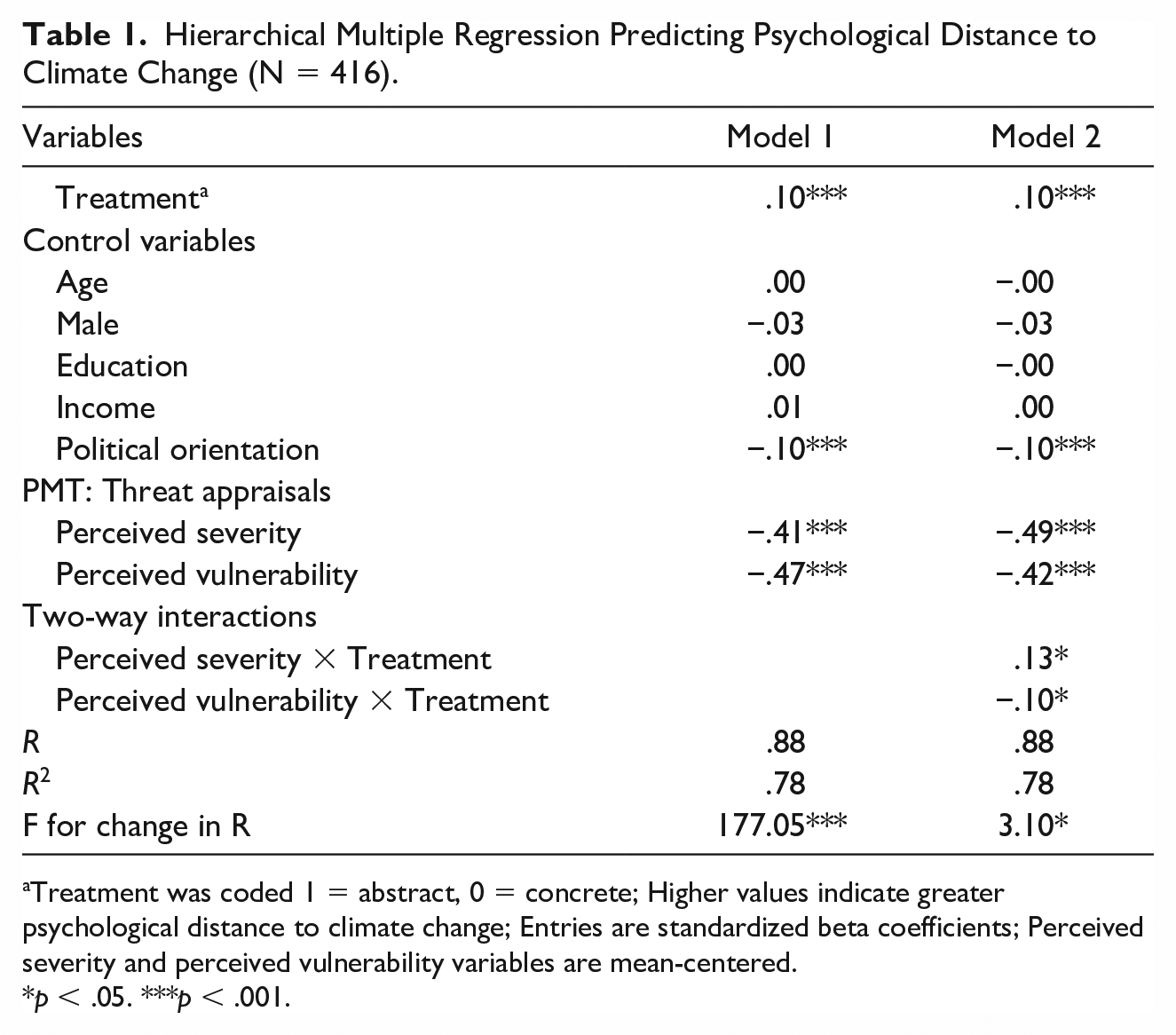
Treatment was coded 1 = abstract, 0 = concrete; Higher values indicate greater psychological distance to climate change; Entries are standardized beta coefficients; Perceived severity and perceived vulnerability variables are mean-centered.
p < .05. ***p < .001.
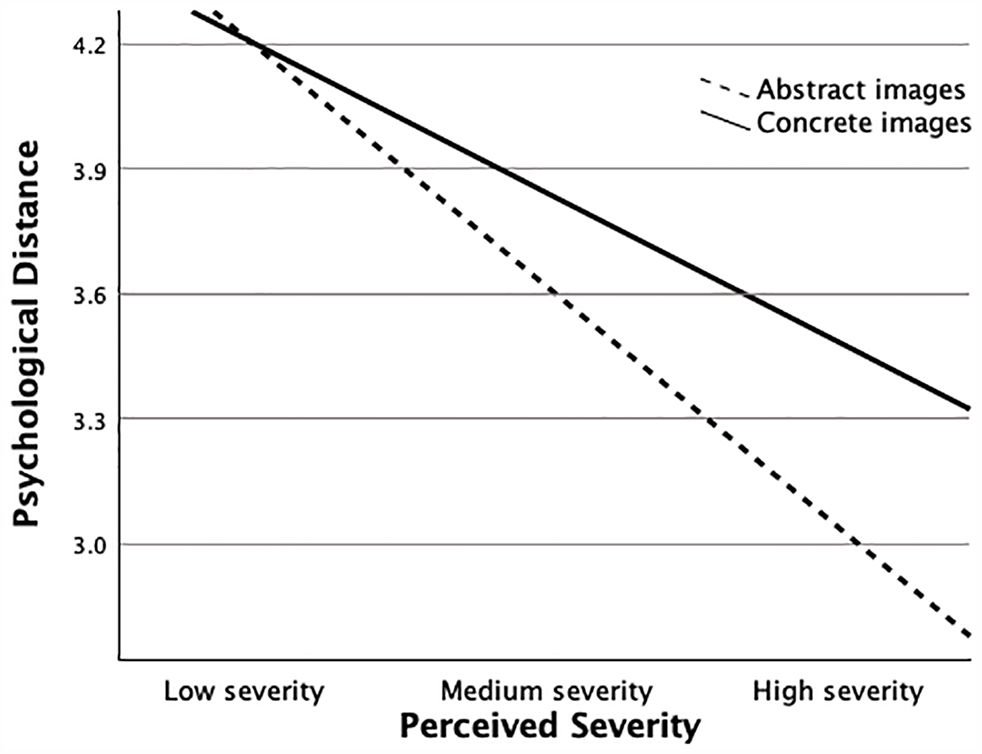
Interaction Between Perceived Severity and Construal Level on Psychological Distance of Climate Change (Significant at p < .05; ηp2 =.12).
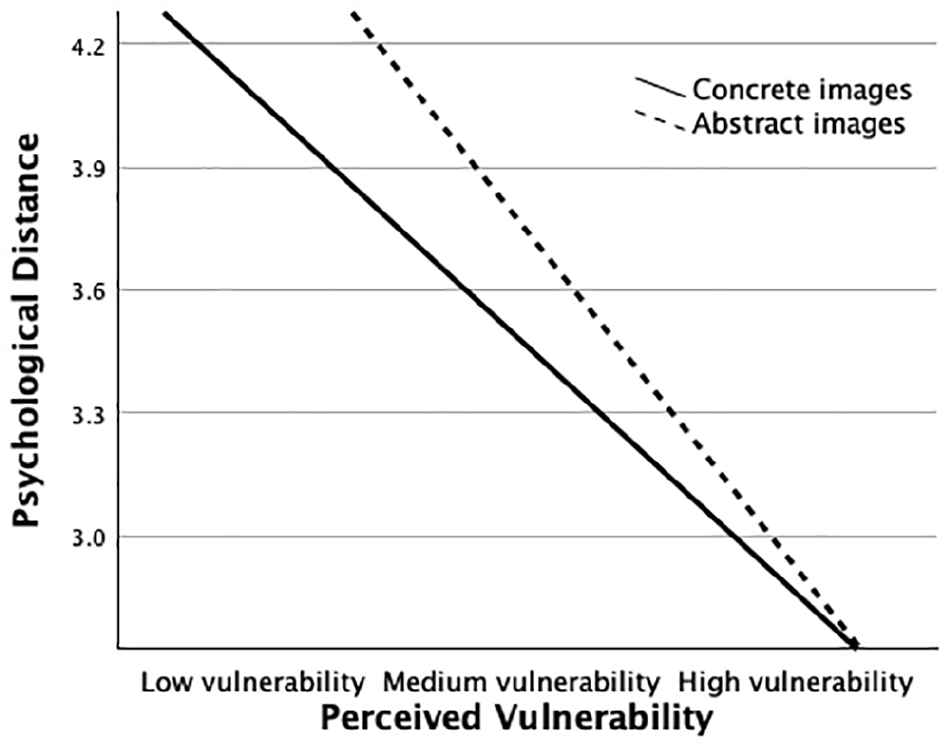
Interaction Between Perceived Vulnerability and Construal Level on Psychological Distance of Climate Change (Significant at p < .05; ηp2 = −.10).
H2 further proposed that construal level induced by climate images would also moderate the positive effect of perceived severity (H2a) and perceived vulnerability (H2b) on behavioral intention. Model 2 in Table 2 shows that the addition of interaction terms led to a statistically significant increase in R2 of .008, F(6, 397) = 2.77, p < .05. Participants in the abstract (vs. concrete) condition experienced a stronger positive impact of perceived vulnerability on climate change behavioral intention (Model 2: β = .13, p < .05, ηp2 = .10; Model 3: β = .12, p < .05; ηp2 = .11, Figure 3). Whereas the effect of perceived severity was not moderated by abstraction treatment. Thus, H2a was not supported. Considering the significant values and large partial correlation scores on perceived vulnerability, H2b was supported. Figure 3 shows that concrete and abstract construal encouraged climate-friendly behaviors among people who perceived low and those who perceived high vulnerability, respectively.
Hierarchical Multiple Regression Explaining Climate Change Behavior Intention (N = 416).
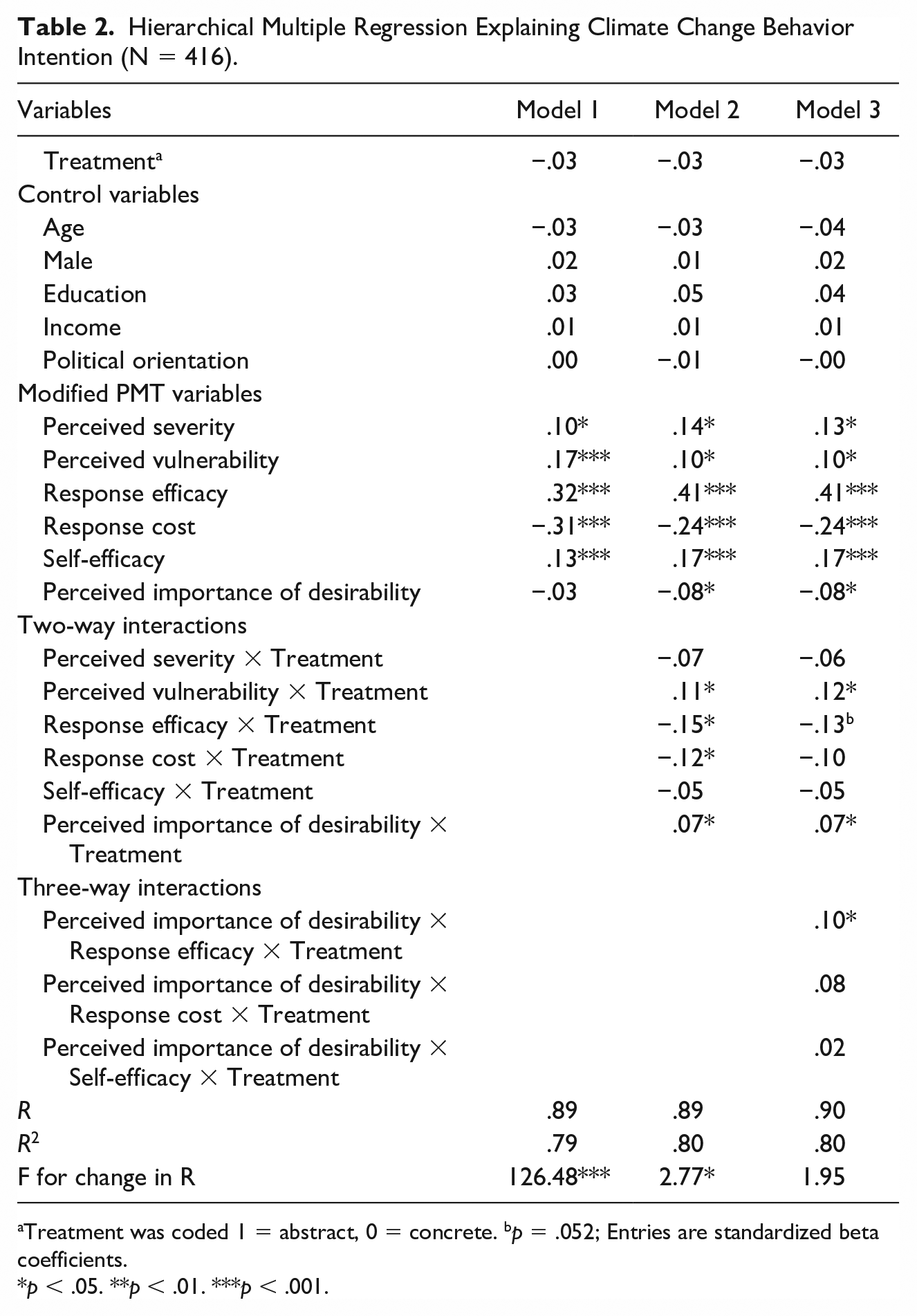
Treatment was coded 1 = abstract, 0 = concrete. bp = .052; Entries are standardized beta coefficients.
p < .05. **p < .01. ***p < .001.
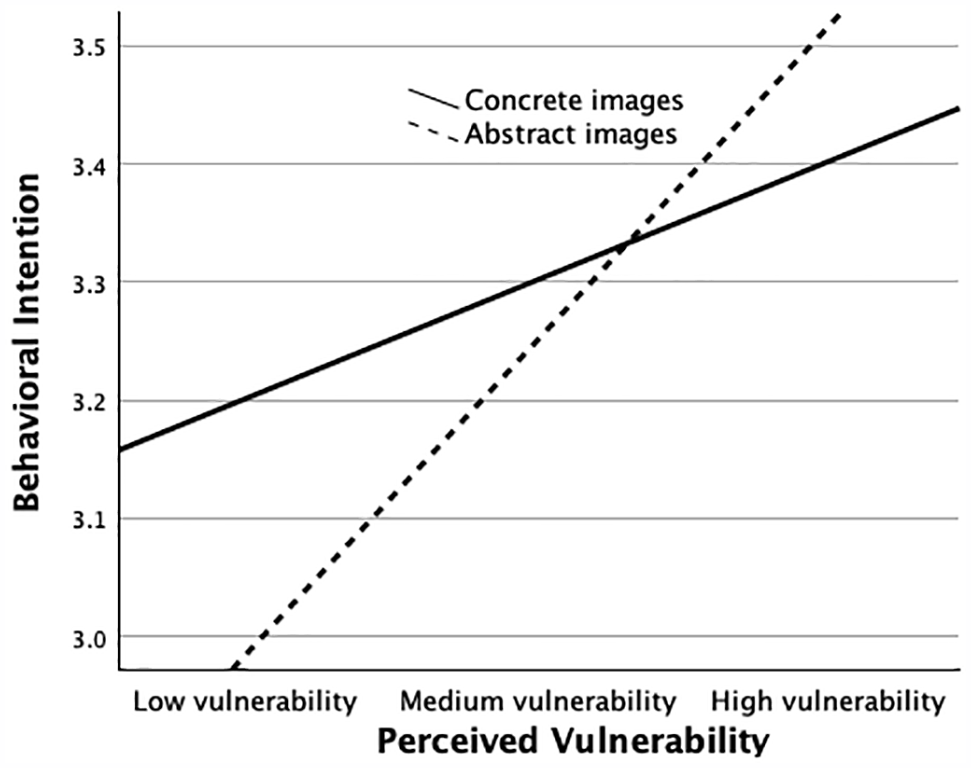
Interaction Between Perceived Vulnerability and Construal Level on Climate Change Behavioral Intention (Significant at p < .05; ηp2 = .11).
Coping Efficacy
As shown in Table 2, construal level treatment significantly moderated the effects of response efficacy (β = −.15, p < .05; Model 2) and response cost (β = −.12, p < .05; Model 2) on one’s climate change behavioral intention. However, both moderation effects became insignificant when other three-way interaction terms were included (Model 3). Thus, H3 and H4a were not supported. Table 2 also shows that the positive effect of self-efficacy on behavioral intention was not different between the concrete and abstract image conditions (p > .05). Thus, H4b was also not supported.
Results in Table 2 and Figure 4 show that when people placed more importance on the desirability of the behaviors, abstract construal was more effective in encouraging behavioral intention. Whereas concrete construal was more effective for people who placed more importance on behavioral feasibility. Such interaction effect was consistently significant, regardless of whether or not other relevant variables were controlled for (β = .07, p < .05, ηp2 = .11, Model 3). Thus, given the significant values in Model 2 and Model 3, and the large partial correlation scores in both models, H5 was supported.
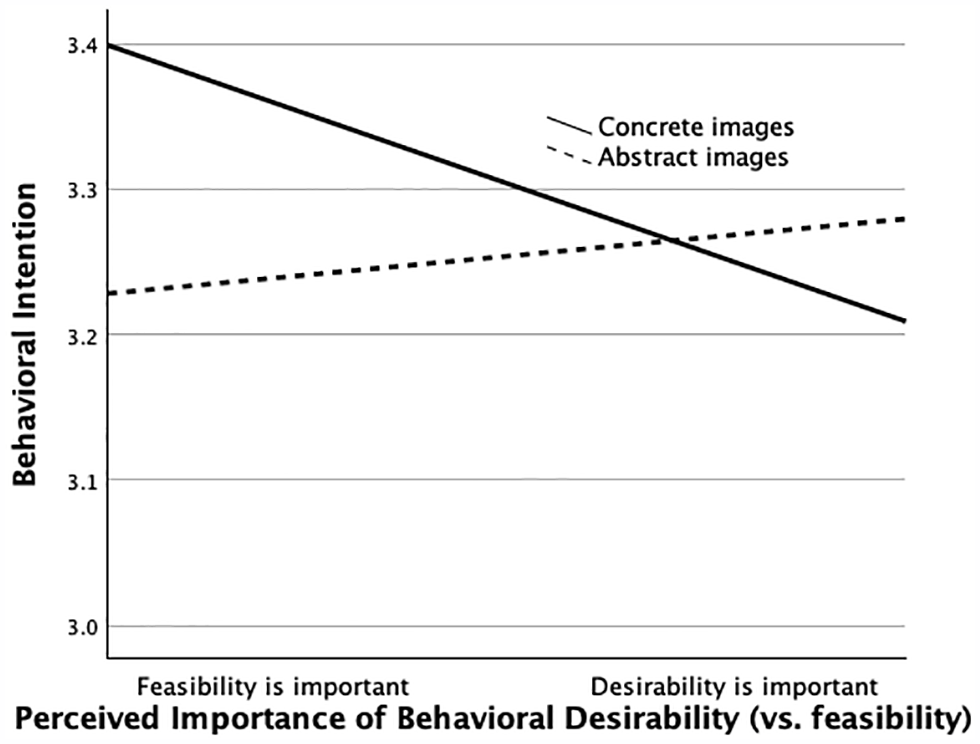
Interaction Between Perceived Importance of Behavioral Desirability and Construal Level on Climate Change Behavioral Intention (Significant at p < .05; ηp2 = .11).
Three-Way Interactions
H6a-c predicted three-way interaction among coping efficacy, perceived importance of desirability of behaviors, and construal level treatment. The inclusion of the three-way interactions did not significantly improve the model fit from Model 2 to Model 3 in Table 2, but the three-way interaction among response efficacy, perceived importance of desirability, and construal level treatment was significant and explained a large amount of the variance while controlling for other variables (β = .10, p < .05, ηp2 = .10). Thus, H6a was supported. H6b (response cost) and H6c (self-efficacy) were not supported. Follow-up simple slope analyses were run in the PROCESS Macro for SPSS to help interpret the interaction. First, the dataset was split into abstract and concrete conditions. Model 1 of PROCESS was employed to predict the relationship between response efficacy and climate change behavioral intention with perceived importance of behavioral desirability as the moderator. Figure 5 shows that at abstract construal level, the interaction between response efficacy and perceived importance of desirability was marginally significant (p = .08). Specifically, higher levels of response efficacy did not affect the behavioral intention among people who valued feasibility (β = .12, SE = 0.08, p > .05, 95% CI [−.02, .27]) but raised behavioral intention among people who valued behaviors’ desirability (β = .22, SE = 0.07, p < .01, 95% CI = [.08, .37]). At concrete construal level, the positive effect of response efficacy on behavioral intention among people who placed importance on feasibility and on desirability did not differ (p > .10).
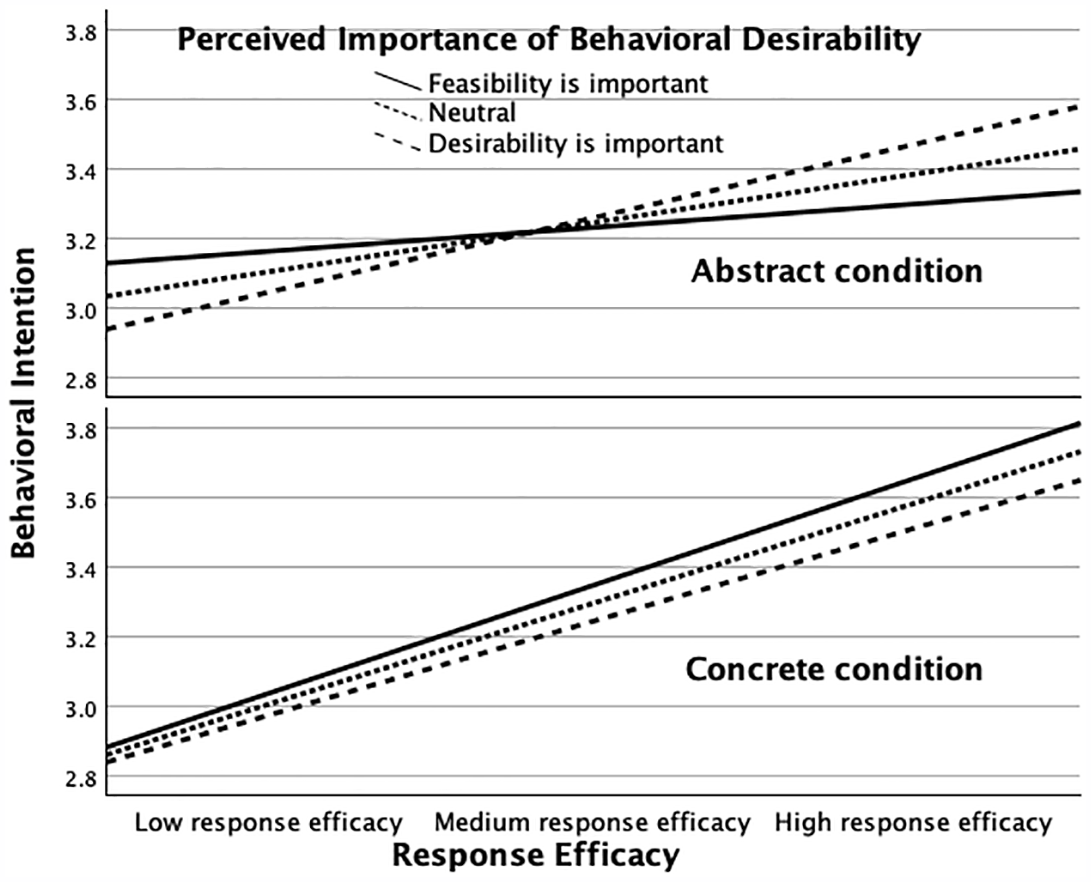
Interactions Between Response Efficacy, Perceived Importance of Behavioral Desirability, and Construal Level (Significant at p < .05; ηp2 = .10).
Discussion
A growing body of scholarship has explored the psychological barriers that explain the divide between cognition and behaviors on environmental issues (e.g., food waste, energy conservation), as well as how construal level may influence the cognition-behavior gap (Ghanian et al., 2020; S. Kim & Tam, 2024; Vieira et al., 2023; Villamor et al., 2023). Extending these studies, the current research integrated construal level, threat perception, and coping efficacy in the context of visual climate change communication (Gkargkavouzi et al., 2019; Tian & Liu, 2022). Findings show that abstract images intensified the effect of threat perceptions on psychological distance, and the effect of perceived vulnerability on climate change behavioral intention. Congruent pairing on mental styles (abstract construal/ desirability; concrete construal/feasibility) generated greater pro-climate behavioral intention. When viewing abstract images, higher response efficacy did not affect the behavioral intention among people who valued feasibility but raised behavioral intention among people who valued behaviors’ desirability. Overall, this study demonstrates how communication of climate change can use abstract and concrete visual strategies more effectively with the consideration of individual’s cognitive factors, and a congruence effect of construal level and desirability/feasibility in the visual domain. Results also offer visual strategies regarding how to consider individual differences such as variation in cognitions, desirability, and feasibility concerns. The implications are discussed in detail below.
Findings show that abstract visuals strengthened the negative effects of both perceived severity and perceived vulnerability on psychological distance. This is consistent with the past finding that there is a negative association between threat perception (e.g., perceived severity, perceived vulnerability) and psychological distance (Aslam & Rana, 2022). In addition, it shows a congruence effect of construal level and threat perception—When people perceived high risk, abstract visuals strengthened this impact and made them feel psychologically proximal to the risk. When people saw themselves at less risk and perceived climate risk as less serious, concrete visuals were more effective in reducing their psychological distance. Going beyond threat perception, future research should continue to explore other individual characteristics (e.g., cognitive effort on the issue, knowledge; van Valkengoed et al., 2023) that may play a role in enhancing risk salience, further suggest the strategic use of abstract and concrete visual strategies in high- and low-risk climate message contexts, respectively.
Furthermore, this study finds that images’ abstraction moderated the effect of perceived vulnerability rather than perceived severity on behavioral intention, which suggests that although both dimensions of threat perception were positive predictors of behavioral intention, they worked differently in interacting with construal level. It is likely that based on PMT, perceived severity is a more stable dimension of threat perception focusing on the overall magnitude and significance of the threat, but the vulnerability dimension is more oriented toward personal susceptibility (Rogers, 1975) and is more affected by individuals’ psychological processing (i.e., construal level mindset). Recent studies in environmental psychology have suggested similar finding that perceived vulnerability is an important facet of climate anxiety (Wullenkord et al., 2024), and climate change-related micro (vs. macro) worry resembled egoistic concern becoming a more significant predictor of mental well-being (Wullenkord & Ojala, 2023). Considering increasing research differentiating micro and macro levels of worry on climate change, future experimental research could continue to explore how the effects of visual and textual threat appraisals along severity and vulnerability dimensions of climate change threat perception can be modified by construal level (e.g., worry specificity, framing), which will further clarify the strength of connection or gap among cognition, concern, and behaviors.
This study shows when controlling for other relevant sociodemographic variables, two of the three coping efficacy dimensions—response efficacy and response cost—interacted with images’ abstraction to affect behavioral intention, with the efficacy perceptions having stronger impact under the concrete image condition. This generally supports previous findings that efficacy perceptions are more influential when people have concrete construal, perceive issues at closer distance, or more immediate-minded (Chu & Yang, 2020; Shi et al., 2023; Trope & Liberman, 2010).
In extending the previous literature, this research also controlled for another CLT-driven factor—perceived importance of desirability and feasibility. The moderation of construal level on the effects of response efficacy and response cost became nonsignificant after including the three-way interactions involving this perceived importance of desirability. This reveals how strongly construal-level and perceived importance of desirability/feasibility reinforce each other. This finding also confirms the recent argument that incorporating social desirability aspects extends both PMT and psychological research in climate communication context (M. F. Chen, 2020; S. Chen et al., 2022; Lacroix et al., 2019).
Extending previous research, this study explains why both abstraction and concreteness have important implications for encouraging positive climate change behavioral change (K. Kim, 2024), and why abstract construal sometimes enhances commitment to demanding behaviors (Carrera et al., 2020). Specifically, when pairing with high perceived importance of desirability, abstract construal encouraged people to act. When pairing with high perceived importance of feasibility, concrete construal encouraged people to act. This indicates that although people’s engagement is driven by high perceived desirability (e.g., moral commitment, perceived norm, perceived social desirability), it is also necessary to consider a related yet different construct—perceived importance of desirability over feasibility (Benschop et al., 2021). Some people may view climate change as highly desirable but their behavioral efforts on climate change are guided more by feasibility concerns. Thus, future studies should try to make such distinction between the two constructs in the measurement, conceptualization, and refine the application of perceived importance of desirability/feasibility in CLT and climate change communication research.
This study reveals a nuanced three-way interaction among construal level, perceived importance of desirability, and response efficacy, showing that when people viewed abstract images, higher levels of response efficacy did not affect the behavioral intention among people who placed importance on feasibility but raised behavioral intention among people who placed importance on behaviors’ desirability. This demonstrates congruent pairing on mental styles (abstract/desirability; concrete/feasibility) could be further extended to the domain of response efficacy, reinforcing one’s response efficacy aspect of the cognitive process. As discussed in recent experiments, the mechanism for behaviors for the response efficacy appeal was unclear (Kothe et al., 2023). The current research shows that the strategy of raising response efficacy may potentially be used together with congruent pairing on construal levels involving both issue abstraction and emphasis on desirability consideration.
Overall, following the call for theoretical combination of value orientations (Gkargkavouzi et al., 2019), psychological, and behavioral theories (Tian & Liu, 2022), this study integrates PMT constructs and construal matching (i.e., abstract construal/desirability; concrete construal/feasibility) into visual climate change communication. There are opportunities in future visual communication practices that can stem from this research. First, pairing abstract lens and high-risk messaging may be effective in proximizing the risk of climate change. Second, concrete and localized visual strategies may only be motivative for people who personally perceive low vulnerability to climate change, people who value the feasibility aspects of the behaviors. And among those who already feel vulnerable and value the desirability of climate actions, abstract visual framing at the macro level may be emphasized more to reduce the cognition-behavior gap. Finally, although the effectiveness of raising response efficacy (i.e., the perceived effectiveness of climate actions) is unclear (Kothe et al., 2023), promoting response efficacy may potentially be effective in encouraging actions when used together with emphasis on both abstraction and desirability concerns.
This study is not without limitations. First, the effect of self-efficacy was not moderated by construal level. It is likely because the measurement of self-efficacy was a reflective scale on general confidence of one’s ability in making an impact on climate change, but response efficacy and response cost were perceived effectiveness of and costs on the specific behavioral items. People may feel overconfident on climate change in general but do not see their ability in performing many specific recommended behaviors. Future research could explore the discrepancies between the reflective and formative scales of self-efficacy and how such measurement differences make an impact. Second, this study synthesizes PMT constructs in the context of visuals. Although PMT is applicable in understanding climate change-related pro-environmental behaviors (Kothe et al., 2023), it lacks the consideration of emotional aspects. Visuals that encourage abstract and concrete construal levels are rich in emotions, which may influence the PMT-based cognitive process studied in this research. Future scholars should try to integrate the emotional aspects into the framework to gauge actual interplay among cognition, emotion, and construal level. Finally, the manipulation was made based on visuals holistically, considering the absence and presence of all possible abstract/concrete visual dimensions and assuming they had equal weight. Future studies could research the nuanced differences and interactions between these abstraction dimensions (e.g., specificity, color) to expand the replicability and external validity of the current findings on visuals’ effects.
In summary, it is expected that this study will encourage future research on the intersection among cognition and behavioral psychology of climate change in the visual domain. Future research could continue to explore how construal level’s effect is dependent on not only cognitive but also affective factors related to the target behaviors. Future research could also build on this study to examine how construal level may moderate the effect of other cognitive factors (e.g., knowledge, need for cognition) on people’s climate change decision-making process. Building on this research, future scholars should explore the integrative theoretical framework stemming from behavioral psychology and social psychology in the visual domain of climate change to systematically map the effect of visuals’ aesthetic and content features on attitudes and behaviors.
Supplemental Material
sj-docx-1-scx-10.1177_10755470251363154 – Supplemental material for Visualizing Climate Change: The Interplay of Construal Level, Threat Perception, and Coping Efficacy
Supplemental material, sj-docx-1-scx-10.1177_10755470251363154 for Visualizing Climate Change: The Interplay of Construal Level, Threat Perception, and Coping Efficacy by Ran Duan in Science Communication
Footnotes
Declaration of Conflicting Interests
The author(s) declared no potential conflicts of interest with respect to the research, authorship, and/or publication of this article.
Funding
The author(s) disclosed receipt of the following financial support for the research, authorship, and/or publication of this article: The author received financial support for this research from The Hitchcock Project for Visualizing Science and the Reynolds School of Journalism at the University of Nevada Reno.
Ethical Approval and Informed Consent Statements
Ethical approval for this study was obtained from the University of Nevada Reno Institutional Review Board (Approval ID: 2081731-2). Written informed consent was obtained from all anonymized participants.
Data Availability Statement
Data are available from the author upon reasonable request.

Notes
Author Biography
References
Supplementary Material
Please find the following supplemental material available below.
For Open Access articles published under a Creative Commons License, all supplemental material carries the same license as the article it is associated with.
For non-Open Access articles published, all supplemental material carries a non-exclusive license, and permission requests for re-use of supplemental material or any part of supplemental material shall be sent directly to the copyright owner as specified in the copyright notice associated with the article.
