







Abstract
Indigenous communities that rely on the consumption of local fish and shellfish may have elevated exposures to environmental contaminants, such as PFAS (perfluoroalkyl and polyfluoroalkyl substances). Conventional public health communication that focuses on reducing consumption can conflict with cultural identities tied to harvesting local fish. Through a series of focus groups and interviews (n = 25) and a community-wide survey (n = 155) among members of the Mashpee Wampanoag Tribe (Cape Cod, Massachusetts, USA), we document the connection between local fish/shellfish consumption and Tribal cultural identity, how PFAS contamination may threaten this identity, and explore how to more effectively communicate health risks to Tribal communities.
Introduction
Traditional public health risk communication focuses on identifying contamination and exposure risk, then informing communities about how to reduce their exposure (generally by avoiding the contaminated food or water). This approach, which follows an information deficit model, assumes that communities, once informed about a public health risk, will take all possible efforts to reduce their exposure. As numerous scholars have shown, however, public health risk communication is not always this straightforward (Brossard et al., 2009; Nisbet & Scheufele, 2009; Sturgis & Allum, 2004). Cultural, identity, and psychological processes present other forces that contribute to an individual’s decisions about how and whether to change their behavior in the face of a public health risk.
This disconnect between traditional risk communication approaches and the impacts of culture and identity on behavior modification is particularly important to consider in the context of risk communication with Tribal and Indigenous communities. Indigenous populations are often inextricably tied to, and rely heavily on, the natural environment in ways that may increase their exposure to environmental contaminants as compared with non-Indigenous populations (Boyd & Furgal, 2019). Many Tribes have unique relationships with the natural environment as the source of their traditional foods. The acts of gathering, sharing, and eating traditional foods constitute an important link to traditional ecological knowledge and strengthen collective cultural identities (Simpson, 2003; Weaver, 2001). The ability to maintain Tribal cultural identities, in part through practicing traditional food sovereignty, can lead to increases in well-being and livelihood outcomes (Donatuto et al., 2011; Durkalec et al., 2015; Huffman, 2013).
A typical public health policy solution to reduce risk is to close specific areas or to advise individuals to abstain from certain foods entirely (Donatuto et al., 2011). This approach ignores the adverse cultural impacts of enforcing fishing closures on Tribes that are reliant on fishing or that have cultural and traditional ties to certain fishing/shellfishing areas (Donatuto, 2003; Roe, 2003). For many Tribal communities, the cultural importance of traditional food means that any disruption can have detrimental cultural, psychological, and physical effects (Aldoory, 2020). Not being able to hunt or gather food by traditional methods or in traditional places can lead to a sense of loss of culture and loss of ability to pass down knowledge to future generations (Donatuto et al., 2011; Durkalec et al., 2015), thus compromising an individual’s cultural identification with their Tribe (Aldoory, 2020; Huffman, 2013). Conventional risk assessment and communication processes are often incongruent with the cultural identities and unique risk profiles and tolerances of Indigenous communities. The individual histories, languages, cultural practices, and ecological reliance of each Tribe means that there is no one size fits all approach within the paradigm of this theory or for assessing encountered risks (Harper & Harris, 2000).
Identity Threat and Risk Communication
Identities—how we think of ourselves in the social world—can be informed by a number of personal traits and social groups (Tajfel & Turner, 1986). Identities are socially constructed and shift in salience depending on our cultural context (Diamond, 2020). When a part of an individual’s identity, or sense of self, is threatened, this can create an imbalance in well-being, as well as psychological and physical stress. Messages that threaten aspects of one’s identity tend to be less effective at best, and at worst can backfire to exacerbate the initial behavior (Ma & Hmielowski, 2022).
Existing research demonstrates the importance of identity congruence when it comes to public health messaging. Zhu and Kim (2025) describe a situation where food consumption (in this case, meat consumption) is closely connected to an individual’s social identity, and how health messaging that seems to threaten that identity can be rejected. This is exacerbated when the threatened identity is closely linked to other social identities touching on gender, religion, political ideology, or health. When that is the case, the pressure to maintain the identity, despite public health warnings, is amplified.
In the context of this study, we focus on Tribal cultural identities as a social and ethnic identity informed and upheld, in part, by the practice of cultural traditions of a certain Tribal group. Traditional reliance on local food, as well as the cultural traditions associated with the harvesting and consumption of local fish and shellfish, can contribute to an individual’s identity as Indigenous or as a member of their Tribe (Tribal cultural identity; Roe, 2003). The ability to practice cultural traditions surrounding food sovereignty can be a powerful force in maintaining the salience and relevance of one’s Tribal identity. When access to that food or the ability to safely practice those cultural traditions is threatened by environmental contamination, this threat to cultural identity can negatively impact psychological well-being (Poe et al., 2016; Schell et al., 2005) and lead to rejection of risk messaging.
Cultural Theory of Risk
Identities are one component of culture that can inform how individuals respond to risk communication. More broadly, the cultural theory of risk is a framework that focuses on how individuals and their greater communities perceive and handle risks in association with their social and cultural backgrounds (Douglas & Wildavsky, 1982). The core of the theory is that individuals form judgments about risk based on social context and the values of groups of which they are a part, as well as perceptions and experiences with authority and power (Tansey & O’Riordan, 1999)—namely, that risks are socially constructed. As Wildavsky and Dake (1990) describe, cultural theory of risk supposes that individuals determine judgments of risk and risk-related behavior in ways that will uphold their way of life. If avoiding a risk threatens a practice that is culturally important, such as fishing or shellfishing, community members may seek to maintain their cultural identity and therefore be less likely to take action to avoid that risk.
In public health risk communication, cultural theory can also help communicators understand variations in perceptions of expertise, authority, and source credibility. This understanding can guide communicators through presenting health-related messages in ways that will best resonate with a target population. Studies have found that a community’s cultural worldview impacts how they perceive expert information about scientific issues, as well as how messaging frames resonate (Lachapelle et al., 2014). Culture is defined by Aldoory (2020) as “a system of values and norms, ideology, subjective states, ritual and discourse that influences attitudes, perceptions, communication and actions, within a historical context,” (p. 229). Importantly, culture goes beyond simplistic demographics, such as race, ethnicity, language, or gender—it is also shaped by perceptions of power and power imbalances between communicators and target communities. Cultural theory of risk posits that it is the societal structure and values that inform judgments of risk, not the risk itself (McNeeley & Lazrus, 2014). In this way, social trust in authorities can shape how individuals perceive risks and risk communication. Siegrist and Cvetkovich (2000) demonstrate that when individuals do not have personal experience with hazards, they place a great amount of weight on social trust to guide their risk judgments. Kahan et al. (2011) and Lachapelle et al. (2014) also demonstrate that cultural biases can influence perceptions of expertise. Culture can inform and shape perceptions of social trust, as well as experiences with social systems and the actors within them.
Cultural Theory and Indigenous Communities
The cultural theory of risk was developed in the context of Indigenous groups (Douglas, 1966) and has been adopted into practice by many researchers when evaluating unique environmental changes and impacts in relation to Tribal communities (Aldoory, 2020; Harper & Harris, 2000). Prior research based on the cultural theory of risk has focused on how risk assessments can redefine better health and science initiatives for Indigenous communities through localized and culturally relevant assessments of environmental risks (Arquette et al., 2002; J. R. Johnson & Ranco, 2011). This means that specific factors, such as access to traditional diets and participation in cultural ceremonies, are considered in the same regard as conventional Western markers of public health, such as cancer or obesity rates (J. R. Johnson & Ranco, 2011). Adapted risk assessments have been advocated by Indigenous researchers and advocates, such as the Akwesasne Task Force on the Environment, and have aided Tribes who heavily rely on the environment and its resources, such as waterways and fishing, for their cultural practices and maintaining identities (Arquette et al., 2002; Harper & Harris, 2000; J. R. Johnson & Ranco, 2011).
PFAS as an Emerging Contaminant
The emerging chemical family PFAS (perfluoroalkyl and polyfluoroalkyl substances) are a group of over 14,000 compounds used to make products that resist oil, stains, grease, and water (U.S. Environmental Protection Agency [EPA], 2022). Commonly used in hundreds of consumer and industrial products, PFAS are also known as “forever chemicals” due to their long half-lives and persistence in the environment and human body (J. G. Allen, 2018). In recent years, PFAS have received significant attention due to extensive evidence of adverse effects on human health, including increased cholesterol and blood pressure, changes in liver enzymes, decreased infant weight, reduced vaccine responsiveness, and some cancers (Agency for Toxic Substances and Disease Registry [ATSDR], 2021). PFAS are often found in groundwater, surface water, and drinking water near contamination sites and can also bioaccumulate in food webs, resulting in contaminated fish, shellfish, and other food sources (Sunderland et al., 2019).
Consumption of fish and shellfish has been associated with elevated PFAS blood levels in the general U.S. population (Christensen et al., 2017). A 2023 study found that eating one fish contaminated with PFAS was equivalent to drinking PFAS-contaminated water for 1 month (Barbo et al., 2023). In some states, officials have warned against consuming fish or wildlife from around certain military bases where PFAS contamination has been found (Norman & KFF Health News, 2023).
PFAS exposure is a risk to all populations living near contamination sources, but especially to communities that rely heavily on local natural resource consumption, including Tribal communities. Some estimate that coastal Indigenous communities eat up to 15 times more fish than non-Indigenous coastal populations (Cisneros-Montemayor et al., 2016), which could lead to higher exposure to these chemicals than in the broader population. In one instance, higher concentrations of PFAS were found in children from Indigenous communities compared with the general Canadian population (Caron-Beaudoin et al., 2019). These trends have also been documented in other Indigenous communities, for example, the Odawa Nation, Penobscot Nation (Schauffler, 2022), Ojibwe Nation (Goldstein, 2023), among others.
Since fish and shellfish also provide an important source of nutritional benefits, such as selenium and omega-3 fatty acids (Dellinger et al., 2020), when these food sources become more difficult or impossible to access, Tribal members can suffer from food insecurity and poorer nutrition (Sharp et al., 2016). Natural resource contamination can have an outsized impact on Tribal communities that are more reliant than other groups on these food sources, and in some cases, contamination exacerbates other problems resulting from a history of oppression, such as poverty and isolation (Sharp et al., 2016).
PFAS contamination comes with unique impacts on well-being. PFAS cannot be detected by the senses, which is what many Tribal members rely on to determine whether their catch is safe to consume. 1 The inability to assess the impacts of contamination on local ecosystems and species could lead to a significant loss of autonomy and cultural identity; altering social relations and trust within Tribal communities (Aldoory, 2020; Friendship & Furgal, 2012; B. B. Johnson & Swedlow, 2021). A lack of information regarding the presence and sources of PFAS can also result in confusion about which foods are safe to eat, leading to mental distress when traditional food sources are perceived to be at risk (Banwell et al., 2021). This uncertainty may cause Tribal communities to shift to nontraditional food sources, which can be more expensive, perceived as less nutritious, and may result in the sense that part of the culture has been lost (Bordeleau et al., 2016; Kuhnlein & Chan, 2000). Over time, this can erode a community’s internal social relations and overall sense of identity, which may be particularly acute for Indigenous groups (Banwell et al., 2021; Johnson & Swedlow, 2021).
Case Study: The Mashpee Wampanoag Tribe
The Mashpee Wampanoag Tribe (Cape Cod, Massachusetts, USA) is one of six surviving Tribes of the original 69 Tribes that made up the Wampanoag Nation in Massachusetts and eastern Rhode Island and is one of two federally recognized tribes of the Wampanoag people in Massachusetts (Little Doe Baird, n.d.). The Tribe has over 2,600 registered members and holds over 300 acres of reservation land in Massachusetts (Mashpee Wampanoag Tribe, n.d.-b). PFAS contamination of groundwater in the area has been attributed in part to the use of firefighting foam on the Joint Base Cape Cod (JBCC), located just north of the Tribal lands (Massachusetts Department of Environmental Protection, 2022). JBCC was listed on the Superfund National Priorities List in 1989 (Massachusetts Department of Environmental Protection, 2022). PFAS contamination of groundwater on Cape Cod also comes from nearby landfills, airports, and fire training sites (Barnstable County Department of Health, 2023). While the Town of Mashpee has installed PFAS treatment on some of their public drinking water wells, the Massachusetts Department of Public Health has implemented fish consumption advisories for ponds near the Mashpee Wampanoag Government Center based on elevated mercury and perfluorooctane sulfonate (PFOS) levels (Massachusetts Department of Public Health, 2021).
Many members of the Mashpee Wampanoag Tribe are reliant on local fishing and shellfishing, both to meet the subsistence needs of their community and to practice important Tribal cultural traditions and maintain their cultural identity. Like many Tribes in the United States, Mashpee Wampanoag access to traditional food sources is enshrined in treaty rights with the colonizing nation, and the act of obtaining this food is seen as a way to practice and preserve these rights (McMillan & Prosper, 2016; Poe et al., 2016). Aboriginal rights to fish, hunt, and trap in any places they traditionally would have, including easements on private property to access those places, are granted to Tribal members without the need to purchase permits (Mashpee Wampanoag Tribe, n.d.-a). Maintaining culturally important fishing and shellfishing practices while reducing exposures among sensitive communities presents a challenge for those seeking to communicate risk and inform decision-making.
Building on implications of identity theory and cultural theory for risk communication, this research seeks to understand and document the connection between local fish/shellfish consumption and Tribal cultural identity among members of the Mashpee Wampanoag Tribe, explore how PFAS contamination may threaten this cultural identity, and understand environmental health communication preferences among this Tribal community to more effectively communicate health risks without threatening Tribal cultural identities. Our specific research questions are as follows:
Research Question 1: Are Tribal members’ cultural identities linked to the harvesting and consumption of local fish and shellfish?
Research Question 2: Do Tribal members see a connection between PFAS contamination and their ability to harvest/consume local fish and shellfish?
Research Question 3: How can communicators more effectively communicate the risks of PFAS exposure through fish and shellfish, while minimizing threats to Tribal cultural identity?
Method
This research was undertaken through partnership between the University of Rhode Island and the Mashpee Wampanoag Tribe. A Tribal Liaison (a member of the Tribal government) was appointed by the Tribal Council to represent Tribal interests on the research project team. All data are protected through a data-sharing and ownership agreement between the University of Rhode Island and the Mashpee Wampanoag Tribal Council. This agreement was established to protect Tribal ownership of data collected from Tribal members. In addition, the research was approved by the Institutional Review Board of the University of Rhode Island (Protocol #IRB2122-215). 2
We collected data using a mixed-methods approach. Following a pragmatist epistemology (Creswell, 2007), mixed-method research allows researchers to incorporate both qualitative and quantitative data collection in the same study, to allow for both deep inquiry and understanding of an issue with a small sample of the population, and broader generalization to a whole population (Dawadi et al., 2021). In the case of this research, an exploratory sequential design (Creswell & Plano Clark, 2017) allowed us to build theory through in-depth inquiry and deep conversations with a smaller number of Tribal members (with a focus on fishers and shellfishers), and then to generalize findings and interpretations through a community-wide survey of the broader Tribal population. Building on cultural theory and identity theory, we sought to understand the importance of fishing/shellfishing to the cultural identity of Mashpee Wampanoag Tribal members and whether and how PFAS are perceived as a risk to that identity. An additional goal was to understand how cultural identity informed perceptions of source expertise and communication preferences among the Tribal community.
Following the exploratory sequential design, we first held interviews and focus groups with current or former fishers/shellfishers in the Tribe to build an initial theoretical understanding of the connection between local fish/shellfish consumption and Tribal cultural identity, how PFAS contamination may threaten that identity, and explore communication preferences around PFAS and reducing health risks. These goals informed the initial qualitative data collection questionnaires, which covered the following topics: (a) fishing practices and consumption habits, (b) the importance of local fish and shellfish to participant’s Tribal identity, (c) environmental risk judgments and connection to fish/shellfish consumption, (d) general PFAS knowledge, and (e) communications preferences (including trust in information sources).
We collected the qualitative data through three focus groups in March 2021 and 13 interviews from February to May 2023 (n = 25 participants; 14 male and 11 female). While focus groups were initially selected as the data collection method, participant preferences and availability led us to shift to interviews partway through data collection (although the questionnaires remained similar). Focus groups lasted 60–90 minutes and were held virtually due to COVID-19 pandemic restrictions. Interviews lasted 40–90 minutes and were primarily held in-person in Mashpee, Massachusetts, with one interview taking place over the phone. Sessions were audio recorded and then transcribed. The lead author moderated the focus groups and interviews using a semi-structured approach, and participants were compensated with a U.S.$50 e-gift card.
We analyzed the focus-group and interview transcripts using inductive thematic content analysis using NVIVO software (Braun & Clarke, 2006, 2012). Thematic analysis was chosen as we were most interested in common patterns and themes highlighted by multiple participants, as opposed to analyzing the dynamics of the language used. 3 One coder read through each transcript to identify initial themes inductively, the themes were reviewed with the research team and refined, and then the transcripts were re-coded to ensure all content was coded to the identified themes. The full questionnaires for focus groups and interviews are included in Online Appendix A.
Findings from this qualitative data collection and analysis were then used to inform a quantitative survey, disseminated to the broader Tribal community, to understand how widely held the perspectives initially captured through the interviews and focus groups were across the Tribal community population. This follows the method of exploratory sequential design (Creswell & Plano Clark, 2017), which uses larger quantitative methods to generalize findings and interpretations first identified through more exploratory qualitative research.
Building on the findings from the focus groups and interviews, survey questions were developed to quantitatively measure fish/shellfish consumption patterns, Tribal identity, the cultural importance of fishing and shellfishing, broader PFAS awareness and environmental concerns, and communication preferences. Questions for the survey were developed by adapting measures from previous quantitative research on Tribal identities (Amberson et al., 2016), PFAS risk perceptions (Banwell et al., 2021), fishing behaviors and consumption preferences (Gilfriche et al., 2020), and trust in information sources (Prior et al., 2014).
Survey invitations were sent via postcard to all enrolled Tribal households in Massachusetts, as well as over the Tribal email list and the Tribal Facebook page. All Tribal members over the age of 18 were invited to participate in the survey, and survey respondents were given the option to enter into a raffle for one U.S.$200 e-gift card. A total of 155 participants completed the survey (12% of currently registered Tribal members living in Massachusetts), including 56 males, 71 females, and 28 participants who identified as other or did not report a specific gender. The median age range was 55–64, the median level of education was associate’s degree, and the median income was U.S.$60,000 to 80,000/year. The survey questionnaire can be found in Online Appendix B.
Results
Following the practice of mixed-methods research (Dawadi et al., 2021), and particularly the model of exploratory sequential design (Creswell & Plano Clark, 2017), we view both the qualitative and quantitative components of this study as a combined way to more robustly explore the stated research questions. Findings from the interviews and focus groups allowed us to develop initial exploratory themes, which were then ground-truthed with the larger community sample through the surveys. We present the findings for each topical area with quantitative results from the questionnaires first to demonstrate broad community sentiment. We then illustrate the findings with quotes from the qualitative findings (i.e., interviews and focus groups) to provide context and deeper explanation of the sentiments captured quantitatively. The results are integrated in the following section to (a) document the cultural importance of fishing and shellfishing, and how that is integrated into Tribal identity, (b) understand if and how PFAS contamination is perceived as a threat to this identity through the loss cultural traditions, and (c) document communication preferences about contamination among Tribal members.
Importance of Fishing and Shellfishing to Tribal Cultural Identities
Reliance on Fishing and Shellfishing
Traditional harvesting of local fish and shellfish remains an important part of many Mashpee Wampanoag members’ diets and cultural identity. Seventy percent of survey respondents reported relying on fish from sources within the community to meet their subsistence needs. This included catching fish themselves or obtaining it from local fishers within the community. Over one-third of survey respondents (36%) consume local fish and shellfish multiple times a week, and some as frequently as daily (9%). While focus-group participants estimated about 20–30 Tribal members are currently commercial fishermen, most households have at least one member who harvests fish and shellfish for personal consumption and to share with family and neighbors. Fishermen or not, Tribal members rely on accessing these resources: “Living by the water is an ultimate opportunity to be able to keep us financially set, give us work, feed our families . . .” said one participant.
The Mashpee Wampanoag have a strong tradition of sharing fish and shellfish with their family members and community. “At least half of it comes home to eat for my family,” said one fisherman. “Whenever I go out [fishing] I always keep some for later for family and friends. I’ll go to some Elder’s houses . . . and if they need any, usually I’ll drop some over there,” said another. Sharing fish and shellfish is an important part of taking care of the community and allowing all members to maintain ties to native foods. “We take care of our elders and all the way down to ourselves so, I mean, it’s basically our way of life, our survival.”
Many members of the Mashpee Wampanoag Tribe rely on their own community’s gathering of fish and shellfish for subsistence and cultural reasons. “If we don’t have shellfish . . . I mean that’s part of our weekly food . . . I couldn’t see us not having it,” said one participant. Another estimated that about 65% of some members’ diet is made up of locally caught shellfish, although for others, consumption was closer to a few times per month and varied by season. “Thank God these men and women are tough and still go out there and fish because it’s our way of life. If we just put our hands up, we wouldn’t be able to survive. That’s our way of survival,” said another participant.
Fish and shellfish harvesting is also a community-building activity. Local species of seafood are an integral part of community traditions and gatherings. Discussing important species of local fish and shellfish, one participant said, “All of our holidays include those shellfishes that I talked about. Any type of elders’ event, any type of fundraiser, any type of social, anything that we do as a Tribe, we’re going to be including those fishes.”
Many local species of fish and shellfish are tied to important traditional history and cultural practices. For the Mashpee Wampanoag, herring was reported as the most culturally important fish. The herring run each year marks the start of spring and the coming of other species of fish into local waterways and is associated with cultural ceremonies to mark the start of the new year. Quahog (clams) also represent cultural value for the Tribe, with parts of the shell made into wampum (jewelry) that were historically vital for communication, storytelling, gifts, and currency, and that still carry cultural significance:
We value quahogs very much and use it within our jewelry, within our Ceremony . . . that’s how we would carry messages throughout the different villages way back before contact, so it’s, it’s a huge part of our culture.
Importance to Tribal Identity
More than just a form of recreation or sustenance, fishing is innately tied to members’ Tribal cultural identity. To quantitatively measure the importance of local fish and shellfish to Tribal identity, the survey asked four questions based on those used to measure Indigenous identities in prior research (e.g., Prior et al., 2014). Participants were asked to select how much they agreed or disagreed with the following statements:
Locally caught fish and shellfish are important to my Tribal cultural traditions
Consuming locally caught fish and shellfish is better for my health than food purchased from the supermarket
Accessing locally caught fish and shellfish is important for my community’s food security
My Tribal identity depends on the consumption of local fish and shellfish
Participants’ level of agreement with the statements was measured on a 5-point scale ranging from strongly disagree (1) to strongly agree (5). Responses were summed and averaged to create a single continuous variable index (I. E. Allen & Seaman, 2007). The average response to all four questions was 4.31 of 5. Figure 1 shows the percent of respondents who agreed with each statement.
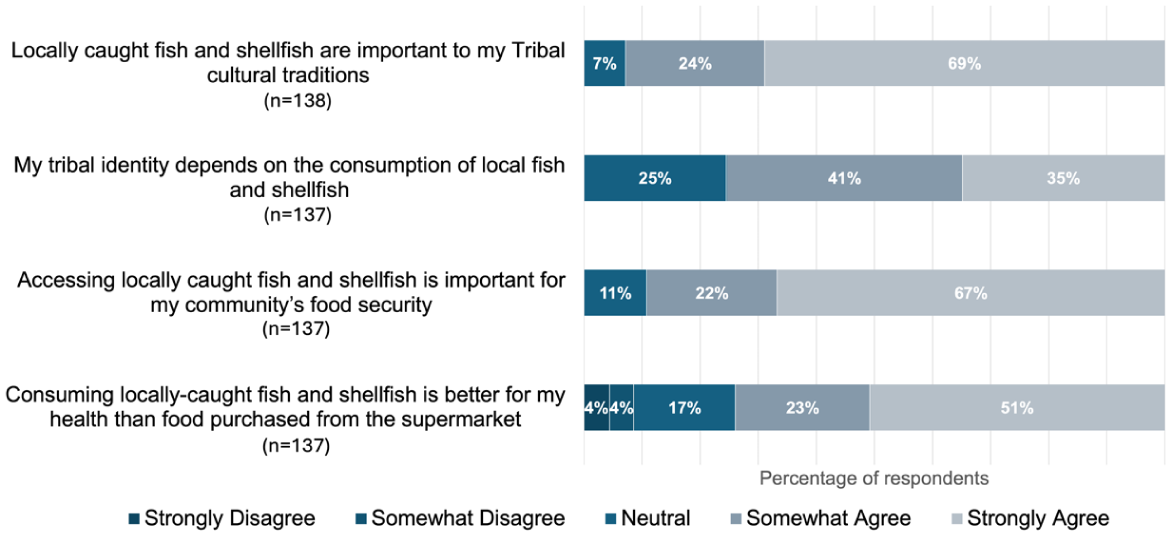
Survey Responses Measuring the Cultural Importance of Fish and Shellfish
This connection to Tribal identity was emphasized in the qualitative data: “[Fishing is] something that we’ve done forever, and it’s something that we should continue to do. It’s a part of our identity,” said one participant. “To me, it’s a way of life, and that’s how we survive,” said another. “At all costs, [fishing and shellfishing] is . . . the most important part of who I am as a person.” Accessing fishing and shellfishing in local waters is also tied to the Tribe’s spirituality and health. One participant said:
Myself and my family, we are very closely connected (to fishing). Everything we do revolves around Mother Earth and Mother Nature, and it all comes back to our environment and the food that we eat; just everything that we believe in.
“People don’t understand, who haven’t been a part of a hunter-gatherer culture, that [accessing healthy and safe natural resources] is a part of our being.” Another participant described the act of fishing saying, “Just the way I dig a quahog is like, it feels right you know, it just, in me it feels like this is what I was meant to be doing.” Participants discussed the importance of being connected to the land and water, with one participant explaining, “I think a lot of the time, people don’t realize how sacred water is, and that life comes from water. And so, for a lot of Indigenous people, there’s like an intrinsic connection between water.”
Tribal members reported spending significant energy to maintain these cultural practices, ensuring that they are passed down through generations—another marker of identity formation. “I try to take as many out that I know to go fishing, you know to keep it going, because if you don’t do it, we are going to lose our culture,” said one participant. “I just go periodically with the kids, it’s just more of just a learning experience so we make sure that, culturally, the kids will continue to know how to clam and quahog.” Another said:
I feel like that’s something we definitely plan to impart on all of our children and something that we do as a way of life. It’s, I mean, it’s a nice recreational activity, but it nets us sustainable living resources. So, it’s something we enjoy doing, but I’ve always been taught to do and intend on teaching your kids to do the same thing.
Impact of Losing Access to Fishing and Shellfishing
The importance of maintaining access to local fishing and shellfishing for the Tribal members goes beyond a financial or sustenance reliance on the resources. Whereas non-Tribal community members may have more elasticity in changing their food source, recreational activity, or location in response to water and fish contamination, losing access to their traditional forms of fishing and shellfishing presents a threat to the Mashpee Wampanoag cultural identity and well-being of Tribal members. Describing the annual herring run that the Mashpee Wampanoag have special permission to harvest, one participant said:
I mean, very shortly, many of our members will be going out getting some herring; smoking them, eating them in any way shape or form, and that’s something that’s been going on for over 10,000 years, and hopefully it continues but, the way things are going I don’t know how many other generations may miss out on that. [There is a] historical, cultural significance to it that I cannot even explain to you.
Others concurred: “I don’t know what it would be like to be without a herring run in the spring.” As another participant described:
Well, we’re a hunting-gatherer culture; we can forage a meal without going a hundred yards into the woods. But that’s because we have that understanding [that] there’s plenty of food and you just need to find it, and I mean, that is our tradition, that is who we are. Without that identity, we are not Wampanoag people.
Participants also recognized the importance of access to fishing and shellfishing to pass down the knowledge and fishing practices to future generations and the impact that losing this access would have on knowledge transfer:
Without egress to clean water, I can’t teach anybody to do what I do. I can’t, my father couldn’t have taught me, or my brother couldn’t have taught me, and I can’t teach my nephews or my children. I can’t teach the next generation how to harvest those same things we just talked about when it comes to food that’s gonna actually care for their bodies.
Some participants also recognized the vulnerable position that relying on food from the land puts them in but also emphasized their reluctance to give that up:
We were raised eating shellfish, eating plants, eating animals, eating what was provided by the creator, and once we get away from that, we have lost our sovereignty over our foods. Now, that weakens us as people, I mean, we could eat what we get at Stop & Shop, but that’s not good for us. A lot of us have diabetes, a lot of us have issues that are brought up by the different foods that we have been forced to eat. It might taste good, it might be okay for a minute, but it’s not what we are supposed to eat.
PFAS as a Threat to Cultural Identity
Awareness and Concern About PFAS
In general, participants were moderately familiar with PFAS as a contaminant of waterways and food sources. The median survey respondent self-reported being moderately familiar with PFAS (Figure 2). Notably, there were no significant differences in level of concern by age or gender (as evaluated through pairwise t-tests), although interview participants emphasized that familiarity was likely higher among younger community members (as opposed to the elders).
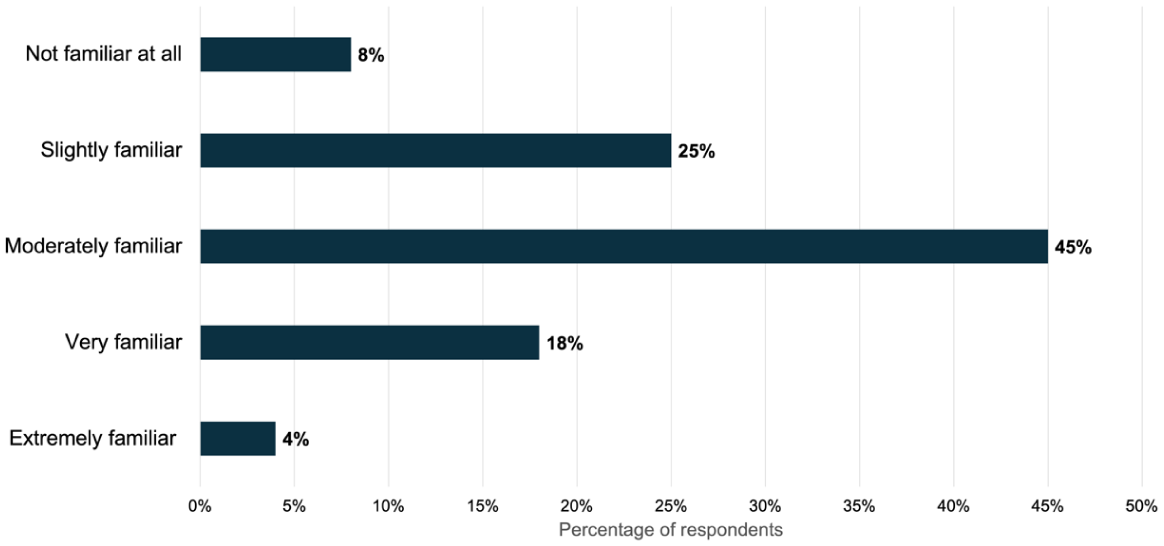
Survey Participants’ Familiarity With PFAS (n = 135)
Interview and focus-group participants had generally heard of PFAS, but their knowledge was generally limited to PFAS being a contaminant and linked to increased cancer rates. Participants did emphasize that PFAS was a priority in their community, and that they wanted to know more about it.
Most participants were highly motivated to get more information about whether the amount and type of fish and shellfish they were consuming were safe. However, most did not have this information, nor did they know where to get it. “I’m just wondering what [a safe level] is for consumption, you know, how much can the body absorb or consider healthy-that’s what I’m trying to find out,” said one participant. “I’m hoping to find out how much of it is in here, in the waters, coming from people’s homes and I mean, that’s very important to me,” mentioned another. Participants also wanted to know about tangible long-term health effects on the ecosystem and community members:
Does it mean that 50% of the population of Mashpee is going to get cancer? Does it mean like, you know, this many species are going to go extinct in the next 25 years? Like, that’s the kind of stuff that to me, is tangible and can make me wrap my mind around it, which I feel like I’ve not seen.
Recognizing and Adapting to Contamination
Although most participants did not discuss specific experiences with PFAS, most had encountered challenges related to environmental contamination in general. When asked about their top environmental concerns, survey participants deemed contamination in local waterways (66%) the most significant concern followed by quality and safety of local fish and shellfish (51%), and over-development and/or loss of land (39%). To determine the safety of waterways, many Tribal fishers rely on physical markers of contamination (such as smell or visible algae). When asked how they determine if water is safe to fish in, one participant said “Well, I mean it’s got a smell, a taste, all of that to begin with.” This has the potential to pose a challenge when communicating about PFAS risk as there are no visible physical markers or signs of PFAS contamination in either water or fish and shellfish.
Figure 3 lists the frequency with which survey participants use various criteria to judge the health of a waterway for fishing. The frequencies showed differences in how survey participants judge the quality of the local waterways based on if they catch local fish themselves or obtain fish from other sources (like a family friend or community member). Tribal members who catch fish themselves were more likely to rely on appearance of the waterways (color/clarity of the water/mud) and fish or shellfish (color/health), as well as availability of information and word of mouth to judge the quality and safety of fish in waterways for consumption. Tribal members who do not catch fish themselves were slightly more likely to rely on information (signs or postings) from the state or town, appearance of the waterways, and odor.
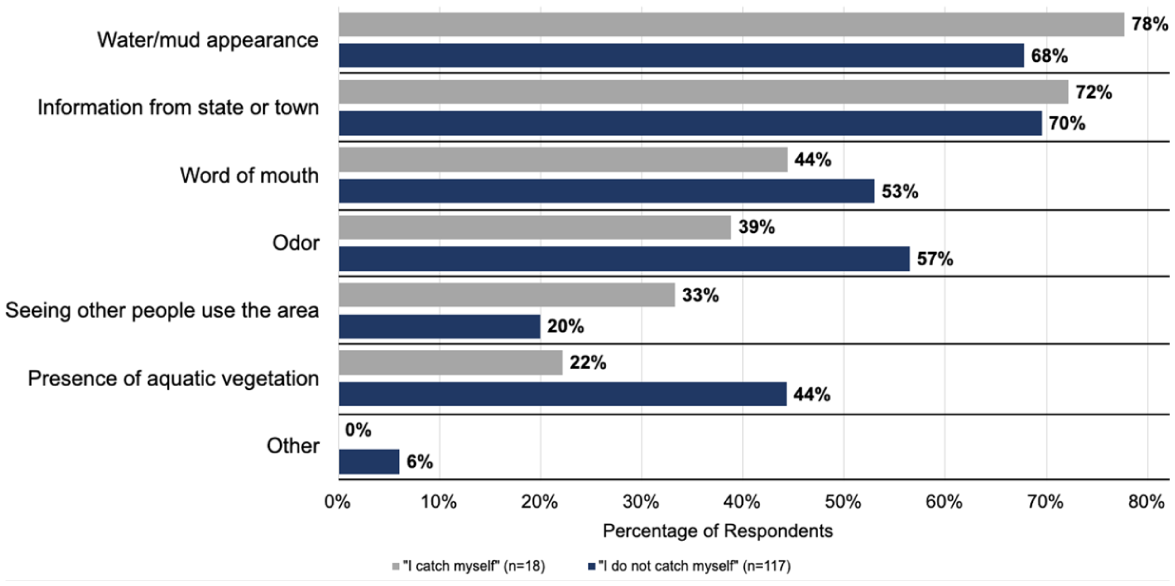
Criteria That Survey Participants Use to Judge the Health of Local Waterways, by Whether They Catch Local Fish Themselves
Participants discussed how they are already facing loss of access to fishing grounds, due in part to environmental contamination (participants primarily mentioned algal and bacterial contamination), development, and encroachment on traditional fishing rights:
There’s a lot of spots we can’t fish due to the contamination . . . we have to search around for them and it’s tough to find them sometimes . . . it would definitely be detrimental to the tribe if we didn’t have enough spots to fish.
Participants also noted a decrease in the number of fish and species available due to contamination and pollution of local waterways:
Years ago you used to be able to go in any day and walk around any shoreline and there would be a nice sandy bottom and you could get whatever shellfish you wanted. You could get oysters, you could get clams, you could get mussels, you could get any kind of shellfish you wanted around the whole bay of every bay. And now you can’t do that . . . steamers, for instance, they don’t like a lot of pollutants, they die. There’s areas that used to have tons of steamers, and now there’s no more steamers, they all just died because of the pollution.
Concerns about contamination have already led some Tribal members to change their fishing and shellfishing practices and consumption habits. One participant said:
I remember doing a lot of fishing when I was younger and eating the fish that we caught, but then just like naturally watching what’s been going on with the water, and then looking at a lot of the pollution, it just kind of made me feel like I don’t want to put the stuff in my body.
One interview participant said that she has completely stopped eating shellfish that she and other Tribal members catch due to perceived contamination concerns. Many Tribal fishers also noted that they avoid fishing in places that they perceive as contaminated or polluted. One participant described deciding not to harvest shellfish from a certain beach:
We were supposed to go fishing this week, clamming this weekend . . . and I had just heard from one of my friends like yeah, now it’s getting really bad over there like the like certain levels are rising with like algae blooms from runoff from nitrogen systems into the water and I’m like, I don’t want to eat that.
While many fishers reported changing their behavior, many others said they will not change their fishing habits, even after warnings of contamination: “There’s nothing that you guys can tell me to change my fishing practices, they’re older than time.”
Responses to PFAS Contamination
When participants were asked if they would change their behavior due to PFAS contamination, most noted willingness to change if they were provided with information that was compelling enough about the health risks. Among survey respondents, 74% reported that they would be very likely (39%) or extremely likely (35%) to change their fishing/consumption habits if they became aware of PFAS contamination in fish and shellfish, while 14% of participants were somewhat likely (9%) or not at all likely (5%) to change these habits because of PFAS. Generally, focus-group and interview participants emphasized the importance of continuing to catch and consume local fish and shellfish, but would want information and monitoring of species and areas with PFAS contamination to know what levels are safe. For example, one participant said:
I wouldn’t stop fishing. But what I would ask is that the Fish Warden or somebody in the community find a way to monitor them and make sure that these PFAS that are in these fish are not at detrimental levels.
Another participant stated, “I think what would actually get me to really change my habits would be seeing research that says, like, you know, this is a normal level, this is an abnormal level, and this is the level we’re at.” Among those who expressed concern about PFAS contamination’s threats to fishing practices, there was a focus on long-term solutions, safe consumption limits, and identifying places that are safe to fish.
Culturally Responsive Communication of Contamination
Current PFAS Communication Pathways
Survey results also showed that Tribal members have learned about PFAS primarily from media coverage and other Tribal members (Figure 4). Respondents ranked the news (31%) as their main source of PFAS information followed by online sources (websites and social media; 24%) and word of mouth through the community (20%).
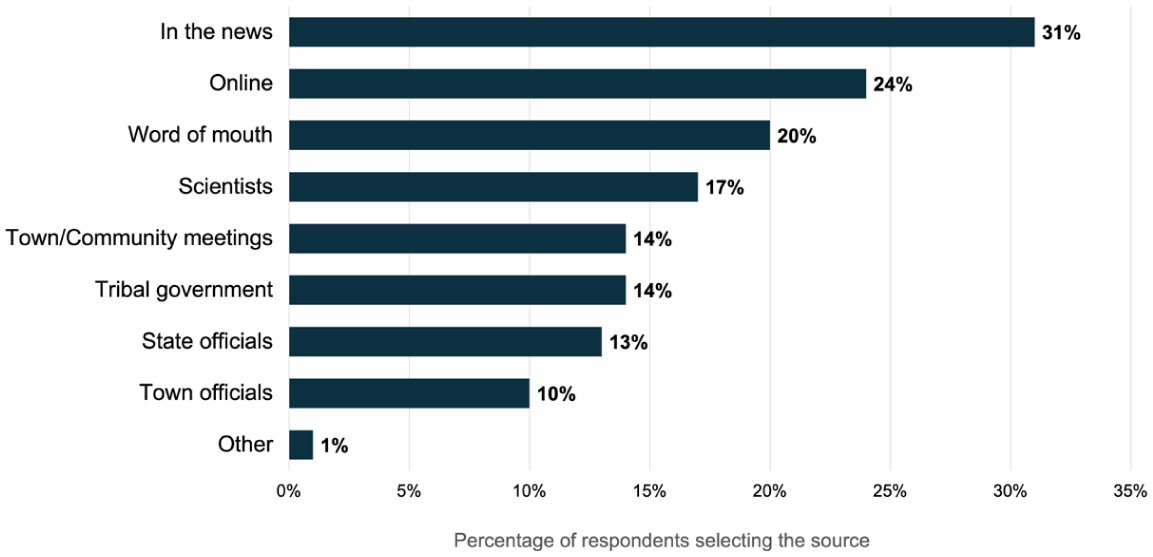
Communication Sources From Which Participants Have Heard About PFAS (n = 79)
While most (but not all) interview and focus-group participants had heard of PFAS, most could not describe what they were beyond knowing that they were chemicals and were linked to cancer, and there was frequent confusion with other contaminants, such as microplastics and polychlorinated biphenyls (PCBs). When asked how they had heard of PFAS, most interview participants said word of mouth, through a few key people in the Tribe who had been involved in PFAS research. Town meetings were also mentioned, where the Tribal government has highlighted PFAS as a potential contamination risk. Another common response was that they had read or seen something about PFAS in the media.
Trusted Information Channels and Messengers
The cultural theory of risk suggests that cultural traits and experiences can impact viewpoints about expertise and trusted information sources (Tansey & O’Riordan, 1999). This is a particularly important consideration in Indigenous communities, where trust in Western science tends to be lower due to “historical and ongoing mistrust in research and western medicine” (Boyd & Buchwald, 2022, 136). Participants reported relying on a few specific sources of information about the environmental quality of their local fishing grounds, especially the fishermen, for word-of-mouth information, or their Tribal leadership, such as the Tribal Council or the Director of Natural Resources. Participants also sought out information on social media, email updates from the Tribe, in-person events, and the Tribal newsletter.
Figure 5 shows the levels of trust in various sources for information about contamination risks from survey responses. Tribal government, Tribal elders, and scientists were the most trusted sources of information.
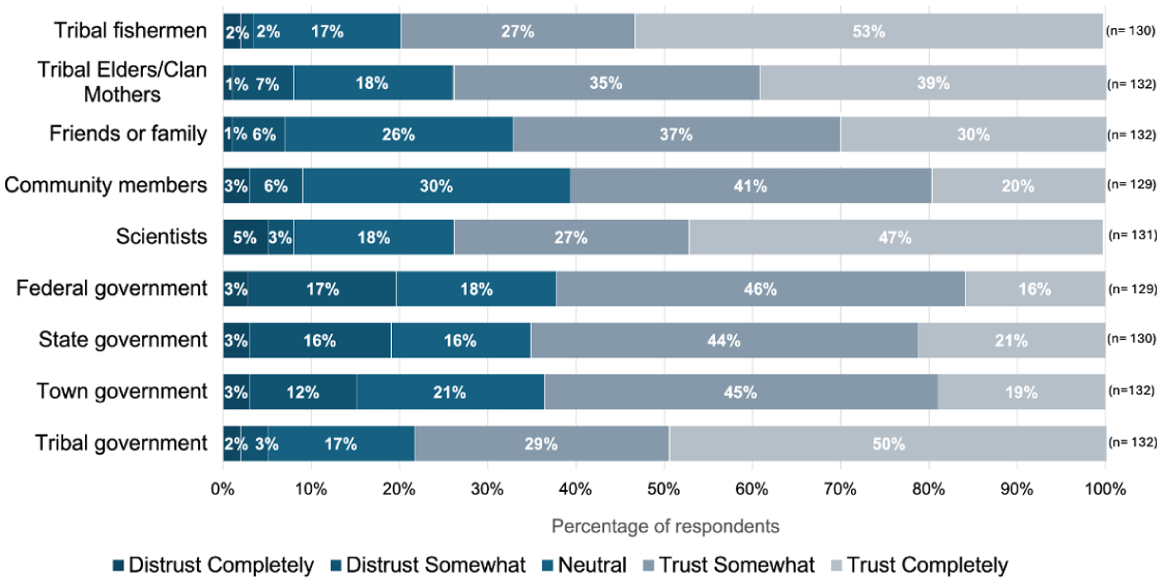
Survey Participants’ Levels of Trust in Different Information Sources for Conveying Risks Like PFAS
Despite a history of distrust of Western science in Indigenous communities, focus groups and interview participants in this study reported a positive sentiment toward scientists. “They’ve [scientists have] always been great. Always really helpful and like, good people, you know, you could tell they want to improve the environment. So, it’s awesome working with people like that.” There was an emphasis on building trust through relationships with scientists and the importance of respecting Tribal knowledge. One participant discussed trust saying, “I think, you know, trust is built” and another said:
I trust them for the most part. I think that the best relationship is between scientists and Natives because Natives provide traditional ecological knowledge and then scientists bring different perspectives as well . . . I trust them to research things and stuff like that. Not necessarily to provide a solution.
Importantly, participants emphasized a desire to build scientific and testing capacity within the Tribe itself, to have more confidence in the results and be able to test where they felt most vulnerable. One participant said:
Unlike some other Tribes that have actually had their own water quality labs and testing, we’re not there yet. I hope we do get there, so we can do our own, so we can protect our Tribal folks, you know, with our own testing labs and not have to rely on the state and others for that.
Trust in state and town government was mixed. Some participants had high levels of trust in the state and town governments to test and close fishing areas. “I go by the state regulations . . . they do all the testing and they gotta close it down if they find contamination,” said one fisherman. “I don’t think there’s any reason to not trust the information that people are putting out there—I don’t think they’re putting anything out there maliciously about shutting down shellfish areas,” said another participant. “There’s a lot of people that have eyes on the bays besides us.”
Among some participants, however, there was skepticism of the reasons for the closures, in part motivated by the cultural importance of maintaining access to fishing grounds. One participant said:
I don’t trust the government. I think they put [closure signs] up to try and keep people away, whether they’re trying to grow more, or whatever, just trying to keep them out of the water. I think they lie to get what they want.
Another participant also expressed doubt in government closures, saying “I think a lot of municipalities say water is polluted, but they don’t provide hard evidence . . . Well, when did you test it? What was it tested for? Because I feel like they just like to use a blanket statement.”
Discussion and Communication Implications
This study sheds light on the effect on the impacts that PFAS contamination may pose for Indigenous populations, going beyond traditional public health attention to physical health and exploring the importance of impacts on cultural identities. Traditional risk communication approaches often discount the cultural importance of certain activities to communities, which can lead to communication failure, particularly in minority or marginalized communities (Aldoory, 2020). Cultural theory of risk, meanwhile, recognizes that judgments of risk are constructed based on social context, and that individuals determine judgments of risk and risk-related behavior in ways that will uphold their way of life. Traditional harvesting of fish and shellfish has deep meaning for the Mashpee Wampanoag, not only for practical and nutritional purposes but also to uphold their cultural identity. Effective and inclusive risk communication must incorporate a clear understanding of the role that fishing and shellfishing practices play in the community’s cultural identity and community-wide involvement in identifying and characterizing risks (Harper & Harris, 2000).
To that end, this study documented several themes about the importance of traditional food and fishing/shellfishing to Tribal cultural identity, and what the potential loss of access to safe and healthy fish and shellfish would mean to Tribal culture. We use these insights, combined with documentation of PFAS awareness and communication preferences, to explore how to develop culturally responsive risk communication strategies with Tribal communities. Based on our findings, future health communication professionals seeking to communicate environmental health risks with Tribal populations should consider the importance of cultural connections to the environment when forming risk reduction guidance.
Cultural theory of risk suggests that social structures and experiences with power among a community can contribute to the (in)effective reception of risk information and perceptions of expertise (Kahan et al., 2011; Siegrist, 2000). For example, prior cultural perceptions of and experiences with figures of authority (e.g., the colonizing government restricting or otherwise failing to uphold aboriginal rights to access fishing grounds) may explain the observed distrust of government, particularly around the closure of waterways to fishing.
Research has shown higher levels of trust among community members when information is conveyed from an inside or trusted member of the community (Baxter, 2009). Prior research has shown that Tribal communities often hold negative perceptions of information that comes from outside sources, often seeing it as threatening traditional lifestyles and cultural identities (Baxter, 2009; Friendship & Furgal, 2012; Myers & Furgal, 2006). The most trusted source for most participants in this study was other members of their community, especially the Tribal fishermen who have direct experience with the local waterways. Researchers have proposed having Tribal members communicate risk information through schools (Huffman, 2013), community gatherings, or trusted television networks to have the best chance of acceptance (Boyd & Furgal, 2019; Donatuto, 2003). Another option is to share information with trusted Tribal members, who can then determine the best ways to disseminate this information to other members of the community (Boyd & Buchwald, 2022; Sharp et al., 2016). In addition, internal communication pathways, such as newsletters, social media, and word of mouth will be important channels of communication to educate community members and encourage behavior change that may reduce risk.
A notable finding of this research is that many participants voiced trust in scientists, particularly when the information comes from Tribal scientists. This supports the ongoing collaboration between researchers and the Tribe’s Department of Natural Resources to build Tribal capacity for environmental research, as well as potential partnerships with other Indigenous scientists. One potential strategy will be to work closely with Tribal and non-Tribal scientists to understand what traditional fishing/shellfishing locations have lower levels of PFAS contamination and encourage Tribal fishers to favor those areas. Although the effects of bioaccumulation of PFAS in different species are still being studied, encouraging the consumption of lower trophic level fish and shellfish (Pickard et al., 2024) could be a way to reduce exposure while maintaining access to culturally important fishing and shellfishing practices.
Besides choosing trusted sources and channels, communicators will face a challenge in how to convey the risks of PFAS to minimize exposure while also reducing threats to cultural identity that typically come with the guidance to reduce consumption of local fish and shellfish. Messages, particularly those about individual or group health, can be made more effective if they are framed in a way that speaks to a shared group identity (Boyd & Buchwald, 2022; Hecht & Choi, 2012). Strong group identification can make individuals more receptive to health information if it is framed in a way that speaks to this identity (Harwood & Sparks, 2003). In developing COVID-19 messaging, Kuhn et al (2020) documented how Tribal communicators used messaging that focused on Indigenous values and culture, for example, by emphasizing the importance of family and community, protecting elders, traditional medicine approaches, and connections to traditions, crafts, and languages. This is an important consideration for Tribal members who may fear the loss of cultural identity and traditions as a result of an inability to safely harvest fish and shellfish from their traditional waters.
As emphasized in other research (e.g., Boyd & Furgal, 2019), collaborative communication creation methodologies will be vital in these circumstances, with researchers and Tribal stakeholders working together to identify messaging and communication strategies that incorporate and uphold traditional ecological knowledge and practices in the community, while emphasizing the new risks of PFAS as an emerging contaminant. Involving Indigenous communities in these processes has been shown to increase well-being by providing communities with control over their own response strategies (Banwell et al., 2021). Given the complex history of exploitation and distrust between Tribes and scientific and political authorities (Harding et al., 2012), empowering communities to understand and manage risk themselves has been a recommendation of prior risk communication research (Ford & Yep, 2003). This can be done through decision-making responsibility, increasing community capacity, and increasing social justice (Aldoory, 2020).
While this study explores the importance of components of Tribal cultural identity in the context of risk communication, it is important to note its limitations. First, responses are biased toward those with fishing/shellfishing experience. Interview and focus-group recruitment targeted Tribal members who actively fish/shellfish. While the survey was designed to include a broader swath of the Tribal community, the way it was advertised (as a Tribal community survey to learn about the importance of local fish and shellfish and environmental contaminants) may have appealed most to members who fish or eat local fish/shellfish. Similarly, the survey response rate was just 12% of registered Tribal members living in Massachusetts. Potential respondents, particularly those who may be distrustful of non-Tribal university researchers, may have been less inclined to respond, biasing responses toward those who trust Western scientists (however, recruitment materials prominently featured the logos of both the University and the Tribe). Finally, because the survey was primarily offered online and was promoted on social media (in addition to conventional printed mailings), we may have disproportionately heard from people who rely on social media and online news sources. Importantly, this study also did not measure the perspectives of non-Indigenous communities in the same area. Other communities may face similar contamination challenges to the Mashpee Wampanoag, and future research should potentially consider these groups in a comparative nature.
The results presented here provide a starting point for understanding the traditions and values that make up the Mashpee Wampanoag cultural identity and will lead to future work grounded in the cultural theory of risk to design and test messaging strategies to more effectively and inclusively communicate PFAS risk to Tribes. Findings may also influence the development and communication of fish consumption advisories that more accurately reflect the diversity in consumption among different communities. There is a need for more research from the field of communication theory on the importance of cultural identity in communication, especially in terms of testing responses to strategies, such as message framing (Boyd & Furgal, 2019). Future work should build on this foundation to develop communication and engagement strategies to minimize this conflict and broaden the field’s understanding of effective and inclusive risk communication.
Supplemental Material
sj-docx-1-scx-10.1177_10755470251388445 – Supplemental material for Communicating Pollutants That Threaten Tribal Identities: PFAS Contamination in Local Fish and Shellfish
Supplemental material, sj-docx-1-scx-10.1177_10755470251388445 for Communicating Pollutants That Threaten Tribal Identities: PFAS Contamination in Local Fish and Shellfish by Emily Diamond, Erica Meier, Kaitlin Urbanski, Jamie-Lynn Ward, Jason Steiding and Laurel Schaider in Science Communication
Footnotes
Acknowledgements
This research was made possible thanks to the support of several individuals and organizations. The authors would like to thank Edwina Graham for her help in recruitment and facilitation of the focus-group discussions. Cheryl Osimo, René LaPointe Jameson, and Asta Habtemichael also supported the data collection. They would also like to thank the members of the Mashpee Wampanoag Tribe who participated in this study. The content is solely the responsibility of the authors and does not necessarily represent the official views of NIEHS or NIH.

Funding
The authors disclosed receipt of the following financial support for the research, authorship, and/or publication of this article: Financial support for this research was provided by a grant from the National Institute of Environmental Health Sciences, National Institutes of Health under award number P42ES027706.
Declaration of Conflicting Interests
The authors declared no potential conflicts of interest with respect to the research, authorship, and/or publication of this article.
Notes
Author Biographies
References
Supplementary Material
Please find the following supplemental material available below.
For Open Access articles published under a Creative Commons License, all supplemental material carries the same license as the article it is associated with.
For non-Open Access articles published, all supplemental material carries a non-exclusive license, and permission requests for re-use of supplemental material or any part of supplemental material shall be sent directly to the copyright owner as specified in the copyright notice associated with the article.
