






Abstract
Using a nationally representative U.S. adult sample (n=1,150), this study compares technique-based and primarily fact-based forewarning messages on threat perceptions, counterarguing, and belief in COVID-19 and genetically modified organism (GMO) disinformation. It finds apprehensive threat crucial for psychological resilience in both message types, while motivational threat lacks influence. In addition, individuals engaging in defensive information processing benefit less from inoculation messages, underscoring the need for tailored interventions. This research advances understanding of inoculation theory by clarifying the mechanisms that build resistance to science-related disinformation.
Introduction
Attacks on science are far from new. From the condemnation of Copernican heliocentrism to the tobacco industry’s denial of a link between smoking and cancer (Oreskes & Conway, 2010), scientists and their evidence have long been targeted by those with vested interests in sowing doubt and undermining progress (Rosenstock & Lee, 2002). What is new is the facility with which inaccurate information intended to mislead – disinformation (Wardle & Derakhshan, 2017) – is able to spread throughout the information ecosystem. Particularly with the ascendence of social media, stopping the spread of disinformation has been difficult and largely ineffective (Vosoughi et al., 2018). According to the World Economic Forum’s 2024 Global Risks Report, threats to information integrity are expected to intensify societal divides around the world. With these continued threats to the information environment, researchers have been examining different types of interventions to mitigate the onslaught of disinformation. The present study focuses on one such intervention: building individuals’ psychological resilience to disinformation using messages derived from McGuire’s (1964) inoculation theory.
Disinformation, especially on social media, takes many forms. From emotional, tear-jerking anecdotes about vaccine injury (Shelby & Ernst, 2013), greenwashing and cherry-picked facts about climate change (Cook et al., 2018), to misleading or inaccurate claims promoted by false experts (Vraga & Bode, 2020), nefarious actors seeking to discredit science rely on a variety of techniques to sow doubt about key science and health-related topics. Addressing the spread of disinformation, thus, requires a multi-pronged approach. At the societal level, concerted efforts to improve science literacy at primary, secondary, and higher education levels are crucial at a time when only about 28% of Americans are scientifically literate (Cushman, 2021). Of course, implementing societal-level changes is difficult. As such, many scholars have examined what approaches could be useful to individuals. Fact-checking, media literacy, prebunking, and debunking are commonly considered disinformation mitigation strategies that are discussed in the literature (e.g., Dan et al., 2021).
The present study examines one prebunking mitigation strategy grounded in inoculation theory (McGuire, 1961, 1964), a general theory of resistance to influence, and applies it to the domain of disinformation. Inoculation theory holds that exposure to weakened forms of an opposing argument, or to forewarnings that provoke the motivational state needed for resistance, can make recipients more likely to withstand subsequent persuasive attacks. These forewarnings are one mechanism for evoking that motivational state (by generating perceived threat), but as we explain below, they are not the only structural component of inoculation messages. Building on this framework, we test two prebunking variants. We examine whether the presence or absence of either a technique-based forewarning message, that is, one that calls out the disinformation technique used, or a fact-based forewarning message, that is, one that fact-checks the content of the disinformation message (Amazeen & Krishna, 2024), effectively mitigates the negative effects of disinformation exposure. Specifically, this study simulates disinformation circulating on one of the most widely used social media platforms in the U.S., Facebook. In 2023, this social media site was popular across all demographic groups, with 68% of adults overall using it, second only in use (83%) to YouTube (Schaeffer, 2024). At the same time, Facebook was a prime vector of disinformation about vaccines and other health-related topics (Jamieson & Albarracín, 2020; Lazer et al., 2021). Thus, we seek to understand the impact of different types of forewarning messages on (a) increasing threat perceptions – and the nature of those perceived threats – prior to disinformation exposure, (b) the amount of counterarguing, and (c) mitigating the misperceptions that stem from disinformation exposure on Facebook. In addition, we seek to understand how the inoculation strategy, threat generation, and information processing work together in impacting disinformation belief. In the sections that follow, we present the theoretical framework upon which we build this study.
Literature Review
Inoculation Theory
As researchers strive to understand the effects of interventions aimed at reducing misperceptions, a broadly used strategy is the deployment of preemptive messages – known as prebunking – that anticipate and counter misinformation before exposure (Amazeen & Krishna, 2024). One prebunking technique that is premised upon a medical analogy is inoculation theory (McGuire, 1961, 1964), which posits that just as people can be immunized from infectious diseases, so too can they be protected from viral messages. Rather than injecting people with a weakened biological virus to protect their immune system, exposure to a message fosters attitudinal resistance to future persuasive attacks (Compton & Pfau, 2005). Inoculation theory has been applied widely to resistance against many forms of influence, including advocacy messaging, persuasive appeals, propaganda, and advertising claims. For example, inoculation messages have been shown to reduce the persuasiveness of credit card offers (Compton & Pfau, 2004) and front groups (Pfau et al., 2007). More recent work extends these findings to misinformation and disinformation contexts: inoculation interventions have been effective at countering disinformation efforts related to climate change (Cook et al., 2017) and vaccines (Amazeen et al., 2022).
Traditionally, the inoculation process involves a message containing two elements, a forewarning and refutational arguments. The forewarning alerts individuals to the possibility of an attack on their attitudes or beliefs that may be so persuasive that they will reconsider their position. The refutations are two-sided messages that include weakened versions of the forthcoming claims intended to influence attitudes, along with counterarguments that discredit the veracity of the claims (Compton & Pfau, 2005). Theoretically, threat was thought to be elicited either from the explicit forewarnings in a message or implicitly from the refutational preemptions, more specifically, from the counterattitudinal material in a two-sided inoculation message (Compton & Ivanov, 2012). However, although it is the counterarguments that are “the threatening material” (McGuire & Papageorgis, 1962, p. 25), it is the explicit forewarning component of the message that triggers a heightened sense of perceived threat, inducing cognitive resistance to the influence attempt (Compton & Ivanov, 2012; McGuire, 1964). It is the threat, then, that distinguishes inoculation from related interventions such as media literacy (Kuru, 2025). But it is important to note that research has not generally supported a simple, more threat equals more resistance relationship (Banas & Rains, 2010). Instead, threat seems to function more as a threshold concept: a certain elevated level compared to a control condition must be present to characterize an inoculation message (Compton, 2025). Yet, despite the importance of this key construct of perceived threat (Compton, 2013; Richards et al., 2017), it has frequently been missing from studies involving inoculation, particularly those that have explored inoculation messages as interventions against disinformation (Amazeen & Krishna, 2024).
Two competing conceptualizations of threat have emerged – apprehensive threat and motivational threat – each representing a different way individuals respond to challenges to their beliefs. Studies that have investigated the role of threat reveal conflicting evidence surrounding these elicited threat mechanisms (Compton, 2021). The conventional conception of perceived threat is that it is indicative of an apprehension that one may be vulnerable to influence (Compton & Ivanov, 2012; McGuire, 1964). Apprehensive threat arises from the anxiety of being persuaded or the discomfort of having one’s beliefs questioned, leading individuals to prepare counterarguments to defend their views (Compton, 2021). While some research indicates apprehensive threat occurs only when people hold attitudes that are consistent with the valence of the inoculation message (Ivanov et al., 2022), other research found no relationship between pre-existing attitudes and this type of threat generation (Amazeen et al., 2022). A more recent reconceptualization of threat theorizes it not as a state of apprehension, but rather as a motivation to defend one’s attitudes. Motivational threat involves a concern for protecting one’s attitudes, involving consideration of why one holds current beliefs, a readiness to resist persuasion, and engagement in counterarguing. This conceptualization has been reported to better predict resistance to persuasion than the traditional notion of apprehensive threat (Banas & Richards, 2017). Researchers (Amazeen et al., 2022) have suggested that such a motivational conceptualization of threat is consistent with theories of defense-motivated information processing (e.g., Chaiken et al., 1989; Kunda, 1990) and theorize that it may be a mechanism in the recognition of and responses to misinformation (Amazeen, 2024). While both threats increase resistance to persuasion, apprehensive threat is driven by anxiety about being persuaded, whereas motivational threat is inspired by a desire to protect one’s attitudes.
Inoculation Message Types
Another advancement in inoculation research involves the presence or absence of the refutational element of the message (Amazeen, 2021; Amazeen & Krishna, 2024; Banas & Miller, 2013). Although early work tested forewarnings both with and without rebuttals (e.g., McGuire & Papageorgis, 1962), more recent evidence questions whether preemptive refutations are essential. Given that it is the forewarning component of an inoculation message rather than the preemptive refutations that generate threat perception (Compton & Ivanov, 2012; McGuire & Papageorgis, 1962), contemporary misinformation-related studies have explored the efficacy of inoculation forewarnings that use technique-based rather than fact-based messages (Amazeen & Krishna, 2024; van der Linden et al., 2020). This line of work is not entirely new: Pfau et al. (2007), for example, examined technique-based inoculation against corporate front-group campaigns, prefiguring later applications in misinformation contexts. Consistent with traditional inoculation, the fact-based format primarily forewarns individuals about forthcoming persuasive attacks and then refutes claims contained in the attack. In contrast, a technique-based inoculation format contains no refutations. Instead of warning individuals about the claims of a message, it warns against a type of message, revealing the persuasive intent of strategies that can be used to influence the message recipient (Amazeen et al., 2022; Petty & Cacioppo, 1986), such as impersonation (Amazeen, 2021), oversimplification (Vraga et al., 2020), false-balance reporting (Cook et al., 2017), or emotionally manipulative language (Roozenbeek et al., 2022).
Although research has shown that both fact-based and technique-based inoculation messages can be effective at protecting against misinformation (Amazeen et al., 2022; van der Linden et al., 2017), the role of threat in either type of message has received little attention. Most misinformation research that has investigated technique-based inoculation messages has not measured threat (Amazeen, 2021; Cook et al., 2017; Roozenbeek et al., 2022; van der Linden et al., 2017; Vraga et al., 2020). One study that did revealed that fact-based inoculation messages generated greater apprehensive threat than did technique-based messages and that this mediated a reduced belief in misinformation. The amount of threat generated by the technique-based inoculation message was directionally but not statistically different from that of a control group message (Amazeen et al., 2022). Research on the cognitive processing of warning messages, akin to technique-based inoculation, found that the warnings motivated (re)consideration of one’s position on a topic (Petty & Cacioppo, 1977). This is consistent with the premise that a different conception of threat may be functioning in technique-based inoculation messages, that of motivational threat. Thus, the mechanism through which the effectiveness of reducing belief in misinformation with technique-based inoculation messages remains unclear. To empirically test the type of threat, if any, generated by technique-based inoculation messages versus those that are also fact-based, the following competing hypotheses are offered:
Counterarguing
According to inoculation theory (McGuire, 1961, 1964), it is the elevated levels of threat that induce psychological resistance to influence. While various cognitive responses can be employed to cope with the elevated threat, such as avoiding a message or engaging in cognitive activity – thoughts – that bolster prior attitudes, more commonly the resistance emerges as cognitive counterarguing (Compton, 2021; Compton & Ivanov, 2012; Jacks & Cameron, 2003; Petty & Cacioppo, 1986). Counterarguing entails directly refuting message claims or questioning the accuracy of an argument (Jacks & Cameron, 2003; McGuire, 1964; Miller & Baron, 1973). In the case of traditional, or fact-based inoculation, counterarguments are provided as part of the message intervention. Unsurprisingly, thought-listing exercises have shown that individuals exposed to such an inoculation generate more counterarguments than those not exposed to an inoculation (Compton & Pfau, 2005). Yet, studies also have shown that traditional inoculations foster the generation of new counterarguments that go beyond what was provided in the intervention (Compton & Pfau, 2005; Ivanov et al., 2015). Moreover, even for those exposed to technique-based inoculations, which provide no refutations, persuasive resistance is preceded by more counterarguing in comparison to those not exposed to an inoculation message (Amazeen & Wojdynski, 2019). Research that has compared the amount of counterarguing between fact-based and technique-based inoculation messages revealed no significant differences (Amazeen, 2021). Thus, it is expected that as a result of elevated threat levels, both types of inoculation messages will generate more counterarguing than those not exposed to an inoculation message in the process of mitigating belief in disinformation (see Figure 1).
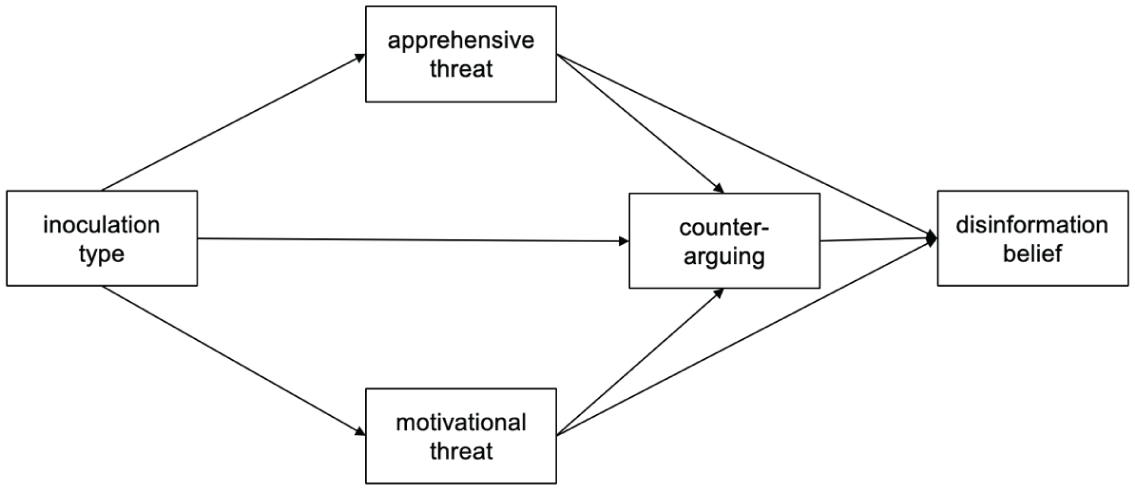
Parallel serial mediation of inoculation type on disinformation belief via apprehensive threat perception, motivational threat perception, and counterarguing.
Information Processing
Theories of attitudes and persuasion have long established that there are individual-level variables, such as ability and motivation, that affect whether and how people cognitively process messages (Chaiken et al., 1989; McGuire, 1968; Petty & Cacioppo, 1986). These theories inform models explaining how people recognize and respond to misinformation (Amazeen, 2024). Given the ability to do so, some people engage with a message to fulfill accuracy motives to make a correct interpretation. Others engage with a message selectively and defensively to confirm existing beliefs, for example, and make a favored interpretation. Still others choose not to engage at all with certain messages (Chaiken et al., 1989; Kunda, 1990; Stroud, 2008). While these motives come before any processing of messages, they are dynamic and can change depending upon the situation (Chaiken et al., 1989). Yet, there is also compelling evidence that these information processing or reasoning styles tend to be dispositional, with people demonstrating a tendency or preference for one style over the other (Cacioppo & Petty, 1982; Epstein, 1994; Nir, 2011).
These varying reasoning styles may moderate the effectiveness of different types of inoculation messages. Individuals predisposed to accuracy-driven processing tend to be open to deeply processing message content, attending carefully to evidence and counterarguments (Chaiken et al., 1989; Nir, 2011; Petty & Cacioppo, 1986). As such, they may be more likely to experience heightened apprehensive threat in response to fact-based inoculations because these messages provide concrete, two-sided evidence that challenges their beliefs, and concerns about the validity of the misinformation are cognitively engaging and salient. This cognitive engagement elevates vigilance and concern (i.e., apprehensive threat), prompting active counterarguing and cognitive resistance. Conversely, accuracy-driven processors may experience relatively lower motivational threat from technique-based inoculations. Because they invite reflective processing without substantially increasing perceived vulnerability of held beliefs, they are thus less likely to evoke the preparedness-to-defend associated with motivational threat.
Among individuals predisposed to defensive processing, they are more inclined to protect their prior attitudes or identities selectively, discounting or ignoring contradictory evidence (Kunda, 1990; Nir, 2011). Defensive processors may show reduced apprehensive threat in response to fact-based inoculations because their selective processing shields them from fully engaging with counterattitudinal facts, thereby blunting the cognitive concern or vigilance that fuels apprehensive threat. They may even ignore or reject fact-based refutations, minimizing threat elicited by explicit forewarnings. However, defensive processors are likely to experience greater motivational threat in response to technique-based inoculations. Because these messages foreground manipulative tactics, they can heighten perceived vulnerability of one’s attitudes and prompt a preparedness to defend those attitudes. This motivational threat energizes resistance by increasing readiness to counterargue and to seek supporting information, rather than by producing apprehensive, evidence-focused vigilance.
Given the foregoing, we predict the efficacy of inoculation messages will differ depending on the type of message framing and individuals’ processing motives, driven by which form of threat is activated. Inoculations that are primarily fact-based, by eliciting apprehensive threat, will engage accuracy-driven processors more effectively. Technique-based inoculations, by eliciting motivational threat, may be especially effective or salient among defensive processors, who resist fact-based refutations but respond when messages signal the vulnerability of their beliefs and prompt a readiness to defend their views (see Figure 2).
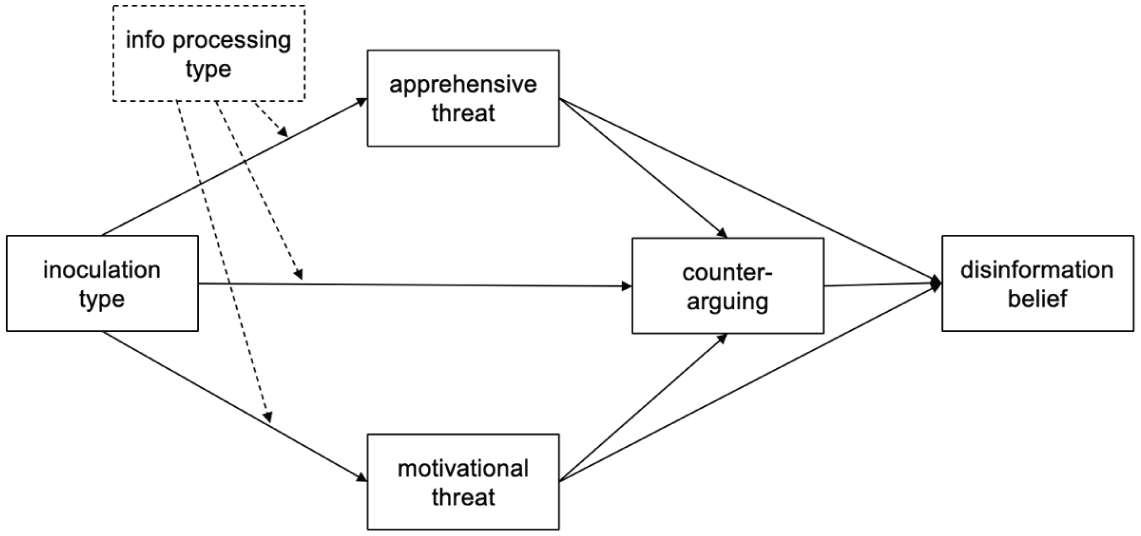
Moderated serial mediation of inoculation message type and information processing type on disinformation belief via threat perceptions and counterarguing.
Method
Following Institutional Review Board approval, a self-administered online survey was fielded between March 30 and April 7, 2023, by YouGov, an international organization commonly employed for social-scientific research. Eligibility for the study included U.S. residency among adults aged 18+ who were able to read English. Based upon YouGov’s “sample matching,” a random probability sample was estimated from its opt-in online population using propensity scores derived from age, gender, race/ethnicity, education, and region. The data were post-stratified on the 2020 U.S. presidential vote choice, home ownership, and a four-way stratification of age, education, gender, and race to produce a nationally representative weighting scheme.
Among the N = 1,150 participants, the average age was 49 (SD = 17.71), 50% identified as a woman, 46% were married, 64% identified as white, 16% as Hispanic, and 12% as Black, 30% earned a high school diploma, and 20% had a bachelor’s degree. Political party affiliation was 34% Democrat, 29% Independent, and 26% Republican. Political ideology (M = 3.17, SD = 1.40) was measured on a five-point scale (1 = very liberal, 5 = very conservative).
Procedures
To address the study objectives, a 3 (inoculation message type: none, technique-based, or fact-based) x 2 (misinformation message topic: COVID-19 or genetically modified organisms/GMOs) between-subjects experimental design was implemented with one offset control condition that did not include a misinformation message. Respondents were invited to participate in a survey about media habits and perceptions. Following informed consent, participants were randomly assigned to one of the seven conditions and were asked about their news consumption routines as well as their perceptions of a variety of topics (e.g., climate, vaccines, the Inflation Reduction Act), including COVID-19 and GMOs. Participants were then asked to view and evaluate messages that were stylized to resemble social media posts from Facebook. The first message was either an inoculation or a control message, followed by threat perception assessments. Before responding to the threat perception items, participants were given the following instruction,
The following set of items are designed to help us understand how you feel about the idea that, despite your opinion on an issue, there is a possibility you may come into contact with misinformation that is so persuasive that it may cause you to rethink your position.
The second message was either a misinformation or a control message, followed by a thought-listening exercise and message perception questions. The survey concluded with demographic questions and a debriefing. After thanking participants for their time, they were compensated by YouGov (n.d.) with points that accumulate for a variety of token rewards, such as T-shirts, tote bags, or gift cards. The median survey length was 30 minutes (SD = 357.98).
Stimuli
Two topics of misinformation for the present study were drawn from the extant literature: Vitamin D as a cure for COVID-19 and diabetes caused by GMOs (e.g., Krishna et al., 2025). These two issues were chosen because they have both been the focus of intense debate, and, despite clear evidence to the contrary, continue to persist. Vitamin D supplementation has been a controversial topic, particularly in relation to its effectiveness in preventing respiratory tract infections (Gallagher & Rosen, 2023). This controversy was only exacerbated during the COVID-19 pandemic when studies found a correlation between Vitamin D deficiency and COVID-19 severity (Pereira et al., 2022). However, no studies have demonstrated the effectiveness of Vitamin D supplementation in preventing or curing COVID-19 (Ganmaa et al., 2026), as has been claimed. Similarly, GMO foods have been dogged by controversy for decades (Marwick, 2000; Mintz, 2017), particularly the claim that consumption of GMOs causes diabetes, despite there being no evidence to support this claim (National Academies, 2022). Thus, these two topics were chosen as the focal issues for this study.
A pretest of stimuli was conducted on December 21–22, 2022, among a sample (N = 250) of Mechanical Turk workers utilizing the CloudResearch/TurkPrime platform, which facilitates the collection of online survey responses while improving data quality (Litman et al., 2017). Stimuli were pretested to determine which of several Facebook posts were perceived as containing inaccurate information for each topic.
The first stimulus was one of three simulated Facebook posts containing either an inoculation message that was solely technique-based or also included fact-based refutations, or a control message. The fabricated inoculation messages were based upon an advisory from the US Surgeon General, Dr. Vivek Murthy (Office of the US Surgeon General, 2021), cautioning readers about their potential exposure to health misinformation by revealing manipulation techniques (see Figure 3A) – such as fake experts or conspiracy theories (Cook, 2022). The fact-focused inoculations also included inaccurate facts pertaining to treating COVID-19 (see Figure 3B) or the effects of GMOs (see Figure 3C). The control message was a fabricated Facebook post about the origins of sushi (see Figure 3D), a neutral topic commonly used in studies about resisting persuasive messages (Banas & Miller, 2013).
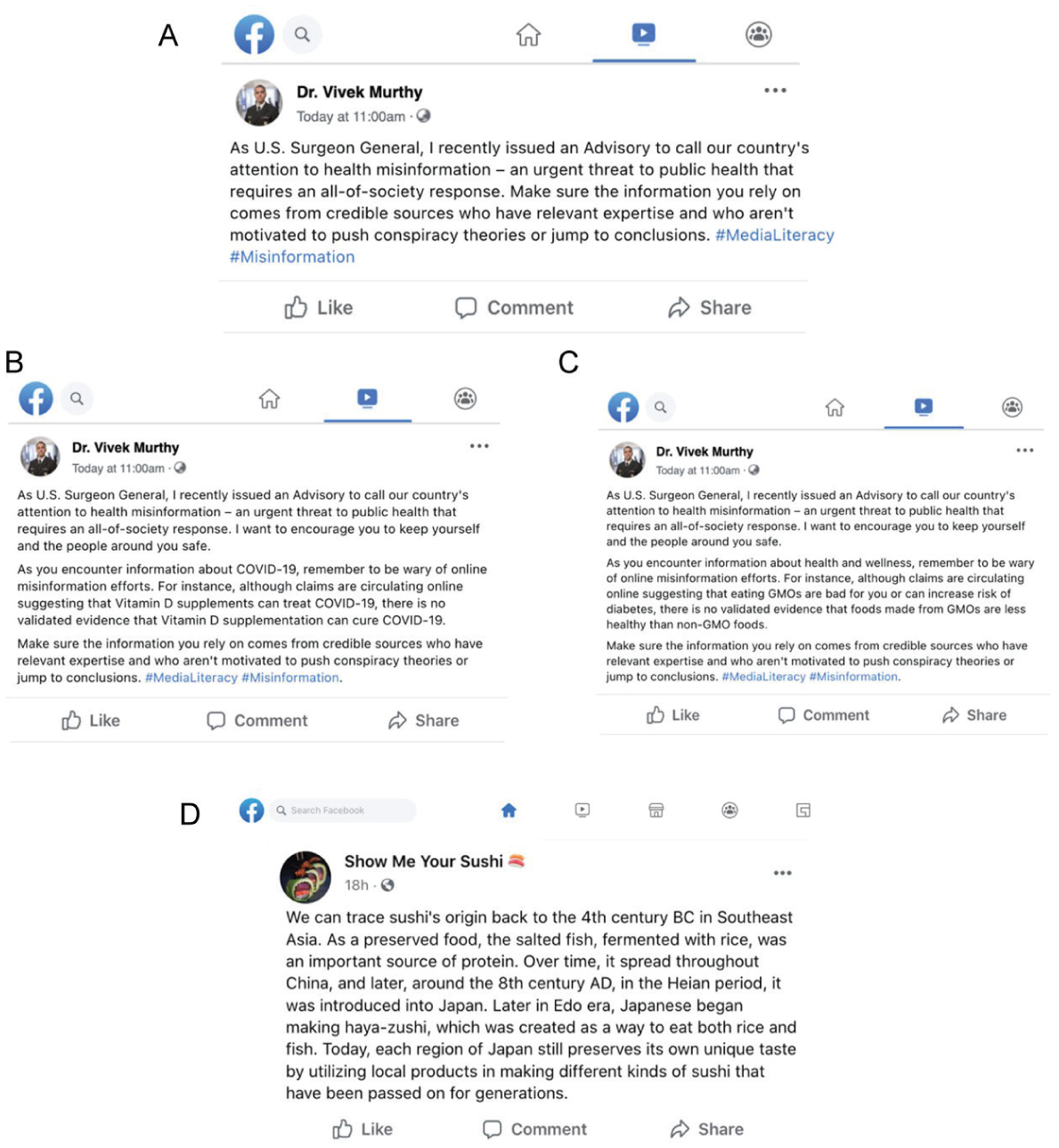
Inoculation stimuli. A. Technique-based inoculation message. B. Primarily fact-based COVID-19 inoculation message. C. Primarily fact-based GMO inoculation message. D. Control message.
The second stimulus was another simulated Facebook post that contained misinformation either about Vitamin D supplements as a cure for COVID-19 (see Figure 4A) or about foods with GMOs as a cause of diabetes (see Figure 4B). Participants in the control condition saw a Facebook post that reviewed a restaurant (see Figure 4C). Regardless of condition, the author of the second stimulus was obscured to prevent source effects from influencing responses.
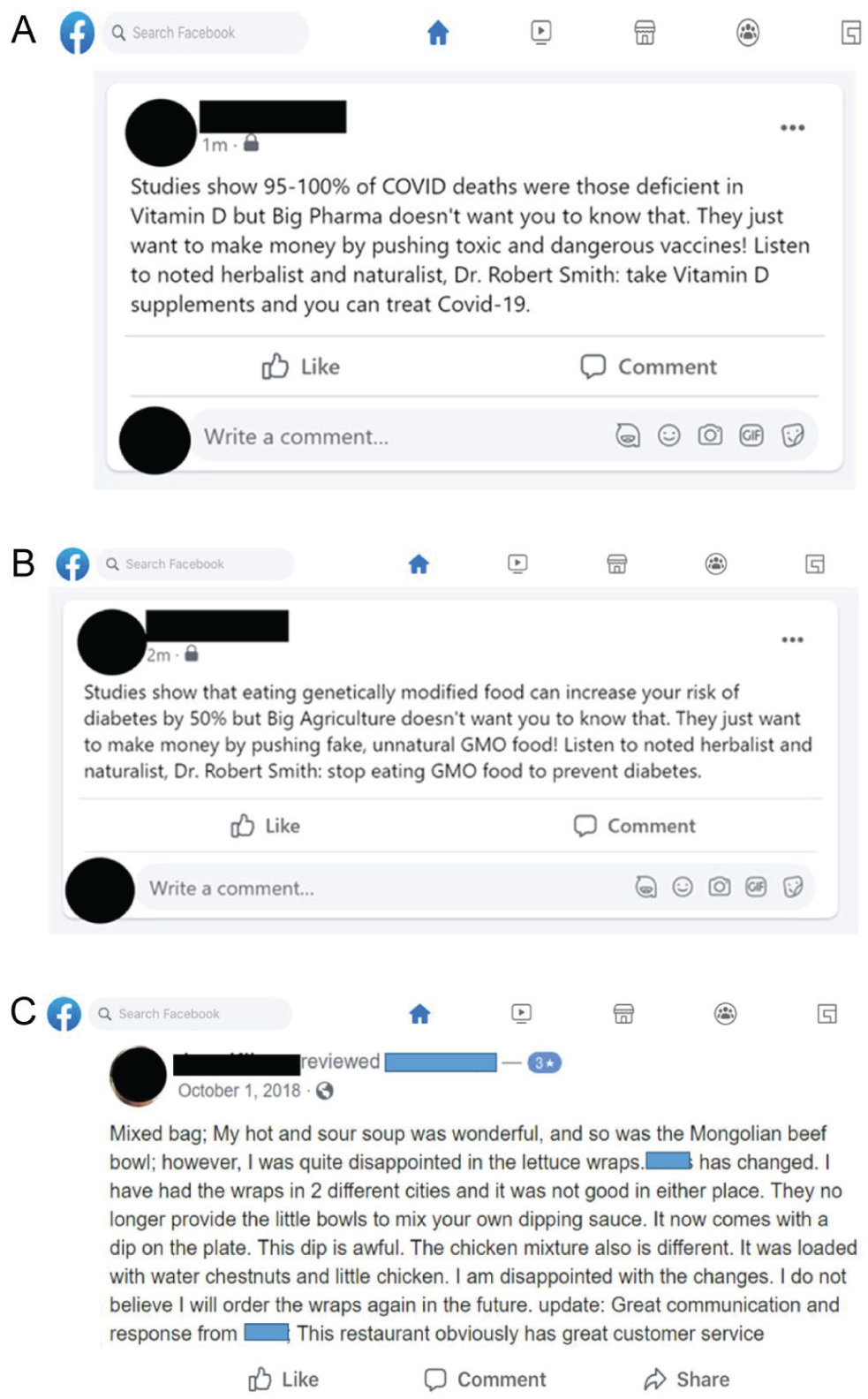
Misinformation stimuli. A. COVID-19 misinformation message. B. GMO misinformation message. C. Control message.
Measures
Although traditional inoculation research distinguishes counterarguments (counterattitudinal material relative to the advocated position) from refutations (responses to those counterarguments; e.g., Pfau et al., 2009), in this manuscript, we adopted a broader operationalization of counterarguing for two reasons. First, our coding scheme followed established cognitive‑response methods (e.g., Cacioppo & Petty, 1981; Petty et al., 1976) that capture spontaneous negative thoughts about both the substance of an attack and the tactics used to produce it. Second, because technique‑based inoculations target persuasion strategies (e.g., fake experts, conspiracy theories), limiting counterarguments to only counterattitudinal content about claims would have missed relevant defensive responses that directly target manipulative techniques. Accordingly, our counterarguing measure includes unfavorable statements about the attack’s arguments as well as criticisms of the message’s manipulative methods.
Results
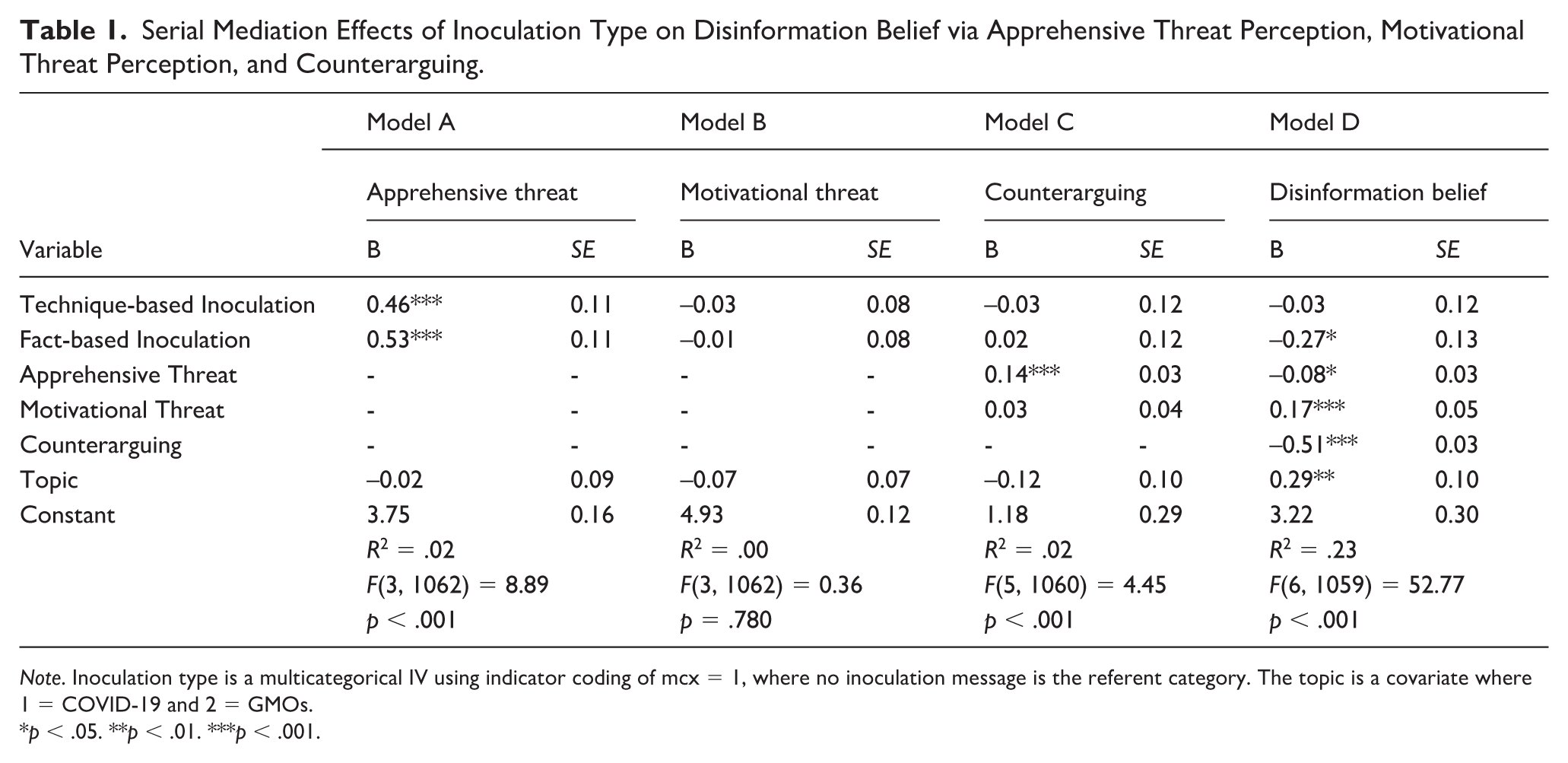
To test our hypotheses, a serial mediation model was specified using Hayes’ (2018) Process v.3.5.3 macro (Model 80) in which inoculation type (none, technique-based, or fact-based) was the multicategorical independent variable (with no inoculation set as the referent group), apprehensive and motivational threat perceptions were parallel mediators followed by counterarguing, and disinformation belief was the dependent variable (see Figure 1). As shown in Table 1, there was a significant relationship between inoculation type and apprehensive threat perception with both technique-based (H1a) and inoculation messages that are primarily fact-based, generating greater apprehensive threat compared to no inoculation message. A separate multivariate analysis of variance (MANOVA) confirmed a significant effect of inoculation type on apprehensive threat perception, Welch’s F (2, 707.58) = 18.47, p < .001, η2 = .04. Planned contrasts indicated that both a technique-based inoculation message (M = 4.24, SD = 1.45, p < .001 one-tailed, d = .40) and a message that was primarily fact-based (M = 4.26, SD = 1.47, p < .001 one-tailed, d = .41) generated greater apprehensive threat perception than no inoculation message (M = 3.65, SD = 1.54). There was no statistical difference between the technique-based and messages that were primarily fact-based. Thus, H1a has been supported but not H1b. Moreover, both the mediation analysis (Model B) and MANOVA revealed no significant relationship between inoculation type and motivational threat perception [F (2, 1069) = 0.48, p = .619] as neither technique-based (M = 4.76, SD = 1.06) nor primarily fact-based (M = 4.84, SD = 1.15) motivational threat perceptions were significantly different from those participants who were not exposed to an inoculation message (M = 4.81, SD = 1.16). Consequently, neither H2a nor H2b were supported.
Serial Mediation Effects of Inoculation Type on Disinformation Belief via Apprehensive Threat Perception, Motivational Threat Perception, and Counterarguing.
Note. Inoculation type is a multicategorical IV using indicator coding of mcx = 1, where no inoculation message is the referent category. The topic is a covariate where 1 = COVID-19 and 2 = GMOs.
p < .05. **p < .01. ***p < .001.
Model C of the mediation analysis (see Table 1) indicates that while greater perceptions of apprehensive threat had a positive relationship with counterarguing, neither technique-based inoculation messages nor those that were primarily fact-based had a direct relationship to the amount of counterarguing. Moreover, Model D indicates that compared to no inoculation message, primarily fact-based inoculation messages had a direct relationship to lowering reported belief in disinformation. Furthermore, counterarguing also had a direct, inverse relationship with disinformation belief, such that the more counterarguing, the less reported belief in the disinformation. Motivational threat had a direct, positive relationship with disinformation belief, such that the stronger the perceived motivational threat, the more reported belief there was in the disinformation.
The mediation analysis revealed two pathways of indirect relationships between inoculation message type and belief in disinformation. First, compared to no inoculation, both the technique-based message (effect = −0.04, BootSE = 0.02, bootstrapped 95% confidence interval [CI] = [−0.079, −0.002] with 10,000 resamples) and the primarily fact-based message (effect = −0.04, BootSE = 0.02, bootstrapped 95% CI = [−0.086, −0.002] with 10,000 resamples) indirectly corresponded to a reduced belief in disinformation via increased apprehensive threat perception, indicating that counterarguing is not a requirement in reducing belief in disinformation. Second, compared to no inoculation, both the technique-based message (effect = −0.03, BootSE = 0.01, bootstrapped 95% confidence interval [CI] = [−0.061, −0.014] with 10,000 resamples) and the primarily fact-based message (effect = −0.04, BootSE = 0.01, bootstrapped 95% CI = [−0.066, −0.017] with 10,000 resamples) indirectly corresponded to a reduced belief in disinformation via increased apprehensive threat perception and increased counterarguing. Thus, H3a/b is supported. Moreover, there are no indirect pathways through which motivational threat corresponds to belief in disinformation. The only pathway is a direct positive relationship with disinformation belief, leading to a rejection of H4a/b.
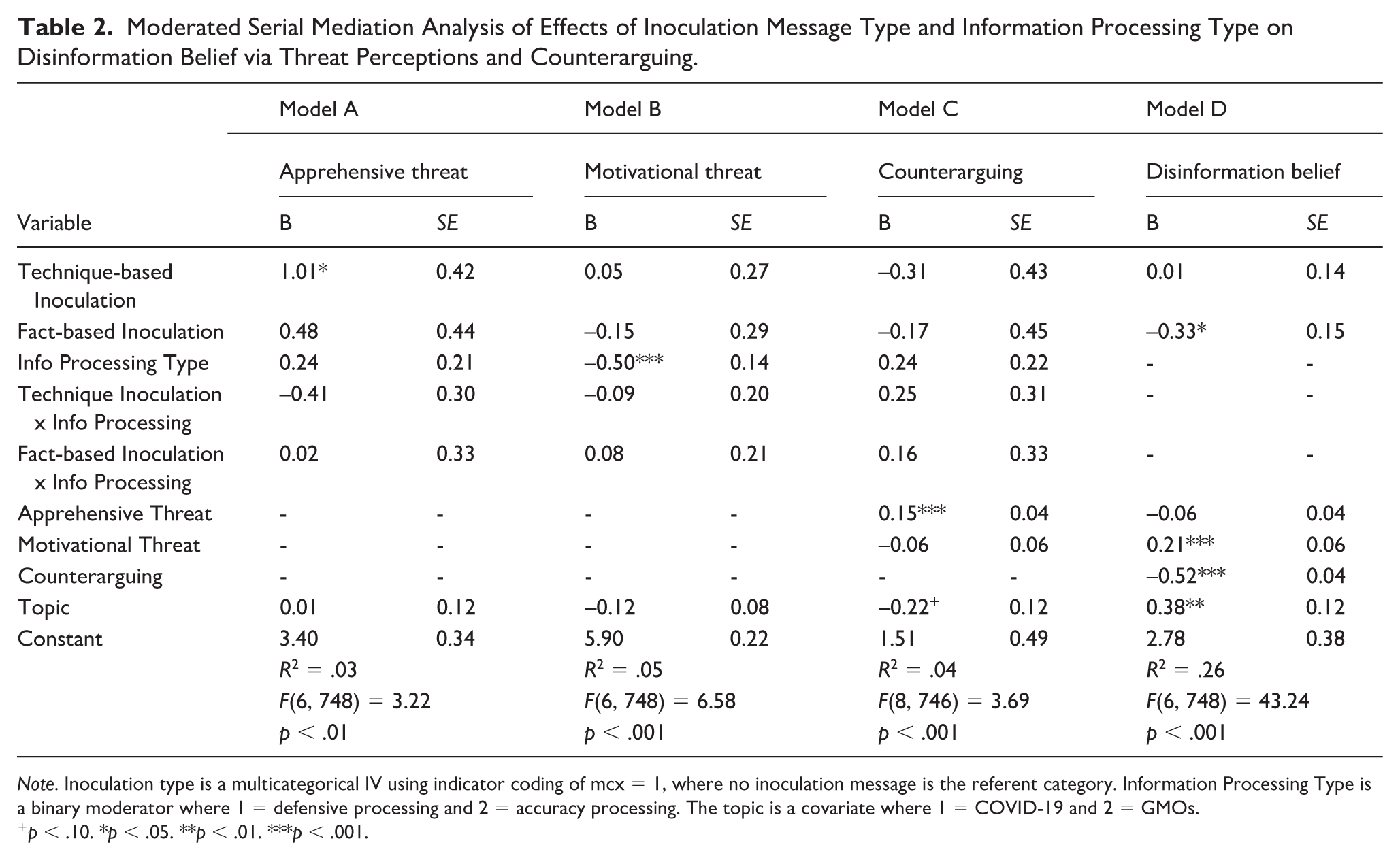
To determine whether information processing style moderates the relationship between inoculation type on apprehensive (H5a) or motivational threat (H5b) and a post hoc analysis of indirect relationships to counterarguing and disinformation belief, a moderated serial mediation analysis was again modeled using the PROCESS macro. Model 80 was edited to incorporate moderation (see Figure 2). As indicated in Table 2, only the technique-based inoculation message had a direct relationship to apprehensive threat (see Model A). Information processing type did not interact with inoculation message type, indicating rejection of H5a and H5b. Once again, neither type of inoculation message had any relationship to motivational threat (see Model B). However, defensive information processing corresponded to greater motivational threat perceptions. Model C indicates a positive relationship between apprehensive threat perceptions and counterarguing. Moreover, model D shows that primarily fact-based inoculation messages corresponded to lowering belief in disinformation.
Moderated Serial Mediation Analysis of Effects of Inoculation Message Type and Information Processing Type on Disinformation Belief via Threat Perceptions and Counterarguing.
Note. Inoculation type is a multicategorical IV using indicator coding of mcx = 1, where no inoculation message is the referent category. Information Processing Type is a binary moderator where 1 = defensive processing and 2 = accuracy processing. The topic is a covariate where 1 = COVID-19 and 2 = GMOs.
p < .10. *p < .05. **p < .01. ***p < .001.
There were two conditional indirect relationships. Defensive information processing negatively moderated the relationship between technique-based inoculations and belief in disinformation such that apprehensive threat and counterarguing were reduced and corresponded to higher levels of belief in disinformation (effect = −0.05, BootSE = 0.02, bootstrapped 95% CI = [−0.086, −0.016] with 10,000 resamples). The same relationship was present between those who process information in a defensive mode and primarily fact-based inoculation messages (effect = −0.04, BootSE = 0.02, bootstrapped 95% CI = [−0.076, −0.011] with 10,000 resamples). As such, there is no evidence that technique-based inoculation messages correspond to reducing disinformation beliefs among individuals who tend to process information defensively. Nor is there support for primarily fact-based inoculation messages corresponding to reducing disinformation beliefs among those who tend to process information for accuracy.
Discussion
The purpose of this study was to understand the effectiveness of two inoculation strategies – that is, technique-based and primarily fact-based forewarning messages – on the theoretical process of building psychological resistance to disinformation via individuals’ perceived levels of apprehensive and/or motivational threat and degree of counterarguing. Consideration was also given to the style in which an individual tended to process information, for accuracy or defensively. The results reveal mixed support for our predictions.
Our study advances the scholarly debate on the theoretical mechanisms underlying the inoculation process. Recent research has revisited not only whether perceived threat is a necessary effect of inoculation, but also what type of threat is involved (Compton, 2021). Importantly, our study provides confirmatory evidence that apprehensive threat is, indeed, a key mediator of resistance to influence. While this has been well documented in the literature in the context of traditional fact-based inoculation messages (Compton, 2013; Compton & Ivanov, 2012), the evidence has been minimal when it comes to the contemporary technique-based inoculation messages, particularly in the setting of disinformation (Amazeen & Krishna, 2024). Despite prior research finding that only fact-based inoculation messages generated increased levels of perceived threat (Amazeen et al., 2022), the present findings reveal that both technique-based and primarily fact-based inoculation messages generated significantly greater perceptions of apprehensive threat compared to individuals who were not exposed to any inoculation messages. Moreover, technique-based inoculations generated just as much apprehensive threat as did inoculations that were primarily fact-based. Thus, for applied science communication, practitioners can use either approach to build resilience against disinformation.
In contrast, our results offer no evidence to support motivational threat as a mechanism that explains resistance to influence in the inoculation process. Similar to Clayton et al. (2023), the conceptualization and operationalization of motivational threat proposed by Banas and Richards (2017) were found to have poor internal consistency (yielding a Cronbach’s α of 0.68 in the present study). Excluding any one of the 4 items comprising the composite measure did not improve reliability. Even when we removed the item specifically referencing counterarguing conspiracy theories, the scale’s internal consistency slightly decreased to α = .66. This indicates the scale may be less reliable outside conspiracy theory contexts. However, because we did not substitute a context‑appropriate item (e.g., “I want to counterargue attempts to change my mind on this issue”), it remains unclear whether an adapted version would yield different results. Consequently, caution is warranted in interpreting our motivational‑threat findings. Future work should test and, if necessary, adapt the motivational threat scale for specific issue domains and report validity and reliability evidence before drawing strong process-oriented conclusions.
Moreover, not only was there no relationship between either of the inoculation message types and motivational threat, but there was actually a direct, positive relationship between motivational threat and disinformation belief. That is, elevated perceptions of motivational threat corresponded to an increase in individuals’ reported belief in the disinformation posts. This suggests that in the present context, motivational threat seems more aligned with defense-motivated information processing. This defense-motivated processing led to resistance directed against the inoculation message itself, which paradoxically heightened the subsequent belief in disinformation. Nor was there a relationship between motivational threat and counterarguing (see Table 2, Model C), suggesting a lack of critical engagement with the inoculation messages. To protect prior attitudes or identities, selective discounting of or ignoring contradictory evidence may have occurred.
A supplementary factor analysis by Clayton and colleagues (2023) on the operationalization of motivational threat revealed a two-factor structure, suggesting that the construct may be multidimensional, encompassing, for example, perceptions of threat to personal autonomy and the readiness to defend existing attitudes. This multidimensionality may partially account for the lower reliability, as aggregating distinct facets into a single scale can reduce consistency estimates. While this theoretically aligns with perspectives that conceptualize threat as a complex psychological state involving both affective and cognitive dimensions (Banas & Richards, 2017; Compton, 2021), methodologically, this limitation again suggests caution when interpreting the present results that relied on the overall motivational threat scale.
Rather than approach threat as either apprehensive or motivational, it may be more productive to consider the possibility of conceptualizing threat as both simultaneously. Since McGuire (1961, 1964) first articulated inoculation theory, threat has been described as inherently motivational. In the 1990s, Pfau and colleagues clarified that threat is not the same as fear but shares some traits with it (Compton, 2021). It may therefore be more accurate to view threat as a construct that combines apprehension and motivation rather than a simple either‑or choice. Indeed, because motivation to engage with a message in the first place is often issue‑ and situation‑specific and depends on prior attitudes and the amount of – and confidence in – one’s topic knowledge (Amazeen, 2024; Krishna, 2021), it follows that the relative prominence of apprehensive versus motivational dimensions of threat is likely to shift across audiences and topics. Future research should aim to explore this possibility.
The only significant findings on information processing revealed in this study were among individuals who tended to process messages defensively. Defensive information processing rendered the inoculation messages, both technique-based and primarily fact-based, less effective at elevating apprehensive threat and counterarguing, thereby corresponding to higher levels of belief in disinformation. As noted above, this is consistent with the evidence that individuals who tended to process information defensively reported significantly higher levels of motivational threat (see Table 2, Model B). Thus, in line with theories of motivated reasoning (Chaiken et al., 1989; Kunda, 1990), this defensive processing appears to manifest as a resistance to the inoculation messages, driven by efforts to protect prior attitudes.
The results from the present study also contribute to our theoretical understanding of the inoculation process. Mediation analysis indicates that both types of inoculation messages increased perceptions of apprehensive threat, as expected, corresponding to a decrease in reported belief in disinformation. But apprehensive threat not only served as an indirect mediator in reducing belief in disinformation, but it also directly corresponded with reduced belief in disinformation. Furthermore, counterarguing – another oft-cited mechanism in the resistance to influence (Compton, 2021; Compton & Ivanov, 2012; Jacks & Cameron, 2003; Petty & Cacioppo, 1986) – was only raised indirectly through elevated perceptions of apprehensive threat and not directly by the inoculation messages, further demonstrating the critical role of apprehensive threat. Moreover, while there was an indirect path corresponding to reducing belief in disinformation that included counterarguing (via either type of inoculation message, which elevated apprehensive threat and the amount of counterarguing), the indirect path to decreasing belief in disinformation did not necessarily include counterarguing. Thus, at least in this study, counterarguing is an important mechanism for reducing belief in disinformation but may not be strictly necessary. Other plausible mechanisms that may reduce persuasive influence without counterarguing include (but are not limited to) reduced message elaboration, message avoidance or disengagement, or conformity to identity/group norms (Amazeen, 2024). This warrants further research.
Another important finding in understanding the inoculation process is the several constructs that were found to have a direct relationship with disinformation belief. Primarily fact-based inoculation messages, but not technique-based inoculations, had a relative, direct correspondence with lowering belief in disinformation. The results also reveal that, beyond the influence of the inoculation messages, apprehensive threat and counterarguing (along with the previously mentioned motivational threat and topic) each had independent relationships with the degree and direction of disinformation belief. Taken together, along with the finding that counterarguing may not be a requisite mechanism corresponding to a reduction in disinformation belief, these findings are consistent with other studies indicating there is more to resisting influence than just threat perception and counterarguing (Pfau et al., 2004).
Limitations and Directions for the Future
Beyond the limitations and future research previously acknowledged regarding motivational threat, we acknowledge some additional limitations to our study. The experimental results are necessarily based upon a controlled lab study with stimuli designed to simulate real Facebook posts. We recognize that participants may behave differently than if they experienced these messages in real life. Moreover, our study was a point-in-time, cross-sectional design. Conducting a longitudinal study to assess the long-term effectiveness of inoculation messages and their impact on disinformation belief over time is warranted. Furthermore, our sample population was only among U.S. adults, leaving unanswered questions about the generalizability of our findings. Replicating the study in diverse settings would help determine whether these findings are universally applicable or limited to certain populations.
We did not distinguish between prophylactic (pre‑exposure) and therapeutic (post‑exposure) inoculation (Compton, 2020) in this study. Although some research supports therapeutic applications (e.g., Amazeen et al., 2022), collapsing these two uses can confound efforts to clarify underlying mechanisms: prophylactic and therapeutic inoculations may differ in how they elicit threat, prompt counterarguing, and produce resistance (e.g., Ivanov et al., 2022). Because our design and measures were not optimized to test whether these processes operate differently before versus after exposure, we cannot speak to whether the pathways reported here would generalize to therapeutic interventions. Future work should test prophylactic and therapeutic formats separately, using measures to isolate mechanism‑specific effects.
Our results point to two additional areas that merit further scrutiny. Given that there appears to be more to resisting influence than just threat perception and counterarguing, exploring other mechanisms in the inoculation process has merit. For instance, Pfau and colleagues (2004) have previously identified priming as a plausible concept. Priming activates from memory concepts and associated thought elements, such as attitudes. “[I]noculation enhances accessibility of attitudes from memory,” they wrote, “. . . in essence priming the network” (p. 334). Fact-based inoculation focuses on strengthening resistance to persuasion by preparing individuals with counterarguments, whereas priming activates certain thoughts or ideas that influence immediate reactions without necessarily building long-term resistance. While both involve shaping responses to future information, inoculation theory focuses on resistance to persuasion, while priming influences perception and decision-making in a more immediate, subtle way. It is possible that priming played a role in our study, influencing the individuals who processed the inoculation messages defensively. Therefore, the consideration of priming effects may be useful for further understanding defensive information processing.
In addition, incorporating Krishna’s (2021) disinformation susceptibility typology could provide valuable insights into how different groups respond to inoculation messages. Krishna’s typology classifies individuals into four groups based on their susceptibility to disinformation: misinformation-immune, misinformation-vulnerable, misinformation-receptive, and misinformation-amplifying. Future research should examine how these different susceptibility types interact with inoculation strategies and defensive information processing. Understanding these interactions can help tailor inoculation messages to be more effective for each group. Future research should also focus on how defensive information processing affects the effectiveness of inoculation messages and explore strategies to mitigate its impact.
Conclusions
This study provides important evidence that both primarily fact and technique-based forewarnings function as inoculations, fostering resilience to disinformation, and that apprehensive threat is a key mediator corresponding with reducing belief in disinformation, both directly and indirectly through counterarguing. Motivational threat, as conceptualized by Banas and Richards (2017), did not predict resistance to disinformation in our GMO or COVID-19 contexts and was associated with increased belief in some cases, raising questions about the measure’s suitability outside conspiracy-theory domains. Individuals who process information defensively are less likely to benefit from inoculation messages, highlighting the need for tailored strategies to address this issue. While counterarguing can contribute to resistance, it may not be a requisite mechanism – at least in the context and design of the present study – indicating that other factors, such as apprehensive threat, play a more significant role. For applied science communication, these findings imply that scalable, low‑burden prebunking strategies that elevate apprehensive threat – such as brief tactic‑focused warnings or source‑credibility cues – can complement traditional fact‑based inoculation messages and merit further testing to determine how they perform across audiences and real‑world contexts.
Footnotes
Acknowledgements
We would like to thank Zain Bali, Emma Longo, and Sara Weinberg for their research assistance.

Ethical Considerations
The Institutional Review Board at Boston University approved our study (approval #6927E) on March 20, 2023.
Consent to Participate
Respondents gave digital consent before starting the survey.
Author Contributions
MAA: conceptualization, data curation, formal analysis, funding acquisition, investigation, methodology, resources, supervision, visualization, writing – original draft, and writing – review & editing.
AK: conceptualization, investigation, methodology, project administration, resources, writing – original draft, and writing – review & editing.
CCS: writing – review & editing.
Funding
The authors disclosed receipt of the following financial support for the research, authorship, and/or publication of this article: This research was supported by a grant from the Rita Allen Foundation.
Declaration of Conflicting Interests
The authors declared no potential conflicts of interest with respect to the research, authorship, and/or publication of this article.
Data Availability Statement
Underlying research materials may be accessed by contacting the corresponding author.