






Abstract

RtI for the Gifted Student
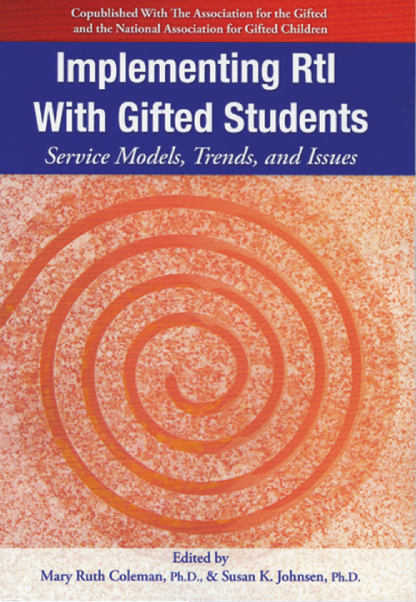
Implementing RtI With Gifted Students: Service Models, Trends, and Issues (ISBN: 978-1-59363-950-1) is a valuable resource that clearly describes how Response to Intervention (RTI) can be used within the framework of gifted education programming models. This book, jointly published with The Association for the Gifted (TAG) and the National Association for Gifted Children (NAGC), includes 14 chapters contributed by top experts in the field of gifted education who focus on a variety of timely topics to guide educators in addressing the needs of students with gifts and talents using multitiered support and services through RtI. Screening, assessment, and progress monitoring; importance of family engagement; problem solving; data-driven decision making; evidence-based practices; and tier-based models and strategies are just a few of the topics included in the text. Gifted education models that fit within tiered frameworks are discussed in depth, helping readers understand how RtI can be implemented within particular program designs. Additional resources such as forms, templates, timelines, and rubrics are presented, offering solid examples and useful tools to help readers examine RtI in light of gifted education. Editors Mary Ruth Coleman, PhD, and Susan K. Johnsen, PhD, have created a well-organized and easy-to-comprehend guide for any organization or individual that desires to implement RtI with gifted students. For more information, contact Prufrock Press, Inc., P.O. Box 8813, Waco, TX 76714-8813, 800-998-2208, www.prufrock.com.
Coteaching to Enhance Instruction
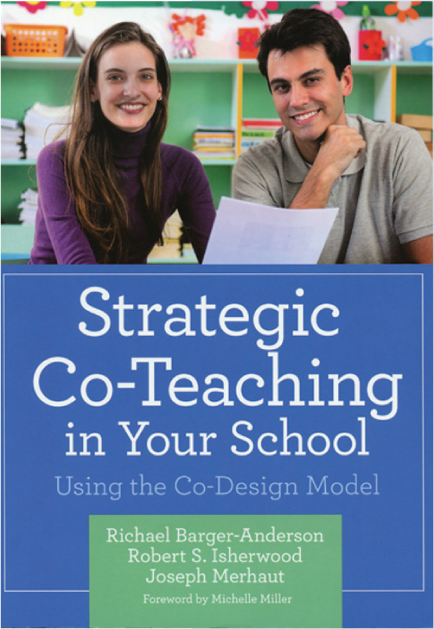
Strategic Co-Teaching in Your School: Using the Co-Design Model (ISBN-13: 978-1-59857-166-0) is a step-by-step guide to implementing coteaching in an inclusive classroom. Authors Richael Barger-Anderson, Robert S. Isherwood, and Joseph Merhaut explain ways in which differentiation of curriculum can effectively meet the needs of all students using the model they present. By collaborating and sharing expertise, teachers enhance instruction and all students are presented with an optimal learning environment in which they can realize individual learning goals. Nine elements of a codesign model and four pathways for implementation provide options and rationale for using this curriculum delivery model. Real-life success stories describe experiences of teachers and administrators who have implemented strategic coteaching and witnessed its value. The book includes forms and checklists that can assist in creating a successful coteaching plan. For more information, contact Paul H. Brookes Publishing Co., P.O. Box 10624, Baltimore, MD 21285-0624, www.brookespublishing.com.
Gifted Spanish-Speaking Students
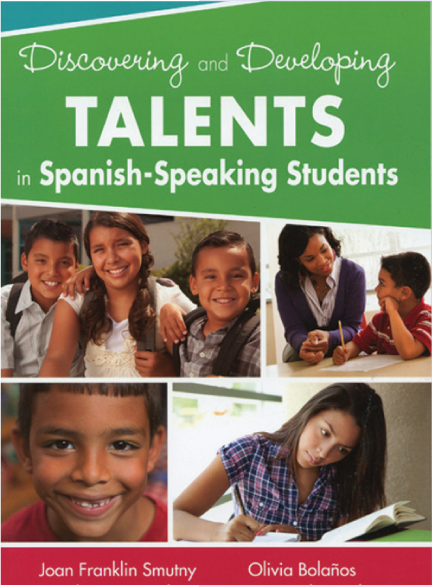
Joan Franklin Smutny, Kathryn P. Haydon, Olivia Bolanos, and Gina Estrada Danley discuss the changing demographics of the nation, bringing attention to the increase of Spanish-speaking students in our schools and the need for paying attention to the underdevelopment of this specific population. Discovering and Developing Talents in Spanish-Speaking Students (ISBN: 978-1-4129-9636-5) encourages readers to investigate specific needs and characteristics of these children and offers numerous strategies for recognizing student strengths, identifying and developing the gifts of bilingualism and cultural diversity, creating challenging educational experiences that engage students in learning, and providing appropriate learning environments for Spanish-speaking students who are gifted. Authors address the importance of communicating the definition of gifted and talented to Spanish-speaking parents, informing them what it truly means to be gifted and helping them to understand the unique needs of their children. Also included are testimonials from teachers and students, examples of communication with parents, poems written by students, and specific examples of challenges faced by gifted Spanish-speaking students. For more information, contact Corwin: A SAGE Company, 2455 Teller Road, Thousand Oaks, CA 91320, (800) 233-9936, www.corwin.com.
Gifted Children in the Inclusive Classroom
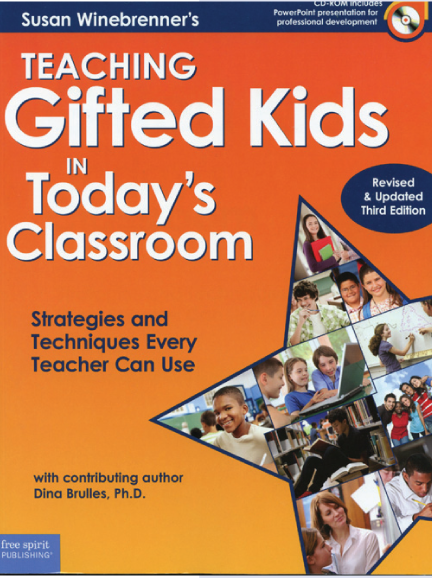
How can teachers differentiate instruction for gifted students in the inclusive setting without losing control, causing resentment, or spending hours preparing materials? How can teachers ensure that their bright students have not only mastered the required standards but also keep them challenged and learning new content each day? To answer these and many other questions, Susan Winebrenner and contributing author Dina Brulles offer this revised and updated third edition of Teaching Gifted Kids in Today’s Classroom (ISBN: 978-1-57542-395-1). The authors begin by introducing the reader to the gifted child and end with a chapter addressing gifted programming; in between, seven chapters of step-by-step instructions for successful strategies to assist in the instruction of gifted children are presented. Scenarios and examples are offered, guiding teachers in effectively using the strategies to address the needs of individual students. Authors also share ideas for incorporating technology into many of the strategies, such as assessments, critical and creative writing skills, accelerated learning, and more. The book is packed with reproducible pages that make it easy and time efficient to implement the strategies in the classroom. Also included is a CD-ROM containing PowerPoint presentations for professional development. For more information, contact Free Spirit Publishing Inc., (612) 338-2068, www.freespirit.com.
Curriculum Units That Challenge the Gifted
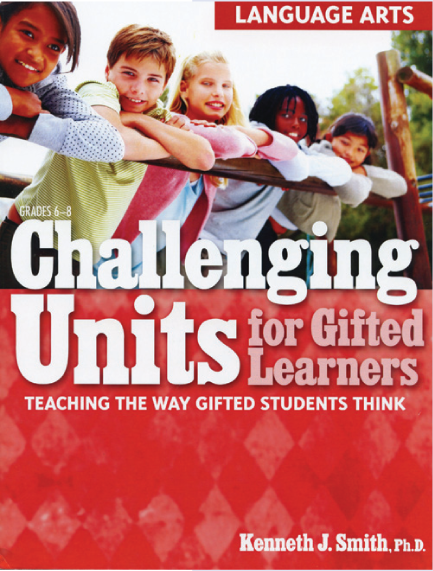
Research supports the fact that gifted students have the potential to comprehend material at a faster pace, utilize higher level thinking, and interact more efficiently with complex content than most children. Including four books that address the content areas of language arts, science, mathematics, and social studies, Challenging Units for Gifted Learners: Teaching the Way Gifted Students Think (ISBN-13: 978-1-59363-421-6/language arts, 978-1-59363-710-1/science, 978-1-59363-422-3/social studies, 978-1-59363-497-1/math), this resource highlights research-based practices that help educators stimulate active learning and move beyond the typical curriculum of the classroom. Each unit begins with two chapters, one describing the gifted student as an intellectual archeologist and the other examining cognitive processes of gifted learners. Through simulations and authentic product development, Kenneth Smith, PhD, invites teachers to encourage individual students to generate their own ideas in reference to topics being studied. Each lesson is tied to national standards and provides step-by-step guides for easy implementation. Learners will be empowered to examine issues from their individual perspectives as they explore, solve problems, participate in economic summits, create personal views of different American conflicts, become artful writers, and much more. All four books present innovative and creative projects that will stimulate the thinking of gifted learners. For more information, contact Prufrock Press, Inc., P.O. Box 8813, Waco, TX 76714-8813, 800-998-2208, www.prufrock.com.
Board Game That Engages Gifted Students

Bypass is an educational game that, like many other games, has a fairly simple objective: the player strategizes in an effort to get from one side of the playing board to the other and, of course, the goal is to do so before opponents. However, connectivity, spatial analysis, and focus during play are just a few of the aspects of this interactive learning experience that create a more complex challenge and higher levels of thinking. Students will need to be thinking more than one step ahead as they determine which maneuvers will benefit them the most as they strive to outthink their opponents. Players strategically place tiles to construct a continuous road full of twists and turns across the playing board. They may protect some routes and bypass others. The player who constructs the road across the board first wins the game. Bypass is the winner of many awards and provides an educational break from the normal curriculum in the classroom. This game is recommended for children aged 8 and up, two to four players, and is estimated to take approximately 25 min to complete. For more information, contact Simply Fun, 11245 SE 6th St., Suite 110, Bellevue, WA 98004, www.simplyfun.com.