







Abstract
Cartoon interpretation and production are teaching strategies that can assist students in a deeper understanding of concepts and practice of higher level thinking skills while motivating them through humor. This article presents an extended example of graduate students in an introductory course in gifted education creating humorous cartoons to explore major ideas and different types of perfectionism. General concepts of adaptive (positive) and maladaptive (negative) perfectionism, along with causes and mitigations, are discussed and illustrated with student-made cartoons. Students reported that creating cartoons was intrinsically motivating, promoted deeper levels of content learning, facilitated application of concepts, and aided self- and overall reflection on the topic. The process of the cartoon project and examples of student-generated cartoons are provided to promote practicing educators and teacher educators with ways of adapting this teaching strategy.
“Cartoon creation allows students to use higher levels of thinking to synthesize ideas, make creative connections, and explore word play, analogy, and symbolism.”
Perfectionism is an important social-emotional topic for gifted students often taught through bibliotherapy and role-play. Another promising technique is the interpretation and creation of cartoons. Recent research (Zousel, Rule, & Logan, 2013) with primary-grade students showed that those who learned about perfectionism by analyzing and completing their own cartoons learned more content and reported greater lesson enjoyment than control groups using bibliotherapy. Another study involving preservice teachers in using cartoons to teach elementary students about bullying (Rule, Logan, & Kohler, in press) also showed positive results. This article provides a practical model for ways in which teachers of gifted students can support learning about affective topics such as perfectionism through cartoon analysis and creation. We explore how practicing teachers preparing to become coordinators of gifted education programs and teachers of the gifted for their K-12 school districts learned and practiced concepts related to perfectionism. They researched information and made humorous cartoons that conveyed perfectionism concepts as an assignment for an introductory gifted education graduate course.
Perfectionism, striving for flawless performance, is especially prevalent among high achievers, particularly students who are identified as gifted and talented, although also recognized in many students of the general population (Adelson, 2007; Schuler, 2000). Significant problems may accompany perfectionism and some scholars believe that perfectionism can be only maladaptive (Burns, 1980; Delisle & Galbraith, 2002; Flett & Hewitt, 2002; Greenspon, 2000; Pacht, 1984). However, other researchers have recognized positive aspects of perfectionism that may assist students in becoming successful individuals. Considering that negative characteristics of perfectionism can lead to serious repercussions, perfectionism is an important topic to be addressed in the education of the gifted and a subject that teachers of the gifted need to be prepared to address.
Perfectionism Overview
Perfectionism involves a strong need to perform at a flawless level in many aspects of one’s life (Flett & Hewitt, 2002). Trying to meet excessively high standards is the most conspicuous aspect of perfectionism (Pacht, 1984). Perfectionism is recognized as a multidimensional construct by most investigators (e.g., Rice & Ashby, 2007), but there is disagreement over whether it has adaptive or maladaptive aspects. Research into adaptive perfectionism therefore continues to the present (e.g., Davis & Wosinski, 2012; DiPrima, Ashby, Gnilka, & Noble, 2011; Elion, Wang, Slaney, & French, 2012; Stoeber & Otto, 2006). Hamachek (1978) differentiated “normal” and “neurotic” perfectionism. This difference has been maintained through the use of the terms “adaptive” and “maladaptive” perfectionism (Burns & Fedewa, 2005) or “positive” and “negative” perfectionism (Slade & Owens, 1998). Adaptive perfectionism is often sanctioned by society as positive striving toward excellence and worthy goals. Consequently, in this article, we will address adaptive perfectionism first, followed by the traits and behaviors of maladaptive perfectionism. Then, we will examine the causes of maladaptive perfectionism and ways to stop or mitigate its negative consequences. Cartoons developed by the graduate students preparing to be teachers of the gifted as part of a course project are used to illustrate the key components of perfectionism.
Healthy Perfectionism
Hamachek (1978) defined normal perfectionism as setting high standards for one’s own performance, noting that such persons are able to “derive a very real sense of pleasure from the labors of painstaking effort,” and yet “feel free to be less precise as the situation permits” (p. 27). It is this latter ability to adjust self-evaluation standards as circumstances arise that allows these persons to avoid unhealthy consequences. Frost, Marten, Lahart, and Rosenblate (1990) noted that “the psychological problems associated with perfectionism are probably more closely associated with these critical evaluation tendencies than with the setting of excessively high standards” (p. 450). Aside from being flexible in applying high standards to a particular area of effort, students can exhibit different degrees of perfectionism in various areas of their lives.
Bieling, Israeli, and Antony (2004) identified a component called “positive striving” that included high standards, persistence, and conscientiousness. Therefore, adaptive perfectionism can lead to higher effort and accomplishment with these successes, thereby positively reinforcing the elevated goals. In addition, adaptive perfectionists are often good leaders of teams, inspiring others to higher achievements.
Self-oriented perfectionists, according to Mills and Blankstein’s (2000) work, have a large repertoire of academic learning strategies. They use adaptive rehearsal, elaboration, critical thinking, metacognition, time and study environment management, and effort management skills, which support their strong motivation to succeed. They also found that these perfectionists displayed a high need for organization and order as shown by the cartoon in Figure 1.
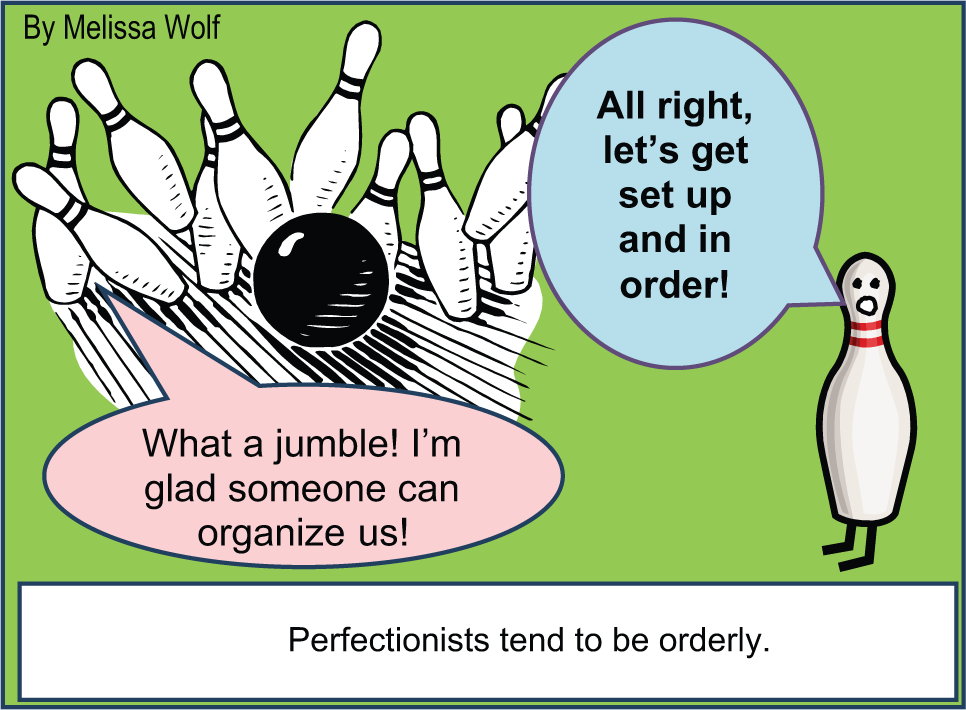
An affinity for order and organization is a perfectionist trait.
Maladaptive Perfectionism Traits
Dichotomous, or “all or nothing,” thinking is the variable most predictive of negative perfectionism (Egan, Piek, Dyck, & Rees, 2007). These perfectionists interpret anything less than complete perfection as failure. See Figure 2 for an illustration of this idea. This attitude can lead to underachievement when the person encounters schoolwork that is too difficult for achievement of flawless work. The student may procrastinate or decide not to attempt the work at all, thereby avoiding the experience of failure (Walsh & Ugumba-Agwunobi, 2002).
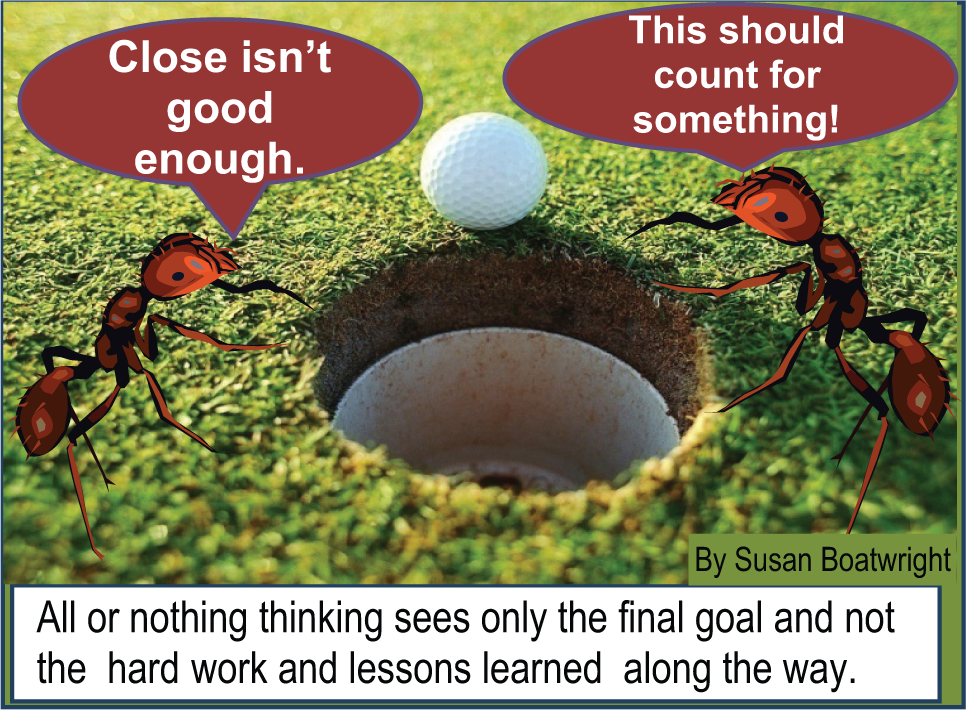
Dichotomous or black-and-white thinking is characteristic of neurotic perfectionists.
Perfectionists feel strong pressure to achieve in a faultless manner as shown in Figure 3. Students who exhibit socially prescribed perfectionism believe that social acceptance depends on their perfect performance. Such persons feel shame and guilt when their performance is imperfect but do not experience pride when it meets the highest standards (Stoeber, Kempe, & Keogh, 2008). This lack of pride in success may be due to individuals immediately reappraising the task as insufficiently demanding, thereby depriving themselves of any feeling of accomplishment (Shafran, Cooper, & Fairburn, 2002).
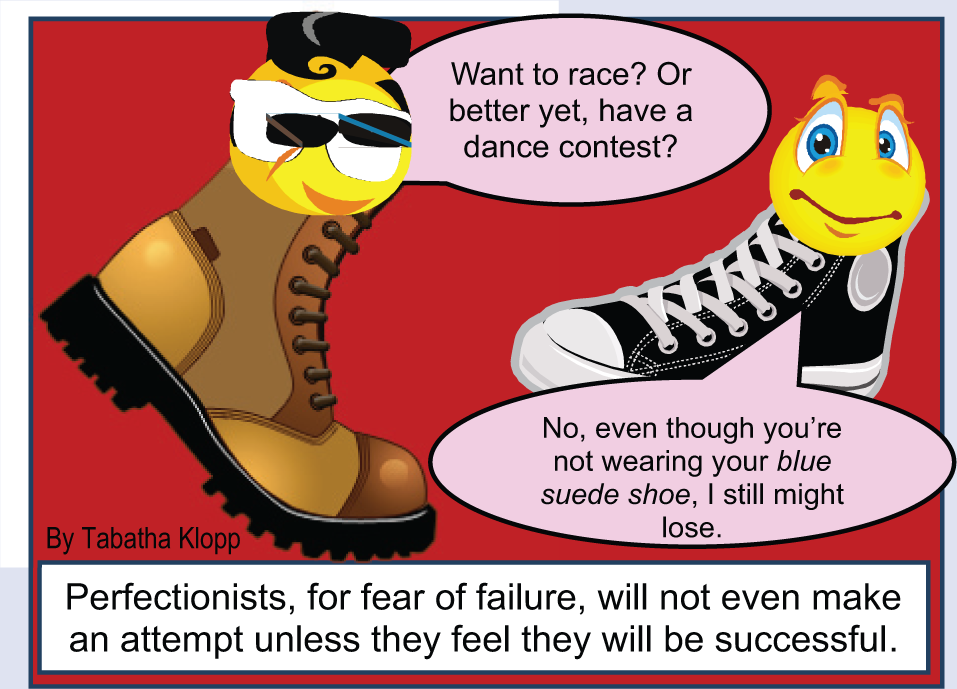
Neurotic perfectionists only attempt tasks at which they are sure they can succeed.
Perfectionists are driven by a fear of not reaching their goals. The discrepancy between their current performance and their expected performance drives perfectionists to work hard, sometimes pushing them to become workaholics (Clark, Lelchook, & Taylor, 2010). Teachers and counselors need to reduce students’ fear of failure and help them develop healthy living habits. Maladaptive perfectionists magnify their mistakes and those of others, becoming overly critical. See Figure 4. Because they set standards much higher than can be reasonably achieved, they are often disappointed in their performances. They are unable to adjust their standards to take in their current levels of performance, thereby continuing to fall short of their ideals again and again in a self-defeating cycle (Bieling, Israeli, Smith, & Antony, 2003). Even when they perform perfectly, perfectionists may find reasons for dissatisfaction (Stoeber & Yang, 2010).
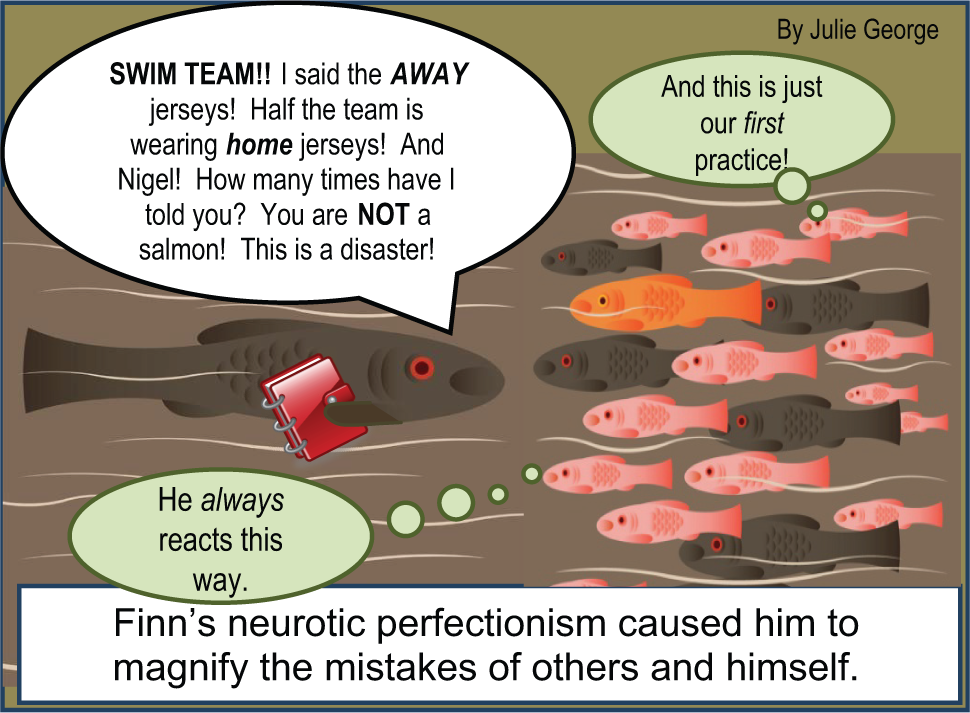
Neurotic perfectionists focus on mistakes.
Maladaptive perfectionism reduces playfulness, risk-taking, and enjoyment of the process, instead causing rigid behavior (Marano, 2008). See Figure 5. Perfectionism reduces creativity and innovation, qualities important to adaptability and economic success, because they lower the ability to take risks and consider alternate paths. Maladaptive perfectionists tend to focus on a set of fixed black-and-white rules for what they should do, rarely taking into account their own desires or acknowledging gray areas. They insist on having control of situations and impose rigid structure on their lives.
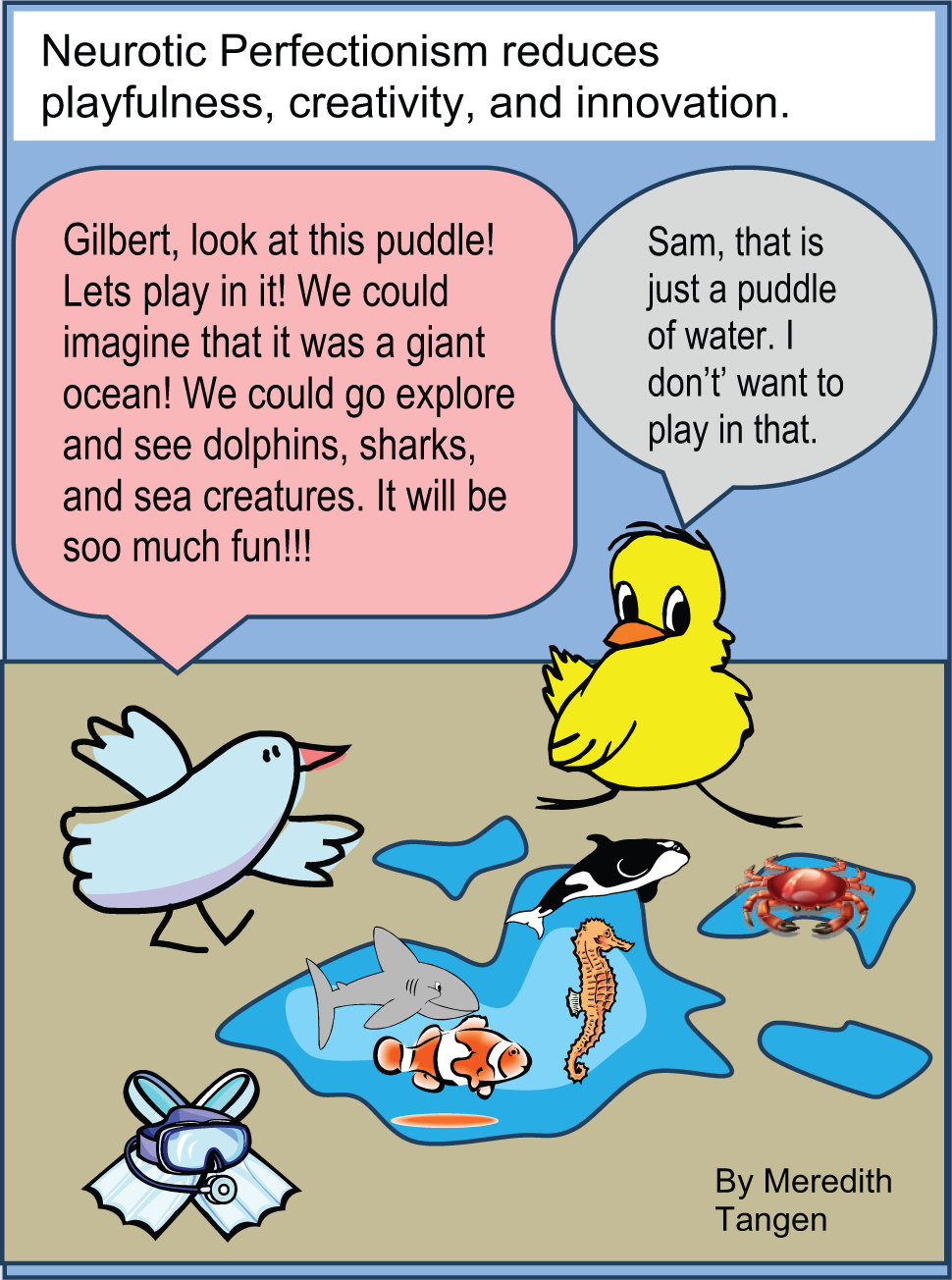
Neurotic perfectionism reduces play.
Maladaptive Perfectionism Behaviors
Maladaptive perfectionists set unrealistically high standards that often set them up for failure (Stoeber & Rambow, 2007). When their accomplishments fall short of the goal, they are upset, but rather than adjust the standard to a more reasonable level, they maintain or even increase the goal (Stoeber, Hutchfield, & Wood, 2008). Eventually, neurotic perfectionists become reluctant to start a project for fear of failing or for thinking it is impossible to meet the self-imposed standard. Maladaptive perfectionists may apply these standards to everyone, resulting in disappointment in others and a poor social life. Workaholism occurs when a maladaptive perfectionist works excessively to maintain a flawless record of excessively high goals, as shown in Figure 6.
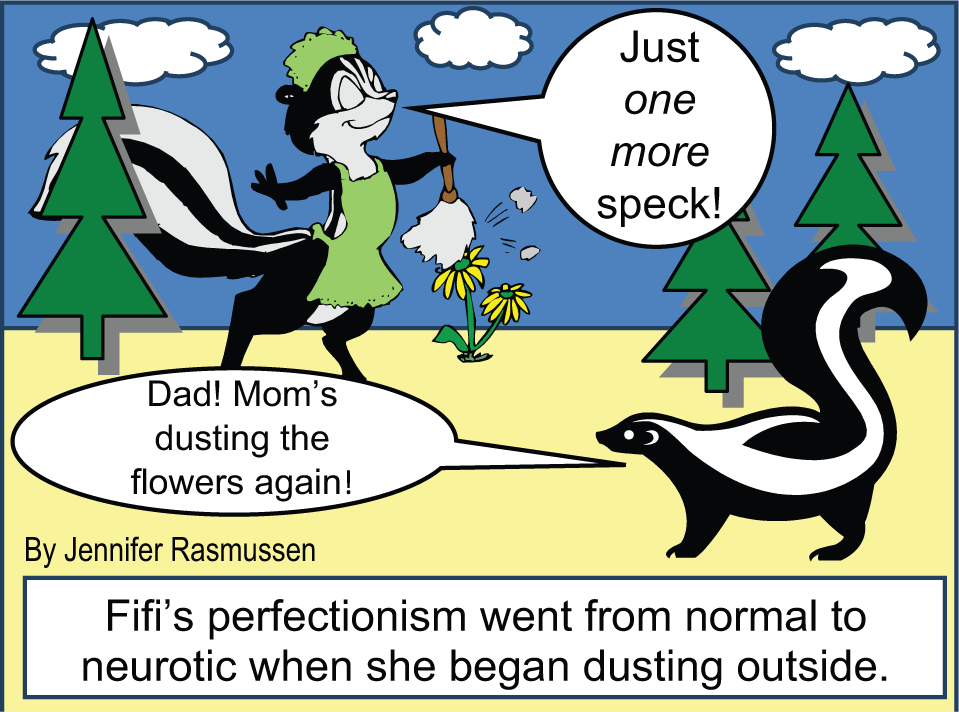
Neurotic perfectionists may become workaholics.
Students with maladaptive perfectionist tendencies avoid competitive situations and new experiences unless they believe they will perform well. They lose confidence after failure and lack the resilience to recover from such a loss (Stoeber, Hutchfield, et al., 2008); therefore, they may quit if their perception is that they are not the best in the group. Alternatively, the drive to be the best may cause some maladaptive perfectionists to cheat as in Figure 7.
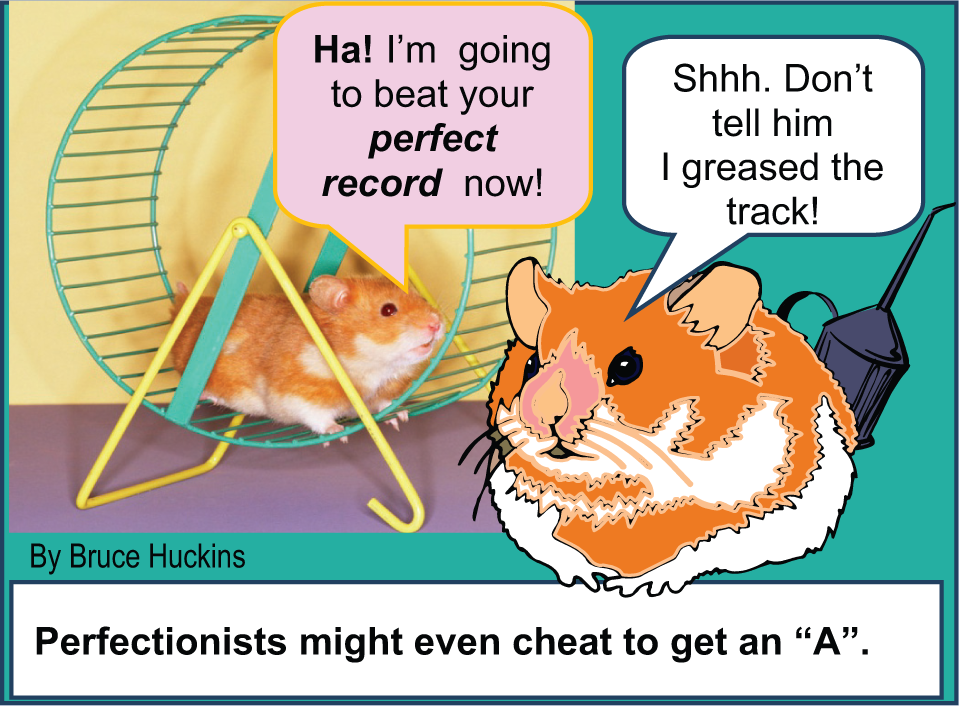
Neurotic perfectionists may even resort to cheating to maintain their “perfect” records.
Perfectionists may wait until the last minute to study for a test or complete assignments because if they do not have enough time they cannot do perfect work—an ego-saving strategy (Walsh & Ugumba-Agwunobi, 2002). In this way, perfectionism can provide a sense of protection for underachievers as they use their high standards as an excuse for poor achievement.
Studies have linked perfectionism to depression (Harris, Pepper, & Maack, 2008), eating disorders (e.g., Boone, Soenens, Braet, & Goosens, 2010), obsessive-compulsive personality disorders (Sassaroli et al., 2008), and self-harm behaviors (O’Connor, Rasmussen, & Hawton, 2010). See Figure 8.
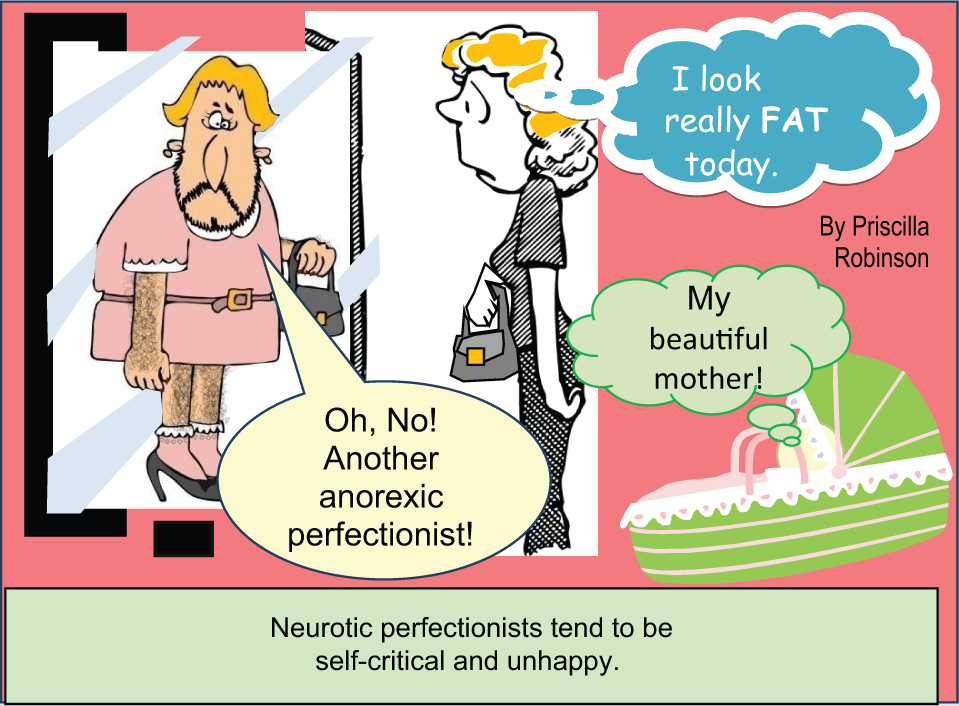
Anorexia is often caused by perfectionism.
Causes and Mitigations of Maladaptive Perfectionism
Perfectionism is often a characteristic of gifted and multitalented students, fueling excellence and high achievement. According to one study, 87.5% of gifted students in Grades 7 and 8 exhibited strong tendencies toward perfectionism with almost 30% testing in the maladaptive range (Schuler, 2000). Rice and Ashby (2007) found very similar results in a study of 1,500 undergraduate college students. These studies reveal the prevalence of perfectionism among higher achievers, but it is also long-recognized in the general population (Pacht, 1984).
Children are “made” and nurtured into perfectionists, rather than being born with this mindset. Perpetual glowing feedback from parents and teachers on how their work is exceptional may cause students to focus on the final product rather than the process of learning. See Figure 9 for an example of how excessive parental expectations influence perfectionism.
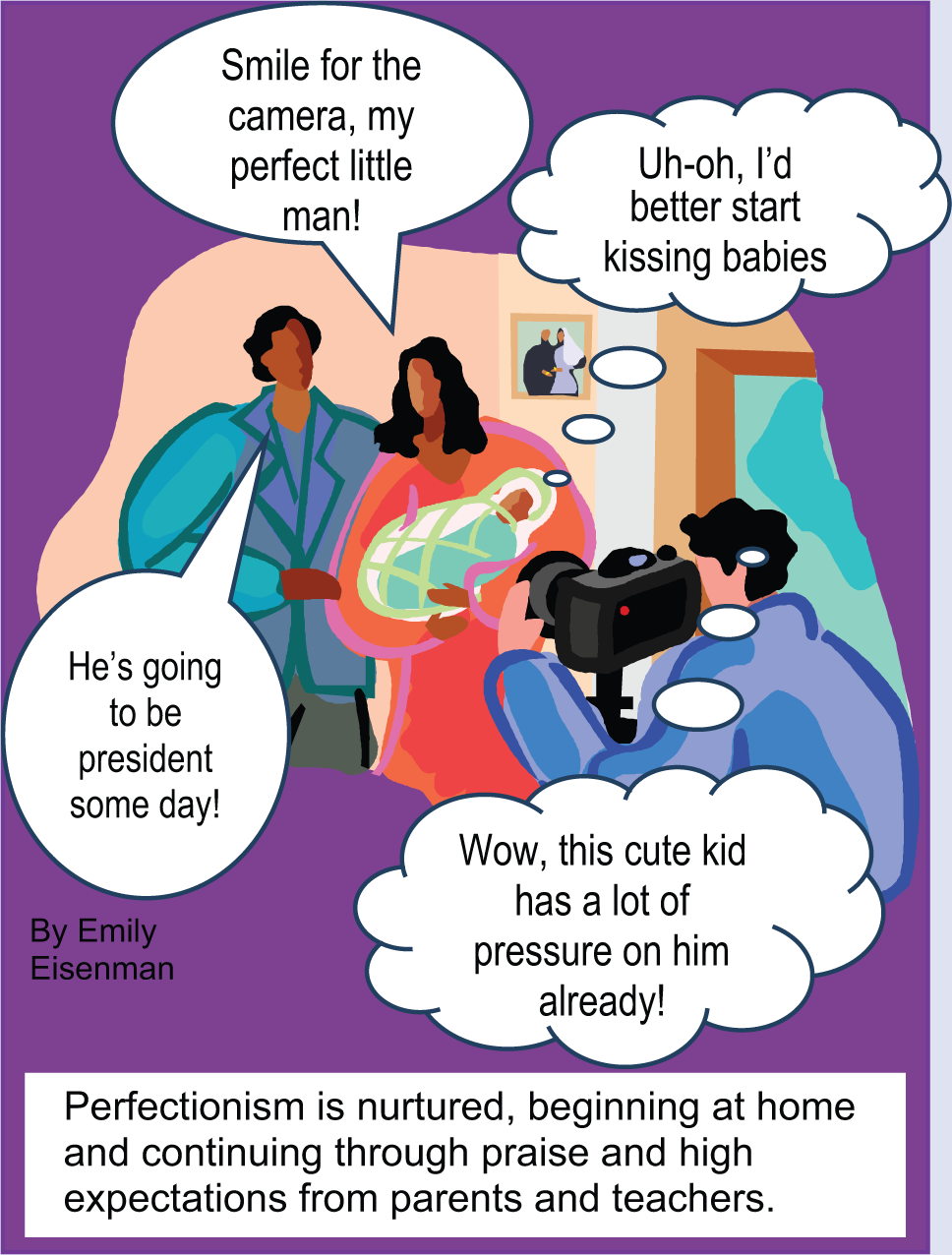
Parental expectations and reactions influence perfectionism in children.
Adelson (2007), after analyzing case studies of fourth graders with maladaptive perfectionism, identified ways to help ease their problems. She recommended that parents and teachers guide students in taking pride in the process and their efforts while using mistakes as learning opportunities. Set goals that are lower than 100%—perhaps 90%, 80%, or less, depending on experience. Combat low self-esteem by transforming the goal into a series of steps to accomplish. Reward the process rather than lavishing praise on final products. See Figure 10.
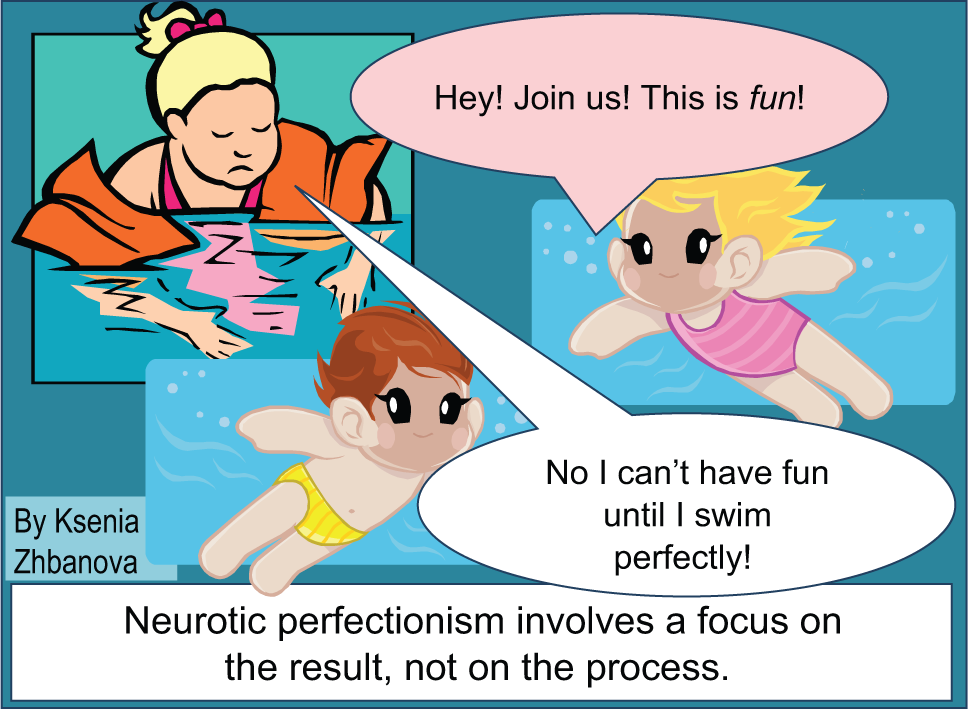
Neurotic perfectionists focus on the final result rather than the process.
Students should be given the chance to take risks and fail in a nonthreatening environment. Present students opportunities to get outside their comfort zones and try new, challenging, different experiences. Emphasize process and revision rather than the final product (Adelson, 2007). Teachers can show by example how to be imperfect by modeling self-acceptance of mistakes and describing humorous errors they have made in the past. Teachers should stress that setbacks in finding the correct solution to a problem are normal. Counselors and teachers can help students recognize strengths and weaknesses, accept mistakes, analyze personal problems, and develop good attitudes toward learning, school, and society.
The following section describes the process by which students made the cartoons that were featured in this section.
The Cartoon-Making Project
Analyzing humorous cartoons that are connected to course content is a motivating teaching technique that promotes students’ problem-solving skills (Berk, 2002). At first, students seek to recognize the incongruity in the cartoon situation as they make connections to the content addressed—a process that resembles problem finding. Then they comprehend the punch line, which is similar to solving the problem. Cartoon creation allows students to use higher levels of thinking to synthesize ideas, make creative connections, and explore word play, analogy, and symbolism.
The instructor (first author of this article) of an introductory graduate course for practicing K-12 teachers in gifted education asked students to produce humorous cartoons as part of their application of perfectionist concepts and as practice in creative production, because creativity is a major component (along with high intelligence and task commitment) of gifted behavior (Renzulli & Reis, 1997). The practicing teachers in the introductory graduate course on educating gifted students first read information from their textbook about perfectionism and then searched Internet sites and the professional literature to gather more information. They each compiled a list of 20 facts about this topic. They reviewed these concepts related to perfectionism by choosing four they deemed to be important and by constructing humorous cartoons that conveyed those four ideas. Students chose to create cartoons from instructor-provided background scenes, which used clipart in PowerPoint format. They were free to add or delete characters, objects, talking bubbles, and other features or to substitute their own ideas by sketching them using the drawing functions or clipart in PowerPoint.
After students had turned in this assignment, the instructor compiled the cartoons and asked each student to review all the cartoons, selecting the 10 that he or she deemed to be most effective in humor and content. Students wrote three specific reasons why each of the cartoons was effective and then made a detailed suggestion for improving each of the 10 chosen cartoons. This information was anonymously shared with the authors of the cartoons and also used in selecting and improving the cartoons featured in this article.
An analysis of the ways in which students involved in this project found the endeavor to be intellectually rich and personally relevant is provided in the next section. Although the project described here is not a rigorous research investigation, the results presented provide support for the use of cartoons in teaching an affective concept. It is hoped that readers will be inspired to use humorous cartoon-viewing, -interpretation, and -creation as a strategy to teach other gifted education topics such as bullying, leadership, diversity, and goal setting.
Student Learning From the Project
Practicing teachers in the graduate course completed a written questionnaire composed of two questions after the project was complete: How helpful was this cartoon work in learning about perfectionism? What were the components of your process of making the cartoons? The resulting statements were sorted using a spreadsheet and categorized using a constant comparison method. Similar responses to each of the questions were grouped into categories while simultaneously comparing all the responses to a given question. The categories were refined as additional responses were read that shifted the category labels and defined new relationships (Dye, Schatz, Rosenberg, & Coleman, 2000). Overall, in their written responses, students reported enjoyment of the project finding it intellectually stimulating and effective in helping them review perfectionist concepts.
Usefulness of the Cartoon Approach to Learning
The graduate students were practicing teachers preparing to become gifted education coordinators and teachers at pre-K-12 schools (N = 28; 23 female, 5 male). They recognized several aspects of the work as being particularly helpful. Foremost, they reported that reflecting on the list of perfectionist traits while actively making cartoons allowed them to review and clarify information. This new learning was applied to imagined or real-life situations and therefore learned better through numerous mental connections. Humor increased their interest in the task, and they enjoyed the challenge of finding ways to present puns. Making ideas into visual representations made the ideas more memorable. The graduate students also noted that generating ideas for cartoons caused self-reflection on perfectionist tendencies in themselves and their students. Several expressed that they accessed a deep level of learning because they wanted to find the best connections for cartoons and therefore considered many possible ideas and associations. The focus on the factual concepts during cartoon making helped the students review the principles of perfectionism.
The novel and creative activity was motivating to students. Many personally meaningful connections were made as students considered ideas for the cartoons. Several students recognized that the psychological issues of perfectionism easily produced humorous situations. They also noted that compiling the list of facts about perfectionism at the beginning of the activity and being provided with cartoon backgrounds helped them in constructing the cartoons. Several remarked that the work in this project on perfectionism caused them to reflect on their own perfectionist tendencies and to consider the behaviors of many of their students. They commented on the importance of paying attention to the causes, effects, and mitigations of perfectionism through cartoon-making lessons to their students’ personal development.
The Teacher’s Cartoon Process
The teachers involved in this project also described their process in developing the cartoons. Most reported reviewing the list of facts before starting the cartoon work. They scanned the background scenes to see whether images stood out or whether any ideas seemed to be connected to perfectionism, sometimes looking for specific backgrounds that matched their first cartoon ideas. Students then applied the principles of perfectionism to the provided cartoon backgrounds to make a mini story. They generated puns related to the cartoons and perfectionism ideas and listed ideas for what might be humorous for each of the backgrounds. Often, they reported putting the work aside for a while to allow incubation of ideas. Sometimes, they examined newspaper cartoons to see whether any ideas were sparked. They imagined what the characters might say to each other or how a person might identify with the scene. Finally, they invented new and original ideas for the cartoons, discarding their work if it seemed to be trite or too similar to other cartoons. Talking to K-12 students about the possible ways to approach the cartoon-making project should help them in their own process of creating cartoons.
Conclusion
This cartoon-making activity promoted creative, integrated ways to teach key concepts important to gifted learners. Although this article is limited because it briefly explores the processes, products, and reflections of just one group of students, it does provide evidence that the production of humorous cartoons can support student learning and self-reflection on the topic of perfectionism and might be applicable to many other topics within the curriculum. Examples of previous work in teaching with cartoons support this assertion. As mentioned previously, two recent studies (Rule et al., in press; Zousel et al., 2013) of elementary students learning about perfectionism and bullying through cartoon interpretation and construction showed favorable results. Published studies include Rule and Auge (2005), who conducted a pretest–posttest counterbalanced study of sixth-grade students learning rock and mineral concepts, and found a large effect size in motivation and knowledge gains for concepts learned through cartoons. Two other reports, though not formal studies, produced positive results for cartoon use in earth science with middle school students (Rule, Sallis, & Donaldson, 2008) and high school students (Harman & Rule, 2006). Finally, in a project similar to the current project, Rule and Schneider (2009) asked teachers preparing to work with gifted students to produce cartoons that combined information about the design of gifted programs with humor. The graduate students in that project, similar to those in the current project, reported that their comprehension of concepts benefitted from processing the course information in new, creative ways.
Teachers may want to implement the following steps in using cartoon analysis and creation in their classrooms to review and practice concepts. First, build content knowledge on the topic such as having students read from texts, trade books, articles, or websites. Second, identify general fact statements about the topic that are important. Third, provide cartoon examples on the topic or another somewhat related topic (perhaps use this article for those examples). Analyze a few examples to help students recognize the components that make a cartoon effective such as humor through puns or exaggeration, communication of emotions through facial expressions and stances, clarity of ideas, and appropriate placement of components. Next, apply this knowledge by making cartoons that invite others to think more deeply about the major concepts. Peer review with praise and suggestions for improvement substantially enhanced the cartoons presented here—Try to implement this as part of the cartoon-making activities. Finally, publication of the polished cartoons through a newsletter, website, bulletin board, presentation, booklet, or other means will allow others to enjoy, appreciate, and learn the embedded concepts, thereby empowering your students to share their knowledge with others.
Footnotes
Conflict of Interest
The authors declared no potential conflicts of interest with respect to the research, authorship, and/or publication of this article.
Funding
The authors received no financial support for the research, authorship, and/or publication of this article.
Bios
Audrey C. Rule, PhD, is an associate professor of elementary education and coordinator of the education of the gifted endorsement and master’s degree programs in the Department of Curriculum and Instruction at the University of Northern Iowa, Cedar Falls, Iowa. Her research interests include curriculum materials development, spatial skills, project-based learning and enrichment/gifted and talented education.
Sarah E. Montgomery, PhD, is an assistant professor of elementary education in the Department of Curriculum and Instruction at the University of Northern Iowa, Cedar Falls, Iowa. Her research interests focus on the intersection between social studies education and literacy education, particularly the ways in which student production of digital media can support critical literacy and democracy.