







Abstract
With the release of the Next Generation Science Standards and the adoption of the standards by many states, teachers are encouraged to use the engineering design process (EDP) as an instructional approach to teaching science. However, teachers have limited time to teach science and will often neglect science in favor of mathematics and literacy instruction. To make this feasible for elementary classrooms, teachers should be encouraged to implement integrated units of study utilizing EDP to cohesively bind content areas and to increase active learning, critical thinking, and problem solving among all learners. An additional benefit of using EDP as an instructional strategy is the focus on problem solving and the avoidance of one size fits all learning. Students actively engage in learning content (science, mathematics, literacy, social studies) as they collaboratively work together to solve societal and environmental problems. Knowledge is built as students progress through the challenges and content is provided on a need to know basis, thereby differentiating instruction based on learner needs and challenging gifted learners. In this article, the author provides four sample engineering challenges that can be used to create an integrated unit of study using the EDP as an instructional strategy.
“A student in Grade 1 who demonstrates an ability to solve a simple problem can be further challenged by adding constraints or specific criteria.”
With the release of the Next Generation Science Standards and the adoption of the standards by many states, teachers are encouraged to use the engineering design process (EDP) as an instructional approach to teaching science. However, teachers have limited time to teach science and will often neglect science in favor of mathematics and literacy instruction (Dailey & Cotabish, 2017; Dailey & Robinson, 2016). In particular, Blank (2012) found teachers spent an average of 2.3 hr per week on science compared with weekly estimates of 11.7 hr on language arts and 5.6 hr on mathematics. Despite the limited time to teach science, the Next Generation Science Standards (NGSS) and other newly adopted science standards place a requirement on adding engineering to elementary teachers’ already full schedule. To make this feasible for elementary classrooms, teachers should be encouraged to implement integrated units of study utilizing EDP to cohesively bind content areas and to increase active learning, critical thinking, and problem solving among all learners.
The authors of A Framework for K-12 Science Education, the foundation for the Next Generation Science Standards stated the goal of increasing emphasis on engineering is not to develop more engineers but . . . students should have gained sufficient knowledge of the practices, crosscutting concepts, and core ideas of science and engineering to engage in public discussions on science-related issues, to be critical consumers of scientific information related to their everyday lives, and to continue to learn about science throughout their lives. (National Research Council [NRC], 2012, p. 12)
An additional benefit of using EDP as an instructional strategy is the focus on problem solving and the avoidance of one size fits all learning. Students actively engage in learning content (science, mathematics, literacy, social studies) as they collaboratively work together to solve societal and environmental problems. Knowledge is built as students progress through the challenges and content is provided on a need to know basis, thereby differentiating instruction based on learner needs.
Why Focus on EDPs?
With continuously advancing technologies, engineering jobs and careers are abundant, but there is a lack of employees to meet the increasing demands (Change the Equation, 2012). A colleague and computer technology professor recently stated that his field is in steady flux. What he taught 3 years ago is no longer applicable in today’s world (T. Halic, personal communication, September 19, 2016). Milano (2013) also predicted that, “students entering Kindergarten this year will likely enter job fields upon graduation that have not yet been developed, using knowledge that has not yet been discovered and tools that have not yet be engineered” (p. 11). To this end, our educational system must consider how we are preparing our students, especially our advanced learners, to meet these ever increasing and changing needs. Furthermore, Mann, Mann, Strutz, Duncan, and Yoon (2011) stated that engineering is a linking subject and can be used across the curriculum to facilitate active learning among all learners. Mann and colleagues also suggested that EDP provides gifted learners opportunities to engage in challenging tasks through varying the levels of sophistication, breadth, and depth of a subject.
EDP
Typically and as presented in Engineering Is Elementary curriculum units (EIE, n.d.), the EDP involves five or more steps, including ask, imagine, plan, create, improve (Figure 1). The EDP is cyclical with no starting or stopping point. Each process can be iterative and may need to be revisited multiple times before the problem is resolved.
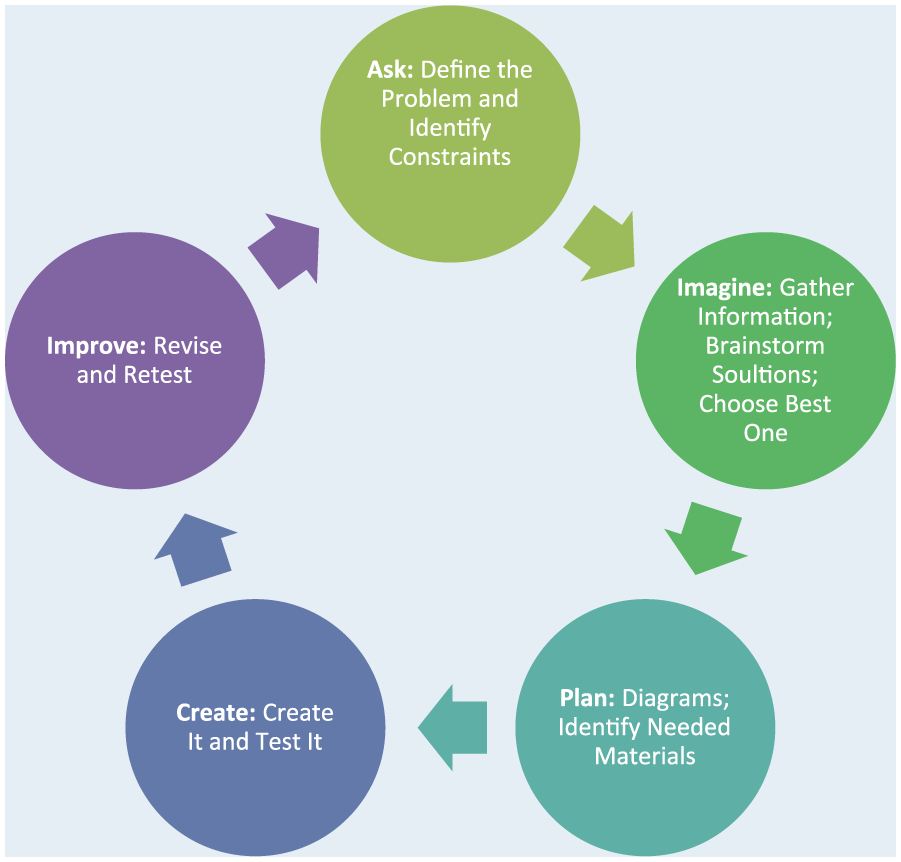
Engineering design process (EIE, n.d.).
The authors of A Framework for K-12 Science Education recommended students be involved in eight practices (see Table 1) that describe common behaviors of scientists and engineers as they work to solve problems and design solutions (Achieve, Inc., 2014). These practices increase in complexity and sophistication across grade levels (see Figure 2). For example, Grades K-2 students are asked to define a simple problem that can be solved through the development of a new tool or refinement of an existing tool, whereas, Grades 3 to 5 students are instructed to use prior knowledge to identify an existing problem that can be solved through the development of a new tool. Grades 6 to 8 students are challenged by additional criteria and constraints limiting possible solutions and Grades 9 to 12 students are challenged by the addition of social, technical, and/or environmental considerations (NGSS Lead States, 2013). The learning progressions (increased complexity of practices) can be used to challenge students as needed regardless of grade level. For example, a student in Grade 1 who demonstrates an ability to solve a simple problem can be further challenged by adding constraints or specific criteria to increase the complexity of the problem.
Science and Engineering Practices
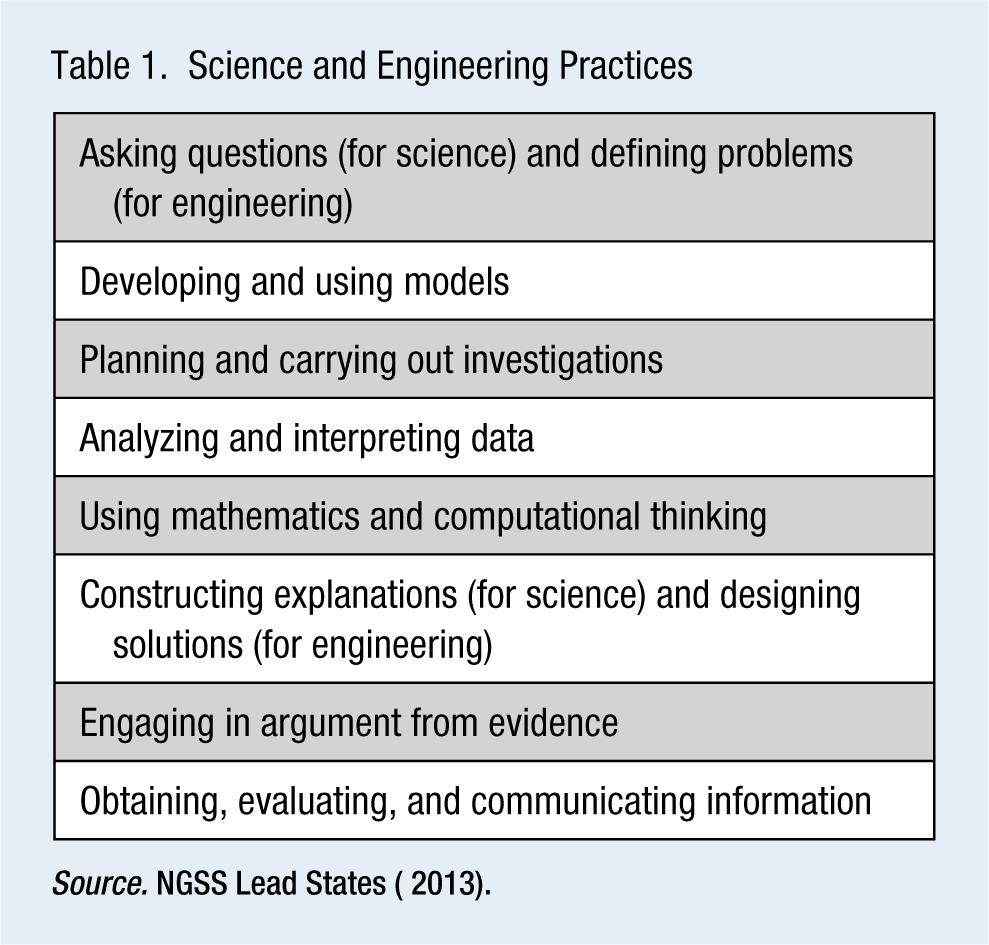
Source. NGSS Lead States ( 2013).
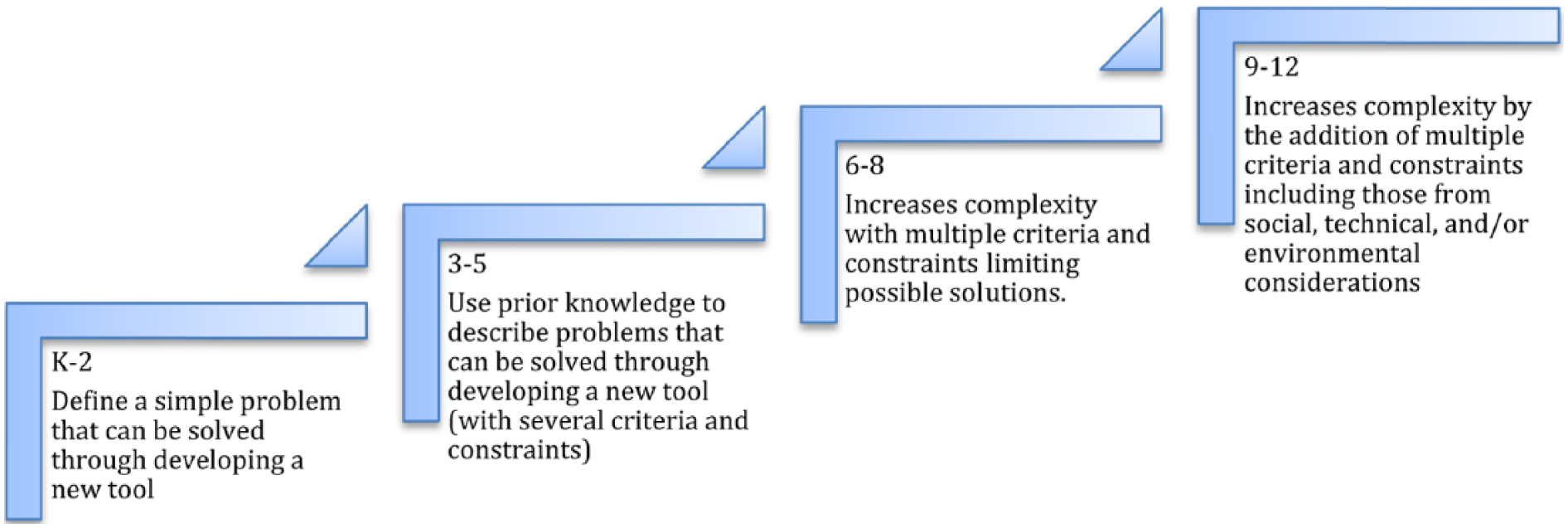
Progression of engineering design practices in the NGSS (NGSS Lead States, 2013).
Using EDP as an Instructional Approach Across Multiple Content Areas
This section will provide example lessons using EDP while addressing multiple content areas. To actively engage students and attach relevance to learning, I recommend teachers present the challenge before the content. By presenting the challenge first, students are more eager to learn the why behind the activity. In addition, when teaching learners with gifts and talents, it is advisable to teach from whole-to-part concept teaching (Rogers, 2007). By presenting the whole first, students are able to embrace the big idea and as they progress, they add the needed content knowledge as they build their conceptual understanding.
Before beginning any challenge, students need to be introduced to the EDP. An example activity is presented below to introduce students to EDP.
Engineering Design Process Challenge
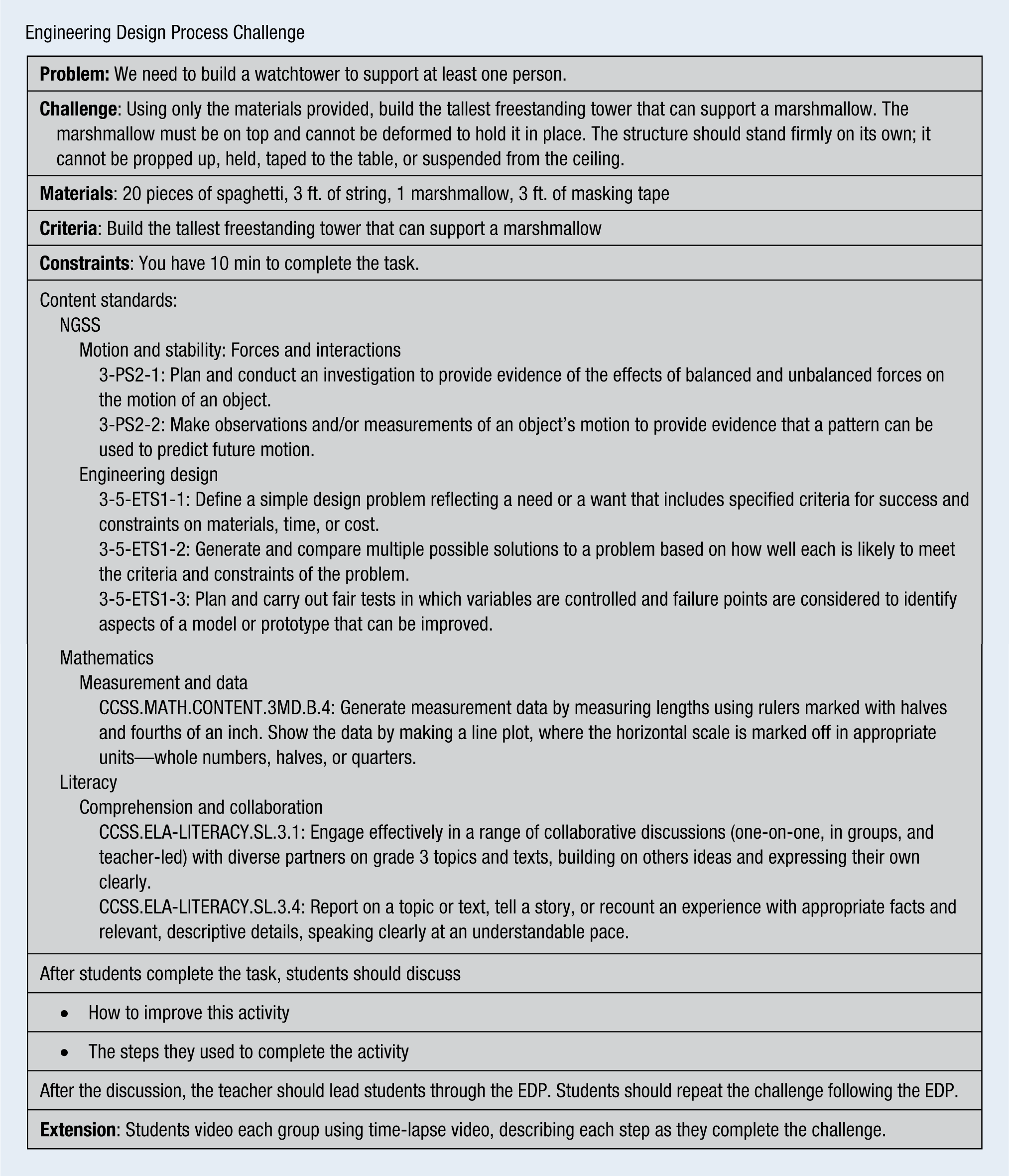
In the watchtower sample challenge, it is easy to see how multiple content standards can be addressed. The sample focused on Grade 3 but the challenge/activity could be adapted to meet standards at any grade level. The main purpose of this challenge is to help students identify the steps of the EDP; however, teachers should include applicable content standards as appropriate. For this lesson, students could measure the heights of the towers, time how long the tower will stand, and compare and contrast classroom data using appropriate graphs. Through the extension, students could meet literacy standards by describing each step of the EDP in a time-lapse video and presenting this to their peers. In addition, students are collaborating in groups to address the challenge.
Another challenge is presented below to engage students in science, engineering, mathematics, literacy, and social studies.
We Are Cooking Now
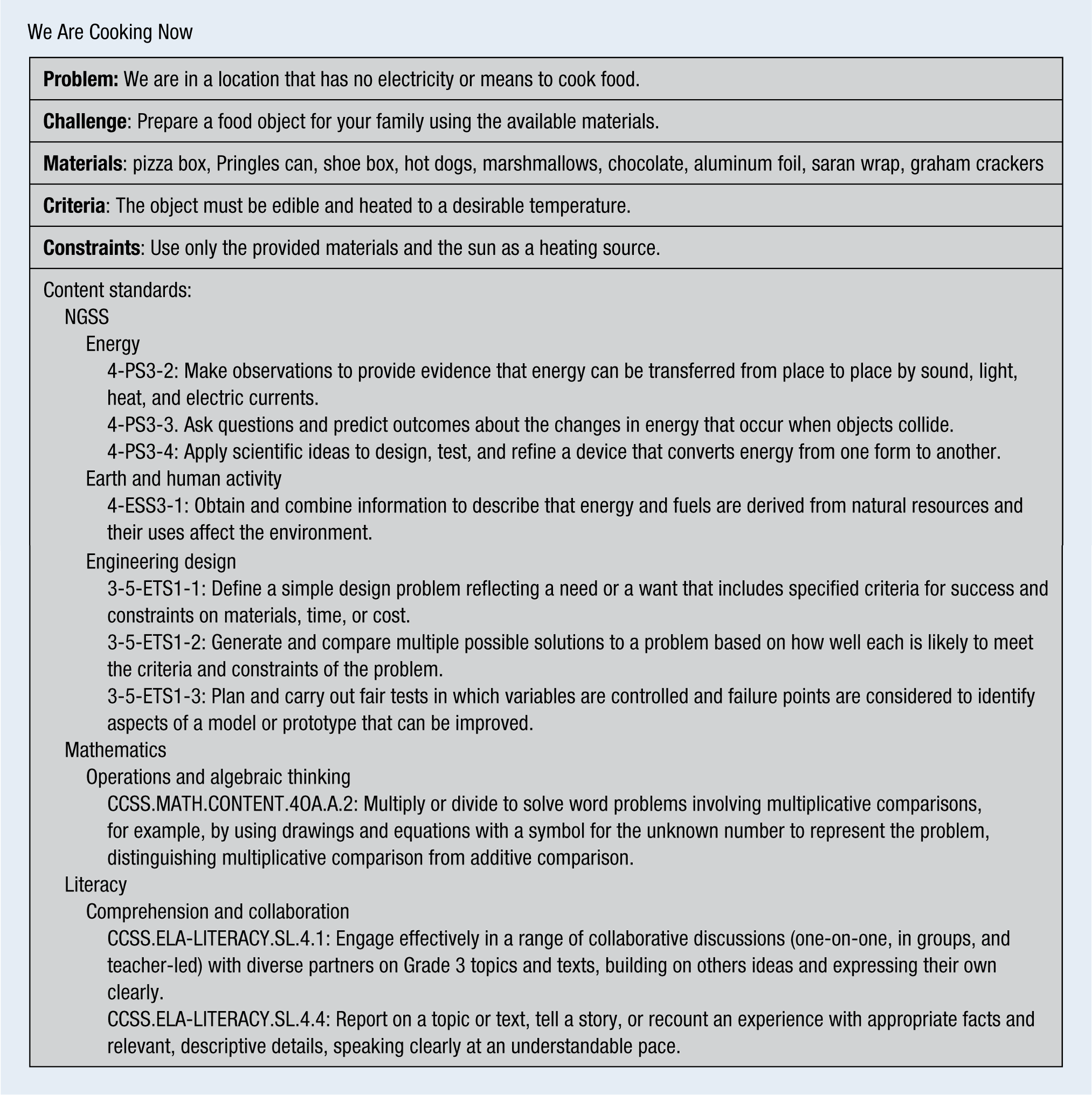
This sample challenge/activity focused on Grade 4, but again, it could be adapted for various grade levels. The main purpose of this challenge is to introduce and reinforce energy transfer and to observe and predict the effects of heat on various materials. This challenge could also lead students to a study of renewable and nonrenewable natural resources. In mathematics, students could construct equations to predict when the foods will reach a desirable temperature for eating. Reading and writing literacy standards could be met by creating an advertisement about their cooker and presenting it to the class. In addition, social studies standards could be addressed by focusing on various cultures and the methods they have used throughout history to prepare food.
Below is another engaging engineering challenge for students focused on water transportation.
Water Transportation
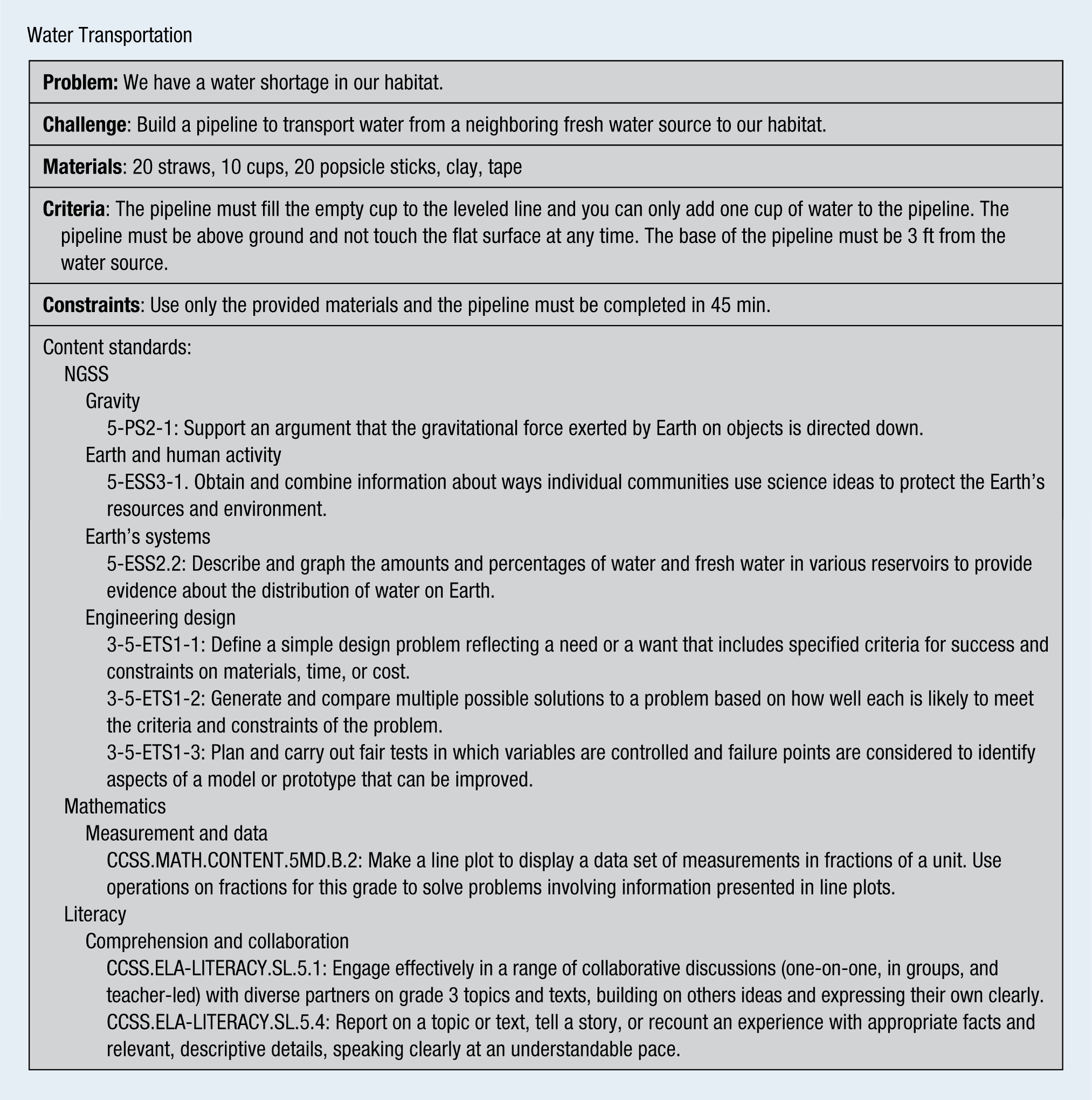
The sample challenge/activity is focused on Grade 5 but can easily be adapted for Grade 6 and above. The purpose of this challenge can be focused on Earth’s systems and conservation of Earth’s materials (See Figure 3 & 4). Students could use a pan full of rocks for their water source to mimic real streams and the function of rocks in filtering water. Additional topics and standards could involve transportation systems, kinetic and potential energy, and force and motion. Students could calculate the rate of water transportation. They could also determine the time it takes the water to reach certain measurements on the cup. The data could be used to prepare a scatterplot with time on the X axis and the amount of water on the Y axis. For an additional challenge, mathematically talented students could draw a line of best fit, calculate the slope, and determine the time it would take to fill a larger cup. For literacy standards, students could write a persuasive letter to the city council explaining the importance of water conservation. Students could also take on the role of different stakeholders, exploring multiple perspectives concerning water conservation.
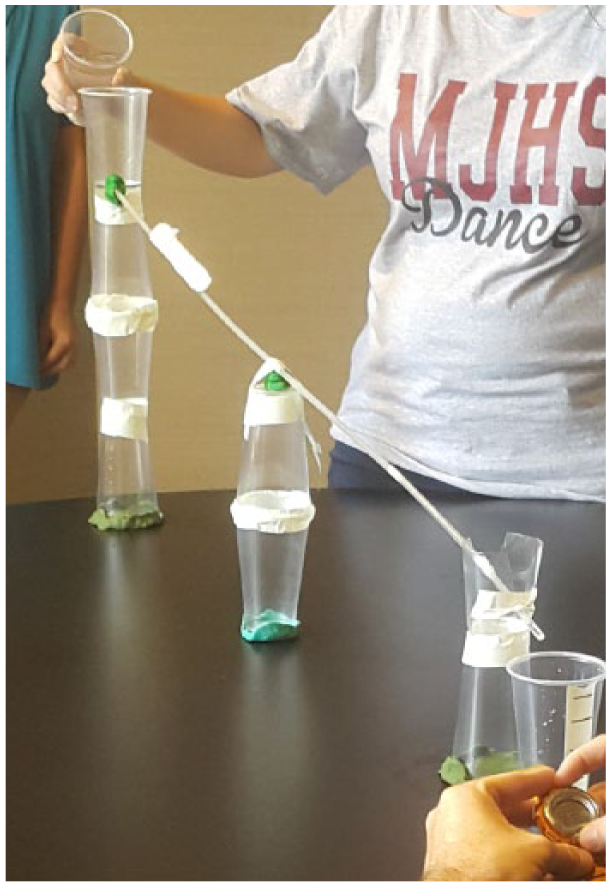
Water transportation system.
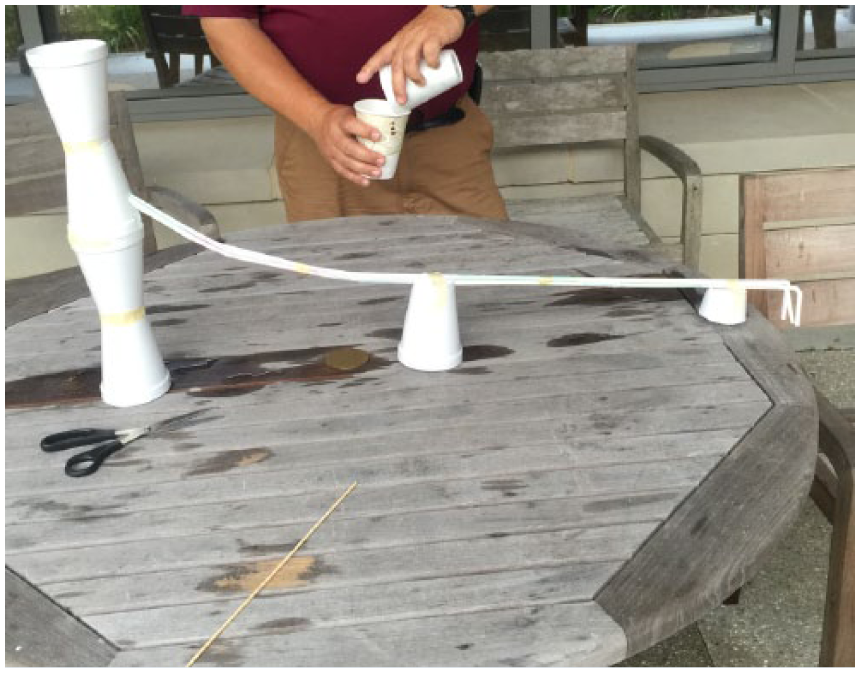
Water transportation system.
Creating Student Buy-In With Intriguing Scenarios
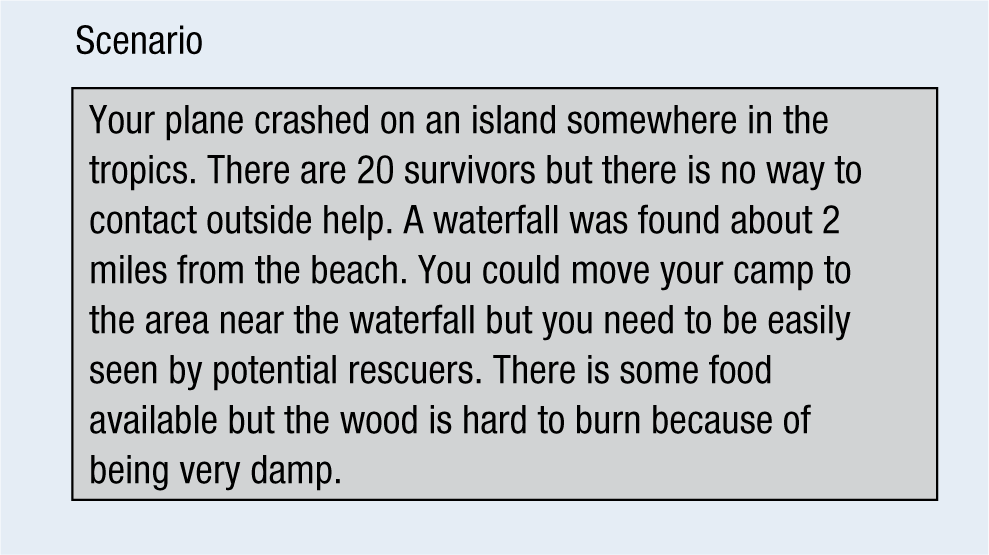
Intriguing, complex/ill-structured, and real-world scenarios or problem statements encourage student engagement, collaborative problem solving, and motivation for learning (Gallagher & Gallagher, 2013; Swicord, 2016). The scenarios should provide avenues for self-directed learning with advanced content, connections to multiple content areas or disciplines, and ethical considerations (Swicord, 2016). When constructing a scenario, one should consider student interests, current events, and opportunities for self-directed learning. A scenario that can be presented before, during, or after the challenges is provided below. It is a way to tie all the challenges together. If a teacher decides to present the scenario after the challenges, students can revisit their findings from each challenge to resolve the problem.
In this scenario, the tower construction could be used to look for dangers on the island or signal for help; the solar cookers are used to prepare food; and, the pipeline is used to transport water. Other challenges could be added including designing and constructing a raft for rescue and a shelter for protection.
Scenario
Conclusion
Using the EDP as an instructional approach engages students in critical thinking, problem solving, and 21st-century skills while addressing multiple content standards (Dailey & Cotabish, 2016). However, for teachers to effectively implement EDP in their classrooms, they need ample resources and support from administrators, teacher educators, and other stakeholders. Especially in the beginning, teachers do not have the time or resources to develop these integrated units of study and may need to seek commercially available curriculum units such as Engineering Is Elementary. Teachers could work in collaborative learning communities to adapt these units to address multiple content standards. As teachers become more familiar with the EDP, they will become more confident in constructing their own units of study. In addition, teachers should seek quality professional development that includes embedded support and a collaborative community of learners (Dailey & Robinson, 2016).
Footnotes
Conflict of Interest
The author(s) declared no potential conflicts of interest with respect to the research, authorship, and/or publication of this article.
Funding
The author(s) received no financial support for the research, authorship, and/or publication of this article.
Bio
Debbie Dailey, EdD, is the coordinator for the Gifted Education program in the College of Education, Department of Teaching and Learning, at the University of Central Arkansas. She is also the director of STEMulate Engineering Academy, serves on the Council for Exceptional Children—The Association for the Gifted, and is active in publishing and presenting on STEM and gifted education.