







Abstract
Despite the recognized complexity of “multi-exceptional” students, not enough is known about their varied needs or those of the adults who support them. This case study explores the lived experiences of a parent raising four multi-exceptional children, highlighting the interplay of giftedness, disability, and neurodiversity. Findings are presented through illustrated comics featuring the parent’s own words, making the research accessible to both academic and non-academic audiences. Each comic is accompanied by detailed narrative data drawn from the participant’s stories, describing advocacy, problem-solving, and emotional labor. Suggestions for action for educators, parents, policymakers, and other stakeholders are integrated with supporting research. This comprehensive narrative traces the participant’s changing experience across 30 years of parenting, illustrating both the challenges and patterns of raising multi-exceptional children and emphasizing the growth of parental expertise, persistence, and resilience.
Introduction
Educators and education researchers agree readily on the importance of parent and family engagement on students’ academic and social-emotional well-being, especially for students with both gifts and disabilities (Mann et al., 2022; Mun et al., 2021; Reis & Renzulli, 2020). Students who belong to more than one of the special populations recognized by the U.S. education system (e.g., students with gifts and talents, English language learners, and students with disabilities) present the most complex needs, even more so than the sum of each population’s needs individually. Because these “multi-exceptional” students are especially difficult to identify (Jolly & Barnard-Brak, 2024; Reis et al., 2014), more needs to be known about not only how to identify their needs for supports from each individual population they belong to, but also what additional or specialized supports they may need. Parents of students with multi-exceptionalities have varied experiences (Mollenkopf et al., 2021; Reis et al., 1995), and can provide unique insights into the needs of these students—different insights than what arise from simply combining the insights of parents of children from each special population alone. This study highlights the experiences of one parent of four multi-exceptional students by centering her own reflective narrative.
Literature Review
Defining Multi-exceptionality
In 1972, the Marland Report introduced giftedness to the federal education stage. One year later, the Rehabilitation Act’s Section 504 (1973) required that accommodations be made for students with disabilities to achieve educational equity of opportunity, and in 1975 the Individuals with Disabilities Education Act (IDEA, renamed in 1990) mandated the right to a free and appropriate public education (FAPE). However huge the steps forward these federal laws and reports were in terms of educational access, none of them acknowledged that there are student populations that occupy a space not between the categories of having gifts and having disabilities—but rather where they overlap (Gierczyk & Hornby, 2021; Jolly & Barnard-Brak, 2024; Reis et al., 2014).
Twice-exceptional (2E or 2e) is the moniker of choice when referring to students who are gifted but also have a specific disability, typically a learning disability (Reis et al., 2014). Identification of these students’ gifts can be difficult, as their expected above-average academic performance may be tempered by their accommodation needs due to disability; reciprocally, an undiagnosed disability can go unnoticed, as their gifts may protect against the “wait-to-fail” that is so often considered necessary before accommodations kick in. Gifted students who also have a disability can be “considered ‘not good enough’ for gifted programs and ‘too good’ to qualify for accommodations” (Silverman, 2013, p. 14). This double-jeopardy can result in observed mediocre academic achievement, resulting in neither identification as gifted nor diagnosis with a disability (Assouline & Whiteman, 2011; Beckmann & Minnaert, 2018; Jolly & Barnard-Brak, 2024). If an individual can be described using more than one exceptionality—for example, having a gift and a disability, while also a multilingual learner, or having an additional disability—using the prefix “twice” is disingenuous. Thus, there is a more recent shift instead toward the term multi-exceptional (ME) to describe any individual with more than one exceptionality (Tapper, 2018). The consensus in the literature indicates that while underidentified, the incidence of multi-exceptional students cannot be denied, nor can their unique needs (Foley-Nicpon & Teriba, 2022; Jolly & Barnard-Brak, 2024; Reis et al., 2014).
Giftedness
The National Association for Gifted Children defines student giftedness as those “with gifts and talents [who] perform—or have the capability to perform—at higher levels compared to others of the same age, experience, and environment in one or more domains,” and “require modification(s) to their educational experience(s) to learn and realize their potential.” Their definition goes on to stipulate that gifted students “can have learning and processing disorders that require specialized intervention and accommodation… [and] require varied services based on their changing needs” (National Association for Gifted Children [NAGC] Definition Task Force, 2018). It is important to note that the NAGC includes both validating the potential for high performance, not just the performance itself; and the caveat that gifted students’ accommodations and needs vary greatly.
Beyond the national definition of giftedness, there are more concrete checklists of observable indicators of giftedness, for example, Frasier et al.’s (1995) Traits, Aptitudes, and Behaviors (TABs), which may be more useful than an abstract definition when asking parents and teachers to consider what students may be gifted. This study examines the experiences of a parent of multi-exceptional students, not all of whom were formally identified as gifted children; accordingly, any belief or suspicion shared by the participant that any of their children have indicated giftedness according to the TABs listed (see Appendix A) will be considered as valid parent identification in the pursuit of identifying their children’s multi-exceptionality.
Disability
The IDEA lists twelve categories of disability diagnosis when considering whether a student may be eligible for special education services: having an intellectual disability, a hearing impairment (including deafness), a speech or language impairment, a visual impairment (including blindness), a serious emotional disturbance (referred to in this part as “emotional disturbance”), an orthopedic impairment, autism, traumatic brain injury, and other health impairment, a specific learning disability, deaf-blindness, or multiple disabilities, and who, by reason thereof, needs special education and related services. (Individuals with Disabilities Education Act [IDEA], 2004)
Neurodiversity
Neurodiversity is an umbrella term that refers to divergence from typical neurocognitive functioning. In contrast to neurotypicality, neurodivergence can refer to diagnoses such as “autism, attention deficit hyperactivity disorder (ADHD), dyslexia, Tourette’s syndrome, anxiety, obsessive-compulsive disorder, depression, intellectual disability, and schizophrenia,” among others (Hughes, nd). The neurodiversity movement was born from autistic self-advocacy, and has since expanded into disability rights more generally, and to include any neurodivergent diagnosis (Bumiller, 2008; Jones & Orchard, 2024). Neurodiversity not only advocates for equality, respect, inclusion, and accommodation of neurological conditions similar to the disabilities identified for example by the IDEA (2004); it also proposes an asset-based social context for neurodivergence—that each condition or diagnosis comes also with its own unique strengths, skills, and advantages (Hughes, nd; Rivera & Bennetto, 2023).
DSM-V and IDEA Crosswalk.
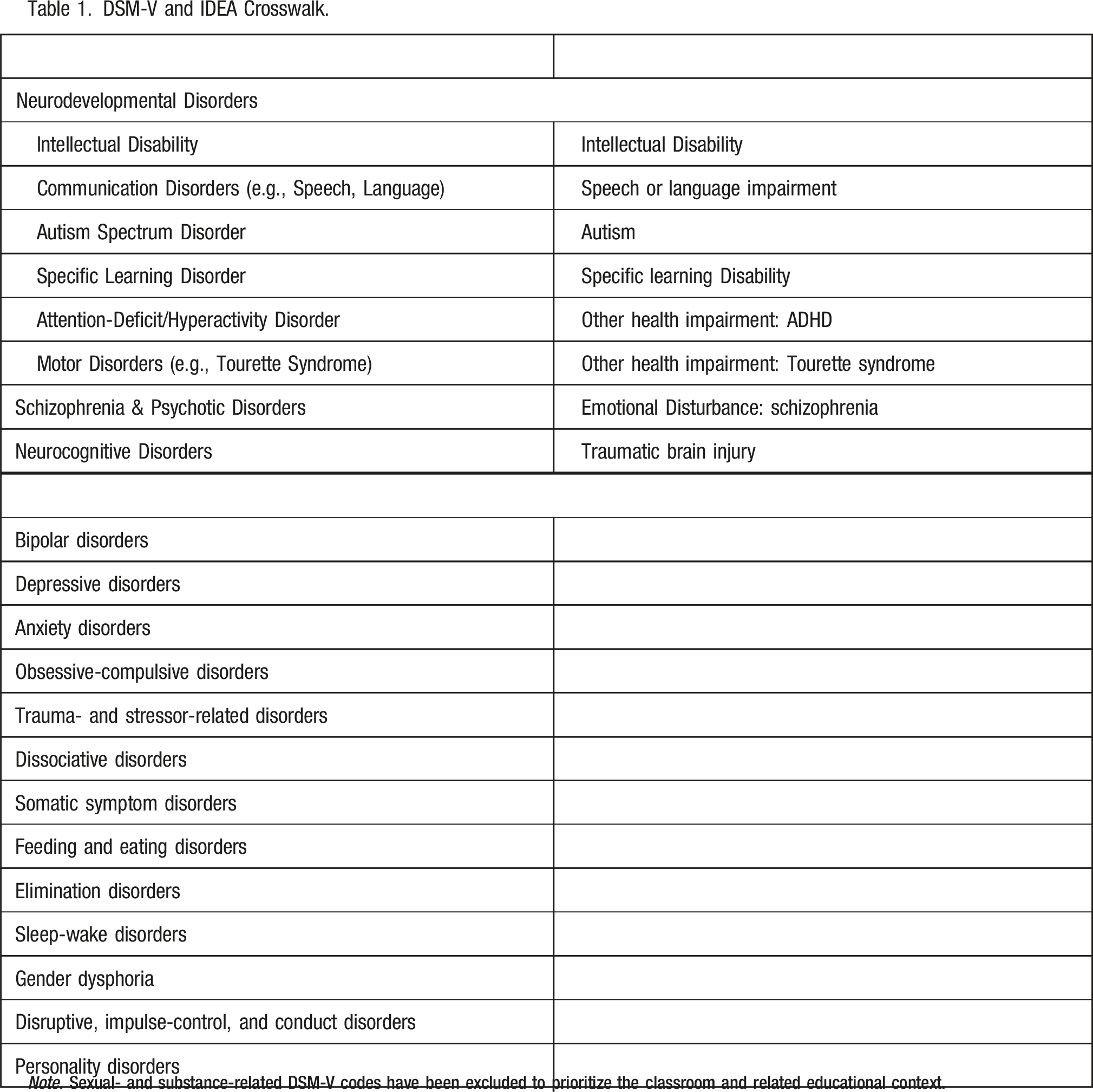
Note. Sexual- and substance-related DSM-V codes have been excluded to prioritize the classroom and related educational context.
As the neurodiversity movement is a fledgling one, it is possible that further elucidation of the IDEA’s list of disability categories is due for an update soon. Pursuing a concrete definition of neurodivergence unearths a familiar problem, similar to the struggle defining giftedness, creativity, and any number of other similar educational terms (Mirfin-Vetch et al., 2020; Shields & Beversdorf, 2021). If the future of special education includes neurodiversity, research recommends clarifying the relationship between the “educational” IDEA parameters and the “clinical” DSM-V (Assouline & Whiteman, 2011), combining the two through use of the DSM-V’s definition of “mental disorder”: “a syndrome characterised by clinically significant disturbance in an individual’s cognition, emotion regulation, or behavior that reflects a dysfunction in the psychological, biological, or developmental processes underlying mental functioning.” (American Psychiatric Association, 2013, p. 20, as cited in Chapman, 2020) Regardless of the formal definition, similarly to students with disability-based needs formally recognized by the education system, it is clear that students with various neurodivergences too have specific and unique learning support needs (Mirfin-Vetch et al., 2020).
This movement toward establishing societal value of neurodiversity does not, however, eliminate the stigma often associated with diagnosis, and the resistance of individuals to be thus identified (Rivera & Bennetto, 2023). So, a dilemma arises when attempting to accommodate the needs of the neurodivergent if we rely strictly on formal diagnosis. Literature points to the validity of parent identification, especially when considering child characteristics and behaviors that align with those of formally diagnosed individuals (Russell et al., 2010). This study examines the experiences of a parent of multi-exceptional students, not all of whom were formally diagnosed with disabilities—neurodivergence or other—as children. In accordance with the literature’s indicated value of parent identification, any belief or suspicion shared by the participant that any of their children have indicated neurodivergence will be considered as valid parent identification in the pursuit of identifying their children’s multi-exceptionality.
Current Literature on Parent Experiences
Parenting Children with Disabilities
The body of literature indicates consistent themes among the narratives of parents who raise children with disabilities. There is a profound lack of resources available to help caregivers with the increased needs in the raising of children with disabilities, as well as an absence of inclusive schools and communities, and a general dearth of information (Papoudi et al., 2020; Pozniak et al., 2022; Resch et al., 2010; Ryan & Quinlan, 2017). Many parents are thrust into the realm of parenting an exceptional child entirely unprepared, are unheard when they advocate for their children’s needs, and remain similarly but differently marginalized when compared to their children—so, too, the parents themselves have unique and unmet needs (Case, 2010; Green, 2015; Thomas, 2020).
Parenting Children with Neurodivergence
Current literature on parenting children with neurodivergence is often limited to diagnoses of ADHD, ASD, dyslexia, and emotional disorders as these are the most common neurodiverse diagnoses among school-age children (Dare & Nowicki, 2015; Spiars Neumeister, 2023). Parents of students with autism spectrum disorder (ASD) report that adolescence is often a time of high stress for themselves and their children (Riccio et al., 2020), and parents of neurodiverse students generally report feelings of ill fit between their students and their schooling environments, as well as being uninvolved in the scholastic decisions made by school employees on behalf of the students (Carruthers, 2020; Case, 2010; Ryan & Quinlan, 2017; Thomas, 2020).
Parenting Children with Giftedness
Jolly and Matthews (2012) in their summary report on publications regarding parents of gifted children found that few, if any, examined parents’ needs, expectations, or at-home parenting strategies. In the decade since that publication, research has trended more toward parents’ influence and participation in gifted identification, efficacy, and use of supports and interventions designed for parents of gifted children, with some examining the overall experience of raising a gifted child (Peebles et al., 2023).
Like the needs and experiences of parents of students with disabilities or neurodivergence, parents of gifted children often feel like unwelcome collaborators in their child’s educational decisions (King, 2022). A unique need identified by parents of the gifted relates to teachers being insufficiently trained to teach the gifted, and an overall lack of resources for parents and students alike (Oruc & Cagir, 2021). Considering the recency of this pivot toward the needs, supports, and experiences of parents of gifted children, the needs, supports, and experiences of parents of multi-exceptional children has not yet come into focus.
Parenting Children with Multi-Exceptionalities
Parents of students who are both gifted and have additional academic needs based on their diagnoses of disability have unique advocacy needs, themselves, as their students’ multiple exceptionalities require multiple sources of academic support (Mollenkopf et al., 2021; Reis et al., 1995). Calls for this support include cooperation between gifted educators, special educators, parents, and students themselves (Gale, 2020), as well as provision of resources for parent and self-advocacy, and opportunities for networking (Ryan & Quinlan, 2017). This lack of resources notwithstanding, multi-exceptional students’ parents are their fiercest advocates, even as the parents themselves express doubt about their own readiness and ability to advocate (Dare & Nowicki, 2015; Monterusso, 2022; Renati et al., 2023; Spiers Neumeister, 2023).
Study Purpose
Parents of multi-exceptional students have unique and understudied needs. While we know that family and parent engagement is key to student success, it is especially so when students have needs beyond the typical (Mollenkopf et al., 2021). The uniqueness of these parents’ needs, experiences, and strategies demands further study, in order to make the necessary resources available to them.
Research Questions
The primary research question for this study is this: How does a parent of multi-exceptional students describe their parenting experience? This question has three sub-questions designed to address specific elements of the participant’s parenting experience: What supports, attitudes, and resources are most useful to a parent of multi-exceptional children? How does a parent of multi-exceptional children develop strategies for coping and parenting? How does a parent of multi-exceptional children’s understanding of how to parent their children change over time?
Method
This study employs a single case study design, bounded by the experiences of one parent of four multi-exceptional children. Data generation occurred in two sessions of semi-structured interviews. This methodology is heavily informed by the emancipatory research stance, which asks researchers to pursue the removal of barriers—an oft especial favorite of scholars in the field of disability research (Chapman, 2020).
Participant
The case study participant was selected using purposive convenience sampling. The participant is White, middle-aged, identifies as female, was born in and has lived in the Midwest USA for their entire life, and has an accumulated 30 subsequent years of experience raising multi-exceptional children under the age of 18 (from 1996 to the present).
Positionality
The nature of the first author’s prior knowledge of the participant in this case study is that of a close, decade-plus relationship. However, we do not anticipate that this closeness will taint the data generated in this study—rather, the closeness of this relationship will result in a significantly increased rapport between researcher and participant. To protect the privacy of the participant and their control over what they wish to disclose as part of this study, the thematic interpretations and writeup of this data will be subject to rigorous member-checking (Candela, 2019).
The first author was identified as gifted at 5 years old and benefited from grade acceleration, course acceleration, and various enrichment experiences. While they were not diagnosed with neurodiversity until adulthood, the indicators were evident in childhood. They were fortunate to have parents who worked to advocate and accommodate their unique needs at home and at school. The first author’s experience as a multi-exceptional child and adult influenced their decision to pursue this project, and their close relationship to the participant influenced the selection of her experiences as the case under study.
Setting
The participant was asked to select a location for the two interviews in which they would be most comfortable sharing their responses to the semi-structured interview questions, and a time for the two interview sessions. The participant elected to reserve the podcast studio at their local public library for the interview, and to complete both sessions on the same day—one two-hour session in the morning, and one two-hour session in the afternoon, where interviews were conducted by the first author.
Materials & Procedure
Data Generation
Before the Interview
A pre-interview questionnaire (see Appendix A) was provided to the participant, which addresses the formal diagnoses/identifications and informal indicators of disability, neurodiversity, and giftedness, as well as educational background, for the participant and each of their multi-exceptional children. The questionnaire was returned before the interview and served as a reference point for additional questions and clarifications asked in the interview. The interview questions were also sent to the participant before the interview (see Appendix B), who was invited to bring any prewritten notes into the interview for their own reference.
During the Interview
The first author conducted two semi-structured interviews consisting of seven primary questions (see Appendix B), with sub-questions and follow-up questions as needed for full disclosure. In total, Session 1 lasted for 2 hr 58 min, and Session 2 lasted 1 hr 3 min, and both were audio recorded.
After the Interview
The interview sessions were transcribed and anonymized, stored securely on a password-protected cloud server. The cleaned transcript was returned to the participant for member-checking; again after each of the two rounds of coding had been completed by the first author, transcription of the codes and thematic clusters as well as selected quotes were shared with the participant for feedback.
Data Analysis
One distinct advantage in analysis was the first author’s deliberate closeness to the data, beginning by serving as the interviewer for both interview sessions. They also cleaned the transcripts by hand before returning them to the participant for member-checking related to response accuracy. Then, the first author conducted an initial round of manual open coding, identifying general themes and color-coding quotes of note. Initial themes included emotionality, underconfidence, advocacy, accommodations, and developing knowledge. Also noted were parallels between the ways that the participant described their four children’s gifts and needs, and connections to their own parents’ behaviors, such as overly logical reasoning, verbal and lexical skills, command of humor, manifestations of anxiety, and talent in artistic fields.
A second round of coding was informed directly by the research sub-questions, where the first author again reviewed the full transcript and re-transcribed quotes into code clusters based on thematic similarities. This resulted in the following themes: “too smart,” offered services inconsistent with needs, no perfect solution, public perception, targeted behaviors, advice, parent accommodations, parent advocacy, parent needs, and parents not knowing. Additionally, it was in this phase of analysis that the first author selected which participant quotes best summarized the overall themes and would be illustrated by the first author in order to answer the primary research question.
Results
The wealth of data generated through the interview process yielded a variety of themes to answer each of the sub-questions of the main research question: how does a parent of multi-exceptional students describe their parenting experience? Since one goal of this research was to not only identify the experiences and needs of a parent of multi-exceptional children, but to share those experiences with other stakeholders in the lives of similar multi-exceptional children, the first author chose to present the main research question’s results in a series of illustrated comics, in lieu of vignettes (presented below). The accessibility of visual arts-based dissemination of research findings has been well-established in the social sciences, specifically when the intention is largely to expedite transmission of research to non-academic stakeholders (Bartlett, 2013; Ma et al., 2023). Further explanation of themes and findings from the interviews are organized in support and extension of each comic.
“I Just Didn’t Know Enough”: Advocacy and Emerging Understanding
The participant recounted 30 years of narratives filled with constant advocacy and accommodation. “I’ve had to be my children’s advocate, for all of them, and multiple different facets.”
The participant’s first child, Child A, was denied admission into kindergarten for being too young, after which Child A was homeschooled by the participant. The following year, the school determined Child A to be of kindergarten age but ready for and placed in first grade. When the first-grade teacher revealed Child A’s boredom in the classroom, the participant and her husband advocated for another grade acceleration, which saw Child A finishing second grade at the age of most kindergarteners. “Moving her up really was the only answer. I don’t want to say we didn’t have a choice, but to feed Child A what she needed and to stimulate her, it really was the only choice.” Even after the grade acceleration, the participant made note of the additional stimulation that Child A still needed at home, and how she and her husband sought out above-grade-level activities like STEM camps, and frequent trips to the public library, in order to keep Child A sufficiently challenged and engaged.
Child B began exhibiting learning difficulties in upper elementary and was misdiagnosed with dyslexia. As the participant conducted her own research, wanting to be as informed as possible about her child’s learning disability, she found that Child B’s symptoms better fit a different diagnosis. It took extensive advocacy and a refusal to accept the brush offs of physicians for Child B to be successfully diagnosed with the correct visual disorder, and to start treatment. In the meantime, the participant selected a schooling option where Child B could study American Sign Language as their foreign language—a course of study where the persistent reading difficulty was removed as an obstacle, and where Child B was able to flourish.
While the need for accommodations for Child C was never formalized through diagnosis, 504 plan, or IEP, the participant was insistent that the changes she made to Child C’s curricular schedule made an academic difference. Child C had expressed intense interest and dedication to the study of the violin for years, when the participant noticed a struggle to focus on and correctly complete math lessons during the scheduled school day. After the participant suggested that Child C practice the violin earlier in the day, before moving on to the math lesson, there was a notable difference in the level of focus and ability during math.
“Child D is really the first one that got diagnosed. He was a teen, But I knew for a while. I did a lot of research on my own because again, they didn’t provide any help.” Although the participant was told that Child D’s preterm birth predisposed the child to potential sensory issues and autism, she expressed that the literature she was given on autism were specific to the typical manifestations and behaviors, which Child D did not exhibit until much later. Early attempts to get Child D diagnosed and provided the appropriate services were met with dismissal from pediatricians, recommendations to a self-contained behavior room alongside students with emotional disturbance 504 plans, and insistence that Child D’s giftedness and intellect rendered them “too smart” for special education services. Nonetheless, the participant refused to accede to the subpar accommodations suggested for Child D, and continued to research resources on her own to help Child D manage the outbursts and overwhelm. “That’s when I told my husband we have to do something for him. This is beyond us. With us both being educators, we’ve been able to help the kids a lot, but…” The solution for Child D’s needs ended up being attendance at an online charter school, which provided both the flexibility and parental support necessary to tailor the education experience as needed, but also offered access to specialized professionals like occupational and talk therapists, who were finally able to help Child D identify triggers and learn the necessary coping strategies.
In Figure 1, “Understanding Multi-exceptionality,” the participant asks “Is that what multiexceptionality is? It’s sometimes hard to know which thing is which.” All four of the participant’s children share gifts in STEM fields, and have a propensity toward language and the arts. While their diagnoses and the participant’s experiences parenting each child were different, there was some obvious overlap. “I’ve learned a lot about [neurodiversity] since Child A was young. But I reflect and see things. I just have a greater understanding in general than I did at that stage.” The participant identified that behaviors from Child A’s childhood were punished as willfulness and disobedience, but once diagnoses and the corresponding behaviors arose in Child D’s youth, the similarities became clearer. “I just didn’t know enough to know that’s what it was.” Understanding multi-exceptionality. (Comic).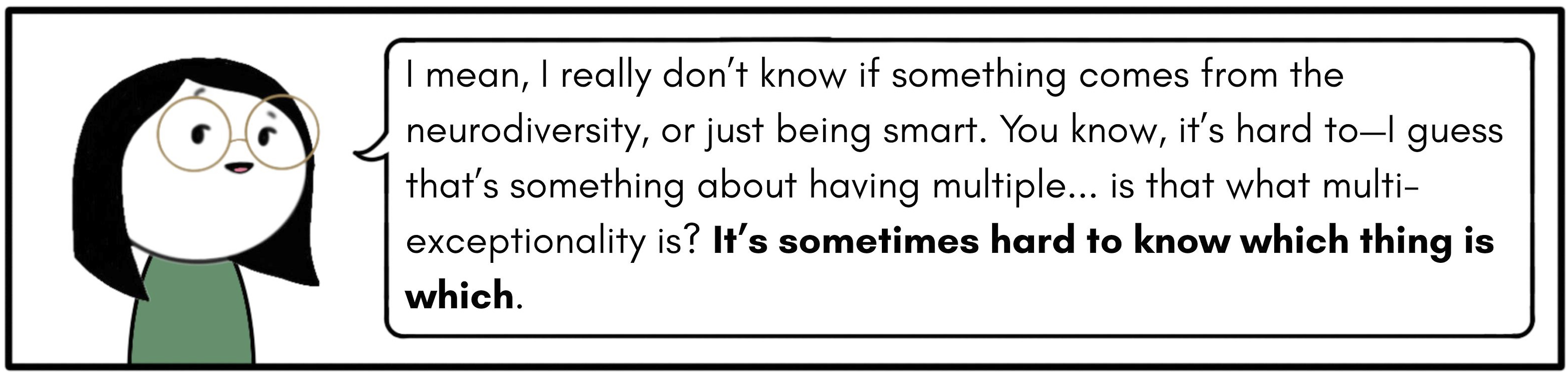
“Too Smart”: Systemic Barriers to Multi-Exceptional Support
Beyond the illustrated insights into missing, useful resources as represented in Figure 2, “Limits of Labels,” the participant indicated that two of her children were initially denied services because of their academic ability. “They said [Child B]’s too smart. Her grades are too good to get service.” And Child D, “they both were basically turned away because they’re too smart.” This experience is not one that was unique to those two children; the participant went on to describe her other children needing help to understand concepts fully, but teachers dismissing their requests for help to prioritize the needs of other students with lower grades. “I think the system is broken. I know there’s budget issues, I know there’s staffing issues. But just because you can pass, doesn’t mean you don’t need support.” Limits of labels. (Comic).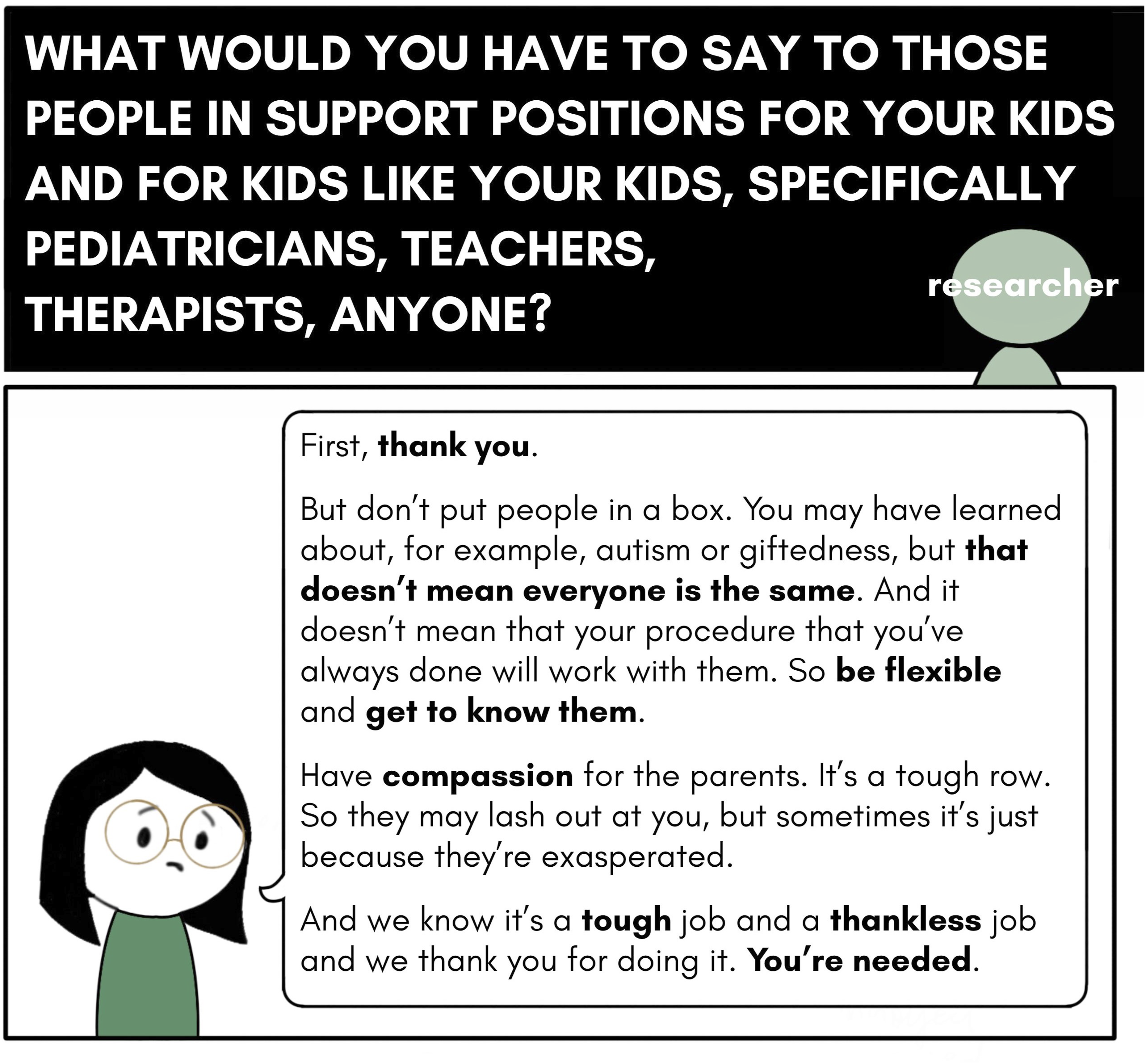
With children who have such unique needs, the participant said that while there were “pluses and minuses” to all schooling options, she didn’t always feel like she was allowed to make the best choices for her children. “I always say none of the schooling options are perfect,” she said. “Personally, I would like to revamp the entire school system in America, but I know I can’t do that. It’s been something I’ve had to deal with many times over, but there have been pluses to it as well.” While she would have preferred to homeschool her children to tailor their education more, she also addressed that attending school provided them with different opportunities such as scholarships, therapy, and other services. Regarding keeping them home, she said “You make sacrifices...but services would not have been free. I don’t know that I would have known where to go to find them.”
Even when services were provided for her children, the accommodations offered were often insufficient for a child who was also gifted. She shared a story about Child D’s experiences needing academic writing support. He wins prizes for creative writing, but when he has school writing within parameters, he freezes. And he can't do it. So, he had…an extra English class for writing [where] they actually taught lessons but remedial. But it wasn't what he needed because all they were doing was reteaching the same information they were learning in regular class, which—he's too smart. To me—he didn't need that. He needed help with writing.
Regarding the lack of resources and support sufficient to meet the needs of her multi-exceptional children, the participant was compassionate to understaffing and underfunding of the necessary departments, but remained steadfast in demanding the supports that her children should have received. “It’s frustrating. I get it, I understand it. I wish there was an answer. Because I don’t think it’s right.”
“I Took It Personally”: Emotional Labor and Public Scrutiny
The participant shared that in the process of raising her children, their multi-exceptionality was accompanied by unique behaviors, such as meltdowns, tantrums, and general outbursts of distress. Characterizing herself as the “safe space” where these outbursts most often occurred, she shared that she often felt like the target of these behaviors from her children, being the one who was there. “I probably needed counseling at some point. I used to be more sensitive than I am now, but I think I internalized a lot of it, took it personally when it wasn’t personal.” As she learned more about the neurodivergence underlying the outbursts, she began to understand that they in fact had little to do with her, besides her status as a safe space. Characterizing the experience of feeling targeted as “painful” in the moment, she wondered if having access to a mental health professional to help her process those feelings and experiences even sooner would have been a beneficial attitude support. “I probably needed somebody to help me figure that out, but I didn’t know that. It took years to recognize that.” This was just one example of the resource missingness that the participant had to negotiate, as someone who wanted success for their multi-exceptional children (Figure 3). Parenting amid unmet needs. (Comic).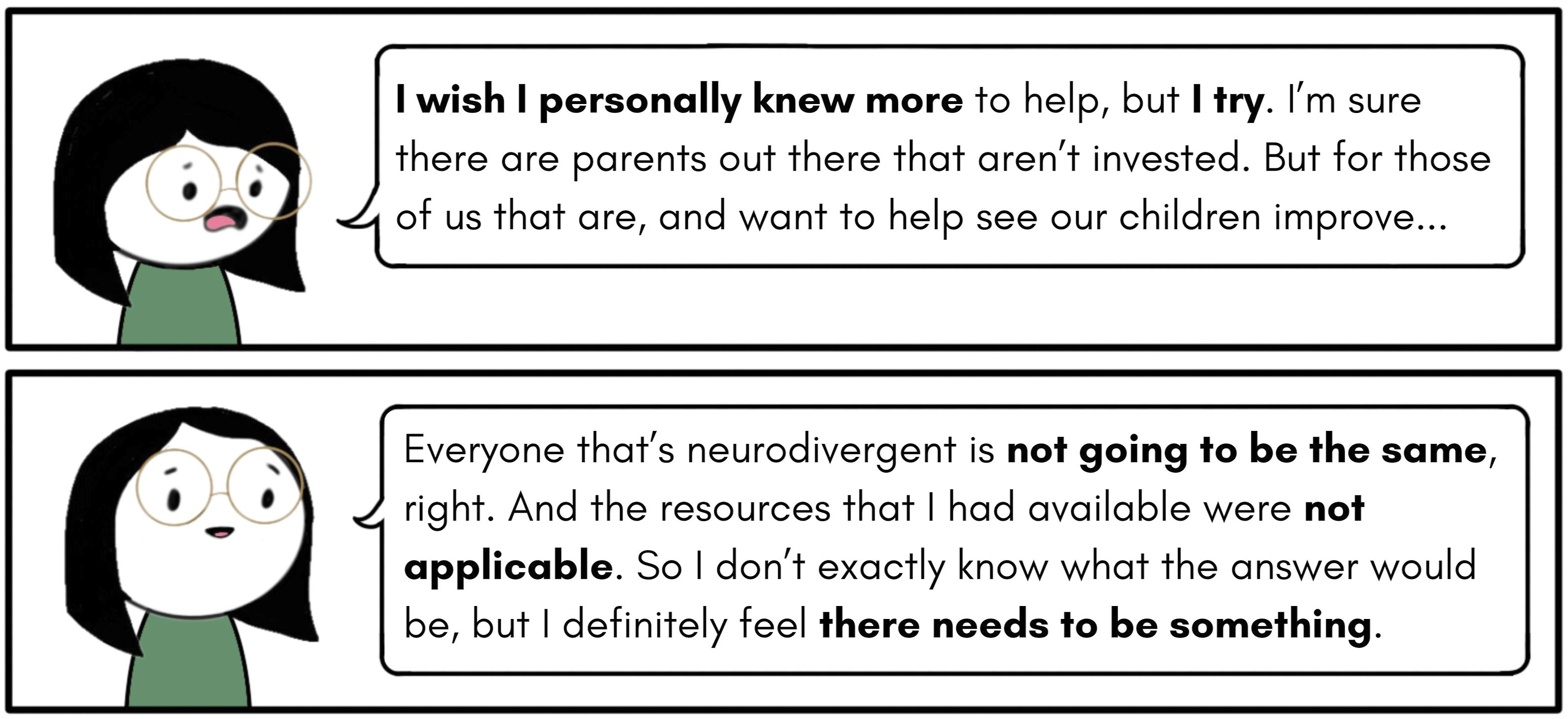
The participant also expressed worries that affected her attitude toward parenting her unique multi-exceptional children. Beyond general concern for her children’s success and well-being, a constant awareness that the public perception of how she met her children’s needs may differ from the intention made her cautious. She shared examples related to Child A’s grade acceleration and Child D’s autism-attributed meltdowns. “With our oldest specifically, I was concerned people would think we were bragging. So, I probably under-shared sometimes.” Child A began college young, due to her grade acceleration, and the participant described other parents’ contempt at a different young college student. “I didn’t say anything. Because I didn’t want to be judged, but also, they don’t live our life. They don’t really know how we were basically cornered into a decision because there wasn’t another option.”
As the child with the highest propensity toward overstimulation and outbursts, Child D changed the way that the participant parented. She reported that it took time to realize that his outbursts were a sensory issue, rather than disobedience or willfulness like she had initially assumed. Shifting that perspective made her realize that Child D’s outbursts were less controllable, especially when he was young, and so the parenting focus shifted toward avoiding the triggers that brought the outbursts on. “It’s hard to know when to push, but we learned some of those things that he reacted to at home were not going to happen in public. We avoided those. But some were unavoidable.” This attitude of constant vigilance and knowing that every uniqueness of her multi-exceptional children was being perceived and judged by the public hung over the participant, whether it was a manifestation of neurodiversity, disability, or giftedness. “Everybody’s watching. I often noticed people watching...So yes, I was. I was worried.”
“Just Living Life”: Building Parental Expertise
The participant credited much of the way that her parenting has changed over the years to increased access. “I think my parenting was just individual for each child until I really started to learn about disabilities.” Until Child D’s more obvious multi-exceptionality, it hadn’t crossed the participant’s mind how much the comorbidities could affect the manifestations of both giftedness and neurodiversity in all four children. The participant’s journey through parenting and finding access to more resources with each child is illustrated in Figure 4, “Trial, Error, and Insight.” With Child A, the parents felt like they had no option but to pursue grade acceleration. Child B needed services that were unavailable until the participant tirelessly pursued a corrected diagnosis and advocated for the necessary accommodations. By the time Child C was exhibiting academic challenge, the participant had been exposed to enough to wonder if integrating music with math would prove helpful. And while Child D’s needs seemed potentially the most severe, the participant was also the best equipped to conduct her own research and pursue the necessary accommodations. With each successive child, the accumulating understanding and persistence were clear. “I mean, even as I reflect through this conversation and realize that I have gained so much knowledge through the years. Some of it is just living life. I think a lot of it was just living life.” Trial, error, and insight. (Comic).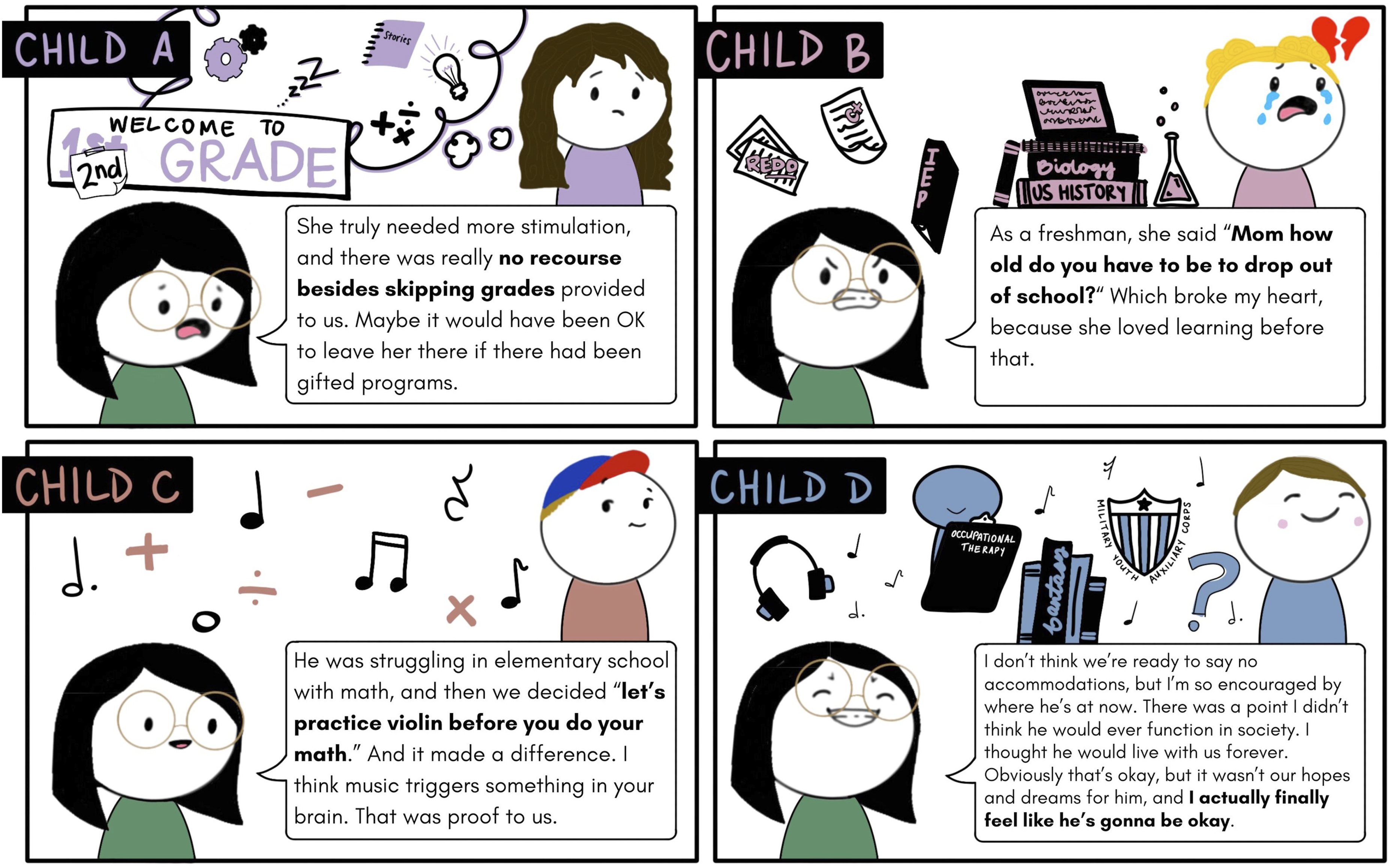
“Don’t Give Up”: Grace, Research, and Resilience
The participant’s most salient supports and resources from her 30 years of experience are synthesized in Figure 5, “Guidance from Experience.” A network of supportive friends, even those who don’t share her specific parenting experience, made the participant feel listened to. She also credited a strong connection to her faith, and alignment of purpose with her spouse, with the fortitude to decide what they thought was best for their children in each situation. Finally, the participant indicated that in light of the resources she was never given, her own drive to research the best options for her children is something she would recommend to parents in her shoes—even if they end up finding something “better” or find they need to change their minds. The unique needs of each multi-exceptional child meant that the participant had to become unafraid to pivot when she came across a better solution. This patience and grace to keep learning was her final parting advice to other parents of multi-exceptional children. Guidance from experience. (Comic).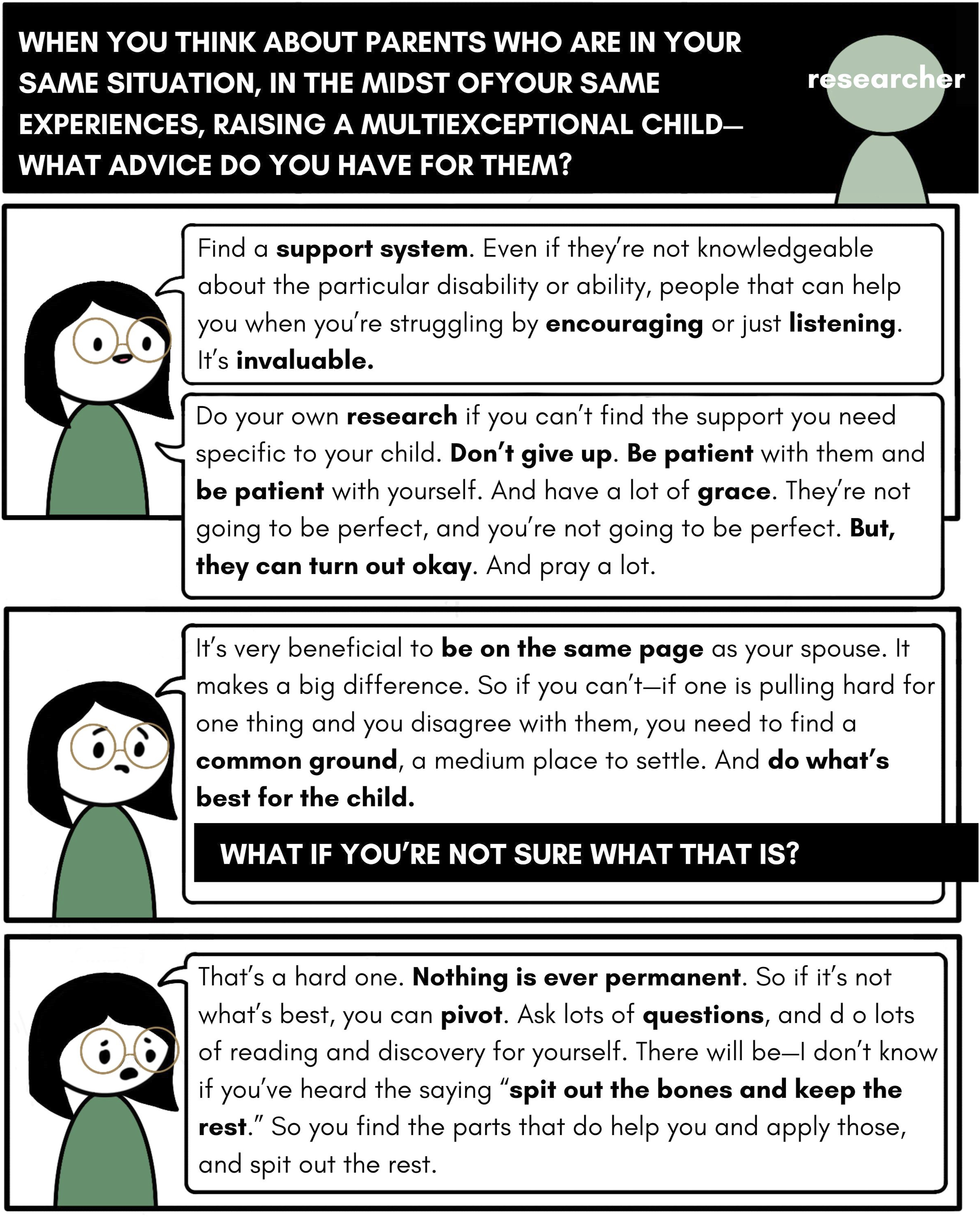
Discussion
This study extends existing scholarship by centering the lived experience of a parent navigating the interaction of giftedness and disability across four children, illustrating how advocacy, emotional labor, and resource acquisition evolve over time in the context of multi-exceptionality.
Connecting to Prior Research
The body of work on the experiences of parents of students with disabilities was reflected in the data through themes of disconnect, being ill-equipped, advocacy falling on deaf ears, and encountering an unwillingness to collaborate (Papoudi et al., 2020; Pozniak et al., 2022; Resch et al., 2010; Ryan & Quinlan, 2017). Regarding the literature on the needs of parents of gifted students, the similar themes of lack of resources, insufficient involvement in curricular decisions, and feeling unequipped to meet their children’s needs persisted throughout the participant’s interview (King, 2022; Oruc & Cagir, 2021).
With the lack of literature on multi-exceptional parenting experiences, the obvious overlap between experiences of parents of gifted, disabled, and neurodiverse students serves to support the few conclusions drawn in the existing body of research. The argument that the needs of multi-exceptional students are more than the sum total of the needs associated with each exceptionality extrapolates into the needs and experiences of the parents, as well, illustrated by the numerous and non-overlapping needs in the participant’s experience, such as her children being “too smart” for services, and the provided accommodations being inapplicable. Her parenting needs were multiplied by her children’s giftedness, their diagnosis, and the interplay between those exceptionalities.
Addressing Persistent Gaps
Literature on the needs of parents of exceptional students was reinforced by the participant’s responses in this interview; however, this reinforcement means that the field is reaching oversaturation on this topic, without coordinated attempts to address the gaps that have been identified, allowing them to persist. Experts and practitioners have a responsibility to respond to these needs, first by providing parents with access to digestible, action-based, data-driven supports for their multi-exceptional children’s success (Gale, 2020; Ryan & Quinlan, 2017).
A common repository of things like handbooks, websites, and one-page research summaries could be shared with all stakeholders in multi-exceptional students’ progress. Even if parents aren’t explicitly directed to this storehouse of relevant resources by local organizations or affiliates, when they find themselves conducting their own research like the participant did, a reliable and thorough volume of support could be at their fingertips. Earlier, unrestricted access to information about diagnoses, symptoms, manifestations, accommodations, and opportunities for multi-exceptional children would have enabled her to recognize and address both her children’s needs and her own with greater confidence and efficiency.
Shared Knowledge and Collaborative Support
Beyond the development of centralized resources, an aggregated network of parents of multi-exceptional children would enable cross-country and even international connections between parents with such specific and unique experiences. Among even each exceptionality individually, such a small but critical population as the multi-exceptional can take solace, support, and suggestions from one another.
Parents of multi-exceptional students would benefit from spaces where they feel comfortable being vulnerable about their struggles, both combatting the loneliness and isolation that parents of exceptional children often face, and providing them a source to build the grace and patience that the participant noted were so helpful in her constant pursuit of what was best for her children. The support of a community and armament of resources in turn builds the confidence necessary for parents of multi-exceptional children to advocate for their best interest.
Supporting Parents’ Well-Being
Beyond the network and sounding board of parents in similar situations, the participant noted that much of her struggle to cope with the complicated parenting would have been ameliorated by being assured that her children’s needs and behaviors were neither personally targeted, nor her fault. This mindfulness and the ability to externalize the manifestations of a child’s multiple exceptionalities could be drawn, as in her case, from spiritual and other reflective practices, which can be found in faith-based organizations or through mental health professionals.
This is yet another resource that should be provided to parents, with the knowledge from the literature that they not only need supports for their children, but also to maintain their own agency. Ensuring that parents have access to mental health support acknowledges that advocacy is sustained not only by information, but by resilience and emotional validation.
Developing Parental Expertise
The participant’s 30 years of experience summarized how much the volume and nature of what was available changed from child to child. The narrative of these changes highlights the same support needs outlined above—earlier, unrestricted access to information about diagnoses, symptoms, manifestations, accommodations, and opportunities for multi-exceptional children would have enabled her to recognize and address both her children’s needs and her own.
As an educator, the participant’s limited understanding of resources and advocacy increased her comfort, confidence, and capacity to serve the needs of her children. The earlier parents can access resources, the more capably and confidently they can advocate for their multi-exceptional children’s best interest (Dare & Nowicki, 2015; Monterusso, 2022; Renati et al., 2023; Spiers Neumeister, 2023).
Together, these findings reinforce that supporting parents of multi-exceptional children requires more than acknowledgment of persistent gaps. It requires coordinated structural resources, intentional relational networks, and attention to parents’ own emotional well-being so that advocacy does not remain an individual burden, but becomes a shared responsibility.
Limitations and Future Directions
As is the nature of any case study, and any qualitative research, the generalizability of these results is limited. However, if taken as a reinforcement of previous literature and a jumping-off point for further research that examines the singular needs of parents of exceptional students, this case study serves as proof of concept and the efficacy of the interview protocol. It’s the intention of the first author to continue to generate data using this interview protocol with additional populations of parents of children with exceptionalities.
An additional limitation involves the proximity of the first author to the participant. While this closeness inspired rapport and candor in the interview phase, it also inevitably influenced the interpretation of results. This closeness to the data is often considered an advantage in qualitative research, but it necessarily affects the ability of future researchers undertaking this protocol if they don’t have the same rapport with their participants.
Conclusion
The results of this study illustrate that while resources specific to each exceptionality are at least marginally beneficial to parents of multi-exceptional students, the unique needs of a multi-exceptional population necessitates specific resources for the parents of that unique population, as well. While this study reinforces the conclusions drawn by the limited body of work examining the experiences of parents of multi-exceptional children, it also highlights the need for further investigation into not only the needs of these parents, but how their needs can be met.
Supplemental Material
Supplemental Material - Navigating the Uncharted: A Parent’s Experience Raising Multi-Exceptional Children
Supplemental Material for Navigating the Uncharted: A Parent’s Experience Raising Multi-Exceptional Children by Abigael M. Johnson Allen, Kristen Seward in Gifted Child Today
Footnotes

Ethical Consideration
The Institutional Review Board at Purdue University approved the interviews (approval: IRB-2024-448) on March 29, 2024.
Consent to Participate
The respondent gave written consent for review and signature before starting interviews.
Funding
The authors received no financial support for the research, authorship, and/or publication of this article.
Declaration of Conflicting Interests
The authors declared no potential conflicts of interest with respect to the research, authorship, and/or publication of this article.
Supplemental Material
Supplemental material for this article is available online.