







Abstract
The connection between culture and creativity is a more novel, an always existing concept. Although research and literature affirms this, less is known about how individuals’ implicit beliefs towards racial and ethnic subgroups influence their perceptions of creativity. This conceptual and praxis manuscript reviews key findings and recommendations from two interconnected empirical studies that examined the relationship between individual’s racial implicit bias, also referred to as a participant’s automatic association, toward Black and/or White individuals and their desirability of creative characteristics in students, particularly those of color. Findings indicated a significant correlation: educators with lower levels of implicit bias demonstrated higher valuations of creativity, both intrapersonally and in their desirability of student creative behaviors. From these finding emerged a new pedagogical identity introduced in this manuscript as the C³ educator: one who is critically conscious, culturally responsive, and teaches for creativity. The manuscript concludes with two recommendations for schools and districts to cultivate this identity within educators in every educational setting.
Educators with lower levels of bias were more likely to recognize and value creative traits in students, particularly those from culturally and linguistically diverse backgrounds.” From the north, I call And from the south, I cry From the west, I beckon From the east, I beseech Why won’t you honor me? Why have you deprived me? I, creativity, call unto you Asking that you would cultivate me Nurture me Develop me within your scholars For I am the key to their achievement And the gateway to the identity The generations of old recognize me They know me by name and spirit I, creativity, call unto you To see me To trust me To cultivate me To love me.
Introduction
Today’s classrooms are filled with educators committed to academic excellence, which has often come at the expense of nurturing creativity in the classroom (Chomsky & Robichaud, 2014; Gajda et al., 2017). To that end, educators can be well-versed and competent in their content areas while possessing non-affirming beliefs about the students they teach (Bouley & Reinking, 2021; Yeung, 2023). Research suggests that teachers consistently value academically aligned behaviors more than creative traits (Bereczki & Kárpáti, 2018; Bloom & VanSlyke-Briggs, 2019; Puryear & Lamb, 2024), but how does the presence of racial implicit bias affect their perceptions of racial representations of creative potential and identity? (Kapoor et al., 2024) More specifically, do teachers, even who are aware of their racial biases, unconsciously deprioritize creativity in the classroom, especially when it manifests in culturally distinct ways? Could this also be a culprit of the lack of culturally, linguistically, and ethnically diverse (CLED) student enrollment and participation in GATE programs—teachers not recognizing, nor desiring, the creative characteristics of students of color and in turn, not recommending those students for gifted evaluation and identification?
This conceptual and praxis manuscript includes a synthesis of seven major findings from two quantitative studies (Gray, 2025b, 2025c) exploring the relationship between racial implicit bias and educators’ perceptions of creativity in the classroom. The discussion of each finding concludes with recommendations for schools, districts, and teacher-preparation programs aimed at nurturing culturally responsive and critically conscious approaches to and perceptions of creativity in K-12 education.
Synthesis of Study Design
The empirical studies summarized in this manuscript pursued three core aims: (a) to examine the psychological state of perceived value, honor, and desirability in creative characteristics that current educators possess; (b) to assess the prevalence of racial implicit bias within educators; and (c) to explore the correlation between teachers’ racial implicit bias, specifically between Black and White individuals, and their desirability of student creative traits in the classroom. The participant population consisted of 173 pre- and in-service educators in the United States, the majority of whom resided in Georgia. Inclusion criteria for participation were consistent across both groups: (a) individuals had to be either pre- or in-service K-12 educators, and (b) they must have completed or been enrolled in a traditional or alternative teacher-preparation program. A traditional teacher-preparation program was defined as an educational program of study at a university leading to in-field certification, while an alternative teacher-preparation program consisted of pathways primarily leading to employment in schools, such as Teach for America, an employed school-based program in charter or independent schools, or an external educational provider with no connection to a university. Voluntary sampling was the primary source of recruitment for the studies.
The first study was a replication study which utilized the Teacher Survey of Student Characteristics (Kettler et al., 2018) to generally measure the participants desirability and perceptions of creative student behaviors. The second study measured participant’s automatic association, synonymous with implicit bias in this study, with the Race Implicit Association Task (IAT; Greenwald & Banaji, 1995) and correlated those responses with the results the first study to examine the relationship between perceptions of creativity with racial implicit bias. Therefore, the data collection tool consisted of one survey broken into two parts, allowing participants to complete each survey in one sitting.
Participants also provided demographic information, including their race, age, and gender, along with professional background information, such as their teacher-preparation pathway, program of study, professional learning acquired, content area taught, and their experience with gifted evaluation and programming during their K-12 schooling experience.
Data from both studies were collected via Qualtrics. Descriptive and inferential statistics, including ANOVA and correlation analyses, were conducted to examine the relationship between implicit bias categories and creative-trait desirability ratings.
Results
To explore the various relationships between participant variables, perceptions of creativity, and implicit bias, a combination of analyses of variances (ANOVAs), t-tests, and multiple regression models was conducted. From these analyses produced seven major findings, all of which yielded unique recommendations for teacher professional learning and mentorship.
Finding 1: Lower Levels of Racial Implicit Bias are Associated with Greater Desirability of Student Creative Characteristics
A core objective of this study was to examine the relationship between educators’ racial implicit bias and their perceptions of creativity. Therefore, Harvard’s Race IAT (IAT; Greenwald & Banaji, 1995) was used to measure participant’s automatic association, synonymous with implicit bias. In this study, automatic preference was defined as an individual’s unconscious, instinctive tendency to associate certain concepts together more quickly than others, revealed by their response time (Greenwald et al., 1998; Greenwald & Lai, 2020). This is the same instrument referred to throughout this manuscript.
Findings revealed a clear trend: participants who demonstrated either a slight or little to no automatic preference toward either Black or White individuals, as measured by the Race IAT (Greenwald et al., 1998), reported the highest levels of perceived personal creativity and exhibited the strongest preference for creative student traits among other automatic preference subgroups. Similarly, individuals with a slight automatic preference toward either racial group also rated creativity more highly than those with moderate or strong measured implicit bias. In contrast, participants with a strong automatic preference toward White individuals reported the lowest desirability for creative and non-creative student traits, suggesting a general tendency toward narrowed perceptions of student potential. These results support the notion that reduced racial bias is positively correlated with a more dynamic and inclusive view of creativity in both one’s self and students.
Several factors may explain this relationship. Individuals who engage in sustained self-reflection and anti-bias work are often more attuned to the diverse strengths, talents, and creative expressions of students from racial and cultural groups different from their own (DiAngelo, 2018; Singleton, 2015). This heightened cultural responsiveness often stems from intentional efforts to engage across different racial subgroups and ethnic boundaries, expand one’s self- and social awareness, and deconstruct destructive and deficit-based narratives and perspectives looming in the mind. Additionally, individuals with slight preferences may actively appreciate and seek out cultural contributions from both racial groups, such as Black or White poets, artists, scientists, musicians, inventors, and thought leaders, which can impact their understanding of creativity through a cultural lens. These culturally informed perspectives can influence how educators identify and nurture creative characteristics in students, especially those whose manifestations of creativity are rooted in lived experiences that differ from dominant norms (Abraham, 2025).
Finding 2: Racial Implicit Bias is Formed More by Demographic Identity than Educational Background
These studies revealed that racial implicit bias among educators is more strongly influenced by demographic variables, specifically race and age, than by educational factors such as teacher-preparation pathway, content area taught, or participation in professional learning opportunities. Participants’ automatic preferences toward Black and White individuals were assessed using Harvard’s Race IAT (Greenwald et al., 1998). While some researchers have scrutinized and critiqued the IAT for potentially measuring familiarity rather than bias (Blanton et al., 2009; Holroyd & Sweetman, 2016), it remains a widely accepted tool for gauging implicit associations and has informed extensive research across psychology, education, and social science fields (Kurdi et al., 2019; Nosek et al., 2007).
The results of this study confirmed that no participant received a neutral score (0.0), indicating that all participants held some level of implicit racial preference. However, statistically significant differences in IAT scores emerged only when comparing participants by race and age, not by professional or educational background. This suggests that engagement in culturally responsive training, formal teacher education programs, or content-specific instruction may have limited influence on developing or reducing implicit racial bias. Instead, such biases emerge based on one’s demographic identity and the early experiences accompanying it. To that end, research suggests that race is a core component of identity formation, particularly during childhood and adolescence (Helms, 1990; Tatum, 1997). In the United States, race has historically functioned as a mechanism of stratification and exclusion, from the displacement of Indigenous peoples to the enslavement of Africans and the institutionalized discrimination of the Jim Crow era (Alexander, 2012; Dunbar-Ortiz, 2014; Ladson-Billings, 2006; Love, 2023). We reside in the residue of these legacies, which have contributed to the deeply embedded racial narratives that continue to influence individuals’ implicit beliefs, often below the level of conscious or cognitive awareness.
Finding 3: Educators Trained in Culturally Responsive Pedagogy are More Likely to Desire Creative Student Characteristics
Although most educators in this study demonstrated a stronger preference for academic traits over creative characteristics in students, a notable subset of participants (12%) reported the opposite—desiring creative characteristics above non-creative traits. Of these 27 educators, 92% had formal training in culturally relevant or responsive pedagogical frameworks. Despite variability across race, gender, content area, and years of experience, this group’s shared exposure to and engagement with culturally responsive pedagogical frameworks suggest a strong correlation between this form of training and educators’ valuation and validation of student creativity. Culturally relevant pedagogy, as theorized by Ladson-Billings (1995), and culturally responsive teaching, as outlined by Gay (2002), emphasize the importance of embedding students’ cultural identities into curricular and instructional design. These frameworks call for educators not to seek a checklist of actionable steps to follow nor merely acknowledge culture, but to reimagine teaching as a political and moral act that affirms diverse ways of knowing and being (Ladson-Billings, 2014). Therefore, these results quantitatively suggest that educators who are more open to creative expression, divergence of thought, and negatively perceived manifestations of creative behaviors; such as non-conformity, emotional intensity, and high levels of kinetic expression; are also more inclusive in their beliefs about students’ racial, ethnic, and cognitive composition, directly aligning with their dispositions on how every student will achieve in their classroom context.
Finding 4: Veteran Educators Exhibit a Stronger Desirability for Student Creative Characteristics
These studies also discovered that educators with more teaching experience, particularly those with 20 or more years in the classroom, reported significantly higher levels of preference for creative characteristics in students compared to their less-experienced peers. In contrast, pre-service teachers without formal teaching experience demonstrated the lowest preference for creative traits. Educators with fewer than five years of experience strongly preferred academically oriented traits, indicating a possible inverse relationship between teaching experience and the prioritization of conventional academic behaviors.
Several factors may account for this trend. Veteran educators have had extensive time to internalize curriculum content and instructional standards, freeing cognitive and creative bandwidth to innovate within their teaching practice. Rather than focusing on how to deliver content, experienced teachers often reflect on how to deliver it in engaging, imaginative, and meaningful ways, while emerging educators focus more on their classroom management and instructional practices (Lowe et al., 2019; Shank & Santiague, 2021). Additionally, their tenure has exposed them to multiple reiterations of educational reform, evolving standards, and pedagogical shifts, cultivating an adaptive and flexible instructional mindset and repertoire (Carrillo & Flores, 2017).
Some of these educators also entered the profession during a pre- and emerging digital era, prior to the somewhat instant rise of artificial intelligence (AI) and pervasive digital tools (Snoeyink & Ertmer, 2001). Without access to algorithmic support or AI-generated content and recommendations, they developed resourcefulness, critical thinking, and creativity as core competencies in their teaching identity—skills that continue to influence their pedagogical and instructional approach. While AI can assist with instructional design and data analysis, it cannot replicate the relational intelligence, cultural sensitivity, or intuitive creativity cultivated through years of classroom experience (Pale, 2023; Singh, 2024; Siegle, 2023).
Finding 5: Believing that the Most Important Objective of Education is Either Thinking Critically or Creatively About the Content Yields Identical Levels of Desirability of Student Creative Characteristics
Participants in these studies were asked to rank five educational objectives based on their perceived importance. These objectives included (a) mastering knowledge and skills of the curriculum, (b) thinking critically about the content, (c) thinking creatively about the content, (d) communicating effectively about the content, and (e) problem-solving relative to the content. Participants were grouped according to their top-selected educational objective based on these rankings. While it was initially hypothesized that the most frequently selected objective would be mastery of content knowledge and skills, most participants prioritized critical thinking, followed by problem-solving. Notably, the objective selected least often was creative thinking. However, despite its lower ranking, results indicated nearly identical levels of desirability (a mean difference of <.01) between the subgroup of educators who prioritized “creative thinking” as a top objective and those who prioritized “critical thinking.” The difference between the two subgroups’ mean scores was a mere 0.01, indicating a parallel appreciation for creativity among educators prioritizing either form of student thinking and processing.
Finding 6: General and Special Education Teachers Prioritize Academic Traits over Creative Characteristics
Although no statistically significant differences were identified across content areas or programs of study, a noteworthy trend emerged: general education and special education teachers demonstrated a stronger desirability for academic, non-creative traits than any other subgroup, including those in the performing arts, mathematics, foreign languages, sciences, and social studies. In other words, these two subgroups of participants desired traits that were contradictive to creativity more than any other subgroup based on content area taught. Interestingly, general educators did express a relatively high valuation of creative traits; however, this group exhibited the third-largest standard deviation in creative-trait desirability, suggesting wide variability in perceptions amongst the participants within this subgroup.
One potential explanation for this pattern lies in the multifaceted responsibilities of general educators, particularly those in self-contained elementary classrooms. These educators are tasked with delivering instruction across multiple disciplines, often within time-constrained schedules and under the pressures of standardized testing mandates (Cohen et al., 2018; Markworth et al., 2016). As a result, instructional priorities tend to emphasize foundational academic skills, such as teaching students how to read, write, and compute, over how to think creatively and critically. This pragmatic orientation, while understandable, can inadvertently deprioritize the cultivation of creativity. Although creativity and the teaching of creativity may not be perceived as an essential skill and priority of today’s K-12 educational system, it is highly valued in the workforce, as creative thinking is highly desired among most, if not every, career paths (Watson & McMahon, 2024). Therefore, educators who do not cultivate creative thinking and behaviors in their classrooms are unintentionally doing their students a disservice by not preparing them for the anticipated unpredictable and inconsistent future in their chosen career and field (Corbett, 2024).
Finding 7: Impulsivity, a Trait Common Amongst Twice- and Thrice-Exceptional Students, was the Least Desired Student Characteristic
Among the 20 student characteristics evaluated in this study, students “who are impulsive” emerged as the least desired by participating educators. This finding is especially significant given that impulsivity is a commonly observed trait among twice-exceptional (2E) and thrice-exceptional (3E) students. 2E students demonstrate high academic or intellectual ability while also possessing a diagnosed learning disability or exceptionality (Foley Nicpon et al., 2011; Gallagher, 1988). When these students are also culturally and linguistically diverse, they are referred to as thrice-exceptional (Davis & Robinson, 2018; Sosland, 2022; Wright et al., 2020). The intersectionality of high ability, exceptionality, and cultural difference can amplify challenges in educational contexts, particularly where deficit-based perspectives dominate the identification and evaluation processes.
Historically, educators have idealized what Torrance (1963) termed the “ideal pupil,” a compliant, agreeable, academically capable, and behaviorally consistent student. This desire often excludes students who manifest traits such as impulsivity, non-conformity, or emotional intensity—traits that, while potentially disruptive in traditional classroom settings, are often markers of creative thinking and giftedness (Rizza & Morrison, 2003). Educators, burdened with roles beyond instruction, including mentorship, counseling, medical assistance, coaching, and behavior management, may favor students whose behaviors facilitate learning rather than challenge classroom norms and systems. As such, traits that are misaligned with behavioral expectations, including impulsivity, may be disregarded despite their potential connection to creative or high-ability thinking (Cramond, 1994). Twice- and thrice-exceptional students frequently demonstrate advanced verbal reasoning, critical thinking, humor, and curiosity, contributing to their creativity (Baum et al., 2017). However, they also often struggle with organization, emotional regulation, perfectionism, learned helplessness, low self-esteem, and impulsivity (Ruban & Reis, 2005). These challenges can obscure their strengths, leading educators to approach them from a deficit perspective and overlook their creative and cognitive abilities.
Recommendations
To explore the various relationships between participant variables, perceptions of creativity, and implicit bias, a combination of analyses of variances (ANOVAs), t-tests, and multiple regression models was conducted. From these analyses, a common trend along with an urgent call to action emerged: the field of education is in critical need of educators who are critically conscious, culturally responsive, and creative, collectively conceptualized in this manuscript as the C 3 educator.
The C3 educator embodies three interdependent dimensions. They are critically conscious by critically examining the curriculum they select, critically evaluating their instructional strategies and habits, and critically reflecting on their interactions with every student in their classroom context (Gay & Kirkland, 2003; Stillman & Palmer, 2024). They are culturally responsive in their unwavering belief that every child, regardless of any demographic information, can, must, and desires to achieve the highest possible levels of academic achievement, creative expression, and personal belonging (Gay, 2002; Ladson-Billings, 2014) Although cultural responsiveness does not consist of a checklist of teacher actions or specific assignments, these educators manifest their belief through instructional practices and decisions that actively embed students’ cultural identities, lived experiences, and personal interests into the daily curriculum (Fugate et al., 2021; Gray et al., 2026). Lastly, they are creative in their approach to teaching and learning, specifically in how they integrate students’ cultural identities and historical contexts with instructional practices that promote creativity (Gray, 2025a). The C3 educator must embody all three elements; critical consciousness, cultural responsiveness, and creativity; in a multiplicative manner, as strength of the model relies on the synergistic interaction of these components.
These seven findings collectively revealed patterns of reflection, professional learning, and creative pedagogy that informed the design of the C3 Educator Model. Each component of the model emerged directly from the empirical trends observed across the two studies (Figure 1). The C3 educator model. Note. The C3 educator is critically conscious in how they design and evaluate the curricular resources implemented (the curriculum), culturally responsive in what they believe about the cultural identities of the students they teach (the pedagogy), and creative in how they deliver content and engage students in the creative thinking process (the instruction).
The C3 educator model emerged from these findings and is supported by seminal literature in the fields of gifted and general education. The goal of this model is to position educators as advocates and, as Ladson-Billings (2013) noted, “Dream Keepers,” in that they uphold the dream of creating academically advanced educational programs and experiences that are responsive and reflective of every child and make that dream come into fruition. The following two recommendations aim to support schools and districts in identifying, cultivating, and sustaining C3 educators across every educational setting, specifically in how each of the three core competencies can be actualized in teachers.
Recommendation 1: Reflective, Culturally Affirming, Historically Accurate, Creativity- and Content-based Professional Learning Models
Professional learning is a consistent component of every K-12 educational system, providing educators with relevant tools, strategies, resources, and insight to fulfill the mission and vision of their specific school and/or district (Breese et al., 2023; Comstock et al., 2023). However, the stark differences of academic achievement across the nation, including the emergence and sustained health of excellence gaps in American gifted education (Plucker et al., 2024) beckon those in the field to ponder a critical question: What are the essential components of effective professional learning for teachers, particularly those of high-ability students? Based on the findings from these studies and seminal literature in the fields of general and gifted education, effective professional learning spaces provide educators with opportunities to reflect on and address their biases to develop into culturally affirming educators whom create historically accurate and creativity-based educational experiences in the content areas (Gray et al., 2026; Mofield & Phelps, 2023; Stoll et al., 2006).
Reflective
Teaching is a reflective act, one that requires educators to reflect on the impact of their instruction, curricular tools, and pedagogical identity within the classroom, specifically in how this translates to the cultural identities of their students. It is important to note that implicit biases are deeply ingrained and cannot be easily or entirely eradicated. However, intentional and consistent efforts to interrogate and lessen these biases, such as professional learning opportunities built around active and consistent reflection on personal and professional racial encounters and experiences, can impact how educators perceive students’ creative abilities, behaviors, identity, and potential. To address this enduring issue, educators must be encouraged to identify, understand, and disrupt their own biases.
For instance, Harro’s (2000a, 2000b) Cycles of Socialization and Liberation are two valuable frameworks that explores what, how, when, where, and why an individual’s biases are formed and reinforced. These cycles explain how individuals are socialized into dominant cultural norms beginning at birth, through familial, institutional, and societal messaging and implied beliefs. Unless intentionally interrupted, the cycles perpetuate unconscious biases across a lifespan. Importantly, the cycle of socialization’s final phase, “direction for change,” provides a pathway for personal transformation by encouraging individuals to commit to lifelong reflection and learning, examine their assumptions, raise their critical consciousness, and commit to anti-oppressive action, which creates a pathway for individuals to engage with the cycle of liberation (Goode, 2022; Harro, 2000b). Educators should regularly engage in personal reflective practices, such as the Cycles of Socialization and Liberation, reflective journaling, seeking peer observation, reviewing student feedback, and other formal protocols discussed in academic contexts, to consistently challenge their existing beliefs about differing racial and ethnic demographic groups.
Culturally Affirming
Creative Characteristics: Deficit Perspective vs. Dynamic Perspective.
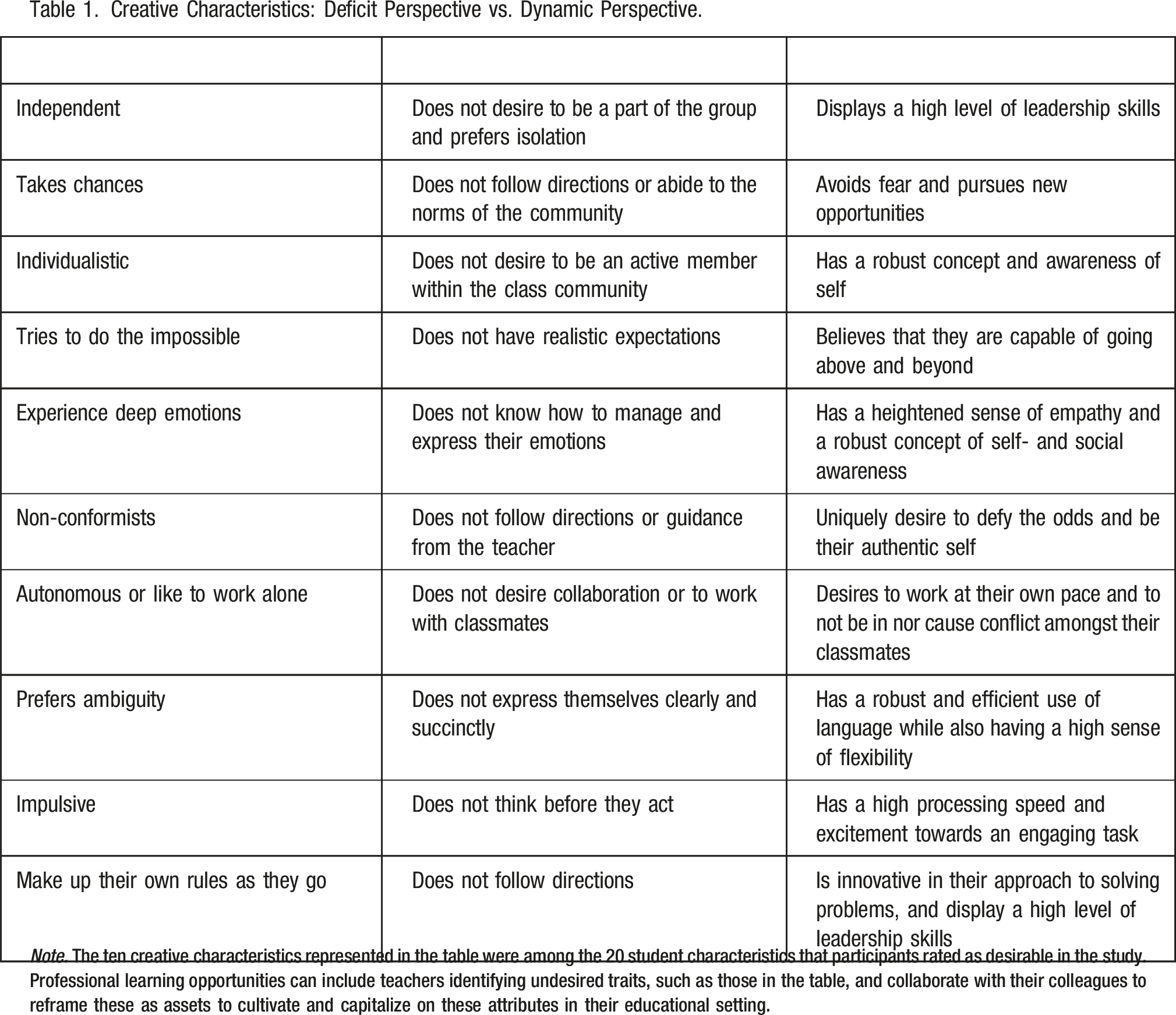
Note. The ten creative characteristics represented in the table were among the 20 student characteristics that participants rated as desirable in the study. Professional learning opportunities can include teachers identifying undesired traits, such as those in the table, and collaborate with their colleagues to reframe these as assets to cultivate and capitalize on these attributes in their educational setting.
An asset-based framework encourages educators to interpret all student characteristics, including those traditionally viewed as problematic, as potential strengths or developmental opportunities (Yosso, 2005). For example, impulsivity, typically defined as acting without forethought (Moeller et al., 2001), may instead indicate rapid cognitive processing or high engagement and enjoyment with a task. In 2E and 3E students, such behaviors reflect heightened intellectual curiosity and an eagerness to explore, particularly when the task is perceived as meaningful or stimulating. Trainings that shift teachers’ deficit-minded thoughts into asset-based perspectives position educators to identify their own implicit preferences for certain student traits and reinterpret undesirable behaviors through a critical, culturally responsive lens. When educators are trained to perceive and respond to traits, like impulsivity, through an asset-based framework, they become more capable of supporting the full range of student potential, especially in populations historically underrepresented or underserved in gifted education. Context and culture matter when perceiving creativity, cultivating intellect, and affirming culture.
Historically Accurate
Furthermore, these educators are more likely to question dominant, Eurocentric standards of giftedness and intelligence, those that are historically rooted in eugenic ideologies and exclusionary practices (Gould, 1996; Ford & King, Jr., 2014; Kearney & LeBlanc, 1993). For example, early models of giftedness developed by Francis Galton (1948) and Lewis Terman (1931) promoted narrow definitions of intelligence, with the ideal gifted child being one of European or White heritage. Centuries later, over 500,000 Black and Hispanic students remain underrepresented in gifted education programs across the United States (Ford, 2013). Culturally responsive gifted educators (Ford, 2010a; Fugate et al., 2021) actively resist this inequity by first understanding the history of both American and gifted education and then engaging in reflective, anti-deficit practices that seek to identify and nurture the diverse talents, including creative potential, of CLED students. Their commitment to equity is often grounded in historical awareness and a proactive vision for inclusive excellence.
Therefore, the recommendation outlined from this finding includes creating and incorporating a professional learning curriculum for staff members that merges concepts of culturally responsive pedagogy and creativity-based educational frameworks. Figure 2, Gray’s Cyclical Model for C
3
Educator Development and Reflection, provides an universal professional development framework that schools and districts can use that synthesizes theoretical and practical insights from several foundational frameworks, including culturally relevant pedagogy (Ladson-Billings, 1995), culturally responsive teaching (Gay, 2002), multicultural education (Banks, 1989), multicultural gifted education (Ford, 2021), and culturally responsive gifted education (Fugate et al., 2021). Teachers are encouraged to engage with each stage of the model as a point of critical reflection and professional learning, using the stage names as thematic entry points for deepening their pedagogical practice and cultural consciousness. Regardless of the content and forum of these trainings, they should extend beyond surface-level understandings of culture and delve into the historical, structural, and ideological forces that have informed educational access and opportunity. Topics may and should include exploring how American schooling has both supported and silenced the cultural contributions of marginalized communities, critically examining one’s own biases, beliefs, and assumptions, power and cultural dynamics in the classroom, historical consciousness in curriculum design and instructional practice, culturally affirming classroom management approaches, and culturally responsive assessment practices. Gray’s cyclical model for C3 educator development and reflection. Note. The researcher developed the model presented and synthesizes theoretical and practical insights from several foundational frameworks in general and gifted education. The model should be responsive to the school community it is being applied to, allowing all teachers in any setting to apply theory to practice.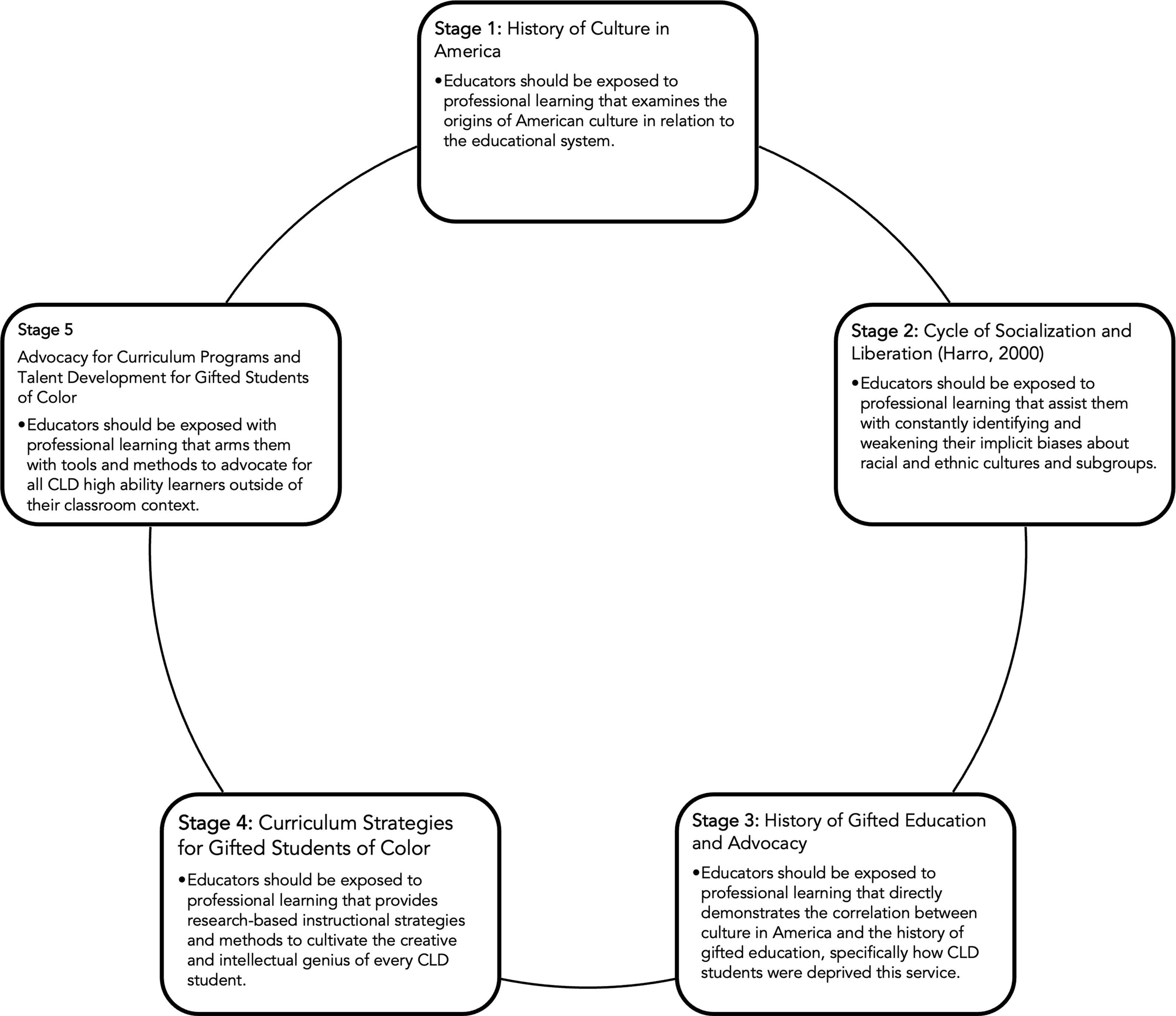
Creativity-Based
Creativity has been empirically linked to academic achievement (Akpur, 2020; Gajda et al., 2017); therefore, educators should consider leveraging academic content to foster creativity rather than treating creativity as a secondary or enrichment objective. To operationalize this shift, creativity-based instructional frameworks should be systematically embedded in all stages of teacher preparation and professional development. Rather than isolating creativity within the arts or relegating it to occasional project-based learning, traditional and alternative teacher education programs must integrate creativity as a foundational pedagogical practice across all content areas to ensure that every child is equipped and developed for the future that is their life.
When considering creativity-based instruction, it is recommended that schools and districts adopt curricular models that promote talent development through culturally responsive frameworks (Sternberg, 2023). One such model is culturally responsive creativity (CRC; Gray, 2025a), which “is the pedagogical amalgamation of culture and creativity as one concept, grounding teaching for creativity in students’ cultural and historical identities” (p. 74). CRC as an instructional framework consists of four conceptual components: priorities, parameters, promises, and pursuits that awaken and cultivate all students’ creative genius. As a pedagogical approach, CRC merges teaching for creativity (Sternberg, 2010; Torrance, 1987) with multicultural gifted education (Ford, 2021) to assist teachers with fostering individual and communal excellence in their classroom. Although this is an instructional practice designed to benefit all culturally and linguistically diverse learners, CRC is an ideal practice among CLED students, as its foundation draws from seminal theories in culturally diverse giftedness research. For instance, the pursuits, or student outcomes, of CRC are inspired by both Muhammad’s (2020) five pursuits of culturally and historically responsive pedagogy and Torrance’s creative positives (Torrance, 1968, 1970), creative traits Torrance discovered abound among Black children. These traits include: • ability to express feelings • ability to improvise with commonplace materials • articulate in role playing, creative activities • enjoyment and ability in art, drawing, painting, etc. • enjoyment and ability in creative dramatics, dance, etc. • enjoyment and ability in music • expressiveness in speech • fluency and flexibility in non-verbal media • enjoyment and skills in group learning, problem solving • responsiveness to kinesthetic • expressiveness of gestures, body language, etc. • humor • richness of imagery in informal language, brainstorming • problem-centeredness • emotional responsiveness • quickness of warm up (Torrance, 1970).
Furthermore, the parameters and promises of CRC are rooted in the unique social and emotional needs of CLED gifted and 3E students (Piske et al., 2022; Sosland, 2022), an abolitionist approach to accurate and affirming content and curriculum design (Love, 2023; Love & Muhammad, 2020), and culturally responsive instructional strategies for gifted students of color (Fugate et al., 2021).
Teaching Creatively vs. Teaching for (Culturally Responsive) Creativity Examples by Content Area
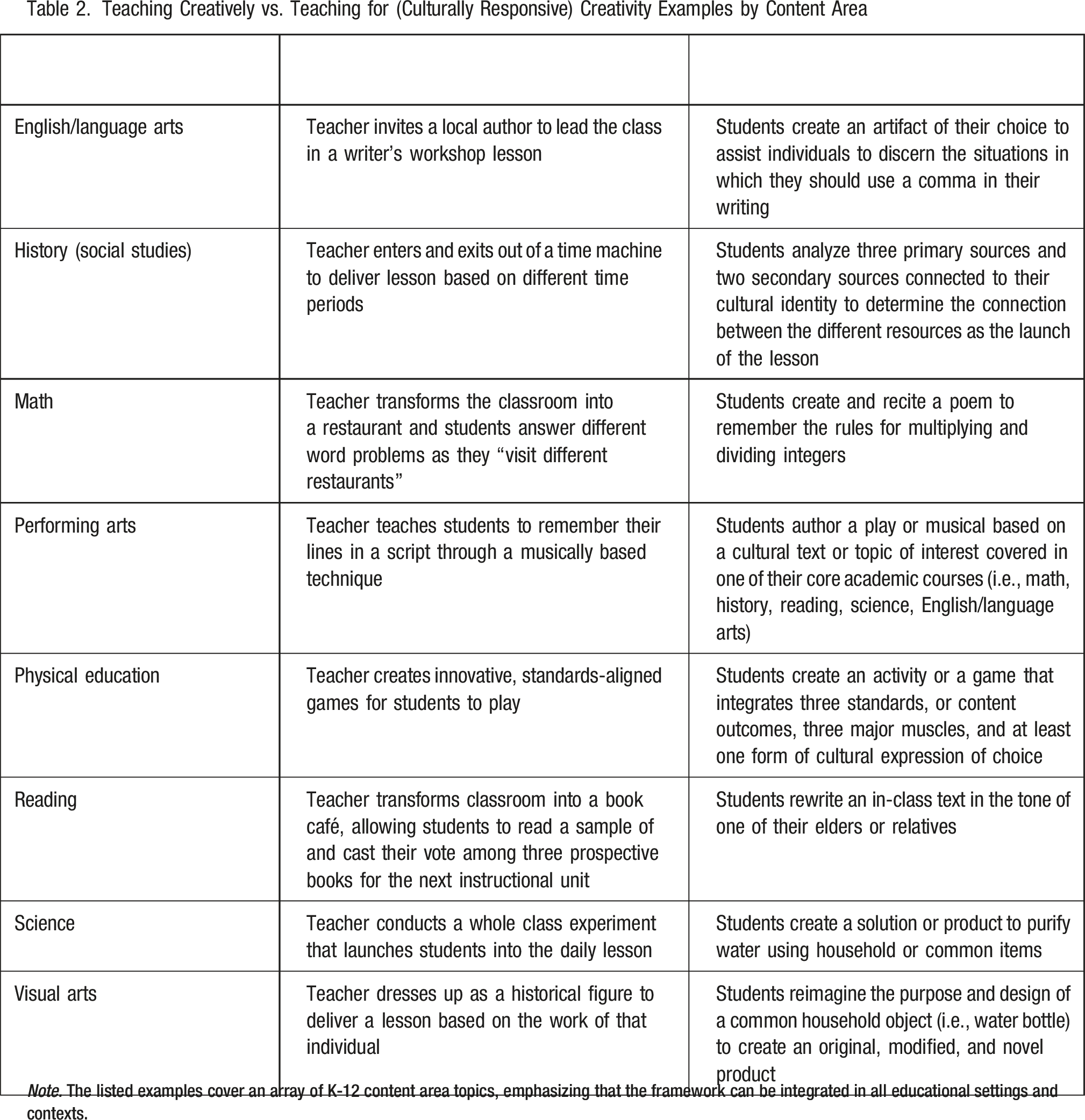
Note. The listed examples cover an array of K-12 content area topics, emphasizing that the framework can be integrated in all educational settings and contexts.
Content-Based
Regardless of the grade-level or content-area taught, teachers should engage in consistent and regular professional learning about the subject matter that they teach. In relation to creating meaningful and culturally responsive learning experiences for high-ability students of color, all content-based instruction should be rooted in critical thinking and creative problem-solving.
Many educators commonly conflate creativity problem-solving with critical thinking. While related, they are conceptually distinct. Creative thinking involves the generation of novel and original ideas, often through divergent and associative processes (Mumford & McIntosh, 2017; Runco & Acar, 2012). In contrast, critical thinking emphasizes logical reasoning, evidence-based evaluation, and the ability to make sound judgments (Ennis, 2016; Facione, 1990). Educators who identify critical thinking as a central instructional goal may, consciously or not, also value the generative qualities of creativity, being that the two forms of thinking are inextricably linked (Ryans & Torrance, 1962; Torrance, 1972, 1987), thereby attributing equal desirability to traits associated with both constructs. Interestingly, participants who selected problem-solving as their top educational objective in the studies also reported the lowest overall valuation of creative characteristics. This may be due to a more procedural or utilitarian interpretation of problem-solving, where solving predefined or concrete problems is prioritized over the exploratory, open-ended nature of creative or critical inquiry (Jonassen, 2000; Laine, 2019). Such a view may reduce the perceived relevance of creative traits within the problem-solving process.
Therefore, it is also recommended that teacher preparation and professional learning sessions explicitly define and differentiate between critical and creative thinking in relation to content-based instruction, as both are vital components of every subject area. When educators understand the distinct cognitive processes involved in each, they can more effectively cultivate both forms of thinking within their students. Moreover, integrating these constructs into a unified instructional model can support the development of informed, comprehensive learners who are analytically rigorous, creatively adaptive, and robust problem-solvers. For instance, a universal model for content delivery could consist of a three-pronged approach to instruction: (a) conceptual understanding, (b) procedural application, and (c) creative expression. Within this guise, subject matter can be understood through reflection, application, and creative inputs and outputs.
To that end, teacher education programs and ongoing professional learning initiatives should incorporate instructional frameworks emphasizing the complementary nature of critical and creative thinking. Curriculum models and talent development programs should be designed to foster both, enabling students to engage in innovative, reflective, and strategic problem-solving. By acknowledging the nuanced relationship between critical and creative thinking and by equipping educators with the tools to teach both intentionally, schools can foster environments where creativity is not incidental but integral to the educational experience. Moreover, educators will be positioned to discourage an assimilation-based “one-size-fits-all” instructional environment (Bondie et al., 2019; Murray et al., 2004) by appreciating and cultivating the cultural implications that influence a student’s critical and creative thinking by connecting the theory they acquire and reflection they endure to the instructional practices they utilize.
Recommendation 2: The Mentor Teacher
A key component in cultivating C3 educators is providing them with C3 mentor teachers. Mentor teachers are veteran educators coach and assist novice, less-experienced teachers in developing their instructional craft and pedagogical identity (Driskill, 2023; Villani, 2009). Similar to the critical question which provided the foundation for the first recommendation, another question arose from the reviewed literature and data analysis: What are the components of selecting ideal C3 mentor teachers and what are their specific responsibilities?
Seamlessly Selecting C3 Mentor Teachers
Given the clear link between experience and desirability for creativity in the classroom, a key recommendation is to reimagine the roles of veteran educators within teacher development systems. Teachers with ten or more years of experience should be prioritized as mentor teachers for pre-service candidates and novice in-service educators. Research consistently affirms that mentorship is a crucial determinant of teacher success, notably when mentors embody responsive, reflective, and pedagogically robust practices (Fairbanks et al., 2000; Rowley, 1999; Wold et al., 2023). However, in many teacher preparation and induction programs, mentor roles are assigned to educators with limited experience, sometimes as little as three years, which diminishes the potential for meaningful professional modeling (Ellis et al., 2020). Considering the consistent teacher shortages throughout the country (Ingersoll, 2025), it is also acceptable that educators with at least five years of teaching experience serve as mentor teachers if schools and districts cannot identify an adequate number of educators with ten or more years of experience.
Furthermore, the findings suggest that individuals with lesser automatic association to different racial subgroups and those that have participated in culturally responsive and gifted pedagogical training value creativity more in students. Therefore, it is recommended that culturally responsive gifted pedagogy (Fugate et al., 2021; Gray et al., 2026) trained educators with little to no, or only slight, racial bias serve as mentor teachers, coaching and guiding younger educators and those with higher preferences toward one race. These individuals are well-positioned to support novice educators in identifying, mitigating, and reflecting on their implicit biases while modeling equitable and culturally responsive instructional practices. In particular, they can guide mentees in recognizing and valuing creative traits in CLED students through consistent coaching conversations, classroom observations and visits, and reflective tasks and activities (Aguilar, 2020) – shining a positive light on traits that are too often misunderstood or overlooked in conventional educational settings.
Renewed Roles and Responsibilities of C3 Mentor Teachers
Although the implementation of mentorship in education is an evidence- and research-based proven practice, many educational models and program providers do not utilize this framework to its fullest potential. Alternative certification pathways, such as Teach for America and independent school or charter-based residencies, frequently omit structured mentorship, instead relying on short-term training followed by thrusting educators into the classroom (Lampert & Dadvand, 2024). This ideology deprives novice educators of sustained, relational guidance at the most critical stage in their professional development. To address this gap, all teacher-preparation programs, whether traditional or alternative, should ensure that every educator is paired with a mentor with extensive teaching experience and a demonstrated commitment to culturally responsive pedagogy. This mentorship should span, at minimum, a full semester or more for pre-service teachers, allowing for deep engagement with instructional planning, classroom management, and student interaction. In-service educators should receive ongoing, non-evaluative feedback from experienced mentors through regular classroom visits, reflective dialogue, and co-observation opportunities. In addition, mentor relationships should be reciprocal. Mentees should also have structured opportunities to observe their mentors’ classrooms, with intentional reflection on how the mentor manifests their appreciation for creativity and how they encourage and cultivate the creative characteristics of CLED students in real-time. These observations can support mentees in developing their own instructional identities grounded in innovation and equity.
C3 mentor teachers should also be positioned as content instructors within teacher-preparation programs, including trainings on and pathways inclusive of gifted education. While university-based faculty provide essential theoretical and research perspectives and expertise, many have not taught K–12 students in recent years to the extent that their students will once they enter the profession (Goodwin et al., 2014). As such, their perspectives on the immediacy and contextual relevance needed to prepare new educators for today’s diverse and ever-changing classrooms may be inconsistent. Integrating current, practicing educators into teacher education faculties can serve as the bridge between theory and practice, offering teacher candidates both scholarly grounding and practitioner insight. To that end, schools can have their mentor teachers lead bi-weekly or monthly professional learning sessions on each of the five stages listed in Figure 2. The session format can include various forms of lecture-based learning to ensure a shared understanding among the staff is present, hands-on activities to allow teachers to process the information shared in the lesson, and structured time for individual and group reflection to begin bringing theory to practical action steps.
Finally, C3 mentor teachers should lead in helping novice teachers make informed decisions about technology integration, particularly AI, as it relates to nurturing creativity in the classroom. As digital tools become more embedded in the classroom, educators must apply them through a critically conscious and creative lens. Seasoned teachers, with their deep understanding of pedagogy and content knowledge, can guide newer colleagues in balancing technological innovation with instructional design that utilizes creative pedagogy.
The Culturally Responsive, Critically Conscious, and Creative Mentor Teacher: Criteria and Responsibilities
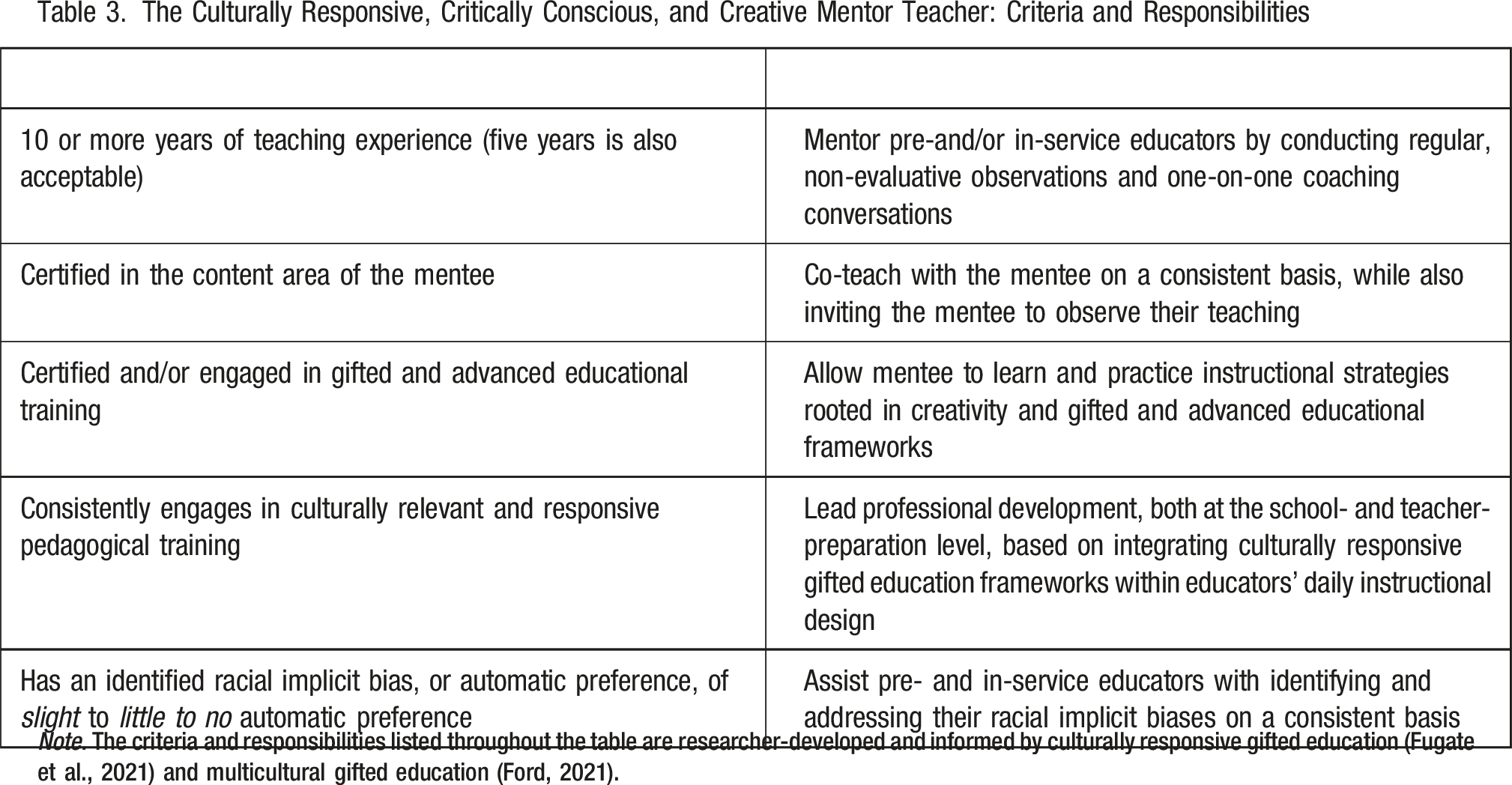
Note. The criteria and responsibilities listed throughout the table are researcher-developed and informed by culturally responsive gifted education (Fugate et al., 2021) and multicultural gifted education (Ford, 2021).
Conclusion
Creativity is not solely the generation of novel, original, and effective ideas; it is also the process of a dynamic interaction among the individual (person), the problem or challenge (task), and the surrounding context (situation) (Sternberg, 2025; Tromp & Sternberg, 2022). As such, perceptions of creativity are shaped not only by internal cognitive processes but also by how individuals interpret creative behavior within particular sociocultural environments. This study affirms that there is an explicit connection between racial implicit bias and educators’ perceptions of creativity in students. The findings also suggest that perceptions of creativity, both one’s own and that of others, are influenced by the presence or absence of implicit racial bias. Educators with lower levels of bias were more likely to recognize and value creative traits in students, particularly those from culturally and linguistically diverse backgrounds. This correlation highlights the importance of critically examining how identity, bias, and sociocultural conditioning intersect with talent recognition and instructional practice.
To address these disparities, this manuscript offers a set of targeted recommendations, including the strategic selection of mentor teachers who demonstrate cultural responsiveness and low implicit bias; the development and integration of creativity-centered, culturally relevant frameworks into teacher-preparation programs; and the establishment of professional learning opportunities that emphasize creativity, criticality, and cultural consciousness. Collectively, these recommendations support the cultivation of what this study defines as the C 3 educator: one who is culturally responsive, critically conscious, and teaches for creativity. The C3 educator recognizes all learners’ creative strengths and actively seeks to foster environments where those strengths are validated, expanded, and celebrated.
When educational systems intentionally invest in the preparation and professional development of C3 educators, classrooms become spaces of responsiveness, criticality, innovation, and joy. The C3 educator is culturally responsive in their beliefs about children, critically conscious in their instructional and curriculum design, and creative in their content delivery. As such, the primary role of the C3 educator is to teach for creativity through a culturally responsive and critical lens so that students can observe their cultural identity within the curriculum design, uncover and learn content at accelerated, developmentally appropriate paces, and express their content mastery in innovative methods. In such environments, every child, regardless of cultural background or perceived ability, is allowed and encouraged to create, to think freely, and to thrive authentically. Through the intentional, responsive, and targeted approach to professional learning, instructional practice, and curriculum design, the C3 model provides a natural yet necessary framework for ensuring that the creative potential and personality of all learners are recognized, rendered, and fully realized.
Supplemental Material
Supplemental Material - The New Dreamkeepers: A Call for Critically Conscious, Culturally Responsive, and Creative Educators in Gifted Education
Supplemental Material for The New Dreamkeepers: A Call for Critically Conscious, Culturally Responsive, and Creative Educators in Gifted Education by Corey J. Gray in Gifted Child Today.
Footnotes

Funding
The authors received no financial support for the research, authorship, and/or publication of this article.
Declaration of Conflicting Interests
The authors declared no potential conflicts of interest with respect to the research, authorship, and/or publication of this article.
Supplemental Material
Supplemental material for this article is available online.