







Abstract
Researchers who represented a university center on gifted education engaged in a Research Practice Partnership (RPP) with a local non-profit organization that supported families of color in a large city in the northwestern region of the United States. The purpose of this partnership was two-fold: to investigate families’ children’s participation in advanced learning opportunities in their schools and communities and to design enrichment classes that matched families’ perceived needs of their children and eliminate the barriers that hindered their participation in academically advanced or enriched programs. In this researcher, we highlight common challenges families of color faced when trying to engage in advanced learning opportunities and their suggestions for designing advanced learning and enrichment classes and services that meet their children’s needs.
Parent participants emphasized community-based approaches to gifted programming, such as using local community spaces and offering programs closer to families’ homes.”
We know that advanced learning opportunities are not equitably accessible to all populations of students, and in particular, children of color (Gentry et al., 2019; Grissom & Redding, 2016; Siegle et al., 2018; Yaluma & Tyner, 2018). But what have we done as a field to find out how parents of children of color are working with schools and accessing supplemental enrichment programs in their communities? What can we learn from parents of children of color to more adequately and fairly serve them? This research-practice partnership (RPP) gave voice to these families. Their voices should inform enrichment program designers, and school personnel who may intentionally or unintentionally place barriers to accessing advanced learning opportunities in their schools and communities (Mun et al., 2021). In this article, we define advanced learning as educational experiences that challenge children who are working above their grade level peers in the school setting and enrichment learning as educational experiences that engage them in interest areas that nurture their excitement in learning and lead them to pursue topics in greater depth (Lamb & Hertzog, 2025). These experiences may encompass learning experiences such as gifted pull-out programs, advanced placement (AP) courses, and in or out of school enrichment activities. The overarching purpose of this study was two-fold: (a) to talk with local families of color regarding their experiences related to their children’s participation in advanced learning opportunities provided by their schools and communities, and (b) to design enrichment classes that met families’ perceived needs of their children and eliminate the barriers that hindered their participation in academically advanced or enriched programs.
Background
Research-Practice Partnerships (RPP)
This study was funded by a Bill and Melinda Gates Foundation grant that focused on RPPs as a means to advance educational opportunities for locally underserved communities. In this case, we designed a RPP to support a non-profit organization that serves local families of color in a large city in the northwestern region of the United States. A RPP is designed to be a long-term partnership between researchers and practitioners with a focus on issues of practice (Coburn et al., 2013). The primary purpose of a RPP is to collaborate with the practitioner to address a problem identified by the partner and specific to the local community, which was Seattle, Washington in this study. Outcomes of an RPP should prioritize benefits to the partner (Coburn et al., 2013). The overall goal of this partnership was to listen to local families of color and responsively design advanced or enriched learning experiences sponsored by the Robinson Center for Young Scholars (hereafter referred to as Robinson Center) that benefited the constituents of Families of Color Seattle. In line with the RPP framework, we met with our community partner to co-develop our research questions and co-design our research study (including interview protocol and questionnaire) and programming.
This RPP was carried out in two phases. First, we assessed families’ needs through focus group events, then we responded to families’ voiced needs by designing and carrying out enrichment programming based on what families wanted. During the first phase of the RPP, we designed two family outreach events. Families who attended shared a meal together and afterward, their children engaged in activities, such as Mancala, while parents participated in focus groups. During these outreach events, families shared their experiences related to advanced learning opportunities in their local communities which included salient themes such as lack of access to information, systemic barriers, and what parents wanted for their children. For a detailed description of the first phase, including focus group events and related findings, see Lamb & Hertzog (2025). Families who were unable to participate in family outreach events (and therefore, focus groups) were given a chance to participate in an online questionnaire. We used the findings from questionnaires and focus group interviews (Phase One) to design and provide enrichment sessions (Phase Two) that responded to families’ needs. Phase Two of the study focused on program design, program participation, and participants’ feedback regarding the enrichment session. In this article, we report findings from the online questionnaires and the enrichment sessions that were designed to meet families’ needs.
Context of the Study
Families of Color Seattle is located in Seattle, Washington, and their mission focuses on racial justice, advocacy, and education while also providing a space where local families of color can connect with one another and share their skills, resources, and cultures. As of 2024, Seattle has a population of over 780,000 of which approximately 40% are people of color and about 14% are under 18 years of age (Seattle, 2022a; U.S. Census Bureau, 2024). The majority of the city’s population of people of color live in the south region of the city which also contains the city’s highest equity priority areas (Seattle, 2022b). Approximately 34% of Seattle Public School’s 51,200 enrolled students are considered low-income (Office of Superintendent Public Instruction [OSPI], 2024-25). In Washington State, gifted education services are determined by the local education agency which is a common practice for gifted education in the United States (Hodges, 2025). For Seattle, students of color—primarily Black, Latinx, and multi-racial students—have been underrepresented in gifted education programs and AP courses (Office for Civil Rights, 2020-21).
Purpose
As a RPP team, we wanted to understand the underlying reasons students of color had low enrollment in local advanced academic programs (e.g., AP courses, enrichment, gifted), including the enrichment programs that the Robinson Center offered. We also wanted to talk to local families of color about how advanced academic programs could better meet their needs, and we wanted to design advanced academic programming sponsored by the Robinson Center that responded to those needs. The following research questions were developed with our community partner and guided the overall RPP: 1. What have families of color experienced when trying to access enriched and/or advanced academic programming for their children? 2. What are the prominent challenges and/or barriers to accessing enriched and/or advanced academic programming for their children as perceived by families of color? 3. What are the critical needs and wants for enriched and/or advanced academic programming as expressed by families of color? 4. How can the Robinson Center more aptly meet the needs of families of color served by Families of Color Seattle?
Although data for the overall RPP included focus group interviews and questionnaires, this paper limits its focus to the questionnaire results and phase two of the study (Research Question 4). For more on phase one of this study, please see Lamb & Hertzog (2025).
Methodology
This study received approval from the Institutional Review Board. During Phase One of the RPP, attendance at family outreach events was capped due to funding; therefore, the interview protocol used for focus groups was adapted into a questionnaire to gather feedback from families who were unable to participate in focus group events. Participants provided informed consent prior to participating and were able to exit the questionnaire at any time.
Participants and Procedures
During Phase One of the study, families were given the opportunity to attend family outreach events in which parents also participated in focus groups (n = 27; Lamb & Hertzog, 2025). Families who were unable to participate in the focus group events were given a chance to participate in an online questionnaire using Qualtrics. Families of Color Seattle advertised through their social media pages and emailed their community listserv to invite parents who were unable to attend either of the in-person focus group events to participate in an online questionnaire. The advertisement included an invitation letter and a hyperlink to the consent form and questionnaire. The only inclusion criteria for participation in the questionnaire were that participants self-identified as parents or guardians of a child of color.
Online Questionnaires
Both the interview protocol and adapted questionnaire were collaboratively developed by the research team and the director of Families of Color Seattle. The interview protocol included open-ended questions, such as “What do you perceive as barriers or challenges for your child to access advanced learning opportunities offered by their school?” and “What types of programs/classes would you bring your child to if offered by the Robinson Center?” To adapt the interview protocol into an online questionnaire, we collaborated with Families of Color Seattle to adapt some open-ended items into close-ended items while also leaving some open-ended items on the questionnaire. For instance, interview protocol items such as “What do you perceive as barriers or challenges for your child to access advanced learning opportunities offered by their school?” and “Can you describe what you know about advanced and enrichment learning opportunities in your child’s school or school district?” were adapted to Likert scale items (ranging from 1 = strongly disagree to 5 = strongly agree): “Advanced learning opportunities are accessible to my child/family” and “I know how my child’s school district identifies students for highly capable services.” Other interview protocol items were left as open-ended items on the questionnaire (e.g., “What types of programs/classes would you bring your child to if offered by the Robinson Center?”). The online questionnaire included five broad categories: (a) educational services, (b) communication, (c) advanced learning, (d) experiences involving microagressions, stereotype assumptions, and overt racism, (e) advice, (f) what parents want, and (g) demographic information. For the experiences related to microaggressions, stereotyped assumptions, or overt racism section, empirically based definitions were provided for each type of experience to decrease instances where survey items may be unclear or misinterpreted (Peytchev et al., 2010). Microaggressions are defined as “subtle everyday experiences of racism” (Wong et al., 2014, p. 181) that often include comments or actions, “whether intentional or unintentional, that communicate hostile, derogatory or negative racial slights and insults to the target person or group” (Sue et al., 2007, p. 273). Stereotyped assumptions are defined as “generalizations made about an ethnic group, concerning a trait attribution, which is considered to be unjustified by an observer” (Brigham, 1971, p. 31). Racism is defined as a “form of prejudice that generally includes negative emotional reactions to members of a group, acceptance of negative stereotypes, and racial discrimination against individuals; in some cases, it can lead to violence hatred or intolerance of another race or races” (American Psychological Association [APA], nd). The questionnaire included 62 total items which included 37 five-point Likert scale items (ranging from strongly disagree - 1 to strongly agree - 5), two rank order items, 16 open response items, and seven demographic questions. Sample questionnaire items can be found in the Appendix.
Sample Characteristics for Online Questionnaire Participants.
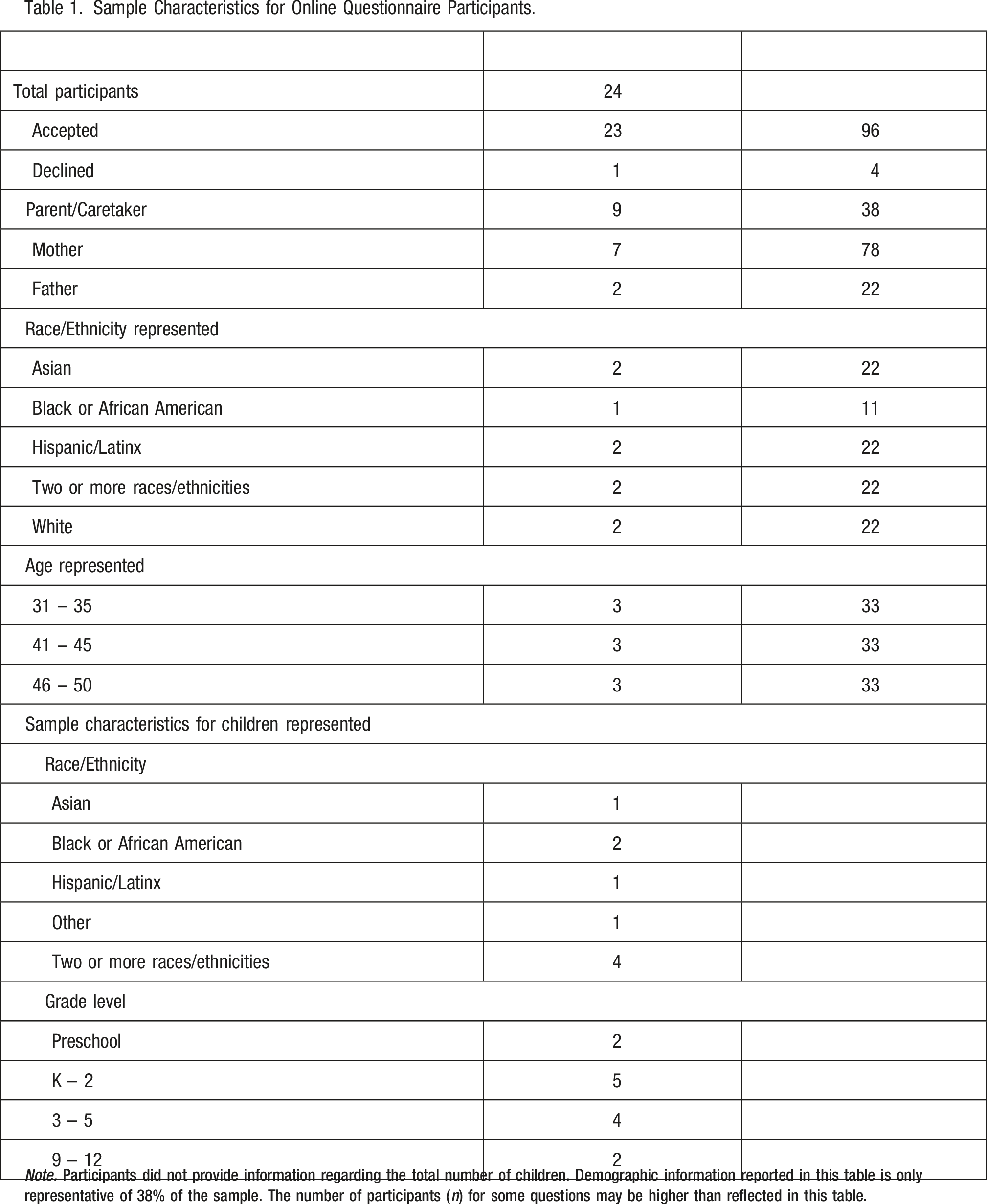
Note. Participants did not provide information regarding the total number of children. Demographic information reported in this table is only representative of 38% of the sample. The number of participants (n) for some questions may be higher than reflected in this table.
Phase Two: Designing Enrichment Sessions Based on Families’ Needs
The major benefit to the Families of Color Seattle organization was for the Robinson Center to design enrichment activities that families said they wanted their children to attend. Based on findings from focus group interviews and online questionnaires that suggested parents were interested in STEM and culturally relevant curriculum, two enrichment sessions were created: Programming an Animated Story and Global Alphabets. Programming an Animated Story engaged children, grades 2 – 6, in learning the process of designing animation and using block-based programming language to control the characters and create a story. The second event, Global Alphabets, was held as a two-part session, and engaged children, grades pre-k – 1. Children in this session compared the English alphabet with the Greek alphabet and Egyptian hieroglyphics through shapes and sounds. These sessions were initially to be held in person in local community areas identified by focus group participants. Due to the emergence of the COVID-19 virus and the governor’s stay home, stay healthy order, these sessions were redesigned and held online during the second phase of the RPP (April 2020).
Family Engagement Through Online Enrichment Sessions
Sample Characteristics for Online Enrichment Session Participants.
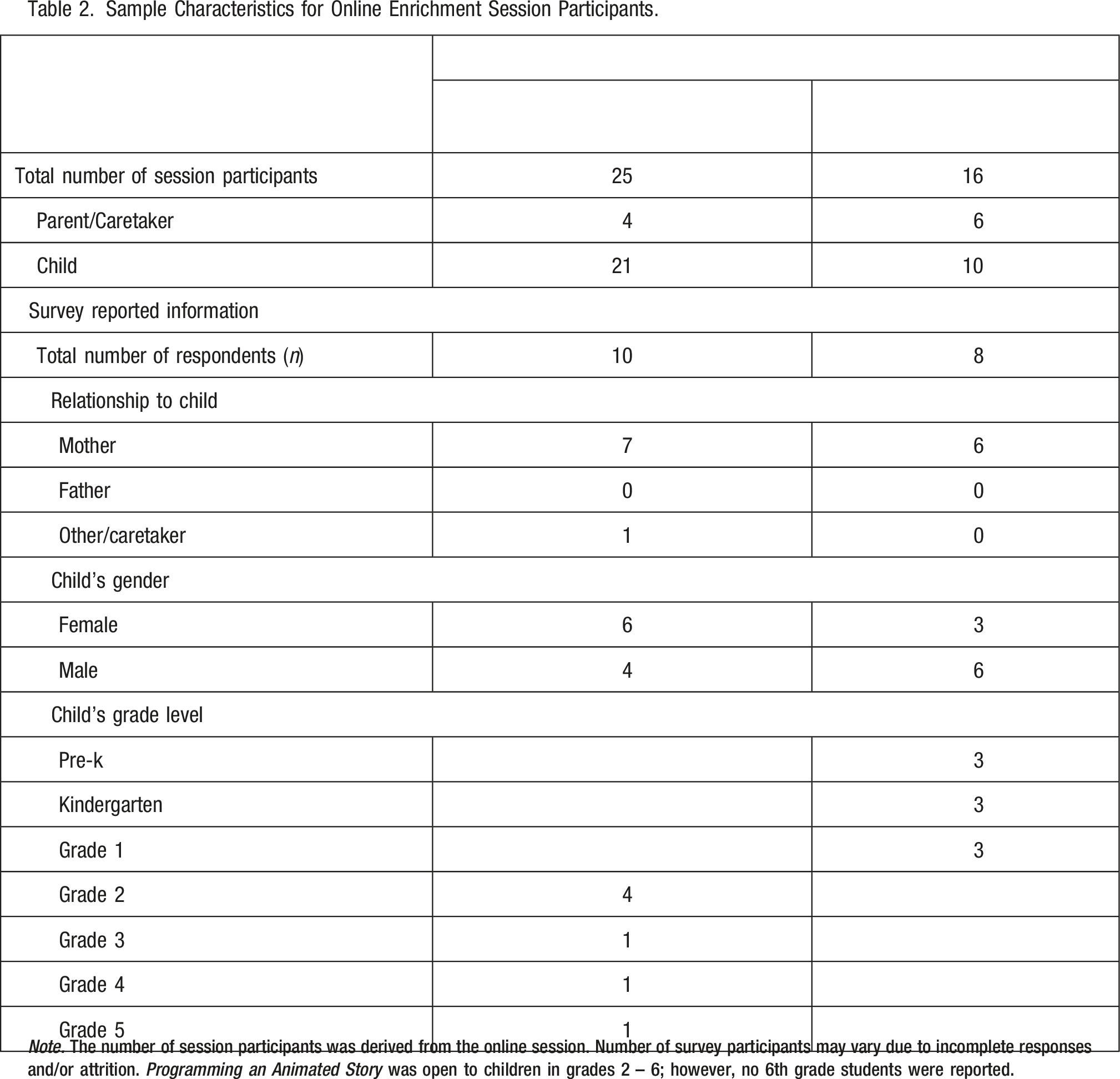
Note. The number of session participants was derived from the online session. Number of survey participants may vary due to incomplete responses and/or attrition. Programming an Animated Story was open to children in grades 2 – 6; however, no 6th grade students were reported.
After each online session, a Qualtrics survey was distributed to participants via email, according to the event they engaged in. The purpose of this survey was to gather feedback regarding families’ satisfaction with the programming and collect their suggestions for improvement. This survey consisted of a variety of multiple choice and open response questions. A total of 18 participants responded to the feedback survey; of these, 10 participants responded to the survey for the April 17th event (Programming an Animated Story), and eight responded to the survey for the two-part event held April 23rd and 24th (Global Alphabets). See Table 2 for a description of online enrichment sessions survey participants as well as the number of participants (n) who attended the online sessions.
Data Analysis
Data from the online questionnaires and feedback surveys were used as descriptive data (e.g., frequency counts) only. For open-ended responses, researchers considered a priori themes based on the categories of the online questionnaire while inductively coding to capture patterns emerging from participants’ responses (Saldaña, 2014). Thematic analysis was used to “identify, analyze, and report patterns (themes) within data” (Braun & Clark, 2006, p. 79). We developed coding tables (data displays) to organize open-ended responses by survey category and to support thematic analysis across data. Data displays were reviewed during weekly research team meetings, and discrepancies in coding were discussed until consensus was reached. Several strategies were used to strengthen the methodological rigor and trustworthiness of this study (Lincoln & Guba, 1985). First, credibility was supported through collaborative coding processes and recurring team discussions to ensure that findings were accurately reflecting participants’ perspectives. Dependability was addressed through systematic coding procedures and transparent documentation of analytic decisions. Lastly, confirmability was supported by working as a research team and collaborating with our community partner within the RPP, which helped ensure that the findings were grounded in participants’ experiences rather than researcher bias. First, findings from the online questionnaire are summarized and presented by categories included in the questionnaire: current school experiences, communication, advanced learning opportunities, and experiences involving microaggressions, stereotype assumptions, and racism. Next, findings from feedback surveys for the online enrichment sessions are summarized and presented in the order the enrichment session took place.
Findings
Online Questionnaire
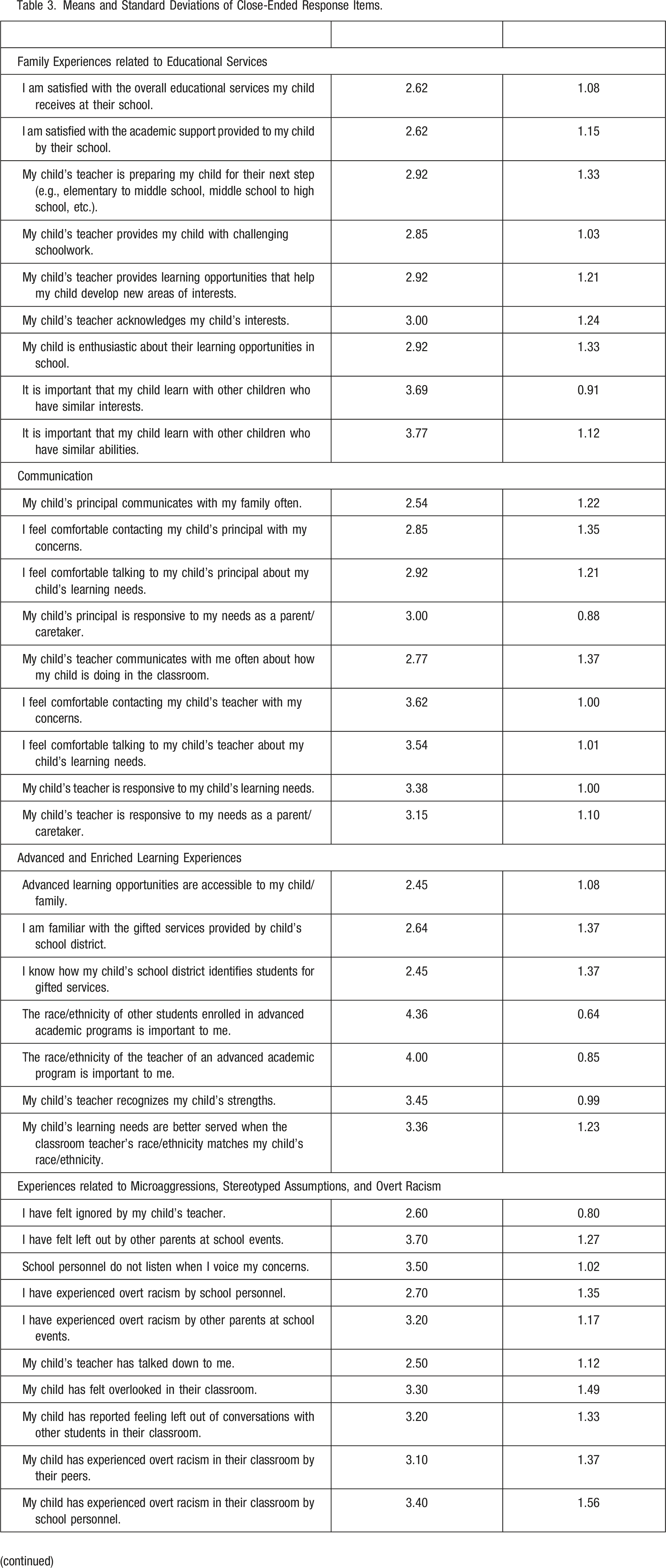
Means and Standard Deviations of Close-Ended Response Items.
Participants’ Open-Ended Responses by Category and Subcategory.
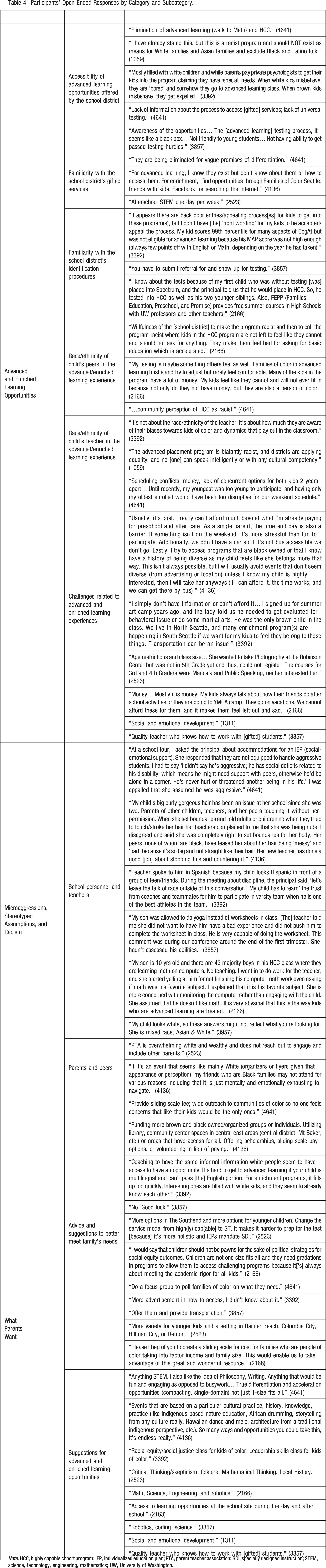
Note. HCC, highly capable cohort program; IEP, individualized education plan; PTA, parent teacher association; SDI, specially designed instruction; STEM, science, technology, engineering, mathematics; UW, University of Washington.
Family Experiences Related to Educational Services
Participants (n = 13) were first asked to respond with their level of satisfaction with current educational services provided. Overall, families’ responses were mixed when asked to report their level of satisfaction with the education services and academic support provided to their children (54% were not satisfied with educational services provided; 46% were not satisfied with academic support provided). Results were also split when parents responded that they believed their child’s teacher was preparing their child for their next step academically (46%), and 31% reported that they believed their child’s teacher provided their child with challenging schoolwork (38% neither agreed nor disagreed). Although results were split when asked questions related to their satisfaction with current services provided to their children, many parents responded positively when asked about the importance of their child learning with other children who have similar interests (54%) or similar abilities (62%).
Communication
Participants (n = 13) were then asked a series of questions related to communication by various school personnel. These questions targeted frequency of communication and responsiveness by school personnel as well as participants’ comfort level when in situations where they needed to communicate with various school personnel. Only 15% of participants agreed that their child’s principal communicated with them often (38% disagreed), and 38% agreed that their child’s teacher communicated with them often (62% disagreed). Approximately 54% of participants reported that they did not feel comfortable contacting their child’s principal with their concerns (38% reported feeling comfortable), whereas 54% reported feeling comfortable contacting their child’s teacher with concerns. When asked about their comfort level talking to their child’s principal about their children’s learning needs, responses were split (38% agreed to feeling comfortable, 38% disagreed); however, a slight improvement was noted when asked the same question regarding their child’s teacher (46% agreed to feeling comfortable; 38% neither agreed nor disagreed). When asked if school personnel were responsive to their or their children’s needs, 46% neither agreed nor disagreed when it pertained to the principal’s responsiveness to their needs as parents/caretakers. Participants’ responses were also split when asked the same question related to their child’s teacher (38% agreed, 38% disagreed); however, 62% of parents agreed that their child’s teacher was responsive to their child’s learning needs.
Advanced Learning and Enrichment Opportunities
When asked a series of questions related to advanced learning and enrichment opportunities, (n = 11), only 18% reported that advanced learning opportunities were accessible to their families overall (36% neither agreed nor disagreed, 45%, disagreed). One parent indicated the “lack of information about the process to access [gifted] services; lack of universal testing; community perception of HCC (Highly Capable Cohort) as racist” (4641) whereas one parent pointed to “not having ability to get passed testing hurdles” (3857). Another parent explained, “I have already stated this, but this is a racist program and should NOT exist as means for White families and Asian families and exclude Black and Latino folk” (1059). Another parent’s comment related to the demographic makeup of their local gifted education program and educators’ tendencies for deficit thinking: Mostly filled with white children and white parents pay private psychologists to get their kids into the program claiming they have “special” needs. When white kids misbehave, they are “bored” and somehow they go to advanced learning class. When brown kids misbehave, they get expelled. (3392)
When asked about their familiarity with the gifted education program in their child’s school district, 55% were not familiar (36% were familiar). One parent noted, “For advanced learning, I know they exist but don’t know about them or how to access them” (4136) whereas other parents pointed to the programs offered by their school district “afterschool STEM one day per week” (2523) or changes being implemented by their school district: “They are being eliminated for vague promises of differentiation” (4641). When asked about their knowledge pertaining to their district’s identification procedures, 55% were not familiar with how the district identified students for gifted education services (27% were familiar) which was illustrated by this parent’s open-ended response: It appears there are back door entries/appealing process[es] for kids to get into these program[s], but I don't have [the] “right wording” for my kids to be accepted/appeal the process. My kid scores 99th percentile for many aspects of CogAt but was not eligible for advanced learning because his MAP score was not high enough (always few points off with English or Math, depending on the year he has taken). (3392)
Parents were also asked to report on the importance of race/ethnicity of their children’s peers and teachers in the advanced learning program. 91% responded that the race/ethnicity of other students enrolled in advanced learning programs was important to them whereas 64% agreed that teachers’ race/ethnicity was important to them (36% neither agreed nor disagreed). One parent elaborated: My feeling may be something others feel as well. Families of color in advanced learning hustle and try to adjust but rarely feel comfortable. Many of kids in the program have a lot of money. My kids feel like they cannot and will not ever fit in because not only do they not have money, but they are also a person of color. (2166)
When asked about supporting their child’s academic needs, 64% of parents reported that their child’s teacher recognized their child’s strengths, and 36% of parents reported that their child’s learning needs were better served when the classroom teacher’s race/ethnicity matched their child’s race/ethnicity (46% neither agreed nor disagreed). A few parents elaborated further on their responses related to teachers’ race/ethnicity and pointed to the lack of and need for cultural competency: “It’s not about the race/ethnicity of the teacher. It’s about how much they are aware of their biases towards kids of color and dynamics that play out in the classroom,” (3392), and “The advanced placement program is blatantly racist, and districts are applying equality, and no [one] can speak intelligently or with any cultural competency” (1059).
Finally, participants were given the opportunity to rank factors (and list other important factors that were not provided in the given choices) that were most important to them as it related to their child’s participation in enriched or advanced learning programs. Participants ranked factors in the following order (most important to least important): (a) transportation (M = 3.09, SD = 1.24); (b) race/ethnicity of the teacher (M = 2.82, SD = 0.72); (c) race/ethnicity of peers in the program (M = 2.45, SD = 1.08), and (d) free tuition (M = 1.64, SD = 0.77). Other items that were listed as important factors that were not provided in the given choices included access to advanced learning programs at the school site (2163), program leadership (above the teacher [4136]), and “true differentiation and acceleration opportunities” (4641). Participants were also asked to rank factors related to the climate of enriched or advanced learning programs in order of importance. Talent development (M = 3.36, SD = 0.64) was ranked as most important followed by fun and engaging (M = 2.27, SD = 0.75) and academic rigor (M = 2.27, SD = 1.29), and sense of belonging (M = 2.09, SD = 1.16). Participants were given another opportunity to list important factors that were not provided in the given choices, in which participants included teachers’ expertise, or “one who knows how to work with gifted students” (3857) and providing social/emotional support (1311).
Although not specified in the open-ended response question, when asked whether there was something important to participants that was not listed in the answer choices, many parents’ responses related to challenging experiences related to advanced and enriched learning opportunities offered outside of their local school district. We labeled these responses as “Challenges related to advanced and enrichment learning experiences” (See Table 4). For instance, multiple parents pointed to transportation, scheduling, and cost in their open-ended responses: “Scheduling conflicts, money, [and] lack of concurrent options for both kids 2 years apart” (4641); “I simply don’t have information or can’t afford it… We live in North Seattle, and many enrichment programs are happening in South Seattle, if we want for my kids to feel they belong to these things. Transportation can be an issue” (3392); and Money… Mostly it is money. My kids always talk about how their friends do after school activities or they are going to YMCA camp. They go on vacations. We cannot afford these for them, and it makes them feel left out and sad. (2166)
One participant shared their experience as a single parent: Usually, it’s cost. I really can’t afford much beyond what I’m already paying for preschool and after care. As a single parent the time and day is also a barrier. If something isn’t on the weekend, it’s more stressful than fun to participate. Additionally, we don’t have a car so if it’s not bus accessible, we don’t go. (4136)
Experiences With Microaggression, Stereotypes, and Racism in School Environments
Participants (n = 10) were also given an opportunity to share their experiences with microaggressions, stereotypes, and racism in school environments. Participants were not required to answer this series of questions and were cautioned that questions may induce uncomfortable feelings and memories. In addition to these series of questions, participants were given the opportunity to elaborate on their experiences through open-ended responses.
Teachers and School Personnel
When asked about school personnels’ responsiveness to parents’ voiced concerns, half of participants reported that school personnel do not listen when they voice their concerns (30% neither agreed nor disagreed, 20% disagreed). When asked about their experiences with overt racism, 20% of parents agreed with having experienced overt racism by school personnel (50% disagreed). For instance, one parent shared their experience related to a discipline meeting with the school principal: “[The] teacher spoke to him in Spanish because my child looks Hispanic in front of a group of teen/friends. During the meeting about discipline, the principal said, ‘let’s leave the talk of race outside of this conversation’” (3392). Another parent shared their experience with a school principal: At a school tour, I asked the principal about accommodations for an IEP (social-emotional support). She responded that they are not equipped to handle aggressive students. I had to say, “I didn’t say he’s aggressive; he has social deficits related to his disability, which means he might need support with peers, otherwise he’d be alone in a corner. He’s never hurt or threatened another being in his life.” I was appalled that she assumed he was aggressive. (4641)
When asked about interactions with their child’s teacher, almost half (40%) of our participants disagreed that they had felt ignored by their child’s teacher (50% neither agreed nor disagreed, 10% agreed), and 20% responded that they had experienced their child’s teacher talking down to them (40% neither agreed nor disagreed, 40% disagreed). Parents were also asked to respond to these experiences as they related to their children. When asked about experiences with their child’s teacher making assumptions about their child’s abilities and interests based on their race, 60% agreed that they had experienced this pertaining to their child’s abilities (30% disagreed), and 70% reported experiencing this related to their child’s interests (30% disagreed). One parent shared: My son was allowed to do yoga instead of worksheets in class. [The] teacher told me she did not want to have him have a bad experience and did not push him to complete the worksheet in class. He is very capable of doing the worksheet. This comment was during our conference around the end of the first trimester. She hadn’t assessed his abilities. (3857)
Half of the questionnaire participants reported that their child had felt overlooked in their classrooms (30% disagreed). More alarmingly, 50% responded that their child had experienced overt racism in their classrooms by school personnel (30% disagreed). One parent elaborated on their child’s experience: My child’s big curly gorgeous hair has been an issue at her school since she was two. Parents of other children, teachers, and her peers touching it without her permission. When she set boundaries and told adults or children “no,” when they tried to touch/stroke her hair, her teachers complained to me that she was being rude. I disagreed and said she was completely right to set boundaries for her body. Her peers, none of whom are Black, have teased her about her hair being “messy” and “bad” because it’s so big and not straight like their hair. Her new teacher has done a good [job] about stopping this and countering it. (4136)
Parents and Peers
Thirty percent of our participants had experienced overt racism by other parents at school events (50% neither agreed nor disagreed, 20% disagreed), and most parents (60%) reported that they had experienced feeling left out by other parents at school events (30% disagreed), including school associations, such as the Parent Teacher Association (PTA): “PTA is overwhelming White and wealthy and does not reach out to engage and include other parents” (2523). Another parent’s comment related to how school events are advertised: If it’s an event that seems like mainly White (organizers or flyers given that appearance or perception), my friends who are Black families may not attend for various reasons including that it is just mentally and emotionally exhausting to navigate. (4136)
Parents were also asked about their children’s experiences with their peers to which 40% reported that their child had reported feeling left out of conversations with other students in the classroom (40% neither agreed nor disagreed), and 40% agreed that their child had experienced overt racism in their classroom by their peers (30% disagreed). Example quotes describing participants’ experiences can be seen in detail in Table 4.
Advice From Parents
Three open-ended questions were included at the end of the questionnaire in which we asked participants the following: (a) Do you have any advice for individuals trying to remove barriers and increase access to advanced and enrichment learning opportunities for children of color; (b) What types of programs/classes would you bring your child to if offered by the Robinson Center; and (c) How can the Robinson Center better meet your family’s needs when offering our programs in the future? These questions were phrased specifically to include the Robinson Center so that we could better understand parents’ wants related to programming and how we could better meet their and their children’s needs.
Suggestions to Better Meet Families’ Needs
Advice varied widely and included suggestions that addressed cost, transportation, and service models used for gifted education. For instance, one parent proposed changing “the service model from High[ly] Cap[able] to GT. It makes it harder to prepare for the test because it’s more holistic and IEP (individualized education plan) mandate SDI (specially designed instruction)” (2523). Another parent cautioned: Children should not be pawns for the sake of political strategies for social equity outcomes. Children are not one size fits all, and they need gradations in programs to allow them to access challenging programs because it is always about meeting the academic rigor for all kids. (2166)
Another parent pointed to funding and leveraging community spaces: Funding more Brown and Black owned/organized groups or individuals. Utilizing library, community center spaces in central east areas (central district, Mt Baker, etc.) or areas that have access for all. Offering scholarships, sliding scale pay options, or volunteering in lieu of paying. (4136)
Similarly, two parents shared ideas related to sliding scales: “provide [a] sliding scale fee [and] wide outreach to communities of color so no one feels concerns that like their kids would be the only ones” (4641), and “Please, I beg of you to create a sliding scale for cost for families who are people of color, taking into factor income and family size. This would enable us to take advantage of this great and wonderful resource” (2166). To address transportation challenges, parents suggested offering and providing transportation (3857) or providing advanced and enriched learning opportunities closer to where they live (2523).
Suggestions for Advanced and Enriched Learning Opportunities
When asked what types of programs and classes parents wanted offered to their children, parents provided a wide range of subject and interest areas. For example, multiple parents mentioned coding, Math, Science, Engineering, and Robotics (3857, 2166, 2523, 4641) whereas other parents wanted culturally relevant classes such as “racial equity/social justice class for kids of color [and] leadership skills class for kids of color” (3392) and Events that are based on a particular cultural practice, history, knowledge, practice (like indigenous based nature education, African drumming, storytelling from any culture really, Hawaiian dance and mele, architecture from a traditional indigenous perspective, etc.). So many ways and opportunities you could take this, it’s endless really. (4136)
One parent explicitly expressed that they wanted “anything that would be fun and engaging as opposed to busywork” (4641). The research team designed enrichment sessions based on parents’ suggestions, including a class on programming (STEM interests) and global alphabet (cultural responsiveness).
Feedback and Evaluation From Online Enrichment Sessions
Most of the participants were new to enrichment classes offered by the Robinson Center; 87% respondents had never participated in Robinson Center classes before. Overall, parents who completed the survey were satisfied with both online sessions offered (87%), and 12 out of 14 parents reported that they would sign their children up for enrichment sessions offered through the Families of Color Seattle and Robinson Center partnership. Additionally, 100% parents from both sessions responded that the dates and times offered for each session accommodated their schedules. Many of the parents reported that they and their children (81%) felt prepared for online sessions, with one parent adding that “materials emailed ahead of time were very helpful!” When parents were asked about desired topics for future sessions for their children, many parents wanted programs on the following topics: STEM, social issues, art, writing, coding, current issues such as COVID-19, racial diversity, reading, focus activities, foreign languages, music, economics, philosophy, and social science. A summary of results unique to each session are presented next.
Programming an Animated Story
Although all respondents reported that the content presented in this session was appropriate to their child’s grade level, one parent responded that the material used was too challenging. Eight out of nine parents reported that their children were engaged in the session, and seven of those parents reported that their children continued to engage with the animation program even after the session. When asked what parents and children most enjoyed about this session, some parents pointed to their children being able to interact with others and the chance for them to explore something new and fun. Parents were also asked for ways to improve the session offered. Given the online nature of the session, one parent suggested an optional tech setup time prior to the session. Another parent commented that pacing was an issue and suggested increasing the frequency of check-ins with participating children. In response to parents’ needs, the Robinson Center hired an Asian teacher to facilitate this online enrichment session. Overall, parents and children reported being pleased with the online session and voiced interest in future programs offered through the Families of Color Seattle/Robinson Center partnership.
Global Alphabets
Global Alphabets was taught by an experienced African American male who had previously taught literacy enrichment classes for the Robinson Center’s Saturday and Summer Programs. Seven parents responded that the challenge of the material presented in this session was just right with only two parent respondents reporting that the content for this session was inappropriate to their child’s grade level, one child in pre-k and one in first grade. Five out of six parents responded that their children were engaged in the session although one parent noted that they, “think it’s really challenging to engage this age group with virtual classes.” When parents were asked what they and their children enjoyed most about this session, most expressed enjoyment in learning a new alphabet and new words. One parent pointed to the racial diversity in the session as their most enjoyable component of the session. When prompted for suggestions to improve the programming, one parent responded that they would have liked a “better idea” of what was needed to be prepared for the session, including supplies needed. Another parent suggested increased familiarity with the Zoom platform while also acknowledging that they understood the use of these platforms for virtual learning as new to everyone. One parent simply stated a desire for more programs. Most parents expressed their satisfaction with this session as well as an interest to participate in future programs offered through the Families of Color Seattle/Robinson Center partnership.
Summary of Findings
Overall, participants reported dissatisfaction with current education services and learning opportunities but expressed the importance of quality learning experiences for their children. Although results were mixed pertaining to communication, some parents reported feeling uncomfortable communicating with school personnel. Like focus group participants, many of the questionnaire participants reported advanced learning opportunities as inaccessible to them and most were unfamiliar with gifted education programs and identification procedures in the district. Moreover, questionnaire participants also pointed to representation as an important facet in their child’s learning opportunities, or at the minimum, social awareness and cultural sensitivity. Overall, parents wanted advanced learning opportunities for their children, but they wanted opportunities in environments that remove barriers (e.g., transportation, cost), reflect diversity (e.g., representation), and provide a sense of belonging (e.g., culturally sensitive) for their children.
To provide benefit to the Families of Color Seattle, Robinson Center personnel designed enrichment sessions that responded to families’ needs and addressed barriers that emerged during the focus group interviews (phase one). Shutdowns related to the COVID-19 pandemic occurred just weeks before enrichment sessions were scheduled. One session was planned in a convenient location to reduce transportation and time barriers for many participants. Instead, enrichment sessions were offered online. It is important to note that this shift may have introduced a new barrier for families without reliable internet or computer access. On the other hand, bringing sessions into their homes resolved issues related to transportation, and they may have improved access for some families. Enrichment sessions were also offered at no cost to participants to eliminate financial barriers.
Discussion
In our study, online questionnaire participants pointed to a lack of information and unequal access to information based on race as barriers to identification and access to gifted education services (Mun et al., 2021). These findings not only reflect participants’ experiences but also point to broader systemic issues within gifted education systems (Peters, 2022), including unclear identification processes (Mun et al., 2020), inconsistent or deficit-based communication practices (Mun et al., 2021; Posey-Maddox & Haley-Lock, 2020), and reliance on informal networks that may advantage some families over others (Lamb & Hertzog, 2025). In this way, limited access to information functions as a form of gatekeeping that contributes to underrepresentation of students of color in advanced learning opportunities (Grissom & Redding, 2016; Lamb & Hertzog, 2025; Siegle et al., 2018).
Participant responses also highlighted their and their children’s experiences of racism, bias, and microaggressions in the school. In some cases, these participant responses pointed to interactions with school professionals that reflected clear biases. In others, participants’ responses confirmed more subtle behaviors (e.g., lowered expectations, assumptions about students’ abilities). These experiences shape families’ and students’ sense of belonging and willingness to engage with practitioners (Sue et al., 2007). When students do not feel seen, valued, or supported, they may be less likely to enroll in or remain in gifted education programs (Ford & Whiting, 2008; Worrell & Dixson, 2018). This highlights an important consideration for educators: access is not only about identification and eligibility, but also about creating advanced learning environments where all students feel welcomed and challenged.
Participants’ advice and suggestions also highlighted structural and logistical barriers to accessing enrichment and gifted programming. For instance, issues related to cost, transportation, and location were prominent obstacles and reflect challenges experienced by families more broadly (Gentry et al., 2019). Parents’ concerns regarding services and identification also indicated misalignment between programming and supporting their children’s needs. Importantly, one parent’s concern that children should not be treated as “pawns for political strategies” reflects a broader tension between social equity efforts and academic rigor in gifted education. This tension is often framed as a tradeoff; however, these priorities can be aligned rather than opposed (Long, 2022). High-quality gifted programming does not require lowering standards to increase access. Rather, it involves expanding access to rigorous, appropriately differentiated learning opportunities while ensuring those opportunities are culturally responsive and inclusive (Ford et al., 2021; Peters et al., 2020). In this sense, equity-oriented approaches can (and should) strengthen, rather than dilute, academic rigor by better meeting the diverse needs of gifted learners.
Parent participants also emphasized community-based approaches to gifted programming, such as using local community spaces and offering programs closer to families’ homes. These suggestions align with research on community partnerships and culturally responsive approaches to increase engagement and access for families and students of color (Yull et al., 2014). When describing the types of enrichment and gifted education programming they wanted for their children, parents expressed interest in advanced academic subjects, such as STEM, life skills (e.g., finances), and culturally relevant learning experiences that support and affirm their children’s identities. Overall, families wanted enrichment and gifted programming that was both rigorous and responsive. The enrichment sessions designed in this study provide one example of how family input can be used to create responsive programming that aligns with families’ needs and demonstrates the value of incorporating family voice into program design (Coburn et al., 2013; Mun et al., 2021).
Recommendations for Practice
The practical implications for Robinson Center personnel were substantial, and many of these implications can be more broadly applied to educational practice. Although the Robinson Center covered the cost of enrichment classes for families receiving free and/or reduced lunch, the Robinson Center did not provide transportation. In the future, the Robinson Center can follow parents’ suggestions by offering classes in neighborhood locations rather than on campus or by collaborating with school districts to arrange transportation from local schools to the university. Since this study, Robinson Center personnel have begun partnering with local schools to provide transportation to their summer enrichment programs.
Second, efforts to increase the diversity of teaching staff and provide culturally responsive training are important. Since this RPP, the Robinson Center has also worked to diversify the instructors in its enrichment programs and increase culturally responsiveness in curriculum and instruction. It is also necessary for those designing advanced learning opportunities to include ongoing professional learning for instructors and staff so they can create welcoming learning environments for families and students of color.
Third, paying attention to the types of classes families suggest is important. Enrichment offerings should reflect the needs of families in their communities. There is no strict recipe for what constitutes “gifted enrichment.” Therefore, listening to families in the local community when designing courses their children will attend is a responsive way to provide access to enrichment opportunities. This requires creating spaces for open conversations and active listening about advanced learning opportunities, as well as building partnerships with families and program developers.
Fourth, an important but difficult reality to address is how often families of color experience microaggressions from district personnel or even other families in their community. Raising awareness of these experiences to promote change should be a priority for those who work with and support families of color. Equity work is intentional, and educators must be intentional in how they listen to and respond to the families they serve.
Lastly, much of gifted education policy and practice is decided at the local level (Lamb et al., 2019). At this intersection of policy and practice, it is imperative that educators and administrators seek ways to engage with the diverse families they serve. Family needs vary by community; therefore, educators and administrators must conduct needs assessments to respond appropriately. These efforts can inform policies and services that support the unique needs of children. School districts and other entities that provide enrichment activities should also collaborate on course design and offerings that align with stakeholder needs.
Conclusion, Limitations, and Future Research
Although the findings from online questionnaires were beneficial to our community partner and served the purpose of the RPP, we cannot assume that the issues highlighted by our participants reflect those experienced by families of color in other geographical areas. Future research should adopt the RPP framework to expand our understanding of the complex nature of equity issues in gifted education and conduct research that directly benefits local communities. On a broader level, more qualitative research is needed to elevate the voices of families and practitioners and to provide a deeper understanding of equity in gifted education.
What families shared through the online questionnaire was important and aligned with our findings from focus group participants during phase one (Lamb & Hertzog, 2025) and existing research on parents of color and their experiences (Adair, 2015; Allen & White-Smith, 2017; Chapman & Bhopal, 2013; Mun et al., 2021; Yull et al., 2014, 2018). Other educational research methodologies also value the stories, experiences, and voices of populations who have been marginalized in schools. If we want to increase equitable access to gifted education and enrichment, then it is vital that researchers in the field of gifted education consult, and, when possible, collaborate with those engaged in broader educational justice research.
Finally, RPPs are not easily implemented or disseminated within the field of gifted education. Expectations for more traditional quantitative or theory-driven research often impede co-designed research that provides immediate benefits for partners. Shifting power relationships between the researcher and participants should be prioritized to design culturally responsive advanced learning opportunities in schools and communities.
Supplemental Material
Supplemental Material - Gifted Programming for Children of Color: What Parents Want
Supplemental Material for Gifted Programming for Children of Color: What Parents Want by Kristen N. Lamb and Nancy B. Hertzog in Gifted Child Today.
Footnotes
Acknowledgments
The authors would like to acknowledge Christine Tang, Executive Director of Families of Color Seattle (FOCS) and Jana Lamon, Assistant Director of the Robinson Center for Young Scholars, for their contributions and assistance with the family events held as a part of this study. Your help and expertise were invaluable to this study.

Funding
The authors disclosed receipt of the following financial support for the research, authorship, and/or publication of this article: Bill and Melinda Gates Foundation.
Declaration of Conflicting Interests
The authors declared no potential conflicts of interest with respect to the research, authorship, and/or publication of this article.
Supplemental Material
Supplemental material for this article is available online.