







Abstract
Backgrounds:
This study aimed to determine beta-lactamase genes, clonal relationships, and the prevalence of the E.coli sequence type 131 (ST131) clone in extended-spectrum beta-lactamase (ESBL)-producing E.coli (ESBL-Ec) strains isolated from community fecal samples.
Methods:
A total of 161 fecal samples were collected from healthy individuals and outpatients at Sivas Cumhuriyet University Hospital. ESBL-Ec isolates obtained from these samples were analyzed. Antimicrobial susceptibility was determined by the disc diffusion method following EUCAST guidelines. The presence of blaTEM, blaSHV, blaCTX-M, blaOXA, blaPER, blaVEB, and blaGES genes was investigated by multiplex PCR. The ST131 clone was detected by PCR and Multi Locus Sequence Typing analyses. Clonal relatedness among ESBL-Ec strains was evaluated using ERIC-PCR.
Results:
The fecal ESBL-Ec carriage rate was 31.05%. Resistance rates to ciprofloxacin, trimethoprim-sulfamethoxazole, gentamicin, amikacin, and ertapenem were 38%, 58%, 14%, 6%, and 4%, respectively. ESBL genes were detected at rates of blaTEM 82%, blaCTX-M 68%, and blaOXA 10%. ESBL-Ec isolates were grouped into 15 clusters, and 5 (10%) of 50 isolates were identified as the ST131 clone.
Conclusion:
This first study in Sivas, Türkiye, shows a high fecal carriage rate of ESBL-Ec and the presence of the E.coli ST131 clone.
Introduction
E. coli is a Gram-negative bacillus that commonly inhabits the vertebrate gut as a commensal but can act as an opportunistic pathogen. 1 Its dual role as both a commensal organism and a pathogen is closely linked to its ability to persist within the gastrointestinal microbiota, which serves as a reservoir for strains capable of causing disease under favorable conditions. 2 It causes a spectrum of intestinal (IPEC) and extraintestinal (ExPEC) infections, including urinary tract and bloodstream infections. 3 Extraintestinal pathogenic E. coli (ExPEC) strains are among the leading causes of urinary tract infections and bacteremia worldwide, contributing significantly to global morbidity and health care burden. 2
Antimicrobial resistance in E. coli is increasing rapidly; extended-spectrum β-lactamases (ESBLs) are a major mechanism conferring resistance to penicillins, aztreonam, and most cephalosporins, and ESBL-producing strains often carry additional resistance determinants (fluoroquinolones, tetracyclines, aminoglycosides, trimethoprim–sulfamethoxazole). 4 The global expansion of ESBL production, particularly driven by CTX-M-type enzymes, has markedly reduced the effectiveness of β-lactam antibiotics and facilitated the emergence of multidrug-resistant phenotypes. 2 Moreover, these resistance determinants are frequently associated with mobile genetic elements, enabling rapid horizontal dissemination among bacterial populations. 2 Historically TEM and SHV variants dominated, whereas CTX-M enzymes are now the most prevalent ESBL family worldwide. 5 The predominance of CTX-M enzymes reflects a major shift in the epidemiology of antimicrobial resistance, largely driven by the success of high-risk clones and the efficient spread of resistance genes across different ecological niches. 2
Intestinal carriage of multidrug-resistant ESBL-E. coli (ESBL-Ec) facilitates horizontal gene transfer and serves as an indicator of community resistance burden; prevalence varies geographically and is clinically relevant because colonization correlates with subsequent infection by ESBL producers.6–9 The gastrointestinal tract represents a key reservoir for resistant strains, and persistent colonization—particularly by high-risk clones—plays a crucial role in both the transmission of resistance and the development of subsequent infections. 10 These colonizing strains may translocate from the gut to extraintestinal sites, leading to clinically significant infections such as urinary tract infections and sepsis. 10 The E. coli ST131 lineage is a high-risk pandemic ExPEC clone, frequently ESBL-producing and fluoroquinolone-resistant. 11 This lineage has achieved global dissemination due to its multidrug-resistant profile and its strong association with CTX-M-type β-lactamases, making it a central driver of antimicrobial resistance spread. 2 In addition, the C2/H30Rx subclade of ST131 has been strongly linked to resistant infections requiring carbapenem therapy, highlighting its clinical importance. 12
Recent studies have demonstrated that ST131 strains can adapt to carbapenem exposure through alternative resistance mechanisms. In particular, increases in ESBL gene copy number and alterations in outer membrane porins have been identified as key adaptive responses during early stages of carbapenem exposure. 13 These findings indicate that carbapenem resistance is not solely dependent on carbapenemase production but may also arise through gene amplification and permeability changes. 13 Few studies in Türkiye have examined fecal ESBL-Ec carriage among asymptomatic community members, and data on community carriage of ST131 are lacking. Therefore, this study investigated the prevalence of ESBL-Ec carriage in the community of Sivas, Türkiye, characterized β-lactamase genes, assessed clonal relationships, and screened for ST131.
Materials and Methods
Study population and sample collection
From May to September 2020, 161 fecal samples were collected from outpatients and healthy individuals presenting to the Microbiology Laboratory of Sivas Cumhuriyet University Hospital. A questionnaire recorded age, sex, medical history (prior antibiotics, hospitalization, surgery, chronic disease), and pet ownership.
Isolation, identification, and ESBL confirmation
Single fecal specimens were inoculated onto EMB agar containing either 2 µg/mL cefotaxime (Deva-Türkiye) or 2 µg/mL ceftazidime (İbrahim Etem Ulagay-Türkiye) and incubated at 35°C for 24–48 hours. 14 Colonies with E. coli morphology were identified by conventional methods, MALDI-TOF MS (Bruker Daltonik, Germany) and PCR targeting uidA. 15 ESBL production was confirmed by the combination disk test following EUCAST guidelines. 16 ESBL-Ec isolates were stored at −20°C.
Antimicrobial susceptibility testing
Susceptibility was determined by disk diffusion per EUCAST 16 using ampicillin (10 µg), cefoxitin (30 µg), cefotaxime (5 µg), ceftazidime (10 µg), ceftriaxone (30 µg), cefepime (30 µg), aztreonam (30 µg), imipenem (10 µg), meropenem (10 µg), ertapenem (10 µg), amoxicillin–clavulanic acid (20/10 µg), piperacillin–tazobactam (30/6 µg), amikacin (30 µg), gentamicin (10 µg), ciprofloxacin (5 µg), and trimethoprim–sulfamethoxazole (1.25/23.75 µg) (Bioanalyse, Türkiye).
Detection of β-lactamase genes
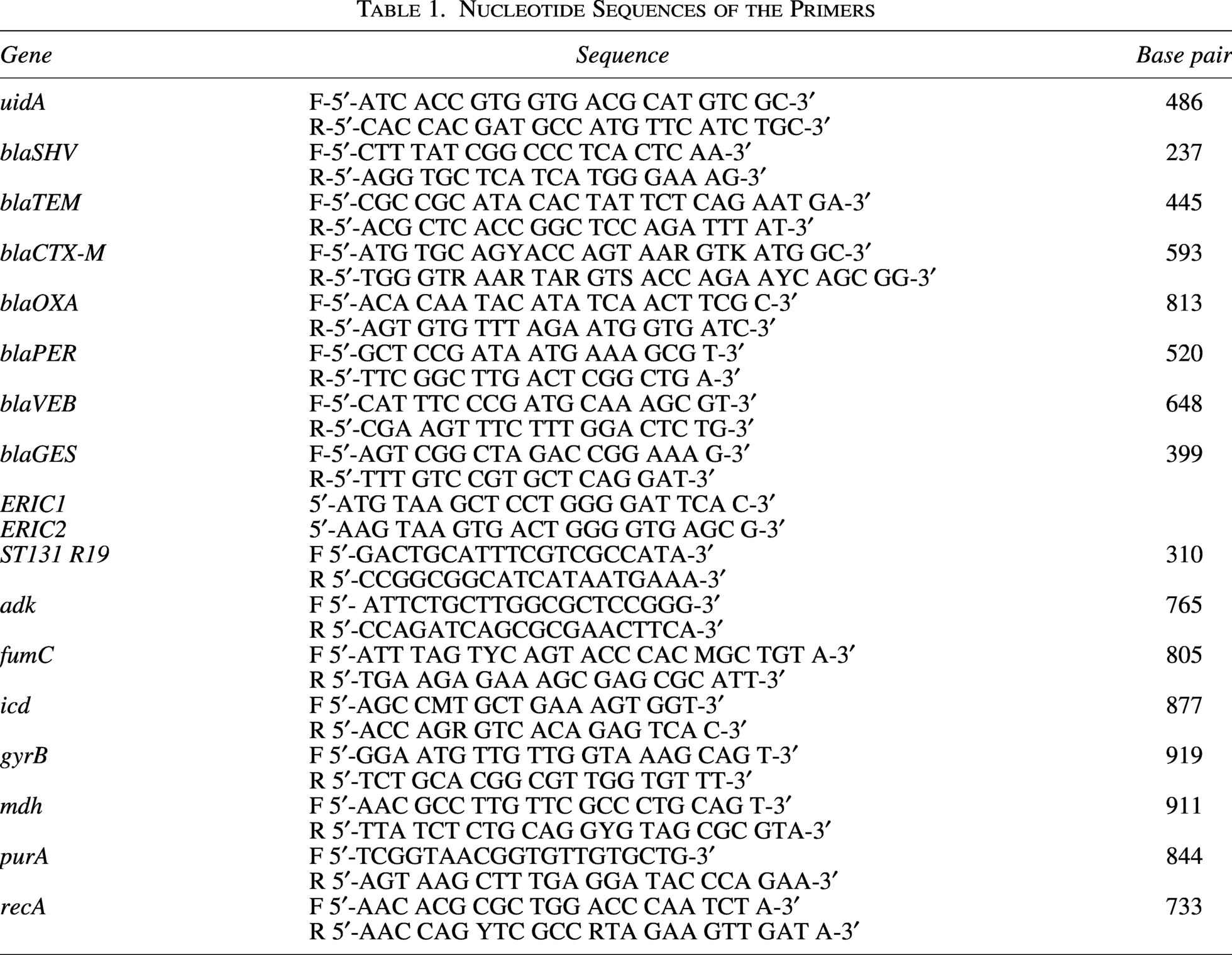
Genomic DNA was extracted (Ecopure, Türkiye). Primer sequences are listed in Table 1. Two multiplex PCRs screened all ESBL-Ec for blaTEM, blaSHV, blaCTX-M and blaOXA, 17 and for blaPER, blaVEB and blaGES. 18 Reaction volumes were 25 µL using Qiagen Multiplex PCR Master Mix, 0.2 µM primers and 2 µL template. Thermocycling was performed in two stages. In the first multiplex reaction, an initial denaturation was carried out at 95°C for 5 minutes, followed by 30 cycles consisting of denaturation at 94°C for 30 seconds, annealing at 58.5°C for 30 seconds, and extension at 72°C for 1 minute. A final extension step was performed at 72°C for 5 minutes. In the second multiplex reaction, the initial denaturation was conducted at 95°C for 10 minutes, followed by 30 cycles of denaturation at 94°C for 45 seconds, annealing at 58.8°C for 40 seconds, and extension at 72°C for 1 minute. The reaction was completed with a final extension at 72°C for 5 minutes. Amplicons were separated on 1% agarose gels (Prona, Poland), stained with ethidium bromide (Merck, Germany) and visualized; a 100 bp ladder (Genedirex, Taiwan) was used.
Nucleotide Sequences of the Primers
ERIC-PCR and clustering
Clonal relatedness was assessed by ERIC-PCR with 100 ng genomic DNA per 25 µL reaction and primers listed in Table 1, following a published protocol with modifications. 19 Cycling: 94°C 5 minutes; 35 cycles of 94°C 30 seconds, 43.1°C 30 seconds, 72°C 5 minutes; final extension 72°C 10 minutes. Fragments were resolved on 1.5% agarose gels (Prona, Poland) and visualized; a 100 bp ladder (Hibrigen, Türkiye) was used. A dendrogram was constructed using BioNumerics v7.5 (UPGMA, Dice coefficient). Clusters were defined at ≥85% similarity and labeled A–O. 20
ST131 detection and MLST
All ESBL-Ec isolates were screened for ST131 by PCR using primers in Table 1; PCR conditions: 94°C 3 minutes; 30 cycles of 94°C 30 seconds, 60°C 30 seconds, 72°C 30 seconds; final 72°C 5 minutes. 21 PCR products were visualized on 1% agarose gels (Prona, Poland). All PCR-positive ST131 isolates (n = 5, 10%) and five randomly selected PCR-negative isolates underwent MLST using the Achtman scheme (adk, fumC, gyrB, icd, mdh, purA, recA) as described by Wirth et al. 22 ; Sanger sequencing was performed at Macrogen (Seoul, Korea). Sequence types were assigned from the E. coli Multiple Locus Sequence Typing (MLST) database. 23
Statistical analysis
Rates were compared using chi-square or Fisher’s exact test; p ≤ 0.05 was considered significant.
Results
Study population and carriage prevalence
The study comprised 161 volunteers (84 female, 77 male), age range 1–84 years (mean 27.6 ± 14.8). Fifty participants (31.05%) carried ESBL-Ec. ESBL carriage did not differ significantly by age, sex, prior antibiotic use, hospitalization, surgery, chronic disease, or pet ownership (p > 0.05) (Table 2).
Comparison of Some Characteristics of Individuals Carrying ESBL-Positive and -Negative E. coli in Fecal Samples
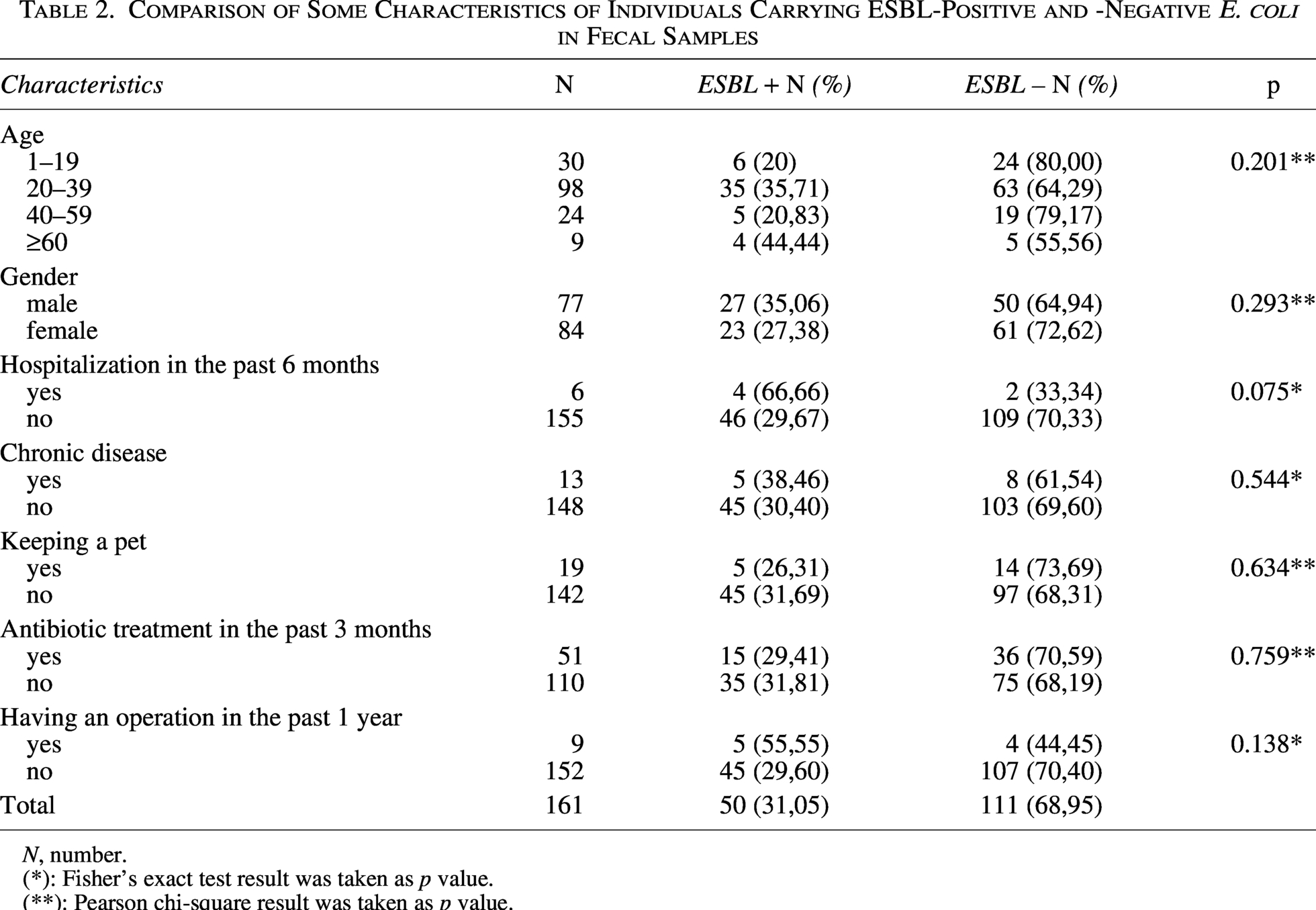
N, number.
(*): Fisher’s exact test result was taken as p value.
(**): Pearson chi-square result was taken as p value.
Antimicrobial resistance profiles
Resistance rates among ESBL-Ec isolates were: ampicillin 100%, ceftazidime 94%, cefotaxime 92%, ceftriaxone 82%, amoxicillin–clavulanic acid 78%, aztreonam 76%, cefepime 68%, trimethoprim–sulfamethoxazole 58%, piperacillin–tazobactam 42%, cefoxitin 40%, ciprofloxacin 38%, gentamicin 14%, amikacin 6%, and ertapenem 4%. All isolates were susceptible to imipenem and meropenem (Bioanalyse, Türkiye).
β-lactamase genes
Multiplex PCR detected blaTEM in 41/50 (82%), blaCTX-M in 34/50 (68%) and blaOXA in 5/50 (10%). blaSHV, blaPER, blaVEB and blaGES were not detected. Sixteen (32%) isolates harbored only blaTEM, 9 (18%) only blaCTX-M, 20 (40%) contained both blaTEM and blaCTX-M, and 5 (10%) carried blaTEM, blaCTX-M and blaOXA together.
ERIC-PCR clustering
ERIC-PCR yielded 30 distinct types among the 50 isolates, grouped into 15 clusters (A–O) plus 15 singletons at the 85% similarity threshold. Cluster composition: one cluster (H) contained 4 strains; clusters G, M, O each contained 3; 11 clusters (A, B, C, D, E, F, I, J, K, L, N) contained 2 isolates each. Several within-cluster pairs/triples showed ≥95% similarity (e.g., cluster A isolates 22 and 23; cluster G 32, 39; cluster H 31, 35, 36; cluster L 1 and 2; cluster M 4 and 11), indicating clonal identity. Most isolates within the same cluster displayed different ESBL enzyme types and resistance profiles, indicating overall clonal heterogeneity among community isolates.
ST131 and MLST
PCR identified 5/50 (10%) isolates as ST131. MLST confirmed these five (10%) as ST131. Five randomly selected PCR-negative isolates were typed as ST10, ST34, ST349, ST683, and ST8712. None of the ST131 isolates clustered together by ERIC-PCR. Four of the five (80%) ST131 strains carried blaCTX-M; one lacked this gene.
Discussion
The prevalence of ESBL-producing E. coli varies from country to country and from center to center. A 2021 meta-analysis study by Bezabih et al. examined studies investigating ESBL E. coli carriage in healthy individuals over a period of 20 years. The study reported a global combined prevalence of ESBL E. coli intestinal carriage in the community of 16.5%. In the same article, they reported that the highest prevalence of fecal ESBL E. coli carriage was in Tanzania (76.3%), while the lowest prevalence was in Australia (1.9%) and the United States (3.5%). They found that prevalence of fecal carriage was 75.1% in Vietnam 75.1%, 70.2% in Laos, 58.5% in China, 56.1% in Thailand, 45.1% in Egypt, and 38.5% in Lebanon. 4 There are very few publications in Türkiye about fecal carriage of ESBL-producing E. coli in the community, and these are generally related to ESBL-producing Enterobacteriaceae. In Türkiye, Azap et al., in 2007, the prevalence of fecal carriage of ESBL-producing bacteria in the community as 15.2% among outpatients. 24 Küçükbasmacı et al., in 2009, reported ESBL-producing Enterobacteriaceae carriage rate as 21.3% in nonhospitalized patients. 25 Erdoğan et al., in 2017, fecal carriage of ESBL-Enterobacteriaceae carriage rate as 30% in outpatients. 26 In a study by Hazırolan et al., in 2018, fecal carriage of ESBL-producing Enterobacteriaceae in outpatients was 34.3%. 27 The rate of 31.05% ESBL positive E. coli we found in our study is close to the rates reported in Türkiye.
The risk factors for ESBL-EC carriage in community have been described previously in many studies. In a study has been found that the risk factors associated with ESBL-EC carriage were diabetes mellitus, chronic renal diseases, and colonic polyps, while daily animal contact, previous antibiotic use was not increased the risk of ESBL-EC carriage. 28 When the factors that may be associated with ESBL-producing E. coli fecal carriage were evaluated in studies conducted in various countries, prolonged hospitalization, 29 female gender, 30 bladder catheterization, being over 65 years old, 31 diabetes, recurrent urinary tract infection, and previous use of various antibiotics were shown as risk factors. 24 Söğütlü et al., determine the prevalence of fecal carriage of ESBL-producing bacteria as 33% in children and no significant association was demonstrated between carriage rates and the questioned risk factors (age, gender, education status, antibiotic use in the last three months, history of urinary tract infection in the last six months, history of hospitalization and surgery, underlying disease conditions, number of individuals living in the house, number of rooms in the house, keeping animals at home or in the garden, weekly chicken meat consumption). 32 In our study, the effects of features such as gender, hospitalization history, having a chronic disease, having a pet, and recent antibiotic use were not statistically associated with ESBL-producing E. coli carriage.
In two studies with fecal ESBL-producing bacteria in Türkiye, CIP susceptible were reported as 39% and 62.5%, SXT susceptible were reported as 24% and 50%, GN susceptible were reported as 43% and 72.4%, and IMP susceptible were reported as 100% and 99.5%.24,26 In other study with fecal ESBL-EC in Türkiye, while IMP and MER, ERT, AN, GN resistance was not found, CIP, SXT, TZP resistances was reported as 31.2%, 33.3%, 4.2%, respectively. 27
There are very few studies investigating the type of ESBL enzyme in fecal ESBL-producing E. coli in Türkiye. Erdoğan et al. reported that CTX-M was the most prevalent (87.5%) ESBL followed by TEM (75%), SHV group enzyme (5.7%) in ESBL-producing fecal strains. 26 In another study investigating fecal carriage in community, among fecal ESBL-producing Enterobacteriaceae strains, frequency of CTX-M was found as 96.9%. 27 In our study, while the rate of TEM enzyme (82%) was the highest in ESBL-producing E. coli strains, rate of CTX-M was 68%. The reason why the rates in our findings differ from the results of the studies conducted in Türkiye may be that the studies were conducted in different cities.
Chirindze et al. investigating fecal colonization of university students in Mozambique reported that ERIC-PCR typing of 35 ESBL-positive E. coli isolates resulted in clustering into 15 clusters, indicating low similarity among the isolates. These results suggested that different clones of E. coli are distributed in this community. 33 In our study, the ERIC-PCR profiles allowed differentiation of the 50 E. coli isolates into 30 ERIC-PCR types, which were grouped into 15 clusters (A-O), each of which were further subdivided into sub-clusters (Fig. 1). According to the results of ERIC-PCR, genetic heterogeneity among isolates was observed, with few similar isolates identified. This result was attributed to the fact that the strains were obtained from healthy individuals and individuals presenting to outpatient clinics. The findings from our study suggest that ESBL-producing E. coli might have been acquired from diverse origins.
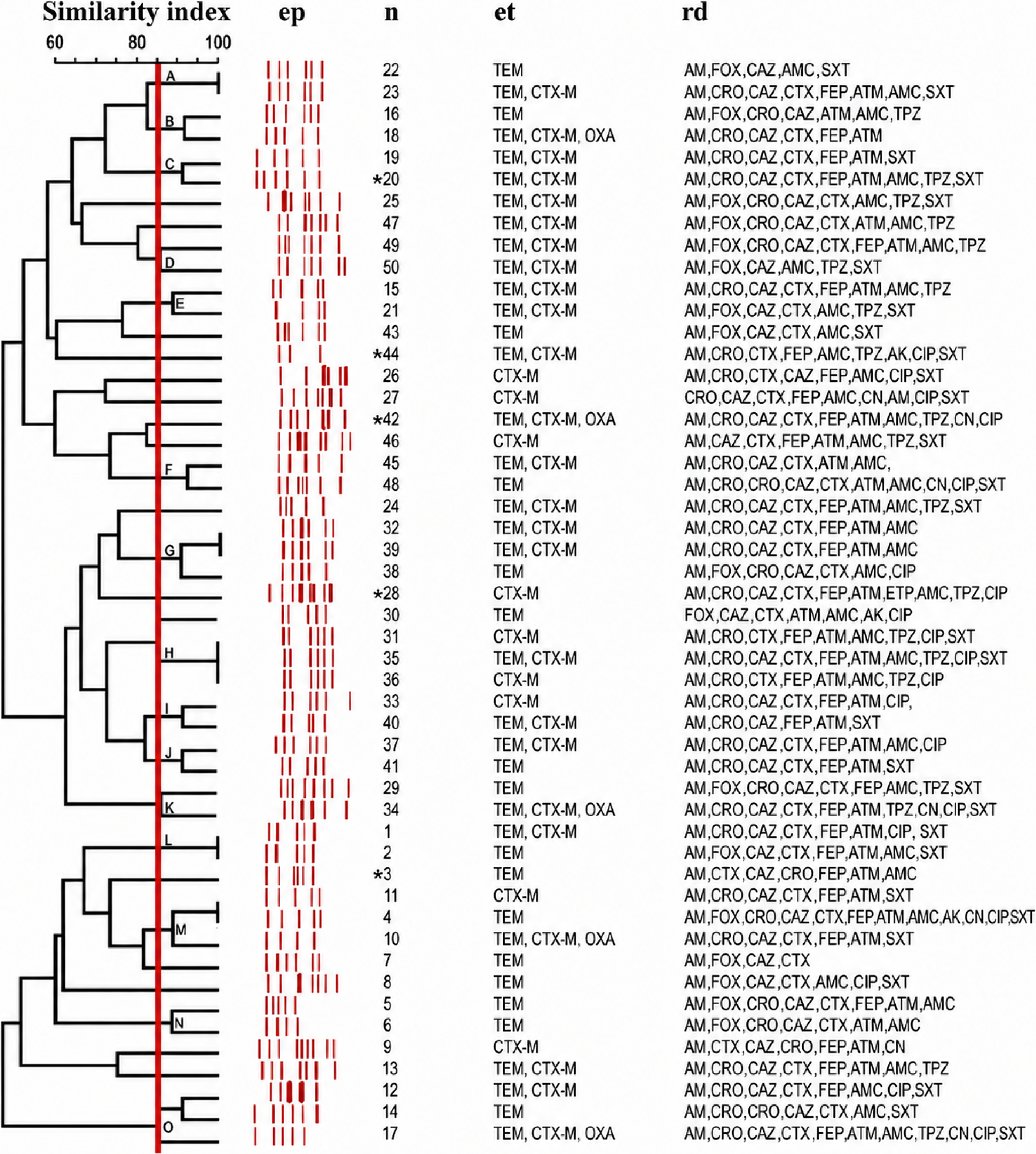
Dendrogram obtained by ERIC-PCR of ESBL producing E. coli (n = 50) isolated from fecal samples. The strains were grouped into 15 ERIC types (A -O) with 85% genetic similarity between the clusters. n, strain numbers; *, E. coli strains belongs to ST131 clone; et, ESBL enzyme type; rp, antimicrobial resistance profile.
Various studies on ESBL E. coli and ST131 E. coli rates in strains produced from clinical samples in Türkiye have been conducted. Yumuk et al., in their study in Türkiye in 2008, detected the presence of one ST131 isolate in 21% of ESBL positive E. coli isolates from community-acquired urinary infections. 34 Can et al., in their study conducted in 2015, reported ESBL presence as 24% in E. coli strains isolated from patients with UTI. In the same study, they reported the presence of O25b-ST131 clone in 12% of strains. 35 In other study, it has been reported that ST131 clone found at a rate of 31% in ESBL-positive E. coli strains from isolated from UTI. 36 In a study conducted in Türkiye, 39.9% urinary system E. coli isolates were detected as ST131 clone. In the same study, resistance of ciprofloxacin was significantly higher among ST131 isolates. 37 Çizmeci et al., studied with the E. coli strains obtained from patients with UTI and nonUTI in 2018, and reported ST131 clone positivity as 36.3% of urinary isolates and 38% of nonurinary isolates belong to ESBL-producing E. coli. In this study, ciprofloxacin resistance was found to be 78% in ST131 isolates. 38 Demirci et al., studied the strains obtained from patients with UTI in Türkiye in 2019, and reported ESBL positivity as 50.49% of patients. In the same study, they reported the presence of O25b-ST131 clone in 31.37% of the strains ESBL-positive strains. 39 In other study, the presence of ST131 clones in 40% ESBL positive isolates from clinical samples to pediatric patients. 40 In our study, it was determined that 10% of the 50 GSBL-positive E. coli isolates belonged to the ST131 clone. It was observed that the prevalence of ST131 E. coli in our region is lower compared to the rates reported in Türkiye. This disparity can be attributed to the fact that the E. coli ST131 isolates identified in Türkiye research were obtained from clinical sample strains, whereas the isolates in our study were derived from community and asymptomatic individuals. There is a need for further research involving commensal E. coli isolates obtained from healthy individuals to clearly determine the carriage of the E. coli ST131 clone among healthy members of society.
Within the national antimicrobial resistance landscape, carbapenem resistance among invasive isolates in Türkiye was estimated at 4.7% in 2021. 41 In a regional study conducted in Sivas, full carbapenem susceptibility was reported among both community-acquired and nosocomial E. coli isolates. 42 In addition, a study from Türkiye demonstrated the absence of carbapenem resistance among E. coli ST131 strains isolated from fecal samples of healthy children, while only a low rate of ertapenem resistance (2.3%) was observed in E. coli ST131 isolates from pediatric clinical specimens, with no resistance to meropenem. 43 Consistent with these observations, all E. coli isolates included in our study were susceptible to imipenem and meropenem, a finding that likely reflects their community-based fecal origin. Preserved carbapenem activity has also been reported among clinical MDR E. coli ST131 isolates in Türkiye. 36
The MLST method is a scientific technique that is employed for the purpose of characterizing, subtyping and classifying members of bacterial populations. However, the process is time-consuming, labor-intensive, and costly. Doumith et al. reported that they had correctly identified all ST131 strains by utilizing a multiplex PCR technique that they had designed themselves. 44 In the present study, 5 out of 50 strains were identified as ST131 (10%) by PCR using primers designed by Doumith et al., and these same strains were also identified as ST131 (10%) by MLST analysis.
The most frequently encountered E. coli STs causing extraintestinal infections have been shown to be ST10, ST69, ST73, ST405, ST410, and ST457. 45 In our study, 10 isolates were investigated using the MLST method, and among them, 5 (10%) were identified as ST131, while the remaining ones were categorized as ST10, ST34, ST349, ST683, and ST8712. It has been reported that one of the main health concerns related to E. coli is the involvement of ST10, ST69, ST131, and ST405 clones in the dissemination of antimicrobial resistance. 46 In our study, the presence of isolates belonging to ST131 and ST10 clones, which are considered globally risky clones, is of significant importance.
Conclusions
This is the first study from Sivas, Türkiye, to document a high prevalence (31.05%) of intestinal carriage of multidrug-resistant ESBL-producing E. coli in the community and to report the presence of the E. coli ST131 clone (10% of ESBL-Ec isolates). The isolates exhibited diverse clonal backgrounds and multiple ESBL genotypes, with blaTEM and blaCTX-M predominating. Continued surveillance of commensal E. coli is warranted to monitor dissemination of ESBL determinants and high-risk clones in the community.
Authors’ Contributions
M.A.: Conceptualization, methodology, investigation, data curation, formal analysis, visualization, and writing—original draft; A.Y.Ö.: Supervision, validation, writing—review and editing, and project administration.
Footnotes
Acknowledgments
The authors would like to thank Dr. E. M. Korkmaz and Dr. M. Budak in the Department of Molecular Biology, and the Scientific Research Project Commission of Sivas Cumhuriyet University.
Disclosure Statement
The authors declare that there is regarding the publication of this article. No financial, personal, or professional relationships have influenced the design, execution, or reporting of this research.
Funding Information
This work was supported by